EP1525723B1 - Procédé, ensemble de communication et dispositif de communication permettant de transmettre des cellules de données par l'intermédiaire d'un réseau de communication orienté paquets - Google Patents
Procédé, ensemble de communication et dispositif de communication permettant de transmettre des cellules de données par l'intermédiaire d'un réseau de communication orienté paquets Download PDFInfo
- Publication number
- EP1525723B1 EP1525723B1 EP03787655.4A EP03787655A EP1525723B1 EP 1525723 B1 EP1525723 B1 EP 1525723B1 EP 03787655 A EP03787655 A EP 03787655A EP 1525723 B1 EP1525723 B1 EP 1525723B1
- Authority
- EP
- European Patent Office
- Prior art keywords
- cell
- vbr
- ubr
- data
- communication network
- Prior art date
- Legal status (The legal status is an assumption and is not a legal conclusion. Google has not performed a legal analysis and makes no representation as to the accuracy of the status listed.)
- Expired - Lifetime
Links
Images


Classifications
-
- H—ELECTRICITY
- H04—ELECTRIC COMMUNICATION TECHNIQUE
- H04L—TRANSMISSION OF DIGITAL INFORMATION, e.g. TELEGRAPHIC COMMUNICATION
- H04L12/00—Data switching networks
- H04L12/28—Data switching networks characterised by path configuration, e.g. LAN [Local Area Networks] or WAN [Wide Area Networks]
- H04L12/2854—Wide area networks, e.g. public data networks
- H04L12/2856—Access arrangements, e.g. Internet access
- H04L12/2869—Operational details of access network equipments
- H04L12/2878—Access multiplexer, e.g. DSLAM
- H04L12/2879—Access multiplexer, e.g. DSLAM characterised by the network type on the uplink side, i.e. towards the service provider network
- H04L12/2883—ATM DSLAM
-
- H—ELECTRICITY
- H04—ELECTRIC COMMUNICATION TECHNIQUE
- H04L—TRANSMISSION OF DIGITAL INFORMATION, e.g. TELEGRAPHIC COMMUNICATION
- H04L12/00—Data switching networks
- H04L12/28—Data switching networks characterised by path configuration, e.g. LAN [Local Area Networks] or WAN [Wide Area Networks]
- H04L12/46—Interconnection of networks
-
- H—ELECTRICITY
- H04—ELECTRIC COMMUNICATION TECHNIQUE
- H04L—TRANSMISSION OF DIGITAL INFORMATION, e.g. TELEGRAPHIC COMMUNICATION
- H04L47/00—Traffic control in data switching networks
- H04L47/10—Flow control; Congestion control
-
- H—ELECTRICITY
- H04—ELECTRIC COMMUNICATION TECHNIQUE
- H04L—TRANSMISSION OF DIGITAL INFORMATION, e.g. TELEGRAPHIC COMMUNICATION
- H04L47/00—Traffic control in data switching networks
- H04L47/10—Flow control; Congestion control
- H04L47/24—Traffic characterised by specific attributes, e.g. priority or QoS
- H04L47/2425—Traffic characterised by specific attributes, e.g. priority or QoS for supporting services specification, e.g. SLA
- H04L47/2433—Allocation of priorities to traffic types
-
- H—ELECTRICITY
- H04—ELECTRIC COMMUNICATION TECHNIQUE
- H04L—TRANSMISSION OF DIGITAL INFORMATION, e.g. TELEGRAPHIC COMMUNICATION
- H04L47/00—Traffic control in data switching networks
- H04L47/10—Flow control; Congestion control
- H04L47/24—Traffic characterised by specific attributes, e.g. priority or QoS
- H04L47/2491—Mapping quality of service [QoS] requirements between different networks
-
- H—ELECTRICITY
- H04—ELECTRIC COMMUNICATION TECHNIQUE
- H04L—TRANSMISSION OF DIGITAL INFORMATION, e.g. TELEGRAPHIC COMMUNICATION
- H04L47/00—Traffic control in data switching networks
- H04L47/10—Flow control; Congestion control
- H04L47/28—Flow control; Congestion control in relation to timing considerations
- H04L47/283—Flow control; Congestion control in relation to timing considerations in response to processing delays, e.g. caused by jitter or round trip time [RTT]
-
- H—ELECTRICITY
- H04—ELECTRIC COMMUNICATION TECHNIQUE
- H04L—TRANSMISSION OF DIGITAL INFORMATION, e.g. TELEGRAPHIC COMMUNICATION
- H04L12/00—Data switching networks
- H04L12/54—Store-and-forward switching systems
- H04L12/56—Packet switching systems
- H04L12/5601—Transfer mode dependent, e.g. ATM
- H04L2012/5614—User Network Interface
- H04L2012/5618—Bridges, gateways [GW] or interworking units [IWU]
-
- H—ELECTRICITY
- H04—ELECTRIC COMMUNICATION TECHNIQUE
- H04L—TRANSMISSION OF DIGITAL INFORMATION, e.g. TELEGRAPHIC COMMUNICATION
- H04L12/00—Data switching networks
- H04L12/54—Store-and-forward switching systems
- H04L12/56—Packet switching systems
- H04L12/5601—Transfer mode dependent, e.g. ATM
- H04L2012/5638—Services, e.g. multimedia, GOS, QOS
- H04L2012/5665—Interaction of ATM with other protocols
-
- H—ELECTRICITY
- H04—ELECTRIC COMMUNICATION TECHNIQUE
- H04L—TRANSMISSION OF DIGITAL INFORMATION, e.g. TELEGRAPHIC COMMUNICATION
- H04L12/00—Data switching networks
- H04L12/54—Store-and-forward switching systems
- H04L12/56—Packet switching systems
- H04L12/5601—Transfer mode dependent, e.g. ATM
- H04L2012/5678—Traffic aspects, e.g. arbitration, load balancing, smoothing, buffer management
- H04L2012/5679—Arbitration or scheduling
-
- H—ELECTRICITY
- H04—ELECTRIC COMMUNICATION TECHNIQUE
- H04L—TRANSMISSION OF DIGITAL INFORMATION, e.g. TELEGRAPHIC COMMUNICATION
- H04L47/00—Traffic control in data switching networks
- H04L47/10—Flow control; Congestion control
- H04L47/43—Assembling or disassembling of packets, e.g. segmentation and reassembly [SAR]
Definitions
- broadband subscriber access networks - also referred to as access networks -
- access networks - are a large number of subscribers cost access to broadband services -.
- Video on demand - to be ensured.
- One way of optimizing is to distribute the facilities and resources (e.g., bandwidth and processing speed) provided by the subscriber access networks to as many subscriber lines as possible.
- Another possibility of cost optimization is to arrange the required for current data services, intelligent functions largely centrally in the subscriber access network, so that, for example, arranged in the communication network or in the respective network devices subscriber line modules or central modules must be configured with the least possible functionality.
- Ethernet-based transmission systems are mainly used in local communication networks.
- Network devices such as Multiplexer devices (eg DSLAM, Digital Subscriber Line Access Multiplexer) is known, for example, according to the asynchronous transfer mode - ATM - configured data cells - also referred to as ATM cells - via a locally arranged in the network device Ethernet between arranged in the network device subscriber line modules and at least one central functions of the network device having, central unit or module to mediate.
- the Ethernet can be used both as a "wiring" or "backplane" in a rack for bridging smaller distances within the network device as well as a nationwide communication network for bridging longer distances.
- the aim of future communication networks is to transmit ever larger data volumes with high data transmission rates from and towards end users, in particular by using Ethernet-based transmission methods.
- the "quality-of-service properties" of the ATM transmission technology must be maintained, whereby a satisfactory utilization of the existing transmission capacity of current communication networks should be achieved.
- Patent WO 99/16213 A2 describes a method of communicating data cells over an IEEE 1394 packet-switched communication network.
- real-time services are transmitted through uniformly "isochronous" packets and non-real-time services via asynchronous packets, with real-time services get higher priority.
- ATM Forum, Technical Committee, Frame-based ATM Transport over Ethernet (FATE), AF-FBATM-0139.00 For example, a method is described by which ATM cells are transmitted via a communication network configured as an Ethernet. ⁇ br/> ⁇ br/> The method described is restricted to an A5 type ATM connection, which means that this method is only conditionally current and future subscriber access networks used, since in the implementation of current data and communication services ATM cells of all AAL types are transmitted, in particular of the type AAL1 and AAL2.
- the invention is therefore based on the object to improve the transmission of ATM cells via a packet or frame-oriented communication network.
- a subscriber access network is to be created in which different AAL types having and partly different ATM connections associated ATM cells transparent compliance the quality of service properties are transmitted by means of the packet or frame-oriented transmission technology, in particular by means of Ethernet transmission technology.
- the object is achieved on the basis of a method according to the preamble of claim 1 by its characterizing features.
- the object is achieved on the basis of a communication arrangement and of a communication device according to the preamble of claims 15 and 18 by the respective characterizing features.
- data cells to be transmitted in a first communication network are at least partially transmitted via a second packet-oriented communication network.
- first communication network several priorities are assigned to the respective data cells to be transmitted, wherein the data cells are transmitted as a function of the respectively assigned priorities via the first communication network.
- the essential aspect of the method according to the invention is that at least one of the data cells to be transmitted and assigned the same assigned priority is inserted into a payload field of at least one data packet of the second packet-oriented communication network.
- the at least one data packet is assigned a transmission priority derived from the priority of the at least one inserted data cell, wherein the at least one data packet is at least partially transmitted to / via the second packet-oriented communication network together with the at least one inserted data cell depending on the assigned transmission priority.
- the main advantage of the method according to the invention is that the aforementioned disadvantages of the method resulting from the FATE standard are avoided.
- the information to be transmitted is transmitted transparently via the packet-oriented communication network, so that the technical and economic outlay for preprocessing the information to be transmitted can be saved.
- the star-shaped connection structure specific to subscriber access networks is optimally utilized by the method according to the invention, in which several subscribers are connected via the subscriber access network or access network to a network entry point of a superordinate communication network.
- the data cells having the same priority or service category and belonging to different virtual connections can be inserted into a data or transmission frame of the packet-oriented communications network.
- the method according to the invention is not limited to a particular type of connection, such as ATM type AAL5 connections.
- the data cells to be transmitted via the first communication network are transmitted within the framework of virtual connections established via the first communication network, wherein the respective assigned priority of the data cells transmitted via one of the virtual connections represents a connection-individual priority - Claim 3.
- Data cells for example ATM cells
- VPI / VCI values which have different VPI / VCI values but have the same priority or are assigned to the same service category, are inserted jointly into a data packet of the packet-oriented communication network.
- At least one further connection-individual transmission parameter is assigned to the data cells transmitted via one of the virtual connections of the first communication network in addition to the connection-specific priority.
- the first communication network according to the asynchronous transfer mode - ATM - configured - claim 6 -, as well as the packet-oriented communication network and the data packets transmitted therein according to the IEEE standard 802.3 configured - claim. 9
- the insertion functions are configured such that the insertion of the at least one data cell to be transmitted and the same assigned priority into the payload field of the respective at least one data packet and the forwarding of the at least one data packet at least partially to / via the packet-oriented communication network in dependence on the smallest specified "Cell Delay Variation Tolerance" value of at least one inserted into the payload data cell - claim 8.
- the time for filling a data packet is monitored so that it is ensured that the data cells to be transmitted not unduly delayed and the currently formed data packet is sent in time or forwarded.
- the data packets transmitted via the second packet-oriented communications network are additionally designed according to the IEEE 802.1Q-1998 standard, the respective transmission priorities assigned to a data packet transmitted via the second communications network being determined by the "user_priority" information in the "Tag Control Information” data field (TCI ) of the "Ethernet-encoded tag header” is determined - claim 10.
- TCI Tag Control Information
- This advantageous development is made possible by using the IEEE standard 802.1Q-1988 in a particularly simple way, a direct assignment of ATM service classes to "Ethernet User Priorities" ,
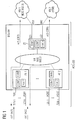
- FIG. 1 1 shows a block diagram of a communication device or multiplexing device DSLAM arranged in a subscriber access network ACCESS configured in accordance with the asynchronous transfer mode ATM-ATM, to which several connection units AE1... Z and via several subscriber line connections TLN1. TLN1 ... k the respective participants - or CPE, not shown - are connected.
- the respective subscribers are connected, for example, via an xDSL transmission method to corresponding connections PORT of the respective connection units AE1... Z.
- a packet-oriented communication network EN configured in accordance with the IEEE standard 802.3-also referred to below as "Ethernet" - to which the respective connection units AE1...
- connection units AE1... Z and the central unit ZE are each assigned an Ethernet MAC address mac1... X... Z (MAC, Medium Access Control) that identifies them unambiguously within the Ethernet EN.
- the central unit ZE is connected via a first input EZ1 to a first input ED1 of the communication device DSLAM.
- a first higher-level for example, also configured according to the IEEE standard 802.3 communication network KN1 is connected.
- the first higher-level communication network KN1 can, for example, also be designed as Gigabit Ethernet, which is connected, for example, via a 1000 BASE-LX connection to the first input ED1 of the communication device DSLAM.
- the central unit ZE arranged in the communication device DSLAM has a second input EZ2, which is connected to a second input ED2 provided in the communication device DSLAM.
- a second input ED2 provided in the communication device DSLAM.
- another higher-level communication network KN2 configured according to the asynchronous transfer mode ATM is connected.
- the subscribers connected to the communication device DSLAM are connected via the respective connection units AE1 ..; z, via the Ethernet EN and via the central unit ZE to the two superordinate communication networks KN1, KN2.
- Control means CONT for carrying out the method according to the invention are respectively provided in the respective connection units AE1... Z and in the central unit ZE.
- the control means CONT arranged in the respective units AE1..., ZE are assigned further network processing means NVM, for example for carrying out traffic management and processing of header information.
- At least the network processing means NVM provided on the central unit ZE may comprise additional means for performing segmentation and reassembly (e.g., AAL5 SAR).
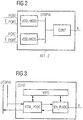
- FIG. 2 is the structure of a connection unit arranged in the communication device DSLAM on the part of the subscriber AE1 ... z shown.
- Several xDSL modems xDSL-MOD are arranged in the connection unit AE1... Z, to which a subscriber line TLN configured in accordance with the xDSL transmission method is connected in each case via a correspondingly configured port PORT.
- the individual xDSL modems are connected to the control unit CONT via a utopia interface UTOPIA configured according to the ATM transmission method.
- the control unit CONT is via an internal interface - for example, an xMII interface, Medium Independent Interface - as well as a connection A with the Ethernet EN - in FIG. 2 not shown - connected.
- the central unit ZE not shown in detail is configured in a corresponding manner.
- FIG. 3 the functional structure of the control unit CONT arranged in each connection unit AE1 .., z or central unit ZE is shown in greater detail.
- the control unit CONT - also referred to as a converter - is composed of an ATM-specific processing stage ATM_PROC and an Ethernet-specific processing stage EN_PROC, which are internally interconnected.
- the ATM processing stage ATM_PROC is connected to the utopia interface UTOPIA.
- the Ethernet processing stage EN_PROC is connected to the Ethernet via the internal xMII interface.
- Both processing levels ATM_PROC, EN_PROC are connected via a microcontroller interface MPS to a micro-controller - not shown - for carrying out maintenance and administration tasks.
- FIG. 1 illustrated embodiment is assumed that starting from a via the first subscriber line TLN1 to the first terminal unit AE1 connected communication device - not shown - information or ATM cells via a virtual connection - in FIG. 1 represented by a dashed double arrow vc1 - over the Ethernet EN, the central unit ZE to a arranged in the first communication network KN1 target - not shown - are transmitted. Furthermore, it is assumed that, starting from a communication device connected to the first connection unit AE1 via the nth subscriber connection line TLMn, information or ATM cells are connected via a second virtual connection FIG.
- the ATM cells cell (vc1), cell (vc2) transmitted by the subscribers via the respective subscriber lines TLN1, n and via the respective xDSL modem xDSL-MOD to the first connection unit AE1, are forwarded via the utopia interface UTOPIA to the in the connection unit AE1 arranged control unit CONT transmits.
- the ATM cells cell (vc1), cell (vc2) arriving at the control unit CONT are first forwarded to the ATM processing unit ATM_PROC.
- a suitable queue WS is provided for each of the supported ATM service classes, in which the respective incoming ATM cells are distributed and stored by the cell distribution means Cell-Dist.
- the individual queues WS are each assigned queue read-out means WFQ, schedulers, by means of which the ATM cells arranged in the individual queues WS are read out according to their respective priority or ATM service class and forwarded to the Ethernet processing unit EN_PROC.
- the readout means WFQ, Scheduler support strict priority scheduling so that the highest priority ATM cells are first read out and sent.
- ATM cells arriving at the ATM processing unit ATM_PROC and the ATM cells to be forwarded to the subscriber are correspondingly divided into respective queues, read out and forwarded via the Utopia interface UTOPIA FIG. 4 clarified in the lower half.
- FIG. 5 the functional structure of the Ethernet processing unit EN_RPOC is shown.
- each ATM service class provided in the ATM subscriber access network ACCESS means are respectively provided for the formation of Ethernet data frames - hereinafter referred to as "frame assembly instances" CBR_FA, rt_VBR_FA, nrt_VBR_FA, UBR / UBR + _FA, by means of which the respective ATM cells cell (vc1), cell (vc2) are inserted or "mapped" into the respectively formed Ethernet frames.
- Several ATM cells with different VPI / VCI values can each be mapped into an Ethernet frame. According to the invention, however, only ATM cells of a service class are always inserted in the same Ethernet frame dp.
- the Ethernet data frame dp is designed according to the IEEE standard 802.1Q-1998.
- This Ethernet data frame dp contains a modified header kf - in FIG. 6 named "VLAN tag" - with a specific "user_priority" in the "Tag Control Information field” (TCI).
- TCI Tag Control Information field
- one of the priorities of the respective ATM cells inserted into the payload data field nf of the respective Ethernet data frame dp is entered in the "user_priority" field of the TCI field.
- TCI Tag Control Information field
- the use of the "Tag Frame Format" as well as the structure of the TCI field of the "Ethernet-encoded tag header" ETPID is described under point 9.3 of the IEEE 802.1Q-1998 standard.
- Ethernet cells can also transmit ATM cells over locally extended communication networks configured according to the Ethernet transmission method.
- the length of the Ethernet data frame dp created by the respective frame assembling entities CBR_FA, rt_VBR_FA, nrt_VBR_FA, UBR / UBR + _FA results from the type of data traffic to be transmitted in each case, ie from the respective priority or ATM service class each inserted ATM cells. If, for example, an Ethernet data frame dp is formed with ATM cells inserted in it, which carry real-time data traffic (ie rt-VBR), this Ethernet data frame must not become arbitrarily large. Otherwise, the dwell time of the ATM cell inserted first into the Ethernet data frame dp would become too large, resulting in increased delay times Delays result and thus the real-time requirements can no longer be met.
- the length of the Ethernet frames formed by the respective frame assembling entities CBR_FA, rt_VBR_FA, nrt_VBR_FA, UBR / UBR + _FA Data frame dp both by the respective ATM service class as well as by the respective connection-individual transmission parameters - here eg determined by the connection-specific Cell Delay Variation Tolerance, CDVT.
- CDVT Cell Delay Variation Tolerance
- ATM cells of different virtual connections are inserted in an Ethernet data frame dp - e.g. cell (vc1), cell (vc2) - so the length of the Ethernet data frame dp is determined by the smallest occurring CDVT value of each inserted in this data frame ATM cells.
- each frame assembling instance CBR_FA, rt_VBR_FA, nrt_VBR_FA, UBR / UBR + _FA a configurable timer T1 ... 4 assigned by which the formation of the respective Ethernet data frame dp is controlled.
- Each timer T1 ... 4 is started with the reading or insertion of the first ATM cell into the respective Ethernet data frame dp.
- the time for filling an Ethernet data frame dp and the timely sending of the formed Ethernet data frames is monitored.
- the times t1... 4 defined by the individual timers T1... 4 depend on the respective smallest CDVT value of the ATM cells to be inserted into an Ethernet data frame dp.
- this timer - here eg T1 - has a very low value Value t1, ie the ATM cells to be inserted in each case only stay in the frame assembly instance CBR_FA for a very short time, so that only relatively short Ethernet data frames DP are formed by this instance. In the case of the worst case, only one ATM cell per Ethernet data frame is transmitted at a time.
- the maximum dwell time of ATM cells in the respective frame assembling instance CBR_FA, rt_VBR_FA, nrt_VBR_FA, UBR / UBR + _FA is separately adjustable for each ATM service class.
- the following relationships may apply: t1 ⁇ t2 ⁇ t3 ⁇ t4.
- t1 ⁇ t2 ⁇ t3 ⁇ t4 In FIG. 5 is the resulting from this relationship length of each formed Ethernet data frames dp each illustrated by a dashed rectangle.
- the configuration of the times t1... 4 defined by the individual timers T1... 4 can take place, on the one hand, by external network management-for example when setting up the individual ATM connections-as well as at runtime, so that also temporarily established ATM Connections - "switched circuit connections" - are taken into account.
- the Ethernet data frames dp formed by the individual frame assembling entities CBR_FA, rt_VBR_FA, nrt_VBR_FA, UBR / UBR + _FA and configured in accordance with the IEEE standard 802.3 or 802.1Q-1998 are sent to an access unit MAC for controlling the access to the Transmission medium - here the Ethernet-compliant communication network EN - forwarded.
- the access unit MAC forwards the Ethernet data frames dp to be transmitted to the Ethernet EN via an internal interface xMII.
- the Ethernet data frames dp transmitted to the Ethernet EN are transmitted via this destination-in this exemplary embodiment the central unit ZE-determined by the destination information contained in the header field kf of the respective Ethernet data frame. The so to the destination, i.
- ATM cells cell (vc1), cell (vc2) transmitted to the central unit ZE are extracted by the control means CONT from the respective Ethernet data frame, the information to be transmitted via the first virtual connection vc1 - i. the payload portion of the ATM cells cell (vc1) - through the control unit CONT arranged in the central unit ZE in a known manner in IEEE standard 802.3 compliant information, i. Ethernet data frames are converted and forwarded to the first communication network KN1.
- the information or ATM cells cell (vc2) to be transmitted via the second virtual connection vc2 are forwarded by the control unit CONT to the second communication network KN2 configured in accordance with the ATM.
- the inventive method has the advantage that different VPI / VCI values, but the same ATM service class assigned ATM cells can be inserted together in an Ethernet data frame and transmitted transparently over the Ethernet. This achieves a reduction in Ethernet overhead, while limiting the time required for mapping the ATM cells in the Ethernet frame (Frame Assembling Time).
- the number of each to be inserted in an Ethernet data frame dp ATM cells - ie the level of the respective payload of an Ethernet data frame - in the inventive manner per frame assembling instance on the one hand by the respective ATM service class and by an additional connection-individual transmission parameters - eg CDVT value - each Controlled to be inserted ATM cells.
- the smallest CDTV value of the respectively inserted ATM cells is taken into account per frame assembling instance, so that the delay or the delay of the ATM cells is monitored when inserted into the respective Ethernet data frames and not to unnecessary delays comes.
- connection-individual transmission parameters can be taken into account when filling the Ethernet data frames with ATM cells.
- the delay time arising during the transmission of an ATM cell is limited to a previously defined value even in the case of low traffic volume, so that the method according to the invention can be tuned even more precisely for real-time requirements to be met.
- cell-based subscriber access network ACCESS can be configured according to another packet-oriented transmission method - eg according to the Internet Protocol or TCP / IP - so that using the method of the invention instead of data cells and any type of data packets - possibly with prior segmentation or reassembly, "SAR" - can be inserted into the data packets or Ethernet data frames of the second communication network.
- SAR Segmentation or reassembly
Landscapes
- Engineering & Computer Science (AREA)
- Computer Networks & Wireless Communication (AREA)
- Signal Processing (AREA)
- Quality & Reliability (AREA)
- Data Exchanges In Wide-Area Networks (AREA)
- Communication Control (AREA)
Claims (20)
- Procédé pour communiquer au moins partiellement par le biais d'un deuxième réseau de communication en mode paquets (EN) des cellules de données (cell(vc1), cell(vc2)) à transmettre dans un premier réseau de communication (ACCESS),
avec lequel plusieurs priorités (CBR, VBR...UBR) pouvant respectivement être attribuées aux cellules de données (cell(vc1), cell(vc2)) à transmettre sont prévues dans le premier réseau de communication (ACCESS), les cellules de données (cell(vc1), cell(vc2)) étant communiquées par le biais du premier réseau de communication (ACCESS) en fonction des priorités (CBR, VBR...UBR) respectivement attribuées,
caractérisé en ce- qu'au moins l'une des cellules de données (cell(vc1), cell(vc2)) à transmettre et présentant la même priorité (CBR, VBR...UBR) attribuée est insérée dans un champ de données utiles (nf) d'au moins un paquet de données (dp) du deuxième réseau de communication en mode paquets (EN),- qu'une priorité de transmission (user_priority) dérivée de la priorité (CBR, VBR...UBR) de l'au moins une cellule de données (cell(vc1), cell(vc2)) insérée est attribuée à l'au moins un paquet de données (dp), l'au moins un paquet de données (dp) étant communiqué au moins partiellement au/par le biais du deuxième réseau de communication en mode paquets (EN) conjointement avec l'au moins une cellule de données (cell(vc1), cell(vc2)) insérée en fonction de la priorité de transmission (user_priority) attribuée. - Procédé selon la revendication 1, caractérisé en ce que des fonctions d'insertion (CBR_FA, rt-VBR_FA, nrt-VBR_FA, UBR/UBR+_FA) sont prévues dans le premier et/ou le deuxième réseau de communication (ACCESS, EN), par le biais desquelles, respectivement pour chaque priorité (CBR, VBR...UBR) prévue dans le premier réseau de communication:- l'au moins un paquet de données (dp) qui présente la priorité de transmission (user_priority) dérivée de manière correspondante est formé,- l'au moins une cellule de données (cell(vc1), cell(vc2)) qui présente la priorité (CBR, VBR...UBR) correspondante est insérée dans le champ de données utiles (nf) de l'au moins un paquet de données (dp) formé, et- l'au moins un paquet de données (dp) est communiqué au moins partiellement au/par le biais du deuxième réseau de communication (EN).
- Procédé selon la revendication 1 ou 2, caractérisé en ce que les cellules de données (cell(vc1), cell(vc2)) à transmettre par le biais du premier réseau de communication (ACCESS) sont communiquées dans le cadre de liaisons virtuelles (vc1, 2) établies par le biais du premier réseau de communication (ACCESS), la priorité (CBR, VBR...UBR) respectivement attribuée aux cellules de données (cell(vc1), cell(vc2)) respectivement communiquées par le biais de l'une des liaisons virtuelles (vc1, 2) représentant une priorité individuelle à la liaison.
- Procédé selon la revendication 3, caractérisé en ce qu'en plus de la priorité (CBR, VBR...UBR) individuelle de la liaison, au moins un paramètre de transmission individuel à la liaison supplémentaire est attribué aux cellules de données (cell(vc1), cell(vc2)) respectivement communiquées par le biais de l'une des liaisons virtuelles (vc1, 2) du premier réseau de communication (ACCESS).
- Procédé selon la revendication 4, caractérisé en ce que les fonctions d'insertion (CBR_FA, rt-VBR_FA, nrt-VBR_FA, UBR/UBR+_FA) sont configurées de telle sorte que l'insertion de l'au moins une cellule de données (cell(vc1), cell(vc2)) à communiquer et présentant la même priorité attribuée dans le champ de données utiles (nf) de l'au moins un paquet de données (dp) respectif et la retransmission de l'au moins un paquet de données (dp) au moins partiellement au/par le biais du réseau de communication en mode paquets (EN) s'effectue en fonction de l'au moins un paramètre de transmission individuel à la liaison supplémentaire de l'au moins une cellule de données (cell(vc1), cell(vc2)) respective insérée dans le champ de données utiles (nf).
- Procédé selon l'une des revendications précédentes, caractérisé en ce
que le premier réseau de communication (ACCESS) est configuré selon le mode de transfert asynchrone,
que les priorités (CBR, VBR...UBR) prévues dans le premier réseau de communication (ACCESS) représentent à chaque fois- un type de trafic défini selon le forum ATM et l'UIT-T, ou- une qualité de service ATM « ATM Service Class » définie. - Procédé selon la revendication 6, caractérisé en ce qu'une « tolérance de variation du retard de cellule », respectivement définie dans le cadre d'une liaison ATM établie, est représentée par l'au moins un paramètre de transmission individuel à la liaison attribué supplémentaire.
- Procédé selon la revendication 7, caractérisé en ce que les fonctions d'insertion (CBR_FA, rt-VBR_FA, nrt-VBR_FA, UBR/UBR+_FA) sont configurées de telle sorte que l'insertion de l'au moins une cellule de données (cell(vc1), cell(vc2)) à communiquer et présentant la même priorité attribuée dans le champ de données utiles (nf) de l'au moins un paquet de données (dp) respectif et la retransmission de l'au moins un paquet de données (dp) au moins partiellement au/par le biais du réseau de communication en mode paquets (EN) s'effectue en fonction de la plus petite valeur déterminée de la « tolérance de variation du retard de cellule » de l'au moins une cellule de données (cell(vc1), cell(vc2)) respective insérée dans le champ de données utiles (nf).
- Procédé selon l'une des revendications précédentes, caractérisé en ce que le deuxième réseau de communication en mode paquets (EN) et les paquets de données (dp) qui sont communiqués dans celui-ci sont configurés selon la norme IEEE 802.3.
- Procédé selon la revendication 9, caractérisé en ce que les paquets de données qui sont communiqués par le biais du deuxième réseau de communication en mode paquets (EN) sont configurés selon la norme IEEE 802.1Q-1998, la priorité de transmission respectivement attribuée à l'au moins un paquet de données communiqué par le biais du deuxième réseau de communication en mode paquets (EN) étant définie par l'information « user_priority » dans le champ de données « Tag Control Information » (TCI - Information de commande de balise) de l'en-tête de balise codé Ethernet (ETPID).
- Procédé selon l'une des revendications précédentes, caractérisé en ce qu'une information représentant le nombre « n » de cellules de données (cell(vc1), cell(vc2)) respectivement insérées dans le champ de données utiles (nf) de l'au moins un paquet de données (dp) est insérée dans le paquet de données (dp).
- Procédé selon l'une des revendications précédentes, caractérisé en ce
que des informations de destination (DA) respectives sont insérées dans l'au moins un paquet de données (dp),
que l'au moins un paquet de données (dp) et l'au moins une cellule de données (cell(vc1), cell(vc2)) qui y est insérée sont communiquées à au moins une destination (ZE) représentée par l'information de destination (DA) du paquet de données (dp) dans le deuxième réseau de communication en mode paquets (EN). - Procédé selon la revendication 12, caractérisé en ce que les cellules de données (cell(vc1), cell(vc2)) communiquées à l'au moins une destination (ZE) disposée dans le deuxième réseau de communication en mode paquets (EN) sont retransmises en fonction d'informations de routage (VPI/VCI) respectivement contenues dans les cellules de données.
- Procédé selon la revendication 12, caractérisé en ce que des informations utiles contenues dans l'au moins une cellule de données (cell(vc1), cell(vc2)) communiquée à l'au moins une destination (ZE) disposée dans le deuxième réseau de communication en mode paquets (EN) sont retransmises en fonction des informations de routage (VPI/VCI) respectivement contenues dans les cellules de données.
- Arrangement de communication pour communiquer au moins partiellement par le biais d'un deuxième réseau de communication en mode paquets (EN) des cellules de données (cell(vc1), cell(vc2)) à transmettre dans un premier réseau de communication (ACCESS),- plusieurs priorités (CBR, VBR...UBR) pouvant respectivement être attribuées aux cellules de données (cell(vc1), cell(vc2)) à transmettre étant prévues dans le premier réseau de communication (ACCESS),- les cellules de données (cell(vc1), cell(vc2)) étant communiquées par le biais du premier réseau de communication (ACCESS) en fonction des priorités (CBR, VBR...UBR) respectivement attribuées,caractérisé en ce- que des moyens d'insertion (CBR_FA, rt-VBR_FA, nrt-VBR_FA, UBR/UBR+_FA) sont prévus dans le premier et/ou le deuxième réseau de communication (ACCESS, EN), par le biais desquels au moins l'une des cellules de données (cell(vc1), cell(vc2)) à communiquer et présentant la même priorité (CBR, VBR...UBR) attribuée est insérée dans un champ de données utiles (nf) d'au moins un paquet de données (dp) du deuxième réseau de communication en mode paquets (EN), et- que des moyens d'attribution supplémentaires sont associés aux moyens d'insertion (CBR_FA, rt-VBR_FA, nrt-VBR_FA, UBR/UBR+_FA), par le biais desquels une priorité de transmission (user_priority) dérivée de la priorité (CBR, VBR...UBR) de l'au moins une cellule de données (cell(vc1), cell(vc2)) insérée est attribuée à l'au moins un paquet de données (dp),- que les moyens d'insertion et d'attribution (CBR_FA, rt-VBR_FA, nrt-VBR_FA, UBR/UBR+_FA) sont configurés de telle sorte que l'au moins un paquet de données (dp) est communiqué au moins partiellement au/par le biais du deuxième réseau de communication en mode paquets (EN) conjointement avec l'au moins une cellule de données (cell(vc1), cell(vc2)) insérée en fonction de la priorité de transmission (user_priority) attribuée.
- Arrangement de communication selon la revendication 15, caractérisé en ce
que les moyens d'insertion et d'attribution (CBR_FA, rt-VBR_FA, nrt-VBR_FA, UBR/UBR+_FA) sont configurés de telle sorte que, respectivement pour chaque priorité (CBR, VBR...UBR) prévue dans le premier réseau de communication (ACCESS) :- l'au moins un paquet de données (dp) qui présente la priorité de transmission (user_priority) dérivée correspondante est formé,- l'au moins une cellule de données (cell(vc1), cell(vc2)) qui présente la priorité (CBR, VBR...UBR) correspondante est insérée dans le champ de données utiles (nf) de l'au moins un paquet de données (dp) formé, et- l'au moins un paquet de données (dp) est communiqué au moins partiellement au/par le biais du deuxième réseau de communication en mode paquets (EN). - Arrangement de communication selon la revendication 15 ou 16, caractérisé en ce que les moyens d'insertion (CBR_FA, rt-VBR_FA, nrt-VBR_FA, UBR/UBR+_FA) sont configurés de telle sorte que l'insertion de l'au moins une cellule de données (cell(vc1), cell(vc2)) à communiquer et qui présente la même priorité (CBR, VBR...UBR) attribuée dans le champ de données utiles (nf) de l'au moins un paquet de données (dp) respectif et la retransmission de l'au moins un paquet de données (dp) au moins partiellement au/par le biais du réseau de communication en mode paquets (EN) s'effectue en fonction d'au moins un paramètre de transmission individuel à la liaison supplémentaire respectivement attribué à la cellule de données (cell(vc1), cell(vc2)) insérée dans le champ de données utiles (nf).
- Dispositif de communication (DSLAM), pouvant être disposé dans un premier réseau de communication en mode cellules (ACCESS) pour communiquer au moins partiellement par le biais d'un deuxième réseau de communication en mode paquets (EN) disposé dans le dispositif de communication (DSLAM) des cellules de données (cell(vc1), cell(vc2)) à transmettre dans le premier réseau de communication (ACCESS),- plusieurs priorités (CBR, VBR...UBR) pouvant respectivement être attribuées aux cellules de données (cell(vc1), cell(vc2)) à transmettre étant prévues dans le premier réseau de communication (ACCESS),- les cellules de données (cell(vc1), cell(vc2)) étant communiquées par le biais du premier réseau de communication (ACCESS) en fonction des priorités (CBR, VBR...UBR) respectivement attribuées,caractérisé en ce- que des moyens d'insertion (CBR_FA, rt-VBR_FA, nrt-VBR_FA, UBR/UBR+_FA) sont prévus dans le dispositif de communication (DSLAM), par le biais desquels au moins l'une des cellules de données (cell(vc1), cell(vc2)) à communiquer et présentant la même priorité (CBR, VBR...UBR) attribuée est insérée dans un champ de données utiles (nf) d'au moins un paquet de données (dp) du deuxième réseau de communication en mode paquets (EN), et- que des moyens d'attribution supplémentaires associés aux moyens d'insertion (CBR_FA, rt-VBR_FA, nrt-VBR_FA, UBR/UBR+_FA) se trouvent dans le dispositif de communication (DSLAM), par le biais desquels une priorité de transmission (user_priority) dérivée de la priorité (CBR, VBR...UBR) de l'au moins une cellule de données (cell(vc1), cell(vc2)) insérée est attribuée à l'au moins un paquet de données (dp),- que les moyens d'insertion et d'attribution (CBR_FA, rt-VBR_FA, nrt-VBR_FA, UBR/UBR+_FA) sont configurés de telle sorte que l'au moins un paquet de données (dp) est communiqué au moins partiellement au/par le biais du deuxième réseau de communication en mode paquets (EN) conjointement avec l'au moins une cellule de données (cell(vc1), cell(vc2)) insérée en fonction de la priorité de transmission (user_priority) attribuée.
- Dispositif de communication selon la revendication 18, caractérisé en ce
que les moyens d'insertion et d'attribution (CBR_FA, rt-VBR_FA, nrt-VBR_FA, UBR/UBR+_FA) sont configurés de telle sorte que, respectivement pour chaque priorité (CBR, VBR...UBR) prévue dans le premier réseau de communication (ACCESS) :- l'au moins un paquet de données (dp) qui présente la priorité de transmission (user_priority) dérivée correspondante est formé,- l'au moins une cellule de données (cell(vc1), cell(vc2)) qui présente la priorité (CBR, VBR...UBR) correspondante est insérée dans le champ de données utiles (nf) de l'au moins un paquet de données (dp) formé, et- l'au moins un paquet de données (dp) est communiqué au moins partiellement au/par le biais du deuxième réseau de communication (EN). - Dispositif de communication selon la revendication 18 ou 19, caractérisé en ce que les moyens d'insertion et d'attribution (CBR_FA, rt-VBR_FA, nrt-VBR_FA, UBR/UBR+_FA) sont respectivement disposés sur au moins une unité de connexion (AE1...z) disposée dans le dispositif de communication (DSLAM) et reliée au premier et au deuxième réseau de communication (ACCESS, EN) et/ou sur au moins une unité centrale (ZE) disposée de manière centralisée dans le dispositif de communication et reliée au premier et au deuxième réseau de communication (ACCESS, EN).
Applications Claiming Priority (3)
| Application Number | Priority Date | Filing Date | Title |
|---|---|---|---|
| DE10233954 | 2002-07-25 | ||
| DE10233954A DE10233954B4 (de) | 2002-07-25 | 2002-07-25 | Verfahren, Kommunikationsanordnung und Kommunikationseinrichtung zum Übermitteln von Datenzellen über ein paketorientiertes Kommunikationsnetz |
| PCT/DE2003/002354 WO2004017572A2 (fr) | 2002-07-25 | 2003-07-11 | Procede, ensemble de communication et dispositif de communication permettant de transmettre des cellules de memoire par l'intermediaire d'un reseau de communication oriente paquets |
Publications (2)
| Publication Number | Publication Date |
|---|---|
| EP1525723A2 EP1525723A2 (fr) | 2005-04-27 |
| EP1525723B1 true EP1525723B1 (fr) | 2017-06-28 |
Family
ID=30469109
Family Applications (1)
| Application Number | Title | Priority Date | Filing Date |
|---|---|---|---|
| EP03787655.4A Expired - Lifetime EP1525723B1 (fr) | 2002-07-25 | 2003-07-11 | Procédé, ensemble de communication et dispositif de communication permettant de transmettre des cellules de données par l'intermédiaire d'un réseau de communication orienté paquets |
Country Status (5)
| Country | Link |
|---|---|
| US (1) | US7508761B2 (fr) |
| EP (1) | EP1525723B1 (fr) |
| CN (1) | CN1672372B (fr) |
| DE (1) | DE10233954B4 (fr) |
| WO (1) | WO2004017572A2 (fr) |
Families Citing this family (16)
| Publication number | Priority date | Publication date | Assignee | Title |
|---|---|---|---|---|
| US7756134B2 (en) | 2006-05-02 | 2010-07-13 | Harris Corporation | Systems and methods for close queuing to support quality of service |
| US20070258445A1 (en) * | 2006-05-02 | 2007-11-08 | Harris Corporation | Systems and methods for protocol filtering for quality of service |
| US7894509B2 (en) | 2006-05-18 | 2011-02-22 | Harris Corporation | Method and system for functional redundancy based quality of service |
| US8064464B2 (en) | 2006-06-16 | 2011-11-22 | Harris Corporation | Method and system for inbound content-based QoS |
| US7990860B2 (en) | 2006-06-16 | 2011-08-02 | Harris Corporation | Method and system for rule-based sequencing for QoS |
| US7856012B2 (en) | 2006-06-16 | 2010-12-21 | Harris Corporation | System and methods for generic data transparent rules to support quality of service |
| US20070291768A1 (en) * | 2006-06-16 | 2007-12-20 | Harris Corporation | Method and system for content-based differentiation and sequencing as a mechanism of prioritization for QOS |
| US8516153B2 (en) | 2006-06-16 | 2013-08-20 | Harris Corporation | Method and system for network-independent QoS |
| US8730981B2 (en) | 2006-06-20 | 2014-05-20 | Harris Corporation | Method and system for compression based quality of service |
| US7769028B2 (en) | 2006-06-21 | 2010-08-03 | Harris Corporation | Systems and methods for adaptive throughput management for event-driven message-based data |
| US20100241759A1 (en) * | 2006-07-31 | 2010-09-23 | Smith Donald L | Systems and methods for sar-capable quality of service |
| US8300653B2 (en) * | 2006-07-31 | 2012-10-30 | Harris Corporation | Systems and methods for assured communications with quality of service |
| US8351432B2 (en) * | 2006-09-27 | 2013-01-08 | Lantiq Deutschland Gmbh | Encapsulation of data |
| US8059685B2 (en) * | 2006-12-26 | 2011-11-15 | Ciena Corporation | Methods and systems for carrying synchronization over Ethernet and optical transport network |
| CN102821311B (zh) * | 2012-05-30 | 2015-07-15 | 浙江宇视科技有限公司 | 一种视频数据包优先级设置方法和装置 |
| DE102018206780B4 (de) * | 2018-05-02 | 2024-08-14 | Volkswagen Aktiengesellschaft | Verfahren und Computerprogramm zum Senden eines Datenpaketes, Verfahren und Computerprogramm zum Empfangen eines Datenpaketes, Kommunikationseinheit und Kraftfahrzeug mit Kommunikationseinheit |
Family Cites Families (16)
| Publication number | Priority date | Publication date | Assignee | Title |
|---|---|---|---|---|
| US6847611B1 (en) * | 1990-12-10 | 2005-01-25 | At&T Corp. | Traffic management for frame relay switched data service |
| US6011778A (en) * | 1997-03-20 | 2000-01-04 | Nokia Telecommunications, Oy | Timer-based traffic measurement system and method for nominal bit rate (NBR) service |
| US6081524A (en) * | 1997-07-03 | 2000-06-27 | At&T Corp. | Frame relay switched data service |
| US6188671B1 (en) * | 1997-07-03 | 2001-02-13 | At&T Corp | Traffic management for frame relay switched data service |
| SE521494C2 (sv) * | 1997-09-24 | 2003-11-04 | Telia Ab | Transmissionssystem för hemnätverk |
| EP0961441A1 (fr) * | 1998-05-29 | 1999-12-01 | Siemens Aktiengesellschaft | Méthode de rejet des cellules ATM d'un système de communication ATM |
| US6411617B1 (en) * | 1998-12-10 | 2002-06-25 | Nokia Telecommunications, Oy | System and method for managing data traffic associated with various quality of service principles using a conventional network node switch |
| JP3743194B2 (ja) * | 1999-02-25 | 2006-02-08 | 株式会社日立製作所 | パケット中継装置 |
| US6404749B1 (en) * | 1999-03-08 | 2002-06-11 | Trw Inc. | Method for providing connectionless data services over a connection-oriented satellite network |
| US6295283B1 (en) * | 1999-05-11 | 2001-09-25 | Trw Inc. | Method for providing connectionless data services over a connection-oriented satellite network by associating IP subnets with downlink beam identifiers |
| EP1073230A1 (fr) * | 1999-07-06 | 2001-01-31 | Siemens Aktiengesellschaft | Procédé pour réaliser des circuits equivalents des dispositifs de communication pour la transmission par paquets |
| FR2801455B1 (fr) * | 1999-11-23 | 2002-02-22 | France Telecom | Procede de transmission de flux de donnees sur un reseau atm, et dispositif pour la mise en oeuvre du procede |
| DE10050608B4 (de) * | 2000-10-12 | 2007-02-22 | Siemens Ag | Verfahren und Anordnung zur Sprachübertragung über ein IP-Netz oder Lokales Netz vom Ethernet-Typ |
| US6778498B2 (en) * | 2001-03-20 | 2004-08-17 | Mci, Inc. | Virtual private network (VPN)-aware customer premises equipment (CPE) edge router |
| US7203198B2 (en) * | 2001-04-17 | 2007-04-10 | Conexant, Inc. | System and method for switching asynchronous transfer mode cells |
| US7158523B2 (en) * | 2001-11-07 | 2007-01-02 | Symmetricom, Inc. | Multi-link segmentation and reassembly sublayer for bonding asynchronous transfer mode permanent virtual circuits |
-
2002
- 2002-07-25 DE DE10233954A patent/DE10233954B4/de not_active Expired - Lifetime
-
2003
- 2003-07-11 WO PCT/DE2003/002354 patent/WO2004017572A2/fr not_active Ceased
- 2003-07-11 EP EP03787655.4A patent/EP1525723B1/fr not_active Expired - Lifetime
- 2003-07-11 CN CN038178656A patent/CN1672372B/zh not_active Expired - Fee Related
- 2003-07-11 US US10/521,830 patent/US7508761B2/en not_active Expired - Lifetime
Also Published As
| Publication number | Publication date |
|---|---|
| CN1672372A (zh) | 2005-09-21 |
| WO2004017572A3 (fr) | 2004-05-06 |
| US20060104287A1 (en) | 2006-05-18 |
| DE10233954B4 (de) | 2008-02-28 |
| US7508761B2 (en) | 2009-03-24 |
| CN1672372B (zh) | 2011-09-28 |
| WO2004017572A2 (fr) | 2004-02-26 |
| EP1525723A2 (fr) | 2005-04-27 |
| DE10233954A1 (de) | 2004-02-19 |
Similar Documents
| Publication | Publication Date | Title |
|---|---|---|
| EP1525723B1 (fr) | Procédé, ensemble de communication et dispositif de communication permettant de transmettre des cellules de données par l'intermédiaire d'un réseau de communication orienté paquets | |
| DE69938329T2 (de) | Vorrichtung zur weiterleitung von ip-paketen und zur vermittlung von atm-zellen | |
| DE69533425T2 (de) | Atm anpassungseinrichtung für desktop anwendungen | |
| DE69831670T2 (de) | Verfahren und gerät zur verminderung der varianz der zeitverzögerung durch zeitverschachtelte übertragungen | |
| EP0817428B1 (fr) | Circuit de mise en forme de trafic aux voies virtuelles avec plusieurs files d'attente | |
| DE69732507T2 (de) | Paketvermitteltes Kommunikationssystem | |
| DE69522401T2 (de) | Verfahren und Vorrichtung zur Überlastregelung in einem Paketkommunikationsnetz | |
| EP1050181B1 (fr) | Commutateur de donnees pour traiter simultanément des cellules et des paquets de donnees | |
| DE69934645T2 (de) | Speichereffiziente Leaky-Bucket-Überwachungsvorrichtung zur Verkehrsverwaltung von ATM Datenkommunikationen | |
| DE69825882T2 (de) | Mechanismus zum multiplexen von atm aal5 virtuellen verbindungen über ein ethernet | |
| DE69717455T2 (de) | Verfahren und anlage zur steuerung von quellengeschwindigkeit in einem atm netzwerk | |
| US6636510B1 (en) | Multicast methodology and apparatus for backpressure-based switching fabric | |
| DE69736623T2 (de) | Paketvermitteltes Kommunikationssystem und Verfahren zur Verkehrsformung | |
| DE69511093T2 (de) | Kommunikationssystem | |
| WO2003107598A2 (fr) | Procede, configuration et dispositif de communication pour transmettre des informations | |
| EP0817431B1 (fr) | Système de communication à commutation par paquets | |
| DE69733104T2 (de) | Vermittlungseinrichtung für ein Paket-Kommunikationssystem | |
| DE10242321B4 (de) | ATM-Anschlussmodul mit integrierter Ethernet-Vermittlungsschnittstelle | |
| DE19955330A1 (de) | Verfahren zur Übertragung von Daten sowie Koppelgerät | |
| DE19937244B4 (de) | Verfahren zum Bestimmen von Zellenverlustprioritätsinformationen | |
| EP1133891A1 (fr) | Procede pour faire concorder des informations de priorite de pertes de paquets | |
| WO2001010085A1 (fr) | Procede pour la determination d'informations de priorite de perte de cellule | |
| DE19910888A1 (de) | Verfahren zur Datenübermittlung über ein paket-orientiertes Kommunikationsnetz |
Legal Events
| Date | Code | Title | Description |
|---|---|---|---|
| PUAI | Public reference made under article 153(3) epc to a published international application that has entered the european phase |
Free format text: ORIGINAL CODE: 0009012 |
|
| 17P | Request for examination filed |
Effective date: 20050107 |
|
| AK | Designated contracting states |
Kind code of ref document: A2 Designated state(s): AT BE BG CH CY CZ DE DK EE ES FI FR GB GR HU IE IT LI LU MC NL PT RO SE SI SK TR |
|
| RBV | Designated contracting states (corrected) |
Designated state(s): DE ES FR GB IT |
|
| RAP1 | Party data changed (applicant data changed or rights of an application transferred) |
Owner name: NOKIA SIEMENS NETWORKS GMBH & CO. KG |
|
| RAP3 | Party data changed (applicant data changed or rights of an application transferred) |
Owner name: NOKIA SIEMENS NETWORKS S.P.A. |
|
| RAP3 | Party data changed (applicant data changed or rights of an application transferred) |
Owner name: NOKIA SIEMENS NETWORKS GMBH & CO. KG |
|
| RAP1 | Party data changed (applicant data changed or rights of an application transferred) |
Owner name: NOKIA SOLUTIONS AND NETWORKS GMBH & CO. KG |
|
| 17Q | First examination report despatched |
Effective date: 20160118 |
|
| REG | Reference to a national code |
Ref country code: DE Ref legal event code: R079 Ref document number: 50315672 Country of ref document: DE Free format text: PREVIOUS MAIN CLASS: H04L0012560000 Ipc: H04L0012280000 |
|
| GRAP | Despatch of communication of intention to grant a patent |
Free format text: ORIGINAL CODE: EPIDOSNIGR1 |
|
| STAA | Information on the status of an ep patent application or granted ep patent |
Free format text: STATUS: GRANT OF PATENT IS INTENDED |
|
| INTG | Intention to grant announced |
Effective date: 20161118 |
|
| RIC1 | Information provided on ipc code assigned before grant |
Ipc: H04L 12/851 20130101ALI20161107BHEP Ipc: H04L 12/801 20130101ALI20161107BHEP Ipc: H04L 12/70 20130101ALN20161107BHEP Ipc: H04L 12/857 20130101ALI20161107BHEP Ipc: H04L 12/28 20060101AFI20161107BHEP Ipc: H04L 12/46 20060101ALI20161107BHEP Ipc: H04L 12/841 20130101ALI20161107BHEP |
|
| GRAS | Grant fee paid |
Free format text: ORIGINAL CODE: EPIDOSNIGR3 |
|
| GRAA | (expected) grant |
Free format text: ORIGINAL CODE: 0009210 |
|
| STAA | Information on the status of an ep patent application or granted ep patent |
Free format text: STATUS: THE PATENT HAS BEEN GRANTED |
|
| RAP1 | Party data changed (applicant data changed or rights of an application transferred) |
Owner name: ADTRAN GMBH |
|
| AK | Designated contracting states |
Kind code of ref document: B1 Designated state(s): DE ES FR GB IT |
|
| REG | Reference to a national code |
Ref country code: GB Ref legal event code: FG4D Free format text: NOT ENGLISH |
|
| REG | Reference to a national code |
Ref country code: DE Ref legal event code: R081 Ref document number: 50315672 Country of ref document: DE Owner name: ADTRAN GMBH, DE Free format text: FORMER OWNER: SIEMENS AKTIENGESELLSCHAFT, 80333 MUENCHEN, DE |
|
| REG | Reference to a national code |
Ref country code: FR Ref legal event code: PLFP Year of fee payment: 15 |
|
| REG | Reference to a national code |
Ref country code: DE Ref legal event code: R096 Ref document number: 50315672 Country of ref document: DE |
|
| PG25 | Lapsed in a contracting state [announced via postgrant information from national office to epo] |
Ref country code: IT Free format text: LAPSE BECAUSE OF FAILURE TO SUBMIT A TRANSLATION OF THE DESCRIPTION OR TO PAY THE FEE WITHIN THE PRESCRIBED TIME-LIMIT Effective date: 20170628 Ref country code: ES Free format text: LAPSE BECAUSE OF FAILURE TO SUBMIT A TRANSLATION OF THE DESCRIPTION OR TO PAY THE FEE WITHIN THE PRESCRIBED TIME-LIMIT Effective date: 20170628 |
|
| REG | Reference to a national code |
Ref country code: DE Ref legal event code: R097 Ref document number: 50315672 Country of ref document: DE |
|
| PLBE | No opposition filed within time limit |
Free format text: ORIGINAL CODE: 0009261 |
|
| STAA | Information on the status of an ep patent application or granted ep patent |
Free format text: STATUS: NO OPPOSITION FILED WITHIN TIME LIMIT |
|
| 26N | No opposition filed |
Effective date: 20180329 |
|
| REG | Reference to a national code |
Ref country code: FR Ref legal event code: PLFP Year of fee payment: 16 |
|
| PGFP | Annual fee paid to national office [announced via postgrant information from national office to epo] |
Ref country code: GB Payment date: 20220727 Year of fee payment: 20 Ref country code: DE Payment date: 20220727 Year of fee payment: 20 |
|
| PGFP | Annual fee paid to national office [announced via postgrant information from national office to epo] |
Ref country code: FR Payment date: 20220725 Year of fee payment: 20 |
|
| REG | Reference to a national code |
Ref country code: DE Ref legal event code: R071 Ref document number: 50315672 Country of ref document: DE |
|
| REG | Reference to a national code |
Ref country code: GB Ref legal event code: PE20 Expiry date: 20230710 |
|
| P01 | Opt-out of the competence of the unified patent court (upc) registered |
Effective date: 20230630 |
|
| PG25 | Lapsed in a contracting state [announced via postgrant information from national office to epo] |
Ref country code: GB Free format text: LAPSE BECAUSE OF EXPIRATION OF PROTECTION Effective date: 20230710 |