EP1527128B1 - Nanocomposite elastomere fonctionnalise - Google Patents
Nanocomposite elastomere fonctionnalise Download PDFInfo
- Publication number
- EP1527128B1 EP1527128B1 EP03762981.3A EP03762981A EP1527128B1 EP 1527128 B1 EP1527128 B1 EP 1527128B1 EP 03762981 A EP03762981 A EP 03762981A EP 1527128 B1 EP1527128 B1 EP 1527128B1
- Authority
- EP
- European Patent Office
- Prior art keywords
- elastomer
- nanocomposite
- rubber
- clay
- derived units
- Prior art date
- Legal status (The legal status is an assumption and is not a legal conclusion. Google has not performed a legal analysis and makes no representation as to the accuracy of the status listed.)
- Expired - Lifetime
Links
- 229920001971 elastomer Polymers 0.000 title claims description 199
- 239000000806 elastomer Substances 0.000 title claims description 142
- 239000002114 nanocomposite Substances 0.000 title claims description 68
- 239000000203 mixture Substances 0.000 claims description 73
- 239000004927 clay Substances 0.000 claims description 60
- 239000005060 rubber Substances 0.000 claims description 57
- -1 C1 to C20 alkyls Chemical group 0.000 claims description 44
- 150000001875 compounds Chemical class 0.000 claims description 37
- 238000000034 method Methods 0.000 claims description 31
- VQTUBCCKSQIDNK-UHFFFAOYSA-N Isobutene Chemical group CC(C)=C VQTUBCCKSQIDNK-UHFFFAOYSA-N 0.000 claims description 26
- 239000003795 chemical substances by application Substances 0.000 claims description 26
- 125000003118 aryl group Chemical group 0.000 claims description 25
- YMWUJEATGCHHMB-UHFFFAOYSA-N Dichloromethane Chemical compound ClCCl YMWUJEATGCHHMB-UHFFFAOYSA-N 0.000 claims description 23
- VYPSYNLAJGMNEJ-UHFFFAOYSA-N Silicium dioxide Chemical compound O=[Si]=O VYPSYNLAJGMNEJ-UHFFFAOYSA-N 0.000 claims description 23
- JLBJTVDPSNHSKJ-UHFFFAOYSA-N 4-Methylstyrene Chemical compound CC1=CC=C(C=C)C=C1 JLBJTVDPSNHSKJ-UHFFFAOYSA-N 0.000 claims description 20
- RRHGJUQNOFWUDK-UHFFFAOYSA-N Isoprene Chemical compound CC(=C)C=C RRHGJUQNOFWUDK-UHFFFAOYSA-N 0.000 claims description 19
- 229920001577 copolymer Polymers 0.000 claims description 19
- 239000000178 monomer Substances 0.000 claims description 19
- PPBRXRYQALVLMV-UHFFFAOYSA-N Styrene Chemical compound C=CC1=CC=CC=C1 PPBRXRYQALVLMV-UHFFFAOYSA-N 0.000 claims description 18
- 125000003342 alkenyl group Chemical group 0.000 claims description 18
- 125000000217 alkyl group Chemical group 0.000 claims description 12
- 239000006229 carbon black Substances 0.000 claims description 12
- 239000000945 filler Substances 0.000 claims description 12
- 125000003545 alkoxy group Chemical group 0.000 claims description 11
- FALRKNHUBBKYCC-UHFFFAOYSA-N 2-(chloromethyl)pyridine-3-carbonitrile Chemical compound ClCC1=NC=CC=C1C#N FALRKNHUBBKYCC-UHFFFAOYSA-N 0.000 claims description 10
- 229920002367 Polyisobutene Polymers 0.000 claims description 10
- 229920002857 polybutadiene Polymers 0.000 claims description 10
- 239000000377 silicon dioxide Substances 0.000 claims description 10
- 229940014800 succinic anhydride Drugs 0.000 claims description 10
- 239000001257 hydrogen Substances 0.000 claims description 9
- 229910052739 hydrogen Inorganic materials 0.000 claims description 9
- BKOOMYPCSUNDGP-UHFFFAOYSA-N 2-methylbut-2-ene Chemical compound CC=C(C)C BKOOMYPCSUNDGP-UHFFFAOYSA-N 0.000 claims description 8
- WSSSPWUEQFSQQG-UHFFFAOYSA-N 4-methyl-1-pentene Chemical compound CC(C)CC=C WSSSPWUEQFSQQG-UHFFFAOYSA-N 0.000 claims description 8
- 229920000181 Ethylene propylene rubber Polymers 0.000 claims description 8
- 244000043261 Hevea brasiliensis Species 0.000 claims description 8
- 125000002887 hydroxy group Chemical group [H]O* 0.000 claims description 8
- 229920003052 natural elastomer Polymers 0.000 claims description 8
- 229920001194 natural rubber Polymers 0.000 claims description 8
- 229920005557 bromobutyl Polymers 0.000 claims description 7
- 239000002841 Lewis acid Substances 0.000 claims description 6
- 150000004820 halides Chemical class 0.000 claims description 6
- 150000007517 lewis acids Chemical group 0.000 claims description 6
- VLKZOEOYAKHREP-UHFFFAOYSA-N n-Hexane Chemical compound CCCCCC VLKZOEOYAKHREP-UHFFFAOYSA-N 0.000 claims description 6
- LQNUZADURLCDLV-UHFFFAOYSA-N nitrobenzene Chemical compound [O-][N+](=O)C1=CC=CC=C1 LQNUZADURLCDLV-UHFFFAOYSA-N 0.000 claims description 6
- NINIDFKCEFEMDL-UHFFFAOYSA-N Sulfur Chemical compound [S] NINIDFKCEFEMDL-UHFFFAOYSA-N 0.000 claims description 5
- 150000001412 amines Chemical class 0.000 claims description 5
- 229920005556 chlorobutyl Polymers 0.000 claims description 5
- 235000014113 dietary fatty acids Nutrition 0.000 claims description 5
- 239000000194 fatty acid Substances 0.000 claims description 5
- 229930195729 fatty acid Natural products 0.000 claims description 5
- 150000004665 fatty acids Chemical class 0.000 claims description 5
- 229910052717 sulfur Inorganic materials 0.000 claims description 5
- 239000011593 sulfur Substances 0.000 claims description 5
- MHNNAWXXUZQSNM-UHFFFAOYSA-N 2-methylbut-1-ene Chemical compound CCC(C)=C MHNNAWXXUZQSNM-UHFFFAOYSA-N 0.000 claims description 4
- YHQXBTXEYZIYOV-UHFFFAOYSA-N 3-methylbut-1-ene Chemical compound CC(C)C=C YHQXBTXEYZIYOV-UHFFFAOYSA-N 0.000 claims description 4
- QGZKDVFQNNGYKY-UHFFFAOYSA-O Ammonium Chemical group [NH4+] QGZKDVFQNNGYKY-UHFFFAOYSA-O 0.000 claims description 4
- WKBOTKDWSSQWDR-UHFFFAOYSA-N Bromine atom Chemical compound [Br] WKBOTKDWSSQWDR-UHFFFAOYSA-N 0.000 claims description 4
- ZAMOUSCENKQFHK-UHFFFAOYSA-N Chlorine atom Chemical compound [Cl] ZAMOUSCENKQFHK-UHFFFAOYSA-N 0.000 claims description 4
- RWSOTUBLDIXVET-UHFFFAOYSA-N Dihydrogen sulfide Chemical class S RWSOTUBLDIXVET-UHFFFAOYSA-N 0.000 claims description 4
- 229920000459 Nitrile rubber Polymers 0.000 claims description 4
- 229920005683 SIBR Polymers 0.000 claims description 4
- 150000003973 alkyl amines Chemical class 0.000 claims description 4
- 229910052782 aluminium Inorganic materials 0.000 claims description 4
- XAGFODPZIPBFFR-UHFFFAOYSA-N aluminium Chemical compound [Al] XAGFODPZIPBFFR-UHFFFAOYSA-N 0.000 claims description 4
- GDTBXPJZTBHREO-UHFFFAOYSA-N bromine Substances BrBr GDTBXPJZTBHREO-UHFFFAOYSA-N 0.000 claims description 4
- 229910052794 bromium Inorganic materials 0.000 claims description 4
- 239000000460 chlorine Substances 0.000 claims description 4
- 229910052801 chlorine Inorganic materials 0.000 claims description 4
- 239000003085 diluting agent Substances 0.000 claims description 4
- FPYJFEHAWHCUMM-UHFFFAOYSA-N maleic anhydride Chemical compound O=C1OC(=O)C=C1 FPYJFEHAWHCUMM-UHFFFAOYSA-N 0.000 claims description 4
- 150000003003 phosphines Chemical class 0.000 claims description 4
- 229920003048 styrene butadiene rubber Polymers 0.000 claims description 4
- 125000000008 (C1-C10) alkyl group Chemical group 0.000 claims description 3
- WSLDOOZREJYCGB-UHFFFAOYSA-N 1,2-Dichloroethane Chemical compound ClCCCl WSLDOOZREJYCGB-UHFFFAOYSA-N 0.000 claims description 3
- ZOXJGFHDIHLPTG-UHFFFAOYSA-N Boron Chemical compound [B] ZOXJGFHDIHLPTG-UHFFFAOYSA-N 0.000 claims description 3
- XDTMQSROBMDMFD-UHFFFAOYSA-N Cyclohexane Chemical compound C1CCCCC1 XDTMQSROBMDMFD-UHFFFAOYSA-N 0.000 claims description 3
- GYHNNYVSQQEPJS-UHFFFAOYSA-N Gallium Chemical compound [Ga] GYHNNYVSQQEPJS-UHFFFAOYSA-N 0.000 claims description 3
- LGRFSURHDFAFJT-UHFFFAOYSA-N Phthalic anhydride Natural products C1=CC=C2C(=O)OC(=O)C2=C1 LGRFSURHDFAFJT-UHFFFAOYSA-N 0.000 claims description 3
- ATJFFYVFTNAWJD-UHFFFAOYSA-N Tin Chemical compound [Sn] ATJFFYVFTNAWJD-UHFFFAOYSA-N 0.000 claims description 3
- RTAQQCXQSZGOHL-UHFFFAOYSA-N Titanium Chemical compound [Ti] RTAQQCXQSZGOHL-UHFFFAOYSA-N 0.000 claims description 3
- QCWXUUIWCKQGHC-UHFFFAOYSA-N Zirconium Chemical compound [Zr] QCWXUUIWCKQGHC-UHFFFAOYSA-N 0.000 claims description 3
- 229910052787 antimony Inorganic materials 0.000 claims description 3
- WATWJIUSRGPENY-UHFFFAOYSA-N antimony atom Chemical compound [Sb] WATWJIUSRGPENY-UHFFFAOYSA-N 0.000 claims description 3
- 229910052785 arsenic Inorganic materials 0.000 claims description 3
- RQNWIZPPADIBDY-UHFFFAOYSA-N arsenic atom Chemical compound [As] RQNWIZPPADIBDY-UHFFFAOYSA-N 0.000 claims description 3
- 229910052797 bismuth Inorganic materials 0.000 claims description 3
- JCXGWMGPZLAOME-UHFFFAOYSA-N bismuth atom Chemical compound [Bi] JCXGWMGPZLAOME-UHFFFAOYSA-N 0.000 claims description 3
- 229910052796 boron Inorganic materials 0.000 claims description 3
- JHIWVOJDXOSYLW-UHFFFAOYSA-N butyl 2,2-difluorocyclopropane-1-carboxylate Chemical compound CCCCOC(=O)C1CC1(F)F JHIWVOJDXOSYLW-UHFFFAOYSA-N 0.000 claims description 3
- 150000001721 carbon Chemical class 0.000 claims description 3
- QGJOPFRUJISHPQ-NJFSPNSNSA-N carbon disulfide-14c Chemical compound S=[14C]=S QGJOPFRUJISHPQ-NJFSPNSNSA-N 0.000 claims description 3
- 150000004985 diamines Chemical class 0.000 claims description 3
- 125000000524 functional group Chemical group 0.000 claims description 3
- 229910052733 gallium Inorganic materials 0.000 claims description 3
- 229940083123 ganglion-blocking adreneregic sulfonium derivative Drugs 0.000 claims description 3
- 229910052738 indium Inorganic materials 0.000 claims description 3
- APFVFJFRJDLVQX-UHFFFAOYSA-N indium atom Chemical compound [In] APFVFJFRJDLVQX-UHFFFAOYSA-N 0.000 claims description 3
- 229920003049 isoprene rubber Polymers 0.000 claims description 3
- XYFCBTPGUUZFHI-UHFFFAOYSA-O phosphonium Chemical compound [PH4+] XYFCBTPGUUZFHI-UHFFFAOYSA-O 0.000 claims description 3
- 229920001084 poly(chloroprene) Polymers 0.000 claims description 3
- 229920001195 polyisoprene Polymers 0.000 claims description 3
- 229910052718 tin Inorganic materials 0.000 claims description 3
- 229910052719 titanium Inorganic materials 0.000 claims description 3
- 239000010936 titanium Substances 0.000 claims description 3
- XOOUIPVCVHRTMJ-UHFFFAOYSA-L zinc stearate Chemical compound [Zn+2].CCCCCCCCCCCCCCCCCC([O-])=O.CCCCCCCCCCCCCCCCCC([O-])=O XOOUIPVCVHRTMJ-UHFFFAOYSA-L 0.000 claims description 3
- 229910052726 zirconium Inorganic materials 0.000 claims description 3
- FWKCXFPQSXNCBW-UHFFFAOYSA-N 2,2-diethylpropanedioyl dichloride Chemical compound CCC(CC)(C(Cl)=O)C(Cl)=O FWKCXFPQSXNCBW-UHFFFAOYSA-N 0.000 claims description 2
- RNUBPKHSQXYYCV-UHFFFAOYSA-N 2-bromo-1-fluoro-3-methoxybenzene Chemical compound COC1=CC=CC(F)=C1Br RNUBPKHSQXYYCV-UHFFFAOYSA-N 0.000 claims description 2
- JDTUPLBMGDDPJS-UHFFFAOYSA-N 2-methoxy-2-phenylethanol Chemical compound COC(CO)C1=CC=CC=C1 JDTUPLBMGDDPJS-UHFFFAOYSA-N 0.000 claims description 2
- CGCRIQNPIBHVCQ-UHFFFAOYSA-N 2-methylidenebutanedioyl dichloride Chemical compound ClC(=O)CC(=C)C(Cl)=O CGCRIQNPIBHVCQ-UHFFFAOYSA-N 0.000 claims description 2
- OFNISBHGPNMTMS-UHFFFAOYSA-N 3-methylideneoxolane-2,5-dione Chemical compound C=C1CC(=O)OC1=O OFNISBHGPNMTMS-UHFFFAOYSA-N 0.000 claims description 2
- VEXZGXHMUGYJMC-UHFFFAOYSA-M Chloride anion Chemical compound [Cl-] VEXZGXHMUGYJMC-UHFFFAOYSA-M 0.000 claims description 2
- HCHKCACWOHOZIP-UHFFFAOYSA-N Zinc Chemical group [Zn] HCHKCACWOHOZIP-UHFFFAOYSA-N 0.000 claims description 2
- PWAXUOGZOSVGBO-UHFFFAOYSA-N adipoyl chloride Chemical compound ClC(=O)CCCCC(Cl)=O PWAXUOGZOSVGBO-UHFFFAOYSA-N 0.000 claims description 2
- FYXKZNLBZKRYSS-UHFFFAOYSA-N benzene-1,2-dicarbonyl chloride Chemical compound ClC(=O)C1=CC=CC=C1C(Cl)=O FYXKZNLBZKRYSS-UHFFFAOYSA-N 0.000 claims description 2
- FDQSRULYDNDXQB-UHFFFAOYSA-N benzene-1,3-dicarbonyl chloride Chemical compound ClC(=O)C1=CC=CC(C(Cl)=O)=C1 FDQSRULYDNDXQB-UHFFFAOYSA-N 0.000 claims description 2
- WMPOZLHMGVKUEJ-UHFFFAOYSA-N decanedioyl dichloride Chemical compound ClC(=O)CCCCCCCCC(Cl)=O WMPOZLHMGVKUEJ-UHFFFAOYSA-N 0.000 claims description 2
- LVIMBOHJGMDKEJ-UHFFFAOYSA-N heptanedioyl dichloride Chemical compound ClC(=O)CCCCCC(Cl)=O LVIMBOHJGMDKEJ-UHFFFAOYSA-N 0.000 claims description 2
- HGEVGSTXQGZPCL-UHFFFAOYSA-N nonanedioyl dichloride Chemical compound ClC(=O)CCCCCCCC(Cl)=O HGEVGSTXQGZPCL-UHFFFAOYSA-N 0.000 claims description 2
- PUIBKAHUQOOLSW-UHFFFAOYSA-N octanedioyl dichloride Chemical compound ClC(=O)CCCCCCC(Cl)=O PUIBKAHUQOOLSW-UHFFFAOYSA-N 0.000 claims description 2
- YVOFTMXWTWHRBH-UHFFFAOYSA-N pentanedioyl dichloride Chemical compound ClC(=O)CCCC(Cl)=O YVOFTMXWTWHRBH-UHFFFAOYSA-N 0.000 claims description 2
- 229920000768 polyamine Polymers 0.000 claims description 2
- SXYFKXOFMCIXQW-UHFFFAOYSA-N propanedioyl dichloride Chemical compound ClC(=O)CC(Cl)=O SXYFKXOFMCIXQW-UHFFFAOYSA-N 0.000 claims description 2
- 229920005604 random copolymer Polymers 0.000 claims description 2
- 229920002379 silicone rubber Polymers 0.000 claims description 2
- 229910052725 zinc Inorganic materials 0.000 claims description 2
- 239000011701 zinc Substances 0.000 claims description 2
- 150000002431 hydrogen Chemical group 0.000 claims 2
- NDEZJSWLMDEBJO-UHFFFAOYSA-N 3-methylfuran-2,5-dione;oxane-2,6-dione Chemical compound CC1=CC(=O)OC1=O.O=C1CCCC(=O)O1 NDEZJSWLMDEBJO-UHFFFAOYSA-N 0.000 claims 1
- 150000003568 thioethers Chemical class 0.000 claims 1
- 229920000642 polymer Polymers 0.000 description 34
- 229920005549 butyl rubber Polymers 0.000 description 17
- 230000035699 permeability Effects 0.000 description 14
- 239000000126 substance Substances 0.000 description 14
- 230000004888 barrier function Effects 0.000 description 11
- 125000004435 hydrogen atom Chemical group [H]* 0.000 description 11
- 239000000463 material Substances 0.000 description 11
- 125000004432 carbon atom Chemical group C* 0.000 description 10
- OKKJLVBELUTLKV-UHFFFAOYSA-N Methanol Chemical compound OC OKKJLVBELUTLKV-UHFFFAOYSA-N 0.000 description 9
- 150000001336 alkenes Chemical class 0.000 description 9
- IJGRMHOSHXDMSA-UHFFFAOYSA-N Atomic nitrogen Chemical compound N#N IJGRMHOSHXDMSA-UHFFFAOYSA-N 0.000 description 8
- 239000005062 Polybutadiene Substances 0.000 description 8
- 150000001266 acyl halides Chemical class 0.000 description 8
- 239000000654 additive Substances 0.000 description 8
- QVGXLLKOCUKJST-UHFFFAOYSA-N atomic oxygen Chemical compound [O] QVGXLLKOCUKJST-UHFFFAOYSA-N 0.000 description 8
- 229910052760 oxygen Inorganic materials 0.000 description 8
- 239000001301 oxygen Substances 0.000 description 8
- 150000008065 acid anhydrides Chemical class 0.000 description 7
- VSCWAEJMTAWNJL-UHFFFAOYSA-K aluminium trichloride Chemical compound Cl[Al](Cl)Cl VSCWAEJMTAWNJL-UHFFFAOYSA-K 0.000 description 7
- 150000001732 carboxylic acid derivatives Chemical group 0.000 description 7
- 125000000484 butyl group Chemical group [H]C([*])([H])C([H])([H])C([H])([H])C([H])([H])[H] 0.000 description 6
- 238000007306 functionalization reaction Methods 0.000 description 6
- 239000010410 layer Substances 0.000 description 6
- 239000000047 product Substances 0.000 description 6
- 239000004711 α-olefin Substances 0.000 description 6
- 230000000996 additive effect Effects 0.000 description 5
- 238000005516 engineering process Methods 0.000 description 5
- 238000005259 measurement Methods 0.000 description 5
- 239000003921 oil Substances 0.000 description 5
- 235000019198 oils Nutrition 0.000 description 5
- JRZJOMJEPLMPRA-UHFFFAOYSA-N olefin Natural products CCCCCCCC=C JRZJOMJEPLMPRA-UHFFFAOYSA-N 0.000 description 5
- CSCPPACGZOOCGX-UHFFFAOYSA-N Acetone Chemical compound CC(C)=O CSCPPACGZOOCGX-UHFFFAOYSA-N 0.000 description 4
- 229920002943 EPDM rubber Polymers 0.000 description 4
- VGGSQFUCUMXWEO-UHFFFAOYSA-N Ethene Chemical compound C=C VGGSQFUCUMXWEO-UHFFFAOYSA-N 0.000 description 4
- 239000005977 Ethylene Substances 0.000 description 4
- 239000006057 Non-nutritive feed additive Substances 0.000 description 4
- XLOMVQKBTHCTTD-UHFFFAOYSA-N Zinc monoxide Chemical compound [Zn]=O XLOMVQKBTHCTTD-UHFFFAOYSA-N 0.000 description 4
- 238000004132 cross linking Methods 0.000 description 4
- 238000009826 distribution Methods 0.000 description 4
- JBKVHLHDHHXQEQ-UHFFFAOYSA-N epsilon-caprolactam Chemical compound O=C1CCCCCN1 JBKVHLHDHHXQEQ-UHFFFAOYSA-N 0.000 description 4
- 150000002430 hydrocarbons Chemical group 0.000 description 4
- 239000011159 matrix material Substances 0.000 description 4
- 125000002496 methyl group Chemical group [H]C([H])([H])* 0.000 description 4
- 238000002156 mixing Methods 0.000 description 4
- 229910052757 nitrogen Inorganic materials 0.000 description 4
- 239000004848 polyfunctional curative Substances 0.000 description 4
- 230000008569 process Effects 0.000 description 4
- 229920001897 terpolymer Polymers 0.000 description 4
- 238000012360 testing method Methods 0.000 description 4
- 238000004073 vulcanization Methods 0.000 description 4
- UHOVQNZJYSORNB-UHFFFAOYSA-N Benzene Chemical compound C1=CC=CC=C1 UHOVQNZJYSORNB-UHFFFAOYSA-N 0.000 description 3
- 239000005063 High cis polybutadiene Substances 0.000 description 3
- VEXZGXHMUGYJMC-UHFFFAOYSA-N Hydrochloric acid Chemical compound Cl VEXZGXHMUGYJMC-UHFFFAOYSA-N 0.000 description 3
- BPQQTUXANYXVAA-UHFFFAOYSA-N Orthosilicate Chemical compound [O-][Si]([O-])([O-])[O-] BPQQTUXANYXVAA-UHFFFAOYSA-N 0.000 description 3
- XYLMUPLGERFSHI-UHFFFAOYSA-N alpha-Methylstyrene Chemical compound CC(=C)C1=CC=CC=C1 XYLMUPLGERFSHI-UHFFFAOYSA-N 0.000 description 3
- 230000015572 biosynthetic process Effects 0.000 description 3
- 238000007906 compression Methods 0.000 description 3
- 230000006835 compression Effects 0.000 description 3
- 239000003431 cross linking reagent Substances 0.000 description 3
- AFZSMODLJJCVPP-UHFFFAOYSA-N dibenzothiazol-2-yl disulfide Chemical compound C1=CC=C2SC(SSC=3SC4=CC=CC=C4N=3)=NC2=C1 AFZSMODLJJCVPP-UHFFFAOYSA-N 0.000 description 3
- 125000001495 ethyl group Chemical group [H]C([H])([H])C([H])([H])* 0.000 description 3
- 238000004299 exfoliation Methods 0.000 description 3
- 229920005555 halobutyl Polymers 0.000 description 3
- 150000002367 halogens Chemical class 0.000 description 3
- 238000009830 intercalation Methods 0.000 description 3
- 239000011229 interlayer Substances 0.000 description 3
- 239000000155 melt Substances 0.000 description 3
- 229910052751 metal Inorganic materials 0.000 description 3
- 239000002184 metal Substances 0.000 description 3
- 229910044991 metal oxide Inorganic materials 0.000 description 3
- 150000004706 metal oxides Chemical class 0.000 description 3
- 125000001997 phenyl group Chemical group [H]C1=C([H])C([H])=C(*)C([H])=C1[H] 0.000 description 3
- 229920002959 polymer blend Polymers 0.000 description 3
- 238000006116 polymerization reaction Methods 0.000 description 3
- 238000002360 preparation method Methods 0.000 description 3
- 238000012545 processing Methods 0.000 description 3
- 229910000077 silane Inorganic materials 0.000 description 3
- 150000003440 styrenes Chemical group 0.000 description 3
- 150000003573 thiols Chemical class 0.000 description 3
- OWRCNXZUPFZXOS-UHFFFAOYSA-N 1,3-diphenylguanidine Chemical compound C=1C=CC=CC=1NC(=N)NC1=CC=CC=C1 OWRCNXZUPFZXOS-UHFFFAOYSA-N 0.000 description 2
- VTPQLJUADNBKRM-UHFFFAOYSA-N 1-(bromomethyl)-4-ethenylbenzene Chemical compound BrCC1=CC=C(C=C)C=C1 VTPQLJUADNBKRM-UHFFFAOYSA-N 0.000 description 2
- VXNZUUAINFGPBY-UHFFFAOYSA-N 1-Butene Chemical compound CCC=C VXNZUUAINFGPBY-UHFFFAOYSA-N 0.000 description 2
- NVZWEEGUWXZOKI-UHFFFAOYSA-N 1-ethenyl-2-methylbenzene Chemical compound CC1=CC=CC=C1C=C NVZWEEGUWXZOKI-UHFFFAOYSA-N 0.000 description 2
- JZHGRUMIRATHIU-UHFFFAOYSA-N 1-ethenyl-3-methylbenzene Chemical compound CC1=CC=CC(C=C)=C1 JZHGRUMIRATHIU-UHFFFAOYSA-N 0.000 description 2
- PBLZLIFKVPJDCO-UHFFFAOYSA-N 12-aminododecanoic acid Chemical compound NCCCCCCCCCCCC(O)=O PBLZLIFKVPJDCO-UHFFFAOYSA-N 0.000 description 2
- SDJHPPZKZZWAKF-UHFFFAOYSA-N 2,3-dimethylbuta-1,3-diene Chemical compound CC(=C)C(C)=C SDJHPPZKZZWAKF-UHFFFAOYSA-N 0.000 description 2
- KAKZBPTYRLMSJV-UHFFFAOYSA-N Butadiene Chemical compound C=CC=C KAKZBPTYRLMSJV-UHFFFAOYSA-N 0.000 description 2
- VTYYLEPIZMXCLO-UHFFFAOYSA-L Calcium carbonate Chemical compound [Ca+2].[O-]C([O-])=O VTYYLEPIZMXCLO-UHFFFAOYSA-L 0.000 description 2
- ODINCKMPIJJUCX-UHFFFAOYSA-N Calcium oxide Chemical compound [Ca]=O ODINCKMPIJJUCX-UHFFFAOYSA-N 0.000 description 2
- 238000005727 Friedel-Crafts reaction Methods 0.000 description 2
- UQSXHKLRYXJYBZ-UHFFFAOYSA-N Iron oxide Chemical compound [Fe]=O UQSXHKLRYXJYBZ-UHFFFAOYSA-N 0.000 description 2
- CPLXHLVBOLITMK-UHFFFAOYSA-N Magnesium oxide Chemical compound [Mg]=O CPLXHLVBOLITMK-UHFFFAOYSA-N 0.000 description 2
- UFWIBTONFRDIAS-UHFFFAOYSA-N Naphthalene Chemical compound C1=CC=CC2=CC=CC=C21 UFWIBTONFRDIAS-UHFFFAOYSA-N 0.000 description 2
- BLRPTPMANUNPDV-UHFFFAOYSA-N Silane Chemical compound [SiH4] BLRPTPMANUNPDV-UHFFFAOYSA-N 0.000 description 2
- 235000021355 Stearic acid Nutrition 0.000 description 2
- GWEVSGVZZGPLCZ-UHFFFAOYSA-N Titan oxide Chemical compound O=[Ti]=O GWEVSGVZZGPLCZ-UHFFFAOYSA-N 0.000 description 2
- WGLPBDUCMAPZCE-UHFFFAOYSA-N Trioxochromium Chemical compound O=[Cr](=O)=O WGLPBDUCMAPZCE-UHFFFAOYSA-N 0.000 description 2
- 239000002253 acid Substances 0.000 description 2
- 239000012190 activator Substances 0.000 description 2
- 150000001335 aliphatic alkanes Chemical class 0.000 description 2
- 229910052783 alkali metal Inorganic materials 0.000 description 2
- 150000001340 alkali metals Chemical class 0.000 description 2
- 150000008064 anhydrides Chemical class 0.000 description 2
- MWPLVEDNUUSJAV-UHFFFAOYSA-N anthracene Chemical compound C1=CC=CC2=CC3=CC=CC=C3C=C21 MWPLVEDNUUSJAV-UHFFFAOYSA-N 0.000 description 2
- 238000013459 approach Methods 0.000 description 2
- 150000001491 aromatic compounds Chemical class 0.000 description 2
- 125000001797 benzyl group Chemical group [H]C1=C([H])C([H])=C(C([H])=C1[H])C([H])([H])* 0.000 description 2
- UAHWPYUMFXYFJY-UHFFFAOYSA-N beta-myrcene Chemical compound CC(C)=CCCC(=C)C=C UAHWPYUMFXYFJY-UHFFFAOYSA-N 0.000 description 2
- 230000002902 bimodal effect Effects 0.000 description 2
- 229920001400 block copolymer Polymers 0.000 description 2
- WTEOIRVLGSZEPR-UHFFFAOYSA-N boron trifluoride Chemical compound FB(F)F WTEOIRVLGSZEPR-UHFFFAOYSA-N 0.000 description 2
- 150000001768 cations Chemical class 0.000 description 2
- 238000006243 chemical reaction Methods 0.000 description 2
- 239000007795 chemical reaction product Substances 0.000 description 2
- 239000002131 composite material Substances 0.000 description 2
- ZSWFCLXCOIISFI-UHFFFAOYSA-N cyclopentadiene Chemical compound C1C=CC=C1 ZSWFCLXCOIISFI-UHFFFAOYSA-N 0.000 description 2
- GUJOJGAPFQRJSV-UHFFFAOYSA-N dialuminum;dioxosilane;oxygen(2-);hydrate Chemical compound O.[O-2].[O-2].[O-2].[Al+3].[Al+3].O=[Si]=O.O=[Si]=O.O=[Si]=O.O=[Si]=O GUJOJGAPFQRJSV-UHFFFAOYSA-N 0.000 description 2
- PGAXJQVAHDTGBB-UHFFFAOYSA-N dibutylcarbamothioylsulfanyl n,n-dibutylcarbamodithioate Chemical compound CCCCN(CCCC)C(=S)SSC(=S)N(CCCC)CCCC PGAXJQVAHDTGBB-UHFFFAOYSA-N 0.000 description 2
- 150000001993 dienes Chemical class 0.000 description 2
- 125000004185 ester group Chemical group 0.000 description 2
- 150000002148 esters Chemical group 0.000 description 2
- 229910052736 halogen Inorganic materials 0.000 description 2
- 238000010438 heat treatment Methods 0.000 description 2
- 239000010954 inorganic particle Substances 0.000 description 2
- 230000002687 intercalation Effects 0.000 description 2
- 239000011968 lewis acid catalyst Substances 0.000 description 2
- 238000004519 manufacturing process Methods 0.000 description 2
- 150000002739 metals Chemical class 0.000 description 2
- IUJLOAKJZQBENM-UHFFFAOYSA-N n-(1,3-benzothiazol-2-ylsulfanyl)-2-methylpropan-2-amine Chemical compound C1=CC=C2SC(SNC(C)(C)C)=NC2=C1 IUJLOAKJZQBENM-UHFFFAOYSA-N 0.000 description 2
- QIQXTHQIDYTFRH-UHFFFAOYSA-N octadecanoic acid Chemical compound CCCCCCCCCCCCCCCCCC(O)=O QIQXTHQIDYTFRH-UHFFFAOYSA-N 0.000 description 2
- OQCDKBAXFALNLD-UHFFFAOYSA-N octadecanoic acid Natural products CCCCCCCC(C)CCCCCCCCC(O)=O OQCDKBAXFALNLD-UHFFFAOYSA-N 0.000 description 2
- 125000002347 octyl group Chemical group [H]C([*])([H])C([H])([H])C([H])([H])C([H])([H])C([H])([H])C([H])([H])C([H])([H])C([H])([H])[H] 0.000 description 2
- 150000001282 organosilanes Chemical class 0.000 description 2
- 239000002245 particle Substances 0.000 description 2
- 230000000737 periodic effect Effects 0.000 description 2
- 239000003208 petroleum Substances 0.000 description 2
- YNPNZTXNASCQKK-UHFFFAOYSA-N phenanthrene Chemical compound C1=CC=C2C3=CC=CC=C3C=CC2=C1 YNPNZTXNASCQKK-UHFFFAOYSA-N 0.000 description 2
- 229910052615 phyllosilicate Inorganic materials 0.000 description 2
- 229920001083 polybutene Polymers 0.000 description 2
- QQONPFPTGQHPMA-UHFFFAOYSA-N propylene Natural products CC=C QQONPFPTGQHPMA-UHFFFAOYSA-N 0.000 description 2
- 125000004805 propylene group Chemical group [H]C([H])([H])C([H])([*:1])C([H])([H])[*:2] 0.000 description 2
- 150000003254 radicals Chemical class 0.000 description 2
- 235000012239 silicon dioxide Nutrition 0.000 description 2
- 235000019345 sodium thiosulphate Nutrition 0.000 description 2
- 239000008117 stearic acid Substances 0.000 description 2
- 150000004763 sulfides Chemical class 0.000 description 2
- 230000008961 swelling Effects 0.000 description 2
- 150000003512 tertiary amines Chemical class 0.000 description 2
- 150000003585 thioureas Chemical class 0.000 description 2
- KUAZQDVKQLNFPE-UHFFFAOYSA-N thiram Chemical compound CN(C)C(=S)SSC(=S)N(C)C KUAZQDVKQLNFPE-UHFFFAOYSA-N 0.000 description 2
- 229960002447 thiram Drugs 0.000 description 2
- 125000003866 trichloromethyl group Chemical group ClC(Cl)(Cl)* 0.000 description 2
- 239000011787 zinc oxide Substances 0.000 description 2
- IFNXAMCERSVZCV-UHFFFAOYSA-L zinc;2-ethylhexanoate Chemical compound [Zn+2].CCCCC(CC)C([O-])=O.CCCCC(CC)C([O-])=O IFNXAMCERSVZCV-UHFFFAOYSA-L 0.000 description 2
- WYTZZXDRDKSJID-UHFFFAOYSA-N (3-aminopropyl)triethoxysilane Chemical compound CCO[Si](OCC)(OCC)CCCN WYTZZXDRDKSJID-UHFFFAOYSA-N 0.000 description 1
- PRBHEGAFLDMLAL-GQCTYLIASA-N (4e)-hexa-1,4-diene Chemical compound C\C=C\CC=C PRBHEGAFLDMLAL-GQCTYLIASA-N 0.000 description 1
- OJOWICOBYCXEKR-KRXBUXKQSA-N (5e)-5-ethylidenebicyclo[2.2.1]hept-2-ene Chemical compound C1C2C(=C/C)/CC1C=C2 OJOWICOBYCXEKR-KRXBUXKQSA-N 0.000 description 1
- PMJHHCWVYXUKFD-SNAWJCMRSA-N (E)-1,3-pentadiene Chemical group C\C=C\C=C PMJHHCWVYXUKFD-SNAWJCMRSA-N 0.000 description 1
- WHFHDVDXYKOSKI-UHFFFAOYSA-N 1-ethenyl-4-ethylbenzene Chemical compound CCC1=CC=C(C=C)C=C1 WHFHDVDXYKOSKI-UHFFFAOYSA-N 0.000 description 1
- HNEGJTWNOOWEMH-UHFFFAOYSA-N 1-fluoropropane Chemical group [CH2]CCF HNEGJTWNOOWEMH-UHFFFAOYSA-N 0.000 description 1
- UUFQTNFCRMXOAE-UHFFFAOYSA-N 1-methylmethylene Chemical compound C[CH] UUFQTNFCRMXOAE-UHFFFAOYSA-N 0.000 description 1
- QEDJMOONZLUIMC-UHFFFAOYSA-N 1-tert-butyl-4-ethenylbenzene Chemical compound CC(C)(C)C1=CC=C(C=C)C=C1 QEDJMOONZLUIMC-UHFFFAOYSA-N 0.000 description 1
- HECLRDQVFMWTQS-RGOKHQFPSA-N 1755-01-7 Chemical compound C1[C@H]2[C@@H]3CC=C[C@@H]3[C@@H]1C=C2 HECLRDQVFMWTQS-RGOKHQFPSA-N 0.000 description 1
- 125000004206 2,2,2-trifluoroethyl group Chemical group [H]C([H])(*)C(F)(F)F 0.000 description 1
- 125000004778 2,2-difluoroethyl group Chemical group [H]C([H])(*)C([H])(F)F 0.000 description 1
- NUTIRSUPIUFUML-UHFFFAOYSA-N 2,9-dibenzylidenedecanedial Chemical compound C=1C=CC=CC=1C=C(C=O)CCCCCCC(C=O)=CC1=CC=CC=C1 NUTIRSUPIUFUML-UHFFFAOYSA-N 0.000 description 1
- 125000005999 2-bromoethyl group Chemical group 0.000 description 1
- 125000001340 2-chloroethyl group Chemical group [H]C([H])(Cl)C([H])([H])* 0.000 description 1
- 125000004777 2-fluoroethyl group Chemical group [H]C([H])(F)C([H])([H])* 0.000 description 1
- PGPAJJPJQNBBDR-UHFFFAOYSA-N 2-methyl-4-trimethoxysilylhex-1-en-3-one Chemical compound CC(=C)C(=O)C(CC)[Si](OC)(OC)OC PGPAJJPJQNBBDR-UHFFFAOYSA-N 0.000 description 1
- AYKYXWQEBUNJCN-UHFFFAOYSA-N 3-methylfuran-2,5-dione Chemical compound CC1=CC(=O)OC1=O AYKYXWQEBUNJCN-UHFFFAOYSA-N 0.000 description 1
- UUEWCQRISZBELL-UHFFFAOYSA-N 3-trimethoxysilylpropane-1-thiol Chemical compound CO[Si](OC)(OC)CCCS UUEWCQRISZBELL-UHFFFAOYSA-N 0.000 description 1
- MHKLKWCYGIBEQF-UHFFFAOYSA-N 4-(1,3-benzothiazol-2-ylsulfanyl)morpholine Chemical compound C1COCCN1SC1=NC2=CC=CC=C2S1 MHKLKWCYGIBEQF-UHFFFAOYSA-N 0.000 description 1
- HLBZWYXLQJQBKU-UHFFFAOYSA-N 4-(morpholin-4-yldisulfanyl)morpholine Chemical compound C1COCCN1SSN1CCOCC1 HLBZWYXLQJQBKU-UHFFFAOYSA-N 0.000 description 1
- WXACXMWYHXOSIX-UHFFFAOYSA-N 5-propan-2-ylidenecyclopenta-1,3-diene Chemical compound CC(C)=C1C=CC=C1 WXACXMWYHXOSIX-UHFFFAOYSA-N 0.000 description 1
- ZCYVEMRRCGMTRW-UHFFFAOYSA-N 7553-56-2 Chemical compound [I] ZCYVEMRRCGMTRW-UHFFFAOYSA-N 0.000 description 1
- 229910015900 BF3 Inorganic materials 0.000 description 1
- 239000004215 Carbon black (E152) Substances 0.000 description 1
- 239000004606 Fillers/Extenders Substances 0.000 description 1
- PXGOKWXKJXAPGV-UHFFFAOYSA-N Fluorine Chemical compound FF PXGOKWXKJXAPGV-UHFFFAOYSA-N 0.000 description 1
- 239000004677 Nylon Substances 0.000 description 1
- XMEKHKCRNHDFOW-UHFFFAOYSA-N O.O.[Na].[Na] Chemical compound O.O.[Na].[Na] XMEKHKCRNHDFOW-UHFFFAOYSA-N 0.000 description 1
- 239000004743 Polypropylene Substances 0.000 description 1
- GOOHAUXETOMSMM-UHFFFAOYSA-N Propylene oxide Chemical compound CC1CO1 GOOHAUXETOMSMM-UHFFFAOYSA-N 0.000 description 1
- 239000004990 Smectic liquid crystal Substances 0.000 description 1
- 230000001133 acceleration Effects 0.000 description 1
- 125000003172 aldehyde group Chemical group 0.000 description 1
- 150000001338 aliphatic hydrocarbons Chemical class 0.000 description 1
- 229910052784 alkaline earth metal Inorganic materials 0.000 description 1
- 150000001342 alkaline earth metals Chemical class 0.000 description 1
- 125000005210 alkyl ammonium group Chemical group 0.000 description 1
- 125000004448 alkyl carbonyl group Chemical group 0.000 description 1
- 150000008052 alkyl sulfonates Chemical class 0.000 description 1
- 150000001356 alkyl thiols Chemical class 0.000 description 1
- VYBREYKSZAROCT-UHFFFAOYSA-N alpha-myrcene Natural products CC(=C)CCCC(=C)C=C VYBREYKSZAROCT-UHFFFAOYSA-N 0.000 description 1
- 150000004645 aluminates Chemical class 0.000 description 1
- PNEYBMLMFCGWSK-UHFFFAOYSA-N aluminium oxide Inorganic materials [O-2].[O-2].[O-2].[Al+3].[Al+3] PNEYBMLMFCGWSK-UHFFFAOYSA-N 0.000 description 1
- HPTYUNKZVDYXLP-UHFFFAOYSA-N aluminum;trihydroxy(trihydroxysilyloxy)silane;hydrate Chemical compound O.[Al].[Al].O[Si](O)(O)O[Si](O)(O)O HPTYUNKZVDYXLP-UHFFFAOYSA-N 0.000 description 1
- 150000001413 amino acids Chemical class 0.000 description 1
- 239000003963 antioxidant agent Substances 0.000 description 1
- 239000010692 aromatic oil Substances 0.000 description 1
- 230000001588 bifunctional effect Effects 0.000 description 1
- 239000006085 branching agent Substances 0.000 description 1
- 125000005997 bromomethyl group Chemical group 0.000 description 1
- 239000011575 calcium Substances 0.000 description 1
- 229910000019 calcium carbonate Inorganic materials 0.000 description 1
- 235000012241 calcium silicate Nutrition 0.000 description 1
- CJZGTCYPCWQAJB-UHFFFAOYSA-L calcium stearate Chemical compound [Ca+2].CCCCCCCCCCCCCCCCCC([O-])=O.CCCCCCCCCCCCCCCCCC([O-])=O CJZGTCYPCWQAJB-UHFFFAOYSA-L 0.000 description 1
- 235000013539 calcium stearate Nutrition 0.000 description 1
- 239000008116 calcium stearate Substances 0.000 description 1
- VNSBYDPZHCQWNB-UHFFFAOYSA-N calcium;aluminum;dioxido(oxo)silane;sodium;hydrate Chemical compound O.[Na].[Al].[Ca+2].[O-][Si]([O-])=O VNSBYDPZHCQWNB-UHFFFAOYSA-N 0.000 description 1
- 150000001733 carboxylic acid esters Chemical group 0.000 description 1
- 125000002843 carboxylic acid group Chemical group 0.000 description 1
- 150000001735 carboxylic acids Chemical class 0.000 description 1
- 239000003093 cationic surfactant Substances 0.000 description 1
- 239000003153 chemical reaction reagent Substances 0.000 description 1
- 125000004218 chloromethyl group Chemical group [H]C([H])(Cl)* 0.000 description 1
- 239000008119 colloidal silica Substances 0.000 description 1
- 230000000052 comparative effect Effects 0.000 description 1
- 238000013329 compounding Methods 0.000 description 1
- 230000001143 conditioned effect Effects 0.000 description 1
- 229910052593 corundum Inorganic materials 0.000 description 1
- 239000007822 coupling agent Substances 0.000 description 1
- 229910002026 crystalline silica Inorganic materials 0.000 description 1
- 238000013036 cure process Methods 0.000 description 1
- 125000006612 decyloxy group Chemical group 0.000 description 1
- 230000007547 defect Effects 0.000 description 1
- 230000032798 delamination Effects 0.000 description 1
- 238000013461 design Methods 0.000 description 1
- GDVKFRBCXAPAQJ-UHFFFAOYSA-A dialuminum;hexamagnesium;carbonate;hexadecahydroxide Chemical compound [OH-].[OH-].[OH-].[OH-].[OH-].[OH-].[OH-].[OH-].[OH-].[OH-].[OH-].[OH-].[OH-].[OH-].[OH-].[OH-].[Mg+2].[Mg+2].[Mg+2].[Mg+2].[Mg+2].[Mg+2].[Al+3].[Al+3].[O-]C([O-])=O GDVKFRBCXAPAQJ-UHFFFAOYSA-A 0.000 description 1
- HRLHOWWCFUKTIY-UHFFFAOYSA-L dichloroalumanylium Chemical compound Cl[Al+]Cl HRLHOWWCFUKTIY-UHFFFAOYSA-L 0.000 description 1
- 125000004772 dichloromethyl group Chemical group [H]C(Cl)(Cl)* 0.000 description 1
- 125000001028 difluoromethyl group Chemical group [H]C(F)(F)* 0.000 description 1
- NAPSCFZYZVSQHF-UHFFFAOYSA-N dimantine Chemical compound CCCCCCCCCCCCCCCCCCN(C)C NAPSCFZYZVSQHF-UHFFFAOYSA-N 0.000 description 1
- 239000006185 dispersion Substances 0.000 description 1
- FWDBOZPQNFPOLF-UHFFFAOYSA-N ethenyl(triethoxy)silane Chemical compound CCO[Si](OCC)(OCC)C=C FWDBOZPQNFPOLF-UHFFFAOYSA-N 0.000 description 1
- WOXXJEVNDJOOLV-UHFFFAOYSA-N ethenyl-tris(2-methoxyethoxy)silane Chemical compound COCCO[Si](OCCOC)(OCCOC)C=C WOXXJEVNDJOOLV-UHFFFAOYSA-N 0.000 description 1
- 239000011737 fluorine Substances 0.000 description 1
- 229910052731 fluorine Inorganic materials 0.000 description 1
- 125000004216 fluoromethyl group Chemical group [H]C([H])(F)* 0.000 description 1
- 238000009472 formulation Methods 0.000 description 1
- 229910021485 fumed silica Inorganic materials 0.000 description 1
- 229920001002 functional polymer Polymers 0.000 description 1
- 229940083124 ganglion-blocking antiadrenergic secondary and tertiary amines Drugs 0.000 description 1
- 238000005227 gel permeation chromatography Methods 0.000 description 1
- VANNPISTIUFMLH-UHFFFAOYSA-N glutaric anhydride Chemical compound O=C1CCCC(=O)O1 VANNPISTIUFMLH-UHFFFAOYSA-N 0.000 description 1
- 239000004519 grease Substances 0.000 description 1
- 150000002357 guanidines Chemical class 0.000 description 1
- 229910052621 halloysite Inorganic materials 0.000 description 1
- 125000001188 haloalkyl group Chemical group 0.000 description 1
- 230000026030 halogenation Effects 0.000 description 1
- 238000005658 halogenation reaction Methods 0.000 description 1
- 229910000271 hectorite Inorganic materials 0.000 description 1
- KWLMIXQRALPRBC-UHFFFAOYSA-L hectorite Chemical compound [Li+].[OH-].[OH-].[Na+].[Mg+2].O1[Si]2([O-])O[Si]1([O-])O[Si]([O-])(O1)O[Si]1([O-])O2 KWLMIXQRALPRBC-UHFFFAOYSA-L 0.000 description 1
- AHAREKHAZNPPMI-UHFFFAOYSA-N hexa-1,3-diene Chemical compound CCC=CC=C AHAREKHAZNPPMI-UHFFFAOYSA-N 0.000 description 1
- 125000004836 hexamethylene group Chemical group [H]C([H])([*:2])C([H])([H])C([H])([H])C([H])([H])C([H])([H])C([H])([H])[*:1] 0.000 description 1
- 125000004051 hexyl group Chemical group [H]C([H])([H])C([H])([H])C([H])([H])C([H])([H])C([H])([H])C([H])([H])* 0.000 description 1
- 229930195733 hydrocarbon Natural products 0.000 description 1
- 229910001701 hydrotalcite Inorganic materials 0.000 description 1
- 229960001545 hydrotalcite Drugs 0.000 description 1
- 230000006872 improvement Effects 0.000 description 1
- 238000011065 in-situ storage Methods 0.000 description 1
- 239000004615 ingredient Substances 0.000 description 1
- 239000003999 initiator Substances 0.000 description 1
- 230000003993 interaction Effects 0.000 description 1
- 239000011630 iodine Substances 0.000 description 1
- 229910052740 iodine Inorganic materials 0.000 description 1
- 238000005342 ion exchange Methods 0.000 description 1
- JEIPFZHSYJVQDO-UHFFFAOYSA-N iron(III) oxide Inorganic materials O=[Fe]O[Fe]=O JEIPFZHSYJVQDO-UHFFFAOYSA-N 0.000 description 1
- 125000000959 isobutyl group Chemical group [H]C([H])([H])C([H])(C([H])([H])[H])C([H])([H])* 0.000 description 1
- 125000001449 isopropyl group Chemical group [H]C([H])([H])C([H])(*)C([H])([H])[H] 0.000 description 1
- 229940094522 laponite Drugs 0.000 description 1
- 229910052744 lithium Inorganic materials 0.000 description 1
- XCOBTUNSZUJCDH-UHFFFAOYSA-B lithium magnesium sodium silicate Chemical compound [Li+].[Li+].[OH-].[OH-].[OH-].[OH-].[OH-].[OH-].[OH-].[OH-].[OH-].[OH-].[OH-].[OH-].[Na+].[Na+].[Mg+2].[Mg+2].[Mg+2].[Mg+2].[Mg+2].[Mg+2].[Mg+2].[Mg+2].[Mg+2].[Mg+2].[Mg+2].[Mg+2].[Mg+2].[Mg+2].[Mg+2].[Mg+2].O1[Si](O2)([O-])O[Si]3([O-])O[Si]1([O-])O[Si]2([O-])O3.O1[Si](O2)([O-])O[Si]3([O-])O[Si]1([O-])O[Si]2([O-])O3.O1[Si](O2)([O-])O[Si]3([O-])O[Si]1([O-])O[Si]2([O-])O3.O1[Si](O2)([O-])O[Si]3([O-])O[Si]1([O-])O[Si]2([O-])O3.O1[Si](O2)([O-])O[Si]3([O-])O[Si]1([O-])O[Si]2([O-])O3.O1[Si](O2)([O-])O[Si]3([O-])O[Si]1([O-])O[Si]2([O-])O3 XCOBTUNSZUJCDH-UHFFFAOYSA-B 0.000 description 1
- 230000014759 maintenance of location Effects 0.000 description 1
- 229920001911 maleic anhydride grafted polypropylene Polymers 0.000 description 1
- 230000007246 mechanism Effects 0.000 description 1
- 125000000956 methoxy group Chemical group [H]C([H])([H])O* 0.000 description 1
- 239000002480 mineral oil Substances 0.000 description 1
- 239000003607 modifier Substances 0.000 description 1
- 229910052901 montmorillonite Inorganic materials 0.000 description 1
- VFLWKHBYVIUAMP-UHFFFAOYSA-N n-methyl-n-octadecyloctadecan-1-amine Chemical compound CCCCCCCCCCCCCCCCCCN(C)CCCCCCCCCCCCCCCCCC VFLWKHBYVIUAMP-UHFFFAOYSA-N 0.000 description 1
- GNRSAWUEBMWBQH-UHFFFAOYSA-N nickel(II) oxide Inorganic materials [Ni]=O GNRSAWUEBMWBQH-UHFFFAOYSA-N 0.000 description 1
- 229910000273 nontronite Inorganic materials 0.000 description 1
- 125000006611 nonyloxy group Chemical group 0.000 description 1
- 229920001778 nylon Polymers 0.000 description 1
- 125000005447 octyloxy group Chemical group [H]C([H])([H])C([H])([H])C([H])([H])C([H])([H])C([H])([H])C([H])([H])C([H])([H])C([H])([H])O* 0.000 description 1
- 150000007524 organic acids Chemical class 0.000 description 1
- 235000005985 organic acids Nutrition 0.000 description 1
- 150000002894 organic compounds Chemical class 0.000 description 1
- 150000002902 organometallic compounds Chemical class 0.000 description 1
- 239000007800 oxidant agent Substances 0.000 description 1
- 239000012466 permeate Substances 0.000 description 1
- 125000002081 peroxide group Chemical group 0.000 description 1
- 150000002978 peroxides Chemical class 0.000 description 1
- 230000000704 physical effect Effects 0.000 description 1
- 239000000049 pigment Substances 0.000 description 1
- PMJHHCWVYXUKFD-UHFFFAOYSA-N piperylene Natural products CC=CC=C PMJHHCWVYXUKFD-UHFFFAOYSA-N 0.000 description 1
- 239000004014 plasticizer Substances 0.000 description 1
- 239000002798 polar solvent Substances 0.000 description 1
- 229920000548 poly(silane) polymer Polymers 0.000 description 1
- 239000002861 polymer material Substances 0.000 description 1
- 229920000098 polyolefin Polymers 0.000 description 1
- 229920001155 polypropylene Polymers 0.000 description 1
- 229920000346 polystyrene-polyisoprene block-polystyrene Polymers 0.000 description 1
- 239000005077 polysulfide Substances 0.000 description 1
- 229920001021 polysulfide Polymers 0.000 description 1
- 150000008117 polysulfides Polymers 0.000 description 1
- 229920000909 polytetrahydrofuran Polymers 0.000 description 1
- 150000003141 primary amines Chemical class 0.000 description 1
- 125000002924 primary amino group Chemical group [H]N([H])* 0.000 description 1
- 125000004368 propenyl group Chemical group C(=CC)* 0.000 description 1
- 125000001436 propyl group Chemical group [H]C([*])([H])C([H])([H])C([H])([H])[H] 0.000 description 1
- 230000005588 protonation Effects 0.000 description 1
- 230000001698 pyrogenic effect Effects 0.000 description 1
- 230000009467 reduction Effects 0.000 description 1
- 239000012744 reinforcing agent Substances 0.000 description 1
- 230000003014 reinforcing effect Effects 0.000 description 1
- 239000011347 resin Substances 0.000 description 1
- 229920005989 resin Polymers 0.000 description 1
- 238000010058 rubber compounding Methods 0.000 description 1
- 150000003839 salts Chemical class 0.000 description 1
- 229910000275 saponite Inorganic materials 0.000 description 1
- 229910000276 sauconite Inorganic materials 0.000 description 1
- 238000000926 separation method Methods 0.000 description 1
- 150000004756 silanes Chemical class 0.000 description 1
- 150000004760 silicates Chemical class 0.000 description 1
- RMAQACBXLXPBSY-UHFFFAOYSA-N silicic acid Chemical compound O[Si](O)(O)O RMAQACBXLXPBSY-UHFFFAOYSA-N 0.000 description 1
- 238000010583 slow cooling Methods 0.000 description 1
- 229910052708 sodium Inorganic materials 0.000 description 1
- 239000011734 sodium Substances 0.000 description 1
- AKHNMLFCWUSKQB-UHFFFAOYSA-L sodium thiosulfate Chemical compound [Na+].[Na+].[O-]S([O-])(=O)=S AKHNMLFCWUSKQB-UHFFFAOYSA-L 0.000 description 1
- 230000006641 stabilisation Effects 0.000 description 1
- 238000011105 stabilization Methods 0.000 description 1
- 125000001424 substituent group Chemical group 0.000 description 1
- 238000006467 substitution reaction Methods 0.000 description 1
- 229940124530 sulfonamide Drugs 0.000 description 1
- 150000003456 sulfonamides Chemical class 0.000 description 1
- BDHFUVZGWQCTTF-UHFFFAOYSA-M sulfonate Chemical compound [O-]S(=O)=O BDHFUVZGWQCTTF-UHFFFAOYSA-M 0.000 description 1
- 150000003464 sulfur compounds Chemical class 0.000 description 1
- HOBBGWUQJYXTQU-UHFFFAOYSA-N sulfurodithioic O,O-acid Chemical class OS(O)(=S)=S HOBBGWUQJYXTQU-UHFFFAOYSA-N 0.000 description 1
- 229920003051 synthetic elastomer Polymers 0.000 description 1
- 239000005061 synthetic rubber Substances 0.000 description 1
- 239000000454 talc Substances 0.000 description 1
- 229910052623 talc Inorganic materials 0.000 description 1
- 239000003760 tallow Substances 0.000 description 1
- 125000000999 tert-butyl group Chemical group [H]C([H])([H])C(*)(C([H])([H])[H])C([H])([H])[H] 0.000 description 1
- 238000010998 test method Methods 0.000 description 1
- 150000003557 thiazoles Chemical class 0.000 description 1
- 150000003558 thiocarbamic acid derivatives Chemical class 0.000 description 1
- 125000003396 thiol group Chemical group [H]S* 0.000 description 1
- DHCDFWKWKRSZHF-UHFFFAOYSA-L thiosulfate(2-) Chemical group [O-]S([S-])(=O)=O DHCDFWKWKRSZHF-UHFFFAOYSA-L 0.000 description 1
- 150000004764 thiosulfuric acid derivatives Chemical class 0.000 description 1
- 239000004408 titanium dioxide Substances 0.000 description 1
- 125000002023 trifluoromethyl group Chemical group FC(F)(F)* 0.000 description 1
- 235000015112 vegetable and seed oil Nutrition 0.000 description 1
- 239000008158 vegetable oil Substances 0.000 description 1
- 229910052902 vermiculite Inorganic materials 0.000 description 1
- 239000010455 vermiculite Substances 0.000 description 1
- 235000019354 vermiculite Nutrition 0.000 description 1
- 125000000391 vinyl group Chemical group [H]C([*])=C([H])[H] 0.000 description 1
- 239000004636 vulcanized rubber Substances 0.000 description 1
- XLYOFNOQVPJJNP-UHFFFAOYSA-N water Substances O XLYOFNOQVPJJNP-UHFFFAOYSA-N 0.000 description 1
- 239000001993 wax Substances 0.000 description 1
- 239000012991 xanthate Substances 0.000 description 1
- 229910001845 yogo sapphire Inorganic materials 0.000 description 1
Classifications
-
- C—CHEMISTRY; METALLURGY
- C08—ORGANIC MACROMOLECULAR COMPOUNDS; THEIR PREPARATION OR CHEMICAL WORKING-UP; COMPOSITIONS BASED THEREON
- C08K—Use of inorganic or non-macromolecular organic substances as compounding ingredients
- C08K3/00—Use of inorganic substances as compounding ingredients
- C08K3/34—Silicon-containing compounds
- C08K3/346—Clay
Definitions
- the present invention relates to nanocomposites comprising clays and elastomers. More particularly, the present invention relates to nanocomposites suitable for air barriers that are a blend of a clay and a functionalized styrenic-based, elastomer, wherein the functionalization may be carried out via Friedel-Crafts reaction.
- Nanocomposites are polymer systems containing inorganic particles with at least one dimension in the nanometer range.
- Elastomers comprising phenyl groups including, for example, styrenic-based elastomers comprising at least one styrene or substituted styrene unit therein, are one type of elastomer that can be incorporated into a nanocomposite. Some examples of these are disclosed in US 6,060,549 , 6,103,817 , 6,034,164 , 5,973,053 , 5,936,023 , 5,883,173 , 5,807,629 , 5,665,183 , 5,576,373 , and 5,576,372 .
- a common type of inorganic particle used in nanocomposites are phyllosilicates, an inorganic substance from the general class of so called “nano-clays” or “clays".
- intercalation should take place in the nanocomposite, wherein the polymer inserts into the space or gallery between the clay surfaces.
- exfoliation wherein the polymer is fully dispersed with the individual nanometer-size clay platelets. Due to the general enhancement in air barrier qualities of various polymer blends when clays are present, there is a desire to have a nanocomposite with low air permeability; especially a dynamically vulcanized elastomer nanocomposite such as used in the manufacture of tires.
- One method to improve nanocomposite performance is to use functionalized polymers blended with clay. This approach has been limited to materials that are soluble in water or to materials that can be incorporated into the polymerization reaction. This approach has been used to prepare nylon nanocomposites, using for example, oligomeric and monomeric caprolactam as the modifier. Polyolefin nanocomposites, such as polypropylene nanocomposites, have utilized maleic anhydride grafted polypropylenes to achieve some success in the formation of nanocomposites.
- elastomers such as isobutylene-based elastomers, for example, poly(isobutylene-co- p -alkylstyrene) elastomers and poly(isobutylene- co -isoprene) elastomers. While these elastomers have been functionalized in order to improve compatibility or cross-linkability with other polymers, suitability of such functionalized polymers for nanocomposites has not been demonstrated or disclosed.
- Another background reference includes DE 198 42 845 A .
- the present invention provides a nanocomposite suitable for air barrier applications, the nanocomposite comprising a blend of clay and an elastomer comprising C 4 to C 7 isoolefin derived units; wherein the elastomer also comprises functionalized monomer units pendant to the elastomer.
- Suitable elastomers include poly(isobutylene-co- p- alkylstyrene) elastomers, which are functionalized via Friedel-Crafts reaction with a Lewis acid and a functionalizing agent such as acid anhydrides and/or acylhalides.
- the clay can be exfoliated by the addition of exfoliating agents such as alkyl amines and silanes to the clay.
- the composition can include secondary rubbers such as general purpose rubbers, and curatives, fillers, and the like.
- the nanocomposites of the invention have improved air barrier properties such as are useful for tire innerliners and innertubes.
- the present invention provides a nanocomposite material suitable for air barriers such as innerliners and innertubes for transportation vehicles, trucks, automobiles, and the like.
- the nanocomposite comprises clay, preferably swellable clay, and more preferably exfoliated clay, and an elastomer comprising C 4 to C 7 isoolefin derived units; wherein the elastomer also comprises functionalized monomer units described by one or more of the following groups (I), (II), (III), (IV) and (V) pendant to the elastomer, E: wherein R 1 is selected from hydrogen, C 1 to C 20 alkyls, alkenyls or aryls, substituted C 1 to C 20 alkyls, alkenyls or aryls; wherein the value of x ranges from 0 to 20, preferably from 1 to 10, and more preferably from 1 to 5; and wherein the value of y ranges from 0 to 20, preferably from 0 to 10; and wherein the value of z ranges
- the nanocomposite of the present invention can be described as a blend of clay and the reaction product of contacting an elastomer comprising C 4 to C 7 isoolefin derived units, an grafting promoter such as, for example, a Lewis acid, and at least one functionalizing compound, such as, for example, an acid anhydride, acylhalide, or blend thereof.
- the clay may be a swellable clay, or an exfoliated clay, wherein the clay is exfoliated with an exfoliating additive such as an amine or silane compound, as described herein.
- the elastomer may be any suitable elastomer as described herein, desirably isobutylene elastomers such as poly(isobutylene-co- p -alkylstyrene) elastomers. These are described further below.
- the nanocomposite may also include other secondary rubbers, fillers, and curatives, and may be cured by such means as, for example, heating, to form an article of manufacture that is suitable for air barriers, etc.
- elastomer refers to any polymer or composition of polymers consistent with the ASTM D1566 definition.
- the term “elastomer” may be used interchangeably with the term “rubber”, as used herein.
- alkyl refers to a paraffinic hydrocarbon group which may be derived from an alkane by dropping one or more hydrogens from the formula, such as, for example, a methyl group, or CH 3 - , or an ethyl group, CH 3 CH 2 - , etc.
- aryl refers to a hydrocarbon group that forms a ring structure characteristic of aromatic compounds such as, for example, benzene, naphthalene, phenanthrene, anthracene, etc., and typically possess alternate double bonding ("unsaturation") within its structure.
- An aryl group is thus a group derived from an aromatic compound by dropping one or more hydrogens from the formula such as, for example, phenyl, or C 6 H 5 - .
- substituted it is meant substitution of at least one hydrogen group by at least one substituent selected from, for example, halogen (chlorine, bromine, fluorine, or iodine), amino, nitro, sulfoxy (sulfonate or alkyl sulfonate), thiol, alkylthiol, and hydroxy; alkyl, straight or branched chain having 1 to 20 carbon atoms which includes methyl, ethyl, propyl, tert-butyl, isopropyl, isobutyl, etc.; alkoxy, straight or branched chain alkoxy having 1 to 20 carbon atoms, and includes, for example, methoxy, ethoxy, propoxy, isopropoxy, butoxy, isobutoxy, secondary butoxy, tertiary butoxy, pentyloxy, isopentyloxy, hexyloxy, heptryloxy, octyloxy, nonyloxy,
- substituent selected
- Elastomers suitable for use in the present invention comprise C 4 to C 7 iso olefin derived units.
- olefin includes “isoolefins” such as, for example, isobutylene, as well as “multiolefins” such as, for example, isoprene.
- the elastomer also comprises styrenic derived units selected from styrenes and substituted styrenes, non-limiting examples of which include ⁇ -methylstyrene, o - (ortho), m - (meta), and p (para)-methylstyrene, o -, m -, and p -tert-butylstyrene, etc.
- styrenic derived units selected from styrenes and substituted styrenes, non-limiting examples of which include ⁇ -methylstyrene, o - (ortho), m - (meta), and p (para)-methylstyrene, o -, m -, and p -tert-butylstyrene, etc.
- the elastomer is a random copolymer of a C 4 to C 7 isoolefin, such as isobutylene, and a styrenic monomer, such as a p -alkylstyrene comonomer, preferably p -methylstyrene containing at least 80%, more preferably at least 90% by weight of the p -isomer.
- a styrenic monomer such as a p -alkylstyrene comonomer, preferably p -methylstyrene containing at least 80%, more preferably at least 90% by weight of the p -isomer.
- the elastomer may be a copolymer of styrenic derived units and/or substituted styrenic derived units, and olefin derived units as described above.
- the styrene derived units are preferably present from 3 wt% to 20 wt% based on the total weight of the polymer, more preferably from 5 wt% to 12 wt% such as from 5 wt% to 15 wt%, and most preferably from 8 wt% to 13 wt%, wherein a desirable range of styrene derived unit may include any upper wt% limit with any lower wt% limit described herein.
- the olefin is preferably present in the elastomer in a range of from 70 wt% to 99.5 wt% by weight of the elastomer, and more preferably 85 wt% to 99.5 wt%.
- Suitable olefins are selected from C 4 to C 7 isoolefin, non-limiting examples of which include isobutylene and isoprene (a multiolefin).
- suitable elastomer for nanocomposites of the invention may be a copolymer or terpolymer of any one or two of these monomers with a styrenic monomer such as, for example, ⁇ -methylstyrene, o-methylstyrene, m- methylstyrene, and p -methylstyrene monomers.
- a styrenic monomer such as, for example, ⁇ -methylstyrene, o-methylstyrene, m- methylstyrene, and p -methylstyrene monomers.
- Non-limiting examples of elastomers that are suitable for the nanocomposite of the invention include any one or a mixture of poly(styrene-isoprene-butadiene), poly(isoprene-isobutylene-alkylstyrene), star-branched polyisobutylene rubber, poly(isobutylene-co- p -methylstyrene), wherein reference to an "alkyl” includes any C 1 to C 10 straight or branched chain alkyl.
- the elastomer suitable for the nanocomposite is a non-halogenated elastomer, meaning that the elastomer has not been subjected to a halogenation process, or otherwise comprise halogen moieties.
- a suitable elastomer for use in the present invention is poly(isobutylene-co- p -methylstyrene), or "XP50" (ExxonMobil Chemical Company, Houston TX). These isoolefin copolymers, their method of preparation and cure are more particularly disclosed in US 5,162,445 . These elastomers have a substantially homogeneous compositional distribution such that at least 95% by weight of the polymer has a p -alkylstyrene content within 10% of the average p- alkylstyrene content of the polymer.
- Desirable copolymers are also characterized by a molecular weight distribution (Mw/Mn) of between 2 and 20 in one embodiment, and less than 10 in another embodiment, and less than 5 in another embodiment, and less than 2.5 in yet another embodiment, and greater than 2 in yet another embodiment; a preferred viscosity average molecular weight in the range of from 200,000 up to 2,000,000 and a preferred number average molecular weight in the range of from 25,000 to 750,000 as determined by gel permeation chromatography.
- Mw/Mn molecular weight distribution
- the "elastomer”, as described herein, may also comprise a composition of one or more of the same elastomer having differing molecular weights to yield a composition having a bimodal molecular weight distribution.
- This bimodal distribution can be achieved by, for example, having a low molecular weight component in the elastomer. This can be accomplished by physically blending two different MW polymers together, or by in situ reactor blending.
- the elastomer has a low molecular weight (weight average molecular weight) component of from 5,000 MW to 80,000 MW in one embodiment, and from 10,000 MW to 60,000 MW in another embodiment; the low molecular weight component comprising from 5 to 40 wt% of the composition in one embodiment, and from 10 to 30 wt% of the composition in another embodiment.
- the p -methylstyrene derived units are preferably present from 3 wt% to 15 wt% based on the total weight of the polymer, more preferably from 5 wt% to 12 wt%, and most preferably from 8 wt% to 13 wt% wherein a desirable range of p -methylstyrene may include any upper wt% limit with any lower wt% limit described herein.
- the isobutylene derived units are preferably present in the elastomer in a range from 70 to 99.5 wt% by weight of the elastomer, and more preferably 85 to 99.5 wt%.
- butyl rubber refers to both butyl rubber and so-called “star-branched” butyl rubber, described below.
- the olefin polymerization feeds employed in producing the butyl rubber of the invention are those olefinic compounds conventionally used in the preparation of butyl-type rubber polymers.
- Butyl polymers may be prepared by reacting a comonomer mixture, the mixture having at least (1) a C 4 to C 6 isoolefin monomer component such as isobutylene with (2) a multiolefin, or conjugated diene, monomer component.
- the isoolefin is in a range from 70 wt% to 99.5 wt% by weight of the total comonomer mixture in one embodiment, and 85 wt% to 99.5 wt% in another embodiment.
- the multiolefin component in one embodiment is present in the comonomer mixture from 30 to 0.5 wt% in one embodiment, and from 15 wt% to 0.5 wt% in another embodiment. In yet another embodiment, from 8 wt% to 0.5 wt% of the comonomer mixture is multiolefin.
- Suitable isoolefins include C 4 to C 7 compounds such as isobutylene, isobutene, 2-methyl-1-butene, 3-methyl-1-butene, 2-methyl-2-butene, and 4-methyl-1-pentene.
- the multiolefin is a C 4 to C 14 conjugated diene such as isoprene, butadiene, 2,3-dimethyl-1,3-butadiene, myrcene, 6,6-dimethyl-fulvene, cyclopentadiene, hexadiene and piperylene.
- One embodiment of a butyl rubber suitable for use in the invention comprises from 92 wt% to 99.5 wt% of isobutylene and from 0.5 wt% to 8 wt% isoprene, and from 95 wt% to 99.5 wt% isobutylene and 0.5 wt% to 5.0 wt% isoprene in yet another embodiment.
- the star-branched butyl rubber is a composition of a butyl rubber, either halogenated or not, and a polydiene or block copolymer, either halogenated or not.
- the polydienes/block copolymer, or branching agents (hereinafter “polydienes”), are typically cationically reactive and are present during the polymerization of the butyl rubber, or can be blended with the butyl or butyl rubber to form the star-branched butyl rubber.
- star-branched butyl rubber is typically a composition of the butyl and a copolymer of a polydiene and a partially hydrogenated polydiene, for example, styrene-isoprene-styrene block copolymers.
- These polydienes are present, based on the monomer wt%, preferably greater than 0.3 wt%, more preferably from 0.3 wt% to 3 wt%, and most preferably from 0.4 wt% to 2.7 wt%.
- the elastomer or functionalized elastomer is preferably present in the nanocomposite of the invention from 10 to 100 phr more preferably from 20 to 80 phr, and most preferably from 30 to 70 phr, wherein a desirable range may be any combination of any upper phr limit with any lower phr limit.
- compositions of the invention include at least one functionalized elastomer blended by any suitable means with at least one clay, for example, a swellable clay, which may or may not be exfoliated using an exfoliating agent.
- Swellable clay materials suitable for the purposes of this invention include natural or synthetic phyllosilicates, particularly smectic clays such as montmorillonite, nontronite, beidellite, volkonskoite, laponite, hectorite, saponite, sauconite, magadite, kenyaite, stevensite and the like, as well as vermiculite, halloysite, aluminate oxides, hydrotalcite and the like.
- These swellable clays generally comprise particles containing a plurality of silicate platelets having a thickness of 8-12 ⁇ , and contain exchangeable cations such as Na + , Ca +2 , K + or Mg +2 present at the interlayer surfaces.
- the swellable clay may be exfoliated by treatment with organic molecules (swelling or exfoliating "agents” or “additives”) capable of undergoing ion exchange reactions with the cations present at the interlayer surfaces of the layered silicate.
- Suitable exfoliating agents include cationic surfactants such as ammonium, alkylamines or alkylammonium (primary, secondary, tertiary and quaternary), phosphonium or sulfonium derivatives of aliphatic, aromatic or arylaliphatic amines, phosphines and sulfides.
- Desirable amine compounds are those with the structure R 2 R 3 R 4 N, wherein R 2 , R 3 , and R 4 are C 1 to C 30 alkyls or alkenes or C 1 to C 20 alkyls or alkenes, which may be the same or different.
- the exfoliating agent is a so called long chain tertiary amine, wherein at least R 2 is a C 14 to C 20 alkyl or alkene.
- exfoliating agents include those which can be covalently bonded to the interlayer surfaces. These include polysilanes of the structure - Si(R 5 ) 2 R 6 where R 5 is the same or different at each occurrence and is selected from alkyl, alkoxy or oxysilane and R 6 is an organic radical compatible with the matrix polymer of the composite.
- exfoliating agents include protonated amino acids and salts thereof containing 2-30 carbon atoms such as 12-aminododecanoic acid, epsilon-caprolactam and like materials.
- Suitable swelling agents and processes for intercalating layered silicates are disclosed in US 4,472,538 , 4,810,734 , 4,889,885 as well as WO92/02582 .
- the exfoliating agents includes all primary, secondary and tertiary amines and phosphines; alkyl and aryl sulfides and thiols; and their polyfunctional versions.
- Desirable additives include: long-chain tertiary amines such as N,N-dimethyl-octadecylamine, N,N-dioctadecyl-methylamine, so called dihydrogenated tallowalkyl-methylamine and the like, and amine-terminated polytetrahydrofuran; long-chain thiol and thiosulfate compounds like hexamethylene sodium thiosulfate.
- the exfoliating additive such as described herein is present in the composition in an amount to achieve optimal air retention as measured by the permeability testing described herein.
- the additive may be present from 0.1 to 20 phr, preferably from 0.2 to 15 phr, and more preferably from 0.3 to 10 phr.
- the exfoliating agent if present, may be added to the composition at any stage; for example, the additive may be added to the interpolymer, followed by addition of the clay, or may be added to the elastomer and clay mixture; or the additive may be first blended with the clay, followed by blending with the interpolymer.
- improved elastomer impermeability is achieved by the presence of at least one polyfunctional curative.
- polyfunctional curatives can be described by the formula Z--R 7 --Z', wherein R 7 is one of a C 1 to C 15 alkyl, C 2 to C 15 alkenyl, and C 6 to C 12 cyclic aromatic moiety, substituted or unsubstituted; and Z and Z' are the same or different and are one of a thiosulfate group, mercapto group, aldehyde group, carboxylic acid group, peroxide group, alkenyl group, or other similar group that is capable of crosslinking, either intermolecularly or intramolecularly, one or more strands of a polymer having reactive groups such as unsaturation.
- So-called bis-thiosulfate compounds are an example of a desirable class of polyfunctional compounds included in the above formula.
- Non-limiting examples of such polyfunctional curatives are as hexamethylene bis(sodium thiosulfate) and hexamethylene bis(cinnamaldehyde), and others are well known in the rubber compounding arts. These and other suitable agents are disclosed in, for example, the BLUE BOOK, MATERIALS, COMPOUNDING INGREDIENTS, MACHINERY AND SERVICES FOR RUBBER (Don. R. Smith, ed., Lippincott & Petto Inc. 2001 ).
- the polyfunctional curative if present, may be present in the composition from 0.1 to 8 phr, preferably from 0.2 to 5 phr.
- Treatment with the exfoliating agents described above results in intercalation or "exfoliation" of the layered platelets as a consequence of a reduction of the ionic forces holding the layers together and introduction of molecules between layers which serve to space the layers at distances of greater than 4 ⁇ , preferably greater than 9 ⁇ .
- This separation allows the layered silicate to more readily sorb polymerizable monomer material and polymeric material between the layers and facilitates further delamination of the layers when the intercalate is shear mixed with matrix polymer material to provide a uniform dispersion of the exfoliated layers within the polymer matrix.
- the amount of clay or exfoliated clay incorporated in the nanocomposites is sufficient to develop an improvement in the mechanical properties and barrier properties of the nanocomposite, for example, tensile strength or oxygen permeability. Amounts generally will range from 0.1 wt% to 50 wt%, preferably from 0.5 wt% to 10 wt%, more preferably from 0.5 wt% to 15 wt%, such as from 1 wt% to 30 wt%, most preferably from 1 wt% to 5 wt%, based on the polymer content of the nanocomposite. Expressed in parts per hundred rubber, the clay or exfoliated clay may be present from 1 to 30 phr, preferably from 5 to 20 phr. In one embodiment, the exfoliated clay is an alkylamine-exfoliated clay.
- a secondary rubber, or "general purpose rubber” component may be present in compositions and end use articles of the present invention. These rubbers may be blended by any suitable means with the elastomer or elastomer/clay composition. These rubbers include, but are not limited to, natural rubbers, polyisoprene rubber, poly(styrene- co -butadiene) rubber (SBR), polybutadiene rubber (BR), poly(isoprene- co -butadiene) rubber (IBR), styrene-isoprene-butadiene rubber (SIBR), ethylene-propylene rubber (EPM), ethylene-propylene-diene rubber (EPDM), polysulfide, nitrile rubber, propylene oxide polymers, star-branched butyl rubber and halogenated star-branched butyl rubber, brominated butyl rubber, chlorinated butyl rubber, star-branched polyisobutylene rubber, star-branched brominated buty
- a desirable secondary rubber component is natural rubber. Natural rubbers are described in detail by Subramaniam in RUBBER TECHNOLOGY 179-208 (Maurice Morton, ed., Chapman & Hall 1995 ).
- Example of suitable natural rubbers of the present invention are selected from Malaysian rubber such as SMR CV, SMR 5, SMR 10, SMR 20, and SMR 50 and mixtures thereof, wherein the natural rubbers have a Mooney viscosity at 100°C (ML 1+4) of from 30 to 120, more preferably from 40 to 65.
- the Mooney viscosity test referred to herein is in accordance with ASTM D-1646.
- Polybutadiene (BR) rubber is another desirable secondary rubber useful in the composition of the invention.
- the Mooney viscosity of the polybutadiene rubber as measured at 100°C (ML 1+4) may range from 35 to 70, such as from 40 to about 65 or from 45 to 60.
- Some commercial examples of these synthetic rubbers useful in the present invention are NATSYNTM (Goodyear Chemical Company), and BUDENETM 1207 or BR 1207 (Goodyear Chemical Company).
- a desirable rubber is high cis-polybutadiene (cis-BR).
- cis-BR cis-polybutadiene
- cis-BR high cis-polybutadiene
- cis-BR cis-polybutadiene
- 1,4-bis polybutadiene is used, wherein the amount of cis component is at least 95%.
- Rubbers of ethylene and propylene derived units such as EPM and EPDM are also suitable as secondary rubbers.
- suitable comonomers in making EPDM are ethylidene norbornene, 1,4-hexadiene, dicyclopentadiene, as well as others. These rubbers are described in RUBBER TECHNOLOGY 260-283 (1995).
- a suitable ethylene-propylene rubber is commercially available as VISTALONTM (ExxonMobil Chemical Company, Houston TX).
- the secondary rubber is a halogenated rubber as part of the terpolymer composition.
- the halogenated butyl rubber is brominated butyl rubber or chlorinated butyl rubber.
- General properties and processing of halogenated butyl rubbers are described in THE VANDERBILT RUBBER HANDBOOK 105-122 (Robert F. Ohm ed., R.T. Vanderbilt Co., Inc. 1990 ), and in RUBBER TECHNOLOGY 311-321 (1995 ).
- Butyl rubbers, halogenated butyl rubbers, and star-branched butyl rubbers are described by Edward Kresge and H.C. Wang in 8 KIRK-OTHMER ENCYCLOPEDIA OF CHEMICAL TECHNOLOGY 934-955 (John Wiley & Sons, Inc. 4th ed. 1993 ).
- the secondary rubber component of the present invention includes, but is not limited to at least one or more of brominated butyl rubber, chlorinated butyl rubber, star-branched polyisobutylene rubber, star-branched brominated butyl (polyisobutylene/isoprene copolymer) rubber; halogenated poly(isobutylene- co - p- methylstyrene), such as, for example, terpolymers of isobutylene derived units, p-methylstyrene derived units, and p-bromomethylstyrene derived units (BrIBMS), and the like halomethylated aromatic interpolymers as in US 5,162,445 ; US 4,074,035 ; and US 4,395,506 ; halogenated isoprene and halogenated isobutylene copolymers, polychloroprene, and the like, and mixtures of any of the above.
- SCC Semi-crystalline copolymers
- SCC Semi-crystalline copolymers
- the SCC is a copolymer of ethylene or propylene derived units and ⁇ -olefin derived units, the ⁇ -olefin having from 4 to 16 carbon atoms.
- the SCC can also be a copolymer of ethylene derived units and ⁇ -olefin derived units, the ⁇ -olefin having from 4 to 10 carbon atoms, wherein the SCC has some degree of crystallinity.
- the SCC can also be a copolymer of 1-butene derived units and another ⁇ -olefin derived unit, the other ⁇ -olefin having from 5 to 16 carbon atoms, wherein the SCC also has some degree of crystallinity.
- the SCC can also be a copolymer of ethylene and styrene.
- the secondary rubber component of the elastomer composition may be present in a range from up to 90 phr, preferably from up to 50 phr, more preferably from up to 40 phr, and most preferably from up to 30 phr.
- the secondary rubber is present from at least 2 phr, preferably from at least 5 phr, more preferably from at least 5 phr, and most preferably from at least 10 phr.
- a desirable composition may include any combination of any upper phr limit and any lower phr limit.
- the secondary rubber either individually or as a blend of rubbers such as, for example NR and BR, may be present from 5 phr to 90 phr, preferably from 10 to 80 phr, more preferably from 30 to 70 phr, such as from 40 to 60 phr, most preferably from 5 to 50 phr, conveniently from 5 to 40 phr, for example from 20 to 60 phr, and even more preferably from 20 to 50 phr, the chosen amount depending upon the desired end use application of the composition.
- the elastomeric composition may have one or more filler components such as, for example, calcium carbonate, silica, talc, titanium dioxide, and carbon black.
- the filler is carbon black or modified carbon black, and combinations of any of these.
- the filler is a blend of carbon black and silica.
- the preferred filler for such articles as tire treads and sidewalls is reinforcing grade carbon black present at a level of from 10 to 100 phr of the blend, more preferably from 30 to 80 phr, and more preferably from 50 to 80 phr.
- Useful grades of carbon black as described in RUBBER TECHNOLOGY, 59-85 , range from N110 to N990.
- examples of the carbon black useful in, for example, tire treads are N229, N351, N339, N220, N234 and N110 provided in ASTM (D3037, D1510, and D3765).
- examples of the carbon black useful in, for example, sidewalls in tires are N330, N351, N550, N650, N660, and N762.
- the fillers of the present invention may be any size and typically range, for example, from 0.0001 ⁇ m to 100 ⁇ m.
- silica is meant to refer to any type or particle size silica or another silicic .acid derivative, or silicic acid, processed by solution, pyrogenic or the like methods and having a surface area, including untreated, precipitated silica, crystalline silica, colloidal silica, aluminum or calcium silicates, fumed silica, and the like.
- One or more crosslinking agents are preferably used in the elastomeric compositions of the present invention, especially when silica is the primary filler, or is present in combination with another filler. More preferably, the coupling agent may be a bifunctional organosilane crosslinking agent.
- an “organosilane crosslinking agent” is any silane coupled filler and/or crosslinking activator and/or silane reinforcing agent known to those skilled in the art including, but not limited to, vinyl triethoxysilane, vinyl-tris-(beta-methoxyethoxy)silane, methacryloylpropyltrimethoxysilane, gamma-amino-propyl triethoxysilane (sold commercially as A1100 by Witco), gamma-mercaptopropyltrimethoxysilane (A189 by Witco) and the like, and mixtures thereof.
- bis-(3-triethoxysilypropyl)tetrasulfide is employed.
- a processing aid may also be present in the composition of the invention.
- Processing aids include, but are not limited to, plasticizers, tackifiers, extenders, chemical conditioners, homogenizing agents and peptizers such as mercaptans, petroleum and vulcanized vegetable oils, mineral oils, parraffinic oils, polybutene oils, naphthenic oils, aromatic oils, waxes, resins, rosins, and the like.
- the aid is typically present from 1 to 70 phr, preferably from 3 to 60 phr, and more preferably from 5 to 50 phr.
- processing aids are SUNDEXTM (Sun Chemical), a naphthenic processing oil, PARAPOLTM (ExxonMobil Chemical Company), a polybutene processing oil having a number average molecular weight of from 800 to 3000, and FLEXONTM (ExxonMobil Chemical Company), a paraffinic petroleum oil.
- compositions produced in accordance with the present invention typically contain other components and additives customarily used in rubber mixes, such as effective amounts of other nondiscolored and nondiscoloring processing aids, pigments, accelerators, crosslinking and curing materials, antioxidants, antiozonants.
- accelerators include amines, guanidines, thioureas, thiazoles, thiurams, sulfenamides, sulfenimides, thiocarbamates, xanthates, and the like.
- Crosslinking and curing agents include sulfur, zinc oxide, and fatty acids. Peroxide cure systems may also be used.
- the components, and other curatives, are typically present from 0.1 to 10 phr in the composition.
- polymer blends for example, those used to produce tires, are crosslinked. It is known that the physical properties, performance characteristics, and durability of vulcanized rubber compounds are directly related to the number (crosslink density) and type of crosslinks formed during the vulcanization reaction. ( See, e.g., Helt et al., The Post Vulcanization Stabilization for NR in RUBBER WORLD, 18-23 (1991 ).
- polymer blends may be crosslinked by adding curative molecules, for example sulfur, metal oxides, organometallic compounds, radical initiators, etc., followed by heating.
- metal oxides are common curatives that will function in the present invention: ZnO, CaO, MgO, Al 2 O 3 , CrO 3 , FeO, Fe 2 O 3 , and NiO.
- These metal oxides can be used alone or in conjunction with the corresponding metal fatty acid complex (e.g., zinc stearate, calcium stearate, etc.), or with the organic and fatty acids added alone, such as stearic acid, and optionally other curatives such as sulfur or a sulfur compound, an alkylperoxide compound, diamines or derivatives thereof (e.g., DIAK products sold by DuPont).
- the acceleration of the cure process is accomplished in the present invention by adding to the composition an amount of an accelerant, often an organic compound.
- an accelerant often an organic compound.
- the mechanism for accelerated vulcanization of natural rubber involves complex interactions between the curative, accelerator, activators and polymers. Ideally, all of the available curative is consumed in the formation of effective crosslinks which join together two polymer chains and enhance the overall strength of the polymer matrix.
- Numerous accelerators are known in the art and include, but are not limited to, the following: stearic acid, diphenyl guanidine (DPG), tetramethylthiuram disulfide (TMTD), 4,4'-dithiodimorpholine (DTDM), tetrabutylthiuram disulfide (TBTD), benzothiazyl disulfide (MBTS), hexamethylene-1,6-bisthiosulfate disodium salt dihydrate (sold commercially as DURALINKTM HTS by Flexsys), 2-(morpholinothio) benzothiazole (MBS or MOR), blends of 90% MOR and 10% MBTS (MOR 90), N-tertiarybutyl-2-benzothiazole sulfenamide (TBBS), and N-oxydiethylene thiocarbamyl-N-oxydiethylene sulfonamide (OTOS), zinc 2-ethyl hexanoate (ZEH),
- the nanocomposites of the present invention comprise a blend of a functionalized elastomer and clay, preferably swellable clay, and more preferably exfoliated clay.
- Elastomers containing such untis as p -alkylstyrene and other styrenic moieties may be functionalized in accordance with the process of the present invention.
- Particularly suitable p -alkylstyrene containing polymers for functionalization are copolymers of an isoolefin or olefin having from 2 to 7 carbon atoms and a p -alkylstyrene, desirably p -methylstyrene, as described above.
- a copolymer of isobutylene and p -methylstyrene is particularly preferred.
- the foregoing elastomers are functionalized by any suitable technique known in the art that will result in the elastomer having a carboxylic acid moiety or ester moiety pendant to the elastomer polymer chain.
- the elastomer is functionalized by reacting the elastomer, such as, for example, p -alkylstyrene containing polymers or copolymers, with a functionalizing compound in the presence of a grafting promoter, either as a melt or in the presence of a diluent, wherein the functionalizing agent is any suitable agent that will facilitate the creation of a carboxylic acid or ester group pendant to the elastomer.
- Suitable functionalizing compounds include acid anhydrides, carboxylic acids and acylhalides, typically reacted in the presence of a Lewis acid and the elastomer.
- a "grafting promoter” is an element, compound, reagent, blend of compounds, or apparatus (e.g., potentiostat) capable of facilitating the grafting of carboxylic acid and/or ester moieties as described above onto an elastomer, particular, elastomers as described herein.
- grafting promoters includes Lewis acids and their equivalents, alkali metals, in particular Li and Na, and alkaline earth metals, in particular Ca.
- the functionalized elastomer that results from contacting the grafting promoter, elastomer and functionalizing compound is an elastomer having one or more carboxylic acid or ester groups pendant to the elastomer backbone.
- These groups pendant to elastomer, E may be described by any number of structures, such as described by one or more of the following groups (I), (II), (III), (IV) and (V) pendant to the elastomer, E: wherein R 1 is selected from hydrogen, C 1 to C 20 alkyls, alkenyls or aryls, substituted C 1 to C 20 alkyls, alkenyls or aryls; wherein the value of x ranges from 0 to 20, preferably from 1 to 10, and more preferably from 1 to 5; and wherein the value of y ranged from 0 to 20, preferably from 0 to 10; and wherein the value of z ranges from 1 to 20, preferably from 1 to 10, and more preferably from 1 to 5;
- R 1 is selected from hydrogen, C 1 to C 6 alkyls, alkenyls and aryls, substituted C 1 to C 8 alkyls, alkenyls and aryls, hydroxyl, and C 1 to C 8 alkoxys.
- any part of the elastomer, any monomer unit or any moiety pendant to the elastomer may be functionalized as a result of the functionalization.
- the styrenic or substituted styrenic derived unit of the elastomer is the functionalized monomer unit.
- the functionalizing compound includes any compound that will either facilitate the addition or “grafting” of the groups represented by (I) through (V) onto the elastomer of the invention or a compound that itself is grafted onto the elastomer.
- the functionalizing compound is selected from CO 2 and the following (VI) and (VII): and wherein R 2 and R 3 are the same or different and are selected from hydrogen, C 1 to C 10 alkyls, alkenyls and aryls, hydroxyl, and C 1 to C 10 alkoxys, wherein R 2 and R 3 may form a ring structure; and wherein X is selected from hydroxyl and halides, preferably bromine and chlorine, and alkoxy groups. Suitable alkoxy groups are such groups as -OCH 3 , -OCH 2 CH 3 , -OCH 2 CH 2 CH 3 , -OCH 2 (CH 3 )CH 3 , etc.
- Non-limiting examples of functionalizing compounds include acid anhydrides and acylhalides.
- Particularly useful anhydrides include succinic anhydride, maleic anhydride, phthalic anhydride, glutaric anhydride, citraconic anhydride, itaconic anhydride, and other cyclic anhydrides, and mixtures thereof
- acylhalides include succinyl chloride, glutaryl chloride, itaconyl chloride, malonyl chloride, adipoyl chloride, diethylmalonyl dichloride, 3-methyladipoyl chloride, pimeloyl chloride, suberoyl chloride, azelaoyl chloride, sebacoyl chloride, isophthaloyl dichloride, phthaloyldichloride, terephthaoyl chloride and mixtures thereof.
- the acylhalide will have from 2 to 14 carbon atoms and the acid anhydride will have from 4 to 12 carbon atoms.
- a suitable Lewis acid catalyst can be used in preparing the functionalized elastomers; desirable Lewis acid catalysts are based on metals such as boron, aluminum, gallium, indium, titanium, zirconium, tin, arsenic, antimony and bismuth. Especially preferred are the halide containing compounds of the foregoing metals such as boron trifluoride, aluminum trichloride, aluminum dichloride and the like.
- the functionalization can be carried out in the presence of a hydrocarbon diluent such as aliphatic hydrocarbons or in the presence of a polar solvent such as carbon disulfide, nitrobenzene, methylene chloride and 1,2 dichloroethane and the like. It is desirable to carry out the process as a melt blend at a temperature wherein the elastomer exists as a molten or semi-molten state, or from 0 to 200°C. such as from 20 to 180°C.
- a hydrocarbon diluent such as aliphatic hydrocarbons
- a polar solvent such as carbon disulfide, nitrobenzene, methylene chloride and 1,2 dichloroethane and the like. It is desirable to carry out the process as a melt blend at a temperature wherein the elastomer exists as a molten or semi-molten state, or from 0 to 200°C. such as from 20 to 180°C.
- the functionalization of the polymers typically is carried out at temperatures of from -50°C to 150 °C, for times sufficient to add the functional group, that is, the alkyl carbonyl, alkenyl carboxylic acid, to the aromatic ring of the p -alkylstyrene containing polymer.
- the ratio of functionalizing compound, such as the acylhalide or acid anhydride, to the styrenic units in the p -alkylstyrene containing polymer can vary widely. In general, however, from 0.01 to 10 moles of acylhalide or acid anhydride or unsaturated anhydride per 1 mole of styrenic moieties in the styrene containing polymer will be employed.
- an alkali metal such as Li
- Both of these functional polymers can also be used for the nanocomposite preparation disclosed herein.
- the functional groups "grafted" onto the elastomer backbone may be present from 0.01 wt% to 15 wt%, by weight of the grafted functionalized (or "grafted") elastomer preferably from 0.05 wt% to 10 wt% , and more preferably from 0.1 wt% to 8 wt%.
- a nanocomposite comprising clay and an elastomer comprising C 4 to C 7 isoolefin and a styrenic monomer; wherein the elastomer comprises functionalized monomer units described by the following groups (I), (II), (III), (IV) and (V) pendant to the elastomer, E: wherein R 1 is selected from hydrogen, C 1 to C 20 alkyls, alkenyls or aryls, substituted C 1 to C 20 alkyls, alkenyls or aryls; wherein the value of x ranges from 0 to 20, preferably from 1 to 10, and more preferably from 1 to 5; and wherein the value of y ranged from 0 to 20, preferably from 0 to 10; and wherein the value of z ranges from 1 to 20, preferably from 1 to 10, and more preferably from 1 to 5; and wherein "A" is an aryl group, either substituted or not.
- the nanocomposite of the invention can be described as comprising clay and the reaction product of contacting an elastomer comprising C 4 to C 7 isoolefin and a styrenic monomer, a grafting promoter and at least one functionalizing compound.
- the product of contacting the elastomer and the functionalizing compound and grafting promoter may be described as an elastomer having one or more carboxylic acid and (or) an ester moieties pendant to the elastomer in one embodiment, or described as any one or more of structures (I) through (IV) above.
- the amount of functionalization (or number of functionalized units) is from 0.01 wt% to 15 wt%.
- the elastomer comprises styrene derived units, such as alkylstyrene derived units, preferably p -alkylstyrene derived units. More preferably, the elastomer comprises ⁇ -methylstyrene, o-methylstyrene, m -methylstyrene, and p -methylstyrene units.
- a particularly suitable elastomer is poly(isobutylene- co - p -methylstyrene).
- the styrenic monomer units may be selected from styrenic derived units and substituted styrenic derived units.
- the isoolefin is selected from one or more of isobutylene, isobutene, 2-methyl-1-butene, 3-methyl-1-butene, 2-methyl-2-butene, and 4-methyl-1-pentene.
- the styrene derived units are present from 1 to 15 wt% of the elastomer.
- the elastomer comprises p -methylstyrene derived units.
- the elastomer may also comprises multiolefin derived units.
- the functionalized units are present on the elastomer from 0.01 wt% to 15 wt% of the elastomer.
- the elastomer is preferably selected from any one or a mixture of poly(styrene-isoprene-butadiene), star-branched polyisobutylene rubber, poly(isobutylene- co - p -methylstyrene),
- the clay may be swellable or exfoliated, wherein the clay has been treated with an exfoliating agent to form an exfoliated clay.
- the exfoliating agent may be selected from ammonium ion, alkylamines, alkylammonium ion (primary, secondary, tertiary and quaternary), phosphonium or sulfonium derivatives of aliphatic, aromatic or arylaliphatic amines, phosphines and sulfides and blends thereof
- the clay is present from 0.1 wt% to 50 wt% of the nanocomposite, preferably from 0.5 wt% to 15 wt% of the nanocomposite; more preferably from 1 wt% to 30 wt% of the nanocomposite.
- the nanocomposite may also comprise other components such as a filler selected from carbon black, modified carbon black, silica, precipitated silica, and blends thereof
- the nanocomposite may also comprise one or more curing agents, wherein the curing agent is selected from zinc, zinc stearate, fatty acids, sulfur, diamine, diepoxy, polyamine, polyepoxy and mixtures thereof.
- the curing agent is selected from zinc, zinc stearate, fatty acids, sulfur, diamine, diepoxy, polyamine, polyepoxy and mixtures thereof.
- the nanocomposite may also comprise a secondary rubber or "general purpose rubber", the secondary rubber selected from natural rubber, polybutadiene rubber, nitrile rubber, silicon rubber, polyisoprene rubber, poly(styrene- co -butadiene) rubber, poly(isoprene- co -butadiene) rubber, styrene-isoprene-butadiene rubber, ethylene-propylene rubber, brominated butyl rubber, chlorinated butyl rubber, halogenated isoprene, halogenated isobutylene copolymers, polychloroprene, star-branched polyisobutylene rubber, star-branched brominated butyl rubber, poly(isobutylene- co -isoprene) rubber; halogenated poly(isobutylene- co-p -methylstyrene), ethylene-propylene rubber and mixtures thereof
- the nanocomposite is formed using any suitable method known in the art into an air barrier such as an innerliner or innertube suitable for vehicle tires, truck tires, automotive and motorcycle tires, and other tires.
- the invention also includes a method of forming a nanocomposite comprising contacting clay, an elastomer, an grafting promoter, and at least one functionalizing compound, wherein the elastomer comprises a C 4 to C 7 isoolefin and a styrenic monomer.
- the elastomer can first be contacted with the functionalizing compound, followed by contacting with the clay. Alternatively, the elastomer, clay and acid functionalizing compound are contacted simultaneously.
- the grafting promoter is a Lewis acid selected from halide and alkyl containing compounds of boron, aluminum, gallium, indium, titanium, zirconium, tin, arsenic, antimony and bismuth, and mixtures thereof.
- the method may also comprise contacting a diluent selected from carbon disulfide, nitrobenzene, methylene chloride, 1,2 dichloroethane, hexane, cyclohexane and mixtures thereof.
- a diluent selected from carbon disulfide, nitrobenzene, methylene chloride, 1,2 dichloroethane, hexane, cyclohexane and mixtures thereof.
- the elastomer and functionalizing compound are melt blended, thus forming the functionalized elastomer.
- the functionalizing compound is selected from CO 2 and the following structures: and wherein R 2 and R 3 are the same or different and are selected from hydrogen, C 1 to C 10 alkyls, alkenyls and aryls, hydroxyl, and C 1 to C 10 alkoxys, wherein R 2 and R 3 may form a ring structure; and wherein X is selected from hydroxyl and halides, preferably bromine and chlorine, and alkoxy groups.
- R 2 and R 3 are the same or different and are selected from hydrogen, C 1 to C 8 alkyls, alkenyls and aryls, wherein R 2 and R 3 may form 4 to 6 member ring structures such as maleic anhydride, succinic anhydride, phthalic anhydride and substituted derivatives thereof.
- the average d-spacing between clay plates in the final composite is measured by standard small angle X-Ray Instrumentation using 2D Area Detector System. The scan range is 0 to 10°, 2 ⁇ and collection time of 900 seconds.
- Example 2 As a comparative example (Example 1), the permeability of poly(isobutylenc-co-p-methylstyrene) (“XP 50") comprising 11.5 wt% p-methylstyrene units by weight of the polymer was measured. The permeability data are summarized in Table 2.
- the d-spacing of clay in nanocomposite is much larger than that (3.60 nm) of original Cloisite 6A.
- the significant increase of the clay d-spacing after nanocomposite formation indicates a strong intecalant or exfoliation took place.
- Example 3 XP 50 containing 11.5 % p -methylstyrene (55 g) and succinic anhydride (1.0 g) were dissolved in CH 2 Cl 2 . To this solution was added AlCl 3 (2.7 g). After being stirred for 1.5 hours, the solution was poured into methanol containing 100 mmol HCl and the obtained product was washed with acetone and dried under vacuum overnight. Next, the modified product was melt blended in a Brabender at 160 °C and mixed with 4.5 g of clay (Cloisite 6A) for 10 minutes at a rotor speed of 60 rpm. A sample of this composition was tested for permeability, data for which is summarized in Table 2.
- Example 4 XP 50 containing 11.5 % p -methylstyrene (75 g) and succinic anhydride (1.03 g) was dissolved in CH 2 Cl 2 . To this solution was added AlCl 3 (2.8 g). After being stirred for 1.5 hours, the solution is poured into methanol containing 100 mmol HCl and the obtained product was washed with acetone and dried under vacuum overnight. Then the functionalized elastomer was melt blended in a Brabender at 160 °C and mixed with 4.5 g of clay (Cloisite 6A) for 10 minutes at a rotor speed of 60 rpm. A sample of this composition was tested for permeability and, data for which is summarized in Table 2.
- Example 5 illustrates the use of functionalized polymer in blend application.
- the following procedure was carried out: Butyl rubber (XP50, 31.5 grams) and modified butyl (9.0 grams) from example 2 were melt in Brabender for three minutes with a rotor speed of 60 rpm at 160 °C. To the melt was added Cloisite 6A (4.5 grams). The mixture was further mixed for 10 minutes. A sample of this composition was tested for permeability and, data for which is summarized in Table 2.
- Nanocomposites of the present invention have a permeation coefficient of less than 7 mm ⁇ cc/(m 2 ⁇ day ⁇ mmHg) at 40°C in one embodiment, and less than 6 mm ⁇ cc/(m 2 ⁇ day ⁇ mmHg) at 40°C in another embodiment, and less than 5 mm ⁇ cc/(m 2 ⁇ day ⁇ mmHg) at 40°C in yet another embodiment, and between 2 and 7 mm ⁇ cc/(m 2 ⁇ day ⁇ mmHg) at 40°C in yet another embodiment.
Landscapes
- Chemical & Material Sciences (AREA)
- Dispersion Chemistry (AREA)
- Health & Medical Sciences (AREA)
- Chemical Kinetics & Catalysis (AREA)
- Medicinal Chemistry (AREA)
- Polymers & Plastics (AREA)
- Organic Chemistry (AREA)
- Compositions Of Macromolecular Compounds (AREA)
- Silicates, Zeolites, And Molecular Sieves (AREA)
Claims (37)
- Nanocomposite comprenant de l'argile et un élastomère, dans lequel l'élastomère est un copolymère aléatoire d'une isooléfine en C4 à C7 et d'un monomère styrénique, et dans lequel l'élastomère comprend également des unités monomères fonctionnalisées décrites par un ou plusieurs des groupes (I), (II), (III), (IV) et (V) suivants pendants à l'élastomère E :
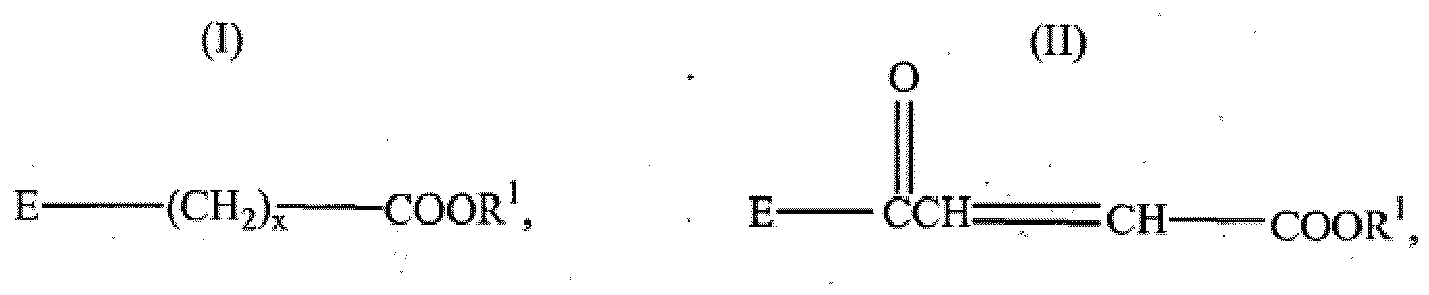


- Nanocomposite selon la revendication 1, dans lequel les unités dérivées de styrène dans l'élastomère sont des unités dérivées de styrène substituées.
- Nanocomposite selon les revendications 1 ou 2, dans lequel les unités styréniques sont fonctionnalisées.
- Nanocomposite selon la revendication 1, dans lequel l'élastomère n'est pas halogéné.
- Nanocomposite selon la revendication 1, dans lequel l'isooléfine est choisi parmi l'isobutylène, l'isobutène, l'isoprène, le 2-méthyl-1-butène, le 3-méthyl-1-butène, le 2-méthyl-2-butène et/ou le 4-méthyl-1-pentène.
- Nanocomposite selon la revendication 2, dans lequel les unités dérivées de styrène sont présentes à hauteur de 1 à 15 % en poids de l'élastomère.
- Nanocomposite selon la revendication 1, dans lequel l'élastomère comprend des unités dérivées de p-méthylstyrène.
- Nanocomposite selon la revendication 1, dans lequel l'élastomère comprend des unités dérivées d'isobutylène et des unités dérivées de p-méthylstyrène.
- Nanocomposite selon la revendication 1, dans lequel l'élastomère comprend également des unités dérivées de multioléfine.
- Nanocomposite selon la revendication 1, dans lequel l'élastomère comprend du poly(styrène-isoprène-butadiène), du caoutchouc de polyisobutylène à ramification en étoile et/ou du poly(isobutylène-co-p-méthylstyrène).
- Nanocomposite selon la revendication 1, dans lequel les unités fonctionnalisées sont présentes sur l'élastomère à hauteur de 0,01 % en poids à 15 % en poids de l'élastomère.
- Nanocomposite selon la revendication 1, dans lequel l'argile a été traitée avec un agent exfoliant pour former une argile exfoliée.
- Nanocomposite selon la revendication 12, dans lequel l'agent exfoliant est choisi parmi un ion ammonium, les alkylamines, un ion alkylammonium (primaire, secondaire, tertiaire et quaternaire), les dérivés de phosphonium ou de sulfonium d'amines aliphatiques, aromatiques ou arylaliphatiques, les phosphines et les sulfures et leurs mélanges.
- Nanocomposite selon la revendication 1, dans lequel l'argile est présente à hauteur de 0,1 % en poids à 50 % en poids du nanocomposite.
- Nanocomposite selon la revendication 1, dans lequel l'argile est présente à hauteur de 0,5 % en poids à 15 % en poids du nanocomposite.
- Nanocomposite selon la revendication 1, comprenant également une charge choisie parmi le noir de carbone, le noir de carbone modifié, la silice, la silice précipitée et leurs mélanges.
- Nanocomposite selon la revendication 1, comprenant également un ou plusieurs agents de durcissement.
- Nanocomposite selon la revendication 17, dans lequel l'agent de durcissement est choisi parmi le zinc, le stéarate de zinc, les acides gras, le soufre, une diamine, un diépoxy, une polyamine, un polyépoxy et leurs mélanges.
- Nanocomposite selon la revendication 1, comprenant également un caoutchouc secondaire choisi parmi le caoutchouc naturel, le caoutchouc de polybutadiène, le caoutchouc de nitrile, le caoutchouc de silicone, le caoutchouc de polyisoprène, le caoutchouc de poly(styrène-co-butadiène), le caoutchouc de poly(isoprène-co-butadiène), le caoutchouc de styrène-isoprène-butadiène, le caoutchouc d'éthylène-propylène, le caoutchouc de butyle bromé, le caoutchouc de butyle chloré, l'isoprène halogéné, les copolymères d'isobutylène halogénés, le polychloroprène, le caoutchouc de polyisobutylène à ramification en étoile, le caoutchouc de butyle bromé à ramification en étoile, le caoutchouc de poly(isobutylène-co-isoprène) ; le poly(isobutylène-co-p-méthylstyrène) halogéné, le caoutchouc d'éthylène-propylène et leurs mélanges.
- Calandrage intérieur de pneu comprenant le nanocomposite selon la revendication 1.
- Procédé de formation d'un nanocomposite selon la revendication 1, le procédé comprenant la mise en contact de l'argile, de l'élastomère, d'un promoteur de greffage et d'au moins un composé de fonctionnalisation.
- Procédé selon la revendication 21, dans lequel l'élastomère est tout d'abord mis en contact avec le composé de fonctionnalisation et le promoteur de greffage, puis mis en contact avec l'argile.
- Procédé selon la revendication 21, dans lequel l'élastomère, l'argile, le promoteur de greffage et le composé de fonctionnalisation sont mis en contact simultanément.
- Procédé selon la revendication 21, dans lequel le promoteur de greffage est un acide de Lewis choisi parmi les composés contenant des halogénures et des alkyles de bore, d'aluminium, de gallium, d'indium, de titane, de zirconium, d'étain, d'arsenic, d'antimoine et de bismuth, et leurs mélanges.
- Procédé selon la revendication 21, comprenant en outre la mise en contact d'un diluant choisi parmi le disulfure de carbone, le nitrobenzène, le chlorure de méthylène, le 1,2-dichloroéthane, l' hexane, le cyclohexane et leurs mélanges.
- Procédé selon la revendication 21, dans lequel l'élastomère et le composé de fonctionnalisation sont mélangés à l'état fondu.
- Procédé selon la revendication 21, dans lequel le composé de fonctionnalisation est choisi parmi CO2 et les composés suivants :


- Procédé selon la revendication 21, dans lequel le composé de fonctionnalisation est choisi parmi l'anhydride succinique, l'anhydride maléique, l'anhydride phtalique, l'anhydride glutarique, l'anhydride citraconique, l'anhydride itaconique et les autres anhydrides cycliques, le chlorure de succinyle, le chlorure de glutaryle, le chlorure d'itaconyle, le chlorure de malonyle, le chlorure d'adipoyle, le dichlorure de diéthylmalonyle, le chlorure de 3-méthyladipoyle, le chlorure de piméloyle, le chlorure de subéroyle, le chlorure d'azéolaoyle, le chlorure de sébacoyle, le dichlorure d'isophtaloyle, le dichlorure de phtaloyle, le chlorure de téréphtaloyle.
- Procédé selon la revendication 21, dans lequel les unités dérivées de styrène dans l'élastomère sont des unités dérivées de styrène substituées.
- Procédé selon la revendication 21, dans lequel l'isooléfine est choisi parmi l'isobutylène, l'isobutène, l'isoprène, le 2-méthyl-1-butène, le 3-méthyl-1-butène, le 2-méthyl-2-butène et/ou le 4-méthyl-1-pentène.
- Procédé selon la revendication 29, dans lequel les unités dérivées de styrène sont présentes à hauteur de 1 à 15 % en poids de l'élastomère.
- Procédé selon la revendication 21, dans lequel l'élastomère comprend des unités dérivées de p-méthylstyrène.
- Procédé selon la revendication 21, dans lequel l'élastomère comprend des unités dérivées d'isobutylène et des unités dérivées de p-méthylstyrène.
- Procédé selon la revendication 21, dans lequel l'élastomère comprend également des unités dérivées de multioléfine.
- Procédé selon la revendication 21, dans lequel l'élastomère comprend du poly(styrène-isoprène-butadiène), du caoutchouc de polyisobutylène à ramification en étoile et/ou du poly(isobutylène-co-p-méthylstyrène).
- Procédé selon la revendication 21, dans lequel l'élastomère est fonctionnalisé par mise en contact avec le composé de fonctionnalisation, les groupes fonctionnels étant présents sur l'élastomère à hauteur de 0,01 % en poids à 15 % en poids de l'élastomère.
- Procédé selon la revendication 21, dans lequel l'argile a été traitée avec un agent exfoliant pour former une argile exfoliée.
Applications Claiming Priority (3)
| Application Number | Priority Date | Filing Date | Title |
|---|---|---|---|
| US39409802P | 2002-07-05 | 2002-07-05 | |
| US394098P | 2002-07-05 | ||
| PCT/US2003/016944 WO2004005387A1 (fr) | 2002-07-05 | 2003-05-30 | Nanocomposite elastomere fonctionnalise |
Publications (2)
| Publication Number | Publication Date |
|---|---|
| EP1527128A1 EP1527128A1 (fr) | 2005-05-04 |
| EP1527128B1 true EP1527128B1 (fr) | 2015-07-01 |
Family
ID=30115678
Family Applications (1)
| Application Number | Title | Priority Date | Filing Date |
|---|---|---|---|
| EP03762981.3A Expired - Lifetime EP1527128B1 (fr) | 2002-07-05 | 2003-05-30 | Nanocomposite elastomere fonctionnalise |
Country Status (8)
| Country | Link |
|---|---|
| US (1) | US20050277723A1 (fr) |
| EP (1) | EP1527128B1 (fr) |
| JP (1) | JP4733978B2 (fr) |
| CN (1) | CN100489021C (fr) |
| AU (1) | AU2003243337A1 (fr) |
| CA (1) | CA2490248C (fr) |
| RU (1) | RU2356922C2 (fr) |
| WO (1) | WO2004005387A1 (fr) |
Families Citing this family (29)
| Publication number | Priority date | Publication date | Assignee | Title |
|---|---|---|---|---|
| US6861462B2 (en) * | 2001-12-21 | 2005-03-01 | The Goodyear Tire & Rubber Company | Nanocomposite formed in situ within an elastomer and article having component comprised thereof |
| JP4683928B2 (ja) * | 2002-12-18 | 2011-05-18 | 株式会社ブリヂストン | クレイの剥離方法、該方法から得られた組成物、及び該組成物を含む変性ゴム |
| ATE402219T1 (de) * | 2004-05-26 | 2008-08-15 | Pirelli | Reifen, umfassend ein elastomeres polymer mit einer funktionellen gruppe, und vernetzbare elastomere zusammensetzung |
| US7572855B2 (en) * | 2005-01-28 | 2009-08-11 | Bridgestone Corporation | Nano-composite and compositions manufactured thereof |
| US7579398B2 (en) | 2005-02-02 | 2009-08-25 | Bridgestone Corporation | Nano-composite and compositions therefrom |
| JP2007018563A (ja) * | 2005-07-05 | 2007-01-25 | Toshiba Corp | 情報記憶媒体、情報記録方法及び装置、情報再生方法及び装置 |
| US7605205B2 (en) * | 2005-11-07 | 2009-10-20 | Exxonmobil Chemical Patents, Inc. | Nanocomposite compositions and processes for making the same |
| US8048947B2 (en) * | 2005-11-08 | 2011-11-01 | Exxonmobil Chemical Patents Inc. | Nanocomposites and methods for making the same |
| JP4823882B2 (ja) * | 2005-12-19 | 2011-11-24 | 住友ゴム工業株式会社 | インナーライナー用ゴム組成物およびそれを用いたインナーライナーを有するタイヤ |
| US8039526B2 (en) | 2006-04-05 | 2011-10-18 | Exxonmobil Chemical Patents Inc. | Thermoplastic vulcanizates including nanoclays and processes for making the same |
| US7935184B2 (en) | 2006-06-19 | 2011-05-03 | Bridgestone Corporation | Method of preparing imidazolium surfactants |
| CA2593510A1 (fr) * | 2006-08-24 | 2008-02-24 | Lanxess Inc. | Adhesif a base de butylcaoutchouc contenant de l'anhydride maleique et, facultativement, une nanoargile |
| US7750070B2 (en) * | 2006-12-19 | 2010-07-06 | The Goodyear Tire & Rubber Company | Process for production of clay nanocomposite |
| US20080142131A1 (en) * | 2006-12-19 | 2008-06-19 | Xiaoping Yang | Pneumatic tire |
| US8476352B2 (en) * | 2008-08-08 | 2013-07-02 | Exxonmobil Chemical Patents Inc. | Elastomeric compositions comprising hydrocarbon polymer additives having improved impermeability |
| US20100078110A1 (en) * | 2008-09-30 | 2010-04-01 | Paul Harry Sandstrom | Pneumatic tire |
| US9475910B2 (en) * | 2009-10-26 | 2016-10-25 | Exxonmobil Chemical Patents Inc. | Elastomer nanocomposites with incorporated process oils |
| US9109101B2 (en) * | 2010-06-30 | 2015-08-18 | Sri Lanka Institute Of Nanotechnology (Put) Ltd. | Process for making reinforcing elastomer-clay nanocomposites |
| WO2012050666A1 (fr) * | 2010-10-13 | 2012-04-19 | Exxonmobil Chemical Patents Inc. | Procédé de granulation en immersion de résines hydrocarbonées ayant une viscosité faible |
| US10988563B2 (en) | 2010-10-13 | 2021-04-27 | Exxonmobil Chemical Patents Inc. | Silane-functionalized hydrocarbon polymer modifiers for elastomeric compositions |
| SG11201600915QA (en) * | 2013-08-07 | 2016-03-30 | Agency Science Tech & Res | Polymer composites with uv shielding strength |
| US10442914B2 (en) * | 2013-08-13 | 2019-10-15 | 3M Innovative Properties Company | Nanocomposites containing silica nanoparticles and dispersant, composites, articles, and methods of making same |
| CN103642077B (zh) * | 2013-11-28 | 2015-09-30 | 山东永泰化工有限公司 | 一种压路机用斜交轮胎胎侧胶 |
| US10179479B2 (en) | 2015-05-19 | 2019-01-15 | Bridgestone Americas Tire Operations, Llc | Plant oil-containing rubber compositions, tread thereof and race tires containing the tread |
| CN108350243B (zh) * | 2015-09-30 | 2020-10-27 | 埃克森美孚化学专利公司 | 用于分散石墨烯和石墨的多环芳烃官能化异丁烯共聚物 |
| RU2624294C1 (ru) * | 2015-12-28 | 2017-07-03 | Федеральное государственное бюджетное образовательное учреждение высшего образования "Московский авиационный институт (национальный исследовательский университет)" (МАИ) | Способ изготовления нанокомпозитного материала с биологической активностью |
| US10465064B2 (en) * | 2016-09-23 | 2019-11-05 | Baker Hughes, A Ge Company, Llc | Wear resistant and high temperature resistant elastomer nanocomposites |
| WO2021126625A1 (fr) * | 2019-12-17 | 2021-06-24 | Exxonmobil Chemical Patents Inc. | Additif pour bande de roulement de polymères fonctionnalisés pour améliorer les performances d'un pneu d'hiver |
| CN113912073B (zh) * | 2021-11-04 | 2022-12-09 | 浙江工业大学 | 一种黑滑石的剥离方法 |
Family Cites Families (52)
| Publication number | Priority date | Publication date | Assignee | Title |
|---|---|---|---|---|
| US3288714A (en) * | 1961-12-06 | 1966-11-29 | Monsanto Co | Lubricating oil compositions containing alkenyl succinic anhydrides |
| SU660979A1 (ru) * | 1977-01-20 | 1979-05-05 | Московский Технологический Институт Легкой Промышленности | Способ получени модифицированного полиолефина |
| US4228254A (en) * | 1978-08-07 | 1980-10-14 | Exxon Research & Engineering Co. | Functional group containing cyclic diolefin butyl rubbers |
| ES2092502T3 (es) * | 1989-10-03 | 1996-12-01 | Exxon Chemical Patents Inc | Copolimeros funcionalizados de para-alquilestireno/isoolefina preparados mediante sustitucion nucleofilica. |
| ES2090128T3 (es) * | 1989-10-03 | 1996-10-16 | Exxon Chemical Patents Inc | Copolimeros de injerto elastomericos y su uso como compatibilizadores. |
| WO1992016569A1 (fr) * | 1991-03-25 | 1992-10-01 | Exxon Chemical Patents Inc. | Polymers greffes d'une isomonoolefine et d'un alkylestyrene |
| JPH05330307A (ja) * | 1992-06-02 | 1993-12-14 | Polytec Design:Kk | タイヤのインナーライナー |
| US5576372A (en) * | 1993-04-05 | 1996-11-19 | Exxon Chemical Patents Inc. | Composite tire innerliners and inner tubes |
| EP0695239B1 (fr) * | 1993-04-05 | 1998-06-17 | Exxon Chemical Patents Inc. | Garnitures interieures et chambres a air pour pneumatiques composites |
| US5576373A (en) * | 1993-04-05 | 1996-11-19 | Exxon Chemical Patents Inc. | Composite tire innerliners and inner tubes |
| KR960701949A (ko) * | 1993-04-19 | 1996-03-28 | 벤 씨. 카데헤드 | 이소올레핀과 알킬스티렌의 그라프트중합체를 함유하는 상용화된 탄성중합체 블렌드(compatibilized elastomer blends containing grafted polymers of an isoolefin and alkylstyrene) |
| WO1995006090A1 (fr) * | 1993-08-23 | 1995-03-02 | Alliedsignal Inc. | Nanocomposites polymeres comportant un polymere et un materiau particulaire exfolie derive a l'aide d'organosilanes, d'organotitanates et d'organozirconates disperses dans ledit materiau et leurs procedes de fabrication |
| US5435608A (en) * | 1994-06-17 | 1995-07-25 | General Electric Company | Radiation imager with common passivation dielectric for gate electrode and photosensor |
| US6015862A (en) * | 1994-11-18 | 2000-01-18 | The Penn State Research Foundation | Functionalized α-olefin/para-alkylstyrene terpolymers |
| US5498673A (en) * | 1994-11-29 | 1996-03-12 | Exxon Research & Engineering Co. | Functional para alkylstyrene polymers and copolymers |
| CZ363797A3 (cs) * | 1995-05-19 | 1998-07-15 | Exxon Chemical Patents Inc. | Zavádění kovů a funkcí do polymerů a kopolymerů |
| DE69615090T2 (de) * | 1995-06-05 | 2002-06-06 | Kabushiki Kaisha Toyota Chuo Kenkyusho, Aichi | Verbundtonmaterial und Verfahren zu seiner Herstellung, Mischungsmaterial und Verbundtonkautschuk, die es anwenden, und Verfahren zu ihrer Herstellung |
| PL328865A1 (en) * | 1995-06-23 | 1999-03-01 | Exxon Research Engineering Co | Method of obtaining polymeric nanocomposite by emulsion synthesis |
| US5679748A (en) * | 1996-04-05 | 1997-10-21 | Exxon Chemical Patents Inc. | Process for oxidative functionalization of polymers containing alkylstyrene |
| JP3377159B2 (ja) * | 1996-09-04 | 2003-02-17 | 株式会社豊田中央研究所 | 粘土複合ゴム材料の製造方法 |
| US5807629A (en) * | 1996-11-15 | 1998-09-15 | Exxon Research And Engineering Company | Tactoidal elastomer nanocomposites |
| HUP9904213A3 (en) * | 1996-11-26 | 2000-05-29 | Exxon Chemical Patents Inc Bay | High impact styrene/acrylonitrile polymer blend compositions |
| US6034164A (en) * | 1997-02-21 | 2000-03-07 | Exxon Research And Engineering Co. | Nanocomposite materials formed from inorganic layered materials dispersed in a polymer matrix |
| US6060549A (en) * | 1997-05-20 | 2000-05-09 | Exxon Chemical Patents, Inc. | Rubber toughened thermoplastic resin nano composites |
| US6117932A (en) * | 1997-09-18 | 2000-09-12 | Kabushiki Kaisha Toyota Chuo Kenkyusho | Resin composite |
| JP3356025B2 (ja) * | 1997-09-18 | 2002-12-09 | 株式会社豊田中央研究所 | 樹脂複合材の製造方法 |
| JP3356026B2 (ja) * | 1997-09-24 | 2002-12-09 | 株式会社豊田中央研究所 | 樹脂複合材 |
| JP3236257B2 (ja) * | 1998-01-13 | 2001-12-10 | 横浜ゴム株式会社 | 熱可塑性エラストマー組成物およびそれを使用した空気入りタイヤ |
| JP3880720B2 (ja) * | 1998-02-19 | 2007-02-14 | 豊田合成株式会社 | 防振ゴム用ゴム組成物 |
| JP4410868B2 (ja) * | 1998-03-04 | 2010-02-03 | 株式会社ブリヂストン | ゴム組成物及びそれを用いた空気入りタイヤ |
| JP4547727B2 (ja) * | 1998-04-14 | 2010-09-22 | 横浜ゴム株式会社 | 冷媒輸送用ホースおよびその製造方法 |
| US6287992B1 (en) * | 1998-04-20 | 2001-09-11 | The Dow Chemical Company | Polymer composite and a method for its preparation |
| US6372855B1 (en) * | 1998-08-31 | 2002-04-16 | The Yokohama Rubber Co., Ltd. | Polymer containing isobutylene as repeating unit and rubber composition containing the same |
| JP3384344B2 (ja) * | 1998-12-01 | 2003-03-10 | 株式会社豊田中央研究所 | ゴム複合材料及びその製造方法 |
| JP4606529B2 (ja) * | 1999-01-11 | 2011-01-05 | 住友ゴム工業株式会社 | ゴム組成物 |
| CA2395904A1 (fr) * | 1999-12-30 | 2001-07-12 | Michelin Recherche Et Technique S.A. | Composition de caoutchouc pour pneumatique comportant un agent de couplage (charge blanche/elastomere) a fonction ester |
| US6632868B2 (en) * | 2000-03-01 | 2003-10-14 | Amcol International Corporation | Intercalates formed with polypropylene/maleic anhydride-modified polypropylene intercalants |
| US6414070B1 (en) * | 2000-03-08 | 2002-07-02 | Omnova Solutions Inc. | Flame resistant polyolefin compositions containing organically modified clay |
| JP2002005346A (ja) * | 2000-04-21 | 2002-01-09 | Bridgestone Corp | 冷媒輸送用ゴムホース |
| US6403231B1 (en) * | 2000-05-12 | 2002-06-11 | Pechiney Emballage Flexible Europe | Thermoplastic film structures having improved barrier and mechanical properties |
| JP3830341B2 (ja) * | 2000-05-30 | 2006-10-04 | Nok株式会社 | ブチルゴム組成物 |
| US6451897B1 (en) * | 2000-06-16 | 2002-09-17 | Basell Technology Company Bv | Nanocomposites made from polypropylene graft copolymers |
| JP4588177B2 (ja) * | 2000-06-30 | 2010-11-24 | 株式会社ブリヂストン | 空気入りタイヤおよびその製造方法 |
| FR2810987B1 (fr) * | 2000-07-03 | 2002-08-16 | Rhodianyl | Compositions polymeres aux proprietes mecaniques ameliorees |
| JP2002047382A (ja) * | 2000-08-02 | 2002-02-12 | Mitsui Chemicals Inc | 耐熱防振ゴム用ゴム組成物 |
| JP3911235B2 (ja) * | 2000-09-21 | 2007-05-09 | ローム アンド ハース カンパニー | 改質ナノ複合材組成物およびそれを作成および使用する方法 |
| KR20030045120A (ko) * | 2000-10-18 | 2003-06-09 | 엑손모빌 케미칼 패턴츠 인코포레이티드 | 탄성체 조성물 |
| ATE325155T1 (de) * | 2001-03-02 | 2006-06-15 | Southern Clay Prod Inc | Herstellung von polymernanoverbundmaterialien durch dispersiondestabilisierung |
| US6759464B2 (en) * | 2001-12-21 | 2004-07-06 | The Goodyear Tire & Rubber Company | Process for preparing nanocomposite, composition and article thereof |
| JP2003221473A (ja) * | 2002-02-01 | 2003-08-05 | Yokohama Rubber Co Ltd:The | ゴム組成物 |
| US6656995B2 (en) * | 2002-03-12 | 2003-12-02 | Equistar Chemicals, Lp | Process for producing olefin polymer composites having improved melt strength |
| AU2003245373A1 (en) * | 2002-07-05 | 2004-01-23 | Exxonmobil Chemical Patents Inc. | Functionalized elastomer nanocomposite |
-
2003
- 2003-05-30 EP EP03762981.3A patent/EP1527128B1/fr not_active Expired - Lifetime
- 2003-05-30 CN CNB038158078A patent/CN100489021C/zh not_active Expired - Lifetime
- 2003-05-30 US US10/518,127 patent/US20050277723A1/en not_active Abandoned
- 2003-05-30 JP JP2004519565A patent/JP4733978B2/ja not_active Expired - Fee Related
- 2003-05-30 RU RU2005102926/04A patent/RU2356922C2/ru active
- 2003-05-30 WO PCT/US2003/016944 patent/WO2004005387A1/fr not_active Ceased
- 2003-05-30 AU AU2003243337A patent/AU2003243337A1/en not_active Abandoned
- 2003-05-30 CA CA2490248A patent/CA2490248C/fr not_active Expired - Fee Related
Also Published As
| Publication number | Publication date |
|---|---|
| JP2005532448A (ja) | 2005-10-27 |
| EP1527128A1 (fr) | 2005-05-04 |
| RU2005102926A (ru) | 2005-10-27 |
| CN1665871A (zh) | 2005-09-07 |
| CN100489021C (zh) | 2009-05-20 |
| CA2490248C (fr) | 2011-12-20 |
| AU2003243337A1 (en) | 2004-01-23 |
| WO2004005387A1 (fr) | 2004-01-15 |
| CA2490248A1 (fr) | 2004-01-15 |
| RU2356922C2 (ru) | 2009-05-27 |
| JP4733978B2 (ja) | 2011-07-27 |
| US20050277723A1 (en) | 2005-12-15 |
Similar Documents
| Publication | Publication Date | Title |
|---|---|---|
| EP1527127B1 (fr) | Nanocomposite elastomere fonctionnalise | |
| CA2490248C (fr) | Nanocomposite elastomere fonctionnalise | |
| EP1358265B1 (fr) | Composition elastomerique | |
| US7960454B2 (en) | Processing aids for elastomeric compositions | |
| EP1969015B1 (fr) | Adjuvants pour la production de compositions elastomeres | |
| US7425591B2 (en) | Elastomeric composition | |
| JP5438972B2 (ja) | ナノ複合材組成物とその製造方法 | |
| US20060167184A1 (en) | Innerliners for use in tires | |
| US20110060086A1 (en) | Elastomeric Copolymers, Copolymer Compositions, and Their Use in Articles | |
| US20050222335A1 (en) | Elastomeric blend for air barriers | |
| US7772308B2 (en) | Air barrier composition for innertubes | |
| EP2493972B1 (fr) | Nanocomposites élastomères à huiles d'usinage incorporées | |
| US8247496B2 (en) | Processing aids for elastomeric compositions | |
| EP2513202B1 (fr) | Nanocomposites élastomères, compositions nanocomposites et méthodes de fabrication |
Legal Events
| Date | Code | Title | Description |
|---|---|---|---|
| PUAI | Public reference made under article 153(3) epc to a published international application that has entered the european phase |
Free format text: ORIGINAL CODE: 0009012 |
|
| 17P | Request for examination filed |
Effective date: 20050126 |
|
| AK | Designated contracting states |
Kind code of ref document: A1 Designated state(s): AT BE BG CH CY CZ DE DK EE ES FI FR GB GR HU IE IT LI LU MC NL PT RO SE SI SK TR |
|
| AX | Request for extension of the european patent |
Extension state: AL LT LV MK |
|
| DAX | Request for extension of the european patent (deleted) | ||
| 17Q | First examination report despatched |
Effective date: 20111102 |
|
| GRAP | Despatch of communication of intention to grant a patent |
Free format text: ORIGINAL CODE: EPIDOSNIGR1 |
|
| INTG | Intention to grant announced |
Effective date: 20150202 |
|
| GRAS | Grant fee paid |
Free format text: ORIGINAL CODE: EPIDOSNIGR3 |
|
| GRAA | (expected) grant |
Free format text: ORIGINAL CODE: 0009210 |
|
| AK | Designated contracting states |
Kind code of ref document: B1 Designated state(s): AT BE BG CH CY CZ DE DK EE ES FI FR GB GR HU IE IT LI LU MC NL PT RO SE SI SK TR |
|
| REG | Reference to a national code |
Ref country code: GB Ref legal event code: FG4D |
|
| REG | Reference to a national code |
Ref country code: AT Ref legal event code: REF Ref document number: 733945 Country of ref document: AT Kind code of ref document: T Effective date: 20150715 Ref country code: CH Ref legal event code: EP |
|
| REG | Reference to a national code |
Ref country code: DE Ref legal event code: R096 Ref document number: 60347763 Country of ref document: DE |
|
| REG | Reference to a national code |
Ref country code: IE Ref legal event code: FG4D |
|
| REG | Reference to a national code |
Ref country code: AT Ref legal event code: MK05 Ref document number: 733945 Country of ref document: AT Kind code of ref document: T Effective date: 20150701 |
|
| REG | Reference to a national code |
Ref country code: NL Ref legal event code: MP Effective date: 20150701 |
|
| PG25 | Lapsed in a contracting state [announced via postgrant information from national office to epo] |
Ref country code: FI Free format text: LAPSE BECAUSE OF FAILURE TO SUBMIT A TRANSLATION OF THE DESCRIPTION OR TO PAY THE FEE WITHIN THE PRESCRIBED TIME-LIMIT Effective date: 20150701 Ref country code: GR Free format text: LAPSE BECAUSE OF FAILURE TO SUBMIT A TRANSLATION OF THE DESCRIPTION OR TO PAY THE FEE WITHIN THE PRESCRIBED TIME-LIMIT Effective date: 20151002 |
|
| PG25 | Lapsed in a contracting state [announced via postgrant information from national office to epo] |
Ref country code: PT Free format text: LAPSE BECAUSE OF FAILURE TO SUBMIT A TRANSLATION OF THE DESCRIPTION OR TO PAY THE FEE WITHIN THE PRESCRIBED TIME-LIMIT Effective date: 20151102 Ref country code: ES Free format text: LAPSE BECAUSE OF FAILURE TO SUBMIT A TRANSLATION OF THE DESCRIPTION OR TO PAY THE FEE WITHIN THE PRESCRIBED TIME-LIMIT Effective date: 20150701 Ref country code: AT Free format text: LAPSE BECAUSE OF FAILURE TO SUBMIT A TRANSLATION OF THE DESCRIPTION OR TO PAY THE FEE WITHIN THE PRESCRIBED TIME-LIMIT Effective date: 20150701 Ref country code: SE Free format text: LAPSE BECAUSE OF FAILURE TO SUBMIT A TRANSLATION OF THE DESCRIPTION OR TO PAY THE FEE WITHIN THE PRESCRIBED TIME-LIMIT Effective date: 20150701 |
|
| REG | Reference to a national code |
Ref country code: DE Ref legal event code: R097 Ref document number: 60347763 Country of ref document: DE |
|
| REG | Reference to a national code |
Ref country code: FR Ref legal event code: PLFP Year of fee payment: 14 |
|
| PG25 | Lapsed in a contracting state [announced via postgrant information from national office to epo] |
Ref country code: EE Free format text: LAPSE BECAUSE OF FAILURE TO SUBMIT A TRANSLATION OF THE DESCRIPTION OR TO PAY THE FEE WITHIN THE PRESCRIBED TIME-LIMIT Effective date: 20150701 Ref country code: SK Free format text: LAPSE BECAUSE OF FAILURE TO SUBMIT A TRANSLATION OF THE DESCRIPTION OR TO PAY THE FEE WITHIN THE PRESCRIBED TIME-LIMIT Effective date: 20150701 Ref country code: CZ Free format text: LAPSE BECAUSE OF FAILURE TO SUBMIT A TRANSLATION OF THE DESCRIPTION OR TO PAY THE FEE WITHIN THE PRESCRIBED TIME-LIMIT Effective date: 20150701 Ref country code: IT Free format text: LAPSE BECAUSE OF FAILURE TO SUBMIT A TRANSLATION OF THE DESCRIPTION OR TO PAY THE FEE WITHIN THE PRESCRIBED TIME-LIMIT Effective date: 20150701 Ref country code: DK Free format text: LAPSE BECAUSE OF FAILURE TO SUBMIT A TRANSLATION OF THE DESCRIPTION OR TO PAY THE FEE WITHIN THE PRESCRIBED TIME-LIMIT Effective date: 20150701 |
|
| PLBE | No opposition filed within time limit |
Free format text: ORIGINAL CODE: 0009261 |
|
| STAA | Information on the status of an ep patent application or granted ep patent |
Free format text: STATUS: NO OPPOSITION FILED WITHIN TIME LIMIT |
|
| PG25 | Lapsed in a contracting state [announced via postgrant information from national office to epo] |
Ref country code: RO Free format text: LAPSE BECAUSE OF FAILURE TO SUBMIT A TRANSLATION OF THE DESCRIPTION OR TO PAY THE FEE WITHIN THE PRESCRIBED TIME-LIMIT Effective date: 20150701 |
|
| 26N | No opposition filed |
Effective date: 20160404 |
|
| PGFP | Annual fee paid to national office [announced via postgrant information from national office to epo] |
Ref country code: DE Payment date: 20160524 Year of fee payment: 14 Ref country code: GB Payment date: 20160426 Year of fee payment: 14 |
|
| PG25 | Lapsed in a contracting state [announced via postgrant information from national office to epo] |
Ref country code: SI Free format text: LAPSE BECAUSE OF FAILURE TO SUBMIT A TRANSLATION OF THE DESCRIPTION OR TO PAY THE FEE WITHIN THE PRESCRIBED TIME-LIMIT Effective date: 20150701 |
|
| PGFP | Annual fee paid to national office [announced via postgrant information from national office to epo] |
Ref country code: FR Payment date: 20160428 Year of fee payment: 14 |
|
| PG25 | Lapsed in a contracting state [announced via postgrant information from national office to epo] |
Ref country code: LU Free format text: LAPSE BECAUSE OF FAILURE TO SUBMIT A TRANSLATION OF THE DESCRIPTION OR TO PAY THE FEE WITHIN THE PRESCRIBED TIME-LIMIT Effective date: 20160530 |
|
| REG | Reference to a national code |
Ref country code: CH Ref legal event code: PL |
|
| PG25 | Lapsed in a contracting state [announced via postgrant information from national office to epo] |
Ref country code: CH Free format text: LAPSE BECAUSE OF NON-PAYMENT OF DUE FEES Effective date: 20160531 Ref country code: LI Free format text: LAPSE BECAUSE OF NON-PAYMENT OF DUE FEES Effective date: 20160531 |
|
| REG | Reference to a national code |
Ref country code: IE Ref legal event code: MM4A |
|
| PG25 | Lapsed in a contracting state [announced via postgrant information from national office to epo] |
Ref country code: IE Free format text: LAPSE BECAUSE OF NON-PAYMENT OF DUE FEES Effective date: 20160530 |
|
| PG25 | Lapsed in a contracting state [announced via postgrant information from national office to epo] |
Ref country code: NL Free format text: LAPSE BECAUSE OF FAILURE TO SUBMIT A TRANSLATION OF THE DESCRIPTION OR TO PAY THE FEE WITHIN THE PRESCRIBED TIME-LIMIT Effective date: 20150701 |
|
| REG | Reference to a national code |
Ref country code: DE Ref legal event code: R119 Ref document number: 60347763 Country of ref document: DE |
|
| GBPC | Gb: european patent ceased through non-payment of renewal fee |
Effective date: 20170530 |
|
| REG | Reference to a national code |
Ref country code: FR Ref legal event code: ST Effective date: 20180131 |
|
| PG25 | Lapsed in a contracting state [announced via postgrant information from national office to epo] |
Ref country code: DE Free format text: LAPSE BECAUSE OF NON-PAYMENT OF DUE FEES Effective date: 20171201 Ref country code: GB Free format text: LAPSE BECAUSE OF NON-PAYMENT OF DUE FEES Effective date: 20170530 |
|
| PG25 | Lapsed in a contracting state [announced via postgrant information from national office to epo] |
Ref country code: HU Free format text: LAPSE BECAUSE OF FAILURE TO SUBMIT A TRANSLATION OF THE DESCRIPTION OR TO PAY THE FEE WITHIN THE PRESCRIBED TIME-LIMIT; INVALID AB INITIO Effective date: 20030530 Ref country code: CY Free format text: LAPSE BECAUSE OF FAILURE TO SUBMIT A TRANSLATION OF THE DESCRIPTION OR TO PAY THE FEE WITHIN THE PRESCRIBED TIME-LIMIT Effective date: 20150701 Ref country code: FR Free format text: LAPSE BECAUSE OF NON-PAYMENT OF DUE FEES Effective date: 20170531 |
|
| PG25 | Lapsed in a contracting state [announced via postgrant information from national office to epo] |
Ref country code: TR Free format text: LAPSE BECAUSE OF FAILURE TO SUBMIT A TRANSLATION OF THE DESCRIPTION OR TO PAY THE FEE WITHIN THE PRESCRIBED TIME-LIMIT Effective date: 20150701 Ref country code: MC Free format text: LAPSE BECAUSE OF FAILURE TO SUBMIT A TRANSLATION OF THE DESCRIPTION OR TO PAY THE FEE WITHIN THE PRESCRIBED TIME-LIMIT Effective date: 20150701 |
|
| PG25 | Lapsed in a contracting state [announced via postgrant information from national office to epo] |
Ref country code: BG Free format text: LAPSE BECAUSE OF FAILURE TO SUBMIT A TRANSLATION OF THE DESCRIPTION OR TO PAY THE FEE WITHIN THE PRESCRIBED TIME-LIMIT Effective date: 20150701 |
|
| PGFP | Annual fee paid to national office [announced via postgrant information from national office to epo] |
Ref country code: BE Payment date: 20200421 Year of fee payment: 18 |
|
| REG | Reference to a national code |
Ref country code: BE Ref legal event code: MM Effective date: 20210531 |
|
| PG25 | Lapsed in a contracting state [announced via postgrant information from national office to epo] |
Ref country code: BE Free format text: LAPSE BECAUSE OF NON-PAYMENT OF DUE FEES Effective date: 20210531 |