EP1531335A2 - Batteriesatz und Verfahren zur Berechnung der Batterierestkapazität - Google Patents
Batteriesatz und Verfahren zur Berechnung der Batterierestkapazität Download PDFInfo
- Publication number
- EP1531335A2 EP1531335A2 EP04257031A EP04257031A EP1531335A2 EP 1531335 A2 EP1531335 A2 EP 1531335A2 EP 04257031 A EP04257031 A EP 04257031A EP 04257031 A EP04257031 A EP 04257031A EP 1531335 A2 EP1531335 A2 EP 1531335A2
- Authority
- EP
- European Patent Office
- Prior art keywords
- temperature
- charge
- discharge cycles
- battery power
- remaining battery
- Prior art date
- Legal status (The legal status is an assumption and is not a legal conclusion. Google has not performed a legal analysis and makes no representation as to the accuracy of the status listed.)
- Granted
Links
Images




Classifications
-
- H—ELECTRICITY
- H01—ELECTRIC ELEMENTS
- H01M—PROCESSES OR MEANS, e.g. BATTERIES, FOR THE DIRECT CONVERSION OF CHEMICAL ENERGY INTO ELECTRICAL ENERGY
- H01M10/00—Secondary cells; Manufacture thereof
- H01M10/42—Methods or arrangements for servicing or maintenance of secondary cells or secondary half-cells
- H01M10/48—Accumulators combined with arrangements for measuring, testing or indicating the condition of cells, e.g. the level or density of the electrolyte
-
- G—PHYSICS
- G01—MEASURING; TESTING
- G01R—MEASURING ELECTRIC VARIABLES; MEASURING MAGNETIC VARIABLES
- G01R31/00—Arrangements for testing electric properties; Arrangements for locating electric faults; Arrangements for electrical testing characterised by what is being tested not provided for elsewhere
- G01R31/36—Arrangements for testing, measuring or monitoring the electrical condition of accumulators or electric batteries, e.g. capacity or state of charge [SoC]
- G01R31/367—Software therefor, e.g. for battery testing using modelling or look-up tables
-
- H—ELECTRICITY
- H01—ELECTRIC ELEMENTS
- H01M—PROCESSES OR MEANS, e.g. BATTERIES, FOR THE DIRECT CONVERSION OF CHEMICAL ENERGY INTO ELECTRICAL ENERGY
- H01M10/00—Secondary cells; Manufacture thereof
- H01M10/42—Methods or arrangements for servicing or maintenance of secondary cells or secondary half-cells
- H01M10/48—Accumulators combined with arrangements for measuring, testing or indicating the condition of cells, e.g. the level or density of the electrolyte
- H01M10/486—Accumulators combined with arrangements for measuring, testing or indicating the condition of cells, e.g. the level or density of the electrolyte for measuring temperature
-
- H—ELECTRICITY
- H01—ELECTRIC ELEMENTS
- H01M—PROCESSES OR MEANS, e.g. BATTERIES, FOR THE DIRECT CONVERSION OF CHEMICAL ENERGY INTO ELECTRICAL ENERGY
- H01M50/00—Constructional details or processes of manufacture of the non-active parts of electrochemical cells other than fuel cells, e.g. hybrid cells
- H01M50/20—Mountings; Secondary casings or frames; Racks, modules or packs; Suspension devices; Shock absorbers; Transport or carrying devices; Holders
- H01M50/204—Racks, modules or packs for multiple batteries or multiple cells
-
- G—PHYSICS
- G01—MEASURING; TESTING
- G01R—MEASURING ELECTRIC VARIABLES; MEASURING MAGNETIC VARIABLES
- G01R31/00—Arrangements for testing electric properties; Arrangements for locating electric faults; Arrangements for electrical testing characterised by what is being tested not provided for elsewhere
- G01R31/36—Arrangements for testing, measuring or monitoring the electrical condition of accumulators or electric batteries, e.g. capacity or state of charge [SoC]
- G01R31/374—Arrangements for testing, measuring or monitoring the electrical condition of accumulators or electric batteries, e.g. capacity or state of charge [SoC] with means for correcting the measurement for temperature or ageing
-
- H—ELECTRICITY
- H01—ELECTRIC ELEMENTS
- H01M—PROCESSES OR MEANS, e.g. BATTERIES, FOR THE DIRECT CONVERSION OF CHEMICAL ENERGY INTO ELECTRICAL ENERGY
- H01M10/00—Secondary cells; Manufacture thereof
- H01M10/05—Accumulators with non-aqueous electrolyte
- H01M10/052—Li-accumulators
- H01M10/0525—Rocking-chair batteries, i.e. batteries with lithium insertion or intercalation in both electrodes; Lithium-ion batteries
-
- H—ELECTRICITY
- H01—ELECTRIC ELEMENTS
- H01M—PROCESSES OR MEANS, e.g. BATTERIES, FOR THE DIRECT CONVERSION OF CHEMICAL ENERGY INTO ELECTRICAL ENERGY
- H01M10/00—Secondary cells; Manufacture thereof
- H01M10/42—Methods or arrangements for servicing or maintenance of secondary cells or secondary half-cells
- H01M10/425—Structural combination with electronic components, e.g. electronic circuits integrated to the outside of the casing
- H01M2010/4278—Systems for data transfer from batteries, e.g. transfer of battery parameters to a controller, data transferred between battery controller and main controller
-
- Y—GENERAL TAGGING OF NEW TECHNOLOGICAL DEVELOPMENTS; GENERAL TAGGING OF CROSS-SECTIONAL TECHNOLOGIES SPANNING OVER SEVERAL SECTIONS OF THE IPC; TECHNICAL SUBJECTS COVERED BY FORMER USPC CROSS-REFERENCE ART COLLECTIONS [XRACs] AND DIGESTS
- Y02—TECHNOLOGIES OR APPLICATIONS FOR MITIGATION OR ADAPTATION AGAINST CLIMATE CHANGE
- Y02E—REDUCTION OF GREENHOUSE GAS [GHG] EMISSIONS, RELATED TO ENERGY GENERATION, TRANSMISSION OR DISTRIBUTION
- Y02E60/00—Enabling technologies; Technologies with a potential or indirect contribution to GHG emissions mitigation
- Y02E60/10—Energy storage using batteries
Definitions
- the present invention relates to a battery pack and a remaining battery power calculation method.
- Preferred embodiments relate to a battery pack and a remaining battery power calculation method which permits calculating remaining battery power according to the number of charge/discharge cycles and temperature during use of the battery.
- Battery packs such as liquid ion batteries have specific capacities, and their capacities have the characteristic of varying according to the temperature under which the battery pack is used.
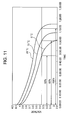
- Fig. 11 is a graph showing discharge characteristics of a battery pack at 25°C, 10°C and 0°C. The abscissa represents time, while the ordinate represents voltage.
- the battery pack has the characteristic of decreasing its capacity even in the case where it continues to be used and the number of charge/discharge cycles increases. This is because the battery pack repeats a charge/discharge cycle and its battery cell is degraded, so the usable capacity thereof decreases, and called 'cycle degradation'.
- the usable capacity of a battery which has undergone a large number of charge/discharge cycles is changed by two factors: cycle degradation and temperature during use.
- the technique of detecting the temperature of a battery pack by using a temperature sensor and correcting the remaining battery power has heretofore been used to correct battery capacity diminutions during use at low temperatures, as in Japanese Laid-Open Patent Application JP-A-2000-2604 8 8 (Paragraph Numbers [0038]-[0072]), for example.
- the technique of counting the number of charge/discharge cycles, determining that cycle degradation is advancing, according to the counted number, and estimating the remaining battery power to be lower than the actual battery power is used to correct battery degradation due to the number of charge/discharge cycles.
- correction of a usable time in the current temperature environment is performed by measuring the current temperature with a thermistor, and correction of the usable time of a battery cell which has undergone a larger number of charge/discharge cycles is performed by counting the number of charge/discharge cycles.
- temperature data and correction values depending on temperate are held, and when temperature data indicates a low temperature, the remaining battery power is estimated to be lower than the actual remaining battery power, in view of the degradation of the discharge characteristic of the battery cell.
- correction values for cycle degradation are prepared, and as the number of charge/discharge cycles becomes larger, the remaining battery power is estimated to be smaller.
- two correction values i.e., temperature and cycle degradation, are prepared as data stored in the battery pack, whereby the remaining battery power is corrected according to use environment and the number of times of use.
- a preferred embodiment of the present invention provides a battery pack and a remaining battery power calculation method both of which seek to reduce calculation errors of remaining battery power so as degradation and temperature.
- a first aspect of the present invention provides a battery pack for calculating a remaining battery power according to a number of charge/discharge cycles and temperature during operation, comprising temperature measurement means for measuring temperature of a battery cell, charge/discharge cycle counting means for counting a number of charge/discharge cycles, correction value storage means for storing correction values changed at every predetermined number of charge/discharge cycles for calculating the remaining battery power corresponding to the temperature, and remaining power calculation means for specifying a temperature correction value by searching the correction value storage means based on the measured temperature and the counted number of charge/discharge cycles, and calculating the remaining battery power corresponding to the specified temperature correction value.
- the remaining power calculation means specifies a correction value for calculation of remaining battery power corresponding to temperature, from among correction values changed every predetermined number of charge/discharge cycles stored in the correction value storage means, on the basis of the temperature of the battery cell measured by the temperature measurement means and the number of charge/discharge cycles counted by the charge/discharge counting means, and calculates remaining battery power corresponding to the specified correction value.
- Temperature correction values changed every predetermined number of charge/discharge cycles are used instead of setting different temperature correction values for all charge/discharge cycles, whereby correction of remaining battery power based on cycle degradation and temperature is performed with a small number of parameters.
- a correction value for calculation of remaining battery power corresponding to temperature is specified from among correction values changed every stored predetermined number of charge/discharge cycles, on the basis of the measured temperature of the battery cell and the counted number of charge/discharge cycles, and remaining battery power corresponding to the specified correction value is calculated. Accordingly, even if the number of charge/discharge cycles increases and cycle degradation proceeds, actual remaining battery power can be calculated more accurately in various temperature environments.
- a second aspect of the present invention provides a battery power calculating method according to claim 4.
- Embodiments of the present invention can be applied to battery packs to be connected to, for example, video cameras, digital still cameras or battery chargers, and the like.
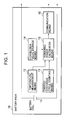
- FIG. 1 is a functional block diagram showing the principle of a battery pack according to a preferred embodiment of the present invention.
- a battery pack 10 according to a preferred embodiment of the present invention includes temperature measurement means 12 for measuring the temperature of a battery cell 11, charge/discharge cycle counting means 13 for counting the number of charge/discharge cycles, correction value storage means 14 for storing correction values (hereinafter referred to as temperature correction values) changed every predetermined number of charge/discharge cycles and to be used for calculation of remaining battery power corresponding to the temperature, remaining power calculation means 15 for specifying a temperature correction value by searching the correction value storage means 14 on the basis of the measured temperature and the counted number of charge/discharge cycles, and calculating remaining battery power corresponding to the specified temperature correction value, and communication means 16 for communicating the calculated remaining battery power amount to a connected device which is not shown.
- temperature correction values hereinafter referred to as temperature correction values
- the battery cell 11 is, for example, a lithium ion battery.
- the temperature measurement means 12 is, for example, a thermistor which is mounted on a surface of the battery cell or a circuit board.
- the charge/discharge counting means 13 and the remaining power calculation means 15 are realized by, for example, a microcontroller.
- the correction value storage means 14 is, for example, an EEPROM (Electrically Erasable Programmable Read-Only Memory).
- charge/discharge cycle means the process of discharging the battery cell 11 once and subsequently discharging the battery cell 11 to a certain voltage level, and this process is defined as one charge/discharge cycle.
- the temperature correction value used in a preferred embodiment of the present invention is changed every predetermined number of charge/discharge cycles.
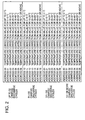
- Fig. 2 shows examples of the stored temperature correction values.
- Temperature correction values for up to 50 charge/discharge cycles are respectively stored at addresses 00-06 of the correction value storage means 14.
- the respective addresses 00-06 store different temperature correction values according to different temperatures during use, for example, temperature correction values for the cases of up to 0°C, 0-10°C, 10-20°C, 20-30°C, 30-40°C, 40-50°C and 50°C or higher.
- a temperature correction value which decreases the capacity at a rate of 10%/50 cycles is stored
- a temperature correction value which decreases the capacity at a rate of 4%/50 cycles is stored.
- a temperature correction value may be set so that the capacity decreases at a rate of 4%/50 cycles as to all temperatures.
- temperature correction values for 51-100 charge/discharge cycles are stored at addresses 10-16
- temperature correction values for 101-150 charge/discharge cycles are stored at addresses 20-26
- temperature correction values for 150 cycles or above are stored at addresses 30-36
- the temperature correction values are modified for each of the ranges of cycles.
- the temperature correction values may be modified by modifying the rates of decrease of the capacity into rates different from those of temperature correction values for up to 50 cycles, or by increasing or decreasing the capacity on a stepwise basis from each of the ranges of cycles to the next (this example will be described later).
- the above-mentioned temperature correction values are set according to the characteristics of capacity changes corresponding to the temperature and the number of charge/discharge cycles of the battery cell 11, and are stored into the correction value storage means 14.
- the operation of the battery pack 10 will be described below.
- the temperature of the battery cell 11 is measured by the temperature measurement means 12.
- the charge/discharge counting means 13 transfers the current counted number of charge/discharge cycles to the remaining power calculation means 15.
- the remaining power calculation means 15 specifies a temperature correction value from among those stored as shown in Fig. 2, by searching the correction value storage means 14 on the basis of the temperature and the number of charge/discharge cycles, and calculates remaining battery power corresponding to the specified temperature correction value.
- the communication means 16 communicates the remaining battery power amount which has been calculated so that a usable remaining time can be displayed on the connected device such as a video camera or a digital still camera.
- a temperature correction value is specified from among the temperature correction values changed every predetermined number of charge/discharge cycles and the remaining battery power corresponding to the specified temperature correction value is calculated. Accordingly, even if the number of charge/discharge cycles increases and cycle degradation proceeds, actual remaining battery power can be calculated more accurately in various temperature environments.
- temperature correction values changed every predetermined number of charge/discharge cycles such as 50 and 100 cycles are used instead of setting different temperature correction values for every charge/discharge cycle. Accordingly, correction of remaining battery power can be performed with a small number of parameters.
- FIG. 3 is a hardware configuration example of a battery pack according to a preferred embodiment of the present invention.
- a battery pack 50 includes a battery cell 51, a peripheral circuit 52, a microcontroller 53, a thermistor 54, and a communication circuit 55.
- the battery cell 51 may be a lithium ion battery, a nickel-metal hydride battery, or a lithium polymer battery, for example.
- the positive electrode of the battery cell 51 is connected to a positive terminal 61, while the negative electrode of the battery cell 51 is connected to a negative terminal 62 via a current detection resistor Rs as well as a charge control switch SW1 and a discharge control switch SW2 each made of a power MOSFET (Metal-Oxide-Semiconductor Field Effect Transistor) and a diode.
- MOSFET Metal-Oxide-Semiconductor Field Effect Transistor
- the peripheral circuit 52 has a circuit construction mainly made of a voltage comparator (comparator) , and has the function of detecting a value of charge/discharge current flowing through the current detection resistor Rs, and the protection function of protecting the battery cell 51 from overcharge, overdischarge and overcurrent. Specifically, when the voltage of the battery cell 51 becomes equal to or higher than a set voltage, the peripheral circuit 52 turns off the charge control switch SW1 to stop charging, thereby preventing overcharge. On the other hand, when the voltage of the battery cell 51 turns lower than a set voltage, the peripheral circuit 52 turns off the discharge control switch SW2 to stop discharging, thereby preventing over discharge.
- the microcontroller 53 cumulatively sums charge/discharge currents detected by the peripheral circuit 52, and calculates the remaining battery power according to temperature during operation and the number of charge/discharge cycles. In addition, the microcontroller 53 controls the thermistor 54 to measure the temperature of the battery cell 51 in use.
- the microcontroller 53 also has, as correction value storage means for storing the temperature correction values as shown in Fig. 2, for example, an EEPROM in a built-in form.
- the microcontroller 53 also has the function of controlling the communication circuit 55 to communicate the calculated remaining battery power amount to a connected device.
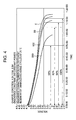
- Fig. 4 is a graph showing discharge characteristics of a battery cell at 25°C (normal temperature) for different numbers of charge/discharge cycles.
- Fig. 5 is a graph showing discharge characteristics of the battery cell at 0°C (low temperature) for the different numbers of charge/discharge cycles.
- the horizontal axis represents time, while the vertical axis represents voltage, and there are shown discharge characteristics obtained when a charge/discharge cycle is repeated under the conditions of voltage 4.2 V, current 0.5 A and 2.5 hours, and under the discharge condition of 2 W constant power.
- the one used by 50 cycles shows 94% discharge time
- the one used by 100 cycles shows 90% discharge time
- the one used by 500 cycles shows a discharge time as short as 68%. That is to say, each time the battery cell 51 is used by 50 cycles , a capacity decrease of approximately 5% due to cycle degradation is observed.
- Fig. 6 is a graph showing the characteristics of capacity changes corresponding to the temperature and the number of charge/discharge cycles of a battery cell.
- the horizontal axis represents the number of charge/discharge cycles, while the vertical axis represents capacity.
- the capacity of a battery cell used by O charge/discharge cycles at 25°C (normal temperature) is 100%.
- Fig. 7 is a graph showing a relationship between the number of charge/discharge cycles and capacity at normal temperature and low temperature, at time of correction in synchronization with cycle degradation at normal temperature.
- Fig. 7 shows a corrected parameter which is set to linearly decrease the capacity by 4% every 50 cycles, according to cycle degradation at 25°C (at normal temperature), in the graph of Fig. 6 showing the relationship between the number of charge/discharge cycles and the capacity at normal temperature and low temperature.
- the capacity of the battery cell used by 0 charge/discharge cycles at 0°C (low temperature) is set to 65%, when the number of charge/discharge cycles increases, errors from theoretical values increase as shown in Fig. 7. Namely, a problem is likely to occur in that, although calculated remaining battery power is still a usable value, actual remaining battery power is lower than the calculated remaining battery power and cannot be used.
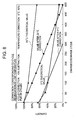
- Fig. 8 is a graph showing a relationship between the number of charge/discharge cycles and the capacity at normal temperature and low temperature in the case where correction is performed according to cycle degradation at the low temperature.
- Fig. 8 is a graph in which the capacity is set to 60% for 0 charge/discharge cycles and correction is performed with a parameter which is set to linearly decrease the capacity by 10% every 50 cycles, according to cycle degradation at 0°C (low temperature) (for example, the range of 0-100 charge/discharge cycles), in the graph of Fig. 6 showing the relationship between the number of charge/discharge cycles and the capacity at normal temperature and low temperature.
- 0°C low temperature
- the number of charge/discharge cycles increases at 25°C (normal temperature)
- errors from theoretical values increase. Accordingly, a problem is likely to occur in that, although the battery having an increased number of charge/discharge cycles can be actually used at normal temperature, calculated remaining battery power is lower than actual remaining battery power.
- correction values for correcting cycle degradation and correction values for correcting capacity diminutions due to temperature are prepared in combination, it is possible to calculate correct remaining battery power in either case of normal temperature or low temperature, but there is the problem that the number of parameters increases and setting becomes difficult.
- the battery pack 50 can solve the problem by using temperature correction values changed every predetermined number of charge/discharge cycles such as 50 and 100 cycles, as shown in Fig. 2.
- the microcontroller 53 When the positive terminal 61 and the negative terminal 62 of the battery pack 50 are connected to a device such as a video camera or a digital still camera, for example, and utilization of the battery pack 50 is started, the microcontroller 53 cumulatively sums charge/discharge current values detected by the peripheral circuit 52, and calculates the remaining battery power. In addition, the microcontroller 53 counts the number of charge/discharge cycles, and stores the number of charge/discharge cycles into, for example, an internal EEPROM of the microcontroller 53.
- the microcontroller 53 specifies a temperature correction value by searching, for example, the EEPROM in which the temperature correction values shown in Fig. 2 are stored, on the basis of the temperature measured by the thermistor 54 and the number of charge/discharge cycles, and calculates remaining battery power corresponding to the specified temperature correction value.
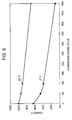
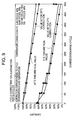
- Fig. 9 is a graph showing the manner in which correction is effected with the battery pack according to a preferred embodiment of the present invention.
- Fig. 9 is a graph in which cycle correction which linearly decreases the capacity by 4% every 50 cycles is effected according to cycle degradation at 25°C (normal temperature) in the graph of Fig. 6 showing the relationship between the number of charge/discharge cycles and the capacity at normal temperature and low temperature.
- cycle correction is performed which decreases the capacity of the battery pack in use at low temperature on a stepwise basis every 50 cycles (in the example of Fig. 9, up to 150 cycles). Namely, temperature correction values which decrease the capacity on a stepwise basis each time the number of charge/discharge cycles reaches 50, 100 and 150 are configured.
- temperature correction values are configured which linearly decrease the capacity by 4% similarly to those for normal temperature. Since the temperature correction values changed every predetermined number of charge/discharge cycles are used, correction of remaining battery power can be effected with a small number of parameters.
- cycle correction which linearly decreases the capacity by 4% every 50 cycles according to cycle degradation at normal temperature.
- cycle correction which increases the capacity on a stepwise basis every 50 cycles may be performed, so that cycle correction which decreases the capacity by 10% every 50 cycles, for example, is performed according to cycle degradation at low temperature.
- Fig. 10 is a flowchart showing the flow of the processing of the battery pack according to a preferred embodiment of the present invention.
- the microcontroller 53 controls the thermistor 54 to measure the temperature of the battery cell 51.
- the processing of the following Steps S2 to S8 is the processing of specifying a temperature correction value according to the measured temperature and the number of charge/discharge cycles. In this description, reference is made to the case where four kinds of temperature correction values for up to 50 charge/discharge cycles, 50-100 charge/discharge cycles, 101-150 charge/discharge cycles, and 151 or more charge/discharge cycles are stored in the EEPROM built in the microcontroller 53, for example.
- Step S4 if the number of charge/discharge cycles is not greater than 100, the microcontroller 53 searches the EEPROM and sets a temperature correction value for 51-100 charge/discharge cycles according to the temperature measured in the processing of Step S1, in Step S5. If the number of charge/discharge cycles is greater than 100, then the microcontroller 53 determines whether the number of charge/discharge cycles is not greater than 150, in Step S6. In Step S6, if the number of charge/discharge cycles is not greater than 150, the microcontroller 53 searches the EEPROM and sets a temperature correction value for 101-150 charge/discharge cycles according to the temperature measured in the processing of Step S1, in Step S7. If the number of charge/discharge cycles is greater than 150, then the microcontroller 53 searches the EEPROM and sets a temperature correction value for 150 charge/discharge cycles or more according to the temperature measured in the processing of Step S1, in Step S8.
- Step S3 When the temperature correction value is set in Step S3, S5, S7 or S8, the microcontroller 53 calculates remaining battery power corresponding to the temperature correction value, in Step S9.
- the microcontroller 53 controls the communication circuit 55 to communicate the calculated remaining battery power amount to the connected device which is not shown.
- the above-mentioned processing may be realized by software provided in the microcontroller 53 and therefore can be realized without significant cost increase compared to existing products.
Landscapes
- Chemical & Material Sciences (AREA)
- Chemical Kinetics & Catalysis (AREA)
- Electrochemistry (AREA)
- General Chemical & Material Sciences (AREA)
- Engineering & Computer Science (AREA)
- Manufacturing & Machinery (AREA)
- Physics & Mathematics (AREA)
- General Physics & Mathematics (AREA)
- Materials Engineering (AREA)
- Secondary Cells (AREA)
- Charge And Discharge Circuits For Batteries Or The Like (AREA)
- Tests Of Electric Status Of Batteries (AREA)
Applications Claiming Priority (2)
| Application Number | Priority Date | Filing Date | Title |
|---|---|---|---|
| JP2003384673A JP4736317B2 (ja) | 2003-11-14 | 2003-11-14 | バッテリーパック及びバッテリー残量算出方法 |
| JP2003384673 | 2003-11-14 |
Publications (3)
| Publication Number | Publication Date |
|---|---|
| EP1531335A2 true EP1531335A2 (de) | 2005-05-18 |
| EP1531335A3 EP1531335A3 (de) | 2005-08-24 |
| EP1531335B1 EP1531335B1 (de) | 2012-07-11 |
Family
ID=34431490
Family Applications (1)
| Application Number | Title | Priority Date | Filing Date |
|---|---|---|---|
| EP04257031A Expired - Lifetime EP1531335B1 (de) | 2003-11-14 | 2004-11-12 | Batteriesatz und Verfahren zur Berechnung der Batterierestkapazität |
Country Status (8)
| Country | Link |
|---|---|
| US (1) | US7514902B2 (de) |
| EP (1) | EP1531335B1 (de) |
| JP (2) | JP4736317B2 (de) |
| KR (1) | KR101162364B1 (de) |
| CN (1) | CN100412564C (de) |
| ES (1) | ES2388734T3 (de) |
| SG (1) | SG112067A1 (de) |
| TW (1) | TWI285270B (de) |
Cited By (6)
| Publication number | Priority date | Publication date | Assignee | Title |
|---|---|---|---|---|
| CN103558554A (zh) * | 2013-10-15 | 2014-02-05 | 广东电网公司电力科学研究院 | 一种新能源汽车动力电池soh在线估算的方法 |
| CN104035037A (zh) * | 2014-05-12 | 2014-09-10 | 广东电网公司电力科学研究院 | 一种新能源汽车动力电池soh在线估算的方法 |
| WO2014158489A1 (en) * | 2013-03-14 | 2014-10-02 | Motorola Mobility Llc | Method and apparatus for determining a thermal state of a battery taking into account battery aging |
| CN106207284A (zh) * | 2016-07-29 | 2016-12-07 | 中天储能科技有限公司 | 一种提升磷酸铁锂电池分容容量一致性的方法 |
| US10128544B2 (en) * | 2015-09-02 | 2018-11-13 | General Electric Company | Cooling for battery units in energy storage system |
| EP3343689A4 (de) * | 2015-08-26 | 2018-11-21 | Nissan Motor Co., Ltd. | Vorrichtung zur kalkulation des verschleissgrades und verfahren zur kalkulation des verschleissgrades |
Families Citing this family (39)
| Publication number | Priority date | Publication date | Assignee | Title |
|---|---|---|---|---|
| TWI333288B (en) * | 2005-06-14 | 2010-11-11 | Lg Chemical Ltd | Method and apparatus of controlling for charging/discharging voltage of battery |
| JP4375318B2 (ja) * | 2005-10-12 | 2009-12-02 | ソニー株式会社 | バッテリー装置 |
| JP4490366B2 (ja) * | 2005-12-13 | 2010-06-23 | 富士通株式会社 | リソース割当て方法及び,これを用いた演算回路の診断システム |
| JP4910423B2 (ja) * | 2006-02-27 | 2012-04-04 | ソニー株式会社 | バッテリパック、電子機器、およびバッテリ残量検出方法 |
| JP4773848B2 (ja) * | 2006-03-03 | 2011-09-14 | プライムアースEvエナジー株式会社 | 二次電池の充放電制御システム、電池制御装置、およびプログラム |
| JP2007240182A (ja) | 2006-03-06 | 2007-09-20 | Sony Corp | バッテリパックおよびその残容量情報供給装置 |
| JP4929839B2 (ja) * | 2006-05-22 | 2012-05-09 | トヨタ自動車株式会社 | 蓄電装置の充放電制御装置 |
| JP4265629B2 (ja) * | 2006-08-01 | 2009-05-20 | トヨタ自動車株式会社 | 二次電池の充放電制御装置およびそれを搭載したハイブリッド車両 |
| JP5478256B2 (ja) * | 2006-12-01 | 2014-04-23 | コーニンクレッカ フィリップス エヌ ヴェ | 再充電可能電力供給付き装置 |
| US8010229B2 (en) * | 2006-12-05 | 2011-08-30 | Electronics And Telecommunications Research Institute | Method and apparatus for returning cleaning robot to charge station |
| CN101212071B (zh) * | 2006-12-31 | 2011-07-06 | 比亚迪股份有限公司 | 一种动力电池荷电状态估计方法 |
| JP4829854B2 (ja) * | 2007-08-30 | 2011-12-07 | キヤノン株式会社 | 電子機器及びその制御方法 |
| US20100070212A1 (en) * | 2008-09-15 | 2010-03-18 | Caterpillar Inc. | Method and apparatus for determining state of inverter capacitor in an electric drive |
| KR20110008101A (ko) * | 2008-12-05 | 2011-01-25 | 파나소닉 주식회사 | 전지 팩 |
| WO2011014758A1 (en) * | 2009-07-31 | 2011-02-03 | Thermo King Corporation | Monitoring battery health in an hvac system |
| JP5554622B2 (ja) * | 2010-04-21 | 2014-07-23 | 株式会社マキタ | 電動工具用装置 |
| US8450978B2 (en) * | 2010-08-27 | 2013-05-28 | Texas Instruments Incorporated | Monitoring a rechargeable battery with multiple parameter update rates |
| CN102175978B (zh) * | 2011-02-21 | 2013-08-07 | 华为技术有限公司 | 电池寿命的检测方法和设备 |
| CN103197249A (zh) * | 2012-01-06 | 2013-07-10 | 安凯(广州)微电子技术有限公司 | 低功耗电池电量检测电路 |
| CN102608536B (zh) * | 2012-02-29 | 2014-01-01 | 金华市金开电子科技有限公司 | 一种基于数字电压采样的电动车蓄电池剩余电量算法 |
| US9312712B2 (en) * | 2012-07-26 | 2016-04-12 | Samsung Sdi Co., Ltd. | Method and system for controlling charging parameters of a battery using a plurality of temperature ranges and counters and parameter sets |
| JP6223449B2 (ja) * | 2013-07-26 | 2017-11-01 | 京セラ株式会社 | 電力変換装置、電力管理装置、および電力管理方法 |
| CN104678305A (zh) * | 2013-12-02 | 2015-06-03 | 北汽福田汽车股份有限公司 | 电池荷电状态soc的计算方法及装置 |
| US20160003911A1 (en) * | 2014-07-03 | 2016-01-07 | Infineon Technologies Ag | Battery cell characteristic identification |
| US10367237B2 (en) | 2015-02-06 | 2019-07-30 | Hewlett-Packard Development Company, L.P. | Battery calibration |
| CN105093119B (zh) * | 2015-05-27 | 2018-10-12 | 努比亚技术有限公司 | 信息处理方法及电子设备 |
| CN104993529A (zh) * | 2015-06-16 | 2015-10-21 | 成都西可科技有限公司 | 一种户外运动相机的电池续航备用设备 |
| CN105334466B (zh) * | 2015-09-28 | 2018-09-07 | Tcl移动通信科技(宁波)有限公司 | 一种精确显示移动终端电池总电量的方法及系统 |
| US10107864B2 (en) | 2016-04-11 | 2018-10-23 | Inventus Holdings, Llc | Step-time battery degradation determination |
| CN107783051B (zh) * | 2016-08-30 | 2020-08-21 | 太普动力新能源(常熟)股份有限公司 | 满充电容量校准方法 |
| CN108321444B (zh) * | 2017-12-18 | 2021-03-26 | 东莞锂威能源科技有限公司 | 一种分容补偿方法 |
| JP6995634B2 (ja) * | 2018-01-15 | 2022-01-14 | キヤノン株式会社 | 照明装置、その制御方法、及びプログラム |
| CN110118940B (zh) * | 2018-02-05 | 2021-07-30 | 郑州宇通客车股份有限公司 | 一种动力电池荷电状态的校准方法和装置 |
| CN111505507B (zh) * | 2019-01-31 | 2022-03-29 | 北京新能源汽车股份有限公司 | 一种电池老化处理方法 |
| KR102517117B1 (ko) * | 2019-03-26 | 2023-04-03 | 주식회사 엘지에너지솔루션 | 리튬 이차전지의 공정용량 산출방법 |
| CN113673712B (zh) * | 2021-10-25 | 2022-01-28 | 深圳达人高科电子有限公司 | 剩余电量值计算方法及装置、服务器、存储介质 |
| CN114927774B (zh) * | 2022-04-19 | 2023-04-07 | 深圳市海雷新能源有限公司 | 一种实时监测具自修复的混合电池组系统 |
| CN114660474A (zh) * | 2022-05-23 | 2022-06-24 | 深圳市驰普科达科技有限公司 | 一种蓄电池故障诊断方法、装置、电子设备及存储介质 |
| CN118783586A (zh) * | 2024-07-01 | 2024-10-15 | 厦门新能安科技有限公司 | 充电设备、充电方法及电子装置 |
Family Cites Families (13)
| Publication number | Priority date | Publication date | Assignee | Title |
|---|---|---|---|---|
| JPS5791439A (en) * | 1980-11-28 | 1982-06-07 | Agency Of Ind Science & Technol | Automobile simulator |
| JPH07128416A (ja) * | 1993-11-04 | 1995-05-19 | Mitsubishi Motors Corp | 電気自動車用バッテリ残存容量計 |
| JPH09243718A (ja) * | 1996-03-08 | 1997-09-19 | Sony Corp | バッテリパック及びバッテリ状態の表示方法 |
| JP3941140B2 (ja) * | 1996-03-08 | 2007-07-04 | ソニー株式会社 | バッテリ使用残時間表示機能付き電子機器及びバッテリ使用残時間の表示方法 |
| KR100281538B1 (ko) * | 1997-12-26 | 2001-02-15 | 윤종용 | 밧데리 사용가능시간 표시기능을 갖는 컴퓨터 |
| JPH11262063A (ja) * | 1998-03-10 | 1999-09-24 | Fujitsu Ltd | 電池残量表示装置 |
| IL140090A0 (en) * | 1998-06-16 | 2002-02-10 | Korea Kumnho Petrochemical Co | Method of and apparatus for measuring battery capacity |
| CN1144060C (zh) * | 1999-03-05 | 2004-03-31 | 索尼公司 | 电池组件、充放电计数和设置电池组件剩余电量的方法 |
| JP3993720B2 (ja) * | 1999-08-09 | 2007-10-17 | 日立マクセル株式会社 | 充電電池あるいは充電電池パック |
| US6236214B1 (en) | 1999-12-23 | 2001-05-22 | Ericsson Inc. | Method and apparatus for determining the remaining operation time of a mobile communication unit |
| JP3743704B2 (ja) * | 2000-09-25 | 2006-02-08 | Necトーキン栃木株式会社 | 電池パック |
| KR100395637B1 (ko) | 2000-11-27 | 2003-08-21 | 삼성전자주식회사 | 배터리의 잔량보정장치 및 그 제어방법 |
| JP2002236154A (ja) | 2001-02-07 | 2002-08-23 | Sanyo Electric Co Ltd | 電池の残容量補正方法 |
-
2003
- 2003-11-14 JP JP2003384673A patent/JP4736317B2/ja not_active Expired - Fee Related
-
2004
- 2004-11-12 EP EP04257031A patent/EP1531335B1/de not_active Expired - Lifetime
- 2004-11-12 KR KR1020040092389A patent/KR101162364B1/ko not_active Expired - Fee Related
- 2004-11-12 US US10/987,873 patent/US7514902B2/en not_active Expired - Lifetime
- 2004-11-12 ES ES04257031T patent/ES2388734T3/es not_active Expired - Lifetime
- 2004-11-12 SG SG200406901A patent/SG112067A1/en unknown
- 2004-11-12 TW TW093134833A patent/TWI285270B/zh not_active IP Right Cessation
- 2004-11-15 CN CNB2004100886644A patent/CN100412564C/zh not_active Expired - Fee Related
-
2010
- 2010-09-08 JP JP2010200501A patent/JP5029746B2/ja not_active Expired - Fee Related
Non-Patent Citations (1)
| Title |
|---|
| None |
Cited By (7)
| Publication number | Priority date | Publication date | Assignee | Title |
|---|---|---|---|---|
| WO2014158489A1 (en) * | 2013-03-14 | 2014-10-02 | Motorola Mobility Llc | Method and apparatus for determining a thermal state of a battery taking into account battery aging |
| CN103558554A (zh) * | 2013-10-15 | 2014-02-05 | 广东电网公司电力科学研究院 | 一种新能源汽车动力电池soh在线估算的方法 |
| CN104035037A (zh) * | 2014-05-12 | 2014-09-10 | 广东电网公司电力科学研究院 | 一种新能源汽车动力电池soh在线估算的方法 |
| EP3343689A4 (de) * | 2015-08-26 | 2018-11-21 | Nissan Motor Co., Ltd. | Vorrichtung zur kalkulation des verschleissgrades und verfahren zur kalkulation des verschleissgrades |
| US11022653B2 (en) | 2015-08-26 | 2021-06-01 | Nissan Motor Co., Ltd. | Deterioration degree estimation device and deterioration degree estimation method |
| US10128544B2 (en) * | 2015-09-02 | 2018-11-13 | General Electric Company | Cooling for battery units in energy storage system |
| CN106207284A (zh) * | 2016-07-29 | 2016-12-07 | 中天储能科技有限公司 | 一种提升磷酸铁锂电池分容容量一致性的方法 |
Also Published As
| Publication number | Publication date |
|---|---|
| HK1072469A1 (zh) | 2005-08-26 |
| TWI285270B (en) | 2007-08-11 |
| CN1616982A (zh) | 2005-05-18 |
| US20050127877A1 (en) | 2005-06-16 |
| US7514902B2 (en) | 2009-04-07 |
| KR101162364B1 (ko) | 2012-07-04 |
| ES2388734T3 (es) | 2012-10-18 |
| JP2011043506A (ja) | 2011-03-03 |
| EP1531335A3 (de) | 2005-08-24 |
| JP5029746B2 (ja) | 2012-09-19 |
| JP4736317B2 (ja) | 2011-07-27 |
| JP2005147815A (ja) | 2005-06-09 |
| SG112067A1 (en) | 2005-06-29 |
| TW200530613A (en) | 2005-09-16 |
| KR20050046610A (ko) | 2005-05-18 |
| CN100412564C (zh) | 2008-08-20 |
| EP1531335B1 (de) | 2012-07-11 |
Similar Documents
| Publication | Publication Date | Title |
|---|---|---|
| US7514902B2 (en) | Battery pack and remaining battery power calculation method | |
| US7425814B2 (en) | Battery pack and remaining battery power calculation method | |
| JP7194887B2 (ja) | バッテリsocの判定方法、装置、管理システム及び記憶媒体 | |
| EP1344074B1 (de) | Batteriekapazitätskalibrierung | |
| EP1064690B1 (de) | Verfahren zur leistungssteigerung von smartbatterien | |
| KR101190356B1 (ko) | 배터리 장치 및 배터리 장치의 방전 제어 방법 | |
| US20090184685A1 (en) | Battery pack and method of charging the same | |
| EP2690744A2 (de) | Batterieladeverfahren und Batteriepack damit | |
| US20100156356A1 (en) | Method of quick charging lithium-based secondary battery and electronic device using same | |
| JP7517661B2 (ja) | バッテリー管理装置及び方法 | |
| JP2010186619A (ja) | 電池パックおよび電池容量計算方法 | |
| CN100592099C (zh) | 用于电池充电的设备与方法 | |
| JP2001157366A (ja) | 組電池の充放電制御方法 | |
| JP4796784B2 (ja) | 2次電池の充電方法 | |
| HK1072469B (en) | Battery pack and remaining battery power calculation method | |
| KR101078146B1 (ko) | 배터리 셀을 충전하는 장치 및 방법 | |
| HK1072470A (en) | Battery pack and remaining battery power calculation method |
Legal Events
| Date | Code | Title | Description |
|---|---|---|---|
| PUAI | Public reference made under article 153(3) epc to a published international application that has entered the european phase |
Free format text: ORIGINAL CODE: 0009012 |
|
| AK | Designated contracting states |
Kind code of ref document: A2 Designated state(s): AT BE BG CH CY CZ DE DK EE ES FI FR GB GR HU IE IS IT LI LU MC NL PL PT RO SE SI SK TR |
|
| AX | Request for extension of the european patent |
Extension state: AL HR LT LV MK YU |
|
| PUAL | Search report despatched |
Free format text: ORIGINAL CODE: 0009013 |
|
| AK | Designated contracting states |
Kind code of ref document: A3 Designated state(s): AT BE BG CH CY CZ DE DK EE ES FI FR GB GR HU IE IS IT LI LU MC NL PL PT RO SE SI SK TR |
|
| AX | Request for extension of the european patent |
Extension state: AL HR LT LV MK YU |
|
| 17P | Request for examination filed |
Effective date: 20060203 |
|
| AKX | Designation fees paid |
Designated state(s): AT BE BG CH CY CZ DE DK EE ES FI FR GB GR HU IE IS IT LI LU MC NL PL PT RO SE SI SK TR |
|
| 17Q | First examination report despatched |
Effective date: 20061218 |
|
| REG | Reference to a national code |
Ref country code: DE Ref legal event code: R079 Ref document number: 602004038488 Country of ref document: DE Free format text: PREVIOUS MAIN CLASS: G01R0031360000 Ipc: H01M0002100000 |
|
| RIC1 | Information provided on ipc code assigned before grant |
Ipc: H01M 10/48 20060101ALI20111026BHEP Ipc: G01R 31/36 20060101ALI20111026BHEP Ipc: H01M 2/10 20060101AFI20111026BHEP |
|
| GRAP | Despatch of communication of intention to grant a patent |
Free format text: ORIGINAL CODE: EPIDOSNIGR1 |
|
| RIN1 | Information on inventor provided before grant (corrected) |
Inventor name: NAGASHIMA, OSAMU Inventor name: TSUCHIYA, YUKIO Inventor name: SATO, HIDEYUKI |
|
| GRAS | Grant fee paid |
Free format text: ORIGINAL CODE: EPIDOSNIGR3 |
|
| GRAA | (expected) grant |
Free format text: ORIGINAL CODE: 0009210 |
|
| AK | Designated contracting states |
Kind code of ref document: B1 Designated state(s): AT BE BG CH CY CZ DE DK EE ES FI FR GB GR HU IE IS IT LI LU MC NL PL PT RO SE SI SK TR |
|
| REG | Reference to a national code |
Ref country code: GB Ref legal event code: FG4D |
|
| REG | Reference to a national code |
Ref country code: CH Ref legal event code: EP |
|
| REG | Reference to a national code |
Ref country code: AT Ref legal event code: REF Ref document number: 566518 Country of ref document: AT Kind code of ref document: T Effective date: 20120715 |
|
| REG | Reference to a national code |
Ref country code: IE Ref legal event code: FG4D |
|
| REG | Reference to a national code |
Ref country code: DE Ref legal event code: R096 Ref document number: 602004038488 Country of ref document: DE Effective date: 20120906 |
|
| REG | Reference to a national code |
Ref country code: ES Ref legal event code: FG2A Ref document number: 2388734 Country of ref document: ES Kind code of ref document: T3 Effective date: 20121018 |
|
| REG | Reference to a national code |
Ref country code: NL Ref legal event code: T3 |
|
| REG | Reference to a national code |
Ref country code: NL Ref legal event code: T3 |
|
| PG25 | Lapsed in a contracting state [announced via postgrant information from national office to epo] |
Ref country code: FI Free format text: LAPSE BECAUSE OF FAILURE TO SUBMIT A TRANSLATION OF THE DESCRIPTION OR TO PAY THE FEE WITHIN THE PRESCRIBED TIME-LIMIT Effective date: 20120711 Ref country code: IS Free format text: LAPSE BECAUSE OF FAILURE TO SUBMIT A TRANSLATION OF THE DESCRIPTION OR TO PAY THE FEE WITHIN THE PRESCRIBED TIME-LIMIT Effective date: 20121111 Ref country code: CY Free format text: LAPSE BECAUSE OF FAILURE TO SUBMIT A TRANSLATION OF THE DESCRIPTION OR TO PAY THE FEE WITHIN THE PRESCRIBED TIME-LIMIT Effective date: 20120711 Ref country code: BE Free format text: LAPSE BECAUSE OF FAILURE TO SUBMIT A TRANSLATION OF THE DESCRIPTION OR TO PAY THE FEE WITHIN THE PRESCRIBED TIME-LIMIT Effective date: 20120711 |
|
| PG25 | Lapsed in a contracting state [announced via postgrant information from national office to epo] |
Ref country code: GR Free format text: LAPSE BECAUSE OF FAILURE TO SUBMIT A TRANSLATION OF THE DESCRIPTION OR TO PAY THE FEE WITHIN THE PRESCRIBED TIME-LIMIT Effective date: 20121012 Ref country code: PL Free format text: LAPSE BECAUSE OF FAILURE TO SUBMIT A TRANSLATION OF THE DESCRIPTION OR TO PAY THE FEE WITHIN THE PRESCRIBED TIME-LIMIT Effective date: 20120711 Ref country code: PT Free format text: LAPSE BECAUSE OF FAILURE TO SUBMIT A TRANSLATION OF THE DESCRIPTION OR TO PAY THE FEE WITHIN THE PRESCRIBED TIME-LIMIT Effective date: 20121112 Ref country code: SI Free format text: LAPSE BECAUSE OF FAILURE TO SUBMIT A TRANSLATION OF THE DESCRIPTION OR TO PAY THE FEE WITHIN THE PRESCRIBED TIME-LIMIT Effective date: 20120711 Ref country code: SE Free format text: LAPSE BECAUSE OF FAILURE TO SUBMIT A TRANSLATION OF THE DESCRIPTION OR TO PAY THE FEE WITHIN THE PRESCRIBED TIME-LIMIT Effective date: 20120711 |
|
| PG25 | Lapsed in a contracting state [announced via postgrant information from national office to epo] |
Ref country code: DK Free format text: LAPSE BECAUSE OF FAILURE TO SUBMIT A TRANSLATION OF THE DESCRIPTION OR TO PAY THE FEE WITHIN THE PRESCRIBED TIME-LIMIT Effective date: 20120711 Ref country code: EE Free format text: LAPSE BECAUSE OF FAILURE TO SUBMIT A TRANSLATION OF THE DESCRIPTION OR TO PAY THE FEE WITHIN THE PRESCRIBED TIME-LIMIT Effective date: 20120711 Ref country code: RO Free format text: LAPSE BECAUSE OF FAILURE TO SUBMIT A TRANSLATION OF THE DESCRIPTION OR TO PAY THE FEE WITHIN THE PRESCRIBED TIME-LIMIT Effective date: 20120711 Ref country code: CZ Free format text: LAPSE BECAUSE OF FAILURE TO SUBMIT A TRANSLATION OF THE DESCRIPTION OR TO PAY THE FEE WITHIN THE PRESCRIBED TIME-LIMIT Effective date: 20120711 |
|
| PLBE | No opposition filed within time limit |
Free format text: ORIGINAL CODE: 0009261 |
|
| STAA | Information on the status of an ep patent application or granted ep patent |
Free format text: STATUS: NO OPPOSITION FILED WITHIN TIME LIMIT |
|
| PG25 | Lapsed in a contracting state [announced via postgrant information from national office to epo] |
Ref country code: SK Free format text: LAPSE BECAUSE OF FAILURE TO SUBMIT A TRANSLATION OF THE DESCRIPTION OR TO PAY THE FEE WITHIN THE PRESCRIBED TIME-LIMIT Effective date: 20120711 |
|
| 26N | No opposition filed |
Effective date: 20130412 |
|
| REG | Reference to a national code |
Ref country code: CH Ref legal event code: PL |
|
| PG25 | Lapsed in a contracting state [announced via postgrant information from national office to epo] |
Ref country code: CH Free format text: LAPSE BECAUSE OF NON-PAYMENT OF DUE FEES Effective date: 20121130 Ref country code: BG Free format text: LAPSE BECAUSE OF FAILURE TO SUBMIT A TRANSLATION OF THE DESCRIPTION OR TO PAY THE FEE WITHIN THE PRESCRIBED TIME-LIMIT Effective date: 20121011 Ref country code: LI Free format text: LAPSE BECAUSE OF NON-PAYMENT OF DUE FEES Effective date: 20121130 |
|
| REG | Reference to a national code |
Ref country code: DE Ref legal event code: R097 Ref document number: 602004038488 Country of ref document: DE Effective date: 20130412 |
|
| REG | Reference to a national code |
Ref country code: IE Ref legal event code: MM4A |
|
| PG25 | Lapsed in a contracting state [announced via postgrant information from national office to epo] |
Ref country code: IE Free format text: LAPSE BECAUSE OF NON-PAYMENT OF DUE FEES Effective date: 20121112 |
|
| PG25 | Lapsed in a contracting state [announced via postgrant information from national office to epo] |
Ref country code: MC Free format text: LAPSE BECAUSE OF NON-PAYMENT OF DUE FEES Effective date: 20121130 Ref country code: TR Free format text: LAPSE BECAUSE OF FAILURE TO SUBMIT A TRANSLATION OF THE DESCRIPTION OR TO PAY THE FEE WITHIN THE PRESCRIBED TIME-LIMIT Effective date: 20120711 |
|
| PG25 | Lapsed in a contracting state [announced via postgrant information from national office to epo] |
Ref country code: LU Free format text: LAPSE BECAUSE OF NON-PAYMENT OF DUE FEES Effective date: 20121112 |
|
| PG25 | Lapsed in a contracting state [announced via postgrant information from national office to epo] |
Ref country code: HU Free format text: LAPSE BECAUSE OF FAILURE TO SUBMIT A TRANSLATION OF THE DESCRIPTION OR TO PAY THE FEE WITHIN THE PRESCRIBED TIME-LIMIT Effective date: 20041112 |
|
| PGFP | Annual fee paid to national office [announced via postgrant information from national office to epo] |
Ref country code: FR Payment date: 20141119 Year of fee payment: 11 Ref country code: ES Payment date: 20141126 Year of fee payment: 11 Ref country code: GB Payment date: 20141119 Year of fee payment: 11 |
|
| PGFP | Annual fee paid to national office [announced via postgrant information from national office to epo] |
Ref country code: NL Payment date: 20141119 Year of fee payment: 11 Ref country code: AT Payment date: 20141120 Year of fee payment: 11 |
|
| PGFP | Annual fee paid to national office [announced via postgrant information from national office to epo] |
Ref country code: IT Payment date: 20141128 Year of fee payment: 11 |
|
| REG | Reference to a national code |
Ref country code: DE Ref legal event code: R084 Ref document number: 602004038488 Country of ref document: DE |
|
| REG | Reference to a national code |
Ref country code: DE Ref legal event code: R084 Ref document number: 602004038488 Country of ref document: DE Effective date: 20150410 |
|
| REG | Reference to a national code |
Ref country code: AT Ref legal event code: MM01 Ref document number: 566518 Country of ref document: AT Kind code of ref document: T Effective date: 20151112 |
|
| GBPC | Gb: european patent ceased through non-payment of renewal fee |
Effective date: 20151112 |
|
| PG25 | Lapsed in a contracting state [announced via postgrant information from national office to epo] |
Ref country code: IT Free format text: LAPSE BECAUSE OF NON-PAYMENT OF DUE FEES Effective date: 20151112 |
|
| REG | Reference to a national code |
Ref country code: NL Ref legal event code: MM Effective date: 20151201 |
|
| REG | Reference to a national code |
Ref country code: FR Ref legal event code: ST Effective date: 20160729 |
|
| PG25 | Lapsed in a contracting state [announced via postgrant information from national office to epo] |
Ref country code: AT Free format text: LAPSE BECAUSE OF NON-PAYMENT OF DUE FEES Effective date: 20151112 |
|
| PG25 | Lapsed in a contracting state [announced via postgrant information from national office to epo] |
Ref country code: NL Free format text: LAPSE BECAUSE OF NON-PAYMENT OF DUE FEES Effective date: 20151201 |
|
| PG25 | Lapsed in a contracting state [announced via postgrant information from national office to epo] |
Ref country code: GB Free format text: LAPSE BECAUSE OF NON-PAYMENT OF DUE FEES Effective date: 20151112 |
|
| PG25 | Lapsed in a contracting state [announced via postgrant information from national office to epo] |
Ref country code: FR Free format text: LAPSE BECAUSE OF NON-PAYMENT OF DUE FEES Effective date: 20151130 |
|
| REG | Reference to a national code |
Ref country code: ES Ref legal event code: FD2A Effective date: 20161230 |
|
| PG25 | Lapsed in a contracting state [announced via postgrant information from national office to epo] |
Ref country code: ES Free format text: LAPSE BECAUSE OF NON-PAYMENT OF DUE FEES Effective date: 20151113 |
|
| PGFP | Annual fee paid to national office [announced via postgrant information from national office to epo] |
Ref country code: DE Payment date: 20181120 Year of fee payment: 15 |
|
| REG | Reference to a national code |
Ref country code: DE Ref legal event code: R119 Ref document number: 602004038488 Country of ref document: DE |
|
| PG25 | Lapsed in a contracting state [announced via postgrant information from national office to epo] |
Ref country code: DE Free format text: LAPSE BECAUSE OF NON-PAYMENT OF DUE FEES Effective date: 20200603 |