EP1533181A2 - Device for the semiautomatique support for parking a vehicle - Google Patents
Device for the semiautomatique support for parking a vehicle Download PDFInfo
- Publication number
- EP1533181A2 EP1533181A2 EP04104697A EP04104697A EP1533181A2 EP 1533181 A2 EP1533181 A2 EP 1533181A2 EP 04104697 A EP04104697 A EP 04104697A EP 04104697 A EP04104697 A EP 04104697A EP 1533181 A2 EP1533181 A2 EP 1533181A2
- Authority
- EP
- European Patent Office
- Prior art keywords
- vehicle
- parking
- parking space
- driver
- computer unit
- Prior art date
- Legal status (The legal status is an assumption and is not a legal conclusion. Google has not performed a legal analysis and makes no representation as to the accuracy of the status listed.)
- Granted
Links
Images


Classifications
-
- B—PERFORMING OPERATIONS; TRANSPORTING
- B62—LAND VEHICLES FOR TRAVELLING OTHERWISE THAN ON RAILS
- B62D—MOTOR VEHICLES; TRAILERS
- B62D15/00—Steering not otherwise provided for
- B62D15/02—Steering position indicators ; Steering position determination; Steering aids
- B62D15/027—Parking aids, e.g. instruction means
- B62D15/0285—Parking performed automatically
-
- B—PERFORMING OPERATIONS; TRANSPORTING
- B60—VEHICLES IN GENERAL
- B60Q—ARRANGEMENT OF SIGNALLING OR LIGHTING DEVICES, THE MOUNTING OR SUPPORTING THEREOF OR CIRCUITS THEREFOR, FOR VEHICLES IN GENERAL
- B60Q9/00—Arrangement or adaptation of signal devices not provided for in one of main groups B60Q1/00 - B60Q7/00, e.g. haptic signalling
- B60Q9/002—Arrangement or adaptation of signal devices not provided for in one of main groups B60Q1/00 - B60Q7/00, e.g. haptic signalling for parking purposes, e.g. for warning the driver that his vehicle has contacted or is about to contact an obstacle
- B60Q9/004—Arrangement or adaptation of signal devices not provided for in one of main groups B60Q1/00 - B60Q7/00, e.g. haptic signalling for parking purposes, e.g. for warning the driver that his vehicle has contacted or is about to contact an obstacle using wave sensors
- B60Q9/006—Arrangement or adaptation of signal devices not provided for in one of main groups B60Q1/00 - B60Q7/00, e.g. haptic signalling for parking purposes, e.g. for warning the driver that his vehicle has contacted or is about to contact an obstacle using wave sensors using a distance sensor
-
- G—PHYSICS
- G08—SIGNALLING
- G08G—TRAFFIC CONTROL SYSTEMS
- G08G1/00—Traffic control systems for road vehicles
- G08G1/16—Anti-collision systems
- G08G1/161—Decentralised systems, e.g. inter-vehicle communication
-
- B—PERFORMING OPERATIONS; TRANSPORTING
- B60—VEHICLES IN GENERAL
- B60T—VEHICLE BRAKE CONTROL SYSTEMS OR PARTS THEREOF; BRAKE CONTROL SYSTEMS OR PARTS THEREOF, IN GENERAL; ARRANGEMENT OF BRAKING ELEMENTS ON VEHICLES IN GENERAL; PORTABLE DEVICES FOR PREVENTING UNWANTED MOVEMENT OF VEHICLES; VEHICLE MODIFICATIONS TO FACILITATE COOLING OF BRAKES
- B60T2201/00—Particular use of vehicle brake systems; Special systems using also the brakes; Special software modules within the brake system controller
- B60T2201/10—Automatic or semi-automatic parking aid systems
Definitions
- the invention relates to a device for semiautonomous Support of parking in vehicles after the Preamble of claim 1.
- a semi-autonomous parking system calculates, after a suitable parking space has been found, depending on the length of the parking space, a suitable, possibly the best possible entry lane, hereinafter also referred to as the entry or target trajectory or parking lane.
- a suitable communication system a so-called HMI ( H uman M achine I nterface)
- the driver can be communicated to the driver, for example visually, acoustically or haptically, how to steer and accelerate or decelerate, in accordance with the suitable access lane to drive into the parking space.
- the deviations from the desired trajectory are determined by the driver himself or automatically compensated by the system.
- the longitudinal movement is usually determined by the driver.
- the steering can also be carried out automatically, and the driver only takes over still give the gas or brakes. For automatic parking will also give the gas and brakes taken over by the system.
- the invention is based on the object, a device of the type referred to in the introduction, with which a parking in particular small parking spaces of System can be handled comparatively better.
- the invention relates to a device for semiautonomous Support of the parking process for vehicles that a device for determining the size of a parking space, a computer unit and means for acquiring the current one Position of the vehicle and a communication device includes, with which a vehicle driver information and / or instructions about a parking operation mediated are, wherein the computer unit based on the determined size the parking space pretends a Einparkbahn.
- the core of Invention is now that the computer unit to do so is designed, via the position detecting means, the preferably environment sensors, e.g.
- Ultrasonic sensors after retracting the vehicle the basis of the given parking in the parking space the orientation of the vehicle with respect to the parking space and the maneuvering space in front of and behind the vehicle again determine and on the basis of these data at least one more To calculate parking. This procedure is the based on the following knowledge:
- Parking space fails this approach of path planning, however, since this always from the beginning certain parking space size emanates and on this basis with a trajectory trajectory multiple maneuvering with too much computational effort connected, and also at the actual retraction itself then not insignificant deviations from such Can adjust the driving lane.
- the second phase of the parking process is in progress
- the orientation of the vehicle with respect to the Parking space and the maneuvering space in front of and behind the vehicle by e.g. Ultrasonic sensors is determined again. That has not only the advantage that then starting from this new certain orientation or the newly determined shunting yard the further parking can be made, but the detection of the orientation of the vehicle in the parking space and the marshalling yard in front of and behind the vehicle greater accuracy compared to Parking space measurement when driving past the parking space.
- this approach has the advantage that Requirements for the accuracy of the first Parking space measurement are reduced. Because mistakes can be too a later time when the vehicle is in the parking space stands, be corrected. This comparatively inexpensive environment sensors are used. In addition, can a complicated path planning algorithm that eliminates especially for small parking spaces would be inevitable.
- This Position criterion can be used to determine the end of the first phase of the parking process on the basis of a Determine the access lane based on the size of the Parking space gap from parking space measurement by driving by at the parking space has resulted.
- both stops the distance to the rear Vehicle or obstacle as well as the curb also as Stop criterion used alternatively or additionally become. Both the distance to the rear vehicle or Obstacle as well as to the curb is preferably running supervised.
- the computer unit is designed to after the retraction of Vehicle based on a predetermined Einparkbahn via the communication device to continue the Parking operation to prompt the driver, right or to turn left and drive forwards or backwards, optionally alternately and if necessary several times, if the position detection means an orientation of Determine vehicle in the parking space, which is still in predetermined manner is sufficient to allow the parking process to be able to complete.
- the computer unit the respective stop point in the Continuation of the parking procedure depending on the driver the distance determined by the position detection means in front of or behind the vehicle via the means of communication telling.
- a shunting of the Vehicle with support of semiautonomous Einparkassistenten allows without a great Computing effort would be necessary.
- the next train e.g. full turn left and drive backwards to make.
- a kind of "crab walk" of the Realize vehicle which turns into a train after each train Travel direction again "calibrated”.
- Stopping the vehicle after each move into one Driving direction in the "crab gear" of the vehicle can in one preferred embodiment also fully automatic over corresponding stop means of semi-autonomous Parking assistants themselves be taken. In this case the driver only has to direct what a particular circle of Drivers feel pleasant. Furthermore, it is preferable when the position detecting means for determining the Alignment of the vehicle Distance sensors, e.g. Ultrasonic sensors, radar sensors or the like include. To determine the orientation of the vehicle advantageously used sensors with which the Yaw angle of the vehicle can be detected e.g. a steering angle sensor or wheel sensors.
- the means of communication as special Interface to the driver's message of the current Alignment of the vehicle with respect to the environment, e.g. Obstacles, designed.
- Obstacles can give the driver distances before and behind the vehicle and, where appropriate, the position of Corners e.g. visually in the form of a corresponding graphic be communicated.
- the position and tilt of the vehicle relative to the Parking space e.g. with regard to before and behind the parked vehicle standing vehicles on the Communication means is represented, for. graphic is pictured. This can be an entire picture of the Parking situation including obstacles one Vehicle drivers are clearly communicated. This makes it easier for the driver to decide independently when he no longer needs support and the Parking process is completed.
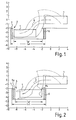
- FIGS. 1 and 2 a parking operation of a vehicle 1 is shown in FIG a parking space 2, 3 with one of the prior art known calculated parking track 4, 5 shown.
- the parking space 2 with a length l x1 so large that the semi-autonomous parking assistant can calculate a runway 4, in which only by driving backwards with two different steering angles the vehicle can be maneuvered into the parking space 2.
- the system does not base the measured length of the parking space l x1 , but a reduced length l g1 . In this way, it is guaranteed that the planned parking track 4 allows a 100% collision-free parking of the vehicle 1 in the parking space 2.
- the inaccuracy in the parking space measurement by a tolerance band 6, 7 in front of and behind the vehicle is taken into account.
- an additional safety distance x s front and rear is adhered to the limiting vehicles.
- This leads to the used for the parking length l g1 to 2x s plus twice the tolerance band 6, 7 is smaller than that determined at the parking space measurement length l x1 of the parking space 2, 3 and also the actual length of the parking space. It may therefore be a lot of space for the parking "given away". In other words, parking spaces are discarded for the parking process, which in itself would be sufficient with smaller tolerance bands and a smaller safety margin.
- the invention is based on the finding that regularly multiple shunting, i. several forward and Reverse driving of the vehicle after the parking space measurement be insufficiently calculated in advance at a Einparkbahn can.
- the invention proposes a semi-autonomous Parking assistant in front of who is able one to perform a "two-phase" parking procedure.
- the semi-autonomous parking assistant would be included a parking space of this size after the Parking space measurement this parking space for a parking operation discard.
- parking assistant can use such a parking space become.
- the driver can calculate accordingly Target trajectory 10 using an optical and / or Haptic Human Machine Interface (HMI) in the parking space be "piloted".
- HMI Haptic Human Machine Interface
- a continuous tone signals that the End of the planned trajectory is reached.
- this first phase after which the vehicle 1 after a parking operation along the parking path 10 according to FIG. 3 "obliquely" is in the parking space 11, divides the semiautonomous Parking assistant telling the driver that he has the vehicle should stop when the front pointing into the parking space Corner 1a of the vehicle in front of the vehicle was moved past. This is e.g. by reduced distance to the rear vehicle or curb.
- Each Sectioneinfahrbahn 10 a, 10 b, 10 c and 10 d can thus as a separate Einparkbahn are considered, for which the Driver regardless of the previously performed Einparkbahn Get instructions from the semiautonomous parking assistant.
- the system is also enormously fault-tolerant and can respond easily to the driver, e.g. the Instructions for a partial parking track not sufficient Dimensions follows or the driver even the initially calculated Einparkbahn 10 is traced insufficiently.
- Figures 5a and 5b show the situation when the place through the initial parking space measurement in the parking space was exactly measured. Then, in comparison to FIG. 4a and FIG 4b further maneuvering required, in the present case a total of six instead of four in the exemplary embodiment FIGS. 4a and 4b.
- the Raileinpark zone 10f to cope with 10j see Figure 5b. So the Vehicle driver the back and forth, in the this application is also referred to as "crab gear", can perform easier, the vehicle driver preferably the deflection points from the distance in front and behind the vehicle is informed by the system after calculation.
- FIG. 6a shows the position of the vehicle 1 too symbolic parked in front of and behind the vehicle parked Vehicles 8, 9 and a roadside 12 on a Screen are displayed.
- FIGS. 6a and 6b show the detector fields 13, 14 and symbolically visualized behind the vehicle.
- a planned entry-desired trajectory 15 be imaged.
Landscapes
- Engineering & Computer Science (AREA)
- Transportation (AREA)
- Mechanical Engineering (AREA)
- Physics & Mathematics (AREA)
- Human Computer Interaction (AREA)
- Remote Sensing (AREA)
- Radar, Positioning & Navigation (AREA)
- General Physics & Mathematics (AREA)
- Chemical & Material Sciences (AREA)
- Combustion & Propulsion (AREA)
- Traffic Control Systems (AREA)
- Steering Control In Accordance With Driving Conditions (AREA)
- Control Of Driving Devices And Active Controlling Of Vehicle (AREA)
Abstract
Es wird eine Vorrichtung zur semiautonomen Unterstützung des
Einparkvorgangs bei Fahrzeugen (1) vorgeschlagen, umfassend
eine Einrichtung zur Ermittlung der Größe einer Parklücke
(11), eine Recheneinheit, Mittel zur Erfassung der aktuellen
Position des Fahrzeugs (1) sowie einer
Kommunikationseinrichtung, mit welcher einem Fahrzeuglenker
Informationen und/oder Anweisungen über einen Einparkvorgang
mitteilbar sind, wobei die Rechnereinheit anhand der
ermittelten Größe der Parklücke eine Einparkbahn (10)
vorgibt. Erfindungsgemäß ist die Rechnereinheit dazu
ausgelegt, nach dem Einfahren des Fahrzeugs (1) auf der
Grundlage einer vorgegebenen Einparkbahn (10) in die
Parklücke (11) die Ausrichtung des Fahrzeugs (1) in Bezug auf
die Parklücke (11) und den Rangierabstand vor und hinter dem
Fahrzeug (1) erneut zu bestimmen und anhand dieser Daten
wenigstens eine weitere Einparkbahn neu zu berechnen.

Description
Die Erfindung betrifft eine Vorrichtung zur semiautonomen
Unterstützung des Einparkvorgangs bei Fahrzeugen nach dem
Oberbegriff des Anspruchs 1.The invention relates to a device for semiautonomous
Support of parking in vehicles after the
Preamble of
Aufgrund der zunehmenden Verkehrsdichte und verstärkten Bebauung freier Flächen wird der Verkehrsraum, insbesondere in Ballungszentren kontinuierlich eingeengt. Dadurch wird auch der zur Verfügung stehende Parkraum beschränkt und die Suche nach einer geeigneten Parklücke belastet den Fahrer zusätzlich zum immer dichter werdenden Verkehr. Hier kann zunächst die Funktion einer Parklückenvermessung dem Fahrer bei der Suche nach einer ausreichend großen Parklücke helfen. Anschließend kann ein semiautonomer Einparkassistent das zügige Einfahren in eine Parklücke unterstützen. Somit werden lange und/oder erfolglose Parkvorgänge vermeidbar.Due to increasing traffic density and intensified Development of open spaces will be the traffic area, in particular in conurbations continuously concentrated. This will also limited the available parking space and the Finding a suitable parking space puts a strain on the driver in addition to the increasingly dense traffic. Here can First, the function of a parking space measurement the driver help in the search for a sufficiently large parking space. Subsequently, a semi-autonomous parking assistant can support speedy entry into a parking space. Thus be long and / or unsuccessful parking operations avoidable.
Ein semiautonomes Einparksystem berechnet, nachdem eine passende Parklücke gefunden wurde, in Abhängigkeit von der Länge der Parklücke eine geeignete, gegebenenfalls bestmögliche Einfahrbahn, im Folgenden auch mit Einfahr- oder Solltrajektorie bzw. Einpark- bzw. Einfahrbahn bezeichnet. Mittels eines geeigneten Kommunikationssystems, einem sogenannten HMI (Human Machine Interface), kann dem Fahrer die Information z.B. optisch, akustisch oder haptisch übermittelt werden, wie er zu lenken und Gas zu geben bzw. zu bremsen hat, um entsprechend der geeigneten Einfahrbahn in die Parklücke hinein zu fahren. A semi-autonomous parking system calculates, after a suitable parking space has been found, depending on the length of the parking space, a suitable, possibly the best possible entry lane, hereinafter also referred to as the entry or target trajectory or parking lane. By means of a suitable communication system, a so-called HMI ( H uman M achine I nterface), the driver can be communicated to the driver, for example visually, acoustically or haptically, how to steer and accelerate or decelerate, in accordance with the suitable access lane to drive into the parking space.
Die Abweichungen zur Solltrajektorie werden vom Fahrer selbst oder vom System automatisch ausgeglichen. Die Längsbewegung wird normalerweise vom Fahrer bestimmt. Das Lenken kann auch automatisch durchgeführt werden, und der Fahrer übernimmt nur noch das Gas geben bzw. Bremsen. Beim automatischen Einparken wird auch das Gas geben und Bremsen vom System übernommen.The deviations from the desired trajectory are determined by the driver himself or automatically compensated by the system. The longitudinal movement is usually determined by the driver. The steering can also be carried out automatically, and the driver only takes over still give the gas or brakes. For automatic parking will also give the gas and brakes taken over by the system.
Bei der Parklückenvermessung können die Positionen der Begrenzungen nur bedingt mit ausreichender Sicherheit lokalisiert werden. Daher ist es notwendig, die Unsicherheit mit einem Toleranz-Versatz zu kompensieren, damit die nachfolgende Bahnplanung eine 100%ig kollisionsfreie Einpark-Trajektorie berechnen kann. Berechnet z.B. die Parklückenvermessung aus den Sensoren die Begrenzung mit einer Genauigkeit von +/- 30 cm, dann ist es notwendig, ein Toleranzband von + 30 cm zu der berechneten Begrenzung zu addieren.In the parking space measurement, the positions of the Limitations only conditionally with sufficient security be located. Therefore, it is necessary the uncertainty with a tolerance offset to compensate for the subsequent path planning a 100% collision-free parking trajectory can calculate. Calculates e.g. the Parking space measurement from the sensors with the limit an accuracy of +/- 30 cm, then it is necessary to Tolerance band of + 30 cm to the calculated limit add.
Außerdem ist aus Sicherheitsgründen ein Abstand vorne und hinten zu den begrenzenden Fahrzeugen einzuhalten, beispielsweise 25 cm vorne und 25 cm hinten. Durch diese erforderlichen Sicherheitspuffer kann es vorkommen, dass Parklücken, die eigentlich groß genug zum Einparken wären, vom System verworfen werden, weil mit den erforderlichen Sicherheitsabständen keine noch realistisch vorausrechenbare Einpark-Trajektorie selbst bei Zulassen eines Richtungswechsels beim Einparkvorgang gefunden werden kann.In addition, for safety reasons, a distance at the front and to follow behind to the limiting vehicles, For example, 25 cm in front and 25 cm in the back. Through this required safety buffer, it may happen that Parking spaces, which would actually be big enough for parking, discarded by the system because with the required Safety distances no realistic yet predictable Einpark trajectory even with a permit Change of direction during parking can be found.
Der Erfindung liegt die Aufgabe zugrunde, eine Vorrichtung der einleitend bezeichneten Art bereitzustellen, mit welcher ein Einparkvorgang bei insbesondere kleinen Parklücken vom System vergleichsweise besser bewältigt werden kann. The invention is based on the object, a device of the type referred to in the introduction, with which a parking in particular small parking spaces of System can be handled comparatively better.
Diese Aufgabe wird durch die Merkmale des Anspruchs 1 gelöst.This object is solved by the features of
In den Unteransprüchen sind vorteilhafte und zweckmäßige Weiterbildungen der Erfindung angegeben.In the subclaims are advantageous and expedient Developments of the invention indicated.
Die Erfindung geht von einer Vorrichtung zur semiautonomen Unterstützung des Einparkvorgangs bei Fahrzeugen aus, die eine Einrichtung zur Ermittlung der Größe einer Parklücke, eine Rechnereinheit und Mittel zur Erfassung der aktuellen Position des Fahrzeugs sowie einer Kommunikationseinrichtung umfasst, mit welcher einem Fahrzeuglenker Informationen und/oder Anweisungen über einen Einparkvorgang vermittelbar sind, wobei die Rechnereinheit anhand der ermittelten Größe der Parklücke eine Einparkbahn vorgibt. Der Kern der Erfindung liegt nun darin, dass die Rechnereinheit dazu ausgelegt ist, über die Positionserfassungsmittel, die vorzugsweise Umfeldsensoren umfassen, wie z.B. Ultraschallsenosoren, nach dem Einfahren des Fahrzeugs auf der Grundlage der vorgegebenen Einparkbahn in die Parklücke die Ausrichtung des Fahrzeugs in Bezug auf die Parklücke und den Rangierplatz vor und hinter dem Fahrzeug erneut zu bestimmen und anhand dieser Daten wenigstens eine weitere Einparkbahn zu berechnen. Dieser Vorgehensweise liegt die folgende Erkenntnis zugrunde:The invention relates to a device for semiautonomous Support of the parking process for vehicles that a device for determining the size of a parking space, a computer unit and means for acquiring the current one Position of the vehicle and a communication device includes, with which a vehicle driver information and / or instructions about a parking operation mediated are, wherein the computer unit based on the determined size the parking space pretends a Einparkbahn. The core of Invention is now that the computer unit to do so is designed, via the position detecting means, the preferably environment sensors, e.g. Ultrasonic sensors, after retracting the vehicle the basis of the given parking in the parking space the orientation of the vehicle with respect to the parking space and the maneuvering space in front of and behind the vehicle again determine and on the basis of these data at least one more To calculate parking. This procedure is the based on the following knowledge:
Derzeit wird die Bahnplanung im Allgemeinen mit nur einem Lenkwechsel realisiert, z.B. geradeaus zurückfahren, in eine Richtung voll Einschlagen und später in die andere Richtung einschlagen, so dass das Fahrzeug am Ende parallel zum Bordstein steht. Ist die Parklücke aber kleiner, ist zusätzlich ein Fahrtrichtungswechsel mit nochmaligem Einschlagen erforderlich. Denn nach dem Beendigen des Einfahrens z.B. rückwärts steht das Fahrzeug schief und man muss die Fahrt- und Lenkrichtung wechseln, um schließlich das Fahrzeug parallel ausrichten zu können. Bei noch kleineren Currently, rail planning is generally using only one Steering change realized, e.g. drive straight back into one Heading in full and later in the other direction turn in, so that the vehicle is parallel to the end Curb stands. Is the parking space but smaller, is in addition a change of direction with another Wrapping required. Because after quitting the Retracting e.g. backwards, the vehicle is crooked and you must change the direction of travel and steering, finally the Align vehicle parallel. For even smaller ones
Parklücken schlägt dieser Ansatz der Bahnplanung jedoch fehl, da dieser immer von der Anfangs bestimmten Parklückengröße ausgeht und auf dieser Grundlage eine Einfahr-Trajektorie mit mehrfachem Rangieren mit einem zu großen Rechenaufwand verbunden ist, und zudem beim tatsächlichen Einfahren sich dann nicht unbedeutende Abweichungen von einer derartigen Einfahrbahn einstellen können.Parking space fails this approach of path planning, however, since this always from the beginning certain parking space size emanates and on this basis with a trajectory trajectory multiple maneuvering with too much computational effort connected, and also at the actual retraction itself then not insignificant deviations from such Can adjust the driving lane.
Diese Nachteile werden von der erfindungsgemäßen Vorrichtung dadurch vermieden, dass der Einparkvorgang sozusagen in zwei Phasen eingeteilt wird. Zunächst läuft der Einparkvorgang wie bei einem bekannten System mit der Berechnung einer Einfahrbahn anhand der Größe der Parklücke. Hierbei wird jedoch auch eine Einparkbahn in Kauf genommen, bei welcher das Fahrzeug nach dem Einfahren in einer Richtung "schief" in der Parklücke steht und dieser Ausrichtungsfehler bei einem herkömmlichen System auch durch einen nochmaligen Zug in die andere Richtung mit vorgegebenem Lenkeinschlag nicht korrigiert werden kann. Wichtig ist nur, dass das Fahrzeug grundsätzlich zumindest, wenn auch schief, in die Parklücke passt.These disadvantages are caused by the device according to the invention This avoids that the parking process, so to speak in two Phases is divided. First of all, the parking process works like in a known system with the calculation of a Entryway based on the size of the parking space. This is However, a Einparkbahn accepted, in which the vehicle after entering a direction "crooked" in the parking space is and this alignment error at a conventional system also by a repeated pull in the other direction with default steering angle not can be corrected. The important thing is that the vehicle basically at least, albeit obliquely, in the parking space fits.
An dieser Stelle läuft die zweite Phase des Einparkvorgangs ab, indem die Ausrichtung des Fahrzeugs in Bezug auf die Parklücke und den Rangierplatz vor und hinter dem Fahrzeug durch z.B. Ultraschallsensoren erneut bestimmt wird. Das hat nicht nur den Vorteil, dass dann ausgehend von dieser neu bestimmten Ausrichtung bzw. dem neu bestimmten Rangierplatz der weitere Einparkvorgang vorgenommen werden kann, sondern die Erfassung der Ausrichtung des Fahrzeugs in der Parklücke und des Rangierplatzes vor und hinter dem Fahrzeug sich mit einer größeren Genauigkeit ausführen lässt, verglichen mit der Parklückenvermessung beim Vorbeifahren an der Parklücke.At this point the second phase of the parking process is in progress By adjusting the orientation of the vehicle with respect to the Parking space and the maneuvering space in front of and behind the vehicle by e.g. Ultrasonic sensors is determined again. That has not only the advantage that then starting from this new certain orientation or the newly determined shunting yard the further parking can be made, but the detection of the orientation of the vehicle in the parking space and the marshalling yard in front of and behind the vehicle greater accuracy compared to Parking space measurement when driving past the parking space.
Damit können die notwendigen Sicherheits-Toleranzbänder für die weitere oder mehrere weitere Einparkbahnen verkleinert werden, wodurch das System einen vergleichsweise größeren Platz für den weiteren Einparkvorgang in der Parklücke nutzen kann. Z.B. besteht eine weitere Einparkbahn nur aus einem Zug in eine Fahrtrichtung, wonach gegebenenfalls eine oder mehrere zusätzliche Einparkbahnen folgen. Eine erneute Vermessung der Parklücke kann somit nach jeder Einparkbahn stattfinden.This allows the necessary safety tolerance bands for the further or several further Einparkbahnen diminished which makes the system comparatively larger Use space for further parking in the parking space can. For example, There is another Einparkbahn only one train in a direction of travel, where appropriate one or several additional parking tracks follow. Another one Measuring the parking space can thus after each Einparkbahn occur.
Dadurch kann der semiautonome Einparkassistent auch bei vergleichsweise kleinen Parklücken zum Einsatz kommen und ist überaus fehlertolerant.This allows the semi-autonomous parking assistant also at comparatively small parking spaces are used and is extremely fault tolerant.
Darüber hinaus hat diese Vorgehensweise den Vorteil, dass Anforderungen an die Genauigkeit der ersten Parklückenvermessung vermindert sind. Denn Fehler können zu einem späteren Zeitpunkt, wenn das Fahrzeug in der Parklücke steht, korrigiert werden. Hierdurch können vergleichsweise preiswerte Umfeldsensoren zum Einsatz kommen. Außerdem kann ein komplizierter Bahnplanungsalgorithmus entfallen, der insbesondere bei kleinen Parklücken unumgänglich wäre.In addition, this approach has the advantage that Requirements for the accuracy of the first Parking space measurement are reduced. Because mistakes can be too a later time when the vehicle is in the parking space stands, be corrected. This comparatively inexpensive environment sensors are used. In addition, can a complicated path planning algorithm that eliminates especially for small parking spaces would be inevitable.
In einer besonders bevorzugten Ausgestaltung der Erfindung wird mittels der Rechnereinheit dem Fahrer über die Kommunikationseinrichtung mitgeteilt, das Fahrzeug anzuhalten, wenn beim Einfahren des Fahrzeugs auf der Grundlage der vorgegebenen Bahn die zur Parklücke zeigende vordere Ecke des Fahrzeugs an der außen liegenden Ecke eines angrenzend parkenden Fahrzeugs oder eines angrenzenden Hindernisses sich vorbei bewegt hat. Dieses Positionskriterium kann herangezogen werden, um das Ende der ersten Phase des Einparkvorgangs auf der Grundlage einer Einfahrbahn festzulegen, die anhand der Größe der Einparklücke aus der Parklückenvermessung durch Vorbeifahren an der Parklücke sich ergeben hat.In a particularly preferred embodiment of the invention is by means of the computer unit the driver on the Communication device notified the vehicle stop when retracting the vehicle on the Basis of the given path leading to the parking space Front corner of the vehicle at the outer corner of a adjacent parked vehicle or an adjacent one Obstacle has moved over. This Position criterion can be used to determine the end of the first phase of the parking process on the basis of a Determine the access lane based on the size of the Parking space gap from parking space measurement by driving by at the parking space has resulted.
In einer außerdem vorteilhaften Ausgestaltung der Erfindung kann das Anhalten des Fahrzeugs durch entsprechende Mittel der Vorrichtung selbst, ohne weiteres Zutun eines Fahrers automatisch vorgenommen werden.In a further advantageous embodiment of the invention can stop the vehicle by appropriate means the device itself, without further action by a driver be made automatically.
Bei beiden Anhaltevorgängen kann der Abstand zum hinteren Fahrzeug oder Hindernis sowie zum Bordstein ebenfalls als Stoppkriterium alternativ oder zusätzlich herangezogen werden. Sowohl der Abstand zum hinteren Fahrzeug oder Hindernis als auch zum Bordstein wird vorzugsweise laufend überwacht.In both stops, the distance to the rear Vehicle or obstacle as well as the curb also as Stop criterion used alternatively or additionally become. Both the distance to the rear vehicle or Obstacle as well as to the curb is preferably running supervised.
In einer überdies bevorzugten Ausgestaltung der Erfindung ist die Rechnereinheit dazu ausgebildet, nach dem Einfahren des Fahrzeugs auf der Grundlage einer vorgegebenen Einparkbahn über die Kommunikationseinrichtung zur Fortsetzung des Einparkvorgangs den Fahrer aufzufordern, nach rechts oder links zu lenken sowie vor- oder rückwärts zu fahren, gegebenenfalls abwechselnd und gegebenenfalls mehrfach, sofern die Positionserfassungsmittel eine Ausrichtung des Fahrzeugs in der Parklücke bestimmen, die noch in vorgegebener Weise ausreichend ist, um damit den Parkvorgang abschließen zu können.In a further preferred embodiment of the invention the computer unit is designed to after the retraction of Vehicle based on a predetermined Einparkbahn via the communication device to continue the Parking operation to prompt the driver, right or to turn left and drive forwards or backwards, optionally alternately and if necessary several times, if the position detection means an orientation of Determine vehicle in the parking space, which is still in predetermined manner is sufficient to allow the parking process to be able to complete.
In diesem Zusammenhang ist es insbesondere vorteilhaft, wenn die Rechnereinheit den jeweiligen Stopppunkt bei der Fortsetzung des Einparkvorgangs dem Fahrer in Abhängigkeit des von dem Positionserfassungsmitteln ermittelten Abstands vor oder hinter dem Fahrzeug über die Kommunikationsmittel mitteilt. Durch diese Vorgehensweise wird ein Rangieren des Fahrzeugs mit Unterstützung des semiautonomen Einparkassistenten ermöglicht, ohne dass dafür ein großer Rechenaufwand notwendig wäre. Denn bei jedem Stopppunkt wird vorzugsweise die Ausrichtung des Fahrzeugs in der Parklücke sowie die Abstände nach vorne und hinten neu ermittelt, um auf dieser Grundlage dann den nächsten Zug, z.B. voll einschlagen und nach links rückwärts fahren, vorzunehmen. Auf diese Weise lässt sich somit eine Art "Krebsgang" des Fahrzeugs realisieren, der sich nach jedem Zug in eine Fahrtrichtung wieder neu "kalibriert".In this context, it is particularly advantageous if the computer unit the respective stop point in the Continuation of the parking procedure depending on the driver the distance determined by the position detection means in front of or behind the vehicle via the means of communication telling. By doing this, a shunting of the Vehicle with support of semiautonomous Einparkassistenten allows without a great Computing effort would be necessary. Because at every stop point is preferably the orientation of the vehicle in the parking space and the distances to the front and rear again determined to on this basis then the next train, e.g. full turn left and drive backwards to make. On this way, a kind of "crab walk" of the Realize vehicle, which turns into a train after each train Travel direction again "calibrated".
Damit wird ein außerordentlich fehlertolerantes System geschaffen, das z.B. problemlos auf Lenkfehler des Fahrers reagieren kann. Damit lässt sich auch ein "Fahrfehler" leicht korrigieren, wenn der Fahrer der ersten Einfahrbahn der vom System vorgegebenen Trajektorie nicht im ausreichenden Maße folgt.This becomes an extremely fault-tolerant system created, e.g. No problem with the driver's steering error can react. This also makes a "driving error" easy correct when the driver of the first access lane of the System predetermined trajectory not sufficient extent follows.
Das Stoppen des Fahrzeugs nach jedem Zug in eine Fahrtrichtung beim "Krebsgang" des Fahrzeugs kann in einer bevorzugten Ausgestaltung auch vollautomatisch über entsprechende Stoppmittel vom semiautonomen Einparkassistenten selbst übernommen werden. In diesem Fall muss der Fahrer nur lenken, was ein bestimmter Kreis von Fahrern als angenehm empfindt. Im Weiteren ist es bevorzugt, wenn die Positionserfassungsmittel zur Bestimmung der Ausrichtung des Fahrzeugs Abstandssensoren, z.B. Ultraschallsensoren, Radarsensoren oder dergleichen umfassen. Zur Bestimmung der Ausrichtung des Fahrzeugs werden vorteilhafterweise Sensoren eingesetzt, mit welchen sich der Gierwinkel des Fahrzeugs erfassen lässt z.B. ein LenkwinkelSensor oder Radsensoren.Stopping the vehicle after each move into one Driving direction in the "crab gear" of the vehicle can in one preferred embodiment also fully automatic over corresponding stop means of semi-autonomous Parking assistants themselves be taken. In this case the driver only has to direct what a particular circle of Drivers feel pleasant. Furthermore, it is preferable when the position detecting means for determining the Alignment of the vehicle Distance sensors, e.g. Ultrasonic sensors, radar sensors or the like include. To determine the orientation of the vehicle advantageously used sensors with which the Yaw angle of the vehicle can be detected e.g. a steering angle sensor or wheel sensors.
In einer weiteren besonders bevorzugten Ausgestaltung der Erfindung sind die Kommunikationsmittel als besonderes Interface zur Mitteilung des Fahrers der aktuellen Ausrichtung des Fahrzeugs in Bezug auf die Umgebung, z.B. Hindernisse, ausgelegt. Z.B. können dem Fahrer Abstände vor und hinter dem Fahrzeug sowie gegebenenfalls die Position der Ecken z.B. optisch in Form einer entsprechenden Grafik mitgeteilt werden. Außerdem kann es vorteilhaft sein, wenn die Position und Schieflage des Fahrzeugs bezüglich der Parklücke, z.B. im Hinblick auf vor und hinter dem einparkenden Fahrzeug stehende Fahrzeuge, auf den Kommunikationsmitteln darstellbar ist, z.B. grafisch dargestellt wird. Damit kann ein gesamtes Bild der Parksituation einschließlich der Hindernisse einem Fahrzeuglenker besonders übersichtlich mitgeteilt werden. Dies erleichtert dem Fahrer selbstständig zu entscheiden, wann er keine Unterstützung mehr benötigt und der Einparkvorgang abgeschlossen ist.In a further particularly preferred embodiment of the Invention are the means of communication as special Interface to the driver's message of the current Alignment of the vehicle with respect to the environment, e.g. Obstacles, designed. For example, can give the driver distances before and behind the vehicle and, where appropriate, the position of Corners e.g. visually in the form of a corresponding graphic be communicated. Moreover, it may be advantageous if the position and tilt of the vehicle relative to the Parking space, e.g. with regard to before and behind the parked vehicle standing vehicles on the Communication means is represented, for. graphic is pictured. This can be an entire picture of the Parking situation including obstacles one Vehicle drivers are clearly communicated. This makes it easier for the driver to decide independently when he no longer needs support and the Parking process is completed.
Mehrere Ausführungsbeispiele der Erfindung sind anhand der Zeichnungen unter Angabe weiterer Vorteile und Einzelheiten im Folgenden näher erläutert. Es zeigen
Figur 1- einen in Bezug auf ein Koordinatensystem in der Draufsicht stark schematisiert dargestellten Einparkvorgang eines Fahrzeugs von der Startposition in eine Endposition einer Parklücke mit angedeuteten Sicherheitsbereichen am Anfang und Ende der Parklücke, so wie aus dem Stand der Technik bekannt,
Figur 2- eine zu Figur 1 entsprechende Figur zur Darstellung eines ebenfalls aus dem Stand der Technik bekannten Einparkvorgangs für eine vergleichsweise kleinere Parklücke mit einer Fahrtrichtungsumkehr in der errechneten Einfahr-Trajektorie,
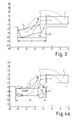
Figur 3- einen in einer Draufsicht dargestellten schematischen Einparkvorgang in Bezug auf ein Koordinatensystem bis zu einem Punkt, bei welchem der Einparkvorgang in eine Fahrtrichtung abgebrochen wird, wobei das Fahrzeug zwar in die Parklücke passt, jedoch schief darin steht,
- Figur 4a
- die Fortführung des Einparkvorgangs nach Figur 3 in einer schematisierten Draufsicht in Bezug auf ein Koordinatensystem, bei welcher nach erneuter Vermessung für den Einparkvorgang mehr Platz zur Verfügung steht als sich aus der ursprünglichen Parklückenvermessung ergeben hat,
- Figur 4b
- eine vergrößerte Darstellung der Einparkbahn von Figur 4a, jedoch nur für die Fahrzeugbewegungen innerhalb der Parklücke,
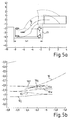
- Figur 5a
- eine zu Figur 4a entsprechende Figur, für
den Fall, dass die ursprüngliche
Parklückenvermessung zur Berechnung der
Einfahr-Trajektorie so wie in
Figur 3 nach einer erneuten Vermessung sich als genau ergeben hat, - Figur 5b
- eine vergrößerter Darstellung der Einparkbahn für den Einparkvorgang nach Figur 5a, jedoch nur für die Fahrbewegungen innerhalb der Parklücke und
- Figur 6a und 6b
- die grafische Darstellung des Einparkvorgangs an einem Bildschirm zur Visualisierung des Einparkvorgangs für zwei Positionen (Figur 6a, Figur 6b) des Fahrzeugs während des Einparkvorgangs.
- FIG. 1
- a parking procedure of a vehicle from the start position to an end position of a parking space with indicated security areas at the beginning and end of the parking space, which is shown very schematically in relation to a coordinate system in top view, as known from the prior art,
- FIG. 2
- a figure corresponding to Figure 1 for illustrating a well-known from the prior art parking for a comparatively smaller parking space with a reversal in the calculated retraction trajectory,
- FIG. 3
- a schematic parking operation in a plan view with respect to a coordinate system to a point at which the parking operation is terminated in a direction of travel, the vehicle fits into the parking space, but is skewed in it,
- FIG. 4a
- the continuation of the parking process of Figure 3 in a schematic plan view with respect to a coordinate system in which after re-measurement for the parking more space is available than has resulted from the original parking space measurement,
- FIG. 4b
- an enlarged view of the parking path of Figure 4a, but only for the vehicle movements within the parking space,
- FIG. 5a
- a figure corresponding to Figure 4a, for the case that the original parking space measurement for calculating the retraction trajectory as in Figure 3 after a new survey has been found to be accurate,
- FIG. 5b
- an enlarged view of the Einparkbahn for the parking operation of Figure 5a, but only for the driving movements within the parking space and
- FIGS. 6a and 6b
- the graphic representation of the parking operation on a screen for visualization of the parking operation for two positions (Figure 6a, Figure 6b) of the vehicle during the parking process.
In Figur 1 und 2 ist ein Einparkvorgang eines Fahrzeugs 1 in
eine Parklücke 2, 3 mit einer aus dem Stand der Technik
bekannten errechneten Einparkbahn 4, 5 dargestellt.In FIGS. 1 and 2, a parking operation of a
In beiden Fällen (Figur 1 und Figur 2) vermisst zunächst der semiautonome Einparkassistent die Parklücke, sofern ein Fahrzeuglenker den semiautonomen Einparkassistenten zugeschaltet hat.In both cases (Figure 1 and Figure 2) first misses the semiautonomous parking assistant the parking space, if one Vehicle driver the semi-autonomous parking assistant has switched on.
Im Fall von Figur 1 ist die Parklücke 2 mit einer Länge lx1
so groß, dass der semiautonome Einparkassistent eine
Einfahrbahn 4 berechnen kann, bei welcher sich durch
lediglich einmal rückwärts fahren mit zwei unterschiedlichen
Lenkeinschlägen das Fahrzeug in die Parklücke 2 manövrieren
lässt.In the case of Figure 1, the
Für die Berechnung der Einparkbahn 4 in die Parklücke 2 legt
das System jedoch nicht die gemessene Länge der Parklücke lx1
zugrunde, sondern eine reduzierte Länge lg1. Auf diese Weise
wird garantiert, dass die geplante Einparkbahn 4 ein 100%ig
kollisionsfreies Einparken des Fahrzeugs 1 in die Parklücke 2
ermöglicht. Zunächst wird dazu die Ungenauigkeit bei der
Parklückenvermessung durch ein Toleranzband 6, 7 vor und
hinter dem Fahrzeug berücksichtigt. Außerdem wird ein
zusätzlicher Sicherheitsabstand xs vorne und hinten zu den
begrenzenden Fahrzeugen eingehalten. Dies führt dann dazu,
dass die für den Einparkvorgang genutzte Länge lg1 um 2xs
plus zweimal das Toleranzband 6, 7 kleiner ist als die bei
der Parklückenvermessung bestimmte Länge lx1 der Parklücke 2,
3 und auch der tatsächlichen Länge der Parklücke. Es wird
somit unter Umständen viel Platz für den Einparkvorgang
"verschenkt". Oder anders ausgedrückt: Parklücken werden für
den Einparkvorgang verworfen, die an sich mit geringeren
Toleranzbändern und geringerem Sicherheitsabstand ausreichen
würden.However, for the calculation of the
Die bekannten Einparkvorgänge von Figur 1 und Figur 2 unterscheiden sich dadurch, dass die zur Verfügung stehende Länge lg1 zum Einparken im Fall von Figur 2 kleiner ist als im Ausführungsbeispiel gemäß Figur 1, wodurch im Ausführungsbeispiel nach Figur 1 ein Einparken mit lediglich einer Einparkbewegung in eine Richtung ausreicht, wogegen in Figur 2 ein einmaliges Rangieren nach vorne erforderlich ist.The known parking processes of Figure 1 and Figure 2 differ in that the available length l g1 for parking in the case of Figure 2 is smaller than in the embodiment of Figure 1, whereby in the embodiment of Figure 1 is a parking with only one Einparkbewegung in one direction is sufficient, whereas in Figure 2 a one-time maneuvering forward is required.
Der Erfindung liegt die Erkenntnis zugrunde, dass regelmäßig ein mehrfaches Rangieren, d.h. mehrere Vorwärts- und Rückwärtsfahrten des Fahrzeugs nach der Parklückenvermessung bei einer Einparkbahn nur unzureichend vorausberechnet werden kann.The invention is based on the finding that regularly multiple shunting, i. several forward and Reverse driving of the vehicle after the parking space measurement be insufficiently calculated in advance at a Einparkbahn can.
Daher schlägt die Erfindung einen semiautonomen Einparkassistenten vor, der in der Lage ist einen "zweiphasigen" Einparkvorgang durchzuführen.Therefore, the invention proposes a semi-autonomous Parking assistant in front of who is able one to perform a "two-phase" parking procedure.
In Figur 3 ist die Situation dargestellt, dass für die
Parklücke z.B. durch seitliche Abstandssensoren während dem
Vorbeifahren an der Parklücke eine Länge lx1 bestimmt wurde,
die zwar ausreicht das Fahrzeug mit der in die Parklücke
zeigenden vorderen Ecke auf einer Einparkbahn 10 in die
Parklücke 11 zu manövrieren, jedoch durch auch einen
einmaligen Rangiervorgang das Fahrzeug nicht so wie im Fall
von Figur 1 oder 2 in der gewünschten Ausrichtung
positioniert werden kann.In Figure 3, the situation is shown that for the parking space, for example by lateral distance sensors while driving past the parking space a length l x1 was determined, although sufficient the vehicle with the pointing into the parking space front corner on a
Normalerweise würde der semiautonome Einparkassistent bei einer Parklücke von dieser Größe nach der Parklückenvermessung diese Parklücke für einen Einparkvorgang verwerfen. Normally, the semi-autonomous parking assistant would be included a parking space of this size after the Parking space measurement this parking space for a parking operation discard.
Mit einem erfindungsgemäß ausgestalteten semiautonomen
Einparkassistent kann jedoch eine solche Parklücke genutzt
werden. Der Fahrer kann auf der entsprechend errechneten
Solltrajektorie 10 mit Hilfe eines optischen und/oder
haptischen Human Machine Interface (HMI) in die Parklücke
"gelotst" werden. Z.B. signalisiert ein Dauerton, dass das
Ende der geplanten Trajektorie erreicht ist.With an inventively designed semiautonomous
However, parking assistant can use such a parking space
become. The driver can calculate accordingly
Target
Bei dieser ersten Phase, nach welcher das Fahrzeug 1 nach
einem Einparkvorgang entlang der Einparkbahn 10 gemäß Figur 3
"schräg" in der Parklücke 11 steht, teilt der semiautonome
Einparkassistent dem Fahrer mit, dass er das Fahrzeug
anhalten soll, wenn die vordere in die Parklücke zeigende
Ecke 1a des Fahrzeugs am davor stehenden Fahrzeug
vorbeibewegt wurde. Dies wird z.B. durch verminderten Abstand
zum hinteren Fahrzeug oder Bordstein ausgelöst.In this first phase, after which the
Hier startet dann die "zweite Phase" der Parkassistenz.This is where the "second phase" of parking assistance starts.
Abstandssensoren messen kontinuierlich den Abstand vor und
hinter dem eigenen Fahrzeug, um die tatsächliche Parklücke
auszunutzen. Aus den Fahrzeugsignalen wird die aktuelle
Ausrichtung des Fahrzeugs 1, z.B. durch einen
Lenkwinkelsensor, einen Radsensor oder einen Gierrate-Sensor
ermittelt. Anschließend fordert der semiautonome
Einparkassistent den Fahrer unter Berücksichtigung des
Abstands vor oder hinter dem Fahrzeug abwechselnd auf, nach
rechts oder links zu lenken sowie vorwärts oder rückwärts zu
fahren bis die Positionserfassungsmittel eine Endposition
feststellen. Dann schaltet das System ab.Distance sensors continuously measure the distance before and
behind your own vehicle to the actual parking space
exploit. From the vehicle signals is the current
Alignment of the
Im Fall von Figur 4a steht mehr Platz zur Verfügung als der
semiautonome Einparkassistent vor dem Parkvorgang ermittelt
hat. Dementsprechend sind vergleichsweise weniger
Rangiervorgänge notwendig. Die weiteren Einparkbahnen nach
Abschluss der Einparkbahn 10 sind vergrößert in Figur 4b
abgebildet. Danach ergeben sich vier Rangiervorgänge.
Zunächst wird auf Einparkbahn 10a nach vorne gefahren mit
einem Lenkeinschlag nach rechts, dann auf der anschließenden
Einparkbahn 10b mit einem leichten Lenkeinschlag nach links
rückwärts bis der Fahrer vom System ein Stoppsignal erhält.
Anschließend geht es nach vorne entlang der Einparkbahn 10c
zunächst mit einem Lenkeinschlag nach rechts, im weiteren
Verlauf mit einem Lenkeinschlag nach links bis der Fahrer
erneut ein Stoppsignal erhält und schließlich wieder
rückwärts auf der Einparkbahn 10d zunächst mit Lenkeinschlag
nach rechts und dann nach links bis das System den Fahrer zum
Anhalten auffordert und damit das Fahrzeug 1 auch in
gewünschter Weise in der Parklücke 11 steht.In the case of Figure 4a is more space available than the
semi-autonomous parking assistant determined before parking
Has. Accordingly, comparatively less
Maneuvering necessary. The other parking tracks after
Completion of the
Durch das erneute Vermessen der Parklücke nach Abschluss der
Einparkbahn 10, wenn das Fahrzeug 1 bereits in der Parklücke
11 steht, kann die Größe der Parklücke genauer erfasst
werden, als dies beim Vorbeifahren an der Parklücke 11
möglich ist, was eine Verkleinerung der Toleranzbänder
erlaubt. Dementsprechend kann der Rangierplatz an die
tatsächlichen Verhältnisse besser angenähert werden, womit
entweder exakt soviel Platz zur Verfügung steht, wie bei der
anfänglichen Parklückenvermessung ermittelt wurde oder aber
mehr Rangierplatz ausgenutzt werden kann. Figur 4a zeigt den
Fall, dass mehr Platz zur Verfügung steht, als bei der
anfänglichen Parklückenvermessung ermittelt wurde.
Dementsprechend sind lediglich vier Rangiervorgänge
notwendig, wobei kontinuierlich bei jedem Rangiervorgang der
Abstand zum angrenzenden Fahrzeug gemessen wird.By re-measuring the parking space after completion of the
Jede Teileinfahrbahn 10a, 10b, 10c sowie 10d kann somit als eine separate Einparkbahn betrachtet werden, für welche der Fahrer unabhängig von der zuvor ausgeführten Einparkbahn Anweisungen vom semiautonomen Einparkassistenten erhält. Each Teileinfahrbahn 10 a, 10 b, 10 c and 10 d can thus as a separate Einparkbahn are considered, for which the Driver regardless of the previously performed Einparkbahn Get instructions from the semiautonomous parking assistant.
Damit ist das System auch enorm Fehlertolerant und kann
problemlos darauf reagieren, dass der Fahrer z.B. den
Anweisungen für eine Teileinparkbahn nicht im ausreichenden
Maße folgt oder der Fahrer sogar der zunächst berechneten
Einparkbahn 10 nur unzureichend nachgefahren ist.Thus, the system is also enormously fault-tolerant and can
respond easily to the driver, e.g. the
Instructions for a partial parking track not sufficient
Dimensions follows or the driver even the initially calculated
Die Figuren 5a und 5b zeigen die Situation, wenn der Platz durch die anfängliche Parklückenvermessung in der Parklücke genau vermessen wurde. Dann sind im Vergleich zu Figur 4a und 4b weitere Rangiervorgänge erforderlich, im vorliegenden Fall insgesamt sechs anstatt vier im Ausführungsbeispiel nach Figur 4a und 4b. Insgesamt sind die Teileinparkstrecken 10f bis 10j zu bewältigen (siehe Figur 5b). Damit der Fahrzeuglenker das Hin- und Herrangieren, das in der vorliegenden Anmeldung auch als "Krebsgang" bezeichnet wird, leichter durchführen kann, werden dem Fahrzeuglenker vorzugsweise die Umlenkpunkte aus dem Abstand vor und hinter dem Fahrzeug nach Berechnung vom System mitgeteilt.Figures 5a and 5b show the situation when the place through the initial parking space measurement in the parking space was exactly measured. Then, in comparison to FIG. 4a and FIG 4b further maneuvering required, in the present case a total of six instead of four in the exemplary embodiment FIGS. 4a and 4b. Overall, the Teileinparkstrecken 10f to cope with 10j (see Figure 5b). So the Vehicle driver the back and forth, in the this application is also referred to as "crab gear", can perform easier, the vehicle driver preferably the deflection points from the distance in front and behind the vehicle is informed by the system after calculation.
Zusätzlich kann dem Fahrer visuell auch so wie in Figur 6a
und 6b die Position des Fahrzeugs 1 zu symbolhaft
dargestellten vor und hinter dem Fahrzeug parkenden
Fahrzeugen 8, 9 sowie einem Straßenrand 12 auf einem
Bildschirm dargestellt werden. Zusätzlich können, wie aus
Figur 6a und 6b ersichtlich, die Detektorfelder 13, 14 vor
und hinter dem Fahrzeug symbolhaft visualisiert werden.
Ebenso kann eine geplante Einfahr-Solltrajektorie 15
abgebildet werden.In addition, the driver can visually also as in Figure 6a
and FIG. 6b shows the position of the
Auf diese Weise lässt sich für den Fahrer in einheitlicher, eindeutiger und informativer Weise die Gesamtparksituation darstellen, wodurch er auch selbstständig entscheiden kann, wann er keine Unterstützung benötigt und mit dem Einparken fertig ist.In this way, it is easier for the driver to Clear and informative way the overall parking situation which enables him to decide independently when he needs no assistance and with the parking is done.
Claims (9)
Applications Claiming Priority (2)
| Application Number | Priority Date | Filing Date | Title |
|---|---|---|---|
| DE10354661 | 2003-11-22 | ||
| DE2003154661 DE10354661A1 (en) | 2003-11-22 | 2003-11-22 | Device for semi-autonomous support of the parking process in vehicles |
Publications (3)
| Publication Number | Publication Date |
|---|---|
| EP1533181A2 true EP1533181A2 (en) | 2005-05-25 |
| EP1533181A3 EP1533181A3 (en) | 2006-05-31 |
| EP1533181B1 EP1533181B1 (en) | 2007-09-12 |
Family
ID=34428860
Family Applications (1)
| Application Number | Title | Priority Date | Filing Date |
|---|---|---|---|
| EP04104697A Expired - Lifetime EP1533181B1 (en) | 2003-11-22 | 2004-09-27 | Device for the semiautomatique support for parking a vehicle |
Country Status (2)
| Country | Link |
|---|---|
| EP (1) | EP1533181B1 (en) |
| DE (2) | DE10354661A1 (en) |
Cited By (12)
| Publication number | Priority date | Publication date | Assignee | Title |
|---|---|---|---|---|
| EP1908666A2 (en) | 2006-10-07 | 2008-04-09 | Hella KG Hueck & Co. | Method for assisting the driver of a motor vehicle in a parking manoeuvre |
| DE102009026730A1 (en) | 2009-06-04 | 2010-12-09 | Robert Bosch Gmbh | Method and control unit for locating a parking space for a vehicle |
| US8098174B2 (en) | 2009-04-22 | 2012-01-17 | GM Global Technology Operations LLC | Feasible region determination for autonomous parking |
| WO2012041670A1 (en) * | 2010-09-30 | 2012-04-05 | Valeo Schalter Und Sensoren Gmbh | Method and device for assisting a parking maneuver of a vehicle |
| CN101868397B (en) * | 2007-11-20 | 2012-06-20 | 法雷奥开关和传感器有限责任公司 | Method and device for planning a route while parking |
| CN101808852B (en) * | 2007-09-24 | 2013-03-06 | 罗伯特·博世有限公司 | Control device for a display device of a parking device and method for display |
| EP2801511A2 (en) | 2013-05-10 | 2014-11-12 | Huf Hülsbeck & Fürst GmbH & Co. KG | System for parking a motor vehicle in a parking space with a communication field attached to the motor vehicle |
| DE102013212318A1 (en) * | 2013-06-26 | 2014-12-31 | Bayerische Motoren Werke Aktiengesellschaft | Automated parking procedure with additional correction train |
| EP3431369A1 (en) * | 2017-07-19 | 2019-01-23 | Valeo Schalter und Sensoren GmbH | Method for parking a motor vehicle in a kerb-side parking space where distance thresholds are reduced, parking assistance system and motor vehicle |
| WO2019229175A1 (en) * | 2018-05-31 | 2019-12-05 | Jaguar Land Rover Limited | Apparatus and method for controlling vehicle movement |
| CN112424044A (en) * | 2018-05-31 | 2021-02-26 | 捷豹路虎有限公司 | Apparatus and method for controlling movement of vehicle |
| US20250083664A1 (en) * | 2023-09-13 | 2025-03-13 | Panasonic Automotive Systems Co., Ltd. | Parking support method, parking support apparatus, and computer-readable recording medium |
Families Citing this family (4)
| Publication number | Priority date | Publication date | Assignee | Title |
|---|---|---|---|---|
| DE102005061909A1 (en) | 2005-12-23 | 2007-07-05 | Volkswagen Ag | Park steering assistance system and method for operating a park steering assistance system |
| DE102008027689A1 (en) * | 2008-06-11 | 2009-12-17 | Valeo Schalter Und Sensoren Gmbh | Path planning method for use during parking of vehicle i.e. passenger car, involves measuring path relative to lateral parking spot, and simultaneously and maximally shifting path against driving direction depending on parking spot length |
| DE102016217330A1 (en) | 2016-09-12 | 2018-03-15 | Volkswagen Aktiengesellschaft | Method for operating a vehicle and control unit for carrying out the method |
| DE102018130246A1 (en) * | 2018-11-29 | 2020-06-04 | Valeo Schalter Und Sensoren Gmbh | Method for operating a parking assistance system in which a steering lock is set on at least a second parking move, computer program product, electronic computing device and parking assistance system |
Family Cites Families (2)
| Publication number | Priority date | Publication date | Assignee | Title |
|---|---|---|---|---|
| JP3466549B2 (en) * | 2000-07-03 | 2003-11-10 | トヨタ自動車株式会社 | Parallel parking assist device |
| JP3749483B2 (en) * | 2002-01-11 | 2006-03-01 | トヨタ自動車株式会社 | Parking assistance device |
-
2003
- 2003-11-22 DE DE2003154661 patent/DE10354661A1/en not_active Withdrawn
-
2004
- 2004-09-27 EP EP04104697A patent/EP1533181B1/en not_active Expired - Lifetime
- 2004-09-27 DE DE200450004935 patent/DE502004004935D1/en not_active Expired - Lifetime
Cited By (18)
| Publication number | Priority date | Publication date | Assignee | Title |
|---|---|---|---|---|
| EP1908666A2 (en) | 2006-10-07 | 2008-04-09 | Hella KG Hueck & Co. | Method for assisting the driver of a motor vehicle in a parking manoeuvre |
| EP1908666A3 (en) * | 2006-10-07 | 2012-04-25 | Hella KGaA Hueck & Co. | Method for assisting the driver of a motor vehicle in a parking manoeuvre |
| CN101808852B (en) * | 2007-09-24 | 2013-03-06 | 罗伯特·博世有限公司 | Control device for a display device of a parking device and method for display |
| CN101868397B (en) * | 2007-11-20 | 2012-06-20 | 法雷奥开关和传感器有限责任公司 | Method and device for planning a route while parking |
| US8098174B2 (en) | 2009-04-22 | 2012-01-17 | GM Global Technology Operations LLC | Feasible region determination for autonomous parking |
| DE102009026730A1 (en) | 2009-06-04 | 2010-12-09 | Robert Bosch Gmbh | Method and control unit for locating a parking space for a vehicle |
| WO2012041670A1 (en) * | 2010-09-30 | 2012-04-05 | Valeo Schalter Und Sensoren Gmbh | Method and device for assisting a parking maneuver of a vehicle |
| DE102013104859A1 (en) | 2013-05-10 | 2014-11-13 | Huf Hülsbeck & Fürst Gmbh & Co. Kg | System for parking a motor vehicle in a parking space with a communication field arranged on the motor vehicle |
| EP2801511A2 (en) | 2013-05-10 | 2014-11-12 | Huf Hülsbeck & Fürst GmbH & Co. KG | System for parking a motor vehicle in a parking space with a communication field attached to the motor vehicle |
| DE102013212318A1 (en) * | 2013-06-26 | 2014-12-31 | Bayerische Motoren Werke Aktiengesellschaft | Automated parking procedure with additional correction train |
| US9969429B2 (en) | 2013-06-26 | 2018-05-15 | Bayerische Motoren Werke Aktiengesellschaft | Automated parking process comprising additional correction move |
| EP3431369A1 (en) * | 2017-07-19 | 2019-01-23 | Valeo Schalter und Sensoren GmbH | Method for parking a motor vehicle in a kerb-side parking space where distance thresholds are reduced, parking assistance system and motor vehicle |
| WO2019229175A1 (en) * | 2018-05-31 | 2019-12-05 | Jaguar Land Rover Limited | Apparatus and method for controlling vehicle movement |
| CN112424044A (en) * | 2018-05-31 | 2021-02-26 | 捷豹路虎有限公司 | Apparatus and method for controlling movement of vehicle |
| US11345336B2 (en) | 2018-05-31 | 2022-05-31 | Jaguar Land Rover Limited | Apparatus and method for controlling vehicle movement |
| US11897456B2 (en) | 2018-05-31 | 2024-02-13 | Jaguar Land Rover Limited | Apparatus and method for controlling vehicle movement |
| US20250083664A1 (en) * | 2023-09-13 | 2025-03-13 | Panasonic Automotive Systems Co., Ltd. | Parking support method, parking support apparatus, and computer-readable recording medium |
| US12583444B2 (en) * | 2023-09-13 | 2026-03-24 | Panasonic Automotive Systems Co., Ltd. | Parking support method, parking support apparatus, and computer-readable recording medium |
Also Published As
| Publication number | Publication date |
|---|---|
| DE502004004935D1 (en) | 2007-10-25 |
| EP1533181A3 (en) | 2006-05-31 |
| EP1533181B1 (en) | 2007-09-12 |
| DE10354661A1 (en) | 2005-06-30 |
Similar Documents
| Publication | Publication Date | Title |
|---|---|---|
| EP2125472B1 (en) | Semiautomatic parking machine | |
| EP1533181B1 (en) | Device for the semiautomatique support for parking a vehicle | |
| EP3177504B1 (en) | Method for the at least semi-autonomous manoeuvring of a motor vehicle, driver assistance system and motor vehicle | |
| EP2493745B1 (en) | Method for support when driving out of a parking space | |
| DE102008002598B4 (en) | Device for semi-autonomous support of the steering movement of a vehicle | |
| EP3803526B1 (en) | Training method for a driver assistance method, driver assistance method, control device, and vehicle comprising the control device | |
| DE3813083C2 (en) | ||
| EP1646548B1 (en) | Driver-assist device, in particular, for parking a vehicle | |
| EP2726315B1 (en) | Method and device for parking a vehicle | |
| EP3323697B1 (en) | Planning of a trajectory for autonomous parking of a motor vehicle in a parking space environment | |
| DE102015001631B4 (en) | Method for operating a motor vehicle in a navigation environment and navigation environment | |
| EP3565756B1 (en) | Control unit and method for determining a trajectory for a reversing assistance system | |
| DE10065327A1 (en) | Power steering device | |
| EP2098439A2 (en) | Method and device for parking a vehicle in a space using a parking assist | |
| EP1052143A2 (en) | Driving assistance for vehicle lane changing | |
| EP1599772A1 (en) | Method and device for assisting a driver of a vehicle during a parking manoeuvre | |
| DE102014216577A1 (en) | Method and device for assisting a driver of a motor vehicle | |
| EP3284649B1 (en) | Driver assistance for parking a motor vehicle and a trailer by means of virtual sensors | |
| EP1720758B1 (en) | Parking aid | |
| EP1602560B1 (en) | Vehicle steering aid - apparatus and method | |
| EP2493746B1 (en) | Method for assisting a driver while parking | |
| DE102019208300B4 (en) | Method for single-lane parking of a vehicle, parking assistance system, and vehicle | |
| EP1827950B1 (en) | Method for determining the ability to enter a parking space and a parking assist device | |
| EP3584142B1 (en) | Method for determining a target trajectory for carrying out a shunting process with a vehicle set | |
| EP1695114B1 (en) | Method for providing information for parallel parking of a vehicle |
Legal Events
| Date | Code | Title | Description |
|---|---|---|---|
| PUAI | Public reference made under article 153(3) epc to a published international application that has entered the european phase |
Free format text: ORIGINAL CODE: 0009012 |
|
| AK | Designated contracting states |
Kind code of ref document: A2 Designated state(s): AT BE BG CH CY CZ DE DK EE ES FI FR GB GR HU IE IT LI LU MC NL PL PT RO SE SI SK TR |
|
| AX | Request for extension of the european patent |
Extension state: AL HR LT LV MK |
|
| PUAL | Search report despatched |
Free format text: ORIGINAL CODE: 0009013 |
|
| AK | Designated contracting states |
Kind code of ref document: A3 Designated state(s): AT BE BG CH CY CZ DE DK EE ES FI FR GB GR HU IE IT LI LU MC NL PL PT RO SE SI SK TR |
|
| AX | Request for extension of the european patent |
Extension state: AL HR LT LV MK |
|
| 17P | Request for examination filed |
Effective date: 20061130 |
|
| AKX | Designation fees paid |
Designated state(s): DE FR GB IT |
|
| GRAP | Despatch of communication of intention to grant a patent |
Free format text: ORIGINAL CODE: EPIDOSNIGR1 |
|
| GRAS | Grant fee paid |
Free format text: ORIGINAL CODE: EPIDOSNIGR3 |
|
| GRAA | (expected) grant |
Free format text: ORIGINAL CODE: 0009210 |
|
| AK | Designated contracting states |
Kind code of ref document: B1 Designated state(s): DE FR GB IT |
|
| REG | Reference to a national code |
Ref country code: GB Ref legal event code: FG4D Free format text: NOT ENGLISH |
|
| REF | Corresponds to: |
Ref document number: 502004004935 Country of ref document: DE Date of ref document: 20071025 Kind code of ref document: P |
|
| GBT | Gb: translation of ep patent filed (gb section 77(6)(a)/1977) |
Effective date: 20071219 |
|
| ET | Fr: translation filed | ||
| PLBE | No opposition filed within time limit |
Free format text: ORIGINAL CODE: 0009261 |
|
| STAA | Information on the status of an ep patent application or granted ep patent |
Free format text: STATUS: NO OPPOSITION FILED WITHIN TIME LIMIT |
|
| 26N | No opposition filed |
Effective date: 20080613 |
|
| REG | Reference to a national code |
Ref country code: FR Ref legal event code: PLFP Year of fee payment: 13 |
|
| REG | Reference to a national code |
Ref country code: FR Ref legal event code: PLFP Year of fee payment: 14 |
|
| REG | Reference to a national code |
Ref country code: FR Ref legal event code: PLFP Year of fee payment: 15 |
|
| PGFP | Annual fee paid to national office [announced via postgrant information from national office to epo] |
Ref country code: FR Payment date: 20210927 Year of fee payment: 18 Ref country code: IT Payment date: 20210930 Year of fee payment: 18 |
|
| PGFP | Annual fee paid to national office [announced via postgrant information from national office to epo] |
Ref country code: GB Payment date: 20210923 Year of fee payment: 18 |
|
| PGFP | Annual fee paid to national office [announced via postgrant information from national office to epo] |
Ref country code: DE Payment date: 20221125 Year of fee payment: 19 |
|
| GBPC | Gb: european patent ceased through non-payment of renewal fee |
Effective date: 20220927 |
|
| PG25 | Lapsed in a contracting state [announced via postgrant information from national office to epo] |
Ref country code: FR Free format text: LAPSE BECAUSE OF NON-PAYMENT OF DUE FEES Effective date: 20220930 |
|
| PG25 | Lapsed in a contracting state [announced via postgrant information from national office to epo] |
Ref country code: IT Free format text: LAPSE BECAUSE OF NON-PAYMENT OF DUE FEES Effective date: 20220927 Ref country code: GB Free format text: LAPSE BECAUSE OF NON-PAYMENT OF DUE FEES Effective date: 20220927 |
|
| REG | Reference to a national code |
Ref country code: DE Ref legal event code: R119 Ref document number: 502004004935 Country of ref document: DE |
|
| PG25 | Lapsed in a contracting state [announced via postgrant information from national office to epo] |
Ref country code: DE Free format text: LAPSE BECAUSE OF NON-PAYMENT OF DUE FEES Effective date: 20240403 |