EP1536007A1 - Chromosome mammifere artificiel - Google Patents
Chromosome mammifere artificiel Download PDFInfo
- Publication number
- EP1536007A1 EP1536007A1 EP03794154A EP03794154A EP1536007A1 EP 1536007 A1 EP1536007 A1 EP 1536007A1 EP 03794154 A EP03794154 A EP 03794154A EP 03794154 A EP03794154 A EP 03794154A EP 1536007 A1 EP1536007 A1 EP 1536007A1
- Authority
- EP
- European Patent Office
- Prior art keywords
- mammalian
- sequence
- cell
- artificial chromosome
- cells
- Prior art date
- Legal status (The legal status is an assumption and is not a legal conclusion. Google has not performed a legal analysis and makes no representation as to the accuracy of the status listed.)
- Granted
Links
Images









Classifications
-
- C—CHEMISTRY; METALLURGY
- C12—BIOCHEMISTRY; BEER; SPIRITS; WINE; VINEGAR; MICROBIOLOGY; ENZYMOLOGY; MUTATION OR GENETIC ENGINEERING
- C12N—MICROORGANISMS OR ENZYMES; COMPOSITIONS THEREOF; PROPAGATING, PRESERVING, OR MAINTAINING MICROORGANISMS; MUTATION OR GENETIC ENGINEERING; CULTURE MEDIA
- C12N15/00—Mutation or genetic engineering; DNA or RNA concerning genetic engineering, vectors, e.g. plasmids, or their isolation, preparation or purification; Use of hosts therefor
- C12N15/09—Recombinant DNA-technology
- C12N15/63—Introduction of foreign genetic material using vectors; Vectors; Use of hosts therefor; Regulation of expression
- C12N15/79—Vectors or expression systems specially adapted for eukaryotic hosts
- C12N15/85—Vectors or expression systems specially adapted for eukaryotic hosts for animal cells
-
- A—HUMAN NECESSITIES
- A01—AGRICULTURE; FORESTRY; ANIMAL HUSBANDRY; HUNTING; TRAPPING; FISHING
- A01K—ANIMAL HUSBANDRY; AVICULTURE; APICULTURE; PISCICULTURE; FISHING; REARING OR BREEDING ANIMALS, NOT OTHERWISE PROVIDED FOR; NEW BREEDS OF ANIMALS
- A01K2217/00—Genetically modified animals
- A01K2217/05—Animals comprising random inserted nucleic acids (transgenic)
-
- A—HUMAN NECESSITIES
- A61—MEDICAL OR VETERINARY SCIENCE; HYGIENE
- A61K—PREPARATIONS FOR MEDICAL, DENTAL OR TOILETRY PURPOSES
- A61K48/00—Medicinal preparations containing genetic material which is inserted into cells of the living body to treat genetic diseases; Gene therapy
-
- C—CHEMISTRY; METALLURGY
- C12—BIOCHEMISTRY; BEER; SPIRITS; WINE; VINEGAR; MICROBIOLOGY; ENZYMOLOGY; MUTATION OR GENETIC ENGINEERING
- C12N—MICROORGANISMS OR ENZYMES; COMPOSITIONS THEREOF; PROPAGATING, PRESERVING, OR MAINTAINING MICROORGANISMS; MUTATION OR GENETIC ENGINEERING; CULTURE MEDIA
- C12N2800/00—Nucleic acids vectors
- C12N2800/20—Pseudochromosomes, minichrosomosomes
- C12N2800/204—Pseudochromosomes, minichrosomosomes of bacterial origin, e.g. BAC
-
- C—CHEMISTRY; METALLURGY
- C12—BIOCHEMISTRY; BEER; SPIRITS; WINE; VINEGAR; MICROBIOLOGY; ENZYMOLOGY; MUTATION OR GENETIC ENGINEERING
- C12N—MICROORGANISMS OR ENZYMES; COMPOSITIONS THEREOF; PROPAGATING, PRESERVING, OR MAINTAINING MICROORGANISMS; MUTATION OR GENETIC ENGINEERING; CULTURE MEDIA
- C12N2800/00—Nucleic acids vectors
- C12N2800/20—Pseudochromosomes, minichrosomosomes
- C12N2800/206—Pseudochromosomes, minichrosomosomes of yeast origin, e.g. YAC, 2u
-
- C—CHEMISTRY; METALLURGY
- C12—BIOCHEMISTRY; BEER; SPIRITS; WINE; VINEGAR; MICROBIOLOGY; ENZYMOLOGY; MUTATION OR GENETIC ENGINEERING
- C12N—MICROORGANISMS OR ENZYMES; COMPOSITIONS THEREOF; PROPAGATING, PRESERVING, OR MAINTAINING MICROORGANISMS; MUTATION OR GENETIC ENGINEERING; CULTURE MEDIA
- C12N2800/00—Nucleic acids vectors
- C12N2800/20—Pseudochromosomes, minichrosomosomes
- C12N2800/208—Pseudochromosomes, minichrosomosomes of mammalian origin, e.g. minichromosome
-
- C—CHEMISTRY; METALLURGY
- C12—BIOCHEMISTRY; BEER; SPIRITS; WINE; VINEGAR; MICROBIOLOGY; ENZYMOLOGY; MUTATION OR GENETIC ENGINEERING
- C12N—MICROORGANISMS OR ENZYMES; COMPOSITIONS THEREOF; PROPAGATING, PRESERVING, OR MAINTAINING MICROORGANISMS; MUTATION OR GENETIC ENGINEERING; CULTURE MEDIA
- C12N2820/00—Vectors comprising a special origin of replication system
-
- C—CHEMISTRY; METALLURGY
- C12—BIOCHEMISTRY; BEER; SPIRITS; WINE; VINEGAR; MICROBIOLOGY; ENZYMOLOGY; MUTATION OR GENETIC ENGINEERING
- C12N—MICROORGANISMS OR ENZYMES; COMPOSITIONS THEREOF; PROPAGATING, PRESERVING, OR MAINTAINING MICROORGANISMS; MUTATION OR GENETIC ENGINEERING; CULTURE MEDIA
- C12N2820/00—Vectors comprising a special origin of replication system
- C12N2820/80—Vectors comprising a special origin of replication system from vertebrates
- C12N2820/85—Vectors comprising a special origin of replication system from vertebrates mammalian
Definitions
- the present invention relates to a mammalian artificial chromosome. More particularly, the present invention relates to a production method of a mammalian artificial chromosome, a mammalian artificial chromosome and a use of a mammalian artificial chromosome.
- the mammalian artificial chromosome provided in the present invention can be used, for example, as a vector to carry a gene of interest to mammalian cells for gene therapy, transformation of cells, tissues or individual bodies of mammalian, and the like.
- Mitotically stable human artificial chromosomes (HACs), several mega-base pairs in size, are frequently generated de novo in the human fibroblast cell line, HT1080, upon introduction of precursor DNA constructs in either linear (YAC) or circular form (BAC or PAC) containing several tens of kilo-bases of human alpha-satellite (alphoid) DNA with frequent CENP-B boxes (Ikeno et al. 1998; Henning et al. 1999; Ebersole et al. 2000).
- YAC linear
- BAC or PAC circular form
- alphoid alpha-satellite
- the input alpha-satellite arrays are capable of assembling a de novo active centromere/kinetochore structure similar to that of authentic human chromosomes (Ikeno et al. 1994; Ikeno et al. 1998; Henning et al. 1999; Ebersole et al. 2000; Ando et al. 2002). Since HACs duplicate once every cell cycle utilizing cellular protein factors, they also contain replication origin(s) in the alphoid sequence.
- Linear HACs made from the alphoid-YAC with telomere sequences acquired a functional telomere structure at the ends of the HACs, but circular HACs made from BAC or PAC had no telomere structure (Ikeno et al. 1998; Ebersole et al. 2000).
- Treating human diseases by gene therapy is a challenging and promising field.
- we now tens of thousands of genes by which we might be able to cure defective human genes or to characterize in detail their function and regulation, the major obstacle still lies in the development of effective gene delivery technology.
- Presently available vectors for mammalian cells are mainly derived from small viruses (Mineta et al. 1995; Fisher et al. 1997; Pfeiter & Verna 2001). Although they have the advantage of highly efficient transduction of the genes of interest (transgenes), their cloning capacity is limited. They are too small to include large genome segments with tissue-specific regulatory regions.
- transgenes are usually maintained stably only after random integration into host-cell chromosomes, the gene expression from which is usually unpredictable (mostly suppressed) and not under the control of the authentic regulatory region of the genes. Even worse, the step might induce unfavorable mutagenesis.
- HACs have the capacity to accommodate a large transgene with a controlling region in excess of 100 kb of DNA.
- HACs containing transgenes are generated de novo from a precursor construct with both the transgene and an alphoid array (Mejia et al. 2001) or from precursor constructs containing an alphoid array and the transgene in separate entities (Grimes et al. 2001).
- HACs may be used not only as vectors in therapeutic applications but also as model systems useful in the analysis of tissue or organ specific regulation of gene expression that is only possible with large genome segments.
- the present invention has been made under the above-mentioned circumstances. It is an object of the present invention to provide a technology for stably expressing a targeted functional sequence of a gene, etc. in a mammalian cell. Specifically, it is an object of the present invention to provide a mammalian artificial chromosome which is stably maintained in a mammalian cell and is capable of efficiently expressing a functional sequence contained therein, a production method of the same, and a method of transforming cells etc. by using the same, and the like.
- the present inventors have considered the objects mentioned above and have attempted to produce a mammalian artificial chromosome containing a target gene (GCH1 gene) in a state of being capable of expressing by employing a method of taking the target gene as a functional sequence during a process in which the mammalian artificial chromosome is formed from a precursor of an artificial chromosome.
- GCH1 gene target gene
- the present inventors used BAC that is a circular vector as a artificial chromosome precursor, and co-transfected BAC (GCH1-BAC) containing about 180 kb of a genome region covering an entire GCH1 gene and its upstream regulatory region and BAC (alphoid BAC) including about 50 kb or about 100 kb of an alphoid array as a human centromere sequence with HT1080 cell, which is a human fibroblast cell.
- GCH1-BAC co-transfected BAC
- alphoid BAC co-transfected BAC
- alphoid BAC co-transfected BAC
- the present inventors have succeeded, by using a linear vector YAC as a precursor, in constructing a human artificial chromosome containing an entire region of human ⁇ globin gene cluster by the same method as in the case of BAC.
- the present inventors have succeeded in transferring the constructed HAC into mouse embryonic stem cells (ES cells) and creating a chimeric mouse (HAC-containing mouse) by using the obtained ES cells. This is extremely significant that it was experimentally confirmed that an artificial chromosome could be used as a tool for gene introduction at the individual body level. Furthermore, the present inventors succeeded in transferring HAC into not only XY nuclear type ES cells but also XO nuclear type ES cells and further in creating a female chimeric mouse containing HAC by the use of the same. Note here that it is thought that the use of female chimeric mice makes it easy to transmit a mammalian artificial chromosome.
- a mammalian artificial chromosome having a gene insertion site when a mammalian artificial chromosome was constructed by inserting an insulator sequence for the purpose of promoting the expression of gene to be introduced later, surprisingly, the efficiency of gene transfer into the mammalian artificial chromosome was enhanced. In other words, it was found that the use of the insulator sequence makes it possible to produce efficiently mammalian artificial chromosome having a target gene.
- the present invention was made based on the findings in the above-mentioned investigation and the present invention provides the following configurations.
- the first aspect of the present invention relates to a production method of a mammalian artificial chromosome and includes a method using a circular vector as a precursor and a method using a linear vector as a precursor.
- a mammalian artificial chromosome is also referred to as MAC and this includes a human artificial chromosome (hereinafter, which is also referred to as "HAC").
- a mammalian artificial chromosome (MAC) precursor as a mammalian artificial chromosome (MAC) precursor, a first vector (circular vector or yeast artificial chromosome) and a second vector (circular vector or yeast artificial chromosome) are used.
- the first vector includes a mammalian centromere sequence and supplies centromere necessary for replication and maintaining of MAC.
- the second vector includes a functional sequence and becomes a source of a functional sequence incorporated into the MAC. It is possible to use plural kinds of second vectors including different functional sequences therein. That is to say, for example, MAC of the present invention can be produced by using, for example, a first vector and two kinds of vectors including different functional sequences therein.
- the MAC of the present invention can be used as, for example, a tool for introducing a plurality of genes which are acting cooperatively.
- first vector and second vector circular vector or linear vector can be used.
- a BAC bacterial artificial chromosome
- a PAC P1 artificial chromosome
- BAC or PAC introducing operation, amplification and maintaining, etc. are easy and various kinds thereof are available.
- the circular vector used in the present invention can be constructed by providing necessary modification for a known BAC or PAC.
- Belo-BAC New England Biolabs inc., Beverly, MA 01915-5599
- an insertion site for a mammalian centromere sequence is produced therein by restriction enzyme treatment, etc., followed by inserting a mammalian centromere sequence, which has separately been prepared, into this insertion site.
- the circular vector (first vector) including a mammalian centromere sequence can be constructed.
- the vector (second vector) including a functional sequence can be prepared from a library if a library including the clone thereof is provided.
- the second vector also may be produced from a known vector by genetic engineering technique.
- a DNA construct that functions as a chromosome in yeast
- the first vector in this case includes at least a mammalian centromere sequence and a telomere sequence.
- mammalian telomere denotes a repeat sequence existing in the telomere region of a chromosome in mammalians. Human telomere is composed of repeated 5'-TTAGGG-3'. It is preferable to use a centromere sequence including the repetition of this sequence when a human artificial chromosome (HAC) is produced.
- HAC human artificial chromosome
- the first vector and/or the second vector include a selection marker gene. It is advantageous because when the transformation (transfection) is carried out by using these vectors, transformed cells can be selected easily by using the selection maker gene. It is preferable that only one of the vectors includes a selection marker gene. It is advantageous because by reducing the number of selecting makers to be used, selection operations necessary for the process of the production of a MAC or the use thereof can be simplified.
- the first vector includes a selection maker gene.
- the selection marker gene by using the selection marker gene, it is possible to select transformed cells into which mammalian centromere sequences are appropriately introduced. In other words, it is possible to effectively select transformed cells with high possibility of containing DNA contracts that function as a chromosome.
- a selection marker since it is not necessary to insert a selection marker into a vector (second vector) including a functional sequence, advantageously, intact vectors prepared from a commercially available library consisting of clones without including selection marker genes are used (i.e., without carrying out the insertion of the selection marker gene) as the second vector.
- the second vector need not include a selection marker gene, the insert DNA to be inserted into the second vector has room by the size of the selection marker gene. As a result, it is possible to construct a MAC containing a larger sized functional sequence.
- mammalian centromere sequence denotes a sequence that functions as a centromere in mammalian cells.
- a sequence derived from an alpha satellite region of a human chromosome can be used as the mammalian centromere sequence.
- a sequence derived from an alpha satellite region denotes a part or entire of the alpha satellite region or a sequence obtained by partially modifying any of the sequences.
- partially modifying denotes substitution, deletion, insertion and/or addition of one or plurality of bases in the sequence of interest. Such modification may be given to a plurality of regions.
- CENP-B box consisting of 5'-NTTCGNNNNANNCGGGN-3' (SEQ ID NO: 1) are disposed at regular intervals (Masumoto et al. NATO ASI Series. vol. H72, Springer-Verlag. pp31-43, 1993; Yoda et al. Mol. Cell. Biol., 16, 5169-5177, 1996).
- the mammalian centromere sequence of the present invention preferably includes a region having this CENP-B box with high frequency.
- the alpha satellite region of the human chromosome 21 has been investigated in detail and has a region called ⁇ 21-I.
- the ⁇ 21-I region includes a sequence called an alphoid 11mer repeat unit.
- This repeat unit includes a plurality of CENP-B boxes consisting of 5'-NTTCGTTGGAAACGGGA-3' (SEQ ID NO: 2) at regular intervals (Ikeno et al. Human Mol. Genet., 3, 1245-1247, 1994).
- the mammalian centromere sequence of the present invention includes a plurality of such alphoid 11mer repeat units.
- a sequence isolated from the alphoid region of the human chromosome 21 so as to be identified is shown by SEQ ID NO: 3 (about 25 kb alphoid fragment).
- the centromere sequence has a sufficient length to form a centromere having an appropriate function in the constructed mammalian artificial chromosome.
- a centromere sequence having a size of about 25 kb to about 150 kb (for example, about 50 kb, about 80 kb and about 100 kb) is used.
- a centromere sequence having size of preferably about 80 kb or less and further preferably about 50 kb or less is used.
- the use of a small-sized centromere sequence facilitates operations such as separation, purification of the first vector including the centromere sequence, and furthermore reduces the probability of exfoliation and modification, which possibly occur at the time of cloning and/or proliferation.
- the mammalian centromere sequence can be prepared from an appropriate human cell, fusion cell containing human chromosome such as WAV17, or non-human mammalian cells. For example, one of these cells is fixed as an agarose plug, followed by purifying and condensing DNA fragments including the target centromere sequence by way of restriction enzyme treatment, pulsed-field gel electrophoresis (hereinafter, referred to as "PEGE") and the like. Then, the DNA fragments are cloned to an appropriate vector and stored before use.
- PEGE pulsed-field gel electrophoresis
- ⁇ 21-I alphoid fragment is obtained by using the LL21NC02 library (Lawrence Livermore Laboratory) and this fragment can be used as a mammalian centromere sequence.
- a mammalian centromere sequence may be constructed by using a plurality of the obtained ⁇ 21-I alphoid fragments.
- a plurality of ⁇ 21-I alphoid fragments which differ in size from each other are obtained and by combining these fragments, a mammalian centromere sequence may be constructed.
- a mammalian centromere sequence has one or more replication origins. Therefore, usually, the first vector including a mammalian centromere sequence includes a mammalian replication origin. In the case where the mammalian centromere sequence does not include mammalian replication origin, the first vector or the second vector is allowed to include a mammalian replication origin additionally. However, this is not required when the functional sequence contained by the second vector has already include a mammalian replication origin.
- the functional sequence is a sequence capable of exhibiting specific effects by the expression thereof and typically consists of a sequence encoding the target gene and the regulatory region thereof.
- a sequence having a function of suppressing the expression of a certain gene and suppressing the activity of a certain RNA upon expression thereof, and the like for example, a sequence encoding a so-called antisense RNA or ribozyme RNA, etc., can be used.
- various genes can be employed and examples thereof may include a human guanosine triphosphate cyclohydrolase I (GCH1) gene, human ⁇ globin gene cluster, a tumor suppressor gene such as RB and p53, an apoptosis induction gene such as c-myc and p53, genes encoding cytokine, various growth factors, antibody, tumor antigen, etc. and the like.
- GCH1 human guanosine triphosphate cyclohydrolase I
- RB and p53 a tumor suppressor gene
- an apoptosis induction gene such as c-myc and p53
- genes encoding cytokine various growth factors, antibody, tumor antigen, etc. and the like.
- a sequence encoding the target gene may be genome DNA or cDNA.
- a sequence encoding a plurality of target genes As such a sequence, a sequence including a base sequence corresponding to a plurality of proteins in a case where the plurality of proteins are interacting with each other so as to obtain a specific effect, and a sequence including a base sequence corresponding to a plurality of enzymes necessary for a series of reaction system. In such cases, it is possible to use a sequence for controlling the expression for each sequence corresponding to each expression product. However, a sequence capable of controlling the expression of all or a part (two or more) expression product as a whole may be used. For example, a construct configured by disposing sequences corresponding to a plurality of expression products under the control of one promoter sequence may be used.
- Sequence of the target gene can be prepared by, for example, a known library.
- a vector containing a sequence of the target gene (and regulatory region thereof) prepared from the library can be used as the second vector (or production material thereof).
- BAC libraries such as CITB (California Institute of Technology) Human BAC Libraries, RPCI-11 (Roswell Park Cancer Institute) Human BAC Library (Keio University), CITB Mouse BAC Library, RPCI-22 Mouse BAC Library, etc.
- PAC libraries such as RPCI Human PAC Libraries, RPCI-21 Mouse PAC Library, etc.
- YAC libraries such as CEPH Human YAC Library, Washington University Human YAC library, WI/MIT 820 YAC Library, Whitehead I Mouse YAC Library, etc. (which are provided by Reseach Genetics, 2130 Memorial Parkway SW, Huntsville, AL 35801, US) can be used.
- the regulatory region herein means the regulatory sequence of a the target gene (a sequence of the region directly involved in the regulation of the target gene in the chromosome), however, it may include a sequence in which partial modification is provided to this as long as the function is maintained.
- Partial modification herein denotes substitution, deletion, insertion and/or addition of one or plurality of bases in the sequence of interest. Such modifications may be done to the plurality of regions.
- MAC mammalian artificial chromosome
- the sequence of interest herein denotes typically a sequence encoding genes of interest (preferably, a sequence including a sequence encoding the regulatory region together).
- the sequence is not particularly limited thereto and may be a sequence having a function of suppressing a predetermined gene or a function of suppressing a predetermined RNA, and the like.
- the sequence may be a sequence encoding a so-called antisense RNA or a ribozyme RNA, etc.
- the kinds of the inserting sequences are not particularly limited, but loxP site or FRT (Flp Recombination Target) site can be preferably used.
- loxP site or FRT (Flp Recombination Target) site can be preferably used.
- a MAC having the loxP site is produced and Cre recombinase is allowed to act on this, whereby a sequence of interest can be introduced site-specifically and finally a MAC including the sequence of interest can be constructed.
- Flp ricombinase is used so as to finally construct a MAC including a sequence of interest.
- a sequence obtained by modifying a part of the lsxP site or the FRT site, etc. can be used as an inserting sequence as long as it has a function for inserting a sequence of interest. Examples of modification include deletion, addition or substitution of a part thereof, thereby increasing the introduction efficiency or enabling only introduction reaction to be carried out specifically.
- the ratio of the first vector including a mammalian centromere sequence and the second vector including the inserting sequence as a functional sequence, it is possible to change the number of inserting sequences incorporated into a mammalian artificial chromosome to be produced. Furthermore, when the mammalian artificial chromosome is produced by the co-introduction of such first vector and second vector, it is possible to incorporate the inserting sequence at a distance from a centromere (i.e. location which is not between centromere) in a mammalian artificial chromosome to be produced, so that a mammalian artificial chromosome that holds an insertion sequence functioning appropriately can be constructed.
- a centromere i.e. location which is not between centromere
- the second vector to be used in the present invention has an insulator sequence.
- the insulator sequence is a base sequence characterized by exhibiting an enhancer blocking effect (expressions of neighboring genes are not affected by each other) or a chromosome boundary effect (a region assuring the gene expression and a region suppressing the gene expression are separated with each other). It is expected that the use of the insulator sequence promotes the expression of a target gene contained by a mammalian artificial chromosome.
- the above-mentioned inserting sequence such as loxP, etc.
- insulator sequences are not particularly limited. It is possible to use not only an insulator, which has been identified as an insulator, but also a sequence obtained by providing modification for the sequence as long as the expected effect (the increase in promoting the expression of target gene or the increase in the gene introduction efficiency) is not reduced.
- a plurality of insulator sequences may be used together.
- one kind of insulator sequence may be used or plural kinds of insulator sequences in combination may be used.
- human ⁇ globin HS1 to 5 chicken ⁇ -globin HS4, Drosophila gypsy retrotransposon, sea urchin 5' flanking region of arylsulfatase, blocking element ⁇ /d of human T-cell receptor ⁇ /d, repeat organizer of Xenopus 40S ribosomal RNA gene, and the like, have been known as insulator sequence.
- mammalian artificial chromosome precursor (second vector) used in the case where the insulator sequence is used include one having an inserting sequence of loxP etc. as a functional sequence and having an insulator sequence at the 5' side of the inserting sequence can be used.
- an insulator sequence may be disposed at 3' side instead of 5' site of the inserting sequence.
- a mammalian artificial chromosome precursor (second vector) in which insulator sequences are disposed at both sides so that they sandwich the inserting sequence.
- a plurality of insulator sequences may be continuously disposed or may be disposed with other sequence interposed therebetween.
- a host cell into which the first vector and the second vector are introduced a host cell in which the recombination of the both vectors is carried out can be used.
- human fibroblast cell line such as HT1080 cells, HeLa cells, CHO cells, K-562 cells, and the like may be used as a host cell.
- the production method of the mammalian artificial chromosome (MAC) of the present invention includes (1) a first step of introducing a first vector including a mammalian centromere sequence and a second vector including a functional sequence into a mammalian host cell; (2) a second step of selecting transformed cells; and (3) a third step of selecting a cell containing a MAC from the selected transformed cells.
- the method of introducing the first vector and the second vector in the first step is not particularly limited. However, it is preferable that these two vectors are introduced into the mammalian host cell at the same time. It is advantageous because recombination between the vectors in the mammalian host cell is carried out efficiently. It is also advantageous because introduction operation can be simplified. For introducing two vectors at the same time, for example, firstly both vectors, which were mixed with each other prior to the introduction operation, may be introduced into the host cell.
- a MAC including active centromere may not be formed.
- a functional sequence may not be taken into a MAC.
- the increase in the amount of the second vector enables efficient taking of the functional sequences. As a result, the construction of the MAC including plural copies of the functional sequences can be expected.
- the construction of mammalian artificial chromosomes containing plural copies of a target gene has been achieved.
- the total amount of expression of the target genes is necessarily increased. Therefore, in the case where the MAC of the present invention is used as a vector for introduction the target genes, high expression efficiency in the cell, in which the MAC has been introduced, can be obtained. This is particularly useful in the case where the MAC of the present invention is used as a vector for gene therapy. This is also beneficial in the case where the MAC of the present invention is used as a material for evaluating the operation/effect of drugs or candidate compounds of drugs.
- the method of introducing each vector into the host cell is not particularly limited. Methods such as lipofection (Felgner, P.L. et al., Proc. Natl. Acad. Sci. U.S.A. 84,7413-7417(1984)), transfection using calcium phosphate, microinjection (Graessmann,M. & Graessmann,A., Proc. Natl. Acad. Sci. U.S.A. 73,366-370(1976)), electroporation (Potter,H. et al., Proc. Natl. Acad. Sci. U.S.A. 81, 7161-7165(1984)), and the like can be employed.
- a MAC including a centromere sequence derived from the first vector and a functional sequence derived from the second vector can be formed.
- transformed cells are selected (second step).
- the selection of the transformed cells can be carried out by selectively culturing the cells after introduction of the vectors by using the selection marker gene which was inserted in the first vector or second vector in advance. Note here that as a result of isolating cells arbitrarily from the cell group to which both vectors were introduced, the isolation operation in the case where the isolated cells are transformed cells is encompassed in the "selection of transformed cells" according to the present invention.
- a cell containing a MAC is selected (third step).
- Such a selection operation can be carried out by a detection method using a probe or antibody specific to MAC. Concretely, for example, it can be carried out by in situ hybridization method using a probe that hybridizes specifically with respect to at least a part of the mammalian centromere sequence included in the first vector.
- it is preferable to carry out the similar hybridization analysis using a probe that specifically hybridizes at least a part sequence (for example, functional sequence) specific to the second vector.
- fluorescent substance, radioactive substance, etc. can be used for detection of each probe used in the above mention.
- FISH Fluorescence in situ hybridization
- a step of confirming that MAC in which a functional sequence is appropriately incorporated is formed in addition to the third step.
- a confirming step can be carried out, for example, by detecting the expressed product of the gene in a case where the functional sequence includes the target gene.
- non-selective condition means a condition that dose not include the selective operation enabling the existence of only cells in which a MAC is present.
- the number of MACs contained by the finally obtained transformed cells is fewer, and it is particularly preferable that one MAC per nucleus is contained. According to the production method of the present invention, it is possible to efficiently obtain transformed cells containing one mammalian artificial chromosome per nucleus.
- Another aspect of the present invention is to provide a transformed cell (transformant) containing a mammalian artificial chromosome (MAC) produced by the above-mentioned method.
- a transformed cell can be used as a supply source for transferring MACs to the other cells.
- a transformed cell can be used as a carrier for introducing a mammalian artificial chromosome into the living body by, for example, introducing the transformed cell per se into the living body.
- the mammalian artificial chromosome (MAC) constructed in the present invention is characterized by (1) having a mammalian replication origin, a mammalian centromere sequence, and a functional sequence (a sequence encoding a target gene and the regulatory region thereof or an inserting sequence for inserting a sequence of interest); (2) being replicated in mammalian cells; (3) being maintained extrachromosomally in a host cell; (4) being transmitted to daughter cells at the time of cell division; and (5) being circular or linear in form.
- BAC or PAC circular vector
- the MAC is produced by using a linear vector (yeast artificial chromosome) as a precursor, it is thought that when telomere sequences that function sufficiently are provided at the both ends, the MAC has a linear form and that if not so, the MAC has a circular form.
- the mammalian replication origin may exist in a mammalian centromere sequence.
- the MAC of the present invention functions as a chromosome in a mammalian cell into which a MAC is introduced and is appropriately segregated to daughter cells so as to be maintained without accompanying substantial change of the structure at the time of cell division.
- the target gene of interest can be maintained together with its regulatory region and allowed to express the target gene sufficiently in the cell into which the MAC is introduced. Note here that as shown in Examples mentioned below, in an example in which GCH1 gene was used as the target gene, wee realized regulation of expression that is same as in the case existing on the chromosome.
- the mammalian artificial chromosome of the present invention may include a DNA sequence which enables the mammalian artificial chromosome to autonomously replicate and being segregated in cells other than mammalian cells (for example, yeast cells, bacteria such as E. coli). Since such a DNA sequence is included, the MAC of the present invention can function as a chromosome also in cells other than mammalian cells. Therefore, the MAC of the present invention can be used as a shuttle vector.
- mammalian artificial chromosome of the present invention may include a DNA sequence which enables the mammalian artificial chromosome to autonomously replicate and being segregated in cells other than mammalian cells (for example, yeast cells, bacteria such as E. coli). Since such a DNA sequence is included, the MAC of the present invention can function as a chromosome also in cells other than mammalian cells. Therefore, the MAC of the present invention can be used as a shuttle vector.
- a mammalian centromere sequence include a CENP-B box sequence. It is particularly preferable that a region expressing CENP-B boxes with high frequency is included. Furthermore, it is preferable that the mammalian centromere sequence includes a sequence derived from alpha satellite region of the human chromosome 21, and particularly a sequence of ⁇ 21-I alphoid region.
- HAC human artificial chromosome
- GCH1 is the first enzyme for the biosynthetic pathway of tetrahydrobiopterin, the essential cofactor for enzymatic reactions as described below and is present in higher organisms (Nichol et al. 1985; Tanaka et al. 1989; Werner et al. 1990).
- Tetrahydrobiopterin is synthesized from GTP in a three-step reaction by GCH1, 6-pyruvoyl-tetrahydropterin synthase (EC 4.6.1.10; PTPS) and sepiapterin reductase (EC 1.1.1.153; SR).
- GCH1 the major controlling point is GCH1, the expression of which is under the control of cytokine induction (Werner et al.
- Tetrahydrobiopterin functions as a natural cofactor of the aromatic amino acid hydroxylases; phenylalanine hydroxylase (EC 1.14.16.2; PAH), tyrosine hydroxylase (EC 1.14.16.3; TH), the first and rate-limiting enzyme of dopamine synthesis, tryptophan 5-hydroxylase (EC 1.14.16.4; TPH), serotonin biosynthesis. Tetrahydrobiopterin is also essential for all three forms of nitric oxide synthase (NOS) (Kaufman 1993).
- NOS nitric oxide synthase
- GCH1 activity tetrahydrobiopterin level and/or TH activity causes dopamine deficiency in the nigrostriatum dopamine neurons and provokes several well-known clinical symptoms, such as hereditary dopa-responsive dystonia (DRD/Segawa's syndrome) (Ichinose et al. 1994) or parkinsonism.
- DDD/Segawa's syndrome hereditary dopa-responsive dystonia
- HACs carrying the GCH1 gene with the authentic regulatory region would almost certainly prove useful for compensating for the defects in the GCH1 gene as well as facilitating a close study of the complex regulatory mechanism of GCH1 gene expression in vivo .
- MAC mammalian artificial chromosome
- the MAC is isolated from a host cell containing a MAC.
- the isolated MAC is introduced into a mammalian cell (target cell).
- the isolation of MAC can be carried out by, for example, the following method. First of all, suspension of the host cells containing the MAC is prepared and a nucleic acid component is extracted. Thereafter, fractions containing a chromosome is obtained by density-gradient centrifugation using Ficoll, etc. Then, artificial chromosomes with small molecular weight are separated by using a filter, etc.
- An example of the method of introducing the separated MAC into mammalian cells includes lipofection, transfection using calcium phosphate, microinjection, electroporation, and the like.
- a MAC can be introduced into mammalian cells by the following method using cell infusion.
- host cells containing a MAC and mammalian cells capable of forming micronuclei are fused to each other, followed by selecting hybrid cells which are capable of forming micronuclei and hold MAC from the fused cells.
- the mammalian cells capable of forming micronuclei for example, A9 cells (American Type Culture Collection, Manassas, VA 20110-2209), mouse ES cells, CHO cells, and the like can be used.
- the cell infusion can be carried out by using PEG (Polyethlene Glycol).
- the selection of the target hybrid cells can be carried out by a selection culture using a selection marker specific to the host cell used in the cell infusion and ouabain in the case where, for example, mouse A9 is used.
- micronuclei are formed from the selected hybrid cells.
- micronucleate multinuclear-cells are formed by colcemid treatment, followed by carrying out cytochalasin B treatment and centrifugation so as to micro-cells.
- the micro-cells are fused to mammalian cells (target cells) by fusion using PEG, etc. From the above-mentioned step, MACs are transferred (introduced) to mammalian cells, so that mammalian cells containing the MAC can be obtained.
- example of the target cells include cells forming a certain tissue of human or non-human mammalian (mouse, rat, etc.) (fibroblast cells, endothelial cells, cardiac muscle cells), germ cells (including a fertilized egg), embryonic stem cells (ES cells), embryonic germ cells (EG cells), tissue stem cells (hematopoietic stem cells, mesenchymal cells, nervous system stem cells, osseous system stem cells, cartilage stem cells, epithelial stem cells, hepatic stem cell, etc.), and the like. Cells obtained by providing such stem cells with induction treatment for allowing them to differentiate into cells of specific tissue can be used as the target cells.
- fibroblast cells endothelial cells, cardiac muscle cells
- germ cells including a fertilized egg
- embryonic stem cells ES cells
- EG cells embryonic germ cells
- tissue stem cells hematopoietic stem cells, mesenchymal cells, nervous system stem cells, osseous system stem cells, cartilage stem cells, epithelial stem cells
- target cells examples include cells obtained by differentiated-inducing nervous system stem cells to neuron, astrocyte and oligodendrocyte by using a platelet-derived growth factor (PDGF), a ciliary derived neurotrophic factor (DNTF) and triiodothyronine (T3), respectively; cells obtained by differentiated-inducing mesenchymal cells to osteoblast by using dexamethasone and ascorbic acid, and the like; and cells obtained by differentiated-induciong mesenchymal cells to cartridge cells by culturing in the presence of TGF- ⁇ , etc.
- PDGF platelet-derived growth factor
- DNTF ciliary derived neurotrophic factor
- T3 triiodothyronine
- cells into which the MAC of the present invention may be used.
- cells of vertebrate animal other than mammalian for example, Pisces (Aplocheilus latipes, zebrafish, etc.), Amphibia (Xenopus laevis, etc.), Aves (chicken, quail, etc.), and the like may be used.
- the transferring of the MAC into the target cells is carried out in vitro, in vivo or ex vivo.
- a mammalian artificial chromosome MAC
- the MAC can be introduced into the site of interest (for example, specific tissue such as heart, lungs, etc.).
- the site of interest for example, specific tissue such as heart, lungs, etc.
- expression is carried out from a functional sequence contained in the MAC in the introduction site.
- a MAC can be used as a vector for introducing a foreign gene into the living body. Since a MAC has a large cloning capacity, in particular, it can be preferably used as a vector for introducing a large foreign gene including a regulatory region.
- the mammalian artificial chromosome (MAC) of the present invention can be used as a vector for, for example, gene therapy. That is to say, the MAC of the present invention can be used for the introduction of foreign genes for the purpose of compensating the function of defective genes, suppression of expression of abnormal genes, or suppression of the effect of the expressed products. Since the MAC of the present invention can be maintained stably in the cell into which the MAC is introduced, the transgene is expressed stably and for a long term. Thus, excellent therapy effect can be expected. Furthermore, since a large-sized foreign gene including regulatory region can be introduced when the MAC of the present invention is used, gene expression under the control of original regulatory region can be carried out. Also from this viewpoint, excellent therapy effect can be expected.
- the MAC of the present invention also provides a means for clarifying the function or the action mechanism of the gene of interest.
- it is useful to provide a means for clarifying the function or action mechanism of a gene, which was not able to be introduced by a conventional vector due to it large size. That is to say, it provides a means for studying of a gene whose function or action mechanism is unknown.
- the MAC of the present invention can hold foreign genes so that they can express under the control of the original regulatory region, analysis of tissue specific expression mechanism or analysis of expression of a human gene which has been introduced into a model animal individual body such as a mouse, and the development of inhibitors and promoters.
- the present inventors succeeded in creating a mouse (chimeric mouse) into which the mammalian artificial chromosome (MAC) of the present invention is introduced by using ES cell.
- the present inventors succeeded in not only the creation of chimeric mouse (male) using XY nuclear type ES cells but also the creation of chimeric mouse (female) using XO nuclear type ES cells.
- the mammalian artificial chromosome of the present invention could be used for creating transformed animals.
- another aspect of the present invention provides non-human transformed animal in which a mammalian artificial chromosome is introduced and the method for creating the same. Examples of the non-human transformed animals include Rodent such as mouse, rat, and the like, but not limited thereto.
- the non-human transformed animals can be created by introducing the MAC at its development stage.
- a method using ES cells a microinjection method in which introduction of nucleus construct (MAC) is directly infused to the pronucleus of fertilized egg, and the like, can be employed.
- MAC nucleus construct
- a method using mouse ES cells will be described. In this method, first of all, ES cells containing a MAC are prepared. Such ES cells can be prepared by using the above-mentioned micronucleus fusion method.
- cells containing a MAC having a desired configuration are prepared and fused to cells having the ability of fusing micronuclei (for example, mouse A9 cells) so as to transfer the MAC.
- micronuclei for example, mouse A9 cells
- micronucleus is formed by, for example, colcemid treatment from cells into which the MAC is appropriately transferred.
- the obtained micronucleus is fused to ES cells by, for example, use of PEG, and the like.
- one containing the MAC is selected.
- the thus prepared ES cells containing the MAC are introduced into the blastocyst of mouse.
- the blastocyst is collected from the uterus, and ES cells containing a HAC is introduced into the blastocyst cavity of the blastocyst by microinjection. Then, the blastocyst which the injection was completed is transplanted into the uterus pseudopregnancy mouse (provisional parent) so as to obtain a child mouse (fetus) by natural childbirth or Cesarean section.
- the MAC is introduced into the obtained child mouse by observation of hair color of the child mouse or DNA analysis using a probe having a sequence specific to the used MAC.
- pBAC-TAN was created by insertion of a MluI-SfiI-SacII linker into the XhoI site of Belo-BAC.
- pBAC-CMV and pBAC-SV were created by insertion of a 1.3 kb NotI-HindIII fragment from pCMV/Bsd (Invitrogen) or a 2.6 kb PvuII-EcoRI fragment from pSV2bsr (Kakenseiyaku), both contain a Blasticidin S resistance gene, into the NotI-HindIII sites of pBAC-TAN.
- the 25 kb alpha 21-I alphoid fragment ( ⁇ 25: SEQ ID No: 3) was isolated from the cosmid clone, Q25F12, obtained from the LL21NC02 library (Lawrence Livermore Laboratory) by SfiI digestion and cloned into the SfiI site of pBAC-TAN.
- the resulting alphoid-BACs which contain either 50 kb or 100 kb of tandem alphoid insert were digested with MluI and SacII, and the alphoid fragments were inserted into the MluI-SacII sites of pBAC-CMV or pBAC-SV, respectively.
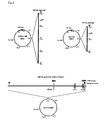
- SV/ ⁇ 50 and CMV/ ⁇ 100 which are alphoid-BACs containing 50 kb (SV/ ⁇ 50) and 100 kb (CMV/ ⁇ 100) alphoid fragments, were obtained (Fig. 3).
- Alpha 21-I alphoid consisting of an 11mer higher order repeat unit derived from human chromosome 21 (Ikeno et al. 1994), is able to generate a HAC efficiently when introduced into HT1080 cells (Ikeno et al. 1998).
- HACs containing a GCH1 genomic locus with naturally regulated gene expression utilizing alphoid-BACs and GCH1-BAC.
- BACs used in this study are shown in Figure 3.
- CMV/a100 contains 100 kb of an ⁇ 21-I alphoid array and a CMV-Bsd as a selectable marker
- SV/a50 contains 50 kb of an ⁇ 21-I alphoid array and a SV2-Bsr selection marker.
- the GCH1-BAC was obtained from a BAC library (Genome systems) and has a 180 kb genomic DNA fragment containing the GCH1 gene.
- BAC-DNAs were purified by CsCl banding using a gradient
- the BS-resistant cell lines were analyzed by FISH using both ⁇ 21-I alphoid DNA and BAC vector as probes. Namely, metaphase chromosome spreads were prepared on glass slides after methanol/acetate (3: 1) fixation and FISH was carried out according to conventional procedures.
- biotin-labeled alpha 21-I alphoid DNA (11-4) Ikeno et al. 1994
- digoxigenin-labeled Belo-BAC were used as probes.
- introduced BACs were either integrated into the chromosomes of HT1080 or the signals were undetectable by FISH analyses.
- HACs contained the genomic fragment of the GCH1 gene
- four cell lines containing a HAC were further hybridized with probes for GCH1 exon 1 and exons 4-6 (Fig.3).
- the signals for both probes were detected on a HAC in the HT/GCH2-10 cell line which was generated by co-transfection of CMV/ ⁇ 100 and GCH1-BAC, and on a HAC in the HT/GCH5-18 cell line which was generated by co-transfection of SV/ ⁇ 50 and GCH1-BAC (Fig. 4).
- the GCH1 signals detected on the HACs were stronger than that of the endogenous gene on the HT1080 chromosomes.
- centromere/kinetochore structure was investigated on metaphase chromosomes of HT/GCH2-10 and HT/GCH5-18 by indirect immunofluorescence as follows. Swollen and 1% paraformaldehyde fixed cells were incubated with anti-CENP-A (Ando et al. 2002) or anti-CENP-E (Santa Cruz) antibodies. Antibody localization was visualized with FITC-conjugated anti-mouse IgG. For subsequent FISH analysis, the cells were fixed again with 1% paraformaldehyde and then with methanol/acetate (3: 1).
- CENP-A and CENP-E signals were detected on HACs in doublets corresponding to the paired sister chromatids, and were similarly detected at the centromeres of all endogenous chromosomes (data not shown).
- telomere sequence was detected on the HACs when HACs were stained using a BAC vector probe.
- ends of the chromosomes from the host cell, HT1080 were hybridized as clear speckles.
- BAC-derived HACs are likely to be circular in form.
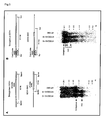
- the DNA organization of the HACs was analyzed by restriction digestion of DNA isolated from HT/GCH2-10, HT/GCH5-18 and non-transfected HT1080 cells.
- the DNA samples (5 ⁇ g) were digested with BamHI or StuI for 4 hours followed by conventional gel electrophoresis.
- the DNA in the gel was transferred to a nylon membrane and hybridized with 32 P labeled DNA probe prepared from GCH1 exon 6 (2.1 kb) and the upstream region of GCH1 (1.4 kb, position 595-1959 in GCH1-BAC).
- the size of BamHI fragments detected by the US probe were 5.0 kb from the endogenous GCH1 gene and 3.5 kb from GCH1-BAC.
- the 5.0 and 3.5 kb fragments were detected with DNA from HT/GCH2-10 and HT/GCH5-18 at almost the same signal intensity (Fig. 5(A)).
- the size of StuI fragments detected by the exon 6 probe were 24.5 kb from the endogenous GCH1 gene and 14.4 kb from GCH1-BAC.
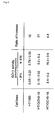
- the copy numbers of the GCH1-BAC and the alphoid-BAC in GCH2-10 and GCH5-18 HACs were determined by dot hybridization using GCH1 exon 6 and BAC vector, respectively, as probes. Relative copy numbers of each BAC in the HACs were estimated from the hybridization signal-intensity values, which were determined using each DNA probe and standardized using the values obtained with 0.1 ng GCH1-BAC DNA (Fig. 6). In the case where GCH1 exon 6 was used as the probe, the same hybridization intensity values to that obtained with 0.1 ng GCH1-BAC DNA were obtained with 0.5 ⁇ g DNA from both HT/GCH2-10 and HT/GCH5-18, and with 1 ⁇ g DNA from HT1080 (Fig.
- HT1080 karyo-type used in this study is 3n, three copies of GCH1 genes occur on its chromosomes, and given that HT/GCH2-10 and HT/GCH5-18 resulted in the same signal values with half the amount DNA as that from HT1080, they must contain six copies of GCH1 genes; three on the chromosomes and three on the HAC.
- the total copy number of BACs was estimated from the intensity values obtained with the BAC vector probe.
- the same hybridization intensity values to that obtained with 0.1 ng GCH1-BAC were obtained with 0.33 ⁇ g DNA from HT/GCH2-10 and HT/GCH5-18, while HT1080 showed no signal as expected (Fig. 6, Right).
- both HACs have roughly 3-fold more copies of the BAC vector than copies of the GCH1 gene.
- copy numbers of the total BAC vectors must be approximately nine per cell; three copies of GCH1 genes are in the form of GCH1-BAC and the remaining six copies of BACs must exist in the form of alphoid-BAC in both HACs.
- HAC-containing cell lines and mouse A9 cell line were fused using PEG which allows micro-cell mediated chromosome transfer (MMCT) (Fournier et al. 1977).
- MMCT micro-cell mediated chromosome transfer
- Cell lines containing a HAC (5 x 10⁵) and mouse A9 cells (5 x 10⁵) were co-cultivated and fused in PEG/DMSO solution (SIGMA).
- BS- and Ouabain- resistant cells were selected with 2.5 ⁇ g/ml BS and 3 ⁇ M Ouabain.
- BS- and Ouabain-resistant cell lines were analyzed by FISH. Metaphase spreads were hybridized with a BAC vector probe and Alu repeat probe to identify the HACs and human chromosomes, respectively (Fig. 7(A)).
- One of the fusion cell lines, F/GCH5-18 contained one or two copies of HAC together with eight to ten human chromosomes.
- the HACs in the fusion cells were maintained stably during mitotic growth under non-selective conditions with a loss of approximately 1% of the mitotic chromosomes per day (data not shown).
- the mitotic stability of human chromosomes in mouse cell lines was sometimes caused by the acquisition of minor satellite DNA from the mouse which was localized at the centromere of the mouse chromosomes and may serve as functional centromere sequences (Shen et al. 1997). Therefore the presence of mouse minor satellite DNA on HAC was examined by FISH. Signals of minor satellite DNA were not detected on HAC, while strong signals were detected at the centromeres of mouse chromosomes (Fig. 7(B)).
- the fusion cell lines were able to form micro-cells under colcemid treatment conditions (data not shown). Therefore, the HACs could be easily transferred to neural cell lines.
- GCH1-BAC used in the generation of HACs contained over 100 kb of genomic sequence from the 5' upstream region of the GCH1 exon 1. Therefore, we have measured GTP cyclohydrolase I (GCH1) activities in HT1080 and the HAC-containing derivatives that were developed from it. It would have been expected from the previous report that the activity of GCH1 would have been hardly detectable in fibroblast cell lines but up-regulated by induction of IFN- ⁇ (Werner et al. 1990).
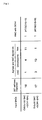
- GCH1 activity in HT1080, HT/GCH2-10 and HT/GCH5-18 were analyzed in the presence and absence of IFN- ⁇ induction (Fig.2).
- GCH1 activity was measured as follows. Cells were grown in the absence or presence of human IFN- ⁇ at 250 U/ml in culture medium for 48 h. Trypsinized cells were washed in phosphate-buffered saline (PBS), then lysed in 0.1 M Tris-HCl (pH 8.0), 0.3 M KCI, 2.5 mM EDTA, 10% glycerol. GCH1 activity was measured as described (Hibiya et al. 2000).
- HT1080 without GCH1-HAC exhibit barely detectable levels of GCH1 activity in the absence of IFN- ⁇ induction, while the activity was increased fifteen times upon the addition of IFN- ⁇ .
- the GCH1 level was three times the values of HT1080 without a HAC. After the IFN- ⁇ induction, nearly 30-fold up-regulation was observed.
- GCH1 activity in HT/GCH5-18 was elevated 70-fold in the absence of IFN- ⁇ and addition of IFN- ⁇ further up-regulated the activity 5-fold.
- the GCH1 activities were elevated but differ in degree, possibly reflecting the difference in chromatin structure and/or DNA rearrangements in HACs. They are still susceptible to IFN- ⁇ induction, just like the response of the expression of the GCH1 gene from the authentic chromosome.
- HACs containing large DNA fragments with the GCH1 gene by simple co-transfection methods using alphoid-BAC and GCH1-BAC at a DNA ratio of 1:1.
- the GCH1-HAC was maintained at one copy after 30 or more rounds of generation under non-selective conditions in spite of being circular in form without telomeres, indicating that HAC replicates once in each cell cycle and is segregated precisely into daughter cells. Therefore, the circular HACs in this study did not cause topological problem, which may result in the abnormal segregation of the circular chromosomes, since the catenated form arose from DNA replication.
- the HACs were cytologically megabases in size and approximately 10-fold larger than the transfected BAC DNA.
- the DNA structure of the HAC was examined to understand the properties and mechanism of de novo generation of HAC.
- the restriction analysis of the whole area of the GCH1 gene was difficult because almost all rare-cutting enzyme sites in the BAC constructs were subjected to methylation and the cell lines contain the endogenous GCH1 locus. Therefore, we applied restriction analysis to the region corresponding to the junction of the BAC vector and the GCH1 locus. The result showed that GCH1-HACs in the two cell lines contained three copies of the GCH1-BAC and six copies of the alphoid-BAC as components (Fig. 5, 6).
- GCH1-HAC was composed of multimer of the input DNA, which was similar to the HAC generated by alphoid-YAC (Ikeno et al. 1998) or alphoid-BAC alone (data not shown) as an input element.
- HAC containing large human genomic DNA was previously reported using a 140 kb or 162 kb HPRT locus (Grimas et al. 2001; Mejia et al. 2001). They obtained the HAC containing HPRT gene in the HPRT-deficient HT1080 cell lines in HAT medium depending on complementation. The feasibility of such an approach for genes with tissue and stage specific expression (i.e. not house-keeping gene) will be low in HT1080 cells.
- HACs centromere/kinetochore
- the GCH1 gene expression from HAC might be correlated with the chromatin structure at or near the GCH1 locus.
- the present inventors addressed whether the centromere/kinetochore structure was formed on only the alphoid array or whether it spread into the GCH1 locus.
- CENP-A is an essential protein for a functional centromere/kinetochore and constitutes the histone component for centromere specific nucleosomes (Palmer et al. 1991; Howman et al. 2000)
- HT/GCH5-18 cells The nuclei of HT/GCH5-18 cells (5 x 10⁷) were isolated and dissolved in WB (20 mM HEPES (pH 8.0), 20 mM KCI, 0.5 mM EDTA, 0.5 mM dithiothreitol, 0.05 mM phenylmethylsulfonyl fluoride). After digestion with MNase, solubilized chromatin was immunoprecipitated using anti-CENP-A antibody as described previously (Ando et al. 2002).
- the alphoid array was enriched to 60-80% in total immunoprecipitated DNA.
- the alphoid array in the GCH1-HAC was also enriched by anti-CENP-A antibody, while the GCH1 region was not.
- the BAC vector sequence about 3 kb away from the alphoid sequence was also immunoprecipitated, indicating that the centromere/kinetochore structure was formed on the alphoid array and spread to flanking non-alphoid region (data not shown).
- the invasion of the GCH1 locus in the HAC by centromere/kinetochore structure was prevented by an as yet unknown protection mechanism that probably resides in the upstream regulatory sequence.
- GCH1 encodes the first and rate-limiting enzyme for the biosynthetic pathway of tetrahydrobiopterin (Nichol et al 1985), the co-factor of aromatic amino acid hydroxylase (PAH, TH, TPH) as well as nitric oxide synthase (NOS) and is present in higher organisms (Kaufman 1993).
- the GCH1 gene is a causative gene for dopamine deficiency in dopa responsive dystonia (DRD/Segawa's disease) (Ichinose et al. 1994). Deficiency of GCH1 in conjunction with a mutation in the TH gene results in severe early-onset dystonia/parkinsonism (Ichinose et al. 1999).
- GCH1-HACs locus control regions
- the GCH1-HACs used in this study carry a 180 kb genomic fragment containing the GCH1 gene, and therefore may contain the regulatory sequences required for tissue specific expression and for prevention of the silencing effect of the flanking centromere.
- the expression of the GCH1 gene from HAC was measured by GTP cyclohydrolase I activity in the presence and absence of IFN- ⁇ (Fig.2).
- HT/GCH2-10 Activity in the HAC-containing cell line, HT/GCH2-10, was slightly higher than the activity obtained with HT1080 in the absence of IFN- ⁇ . Addition of IFN- ⁇ increased the GCH1 activity approximately 30-fold. In another cell line, HT/GCH5-18, which also carries twice the number of GCH1 genes as HT1080, showed 70-fold higher enzyme activity than TH1080 in the absence of IFN- ⁇ and the activity was further increased 5-fold by IFN- ⁇ induction.
- the small difference in values between HT/GCH2-10 and HT1080 may correspond to the small copy numbers of intact GCH1 genes, since it seems that some copies of GCH1 genes on GCH2-10 HAC have the structural abnormality described in the Results section.
- the adeno-associated virus (AAV) vector was often used for gene therapy in the helper virus-dependent manner for productive infection.
- the AAV vector has limited cloning capacity that usually carry cDNA without original regulatory sequence for gene expression (Dong et al. 1996).
- GCH1 is necessary for efficient dopamine production together with tyrosine hydroxylase (TH) and aromatic-L-amino-acid decarboxylase (AADC). Expression of these three enzymes from the AAV vector in the striatum resulted in relatively long-term behavioral recovery in a primate model of Parkinson's disease (Muramatsu et al. 2002).
- HACs Epstein-Barr virus
- HAC histone de novo generation
- requirement of the limited cell line for generation of HACs and the large size of HACs presents a difficulty in the delivery of HACs to cells or tissues at required sites.
- the HAC that has been established in HT1080 needs to be transferred into suitable cell lines.
- the HAC could be transferred by MMCT using the mouse A9 cells, which enable the formation of micro-cells (Fournier et al. 1977).
- the present inventors have established mouse A9 cell lines, which maintained HACs stably in mitotic growth under non-selective conditions without detectable structural changes in the HAC.
- the HACs would be easily transferrable from A9 to other cell lines.
- HT1080 cells containing HACs retaining GCH1 gene were transferred to mouse A9 cells by a cell fusion method.
- HAC-containing cell lines (HT/GCH2-10) were fused to mouse A9 cells, and BS- and Ouabain-resistant cell lines were selected.
- F(A9/2-10)4 colcemid was added so that the final concentration became 0.05 ⁇ g/ml, followed by culturing at 37°C under conditions of 5% CO 2 for 72 hours. Cells were collected by trypsinization and suspended in a D-MEM medium without serum.
- Cytochalasin B was added so that the concentration became 20 ⁇ g/ml and left at 37°C for 5 minutes, followed by adding an equal amount of Percol which had been kept at 37°C in advance. Then, micro-nuclei were collected by centrifugation (15,000 rpm for 90 mins). The collected micro-nuclei were suspended in a D-MEM medium without serum, followed by centrifugation (2,000 rpm for 5 mins) again. The obtained precipitates (micro-nuclei) were suspended in a D-MEM medium without serum again.
- ES cells TT2 C57BL/6 ⁇ CBA
- centrifugation (1,500 rpm for 5 minutes).
- 1 ml D-MEM medium without serum was added so as to suspend the precipitates, which was kept in this state for 10 minutes (at room temperature).
- cells and micro-nuclei were precipitated by centrifugation (1,500 rpm for 5 minutes) and the supernatant was removed, followed by adding 1 ml of PEG1500 (Roche) so as to suspend the precipitates.
- 5 ml D-MEM medium without serum was added and cells were collected by centrifugation (1,000 rpm and 5 min).
- ESM medium D-MEM + non-essential amino acid (Invitrogen) + 0.1 mM ⁇ -mercaptoethanol + 10 3 U/ml ESGRO (Chemicon) + nucleoside.
- the obtained cell suspension was plated on feeder cell SLB (provided by Dr. Yuzo Kadokawa at Fujita Health University School of Medicine) which were treated with mitomycin C so as to stop the proliferation.
- the resultant colony was isolated and plated on feeder cells SLB (24 well culture dish) which were treated with mitomycin C to stop the proliferation. From proliferated cells, cell lines containing BAC DNA were selected by PCR, and subjected to FISH analysis using an alphoid DNA, a BAC vector, a GCH1 gene and a mouse minor satellite DNA as probes (see Examples 2 and 5).
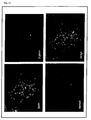
- Fig. 8A shows the result of the FISH analysis using an alphoid DNA and a BAC vector as probes. Green indicates a signal of the alphoid DNA (arrow) and red indicates a signal of the BAC vector (arrow head). It is shown that the isolated ES cells contain one copy of HAC and maintain a normal nucleus type.
- Fig. 8B shows the result of FISH analysis using an exon 1 region of a human GCH1 gene and a BAC vector as probes.
- a green signal (arrow) of GCH1 gene and a red signal (arrow head) of the BAC vector were simultaneously detected on the HAC.
- Fig. 8C shows the result of FISH analysis using a mouse minor satellite DNA and a BAC vector as probes.
- a signal (a part of which is shown by an arrow) of the mouse minor satellite DNA were not detected. Note here that an arrow head show a signal of the BAC vector.
- the stability of HAC in ES cells was analyzed by culturing in the absence of selective agents for a long time.
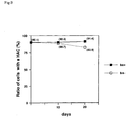
- the HAC-containing ES cells obtained in Example 7 were cultured (20 days) both in the presence and absence of blastcidin S, followed by calculating the rate of HAC-containing cells by FISH analysis.
- Fig. 9 shows the result of the analysis. Even after a long term culturing in the absence of agent, 80% or more of cells retain HAC in a state of one copy.
- Example 9 Construction of human artificial chromosome (HAC) using yeast artificial chromosome (YAC)
- Human artificial chromosome containing an entire region of ⁇ -globin gene group (cluster) of the human chromosome 11 by using YAC as a precursor was constructed by the following procedure. The precursors used follow.
- A201F4.3 150 kb of YAC containing human ⁇ globin gene locus in which the right arm portion of A201F4 was modified and PGKneo was inserted (provided from Keiji Tanimono, Douglas Engel, Nucleic Acid Research, 27; 3130-3137).
- 7c5hTEL an artificial chromosome precursor YAC including about 80 kb of alpha-satellite array ( ⁇ 21-I) derived from the human chromosome 21 alphoid region and a marker gene SVbsr, and having yeast telomere sequences at both ends and human telomere sequence inside thereof.
- Yeast containing 7c5hTEL Sacaromyces serevisiae EPY 305-5b ⁇ 7C5hTEL
- yeast cell line As to the production method of the yeast cell line, see, for example, Published Japanese translation of a PCT application No. 2000-517182.
- F61 a tetracycline-induced expression system cell established by introducing pTet-OFF (CLONTECH) into HT1080 and by the selection of G418.
- Pulsed Field Gel Electrophoresis was carried out by the following procedure so as to isolate two kinds of yeast artificial chromosomes (A201F4.3 and 7c5hTEL), respectively.
- PFGE was carried out on 0.7 % agarose gel under the conditions of 0.5 x TBE, 180 Volt and 15 second pulse for 15 hours by using Gene Navigator (Amersham Pharmacia Biotech).
- YAC DNA isolated from the PFGE gel was transferred to agarose gel with 1 % low melting point by electrophoresis, and then this gel was immersed in a buffer solution of 10 mM Tris (pH 8.0), 1 mM EDTA and 100 mM NaCl for 16 hours. 100 ⁇ g E.
- coli tRNA was added to YAC DNA (0.3 ⁇ g/0.3 ml), which was heated at 70°C for 10 minutes so as to melt the gel.
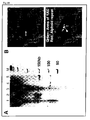
- 30U ⁇ agarase (Sigma) was added and reacted at 42°C for 2 hours to digest the agarose. These were subjected to PFGE so as to confirm bands of 7c5hTEL (90 kb) and A201F4.3 (150 kb) (see Fig. 10A).
- the obtained transformed cell lines were subjected to FISH analysis by using an ⁇ 21-I probe (alphoid probe obtained by labeling a DNA fragment of SEQ ID NO: 3 with digoxigenin) and a probe of the arm portion of YAC (obtained by labeling about 8 kb of DNA fragment (SEQ ID NO: 4) obtained by XhoI-cutting a pYAC5 vector (Dr. Maynard V. Olson (Washington University)) with biotin).
- ⁇ 21-I probe alphoid probe obtained by labeling a DNA fragment of SEQ ID NO: 3 with digoxigenin
- SEQ ID NO: 4 obtained by labeling about 8 kb of DNA fragment (SEQ ID NO: 4) obtained by XhoI-cutting a pYAC5 vector (Dr. Maynard V. Olson (Washington University)) with biotin.
- each probe was obtained by subjecting it to PCR (25 cycles each cycle including 96°C for 30 seconds, 58°C for 40 seconds and 72°C for 10 minutes) by using A201F4.3 as a template and by using the following primers and labeling the resultant amplified DNA with biotin.
- telomere repeat sequence about 500 bp of sequence consisting of repeat sequences of SEQ ID NO: 8
- two points or four points of signals of telomere were observed on the mini chromosome (see FIG. 12).
- YAC including an alpha-satellite array and YAC including human ⁇ globin cluster entire region were introduced into HT1080 cells, whereby it was confirmed that mini chromosome (human artificial chromosome) retaining an entire region of human ⁇ -globin cluster could be constructed.
- Mouse A9 cells and cells with mini chromosomes (1 ⁇ 10 6 each) were plated on a culture dish and 3 ml of 50% PEG (SIGMA) was added thereto and cultured for one minute. Then, they were cultured in a selection medium containing 10 ⁇ M Oubain and 5 ⁇ g/ml of Blasticidin S so as to obtain resistant transformed cells to Oubain and Blasticidin S.
- FISH analysis was carried out as mentioned above, it was confirmed that there were transformed cell lines in which mini chromosomes were contained and the remaining chromosomes were derived from the mouse.
- HAC-containing K562 cells leukocyte K562 cells (ATCC CCL-243) so as to obtain HAC-containing cells retaining ⁇ -globin gene (HAC-containing K562 cells).
- HAC-containing K562 cells The expression states of HAC-containing K562 cells and globin gene in HAC-containing HT1080 cells were analyzed by using the transcription amount of G ⁇ globin as an index as follows. Note here that HT1080 cells and K562 cells before the introduction operation of 7c5hTEL and A201F4.3, that is, HT1080 cells and K562 cells which do not contain HACs, were used as a control for comparison.
- RNA was extracted by a conventional method from each cell, and cDNA was synthesized by using reverse transcriptase of MMLV and an Oligo (dT) 15 primer.
- the thus obtained cDNA was, as a template, subjected to RT-PCR using the following primer set (exon 2 and exon 3 of G ⁇ globin).
- the transcription amount of each sample of G ⁇ globin genes was quantified by a real-time PCR.
- the real-time PCR was carried out by using ABI PRISM 7700 (ABI, Applied Bio systems Inc.) and Qiagen QuantiTect SYBR Green PCR kit (Cat 204143). Furthermore, as the primer used for amplification reaction, the above-mentioned primers were used. Note here that the transcription amount of ⁇ actin gene in each sample was calculated and the difference of the numbers of cells between the samples was corrected based on the calculated transcription amount.
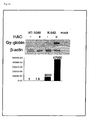
- Fig. 15 shows the analysis results by the real-time PCR.
- the transcription amount of G ⁇ globin in each sample was expressed as a relative value when the trnscription amount of HT1080 without containing HAC was 1.
- HAC the amount of expression of G ⁇ globin became 1.5 times when the target cell was HT1080.
- Meanshile when the target cell was K-562, the expression amount became 5 time or more.
- the expression of G ⁇ globin from the introduced HAC that is, the expression of foreign gene contained in HAC was confirmed.
- foreign genes could be expressed with extremely high activity.
- Example 7 Cell lines established by culturing ES cells containing HAC (HAC-containing ES cell lines TT2/GCH2-10) obtained in Example 7 were transfused into 8 cell-stage embryo or blastocyst stage embryo collected from ICR mouse (CLEA Japan Inc.) by an injection method, and ES cell-introduced embryo was transplanted into a provisional parent. Thereafter, a child mouse was born by natural childbirth. From the mouse 24 hours after its birth, organs (brain, heart, thymus, liver, spleen and kidney) were isolated and genomic DNAs were prepared with respect to each organ. The obtained DNA was subjected to PCR by using FastStart Taq DNA polymerase (Roche) so as to detect DNA derived from BAC.
- the sequence of primer to be used and cycle (reaction conditions) are as follows.
- Fig. 16 (b) The results of analysis by PCR are shown in Fig. 16 (b). As a result of the analysis of 15 mice, as shown in this figure, in 7 mice, BAC DNA were detected in all organs.
- chromosome sample of cell division stage was made and subjected to FISH analysis.
- a chimeric mouse excluding head portion and visceral organs was washed with PBS and stripped, and then kept at 37°C for 1 hour in the presence of 0.05% trypsin/1 mM EDTA.
- Cells trypsinized from the strip were collected by centrifugation and washed with DMEM medium including 10% FCS twice.
- the cells were floated in DMEM containing 10% FCS again and cultured in the presence of 5% CO 2 at 37°C.
- TN16 was added and synchronized to the division stage, followed by making chromosome sample of cell division stage.
- Fig. 16 (c) shows the obtained chimeric mouse. It could be confirmed that it was a chimeric mouse from a hair color.
- Example 7 HAC was transferred into the mouse ES cells by MMCT.
- XY nuclear type ES cells were used in Example 7, but in this Example, XO nuclear type ES cells TT2-F (provided by Dr. Aizawa) was used.
- XO nuclear type ES cells TT2-F provided by Dr. Aizawa
- HAC-containing ES cells were cultured so as to establish cell lines.
- a chimeric mouse was attempted to produce by the same procedure as in Example 13.
- a chimeric mouse (female) with mosaic hair color was obtained.
- 20836 kb (GenBank data base NG000007: 4818 to 25654) from YAC clone (A201F4.3, provided by Dr. Douglas Engel, Northwestern Univ.) covering the human ⁇ globin gene region was cloned to a multi-cloning site of pTWV229 vector (TAKARA BIO INC.) (TWV-LCR).
- ⁇ globin LCR Locus control region, including HS 1 to 5
- 20 kb of FspI fragment of TWV-LCR was inserted into the Eco065I site of BAC-bsr-lox71 (BAC-LCR-lox71, see Fig. 18).
- this precursor BAC-LCR-lox71 has a feature that CAG promoter (stable gene expression was expected in various mammalian culture cells and a mouse individual body) was disposed at 5' side of the lox71 site and CAG selection marker gene was constructed and the expression of gene occurs only when recombinant with respect to a selection marker gene without containing a promoter (promoterless) can be performed as expected at the time of recombination.
- CAG promoter stable gene expression was expected in various mammalian culture cells and a mouse individual body
- a precursor ( ⁇ 50) was constructed by removing SalI-SalI (Cos, loxP sequence) of CMV-a50 (including about 50 kb of alphoid insert (see Example 1) in which alphoid arrays are arranged in tandem).
- alphoid precursor ( ⁇ 50) and the acceptor precursor (BAC-bsr-lox7 or BAC-LCR-lox71) were co-introduced into HT1080 cells, and cell lines containing artificial chromosomes were selected from drug tolerance (bs) cells by FISH.
- lox15-13 cell lines containing artificial chromosome having ⁇ globin LCR ⁇ lox71, 2x10 5
- 1 ⁇ g of pCAG-Cre (Cre recombinase gene)
- 1 ⁇ g of Dn-EGFP (lox66 sequence and EGFP gene) were transfected by using lipofectamine plus reagent (Invitrogen). After selection by puromycin, it was confirmed that EGFP inserted by FISH was present on the artificial chromosome.
- the present invention provides a mammalian artificial chromosome containing a huge DNA region including an original regulatory region in addition to a gene of interest. Therefore, gene expression from the gene contained in the mammalian artificial chromosome can be carried out in an original regulation system.
- the mammalian artificial chromosome of the present invention can be used also for transferring itself to the other cells, or also can be used for study at the individual body level by way of human embryonic stem cells, etc. Therefore, it is an extremely useful tool for study of tissue specific gene expression and gene expression over time, study of human-type genes using a model animal, development of drugs (inhibitors, promoters, etc.), and the like.
- transformed animals including chimeric animals
- an artificial chromosome expressing a gene of interest can be produced, thus enabling the analysis of expression system of the single gene at the individual level.
- a clone animal carrying HAC of the present invention can be produced.
- the transformed animal containing the above-mentioned human artificial chromosome can be used as a model for gene therapy. Furthermore, it can be also used for analyzing the effect of drug on the target gene under physiological conditions.
- the mammalian artificial chromosome of the present invention is useful as a vector for gene therapy.
- the mammalian artificial chromosome of the present invention provides a simple and general method of transporting a huge DNA region including the original regulatory region in addition to a gene of interest.
Landscapes
- Genetics & Genomics (AREA)
- Health & Medical Sciences (AREA)
- Engineering & Computer Science (AREA)
- Life Sciences & Earth Sciences (AREA)
- Chemical & Material Sciences (AREA)
- Bioinformatics & Cheminformatics (AREA)
- Organic Chemistry (AREA)
- Biotechnology (AREA)
- General Engineering & Computer Science (AREA)
- Zoology (AREA)
- Wood Science & Technology (AREA)
- Biomedical Technology (AREA)
- Microbiology (AREA)
- Plant Pathology (AREA)
- Molecular Biology (AREA)
- Physics & Mathematics (AREA)
- Biochemistry (AREA)
- General Health & Medical Sciences (AREA)
- Biophysics (AREA)
- Micro-Organisms Or Cultivation Processes Thereof (AREA)
Applications Claiming Priority (5)
| Application Number | Priority Date | Filing Date | Title |
|---|---|---|---|
| JP2002258114 | 2002-09-03 | ||
| JP2002258114 | 2002-09-03 | ||
| JP2002338865 | 2002-11-22 | ||
| JP2002338865 | 2002-11-22 | ||
| PCT/JP2003/011134 WO2004022741A1 (fr) | 2002-09-03 | 2003-09-01 | Chromosome mammifere artificiel |
Publications (3)
| Publication Number | Publication Date |
|---|---|
| EP1536007A1 true EP1536007A1 (fr) | 2005-06-01 |
| EP1536007A4 EP1536007A4 (fr) | 2006-01-25 |
| EP1536007B1 EP1536007B1 (fr) | 2015-12-30 |
Family
ID=31980566
Family Applications (1)
| Application Number | Title | Priority Date | Filing Date |
|---|---|---|---|
| EP03794154.9A Expired - Lifetime EP1536007B1 (fr) | 2002-09-03 | 2003-09-01 | Chromosome mammifere artificiel |
Country Status (6)
| Country | Link |
|---|---|
| US (2) | US20070004002A1 (fr) |
| EP (1) | EP1536007B1 (fr) |
| JP (1) | JP4293990B2 (fr) |
| AU (1) | AU2003261863C1 (fr) |
| CA (1) | CA2501708C (fr) |
| WO (1) | WO2004022741A1 (fr) |
Cited By (3)
| Publication number | Priority date | Publication date | Assignee | Title |
|---|---|---|---|---|
| GB2445068A (en) * | 2006-12-07 | 2008-06-25 | Ge Healthcare Uk Ltd | Method for determining genotoxicity |
| WO2012156721A1 (fr) * | 2011-05-16 | 2012-11-22 | Isis Innovation Limited | Procédés pour fournir des cellules humaines comprenant un chromosome humain artificiel |
| EP3954765A4 (fr) * | 2019-04-12 | 2023-01-18 | Humab Co. Ltd. | Chromosome recombiné artificiel et son utilisation |
Families Citing this family (13)
| Publication number | Priority date | Publication date | Assignee | Title |
|---|---|---|---|---|
| JP2008054501A (ja) * | 2005-01-26 | 2008-03-13 | Tsuneko Okazaki | 線状哺乳類人工染色体及びその構築方法 |
| EP2484761A4 (fr) | 2009-10-01 | 2013-11-27 | Toto Ltd | Construction d'adn, et procédé de production d'une cellule cho recombinante l'utilisant |
| US11155836B2 (en) | 2015-02-09 | 2021-10-26 | CarryGenes Bioengineering | Compositions and methods for monitoring in real-time construction and bioengineering of mammalian synthetic chromosomes |
| JP7497139B2 (ja) * | 2016-04-12 | 2024-06-10 | キャリージーンズ バイオエンジニアリング | 生合成経路を発現する合成染色体の作成方法及びその使用 |
| AU2017250265B2 (en) | 2016-04-12 | 2023-08-17 | CarryGenes Bioengineering | Methods for creating synthetic chromosomes having gene regulatory systems and uses thereof |
| AU2017250178B2 (en) | 2016-04-12 | 2021-04-15 | CarryGenes Bioengineering | Sequential loadings of multiple delivery vectors using a single selectable marker |
| CA3046509A1 (fr) | 2016-12-15 | 2018-06-21 | Synploid Biotek, Llc | Methodes de renouvellement cellulaire |
| WO2018169892A1 (fr) | 2017-03-15 | 2018-09-20 | Synploid Biotek, Llc | Compositions et procédés de silençage chromosomique |
| WO2019050875A1 (fr) | 2017-09-05 | 2019-03-14 | Synploid Biotek, Llc | Chromosomes synthétiques rapporteurs de lignée et procédés d'utilisation |
| JP7324711B2 (ja) * | 2017-10-23 | 2023-08-10 | 公益財団法人がん研究会 | 一標的細胞の染色体複数異常を同時検出する方法 |
| CN109837307B (zh) * | 2017-11-24 | 2023-09-19 | 中国科学院脑科学与智能技术卓越创新中心 | 建立含外源染色体的胚胎干细胞的方法 |
| WO2019216338A1 (fr) * | 2018-05-08 | 2019-11-14 | 国立大学法人大阪大学 | Méthode de production de cellules homozygotes |
| US20220403398A1 (en) * | 2019-11-14 | 2022-12-22 | Lonza Ltd | Methods of cell selection |
Family Cites Families (6)
| Publication number | Priority date | Publication date | Assignee | Title |
|---|---|---|---|---|
| US5695967A (en) * | 1995-06-07 | 1997-12-09 | Case Western Reserve University | Method for stably cloning large repeating units of DNA |
| US6133503A (en) * | 1995-10-31 | 2000-10-17 | The Regents Of The University Of California | Mammalian artificial chromosomes and methods of using same |
| EP2060633A1 (fr) * | 1996-08-26 | 2009-05-20 | Chromo Research, Inc. | Chromosomes artificiels de mammifères |
| US20030051266A1 (en) * | 2001-02-14 | 2003-03-13 | Serafini Tito Andrew | Collections of transgenic animal lines (living library) |
| JP4095898B2 (ja) * | 2001-02-23 | 2008-06-04 | キリンファーマ株式会社 | 人工染色体を含むトランスジェニック動物のクローニング |
| HUP0402659A3 (en) * | 2001-05-30 | 2008-07-28 | Glaxo Group Ltd | Chromosome-based platforms |
-
2003
- 2003-09-01 CA CA2501708A patent/CA2501708C/fr not_active Expired - Fee Related
- 2003-09-01 US US10/526,425 patent/US20070004002A1/en not_active Abandoned
- 2003-09-01 AU AU2003261863A patent/AU2003261863C1/en not_active Ceased
- 2003-09-01 JP JP2004534126A patent/JP4293990B2/ja not_active Expired - Lifetime
- 2003-09-01 WO PCT/JP2003/011134 patent/WO2004022741A1/fr not_active Ceased
- 2003-09-01 EP EP03794154.9A patent/EP1536007B1/fr not_active Expired - Lifetime
-
2007
- 2007-11-28 US US11/987,206 patent/US20080235817A1/en not_active Abandoned
Cited By (4)
| Publication number | Priority date | Publication date | Assignee | Title |
|---|---|---|---|---|
| GB2445068A (en) * | 2006-12-07 | 2008-06-25 | Ge Healthcare Uk Ltd | Method for determining genotoxicity |
| GB2445068B (en) * | 2006-12-07 | 2009-08-19 | Ge Healthcare Uk Ltd | Method for determining genotoxicity |
| WO2012156721A1 (fr) * | 2011-05-16 | 2012-11-22 | Isis Innovation Limited | Procédés pour fournir des cellules humaines comprenant un chromosome humain artificiel |
| EP3954765A4 (fr) * | 2019-04-12 | 2023-01-18 | Humab Co. Ltd. | Chromosome recombiné artificiel et son utilisation |
Also Published As
| Publication number | Publication date |
|---|---|
| AU2003261863C1 (en) | 2008-06-12 |
| CA2501708A1 (fr) | 2004-03-18 |
| CA2501708C (fr) | 2012-01-03 |
| WO2004022741A1 (fr) | 2004-03-18 |
| US20070004002A1 (en) | 2007-01-04 |
| EP1536007B1 (fr) | 2015-12-30 |
| EP1536007A4 (fr) | 2006-01-25 |
| AU2003261863A1 (en) | 2004-03-29 |
| AU2003261863B2 (en) | 2008-01-03 |
| US20080235817A1 (en) | 2008-09-25 |
| JP4293990B2 (ja) | 2009-07-08 |
| JPWO2004022741A1 (ja) | 2005-12-22 |
Similar Documents
| Publication | Publication Date | Title |
|---|---|---|
| US20080235817A1 (en) | Artificial mammalian chromosome | |
| CN111448318B (zh) | 修饰在真核细胞中用于沉默基因表达的非编码rna分子的特异性的方法 | |
| JP5175814B2 (ja) | ヒト人工染色体(hac)ベクター | |
| EP3457840B1 (fr) | Procédés pour briser la tolérance immunologique à l'aide de multiples arn de guidage | |
| Kouprina et al. | A new generation of human artificial chromosomes for functional genomics and gene therapy | |
| Kazuki et al. | Refined human artificial chromosome vectors for gene therapy and animal transgenesis | |
| JP5345391B2 (ja) | ヒト人工染色体(hac)ベクター及びヒト人工染色体(hac)ベクターを有するヒト細胞医薬 | |
| US20160186208A1 (en) | Methods of Mutating, Modifying or Modulating Nucleic Acid in a Cell or Nonhuman Mammal | |
| WO2011083870A1 (fr) | Vecteur de chromosome artificiel de souris | |
| Ikeno et al. | Generation of human artificial chromosomes expressing naturally controlled guanosine triphosphate cyclohydrolase I gene | |
| Ren et al. | Human artificial chromosome vectors meet stem cells: new prospects for gene delivery | |
| Gao et al. | Telomerase-dependent and-independent chromosome healing in mouse embryonic stem cells | |
| Liu et al. | Electroporation-based Easi-CRISPR yields biallelic insertions of EGFP-HiBiT cassette in immortalized chicken oviduct epithelial cells | |
| Wong et al. | Analysis of mitotic and expression properties of human neocentromere-based transchromosomes in mice | |
| EP2921048B1 (fr) | Sus scrofa v2g : site sûr pour expression à long terme et grande vitesse d'intégration de transgènes dans un porc | |
| WO2015013575A2 (fr) | Souris knockout obtenues à partir d'une recombinase spécifique de site | |
| JP2008054501A (ja) | 線状哺乳類人工染色体及びその構築方法 | |
| Uno et al. | Human Cell Line Panel With Human/Mouse Artificial Chromosomes for Functional Analyses of Desired Genes | |
| Thomas-Gordon | Artificial Intron Technology To Generate Conditional Knock-Out Mice | |
| GRIGORIADIS et al. | c-Fos oncogene expression in cartilage and bone tissues of transgenic and chimeric mice | |
| HK40106345A (en) | Methods for breaking immunological tolerance using multiple guide rnas | |
| Sicouri | Tumor suppressor mutagenesis driven by DNA deaminase | |
| Voet | Design and Characterization of a Chromosomal Vector for Transgenesis in Higher Eukaryotes | |
| Xianying et al. | Human artificial chromosome vectors meet stem cells | |
| Call | Yeast artificial chromosome transgenic technology and the study of Down Syndrome |
Legal Events
| Date | Code | Title | Description |
|---|---|---|---|
| PUAI | Public reference made under article 153(3) epc to a published international application that has entered the european phase |
Free format text: ORIGINAL CODE: 0009012 |
|
| 17P | Request for examination filed |
Effective date: 20050307 |
|
| AK | Designated contracting states |
Kind code of ref document: A1 Designated state(s): AT BE BG CH CY CZ DE DK EE ES FI FR GB GR HU IE IT LI LU MC NL PT RO SE SI SK TR |
|
| AX | Request for extension of the european patent |
Extension state: AL LT LV MK |
|
| DAX | Request for extension of the european patent (deleted) | ||
| A4 | Supplementary search report drawn up and despatched |
Effective date: 20051212 |
|
| 17Q | First examination report despatched |
Effective date: 20070508 |
|
| GRAP | Despatch of communication of intention to grant a patent |
Free format text: ORIGINAL CODE: EPIDOSNIGR1 |
|
| RIC1 | Information provided on ipc code assigned before grant |
Ipc: C12N 5/10 20060101ALI20150615BHEP Ipc: A61K 48/00 20060101ALI20150615BHEP Ipc: C12N 15/09 20060101AFI20150615BHEP Ipc: C12N 15/85 20060101ALI20150615BHEP |
|
| INTG | Intention to grant announced |
Effective date: 20150703 |
|
| GRAS | Grant fee paid |
Free format text: ORIGINAL CODE: EPIDOSNIGR3 |
|
| GRAA | (expected) grant |
Free format text: ORIGINAL CODE: 0009210 |
|
| AK | Designated contracting states |
Kind code of ref document: B1 Designated state(s): AT BE BG CH CY CZ DE DK EE ES FI FR GB GR HU IE IT LI LU MC NL PT RO SE SI SK TR |
|
| REG | Reference to a national code |
Ref country code: GB Ref legal event code: FG4D |
|
| REG | Reference to a national code |
Ref country code: CH Ref legal event code: EP |
|
| REG | Reference to a national code |
Ref country code: AT Ref legal event code: REF Ref document number: 767509 Country of ref document: AT Kind code of ref document: T Effective date: 20160115 |
|
| REG | Reference to a national code |
Ref country code: IE Ref legal event code: FG4D |
|
| REG | Reference to a national code |
Ref country code: DE Ref legal event code: R096 Ref document number: 60348399 Country of ref document: DE |
|
| REG | Reference to a national code |
Ref country code: NL Ref legal event code: MP Effective date: 20151230 |
|
| REG | Reference to a national code |
Ref country code: AT Ref legal event code: MK05 Ref document number: 767509 Country of ref document: AT Kind code of ref document: T Effective date: 20151230 |
|
| PG25 | Lapsed in a contracting state [announced via postgrant information from national office to epo] |
Ref country code: GR Free format text: LAPSE BECAUSE OF FAILURE TO SUBMIT A TRANSLATION OF THE DESCRIPTION OR TO PAY THE FEE WITHIN THE PRESCRIBED TIME-LIMIT Effective date: 20160331 Ref country code: SE Free format text: LAPSE BECAUSE OF FAILURE TO SUBMIT A TRANSLATION OF THE DESCRIPTION OR TO PAY THE FEE WITHIN THE PRESCRIBED TIME-LIMIT Effective date: 20151230 Ref country code: FI Free format text: LAPSE BECAUSE OF FAILURE TO SUBMIT A TRANSLATION OF THE DESCRIPTION OR TO PAY THE FEE WITHIN THE PRESCRIBED TIME-LIMIT Effective date: 20151230 |
|
| PG25 | Lapsed in a contracting state [announced via postgrant information from national office to epo] |
Ref country code: NL Free format text: LAPSE BECAUSE OF FAILURE TO SUBMIT A TRANSLATION OF THE DESCRIPTION OR TO PAY THE FEE WITHIN THE PRESCRIBED TIME-LIMIT Effective date: 20151230 |
|
| PG25 | Lapsed in a contracting state [announced via postgrant information from national office to epo] |
Ref country code: CZ Free format text: LAPSE BECAUSE OF FAILURE TO SUBMIT A TRANSLATION OF THE DESCRIPTION OR TO PAY THE FEE WITHIN THE PRESCRIBED TIME-LIMIT Effective date: 20151230 Ref country code: IT Free format text: LAPSE BECAUSE OF FAILURE TO SUBMIT A TRANSLATION OF THE DESCRIPTION OR TO PAY THE FEE WITHIN THE PRESCRIBED TIME-LIMIT Effective date: 20151230 Ref country code: ES Free format text: LAPSE BECAUSE OF FAILURE TO SUBMIT A TRANSLATION OF THE DESCRIPTION OR TO PAY THE FEE WITHIN THE PRESCRIBED TIME-LIMIT Effective date: 20151230 |
|
| REG | Reference to a national code |
Ref country code: FR Ref legal event code: PLFP Year of fee payment: 14 |
|
| PG25 | Lapsed in a contracting state [announced via postgrant information from national office to epo] |
Ref country code: PT Free format text: LAPSE BECAUSE OF FAILURE TO SUBMIT A TRANSLATION OF THE DESCRIPTION OR TO PAY THE FEE WITHIN THE PRESCRIBED TIME-LIMIT Effective date: 20160502 Ref country code: AT Free format text: LAPSE BECAUSE OF FAILURE TO SUBMIT A TRANSLATION OF THE DESCRIPTION OR TO PAY THE FEE WITHIN THE PRESCRIBED TIME-LIMIT Effective date: 20151230 Ref country code: EE Free format text: LAPSE BECAUSE OF FAILURE TO SUBMIT A TRANSLATION OF THE DESCRIPTION OR TO PAY THE FEE WITHIN THE PRESCRIBED TIME-LIMIT Effective date: 20151230 Ref country code: SK Free format text: LAPSE BECAUSE OF FAILURE TO SUBMIT A TRANSLATION OF THE DESCRIPTION OR TO PAY THE FEE WITHIN THE PRESCRIBED TIME-LIMIT Effective date: 20151230 Ref country code: RO Free format text: LAPSE BECAUSE OF FAILURE TO SUBMIT A TRANSLATION OF THE DESCRIPTION OR TO PAY THE FEE WITHIN THE PRESCRIBED TIME-LIMIT Effective date: 20151230 |
|
| REG | Reference to a national code |
Ref country code: DE Ref legal event code: R097 Ref document number: 60348399 Country of ref document: DE |
|
| PG25 | Lapsed in a contracting state [announced via postgrant information from national office to epo] |
Ref country code: DK Free format text: LAPSE BECAUSE OF FAILURE TO SUBMIT A TRANSLATION OF THE DESCRIPTION OR TO PAY THE FEE WITHIN THE PRESCRIBED TIME-LIMIT Effective date: 20151230 |
|
| PLBE | No opposition filed within time limit |
Free format text: ORIGINAL CODE: 0009261 |
|
| STAA | Information on the status of an ep patent application or granted ep patent |
Free format text: STATUS: NO OPPOSITION FILED WITHIN TIME LIMIT |
|
| 26N | No opposition filed |
Effective date: 20161003 |
|
| PG25 | Lapsed in a contracting state [announced via postgrant information from national office to epo] |
Ref country code: BE Free format text: LAPSE BECAUSE OF FAILURE TO SUBMIT A TRANSLATION OF THE DESCRIPTION OR TO PAY THE FEE WITHIN THE PRESCRIBED TIME-LIMIT Effective date: 20151230 |
|
| PG25 | Lapsed in a contracting state [announced via postgrant information from national office to epo] |
Ref country code: SI Free format text: LAPSE BECAUSE OF FAILURE TO SUBMIT A TRANSLATION OF THE DESCRIPTION OR TO PAY THE FEE WITHIN THE PRESCRIBED TIME-LIMIT Effective date: 20151230 |
|
| PG25 | Lapsed in a contracting state [announced via postgrant information from national office to epo] |
Ref country code: MC Free format text: LAPSE BECAUSE OF FAILURE TO SUBMIT A TRANSLATION OF THE DESCRIPTION OR TO PAY THE FEE WITHIN THE PRESCRIBED TIME-LIMIT Effective date: 20151230 |
|
| REG | Reference to a national code |
Ref country code: CH Ref legal event code: PL |
|
| REG | Reference to a national code |
Ref country code: IE Ref legal event code: MM4A |
|
| PG25 | Lapsed in a contracting state [announced via postgrant information from national office to epo] |
Ref country code: CH Free format text: LAPSE BECAUSE OF NON-PAYMENT OF DUE FEES Effective date: 20160930 Ref country code: LI Free format text: LAPSE BECAUSE OF NON-PAYMENT OF DUE FEES Effective date: 20160930 Ref country code: IE Free format text: LAPSE BECAUSE OF NON-PAYMENT OF DUE FEES Effective date: 20160901 |
|
| PG25 | Lapsed in a contracting state [announced via postgrant information from national office to epo] |
Ref country code: LU Free format text: LAPSE BECAUSE OF NON-PAYMENT OF DUE FEES Effective date: 20160901 |
|
| REG | Reference to a national code |
Ref country code: FR Ref legal event code: PLFP Year of fee payment: 15 |
|
| PG25 | Lapsed in a contracting state [announced via postgrant information from national office to epo] |
Ref country code: CY Free format text: LAPSE BECAUSE OF FAILURE TO SUBMIT A TRANSLATION OF THE DESCRIPTION OR TO PAY THE FEE WITHIN THE PRESCRIBED TIME-LIMIT Effective date: 20151230 Ref country code: HU Free format text: LAPSE BECAUSE OF FAILURE TO SUBMIT A TRANSLATION OF THE DESCRIPTION OR TO PAY THE FEE WITHIN THE PRESCRIBED TIME-LIMIT; INVALID AB INITIO Effective date: 20030901 |
|
| PG25 | Lapsed in a contracting state [announced via postgrant information from national office to epo] |
Ref country code: TR Free format text: LAPSE BECAUSE OF FAILURE TO SUBMIT A TRANSLATION OF THE DESCRIPTION OR TO PAY THE FEE WITHIN THE PRESCRIBED TIME-LIMIT Effective date: 20151230 |
|
| PG25 | Lapsed in a contracting state [announced via postgrant information from national office to epo] |
Ref country code: BG Free format text: LAPSE BECAUSE OF FAILURE TO SUBMIT A TRANSLATION OF THE DESCRIPTION OR TO PAY THE FEE WITHIN THE PRESCRIBED TIME-LIMIT Effective date: 20151230 |
|
| REG | Reference to a national code |
Ref country code: FR Ref legal event code: PLFP Year of fee payment: 16 |
|
| PGFP | Annual fee paid to national office [announced via postgrant information from national office to epo] |
Ref country code: DE Payment date: 20180920 Year of fee payment: 16 Ref country code: FR Payment date: 20180924 Year of fee payment: 16 |
|
| PGFP | Annual fee paid to national office [announced via postgrant information from national office to epo] |
Ref country code: GB Payment date: 20180919 Year of fee payment: 16 |
|
| REG | Reference to a national code |
Ref country code: DE Ref legal event code: R082 Ref document number: 60348399 Country of ref document: DE Representative=s name: WITTHOFF JAEKEL STEINECKE PATENTANWAELTE PARTG, DE |
|
| REG | Reference to a national code |
Ref country code: DE Ref legal event code: R119 Ref document number: 60348399 Country of ref document: DE |
|
| PG25 | Lapsed in a contracting state [announced via postgrant information from national office to epo] |
Ref country code: DE Free format text: LAPSE BECAUSE OF NON-PAYMENT OF DUE FEES Effective date: 20200401 |
|
| GBPC | Gb: european patent ceased through non-payment of renewal fee |
Effective date: 20190901 |
|
| PG25 | Lapsed in a contracting state [announced via postgrant information from national office to epo] |
Ref country code: FR Free format text: LAPSE BECAUSE OF NON-PAYMENT OF DUE FEES Effective date: 20190930 Ref country code: GB Free format text: LAPSE BECAUSE OF NON-PAYMENT OF DUE FEES Effective date: 20190901 |