EP1536661A2 - Procédé d'enregistrement d'un dispositif de communication, dispositif de communication correspondant et une entité d'enregistrement - Google Patents
Procédé d'enregistrement d'un dispositif de communication, dispositif de communication correspondant et une entité d'enregistrement Download PDFInfo
- Publication number
- EP1536661A2 EP1536661A2 EP04104281A EP04104281A EP1536661A2 EP 1536661 A2 EP1536661 A2 EP 1536661A2 EP 04104281 A EP04104281 A EP 04104281A EP 04104281 A EP04104281 A EP 04104281A EP 1536661 A2 EP1536661 A2 EP 1536661A2
- Authority
- EP
- European Patent Office
- Prior art keywords
- communication device
- address
- temporary
- communication
- registration
- Prior art date
- Legal status (The legal status is an assumption and is not a legal conclusion. Google has not performed a legal analysis and makes no representation as to the accuracy of the status listed.)
- Granted
Links
- 238000004891 communication Methods 0.000 title claims abstract description 315
- 238000000034 method Methods 0.000 title claims abstract description 46
- 230000000977 initiatory effect Effects 0.000 claims description 11
- WCZDQPXNBJTKPI-UHFFFAOYSA-O Cyanidin 7-glucoside Chemical compound OC1C(O)C(O)C(CO)OC1OC1=CC(O)=C(C=C(O)C(=[O+]2)C=3C=C(O)C(O)=CC=3)C2=C1 WCZDQPXNBJTKPI-UHFFFAOYSA-O 0.000 description 14
- 101000953492 Homo sapiens Inositol hexakisphosphate and diphosphoinositol-pentakisphosphate kinase 1 Proteins 0.000 description 14
- 102100023727 Mitochondrial antiviral-signaling protein Human genes 0.000 description 14
- 230000004913 activation Effects 0.000 description 9
- 238000007726 management method Methods 0.000 description 8
- 230000011664 signaling Effects 0.000 description 8
- 230000003068 static effect Effects 0.000 description 7
- 230000005540 biological transmission Effects 0.000 description 5
- 238000012546 transfer Methods 0.000 description 5
- 102100025089 GPN-loop GTPase 1 Human genes 0.000 description 3
- 101000857481 Homo sapiens GPN-loop GTPase 1 Proteins 0.000 description 3
- 238000012790 confirmation Methods 0.000 description 3
- 238000011161 development Methods 0.000 description 2
- 230000018109 developmental process Effects 0.000 description 2
- 238000010586 diagram Methods 0.000 description 2
- 238000009826 distribution Methods 0.000 description 2
- 230000004807 localization Effects 0.000 description 2
- 238000013507 mapping Methods 0.000 description 2
- 238000010295 mobile communication Methods 0.000 description 2
- 101000926140 Homo sapiens Gem-associated protein 2 Proteins 0.000 description 1
- 101000716750 Homo sapiens Protein SCAF11 Proteins 0.000 description 1
- 101000723833 Homo sapiens Zinc finger E-box-binding homeobox 2 Proteins 0.000 description 1
- 102100020876 Protein SCAF11 Human genes 0.000 description 1
- 101150069124 RAN1 gene Proteins 0.000 description 1
- 101100355633 Salmo salar ran gene Proteins 0.000 description 1
- 238000005238 degreasing Methods 0.000 description 1
- 230000001419 dependent effect Effects 0.000 description 1
- 230000010354 integration Effects 0.000 description 1
- 238000004519 manufacturing process Methods 0.000 description 1
- 230000001404 mediated effect Effects 0.000 description 1
- 238000003860 storage Methods 0.000 description 1
- 230000002123 temporal effect Effects 0.000 description 1
Images


Classifications
-
- H—ELECTRICITY
- H04—ELECTRIC COMMUNICATION TECHNIQUE
- H04W—WIRELESS COMMUNICATION NETWORKS
- H04W60/00—Affiliation to network, e.g. registration; Terminating affiliation with the network, e.g. de-registration
-
- H—ELECTRICITY
- H04—ELECTRIC COMMUNICATION TECHNIQUE
- H04L—TRANSMISSION OF DIGITAL INFORMATION, e.g. TELEGRAPHIC COMMUNICATION
- H04L61/00—Network arrangements, protocols or services for addressing or naming
- H04L61/45—Network directories; Name-to-address mapping
- H04L61/4588—Network directories; Name-to-address mapping containing mobile subscriber information, e.g. home subscriber server [HSS]
-
- H—ELECTRICITY
- H04—ELECTRIC COMMUNICATION TECHNIQUE
- H04L—TRANSMISSION OF DIGITAL INFORMATION, e.g. TELEGRAPHIC COMMUNICATION
- H04L65/00—Network arrangements, protocols or services for supporting real-time applications in data packet communication
- H04L65/1066—Session management
- H04L65/1096—Supplementary features, e.g. call forwarding or call holding
-
- H—ELECTRICITY
- H04—ELECTRIC COMMUNICATION TECHNIQUE
- H04L—TRANSMISSION OF DIGITAL INFORMATION, e.g. TELEGRAPHIC COMMUNICATION
- H04L65/00—Network arrangements, protocols or services for supporting real-time applications in data packet communication
- H04L65/10—Architectures or entities
- H04L65/1016—IP multimedia subsystem [IMS]
-
- H—ELECTRICITY
- H04—ELECTRIC COMMUNICATION TECHNIQUE
- H04W—WIRELESS COMMUNICATION NETWORKS
- H04W8/00—Network data management
- H04W8/26—Network addressing or numbering for mobility support
Definitions
- Method for registering a communication device on a Communication network placing between the communication device and at least one registration unit of the communication network one or more temporary communication addresses be negotiated, the only for a predetermined Usage periods are valid, and the respective temporary Communication address from the registration unit is registered for this period of use.
- the communication device By using a temporary communication address instead of the permanently or permanently assigned communication address the communication device only stays under this temporarily assigned, i. dynamic communication address for other communication address can be addressed or addressed. After expiration of a given period of use the respective temporary communication address of the communication device invalid. Only during the validity period of the the respective temporary communication address can be the Communication device valid from other communication devices address and reach. That way you can do that Communication device against unwanted access to his true communication address through other communication devices protect.
- Through the temporary assignment of an alternative or substitute address instead of the actual, permanently assigned Communication address remains the communication device only addressable for a specifiable period of time, making it particular secured against manipulative access by third parties is.
- this may prevent the continual sending of "Spams" are effectively prevented, since after expiration of the Validity period of the temporarily assigned, alternative communication address a communication path structure becomes impossible. Because the actual communication address of the communication device remains hidden for other communication participants or invisible.
- the invention also relates to a communication device and a Registration unit with means for carrying out the invention Process.
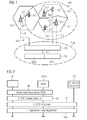
- FIG. 1 shows an example of the basic structure of a UMTS (Universal Mobile Telecommunication System) radio communication system RN. It has a plurality of radio cells, the be spanned by base stations.
- UMTS Universal Mobile Telecommunication System
- FIG. 1 shows the diagrammatic clarity half only three base stations BS1 with BS3 with its associated radio cells CE1 marked with CE3. These base stations are shown by dash-dotted lines Transmission lines UL1 to UL3 with the components a radio network FCN connected.
- This one has Radio access network ZGN on to the appropriate communication links AK additionally a so-called core network CN connected a GPRS core network GPN1 and a so-called "IP (Internet Protocol) Multimedia Core Network (core network) subsystem "IPS1 contains the IP Multimedia Core Network Subsystem is deleted: in the UMTS standard as IMS abbreviated. Details of the "IP Multimedia Core Network Subsystem” are particular in the relevant specification 3GPP TS23.228: “IP Multimedia Subsystem (IMS); Stage 2" specified. For this, the "IP Multimedia Core Network Subsystem” extended core network it is particularly desirable to implement a multimedia conference service.
- IMS IP Multimedia Subsystem
- This multimedia conference service is expediently based on this on an architecture and protocol components, according to the framework ("Conferencing Framework") IETF (Internet Engineering Task Force) (see in particular IETF Sipping Working Group: Draft IETF Sipping Conferencing Framework-00).
- Conferencing Framework Internet Engineering Task Force
- IETF Sipping Working Group Draft IETF Sipping Conferencing Framework-00.
- To this multimedia conference service is required to have means of production, for management, termination, entry and exit of multimedia conferencing.
- IETF Sipping Working Group: Draft IETF Sipping Conferencing Framework-00 IETF (Internet Engineering Task Force)
- To this multimedia conference service is required to have means of production, for management, termination, entry and exit of multimedia conferencing.
- Conference information and rules Within the respective multimedia conference service can basically any types of media and / or media formats be exchanged between the user equipment. This includes, for example, audio, video, voice, text, data, Instant messaging, gaming (games) conferences, etc. as well Combinations thereof.
- IP Multimedia Core Network Subsystem IPS1 identifies a permanently stored user identifier, in particular a public user identity, i. a so-called “Public User Identity” (abbreviated PUID) in clear Way a specific user. It can for one and the same user registered several such PUIDs in the IMS be.
- the user ID PUID which is defined by a so-called “TEL URL” (Telephone Uniform Resource Locator) or one so-called “SIP URI” (Session Initiation Protocol Uniform Resource Identifier) is formed with respect to their format with the format of a known e-mail address comparable.
- One or more PUIDs become the respective one Users in the "IP Multimedia Core Network Subsystem" like e.g. IPS1 static, i. permanently, by the respective mobile network operator (Operator) and stored there permanently.
- the respective user can only communicate if the PUID used for this is registered has been. This is done either implicitly or explicitly in a registration or activation procedure. At a implicit registration will be except in a registration request containing PUID more in the core network Registered PUIDs registered.
- a user can only incoming communication links are delivered, if the corresponding PUID has been previously registered. With In other words, that means that the respective user only after activation of his in the IMS statically deposited Identifier for communication traffic under its PUID approved and addressable for other communication devices becomes.
- each radio communication device UE1 to UE3 has this in each case to the base station of his current stay radio cell a radio connection or air interface connection LS1 to LS3.
- the three radio communication devices UE1 to UE3 are here in the embodiment to a so-called PTT ("Push To Talk") - Service logged in as multimedia conferencing service.
- PTT conference service can each only the operator of one of the participating communication devices make a voice message while the rest are involved Radio communication devices this voice message only can receive.
- Within the PTT conference service is thus between the radio communication devices involved only a voice and / or data exchange according to the so-called Half-duplex transmission method provided. This largely corresponds to the known walkie-talkie operation from the CB radio.
- the respective radio communication device UE1 to UE3 in the IP Multimedia Core Network Subsystem IPS1 is addressed via a PUID permanently assigned to it.
- the so-called "SIP-URI” or the “TEL-URL” format is used for the respectively firmly stored PUID of the respective radio communication device. Further details of these formats are given in the specifications IETF RFC3261: “Session Initiation Protocol (SIP)", IETF RFC2396: “Uniform Resource Identifiers (URI)" and IETF RFC2806: “URLs for Telephone Calls”.
- SIP URI Session Initiation Protocol
- URI Uniform Resource Identifiers
- a "SIP URI” communication address or identifier uses a format similar to that of the known e-mail address ("mailto URL"). For example, called sip: Holger.Schmidt@siemens.com or tel: +4953419061818 or more generally: sip: UserPart @ HostPart
- Each wireless communication device can be used in the "IP Multimedia Core Network Subsystem "several such PUIDs be assigned.
- the PUIDs are used to address the respective radio communication device used so that with their help a SIP request signal or "SIP Request" of a so-called “User Agent Clients "(UAC) to the so-called” User Agent Server " (UAS) can be routed or mediated.
- SIP Session Initiation Protocol
- IMS IP Multimedia Core Network Subsystem
- Session Initiation Protocol is a so-called” Application Layer Control Protocol ", i.e. a signaling protocol for setting up, for modifying and breaking down multimedia sessions or meetings.
- These multimedia sessions can be e.g. Internet phone connections (Voice over IP) and similar applications contain.
- SIP participants can already invited to existing sessions or sessions and the composition of the multimedia session are changed.
- SIP has address mapping capabilities or address mapping, the localization of the respective called subscriber device and the diversion of connections.
- SIP-based architecture Elements of a SIP-based architecture are included as User Agent (UA), Proxy Server, Redirect Server and Location server called.
- a "SIP User Agent” is an end system that gives the respective user a Radio communication device participating in a SIP session or session allowed.
- a "SIP User Agent” can continue in a “SIP User Agent Client” (UAC) and "User Agent Server” (UAS) be divided.
- UAC SIP User Agent Client
- UAS User Agent Server
- a "User Agent Client” generated and sends requests (SIP request) while a "User Agent Server” answers to requests (SIP Response).
- SIP-enabled terminal User Entity: abbreviated UE
- mobile device in particular, is a "user agent” included, i.e. both a User Agent Client (UAC) and a User Agent Server "(UAS).
- FIG 2 shows the timing of the to be traversed Procedures during the initial registration or login a radio communication device such as e.g. UE1 of Figure 1. Details this is especially in the 3GPP specification TS 23.221: "Architectural Requirement", paragraph 8.1.
- the activation or registration of the respectively deposited PUID of the radio communication device UE1 takes place in the with "4. Application Level Registration" procedure REG.
- REG Application Level Registration
- the "GPRS level” registration (GPRS Attach) is used during startup of the respective radio communication device such as e.g. UE1 performed.
- IMS such as IPS1
- IP data on the OSI (Open Systems Interconnection) network layer becomes the respective radio communication device an IP address assigned dynamically.
- OSI Open Systems Interconnection
- CSCF Discovery is the radio communication device UE1 the address, especially the so-called FQDN ("Full Qualified Domain Name") - or IP address, the respective responsible P-CSCF ("proxy call State Control Function ") of the IMS IPS1. This may also be part of the signaling within the "PDP Context Activation" procedure CA of FIG. 2 or by the use of a so-called DHCPv6 (Dynamic Host Control Protocol) protocol. Then you can the radio communication device UE1 via the fourth procedure REG named "4. Application Level Registration" via the P-CSCF component of the IMS in the S-CSCF (Serving CSCF) component in the IMS of the home core network, i. of the home Networks, register or log in. The S-CSCF component takes over in the IMS of the home nucleus network, the role of a SIP (Session Initiation Protocol) registrars.
- FQDN Full Qualified Domain Name
- IP IP address
- FIG. 3 shows the sequence of signaling messages for the initial registration or registration of a PUID for the radio communication device UE1 in the IMS IPS1 of the home core network HN. Details of this signal flow are given in particular in the Specification 3GPP TS 24.228 "Signaling Flows the IP Multimedia Subsystem based on SIP and SDP".
- the radio communication device UE1 for example, in the radio cell of a foreign radio communication system, which is here denoted by VN and the name "Visited Network (visited1.net)" carries.
- the radio communication device UE1 transmits via its air interface LS1 a control signal S1 with intermediate switching of the so-called "Radio Access Network" RAN1, ie radio access network, of the radio communication system currently visited by it to its GPRS core network GPN1 in order to log on there.
- the control signal S1 contains the activation procedures BR, CA, DI of FIG. 2 in common. Possibly. These activation procedures can also be started by separate control signals.
- the radio communication device UE1 After its GPRS level registration, the radio communication device UE1 transmits a registration request signal S2 named "2nd Register” to a P-CSCF component PC1 (called "Proxy Call State Control Function") of the IP Multimedia Core Network Subsystem "IPS1 of the visited, foreign radio communication network VN.
- This registration request signal S2 contains a user identity PUID with which the user of the radio communication device UE1 wishes to be explicitly registered.
- the P-CSCF component PC1 After receiving the registration request signal S2, the P-CSCF component PC1 queries DN1 for an assigned domain name server ("Domain Name Server": DNS) which I-CSCF component and thus which home network HN or IMS for the PUID of the User is responsible.
- DNS Domain Name Server
- the user identifier PUID is thus mapped by the domain name server DN1 to the IP address of the I-CSCF component.
- the associated signal exchange between the P-CSCF component PC1 and the domain name server DN1 is indicated by a double arrow S3 in FIG.
- the P-CSCF component PC1 forwards the registration request signal S4 to the responsible I-CSCF (Interrogating Call State Control Function) component IC1 in the IMS PS1 *. of the home core network HN.
- the I-CSCF component IC1 forms an entry point or access point to the IMS IPS1 *.
- the I-CSCF component IC1 queries by means of a request signal S5 all necessary for forwarding the request information at a database server, in particular the so-called HSS (Home Subscriber Server) of the IMS IP1 * from. For this purpose, the I-CSCF component sends, inter alia, the PUID to the HSS. The I-CSCF component then selects a suitable S-CSCF component as Registrar and forwards the request by means of the message S6 to the determined, responsible S-CSCF component SC1. If the PUID were not known to the HSS, then a cancellation of the registration procedure would take place at this point and an error message would be transmitted to the radio communication device UE1.
- HSS Home Subscriber Server
- the radio communication device UE1 is challenged at this point (Challenge).
- the S-CSCF component SC1 queries an "Authentication Vector" by means of a request signal S7 at the HSS, which contains all parameters necessary for this purpose.
- the radio communication device UE1 is sent the challenge.
- the radio communication device UE1 then generates the necessary response to the challenge, which is transmitted by means of the messages S12 to S17 to the S-CSCF component SC1.
- step S18 "18. Authentication" the check is made as to whether the answer is correct. If this is the case, then the PUID is registered in the S-CSCF component SC1.
- the registration is displayed to the HSS by means of a message S19.
- the radio communication device UE1 With the messages S20 to S22 the radio communication device UE1 the successful registration of the PUID is displayed. In this case, the implicitly registered PUID are also transmitted to the radio communication device UE1.
- this registration sequence not only the PUID of the User of the radio communication device UE1 registered, but at the same time a localization service realized. Because during registration the current communication address, in particular PUID of the user of the radio communication device UE1, with the respective current contact address, in particular IP address of the radio communication device UE1 associated, i.e. related to each other.
- the actual Contact address of the radio communication device UE1 contains its current IP address or FQDN (Fully Qualified Domain Surname). This contact address is either static or dynamic nature.
- the Radio communication device or UE ("user equipment) at the time the IP address during the procedure "2.
- PDP Context Activation assigned from Figure 2. It is also conceivable that a static IP address is used, e.g.
- the S-CSCF component SC1 of the home IMS IPS1 * becomes this way Binding, i. logical link, between the current one Contact address of the radio communication device UE1 and the user identification, in particular PUID of the current user of the Radio communication device UE1 generated. This association data are stored there. If a message is sent to the user ID, in particular PUID, the user of the radio communication device UE1 from another radio communication device such as e.g. UE2, the S-CSCF component calls SC1 in the home core network HN derives this association data and forwards the communication message then to the current contact address the user continues.
- USIM UMTS Subscriber Identity Module
- IMS SIM IMS SIM
- the registration So provides a method by which the Home core network always the current residence or learn the current residence address of the respective user can. It is still possible to have one PUID of several To register terminals. In the IMS of the home core network it is still possible that at the initial registration simultaneously with other PUIDs in the S-CSCF component with associated with the current contact address of the respective user become. In this case, the S-CSCF component may optionally to other PUIDs of the user in the database server database (HSS) resort, so it does not require is, more PUIDs from each radio communication device such as. UE1 to the S-CSCF component in the home IMS like e.g.
- HSS database server database
- IPS1 * to transfer.
- the link between PUIDs, the already in the data base of the database server, e.g. HS1 home IMS such as IPS1 * are deposited, with the current Contact address of the respective user will be there, like described above as implicit registration.
- the transfer of the respective to be registered PUID from the respective radio communication device to S-CSCF component, e.g. SC1 of the home IMS explicit registry called.
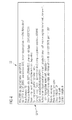
- FIG. 4 shows the registration request message S2 of FIG 3 in detail.
- the PUID to be registered by the user of the Radio communication device UE1 is in the "To" header field "SIP1 of Registration request signal S2.
- SIP1 Registration request signal
- the source this message is S2.
- the user of the radio communication device UE1 self-registered are in the "To" header field "and in the" From "header field” contain the same PUIDs.
- the one with the PUID too associating contact address in the form of a SIP URI, in particular IP address without user part, is in the section named "Contact header" of the registration request message S2 entered.
- the contact address contains the current IP address or FQDN address of the radio communication device UE1, where the user is currently available.
- the respective radio communication device only under such a PUID in the IMS of its home radio communication system be registered, there already in the database server, such as HS1 previously saved permanently has been.
- This is just a fixed, unchanging Assignment of one or more PUIDs to the respective one Users provided. Is now a user under his PUID registered in the IMS of its home radio communications network, so he is under this PUID also from other communication participants addressable.
- the PUIDs are generally accessible via public directories or also e.g. printed on business cards.
- this radio communication device or from an associated registration or address management unit in the radio network of the radio communication system at least a temporary communication address additional or independent for each permanent, i. statically assigned Communication address generated.
- This temporary communication address is registered in the address management unit and with the current contact address of the radio communication device, possibly also with a statically assigned communication address can be associated, for a predefinable Period associated. Only this temporary communication address of the radio communication device is then on or several other radio communication devices for communication exchange made accessible while the permanently assigned Communication address for these other radio communication devices invisible or hidden.
- a temporary user identity or Communication address is their uniqueness requirement, to a perfect identification of the respective user for other participants as well as network components.
- the respective user sends one or more self-generated temporary user identities to a registration or address management unit, in particular to a network element that performs the tasks of a so-called SIP registrar takes over.
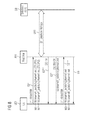
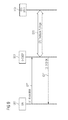
- FIG. 8 illustrates a first advantageous method to negotiate and register a temporary valid Communication address exemplary for a user agent (User Agent) UA of the radio communication device UE1.
- the user identities be in this embodiment according to the Specification IETF RFC3261 "Session Initiation Protocol (SIP) "generalized as” Address-of-Record (AOR) ".
- SIP Session Initiation Protocol
- AOR Address-of-Record
- FIG. 8 contains the registration request signal S2 * for example, two temporary user identities NI1, NI2.
- NI1, NI2 For this is on the part of the user of the radio communication device UE1 a time-limited, i. temporary Deposit in a database or storage unit DB1 of the Home core network by means of the Registrars AV1 desired.
- the first temporary user identity NI1 is there by an AoR or PUID with the Name "NicknameX_public1@home1.net" formed.
- second temporary communication address NI2 has the name here "NicknameY_public1@home1.net”.
- the proposed first temporary communication address NI1 is a usage period ZT1 and a certain priority PI1 specified. These parameters are shown in parentheses after the figures in FIG temporary communication address NI1 set.
- the second proposed temporary communication address NI2 specifically a user period ZT2 as well a rank or priority PI2 for the execution order assigned in the registrar AV1.
- a defined registration priority to specify, taking into account a the proposed AoRs, i. generally speaking temporary Communication addresses, registered by the registrar.
- the Position of the respective AoR within the transmitted suggestion their relative priority to each other.
- the registrar checks AV1 after receiving the registration request signal S2 *, whether the transmitted temporary communication addresses NI1, NI2 have already been awarded in his domain.
- To the registrar AV1 searches through the interrogation signals DR1 associated database DB1.
- DB1 In this database will be DB1 all temporarily and permanently assigned communication addresses, especially AoRs of the domain stored. Is at least one of the radio communication device UE1 to the registrar AV1 transmitted, proposed temporary communication addresses not yet been awarded, registrar registered AV1 this proposed by the radio communication device UE1 temporary Communication address.
- the registrar AV1 determines that the message in the registration request signal S2 * transmitted communication address NI1 with the highest priority PI1 (NicknameX_public1@home1.net) already registered by another user agent in database DB1 has been and therefore no longer for further award is available. Therefore, the registrar registered AV1 the second temporary radio communication device UE1 transmitted Communication address NI2 named "nicknameY_public1@home1.net”. Furthermore, the registrar creates a Association with the one in the registration request message S2 * also included current Contact address CO1 (see Figure 5) of the radio communication device.
- second temporary Communication address NI2 sends the registrar AV1 the registered temporary communication address NI2 in one Confirmation signal E2 * (see also Figure 6) to the radio communication device UE1 back.
- the registrar AV1 may also from itself from a random and not yet assigned, temporary Generate communication address and for the respective requesting Register user agent.
- the successfully registered and temporary associated with the current contact address Communication address is the user agent UA of the radio communication device UE1 finally by means of a confirmation message BS displayed. This is additionally dashed in the figure 8 located.
- the proposed temporary AoRs or registrations to be registered PUIDs can, as shown in Figure 5, in the "To header" the respective message transmitted, e.g. S2 * or E2 * are transmitted. Alternatively, this can also be a separate “headers” are used or the temporary AoRs or PUIDs are in the message body of the respective SIP Message transferred.
- the specification of a static AoR or PUID in the "To-header" possible, since this then only in the registration procedure between the user agent UA and the registrar AV1 is used and not in Messages between different User Agents (UAs). Between This different user agent is expediently only uses the registered temporary communication address.
- the registered temporary AoR can also be stored in a separate "header” or in the message body of the confirmation message like e.g. E2 * "200 OK" will be transmitted.
- the temporal validity of the respective negotiated and registered temporary communication address is via a so-called "Expire Header” or “Expire Parameter” as usage period (see in Figure 8 ZT1, ZT2) indicated.
- the generated "Binding" is resolved and the temporary communication address is released again, i. she is now again generally available and can again be re-registered by any user agent.
- a unregistered, temporary communication address can not used for addressing, i. the respective one User Agent such as UA is never again about the same temporary Communication address reachable, each time a different one temporary communication address is used.
- a user agent that contacts another user agent would like to know about its temporary assigned communication address.
- the invention temporarily negotiated and registered communication address, in particular AoR or PUID, the user agent known made contact with the registered user agent wants to kick.
- the so-called "REFER method” RCC3515
- the "INFO method” RCC2976
- the "PUBLISH method” In a so-called "Tightly Coupled Conference” will be the Temporary AoR within the conference environment described here distributed.
- the respective radio communication device sends e.g. a corresponding request signal ("INFO Request") to a so-called “Conference Focus", the AoR then redistributed.
- the redistribution is done by means of SIP methods or other protocols such as e.g. XCAP.
- the distribution can be selective or general respectively. For a selective distribution within the the relevant users or user agents specified. Among other things, this can be over in the conference nicknames or pseudonyms or AoRs used.
- temporarily valid PUIDs is advantageous within a multimedia conference environment. Independent of this can by a user of a radio communication device also one or more temporarily valid PUIDs or communication addresses also for other communication purposes with others Communication devices are used.
- the registration request message S2 * of Figure 9 contains an AoR that is not yet in the Domain of Registrars AV1 assigned or by another Radio communication device has been registered. It will the AoR in the following 3GPP compliant referred to as PUID. Of the Registrar AV1 will be 3GPP compliant here in the embodiment by the S-CSCF component SC1 in the IMS IPS1 of the home radio communication network HN of Figure 3 formed.
- FIG. 9 illustrates the signal flow between the participants Components SC1, HS1 of the IMS IPS1 and the user agent UA of the radio communication device UE1.
- From User Agent UA of Radio communication device UE1 becomes a temporary valid PUID proposed and by means of a registration request signal S2 * to the S-CSCF component SC1 of the IMS in the home radio communication network HN of the radio communication device UE1 transmitted (see also FIG. 5).
- the S-CSCF component SC1 checks by means of a request signal DR1, whether this proposed temporarily valid PUID already in the address management unit or database HS1 has been stored. Is that still not the case, i.
- the PUID still freely assignable, so leads the S-CSCF component SC1 as registrar the registry this temporary PUID in the database HS1.
- the result the successful registration tells the S-CSCF component SC1 the user agent UA of the radio communication device UE1 by the response signal E2 * (see also Figure 6) with.
- this response signal E2 * is the registered PUID in advantageously included.
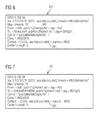
- the content of the sent registration request message S2 * is given in detail in FIG.
- the "To" header field this registration request message S2 * contains at least a PUID.
- the "To" header field indicates that indicated in FIG PUIDs "NicknameX_public1@home1.net” and “NicknameY_public1@home1.net” on. It also contains the "To" header field a new parameter that prioritizes the proposed PUIDs NI1, NI2.
- the PUIDs of the Different from "From" and “To” header fields In the From header field the message S2 *, a PUID can be specified on ISIM (Subscriber Identity Module SIM) of the radio communication device UE1 has been stored. Possibly It may also be appropriate for the "From" and “To” header fields contain the same PUIDs.
- the Contact Header contains the current contact address CO1 of the radio communication device UE1, to the temporary PUIDs to be registered (To header field) sent messages are transmitted. in the IMS is the contact address identical to an IP address.
- the identity of the user is possible, the use of a dynamically assigned IP address - or more generally Contact address - appropriate.
- the contact address will be when setting up a session or session between the participant User agent and the registrar exchanged. details In the specification IETF RFC3261: “Session Initiation Protocol (SIP) " when using a static IP address as the contact address even after expiry of the validity of the temporarily assigned PUID a connection may be established to the user so that the desired anonymity of each user would be lost.
- SIP Session Initiation Protocol
- the use is a separate "PDP Context" for all messages in the Related to the negotiation, registration and use the temporarily valid PUID are appropriate (see FIG 8th).
- activate the respective radio communication device e.g. a new "Primary PDP Context”.
- the in the contact address "Contact” CO1 contained IP address is more advantageous Way a dynamic, i. temporary IP address.
- the S-CSCF component SC1 checks whether the PUIDs contained in the registration request message S2 * in the to-header field have not yet been registered in the database HS1. As a result of this request, it is assumed in this embodiment that the PUID NI1 named "nicknameX_public1@home1.net” has already been assigned. As a result, the registrar SC1 registers the PUID NI2 named "nicknameY_public1@home1.net” and creates an association or "binding" by associating the PUID NI2 with the contact address transmitted in the contact header.
- the result of this registration sends the registrar SC1 in the message E2 * with the name "200 OK" back to the radio communication device UE1.
- This response message E2 * contains the registered PUID NI2.
- the registrar SC1 returns only the registered PUID NI2 in the "To" header field to the radio communication device UE1.
- the radio communication device UE1 recognizes at this message E2 * that the registration was successful (200 OK).
- the "to" header field indicates which of the proposed PUIDs NI1 or NI2 has been registered.
- the transfer of registered PUIDs is also possible in the so-called "P-Associated-URI" header (3GPP-specific header, ie it is only contained in 3GPP profiles of SIP).
- the To header is not changed by the S-CSCF component as registrar.
- the registration of the temporarily valid PUID NI2 is completed. If the message body of the SIP message (SIP Body) is used to transmit the PUID, then this contains only the selected or registered PUID.
- the S-CSCF component SC1 an unallocated PUID, for example: "dsfkjhsdkfh8409d_public1@home1.net” (see FIG 7). This may be done in cooperation with the Database HS1.
- the S-CSCF component registers the generated one PUID and thereby creates an association or "binding" to that contained in the registration request message S2 * Contact address CO1 (see Figure 5).
- the successful registration with the one assigned by the network component SC1, temporary PUID then becomes the user of the radio communication device UE1 by means of the response message BS (see FIG. 8) instead of reply message E2 * (see Figure 9) communicated.
- a communication device and a registration unit associated therewith at least one temporary communication address in the communication network additional or independent to the permanently assigned Communication address of the communication device generated and negotiated.
- This temporary communication address will then registered by the registration unit. Preferably It will communicate with the current contact address of the communication device associated for a predeterminable period of time. Only this temporary communication address of the communication device becomes from the registration unit another communication device made available for purchase.
- the application of temporarily assigned communication addresses can especially within communication services such as e.g. a PTT ("push to talk") service: within a first communication service becomes the assigned one Communication address of a first communication device and its temporary communication addresses of other communication services from the registration unit or the first communication device determined.
- a PTT push to talk
- subscription rights can be used to query the temporary Communication addresses of the first communication device awarded by this or the registration unit and within the first communication service to the others, there involved communication devices are transmitted.
- a or more temporary communication addresses are from the first Communication device or from the associated registration unit generated and only these temporary communication addresses will be within a predefined period of time used a second communication service.
Landscapes
- Engineering & Computer Science (AREA)
- Computer Networks & Wireless Communication (AREA)
- Signal Processing (AREA)
- Business, Economics & Management (AREA)
- General Business, Economics & Management (AREA)
- Multimedia (AREA)
- Mobile Radio Communication Systems (AREA)
- Small-Scale Networks (AREA)
Applications Claiming Priority (2)
| Application Number | Priority Date | Filing Date | Title |
|---|---|---|---|
| DE10355265A DE10355265A1 (de) | 2003-11-26 | 2003-11-26 | Verfahren zum Registrieren eines Kommunikationsgeräts, zugehöriges Kommunikationsgerät sowie Registrierungseinheit |
| DE10355265 | 2003-11-26 |
Publications (3)
| Publication Number | Publication Date |
|---|---|
| EP1536661A2 true EP1536661A2 (fr) | 2005-06-01 |
| EP1536661A3 EP1536661A3 (fr) | 2009-12-02 |
| EP1536661B1 EP1536661B1 (fr) | 2017-04-12 |
Family
ID=34442299
Family Applications (1)
| Application Number | Title | Priority Date | Filing Date |
|---|---|---|---|
| EP04104281.3A Expired - Lifetime EP1536661B1 (fr) | 2003-11-26 | 2004-09-06 | Procédé d'enregistrement d'un dispositif de communication, dispositif de communication correspondant et une entité d'enregistrement |
Country Status (3)
| Country | Link |
|---|---|
| US (2) | US7590073B2 (fr) |
| EP (1) | EP1536661B1 (fr) |
| DE (1) | DE10355265A1 (fr) |
Cited By (3)
| Publication number | Priority date | Publication date | Assignee | Title |
|---|---|---|---|---|
| WO2008092951A3 (fr) * | 2007-02-01 | 2008-09-25 | Siemens Home & Office Comm | Procédé, appareil de communication et serveur de configuration pour établir et exploiter un système de communication |
| EP2533555A1 (fr) * | 2011-06-10 | 2012-12-12 | Research In Motion Limited | Système et procédé pour réaliser des communications de poste à poste (P2P) |
| US8930514B2 (en) | 2011-06-10 | 2015-01-06 | Blackberry Limited | System and method for conducting peer-to-peer (P2P) communications |
Families Citing this family (43)
| Publication number | Priority date | Publication date | Assignee | Title |
|---|---|---|---|---|
| US8775675B2 (en) * | 2002-08-30 | 2014-07-08 | Go Daddy Operating Company, LLC | Domain name hijack protection |
| US7130878B2 (en) * | 2002-08-30 | 2006-10-31 | The Go Daddy Group, Inc. | Systems and methods for domain name registration by proxy |
| US7185091B2 (en) * | 2003-11-20 | 2007-02-27 | Motorola, Inc. | Method and system for transmitting compressed messages at a proxy to a mobile device in a network |
| US20060083242A1 (en) * | 2004-10-20 | 2006-04-20 | Nokia Corporation | Address modification in application servers |
| KR100617814B1 (ko) * | 2005-02-23 | 2006-08-28 | 삼성전자주식회사 | 단말기에서 연결 절차의 종료 방법 |
| GB2425685B8 (en) * | 2005-04-29 | 2015-07-29 | Ericsson Telefon Ab L M | Method and apparatus for handling IP multimedia core network subsystems public user identities |
| CN100571134C (zh) * | 2005-04-30 | 2009-12-16 | 华为技术有限公司 | 在ip多媒体子系统中认证用户终端的方法 |
| CN101185312B (zh) * | 2005-05-06 | 2013-02-06 | 艾利森电话股份有限公司 | Ip多媒体子系统(ims)中的装置 |
| JP4480634B2 (ja) * | 2005-06-24 | 2010-06-16 | 富士通株式会社 | 通信システム及びセッション確立方法 |
| DE102005037569B4 (de) * | 2005-08-09 | 2011-03-03 | Infineon Technologies Ag | Verfahren zum Vergeben eines Kommunikationsrechts, Kommunikationskonferenz-Sitzung-Server und Kommunikationskonferenz-Sitzung-Server-Anordnung |
| US8191116B1 (en) * | 2005-08-29 | 2012-05-29 | At&T Mobility Ii Llc | User equipment validation in an IP network |
| WO2007045182A1 (fr) * | 2005-10-21 | 2007-04-26 | Huawei Technologies Co., Ltd. | Procede de traitement de message d’inscription dans le reseau ims selon les regles de filtrage initiales |
| FR2895184B1 (fr) * | 2005-12-16 | 2008-01-25 | Alcatel Sa | Serveur de presence, reseau et procede pour fournir une information de presence implicite en fonction d'une information de presence de connexion |
| WO2007115754A1 (fr) * | 2006-04-06 | 2007-10-18 | T-Mobile International Ag & Co. Kg | Enregistrement ims initié par réseau dans un système de communication |
| DE602006014737D1 (de) * | 2006-06-09 | 2010-07-15 | Ericsson Telefon Ab L M | Handhabung mehrerer benutzerschnittstellen in einem ip multimedia subsystem |
| US8213342B2 (en) * | 2006-10-06 | 2012-07-03 | Nokia Corporation | Flagging/indicating user information in conference event package |
| US8019073B2 (en) * | 2006-10-30 | 2011-09-13 | Alcatel Lucent | Systems and methods for implementing split numbering plan area codes in an IMS network |
| JP4951676B2 (ja) * | 2006-12-21 | 2012-06-13 | テレフオンアクチーボラゲット エル エム エリクソン(パブル) | マルチメディア・ネットワークにおいてサービス要求を処理するための方法及び装置 |
| US8112523B2 (en) * | 2007-02-22 | 2012-02-07 | Telefonaktiebolaget L M Ericsson (Publ) | Group access to IP multimedia subsystem service |
| US8320882B2 (en) * | 2007-05-24 | 2012-11-27 | International Business Machines Corporation | Method and apparatus for managing obfuscated mobile device user identities |
| US8265090B2 (en) * | 2007-06-11 | 2012-09-11 | Alcatel Lucent | Storing access network information for an IMS user in a subscriber profile |
| WO2009087186A1 (fr) * | 2008-01-10 | 2009-07-16 | Telefonaktiebolaget Lm Ericsson (Publ) | Enregistrement de sous-système multimédia ip |
| JP5365622B2 (ja) * | 2008-03-03 | 2013-12-11 | 日本電気株式会社 | 通信装置、仮名通信識別子の関係判別可能性決定装置、通信システム、通信方法及びプログラム |
| WO2010012821A1 (fr) * | 2008-08-01 | 2010-02-04 | Nokia Siemens Networks Oy | Procédés, dispositifs, système et produit-programme informatique associé pour la protection d’identité |
| US9021561B2 (en) * | 2008-09-17 | 2015-04-28 | Motorola Solutions, Inc. | Method of providing a mixed group communication session |
| US8340670B2 (en) * | 2009-12-14 | 2012-12-25 | Verizon Patent And Licensing Inc. | Registering with SIP servers for IMS using a fully qualified domain name |
| US8805365B2 (en) * | 2010-01-15 | 2014-08-12 | Apple Inc. | Registration with a mobile telecommunications service provider |
| US9198210B2 (en) * | 2010-04-20 | 2015-11-24 | Nokia Solutions And Networks Oy | D2D communications considering different network operators |
| US8719223B2 (en) | 2010-05-06 | 2014-05-06 | Go Daddy Operating Company, LLC | Cloud storage solution for reading and writing files |
| FI124341B (fi) * | 2011-05-24 | 2014-07-15 | Tosibox Oy | Laitejärjestely kiinteistöjen etähallinnan toteuttamiseksi |
| US8538065B2 (en) | 2011-09-20 | 2013-09-17 | Go Daddy Operating Company, LLC | Systems for verifying person's identity through person's social circle using person's photograph |
| US8522147B2 (en) | 2011-09-20 | 2013-08-27 | Go Daddy Operating Company, LLC | Methods for verifying person's identity through person's social circle using person's photograph |
| US8738604B2 (en) | 2012-03-30 | 2014-05-27 | Go Daddy Operating Company, LLC | Methods for discovering sensitive information on computer networks |
| US8738605B2 (en) | 2012-03-30 | 2014-05-27 | Go Daddy Operating Company, LLC | Systems for discovering sensitive information on computer networks |
| US8306201B1 (en) | 2012-04-02 | 2012-11-06 | MagicJack Vocaltec Ltd. | Telephone number sharing configuration |
| US9160809B2 (en) | 2012-11-26 | 2015-10-13 | Go Daddy Operating Company, LLC | DNS overriding-based methods of accelerating content delivery |
| US9141669B2 (en) | 2013-01-22 | 2015-09-22 | Go Daddy Operating Company, LLC | Configuring an origin server content delivery using a pulled data list |
| US9384208B2 (en) | 2013-01-22 | 2016-07-05 | Go Daddy Operating Company, LLC | Configuring a cached website file removal using a pulled data list |
| US9438493B2 (en) | 2013-01-31 | 2016-09-06 | Go Daddy Operating Company, LLC | Monitoring network entities via a central monitoring system |
| US9141789B1 (en) | 2013-07-16 | 2015-09-22 | Go Daddy Operating Company, LLC | Mitigating denial of service attacks |
| WO2015108453A1 (fr) * | 2014-01-16 | 2015-07-23 | Telefonaktiebolaget L M Ericsson (Publ) | Système, procédés et appareils d'exécution d'un contrôle de sécurité d'accès à un réseau |
| US10182082B2 (en) * | 2015-05-13 | 2019-01-15 | Nokia Solutions And Networks Oy | User identities for PTT and MCPTT |
| US10623452B2 (en) * | 2018-04-10 | 2020-04-14 | Hewlett Packard Enterprise Development Lp | System and method for network assisted multi-line registration in an IMS network |
Family Cites Families (16)
| Publication number | Priority date | Publication date | Assignee | Title |
|---|---|---|---|---|
| US5819178A (en) * | 1996-01-05 | 1998-10-06 | Northern Telecom Limited | Methods and apparatus for accessing subscriber information in interconnected wireless telecommunications networks |
| US6246670B1 (en) * | 1997-10-16 | 2001-06-12 | Telefonaktiebolaget L M Ericsson (Publ) | Method and apparatus for preventing misrouting of data in a radio communication system |
| US6594253B1 (en) * | 1998-09-29 | 2003-07-15 | Ericsson Inc. | System and method for mobility management for an internet telephone call to a mobile terminal |
| JP3286939B2 (ja) * | 1998-12-17 | 2002-05-27 | 富士通株式会社 | 移動通信システムにおける移動局の加入者データ収容制御方法及び装置 |
| US7085260B2 (en) * | 2000-08-22 | 2006-08-01 | Lucent Technologies Inc. | Internet protocol based wireless call processing |
| FI113319B (fi) * | 2000-09-29 | 2004-03-31 | Nokia Corp | Palveluita tarjoavan verkkoelementin valitseminen tietoliikenejärjestelmässä |
| US6856624B2 (en) * | 2001-02-21 | 2005-02-15 | Alcatel | Temporary unique private address |
| US7212505B2 (en) * | 2001-03-19 | 2007-05-01 | Intel Corporation | Roaming in a communication network |
| US20020188868A1 (en) * | 2001-06-12 | 2002-12-12 | Budka Kenneth C. | Method for protecting use of resources in a network |
| JP3906679B2 (ja) * | 2001-12-05 | 2007-04-18 | 日本電気株式会社 | 移動通信方法及びシステム並びにプログラム |
| FI113515B (fi) * | 2002-01-18 | 2004-04-30 | Nokia Corp | Osoitteistus langattomissa lähiverkoissa |
| US7624266B2 (en) * | 2002-03-22 | 2009-11-24 | Nokia Corporation | System and method using temporary identity for authentication with session initiation protocol |
| FI20020818A0 (fi) * | 2002-04-30 | 2002-04-30 | Ericsson Telefon Ab L M | Menetelmä ja järjestely persoonattoman tilapäisen numeron antamiseksi viestintäverkon tilaajalle |
| US7039404B2 (en) * | 2002-06-27 | 2006-05-02 | Intel Corporation | Continuous mobility across wireless networks by integrating mobile IP and GPRS mobility agents |
| JP4111793B2 (ja) * | 2002-09-26 | 2008-07-02 | 富士通株式会社 | 中継システム |
| US20040156394A1 (en) * | 2003-02-10 | 2004-08-12 | Ilkka Westman | Handling of user identity |
-
2003
- 2003-11-26 DE DE10355265A patent/DE10355265A1/de not_active Ceased
-
2004
- 2004-09-06 EP EP04104281.3A patent/EP1536661B1/fr not_active Expired - Lifetime
- 2004-11-24 US US10/996,753 patent/US7590073B2/en not_active Expired - Fee Related
-
2009
- 2009-08-10 US US12/538,705 patent/US8189495B2/en not_active Expired - Fee Related
Non-Patent Citations (1)
| Title |
|---|
| None |
Cited By (3)
| Publication number | Priority date | Publication date | Assignee | Title |
|---|---|---|---|---|
| WO2008092951A3 (fr) * | 2007-02-01 | 2008-09-25 | Siemens Home & Office Comm | Procédé, appareil de communication et serveur de configuration pour établir et exploiter un système de communication |
| EP2533555A1 (fr) * | 2011-06-10 | 2012-12-12 | Research In Motion Limited | Système et procédé pour réaliser des communications de poste à poste (P2P) |
| US8930514B2 (en) | 2011-06-10 | 2015-01-06 | Blackberry Limited | System and method for conducting peer-to-peer (P2P) communications |
Also Published As
| Publication number | Publication date |
|---|---|
| EP1536661B1 (fr) | 2017-04-12 |
| US20050131989A1 (en) | 2005-06-16 |
| DE10355265A1 (de) | 2005-06-23 |
| US8189495B2 (en) | 2012-05-29 |
| EP1536661A3 (fr) | 2009-12-02 |
| US7590073B2 (en) | 2009-09-15 |
| US20090298500A1 (en) | 2009-12-03 |
Similar Documents
| Publication | Publication Date | Title |
|---|---|---|
| EP1536661B1 (fr) | Procédé d'enregistrement d'un dispositif de communication, dispositif de communication correspondant et une entité d'enregistrement | |
| DE60202527T2 (de) | Verfahren und system zur behandlung von mehrfachanmeldungen | |
| DE60303004T2 (de) | Kommunikationsknoten-architektur | |
| DE60209007T2 (de) | Vergebührung in kommunikationssystemen | |
| DE60114163T2 (de) | Ip kommunikation in einem zellularen kommunkationssystem | |
| DE602004010516T2 (de) | Konversationsträgerverhandlung | |
| DE60218545T2 (de) | Verfahren zum Verkehrlastausgleich zwischen Dienstanbietern | |
| WO2007141159A1 (fr) | Procédé pour enregistrement multiple d'un terminal de communication multimodal | |
| EP2005697A1 (fr) | Enregistrement ims initié par réseau dans un système de communication | |
| JP2008539628A (ja) | Imsにおけるサービスプロファイル処理 | |
| CN100438418C (zh) | 通信终端设备及其控制方法,会议控制单元及其控制方法 | |
| WO2006103280A1 (fr) | Entretien de liaisons de donnees lors du changement du reseau d'acces de communication | |
| EP1555786A1 (fr) | Procédé permettant d'établir une connection de données entre un premier et un deuxième dispositif mobile | |
| DE102005052262B4 (de) | Verfahren zur Auswahl einer S-CSCF-Einheit innerhalb eines IMS basierten Dienstekommunikationssystems | |
| DE10322539A1 (de) | Verfahren zum Aufbau einer Kommunikationsverbindung und Kommunikationssystem | |
| DE102004045193B3 (de) | Push-To-Talk-Over-Cellular (PoC) Verfahren | |
| DE102004032923B4 (de) | Verfahren zum Registrieren eines Kommunikationsendgeräts, Kommunikationssystem, Verfahren zum Steuern eines Kommunikationsendgeräts und Kommunikationsendgerät | |
| EP2375681A1 (fr) | Procédé de génération d'une identité d'utilisateur unique pour la communication et procédé de communication | |
| WO2007087917A1 (fr) | Procédé et dispositif d'enregistrement dans un ims par gruu | |
| EP1641303B1 (fr) | Utilisation d'informations de présence (informations de l'état) pour élargir une connexion de communications existante | |
| DE102005014480A1 (de) | Verfahren und System zur Durchsetzung geeigneter Richtlinien für Datenverkehr in einem Funk-Kommunikationssystem | |
| DE102005052263A1 (de) | Verfahren zur dynamischen Zuteilung eines Zugangsnetzes innerhalb eines mobilen Kommunikationssystems | |
| WO2008022613A2 (fr) | Procédé pour produire un message de commande d'une session de communication | |
| DE19952669A1 (de) | Umgekehrte Maskierung für die Zugreifbarkeit auf Datenendstationen in privaten IPv4-Netzen | |
| DE102004050572A1 (de) | Aufbau einer Dienste-Verbindung zwischen einem Endgerät und einem ersteren Netzelement mit unterschiedlichen IP-Protokoll-Versionen |
Legal Events
| Date | Code | Title | Description |
|---|---|---|---|
| PUAI | Public reference made under article 153(3) epc to a published international application that has entered the european phase |
Free format text: ORIGINAL CODE: 0009012 |
|
| AK | Designated contracting states |
Kind code of ref document: A2 Designated state(s): AT BE BG CH CY CZ DE DK EE ES FI FR GB GR HU IE IT LI LU MC NL PL PT RO SE SI SK TR |
|
| AX | Request for extension of the european patent |
Extension state: AL HR LT LV MK |
|
| RIN1 | Information on inventor provided before grant (corrected) |
Inventor name: SCHMIDT, HOLGER Inventor name: BIENAS, MAIK Inventor name: BECKMANN, MARK |
|
| PUAL | Search report despatched |
Free format text: ORIGINAL CODE: 0009013 |
|
| AK | Designated contracting states |
Kind code of ref document: A3 Designated state(s): AT BE BG CH CY CZ DE DK EE ES FI FR GB GR HU IE IT LI LU MC NL PL PT RO SE SI SK TR |
|
| AX | Request for extension of the european patent |
Extension state: AL HR LT LV MK |
|
| 17P | Request for examination filed |
Effective date: 20100510 |
|
| AKX | Designation fees paid |
Designated state(s): DE FR GB |
|
| RAP1 | Party data changed (applicant data changed or rights of an application transferred) |
Owner name: SIEMENS AKTIENGESELLSCHAFT |
|
| RAP1 | Party data changed (applicant data changed or rights of an application transferred) |
Owner name: SIEMENS AKTIENGESELLSCHAFT |
|
| REG | Reference to a national code |
Ref country code: DE Ref legal event code: R079 Ref document number: 502004015504 Country of ref document: DE Free format text: PREVIOUS MAIN CLASS: H04Q0007380000 Ipc: H04W0060000000 |
|
| GRAP | Despatch of communication of intention to grant a patent |
Free format text: ORIGINAL CODE: EPIDOSNIGR1 |
|
| RIC1 | Information provided on ipc code assigned before grant |
Ipc: H04L 29/12 20060101ALI20161011BHEP Ipc: H04W 8/26 20090101ALN20161011BHEP Ipc: H04W 60/00 20090101AFI20161011BHEP Ipc: H04L 29/06 20060101ALI20161011BHEP |
|
| INTG | Intention to grant announced |
Effective date: 20161108 |
|
| GRAS | Grant fee paid |
Free format text: ORIGINAL CODE: EPIDOSNIGR3 |
|
| GRAA | (expected) grant |
Free format text: ORIGINAL CODE: 0009210 |
|
| AK | Designated contracting states |
Kind code of ref document: B1 Designated state(s): DE FR GB |
|
| REG | Reference to a national code |
Ref country code: GB Ref legal event code: FG4D Free format text: NOT ENGLISH |
|
| REG | Reference to a national code |
Ref country code: DE Ref legal event code: R096 Ref document number: 502004015504 Country of ref document: DE |
|
| RAP2 | Party data changed (patent owner data changed or rights of a patent transferred) |
Owner name: SIEMENS AKTIENGESELLSCHAFT |
|
| REG | Reference to a national code |
Ref country code: DE Ref legal event code: R097 Ref document number: 502004015504 Country of ref document: DE |
|
| PLBE | No opposition filed within time limit |
Free format text: ORIGINAL CODE: 0009261 |
|
| STAA | Information on the status of an ep patent application or granted ep patent |
Free format text: STATUS: NO OPPOSITION FILED WITHIN TIME LIMIT |
|
| 26N | No opposition filed |
Effective date: 20180115 |
|
| REG | Reference to a national code |
Ref country code: DE Ref legal event code: R119 Ref document number: 502004015504 Country of ref document: DE |
|
| GBPC | Gb: european patent ceased through non-payment of renewal fee |
Effective date: 20170906 |
|
| REG | Reference to a national code |
Ref country code: FR Ref legal event code: ST Effective date: 20180531 |
|
| PG25 | Lapsed in a contracting state [announced via postgrant information from national office to epo] |
Ref country code: DE Free format text: LAPSE BECAUSE OF NON-PAYMENT OF DUE FEES Effective date: 20180404 Ref country code: GB Free format text: LAPSE BECAUSE OF NON-PAYMENT OF DUE FEES Effective date: 20170906 |
|
| PG25 | Lapsed in a contracting state [announced via postgrant information from national office to epo] |
Ref country code: FR Free format text: LAPSE BECAUSE OF NON-PAYMENT OF DUE FEES Effective date: 20171002 |