EP1540886B1 - Traitement de commandes dans un reseau de telecommunications - Google Patents
Traitement de commandes dans un reseau de telecommunications Download PDFInfo
- Publication number
- EP1540886B1 EP1540886B1 EP03771944A EP03771944A EP1540886B1 EP 1540886 B1 EP1540886 B1 EP 1540886B1 EP 03771944 A EP03771944 A EP 03771944A EP 03771944 A EP03771944 A EP 03771944A EP 1540886 B1 EP1540886 B1 EP 1540886B1
- Authority
- EP
- European Patent Office
- Prior art keywords
- request
- reply
- schema
- noun
- verb
- Prior art date
- Legal status (The legal status is an assumption and is not a legal conclusion. Google has not performed a legal analysis and makes no representation as to the accuracy of the status listed.)
- Expired - Lifetime
Links
Images

Classifications
-
- H—ELECTRICITY
- H04—ELECTRIC COMMUNICATION TECHNIQUE
- H04L—TRANSMISSION OF DIGITAL INFORMATION, e.g. TELEGRAPHIC COMMUNICATION
- H04L41/00—Arrangements for maintenance, administration or management of data switching networks, e.g. of packet switching networks
- H04L41/02—Standardisation; Integration
- H04L41/0233—Object-oriented techniques, for representation of network management data, e.g. common object request broker architecture [CORBA]
-
- H—ELECTRICITY
- H04—ELECTRIC COMMUNICATION TECHNIQUE
- H04L—TRANSMISSION OF DIGITAL INFORMATION, e.g. TELEGRAPHIC COMMUNICATION
- H04L67/00—Network arrangements or protocols for supporting network services or applications
- H04L67/01—Protocols
- H04L67/02—Protocols based on web technology, e.g. hypertext transfer protocol [HTTP]
-
- H—ELECTRICITY
- H04—ELECTRIC COMMUNICATION TECHNIQUE
- H04L—TRANSMISSION OF DIGITAL INFORMATION, e.g. TELEGRAPHIC COMMUNICATION
- H04L69/00—Network arrangements, protocols or services independent of the application payload and not provided for in the other groups of this subclass
- H04L69/30—Definitions, standards or architectural aspects of layered protocol stacks
- H04L69/32—Architecture of open systems interconnection [OSI] 7-layer type protocol stacks, e.g. the interfaces between the data link level and the physical level
- H04L69/322—Intralayer communication protocols among peer entities or protocol data unit [PDU] definitions
- H04L69/329—Intralayer communication protocols among peer entities or protocol data unit [PDU] definitions in the application layer [OSI layer 7]
Definitions
- This invention relates generally to the field of telecommunications and more specifically to command processing in a telecommunications network.
- Command processing is used to handle command requests within a system. Typically, command processing is associated with specific software applications. Such command processing, however, must be replaced or modified for use with different software applications. Consequently, previous techniques for command processing are unsatisfactory for some needs.
- EP-A-1197859 describes a system that allows clients to remotely access and use a data processing object via a remote server on a computer network.
- the remote server receives method execution requests already encoded in XML and these are processed to allow the user to interact with the data processing object.
- US-A-6041350 describes a network management system which duplicates managed objects that have been generated by a network element management system, in order to manage the states of a number of network resources.
- US-A-4648062 describes an on-line help system that provides interactive help information to users.
- US-A-2002/0073236 discloses a method and system for managing data exchange among systems connected together via a computer network.
- the system uses a number of predefined stylesheets which each describe a mapping between the system's specific local format and the generic interchange format.
- stylesheets which each describe a mapping between the system's specific local format and the generic interchange format.
- US2002/0099738 describes a method and system for integrating back-end enterprise applications with Web clients. This may comprise a method for invoking an object, comprising the steps of generating a description of the interface of the object; generating metadata representing the interface of the object from the description; storing the metadata; generating a representation of an invocation of the object in a markup language from the metadata; transmitting the representation of the invocation to a client program configured to invoke the object by interpreting the representation; receiving an invocation from the client program; based on the metadata, interpreting the received invocation.
- a method for command processing comprising: receiving from a requestor via a communication network an initial request for a command generated in accordance with a managed object schema, the initial request comprising a combination of a noun value corresponding to a noun and a verb value corresponding to a verb, the noun representing an item, the verb representing an action to perform on the item, wherein the initial request further comprises one or more parameters, each parameter comprising an element key and an element value, the element key identifying an element of the command, the element value representing a value corresponding to the element; generating (52) an extensible markup language document from the received initial request; extracting (54) the noun and verb combination from the extensible markup language document; generating an executable request object according to the extracted noun and verb combination; executing the generated request object; creating a hash map of the parameters associated with the initial request; passing the hash map to the request object for validation; determining (58) a reply in response to the execution of the executable
- a system for command processing comprising:
- a computer readable medium including code for command processing, the code being operable to cause a programmable computer device to:
- a technical advantage of one embodiment may include a command processing infrastructure that provides a managed object schema that describes a command.
- a requestor uses the managed object schema to formulate a request for the command.
- the command processing infrastructure may be used with any of a number of software applications.
- FIGURES 1 through 4 of the drawings like numerals being used for like and corresponding parts of the various drawings.
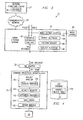
- FIGURE 1 is a block diagram of one embodiment of a system 10 for processing commands.
- system 10 includes a softswitch 20 with a generic infrastructure that processes requests received from a network operations center 22.
- the generic infrastructure may be combined with any of a number of adapters in order to process commands for any of a number of different software applications at network operations center 22.
- system 10 provides network operations center 22 with a managed object that describes a command.
- Network operations center 22 generates a request in accordance with the managed object and sends the request to system 10 through a communication network 24.
- a common object request broker architecture (CORBA) interface servant 30 extracts an extensible markup language (XML) request from the request.
- An XML adapter 32 converts the XML request to a command processing infrastructure (CPI) request formatted in a CPI format that may be processed by a command processing infrastructure 34.
- Command processing infrastructure 34 generates a request object in accordance with the CPI request and accesses a database 28 to generate a reply object corresponding to the request object.
- An XML reply is generated according to the reply object, and is sent to network operations center 22.
- network operations center 22 is responsible for management of a network.
- Network operations center 22 may submit a request for a command comprising a noun-verb combination and one or more parameters.
- the noun-verb combination includes a noun value and a verb value.
- the noun value defines an item on which an action is performed, and a verb value defines the action to perform on the item.
- a request to add a subscriber may include the verb value "add" II and the noun value "subscriber".
- the parameters may be used to customize the command.
- Communication network 24 coupled to network operations center 22 may comprise, for example, a public switched telephone network, a public or private data network, the Internet, a wireline or wireless network, a local, regional, or global communication network, other suitable communication links, or any combination of the preceding. It may be understood to one skilled in the art that system 10 may receive requests from any suitable communications node through any suitable network.
- Softswitch 20 provides call control for establishing, maintaining, routing, and terminating voice calls, and may serve as an interface for enhanced service and application platforms.
- Softswitch 20 may comprise, for example, a CISCO BTS 10200 softswitch.
- Softswitch 20 includes an element management system 26.
- Element management system 26 enables a user to plan, provision, configure, and monitor softswitch 20.
- a generic infrastructure of element management system 26 processes commands for data validation, data routing, and data storage.
- Element management system 26 includes CORBA interface servant 30, XML adapter 32, and command processing infrastructure 34.
- CORBA interface servant 30 provides location independent transport for XML documents such that network operations center 22 does not need to locate softswitch 20.
- CORBA interface servant 30 receives a request from network operations center 22 and extracts an XML request from the request.
- CORBA interface servant may provide to network operations center 22 an interface definition language (IDL) that has a discrete set of functions to request command processing for any of a number of commands.
- the functions may include, for example, a get document function that retrieves any of a number of descriptions of commands that may be provided to network operations center 22, thus allowing a function to provide any of a number of commands.
- CORBA interface servant 30 is described in more detail with reference to FIGURE 3 .
- the illustrated system 10 includes CORBA interface servant 30 that serves as a CORBA adapter.
- CORBA interface servant 30 that serves as a CORBA adapter.
- Any suitable adapter may be used, for example, an hypertext transport protocol (HTTP) or a Java Messaging Service (JMS) adapter.
- HTTP hypertext transport protocol
- JMS Java Messaging Service
- XML adapter 32 translates between data expressed in XML documents and data expressed in a CPI format that may be processed by command processing infrastructure 34. For example, XML adapter 32 generates an extensible markup language document from a managed object expressed in CPI format. The extensible markup language document is provided to network operations center 22. XML adapter 32 may also extract a noun-verb combination and parameters from an XML request and format the noun value, verb value, and parameters into a CPI request that may be processed by command processing infrastructure 34. XML adapter 32 generates a corresponding XML document that defines the element and attribute of the command. XML adapter 32 is described in more detail with reference to FIGURE 4 .
- Command processing infrastructure 34 comprises a generic infrastructure that provides for data validation, data routing, and data storage.
- Command processing infrastructure 34 builds a request object comprising a managed object from the noun value, verb value, and parameters extracted by XML adapter 32.
- Command processing infrastructure 34 accesses database 28 in order to generate a reply object comprising a managed object.
- Command processing infrastructure 34 may also validate data according to an object-oriented data parsing solution, route the data according to a defined manager for the data, and store the data in database 28.
- Command processing infrastructure 34 is described in more detail with reference to FIGURE 4 .
- Database 28 stores provisioning and maintenance information.
- Database 28 may comprise, for example, an Oracle database, and may use a database driver such as a Java database connectivity (JDBC) driver.
- JDBC Java database connectivity
- Softswitch 20 may comprise other or additional modules without departing from the scope of the invention.
- the functionality of XML adapter 32 and command processing infrastructure 34 may be combined into one module.
- FIGURE 2 is a flowchart illustrating one embodiment of a method for command processing.
- the method begins at step 50, where CORBA interface servant 30 receives a request comprising a noun-verb combination from network operations center 22.
- the request may be generated according to a managed object provided to network operations center 22.
- CORBA interface servant 30 extracts an XML request comprising an XML document from the request at step 52, and sends the XML request to XML adapter 32.
- XML adapter 32 extracts the noun-verb combination from the XML request at step 54, and sends the noun value and verb value to command processing infrastructure 34.
- Command processing infrastructure 34 generates a request object from the noun value and verb value at step 56.
- command processing infrastructure 34 determines a reply to the request object by accessing database 28.
- a reply object is generated by command processing infrastructure 34 at step 60.
- XML adapter 32 -converts the reply object to an XML reply at step 62.
- CORBA interface servant 30 sends the reply to network operations center 22 at step 64. After sending the reply to network operations center 22, the method terminates.
- FIGURE 3 is a block diagram illustrating embodiments of network operations center 22 and of CORBA interface servant 30 of system 10 of FIGURE 1 .
- Network operations center 22 stores schemas 90. Schemas 90 are provided for client side verification of XML document structure that may be used to submit a request or to report a reply.
- Schemas 90 may include a managed object schema, a request schema, and a reply schema.
- a managed object schema describes a command and associated command parameters.
- a managed object schema may describe a command to add a subscriber.
- a request schema is used to generate a request for a command.
- a request schema is used to request the addition of a particular subscriber.
- a reply schema is used to report a reply to a request.
- a reply schema is used to report the result of adding a particular subscriber.
- a managed object schema defines a command and associated parameters.
- the managed object may, for example, provide information for managing the collection and validation of data at network operations center 22, dynamically building user input screens, or pre-validating user input.
- a managed object schema may include an element, a managed object attribute, and other attributes comprising an identifier and a verb.
- the identifier represents an object on which some action is to be taken, and corresponds to the noun value of a request.
- the verb indicates the action to be taken on the object, and corresponds to the verb value of a request.
- the identification may represent a subscriber and the verb may indicate adding, resulting in the managed object corresponding to adding a subscriber.
- the managed object attribute may have sub-elements that describe command parameters. Sub-elements may include the following.
- a required sub-element indicates whether an element is required.
- a type sub-element defines whether the managed object attribute comprises a single value, multiple values, or text.
- a default sub-element defines a default value for the managed object attribute.
- a width sub-element defines the total field width of the data included in the managed object attribute.
- a help text sub-element provides a description of the managed object attribute.
- a label sub-element provides an alternate label to the actual parameter name.
- a permitted sub-element specifies possible values or ranges for the managed object attribute element.
- a foreign key sub-element indicates a foreign key relationship of the managed object to another command.
- a parser sub-element defines the type of validation that is required.
- a JavaScript sub-element indicates a JavaScript that may perform validation.
- a regular expression sub-element defines the regular expression of the managed object attribute in character data format.
- a request schema defines the structure of a request for a command.
- a request schema may comprise an XML document that has one element and attributes, and may include no, one, or more entry elements.
- the attributes may include the noun value and verb value of the request, which may be expressed as character data.
- An entry element which may be empty, may include attributes such as key and value attributes.
- a key attribute comprises an identifier value derived from a managed object attribute of the associated managed object.
- a value attribute comprises a client-derived value assigned to a key attribute.
- a key attribute may be required to conform to sub-elements of the managed object attribute from which the key-value combination is derived.
- the key attribute and the value attribute may be expressed as character data.
- a reply schema defines the structure of returned data generated in response to a request.
- a reply may comprise elements such as status, reason, and data table elements.
- a status element may have a true value or a false value.
- a reason element indicates successful processing or provides a cause for an error in command processing.
- a data table element includes data retrieved in response to a request.
- a data table element may include one or more row sub-elements.
- a row sub-element defines an item of data, and may include an attribute that defines a row identifier.
- the row identifier may comprise a sequential value based on the number of returned rows.
- Each row may include a column sub-element that includes an identifier attribute.
- the identifier attribute may comprise the same identifier as used in the managed object attribute. Additional or other schemas may be used without departing from the scope of the invention.
- CORBA interface servant 30 includes an interface definition language (IDL) 80, a media gateway access 82, a report generator 84, a program manager 86, and a security module 88.
- Interface definition language 80 allows for command processing based on a well-formed and validated XML document.
- Interface definition language 80 provides functions to generate XML documents that correspond to requests. Functions may include a request function and a get document function. A request function may be used to perform a command such as "add subscriber.” A get document function is used to retrieve a document that may, for example, include a managed object that describes how network operations center 22 may request a command.
- interface definition language 80 may provide access control. Users may be required to log into CORBA interface servant 30 utilizing a login identifier such as a login name and password in order to create a user session with CORBA interface servant 30. Authorization and authentication of the user request may be conducted during the user session.
- An XML document generated by interface definition language 80 may include a standard document or an extended document.
- the standard document describes a command and related parameters that are available for the command, and is accessed according to the noun-verb combination of the request.
- the extended document includes the same information as the standard document, but also includes foreign key information. When an extended document is constructed, elements are added to account for foreign key items in the command.
- the extended document may also traverse nested key associations.
- Media gateway access 82 allows for requests to be received from a media gateway 96.
- the requests received from media gateway 96 need not follow an XML format defined by an XML schema.
- Media gateway access 82 translates the commands to a format that may be processed by interface definition language 80.
- Report generator 84 generates reports that describe the activity of CORBA interface servant 30.
- a report may describe, for example, the number of requests for XML description documents, the number of CORBA provisioning requests, or the number of requests from media gateway 26.
- a program manager 86 manages the operation of CORBA interface servant 30.
- Security functions 88 manages access to CORBA interface servant 30.
- Security functions 88 may validate user names and passwords against a security database.
- Security functions 88 may generate a security key once a user has been validated. The security key is required for further transactions using corporate interface servant 30. If a user is idle for longer than a specified period of time, the security key is removed, resulting in a user time out.
- CORBA interface servant 30 may include additional or other modules without departing from the scope of the invention.
- FIGURE 4 is a block diagram illustrating embodiments of XML adapter 32 and command processing infrastructure 34 of system 10 of FIGURE 1 .
- XML adapter 32 converts an XML document into a CPI format by extracting a noun-verb combination.
- a request handler 140 builds a request object according to the noun-verb combination.
- Request handler 140 executes the request by sending the request object to an instance of a request manager 154. The instance is passed to a thread of request manager 154 for execution.
- a reply object is generated in response to execution of the request object.
- XML adapter 32 provides an XML interface that converts XML documents into CPI formatted data and vice versa. During conversion, XML adapter 32 may extract a noun-verb combination from the XML request. XML adapter 32 may also create a hash map of parameters of the request and pass the hash map of parameters to the request object for validation.
- CPI formatted data comprises Java classes that can be translated into XML document type definitions since XML supports objects and nested objects.
- the Java classes may include request, reply, and managed object Java classes.
- An XML representation of these classes forms the basis for using XML for processing requests.
- Command processing infrastructure 34 includes request handler 140, a security manager 141, softswitch properties 142, a data parser 144, and a report builder 146.
- An EMS database 150 that stores a managed object table 152 is coupled to command processing infrastructure 34.
- Managed object table 152 stores managed objects.
- Request handler 140 builds a request object according to a noun-verb combination of a request. Alternatively, a cached request may be used.
- the request object includes a request data object.
- Request handler 140 executes the request object by sending the request object to an instance of request manager 154. The instance is passed to a thread of request manager 154 for execution.
- a reply object is generated in response to execution of the request object.
- the execution of request data object yields a reply data table, which is inserted into the reply object.
- the request attempt may be logged in database 26, and the entry may be updated with a reply status.
- Request handler 140 may also perform security checks using security module 141 and basic command integrity checks.
- Request manager 154 defines the basic subarchitecture for processing a command.
- a command is associated with request manager 154 and optionally a database table. If a command has special rules, request manager 154 may be extended to create a class to handle the special rules.
- Request manager 154 services a request and sends a message to a peer process to retrieve data.
- Request manager 154 may also have a set of verification methods for subclasses to override rules that are not handled by the managed object or by the database 26.
- Request manager 154 may also define a set of standard action methods such as methods that perform additions, changes, deletions, and showing of commands that map to managed object table 152.
- Security manager 151 provides security operations
- Softswitch properties 142 stores configurable data, and may include, for example, default values, maximum or minimum values, or required values.
- Data parser 144 parses input information into parts that may be processed by command processing infrastructure 34.
- Data parser 144 may, for example, parse numerical or character values, identifiers such as Internet domain addresses or social security numbers, or codes such as SS7 point codes.
- Report builder 146 generates reports describing the performance of command processing infrastructure 34.
- XML adapter 32 and command processing infrastructure 32 may include fewer, other, or additional modules without departing from the scope of the invention.
- a technical advantage of one embodiment may include a command processing infrastructure that provides a managed object schema that describes a command.
- a request may use the managed object schema to formulate a request for the command.
- the command processing infrastructure may be used with any of a number of software applications.
- Another technical advantage of one embodiment may include an interface servant that has an interface definition language. The interface definition language allows any of a number of systems to request a command definition.
Landscapes
- Engineering & Computer Science (AREA)
- Computer Networks & Wireless Communication (AREA)
- Signal Processing (AREA)
- Computer And Data Communications (AREA)
- Stored Programmes (AREA)
Abstract
Claims (18)
- Procédé de traitement de commande, comprenant les étapes consistant à :Recevoir (50) d'un demandeur (22) via un réseau de télécommunications (24) une demande initiale d'une commande générée conformément à un schéma d'objet géré, la demande initiale comprenant une combinaison d'une valeur de nom correspondant à un nom et d'une valeur de verbe correspondant à un verbe, le nom représentant un article, le verbe représentant une action à réaliser sur l'article, dans lequel la demande initiale comprend en outre un ou plusieurs paramètres, chaque paramètre comprenant une clé d'élément et une valeur d'élément, la clé d'élément identifiant un élément de la commande, la valeur d'élément représentant une valeur correspondant à l'élément ;générer (52) un document en langage de balisage extensible à partir de la demande initiale reçue ;extraire (54) la combinaison de nom et de verbe du document en langage de balisage extensible ;générer un objet de demande exécutable selon la combinaison de nom et de verbe extraite ;exécuter l'objet de demande généré ;créer une carte de hachage des paramètres associés à la demande initiale ;passer la carte de hachage à l'objet de demande pour Validation ;déterminer (58) une réponse en réponse à l'exécution de l'objet de demande exécutable ; ettransmettre (64) la réponse au demandeur (22).
- Procédé selon la revendication 1, comprenant en outre les étapes consistant à :générer (60) un objet de réponse en réponse à l'exécution de l'objet de demande ;générer (62) une réponse en langage de balisage extensible à partir de l'objet de réponse ;fournir (64) la réponse en langage de balisage extensible au demandeur (22).
- Procédé selon la revendication 1, dans lequel l'objet de demande est défini par une classe Java.
- Procédé selon la revendication 1, comprenant en outre les étapes consistant à :créer (56) un objet de données de demande dans l'objet de demande ;produire une table de données de réponse en réponse à l'exécution de l'objet de données de demande ;insérer la table de données de réponse dans l'objet de réponse.
- Procédé selon la revendication 1, dans lequel le schéma d'objet géré est associé à un schéma de demande et un schéma de réponse, le schéma de demande décrivant la génération de la demande, le schéma de réponse décrivant l'annonce de la réponse.
- Procédé selon la revendication 1, comprenant la fourniture du schéma d'objet géré correspondant à la commande au demandeur (22).
- Système (10) de traitement de commande, comprenant :un serveur d'interface (30) utilisable pour recevoir d'un demandeur (22) via un réseau de télécommunications (24) une demande initiale d'une commande générée conformément à un schéma d'objet géré, la demande initiale comprenant une combinaison d'une valeur de nom correspondant à un nom et d'une valeur de verbe correspondant à un verbe, le nom représentant un article, le verbe représentant une action à réaliser sur l'article, dans lequel la demande initiale comprend en outre un ou plusieurs paramètres, chaque paramètre comprenant une clé d'élément et une valeur d'élément, la clé d'élément identifiant un élément de la commande, la valeur d'élément représentant une valeur correspondant à l'élément ;un adaptateur utilisable pour : i) générer un document en langage de balisage extensible à partir de la demande initiale reçue ; et ii) extraire la combinaison de nom et de verbe du document en langage de balisage extensible ;une infrastructure de traitement de commande (34) utilisable pour : i) générer un objet de demande exécutable selon la combinaison de nom et de verbe extraite ; et ii) exécuter l'objet de demande généré ;dans lequel l'adaptateur (32) est utilisable pour créer une carte de hachage des paramètres associés à la demande initiale et dans lequel l'infrastructure de traitement de commande (34) est utilisable pour passer la carte de hachage à l'objet de demande pour Validation ;un moyen de détermination d'une réponse en réponse à l'exécution de l'objet de demande exécutable ; etun moyen (30) de transmission de la réponse au demandeur (22).
- Système (10) selon la revendication 7, dans lequel l'infrastructure de traitement de commande (34) est utilisable pour générer un objet de réponse en réponse à l'exécution de l'objet de demande et dans lequel l'adaptateur (32) est utilisable pour générer une réponse en langage de balisage extensible à partir de l'objet de réponse et pour fournir la réponse en langage de balisage extensible au serveur d'interface (30) pour le transport au demandeur (22).
- Système (10) selon la revendication 7, dans lequel l'objet de demande est défini par une classe Java.
- Système (10) selon la revendication 8, dans lequel l'infrastructure de traitement de commande (34) est utilisable pour créer un objet de données de demande dans l'objet de demande et dans lequel l'infrastructure de traitement de commande (34) est utilisable pour produire une table de données de réponse en réponse à l'exécution de l'objet de données de demande et pour insérer la table de données de réponse dans l'objet de réponse.
- Système (10) selon la revendication 7, dans lequel le schéma d'objet géré est associé à un schéma de demande et un schéma de réponse, le schéma de demande décrivant la génération de la demande, le schéma de réponse décrivant l'annonce de la réponse.
- Système (10) selon la revendication 7, comprenant un moyen de fourniture du schéma d'objet géré correspondant à la commande au demandeur (22).
- Support lisible par ordinateur comprenant un code pour le traitement de commande, le code étant utilisable pour amener un dispositif informatique programmable à :recevoir (50) d'un demandeur (22) via un réseau de télécommunications (24) une demande initiale d'une commande générée conformément à un schéma d'objet géré, la demande initiale comprenant une combinaison d'une valeur de nom correspondant à un nom et d'une valeur de verbe correspondant à un verbe, le nom représentant un article, le verbe représentant une action à réaliser sur l'article, dans lequel la demande initiale comprend en outre un ou plusieurs paramètres, chaque paramètre comprenant une clé d'élément et une valeur d'élément, la clé d'élément identifiant un élément de la commande, la valeur d'élément représentant une valeur correspondant à l'élément ;générer (52) un document en langage de balisage extensible à partir de la demande initiale reçue ;extraire (54) la combinaison de nom et de verbe du document en langage de balisage extensible ;générer un objet de demande exécutable selon la combinaison de nom et de verbe extraite ;exécuter l'objet de demande généré ;créer une carte de hachage des paramètres associés à la demande initiale ;passer la carte de hachage à l'objet de demande pour Validation ;déterminer (58) une réponse en réponse à l'exécution de l'objet de demande ; ettransmettre (64) la réponse à un demandeur (22).
- Support lisible par ordinateur selon la revendication 13, dans lequel le code est en outre utilisable pour amener un dispositif informatique programmable à :générer (60) un objet de réponse en réponse à l'exécution de l'objet de demande ;générer (62) une réponse en langage de balisage extensible à partir de l'objet de réponse ;fournir (64) la réponse en langage de balisage extensible au demandeur (22).
- Support lisible par ordinateur selon la revendication 13, dans lequel le code comprend un code pour amener le dispositif informatique programmable à générer un objet de demande qui est défini par une classe Java.
- Support lisible par ordinateur selon la revendication 13, dans lequel le code est en outre utilisable pour amener un dispositif informatique programmable à :créer (56) un objet de données de demande dans l'objet de demande ;produire une table de données de réponse en réponse à l'exécution de l'objet de données de demande ; etinsérer la table de données de réponse dans l'objet de réponse.
- Support lisible par ordinateur selon la revendication 13, comprenant un code utilisable pour amener un dispositif informatique programmable à fournir au demandeur (22) ledit schéma d'objet géré correspondant à la commande.
- Support lisible par ordinateur selon la revendication 17, dans lequel le code comprend un code pour amener le dispositif informatique programmable à fournir un schéma d'objet géré qui est associé à un schéma de demande et un schéma de réponse, le schéma de demande décrivant la génération de la demande et le schéma de réponse décrivant l'annonce de la réponse.
Applications Claiming Priority (5)
| Application Number | Priority Date | Filing Date | Title |
|---|---|---|---|
| US20912402A | 2002-07-30 | 2002-07-30 | |
| US209124 | 2002-07-30 | ||
| US209482 | 2002-07-30 | ||
| US10/209,482 US7752293B1 (en) | 2002-07-30 | 2002-07-30 | Command processing in a telecommunications network |
| PCT/US2003/023496 WO2004012392A1 (fr) | 2002-07-30 | 2003-07-25 | Traitement de commandes dans un reseau de telecommunications |
Publications (2)
| Publication Number | Publication Date |
|---|---|
| EP1540886A1 EP1540886A1 (fr) | 2005-06-15 |
| EP1540886B1 true EP1540886B1 (fr) | 2012-05-23 |
Family
ID=31190693
Family Applications (1)
| Application Number | Title | Priority Date | Filing Date |
|---|---|---|---|
| EP03771944A Expired - Lifetime EP1540886B1 (fr) | 2002-07-30 | 2003-07-25 | Traitement de commandes dans un reseau de telecommunications |
Country Status (5)
| Country | Link |
|---|---|
| EP (1) | EP1540886B1 (fr) |
| CN (1) | CN100512136C (fr) |
| AU (1) | AU2003252172B2 (fr) |
| CA (1) | CA2493504A1 (fr) |
| WO (1) | WO2004012392A1 (fr) |
Families Citing this family (2)
| Publication number | Priority date | Publication date | Assignee | Title |
|---|---|---|---|---|
| CN105721554A (zh) * | 2016-01-25 | 2016-06-29 | 国网福建省电力有限公司 | 一种基于动词和名词的配电网业务消息流的生成方法 |
| CN110225121B (zh) * | 2019-06-13 | 2021-08-31 | 四川长虹电器股份有限公司 | 基于电信平台的命令发送调节方法及系统 |
Family Cites Families (6)
| Publication number | Priority date | Publication date | Assignee | Title |
|---|---|---|---|---|
| US4648062A (en) * | 1985-02-01 | 1987-03-03 | International Business Machines Corporation | Method for providing an on line help facility for interactive information handling systems |
| JPH11120103A (ja) * | 1997-10-20 | 1999-04-30 | Fujitsu Ltd | 管理オブジェクトによるネットワーク管理システム |
| US6806890B2 (en) * | 1999-08-17 | 2004-10-19 | International Business Machines Corporation | Generating a graphical user interface from a command syntax for managing multiple computer systems as one computer system |
| US6643652B2 (en) | 2000-01-14 | 2003-11-04 | Saba Software, Inc. | Method and apparatus for managing data exchange among systems in a network |
| EP1197859A1 (fr) * | 2000-10-10 | 2002-04-17 | Canon Kabushiki Kaisha | Procédé et dispositif d'utilisation à distance d'un objet informatique dans un réseau de communication |
| US20020099738A1 (en) | 2000-11-22 | 2002-07-25 | Grant Hugh Alexander | Automated web access for back-end enterprise systems |
-
2003
- 2003-07-25 EP EP03771944A patent/EP1540886B1/fr not_active Expired - Lifetime
- 2003-07-25 WO PCT/US2003/023496 patent/WO2004012392A1/fr not_active Ceased
- 2003-07-25 AU AU2003252172A patent/AU2003252172B2/en not_active Ceased
- 2003-07-25 CA CA002493504A patent/CA2493504A1/fr not_active Abandoned
- 2003-07-25 CN CN03817855.9A patent/CN100512136C/zh not_active Expired - Fee Related
Non-Patent Citations (2)
| Title |
|---|
| "Generic network information model; M.3100 (10/92)", ITU-T STANDARD, INTERNATIONAL TELECOMMUNICATION UNION, GENEVA ; CH, no. M.3100 (10/92), 5 October 1992 (1992-10-05), pages 1 - 96, XP017435195 * |
| "Information technology - Open Systems Interconnection - Structure of management information: Management information model; X.720 (01/92)", ITU-T STANDARD IN FORCE (I), INTERNATIONAL TELECOMMUNICATION UNION, GENEVA, CH, no. X.720 (01/92), 17 January 1992 (1992-01-17), XP017404143 * |
Also Published As
| Publication number | Publication date |
|---|---|
| WO2004012392A1 (fr) | 2004-02-05 |
| AU2003252172B2 (en) | 2009-01-22 |
| CA2493504A1 (fr) | 2004-02-05 |
| CN100512136C (zh) | 2009-07-08 |
| CN1672360A (zh) | 2005-09-21 |
| EP1540886A1 (fr) | 2005-06-15 |
| AU2003252172A1 (en) | 2004-02-16 |
Similar Documents
| Publication | Publication Date | Title |
|---|---|---|
| JP4323516B2 (ja) | 情報アクセスに関するシステム及び方法 | |
| US6665674B1 (en) | Framework for open directory operation extensibility | |
| US9124466B2 (en) | System and method for exposing distributed transaction services as web services | |
| US7983399B2 (en) | Remote notification system and method and intelligent agent therefor | |
| US20070283317A1 (en) | Inter domain services manager | |
| US20040230667A1 (en) | Loosely coupled intellectual capital processing engine | |
| US20030140068A1 (en) | Arrangement, system and method relating to exchange of information | |
| EP2641190A1 (fr) | Génération d'un plan de requêtes pour accéder à une base de données | |
| WO1999017216A1 (fr) | Systeme combine d'acces a des donnees et a internet | |
| US20020087548A1 (en) | Method and protocol for client initiated function calls to a web-based dispatch service | |
| US20040230982A1 (en) | Assembly of business process using intellectual capital processing | |
| US20080021696A1 (en) | System and method of providing a fast path link for an identified set of data | |
| US7752293B1 (en) | Command processing in a telecommunications network | |
| EP1540886B1 (fr) | Traitement de commandes dans un reseau de telecommunications | |
| US20040230567A1 (en) | Integrating intellectual capital into an intellectual capital management system | |
| KR102951487B1 (ko) | 네트워크 관리 시스템 및 네트워크 관리 시스템의 동작 방법 | |
| US20040230603A1 (en) | Registration and control of intellectual capital | |
| CN119847618B (zh) | 一种系统互通方法、装置、设备及计算机可读存储介质 | |
| KR100503826B1 (ko) | 통합 네트워크 관리를 위한 xml/snmp게이트웨이 | |
| KR102864598B1 (ko) | ASAP.js 프레임워크 및 그 기반의 노코드 애플리케이션 개발 시스템과 개발 방법 | |
| US20040230588A1 (en) | Methods and systems for publishing and subscribing to intellectual capital | |
| US20040230590A1 (en) | Asynchronous intellectual capital query system | |
| US20040230589A1 (en) | Integrating intellectual capital through abstraction | |
| US20040230591A1 (en) | Enabling active intellectual capital processing to enable data neutrality | |
| Beuchelt et al. | RESTful Services Guidance for Developers v 1.0 |
Legal Events
| Date | Code | Title | Description |
|---|---|---|---|
| PUAI | Public reference made under article 153(3) epc to a published international application that has entered the european phase |
Free format text: ORIGINAL CODE: 0009012 |
|
| 17P | Request for examination filed |
Effective date: 20050218 |
|
| AK | Designated contracting states |
Kind code of ref document: A1 Designated state(s): AT BE BG CH CY CZ DE DK EE ES FI FR GB GR HU IE IT LI LU MC NL PT RO SE SI SK TR |
|
| AX | Request for extension of the european patent |
Extension state: AL LT LV MK |
|
| DAX | Request for extension of the european patent (deleted) | ||
| 17Q | First examination report despatched |
Effective date: 20050907 |
|
| GRAP | Despatch of communication of intention to grant a patent |
Free format text: ORIGINAL CODE: EPIDOSNIGR1 |
|
| GRAS | Grant fee paid |
Free format text: ORIGINAL CODE: EPIDOSNIGR3 |
|
| GRAA | (expected) grant |
Free format text: ORIGINAL CODE: 0009210 |
|
| AK | Designated contracting states |
Kind code of ref document: B1 Designated state(s): AT BE BG CH CY CZ DE DK EE ES FI FR GB GR HU IE IT LI LU MC NL PT RO SE SI SK TR |
|
| REG | Reference to a national code |
Ref country code: GB Ref legal event code: FG4D |
|
| REG | Reference to a national code |
Ref country code: CH Ref legal event code: EP |
|
| REG | Reference to a national code |
Ref country code: AT Ref legal event code: REF Ref document number: 559513 Country of ref document: AT Kind code of ref document: T Effective date: 20120615 |
|
| REG | Reference to a national code |
Ref country code: IE Ref legal event code: FG4D |
|
| REG | Reference to a national code |
Ref country code: DE Ref legal event code: R096 Ref document number: 60341022 Country of ref document: DE Effective date: 20120726 |
|
| REG | Reference to a national code |
Ref country code: SE Ref legal event code: TRGR |
|
| REG | Reference to a national code |
Ref country code: NL Ref legal event code: VDEP Effective date: 20120523 |
|
| PG25 | Lapsed in a contracting state [announced via postgrant information from national office to epo] |
Ref country code: CY Free format text: LAPSE BECAUSE OF FAILURE TO SUBMIT A TRANSLATION OF THE DESCRIPTION OR TO PAY THE FEE WITHIN THE PRESCRIBED TIME-LIMIT Effective date: 20120523 Ref country code: FI Free format text: LAPSE BECAUSE OF FAILURE TO SUBMIT A TRANSLATION OF THE DESCRIPTION OR TO PAY THE FEE WITHIN THE PRESCRIBED TIME-LIMIT Effective date: 20120523 |
|
| REG | Reference to a national code |
Ref country code: AT Ref legal event code: MK05 Ref document number: 559513 Country of ref document: AT Kind code of ref document: T Effective date: 20120523 |
|
| PG25 | Lapsed in a contracting state [announced via postgrant information from national office to epo] |
Ref country code: SI Free format text: LAPSE BECAUSE OF FAILURE TO SUBMIT A TRANSLATION OF THE DESCRIPTION OR TO PAY THE FEE WITHIN THE PRESCRIBED TIME-LIMIT Effective date: 20120523 Ref country code: GR Free format text: LAPSE BECAUSE OF FAILURE TO SUBMIT A TRANSLATION OF THE DESCRIPTION OR TO PAY THE FEE WITHIN THE PRESCRIBED TIME-LIMIT Effective date: 20120824 Ref country code: PT Free format text: LAPSE BECAUSE OF FAILURE TO SUBMIT A TRANSLATION OF THE DESCRIPTION OR TO PAY THE FEE WITHIN THE PRESCRIBED TIME-LIMIT Effective date: 20120924 |
|
| PG25 | Lapsed in a contracting state [announced via postgrant information from national office to epo] |
Ref country code: BE Free format text: LAPSE BECAUSE OF FAILURE TO SUBMIT A TRANSLATION OF THE DESCRIPTION OR TO PAY THE FEE WITHIN THE PRESCRIBED TIME-LIMIT Effective date: 20120523 |
|
| PG25 | Lapsed in a contracting state [announced via postgrant information from national office to epo] |
Ref country code: DK Free format text: LAPSE BECAUSE OF FAILURE TO SUBMIT A TRANSLATION OF THE DESCRIPTION OR TO PAY THE FEE WITHIN THE PRESCRIBED TIME-LIMIT Effective date: 20120523 Ref country code: SK Free format text: LAPSE BECAUSE OF FAILURE TO SUBMIT A TRANSLATION OF THE DESCRIPTION OR TO PAY THE FEE WITHIN THE PRESCRIBED TIME-LIMIT Effective date: 20120523 Ref country code: RO Free format text: LAPSE BECAUSE OF FAILURE TO SUBMIT A TRANSLATION OF THE DESCRIPTION OR TO PAY THE FEE WITHIN THE PRESCRIBED TIME-LIMIT Effective date: 20120523 Ref country code: NL Free format text: LAPSE BECAUSE OF FAILURE TO SUBMIT A TRANSLATION OF THE DESCRIPTION OR TO PAY THE FEE WITHIN THE PRESCRIBED TIME-LIMIT Effective date: 20120523 Ref country code: CZ Free format text: LAPSE BECAUSE OF FAILURE TO SUBMIT A TRANSLATION OF THE DESCRIPTION OR TO PAY THE FEE WITHIN THE PRESCRIBED TIME-LIMIT Effective date: 20120523 Ref country code: AT Free format text: LAPSE BECAUSE OF FAILURE TO SUBMIT A TRANSLATION OF THE DESCRIPTION OR TO PAY THE FEE WITHIN THE PRESCRIBED TIME-LIMIT Effective date: 20120523 Ref country code: EE Free format text: LAPSE BECAUSE OF FAILURE TO SUBMIT A TRANSLATION OF THE DESCRIPTION OR TO PAY THE FEE WITHIN THE PRESCRIBED TIME-LIMIT Effective date: 20120523 |
|
| PG25 | Lapsed in a contracting state [announced via postgrant information from national office to epo] |
Ref country code: IT Free format text: LAPSE BECAUSE OF FAILURE TO SUBMIT A TRANSLATION OF THE DESCRIPTION OR TO PAY THE FEE WITHIN THE PRESCRIBED TIME-LIMIT Effective date: 20120523 Ref country code: MC Free format text: LAPSE BECAUSE OF NON-PAYMENT OF DUE FEES Effective date: 20120731 |
|
| REG | Reference to a national code |
Ref country code: CH Ref legal event code: PL |
|
| PLBE | No opposition filed within time limit |
Free format text: ORIGINAL CODE: 0009261 |
|
| STAA | Information on the status of an ep patent application or granted ep patent |
Free format text: STATUS: NO OPPOSITION FILED WITHIN TIME LIMIT |
|
| PG25 | Lapsed in a contracting state [announced via postgrant information from national office to epo] |
Ref country code: ES Free format text: LAPSE BECAUSE OF FAILURE TO SUBMIT A TRANSLATION OF THE DESCRIPTION OR TO PAY THE FEE WITHIN THE PRESCRIBED TIME-LIMIT Effective date: 20120903 Ref country code: CH Free format text: LAPSE BECAUSE OF NON-PAYMENT OF DUE FEES Effective date: 20120731 Ref country code: LI Free format text: LAPSE BECAUSE OF NON-PAYMENT OF DUE FEES Effective date: 20120731 |
|
| 26N | No opposition filed |
Effective date: 20130226 |
|
| REG | Reference to a national code |
Ref country code: IE Ref legal event code: MM4A |
|
| REG | Reference to a national code |
Ref country code: DE Ref legal event code: R097 Ref document number: 60341022 Country of ref document: DE Effective date: 20130226 |
|
| PG25 | Lapsed in a contracting state [announced via postgrant information from national office to epo] |
Ref country code: IE Free format text: LAPSE BECAUSE OF NON-PAYMENT OF DUE FEES Effective date: 20120725 Ref country code: BG Free format text: LAPSE BECAUSE OF FAILURE TO SUBMIT A TRANSLATION OF THE DESCRIPTION OR TO PAY THE FEE WITHIN THE PRESCRIBED TIME-LIMIT Effective date: 20120823 |
|
| PG25 | Lapsed in a contracting state [announced via postgrant information from national office to epo] |
Ref country code: TR Free format text: LAPSE BECAUSE OF FAILURE TO SUBMIT A TRANSLATION OF THE DESCRIPTION OR TO PAY THE FEE WITHIN THE PRESCRIBED TIME-LIMIT Effective date: 20120523 |
|
| PG25 | Lapsed in a contracting state [announced via postgrant information from national office to epo] |
Ref country code: LU Free format text: LAPSE BECAUSE OF NON-PAYMENT OF DUE FEES Effective date: 20120725 |
|
| PG25 | Lapsed in a contracting state [announced via postgrant information from national office to epo] |
Ref country code: HU Free format text: LAPSE BECAUSE OF FAILURE TO SUBMIT A TRANSLATION OF THE DESCRIPTION OR TO PAY THE FEE WITHIN THE PRESCRIBED TIME-LIMIT Effective date: 20030725 |
|
| REG | Reference to a national code |
Ref country code: FR Ref legal event code: PLFP Year of fee payment: 13 |
|
| REG | Reference to a national code |
Ref country code: FR Ref legal event code: PLFP Year of fee payment: 14 |
|
| PGFP | Annual fee paid to national office [announced via postgrant information from national office to epo] |
Ref country code: SE Payment date: 20160727 Year of fee payment: 14 |
|
| REG | Reference to a national code |
Ref country code: FR Ref legal event code: PLFP Year of fee payment: 15 |
|
| REG | Reference to a national code |
Ref country code: SE Ref legal event code: EUG |
|
| PG25 | Lapsed in a contracting state [announced via postgrant information from national office to epo] |
Ref country code: SE Free format text: LAPSE BECAUSE OF NON-PAYMENT OF DUE FEES Effective date: 20170726 |
|
| REG | Reference to a national code |
Ref country code: FR Ref legal event code: PLFP Year of fee payment: 16 |
|
| PGFP | Annual fee paid to national office [announced via postgrant information from national office to epo] |
Ref country code: FR Payment date: 20190726 Year of fee payment: 17 Ref country code: DE Payment date: 20190729 Year of fee payment: 17 |
|
| PGFP | Annual fee paid to national office [announced via postgrant information from national office to epo] |
Ref country code: GB Payment date: 20190729 Year of fee payment: 17 |
|
| REG | Reference to a national code |
Ref country code: DE Ref legal event code: R119 Ref document number: 60341022 Country of ref document: DE |
|
| GBPC | Gb: european patent ceased through non-payment of renewal fee |
Effective date: 20200725 |
|
| PG25 | Lapsed in a contracting state [announced via postgrant information from national office to epo] |
Ref country code: GB Free format text: LAPSE BECAUSE OF NON-PAYMENT OF DUE FEES Effective date: 20200725 Ref country code: FR Free format text: LAPSE BECAUSE OF NON-PAYMENT OF DUE FEES Effective date: 20200731 |
|
| PG25 | Lapsed in a contracting state [announced via postgrant information from national office to epo] |
Ref country code: DE Free format text: LAPSE BECAUSE OF NON-PAYMENT OF DUE FEES Effective date: 20210202 |
|
| P01 | Opt-out of the competence of the unified patent court (upc) registered |
Effective date: 20230525 |