EP1541168A1 - Methode zur Regulierung der Tierzucht - Google Patents
Methode zur Regulierung der Tierzucht Download PDFInfo
- Publication number
- EP1541168A1 EP1541168A1 EP04106364A EP04106364A EP1541168A1 EP 1541168 A1 EP1541168 A1 EP 1541168A1 EP 04106364 A EP04106364 A EP 04106364A EP 04106364 A EP04106364 A EP 04106364A EP 1541168 A1 EP1541168 A1 EP 1541168A1
- Authority
- EP
- European Patent Office
- Prior art keywords
- delivery device
- progesterone
- prostaglandin
- administration
- cattle
- Prior art date
- Legal status (The legal status is an assumption and is not a legal conclusion. Google has not performed a legal analysis and makes no representation as to the accuracy of the status listed.)
- Granted
Links
Images

Classifications
-
- A—HUMAN NECESSITIES
- A61—MEDICAL OR VETERINARY SCIENCE; HYGIENE
- A61K—PREPARATIONS FOR MEDICAL, DENTAL OR TOILETRY PURPOSES
- A61K31/00—Medicinal preparations containing organic active ingredients
- A61K31/557—Eicosanoids, e.g. leukotrienes or prostaglandins
- A61K31/5575—Eicosanoids, e.g. leukotrienes or prostaglandins having a cyclopentane, e.g. prostaglandin E2, prostaglandin F2-alpha
-
- A—HUMAN NECESSITIES
- A61—MEDICAL OR VETERINARY SCIENCE; HYGIENE
- A61K—PREPARATIONS FOR MEDICAL, DENTAL OR TOILETRY PURPOSES
- A61K31/00—Medicinal preparations containing organic active ingredients
- A61K31/56—Compounds containing cyclopenta[a]hydrophenanthrene ring systems; Derivatives thereof, e.g. steroids
- A61K31/57—Compounds containing cyclopenta[a]hydrophenanthrene ring systems; Derivatives thereof, e.g. steroids substituted in position 17 beta by a chain of two carbon atoms, e.g. pregnane or progesterone
-
- A—HUMAN NECESSITIES
- A61—MEDICAL OR VETERINARY SCIENCE; HYGIENE
- A61K—PREPARATIONS FOR MEDICAL, DENTAL OR TOILETRY PURPOSES
- A61K38/00—Medicinal preparations containing peptides
- A61K38/16—Peptides having more than 20 amino acids; Gastrins; Somatostatins; Melanotropins; Derivatives thereof
- A61K38/17—Peptides having more than 20 amino acids; Gastrins; Somatostatins; Melanotropins; Derivatives thereof from animals; from humans
- A61K38/22—Hormones
- A61K38/24—Follicle-stimulating hormone [FSH]; Chorionic gonadotropins, e.g. HCG; Luteinising hormone [LH]; Thyroid-stimulating hormone [TSH]
-
- A—HUMAN NECESSITIES
- A61—MEDICAL OR VETERINARY SCIENCE; HYGIENE
- A61P—SPECIFIC THERAPEUTIC ACTIVITY OF CHEMICAL COMPOUNDS OR MEDICINAL PREPARATIONS
- A61P15/00—Drugs for genital or sexual disorders; Contraceptives
- A61P15/08—Drugs for genital or sexual disorders; Contraceptives for gonadal disorders or for enhancing fertility, e.g. inducers of ovulation or of spermatogenesis
-
- A—HUMAN NECESSITIES
- A61—MEDICAL OR VETERINARY SCIENCE; HYGIENE
- A61K—PREPARATIONS FOR MEDICAL, DENTAL OR TOILETRY PURPOSES
- A61K38/00—Medicinal preparations containing peptides
Definitions
- This invention relates to a method for synchronising ovulation in cattle and a kit of parts for use in synchronising ovulation in cattle.
- Pharmacological control of the reproductive cycle of female cattle generally uses hormones to control oestrus and ovulation for the benefit and convenience of the breeder.
- the administration of such hormones to control the reproductive process in domestic animals such as horses, sheep, pigs, cattle and goats is well known in the art.
- Such programs for pharmacological control of the reproductive cycle may be used either to treat pathological conditions in individual animals, or to synchronise ovulation in groups of animals.
- Reliable systems for reproductive cycle control have been sought by physiologists and veterinarians for many years, since such techniques offer several management advantages.
- the control of the oestrus cycle is achieved by mimicking the hormonal events occurring during the normal ovarian/oestrus cycle.
- the development of an ovarian follicle to ovulation in the cycling female cattle is allowed by regression of the corpus luteum (luteolysis) resulting in a decrease in progesterone concentrations. This naturally occurs between day 17 and 18 of the normal cycle.
- This event may be manipulated artificially and therefore synchronisation follows generally two main approaches: The first approach is the artificial induction of premature luteolysis using luteolytic agents.
- the second approach of synchronisation is to mimic the presence of a corpus luteum by administration of a progesterone for a number of days followed by abrupt withdrawal.
- Prostaglandin F 2 ⁇ (PGF 2 ⁇ ) has been used for a long time in several different ovulation synchronisation protocols.
- An ovulation synchronisation program that is widely used, especially in dairy heifers, uses the administration of two sequential injections of PGF 2 ⁇ 11 or 14 days apart.
- progesterone is administered by a controlled release device either via the intravaginal route, e.g. PRID® (Progesterone releasing intravaginal device) and CIDR® (controlled internal drug release) or via the subcutaneous route (Crestar® or Synchromate B®). Additional treatments are required to initiate corpus luteum regression e.g. progesterone is combined with e.g. an oestrogen, such as an oestradiol, at the time of progesterone administration, in order to achieve successful synchronisation of oestrus and ovulation.
- PRID® Progesterone releasing intravaginal device
- CIDR® controlled internal drug release
- subcutaneous route Crestar® or Synchromate B®
- Additional treatments are required to initiate corpus luteum regression e.g. progesterone is combined with e.g. an oestrogen, such as an oestradiol, at the time of progesterone administration, in order to achieve successful synchronisation of
- the oestrogen is intended to act as a luteolytic agent and as a synchronizer of follicular turnover.
- Useful oestradiols for this purpose are e.g. oestradiol -17 ⁇ , oestradiol benzoate, and oestradiol cypronate or oestradiol valerate.
- ovulation synchronisation programs comprising a progesterone controlled delivery device in combination with an oestradiol have been used commercially, e.g. Crestar® program (Intervet International), Synchromate B® program (Merial Ltd), CIDR® program (Inter AG) or PRID® program (Ceva Sante Animale).
- Crestar® program Intervet International
- Synchromate B® program Synchromate B® program
- CIDR® program Inter AG
- PRID® program Ceva Sante Animale
- the hormone oestradiol is, however, suspected to both cause and promote breast and prostate cancer and to have potential immunological, neurobiological and genotoxic effects with potentially harmful consequences for human health. It is desired to replace oestradiol with another compound and to retain the good results of fertility and fixed time artificial insemination without employing an oestradiol.
- the present invention provides a non-therapeutical method of synchronising ovulation in cattle, characterised in that the method includes the following subsequent steps:
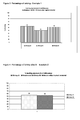
- the fertility of female beef- or dairy cattle after fixed time artificial insemination is similar in the groups synchronized by the method according to the invention (without the administration of an oestradiol) compared with the group were a conventional commercial system with an oestradiol was used.
- the method according to the invention is a suitable ovulation synchronisation program for female cattle.
- Cattle are animals of the genus Bos, family Bovidae including wild species such as the yak, gaur, gayal, banteng, and kouprey, as well as domestic breeds including Asiatic water buffaloes Bubalus, African buffaloes Syncerus, and American bison Bison. Cattle are bred for meat (beef cattle) or milk (dairy cattle).
- the method according to the invention is generally suitable for all female cattle of different breeds, i.e. for dairy or beef heifers and primiparuos or multiparous dairy or beef cows that are non-pregnant in any stage of cycle.
- an initial dose of a gonadotropin releasing hormone is administered to an open (non - pregnant) female cattle at any stage of an oestrus cycle in order to control follicular turnover.
- the administration of a GnRH causes growth of a new wave of follicles and assures the presence of a corpus luteum and synchronises the growth of a new follicular wave.
- GnRH the native GnRH or a synthetic analogue of the native GnRH is meant.
- the native Gonadotropin-releasing hormone (GnRH) is a decapeptide (pGlu-His-Trp-Ser-Tyr-Gly-Leu-Arg-Pro-Gly-NH 2 ), which is produced from a precursor polypeptide in hypothalamic neurone.
- GnRH analogue is used.
- buserelin a synthetic GnRH analogue composed of 9 amino-acids (Pro-His-Trp-Ser-Tyr-D-Ser-Leu-Arg-Pro-NH-CH 2 -CH 3) or azagly-nafarelin, composed of 10 amino-acids (pGlu-His-Trp-Ser-Tyr-[D-Na(2)]-Leu-Arg-Pro-[aza-Gly]).
- the GnRH is administered in an amount sufficient to control ovarian follicle function, e. g., depending on the type of GnRH employed, between 1 and 250 ⁇ g per animal, preferably between 5 and 50 ⁇ g.
- GnRH can be applied in general by all application forms that are known in the art for this purpose. GnRH is preferably administered parenterally, e.g. by intramuscular or subcutaneous injection, typically in the form of long-acting depots.
- a progesterone delivery device is administered to the animal.
- the progesterone delivery device is for practical reasons administered simultaneously or in quick succession to the GnRH administration or in reverse order because in this case the animal must be handled only once and the veterinarian can administer the progesterone delivery device and the GnRH injection within a short time interval. In general the time interval between the administrations can be for the achievement of the positive effects of the current invention extended to 24 hours.
- the progesterone delivery device is administered in quick succession to the administration of GnRH or in reverse order.
- progesterone mimics the corpus luteum function for the duration when the progesterone delivery device is inserted.
- the gonadotropin release and hence follicular maturation is suppressed until progesterone withdrawal.
- the progesterone delivery device comprises progesterone or a synthetic progesterone analogue.
- a synthetic progesterone analogue like e.g. norgestomet, medroxyprogesterone, norgestrel, levonorgestrel, norethindrone or mesgesterol acetate is used.
- Norgestomet is the INN (international non-proprietary name) of 17 ⁇ -acetoxy-11 ⁇ -methyl-19-nor-preg-4-ene, 20-dione.
- the progesterone delivery device is preferably a controlled release device.
- a controlled release delivery device is capable of administering a drug over a prolonged or extended period of time. Therefore, it is not necessary to repeatedly e.g. daily administer a progesterone to the animal.
- Controlled release devices are the most suitable method of administration of progesterone since withdrawal can then be precisely controlled by device removal.
- suitable controlled release devices are the well known intramuscular - or subcutaneous implants or intravaginal inserts.
- Implants are objects or materials, such as an alloplastic material or tissue that can be partially or totally inserted or grafted into the body for prosthetic, therapeutic, diagnostic, or experimental purposes.
- Progesterone delivery devices for the use in the method according to the current invention are known in the art.
- the commercial product PRiD® Progesterone releasing intravaginal device
- CIDR® insert controlled internal drug release
- the implant of the commercial products Crestar® or Synchromate B® are presently used.
- PRID® (Ceva Sante Animale) is a specialised form of controlled release device that is inserted and held within the female cattle vagina.
- PRID® consists of a stainless steel coil covered by a layer of inert silastic in which progesterone is impregnated. The progesterone is released from the elastomer until removal of the device by pulling on the string, which is left protruding from the vulva after coil insertion.
- CIDR® cattle insert (Inter AG, Hamilton) is also a controlled release device that is inserted and held within the female cattle vagina. It is a T-shaped insert and is placed into the vagina of female cattle by using a lubricated applicator. The applicator collapses the wings for insertion into the vagina. Expulsion of CIDR® within the vagina causes relaxation of the wings and retention of CIDR® within the vagina by pressure on the vaginal wall. The progesterone is released from the device until removal of the device by pulling on the string, which is left protruding from the vulva after device insertion.
- Crestar® (Intervet) and Synchromate® B (Merial) are subcutaneous implants containing norgestomet.
- the implant is inserted subcutaneously behind the ear during which time the progesterone is absorbed into the blood circulation.
- the implant is removed by making a small scalpel incision in the skin of the ear over the implant.
- the progesterone release device may typically release a progesterone that lead to a blood concentration of progesterone of 1 to 6 ng/ml, preferably to 2 to 5 ng/ml.
- step b) of the method according to the current invention a prostaglandin F 2 ⁇ is administered to initiate corpus luteum regression.
- the prostaglandin F 2 ⁇ is administered after a suitable period of time that is sufficient for corpora lutea to become sensitive to the luteolytic action of prostaglandins. Such a period of time is normally about 6-9 days after the initial administration of a progesterone delivery device. A satisfactory and preferred standard interval for administration of the PGF 2 ⁇ is seven days after initial administration of a progesterone delivery device.
- Suitable compounds are native prostaglandin F 2 ⁇ (PGF 2 ⁇ ) and synthetic analogues of prostaglandin F 2 ⁇ .
- Preferred are synthetic analogues of prostaglandin F 2 ⁇ .
- the synthetic prostaglandin F 2 ⁇ analogue is preferably selected from the group of cloprostenol, tiaprost, dinoprost, luprostiol, alphaprostol and fenprostalene.
- Preferred synthetic analogues of prostaglandin F 2 ⁇ are luprostiol and cloprostenol.
- the PGF 2 ⁇ will normally be applied at a dose level of 25 mg, which is consistent with the normal use of this hormone to terminate the luteal phase of the oestrus cycle. While this may vary somewhat, normal practice should be to keep the PGF 2 ⁇ within a range of about 20-35 mg.
- the dosages described above are with respect to native hormones. Synthetic analogues may be used and as will be recognised by those skilled in the art such analogues may be used in smaller amounts owing to their higher activities.
- PGF 2 ⁇ can be applied to an animal in general by all application forms known in the art. While PGF 2 ⁇ is preferably administered parenterally, e.g. by intramuscular or subcutaneous injection, administration via alternative routes is also possible.
- step c) of the method according to the current invention the progesterone delivery device is removed and a pregnant mare serum gonadotropin (PMSG) is administered.
- PMSG pregnant mare serum gonadotropin
- the removal of the progesterone delivery device from the body can be performed e.g. by removal of the intra-vaginal insert through the vaginal opening or by removal of the ear implant by scalpel incision.
- a mare serum gonadotropin is administered to the animal.
- PMSG mare serum gonadotropin
- the progesterone delivery device is removed and a PMSG is administered simultaneously or in quick succession or the acts are performed in reverse order because in this case the animal must be handled only once and the veterinarian can perform both acts within a short time interval.
- the time interval between the both acts can be longer.
- the time interval should not exceed 24 hours between both acts.
- the PMSG is administered in quick succession to the removal of the progesterone delivery device or in reverse order.
- PMSG will help to achieve ovulation induction in female cattle, which were non-cycling at the beginning of treatment and sustain follicular maturation in all female cattle.
- PMSG Native pregnant mare serum gonadotropin
- native PMSG is extracted from serum of pregnant mares.
- recombinant PMSG can be used.
- PMSG has follicle stimulating (FSH-like) and luteinising (LH-like) activities.
- FSH-like follicle stimulating
- LH-like luteinising
- PMSG is recommended for the stimulation of ovarian function and activity, improvement of fertility in oestrus-synchronised animals and the induction of super-ovulation.
- PMSG formulations are available as lyophilised preparations in combination with a solvent for intramuscular and subcutaneous use. PMSG can be applied to an animal in general by all application forms known in the art. While PMSG is preferably administered parenterally, e.g. by intramuscular or subcutaneous injection administration via alternative routes is also possible.
- Preferably 400 to 600 I.U. of PMSG are administered in the method according to the invention.
- the present invention can be applied in a manner that completely eliminates oestrus detection in treated female cattle.
- breeding of the animal can be made once between 36 and 60 hours after the progesterone delivery device was removed and PMSG was administered. Alternatively breeding can occur twice between 36 and 60 and 70 to 90 hours after the progesterone delivery device is removed.
- the synchronisation procedure of the present invention can be also combined with conventional oestrus detection methods. In this case, the female cattle are bred, once it displays oestrus.
- kits of parts for use in synchronising ovulation in cattle characterised in that it comprises a dosage form of a GnRH and a progesterone delivery device for initial supply to the female cattle and information means in the form of a label or leaflet suitable to instruct the kit's user that a dosage form of a prostaglandin F 2 ⁇ and a dosage form of a PMSG are to be administered subsequently to said animal.
- the kit of parts comprises additionally a dosage form of a prostaglandin F 2 ⁇ and a dosage form of a PMSG for subsequent supply to said animal.
- the kit of parts comprises information means in the form of a label or leaflet suitable to instruct the product's users that
- the aim of this randomised, non-blinded clinical trial was to compare, under field conditions, the safety and efficacy of three injectable solutions associated to a norgestomet implant on fertility and oestrus synchronization of beef cows.
- PPF 2 ⁇ prostaglandin injection
- the norgestomet implant was removed on day 10 or 11 and an. injection of PMSG (i.m 500 or 600 IU) was given simultaneously. Fixed time artificial insemination (48 and 72 hours after implant removal) was used to breed the cows.
- the aim of this randomised, non blinded clinical trial is to compare, under field conditions, the efficacy of two injectable solutions associated to a norgestomet implant on oestrus synchronization and fertility of beef cows.
- PEF 2 ⁇ prostaglandin injection
- the implant was removed on day 10 or 9 and an injection of PMSG (i.m. 400 to 600 IU according to parity and farmers' habits) was given simultaneously.
- PMSG i.m. 400 to 600 IU according to parity and farmers' habits
- Fixed time artificial insemination 56 hours after implant removal for Group A and 48 hours after implant removal for Group B was used to breed the cows.
Landscapes
- Health & Medical Sciences (AREA)
- Life Sciences & Earth Sciences (AREA)
- Chemical & Material Sciences (AREA)
- Veterinary Medicine (AREA)
- Public Health (AREA)
- Animal Behavior & Ethology (AREA)
- General Health & Medical Sciences (AREA)
- Medicinal Chemistry (AREA)
- Pharmacology & Pharmacy (AREA)
- Reproductive Health (AREA)
- Endocrinology (AREA)
- Epidemiology (AREA)
- Engineering & Computer Science (AREA)
- Bioinformatics & Cheminformatics (AREA)
- Proteomics, Peptides & Aminoacids (AREA)
- Immunology (AREA)
- Gastroenterology & Hepatology (AREA)
- Zoology (AREA)
- Gynecology & Obstetrics (AREA)
- Pregnancy & Childbirth (AREA)
- Chemical Kinetics & Catalysis (AREA)
- General Chemical & Material Sciences (AREA)
- Nuclear Medicine, Radiotherapy & Molecular Imaging (AREA)
- Organic Chemistry (AREA)
- Medicines That Contain Protein Lipid Enzymes And Other Medicines (AREA)
- Pharmaceuticals Containing Other Organic And Inorganic Compounds (AREA)
Priority Applications (2)
| Application Number | Priority Date | Filing Date | Title |
|---|---|---|---|
| EP04106364A EP1541168B1 (de) | 2003-12-09 | 2004-12-07 | Methode zur Synchronisierung des Eisprungs bei Rindern |
| ES04106364T ES2354978T3 (es) | 2003-12-09 | 2004-12-07 | Método de sincronización de la ovulación en vacas. |
Applications Claiming Priority (3)
| Application Number | Priority Date | Filing Date | Title |
|---|---|---|---|
| EP03104611 | 2003-12-09 | ||
| EP03104611 | 2003-12-09 | ||
| EP04106364A EP1541168B1 (de) | 2003-12-09 | 2004-12-07 | Methode zur Synchronisierung des Eisprungs bei Rindern |
Publications (2)
| Publication Number | Publication Date |
|---|---|
| EP1541168A1 true EP1541168A1 (de) | 2005-06-15 |
| EP1541168B1 EP1541168B1 (de) | 2010-11-24 |
Family
ID=34524751
Family Applications (1)
| Application Number | Title | Priority Date | Filing Date |
|---|---|---|---|
| EP04106364A Expired - Lifetime EP1541168B1 (de) | 2003-12-09 | 2004-12-07 | Methode zur Synchronisierung des Eisprungs bei Rindern |
Country Status (1)
| Country | Link |
|---|---|
| EP (1) | EP1541168B1 (de) |
Cited By (3)
| Publication number | Priority date | Publication date | Assignee | Title |
|---|---|---|---|---|
| WO2008142162A3 (de) * | 2007-05-23 | 2009-02-12 | Univ Leipzig | Arzneimittel zur behandlung von fertilitäts- und trächtigkeitsstörungen, immunologisch-bedingten erkrankungen und transplantation für die anwendung in der tiermedizin, insbesondere bei pferden sowie verfahren zur herstellung und therapiekontrolle |
| WO2009033663A1 (en) * | 2007-09-11 | 2009-03-19 | Mondobiotech Laboratories Ag | Use of fertirelin and delta-endorphin as therapeutic agents |
| CN110063812A (zh) * | 2018-01-24 | 2019-07-30 | 中国农业大学 | 一种在定时输精技术中提高雌性动物繁殖性能的方法 |
Families Citing this family (1)
| Publication number | Priority date | Publication date | Assignee | Title |
|---|---|---|---|---|
| KR102722338B1 (ko) * | 2021-12-13 | 2024-10-25 | 대한민국 | 발정 동기화를 이용한 암소의 수태율 향상 방법 |
Citations (1)
| Publication number | Priority date | Publication date | Assignee | Title |
|---|---|---|---|---|
| WO2002012441A2 (en) * | 2000-08-10 | 2002-02-14 | Genzyme Transgenics Corporation | Cryopreservation of sperm |
-
2004
- 2004-12-07 EP EP04106364A patent/EP1541168B1/de not_active Expired - Lifetime
Patent Citations (1)
| Publication number | Priority date | Publication date | Assignee | Title |
|---|---|---|---|---|
| WO2002012441A2 (en) * | 2000-08-10 | 2002-02-14 | Genzyme Transgenics Corporation | Cryopreservation of sperm |
Non-Patent Citations (4)
Cited By (3)
| Publication number | Priority date | Publication date | Assignee | Title |
|---|---|---|---|---|
| WO2008142162A3 (de) * | 2007-05-23 | 2009-02-12 | Univ Leipzig | Arzneimittel zur behandlung von fertilitäts- und trächtigkeitsstörungen, immunologisch-bedingten erkrankungen und transplantation für die anwendung in der tiermedizin, insbesondere bei pferden sowie verfahren zur herstellung und therapiekontrolle |
| WO2009033663A1 (en) * | 2007-09-11 | 2009-03-19 | Mondobiotech Laboratories Ag | Use of fertirelin and delta-endorphin as therapeutic agents |
| CN110063812A (zh) * | 2018-01-24 | 2019-07-30 | 中国农业大学 | 一种在定时输精技术中提高雌性动物繁殖性能的方法 |
Also Published As
| Publication number | Publication date |
|---|---|
| EP1541168B1 (de) | 2010-11-24 |
Similar Documents
| Publication | Publication Date | Title |
|---|---|---|
| US9763962B2 (en) | Estrus synchronization preparations and effective CIDR-less protocols | |
| US5589457A (en) | Process for the synchronization of ovulation | |
| Bó et al. | Synchronization techniques to increase the utilization of artificial insemination in beef and dairy cattle | |
| JP3313113B2 (ja) | 雌馬の排卵制御用生体適合性インプラント | |
| US5869081A (en) | Progesterone vaginal ring for treatment of infertility | |
| Fontaine et al. | Induction of fertile oestrus in the bitch using Deslorelin, a GnRH agonist | |
| Williams et al. | Comparison of three approaches for synchronization of ovulation for timed artificial insemination in Bos indicus-influenced cattle managed on the Texas gulf coast | |
| CA2321102A1 (en) | Regulation of estrus and ovulation in gilts | |
| US20110306547A1 (en) | Lhrh - antagonists in the treatment of fertility disorders | |
| Kasimanickam | Pharmacological intervention of estrous cycles | |
| Kastelic et al. | Synchronization of estrus in beef cattle with norgestomet and estradiol valerate | |
| US7205281B2 (en) | Process for the synchronization of ovulation for timed breeding without heat detection | |
| Rathbone et al. | Controlled-release products for the control of the estrus cycle in cattle, sheep, goats, deer, pigs, and horses | |
| Diskin et al. | Controlled breeding systems for dairy cows | |
| EP1541168B1 (de) | Methode zur Synchronisierung des Eisprungs bei Rindern | |
| Ramos et al. | Hormonal protocols in small ruminants | |
| Rutigliano et al. | Effect of time and dose of recombinant follicle stimulating hormone agonist on the superovulatory response of sheep | |
| US7105487B2 (en) | Method for inducing onset of the reproductive cycle of female breeding animals | |
| Nelson | STUDIES ON THE PHYSIOLOGY OF LACTATION. THE RELATION OF LACTATION TO THE OVARIAN AND HYPOPHYSEAL HORMONES | |
| Rao et al. | Oestrous response and fertility in post-partum anoestrous buffaloes treated with a progestagen, pregnant mares' serum gonadotrophin and prostaglandin during the low breeding season | |
| ES2354978T3 (es) | Método de sincronización de la ovulación en vacas. | |
| Rajamahendran et al. | Synchronization of estrus and ovulation in cattle | |
| JPH01137929A (ja) | 改良された排卵処置法 | |
| Tempest et al. | Synchronized breeding and lambing | |
| Nergiz et al. | The effect of PMSG treatment on pregnancy rates in synchronized heifers using norgestomet ear implants |
Legal Events
| Date | Code | Title | Description |
|---|---|---|---|
| PUAI | Public reference made under article 153(3) epc to a published international application that has entered the european phase |
Free format text: ORIGINAL CODE: 0009012 |
|
| AK | Designated contracting states |
Kind code of ref document: A1 Designated state(s): AT BE BG CH CY CZ DE DK EE ES FI FR GB GR HU IE IS IT LI LT LU MC NL PL PT RO SE SI SK TR |
|
| AX | Request for extension of the european patent |
Extension state: AL BA HR LV MK YU |
|
| 17P | Request for examination filed |
Effective date: 20051215 |
|
| AKX | Designation fees paid |
Designated state(s): AT BE BG CH CY CZ DE DK EE ES FI FR GB GR HU IE IS IT LI LT LU MC NL PL PT RO SE SI SK TR |
|
| RAP1 | Party data changed (applicant data changed or rights of an application transferred) |
Owner name: INTERVET INTERNATIONAL BV |
|
| 17Q | First examination report despatched |
Effective date: 20080325 |
|
| RIC1 | Information provided on ipc code assigned before grant |
Ipc: A61K 31/57 20060101AFI20100428BHEP Ipc: A61K 31/5575 20060101ALI20100428BHEP Ipc: A61K 38/24 20060101ALI20100428BHEP Ipc: A61D 19/00 20060101ALI20100428BHEP Ipc: A61P 15/08 20060101ALI20100428BHEP |
|
| RTI1 | Title (correction) |
Free format text: METHOD OF SYNCHRONISING OVULATION IN CATTLE |
|
| GRAP | Despatch of communication of intention to grant a patent |
Free format text: ORIGINAL CODE: EPIDOSNIGR1 |
|
| GRAS | Grant fee paid |
Free format text: ORIGINAL CODE: EPIDOSNIGR3 |
|
| GRAA | (expected) grant |
Free format text: ORIGINAL CODE: 0009210 |
|
| AK | Designated contracting states |
Kind code of ref document: B1 Designated state(s): AT BE BG CH CY CZ DE DK EE ES FI FR GB GR HU IE IS IT LI LT LU MC NL PL PT RO SE SI SK TR |
|
| REG | Reference to a national code |
Ref country code: GB Ref legal event code: FG4D |
|
| REG | Reference to a national code |
Ref country code: CH Ref legal event code: EP |
|
| REG | Reference to a national code |
Ref country code: IE Ref legal event code: FG4D |
|
| REF | Corresponds to: |
Ref document number: 602004030206 Country of ref document: DE Date of ref document: 20110105 Kind code of ref document: P |
|
| REG | Reference to a national code |
Ref country code: ES Ref legal event code: FG2A Effective date: 20110309 |
|
| REG | Reference to a national code |
Ref country code: NL Ref legal event code: VDEP Effective date: 20101124 |
|
| LTIE | Lt: invalidation of european patent or patent extension |
Effective date: 20101124 |
|
| PG25 | Lapsed in a contracting state [announced via postgrant information from national office to epo] |
Ref country code: LT Free format text: LAPSE BECAUSE OF FAILURE TO SUBMIT A TRANSLATION OF THE DESCRIPTION OR TO PAY THE FEE WITHIN THE PRESCRIBED TIME-LIMIT Effective date: 20101124 |
|
| PG25 | Lapsed in a contracting state [announced via postgrant information from national office to epo] |
Ref country code: IS Free format text: LAPSE BECAUSE OF FAILURE TO SUBMIT A TRANSLATION OF THE DESCRIPTION OR TO PAY THE FEE WITHIN THE PRESCRIBED TIME-LIMIT Effective date: 20110324 Ref country code: CY Free format text: LAPSE BECAUSE OF FAILURE TO SUBMIT A TRANSLATION OF THE DESCRIPTION OR TO PAY THE FEE WITHIN THE PRESCRIBED TIME-LIMIT Effective date: 20101124 Ref country code: BG Free format text: LAPSE BECAUSE OF FAILURE TO SUBMIT A TRANSLATION OF THE DESCRIPTION OR TO PAY THE FEE WITHIN THE PRESCRIBED TIME-LIMIT Effective date: 20110224 Ref country code: AT Free format text: LAPSE BECAUSE OF FAILURE TO SUBMIT A TRANSLATION OF THE DESCRIPTION OR TO PAY THE FEE WITHIN THE PRESCRIBED TIME-LIMIT Effective date: 20101124 Ref country code: PT Free format text: LAPSE BECAUSE OF FAILURE TO SUBMIT A TRANSLATION OF THE DESCRIPTION OR TO PAY THE FEE WITHIN THE PRESCRIBED TIME-LIMIT Effective date: 20110324 Ref country code: FI Free format text: LAPSE BECAUSE OF FAILURE TO SUBMIT A TRANSLATION OF THE DESCRIPTION OR TO PAY THE FEE WITHIN THE PRESCRIBED TIME-LIMIT Effective date: 20101124 Ref country code: NL Free format text: LAPSE BECAUSE OF FAILURE TO SUBMIT A TRANSLATION OF THE DESCRIPTION OR TO PAY THE FEE WITHIN THE PRESCRIBED TIME-LIMIT Effective date: 20101124 Ref country code: SE Free format text: LAPSE BECAUSE OF FAILURE TO SUBMIT A TRANSLATION OF THE DESCRIPTION OR TO PAY THE FEE WITHIN THE PRESCRIBED TIME-LIMIT Effective date: 20101124 Ref country code: SI Free format text: LAPSE BECAUSE OF FAILURE TO SUBMIT A TRANSLATION OF THE DESCRIPTION OR TO PAY THE FEE WITHIN THE PRESCRIBED TIME-LIMIT Effective date: 20101124 |
|
| PG25 | Lapsed in a contracting state [announced via postgrant information from national office to epo] |
Ref country code: GR Free format text: LAPSE BECAUSE OF FAILURE TO SUBMIT A TRANSLATION OF THE DESCRIPTION OR TO PAY THE FEE WITHIN THE PRESCRIBED TIME-LIMIT Effective date: 20110225 |
|
| PG25 | Lapsed in a contracting state [announced via postgrant information from national office to epo] |
Ref country code: CZ Free format text: LAPSE BECAUSE OF FAILURE TO SUBMIT A TRANSLATION OF THE DESCRIPTION OR TO PAY THE FEE WITHIN THE PRESCRIBED TIME-LIMIT Effective date: 20101124 Ref country code: BE Free format text: LAPSE BECAUSE OF FAILURE TO SUBMIT A TRANSLATION OF THE DESCRIPTION OR TO PAY THE FEE WITHIN THE PRESCRIBED TIME-LIMIT Effective date: 20101124 Ref country code: EE Free format text: LAPSE BECAUSE OF FAILURE TO SUBMIT A TRANSLATION OF THE DESCRIPTION OR TO PAY THE FEE WITHIN THE PRESCRIBED TIME-LIMIT Effective date: 20101124 Ref country code: MC Free format text: LAPSE BECAUSE OF NON-PAYMENT OF DUE FEES Effective date: 20101231 |
|
| REG | Reference to a national code |
Ref country code: CH Ref legal event code: PL |
|
| PG25 | Lapsed in a contracting state [announced via postgrant information from national office to epo] |
Ref country code: PL Free format text: LAPSE BECAUSE OF FAILURE TO SUBMIT A TRANSLATION OF THE DESCRIPTION OR TO PAY THE FEE WITHIN THE PRESCRIBED TIME-LIMIT Effective date: 20101124 Ref country code: SK Free format text: LAPSE BECAUSE OF FAILURE TO SUBMIT A TRANSLATION OF THE DESCRIPTION OR TO PAY THE FEE WITHIN THE PRESCRIBED TIME-LIMIT Effective date: 20101124 Ref country code: RO Free format text: LAPSE BECAUSE OF FAILURE TO SUBMIT A TRANSLATION OF THE DESCRIPTION OR TO PAY THE FEE WITHIN THE PRESCRIBED TIME-LIMIT Effective date: 20101124 Ref country code: DK Free format text: LAPSE BECAUSE OF FAILURE TO SUBMIT A TRANSLATION OF THE DESCRIPTION OR TO PAY THE FEE WITHIN THE PRESCRIBED TIME-LIMIT Effective date: 20101124 |
|
| PLBE | No opposition filed within time limit |
Free format text: ORIGINAL CODE: 0009261 |
|
| STAA | Information on the status of an ep patent application or granted ep patent |
Free format text: STATUS: NO OPPOSITION FILED WITHIN TIME LIMIT |
|
| PG25 | Lapsed in a contracting state [announced via postgrant information from national office to epo] |
Ref country code: IE Free format text: LAPSE BECAUSE OF NON-PAYMENT OF DUE FEES Effective date: 20101207 Ref country code: CH Free format text: LAPSE BECAUSE OF NON-PAYMENT OF DUE FEES Effective date: 20101231 Ref country code: LI Free format text: LAPSE BECAUSE OF NON-PAYMENT OF DUE FEES Effective date: 20101231 |
|
| 26N | No opposition filed |
Effective date: 20110825 |
|
| REG | Reference to a national code |
Ref country code: DE Ref legal event code: R097 Ref document number: 602004030206 Country of ref document: DE Effective date: 20110825 |
|
| PG25 | Lapsed in a contracting state [announced via postgrant information from national office to epo] |
Ref country code: HU Free format text: LAPSE BECAUSE OF FAILURE TO SUBMIT A TRANSLATION OF THE DESCRIPTION OR TO PAY THE FEE WITHIN THE PRESCRIBED TIME-LIMIT Effective date: 20110525 Ref country code: LU Free format text: LAPSE BECAUSE OF NON-PAYMENT OF DUE FEES Effective date: 20101207 |
|
| PG25 | Lapsed in a contracting state [announced via postgrant information from national office to epo] |
Ref country code: TR Free format text: LAPSE BECAUSE OF FAILURE TO SUBMIT A TRANSLATION OF THE DESCRIPTION OR TO PAY THE FEE WITHIN THE PRESCRIBED TIME-LIMIT Effective date: 20101124 |
|
| REG | Reference to a national code |
Ref country code: FR Ref legal event code: PLFP Year of fee payment: 12 |
|
| REG | Reference to a national code |
Ref country code: FR Ref legal event code: PLFP Year of fee payment: 13 |
|
| REG | Reference to a national code |
Ref country code: FR Ref legal event code: PLFP Year of fee payment: 14 |
|
| PGFP | Annual fee paid to national office [announced via postgrant information from national office to epo] |
Ref country code: GB Payment date: 20231108 Year of fee payment: 20 |
|
| PGFP | Annual fee paid to national office [announced via postgrant information from national office to epo] |
Ref country code: IT Payment date: 20231214 Year of fee payment: 20 Ref country code: FR Payment date: 20231108 Year of fee payment: 20 Ref country code: DE Payment date: 20231108 Year of fee payment: 20 |
|
| PGFP | Annual fee paid to national office [announced via postgrant information from national office to epo] |
Ref country code: ES Payment date: 20240109 Year of fee payment: 20 |
|
| REG | Reference to a national code |
Ref country code: DE Ref legal event code: R071 Ref document number: 602004030206 Country of ref document: DE |
|
| REG | Reference to a national code |
Ref country code: GB Ref legal event code: PE20 Expiry date: 20241206 |
|
| REG | Reference to a national code |
Ref country code: ES Ref legal event code: FD2A Effective date: 20250103 |
|
| PG25 | Lapsed in a contracting state [announced via postgrant information from national office to epo] |
Ref country code: GB Free format text: LAPSE BECAUSE OF EXPIRATION OF PROTECTION Effective date: 20241206 |
|
| PG25 | Lapsed in a contracting state [announced via postgrant information from national office to epo] |
Ref country code: ES Free format text: LAPSE BECAUSE OF EXPIRATION OF PROTECTION Effective date: 20241208 |
|
| PG25 | Lapsed in a contracting state [announced via postgrant information from national office to epo] |
Ref country code: GB Free format text: LAPSE BECAUSE OF EXPIRATION OF PROTECTION Effective date: 20241206 Ref country code: ES Free format text: LAPSE BECAUSE OF EXPIRATION OF PROTECTION Effective date: 20241208 |