EP1543023B1 - Sekundäre bindungsstelle von dipeptidylpeptidase iv (dp iv) - Google Patents
Sekundäre bindungsstelle von dipeptidylpeptidase iv (dp iv) Download PDFInfo
- Publication number
- EP1543023B1 EP1543023B1 EP03788909A EP03788909A EP1543023B1 EP 1543023 B1 EP1543023 B1 EP 1543023B1 EP 03788909 A EP03788909 A EP 03788909A EP 03788909 A EP03788909 A EP 03788909A EP 1543023 B1 EP1543023 B1 EP 1543023B1
- Authority
- EP
- European Patent Office
- Prior art keywords
- compounds
- residues
- binding site
- amino acid
- site
- Prior art date
- Legal status (The legal status is an assumption and is not a legal conclusion. Google has not performed a legal analysis and makes no representation as to the accuracy of the status listed.)
- Expired - Lifetime
Links
- IWZXIYFXBMSKTQ-JGYBJGQYSA-N CCCCCC/C(/C)=C/C(C(C)C)/C=C(/CCNC(C(NC)=O)=O)\c1c[n](CCCC=C)cc1C(O)O Chemical compound CCCCCC/C(/C)=C/C(C(C)C)/C=C(/CCNC(C(NC)=O)=O)\c1c[n](CCCC=C)cc1C(O)O IWZXIYFXBMSKTQ-JGYBJGQYSA-N 0.000 description 1
- 0 CCCCCCC(C)=C[C@@](*(C)C)C=C(CCNC(C(NC)=O)=O)[C@@]1C(C(*)O)=CN(CCCC=C)C1 Chemical compound CCCCCCC(C)=C[C@@](*(C)C)C=C(CCNC(C(NC)=O)=O)[C@@]1C(C(*)O)=CN(CCCC=C)C1 0.000 description 1
- HQKFQGYAJQKHFK-GLFWNNLDSA-N CCCCCCC/C(/C)=C/CC(CC)/C=C(/C(O)OI)\c1c[n](C(C/C(/C)=C/C)CN)cc1C(O)O Chemical compound CCCCCCC/C(/C)=C/CC(CC)/C=C(/C(O)OI)\c1c[n](C(C/C(/C)=C/C)CN)cc1C(O)O HQKFQGYAJQKHFK-GLFWNNLDSA-N 0.000 description 1
Images















Classifications
-
- A—HUMAN NECESSITIES
- A61—MEDICAL OR VETERINARY SCIENCE; HYGIENE
- A61K—PREPARATIONS FOR MEDICAL, DENTAL OR TOILETRY PURPOSES
- A61K31/00—Medicinal preparations containing organic active ingredients
- A61K31/33—Heterocyclic compounds
- A61K31/395—Heterocyclic compounds having nitrogen as a ring hetero atom, e.g. guanethidine or rifamycins
- A61K31/40—Heterocyclic compounds having nitrogen as a ring hetero atom, e.g. guanethidine or rifamycins having five-membered rings with one nitrogen as the only ring hetero atom, e.g. sulpiride, succinimide, tolmetin, buflomedil
- A61K31/401—Proline; Derivatives thereof, e.g. captopril
-
- A—HUMAN NECESSITIES
- A61—MEDICAL OR VETERINARY SCIENCE; HYGIENE
- A61P—SPECIFIC THERAPEUTIC ACTIVITY OF CHEMICAL COMPOUNDS OR MEDICINAL PREPARATIONS
- A61P3/00—Drugs for disorders of the metabolism
-
- C—CHEMISTRY; METALLURGY
- C07—ORGANIC CHEMISTRY
- C07K—PEPTIDES
- C07K7/00—Peptides having 5 to 20 amino acids in a fully defined sequence; Derivatives thereof
- C07K7/04—Linear peptides containing only normal peptide links
- C07K7/06—Linear peptides containing only normal peptide links having 5 to 11 amino acids
-
- C—CHEMISTRY; METALLURGY
- C12—BIOCHEMISTRY; BEER; SPIRITS; WINE; VINEGAR; MICROBIOLOGY; ENZYMOLOGY; MUTATION OR GENETIC ENGINEERING
- C12Q—MEASURING OR TESTING PROCESSES INVOLVING ENZYMES, NUCLEIC ACIDS OR MICROORGANISMS; COMPOSITIONS OR TEST PAPERS THEREFOR; PROCESSES OF PREPARING SUCH COMPOSITIONS; CONDITION-RESPONSIVE CONTROL IN MICROBIOLOGICAL OR ENZYMOLOGICAL PROCESSES
- C12Q1/00—Measuring or testing processes involving enzymes, nucleic acids or microorganisms; Compositions therefor; Processes of preparing such compositions
- C12Q1/34—Measuring or testing processes involving enzymes, nucleic acids or microorganisms; Compositions therefor; Processes of preparing such compositions involving hydrolase
- C12Q1/37—Measuring or testing processes involving enzymes, nucleic acids or microorganisms; Compositions therefor; Processes of preparing such compositions involving hydrolase involving peptidase or proteinase
-
- A—HUMAN NECESSITIES
- A61—MEDICAL OR VETERINARY SCIENCE; HYGIENE
- A61K—PREPARATIONS FOR MEDICAL, DENTAL OR TOILETRY PURPOSES
- A61K38/00—Medicinal preparations containing peptides
-
- G—PHYSICS
- G01—MEASURING; TESTING
- G01N—INVESTIGATING OR ANALYSING MATERIALS BY DETERMINING THEIR CHEMICAL OR PHYSICAL PROPERTIES
- G01N2500/00—Screening for compounds of potential therapeutic value
- G01N2500/04—Screening involving studying the effect of compounds C directly on molecule A (e.g. C are potential ligands for a receptor A, or potential substrates for an enzyme A)
Definitions
- the present application relates to the secondary binding site of dipeptidyl peptidase IV, its relationship with any type of substrates and to the modulation of substrate specificity of dipeptidyl peptidase IV (DP IV, synonym: DPP IV, CD26, EC 3.4.14.5).
- the application relates further to compounds that bind to the secondary binding site of DP IV and their use to modulate the substrate specificity of DP IV.
- Such compounds are useful for treating DP IV mediated disorders, selected from but not restricted to, impaired glucose tolerance, glucosuria, lipid disorders, dyslipidemia, hyperlipidaemia, hypertriglyceridemia, hypercholesterolemia, low HDL levels, high LDL levels, metabolic acidosis, hyperglycemia, diabetes mellitus, diabetic neuropathy and nephropathy and of sequelae caused by diabetes mellitus in mammals, metabolism-related hypertension and cardiovascular sequelae caused by hypertension in mammals.
- the present application provides a screening method for the identification of agents, which bind to the secondary binding site of dipeptidyl peptidase IV.
- DP IV The exopeptidase dipeptidyl peptidase IV (DP IV, CD26, EC 3.4.14.5) is involved in a number of physiological regulation processes.
- DP IV is a peptidase which can change the activity of a number of peptide hormones, neuropeptides and chemokines in a very specific manner ( Mentlein, Reg. Pep. 85, pp. 9-24 (1999 )) while on the other hand the DP IV protein molecule exerts protein-protein interactions, so mediating the regulation of intracellular signaling cascades.
- a growing number of peptide substrates containing proline, alanine or serine in the penultimate position are identified as substrates of DP IV in vitro and in vivo .
- Bioactive peptides which are substrates for DP IV and members of such regulation cascades are, among others, NPY, GIP, GLP-1, glucagons, VIP and PACAP. Furthermore, many DP IV-inhibitors belonging to different structural classes are known.
- DP IV-Inhibitors may be useful for the treatment of impaired glucose tolerance and diabetes mellitus (International Patent Application, Publication Number WO 99/61431 , Pederson RA et al, Diabetes. 1998 Aug; 47(8):1253-8 and Pauly RP et al, Metabolism 1999 Mar; 48(3):385-9 ).
- WO 99/61431 discloses DP IV-Inhibitors comprising an amino acid residue and a thiazolidine or pyrrolidine group, and salts thereof, especially L- threo -isoleucyl thiazolidine, L- allo -isoteucyl thiazolidine, L- threo -isoleucyl pyrrolidine, L- allo -isoleucyl thiazolidine, L- allo -isofeucyl pyrrolidine, and salts thereof.
- low molecular weight dipeptidyl peptidase IV inhibitors are agents such as tetrahydroisoquinolin-3-carboxamide derivatives, N-substituted 2-cyanopyrroles and -pyrrolidines, N-(N'-substituted glycyl)-2-cyanopyrrolidines, N-(substituted glycyl)-thiazolidines, N-(substituted glycyl)-4-cyanothiazolidines, amino-acyl-borono-prolyl-inhibitors, cyclopropyl-fused pyrrolidines and heterocyclic compounds.
- agents such as tetrahydroisoquinolin-3-carboxamide derivatives, N-substituted 2-cyanopyrroles and -pyrrolidines, N-(N'-substituted glycyl)-2-cyanopyrrolidines, N-(substituted
- Inhibitors of dipeptidyl peptidase IV are described in' US 6,380,398 , US 6,011,155 ; US 6,107,317 ; US 6,110,949 ; US 6,124,305 ; US 6,172,081 ; WO 95/15309 , WO 99/61431 , WO 99/67278 , WO 99/67279 , DE 198 34 591 , WO 97/40832 , DE 196 16 486 C2 , WO 98/19998 , WO 00/07617 , WO 99/38501 , WO 99/46272 , WO 99/38501 , WO 01/68603 , WO 01/40180 , WO 01/81337 , WO 01/81304 , WO 01/55105 , WO 02/02560 , WO 02/14271 , WO 02/04610 , WO 02/051836 , WO 02/068420 , WO 02/076
- WO 03/002531 WO 03/002553 , WO 03/002593 , WO 03/004496 , WO 03/004498 , WO 03/024965 , WO 03/024942 , WO 03/035067 , WO 03/037327 , WO 03/035057 , WO 03/045977 , WO 03/055881 , WO 03/68748 , WO 03/68757 , WO 03/057666 , WO 03057144 , WO 03/040174 and WO 03/033524 .
- active site as used in the claims and in the description is generally known to a person skilled in the art and means the catalytical site or region of DP IV which is responsible for the cleavage or biodegredation of the natural substrates of this enzyme.
- secondary binding site means a site or region of DP IV which is different from the active site, e.g. a) a receptor site or b) a substrate recognition site or c) a regulatory site or allosteric site.
- the secondary binding site can a) affect the receptor function of DP IV or b) affect the catalytic activity of DP IV, , especially the selectivity and/or specificity of this enzyme toward its substrates.
- Some secondary binding sites are complementary to the structure of the substrate of the enzymes, co-enzymes, co-factors and other compounds, which are involved in the activity and function of the enzyme.
- the enzymes may even have one or more secondary binding sites.
- the secondary bindig site is an element of the enzyme distinct from the catalytic site with a different form of regulation than the competition between substrates and inhibitors at the catalytic site ( Darnell, J., Lodish, H. and Baltimore, D. 1990, Molecular Cell Biology 2nd Edition, Scientific American Books, New York, page 63 ).
- activity modifying means both the modification of the enzymatic activity as well as the modification of the selectivity or specificity of DP IV. Especially preferred is the modification of the selectivity or specificity of DP IV toward its natural substrates.
- effectors are defined as molecules or ligands that interact with a secondary binding site of DP IV, thereby changing its catalytical behaviour in vitro and/or in vivo . Effectors can increase or decrease the catalytical activity of the enzyme. Examples of effectors are activators or inhibitors. The effectors as used herein do not act at the active sites of the enzyme, but at at least one secondary binding site, e.g. a regulatory site, or an allosteric site. The term “effectors” is used herein synonymously with "agent” or "compound”.
- DP IV-inhibitor is generally known to a person skilled in the art and means enzyme inhibitors, which interact with the active site or catalytical site of DP IV and inhibit the catalytical activity of this enzyme.
- effectors encompasses one single effector or two or more effectors together. Preferred is the use of two effectors. Especially preferred is the use of one single effector.
- Constants associated with diabetes mellitus itself include hyperglycaemia, insulin resistance, including acquired insulin resistance and obesity. Further conditions associated with diabetes mellitus itself include hypertension and cardiovascular disease, especially atherosclerosis and conditions associated with insulin resistance. Conditions associated with insulin resistance include polycystic ovarian syndrome and steroid induced insulin resistance and gestational diabetes.
- Complications associated with diabetes mellitus includes renal disease, especially renal disease associated with Type 2 diabetes, neuropathy and retinopathy.
- Renal diseases associated with Type 2 diabetes include nephropathy, glomerulonephritis, glomerular sclerosis, nephrotic syndrome, hypertensive nephrosclerosis and end stage renal disease.
- Diabetes mellitus is preferably Type 2 diabetes.
- Clinical diabetes may be divided into four general subclasses, including (1) type 1 (caused by beta cell destruction and characterized by absolute insulin deficiency) (2) type 2 (characterized by insulin resistance and relative insulin deficiency) (3) other specific types of diabetes (associated with various identifiable clinical conditions or syndromes) and (4) gestational diabetes mellitus.
- type 1 caused by beta cell destruction and characterized by absolute insulin deficiency
- type 2 characterized by insulin resistance and relative insulin deficiency
- other specific types of diabetes associated with various identifiable clinical conditions or syndromes
- gestational diabetes mellitus two conditions - impaired glucose tolerance and impaired fasting glucose - refer to a metabolic state intermediate between normal glucose homeostasis and overt diabetes. These conditions significantly increase the later risk of diabetes mellitus and may in some instances be part of its natural history. It should be noted that patients with any form of diabetes might require insulin treatment at some point. For this reason the previously used terms insulin-dependent diabetes (for type 1 diabetes mellitus) and non-insulin-dependent diabetes (for type 2) have
- Diabetes is currently classified as follows:
- diabetes appears abrubtly (i.e., over days and weeks) in previously healthy non-obese children or young adults; in older age groups it may have a more gradual onset
- symptoms e.g., polyuria, polydipsia, polyhagia, and weight loss
- Type 1 diabetes is believed to have a long symptomatic preclinical stage often lasting years, during which pancreatic beta cells are gradually destroyed by an autoimmune attack that is influenced by HLA and other genetic factors, as well as the environment. Initially, insulin therapy is essential to restore metabolism toward normal.
- type 1 diabetes is an autoimmune disease. This syndrome accounts for less than 10% of diabetes in United States.
- Type 2 diabetes by far the most common form of the disease, is found in over 90 % of the diabetic patient population. These patients retain a significant level of endogenous insulin secretory capacity. However, insulin levels are low relative to the magnitude of insulin resistance and ambient glucose levels. Type 2 patients are not dependent on insulin for immediate survival and ketosis rarely develops, except under conditions of great physical stress. Nevertheless, these patients may require insulin therapy to control hyperlgycemia. Type 2 diabetes typically appears after the age of 40 years, has a high rate of genetic penetrance unrelated to HLA genes, and is associated with obesity.
- type 2 diabetes may be mild (fatigue, weakness, dizziness, blurred vision, or other non-specifc complaints may dominate the picture) or may be tolerated for many years before the patient seeks medical attention. Moreover, if the level of hyperglycemia is insufficient to produce symptoms, the disease may become evident only after complications develop.
- MODY encompasses several genetic defects of beta cell function, among which mutations at several genetic loci on different chromosomes have been identified.
- the most common forms - MODY type 3 - is associated with a mutation for a transcription factor encoded on chromosome 12 named hepatocyte nuclear 1 ⁇ (HNF 1, also known as TCF1) and -MODY type 2 is associated with mutations of the glucokinase gene (on chromosome 7). Mutations of the HNF-4 ⁇ gene (on chromosome 20) are responsible for type 1 of MODY.
- diabetes mellitus The distinction between the various subclasses of diabetes mellitus is usually made on clinical grounds. However, a small subgroup of patients are difficult to classify, that is, they display features common to both type 1 and 2 diabetes. Such patients are commonly non-obese and have reduced insulin secretory capacity that is not sufficient to make them ketosis prone. Many initially respond to oral agents but, with time, require insulin. Some appear to have a slowly evolving form of type 1 diabetes, whereas others defy easy categorization.
- gestational diabetes describes women with impaired glucose tolereance that appears or is first detected during pregnancy. Gestational diabetes usually appears in the 2 nd or 3 rd trimester, a time when pregnancy-associated insulin antagonistic hormones peak: After delivery, glucose tolerance generally (but not always) reverts to normal.
- the diagnosis of diabetes is usually straightforward when the classic symptoms of polyuria, polydipsia, and weight loss are present. All that is required is a random plasma glucose measurement from venous blood that is 200 mg/dL or greater. If diabetes is suspected but not confirmed by a random glucose determination, the screening test of choice is overnight fasting plasma glucose level. The diagnosis is established if fasting is equal to or greater than 126 mg/dL on at least two separate occasions.
- Impaired glucose tolerance (IGI) and impaired fasting glucose (IFG) are terms applied to individuals who have glucose levels that are higher than normal, (under fed or fasting conditions, respectively) but lower than those accepted as diagnostic for diabetes mellitus. Both conditions are associated with an increased risk for cardiovascular disease, but do not produce the classic symptoms or the microvascular and neuropathic complications associated with diabetes mellitus. In a subgroup of patients (about 25 to 30 %), however, type 2 diabetes eventually develops.
- Impaired Glucose Metabolism is defined by blood glucose levels that are above the normal range but are not high enough to meet the diagnostic criteria for type 2 diabetes mellitus. The incidence of IGM varies from country to country, but usually occurs 2-3 time more frequently than overt diabetes. Until recently, individuals with IGM were felt to be pre-diabetics, but data from several epidemiological studies argue that subjects with IGM are heterogeneous with respect to their risk of diabetes and their risk of cardiovascular morbidity and mortality. The data suggest that subjects with IGM, in particular, those with impaired glucose tolerance (IGT) , do not always develop diabetes, but whether they are diabetic or not, they are, nonetheless, at high risk for cardiovascular morbidity and mortality.
- ITT impaired glucose tolerance
- IGT Impaired Glucose tolerance
- IFG impaired fasting glucose
- IFG/IGT 13 % have both abnormalities
- Insulin resistance is not primarily due to a diminished number of insulin receptors but to a post-insulin receptor binding defect that is not yet understood. This resistance to insulin responsiveness results in insufficient insulin activation of glucose uptake, oxidation and storage in muscle and inadequate insulin repression of lipolysis in adipose tissue and of glucose production and secretion in the liver.
- subject refers to an animal, preferably a mammal, most preferably a human, who has been the object of treatment, observation or experiment.
- terapéuticaally effective amount means that amount of active compound or pharmaceutical agent that elicits the biological or medicinal response in a tissue system, animal or human, being sought by a researcher, veterinarian, medical doctor or other clinician, which includes alleviation of the symptoms of the disease or disorder being treated.
- the term "pharmaceutically acceptable” embraces both human and veterinary use: for example the term “pharmaceutically acceptable” embraces a veterinarily acceptable compound or a compound acceptable in human medicine a health care.
- acyl can denote a C1-20 acyl residue, preferably a C1-8 acyl residue and especially preferred a C1-4 acyl residue
- cycloalkyl can denote a C3-12 cycloalkyl residue, preferably a C4, C5 or C6 cycloalkyl residue
- carbocyclic can denote a C3-12 carbocyclic residue, preferably a C4, C5 or C6 carbocyclic residue.
- Heteroaryl is defined as an aryl residue, wherein 1 to 4, and more preferably 1, 2 or 3 ring atoms are replaced by heteroatoms like N, S or O.
- Heterocyclic is defined as a cycloalkyl residue, wherein 1, 2 or 3 ring atoms are replaced by heteroatoms like N, S or O.
- Peptides are selected from dipeptides to decapeptides, preferred are dipeptides, tripeptides, tetrapeptides and pentapeptides.
- alkyl can denote a C 1-50 alkyl group, preferably a C 6-30 alkyl group, especially a C 8-12 alkyl group; for example, an alkyl group may be a methyl, ethyl, propyl, isopropyl or butyl group.
- alk for example in the expression “alkoxy”, and the expression “alkan”, for example in the expression “alkanoyl”, are defined as for “alkyl”; aromatic compounds are preferably substituted or optionally unsubstituted phenyl, benzyl, naphthyl, biphenyl or anthracene groups, which preferably have at least 8 C atoms;
- alkenyl can denote a C 2-10 alkenyl group, preferably a C 2-6 alkenyl group, which has the double bond(s) at any desired location and may be substituted or unsubstituted;
- alkynyl can denote a C 2-10 alkynyl group, preferably a C 2-6 alkynyl group, which has the triple bond(s) at any desired location and may be substituted or unsubstituted;
- substituted or substituent can denote any desired substitution by one or more, preferably one or two, alkyl
- the inventors of the present application unexpectedly show, that the biodegradation of different substrates, which bind to the same catalytic domain of DP IV can be modulated in an unexpected very specific manner.
- the invention provides a method to identify compounds, which regulate the substrate specificity of DP IV and which are useful for the treatment of, for example, impaired glucose tolerance, glucosuria, lipid disorders, dyslipidemia, hyperlipidaemia, hypertriglyceridemia, hypercholesterolemia, low HDL levels, high HDL levels, metabolic acidosis, hyperglycemia, diabetes mellitus, diabetic neuropathy and nephropathy and of sequelae caused by diabetes mellitus in mammals, metabolism-related hypertension and cardiovascular sequelae caused by hypertension in mammals.
- the problem of the invention is solved by using a prolyl oligopeptidase (POP) based computer-generated model of DP IV and of the crystal structure of DP IV for the identification of secondary binding sites of DP IV and by providing specific compounds, which bind to at least one secondary binding site and are able to modify very differently and/or specifically the DP IV-catalyzed truncation of substrates of DP IV and DP IV-like enzymes, e.g. bioactive peptides.
- POP prolyl oligopeptidase
- Figure 1 shows a plot of the distribution of the backbone dihedral angles of the complete model of human DP IV. There are no residues in disallowed regions, but some residues are located in only generously allowed areas. Most of them represent residues in loops at the surface of the propeller domain.
- the plot statistics is a measure for the plot quality.
- the plot statistics for figure 1 is as follows: Residues in most favoured regions 435 62,8 % Residues in additionally allowed regions 226 32,6 % Residues in generously allowed regions 32 4,6 % Residues in disallowed regions 0 0,0 % Number of non-glycine and non-proline residues 693 100,0 % Number of end-residues (excl. Gly and Pro) 1 Number of glycine residues (shown as triangles) 43 Number of proline residues 29 Total number of residues 766
- Figure 2 shows the analysis of the quality of the model of human DP IV with regard to some essential stereo-chemical parameters.
- the plot statistics is as follows: Comparison Values Stereochemical parameter No.
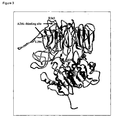
- FIG. 3 shows the computer-assisted structure model of DP IV and the ADA-binding site (indicated by the arrows and amino acid residue numbers);
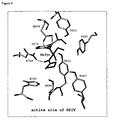
- Figure 4 shows the active site of DP IV docked with the active site DP IV-inhibitcr isoleucyl pyrrolidine (Ile-Pyr) (dark gray);
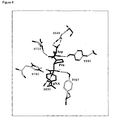
- Figure 5 shows the interaction of Lys-Z-nitro-pyrrolidine with the active site of DP IV;
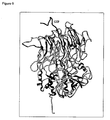
- Figure 6 shows the tetrahedral intermediate of Asp-Pro-pNA bound to DP IV;
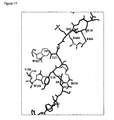
- Figure 7 shows the interaction of the HIV-tat(1-9) protein with DP IV;
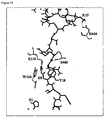
- Figure 8 shows the docking of the N-terminal nonapeptide of the tromboxane receptor;
- Figure 9 shows the 3D-structure model of the interaction between GIP (black thread) and human DP IV;
- Figure 10 shows the docking arrangement of GIP (black) to the active site of DP IV;
- Figure 11 shows the computer
- Figure 12 shows the docking of VIP (black) to the active site of DP IV
- Figure 13 shows the docking of the C-terminal part of VIP to DP IV
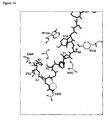
- Figure 14 shows the docking of glucagon (black) to the active site of DP IV
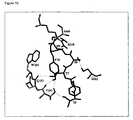
- Figure 15 shows the molecular dynamic simulation based model of the hexapeptide TFTSDY, bound to the secondary binding site of DP IV.
- Figure 16 shows the prolongation of the half-lifes of GIP, Glucagon, PACAP-27 and PACAP-38 by the hexapeptide TFTSDY in a DP IV (porcine and recombinant human) catalyzed peptide truncation test
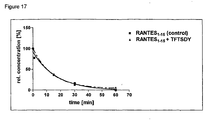
- Figure 17 shows the DP IV-catalyzed hydrolysis of RANTES1-15 with (black solid triangle or broken line) or without TFTSDY (black solid square or straight line)
- Figure 18 shows the DP IV-catalyzed hydrolysis of GIP with (black solid triangle) or without TFTSDY (black solid square)
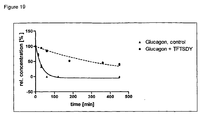
- Figure 19 shows the DP IV-catalyzed hydrolysis of glucagon with (black solid circle) or without TFTSDY (black solid triangle)
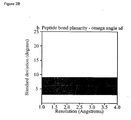
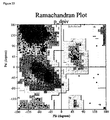
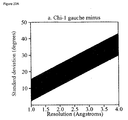
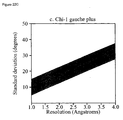
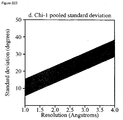
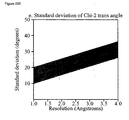
- Figure 20 shows a plot of the distribution of the backbone dihedral angles of the complete model of porcine DP IV.
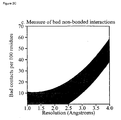
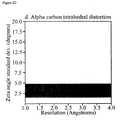
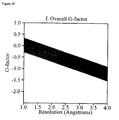
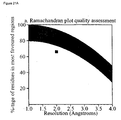
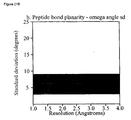
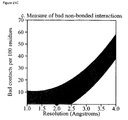
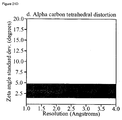
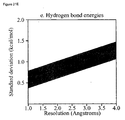
- FIG. 21 shows the analysis of the quality of the model of porcine DP IV with regard to some essential stereo-chemical parameters of the main chain:
- the plot statistics is as follows: Comparison Values Stereochemical parameter No. of data points Parameter value Typical value Band width No. of band widths from mean a. %-tage residues in A, B, L 692 66.0 83.8 10.0 - 1.8 WORSE b. Omega angle standard deviation 765 8.5 6.0 3.0 0.8 Inside c. Bad contacts / 100 residues 2 0.3 4.2 10.0 - 0.4 Inside d.
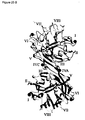
- Figure 24 shows a topology diagram illustrating the domain structure of porcine kidney DP IV.
- Blade IV of the propeller is involved in both the dimer contact (IV A - IV B: L235-P255, together with the highlighted C-terminal three secondary structure elements F713-C762) and the tetramerization of DP IV (IV A - IV C and IV B - IV C, not shown).
- Figure 25 shows oligomerization interfaces.
- A Detailed view perpendicular to the dimer two-fold axis. The experimental electron density after phase extension to 2.0 A resolution is superimposed on key residues mediating the contact.
- B View along the two-fold axis on the tetramerization interface.
- Blades IV of each subunit align to form an eight-bladed antiparallel ⁇ sheet
- the highlighted Leu294 and Val341 are involved in ADA binding.
- the figure was prepared using BOBSCRIPT, MOLSCRIPT and RASTER3D.
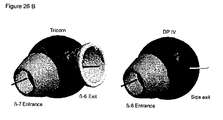
- Figure 26 shows substrate recognition by porcine kidney DP IV.
- A The peptidomimetic active-site inhibitor p-lodo-Phe-Pyr-CN is bound to active site. The accessible surface is indicated and cut-open (dark gray area at the top of the figure) for better visibility.
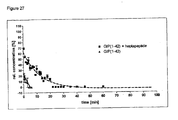
- Figure 27 shows the DP IV-catalyzed hydrolysis of GIP 1-42 with (black solid squares) or without the heptapeptide H-Ser-D-Glu-Thr-Gly-D-Val-D-Lys-D-Val-OH (black solid triangles).
- the inventors of the present application unexpectedly show, that the biodegradation of substrates, which bind to the same catalytic domain of DP IV, can be modulated very specifically.
- One aspect of the invention is to identify the site in the DP IV protein, which is responsible for the modulation of the substrate specificity and selectivity of DP IV and DP IV-like enzymes and to provide new compounds, which regulate the substrate selectivity and/or activity of DP IV and DP IV-like enzymes and which are useful for the treatment of, for example, impaired glucose tolerance, glucosuria, lipid disorders, dyslipidemia, hyperlipidaemia, hypertriglyceridemia, hypercholesterolemia, low HDL levels, high LDL levels, metabolic acidosis, hyperglycemia, diabetes mellitus, diabetic neuropathy and nephropathy and of sequelae caused by diabetes mellitus in mammals, metabolism-related hypertension and cardiovascular sequelae caused by hypertension in mammals.
- DP IV is inhibited by compounds mimicking the N-terminal dipeptide part of a DP IV-substrate.
- concentrations e.g. 5 x K i -dose
- compounds interacting with DP IV-binding sites far distant from the catalytic center are capable to differentiate the degradation of different substrates, e.g. peptide substrates, or even discriminate DP IV-catalyzed hydrolysis completely.
- the substrate properties of the peptides of the growth hormone releasing factor (GRF) family against DP IV were examined.
- the GRF family consists of the following peptide hormones:
- the resulting K m -values were independent from the amino acid in the P 1 -position. That means that the binding of substrates to DP IV is not mainly affected by the P 1 -residue rather than by secondary interactions between substrate and DP IV protein.
- V 2 GIP(1-6) and G 2 GIP(1-6) were not hydrolyzed by DP IV.
- V 2 GIP(1-30) and G 2 GIP(1-30) were accepted as substrates and both S 2 GIP(1-6) and S 2 GIP(1-30) were truncated by DP IV (Table 2).
- amino acid sequences of natural GIP 1-30 and GIP 1-6 are:
- a hexapeptide derived from a consensus sequence of the amino acid sequences of GRF-family peptides was synthesized and its influence on the substrate specificity of DP IV was measured.
- the selected consensus sequence corresponds to glucagon 5-10 , comprising the amino acid sequence TFTSDY.
- hexapeptides TFTSDY and TFTDDY were found to be instable in biological fluids, e.g. humen serum or human plasma and/or they were rapidly degraded by proteolytic enzymes in the serum or plasma. Therefore, and in another embodiment of the present invention, a heptapeptide of the sequence H-Ser-D-Glu-Thr-Gly-D-Val-D-Lys-D-Val-OH was synthesized. This heptapeptide is not enzymatically degraded in human serum or plasma and is stable in these fluids. A stabilization of the heptapeptide was especially achieved by the incorporation of D-amino acids in the molecule. It was further shown to be very effective in improving the substrate specificity of DP IV compared to control experiments without the heptapeptide.
- the existence of a secondary binding site was proven, e.g. using a set of dipeptide compounds, coupled to a chromogenic (p-nitroaniline, pNA) or fluorogenic (aminomethylcoumarine, AMC) group.
- the dipeptides His-Pro, His-Ala, His-Ser, His-Val, His-Gly, and His-Thr represent the first two amino acids from the N-terminus of the following peptide hormones: GIP, GLP-1, GLP-2, PACAP, VIP, PHM and glucagon.
- the peptide hormones GIP, GLP-1 GLP-2, PACAP, VIP, PHM and glucagon are substrates of DP IV.
- DP IV hydrolyzes these peptide hormones and the respective N-terminal dipeptides are released. In contrast, the dipeptides are much slower released, when they are coupled to the chromogenic (p-nitroaniline, pNA) or fluorogenic (aminomethylcoumarine, AMC) group. Secondary interactions of the peptide hormones GIP, GLP-1, GLP-2, PACAP, VIP, PHM and glucagon far from the DP IV active site must exist as a prerequisite for substrate recognition.
- Table 4 Data supporting the existence of a secondary binding site of DP IV are shown in table 4 below Table 4: DP IV-catalyzed hydrolysis of His-Ser-, His-Gly and His-Val-dipeptides compared to the full-length substrates glucagon and NPY.
- Prolyl oligopeptidase (POP) based computer-generated models of human DP IV and porcine DP IV and the crystal structure of porcine DP IV were used according to the present invention to predict enzyme-substrate-interactions and to identify the interaction site in the DP IV protein structure.
- a region was identified in the DP IV-protein, which is responsible for the interaction with a hexapeptide, e.g. TFTSDY or TFTDDY, or more suitably, a degadation resistent heptapeptide, e.g. H-Ser-D-Glu-Thr-Gly-D-Val-D-Lys-D-Val-OH.
- a degadation resistent heptapeptide e.g. H-Ser-D-Glu-Thr-Gly-D-Val-D-Lys-D-Val-OH.
- the most important amino acids for the formation of the secondary binding site on DP IV for the GRF family of peptide hormones were found to be but are not restricted to L90, E91, T152, W154, W157, R310, Y330, R318, Y416, S460, K463, E464 and R560.
- the sequence and 1.8 ⁇ crystal structure of native DP IV prepared from porcine kidney were determined.
- the crystal structure reveals a 2-2-2 symmetric tetrameric assembly which depends on the natively glycosylated ⁇ -propeller blade IV.
- the crystal structure indicates that tetramerization of DP IV is a key mechanism to regulate its interaction with other components.
- Each subunit comprises two structural domains, the N-terminal eight-bladed ⁇ -propeller with open Velcro topology and the C-terminal ⁇ / ⁇ -hydrolase domain. Analogy with the structurally related POP and tricorn protease suggests that substrates access the buried active site through the ⁇ -propeller tunnel while products leave the active site through a separate side exit.
- a dipeptide mimicking inhibitor complexed to the active site discloses key determinants for substrate recognition, including a Glu-Glu motif which distinguishes DP IV as an aminopeptidase and an oxyanion trap which binds and activates the P 2 -carbonyl oxygen necessary for efficient post-proline cleavage.
- porcine DP IV was refined by using the program CNS with current R-values of 21.7 % (working set) and 24.9 % (test set) and deviations from ideality of 0.008 ⁇ (bond length) and 1.4 degree (angle deviation).
- the monomer comprises an N-terminal ⁇ -propeller domain (Arg54-Asn497) followed by the catalytic domain Gln508-Pro766.
- the crystal structure reveals a dimer of DP IV dimers in the crystallographic unit cell obeying a 222 symmetry with all axes intersecting, Fig. 23 .
- the dimer interface is dominated by hydrophobic interactions, with a central and well shielded aromatic stacking involving Trp734 and Phe713 of both monomers.
- the hydrophobic contacts are complemented by polar interactions such as Asp729 with His754 and His757, Fig 25A .
- the Gln731(O ⁇ 1)-Gln731 (Ns2) contact resembles a subtle (atomic) break of the exact two-fold symmetry within the dimer. The residues critical to the dimerization are strictly conserved throughout all species.
- the dimer-dimer interface has a more hydrophilic character. In its center, the strands Asn279-Gln286 of each DP IV-dimer form an antiparallel ⁇ -sheet, thus extending propeller blade IV to an eight-stranded antiparallel sheet, Figure 25B .
- the ⁇ -propeller The N-terminal ⁇ -propeller domain contains eight blades with four antiparallel strands each.
- the first and the last blade of a ⁇ -propeller is clamped together either covalently by disulfide bond formation (four-bladed ⁇ -propellers) or by strand exchange between the first and last blade (five to eight-bladed propellers). So far there are three exceptions to this closed propeller topology rule, namely the seven bladed ⁇ -propeller of POP ( Fülöp, V., Böcskei, Z. & Polgár, L.
- the ⁇ 8-propeller of DP IV can also be classified as an open Velcro-type topology, because no segment C-terminal to blade VIII interacts with the first propeller blade.
- the interaction of the first strand within blade I is limited to Thr59-Ile63 while its N-terminal extension Phe53-Tyr58 tightens up the propeller structure by interacting with the immediate C-terminal extension to the fourth strand of blade VIII (Glu499-Met503).
- a similar, yet shorter, external clamp has been described for the ⁇ 7-propeller of the tricorn protease ( Brandstetter, H., Kim, J.-S., Groll, M. & Huber, R. (2001) Nature 414, 466-469 .).
- Cys649-Cys762 all disulfide bonds are located in the ⁇ propeller domain where they form intra-blade stabilizing crosslinks exclusively, Fig. 24 .
- Cys339 in the human sequence is replaced by Ser339 in the porcine sequence which causes the absence of the disulfide bond connecting strand 3 and 4 of blade V (Cys328-Cys339 in human DP IV), although the backbone conformation of the strands would readily allow a disulfide bond to be formed.
- all glycosylation sites but Asn685 are located on the ⁇ -propeller. Five of in total 10 potential glycosylation sites cluster at the top surface side oriented away from the catalytic domain.
- the shape of the DP IV- ⁇ 8-propeller is asymmetric where blades VI, VII, VIII, I, and blades II, III, IV, V form more compact subdomains, respectively ( Figs. 23 , 25B ).
- the structural division of the ⁇ -propeller fits physico-chemical data which indicated a three domain organization of DP IV ( Lambeir, A. M., Pereira, J. F. D., Chacon, P., Vermeulen, G., Heremans, K., Devreese, B., VanBeeumen, J., Demeester, I. & Scharpe, S. (1997) Biochim. Biophys.
- the ellipsoidal tunnel through the propeller is continuously open. At the solvent exposed opening, its diameter measures 9 ⁇ and 15 ⁇ from blade IV to VIII and from blade II to VI, respectively.
- the tunnel widens towards the catalytic domain with opening diameters of 15 ⁇ and 25 ⁇ between the same pairs of propeller blades. By its dimensions, the tunnel allows for direct passage of an extended peptide, but not for a folded ⁇ -helix. Only few solvent molecules are visible in the tunnel, most remarkable a sulfate is bound to the oxyanion pocket formed by the amide nitrogens of Glu361 and Ile407 and N ⁇ 2 of His363.
- the Catalytic domain is located at the C-terminus of DP IV and spans residues Gln509 to Pro766. It adopts a typical ⁇ / ⁇ -hydrolase fold with a central 8 stranded ⁇ sheet, where only the second strand Thr522-Pro531 deviates from the otherwise parallel strand polarity, Fig. 23 .
- the ⁇ -sheet exerts a significant twist of more than 90 degrees, in line with observations on related ⁇ / ⁇ -hydrolases.
- Cys649-Cys762 crosslinks the C-terminal helix Met746-Ser764 with the sixth strand of the ⁇ -sheet (Lys648-Ala654), thus stabilizing its tertiary arrangement.
- the ⁇ -sheet is sandwiched by several ⁇ -helices, including helix Tyr631-Ala642 immediately succeeding the catalytic Ser630.
- Ser630 is embedded in the surrounding secondary structure framework where it participates both in the preceding strand 4 (Arg623-Trp629) as well as in the following helix Tyr631-Ala642. This causes a strained backbone conformation of the active site Ser630.
- the sequential and three-dimensional arrangement of the catalytic residues Ser630, His740, Asp708 corresponds to that of related ⁇ / ⁇ -hydrolases.
- the oxyanion hole is formed by the amide Tyr631 and the hydroxyl O ⁇ of Tyr547 and serves to recognize and activate the carbonyl oxygen of the P 1 -residue. It is occupied by a water molecule in the uninhibited structure.
- the structure of a dipeptide mimetic, the iodinated Phe-cyanopyrrolidide inhibitor in complex with DP IV was determined ( Fig. 26 A) .
- the active site nucleophile the hydroxyl residue of Ser630, forms a covalent bond with the scissile carbonyl carbon of the cyanopyrrolidine of the inhibitor.
- the bending of the linkage indicates the formation of a stable carbaminic acid adduct.
- the pyrrolidine ring is accommodated by a hydrophobic pocket formed by side chains of Tyr666, Tyr662, Val711, Val656 and Trp659. While this environment is almost perfectly suited for the imino acid proline as P 1 -residue, the hydroxyl O ⁇ of Tyr662 would be correctly positioned to interact with the normal amide nitrogen of an amino acid in P 1 .
- the inhibitor also unambiguously maps the S 2 -site.
- the P 2 -carbonyl oxygen gets trapped in an electrostatic sink formed by the side chains of Arg125 and Asn710.
- Glu205 and Glu206 and to a lesser extent the carbonyl oxygen of Glu205, interact with the free amino terminus of the P 2 -residue, thus determining the dipeptidyl "amino"-peptidase activity of the enzyme.
- the ⁇ -propeller which provides essential determinants for P 2 -recognition, namely Arg125, which is positioned on the hairpin loop between strands 2 and 3 of blade II and Glu205-Glu206, positioned on a short helical insertion within strand 1 of the ⁇ propeller blade IV.
- Ample space is available to accommodate voluminous side chains such as Tyr or Trp in P 2 , Fig. 26A .
- the phenyl ring of the P 2 -residue is iodated rather than hydroxylated. It forms an ionic interaction with Arg358, Fig 26A .
- the ⁇ -propeller domain covers the active site and thereby restricts the substrate access to it.
- There are two possible routes to the active site namely through the tunnel of the ⁇ -propeller and through a side opening. Similar as the propeller tunnel, the shape of the side entrance is oval with dimensions of 15 ⁇ and 22 ⁇ .
- the side opening to the active site is generated by the kinked blade arrangement of blade I and II, Figure 23 . In POP, blades I and II are arranged more regularly and there is no side opening to the active site chamber.
- the distance from the protein surface to the active site measures 20 ⁇ and 37 ⁇ through the side opening and the propeller tunnel, respectively.
- both routes give active site access to unfolded peptidic substrates, but the side entrance is significantly shorter and less winded. Once the substrate has been cleaved, two products have to leave the active site chamber. Clearly, the product exit route differs from the entrance to the active site.
- DP IV is known as a cell-cell communication molecule.
- soluble dimers can assemble to form a homotetramer, as observed in the crystal structure described above. The tetramer assembles to enclose a large cavity. Since tetramerization of DP IV depends on the correctly glycosylated propeller blade IV, glycosylation could function as a quality control unit.
- Dimerization is mediated by the three C-terminal secondary structure elements positioned on the catalytic domain, and a finger like insertion motif within strand 2 and 3 of propeller blade IV.
- DP IV is known to form heterodimers with fibroblast activation protein ⁇ (FAP ⁇ , seprase). Like DP IV (FAP ⁇ ), FAP ⁇ lacks an N-terminal extension as found in POP. Moreover, the essential elements of the DP IV-dimerization motif are also present in FAP ⁇ , including the extension of strand 2 and 3 of propeller blade IV.
- dimerization is not required to complete the active site architecture of DP IV, as for example in the case of tricorn ( Brandstetter, H., Kim, J.-S., Groll, M. & Huber, R. (2001) Nature 414, 466-469 .). Instead, dimerization and tetramerization will affect interaction with other components, including proteolytic substrates and ADA and mediate cell-cell contacts. Moreover, dimerization of DP IV is likely to enhance the receptor-ligand affinity by bivalent interaction. Finally, it is likely that dimerization is critical for signal transduction into the cell.
- the hydrophobic S 1 -pocket visualizes that proline is perfectly suited as a P 1 -residue, although it will also fit other small uncharged residues such as alanine or serine.
- the S 1 -site implements a mechanism to adapt to both imino and amino acids in P 1 -position.
- the hydroxyl O ⁇ of Tyr662 is able to form a hydrogen bond with the P 1 -amide nitrogen and thus optimally presents the substrate for catalysis.
- the proper orientation of proline in P 1 -position is achieved by its side chain interaction in addition to the binding to the oxyanion pocket.
- the hydroxyl of Tyr662 can slightly reorient to form a hydrogen bond with the side chain O ⁇ 1 of Asn710, figure 26 A.
- the recognition of the P 2 -residue is dictated by main chain interactions with two prominent anchor sites, namely Glu205-Glu206 which form a twin-single salt bridge with the free amino terminus of the P 2 -residue; and Arg125 together with N ⁇ 2 of Asn710 which stabilize and activate the P 2 -carbonyl oxygen.
- the Glu205-Glu206 motif is highly conserved in the DP IV gene family and it has been shown by site directed mutagenesis to be essential for enzymatic activity.
- ⁇ -propeller architecture The tunnel through the eight-bladed ⁇ -propeller widens from the surface towards the active site of DP IV.
- Tricorn protease is a serine protease with low but significant structural homology to the family of ⁇ / ⁇ -hydrolases. This similarity suggests that the ⁇ 8-propeller provides substrate access to and the side opening product release from the DP IV active site.
- This tricorn-derived model is able to explain the high substrate selectivity critical for DP IV-function to activate or inactivate regulatory peptides.
- DP IV binds adenosine deaminase (ADA) to the T-cell surface, thereby preventing the cell from adenosine mediated inhibition of proliferation.
- DP IV-ADA complex formation is presumably hydrophobically driven, as the complex dissociates at very low ionic strength.
- Leu294 and Val341 were identified as two ADA binding sites ( Abbott, C. A., McCaughan, G. W., Levy, M. T., Church, W. B. & Gorrell, M. D. (1999) Eur. J. Biochem. 226, 798-810 .).
- Leu294 and Val341 are positioned at the outer strand of the tetramerization blade IV and blade V, respectively. Therefore, ADA-binding will interfere with tetramerization. Similarly, the glycosylation of Asn279 (Asn281 in the human sequence) is likely to influence ADA-binding. This teaches that tetramerization of DP IV and proper glycosylation of Asn279 serve as major control mechanism for ADA-binding
- DP IV as a target for drug design.
- the inhibitor structure used to establish the crystal structure of DP IV in the present invention identified important recognition elements at DP IV's active site and represents an excellent starting point for rational design of active site directed inhibitors.
- DP IV's involvement in a great variety of physiological processes poses a high challenge to avoid unwanted side effects for any DP IV drug development program.
- Active site directed DP IV inhibitors will interfere with the complete DP IV proteolytic activity and might even interfere with structurally related members of the ⁇ - ⁇ hydrolase family.
- a secondary binding site in the DP IV protein is identified. More preferred, the existence of this secondary binding site can be used to influence the selectivity of the DP IV-catalyzed biodegradation of DP IV-substrates, e.g. alanine (GIP), proline (GRP) or serine (glucagon) substrates, dependent on the amino acid residue in the P1 position and dependent on the tertiary structure of the DP IV-substrates.
- Preferred DP IV-substrates, the biodegradation whereof shall be regulated according to the invention with compounds, which bind to the secondary binding site, are serine substrates.
- DP IV-substrates have a chain length of more than 5 amino acid residues, more preferably more than 10 amino acid residues. Most preferred are substrates with more than 15 amino acid residues up to 70 amino acid residues.
- compounds for the modulation of DP IV-catalyzed biodegradation of DP IV-substrates which compounds bind to the secondary binding site of DP IV.
- Such compounds are e.g. selected from the compounds of the formulas a) - d):
- the present invention provides agents, which bind to both the active site and the secondary binding site of DP IV and thereby simultaneously modulate the enzyme activity and substrate specificity of DP IV.
- DP IV is present in a wide variety of mammalian organs and tissues e.g. the intestinal brush-border ( Gutschmidt S. et al., "In situ" - measurements of protein contents in the brush border region along rat jejunal villi and their correlations with four enzyme activities. Histochemistry 1981, 72 (3), 467-79 ), exocrine epithelia, hepatocytes, renal tubuli, endothelia, myofibroblasts ( Feller A.C. et al., A monoclonal antibody detecting dipeptidylpeptidase IV in human tissue. Virchows Arch. A. Pathol. Anat. Histopathol.
- Serum high molecular weight dipeptidyl peptidase IV (CD26) is similar to a novel antigen DPPT-L released from activated T cells. J. Immunol. 1996, 156 (5): 1714-21 ). It is also a goal of the present invention to minimize possible side effects of currently available DP IV-inhibitors by the control and management of the DP IV substrate specificity for the selective treatment of a DP IV mediated disease.
- Another preferred embodiment of the present invention comprises screening methods for agents which bind to the secondary binding site and/or modulate the selectivity and/or the activity of DP IV.
- An agent screened according to the invention preferably binds to at least one secondary binding site of the DP IV protein.
- the screening method for agents of the secondary binding site comprises the following steps:
- the agents selected by the above described screening method can work by regulating (increasing or decreasing) the biodegradation of at least one substrate of DP IV, preferably by the prolongation of the half-life of such substrate, most preferably by the inhibition of the biodegradation of such substrate.
- DP IV as used in the screening method described above means purified DP IV from mammals, selected from but not restricted to human, monkey, mouse, rat etc., or DP IV containing cells and cell lines from mammals, selected from but not restricted to human, monkey, mouse, rat etc., or DP IV containing cell extracts or body liquids e.g. liver extracts, blood plasma samples, blood serum samples, brain extracts etc., from such mammals.
- an agent increases the selectivity and/or activity of DP IV towards substrates by at least about 10, preferably about 50, more preferably about 75, 90 or 100% relative to the absence of the agent. More preferably, an agent increases the selectivity and/or activity of DP IV towards specific substrates by at least about 10, preferably about 50, more preferably about 75, 90 or 100% and prolongs the half live of the substrates in the serum or in the plasma of a mammal at least about fold, preferably about 2fold, more preferably about 3fold, 4fold or higher relative to the absence of the agent.
- an agent increases the selectivity and/or activity of DP IV in such a way that the half live of at least one substrate in the serum or in the plasma of a mammal is increased at least about 1fold, preferably about 2fold, more preferably about 3fold, 4fold or higher, most preferably complete inhibition of the degradation of such a substrate is achieved, relative to the absence of the agent.
- Binding proteins are proteins that bind other proteins in a non-covalent manner and thereby modulate their activity or serve as carriers of these proteins. Binding proteins of DP IV (CD26) identified so far include adenosine deaminase, two proteins of HIV, transactivator protein (tat) and the gp120 envelope protein, CD45, a membrane located tyrosine phosphatase, extracellular matrix proteins, such as collagen and fibronectin, plasminogen and streptokinase, mannose 6-phosphat/insulin-like growth factor II receptor, the isoform NH3 of the Na + /H + exchanger from renal microvilly membranes and the thromboxane A2 receptor.
- the selectivity and/or activity modifying effectors block the product release site of DP IV.
- selectivity and/or activity modifying effectors which prevent the tetramerization of DP IV at the cell surface between a soluble DP IV dimer pair or dimers located on the surface of two different cells in a mammal.
- Agents can be pharmacological agents already known in the art or can be compounds previously unknown to have any pharmacological activity.
- the compounds can be naturally occurring or designed in the laboratory. They can be isolated from microorganisms, animals, or plants, and can be produced recombinantly, or synthesized by chemical methods in the art. If desired, agents can be obtained using any of the numerous combinatorial library methods known in the art, including but not limited to, biological libraries, spatially addressable parallel solid phase or solution phase libraries, synthetic library methods requiring deconvolution, the "one-bead-one-compound” library method, and synthetic library methods using affinity chromatography selection.
- the biological library approach is limited to polypeptide libraries, while the other four approaches are applicable to polypeptide, non-peptide oligomer, or small molecule libraries of compounds. See Lam, Anticancer Drug Des., 12, 145, 1997 .
- Agents can be screened for the ability to bind to DP IV or to affect DP IV activity using high throughput screening.
- high throughput screening many discrete compounds can be tested in parallel so that large numbers of agents can be quickly screened.
- the most widely established techniques utilize 96-well microtiter plates.
- the well of the microtiter plates typically require assay volumes that range from 50 to 500 ⁇ l.
- many instruments, materials, pipettors, robotics, plate washers, and plate readers are commercially available to fit the 96-well format.
- Free format assays or assays that have no physical barrier between samples, can be used.
- an assay using pigment cells (melanocytes) in a simple homogeneous assay for combinatorial peptide libraries is described by Jayawickreme et al., Proc. Natl. Acad. Sci. USA 19, 161418 (1994 ).
- Chelsky "Strategies for Screening Combinatorial Libraries: Novel and Traditional Approaches," reported at the First Annual conference of The Society for Biomolecular Screening in Philadelphia, Pa. (Nov. 710, 1995 ).
- Chelsky placed a simple homogenous enzyme assay for carbonic anhydrase inside an agarose gel such that the enzyme in the gel would cause a color change throughout the gel. Thereafter, beads carrying combinatorial compounds were partially released by UV LIGHT. Compounds that inhibited the enzyme were observed as local zones of inhibition having less color change.
- test samples are placed in a porous matrix.
- One or more assay components are then placed within, on top of, or at the bottom of a matrix such as a gel, a plastic sheet, a filter, or other form of easily manipulated solid support.
- a matrix such as a gel, a plastic sheet, a filter, or other form of easily manipulated solid support.
- the agent is preferably a small molecule which binds to and occupies, the secondary binding site of DP IV, such that normal biological activity is changed or prevented.
- small molecules include, but are not limited to, small peptides or peptide like molecules.
- either the agent of DP IV can comprise a detectable label, such as a fluorescent, radioisotopic, chemiluminescent, or the enzyme is labeled, such as horseradish peroxidase, alkaline phosphatase, or luciferase. Detection of an agent, which is bound to DP IV can then be accomplished, for example, by direct counting of radioemmission, by scintillation counting, or by determining conversion of an appropriate substrate to a detectable product.
- a detectable label such as a fluorescent, radioisotopic, chemiluminescent
- the enzyme is labeled, such as horseradish peroxidase, alkaline phosphatase, or luciferase.
- binding of an agent to DP IV can be determined without labelling either of the interactants.
- a microphysiometer can be used to detect binding of an agent with DP IV.
- a microphysiometer e.g., CytosensorTM
- LAPS light-addressable potentiometric sensor
- Determining the ability of an agent to bind to DP IV also can be accomplished using a technology such as real-time Biomolecular Interaction Analysis (BIA) ( Sjolander & Urbaniczky, Anal. Chem. 63, 23382345, 1991 , and Szabo et al., Curr. Opin. Struct. Biol. 5, 699705, 1995 ).
- BIA is a technology for studying biospecific interactions in real time, without labelling any of the interactants (e.g. BlAcoreTM). Changes in the optical phenomenon surface plasmon resonance (SPR) can be used as an indication of real-time reactions between biological molecules.
- DP IV can be used as a "bait protein" in a two hybrid assay or three-hybrid assay (see, e.g. US Patent 5,283,317 ; Zervos et al., Cell 72, 223232, 1993 ; Madura 920924, 193; Iwabuchi et al., Oncogene 8, 16931696, 1993 ; and Brent WO94/10300 ), to identity other proteins which bind to or interact with the DP IV and modulate its activity.
- the assay utilizes two different DNA constructs.
- a polynucleotide encoding DP IV can be fused to a polynucleotide encoding the DNA binding domain of a known transcription factor (e.g. GAL4).
- a DNA sequence that encodes an unidentified protein (“prey" or "sample") can be fused to a polynucleotide that codes for the activation domain of the known transcription factor.
- the DNA binding and activation domains of the transcription factor are brought into close proximity. This proximity allows transcription of a reporter gene (e.g. LacZ), which is operably linked to a transcriptional regulatory site responsive to the transcription factor. Expression of the reporter gene can be detected, and cell colonies containing the functional transcription factor can be isolated and used to obtain the DNA sequence enconding the protein which interacts with the dipeptidyl-peptidase IV-like enzyme polypeptide.
- a reporter gene e.g. LacZ
- either DP IV or the agent can be bound to a solid support.
- Suitable solid supports include, but are not limited to, glass or plastic slices, tissue culture plates, microtiter wells, tubes, silicon chips, or particles such as beads (including, but not limited to latex, polysterene, or glass beads). Any method known in the art can be used to attach DP IV or agent to a solid support, including use of covalent and non-covalent linkages, passive absorption, or pairs of binding moieties attached respectively to the polypeptide or agent and the solid support.
- Agents are preferably bound to the solid support in an array, so that the location of individual test compounds can be tracked. Binding of a test compound to DP IV can be accomplished in any vessel suitable for containing the reactants. Examples of such vessels include microtiter plates, test tubes, and microcentrifuge tubes.
- the DP IV is a fusion protein comprising a domain that allows the DP IV to be bound to a solid support.
- glutathione-S-transferase fusion proteins can be absorbed onto glutathione sepharose beads (Sigma Chemical, St. Louis, Mo.) or glutathione derivatized microtiter plates, which are then combined with the agent and the non-absorbed DP IV; the mixture is then incubated under conditions conducive to complex formation (e.g., at physiological conditions for salt and pH). Following incubation, the beads or microtiter plate wells are washed to remove any unbound components. Binding of the interactants can be determined either directly or indirectly, as described above. Alternatively, the complexes can be dissociated from the solid support before binding is determined.
- DP IV or an agent can be immobilized utilizing conjugation of biotin and streptavidin.
- Biotinylated DP IV or agents can be prepared from biotin-NHS-(N-hydroxysuccinimide) using techniques well known in the art (e.g. biotinylation kit, Pierce Chemicals, Rockford, III.) and immobilized in the wells of streptavidin-coated 96 well plates (Pierce chemical).
- antibodies which specifically bind to DP IV, or an agent, but which do not interfere with a desired binding site, such as secondary binding site or the active site of DP IV can be derivatized to the wells of the plate. Unbound targets or proteins can be trapped in the wells by antibody conjugation.
- Examples for commercial available antibodies against DP IV or CD26 are for instance: Company Clone Species (antigen) Application Host Coulter Ta1 human IF, FACS Mouse Ba5 human FACS Biozol TA59 (Endogen) human ICH* Pharmingen M-A216 human IF, FACS Mouse Biotrend 13.4 rat ICH, IF Mouse M-T099 human ICH, IF Mouse 134-2C2 human IF, FACS Mouse LT-27 human IF, FACS Mouse Biozol MRCOX-61 rat FC Mouse Biozol 236.3 rat IF, IPrep, IHstaining Mouse Research Diagnostics 202.36 human IF Mouse Research 134-2C2 human T-cell signaling, HIV Mouse Diagnostics infection
- Methods for detecting such complexes include immunodetection of complexes using antibodies which specifically bind to DP IV or the agent, enzyme linked assays which rely on detecting an activity of the DP IV, and SDS gel electrophoresis under non-reducing conditions.
- Screening for agents which bind to DP IV also can be carried out in an intact cell.
- Any cell which comprises DP IV can be used in a cell-based assay system.
- DP IV can be naturally occurring in the cell or can be introduced using techniques such as those described above. Binding of the agents to DP IV is determined as described above.
- Agents can be tested for the ability to increase or decrease the activity of a mammalian DP IV.
- DP IV activity can be measured, for example, as described in US Patent 5,601,986 and, specific for the present invention, in examples 1 to 3.
- the agents, which bind to the secondary binding site can be used alone or in combination with DP IV-inhibitors for the treatment of any type of DP IV mediated disorders, selected but not restricted to, impaired glucose tolerance, glucosuria, lipid disorders, dyslipidemia, hyperlipidaemia, hypertriglyceridemia, hypercholesterolemia, low HDL levels, high LDL levels, metabolic acidosis, hyperglycemia, diabetes mellitus, diabetic neuropathy and nephropathy and of sequelae caused by diabetes mellitus in mammals, metabolism-related hypertension and cardiovascular sequelae caused by hypertension in mammals.
- DP IV mediated disorders selected but not restricted to, impaired glucose tolerance, glucosuria, lipid disorders, dyslipidemia, hyperlipidaemia, hypertriglyceridemia, hypercholesterolemia, low HDL levels, high LDL levels, metabolic acidosis, hyperglycemia, diabetes mellitus, diabetic neuropathy and nephropathy and of sequelae caused by diabetes mell
- low molecular weight dipeptidyl peptidase IV inhibitors are agents such as tetrahydroisoquinolin-3-carboxamide derivatives, N-substituted 2-cyanopyrroles and -pyrrolidines, N-(N'-substituted glycyl)-2-cyanopyrrolidines, N-(substituted glycyl)-thiazolidines, N-(substituted glycyl)-4-cyanothiazolidines, amino-acyl-borono-prolyl-inhibitors and cyclopropyl-fused pyrrolidines.
- Inhibitors of dipeptidyl peptidase IV are described in US 6,380,398 , US 6,011,155 ; US 6,107,317 ; US 6,110,949 ; US 6,124,305 ; US 6,172,081 ; WO 95/15309 , WO 99/61431 , WO 99/67278 , WO 99/67279 , DE 198 34 591 , WO 97/40832 , DE 196 16 486 C2 , WO 98/19998 , WO 00/07617 , WO 99/38501 , WO 99/46272 , WO 99/38501 , WO 01/68603 , WO 01/40180 , WO 01/81337 , WO 01/81304 , WO 01/55105 , WO 02/02560 , WO 02/14271 , WO 02/04610 , WO 02/051836 , WO 02/068420 , WO 02/076450
- DP IV-inhibitors such as valine pyrrolidide (Novo Nordisk), NVP-DPP728A (1-[[[2-[ ⁇ 5-cyanopyridin-2-yl ⁇ amino]ethyl]amino]acetyl]-2-cyano-(S)-pyrrolidine) (Novartis) as disclosed by Hughes et al., Biochemistry, 38 (36), 11597-11603, 1999 , LAF-237 (1-[(3-hydroxy-adamant-1-ylamino)-acetyl]-pyrrolidine-2(S)-carbonitrile); disclosed by Hughes et al., Meeting of the American Diabetes Association 2002 , Abstract no.
- TSL-225 tryptophyl-1,2,3,4-tetrahydroisoquinoline-3-carboxylic acid
- Yamada et. al. Bioorg. & Med. Chem. Lett. 8 (1998), 1537-1540 , 2-cyanopyrrolidides and 4-cyanopyrrolidides as disclosed by Asworth et al., Bioorg. & Med. Chem. Lett., 6, No.
- the present invention relates to the use of agents, which bind to the secondary binding site(s) of DP IV in combination with dipeptide-like compounds and compounds analogous to dipeptide compounds that are formed from an amino acid and a thiazolidine or pyrrolidine group, and salts thereof, referred to hereinafter as dipeptide-like compounds.
- dipeptide-like compounds Preferably the amino acid and the thiazolidine or pyrrolidine group are bonded with an amide bond.
- the compounds of the invention are disted in claim 10.
- Suitable for that purpose are dipeptide-like compounds in which the amino acid is preferably selected from a natural amino acid, such as, for example, leucine, valine, glutamine, glutamic acid, proline, isoleucine, asparagine and aspartic acid.
- a natural amino acid such as, for example, leucine, valine, glutamine, glutamic acid, proline, isoleucine, asparagine and aspartic acid.
- the dipeptide-like compounds exhibit at a concentration (of dipeptide compounds) of 10 ⁇ M, a reduction in the plasma dipeptidyl peptidase IV enzyme activity of at least 10 %, especially of at least 40 %. Frequently a reduction in activity of at least 60 % or at least 70 % is also required. Preferred agents may also exhibit a reduction in activity of a maximum of 20 % or 30 %.
- Compounds are N-valyl prolyl, O-benzoyl hydroxylamine, alanyl pyrrolidine, isoleucyl thiazolidine like L-allo-isoleucyl thiazolidine, L-threo-isoleucyl pyrrolidine and salts thereof, especially the fumaric salts, and L-allo-isoleucyl pyrrolidine and salts thereof.
- Other compounds are glutaminyl pyrrolidine and glutaminyl thiazolidine of formulas 1 and 2:
- the salts of the dipeptide-like compounds can be present in a molar ratio of dipeptide (-analogous) component to salt component of 1 : 1 or 2 : 1.
- a salt is, for example, (Ile-Thia) 2 fumaric acid.
- Table 6 Structures of further dipeptide compounds DP IV-inhibitor H-Asn-pyrrolidine H-Asn-thiazolidine H-Asp-pyrrolidine H-Asp-thiazolidine H-Asp(NHOH)-pyrrolidine H-Asp(NHOH)-thiazolidine H-Glu-pyrrolidine H-Glu-thiazolidine H-Glu(NHOH)-pyrrolidine H-Glu(NHOH)-thiazolidine H-His-pyrrolidine H-His-thiazolidine H-Pro-pyrrolidine H-Pro-thiazolidine H-Ile-azididine H-Ile-pyrrolidine H-L- allo -Ile-thiazolidine H-Val-pyrrolidine H-Val-thiazolidine
- A, B, C, D and E are independently any amino acid moieties including proteinogenic amino acids, non-proteinogenic amino acids, L-amino acids and D-amino acids and wherein E and/or D may be absent.
- amino acids which can be used are: L and D-amino acids, N-methyl-amino-acids; allo- and three-forms of Ile and Thr, which can, e.g. be ⁇ -, ⁇ - or ⁇ -amino acids, whereof ⁇ -amino acids are preferred.
- amino acids are: aspartic acid (Asp), glutamic acid (Glu), arginine (Arg), lysine (Lys), histidine (His), glycine (Gly), serine (Ser) and cysteine (Cys), threonine (Thr), asparagine (Asn), glutamine (Gln), tyrosine (Tyr), alanine (Ala), proline (Pro), valine (Val), isoleucine (Ile), leucine (Leu), methionine (Met), phenylalanine (Phe), tryptophan (Trp), hydroxyproline (Hyp), beta-alanine (beta-Ala), 2-amino octanoic acid (Aoa), azetidine-(2)-carboxylic acid (Ace), pipecolic acid (Pip), 3-amino propionic, 4-amino butyric and so forth, alpha-aminoisobuty
- ⁇ -amino acids are e.g.: 5-Ara (aminoraleric acid), 6-Ahx (aminohexanoic acid), 8-Aoc (aminooctanoic aicd), 9-Anc (aminovanoic aicd), 10-Adc (aminodecanoic acid), 11-Aun (aminoundecanoic acid), 12-Ado (aminododecanoic acid).
- amino acids are: indanylglycine (Igl), indoline-2-carboxylic acid (Idc), octahydroindole-2-carboxylic acid (Oic), diaminopropionic acid (Dpr), diaminobutyric acid (Dbu), naphthylalanine (1-Nal), (2-Nal), 4-aminophenylalanine(Phe(4-NH 2 )), 4-benzoylphenylalanine (Bpa), diphenylalanine (Dip), 4-bromophenylalanine (Phe(4-Br)), 2-chlorophenylalanine (Phe(2-Cl)), 3-chlorophenylalanine (Phe(3-Cl)), 4-chlorophenylalanine (Phe(4-Cl)), 3,4-chlorophenylalanine (Phe (3,4-Cl 2 )), 3-fluorophenylalanine (Phe(
- amino acid substitutions for those encoded in the genetic code can also be included in peptide compounds and can be classified within this general scheme.
- Proteinogenic amino acids are defined as natural protein-derived ⁇ -amino acids. Non-proteinogenic amino acids are defined as all other amino acids, which are not building blocks of common natural proteins.
- the resulting peptides may be synthesized as the free C-terminal acid or as the C-terminal amide form.
- the free acid peptides or the amides may be varied by side chain modifications.
- Such side chain modifications include for instance, but are not restricted to, homoserine formation, pyroglutamic acid formation, disulphide bond formation, deamidation of asparagine or glutamine residues, methylation, t-butylation, t-butyloxycarbonylation, 4-methylbenzylation, thioanysilation, thiocresylation, benzyloxymethylation, 4-nitrophenylation, benzyloxycarbonylation, 2-nitrobencoylation, 2-nitrosulphenylation, 4-toluenesulphonylation, pentafluorophenylation, diphenylmethylation, 2-chlorobenzyloxycarbonylation, 2,4,5-trichlorophenylation, 2-bromobenzyloxycarbonylation, 9-
- the amino acid moieties A, B, C, D, and E are respectively attached to the adjacent moiety by amide bonds in a usual manner according to standard nomenclature so that the amino-terminus (N-termipus) of the amino acids (peptide) is drawn on the left and the carboxyl-terminus of the amino acids (peptide) is drawn on the right. (C-terminus).
- Preferred peptide compounds are listed in table 7. Table 7: Examples of peptide substrates Peptide Mass (calc.) Mass (exp.) 1 [M+H + ] 2-Amino octanoic acid-Pro-Ile 369.5 370.2 Abu-Pro-Ile 313.4 314.0 Aib-Pro-Ile 313.4 314.0 Aze-Pro-Ile 311.4 312.4 Cha-Pro-Ile 381.52 382.0 Ile-Hyp-Ile 356.45 358.2 Ile-Pro- allo -Ile 341.4 342.0 Ie-Pro- t -butyl-Gly 341,47 342,36 Ile-Pro-Val 327.43 328.5 Nle-Pro-Ile 341.45 342.2 Nva-Pro-Ile 327.43 328.2 Orn-Pro-Ile 342.42 343.1 Phe-Pro-Ile 375.47 376.2 Phg-Pro-Ile 361.44 362.2 Pip-Pro-Ile 338.56 340.0 Ser(Bzl
- t -butyl-Gly is defined as:
- Ser(Bzl) and Ser(P) are defined as benzyl-serine and phosphoryl-serine, respectively.
- Tyr(P) is defined as phosphoryl-tyrosine.
- peptidylketones of formula 4 and pharmaceutically acceptable salts thereof, wherein:
- the acyl groups are C 1 -C 6 -acyl groups.
- the alk(yl) groups are C 1 -C 6 -alk(yl) groups, which may be branched or unbranched.
- the alkoxy groups are C 1 -C 6 -alkoxy groups.
- the aryl residues are C 5 -C 12 aryl residues that have optionally fused rings.
- the cycloalkyl residues (carbocycles) are C 3 -C 8 -cycloalkyl residues.
- the heteroaryl residues are C 4 -C 11 aryl residues that have optionally fused rings and, in at least one ring, additionally from 1 to 4 preferably 1 or 2 hetero atoms, such as O, N and/or S.
- peptide residues are corresponding residues containing from 2 to 50 amino acids.
- the heterocyclic residues are C 2 -C 7 -cycloalkyl radicals that additionally have from 1 to 4, preferably 1 or 2 hetero atoms, such as O, N and/or S.
- the carboxy groups are C 1 - C 6 carboxy groups, which may be branched or unbranched.
- the oxycarbonyl groups are groups of the formula -O-(CH 2 ) 1-6 COOH.
- the amino acids can be any natural or synthetic amino acid, preferably natural alpha amino acids.
- Preferred compounds of formula (4) are 2-Methylcarbonyl-1-N-[(L)-Alanyl-(L)-Valinyl]-(2S)-pyrrolidine hydrobromide; 2-Methylcarbonyl-1-N-[(L)-Valinyl-(L)-Prolyl-(L)-Valinyl]-(2S)-pyrrolidine hydrobromide; 2-[(Acetyloxy-methyl)carbonyl]-1-N-[(L)-Alanyl-(L)-Valinyl]-(2S)-pyrrolidine hydrobromide; 2-[Benzoyloxy-methyl)carbonyl]-1-N-[ ⁇ (L)-Alanyl ⁇ -(L)-Valinyl]-(2S)-pyrrolidine hydrobromide; 2- ⁇ [(2,6-Dichlorobenzyl)thiomethyl]carbonyl ⁇ -1-N-[ ⁇ (L)-Alanyl ⁇ -(L)-
- D stands for optionally substituted C 4 -C 7 cycloalkyl, preferably C 4 -C 6 cycloalkyl, optionally substituted C 4 -C 7 cycloalkenyl, or optionally substituted (hetero)cycloalkyl of the formulae wherein the residues are as defined above, or that is, a five-membered ring containing one or two double bonds in the ring, wherein the residues are as defined above, or wherein the residues are as defined above, or wherein the residues are as defined above, or that is a six-membered ring containing one or two double bonds in the ring, wherein the residues are as defined above, or wherein the residues are as defined above.
- B has the following formula: wherein the residues are as defined above.
- B has the following formula: wherein the residues are as defined above.
- Preferred compounds according to formula (5) are 1-cyclopentyl-3-methyl-1-oxo-2-pentanaminium chloride, 1 -cyclopentyl-3-methyl-1-oxo-2-butanaminium chloride, 1-cyclopentyl-3,3-dimethyl-1-oxo-2-butanaminium chloride, 1-cyclohexyl-3,3-dimethyl-1-oxo-2-butanaminium chloride, 3-(cyclopentylcarbonyl)-1,2,3,4-tetrahydroisoquinolinium chloride, and N -(2-cyclopentyl-2-oxoethyl)cyclohexanaminium chloride.
- the problem to be solved was moreover, to provide compounds that can be used, in combination with agents binding to the secondary binding site(s) of DP IV for targeted influencing of locally limited patho-physiological and physiological processes.
- the problem of the invention especially consists in obtaining locally limited and highly specific inhibition of DP IV activity for the purpose of targeted intervention in the regulation of the activity of locally active substrates.
- A is an amino acid having at least one functional group in the side chain
- B is a chemical compound covalently bound to at least one functional group of the side chain of A
- C is a thiazolidine, pyrrolidine, cyanopyrrolidine, hydroxyproline, dehydroproline or piperidine group amide-bonded to A.
- A is an ⁇ -amino acid, especially a natural ⁇ -amino acid having one, two or more functional groups in the side chain, preferably threonine, tyrosine, serine, arginine, lysine, aspartic acid, glutamic acid or cysteine.
- B is an oligopeptide having a chain length of up to 20 amino acids, a polyethylene glycol having a molar mass of up to 20 000 g/mol, an optionally substituted organic amine, amide, alcohol, acid or aromatic compound having from 8 to 50 C atoms.
- the compounds of formula (6) can still bind to the active centre of the enzyme dipeptidyl peptidase IV but are no longer actively transported by the peptide transporter PepT1. The resulting reduced or greatly restricted transportability of the compounds leads to local or site directed inhibition of DP IV activity.
- Preferred compounds of formula (6) are compounds, wherein the oligopeptides have chain lengths of from 3 to 15, especially from 4 to 10, amino acids, and/or the polyethylene glycols have molar masses of at least 250 g/mol, preferably of at least 1500 g/mol and up to 15 000 g/mol, and/or the optionally substituted organic amines, amides, alcohols, acids or aromatic compounds have at least 12 C atoms and preferably up to 30 C atoms.
- the compounds of the present invention can be converted into and used as acid addition salts, especially pharmaceutically acceptable acid addition salts.
- the pharmaceutically acceptable salt generally takes a form in which an amino acid basic side chain is protonated with an inorganic or organic acid.
- Representative organic or inorganic acids include hydrochloric, hydrobromic, perchloric, sulfuric, nitric, phosphoric, acetic, propionic, glycolic, lactic, succinic, maleic, fumaric, malic, tartaric, citric, benzoic, mandelic, methanesulfonic, hydroxyethanesulfonic, benzenesulfonic, oxalic, pamoic, 2-naphthalenesulfonic, p-toulenesulfonic, cyclohexanesulfamic, salicylic, saccharinic or trifluoroacetic acid. All pharmaceutically acceptable acid addition salt forms of the compounds of formulas (1) to (6) are intended to be embraced by the
- the present invention further includes within its scope the use of prodrugs of the compounds of formulas (1) to (6).
- prodrugs will be functional derivatives of the compounds which are readily convertible in vivo into the desired therapeutically active compound.
- the present invention shall encompass the treatment of the various disorders described with prodrug versions of one or more of the compounds, which convert to the above specified compound in vivo after administration to the subject.
- Conventional procedures for the selection and preparation of suitable prodrug derivatives are described, for example, in " Design of Prodrugs", ed. H. Bundgaard, Elsevier, 1985 and the patent applications DE 198 28 113 and DE 198 28 114 , which are fully incorporated herein by reference.
- the compounds or prodrugs may accordingly exist as enantiomers. Where the compounds or prodrugs possess two or more chiral centers, they may additionally exist as diastereomers. It is to be understood that the use of all such isomers and mixtures thereof are encompassed within the scope of the present invention. Furthermore, some of the crystalline forms of the compounds or prodrugs may exist as polymorphs. In addition, some of the compounds may form solvates with water (i.e. hydrates) or common organic solvents.
- the compounds, including their salts, can also be obtained in the form of their hydrates, or include other solvents used for their crystallization.
- the compounds capable of binding to the secondary binding site of DP IV can be used in combination with at least one antidiabetic agent selected from the group consisting of:
- a further preferred embodiment comprises the compounds capable of binding to the secondary binding site of DP IV in combination with a gene therapeutic expression system for GLP-1 and / or GIP according to any one of the embodiments mentioned above wherein
- formulations are provided for agents binding to the secondary binding site of DP IV alone or in combination with DP IV-inhibitors, e.g. the compounds of formulas (1) to (6), and their corresponding pharmaceutically acceptable prodrugs and acid addition salt forms, in pharmaceutical compositions.
- one or more compounds capable of binding to the secondary binding site and/or DP IV-inhibitors or salts thereof of the invention can be used as the active ingredient(s).
- the active ingredient(s) is intimately admixed with a pharmaceutical carrier according to conventional pharmaceutical compounding techniques, which carrier may take a wide variety of forms depending of the form of preparation desired for administration, e.g., oral or parenteral such as intramuscular.
- a pharmaceutical carrier may take a wide variety of forms depending of the form of preparation desired for administration, e.g., oral or parenteral such as intramuscular.
- any of the usual pharmaceutical media may be employed.
- suitable carriers and additives include water, glycols, oils, alcohols, flavoring agents, preservatives, coloring agents and the like;
- suitable carriers and additives include starches, sugars, diluents, granulating agents, lubricants, binders, disintegrating agents and the like. Because of their ease in administration, tablets and capsules represent the most advantageous oral dosage unit form, in which case solid pharmaceutical carriers are obviously employed. If desired, tablets may be sugar coated or enteric coated by standard techniques.
- the carrier will usually comprise sterile water, through other ingredients, for example, for purposes such as aiding solubility or for preservation, may be included.
- Injectable suspensions may also prepared, in which case appropriate liquid carriers, suspending agents and the like may be employed.
- the pharmaceutical compositions herein will contain, per dosage unit, e.g., tablet, capsule, powder, injection, teaspoonful and the like, an amount of the active ingredient(s) necessary to deliver an effective dose as described above.
- the pharmaceutical compositions herein will contain, per dosage unit, e.g., tablet, capsule, powder, injection, suppository, teaspoonful and the like, from about 0.03 mg to 100 mg/kg (preferred 0.1 - 30 mg/kg) and may be given at a dosage of from about 0.1 - 300 mg/kg per day (preferred 1 - 50 mg/kg per day) of each active ingredient or combination thereof.
- the dosages may be varied depending upon the requirement of the patients, the severity of the condition being treated and the compound being employed. The use of either daily administration or post-periodic dosing may be employed.
- compositions are in unit dosage forms such as tablets, pills, capsules, powders, granules, sterile parenteral solutions or suspensions, metered aerosol or liquid sprays, drops, ampoules, autoinjector devices or suppositories; for oral parenteral, intranasal, sublingual or rectal administration, or for administration by inhalation or insufflation.
- the composition may be presented in a form suitable for once-weekly or once-monthly administration; for example, an insoluble salt of the active compound, such as the decanoate salt, may be adapted to provide a depot preparation for intramuscular injection.
- a pharmaceutical carrier e.g.
- a solid preformulation composition containing a homogeneous mixture of a compound of the present invention, or a pharmaceutically acceptable salt thereof.
- preformulation compositions as homogeneous, it is meant that the active ingredient is dispersed evenly throughout the composition so that the composition may be readily subdivided into equally effective dosage forms such as tablets, pills and capsules.
- This solid preformulation composition is then subdivided into unit dosage forms of the type described above containing from 0.1 to about 500 mg of each active ingredient or combinations thereof of the present invention.
- the tablets or pills of the compositions of the present invention can be coated or otherwise compounded to provide a dosage form affording the advantage of prolonged action.
- the tablet or pill can comprise an inner dosage and an outer dosage component, the latter being in the form of an envelope over the former.
- the two components can be separated by an enteric layer which serves to resist disintegration in the stomach and permits the inner component to pass intact into the duodenum or to be delayed in release.
- enteric layers or coatings such materials including a number of polymeric acids with such materials as shellac, cetyl alcohol and cellulose acetate.
- Suitable dispersing or suspending agents for aqueous suspensions include synthetic and natural gums such as tragacanth, acacia, alginate, dextran, sodium carboxymethylcellulose, methylcellulose, polyvinylpyrrolidone or gelatin.
- the processes for the preparation of the compounds according to the invention give rise to mixture of stereoisomers
- these isomers may be separated by conventional techniques such as preparative chromatography.
- the compounds may be prepared in racemic form, or individual enantiomers may be prepared either by enantiospecific synthesis or by resolution.
- the compounds may, for example, be resolved into their component enantiomers by standard techniques, such as the formation of diastereomeric pairs by salt formation with an optically active acid, such as (-)-di-p-toluoyl-d-tartaric acid and/or (+)-di-p-toluoyl-1-tartaric acid followed by fractional crystallization and regeneration of the free base.
- the compounds may also be resolved by formation of diastereomeric esters or amides, followed by chromatographic separation and removal of the chiral auxiliary. Alternatively, the compounds may be resolved using a chiral HPLC column.
- any of the processes for preparation of the compounds of the present invention it may be necessary and/or desirable to protect sensitive or reactive groups on any of the molecules concerned. This may be achieved by means of conventional protecting groups, such as those described in Protective Groups in Organic Chemistry, ed. J.F.W. McOmie, Plenum Press, 1973 ; and T.W. Greene & P.G.M. Wuts, Protective Groups in Organic Synthesis, John Wiley & Sons, 1991 .
- the protecting groups may be removed at a convenient subsequent stage using conventional methods known from the art.
- the method of treating conditions modulated by dipeptidyl peptidase IV described in the present invention may also be carried out using a pharmaceutical composition comprising any compound or any combination of the compounds as defined herein and a pharmaceutically acceptable carrier.
- the pharmaceutical composition may contain between about 0.01 mg and 100 mg, preferably about 5 to 50 mg, of each compound, and may be constituted into any form suitable for the mode of administration selected.
- Carriers include necessary and inert pharmaceutical excipients, including, but not limited to, binders, suspending agents, lubricants, flavorants, sweeteners, preservatives, dyes, and coatings.
- compositions suitable for oral administration include solid forms, such as pills, tablets, caplets, capsules (each including immediate release, timed release and sustained release formulations), granules, and powders, and liquid forms, such as solutions, syrups, elixirs, emulsions, and suspensions.
- forms useful for parenteral administration include sterile solutions, emulsions and suspensions.
- compounds of the present invention may be administered in a single daily dose, or the total daily dosage may be administered in divided doses of two, three or four times daily.
- compounds for the present invention can be administered in intranasal form via topical use of suitable intranasal vehicles, or via transdermal skin patches well known to those of ordinary skill in that art.
- the dosage administration will, of course, be continuous rather than intermittent throughout the dosage regimen.
- the active drug component can be combined with an oral, non-toxic pharmaceutically acceptable inert carrier such as ethanol, glycerol, water and the like.
- suitable binders include, without limitation, starch, gelatin, natural sugars such as glucose or betalactose, corn sweeteners, natural and synthetic gums such as acacia, tragacanth or sodium oleate, sodium stearate, magnesium stearate, sodium benzoate, sodium acetate, sodium chloride and the like.
- Disintegrators include, without limitation, starch, methyl cellulose, agar, bentonite, xanthan gum and the like.
- liquid forms in suitable flavored suspending or dispersing agents such as the synthetic and natural gums, for example, tragacanth, acacia, methyl-cellulose and the like.
- suitable suspending or dispersing agents such as the synthetic and natural gums, for example, tragacanth, acacia, methyl-cellulose and the like.
- tragacanth for example, tragacanth, acacia, methyl-cellulose and the like.
- methyl-cellulose methyl-cellulose and the like.
- suitable suspending or dispersing agents such as the synthetic and natural gums, for example, tragacanth, acacia, methyl-cellulose and the like.
- sterile suspensions and solutions are desired.
- Isotonic preparations which generally contain suitable preservatives are employed when intravenous administration is desired.
- the compounds of the present invention can also be administered in the form of liposome delivery systems, such as small unilamellar vesicles, large unilamellar vesicles, and multilamellar vesicles.
- Liposomes can be formed from a variety of phospholipids, such as cholesterol, stearylamine or phosphatidylcholines.
- Compounds of the present invention may also be delivered by the use of monoclonal antibodies as individual carriers to which the compound molecules are coupled.
- the compounds of the present invention may also be coupled with soluble polymers as targetable drug carriers.
- Such polymers can include polyvinylpyrrolidone, pyran copolymer, polyhydroxypropylmethacrylamidephenol, polyhydroxyethylaspartamidephenol, or polyethyl eneoxidepolyllysine substituted with palmitoyl residue.
- the compounds of the present invention may be coupled to a class of biodegradable polymers useful in achieving controlled release of a drug, for example, polyactic acid, polyepsilon caprolactone, polyhydroxy butyeric acid, polyorthoesters, polyacetals, polydihydropyrans, polycyanoacrylates and cross-linked or amphipathic block copolymers of hydrogels.
- biodegradable polymers useful in achieving controlled release of a drug, for example, polyactic acid, polyepsilon caprolactone, polyhydroxy butyeric acid, polyorthoesters, polyacetals, polydihydropyrans, polycyanoacrylates and cross-linked or amphipathic block copolymers of hydrogels.
- Compounds of this invention may be administered in any of the foregoing compositions and according to dosage regimens established in the art whenever treatment of the addressed disorders is required.
- the daily dosage of the products may be varied over a wide range from 0.01 to 1.000 mg per mammal per day.
- the compositions are preferably provided in the form of tablets containing, 0.01, 0.05, 0.1, 0.5, 1.0, 2.5, 5.0, 10.0, 15.0, 25.0, 50.0, 100, 150, 200, 250 and 500 milligrams of each active ingredient or combinations thereof for the symptomatic adjustment of the dosage to the patient to be treated.
- An effective amount of the drug is ordinarily supplied at a dosage level of from about 0.1 mg/kg to about 300 mg/kg of body weight per day.
- the range is from about 1 to about 50 mg/kg of body weight per day.
- the compounds may be administered on a regimen of 1 to 4 times per day.
- Optimal dosages to be administered may be readily determined by those skilled in the art, and will vary with the particular compound used, the mode of administration, the strength of the preparation, the mode of administration, and the advancement of disease condition. In addition, factors associated with the particular patient being treated, including patient age, weight, diet and time of administration, will result in the need to adjust dosages.
- Matrix-assisted laser-desorption ionization time of flight mass spectrometry (MALDI-TOF MS) experiments were carried out at 30°C at pH 7.6 in 0.1 M Tris/HCl (Sigma-Aldrich, Deisenhofen, Germany) buffer with 25 ⁇ M peptide solution.
- the degradation fate of peptides was measured by monitoring the signal intensity of the pseudomolecular ion peaks of parent peptides and N-terminal shorted peptides versus time when incubated with 40 mU porcine DP IV, recombinant human DP IV or serum DP IV activity.
- the enzyme was preincubated with hexapeptide TFTSDY or TFTDDY or the heptapeptide H-Ser-D-Glu-Thr-Gly-D-Val-D-Lys-D-Val-OH (15 min, 30°C, 0,016M, 1:1 with DP IV, the concentration of the hexapeptide or the heptapeptide in the reaction mixture was 160 ⁇ M).
- concentration of the hexapeptide or the heptapeptide in the reaction mixture was 160 ⁇ M.
- As control served the preincubation of DP IV with 0.01M Tris-buffer (Sigma-Aldrich, Deisenhofen, Germany).
- the mass spectrometer employed was a Hewlett-Packard G2025 model with a linear time of flight analyzer; samples (4 ⁇ L) were mixed 1:1 v/v with matrix (44 mg diammonium-hydrogen-citrate and 30 mg 2',6'-dihydroxyacetophenone in 1 ml aqueous solution containing 50% acetonitrile and 0.05% trifluoroacetic acid; Sigma-Aldrich), transferred to a probe tip and immediately evaporated using the Hewlett-Packard G2024A (Hewlett-Packard, Waldbronn, Germany) sample preparation vacuum chamber. 250 single laser-shot spectra were accumulated.
- a photometric assay was used The peptides were measured as competitors of the standard substrate GP-4-Nitroanilide. Three different substrate concentrations (0.4mM to 0.05mM) were combined with 8 different competitor concentrations (0.5 mM to 2 ⁇ M). The reaction was started by addition of 3.5 nM DP IV. Experiments were carried out under standard conditions: 30°C in pH 7.6 40 mM HEPES (Sigma-Aldrich) buffer. Nitroaniline production was monitored using a HTS 7000+ microplate reader (PerkinElmer, Automatlingen, Germany).
- V i V max * K m K m + S
- the reaction mixture contained 50 ⁇ l Gly-Gly (100 mM as standard), 50 ⁇ M substrate solved in 0.01 M sodium phosphate buffer (pH 7.6) and 10 ⁇ l DP IV (40 mU/ml) stored at 30°C. Six substrate concentrations varying from 1 ⁇ M to 60 ⁇ M were measured. As running buffer 0.1 M sodium phosphate buffer, pH 2.5 was used. A sample from the reaction mixture was injected with 0.5 psi over 5 s at predefined time points. Separation was carried out in a capillary with 50 ⁇ M inner diameter and 20 cm effective length. The following separation parameters were used: Separation voltage: 16 kV Separation time: 12 min Separation temperature: 25°C Detection wave length: 200 nm
- the maximal rate was calculated by plotting product concentration versus time.
- the K m -value was calculated transferring the data in the Michaelis-Menten-equation (GraFit 4.0.16, Erithacus Ltd., UK).
- Example 5 Expression, fermentation and purification of human DP IV and its mutant variants
- P. pastoris strain X-33 and the vector pPIC ⁇ C were purchased from Invitrogen (USA).
- E. coli XL-10 cells were provided from Stratagene (USA).
- the DP IV encoding region ( ⁇ 1-36) plus his 6 -tag contained in a pcDNA-3.1 vector was amplified using primers DP IV-21 (TCATCGATGCATCATCATCATCATCAT) and DP IV-22 (TAGGTACCGCTAAGGTAAAGAGAAAC) while implementing the restriction sites for KpnI and BspD1.
- This fragment was digested with the restriction enzymes KpnI and BspD1 as well as the vector pPCR-ScriptCam (Stratagene, USA), afterwards vector and PCR product were ligated and transformed into the E. coli- strain X-10. Insertion and orientation was confirmed applying restriction enzyme analysis and partial sequencing.
- the vector pPIC ⁇ C containing the DP IV-variants was linearized using the restriction enzyme Sac I. Transformation was carried out with an electroporation system from BioRad (Germany) according to the Invitrogen Pichia expression kit manual.
- YPD, BMMY, and BMGY for shake flask expression were prepared as described in the Invitrogen Pichia expression kit manual using reagents obtained from Difco. Media for fermentation were composed as described in the Invitrogen Pichia fermentation process guidelines using chemicals purchased from Sigma (Deisenhofen, Germany).
- the clone displaying the highest DP IV activity was used to inoculate 5 ml of BMGY. After 16-18 h of growth at 250 rpm and 28 °C 1 ml of the culture was used to start a 200ml BMGY flask shake preculture. The cells were grown for 16-18 h at 28 °C. A 21 fermentation was started with the 200ml inoculum according to the Invitrogen Pichia fermentation process guidelines.
- Expression medium was centrifuged at 40,000*g for 20 minutes to pellet the yeast cells. The supernatant was filtered to remove any residual solids using a 45 ⁇ M cellulose acetate filter from Satorius (Germany). Medium was adjusted to pH 7,6 while adding 300mM NaCl and 50mM sodium phosphate buffer.
- Affinity chromatography was carried out at 4 °C with a Ni-NTA sepharose column (Qiagen, Germany). The column was pre-equilibrated with 300 mM NaCl, 50 mM NaH 2 PO 4 -buffer pH 7,6. The enzyme was eluted with 250mM imidazole. DP IV assay and SDS-PAGE monitored the purification process. The fractions with the highest DP IV content was further concentrated by ultra-filtration in an Amicon apparatus (cut off 10 kDa) to 0,5 ml.
- the 0.5 ml ultra-filtrate were applied to a Superdex 200 HiLoad 26/60 column (Pharmacia, Upsalla, Sweden) with a flow rate at 0.25 ml / min using a 300mM NaCl, 50mM NaH 2 PO 4 -buffer pH 7,6 at 4°C.
- the purification process was monitored via SDS-PAGE and activity assay.
- Proteins were analysed by SDS-PAGE using 12 % separating gels with 3 % stacking gel. Gels were stained applying Coomassie brilliant blue R-250.
- Protein concentrations were determined using the BioRad (Germany) Bradford assay kit according to the instructions of the manufacturer.
- Glucagon, GIP and the GIP analogs were synthesized with an automated synthesizer SYMPHONY (RAININ) using a modified Fmoc-protocol. Cycles were modified by using double couplings from the 15 th amino acid from the C-terminus of the peptide with five-fold excess of Fmoc-amino acids and coupling reagent. The peptide couplings were performed by TBTU/NMM-activation using a 0.23 mmol substituted NovaSyn TGR-resin or the corresponding preloaded Wang-resin at 25 ⁇ mol scale. The cleavage from the resin was carried out by a cleavage-cocktail consisting of 94.5 % TFA, 2.5 % water, 2.5 % EDT and 1 % TIS.
- Example 7 Computer-assisted model for specificity examinations of proline-specific proteases
- prolyl oligopeptidase Fülöp, V., et al. (1998) Prolyl Oligopeptidase: An unusual ⁇ -propeller domain regulates proteolysis. Cell 94, 161-170 ) (Brookhaven Protein Data Bank entry: 1qfm) was used as a target to model the structure of DP IV.
- COMPOSER Blundell, T.L.; Sibanda, B.L.; Sternberg, M.J.E.; Thornton, J.M. Knowledge-based prediction of protein structures and the design of novel molecules.
- Small molecule ligands such as substrates of the type Xaa-Pro-p-Nitroanilide were docked with the "automatic" docking program GOLD ( C. Bissantz, G. Folkers, D. Rognan; J. Med. Chem. 43, 4759-4767, 2000 ) to the catalytically active site of DP IV to inspect and analyze the principal correctness of the tertiary structure.
- Ligands such as GIP or glucagon and longer peptides of the GRF family were docked by application of molecular dynamics simulations. These simulations were started to form a random conformation of these compounds, manual positioned at the outer side of the pore formed by the propeller domain.
- Example 8 Validation of the computer-assisted model of DP IV
- the S2-binding site in DP IV must be responsible for the recognition of the protonated and positively charged N-terminus of DP IV ligands and preferred interactions of hydrophobic residues such as Val or lie.
- the model shows that the side chain of Glu668 is able to form a salt bridge to the N-terminus of ligands.
- the recognition of the side chains is realized by interactions with the side chains of two other tyrosine residues (Y211 and Y330) and explains the preferred hydrophobic P2-residues of inhibitors.
- the mode of interaction of substrates to DP IV is shown in Fig. 6 .
- the substrates dock exactly in the following conformation : A hydrogen bond is formed between the N-H group and the carbonyl group (torsional angle ⁇ 2 ⁇ 80°) of the first amino acid residue (C7-conformation) and the N-terminal amino group is turned out of a ⁇ 1 torsion of 180° to about 120°.
- the scissile bond or better plane of the peptide bond to be cleaved is in a perpendicular orientation to the active serine side chain (S630) and allows the reactive attack of the serine to the peptide bond.
- the aspartate side chain forms a hydrogen bond to the phenolic OH-group of Y547. This strong interaction prevents the cleaved dipeptide to move out of the binding site and thus shifts the thermodynamic equilibrium and the activation barrier somewhat to the tetrahedral intermediate site and consequently the acylation rate is considerably reduced and becomes rate limiting.
- N-terminal nonapeptide of the HIV-tat protein shows inhibitory effects to DP IV. Docking studies of this compound were done with the complete DP IV model as described above. The resulting most stable binding arrangement is shown in Fig. 7 .
- Example 9 Docking of GIP; VIP and glucagon to DP IV
- oligopeptides such as GIP, VIP, glucagon and others are hydrolysed by DP IV and therefore it is clear, that these substrates are docking to DP IV and reaching the active site.
- Extensive docking investigations by means of molecular dynamics simulations were done using the old model. From these studies the amino acid sequences of the hexapeptides, TFTSDY and TFTDDY and the degradation stabilized heptapeptide H-Ser-D-Glu-Thr-Gly-D-Val-D-Lys-D-Val-OH were derived and its ability to protect oligopeptide substrates from their interaction with a secondary binding site.
- GIP is able to reach the active site of DP IV, but the C-terminal tail is still at the surface of the propeller domain.
- DP IV was purified from porcine kidney. Approximately 2 kg cortex was removed from pig kidneys and cut in small pieces. This tissue material was washed with 0.9 % NaCl solution overnight at 4 °C to remove remaining blood. The washed cortex was homogenized using an ultraturrax. During homogenization an equal amount of a 0.02 M sucrose solution containing 0.2 % Triton X-100 was added. After homogenization the DP IV-protein was released from the membrane by an 18 h autolysis step at 30 °C. Insoluble particles were removed by centrifugation at 15900 x g for 30 min.
- a preparative size exclusion chromatography was used as second purification step. 15 ml of the DP IV-containing solution were applied to a Sepharose 68 (Pharmacia) column (100 cm x 2.6 cm) and eluted with the phosphate buffer, pH 6.8. The pooled fractions from 3 runs were further purified by anion exchange chromatography on a DEAE-Sephacel (Pharmacia) column (17 cm x 2.5 cm). For binding the 25 mM phosphate buffer pH 6.8 was used and DP IV was eluted with a salt gradient from 39 mM to 150 mM NaCl in 5 column volumes.
- the final separation step was a high resolution anion exchange chromatography on a Uno Q column (6 ml, BioRad).
- the DP IV-containing fraction was diluted with an equal volume of H 2 O and applied to the column using a 25 mM Bis-Tris buffer pH 6.8. Elution was performed with a NaCl gradient from 0 to 60 mM.
- Final purification of the naturally glycosylated protein to homogeneity was achieved by preparative isoelectric focusing using the Rotofor system (BioRad). One run of the above procedure yields roughly 60mg of total protein, purified by a factor of approximately 280 and exhibiting a specific activity of always above 42 U/mg.
- Boc-p-lodo-Phe-OSu (0.42 g, 0.86 mmol) was added in one portion and the mixture stirred for 16h under an argon atmosphere.
- the solvent was evaporated and the residue treated in a standard way, i.e. the residue was partitioned between ethylacetate (60 ml) and 0.3N KHSO 4 solution (10 ml).
- the organic layer was further washed with saturated NaCHO 3 solution (10 ml), water (10 ml) and brine (5 ml). The solution was dried and evaporated at reduced pressure.
- Boo-p-lodo-Phe-Pyr-CN
- Imidazole 38.96 mg, 0.572 mmol was added to a solution of Boc-p-lodo-Phe-Pro-NH 2 in dry pyridine (5 ml) under an argon atmosphere. The solution was cooled to -35 °C, before the dropwise addition of POCl 3 (0.105 ml, 1.13 mmol). The reaction was stirred at -30 °C - to -20 °C for 60 min.
- Example 13 Crystallization and crystal transformation.
- Triclinic crystals were obtained at room temperature within several days by mixing equal volumes of protein at concentration of 20 mg/ml with the reservoir solution (20-22% PEG2K, 0.1 M ammonium sulfate, and 0.1 M Tris/HCl pH 8.0) using the sitting drop vapor diffusion method.
- the crystals were very sensitive towards manual handling and oxygen. Opening of the crystallization vials led to protein precipitation which was only partly reversible.
- PFPE perfluoropolyether
- Crystals were mounted on an in-house rotating anode. Crystals initially diffracted very weakly, typically below 10 A. The humidity was then ramped down from 96.5 % to 86.5 % using a gradient of 0.5 % (150 s) -1 which induced a phase transition in the crystalline lattice order reflected by a dramatically improved diffraction pattern. At an optimal relative humidity crystals were flash frozen in the cold nitrogen stream and transported to the synchrotron for data collection. For ligand complex studies, DP IV-crystals were soaked with the inhibitor prior to the crystal transformation procedure. Data were processed and scaled using DENZO and SCALEPACK ( Otwinowski, Z. & Minor, W. (1997) in Meth. Enzym., eds. Carter, C. W. J. & Sweet, R. M. (Academic Press, Vol. 276, pp. 307-326 .).
- the structure was determined by multiple wavelength anomalous dispersion (MAD) using a mercury derivative and subsequent non-crystallographic symmetry (NCS) electron density averaging. Briefly, local two-fold axes were determined by using the program GLRF ( Tong, L. & Rossmann, M. G. (1990) Acta Cryst. A46, 783-792 .). Next, a local Harker section perpendicular to the molecular dimer axis was cut out of the three-dimensional anomalous Patterson map using the program MAIN ( Turk, D. (1992) in Chemistry (Technische Vietnamese, Münch en.), averaged along the orthogonal local two-fold axes, and subsequently input to RSPS ( Knight, S. D.
- MAIN Turk, D. (1992) in Chemistry (Technische Vietnamese, Münch en.
Landscapes
- Chemical & Material Sciences (AREA)
- Health & Medical Sciences (AREA)
- Organic Chemistry (AREA)
- Life Sciences & Earth Sciences (AREA)
- General Health & Medical Sciences (AREA)
- Proteomics, Peptides & Aminoacids (AREA)
- Engineering & Computer Science (AREA)
- Medicinal Chemistry (AREA)
- Wood Science & Technology (AREA)
- Zoology (AREA)
- Biochemistry (AREA)
- Biophysics (AREA)
- Genetics & Genomics (AREA)
- Molecular Biology (AREA)
- Veterinary Medicine (AREA)
- Pharmacology & Pharmacy (AREA)
- Public Health (AREA)
- Bioinformatics & Cheminformatics (AREA)
- Animal Behavior & Ethology (AREA)
- General Engineering & Computer Science (AREA)
- Immunology (AREA)
- Microbiology (AREA)
- Epidemiology (AREA)
- Biotechnology (AREA)
- Analytical Chemistry (AREA)
- Physics & Mathematics (AREA)
- Obesity (AREA)
- Hematology (AREA)
- Diabetes (AREA)
- Chemical Kinetics & Catalysis (AREA)
- General Chemical & Material Sciences (AREA)
- Nuclear Medicine, Radiotherapy & Molecular Imaging (AREA)
- Medicines That Contain Protein Lipid Enzymes And Other Medicines (AREA)
- Pharmaceuticals Containing Other Organic And Inorganic Compounds (AREA)
- Peptides Or Proteins (AREA)
- Enzymes And Modification Thereof (AREA)
- Nitrogen Condensed Heterocyclic Rings (AREA)
Claims (11)
- Verfahren zum Screening von Effektoren, die zur Bindung an eine sekundäre Bindungsstelle von DP IV fähig sind, mit den folgenden Schritten:a) Inkontaktbringen wenigstens eines der Effektoren mit DP IV unter Bedingungen, die die Bindung dazwischen gestatten;b) Zugeben eines Substrats für DP IV zu der DP IV;c) Beobachten des biologischen Abbaus des Substrats und/oder Messen der noch vorhandenen Enzymaktivität von DP IV;d) Korrelieren von Änderungen des biologischen Abbaus und/oder der Enzymaktivität mit der Bindung der Effektoren an DP IV; unde) Identifizierung von die Selektivität und/oder Aktivität modifizierenden Effektoren.
- Verfahren nach Anspruch 1, wobei die sekundäre Bindungsstelle die Aminosäurereste L90, E91, T152, W154, W157, R310, Y330, R318, Y416, S460, K463, E464 und R560 von DP IV umfasst.
- Verfahren nach Anspruch 1, wobei die sekundäre Bindungsstelle die Aminosäurereste Glu361 und Ile407 sowie Nε2 von His363 von DP IV umfasst.
- Verfahren nach einem der vorhergehenden Ansprüche, wobei die Effektoren die Produktfreisetzungsstelle von DP IV blockieren oder die Tetramerisierung von DP IV verhindern.
- Verfahren nach einem der vorhergehenden Ansprüche, wobei der Effektor 3 bis 20 Aminosäurereste umfasst.
- Verfahren nach Anspruch 5, wobei der Effektor 5 bis 7 Aminosäurereste umfasst.
- Verfahren nach einem der vorhergehenden Ansprüche, wobei es sich bei dem Effektor um eine Konsensussequenz der GRF-Peptidfamilie handelt.
- Verfahren nach einem der vorhergehenden Ansprüche zur Identifizierung von Effektoren für die Behandlung von Stoffwechselkrankheiten.
- Verfahren nach Anspruch 8 zur Identifizierung von Effektoren für die Behandlung von Stoffwechselkrankheiten, ausgewählt aus Syndrome X, beeinträchtigter Glukosetoleranz, Glukosurie, Lipidstörungen, Dyslipidämie, Hyperlipidämie, Hypertriglyceridämie, Hypercholesterinämie, niedrigen HDL-Spiegeln, hohen LDL-Spiegeln, metabolischer Azidose, Hyperglykämie, Diabetes mellitus, diabetischer Neuropathie oder Nephropathie oder durch Diabetes mellitus verursachten Folgeerscheinungen bei Säugern, stoffwechselbedingtem Bluthochdruck oder durch Bluthochdruck verursachten Herz-Kreislauf-Folgeerscheinungen bei Säugern.
- Effektor einer sekundären Bindungsstelle von DP IV der Formel TFTSDY oder H-Ser-D-Glu-Thr-Gly-D-Val-D-Lys-D-Val-OH oder ausgewählt aus der Gruppe bestehend aus den Verbindungen der Formeln a) bis d):

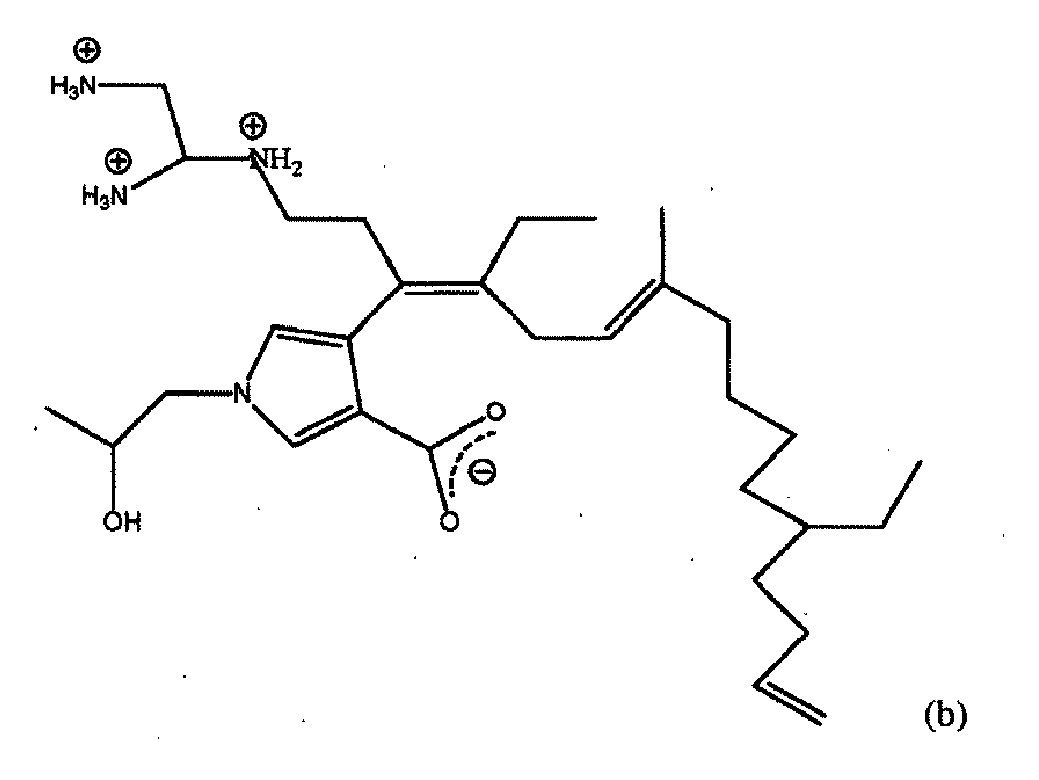


- Pharmazeutische Zusammensetzung, umfassend einen Effektor einer sekundären Bindungsstelle von DP IV mit der in Anspruch 10 angegebenen Bedeutung sowie einen pharmazeutisch unbedenklichen Trägerstoff dafür.
Applications Claiming Priority (5)
| Application Number | Priority Date | Filing Date | Title |
|---|---|---|---|
| US10/246,817 US20040058876A1 (en) | 2002-09-18 | 2002-09-18 | Secondary binding site of dipeptidyl peptidase IV (DP IV) |
| US246817 | 2002-09-18 | ||
| US44341703P | 2003-01-29 | 2003-01-29 | |
| US443417P | 2003-01-29 | ||
| PCT/EP2003/010408 WO2004031374A2 (en) | 2002-09-18 | 2003-09-18 | Secondary binding site of dipeptidyl peptidase iv (dp iv) |
Publications (2)
| Publication Number | Publication Date |
|---|---|
| EP1543023A2 EP1543023A2 (de) | 2005-06-22 |
| EP1543023B1 true EP1543023B1 (de) | 2010-03-17 |
Family
ID=32072828
Family Applications (1)
| Application Number | Title | Priority Date | Filing Date |
|---|---|---|---|
| EP03788909A Expired - Lifetime EP1543023B1 (de) | 2002-09-18 | 2003-09-18 | Sekundäre bindungsstelle von dipeptidylpeptidase iv (dp iv) |
Country Status (6)
| Country | Link |
|---|---|
| US (2) | US20050176622A1 (de) |
| EP (1) | EP1543023B1 (de) |
| AT (1) | ATE461212T1 (de) |
| AU (1) | AU2003293311A1 (de) |
| DE (1) | DE60331747D1 (de) |
| WO (1) | WO2004031374A2 (de) |
Families Citing this family (24)
| Publication number | Priority date | Publication date | Assignee | Title |
|---|---|---|---|---|
| US20040242568A1 (en) | 2003-03-25 | 2004-12-02 | Syrrx, Inc. | Dipeptidyl peptidase inhibitors |
| JP2007511467A (ja) | 2003-05-14 | 2007-05-10 | タケダ サン ディエゴ インコーポレイテッド | ジペプチジルペプチダーゼインヒビター |
| US7169926B1 (en) | 2003-08-13 | 2007-01-30 | Takeda Pharmaceutical Company Limited | Dipeptidyl peptidase inhibitors |
| MXPA06001601A (es) | 2003-08-13 | 2006-08-25 | Takeda Pharmaceutical | Derivados de 4-pirimidona y su uso como inhibidores de dipeptidilpeptidasa. |
| US7678909B1 (en) | 2003-08-13 | 2010-03-16 | Takeda Pharmaceutical Company Limited | Dipeptidyl peptidase inhibitors |
| AU2004267955A1 (en) * | 2003-09-02 | 2005-03-10 | Prosidion Ltd. | Combination therapy for glycaemic control |
| WO2005026148A1 (en) | 2003-09-08 | 2005-03-24 | Takeda San Diego, Inc. | Dipeptidyl peptidase inhibitors |
| US7732446B1 (en) | 2004-03-11 | 2010-06-08 | Takeda Pharmaceutical Company Limited | Dipeptidyl peptidase inhibitors |
| CN102079743B (zh) | 2004-03-15 | 2020-08-25 | 武田药品工业株式会社 | 二肽基肽酶抑制剂 |
| US7687638B2 (en) | 2004-06-04 | 2010-03-30 | Takeda San Diego, Inc. | Dipeptidyl peptidase inhibitors |
| WO2006019965A2 (en) | 2004-07-16 | 2006-02-23 | Takeda San Diego, Inc. | Dipeptidyl peptidase inhibitors |
| JP2008524331A (ja) | 2004-12-21 | 2008-07-10 | 武田薬品工業株式会社 | ジペプチジルペプチダーゼ阻害剤 |
| EP1695973A1 (de) * | 2005-02-24 | 2006-08-30 | Neuro3D | Ocaperidonsalz und dieser enthaltende pharmazeutische Zubereitung |
| MX2007011453A (es) | 2005-04-22 | 2008-02-12 | Alantos Pharmaceuticals Holding Inc | Inhibidores de la dipeptidil peptidasa-iv. |
| NZ566799A (en) | 2005-09-14 | 2011-04-29 | Takeda Pharmaceutical | Dipeptidyl peptidase inhibitors for treating diabetes |
| WO2007035629A2 (en) | 2005-09-16 | 2007-03-29 | Takeda Pharmaceutical Company Limited | Process for the preparation of pyrimidinedione derivatives |
| US8324383B2 (en) | 2006-09-13 | 2012-12-04 | Takeda Pharmaceutical Company Limited | Methods of making polymorphs of benzoate salt of 2-[[6-[(3R)-3-amino-1-piperidinyl]-3,4-dihydro-3-methyl-2,4-dioxo-1(2H)-pyrimidinyl]methyl]-benzonitrile |
| TW200838536A (en) | 2006-11-29 | 2008-10-01 | Takeda Pharmaceutical | Polymorphs of succinate salt of 2-[6-(3-amino-piperidin-1-yl)-3-methyl-2,4-dioxo-3,4-dihydro-2H-pyrimidin-1-ylmethy]-4-fluor-benzonitrile and methods of use therefor |
| US8093236B2 (en) | 2007-03-13 | 2012-01-10 | Takeda Pharmaceuticals Company Limited | Weekly administration of dipeptidyl peptidase inhibitors |
| AR067557A1 (es) | 2007-07-19 | 2009-10-14 | Takeda Pharmaceutical | Preparacion solida y metodo de preparacion |
| US20140031282A1 (en) * | 2012-07-06 | 2014-01-30 | Emily L. Cooper | Formulation for treatment of hyperinsulinemic hypoglycemia following gastric bypass surgery |
| GB201820320D0 (en) * | 2018-12-13 | 2019-01-30 | Bicyclerd Ltd | Bicyclic peptide ligands specific for FAPalpha |
| CN111514276B (zh) * | 2020-06-29 | 2021-07-27 | 黑龙江中医药大学 | 短肽Asp-His-Tyr在制备治疗多囊卵巢综合征的药物中的应用 |
| CN118620029B (zh) * | 2024-05-27 | 2024-12-20 | 合肥工业大学 | 一种干腌火腿源dpp-iv抑制肽及其制备、鉴定方法和应用 |
Family Cites Families (28)
| Publication number | Priority date | Publication date | Assignee | Title |
|---|---|---|---|---|
| US2961377A (en) * | 1957-08-05 | 1960-11-22 | Us Vitamin Pharm Corp | Oral anti-diabetic compositions and methods |
| US3174901A (en) * | 1963-01-31 | 1965-03-23 | Jan Marcel Didier Aron Samuel | Process for the oral treatment of diabetes |
| US3879541A (en) * | 1970-03-03 | 1975-04-22 | Bayer Ag | Antihyperglycemic methods and compositions |
| US3960949A (en) * | 1971-04-02 | 1976-06-01 | Schering Aktiengesellschaft | 1,2-Biguanides |
| CH602612A5 (de) * | 1974-10-11 | 1978-07-31 | Hoffmann La Roche | |
| US4935493A (en) * | 1987-10-06 | 1990-06-19 | E. I. Du Pont De Nemours And Company | Protease inhibitors |
| US5223409A (en) | 1988-09-02 | 1993-06-29 | Protein Engineering Corp. | Directed evolution of novel binding proteins |
| US5433955A (en) * | 1989-01-23 | 1995-07-18 | Akzo N.V. | Site specific in vivo activation of therapeutic drugs |
| US5462928A (en) * | 1990-04-14 | 1995-10-31 | New England Medical Center Hospitals, Inc. | Inhibitors of dipeptidyl-aminopeptidase type IV |
| IL106998A0 (en) * | 1992-09-17 | 1993-12-28 | Univ Florida | Brain-enhanced delivery of neuroactive peptides by sequential metabolism |
| IL111785A0 (en) * | 1993-12-03 | 1995-01-24 | Ferring Bv | Dp-iv inhibitors and pharmaceutical compositions containing them |
| US5705483A (en) * | 1993-12-09 | 1998-01-06 | Eli Lilly And Company | Glucagon-like insulinotropic peptides, compositions and methods |
| US5543396A (en) * | 1994-04-28 | 1996-08-06 | Georgia Tech Research Corp. | Proline phosphonate derivatives |
| US5512549A (en) * | 1994-10-18 | 1996-04-30 | Eli Lilly And Company | Glucagon-like insulinotropic peptide analogs, compositions, and methods of use |
| US5614379A (en) * | 1995-04-26 | 1997-03-25 | Eli Lilly And Company | Process for preparing anti-obesity protein |
| DE122010000020I1 (de) * | 1996-04-25 | 2010-07-08 | Prosidion Ltd | Verfahren zur Senkung des Blutglukosespiegels in Säugern |
| US6006753A (en) * | 1996-08-30 | 1999-12-28 | Eli Lilly And Company | Use of GLP-1 or analogs to abolish catabolic changes after surgery |
| US5827898A (en) * | 1996-10-07 | 1998-10-27 | Shaman Pharmaceuticals, Inc. | Use of bisphenolic compounds to treat type II diabetes |
| US6011155A (en) * | 1996-11-07 | 2000-01-04 | Novartis Ag | N-(substituted glycyl)-2-cyanopyrrolidines, pharmaceutical compositions containing them and their use in inhibiting dipeptidyl peptidase-IV |
| DE19823831A1 (de) * | 1998-05-28 | 1999-12-02 | Probiodrug Ges Fuer Arzneim | Neue pharmazeutische Verwendung von Isoleucyl Thiazolidid und seinen Salzen |
| DE19834591A1 (de) * | 1998-07-31 | 2000-02-03 | Probiodrug Ges Fuer Arzneim | Verfahren zur Steigerung des Blutglukosespiegels in Säugern |
| US6376549B1 (en) * | 1998-09-17 | 2002-04-23 | Akesis Pharmaceuticals, Inc. | Metforimin-containing compositions for the treatment of diabetes |
| US6172081B1 (en) * | 1999-06-24 | 2001-01-09 | Novartis Ag | Tetrahydroisoquinoline 3-carboxamide derivatives |
| US6110949A (en) * | 1999-06-24 | 2000-08-29 | Novartis Ag | N-(substituted glycyl)-4-cyanothiazolidines, pharmaceutical compositions containing them and their use in inhibiting dipeptidyl peptidase-IV |
| US6107317A (en) * | 1999-06-24 | 2000-08-22 | Novartis Ag | N-(substituted glycyl)-thiazolidines, pharmaceutical compositions containing them and their use in inhibiting dipeptidyl peptidase-IV |
| US7064145B2 (en) * | 2000-02-25 | 2006-06-20 | Novo Nordisk A/S | Inhibition of beta cell degeneration |
| JP2003528135A (ja) * | 2000-03-31 | 2003-09-24 | プロバイオドラッグ アーゲー | 糖尿病のランゲルハンス島シグナリングの改善方法及びその防止方法 |
| GB0014969D0 (en) * | 2000-06-19 | 2000-08-09 | Smithkline Beecham Plc | Novel method of treatment |
-
2003
- 2003-09-18 US US10/667,200 patent/US20050176622A1/en not_active Abandoned
- 2003-09-18 AU AU2003293311A patent/AU2003293311A1/en not_active Abandoned
- 2003-09-18 WO PCT/EP2003/010408 patent/WO2004031374A2/en not_active Ceased
- 2003-09-18 DE DE60331747T patent/DE60331747D1/de not_active Expired - Lifetime
- 2003-09-18 EP EP03788909A patent/EP1543023B1/de not_active Expired - Lifetime
- 2003-09-18 AT AT03788909T patent/ATE461212T1/de not_active IP Right Cessation
-
2006
- 2006-06-29 US US11/478,217 patent/US7816325B2/en not_active Expired - Lifetime
Also Published As
| Publication number | Publication date |
|---|---|
| US20050176622A1 (en) | 2005-08-11 |
| AU2003293311A1 (en) | 2004-04-23 |
| EP1543023A2 (de) | 2005-06-22 |
| WO2004031374A3 (en) | 2004-08-12 |
| AU2003293311A8 (en) | 2004-04-23 |
| ATE461212T1 (de) | 2010-04-15 |
| WO2004031374A2 (en) | 2004-04-15 |
| US20060234940A1 (en) | 2006-10-19 |
| US7816325B2 (en) | 2010-10-19 |
| DE60331747D1 (de) | 2010-04-29 |
Similar Documents
| Publication | Publication Date | Title |
|---|---|---|
| US7816325B2 (en) | Secondary binding site of dipeptidyl peptidase IV (DP IV) | |
| US20040058876A1 (en) | Secondary binding site of dipeptidyl peptidase IV (DP IV) | |
| US8071541B2 (en) | Methods for preparing internally constrained peptides and peptidomimetics | |
| US9902754B2 (en) | Modified peptides as potent inhibitors of the PSD-95/NMDA receptor interaction | |
| Bolin et al. | Peptide and peptide mimetic inhibitors of antigen presentation by HLA-DR class II MHC molecules. Design, structure− activity relationships, and x-ray crystal structures | |
| Svenson et al. | Antimicrobial peptides with stability toward tryptic degradation | |
| Bach et al. | Modified peptides as potent inhibitors of the postsynaptic density-95/N-methyl-D-aspartate receptor interaction | |
| KR20110120917A (ko) | 항생 펩티드 | |
| Zhang et al. | Eco-friendly insecticide discovery via peptidomimetics: design, synthesis, and aphicidal activity of novel insect kinin analogues | |
| Zuo et al. | Chemical synthesis and biophysical applications of membrane proteins | |
| Angera et al. | Beyond N‑alkylation: synthesis, structure, and function of N‑amino peptides | |
| Bewley et al. | Turned on for degradation: ATPase-independent degradation by ClpP | |
| Mourão et al. | Head-to-tail cyclization after interaction with trypsin: a scorpion venom peptide that resembles plant cyclotides | |
| Lu et al. | Deciphering the role of the electrostatic interactions involving Gly70 in eglin C by total chemical protein synthesis | |
| Schmoldt et al. | A fusion protein system for the recombinant production of short disulfide bond rich cystine knot peptides using barnase as a purification handle | |
| Johansson et al. | Tetrapeptides as potent protease inhibitors of hepatitis C virus full-length NS3 (protease-helicase/NTPase) | |
| Shu et al. | Development of mirror-image screening systems for XIAP BIR3 domain inhibitors | |
| Martin et al. | Design of selective eglin inhibitors of HCV NS3 proteinase | |
| Umashankara et al. | Orchestration of structural, stereoelectronic, and hydrogen-bonding effects in stabilizing triplexes from engineered chimeric collagen peptides (ProX-ProY-Gly) 6 incorporating 4 (R/S)-aminoproline | |
| Fischer | Protein-protein interactions in drug discovery | |
| AU769157B2 (en) | Novel pyrrhocoricin-derived peptides, and methods of use thereof | |
| Preußke et al. | Designed Trp-cage proteins with antimicrobial activity and enhanced stability | |
| US20020102533A1 (en) | Hepatitis C protease exosite for inhibit or design | |
| Paduch et al. | Bivalent peptides as models for multimeric targets of PDZ domains | |
| US7015309B1 (en) | Pyrrhocoricin-derived peptides, and methods of use thereof |
Legal Events
| Date | Code | Title | Description |
|---|---|---|---|
| PUAI | Public reference made under article 153(3) epc to a published international application that has entered the european phase |
Free format text: ORIGINAL CODE: 0009012 |
|
| 17P | Request for examination filed |
Effective date: 20050418 |
|
| AK | Designated contracting states |
Kind code of ref document: A2 Designated state(s): AT BE BG CH CY CZ DE DK EE ES FI FR GB GR HU IE IT LI LU MC NL PT RO SE SI SK TR |
|
| AX | Request for extension of the european patent |
Extension state: AL LT LV MK |
|
| DAX | Request for extension of the european patent (deleted) | ||
| 17Q | First examination report despatched |
Effective date: 20061009 |
|
| RIN1 | Information on inventor provided before grant (corrected) |
Inventor name: BRANDT, WOLFGANG Inventor name: HEISER, ULRICH Inventor name: DEMUTH, HANS-ULRICH Inventor name: BAER, JOACHIM Inventor name: KUEHN-WACHE, KERSTIN C/O PROBIODRUG AG Inventor name: HOFFMANN, TORSTEN |
|
| GRAP | Despatch of communication of intention to grant a patent |
Free format text: ORIGINAL CODE: EPIDOSNIGR1 |
|
| GRAS | Grant fee paid |
Free format text: ORIGINAL CODE: EPIDOSNIGR3 |
|
| GRAA | (expected) grant |
Free format text: ORIGINAL CODE: 0009210 |
|
| AK | Designated contracting states |
Kind code of ref document: B1 Designated state(s): AT BE BG CH CY CZ DE DK EE ES FI FR GB GR HU IE IT LI LU MC NL PT RO SE SI SK TR |
|
| REG | Reference to a national code |
Ref country code: GB Ref legal event code: FG4D |
|
| REG | Reference to a national code |
Ref country code: CH Ref legal event code: EP |
|
| REG | Reference to a national code |
Ref country code: IE Ref legal event code: FG4D |
|
| REF | Corresponds to: |
Ref document number: 60331747 Country of ref document: DE Date of ref document: 20100429 Kind code of ref document: P |
|
| REG | Reference to a national code |
Ref country code: NL Ref legal event code: VDEP Effective date: 20100317 |
|
| PG25 | Lapsed in a contracting state [announced via postgrant information from national office to epo] |
Ref country code: SI Free format text: LAPSE BECAUSE OF FAILURE TO SUBMIT A TRANSLATION OF THE DESCRIPTION OR TO PAY THE FEE WITHIN THE PRESCRIBED TIME-LIMIT Effective date: 20100317 Ref country code: FI Free format text: LAPSE BECAUSE OF FAILURE TO SUBMIT A TRANSLATION OF THE DESCRIPTION OR TO PAY THE FEE WITHIN THE PRESCRIBED TIME-LIMIT Effective date: 20100317 Ref country code: AT Free format text: LAPSE BECAUSE OF FAILURE TO SUBMIT A TRANSLATION OF THE DESCRIPTION OR TO PAY THE FEE WITHIN THE PRESCRIBED TIME-LIMIT Effective date: 20100317 |
|
| PG25 | Lapsed in a contracting state [announced via postgrant information from national office to epo] |
Ref country code: ES Free format text: LAPSE BECAUSE OF FAILURE TO SUBMIT A TRANSLATION OF THE DESCRIPTION OR TO PAY THE FEE WITHIN THE PRESCRIBED TIME-LIMIT Effective date: 20100628 Ref country code: CY Free format text: LAPSE BECAUSE OF FAILURE TO SUBMIT A TRANSLATION OF THE DESCRIPTION OR TO PAY THE FEE WITHIN THE PRESCRIBED TIME-LIMIT Effective date: 20100317 Ref country code: SE Free format text: LAPSE BECAUSE OF FAILURE TO SUBMIT A TRANSLATION OF THE DESCRIPTION OR TO PAY THE FEE WITHIN THE PRESCRIBED TIME-LIMIT Effective date: 20100317 Ref country code: BE Free format text: LAPSE BECAUSE OF FAILURE TO SUBMIT A TRANSLATION OF THE DESCRIPTION OR TO PAY THE FEE WITHIN THE PRESCRIBED TIME-LIMIT Effective date: 20100317 Ref country code: EE Free format text: LAPSE BECAUSE OF FAILURE TO SUBMIT A TRANSLATION OF THE DESCRIPTION OR TO PAY THE FEE WITHIN THE PRESCRIBED TIME-LIMIT Effective date: 20100317 Ref country code: GR Free format text: LAPSE BECAUSE OF FAILURE TO SUBMIT A TRANSLATION OF THE DESCRIPTION OR TO PAY THE FEE WITHIN THE PRESCRIBED TIME-LIMIT Effective date: 20100618 Ref country code: NL Free format text: LAPSE BECAUSE OF FAILURE TO SUBMIT A TRANSLATION OF THE DESCRIPTION OR TO PAY THE FEE WITHIN THE PRESCRIBED TIME-LIMIT Effective date: 20100317 Ref country code: RO Free format text: LAPSE BECAUSE OF FAILURE TO SUBMIT A TRANSLATION OF THE DESCRIPTION OR TO PAY THE FEE WITHIN THE PRESCRIBED TIME-LIMIT Effective date: 20100317 |
|
| PG25 | Lapsed in a contracting state [announced via postgrant information from national office to epo] |
Ref country code: BG Free format text: LAPSE BECAUSE OF FAILURE TO SUBMIT A TRANSLATION OF THE DESCRIPTION OR TO PAY THE FEE WITHIN THE PRESCRIBED TIME-LIMIT Effective date: 20100617 Ref country code: CZ Free format text: LAPSE BECAUSE OF FAILURE TO SUBMIT A TRANSLATION OF THE DESCRIPTION OR TO PAY THE FEE WITHIN THE PRESCRIBED TIME-LIMIT Effective date: 20100317 Ref country code: SK Free format text: LAPSE BECAUSE OF FAILURE TO SUBMIT A TRANSLATION OF THE DESCRIPTION OR TO PAY THE FEE WITHIN THE PRESCRIBED TIME-LIMIT Effective date: 20100317 |
|
| PLBE | No opposition filed within time limit |
Free format text: ORIGINAL CODE: 0009261 |
|
| STAA | Information on the status of an ep patent application or granted ep patent |
Free format text: STATUS: NO OPPOSITION FILED WITHIN TIME LIMIT |
|
| PG25 | Lapsed in a contracting state [announced via postgrant information from national office to epo] |
Ref country code: PT Free format text: LAPSE BECAUSE OF FAILURE TO SUBMIT A TRANSLATION OF THE DESCRIPTION OR TO PAY THE FEE WITHIN THE PRESCRIBED TIME-LIMIT Effective date: 20100719 Ref country code: DK Free format text: LAPSE BECAUSE OF FAILURE TO SUBMIT A TRANSLATION OF THE DESCRIPTION OR TO PAY THE FEE WITHIN THE PRESCRIBED TIME-LIMIT Effective date: 20100317 |
|
| 26N | No opposition filed |
Effective date: 20101220 |
|
| PG25 | Lapsed in a contracting state [announced via postgrant information from national office to epo] |
Ref country code: IT Free format text: LAPSE BECAUSE OF FAILURE TO SUBMIT A TRANSLATION OF THE DESCRIPTION OR TO PAY THE FEE WITHIN THE PRESCRIBED TIME-LIMIT Effective date: 20100317 |
|
| PG25 | Lapsed in a contracting state [announced via postgrant information from national office to epo] |
Ref country code: MC Free format text: LAPSE BECAUSE OF NON-PAYMENT OF DUE FEES Effective date: 20100930 |
|
| REG | Reference to a national code |
Ref country code: CH Ref legal event code: PL |
|
| GBPC | Gb: european patent ceased through non-payment of renewal fee |
Effective date: 20100918 |
|
| REG | Reference to a national code |
Ref country code: FR Ref legal event code: ST Effective date: 20110531 |
|
| REG | Reference to a national code |
Ref country code: DE Ref legal event code: R119 Ref document number: 60331747 Country of ref document: DE Effective date: 20110401 |
|
| PG25 | Lapsed in a contracting state [announced via postgrant information from national office to epo] |
Ref country code: CH Free format text: LAPSE BECAUSE OF NON-PAYMENT OF DUE FEES Effective date: 20100930 Ref country code: DE Free format text: LAPSE BECAUSE OF NON-PAYMENT OF DUE FEES Effective date: 20110401 Ref country code: FR Free format text: LAPSE BECAUSE OF NON-PAYMENT OF DUE FEES Effective date: 20100930 Ref country code: IE Free format text: LAPSE BECAUSE OF NON-PAYMENT OF DUE FEES Effective date: 20100918 Ref country code: LI Free format text: LAPSE BECAUSE OF NON-PAYMENT OF DUE FEES Effective date: 20100930 |
|
| PG25 | Lapsed in a contracting state [announced via postgrant information from national office to epo] |
Ref country code: GB Free format text: LAPSE BECAUSE OF NON-PAYMENT OF DUE FEES Effective date: 20100918 |
|
| PG25 | Lapsed in a contracting state [announced via postgrant information from national office to epo] |
Ref country code: LU Free format text: LAPSE BECAUSE OF NON-PAYMENT OF DUE FEES Effective date: 20100918 Ref country code: HU Free format text: LAPSE BECAUSE OF FAILURE TO SUBMIT A TRANSLATION OF THE DESCRIPTION OR TO PAY THE FEE WITHIN THE PRESCRIBED TIME-LIMIT Effective date: 20100918 |
|
| PG25 | Lapsed in a contracting state [announced via postgrant information from national office to epo] |
Ref country code: TR Free format text: LAPSE BECAUSE OF FAILURE TO SUBMIT A TRANSLATION OF THE DESCRIPTION OR TO PAY THE FEE WITHIN THE PRESCRIBED TIME-LIMIT Effective date: 20100317 |