EP1544302A1 - Animal non humain "knockin", et animal non humain "knockout" presentant un gene mnsod dans un tissu specifique - Google Patents
Animal non humain "knockin", et animal non humain "knockout" presentant un gene mnsod dans un tissu specifique Download PDFInfo
- Publication number
- EP1544302A1 EP1544302A1 EP03784601A EP03784601A EP1544302A1 EP 1544302 A1 EP1544302 A1 EP 1544302A1 EP 03784601 A EP03784601 A EP 03784601A EP 03784601 A EP03784601 A EP 03784601A EP 1544302 A1 EP1544302 A1 EP 1544302A1
- Authority
- EP
- European Patent Office
- Prior art keywords
- nonhuman animal
- mnsod
- knockin
- knockout
- gene
- Prior art date
- Legal status (The legal status is an assumption and is not a legal conclusion. Google has not performed a legal analysis and makes no representation as to the accuracy of the status listed.)
- Withdrawn
Links
Images


Classifications
-
- A—HUMAN NECESSITIES
- A01—AGRICULTURE; FORESTRY; ANIMAL HUSBANDRY; HUNTING; TRAPPING; FISHING
- A01K—ANIMAL HUSBANDRY; AVICULTURE; APICULTURE; PISCICULTURE; FISHING; REARING OR BREEDING ANIMALS, NOT OTHERWISE PROVIDED FOR; NEW BREEDS OF ANIMALS
- A01K67/00—Rearing or breeding animals, not otherwise provided for; New or modified breeds of animals
- A01K67/027—New or modified breeds of vertebrates
-
- A—HUMAN NECESSITIES
- A01—AGRICULTURE; FORESTRY; ANIMAL HUSBANDRY; HUNTING; TRAPPING; FISHING
- A01K—ANIMAL HUSBANDRY; AVICULTURE; APICULTURE; PISCICULTURE; FISHING; REARING OR BREEDING ANIMALS, NOT OTHERWISE PROVIDED FOR; NEW BREEDS OF ANIMALS
- A01K67/00—Rearing or breeding animals, not otherwise provided for; New or modified breeds of animals
- A01K67/027—New or modified breeds of vertebrates
- A01K67/0275—Genetically modified vertebrates, e.g. transgenic
-
- A—HUMAN NECESSITIES
- A01—AGRICULTURE; FORESTRY; ANIMAL HUSBANDRY; HUNTING; TRAPPING; FISHING
- A01K—ANIMAL HUSBANDRY; AVICULTURE; APICULTURE; PISCICULTURE; FISHING; REARING OR BREEDING ANIMALS, NOT OTHERWISE PROVIDED FOR; NEW BREEDS OF ANIMALS
- A01K67/00—Rearing or breeding animals, not otherwise provided for; New or modified breeds of animals
- A01K67/027—New or modified breeds of vertebrates
- A01K67/0275—Genetically modified vertebrates, e.g. transgenic
- A01K67/0276—Knock-out vertebrates
-
- C—CHEMISTRY; METALLURGY
- C07—ORGANIC CHEMISTRY
- C07H—SUGARS; DERIVATIVES THEREOF; NUCLEOSIDES; NUCLEOTIDES; NUCLEIC ACIDS
- C07H21/00—Compounds containing two or more mononucleotide units having separate phosphate or polyphosphate groups linked by saccharide radicals of nucleoside groups, e.g. nucleic acids
- C07H21/04—Compounds containing two or more mononucleotide units having separate phosphate or polyphosphate groups linked by saccharide radicals of nucleoside groups, e.g. nucleic acids with deoxyribosyl as saccharide radical
-
- C—CHEMISTRY; METALLURGY
- C12—BIOCHEMISTRY; BEER; SPIRITS; WINE; VINEGAR; MICROBIOLOGY; ENZYMOLOGY; MUTATION OR GENETIC ENGINEERING
- C12N—MICROORGANISMS OR ENZYMES; COMPOSITIONS THEREOF; PROPAGATING, PRESERVING, OR MAINTAINING MICROORGANISMS; MUTATION OR GENETIC ENGINEERING; CULTURE MEDIA
- C12N15/00—Mutation or genetic engineering; DNA or RNA concerning genetic engineering, vectors, e.g. plasmids, or their isolation, preparation or purification; Use of hosts therefor
- C12N15/09—Recombinant DNA-technology
- C12N15/63—Introduction of foreign genetic material using vectors; Vectors; Use of hosts therefor; Regulation of expression
- C12N15/79—Vectors or expression systems specially adapted for eukaryotic hosts
- C12N15/85—Vectors or expression systems specially adapted for eukaryotic hosts for animal cells
- C12N15/8509—Vectors or expression systems specially adapted for eukaryotic hosts for animal cells for producing genetically modified animals, e.g. transgenic
-
- C—CHEMISTRY; METALLURGY
- C12—BIOCHEMISTRY; BEER; SPIRITS; WINE; VINEGAR; MICROBIOLOGY; ENZYMOLOGY; MUTATION OR GENETIC ENGINEERING
- C12N—MICROORGANISMS OR ENZYMES; COMPOSITIONS THEREOF; PROPAGATING, PRESERVING, OR MAINTAINING MICROORGANISMS; MUTATION OR GENETIC ENGINEERING; CULTURE MEDIA
- C12N9/00—Enzymes; Proenzymes; Compositions thereof; Processes for preparing, activating, inhibiting, separating or purifying enzymes
- C12N9/0004—Oxidoreductases (1.)
- C12N9/0089—Oxidoreductases (1.) acting on superoxide as acceptor (1.15)
-
- A—HUMAN NECESSITIES
- A01—AGRICULTURE; FORESTRY; ANIMAL HUSBANDRY; HUNTING; TRAPPING; FISHING
- A01K—ANIMAL HUSBANDRY; AVICULTURE; APICULTURE; PISCICULTURE; FISHING; REARING OR BREEDING ANIMALS, NOT OTHERWISE PROVIDED FOR; NEW BREEDS OF ANIMALS
- A01K2217/00—Genetically modified animals
- A01K2217/07—Animals genetically altered by homologous recombination
- A01K2217/072—Animals genetically altered by homologous recombination maintaining or altering function, i.e. knock in
-
- A—HUMAN NECESSITIES
- A01—AGRICULTURE; FORESTRY; ANIMAL HUSBANDRY; HUNTING; TRAPPING; FISHING
- A01K—ANIMAL HUSBANDRY; AVICULTURE; APICULTURE; PISCICULTURE; FISHING; REARING OR BREEDING ANIMALS, NOT OTHERWISE PROVIDED FOR; NEW BREEDS OF ANIMALS
- A01K2217/00—Genetically modified animals
- A01K2217/07—Animals genetically altered by homologous recombination
- A01K2217/075—Animals genetically altered by homologous recombination inducing loss of function, i.e. knock out
-
- A—HUMAN NECESSITIES
- A01—AGRICULTURE; FORESTRY; ANIMAL HUSBANDRY; HUNTING; TRAPPING; FISHING
- A01K—ANIMAL HUSBANDRY; AVICULTURE; APICULTURE; PISCICULTURE; FISHING; REARING OR BREEDING ANIMALS, NOT OTHERWISE PROVIDED FOR; NEW BREEDS OF ANIMALS
- A01K2227/00—Animals characterised by species
- A01K2227/10—Mammal
- A01K2227/105—Murine
-
- A—HUMAN NECESSITIES
- A01—AGRICULTURE; FORESTRY; ANIMAL HUSBANDRY; HUNTING; TRAPPING; FISHING
- A01K—ANIMAL HUSBANDRY; AVICULTURE; APICULTURE; PISCICULTURE; FISHING; REARING OR BREEDING ANIMALS, NOT OTHERWISE PROVIDED FOR; NEW BREEDS OF ANIMALS
- A01K2267/00—Animals characterised by purpose
- A01K2267/03—Animal model, e.g. for test or diseases
-
- A—HUMAN NECESSITIES
- A01—AGRICULTURE; FORESTRY; ANIMAL HUSBANDRY; HUNTING; TRAPPING; FISHING
- A01K—ANIMAL HUSBANDRY; AVICULTURE; APICULTURE; PISCICULTURE; FISHING; REARING OR BREEDING ANIMALS, NOT OTHERWISE PROVIDED FOR; NEW BREEDS OF ANIMALS
- A01K2267/00—Animals characterised by purpose
- A01K2267/03—Animal model, e.g. for test or diseases
- A01K2267/0306—Animal model for genetic diseases
- A01K2267/0318—Animal model for neurodegenerative disease, e.g. non- Alzheimer's
-
- A—HUMAN NECESSITIES
- A01—AGRICULTURE; FORESTRY; ANIMAL HUSBANDRY; HUNTING; TRAPPING; FISHING
- A01K—ANIMAL HUSBANDRY; AVICULTURE; APICULTURE; PISCICULTURE; FISHING; REARING OR BREEDING ANIMALS, NOT OTHERWISE PROVIDED FOR; NEW BREEDS OF ANIMALS
- A01K2267/00—Animals characterised by purpose
- A01K2267/03—Animal model, e.g. for test or diseases
- A01K2267/035—Animal model for multifactorial diseases
- A01K2267/0375—Animal model for cardiovascular diseases
-
- C—CHEMISTRY; METALLURGY
- C12—BIOCHEMISTRY; BEER; SPIRITS; WINE; VINEGAR; MICROBIOLOGY; ENZYMOLOGY; MUTATION OR GENETIC ENGINEERING
- C12N—MICROORGANISMS OR ENZYMES; COMPOSITIONS THEREOF; PROPAGATING, PRESERVING, OR MAINTAINING MICROORGANISMS; MUTATION OR GENETIC ENGINEERING; CULTURE MEDIA
- C12N2800/00—Nucleic acids vectors
- C12N2800/30—Vector systems comprising sequences for excision in presence of a recombinase, e.g. loxP or FRT
Definitions
- the present invention relates to a knockin nonhuman animal (for example, a knockin mouse) having a DNA in which an exon of a manganese superoxide dismutase (hereinafter referred to as MnSOD) gene is interposed between recombinase recognition sequences (for example, a loxp sequence), and a tissue-specific knockout nonhuman animal obtainable by mating the knockin nonhuman animal with a transgenic nonhuman animal (for example a transgenic mouse) expressing a recombinase (for example, Cre recombinase) in a specific tissue (particularly, a mouse in which MnSOD is specifically deficient in the specific tissue).
- MnSOD manganese superoxide dismutase
- Reactive oxygen species are byproducts of the internal respiration in mitochondria.
- MnSOD converts the reactive oxygen species in mitochondria, superoxide, to hydrogen peroxide.
- tissue-specific MnSOD-gene-deficient model mice showing an accumulation of reactive oxygen species were generated in an attempt to clarify the mechanism of diseases caused by the accumulation of reactive oxygen species.
- mice deficient in exon 3 of MnSOD showed dilated cardiomyopathy, neurodegeneration, or a reduction in the activity of mitochondrial respiratory enzymes, and the mice died in the neonatal period [Nat. Genet., 11, 376-381 (1995)].
- MnSOD knockout mice showed severe anemia or a degeneration of neurons in the basal ganglia, and that mice older than 7 days exhibit a mitochondrial injury, and died within 10 days [Proc. Natl. Acad. Sci. USA, 93, 9782-9787 (1996)].
- a technique for generating transgenic mice is widely used to generate model mice [Nature, 1988 Nov 24; 336 (6197)].
- a targeting vector is constructed, and a homologous recombination is carried out in embryonic stem (ES) cells to generate transgenic mice.
- ES embryonic stem
- a recombinase derived from bacteriophage P1, Cre protein recognizes loxp sequences (34 base pairs) and excises a sequence interposed between the loxp sequences.
- the mechanism is used to generate, for example, a flox animal in which the loxp sequences are inserted into the upstream and downstream regions of exon 3 of the MnSOD gene, by the gene targeting method.
- the flox mouse may be mated with a transgenic mouse overexpressing Cre protein tissue-specifically, to generate a conditional knockout mouse deficient in the MnSOD gene tissue-specifically.
- an object of the present invention is to provide a long-lived knockout nonhuman animal (such as knockout mouse) in which the MnSOD gene is tissue-specifically suppressed or deficient (particularly deficient), and a knockin nonhuman animal (preferably knockin mouse) which can be used to generate the knockout nonhuman animal.
- the knockout mouse is a model mouse capable of evaluating the effects of reactive oxygen species by the deficiency of the MnSOD gene in adult tissues or the normal aging process.
- the inventors used the Cre-loxp system to provide tissue-specific MnSOD-deficient mouse, and knockin mouse capable of generating the tissue-specific MnSOD-deficient mice.
- the knockin mouse usually exhibits the same phenotype as that of the wild-type, with respect to the expression of MnSOD, but the MnSOD gene is deleted (i.e., knockout) when Cre recombinase is expressed in the model mouse. Cre recombinase can be expressed by mating the model mouse with a transgenic mouse overexpressing Cre recombinase.
- model mouse is mated with a tissue-specific transgenic mouse overexpressing Cre recombinase to generate a conditional knockout mouse in which the MnSOD gene is tissue-specifically deleted.
- the present invention relates to a knockin nonhuman animal having a DNA wherein a region containing at least an exon of a manganese superoxide dismutase gene is interposed between two recombinase recognition sequences.
- the exon is exon 3.
- a marker gene (more preferably, a neomycin resistance gene) is interposed between the two recombinase recognition sequences.
- the recombinase recognition sequence is a loxp sequence.
- the nonhuman animal is a mouse.
- the present invention relates to a knockout nonhuman animal obtainable by mating the above knockin nonhuman animal with a transgenic nonhuman animal expressing a recombinase in a specific tissue, wherein an expression of manganese superoxide dismutase in the specific tissue is suppressed or deficient.
- the present invention relates to a knockout nonhuman animal obtainable by mating the above knockout nonhuman animal with the above knockin nonhuman animal or the above knockout nonhuman animal, wherein manganese superoxide dismutase is specifically deficient in the specific tissue.
- the recombinase is Cre recombinase.
- the present invention relates to a DNA wherein a region containing at least an exon of a manganese superoxide dismutase gene is interposed between two recombinase recognition sequences.
- the knockin nonhuman animal of the present invention has a DNA in which a region containing at least an exon of the MnSOD gene is interposed between two recombinase recognition sequences.
- nonhuman animal there may be mentioned, for example, mammals other than human (for example, mouse, rat, dog, cat, monkey, pig, cattle, sheep, goat, horse, or dolphin), birds (for example, chicken or quail), amphibians (for example, frog), or reptiles.
- mammals other than human for example, mouse, rat, dog, cat, monkey, pig, cattle, sheep, goat, horse, or dolphin
- birds for example, chicken or quail
- amphibians for example, frog
- reptiles for example, for example, reptiles.
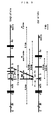
- mouse MnSOD gene consists of five exons (exon 1 to exon 5) shown in Figure 1.
- the knockin nonhuman animal of the present invention may comprise one or more exons (preferably one exon) of the MnSOD gene, optionally with one or more introns adjacent to the exons.
- the exon which may be used in the present invention is not particularly limited, so long as deletion of the exon causes MnSOD deficiency.
- exon 3 is preferable in a mouse.
- a combination of a recombinase and a recognition sequence thereof is used.
- Recombinases carry out DNA recombination (site-specific recombination) by recognizing two specific short homologous regions (i.e., recombinase recognition sites) located in a DNA molecule.
- a Cre-loxp system or an FLP-FRT system.
- the recombinase recognition site in the knockin nonhuman animal of the present invention there may be mentioned, for example, a loxp sequence or an FRT sequence.
- the knockin nonhuman animal of the present invention may further comprise a marker gene (preferably a drug resistance gene) between the two recombinase recognition sequences.
- the marker gene is not particularly limited, so long as the gene encodes a protein which can function as a drug resistance when a desired DNA is introduced into a knockin nonhuman animal.
- the marker gene there may be mentioned, for example, a neomycin (neo) resistance gene or a hypoxanthine phosphoribosyl transferase (HPRT) gene.
- the knockin nonhuman animal of the present invention may be obtained by, but is by no means limited to, the following procedure.
- a DNA in which a region containing at least one exon of the MnSOD gene is interposed between two recombinase recognition sequences (preferably a DNA in which a marker gene and a region containing at least one exon of the MnSOD gene are interposed between two recombinase recognition sequences) is constructed on an appropriate vector to prepare a targeting vector.
- the resulting targeting vector is used to carry out a homologous recombination in embryonic stem (ES) cells, and as a result, the knockin nonhuman animal of the present invention may be obtained. It may be confirmed whether or not the resulting nonhuman animal contains a desired DNA, for example, by Southern blot analysis.
- the knockin nonhuman animal of the present invention includes a heterozygous nonhuman animal containing the DNA in which a region containing at least one exon of the MnSOD gene is interposed between two recombinase recognition sequences on either of homologous chromosomes, and a homozygous nonhuman animal containing the DNA on both of the homologous chromosomes.
- the knockout nonhuman animal of the present invention includes a knockout nonhuman animal in which MnSOD is specifically deficient in a specific tissue, and a knockout nonhuman animal in which the expression of MnSOD in a specific tissue is suppressed.
- the term "deficient” as used herein means that MnSOD does not substantially exist in a tissue.
- the term “suppressed” as used herein means that an amount of MnSOD expressed in a tissue is decreased in comparison with that in a wild-type, preferably 50% or less of that in a wild-type, more preferably 30% or less thereof, most preferably 20% or less thereof.
- the knockout nonhuman animal of the present invention may be obtained, for example, by mating the knockin nonhuman animal of the present invention with a transgenic nonhuman animal expressing a recombinase in a specific tissue.
- recombinase there may be mentioned, for example, Cre recombinase or FLP recombinase.
- a transgenic mouse expressing Cre recombinase in a specific tissue there may be mentioned, for example, Syn-Cre (expressing Cre recombinase in central nervous cells by a synapsin promoter); Nes-Cre (expressing it in central and peripheral nerves by a nestin promoter); Tek-Cre (expressing it in vascular endothelial cells by a Tie2 promoter); MMTV-Cre (expressing it in mammary gland cells by a mouse mammary tumor virus LTR promoter) PRM-Cre (expressing it in male gonad by a protamine promoter); GZMB-Cre (expressing it in T cells by a granzyme promoter); Alb-Cre (expressing it in the liver by an albumin promoter); Ins2-Cre (expressing it in the pancreas by an insulin 2 promoter); CoII I-Cre (expressing it in cartilage cells by a type II collagen promoter); [The above mice are available from The Jackson Laboratory
- the knockin nonhuman animal of the present invention When the knockin nonhuman animal of the present invention is mated with a transgenic nonhuman animal expressing a recombinase in a specific tissue, the region interposed between two recombinase recognition sequences (i.e., the region containing one or more exons of the MnSOD gene) is excised by the recombinase in the specific tissue, as shown in Figure 3, but the excision does not occur in tissues where the recombinase is not expressed.
- the region interposed between two recombinase recognition sequences i.e., the region containing one or more exons of the MnSOD gene
- the expression of MnSOD is specifically suppressed or MnSOD is specifically deficient only in the tissue where the recombinase is expressed, and the expression of MnSOD in the other tissues does not change from that of the wild-type.
- the knockout nonhuman animal of the present invention in which the expression of MnSOD in the specific tissue is suppressed (i.e., heterozygote) may be obtained.
- a transgenic nonhuman animal deficient in the MsSOD gene is used as the transgenic nonhuman animal expressing a recombinase
- the knockout nonhuman animal of the present invention in which MnSOD is specifically deficient in the specific tissue may be obtained.
- the knockout nonhuman animal of the present invention obtained by mating the knockin nonhuman animal of the present invention and the transgenic nonhuman animal expressing a recombinase in a specific tissue, is mated with the same or a different knockin nonhuman animal of the present invention to obtain the knockout nonhuman animal of the present invention in which MnSOD is specifically deficient in the specific tissue (i.e., homozygote).
- the knockout nonhuman animal of the present invention obtained by mating the knockin nonhuman animal of the present invention and the transgenic nonhuman animal expressing a recombinase in a specific tissue, is mated with the knockout nonhuman animal of the present invention obtained in a similar fashion to obtain the knockout nonhuman animal of the present invention in which MnSOD is specifically deficient in the specific tissue (i.e., homozygote).
- the nonhuman animal obtained by the mating is deficient in one or more exons of the MnSOD gene, for example, by Southern blot analysis. Further, it may be confirmed whether or not MnSOD is deficient in the specific tissue, for example, by Western blot analysis.
- a 129/Sv mouse genome library ( ⁇ FIXII; Stratagene) and mouse MnSOD cDNA as a probe were used to clone an approximately 14 kb genomic gene containing five exons of MnSOD into a pBSKII vector (Stratagene).
- the isolated MnSOD genomic gene was used as a template to amplify a 5' flanking 1.3 kb genome fragment by the PCR method using a primer set of an NotI anchored sense primer (SEQ ID NO: 1) and an SalI anchored antisense primer (SEQ ID NO: 2), and the resulting fragment was cloned into a pMC1DT-A(B) plasmid (Oriental Koubo).
- the isolated MnSOD genomic gene was used as a template to amplify a 3' flanking approximately 6 kb genome fragment by the PCR method using a primer set of an XhoI anchored sense primer (SEQ ID NO: 3) and an SalI anchored antisense primer (SEQ ID NO: 4).
- SEQ ID NO: 3 an XhoI anchored sense primer
- SEQ ID NO: 4 an SalI anchored antisense primer
- a plasmid pMCneo-loxp vector comprising the neomycin resistance gene flanked by loxp sequences [provided by Dr. Yagi, Osaka University; Nucleic Acids Res., 26 (1998) 679-680] was used to insert the neomycin resistance gene flanked by loxp sequences into a pBSKII vector at the XhoI/SalI sites and prepare a Neo r /BSK vector.
- the third loxp sequence was inserted into the Neo r /BSK vector to prepare a Neo r -loxp/BSK vector.
- the isolated MnSOD genomic gene was used as a template to amplify a genome fragment containing exon 3 and the adjacent regions by the PCR method using a primer set of an SalI anchored sense primer (SEQ ID NO: 5) and an SalI anchored antisense primer (SEQ ID NO: 6), and the resulting fragment was cloned into the Neo r -loxp/BSK vector at the SalI site.
- the fragment containing exon 3 and the neomycin resistance gene was isolated using restriction enzymes KpnI and SmaI, blunted, and cloned into the previously obtained pMC1DT-A(B) vector containing the 5' and 3' flanking genomic genes.
- the targeting construct was excised from the resulting vector using restriction enzymes NotI and BamHI, and cloned into a PIC19R/MCI-TK vector [provided from Dr. Capecchi, University of Utah; Nature, 336 (1988) 348-352 or Science, 301 (2003) 363-367] to prepare a knockin construct (Figure 1, targeting vector).
- the resulting targeting construct was digested with restriction enzyme NotI, and the linearized targeting construct was incorporated into ES cells by the electropolation method.
- Homologous recombinant cells cultured in a medium containing G418 were confirmed by the Southern blot method as described below.
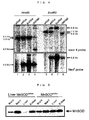
- Each DNA prepared from postnatal offspring was digested with restriction enzyme EcoRI. Using 3'probe, 24 kb fragment and 8.1 kb fragment were detected in the wild-type mouse (wt/wt) and the homozygous MnSOD flox mouse (lox/lox), respectively ( Figure 2, upperleft).
- restriction enzyme XbaI and the Neo r probe was used, 6.3 kb fragment was detected in the homozygous mouse (lox/lox) and the heterozygous mouse (wt/lox or lox/wt), but no fragment was detected in the wild-type mouse (wt/wt) ( Figure 2, lowerleft).
- chimeric mice were prepared to confirm the deletion in the germline by the Southern blot method.
- the PCRs were carried out using DNAs extracted from offspring tails and primers P1 (SEQ ID NO: 7), P2 (SEQ ID NO: 8), and P4 (SEQ ID NO: 9) shown in Figure 1.
- P1 SEQ ID NO: 7
- P2 SEQ ID NO: 8
- P4 SEQ ID NO: 9
- 500 bp fragment and 358 bp fragment were detected in the wild-type allele (wt/wt) and mutated alleles (wt/lox, lox/wt, or lox/lox), respectively.
- model mice in which MnSOD was specifically deficient in liver cells were generated and analyzed.
- Rat albumin promoter (Alb)-Cre transgenic mice (THE JACKSON LABORATORY, 600 MAIN STREET, BAR HARBOR, ME 04609, USA) expressing Cre recombinase in hepatocytes were mated with the MnSOD flox mice generated in Example 1, as shown in Figure 3.
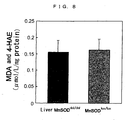
- liver-specific MnSOD-deficient mice were not lethal, and outwardly, were not different from the wild-type.
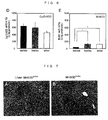
- liver-specific MnSOD-deficient mice generated in Example 2 were used to carry out the hematoxylin-eosin (HE) staining, periodic acid-Schiff (PAS) staining, and Oil Red O staining. As a result, no significant difference was observed in the accumulation of glycogen (Figure 7).
- the present inventors succeeded in generating model mice that enabled the observation of the destruction of protection against reactive oxygen species in each organ separately by the gene manipulation and the effects of reactive oxygen species against the living body.
- the tissue-specific MnSOD-deficient mouse of the present invention is different from the conventional MnSOD-deficient mice, and is tissue-specifically deficient in the MnSOD activity, and thus, it is possible to avoid the lethal effects occurring in the neonatal period.
- the model mouse of the present invention it is possible to observe senescence and aging in each organ separately. Such an observation was not possible using the conventional model mice. Further, according to the model mouse of the present invention, the sensitivity of each organ to reactive oxygen species can be analyzed, and the sensitivity to senescence can be evaluated in each organ separately.
- the model mouse of the present invention is essential to the analysis of diseases in which morbidity is increased with senescence and specific changes occur in an organ (for example, Parkinson disease or arteriosclerosis). Further, the model mouse is essential to the development of tissue-specific agents for treating such a disease, for example, an agent for preventing senescence in the brain. Furthermore, the present invention provides an assay system useful for checking the effects of developed agents.
- each of the base sequences of SEQ ID NOS: 1 to 6 is an artificially synthesized primer sequence.
Landscapes
- Life Sciences & Earth Sciences (AREA)
- Health & Medical Sciences (AREA)
- Chemical & Material Sciences (AREA)
- Engineering & Computer Science (AREA)
- Zoology (AREA)
- Genetics & Genomics (AREA)
- Biotechnology (AREA)
- Environmental Sciences (AREA)
- Organic Chemistry (AREA)
- General Health & Medical Sciences (AREA)
- Bioinformatics & Cheminformatics (AREA)
- Wood Science & Technology (AREA)
- Biochemistry (AREA)
- Molecular Biology (AREA)
- Animal Husbandry (AREA)
- Biodiversity & Conservation Biology (AREA)
- Veterinary Medicine (AREA)
- General Engineering & Computer Science (AREA)
- Biomedical Technology (AREA)
- Animal Behavior & Ethology (AREA)
- Microbiology (AREA)
- Medicinal Chemistry (AREA)
- Physics & Mathematics (AREA)
- Biophysics (AREA)
- Plant Pathology (AREA)
- Micro-Organisms Or Cultivation Processes Thereof (AREA)
- Enzymes And Modification Thereof (AREA)
Applications Claiming Priority (3)
| Application Number | Priority Date | Filing Date | Title |
|---|---|---|---|
| JP2002232625 | 2002-08-09 | ||
| JP2002232625 | 2002-08-09 | ||
| PCT/JP2003/010118 WO2004014131A1 (fr) | 2002-08-09 | 2003-08-08 | Animal non humain 'knockin', et animal non humain 'knockout' presentant un gene mnsod dans un tissu specifique |
Publications (2)
| Publication Number | Publication Date |
|---|---|
| EP1544302A1 true EP1544302A1 (fr) | 2005-06-22 |
| EP1544302A4 EP1544302A4 (fr) | 2007-11-28 |
Family
ID=31711840
Family Applications (1)
| Application Number | Title | Priority Date | Filing Date |
|---|---|---|---|
| EP03784601A Withdrawn EP1544302A4 (fr) | 2002-08-09 | 2003-08-08 | Animal non humain "knockin", et animal non humain "knockout" presentant un gene mnsod dans un tissu specifique |
Country Status (4)
| Country | Link |
|---|---|
| US (1) | US20050198699A1 (fr) |
| EP (1) | EP1544302A4 (fr) |
| JP (1) | JPWO2004014131A1 (fr) |
| WO (1) | WO2004014131A1 (fr) |
Families Citing this family (2)
| Publication number | Priority date | Publication date | Assignee | Title |
|---|---|---|---|---|
| US20070293568A1 (en) * | 2006-06-16 | 2007-12-20 | Yamaha Hatsudoki Kabushiki Kaisha | Neurocyte Protective Agent |
| CA2719267A1 (fr) * | 2008-04-25 | 2009-10-29 | New York Blood Center, Inc. | Souris knockout conditionnelle abi1/hssh3bp1 |
Family Cites Families (1)
| Publication number | Priority date | Publication date | Assignee | Title |
|---|---|---|---|---|
| CA2321934C (fr) * | 1998-02-25 | 2012-02-21 | Paul Q. Anziano | Isoformes depourvus de l'exon 3 de superoxyde-dismutase de manganese et molecules d'acide nucleique codant ces isoformes |
-
2003
- 2003-08-08 EP EP03784601A patent/EP1544302A4/fr not_active Withdrawn
- 2003-08-08 WO PCT/JP2003/010118 patent/WO2004014131A1/fr not_active Ceased
- 2003-08-08 JP JP2004527372A patent/JPWO2004014131A1/ja active Pending
-
2005
- 2005-02-04 US US11/051,177 patent/US20050198699A1/en not_active Abandoned
Also Published As
| Publication number | Publication date |
|---|---|
| US20050198699A1 (en) | 2005-09-08 |
| WO2004014131A1 (fr) | 2004-02-19 |
| EP1544302A4 (fr) | 2007-11-28 |
| JPWO2004014131A1 (ja) | 2005-11-24 |
Similar Documents
| Publication | Publication Date | Title |
|---|---|---|
| Ikegami et al. | Model mice for tissue-specific deletion of the manganese superoxide dismutase (MnSOD) gene | |
| Xu et al. | Direct removal in the mouse of a floxed neo gene from a three‐loxP conditional knockout allele by two novel approaches | |
| Li et al. | Generation of mice with a 200-kb amyloid precursor protein gene deletion by Cre recombinase-mediated site-specific recombination in embryonic stem cells. | |
| Orban et al. | Tissue-and site-specific DNA recombination in transgenic mice. | |
| Schwenk et al. | A cre-transgenic mouse strain for the ubiquitous deletion of loxP-flanked gene segments including deletion in germ cells | |
| Kasparek et al. | Efficient gene targeting of the Rosa26 locus in mouse zygotes using TALE nucleases | |
| Johnson et al. | Inactivation of the murine pyruvate dehydrogenase (Pdha1) gene and its effect on early embryonic development | |
| US20100122361A1 (en) | Humanisation of animals | |
| US20060205077A1 (en) | Targeted transgenesis using the rosa26 locus | |
| Masaki et al. | Targeted disruption of CRE-binding factor TREB5 gene leads to cellular necrosis in cardiac myocytes at the embryonic stage | |
| US20050044584A1 (en) | LKB1 gene knockout animals | |
| Qu et al. | Gene targeting of ErbB3 using a Cre‐mediated unidirectional DNA inversion strategy | |
| US20040216178A1 (en) | Regulation of mdm2 function | |
| Sunaga et al. | Efficient removal of loxP‐flanked DNA sequences in a gene‐targeted locus by transient expression of Cre recombinase in fertilized eggs | |
| Liu et al. | Generation of novel conditional and hypomorphic alleles of the Smad2 gene | |
| EP1544302A1 (fr) | Animal non humain "knockin", et animal non humain "knockout" presentant un gene mnsod dans un tissu specifique | |
| Greene et al. | A Murine Model for Juvenile NCL: Gene Targeting of MouseCln3 | |
| WO1997035967A2 (fr) | Organismes transgeniques presentant une alteration de l'activite de la telomerase | |
| CA2876469A1 (fr) | Modeles de souris transgeniques destines au mc4r | |
| US6069297A (en) | Glucose-6-phosphate dehydrogenase deficient mice and methods of using same | |
| US6632978B1 (en) | Transgenic animals for studying regulation of genes | |
| Wallace et al. | Inactivation of the murine Transferrin Receptor 2 gene using the Cre recombinase: loxP system | |
| Tyynismaa et al. | Mouse models of mtDNA replication diseases | |
| Schipani | Conditional gene inactivation using cre recombinase. | |
| Bradley et al. | Temporal regulation of Cre‐recombinase activity in Scl‐positive neurons of the central nervous system |
Legal Events
| Date | Code | Title | Description |
|---|---|---|---|
| PUAI | Public reference made under article 153(3) epc to a published international application that has entered the european phase |
Free format text: ORIGINAL CODE: 0009012 |
|
| 17P | Request for examination filed |
Effective date: 20050212 |
|
| AK | Designated contracting states |
Kind code of ref document: A1 Designated state(s): AT BE BG CH CY CZ DE DK EE ES FI FR GB GR HU IE IT LI LU MC NL PT RO SE SI SK TR |
|
| A4 | Supplementary search report drawn up and despatched |
Effective date: 20071030 |
|
| RAP1 | Party data changed (applicant data changed or rights of an application transferred) |
Owner name: ANTI-AGING SCIENCE, INC. |
|
| 17Q | First examination report despatched |
Effective date: 20080121 |
|
| STAA | Information on the status of an ep patent application or granted ep patent |
Free format text: STATUS: THE APPLICATION IS DEEMED TO BE WITHDRAWN |
|
| 18D | Application deemed to be withdrawn |
Effective date: 20080801 |