EP1547607A1 - Herstellung einer komponente des bakterienzellwand-skeletts - Google Patents
Herstellung einer komponente des bakterienzellwand-skeletts Download PDFInfo
- Publication number
- EP1547607A1 EP1547607A1 EP03766694A EP03766694A EP1547607A1 EP 1547607 A1 EP1547607 A1 EP 1547607A1 EP 03766694 A EP03766694 A EP 03766694A EP 03766694 A EP03766694 A EP 03766694A EP 1547607 A1 EP1547607 A1 EP 1547607A1
- Authority
- EP
- European Patent Office
- Prior art keywords
- cws
- bacteria
- fatty acid
- paste
- oil
- Prior art date
- Legal status (The legal status is an assumption and is not a legal conclusion. Google has not performed a legal analysis and makes no representation as to the accuracy of the status listed.)
- Withdrawn
Links
Images


Classifications
-
- C—CHEMISTRY; METALLURGY
- C12—BIOCHEMISTRY; BEER; SPIRITS; WINE; VINEGAR; MICROBIOLOGY; ENZYMOLOGY; MUTATION OR GENETIC ENGINEERING
- C12Q—MEASURING OR TESTING PROCESSES INVOLVING ENZYMES, NUCLEIC ACIDS OR MICROORGANISMS; COMPOSITIONS OR TEST PAPERS THEREFOR; PROCESSES OF PREPARING SUCH COMPOSITIONS; CONDITION-RESPONSIVE CONTROL IN MICROBIOLOGICAL OR ENZYMOLOGICAL PROCESSES
- C12Q1/00—Measuring or testing processes involving enzymes, nucleic acids or microorganisms; Compositions therefor; Processes of preparing such compositions
- C12Q1/02—Measuring or testing processes involving enzymes, nucleic acids or microorganisms; Compositions therefor; Processes of preparing such compositions involving viable microorganisms
- C12Q1/04—Determining presence or kind of microorganism; Use of selective media for testing antibiotics or bacteriocides; Compositions containing a chemical indicator therefor
-
- A—HUMAN NECESSITIES
- A61—MEDICAL OR VETERINARY SCIENCE; HYGIENE
- A61K—PREPARATIONS FOR MEDICAL, DENTAL OR TOILETRY PURPOSES
- A61K35/00—Medicinal preparations containing materials or reaction products thereof with undetermined constitution
- A61K35/66—Microorganisms or materials therefrom
- A61K35/74—Bacteria
-
- A—HUMAN NECESSITIES
- A61—MEDICAL OR VETERINARY SCIENCE; HYGIENE
- A61K—PREPARATIONS FOR MEDICAL, DENTAL OR TOILETRY PURPOSES
- A61K47/00—Medicinal preparations characterised by the non-active ingredients used, e.g. carriers or inert additives; Targeting or modifying agents chemically bound to the active ingredient
- A61K47/44—Oils, fats or waxes according to two or more groups of A61K47/02-A61K47/42; Natural or modified natural oils, fats or waxes, e.g. castor oil, polyethoxylated castor oil, montan wax, lignite, shellac, rosin, beeswax or lanolin
-
- A—HUMAN NECESSITIES
- A61—MEDICAL OR VETERINARY SCIENCE; HYGIENE
- A61K—PREPARATIONS FOR MEDICAL, DENTAL OR TOILETRY PURPOSES
- A61K9/00—Medicinal preparations characterised by special physical form
- A61K9/0012—Galenical forms characterised by the site of application
- A61K9/0014—Skin, i.e. galenical aspects of topical compositions
-
- A—HUMAN NECESSITIES
- A61—MEDICAL OR VETERINARY SCIENCE; HYGIENE
- A61K—PREPARATIONS FOR MEDICAL, DENTAL OR TOILETRY PURPOSES
- A61K9/00—Medicinal preparations characterised by special physical form
- A61K9/0012—Galenical forms characterised by the site of application
- A61K9/0019—Injectable compositions; Intramuscular, intravenous, arterial, subcutaneous administration; Compositions to be administered through the skin in an invasive manner
-
- A—HUMAN NECESSITIES
- A61—MEDICAL OR VETERINARY SCIENCE; HYGIENE
- A61K—PREPARATIONS FOR MEDICAL, DENTAL OR TOILETRY PURPOSES
- A61K9/00—Medicinal preparations characterised by special physical form
- A61K9/10—Dispersions; Emulsions
- A61K9/107—Emulsions ; Emulsion preconcentrates; Micelles
-
- A—HUMAN NECESSITIES
- A61—MEDICAL OR VETERINARY SCIENCE; HYGIENE
- A61K—PREPARATIONS FOR MEDICAL, DENTAL OR TOILETRY PURPOSES
- A61K9/00—Medicinal preparations characterised by special physical form
- A61K9/14—Particulate form, e.g. powders, Processes for size reducing of pure drugs or the resulting products, Pure drug nanoparticles
- A61K9/19—Particulate form, e.g. powders, Processes for size reducing of pure drugs or the resulting products, Pure drug nanoparticles lyophilised, i.e. freeze-dried, solutions or dispersions
-
- A—HUMAN NECESSITIES
- A61—MEDICAL OR VETERINARY SCIENCE; HYGIENE
- A61P—SPECIFIC THERAPEUTIC ACTIVITY OF CHEMICAL COMPOUNDS OR MEDICINAL PREPARATIONS
- A61P35/00—Antineoplastic agents
-
- A—HUMAN NECESSITIES
- A61—MEDICAL OR VETERINARY SCIENCE; HYGIENE
- A61P—SPECIFIC THERAPEUTIC ACTIVITY OF CHEMICAL COMPOUNDS OR MEDICINAL PREPARATIONS
- A61P37/00—Drugs for immunological or allergic disorders
- A61P37/02—Immunomodulators
- A61P37/04—Immunostimulants
Definitions
- the invention relates to lyophilized formulations comprising bacterial cell wall skeleton components (bacteria-CWS) and intermediate materials in the production thereof, and processes for preparation of the lyophilized formulations and the intermediate materials thereof, as well as processes for analyzing a medical product comprising a bacteria-CWS, for example, of Mycobacterium and Nocarida as an effective ingredient.
- bacteria-CWS bacterial cell wall skeleton components
- bacteria-CWS bacterial cell wall skeleton components of bacteria
- an oil-in-water emulsion formulation which is prepared by dispersing and emulsifying bacterial cell wall skeleton components in an oil, extremely enhances anti-cancer effects via its immunopotetiating activity.
- cancer immunotherapy using an oil-in-water emulsion of bacterial cell wall skeleton of Mycobacterium bovis bacillus Calmette-Guerin (hereinafter referred to as BCG-CWS) gave an excellent result in cancer therapy for human (Pro. Japan Acad., 70, Ser. B 205-209 (1994), Pro. Japan Acad., 74, Ser. B20550-55 (1998)).
- Such an oil-in-water emulsion formulation can be prepared, for example, by adding water containing a surfactant to the paste obtained by dispersing and emulsifying a bacteria-CWS in an oil (J. Nat. Cancer Inst. 48, 831-835 (1972), J. Bacteriol, 92, 869-879 (1966), Gann, 69, 619-626 (1978)).
- an oil-in-water emulsion comprising bacteria-CWS is extremely unstable to generate insoluble aggregates in a few days. Such a tendency is especially pronounced in cases that oil contents are low.
- oil-in-water emulsion formulations with higher oil contents may put a much burden on living bodies and also provide side effects. Therefore, only a required amount of an oil-in-water emulsion formulation is now manually prepared just before use in clinical practice. However, it is difficult to prepare formulations constantly having uniform qualities just before use by such manual operations.
- re-suspension of a lyophilized formulation with high storage-stability before use which is prepared by lyophilizing an oil-in-water emulsion, into an oil-in-water emulsion formulation by adding an aqueous solvent such as distilled water for injection to the lyophilized formulation is preferable from the viewpoint of availability for clinical use and storage stability of the formulations. Accordingly, there exists a need to provide a stable oil-in-water emulsion formulation and a lyophilized formulation thereof, which can be put into practical use as medical products and can be constantly prepared.
- bacteria-CWS which is a biopolymer having a three-layer structure containing long-chain fatty acids such as mycolic acid, sugar chains and peptide glycans is insoluble in water and organic solvents, and therefore, it cannot be determined by methods such as HPLC, GC and the like which are usually used for analysis of chemical substances.
- Bacteria have different constituents depending on genera, species and strains. Methods for analysis of mycolic acid which characteristically exists in Mycobacterium such as tubercle bacillus and BCG are known in addition to genetic analyses as methods for identification of Mycobacterium. Specifically, bacterial strains of Mycobacterium can be alkaline-hydrolyzed, and extracted with an organic solvent to provide mycolic acid, which is then analyzed by HPLC, thereby enabling identification of genus and species from the elusion pattern of the mycolic acid (J. Clinical Microbiology, 1327-1330, May 1992).
- the problem to be addressed by the present invention is to provide stable and lyophilizable oil-in-water emulsions comprising bacterial cell wall skeleton components as an effective ingredient, lyophilized formulations of the oil-in-water emulsion of the present invention, bacteria-CWS which is a raw material to prepare the formulations of the present invention and pastes comprising bacteria-CWS which are intermediate materials in the production thereof, processes for preparation thereof, and processes for identification of effective ingredients in the formulations of the present invention and of quantitative assay of the strength thereof, processes for identification of genera, species and strains of the bacteria from which the bacteria-CWS used as an effective ingredient is derived, as well as processes for checking that the present formulations and intermediate materials thereof are identical to the standards.
- compositions of bacteria-CWS, oil, surfactants and stabilizers, etc. and processes for preparation thereof in order to obtain an extremely stable oil-in-water emulsion comprising bacteria-CWS as an effective ingredient and a lyophilized formulation thereof.
- properties of a paste consisting of cell wall skeleton components and an oil, which is a intermediate material are important to successfully prepare lyophilized formulations of an emulsion having an excellent re-suspension stability.
- a factor which has a great influence on properties of the stable oil-in-water emulsion is a viscosity of the paste comprising cell wall skeleton components which comprises bacteria-CWS and an oil. Further, we have unclosed ratios of cell wall skeleton components to an oil, which provide a good viscosity.
- bacteria-CWS it is difficult to make bacteria-CWS into an emulsion with a uniform particle size distribution because bacteria-CWS is insoluble in water and in oil.
- bacteria-CWS is insoluble in water and in oil.
- a paste comprising bacteria-CWS suitable for emulsification can be obtained at a viscosity below a certain level regardless of the types of the oil.
- emulsification using a paste comprising bacteria-CWS with a viscosity of about 0.7 poise or less was found to provide an emulsion with a good particle size distribution.
- lyophilized formulations comprising bacteria-CWS as effective ingredients are different in qualities such as stability, and stability of the oil-in-water formulation obtained after resuspension (resuspension stability) depending on the properties of the paste comprising bacteria-CWS, surfactants, and stabilizers.
- the present inventors have studied using various organic solvents as a dispersion-aiding solvent, and found that more excellent pastes comprising bacterial cell wall skeleton components can be obtained by use of a non-polar solvent compared with those using only a polar solvent.
- the present invention has been accomplished based on the above findings.
- the present invention relates to:
- the present invention relates to:
- the bacteria-CWS of Mycobacterium, Nocardia and the like is a biopolymer consisting of a long-chain fatty acid such as mycolic acid, a saccharide, a peptide glycan and the like, and those components, the ratio of the components and the molecular weight thereof which affect the strength of CWS may vary depending on the culture conditions of the bacteria. Accordingly, homogeneity and strength of the bacteria-CWS of Mycobacterium, Nocardia and the like should be evaluated per each production lots.
- the strength of the bacteria-CWS of Mycobacterium, Nocardia and the like as an immunopotentiating agent and/or as anti-tumor agent can be assayed by determining the long-chain fatty acid which is a constituent of bacteria-CWS of Mycobacterium, Nocardia and the like. Further, we have found that the genera, species and strains of the bacteria can be also identified from the chromatograph of the long-chain fatty acid obtained from the strains, raw materials and formulations.
- the present invention has been accomplished based on the above findings. Specifically, the present invention relates to:
- bacteria from which a bacteria-CWS is derived are exemplified by gram-positive rod such as Mycobacteria, Nocardia, Corynebacteria (Proprionibacteria), and Rhodococcus, Bordetella, Listeria, Gordona or the like.
- gram-positive rod such as Mycobacteria, Nocardia, Corynebacteria (Proprionibacteria), and Rhodococcus, Bordetella, Listeria, Gordona or the like.
- Mycobacteria and Nocardia are included.
- Mycobacteria represents bacteria belonging to acid-fast bacteria, Mycobacterium, particularly includes Mycobacterium tuberclosis, Mycobacterium bovis (including BCG), Mycobacterium africanum, Mycobacterium microti , as well as Mycobacterium leprae , non-tuberclosis acid-fast bacteria, Mycobacterium kansasii, Mycobacterium avium, Mycobacterium phlei and the like.
- Nocarida includes Nocardia rubra and the like.
- Bacteria-CWS may be obtained in form of an insoluble residue by a purification process which comprises crashing the cells with a physical means, removing nucleic acids and proteins from the cell debris, and then delipidating the resultant material, and the preparation thereof is well-known (J. Nat. Cancer Inst., 52, 95-101 (1974)).
- the bacterial cell wall skeleton components are used as an oil-in-water emulsion in a concentration of 0.01 to 10 mg/ml.
- concentration is from 0.1 mg/ml to 2 mg/ml, more preferably from 0.2 mg/ml to 1 mg/ml.
- an "oil” includes a mineral oil, or an animal and vegetable oil such as those described in Immunology, 27, 311-329 (1974).
- Mineral oil is exemplified by a liquid paraffin (Drakeol-6VR, Morescobiores U-6, Moleskobiores U-8, etc.), a bayol (Bayol F), and the like.
- Vegetable oil is exemplified by a soybean oil, synthelane 4, ethyl oleate, a peanut oil, a camellia oil, a sesame oil, AD-65 (a mixture of a peanut oil, Arlacel, and aluminum monostearate), and the like.
- Animal oil is exemplified by squalane, and a terpenoid derivative such as squalene, and the like.
- a mixture of one or more oils selected from animal oils, vegetable oils, mineral oils may be included.
- squalane, or a mixture of squalene with a vegetable oil such as a soybean oil, ethyl oleate, oleic acid, etc (or oils derived therefrom), for example, Drakeol-6VR, or a mixture of squalene with a mineral oil such as various liquid paraffin is preferred.
- squalane, Drakeol-6VR, a mixture of squalane and soybean oil, a mixture of squalane and ethyl oleate, or a mixture of squalane and Drakeol-6VR, and the like are included.
- Viscosity as used herein means a value determined by dynamic viscoelasticity measurement, for example, values obtained using a co-axial bicylindrical viscometer. In the present invention, viscosity may be measured using a co-axial bicylindrical viscometer manufactured by Rheology Co., Ltd (Model MR-300, Soliquid meter) at 25 °C under nitrogen atmosphere. One poise represents 0.1 Pa.s (pascal.sec).
- An organic solvent as a dispersion-aiding solvent usable for the preparation of the paste of the present invention includes an organic solvent that can be evaporated off by, for example, heating under a nitrogen stream or under reduced pressure, and may be a mixture of two or more solvents. Particularly, such solvents include those having a boiling point from 30 °C to 140 °C at atmospheric pressure.
- bacteria-CWS may not be sufficiently dispersed.
- a non-polar solvent for example, an aromatic hydrocarbon solvent such as toluene, an aliphatic hydrocarbon solvents such as hexane, heptane and the like, a halogenated hydrocarbon solvent such as chloroform, or ether solvents such as tetrahydrofuran is used, a homogeneously dispersed solution can be obtained, and a paste with an excellent homogeneity can be obtained, those of which have been found by the present inventors.
- the inventors have found that using a non-polar solvent partially containing an alcohol solvent, a more excellent paste comprising bacteria-CWS can be obtained compared with the case using a non-polar solvent alone.
- the resultant paste contains a small amount of giant particles having a particle diameter of about 10 ⁇ m mixed therein, exhibiting two peaks of the particle size distribution of bacteria-CWS in the paste (see Fig.1).
- the formulations of different lots tend to provide variation in particle size distribution. It has been found that when an alcohol solvent is mixed therein, a homogeneous particle size distribution can be obtained.
- Preferred dispersion-aiding solvents for the preparation of the pastes according to the present invention include a non-polar solvent, and a mixture of a non-polar solvent and an alcohol solvent.
- organic solvents are preferably selected from those described as a solvent of Class 2 or 3 in the ICH Guideline for Residual Solvents.
- Non-polar solvents include, for example, an aromatic hydrocarbon solvent such as toluene, an aliphatic hydrocarbon solvent such as cyclopentane, cyclohexane, pentane, hexane, heptane, octane; a halogenated hydrocarbon solvent such as dichloromethane, chloroform, trichloroethylene; and an ether solvent such as tetrahydrofuran.
- an aromatic hydrocarbon solvent such as toluene
- an aliphatic hydrocarbon solvent such as cyclopentane, cyclohexane, pentane, hexane, heptane, octane
- a halogenated hydrocarbon solvent such as dichloromethane, chloroform, trichloroethylene
- an ether solvent such as tetrahydrofuran.
- Such a non-polar solvent is not limited to a single type, but several solvents may be mixed and used as
- Alcohol solvents include, for example, methanol, ethanol. propanol, isopropanol, or butanol. Particularly, ethanol is preferred.
- the dispersion-aiding solvent is a mixture of an alcohol solvent and a non-polar solvent, 5 to 30 %, preferably 5 to 20 %, more preferably 5 to 15 % of alcohol solvent is contained.
- solvents include halogenated hydrocarbon solvents such as chloroform, dichloromethane, trichloroethylene; aliphatic hydrocarbon solvents such as hexane, heptane, pentane, octane; aromatic or aliphatic hydrocarbon solvents containing 0 to 20 % ethanol.
- halogenated hydrocarbon solvents such as chloroform, dichloromethane, trichloroethylene
- aliphatic hydrocarbon solvents such as hexane, heptane, pentane, octane
- aromatic or aliphatic hydrocarbon solvents containing 0 to 20 % ethanol halogenated hydrocarbon solvents
- ethanol-heptane 5 to 20 % ethanol-heptane, 5 to 20 % ethanol-hexane, 5 to 20 % ethanol-toluene, 5 to 20 % ethanol-cyclohexane, 5 to 20 % propanol-heptane, 5 to 20 % isopropanol-heptane, preferably 10 % ethanol may be exemplified.
- a “surfactant” which can be used in the present invention is not limited to a particular species as long as it is used in a pharmaceutical formulation. It includes a phospholipid, a nonionic surfactant, and the like.
- the phospholipid is exemplified by phosphatidyl amine, phosphatidyl ethanol amine, phosphatidyl inositol, phosphatidyl serine, sphingomyelin, lecithin, or the like.
- a hydrogenated phospholipid may be used.
- the nonionic surfactant is exemplified by poly(oxyethylene)-polyoxypropylene copolymer, Polyoxyethylene Hydrogenated castor oil, a poly(oxyethylene) castor oil derivative, a poly(oxyethylene) sorbitan fatty acid ester such as poly(oxyethylene) sorbitan monolaurate (Polysorbate 20), poly(oxyethylene) sorbitan monopalmitate (Polysorbate 40), poly(oxyethylene) sorbitan monostearate (Polysorbate 60), or poly(oxyethylene) sorbitan monooleate (Polysorbate 80), and a sorbitan fatty acid ester such as sorbitan monolaurate (Span 20), sorbitan monopalmitate (Span 40), sorbitan monostearate (Span 60), and sorbitan monooleate (Span 80).
- poly(oxyethylene)-polyoxypropylene copolymer Polyoxyethylene Hydrogenated castor oil
- Preferred surfactant includes egg yolk phosphatidylcholine, egg yolk lecithin, soybean lecithin, and Polysorbate 80, Polysorbate 20, Polyoxyethylene Hydrogenated castor oil 60 (HCO-60), Polyoxyethylene Hydrogenated castor oil 50 (HCO-50), polyoxyethylene (160)polyoxypropylene(30)glycol (pluronic F68) and the like. More preferred surfactant includes Polysorbate 80.
- the surfactant is suitably used in an oil-in-water emulsion in a concentration range of 0.01 to 10 %w/w, and preferably, 0.01 to 3 %w/w.
- Each surfactant may be used solely, or in combination with other several ones, as appropriate.
- the stabilizers are components used in order to maintain and improve stability of the above emulsion.
- the stabilizers which can be used in the present invention include a monosaccharide, a sugar alcohol, a polysaccharide, an amino acid, a protein, urea, or an inorganic salt.
- the monosaccharide and disaccharide includes glucose, fructose, sucrose, lactose, trehalose and the like.
- the sugar alcohol includes mannitol, sorbitol and the like. More preferred sugar alcohol includes mannitol.
- the polysaccharide is exemplified as a preferred one by dextran, starch, maltodextrin, cellulose, polyvinylpyrrolidone, sodium alginate, or the like.
- the amino acid is preferably a neutral amino acid such as alanine, glycine, proline, and more preferably, glycine among the neutral amino acids.
- the protein is exemplified as a preferred one by albumin, a gelatin, a collagen, and the like.
- the inorganic salt includes sodium chloride, calcium chloride, sodium sulfate, sodium carbonate and the like.
- the stabilizer is preferably monosaccharide, or sugar alcohol, more preferably mannitol.
- Such a stabilizer may be used solely, or in combination with other several ones, if necessary.
- the concentration of the stabilizer is suitably in a range of 0.1 to 20 %w/w, and preferably, 0.1 to 10 %w/w.
- the suitable concentration of the stabilizer varies depending on the types of the stabilizer, and may be adequately adjusted depending on the manufacturing scale and the content of the component, if necessary.
- amino acids such as glycine
- the suitable concentration is 2.25 % (300 mM) to 1.25 % (1500 mM), preferably about 6.75 % (900 mM).
- the concentration in the oil-in-water emulsion is preferably 1 to 10 %, more preferably 1 to 8 %, even more preferably 3 to 6 %. Since mannitol may be used as a stabilizer at the concentration almost equal to isotonic, stable formulations providing less burden on a living body may be prepared by use of mannitol.
- Aqueous solvents as used in resuspension of the lyophilized formulations of the present invention are media for dispersion of emulsion particles, and include distilled water for injection, physiological saline or the like, not being limited to a particular species as long as it can be used as an aqueous solvent for injection.
- Long-chain fatty acids represent a long-chain fatty acid characteristically existing in cell walls of Mycobacteria, Nocardia, Corynebacteria, Rhodococcus, Gordona, or the like.
- a long-chain fatty acid includes, for example, mycolic acid, which represents an ⁇ -alkyl- ⁇ -hydroxyl fatty acid with a total carbon number of about 22 to 90.
- the total carbon numbers of mycolic acid is about 60 to 90 in Mycobacterium, about 44 to 60 in Nocardia.
- mycolic acids may be isolated as a mixture of several types of molecules.
- Alpha chains of mycolic acids consisting of linear hydrocarbons have different length among different genera and species with a wide distribution mainly ranging from C22 to C66.
- ⁇ -chains it is known that there exist functional groups such as ⁇ -mycolic acid (with a cyclopropyl group and/or a double bond) in any kinds of Mycobacterium, and various sub-mycolic acids (methoxy, ethoxy, keto, epoxy, methyl, etc.) in certain strains.
- ⁇ -mycolic acid with a cyclopropyl group and/or a double bond
- various sub-mycolic acids methoxy, ethoxy, keto, epoxy, methyl, etc.
- BCG Tokyo strains have ⁇ -, methoxy- and keto-mycolic acid.
- the term “strength” represents a strength of biological activity of bacteria-CWS of Mycobacterium, Nocardia and the like, or medical products comprising them, or a relative value compared with the calibrated standards.
- the medical products include a suspension of CWS in an aqueous solvent; a paste comprising CWS and an oil such as a mineral oil, squalane or squalene; an emulsion solution obtained by re-suspending the paste; or a lyophilized formulation obtained by lyophilizing said suspension in an aqueous solvent or emulsion solution.
- biological activity means an immunopotentiating activity and/or an anti-tumor activity of CWS of bacteria such as Mycobacterium, Nocardia and the like, and includes any activity in vivo and in vitro well-known in the art.
- interferon- ⁇ induction activity, TNF- ⁇ induction activity, anti-tumor activity in the test tumor animal model and the like are included.
- the present invention provides an oil-in-water emulsion, and a paste comprising bacteria-CWS as an effective ingredient, which may be a suitable intermediate material in the production of a lyophilized formulation thereof.
- a paste consisting of a bacteria-CWS and an oil (an oily mixture), which is characterized by having a viscosity of about 0.7 poise or less (25 °C), preferably about 0.2 to about 0.6 poise (25 °C). More preferably, a paste comprising bacteria-CWS with a viscosity from about 0.28 to 0.55 poise (25 °C).
- a paste comprising bacteria-CWS preferably has a viscosity from about 0.35 to 0.55 poise (25 °C), and more preferably, from about 0.39 to 0.51 poise (25 °C).
- a paste comprising bacteria-CWS viscosity: 0.43 poise
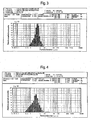
- oil droplets in the oil-in-water emulsion obtained by re-suspending the lyophilized formulation exhibits a single peak with narrow half bandwidth, with particle size being from 2 to 3 ⁇ m (see Fig.4).
- the paste comprising BCG-CWS with the above viscosity of 0.43 poise is more excellent in terms of the generation of adhesion to the wall of the vessel and the concentration of the raw material in the re-suspended oil-in-water emulsion.
- the specific embodiment of the paste comprising BCG-CWS is exemplified as a preferred composition by those having a viscosity of about 0.43 ⁇ 0.3 poise.
- Preferred pastes comprising bacteria-CWS are those comprising an assembly of bacteria-CWS particles wherein the particle diameter is 0.1 ⁇ m to 20 ⁇ m, preferably 0.15 to 6 ⁇ m, more preferably 0.2 ⁇ m to 2 ⁇ m in the particle size distribution, and those wherein the particle size distribution shows a single peak, and D10 % of 0.23 ⁇ 0.05 and D90 % of 0.60 ⁇ 0.05.
- each oils may be mixed in any appropriate composition ratio, but the composition ratio is desirably selected such that the viscosity during mixing with bacteria-CWS is adjusted to about 0.7 poise or less (25 °C). Further, in order to prepare a stable lyophilized formulation after suspension, the composition ratio of each oil may be such that the viscosity during mixing with bacteria-CWS is about 0.2 poise or more (25 °C). Particularly, about 6.6 g to 35.2 g, preferably about 8.4 g to 35. 2 g of squalane may be used for about 0.66 g of bacteria-CWS.
- the paste may be prepared in a large scale by: (1) a step of mixing with stirring a bacteria-CWS, an oil, and an organic solvent; and (2) a step of evaporating the organic solvent in step (1) to obtain a paste comprising bacteria-CWS.
- the amount of the organic solvent used in step (1) is, for example, 50 ml to 500 ml for 0.67 g of bacteria-CWS.
- the order of addition of the materials may not be particularly limited.
- the time for mixing these materials with stirring may not be particularly limited, but preferably from 10 minutes to 1 hour.
- a heating temperature to evaporate the solvent may be properly selected depending on the boiling point and vapor pressure of the solvent used. Since deactivation of the cell wall skeleton may be occurred at evaluated temperature, the temperature not higher than 100 °C is preferred at which deactivation may not occur. Preferably, the temperature is not higher than 80 °C.
- the step of evaporating off the solvent may be carried out under ambient pressure or under reduced pressure.
- the paste comprising bacteria-CWS has an assembly of bacteria-CWS particles having a particle diameter of 0.1 ⁇ m to 20 ⁇ m, preferably 0.15 to 6 ⁇ m, still more preferably 0.2 ⁇ m to 2 ⁇ m. That is, pastes comprising bacteria-CWS wherein (1) the viscosity is about 0.2 to 0.7 poise (25 °C), and (2) the particle diameter of the bacteria-CWS particle assembly is 0.15 ⁇ m to 6 ⁇ m, are also a preferable embodiment of the present invention.
- the present invention provides an oil-in-water emulsion which has a homogeneous particle size distribution and which comprises a bacteria-CWS as an effective ingredient, and a pharmaceutical formulation consisting of the oil-in-water emulsion.
- the invention provides an oil-in-water emulsion which comprises the paste comprising bacteria-CWS as described above, 0.1 % to 20 %, preferably 1 % to 10 % of a stabilizer; and 0.01% to 10 %, preferably 0.01 % to 3 % of a surfactant, as well as a pharmaceutical composition thereof.
- oil-in-water emulsion which comprises 0.67 g to 3.35 g of bacteria-CWS and 0.1 to 10 %w/w, preferably 0.4 to 8 %w/w, more preferably 0.6 to 5 % of squalane, as well as 1 % to 10 %w/w of stabilizer, 0.01 % to 3 %w/w of surfactant.
- the process for preparation of the oil-in-water emulsion of the present invention is not particularly limited, and those described in International Publication No. WO00/3724 and the like may be used.
- example of such a process includes a process wherein the paste comprising bacteria-CWS prepared according to the above process is emulsified using a two-step emulsification, that is, emulsification methods 1 and 2 as shown below.
- Emulsification method 1
- the oil-in-water emulsion may be prepared by the following steps:
- Dispersing/emulsifying devices usable in the present invention include a Potter-Elvehjem type homogenizer, a homomixer, an ultrasonication homomixer, Microfluidizer (trade name), Nanomizer (trade name), Ultimizer (trade name), a Manton-Gaulin homogenizer type high pressure homogenizer, all of which can be used to conduct dispersion or emulsification to prepare a desired oil-in-water emulsion. For some reason in the preparation, additives such as an excipient or a stabilizer may be added to the resultant oil-in-water emulsion.
- the oil-in-water emulsion of the present invention may be prepared by the following steps:
- the preparation of the oil-in-water emulsion of the present invention using emulsification method 2 as described above avoids the precipitation of a surfactant, which would be a problem encountered when an emulsion containing en electrolyte such as an amino acid, an inorganic salt or the like as a stabilizer in the preparation using emulsification method 1.
- dilution step 6) in emulsification method 2 does not change the particle size distribution of the emulsion.
- a large scale production using emulsification method 1 requires using an emulsifier device suitable depending on preparation scale, which limits the preparation scale.
- using a high-concentration emulsion solution as an intermediate material in emulsification method 2 provides an advantage to increase the amount of oil-in-water emulsion prepared per batch.
- an agent for rendering isotonic may be added if necessary.
- agents for rendering isotonic are not limited to a single type, but may be used in a combination of several types as appropriate.
- an agent for rendering isotonic may also function as an excipient that forms a lyophilized preparation into a lyophilized cake.
- An agent for rendering isotonic or an excipient is exemplified by a saccharide, an amino acid, an urea, an inorganic salt, and the like.
- the saccharide is exemplified by a monosaccharide, a disaccharide, and a sugar alcohol.
- the monosaccharide includes glucose, fructose, and the like
- the disaccharide includes maltose, lactose, trehalose, sucrose, and the like
- the sugar alcohol includes mannitol, sorbitol, and the like.
- the amino acid includes alanine, glycine, lysine, arginine, proline and the like.
- Each agent for rendering isotonic may be used solely, or in combination with other several ones, if necessary.
- an isotonic agent those described for the stabilizer may be used.
- a surfactant may also serve as an isotonic agent.
- the isotonic agent may be different from the stabilizer.
- the concentration of the isotonic agent may be selected depending on the contents of the other components, and suitably used in a concentration range of 0.1 to 30 %w/w in the oil-in-water emulsion.
- the oil-in-water emulsion of the present invention has oil droplets with particle diameter of 0.2 to 30 ⁇ m, preferably 0.2 to 20 ⁇ m, of which the average particle diameter is preferably 2 to 3 ⁇ m.
- Bacteria-CWS is encapsulated in an oil droplet.
- bacteria-CWS is encapsulated in an oil in the oil-in-water emulsion of the present invention may be examined by assay of the agglutination reaction of the cell wall skeleton components with lectin.
- assay methods, for example, described in International Publication No. WO00/3724 may be used.
- an oil-in-water emulsion negative for agglutination reaction with lectin wherein (1) the particle diameter of the emulsion oil droplet is 0.2 to 10 ⁇ m, with the average particle diameter being 2 to 3 ⁇ m; and (2) bacteria-CWS is encapsulated in the droplet, may be also encompassed as an embodiment of the present invention.
- the particle diameter of the oil droplet of the emulsion may be preferably D10%: 0.5 ⁇ m or more, and D90 %: 20 ⁇ m or less.
- the present invention provides a lyophilized formulation obtainable by lyophilizing the above oil-in-water emulsion.
- the lyophilized formulation may be prepared by lyophilizing the above oil-in-water emulsion. That is, the lyophilized formulation of the present invention is obtained by subjecting the oil-in-water emulsion to lyophilization process, and finally substituting the content of the vial with nitrogen and sealing the vial.
- the temperature and time for such lyophilization may not be particularly limited, and include, for example, those described in International Publication No. WO00/3724.
- the isotonic solutions described above may be used as an aqueous solvent used for preparation of the oil-in-water emulsion by resuspending the lyophilized formulation.
- the lyophilized formulation can be more quickly re-suspended upon addition of a suitable aqueous solvent, thus providing an oil-in-water emulsion showing a particle size distribution and stability similar to those before the lyophilization.
- the present invention provides an assembly of bacterial cell wall skeleton component particles (a bacteria-CWS particle assembly) which has a particle diameter of 0.15 to 6 ⁇ m, preferably 0.2 to 2 ⁇ m in the particle size distribution.
- the invention also comprises an assembly of bacteria-CWS particles in which the particle diameter shows D10%: 0.2 ⁇ m or more, and D90%: 0.7 ⁇ m or less, wherein "D 10 %: 0.2 ⁇ m” means that its particle diameter reaches 10 % of the assembly summation as calculated in order of increasing diameter in the particle size distribution, and in other words, means that up to 90 % of the bacteria-CWS particle assembly may have a particle diameter of 0.2 ⁇ m or more, and wherein "D90%: 0.7 ⁇ m” means that its particle diameter reaches 90 % of the assembly summation as calculated in order of decreasing diameter in the particle size distribution, and in other words, means that up to 90 % of the bacteria-CWS particle assembly may have a particle diameter of 0.7 ⁇
- the present invention also encompasses a paste comprising the assembly of bacterial cell wall skeleton component particles (a bacteria-CWS particle assembly) with the particle diameter described above, an emulsion and a lyophilized formulation prepared from the paste.
- a paste comprising the assembly of bacterial cell wall skeleton component particles (a bacteria-CWS particle assembly) with the particle diameter described above, an emulsion and a lyophilized formulation prepared from the paste.
- an emulsion comprising the above bacteria-CWS (oil droplet) having a particle diameter of 0.2 to 30 ⁇ m, preferably 0.3 to 20 ⁇ m, more preferably 1 to 10 ⁇ m, and a lyophilized formulation thereof may be encompassed in the present invention.
- Particle diameter as used herein may be determined by measuring a particle size distribution. Such particle size distribution may be measured according to the methods well-known in the art, for example, using a laser diffraction particle size analyzer (SALD3000, SHIMADZU Corp.) or a MICRO-TURRAX UPA (manufactured by HANEWEL) for a suspension of bacteria-CWS in a solvent. In case of bacteria-CWS having a particle diameter of 1 ⁇ m or less, the particle diameter may be preferably measured using MICRO-TURRAX UPA. For example, BCG-CWS suspended in a solvent at a concentration of about 0.1 mg/mL may be used as a sample for measurement.
- SALD3000 laser diffraction particle size analyzer
- MICRO-TURRAX UPA manufactured by HANEWEL
- the particle diameter may be preferably measured using MICRO-TURRAX UPA.
- a paste comprising bacteria-CWS or an emulsion it may be measured using a laser diffraction particle size analyzer (SALD3000, SHIMADZU Corp.).
- SALD3000 laser diffraction particle size analyzer
- a paste comprising bacteria-CWS of the present invention may be diluted about 300 times or more with an oil to provide a sample for measurement.
- a sample for measurement may be prepared to adjust the bacteria-CWS concentration to 0.1 to 0.2 mg/mL.
- the oil-in-water emulsion of the present invention can be administered parenterally, for example, by injection.
- Dosage form to be administered may be varied depending on a therapeutic purpose, and is not limited to a particular form. Dosage form usually used includes an injection form for transcutaneous administration.
- the amount of bacteria-CWS in the emulsion is generally in a range from 0.2 mg/ml to 0.6 mg/ml.
- the lyophilized formulation of the present invention may be resuspended in an appropriate amount of an aqueous solvent such as the above isotonic solution before use.
- the concentrations of the individual components may be different to those in the oil-in-water emulsion as a production intermediate material before lyophilization.
- the appropriate amount of the aqueous solvent may be preferably in a range from0.5 to 4 times of the amount of the solution before lyophilization.
- the amount and the number of dosage to be administered may be varied depending on the disease to be treated, the symptom, the age, the body weight, sex and the like of a particular patient, it is possible to usually administer 10 to 250 ⁇ g, and preferably 25 to 200 ⁇ g per administration every week or every four weeks to an adult in case of a parenteral administration, particularly injection.
- the present invention provides a process for qualitative identification and determination of the species and strains of Mycobacterium, Nocardia and the like on the basis of chromatogram of the long-chain fatty acid contained in their bacteria-CWS, which comprise the following steps:
- the present invention provides a process for determination and evaluation of a CWS content in a test sample containing bacteria-CWS of Mycobacterium, Nocardia and the like, and to assay and evaluate the amount of the effective ingredient, i.e., strength, which comprises:
- This step is as described above.
- the value obtained in (4) of the test sample i.e., of a bacteria-CWS to be evaluated may be compared with that of the bacteria-CWS standard to assay the strength of the sample.
- the values of the standard obtained in (4) are measured at different concentrations and several times, and a standard carve is created showing the correlation between the concentration of the standard and the long-chain fatty acid content.
- the amount of the effective ingredient in the test sample i.e., strength, can be calculated from the measurement of the long-chain fatty acid content in the test sample using the standard curve.
- bacteria-CWS of Mycobacterium, Nocardia, and the like not only bacteria-CWS of Mycobacterium, Nocardia, and the like, but also an effective ingredient of a pharmaceutical formulation comprising the bacteria-CWS of Mycobacterium, Nocardia, and the like, as well as a strength may be detected and determined. That is, according to processes similar to those described above, a suspension of strains or pharmaceutical formulations in water or organic solvent is prepared and the amount of the long-chain fatty acid in the strain or the pharmaceutical formulations may be measured.
- BCG-CWS (670 mg), as a cell wall skeleton components obtained as described in J. Nat. Cancer Inst., 52, 95 - 101 (1974), was added to a mixture of squalane (8.4 g) used as an oil and toluene (200 mL), and the resultant mixture was shaken or treated with ultrasonic at room temperature to perform dispersion. Then, the dispersion mixture was heated at 60 - 70 °C under a flow of nitrogen or air to evaporate the toluene. Thus, a paste comprising BCG-CWS was obtained.
- the viscosity of the paste was measured at 25 °C using a co-axial bicylindrical viscometer manufactured by Rheology Co., Ltd (Model MR-300, Soliquid meter). The viscosity was measured to be 0.545 poise.
- the viscosity of squalane was 0.236, and that of a paste obtained by mixing the squalane with BCG-CWS was 0.545.
- the content of the ethyl oleate, which has a lower viscosity was increased, the viscosity of the paste comprising BCG-CWS was reduced accordingly.
- Example 2 According to a similar procedure to that of Example 1 except that BCG-CWS (670 mg) as a cell wall skeleton, and soybean oil (8.4 g) as an oil were used, an oily mixture (paste) was prepared and measured for its viscosity.
- Example 2 According to a similar procedure to that of Example 1 except that BCG-CWS (670 mg) was used as a cell wall skeleton, and the amount of squalane varied from 4.2 g to 33.6 g, pastes were prepared and the changes in viscosity were measured.
- the viscosity tended to increase when the ratio of squalane to BCG-CWS was decreased, and tended to decrease when the ratio of squalane was increased.
- Example 3 To paste 3 of Example 3, 0.02 w/w% Polysorbate 80 aqueous solution (281.5 g) was added, and roughly emulsified using a homomixer, followed by adding 5.2 g of 10 w/w% Polysorbate 80 aqueous solution to conduct a complete emulsification. Finally, 204.2 g of 10 w/w% Polysorbate 80 solution was added and mixed, and then the final concentration of Polysorbate 80 was adjusted to 1.0 w/w% to obtain an oil-in-water emulsion. Subsequently, 1500 mL of 4 w/w% mannitol aqueous solution was added to give 2L of final product, which was an emulsion of BCG-CWS with concentration of 0.3 mg/ml.
- an emulsion was prepared using the paste in Example 3 (except for 3), and the effect of the amount of the squalane on the availability of the emulsion formulation was examined.
- the availability of the formulation was evaluated based on: (1) emergency of the assembly during emulsification; (2) particle size distribution immediately after emulsification; (3) particle size distribution before and after lyophilization; and (4) properties after resuspension of the lyophilized formulation.
- Example 5 According to a similar procedure to that of Example 4, except that oils used were those in Example 2, an emulsion was prepared and the availability of the formulation was evaluated. The results are shown in Table 5.
- BCG-CWS Oil (8.4 g) Viscosity (poise) Availability of formulation 1 670 mg Soybean oil 6.95 X 2 670 mg Squalane 0.55 ⁇ 3 670 mg Synthelane 4 0.49 ⁇ 4 670 mg Drakeol 0.28 ⁇ 5 670 mg Ethyl oleate 0.11 ⁇
- ⁇ means that (1) the particle size distribution immediately after lyophilization shows a sharp peak with an average particle diameter of 2 to 3 ⁇ m, (2) there is no change in particle size distribution before and after lyophilization, (3) there is no adhesion of the formulation to the vial after resuspension of the lyophilized formulation nor decrease of the concentration of raw material in the formulation. Especially, the formulations (2) and (3) having viscosity of 0.49 - 0.56 poise provided good results.
- Example 6 According to a similar procedure to that of Example 4, using oil having the same composition as that in Example 1, an emulsion was prepared, and availability of formulation was evaluated. The results are shown in Table 6.
- BCG-CWS Squalane Ethyl oleate Viscosity (poise) Availability of formulation 1 670 mg 8.4 g 0 0.545 ⁇ 2 670 mg 6.3 g 2.1 g 0.258 ⁇ 3 670 mg 4.2 g 4.2 g 0.260 ⁇ 4 670 mg 2.1 g 6.3 g 0.165 ⁇ 5 670 mg 0 8.4 g 0.112 ⁇ 6 0 mg 8.4 g 0 0.239 ⁇
- Table 6 shows that the change in the composition of the oil (a mixed ratio of squalane and ethyl oleate) has little effect on the properties of the emulsion, and that the paste comprising BCG-CWS having a viscosity of 0.545 or less provides good emulsion.
- the oil-in-water emulsion prepared according to Example 4 was dispensed into 10 mL aliquots in vials, and then lyophilized to provide the lyophilized formulation of the present invention. Lyophilization was conducted using a lyophilizer (GT-6, manufactured FINTEC). Then the availability of the preparation was evaluated in terms of resuspension stability, particle size distribution, and the like. The results are shown in Table 7.
- the availability of emulsion was also influenced by the viscosity of the paste comprising BCG-CWS.
- the paste comprising BCG-CWS having a viscosity of 0.672 or less provides a good lyophilized formulation. That with viscosity of 0.545 or less is found to provide more excellent lyophilized formulation.
- composition of the oil and the availability of the formulation
- Example 7 the lyophilized formulation of the emulsion was influenced by the viscosity of the paste comprising BCG-CWS used.
- the paste with viscosity of 0.545 or less provided good lyophilized formulation.
- Table 8 shows that the paste having too low viscosity fails to provide a good lyophilized formulation. Accordingly, the suitable viscosity of the paste in order to provide a good lyophilized formulation of the emulsion is found to be in the range from0.258 to 0.545.
- BCG-CWS (2640 mg) as cell wall skeleton components was added to a mixture of squalane (35.2 g) and 10 % ethanol/90 % heptane (400 mL), and shaken or treated with ultrasonic at a room temperature to perform dispersion. Then, the dispersion was heated at 60 °C under a flow of nitrogen to evaporate the solvent with stirring.
- This oil-in-water emulsion was dispensed into 2 mL aliquots in vials, lyophilized to provide lyophilized formulation of the present invention. Lyophilization was carried out using a lyophilizer (GT-6, manufactured by FINTEC, or ULVAC 13A, manufactured by ULVAC).
- BCG-CWS (210 mg) was dispersed in various organic solvents (toluene, hexane, heptane, chloroform, dichloroethane, dichloromethane, tetrahydrofuran; 20ml each) by ultrasonication treatment to prepare dispersed drug, then stirred (3,000 rpm x 5 minutes)with a Potter homogenizer (20 ml model), if necessary.
- the resulting raw material was evaluated for particle size distribution.
- the above raw material solution was mixed with squalane (2.64 g), and the organic solvent was evaporated as described in Example 10 to provide a paste, which was evaluated for particle size distribution.
- Particle size distribution of the dispersed raw material was measured using MICRO-TURRAX UPA (manufactured by HANEWEL), and a laser diffraction particle size analyzer (SALD3000, SHIMADZU Corp.) at the concentration of 0.1 mg CWS/mL.
- the paste was diluted with squalane, and measured using a laser diffraction particle size analyzer (SALD3000, SHIMADZU Corp.) at the concentration of 0.1 - 0.2 mg CWS/mL SQA.
- the particle size distribution of the raw material dispersed in toluene was examined, showing two peaks: a sub-micron peak at 400 - 600 nm and a peak of large particle around 10 ⁇ m.
- Table 10 shows the measurements of D 10 %, D90%, and average particle diameter, when the BCG-CWS drugs dispersed in various solvents were measured using a MICRO-TURRAX UPA.
- Solvent D 10 % ( ⁇ m) D90% ( ⁇ m) Average particle diameter 10 % ethanol/heptane 0.23 0.60 0.41 5% ethanol/heptane 0.23 0.70 0.41 20 % ethanol/heptane 0.25 0.65 0.43 Heptane 1.19 5.07* 2.90* Toluene 0.33 2.08* 1.03* *Since the value of the order of ⁇ m has low data precision attributable to the device performance, it is preferred to refer to the value in Table 11.
- Table 11 shows the measurements of D 10 %, D90%, and the average particle diameter of BCG-CWS drug dispersed in each solvent as measured by SALD3000.
- Solvent D 10 % ( ⁇ m) D90% ( ⁇ m) Average particle diameter 10 % ethanol/heptane 0.11 0.89 0.40 Heptane 0.45 1.10 0.71 Toluene 0.39 20.86 2.65 Toluene 0.33 2.08* 1.03* *Since the value of the order of ⁇ m has low data precision attributable to the device performance, it is preferred to refer to the value in Table 11.
- Table 12 described below shows the measurements of D 10 %, D90%, and the average particle diameter of BCG-CWS drug dispersed in each solvent as measured by SALD3000.
- Solvent D 10 % ( ⁇ m) D90% ( ⁇ m) Average particle diameter 10 % ethanol/heptane 0.38 0.70 0.52 Heptane 0.52 5.50 1.17 Toluene 0.39 9.91 1.05
- BCG-CWS (1320 mg) as cell wall skeleton components was added to a mixture of squalane (17.6 g) and 10 % ethanol/90 % heptane (200 mL), and shaken or treated with ultrasonic at a room temperature to perform dispersion. Then, the dispersion was heated at 60 - 70 °C under a flow of nitrogen to evaporate the solvent with stirring.
- This oil-in-water emulsion was dispensed into 2 mL aliquots in vials, lyophilized to provide lyophilized formulation of the present invention. Lyophilization was carried out using a lyophilizer (GT-6, manufactured by FINTEC, or ULVAC 13A, manufactured by ULVAC).
- BCG-CWS (2640 mg) as cell wall skeleton components was added to a mixture of squalane (70.4 g) and 10 % ethanol/90 % heptane (400 mL), and shaken or treated with ultrasonic at a room temperature to perform dispersion. Then, the dispersion was heated at 60 - 70 °C under a flow of nitrogen to evaporate the solvent with stirring.
- This oil-in-water emulsion was dispensed into 2 mL aliquots in vials, lyophilized to provide lyophilized formulation of the present invention. Lyophilization was carried out using a lyophilizer (GT-6, manufactured by FINTEC, or ULVAC 13A, manufactured by ULVAC).
- BCG-CWS (1320 mg) as cell wall skeleton components was added to a mixture of squalane (35.2 g) and 10 % ethanol/90 % heptane (200 mL), and shaken or treated with ultrasonic at a room temperature to perform dispersion. Then, the dispersion was heated at 60 - 70 °C under a flow of nitrogen to evaporate the solvent with stirring.
- This oil-in-water emulsion was dispensed into 2 mL aliquots in vials, lyophilized to provide lyophilized formulation of the present invention. Lyophilization was carried out using a lyophilizer (GT-6, manufactured by FINTEC, or ULVAC 13A, manufactured by ULVAC).
- Example 12 The change in the particle size distribution before and after lyophilization was evaluated for the lyophilized squalane 1.6 % formulation (containing 26.7 g of squalane per gram of BCG-CWS; viscosity, 0.43 poise) prepared in Example 12, according to a similar procedure to that of Example 11.
- the lyophilized formulation preserved a single peak particle size distribution with average particle diameter being 2 - 3 ⁇ m similar to that of an oil-in-water emulsion before lyophilization (Fig. 3) even after resuspension, wherein 90% D was about 5 ⁇ m.
- the formulation with less squalane content had particles with larger particle diameter (10 ⁇ m to 50 ⁇ m) mixed therein.
- the 90 % D value which indicates the existence of larger particle was around 5 ⁇ m for 1.6 % formulation.
- Example 12 has highly preserved particle size distribution before and after lyophilization.
- the squalane 1.6 % formulation (containing 26.7 g of squalane per gram of BCG-CWS; viscosity, 0.43 poise) prepared in Example 12 was evaluated for stability using long-term accelerated storage conditions (5 °C, 25 °C, 40 °C), and severe conditions (60 °C, 80 °C).
- concentration of the drug in the suspension described in Example 17 was calculated using a method for determination of mycolic acid, and the state of the suspension was visually evaluated.
- the squalane 1.6 % formulation did not provide generation of adhesion even after storage at 40 °C for 3 months, nor provide decrease in drug concentration in the suspension, as shown in Table 13.
- Table 14 shows that no generation of adhesion nor decrease of drug concentration in the suspension was observed even after storage under severe conditions (at 60 °C, 80 °C for a month).
- Example 12 exhibits excellent storage stability.
- Lot Initial 5 °C 25 °C 40 °C x3months x3months x3months Squalane 1.6% formulation 98 (-) 99 (-) 100 (-) 102 (-) *SMP-105 concentration of the suspension is expressed as percentage based on the desired concentration.
- the amount of adhesion is reported in parentheses.
- Lot Initial 60 °C x1 month 80 °C x1 month Squalane 1.6% 98 102 100 formulation (-) (-) (-) *SMP-105 concentration of the suspension is expressed as percentage based on the desired concentration.
- the amount of adhesion is reported in parentheses.
- test solution and the standard solution (10 ⁇ L, each) were analyzed by HPLC using the following conditions.
- the chromatogram of the test solution exhibiting elution pattern with multiple peaks derived from mycolic acid was compared with that of the standard solution.
- the peak area ratio of the mycolic acid derivative to that of the internal standard was obtained, and the strength of the sample was obtained using a standard curve plotted from the data of the standard solution.
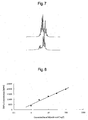
- Fig. 5 shows a representative chromatogram
- Fig. 6 shows a standard curve prepared by plotting the amount of the mycolic acid in the standard measured at several concentrations.
- the strength of the BCG-CWS which is an intermediate material for production of the formulation comprising BCG-CWS as an effective ingredient can be assayed.
- the sample solution and the standard solution (10 ⁇ L, respectively) were analyzed under the same test conditions as those in HPLC of BCG-CWS.
- the elution pattern exhibiting multiple peaks derived from mycolic acid in the chromatogram of the sample solution was compared with that of the standard solution.
- the content of CWS (%) in the test sample (bacterial strain) was obtained.
- BCG Tokyo strain which is an intermediate material in the production of the pharmaceutical formulations comprising BCG-CWS as an effective ingredient.
- the sample solution and the standard solution (10 ⁇ L, respectively) were analyzed using the following conditions.
- the elution pattern exhibiting multiple peaks derived from mycolic acid in the chromatogram of the sample solution was compared with that of the standard solution.
- the peak area ratio of mycolic acid derivative to the internal standard was obtained, and the strength of the test sample was obtained using a standard curve prepared from the sample solution.
- the strength of the pharmaceutical formulation comprising BCG-CWS as an effective ingredient for each lot can be assayed.
- RAW 264.7 cells were seeded in a 96-well plate, and cultivated at 37 °C under conditions (5 % CO 2 , wet) for 5 hours, and after addition of different concentrations of suspensions of BCG-CWS (standard) in physiological saline, the resultant was further cultured for about 15 hours.
- the amount of TNF- ⁇ in the culture supernatant was subjected to ELISA assay using AN'ALYZATM Mouse TNF- ⁇ Immunoassay kit. According to the accompanied instructions, absorbance at 450 nm was measured.
- the content of the mycolic acid in the above suspension of BCG-CWS in physiological saline was measured according to the method described in Example 17.
- Fig. 8 shows plot of the measured content of mycolic acid in BCG-CWS and the amount of TNF- ⁇ .
- the content of mycolic acid obtained by the present method correlates with the actual biological activity (TNF- ⁇ production induction activity). That is, the content of mycolic acid can be used as an index for strength
- the present invention may provide a stable oil-in-water emulsion formulation.
- the present invention also provides a stable and lyophilizable oil-in-water emulsion formulation and lyophilized formulation thereof comprising solid components in oil. Accordingly, BCG-CWS formulation may be prepared, and immunopotentiating anti-tumor therapy can be more effectively performed using the present method.
- genera, species and strains of bacteria in the bacteria-CWS and the formulation comprising the bacteria-CWS can be identified and determined from the chromatogram pattern of a long-chain fatty acid and a derivative thereof contained in bacteria-CWS of Mycobacterium, Nocardia and the like.
- the strength of the production intermediate material comprising bacteria-CWS of Mycobacterium, Nocardia and the like can be quantitatively assayed.
- the formulation comprising bacteria-CWS of Mycobacterium, Nocardia and the like can be prepared while maintaining the quality of the formulation comprising the bacteria-CWS of Mycobacterium, Nocardia and the like as effective ingredients.
Landscapes
- Health & Medical Sciences (AREA)
- Chemical & Material Sciences (AREA)
- Life Sciences & Earth Sciences (AREA)
- General Health & Medical Sciences (AREA)
- Animal Behavior & Ethology (AREA)
- Veterinary Medicine (AREA)
- Medicinal Chemistry (AREA)
- Public Health (AREA)
- Pharmacology & Pharmacy (AREA)
- Epidemiology (AREA)
- Organic Chemistry (AREA)
- Engineering & Computer Science (AREA)
- Bioinformatics & Cheminformatics (AREA)
- Immunology (AREA)
- Molecular Biology (AREA)
- Dermatology (AREA)
- Zoology (AREA)
- Wood Science & Technology (AREA)
- Proteomics, Peptides & Aminoacids (AREA)
- Microbiology (AREA)
- Biophysics (AREA)
- Dispersion Chemistry (AREA)
- Toxicology (AREA)
- Physics & Mathematics (AREA)
- Analytical Chemistry (AREA)
- Nuclear Medicine, Radiotherapy & Molecular Imaging (AREA)
- Chemical Kinetics & Catalysis (AREA)
- Biotechnology (AREA)
- General Chemical & Material Sciences (AREA)
- Mycology (AREA)
- Biochemistry (AREA)
- General Engineering & Computer Science (AREA)
- Genetics & Genomics (AREA)
- Oil, Petroleum & Natural Gas (AREA)
- Medicines Containing Material From Animals Or Micro-Organisms (AREA)
- Medicinal Preparation (AREA)
- Measuring Or Testing Involving Enzymes Or Micro-Organisms (AREA)
Applications Claiming Priority (5)
| Application Number | Priority Date | Filing Date | Title |
|---|---|---|---|
| JP2002226181 | 2002-08-02 | ||
| JP2002226196 | 2002-08-02 | ||
| JP2002226196 | 2002-08-02 | ||
| JP2002226181 | 2002-08-02 | ||
| PCT/JP2003/009801 WO2004012751A1 (ja) | 2002-08-02 | 2003-08-01 | 細菌細胞壁骨格成分製剤 |
Publications (2)
| Publication Number | Publication Date |
|---|---|
| EP1547607A1 true EP1547607A1 (de) | 2005-06-29 |
| EP1547607A4 EP1547607A4 (de) | 2008-11-26 |
Family
ID=31497622
Family Applications (1)
| Application Number | Title | Priority Date | Filing Date |
|---|---|---|---|
| EP03766694A Withdrawn EP1547607A4 (de) | 2002-08-02 | 2003-08-01 | Herstellung einer komponente des bakterienzellwand-skeletts |
Country Status (5)
| Country | Link |
|---|---|
| US (1) | US20050250175A1 (de) |
| EP (1) | EP1547607A4 (de) |
| JP (2) | JP4726485B2 (de) |
| AU (1) | AU2003254792A1 (de) |
| WO (1) | WO2004012751A1 (de) |
Cited By (2)
| Publication number | Priority date | Publication date | Assignee | Title |
|---|---|---|---|---|
| WO2020147472A1 (zh) * | 2019-01-15 | 2020-07-23 | 辽宁格瑞仕特生物制药有限公司 | 赤红球菌产品及其制药用途 |
| US12280076B2 (en) | 2020-01-21 | 2025-04-22 | Liaoning Greatest Bio-Pharmaceutical Co., Ltd. | Use of Rhodococcus ruber cell wall skeleton in regenerative medicine |
Families Citing this family (8)
| Publication number | Priority date | Publication date | Assignee | Title |
|---|---|---|---|---|
| JP5041279B2 (ja) * | 2004-04-22 | 2012-10-03 | 株式会社 Mbr | 細菌細胞壁骨格成分を含有する製剤 |
| WO2007132790A1 (ja) * | 2006-05-12 | 2007-11-22 | National University Corporation Hokkaido University | 細菌菌体成分を含む脂質膜を有するリポソーム |
| JP4888698B2 (ja) * | 2006-08-10 | 2012-02-29 | 株式会社 Mbr | 細菌及び細菌の細胞壁骨格成分の分析方法 |
| JP5578390B2 (ja) * | 2007-03-05 | 2014-08-27 | 株式会社 Mbr | 細菌細胞壁骨格成分の製造方法 |
| KR101825041B1 (ko) * | 2016-04-07 | 2018-02-02 | 주식회사 바이오솔루션 | 물질 p를 포함하는 상처치유용 약학 조성물 |
| CN110967419A (zh) * | 2019-11-06 | 2020-04-07 | 浙江工业大学 | 热辅助在线衍生化气相色谱法测定聚山梨酯80中不同形态的脂肪酸含量 |
| KR102679798B1 (ko) * | 2020-03-02 | 2024-07-02 | 프로지니어 주식회사 | 병원균 외벽 성분 기반 생병원체 모방 나노 입자 및 그 제조 방법 |
| NL2026504B1 (en) * | 2020-09-18 | 2022-05-23 | Fumi Ingredients B V | A microbial cell product, method for obtaining said microbial cell product, and use of said microbial cell product |
Family Cites Families (25)
| Publication number | Priority date | Publication date | Assignee | Title |
|---|---|---|---|---|
| US4122023A (en) * | 1975-05-26 | 1978-10-24 | Sumitomo Chemical Company, Limited | Synthetic saturated oils, and their production and use |
| JPS533514A (en) * | 1976-06-25 | 1978-01-13 | Ichirou Azuma | Adjuvant containing sugarlipid as effective component |
| JPS5428813A (en) * | 1977-08-09 | 1979-03-03 | Yuuichi Yamamura | Solid preparation containing cell membrane extract substance used as suspension when using same |
| US4436728A (en) * | 1982-05-26 | 1984-03-13 | Ribi Immunochem Research, Inc. | Refined detoxified endotoxin product |
| US4663306A (en) * | 1983-09-23 | 1987-05-05 | Ribi Immunochem Research, Inc. | Pyridine-soluble extract-refined detoxified endotoxin composition and use |
| US4877611A (en) * | 1986-04-15 | 1989-10-31 | Ribi Immunochem Research Inc. | Vaccine containing tumor antigens and adjuvants |
| JPH01207236A (ja) * | 1988-02-15 | 1989-08-21 | Sawai Seiyaku Kk | 腫瘍壊死因子誘起剤 |
| CA2017507C (en) * | 1989-05-25 | 1996-11-12 | Gary Van Nest | Adjuvant formulation comprising a submicron oil droplet emulsion |
| US5709860A (en) * | 1991-07-25 | 1998-01-20 | Idec Pharmaceuticals Corporation | Induction of cytotoxic T-lymphocyte responses |
| DE69333110T2 (de) * | 1992-03-02 | 2004-05-06 | Chiron S.P.A. | Mit dem cytotoxin von helicobacter pylori assoziiertes, immunodominantes antigen verwendbar in impfstoffen und zur diagnose |
| GB9326253D0 (en) * | 1993-12-23 | 1994-02-23 | Smithkline Beecham Biolog | Vaccines |
| EP0793791B1 (de) * | 1994-12-02 | 1999-03-24 | Michel Morier-Genoud | Modulares gerät für die heizwasserverteilung und gebäudeheizung |
| AU727781B2 (en) * | 1997-04-02 | 2000-12-21 | Bioniche Life Sciences Inc. | Use of bacterial cell wall extract for preventing, treating, or eliminating a protozoal or parasitic disease |
| US6416740B1 (en) * | 1997-05-13 | 2002-07-09 | Bristol-Myers Squibb Medical Imaging, Inc. | Acoustically active drug delivery systems |
| GB9711990D0 (en) * | 1997-06-11 | 1997-08-06 | Smithkline Beecham Biolog | Vaccine |
| GB9718901D0 (en) * | 1997-09-05 | 1997-11-12 | Smithkline Beecham Biolog | Vaccine |
| AU1145699A (en) * | 1997-09-05 | 1999-03-22 | Smithkline Beecham Biologicals (Sa) | Oil in water emulsions containing saponins |
| WO1999030737A1 (en) * | 1997-12-16 | 1999-06-24 | Chiron Corporation | Use of microparticles combined with submicron oil-in-water emulsions |
| KR100628007B1 (ko) * | 1998-07-16 | 2006-09-26 | 이치로 아즈마 | 세균의 균체성분을 유효성분으로 하는 암면역요법용 제제 |
| DE19841204A1 (de) * | 1998-09-09 | 2000-03-23 | Siemens Ag | Anordnung mit lichtemittierendem Leistungshalbleiterbauelement sowie Verfahren zur Herstellung derselben |
| US6171590B1 (en) * | 1998-09-30 | 2001-01-09 | Corixa Corporation | Chemokine receptor peptide for inducing an immune response |
| EP1156781B1 (de) * | 1999-02-26 | 2005-06-08 | Chiron Corporation | Mikroemulsionen mit adsorbierten makromolekülen und mikropartikeln |
| AU779083B2 (en) * | 1999-07-23 | 2005-01-06 | Bioniche Life Sciences Inc. | Method for enhancing production performance in an animal |
| WO2001074375A1 (en) * | 2000-04-04 | 2001-10-11 | Corixa Corporation | Composition for treatment of autoimmune disease |
| JP2002179577A (ja) * | 2000-12-12 | 2002-06-26 | Club Cosmetics Co Ltd | 抗腫瘍物質及び抗腫瘍剤 |
-
2003
- 2003-08-01 JP JP2004525815A patent/JP4726485B2/ja not_active Expired - Fee Related
- 2003-08-01 AU AU2003254792A patent/AU2003254792A1/en not_active Abandoned
- 2003-08-01 EP EP03766694A patent/EP1547607A4/de not_active Withdrawn
- 2003-08-01 US US10/522,877 patent/US20050250175A1/en not_active Abandoned
- 2003-08-01 WO PCT/JP2003/009801 patent/WO2004012751A1/ja not_active Ceased
-
2010
- 2010-06-07 JP JP2010130279A patent/JP5156924B2/ja not_active Expired - Fee Related
Cited By (3)
| Publication number | Priority date | Publication date | Assignee | Title |
|---|---|---|---|---|
| WO2020147472A1 (zh) * | 2019-01-15 | 2020-07-23 | 辽宁格瑞仕特生物制药有限公司 | 赤红球菌产品及其制药用途 |
| US12102654B2 (en) | 2019-01-15 | 2024-10-01 | Liaoning Greatest Bio-Pharmaceutical Co., Ltd. | Product derived from Rhodococcus ruber, and pharmaceutical use thereof |
| US12280076B2 (en) | 2020-01-21 | 2025-04-22 | Liaoning Greatest Bio-Pharmaceutical Co., Ltd. | Use of Rhodococcus ruber cell wall skeleton in regenerative medicine |
Also Published As
| Publication number | Publication date |
|---|---|
| US20050250175A1 (en) | 2005-11-10 |
| JP4726485B2 (ja) | 2011-07-20 |
| JP5156924B2 (ja) | 2013-03-06 |
| EP1547607A4 (de) | 2008-11-26 |
| JP2010271322A (ja) | 2010-12-02 |
| JPWO2004012751A1 (ja) | 2006-09-21 |
| WO2004012751A1 (ja) | 2004-02-12 |
| AU2003254792A1 (en) | 2004-02-23 |
Similar Documents
| Publication | Publication Date | Title |
|---|---|---|
| JP5156924B2 (ja) | 細菌細胞壁骨格成分製剤 | |
| JPH07121857B2 (ja) | 水中油型乳液の形態にある疎水性薬剤の製薬学的組成物 | |
| US20080152738A1 (en) | Formulations useful for immunotherapy for cancers containing bacterial component as an active ingredient | |
| Kadimi et al. | In vitro studies on liposomal amphotericin B obtained by supercritical carbon dioxide–mediated process | |
| CA2823747C (en) | Liposome formulation suitable for treating or preventing tuberculosis | |
| Wen et al. | Preparation and characterization of moringin-loaded chitosan-coated liposomes and their antibacterial activity against Staphylococcus aureus | |
| JPWO2000003724A1 (ja) | 細菌の菌体成分を有効成分とする癌免疫療法用製剤 | |
| US20080032384A1 (en) | Pharmaceutical Preparation Containing Bacterial Cell Wall Skeleton | |
| JP6442703B2 (ja) | 細菌細胞壁骨格成分を含有する水中油型エマルション製剤 | |
| AU2010255182B2 (en) | Vaccine for mycoplasma infection | |
| EP4272762A1 (de) | Verfahren zur herstellung von betulin als adjuvans in einem impfstoff gegen coronavirus sars-cov-2 | |
| Al-Ogaidi | Improving oral intake of essential oil blends using a novel formulation of biodegradable chitosan/lecithin nanoparticles | |
| Bamisayea et al. | Generation, characterization and pharmacokinetic study of ofloxacin-loaded castor oil based nanoemulsion | |
| CN107519187B (zh) | 一种脂溶性维生素冻干乳的制备方法 | |
| Pratiwi | Antibacterial Activity of Self-Nanoemulsifying Drug Delivery System (SNEDDSS) Loaded with Mangosteen (Garcinia mangostana L.,) Peels against Bacilus subtitis, Bacillus cereus, and Staphylococcus aureus isolated from diabetic foot ulcer patients | |
| CN119158038B (zh) | 一种多肽修饰的酚类精油纳米脂质体及其制备方法 | |
| KR102655185B1 (ko) | 암포테리신 b를 함유하는 지질코어의 제조방법 및 이의 용도 | |
| WO2003023394A2 (en) | Kit for screening compounds with low water solubility | |
| EP2471511A1 (de) | Zur Behandlung oder Vorbeugung von Tuberkulose geeignete Liposomformulierung | |
| KR930000044B1 (ko) | 의약유제 | |
| Campanharo et al. | Novel erythromycin lipid nanoformulations for aquaculture applications | |
| Traub et al. | Nonspecific Resistance of Serratia marcescens Against Antimicrobial Drugs: Resistance or Decreased Susceptibility of Phenotypic Variants Against Chloramphenicol, Nalidixic Acid, Nitrofurantoin, Sulfonamides and Trimethoprim | |
| Liu | Investigating Microbial Metabolism of Garcinia mangostana by the Human Gut Bacterium Clostridium sporogenes | |
| CN120420281A (zh) | 一种氟苯尼考纳米脂质体及其制备方法与应用 | |
| Lestari et al. | INTERNATIONAL JOURNAL OF RESEARCH IN PHARMACEUTICAL SCIENCES |
Legal Events
| Date | Code | Title | Description |
|---|---|---|---|
| PUAI | Public reference made under article 153(3) epc to a published international application that has entered the european phase |
Free format text: ORIGINAL CODE: 0009012 |
|
| 17P | Request for examination filed |
Effective date: 20050214 |
|
| AK | Designated contracting states |
Kind code of ref document: A1 Designated state(s): AT BE BG CH CY CZ DE DK EE ES FI FR GB GR HU IE IT LI LU MC NL PT RO SE SI SK TR |
|
| AX | Request for extension of the european patent |
Extension state: AL LT LV MK |
|
| DAX | Request for extension of the european patent (deleted) | ||
| RAP1 | Party data changed (applicant data changed or rights of an application transferred) |
Owner name: DAINIPPON SUMITOMO PHARMA CO., LTD. |
|
| A4 | Supplementary search report drawn up and despatched |
Effective date: 20081028 |
|
| STAA | Information on the status of an ep patent application or granted ep patent |
Free format text: STATUS: THE APPLICATION HAS BEEN WITHDRAWN |
|
| 18W | Application withdrawn |
Effective date: 20090826 |