EP1548126A1 - Trägermaterial für Kontrollnukleinsäuren und Anwendung dieser zur Nukleinsäuredetektion. - Google Patents
Trägermaterial für Kontrollnukleinsäuren und Anwendung dieser zur Nukleinsäuredetektion. Download PDFInfo
- Publication number
- EP1548126A1 EP1548126A1 EP03293283A EP03293283A EP1548126A1 EP 1548126 A1 EP1548126 A1 EP 1548126A1 EP 03293283 A EP03293283 A EP 03293283A EP 03293283 A EP03293283 A EP 03293283A EP 1548126 A1 EP1548126 A1 EP 1548126A1
- Authority
- EP
- European Patent Office
- Prior art keywords
- nucleic acid
- solid support
- control nucleic
- control
- detection
- Prior art date
- Legal status (The legal status is an assumption and is not a legal conclusion. Google has not performed a legal analysis and makes no representation as to the accuracy of the status listed.)
- Withdrawn
Links
- 150000007523 nucleic acids Chemical class 0.000 title claims abstract description 262
- 108020004707 nucleic acids Proteins 0.000 title claims abstract description 261
- 102000039446 nucleic acids Human genes 0.000 title claims abstract description 261
- 239000007787 solid Substances 0.000 title claims abstract description 117
- 238000001514 detection method Methods 0.000 title claims description 82
- 238000000034 method Methods 0.000 claims abstract description 83
- 238000004519 manufacturing process Methods 0.000 claims abstract description 4
- 239000012528 membrane Substances 0.000 claims description 99
- 239000003795 chemical substances by application Substances 0.000 claims description 80
- 239000000463 material Substances 0.000 claims description 46
- 230000003321 amplification Effects 0.000 claims description 42
- 239000000203 mixture Substances 0.000 claims description 42
- 238000003199 nucleic acid amplification method Methods 0.000 claims description 42
- 238000012545 processing Methods 0.000 claims description 40
- 108091003079 Bovine Serum Albumin Proteins 0.000 claims description 39
- 229940098773 bovine serum albumin Drugs 0.000 claims description 39
- 229920002678 cellulose Polymers 0.000 claims description 37
- 235000010980 cellulose Nutrition 0.000 claims description 37
- 238000003753 real-time PCR Methods 0.000 claims description 31
- 239000001913 cellulose Substances 0.000 claims description 29
- 229920000642 polymer Polymers 0.000 claims description 29
- 239000007788 liquid Substances 0.000 claims description 24
- 230000008569 process Effects 0.000 claims description 21
- 238000000605 extraction Methods 0.000 claims description 19
- 238000012408 PCR amplification Methods 0.000 claims description 17
- 239000000523 sample Substances 0.000 claims description 17
- 239000005547 deoxyribonucleotide Substances 0.000 claims description 16
- 125000002637 deoxyribonucleotide group Chemical group 0.000 claims description 16
- 229920001778 nylon Polymers 0.000 claims description 15
- 230000000694 effects Effects 0.000 claims description 14
- 239000013641 positive control Substances 0.000 claims description 12
- 108091028664 Ribonucleotide Proteins 0.000 claims description 11
- 239000002336 ribonucleotide Substances 0.000 claims description 11
- 125000002652 ribonucleotide group Chemical group 0.000 claims description 11
- 238000003860 storage Methods 0.000 claims description 11
- 108010088751 Albumins Proteins 0.000 claims description 10
- 102000009027 Albumins Human genes 0.000 claims description 10
- 238000009396 hybridization Methods 0.000 claims description 10
- 239000004743 Polypropylene Substances 0.000 claims description 9
- 238000000151 deposition Methods 0.000 claims description 9
- 239000003365 glass fiber Substances 0.000 claims description 9
- 229920006393 polyether sulfone Polymers 0.000 claims description 9
- -1 polypropylene Polymers 0.000 claims description 9
- 229920001155 polypropylene Polymers 0.000 claims description 9
- 238000001179 sorption measurement Methods 0.000 claims description 9
- 241000972773 Aulopiformes Species 0.000 claims description 8
- 102000006382 Ribonucleases Human genes 0.000 claims description 8
- 108010083644 Ribonucleases Proteins 0.000 claims description 8
- 238000003795 desorption Methods 0.000 claims description 8
- 230000002255 enzymatic effect Effects 0.000 claims description 8
- 235000019515 salmon Nutrition 0.000 claims description 8
- 101710163270 Nuclease Proteins 0.000 claims description 7
- 239000002250 absorbent Substances 0.000 claims description 7
- 230000002745 absorbent Effects 0.000 claims description 7
- 102000004169 proteins and genes Human genes 0.000 claims description 6
- 108090000623 proteins and genes Proteins 0.000 claims description 6
- 238000011282 treatment Methods 0.000 claims description 6
- 238000004458 analytical method Methods 0.000 claims description 5
- 238000001035 drying Methods 0.000 claims description 5
- 239000013642 negative control Substances 0.000 claims description 5
- 238000000746 purification Methods 0.000 claims description 5
- 241000251468 Actinopterygii Species 0.000 claims description 4
- 241000252203 Clupea harengus Species 0.000 claims description 4
- 239000002033 PVDF binder Substances 0.000 claims description 4
- 201000010099 disease Diseases 0.000 claims description 4
- 208000037265 diseases, disorders, signs and symptoms Diseases 0.000 claims description 4
- 235000019688 fish Nutrition 0.000 claims description 4
- 238000010438 heat treatment Methods 0.000 claims description 4
- 235000019514 herring Nutrition 0.000 claims description 4
- 229940094991 herring sperm dna Drugs 0.000 claims description 4
- 244000052769 pathogen Species 0.000 claims description 4
- 239000004810 polytetrafluoroethylene Substances 0.000 claims description 4
- 229920001343 polytetrafluoroethylene Polymers 0.000 claims description 4
- 229920002981 polyvinylidene fluoride Polymers 0.000 claims description 4
- 239000005373 porous glass Substances 0.000 claims description 4
- 230000001737 promoting effect Effects 0.000 claims description 4
- 238000003745 diagnosis Methods 0.000 claims description 3
- FFYPMLJYZAEMQB-UHFFFAOYSA-N diethyl pyrocarbonate Chemical compound CCOC(=O)OC(=O)OCC FFYPMLJYZAEMQB-UHFFFAOYSA-N 0.000 claims description 3
- 230000001404 mediated effect Effects 0.000 claims description 3
- 230000001717 pathogenic effect Effects 0.000 claims description 3
- 238000001502 gel electrophoresis Methods 0.000 claims description 2
- 238000003757 reverse transcription PCR Methods 0.000 claims 3
- 238000003752 polymerase chain reaction Methods 0.000 description 49
- XLYOFNOQVPJJNP-UHFFFAOYSA-N water Substances O XLYOFNOQVPJJNP-UHFFFAOYSA-N 0.000 description 30
- 238000006243 chemical reaction Methods 0.000 description 26
- 108020004414 DNA Proteins 0.000 description 23
- 238000012340 reverse transcriptase PCR Methods 0.000 description 18
- 239000000243 solution Substances 0.000 description 17
- 238000010828 elution Methods 0.000 description 10
- 108091032973 (ribonucleotides)n+m Proteins 0.000 description 9
- 239000012807 PCR reagent Substances 0.000 description 9
- 239000003153 chemical reaction reagent Substances 0.000 description 8
- 239000012634 fragment Substances 0.000 description 8
- 238000010369 molecular cloning Methods 0.000 description 8
- 210000002381 plasma Anatomy 0.000 description 7
- 238000010200 validation analysis Methods 0.000 description 7
- 239000012472 biological sample Substances 0.000 description 6
- 239000012530 fluid Substances 0.000 description 6
- 238000002474 experimental method Methods 0.000 description 5
- 235000002639 sodium chloride Nutrition 0.000 description 5
- 239000002904 solvent Substances 0.000 description 5
- CZMRCDWAGMRECN-UGDNZRGBSA-N Sucrose Chemical compound O[C@H]1[C@H](O)[C@@H](CO)O[C@@]1(CO)O[C@@H]1[C@H](O)[C@@H](O)[C@H](O)[C@@H](CO)O1 CZMRCDWAGMRECN-UGDNZRGBSA-N 0.000 description 4
- 229930006000 Sucrose Natural products 0.000 description 4
- 238000003556 assay Methods 0.000 description 4
- 235000013681 dietary sucrose Nutrition 0.000 description 4
- 239000007850 fluorescent dye Substances 0.000 description 4
- 150000003839 salts Chemical class 0.000 description 4
- 210000002966 serum Anatomy 0.000 description 4
- 239000000126 substance Substances 0.000 description 4
- 229960004793 sucrose Drugs 0.000 description 4
- 210000002700 urine Anatomy 0.000 description 4
- FYYHWMGAXLPEAU-UHFFFAOYSA-N Magnesium Chemical compound [Mg] FYYHWMGAXLPEAU-UHFFFAOYSA-N 0.000 description 3
- 230000008901 benefit Effects 0.000 description 3
- 210000004027 cell Anatomy 0.000 description 3
- 239000012153 distilled water Substances 0.000 description 3
- 239000011777 magnesium Substances 0.000 description 3
- 229910052749 magnesium Inorganic materials 0.000 description 3
- 241000894006 Bacteria Species 0.000 description 2
- 102000053602 DNA Human genes 0.000 description 2
- LFQSCWFLJHTTHZ-UHFFFAOYSA-N Ethanol Chemical compound CCO LFQSCWFLJHTTHZ-UHFFFAOYSA-N 0.000 description 2
- 108091005804 Peptidases Proteins 0.000 description 2
- 239000004365 Protease Substances 0.000 description 2
- 102100037486 Reverse transcriptase/ribonuclease H Human genes 0.000 description 2
- 240000004808 Saccharomyces cerevisiae Species 0.000 description 2
- 239000007864 aqueous solution Substances 0.000 description 2
- 210000001124 body fluid Anatomy 0.000 description 2
- 239000000872 buffer Substances 0.000 description 2
- 230000003196 chaotropic effect Effects 0.000 description 2
- 150000001875 compounds Chemical class 0.000 description 2
- 238000011109 contamination Methods 0.000 description 2
- 239000003599 detergent Substances 0.000 description 2
- 239000000975 dye Substances 0.000 description 2
- 230000001409 effect on nucleic acids Effects 0.000 description 2
- 230000002209 hydrophobic effect Effects 0.000 description 2
- 239000012139 lysis buffer Substances 0.000 description 2
- 238000005259 measurement Methods 0.000 description 2
- 244000005700 microbiome Species 0.000 description 2
- 238000001821 nucleic acid purification Methods 0.000 description 2
- 239000011148 porous material Substances 0.000 description 2
- 238000002360 preparation method Methods 0.000 description 2
- 238000011084 recovery Methods 0.000 description 2
- 235000000346 sugar Nutrition 0.000 description 2
- 150000008163 sugars Chemical class 0.000 description 2
- 230000000007 visual effect Effects 0.000 description 2
- WCKQPPQRFNHPRJ-UHFFFAOYSA-N 4-[[4-(dimethylamino)phenyl]diazenyl]benzoic acid Chemical compound C1=CC(N(C)C)=CC=C1N=NC1=CC=C(C(O)=O)C=C1 WCKQPPQRFNHPRJ-UHFFFAOYSA-N 0.000 description 1
- 108091093088 Amplicon Proteins 0.000 description 1
- 102100031780 Endonuclease Human genes 0.000 description 1
- 108010042407 Endonucleases Proteins 0.000 description 1
- 102000004190 Enzymes Human genes 0.000 description 1
- 108090000790 Enzymes Proteins 0.000 description 1
- 108060002716 Exonuclease Proteins 0.000 description 1
- 241000233866 Fungi Species 0.000 description 1
- 206010018910 Haemolysis Diseases 0.000 description 1
- JLVVSXFLKOJNIY-UHFFFAOYSA-N Magnesium ion Chemical compound [Mg+2] JLVVSXFLKOJNIY-UHFFFAOYSA-N 0.000 description 1
- 241000124008 Mammalia Species 0.000 description 1
- 241001465754 Metazoa Species 0.000 description 1
- 108020005196 Mitochondrial DNA Proteins 0.000 description 1
- 239000004677 Nylon Substances 0.000 description 1
- 108091034117 Oligonucleotide Proteins 0.000 description 1
- 108020002230 Pancreatic Ribonuclease Proteins 0.000 description 1
- 102000005891 Pancreatic ribonuclease Human genes 0.000 description 1
- 239000004695 Polyether sulfone Substances 0.000 description 1
- 238000011529 RT qPCR Methods 0.000 description 1
- 108020004682 Single-Stranded DNA Proteins 0.000 description 1
- FAPWRFPIFSIZLT-UHFFFAOYSA-M Sodium chloride Chemical compound [Na+].[Cl-] FAPWRFPIFSIZLT-UHFFFAOYSA-M 0.000 description 1
- 238000005411 Van der Waals force Methods 0.000 description 1
- 241000700605 Viruses Species 0.000 description 1
- JLCPHMBAVCMARE-UHFFFAOYSA-N [3-[[3-[[3-[[3-[[3-[[3-[[3-[[3-[[3-[[3-[[3-[[5-(2-amino-6-oxo-1H-purin-9-yl)-3-[[3-[[3-[[3-[[3-[[3-[[5-(2-amino-6-oxo-1H-purin-9-yl)-3-[[5-(2-amino-6-oxo-1H-purin-9-yl)-3-hydroxyoxolan-2-yl]methoxy-hydroxyphosphoryl]oxyoxolan-2-yl]methoxy-hydroxyphosphoryl]oxy-5-(5-methyl-2,4-dioxopyrimidin-1-yl)oxolan-2-yl]methoxy-hydroxyphosphoryl]oxy-5-(6-aminopurin-9-yl)oxolan-2-yl]methoxy-hydroxyphosphoryl]oxy-5-(6-aminopurin-9-yl)oxolan-2-yl]methoxy-hydroxyphosphoryl]oxy-5-(6-aminopurin-9-yl)oxolan-2-yl]methoxy-hydroxyphosphoryl]oxy-5-(6-aminopurin-9-yl)oxolan-2-yl]methoxy-hydroxyphosphoryl]oxyoxolan-2-yl]methoxy-hydroxyphosphoryl]oxy-5-(5-methyl-2,4-dioxopyrimidin-1-yl)oxolan-2-yl]methoxy-hydroxyphosphoryl]oxy-5-(4-amino-2-oxopyrimidin-1-yl)oxolan-2-yl]methoxy-hydroxyphosphoryl]oxy-5-(5-methyl-2,4-dioxopyrimidin-1-yl)oxolan-2-yl]methoxy-hydroxyphosphoryl]oxy-5-(5-methyl-2,4-dioxopyrimidin-1-yl)oxolan-2-yl]methoxy-hydroxyphosphoryl]oxy-5-(6-aminopurin-9-yl)oxolan-2-yl]methoxy-hydroxyphosphoryl]oxy-5-(6-aminopurin-9-yl)oxolan-2-yl]methoxy-hydroxyphosphoryl]oxy-5-(4-amino-2-oxopyrimidin-1-yl)oxolan-2-yl]methoxy-hydroxyphosphoryl]oxy-5-(4-amino-2-oxopyrimidin-1-yl)oxolan-2-yl]methoxy-hydroxyphosphoryl]oxy-5-(4-amino-2-oxopyrimidin-1-yl)oxolan-2-yl]methoxy-hydroxyphosphoryl]oxy-5-(6-aminopurin-9-yl)oxolan-2-yl]methoxy-hydroxyphosphoryl]oxy-5-(4-amino-2-oxopyrimidin-1-yl)oxolan-2-yl]methyl [5-(6-aminopurin-9-yl)-2-(hydroxymethyl)oxolan-3-yl] hydrogen phosphate Polymers Cc1cn(C2CC(OP(O)(=O)OCC3OC(CC3OP(O)(=O)OCC3OC(CC3O)n3cnc4c3nc(N)[nH]c4=O)n3cnc4c3nc(N)[nH]c4=O)C(COP(O)(=O)OC3CC(OC3COP(O)(=O)OC3CC(OC3COP(O)(=O)OC3CC(OC3COP(O)(=O)OC3CC(OC3COP(O)(=O)OC3CC(OC3COP(O)(=O)OC3CC(OC3COP(O)(=O)OC3CC(OC3COP(O)(=O)OC3CC(OC3COP(O)(=O)OC3CC(OC3COP(O)(=O)OC3CC(OC3COP(O)(=O)OC3CC(OC3COP(O)(=O)OC3CC(OC3COP(O)(=O)OC3CC(OC3COP(O)(=O)OC3CC(OC3COP(O)(=O)OC3CC(OC3COP(O)(=O)OC3CC(OC3COP(O)(=O)OC3CC(OC3CO)n3cnc4c(N)ncnc34)n3ccc(N)nc3=O)n3cnc4c(N)ncnc34)n3ccc(N)nc3=O)n3ccc(N)nc3=O)n3ccc(N)nc3=O)n3cnc4c(N)ncnc34)n3cnc4c(N)ncnc34)n3cc(C)c(=O)[nH]c3=O)n3cc(C)c(=O)[nH]c3=O)n3ccc(N)nc3=O)n3cc(C)c(=O)[nH]c3=O)n3cnc4c3nc(N)[nH]c4=O)n3cnc4c(N)ncnc34)n3cnc4c(N)ncnc34)n3cnc4c(N)ncnc34)n3cnc4c(N)ncnc34)O2)c(=O)[nH]c1=O JLCPHMBAVCMARE-UHFFFAOYSA-N 0.000 description 1
- 230000009471 action Effects 0.000 description 1
- 238000000246 agarose gel electrophoresis Methods 0.000 description 1
- 230000004075 alteration Effects 0.000 description 1
- 230000001580 bacterial effect Effects 0.000 description 1
- 239000012620 biological material Substances 0.000 description 1
- 210000004369 blood Anatomy 0.000 description 1
- 239000008280 blood Substances 0.000 description 1
- 230000036760 body temperature Effects 0.000 description 1
- 238000005251 capillar electrophoresis Methods 0.000 description 1
- 230000015556 catabolic process Effects 0.000 description 1
- 230000003197 catalytic effect Effects 0.000 description 1
- 238000004113 cell culture Methods 0.000 description 1
- 229920002301 cellulose acetate Polymers 0.000 description 1
- 210000001175 cerebrospinal fluid Anatomy 0.000 description 1
- 239000002131 composite material Substances 0.000 description 1
- 238000001816 cooling Methods 0.000 description 1
- 238000004132 cross linking Methods 0.000 description 1
- 230000001351 cycling effect Effects 0.000 description 1
- SUYVUBYJARFZHO-RRKCRQDMSA-N dATP Chemical compound C1=NC=2C(N)=NC=NC=2N1[C@H]1C[C@H](O)[C@@H](COP(O)(=O)OP(O)(=O)OP(O)(O)=O)O1 SUYVUBYJARFZHO-RRKCRQDMSA-N 0.000 description 1
- SUYVUBYJARFZHO-UHFFFAOYSA-N dATP Natural products C1=NC=2C(N)=NC=NC=2N1C1CC(O)C(COP(O)(=O)OP(O)(=O)OP(O)(O)=O)O1 SUYVUBYJARFZHO-UHFFFAOYSA-N 0.000 description 1
- RGWHQCVHVJXOKC-SHYZEUOFSA-J dCTP(4-) Chemical compound O=C1N=C(N)C=CN1[C@@H]1O[C@H](COP([O-])(=O)OP([O-])(=O)OP([O-])([O-])=O)[C@@H](O)C1 RGWHQCVHVJXOKC-SHYZEUOFSA-J 0.000 description 1
- HAAZLUGHYHWQIW-KVQBGUIXSA-N dGTP Chemical compound C1=NC=2C(=O)NC(N)=NC=2N1[C@H]1C[C@H](O)[C@@H](COP(O)(=O)OP(O)(=O)OP(O)(O)=O)O1 HAAZLUGHYHWQIW-KVQBGUIXSA-N 0.000 description 1
- NHVNXKFIZYSCEB-XLPZGREQSA-N dTTP Chemical compound O=C1NC(=O)C(C)=CN1[C@@H]1O[C@H](COP(O)(=O)OP(O)(=O)OP(O)(O)=O)[C@@H](O)C1 NHVNXKFIZYSCEB-XLPZGREQSA-N 0.000 description 1
- 230000007423 decrease Effects 0.000 description 1
- 238000006731 degradation reaction Methods 0.000 description 1
- 238000001962 electrophoresis Methods 0.000 description 1
- 102000013165 exonuclease Human genes 0.000 description 1
- 210000003608 fece Anatomy 0.000 description 1
- 230000008588 hemolysis Effects 0.000 description 1
- 229910052739 hydrogen Inorganic materials 0.000 description 1
- 239000001257 hydrogen Substances 0.000 description 1
- 230000000415 inactivating effect Effects 0.000 description 1
- 230000003993 interaction Effects 0.000 description 1
- 238000007403 mPCR Methods 0.000 description 1
- 229910001425 magnesium ion Inorganic materials 0.000 description 1
- 238000009629 microbiological culture Methods 0.000 description 1
- 239000002773 nucleotide Substances 0.000 description 1
- 125000003729 nucleotide group Chemical group 0.000 description 1
- 230000001575 pathological effect Effects 0.000 description 1
- 229920002401 polyacrylamide Polymers 0.000 description 1
- 238000002264 polyacrylamide gel electrophoresis Methods 0.000 description 1
- 238000002203 pretreatment Methods 0.000 description 1
- 230000002633 protecting effect Effects 0.000 description 1
- 238000003908 quality control method Methods 0.000 description 1
- 238000011002 quantification Methods 0.000 description 1
- 239000000376 reactant Substances 0.000 description 1
- 108091008146 restriction endonucleases Proteins 0.000 description 1
- 230000001177 retroviral effect Effects 0.000 description 1
- 239000003161 ribonuclease inhibitor Substances 0.000 description 1
- 239000011780 sodium chloride Substances 0.000 description 1
- 239000007858 starting material Substances 0.000 description 1
- 239000008223 sterile water Substances 0.000 description 1
- 239000011550 stock solution Substances 0.000 description 1
- ABZLKHKQJHEPAX-UHFFFAOYSA-N tetramethylrhodamine Chemical compound C=12C=CC(N(C)C)=CC2=[O+]C2=CC(N(C)C)=CC=C2C=1C1=CC=CC=C1C([O-])=O ABZLKHKQJHEPAX-UHFFFAOYSA-N 0.000 description 1
- 210000001519 tissue Anatomy 0.000 description 1
- 230000003612 virological effect Effects 0.000 description 1
Images
Classifications
-
- C—CHEMISTRY; METALLURGY
- C12—BIOCHEMISTRY; BEER; SPIRITS; WINE; VINEGAR; MICROBIOLOGY; ENZYMOLOGY; MUTATION OR GENETIC ENGINEERING
- C12Q—MEASURING OR TESTING PROCESSES INVOLVING ENZYMES, NUCLEIC ACIDS OR MICROORGANISMS; COMPOSITIONS OR TEST PAPERS THEREFOR; PROCESSES OF PREPARING SUCH COMPOSITIONS; CONDITION-RESPONSIVE CONTROL IN MICROBIOLOGICAL OR ENZYMOLOGICAL PROCESSES
- C12Q1/00—Measuring or testing processes involving enzymes, nucleic acids or microorganisms; Compositions therefor; Processes of preparing such compositions
- C12Q1/68—Measuring or testing processes involving enzymes, nucleic acids or microorganisms; Compositions therefor; Processes of preparing such compositions involving nucleic acids
- C12Q1/6813—Hybridisation assays
- C12Q1/6834—Enzymatic or biochemical coupling of nucleic acids to a solid phase
-
- C—CHEMISTRY; METALLURGY
- C12—BIOCHEMISTRY; BEER; SPIRITS; WINE; VINEGAR; MICROBIOLOGY; ENZYMOLOGY; MUTATION OR GENETIC ENGINEERING
- C12Q—MEASURING OR TESTING PROCESSES INVOLVING ENZYMES, NUCLEIC ACIDS OR MICROORGANISMS; COMPOSITIONS OR TEST PAPERS THEREFOR; PROCESSES OF PREPARING SUCH COMPOSITIONS; CONDITION-RESPONSIVE CONTROL IN MICROBIOLOGICAL OR ENZYMOLOGICAL PROCESSES
- C12Q1/00—Measuring or testing processes involving enzymes, nucleic acids or microorganisms; Compositions therefor; Processes of preparing such compositions
- C12Q1/68—Measuring or testing processes involving enzymes, nucleic acids or microorganisms; Compositions therefor; Processes of preparing such compositions involving nucleic acids
- C12Q1/6844—Nucleic acid amplification reactions
- C12Q1/6851—Quantitative amplification
Definitions
- This invention relates to the field of nucleic acid detection. More precisely, this invention concerns solid supports for nucleic acid detection. These solid supports are specially adapted to nucleic acid control templates in an amplification reaction, such as PCR.
- PCR Polymerase chain reaction
- PCR-based methods are known in the art (Molecular Cloning: A Laboratory Manual, Maniatis, Fritsch, and Sambrook, CSHL Press ; Molecular Biology of the Cell, Alberts et al.). These methods are very powerful tools for molecular biologists. PCR and PCR-based methods can be used for molecular cloning, DNA fragment preparation, complex sample analysis, in particular detection of given sequences. A particularly important aspect of a PCR method is the use of a control. In most of the cases, controls allow for validation of the PCR conditions, as detailed below. PCR is generally performed in parallel in several separate tubes. Each of these tubes typically contains a sample template, together with a certain amount of a so-called PCR reagent mix.
- Said PCR reagent mix usually contains most of the required reagents for the PCR reaction, except for the templates to be amplified.
- a positive control generally involves the use of a known template, which is known and expected to yield an amplification product in the desired PCR conditions, if all desired conditions are actually fulfilled. Through the use of a positive control, it is thus usually possible to assess whether the PCR conditions were suitable in a given experiment, e.g. if the salt conditions, including magnesium concentration, were suitable for the PCR reaction to occur, or if the polymerase was present in suitable amounts.
- a positive control typically serves as a validation of the PCR conditions: if the positive control does not yield any amplification product, then it usually disqualifies the other results in the parallel PCR tubes, because the other negative results cannot be validly interpreted.
- positive controls are also generally essential in real-time PCR experiments, and in quantitative PCR experiments.
- the template used for the positive control is typically provided in solution under liquid form.
- the volume to be dispensed for such a template solution is very small, in the range of a few microliters. Hence, it is sometimes difficult to assess, based on volume measurements, whether or not the desired template has been introduced into the reaction tube.
- the inventors therefore have designed and produced solid supports which can assume both functions of qualitative and quantitative controls.
- the solid supports according to the invention do not require the presence of chaotropic salt, nor of any other compound like a detergent.
- the supports according to the invention allow for control templates to be desorbed in a reproducible fashion when contacted with a liquid. Remarkably, this feature is conserved even with complex fluids and mediums (especially such as biological samples from a human or an animal, e.g. urine, blood, plasma, etc), whereas it is observed that prior art supports fail to meet such reproducibility levels, which would be required for them to be used as membranar control supports, for instance in a PCR amplification.
- the solid supports according to the present invention offer the advantage of being extremely easy to handle.
- they are rigid enough, and essentially devoid of electrostatic effects, they can be easily and quickly distributed using a manual, semi-automatic or automatic dispenser, which makes them particularly useful for many molecular biology experiments both on the laboratory and on a larger scale.
- a method to determine the presence or the absence of at least one target nucleic acid by reference to at least one control nucleic acid which comprises processing said target nucleic acid so as to allow its detection, submitting said control nucleic acid to comparable processing conditions, and validating or invalidating the detection result obtained for said target nucleic acid by comparing it to the detection result obtained for said control nucleic acid, wherein said control nucleic acid is provided by a solid support onto which it is adsorbed, and from which a definite amount thereof is to be desorbed, whereby there is provided an essentially quantitatively reproducible and controlled amount of said control nucleic acid for submission to said comparable processing conditions.
- nucleic acid we hereby understand any nucleic acid: it can be synthetic or not, recombinant or naturally occurring, linear or circular. This includes DNA and RNA.
- the nucleic acid can be either single stranded or double stranded or even triple stranded. It can stem from various biological sources, such as micro organisms (bacteria, yeasts, and the like), or higher organisms, like mammal cells. Said nucleic acid can also be of viral nature, e.g. retroviral nature, like HIV's.
- the nucleic acid can also comprise total DNA, total RNA, genomic DNA, mitochondrial DNA, plasmidic DNA, BAC DNA, and mixtures thereof. Moreover, the nucleic acid can assume various states of purity.
- target nucleic acid we hereby understand any nucleic acid, whose presence, when applicable, and/or amount, when applicable, is/are to be detected.
- a method for the detection of at least one target nucleic acid comprises the steps of:
- solid support we hereby understand any material assuming a solid state in the temperature range from 0°C to 110°C.
- solid supports include those supports, whose thickness and rigidity allow for easy handling, especially in a temperature range of 0-50°C, preferably 15-30°C, more preferably around room temperature (25°C).
- the wording 'control' is clear to those skilled in the art. In particular, it refers to any element in a a process, which contributes to the validation or non-validation of the general conditions of said process.
- the wording 'liquid medium' is known to those skilled in the art.
- liquid media include various solutions known to those skilled in the art, for example aqueous solutions, buffers, water, injection-grade water, etc.
- Liquid media also include some fluids such as bodily fluids, urine, plasma, blood, cerebrospinal fluid. Liquid media thus also include fluid biological media.
- Said liquid medium can be a sample, e.g. a biological sample.
- the primary sequence includes the sequence of bases along one nucleic acid molecule strand.
- said processing step may comprise at least one of any processing step commonly known in the art.
- said processing step may comprise at least one of any processing step for detection.
- detection comprises any detection process or method for assessing the presence or absence or amount of nucleic acids (qualitative and/or quantitative detection).
- detection includes any process or method applied to samples susceptible of containing at least one nucleic acid, aiming at the determination of the presence or absence or amount of said nucleic acid in said sample. Such detection methods and processes are known in the art.
- Examples thereof include, but are not limited to, amplification, including PCR amplification, electrophoresis, including gel electrophoresis such as polyacrylamide or agarose gel electrophoresis, and capillary electrophoresis, Southern analysis, northern analysis, hybridization including probe-mediated hybridization, blot hybridization, and combinations thereof.
- amplification including PCR amplification
- electrophoresis including gel electrophoresis such as polyacrylamide or agarose gel electrophoresis
- capillary electrophoresis Southern analysis, northern analysis, hybridization including probe-mediated hybridization, blot hybridization, and combinations thereof.
- amplification we hereby understand any sort of process involving an amplification step as known in the art. This can be e.g. a PCR amplification, or any other amplification, PCR-based or not.
- PCR or PCR reaction we hereby understand any PCR-based reaction. This includes standard PCR, quantitative and semi-quantitative PCR, multiplex PCR, e.g. duplex or triplex PCR, as well as RT-PCR (reverse transcriptase PCR), real time PCR and the like.
- control nucleic acid can thus serve as a control nucleic acid template (or, as equivalently used herein, control template), and said target nucleic acid is thus possibly a target nucleic acid template (or, as equivalently used herein, target template).
- control nucleic acid template or, as equivalently used herein, control template
- target nucleic acid template or, as equivalently used herein, target template.
- the wording 'template' or 'template in an amplification reaction' or 'control template' is clear to those skilled in the art. In particular, this is understood to include any nucleic acid or molecule which is to be, at least partly, amplified in an amplification reaction.
- Said template can have various lengths, typically 0.050-100 kb, preferably 0.050-10 kb, more preferably 0.1-5.0 kb. Said template can lead to the generation of an amplicon in the course of an amplification reaction.
- hybridization we hereby understand any method involving detection through hybridization under given stringency conditions. As known in the art, hybridization generally involves the use of a probe for the detection of a target nucleic acid.
- a method for the detection of target nucleic acids by reference to control nucleic acids finds applications in many respects, and especially for detection of nucleic acids within samples, such as biological samples.
- biological sample it is hereby understood any biological material.
- biological samples include samples or fluids comprising serum, blood, urine, spinal fluid, feces, plasma, buccal cells, tissue culture samples, cell culture samples, plant samples, microbiological cultures, bacterial cultures, and the like.
- Other examples include nucleic acid solutions, in any solvent known in the art.
- Example of such solvents include water, distilled water, injection-grade water, nuclease-free water, TE, etc. ( Molecular Cloning: A Laboratory Manual, Maniatis, Fritsch, and Sambrook, CSHL Press).
- a mean for an easy, quick, absolute, unambiguous and reliable check for the presence of a control and thus allows for easier validation or invalidation of experimental data.
- Said support having said control nucleic acid adsorbed thereon can directly be placed in a laboratory tube.
- presence of said control template can be quickly, easily, absolutely, unambiguously and reliably assessed by visual check:
- the presence (or absence) of said control nucleic acid in said tube is advantageously indicated by the presence (or absence) of said support in said tube - and conversely.
- any control nucleic acid adsorbed onto the support is essentially quantitatively reproducibly desorbed, in a controlled fashion.
- said control nucleic acid comes into solution by desorption. Presence of said template is thus confirmed by the presence of said solid support. It is then possible to remove and discard said solid support, or simply leave it in the liquid medium. Moreover, such a support might be used as a control during a nucleic acid recovery and/or purification procedure.
- said liquid medium allows for said control nucleic acid to be essentially quantitatively reproducibly desorbed, in a controlled fashion, when contacted with a liquid medium. This occurs advantageously without substantial alteration in the primary sequence of said template.
- said support having a control nucleic acid adsorbed thereon might simply be added to a sample to be analyzed.
- control nucleic acid After the control nucleic acid has been desorbed, it is possible to carry out a processing step, e.g. nucleic acid purification and/or extraction (recovery) on the resulting liquid medium. Presence of said control nucleic acid after processing will allow for validation of the processing step. Because its primary sequence is substantially unaltered, said control template can then advantageously be further processed for detection, for instance in an amplification reaction like PCR. Because the actual nature of the processing for detection is not per se limited, said method according to the present invention is advantageously useful for most, if not all, methods for nucleic acid detection where a control nucleic acid is involved.
- a particularly preferred embodiment of the method according to the present invention relates to the field of amplification.
- said processing for detection can comprise at least one amplification step, preferably a PCR amplification step.
- the method according to the invention is particularly advantageous in the field of PCR-mediated detection (analytical PCR), where the use of control nucleic acids is a crucial issue. This especially applies to quantitative PCR, where not only qualitative, but also quantitative controls are required.
- said support allows for said control nucleic acid to be desorbed reproducibly and in a controlled fashion, when placed into contact with a liquid medium.
- the starting amount of control nucleic acid is advantageously accurately controlled.
- the control nucleic acids can be reproducibly and quantitatively released from the support material. Presence of the template is also easily checked before the further processing for amplification is started (visual check). The skilled person would know how to carry out such a PCR amplification step, and in particular, how to choose suitable amplification reaction conditions.
- PCR amplification reaction conditions we hereby mean all the conditions under which a PCR reaction is usually performed. This includes the common salt (ionic force, magnesium concentration range), temperature, stringency, enzymatic and cycling, conditions.
- said method then comprises the step of providing with the required reagents for said amplification.
- at least some of said required reagents are provided under the form of a suitable PCR reagent mix.
- the skilled person is aware of the components present in such a PCR reagent mix. (Molecular Cloning: A Laboratory Manual, Maniatis, Fritsch, and Sambrook, CSHL Press).
- components of a PCR reagent mix include distilled water or sterile water or DNAse free water or RNase free water, magnesium ions, at least one polymerase like the Taq, the Vent, various salts like magnesium, oligonucleotides used as primers for the PCR reaction including polyT, dyes such as SyberGreenTM, internal probes like Taqman probes or molecular beacon probes (using dyes known in the art like FAM, HEX, JOE,TET, VIC, Cy3, Cy5, ROX, TAMRA, LC 640, LC 705 and the like, and quenchers known in the art like Dabcyl, Black Hole quencher, Eclipse Dark quencher and the like), deoxynucleotides, nucleotides, ribonucleotides, dNTPs, dATP, dTTP, dCTP, dGTP, and derivatives thereof, e.g.
- said PCR reagent mix comprises all the reactants required for the PCR reaction, except for the template.
- a PCR reagent master-mix it is possible to use a PCR reagent master-mix.
- said reagent master-mix comprises common components required for the PCR reaction, in a volume sufficient to be dispensed into all desired reaction tubes. In this way, reaction conditions can be as comparable as possible, because said common components originate from the same PCR reagent master-mix.
- said solid support can be provided under any shape or any form.
- said solid support comprises at least one membrane.
- Preferred materials for said membrane include materials selected from the group constituted by cellulose, cellulose-derived materials including chemically-treated celluloses, glass fibers, nylons, polyethersulfones, polypropylene, woven porous polymers, non-woven porous polymers, PTFE, porous glasses, and PVDF.
- particularly preferred materials include those selected from the group constituted by cellulose, cellulose-derived materials including chemically-treated celluloses, glass fibers, nylons, polyethersulfones, and polypropylene.
- the most preferred materials are selected from the group constituted by cellulose, cellulose-derived materials and nylons.
- said membrane has a thickness in the range 50-3000 microns, preferably 100-1500 microns, more preferably 150-1000 microns.
- said membrane has the shape of a disk, a square, a rectangle or a strip.
- said solid support advantageously further comprises at least one carrier agent adsorbed thereon.
- Said carrier agent advantageously contributes to providing with an essentially quantitatively reproducible and controlled amount of said control nucleic acid for submission to said comparable processing conditions.
- Said carrier agent is an agent having a carrier effect on nucleic acids, as can be judged by those skilled in the art. It can be any carrier agent, as long as it does not interfere in the detection processing of said control nucleic acid and/or in the detection of said target nucleic acid.
- said carrier agent is selected from the group constituted by:
- control nucleic acids can be of various types, as is known to those skilled in the art.
- said control nucleic acid can be selected from the group constituted by positive controls, negative controls, internal controls, external controls, qualitative controls, semi-quantitative controls, quantitative controls, real-time amplification controls, and combinations thereof. Said method is thus useful in many cases, if not all, where a control nucleic acid comes into play.
- Said method according to the invention may also comprise further steps.
- said nucleic acid processing for detection may also comprise further steps.
- said processing step comprises at least one nucleic acid extraction and/or purification step, prior to said nucleic acid detection step.
- said processing step comprises a detection step involving at least one hybridization step.
- said processing comprises a detection step involving at least one PCR or RT-PCR, especially real-time and quantitative PCR or RT-PCR.
- said target nucleic acid detection is a quantitative detection, preferably a real-time quantitative detection.
- control nucleic acid detection is a quantitative detection, preferably a real-time quantitative detection. All such steps are known to those skilled in the art ( Molecular Cloning: A Laboratory Manual, Maniatis, Fritsch, and Sambrook, CSHL Press).
- the method for detection according to the present invention is to be carried out under nuclease-free conditions.
- the invention provides with a solid support for at least one control nucleic acid, said solid support being specifically adapted for carrying out a method for the determination of presence or absence of at least one target nucleic acid by reference to at least one control nucleic acid according to the invention, as described above.
- a solid support being specifically adapted for carrying out a method for the determination of presence or absence of at least one target nucleic acid by reference to at least one control nucleic acid according to the invention, wherein said solid support comprises:
- Said support material can be either non-hydrophobic or hydrophobic. Any size and shape are possible for the solid support according to the present invention.
- absorbent we understand any material having an affinity for aqueous solutions which is high enough, as to be able to absorb essentially instantaneously a solution without any specific chemical pre-treatment.
- structure we understand any structural feature characterizing the material. This includes macro structure (e.g. presence of layers, sub-parts, composite structures,...) as well as micro structure (e.g. crosslinking level, pore density, average pore size, ...)
- non-covalent adsorption we hereby understand any kind of chemical bonding, which is not strictly covalent. This includes ionic bonding, hydrogen bonding, electrostatic bonding, e.g.
- enzymatic activity we hereby understand any catalytic activity resulting from an enzyme. This includes protease activity, nuclease activity, in particular endo- and exonuclease activity, as well as DNAse (DNAse I, restriction enzymes, etc.) and RNase activity (e.g. RNase I).
- said enzymatic activity comprises nuclease activity, including DNAse and/or RNase activity.
- carrier agent we hereby understand any agent having a carrier effect on nucleic acids, as can be judged by those skilled in the art.
- said carrier agent is selected from the group constituted by:
- the length (in kilobases, kb) of said polyA, polyG, polyC, polyT, polydA, polydG, polydC, polydT, polydU, homopolydeoxyribonucleotides, homopolyribonucleotides , block-polymers of deoxyribonucleotides, block-polymers of ribonucleotides, block-polymers of deoxyribonucleotides and ribonucleotides is not critical within the invention.
- the amount of carrier agent on said solid support according to the invention is not limited, as long as it is present in an amount sufficient to contribute to an essentially quantitatively reproducible and controlled desorption of said control nucleic acid.
- said carrier agent comprises 0.1-50 ⁇ g of nucleic acids, preferably 1-10 ⁇ g, more preferably 5-6 ⁇ g, even more preferably 4-8 ⁇ g for a 6mm ⁇ 6mm square membrane solid support.
- nucleic acid carrier agent comprises 2-100 ⁇ g of BSA, preferably 5-50 ⁇ g, more preferably 10-30 ⁇ g, even more preferably 15-20 ⁇ g for a 6mm ⁇ 6mm square membrane solid support.
- said carrier agent comprises 2-100 ⁇ g of BSA, preferably 5-50 ⁇ g, more preferably 10-30 ⁇ g, even more preferably 15-20 ⁇ g for a 6mm ⁇ 6mm square membrane solid support.
- the skilled person would know how to adapt the amount of protein as a function of the size and dimensions of said solid support.
- said solid support is particularly easy to handle, rather rigid, and is not subject to electrostatic effects. This makes it particularly useful for general laboratory manipulations.
- said solid support according to the invention further comprises a control nucleic acid adsorbed thereon.
- Said control nucleic acid can be any type of control nucleic acid known in the art.
- said control nucleic acid is selected from the group constituted by positive controls, negative controls, internal controls, external controls, qualitative controls, semi-quantitative controls, quantitative controls, real-time amplification controls, and combinations thereof.
- the skilled person would know how to choose such controls, and their relevancy in the detection process. For example, in the case of a negative control, it is usually useful to choose a control nucleic acid which would not be detected through the detection of said target nucleic acid.
- control nucleic acid being prone to generate a signal in the detection.
- Said control nucleic acid adsorbed onto said solid support can be present in various amounts. Depending upon the needs, and the nature of the detection, the skilled person would know which amounts are suitable or desirable.
- said control nucleic acid is adsorbed in an amount in the range 10-10 8 copies, preferably 10 2 -10 5 copies. It can also be envisaged that said control nucleic acid is adsorbed in an amount in the range 10-1000 copies, preferably 20-500 copies, more preferably 50-100 copies.
- the amount of control nucleic acid adsorbed onto said solid support is known and determined.
- said supports are designed to be used with very small amounts of control nucleic acid adsorbed thereon in a reproducible fashion. This certainly is useful in the case of PCR, especially real-time and quantitative PCR. Prior art supports were not designed for such small amounts of nucleic acids.
- Said solid support according to the invention can have any shape, as long as it retains its essential features.
- said solid support comprises at least one membrane.
- said membrane can advantageously be selected from the group of cellulose, cellulose-derived materials including chemically-treated celluloses, glass fibers, nylons, polyethersulfones, polypropylene, woven porous polymers, non-woven porous polymers, PTFE, porous glasses, and PVDF.
- said membrane material is selected from the group constituted by cellulose, cellulose-derived materials including chemically-treated celluloses, glass fibers, nylons, polyethersulfones, and polypropylene. More preferably, said membrane material is selected from the group of cellulose, cellulose derived materials and nylons.
- the preferred materials according to the invention are cellulose and nylons, among which cellulose is most preferred.
- Said membrane can have various thicknesses, as can be judged by those skilled in the art, as long as it remains possibly easy to handle. Particularly preferred are membranes whose thickness makes it possible to be distributed with the help of a dispenser. In a preferred embodiment, said membrane has a thickness in the range 50-3000 microns, preferably 100-1500 microns, more preferably 150-1000 microns.
- said solid support is in the shape of a membrane.
- said membrane has the shape of a disk, a square, a rectangle or a strip.
- said membrane has the shape of a disk having a 6mm diameter, or a 6mm square.
- said membrane has a surface in the range 10-500 mm 2 , preferably 20-250 mm 2 , more preferably 30-200 mm 2 .
- Other sizes and shapes are also possible. The skilled person would know which sizes and shapes are suitable for said membrane.
- said support will then fit into most, if not all, the usual containers and tubes known in molecular biology.
- the present invention relates to a solid support for at least one control nucleic acid, said solid support being specifically adapted for carrying out a method for the detection of at least one target nucleic acid according to the invention, said solid support comprising:
- a process for the manufacture of a solid support according to the invention comprising the steps of:
- kit comprising:
- the present invention provides with methods, devices (solid supports), and kits for the detection of at least one target nucleic acid.
- the present application relates to many fields, like environment, agriculture, quality control, ...
- this invention relates to the field of diagnostics, and diagnostics methods.
- the abovementioned supports, processes, methods and kits can be used in the framework of a diagnostics procedure.
- applications include detection and/or dosage of pathogen nucleic acid sequences, e.g. in a patient's biological sample.
- Example 1 Preparation of a solid support according to the invention
- the membranes are cut into square pieces (6mmx6mm) with RNase-free tools (scissors, scalpel, pencil and ruler are cleaned with RNase Away ® ) under RNase-free conditions.
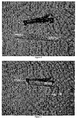
- the membranes and supports according to the invention display the following characteristics:
- Example 4 Nucleic acid extraction using a solid support according to the invention
- a solid support according to the invention can be used as an internal quantitative control, as detailed below:
- the resulting elution can be used either in a PCR reaction, or in an RT-PCR reaction, as detailed in the following examples:
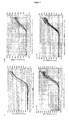
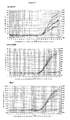
- Example 5 PCR amplification with an external control
- Ct threshold cycle
- Membranes with or without polydA or BSA as a carrier agent adsorbed thereon were spotted with 1200 copies of the control nucleic acid (here a DNA fragment) per membrane as described in Example 1, and resuspended in 300 ⁇ l of water as described in Example 3. 25 ⁇ l of this resuspension/elution is then used in a PCR amplification reaction and compared to the direct addition in the PCR mix of 25 ⁇ l containing 100 copies of the same control nucleic acid ("free" run, i.e. free conditions, without the solid support according to the invention, i.e. under "free” conditions, the control nucleic acid is supplied from a solution and not from a solid support). For free conditions, 8 PCR replicates have been tested. For membranes with or without a carrier agent adsorbed thereon, 8 membranes have been tested with a PCR duplicate per membrane.
- Example 6 PCR amplification with an internal control
- Ct threshold cycle
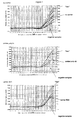
- Membranes with or without polydA or BSA as a carrier agent were spotted with 500 copies of control nucleic acid (here a DNA fragment) per membrane as described in Example 1.
- control nucleic acid here a DNA fragment
- free conditions 4 PCR replicates have been tested.
- 3 membranes have been tested with a PCR duplicate per membrane.
- control thus serves for the two steps, extraction and amplification.
- Example 7 RT-PCR amplification with an external control
- Ct threshold cycle
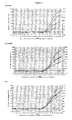
- Membranes with or without carrier BSA were spotted with 1.2x10 7 copies of an RNA transcript as control nucleic acid per membrane as described in Example 1, and resuspended in 300 ⁇ l of water as described in Example 3. 10 ⁇ l of this resuspension is then used for an RT-PCR and compared to the direct addition in the RT-PCR mix of 10 5 copies of the same control nucleic acid (from a solution, "free" run). For free conditions, 4 replicates have been tested. For membrane with or without a carrier agent, 2 membranes have been tested with a duplicate PCR per membrane.
- Example 8 RT- PCR amplification with an internal control
- Ct threshold cycle
- RNA transcript control nucleic acid
- 10 ⁇ l of the elution volume were then used for RT-PCR and compared to the direct addition in the RT-PCR mix of 10 5 copies of the same control nucleic acid (from a solution, "free" run). For free conditions, 4 replicates have been tested.
- 3 membranes have been tested with 2 duplicates RT-PCR per membrane.
- control thus serves for the two steps, extraction and amplification.
Landscapes
- Chemical & Material Sciences (AREA)
- Organic Chemistry (AREA)
- Life Sciences & Earth Sciences (AREA)
- Zoology (AREA)
- Wood Science & Technology (AREA)
- Proteomics, Peptides & Aminoacids (AREA)
- Health & Medical Sciences (AREA)
- Engineering & Computer Science (AREA)
- Microbiology (AREA)
- Biochemistry (AREA)
- Physics & Mathematics (AREA)
- Molecular Biology (AREA)
- Biotechnology (AREA)
- Biophysics (AREA)
- Analytical Chemistry (AREA)
- Immunology (AREA)
- Bioinformatics & Cheminformatics (AREA)
- General Engineering & Computer Science (AREA)
- General Health & Medical Sciences (AREA)
- Genetics & Genomics (AREA)
- Chemical Kinetics & Catalysis (AREA)
- Measuring Or Testing Involving Enzymes Or Micro-Organisms (AREA)
- Apparatus Associated With Microorganisms And Enzymes (AREA)
Priority Applications (7)
| Application Number | Priority Date | Filing Date | Title |
|---|---|---|---|
| EP03293283A EP1548126A1 (de) | 2003-12-22 | 2003-12-22 | Trägermaterial für Kontrollnukleinsäuren und Anwendung dieser zur Nukleinsäuredetektion. |
| CA002547859A CA2547859A1 (en) | 2003-12-22 | 2004-12-17 | Solid support for nucleic acid detection |
| PCT/EP2004/014900 WO2005061727A1 (en) | 2003-12-22 | 2004-12-17 | Solid support for nucleic acid detection |
| JP2006546131A JP2007515181A (ja) | 2003-12-22 | 2004-12-17 | 核酸検出のための固相支持体 |
| EP04816316A EP1697546A1 (de) | 2003-12-22 | 2004-12-17 | Fester träger zum nukleinsäurenachweis |
| AU2004303514A AU2004303514A1 (en) | 2003-12-22 | 2004-12-17 | Solid support for nucleic acid detection |
| US10/583,948 US20070122815A1 (en) | 2003-12-22 | 2004-12-17 | Solid support for nucleic acid detection |
Applications Claiming Priority (1)
| Application Number | Priority Date | Filing Date | Title |
|---|---|---|---|
| EP03293283A EP1548126A1 (de) | 2003-12-22 | 2003-12-22 | Trägermaterial für Kontrollnukleinsäuren und Anwendung dieser zur Nukleinsäuredetektion. |
Publications (1)
| Publication Number | Publication Date |
|---|---|
| EP1548126A1 true EP1548126A1 (de) | 2005-06-29 |
Family
ID=34530826
Family Applications (2)
| Application Number | Title | Priority Date | Filing Date |
|---|---|---|---|
| EP03293283A Withdrawn EP1548126A1 (de) | 2003-12-22 | 2003-12-22 | Trägermaterial für Kontrollnukleinsäuren und Anwendung dieser zur Nukleinsäuredetektion. |
| EP04816316A Withdrawn EP1697546A1 (de) | 2003-12-22 | 2004-12-17 | Fester träger zum nukleinsäurenachweis |
Family Applications After (1)
| Application Number | Title | Priority Date | Filing Date |
|---|---|---|---|
| EP04816316A Withdrawn EP1697546A1 (de) | 2003-12-22 | 2004-12-17 | Fester träger zum nukleinsäurenachweis |
Country Status (6)
| Country | Link |
|---|---|
| US (1) | US20070122815A1 (de) |
| EP (2) | EP1548126A1 (de) |
| JP (1) | JP2007515181A (de) |
| AU (1) | AU2004303514A1 (de) |
| CA (1) | CA2547859A1 (de) |
| WO (1) | WO2005061727A1 (de) |
Cited By (1)
| Publication number | Priority date | Publication date | Assignee | Title |
|---|---|---|---|---|
| WO2007024840A3 (en) * | 2005-08-22 | 2007-04-12 | Critical Therapeutics Inc | Method of quantitating nucleic acids by flow cytometry microparticle-based array |
Families Citing this family (1)
| Publication number | Priority date | Publication date | Assignee | Title |
|---|---|---|---|---|
| US10435747B2 (en) | 2014-08-19 | 2019-10-08 | Arizona Board Of Regents On Behalf Of Arizona State University | Radiation biodosimetry systems |
Citations (5)
| Publication number | Priority date | Publication date | Assignee | Title |
|---|---|---|---|---|
| DE4119574A1 (de) * | 1991-06-14 | 1992-12-17 | Diagen Inst Molekularbio | Verfahren zur lagerung und/oder zum transport von nukleinsaeuren |
| DE19746874A1 (de) * | 1997-10-23 | 1999-04-29 | Qiagen Gmbh | Verfahren zur Isolierung und Reinigung von Nukleinsäuren an hydrophoben Oberflächen - insbesondere unter Verwendung hydrophober Membranen |
| WO1999032654A1 (en) * | 1997-12-22 | 1999-07-01 | Hitachi Chemical Co., Ltd. | Direct rt-pcr on oligonucleotide-immobilized pcr microplates |
| GB2378445A (en) * | 2001-05-11 | 2003-02-12 | Ambion Inc | Method of mRNA purification |
| US20030175740A1 (en) * | 2001-08-16 | 2003-09-18 | Mullinax Rebecca Lynn | Compositions and methods comprising control nucleic acid |
Family Cites Families (6)
| Publication number | Priority date | Publication date | Assignee | Title |
|---|---|---|---|---|
| US5411663A (en) * | 1992-03-20 | 1995-05-02 | Micron Separations, Inc. | Alcohol-insoluble nylon microporous membranes |
| JP2001333763A (ja) * | 2000-05-30 | 2001-12-04 | Hitachi Koki Co Ltd | 自動分離抽出装置及びその抽出方法 |
| JP2002000255A (ja) * | 2000-06-22 | 2002-01-08 | Hitachi Ltd | 核酸抽出装置 |
| AU2001278968A1 (en) * | 2000-07-19 | 2002-01-30 | Pointilliste, Inc. | Nested sorting and high throughput screening |
| JP3580801B2 (ja) * | 2001-08-01 | 2004-10-27 | 富士写真フイルム株式会社 | 核酸の分離精製方法 |
| JP2003339374A (ja) * | 2002-05-24 | 2003-12-02 | Hitachi Ltd | 核酸分離カラム、装置及び核酸抽出方法 |
-
2003
- 2003-12-22 EP EP03293283A patent/EP1548126A1/de not_active Withdrawn
-
2004
- 2004-12-17 JP JP2006546131A patent/JP2007515181A/ja active Pending
- 2004-12-17 EP EP04816316A patent/EP1697546A1/de not_active Withdrawn
- 2004-12-17 CA CA002547859A patent/CA2547859A1/en not_active Abandoned
- 2004-12-17 WO PCT/EP2004/014900 patent/WO2005061727A1/en not_active Ceased
- 2004-12-17 AU AU2004303514A patent/AU2004303514A1/en not_active Abandoned
- 2004-12-17 US US10/583,948 patent/US20070122815A1/en not_active Abandoned
Patent Citations (6)
| Publication number | Priority date | Publication date | Assignee | Title |
|---|---|---|---|---|
| DE4119574A1 (de) * | 1991-06-14 | 1992-12-17 | Diagen Inst Molekularbio | Verfahren zur lagerung und/oder zum transport von nukleinsaeuren |
| DE19746874A1 (de) * | 1997-10-23 | 1999-04-29 | Qiagen Gmbh | Verfahren zur Isolierung und Reinigung von Nukleinsäuren an hydrophoben Oberflächen - insbesondere unter Verwendung hydrophober Membranen |
| US20030152974A1 (en) * | 1997-10-23 | 2003-08-14 | Simone Gauch | Isolation of nucleic acids on surfaces |
| WO1999032654A1 (en) * | 1997-12-22 | 1999-07-01 | Hitachi Chemical Co., Ltd. | Direct rt-pcr on oligonucleotide-immobilized pcr microplates |
| GB2378445A (en) * | 2001-05-11 | 2003-02-12 | Ambion Inc | Method of mRNA purification |
| US20030175740A1 (en) * | 2001-08-16 | 2003-09-18 | Mullinax Rebecca Lynn | Compositions and methods comprising control nucleic acid |
Non-Patent Citations (5)
| Title |
|---|
| EISEN M B ET AL: "12 DNA ARRAYS FOR ANALYSIS OF GENE EXPRESSION", METHODS IN ENZYMOLOGY, ACADEMIC PRESS INC, SAN DIEGO, CA, US, vol. 303, 1999, pages 179 - 205, XP000995864, ISSN: 0076-6879 * |
| FREEMAN WILLARD M ET AL: "Quantitative RT-PCR: Pitfalls and potential", BIOTECHNIQUES, EATON PUBLISHING, NATICK, US, vol. 26, no. 1, January 1999 (1999-01-01), pages 112 - 118,120, XP002143860, ISSN: 0736-6205 * |
| INNIS ET AL.: "PCR Protocols", 1989, ACADEMIC PRESS, SAN DIEGO, US, XP002282142 * |
| INSTRUCTIONS PURETAQ READY-TO-GO PCR BEADS, 2002, AMERSHAM BIOSCIENCES7, pages 1 - 19, XP002284696 * |
| XP002284695, Retrieved from the Internet <URL:http://www.sigmaaldrich.com/Area_of_Interest/Life_Science/Life_Science_Quarterly/July_2000/July_2000_REDTaq.html> * |
Cited By (1)
| Publication number | Priority date | Publication date | Assignee | Title |
|---|---|---|---|---|
| WO2007024840A3 (en) * | 2005-08-22 | 2007-04-12 | Critical Therapeutics Inc | Method of quantitating nucleic acids by flow cytometry microparticle-based array |
Also Published As
| Publication number | Publication date |
|---|---|
| JP2007515181A (ja) | 2007-06-14 |
| AU2004303514A1 (en) | 2005-07-07 |
| US20070122815A1 (en) | 2007-05-31 |
| WO2005061727A1 (en) | 2005-07-07 |
| EP1697546A1 (de) | 2006-09-06 |
| CA2547859A1 (en) | 2005-07-07 |
Similar Documents
| Publication | Publication Date | Title |
|---|---|---|
| US11142758B2 (en) | Method and device for collection and amplification of circulating nucleic acids | |
| US9944922B2 (en) | Highly simplified lateral flow-based nucleic acid sample preparation and passive fluid flow control | |
| US10752891B2 (en) | Protein-based sample collection matrices and devices | |
| US9416398B2 (en) | Generic buffer for amplification | |
| US20030152974A1 (en) | Isolation of nucleic acids on surfaces | |
| US7807360B2 (en) | Method and apparatus for concentrating and amplifying nucleic acid in single micro chamber | |
| ES2436023T3 (es) | Las alquilaminas mejoran la detección de compuestos en muestras biológicas fijadas con formaldehído | |
| JP2012157366A (ja) | Dnaを単離するための溶出試薬、方法およびキット | |
| JP2024509588A (ja) | 抽出不要の病原体試験方法 | |
| CN111406118A (zh) | 呼吸道合胞病毒种属的切口产生和延伸扩增反应(near) | |
| CN105018488A (zh) | 用于检测呼吸道病毒的试剂盒及其应用 | |
| KR20230007464A (ko) | 호흡기 병원체 검출을 위한 검체수송 키트 및 이를 이용한 호흡기 병원체 검출방법 | |
| KR20230021120A (ko) | 호흡기 병원체의 검출을 위한 샘플링 키트 및 검출방법 | |
| JP4616990B2 (ja) | Dnaを単離し、増幅し、そして特性化するための方法 | |
| US20240018571A1 (en) | Methods, compositions, and kits for nucleic acid detection | |
| US20070122815A1 (en) | Solid support for nucleic acid detection | |
| CN1665939A (zh) | 储存并检测加到固相载体上的核酸 | |
| WO2013175365A1 (en) | Extraction control for rna | |
| CN104232745B (zh) | 用于RNaseP基因的荧光PCR检测试剂盒和检测方法 | |
| CN105039596B (zh) | 一种用于检测副流感病毒的试剂盒及其应用 | |
| CA2511829A1 (en) | Method for hybridisation of immobilized genomic dna | |
| JP7066093B2 (ja) | 生体試料コレクタおよびその取扱いの改良ならびにそれに関する改良 | |
| Tran | Co-extraction methods of DNA and total RNA for body fluid identification: A review | |
| CN117385104A (zh) | 检测多种牛源病毒的引物和探针组合、试剂盒及其应用 |
Legal Events
| Date | Code | Title | Description |
|---|---|---|---|
| PUAI | Public reference made under article 153(3) epc to a published international application that has entered the european phase |
Free format text: ORIGINAL CODE: 0009012 |
|
| AK | Designated contracting states |
Kind code of ref document: A1 Designated state(s): AT BE BG CH CY CZ DE DK EE ES FI FR GB GR HU IE IT LI LU MC NL PT RO SE SI SK TR |
|
| AX | Request for extension of the european patent |
Extension state: AL LT LV MK |
|
| AKX | Designation fees paid | ||
| REG | Reference to a national code |
Ref country code: DE Ref legal event code: 8566 |
|
| STAA | Information on the status of an ep patent application or granted ep patent |
Free format text: STATUS: THE APPLICATION IS DEEMED TO BE WITHDRAWN |
|
| 18D | Application deemed to be withdrawn |
Effective date: 20051230 |