EP1550932A2 - Une liste de contact pour accéder à un programme applicatif - Google Patents
Une liste de contact pour accéder à un programme applicatif Download PDFInfo
- Publication number
- EP1550932A2 EP1550932A2 EP04027298A EP04027298A EP1550932A2 EP 1550932 A2 EP1550932 A2 EP 1550932A2 EP 04027298 A EP04027298 A EP 04027298A EP 04027298 A EP04027298 A EP 04027298A EP 1550932 A2 EP1550932 A2 EP 1550932A2
- Authority
- EP
- European Patent Office
- Prior art keywords
- signal
- information
- entity
- electronic commerce
- transmitted
- Prior art date
- Legal status (The legal status is an assumption and is not a legal conclusion. Google has not performed a legal analysis and makes no representation as to the accuracy of the status listed.)
- Withdrawn
Links
Images






Classifications
-
- H—ELECTRICITY
- H04—ELECTRIC COMMUNICATION TECHNIQUE
- H04L—TRANSMISSION OF DIGITAL INFORMATION, e.g. TELEGRAPHIC COMMUNICATION
- H04L67/00—Network arrangements or protocols for supporting network services or applications
- H04L67/01—Protocols
- H04L67/10—Protocols in which an application is distributed across nodes in the network
-
- G—PHYSICS
- G06—COMPUTING OR CALCULATING; COUNTING
- G06F—ELECTRIC DIGITAL DATA PROCESSING
- G06F21/00—Security arrangements for protecting computers, components thereof, programs or data against unauthorised activity
- G06F21/30—Authentication, i.e. establishing the identity or authorisation of security principals
- G06F21/31—User authentication
- G06F21/33—User authentication using certificates
Definitions
- the present invention is related to a contact list, and more particularly to a contact list and method for accessing computing application functionality.
- e-mail client such as Microsoft Outlook or Lotus Notes
- EBP electronic billing and payment
- WBP CheckFree's WebBillPay
- Some applications "scrub" user supplied contact list data to ensure that improved information is consistently utilized by the application. Scrubbing can include normalizing and/or correcting user supplied data. For example, an application might correct a name, address, funding account information, or a user's account number with a payee. Often a user is unaware that contact list data has been scrubbed. That is, when accessing a contact list, a user may see the originally supplied contact list data, while the computing application may actually utilize scrubbed data in providing functionality to the user.
- each contact list is restricted to its application context. Thus, there may be redundancy in the data between contact lists associated with various computing applications. For example, an e-mail client address entry might contain a name and an e-mail identifier (address), and possibly address/phone information, while an EBP client payee entry might contain the same name and address information, and possibly e-mail identifier. Beyond the same information being stored in multiple locations, i.e., in association with multiple applications, a user must input and update this same information repeatedly, i.e., into each application. This multiple information entry, as will be recognized, is at best inefficient.
- Computing applications presuppose a function-centric application invocation metaphor. In other words, a user first launches or otherwise access a computing application, then selects a function to perform within the accessed computing application, and then finally specifies the data to be operated upon by the accessed computing application, perhaps from an available contact list.
- While computing applications are function-centric, in some computing domains there is precedence for a data-centric approach in which data is presented via a user interface first, then a function is selected and applied to an element of the data.
- a simple example is the list of folders/files in the My Documents folder of the Window's operating system. From the My Documents folder a user can right-click on one of the displayed items in the folder (stored files) to bring up a set of function choices that can be performed on that selected file, such as opening the selected file, or deleting the selected file.
- PDAs personal digital assistants
- These contact lists are currently incapable of doing more than integrating with other tools (typically e-mail or calendar clients through synchronization). Thus, these type contact lists cannot be used to drive application functionality.
- Web service is a network accessible interface to application functionality built using standard Internet technologies. Web services are also known as “common services.” A collection of software and tools that enable developers to create, deploy, and access Web services has been proposed by Microsoft. It is important to understand that even though Microsoft's software suite for enabling Web services, known as the .NET platform, is perhaps the most well known, it is by no means the only way to build or use Web services.
- a component of Microsoft's original .NET proposal was to offer to consumers a suite of commonly used Web services, dubbed Microsoft .NET My Services. Two of the proposed services are .NET My Contacts, which stores an electronic relationships/address book for a subscriber at a network location distinct from a subscriber's computer, and .NET Passport, which is a subscriber authentication service.
- .NET Passport which has been introduced by Microsoft into the marketplace, allows participating subscribers to create one sign-in name and password for use across participating .NET Passport sites. Additionally, subscribers can save time and avoid repetitive data entry by storing basic demographic information that can be shared with .NET Passport sites.
- .NET Passport sends the subscriber's identifying information such as ZIP Code, country/region, and city information to the site upon request, or, alternatively a .NET Passport data repository can be accessed by participants in the Web service. Subscribers can also choose to provide more personal information, such as their nickname, E-mail address, age, gender, and language preference.
- .NET My Contacts as disclosed by Microsoft, will allow subscribers to store "address book” type of information, presumably protected and accessed through Passport, at a central location.
- Microsoft has not defined a user interface for My Contacts, or proposed use scenarios, including interactions between .NET My Contacts data and applications, particularly in the context of EBP.
- existing contact lists and proposed contact lists cannot be utilized by multiple applications. Also, existing and proposed contact lists cannot trigger application functionality. Further, existing and proposed contact lists are not structured such that flexible access control over various aspects of contact information, including population and/or modification of some data by other than the user, is available.
- EBP computing applications have a function-centric process flow. That is, to direct an EBP transaction a user must first trigger or otherwise access an EBP application, which may be Web-based. After triggering the EBP computing application, the user must select a function (transaction type) to be executed by the accessed EBP computing application. Then, the user must specify or select data, sometimes from an application-specific contact list, associated with the desired function. The specified or selected data might be a payee name, an electronic biller name, or other data, such as an account identifier or date. Only after the user has performed these steps is the desired function executed by the accessed EBP computing application. Thus, due to the function-centric nature of EBP applications, a user cannot conveniently access EBP functionality. He or she must first access an EBP computing application, select a function to be performed, and then select data to be utilized with the selected function. A data-centric EBP process flow would eliminate steps, allowing instant access to desired functionality.
- Still another object of the present invention to provide a contact list having stored data that can be utilized by multiple applications.
- Yet another object of the present invention is to provide an application independent contact list having stored data that can be accessed, modified, and/or added by one or more entities other than a user associated with the contact list
- An electronic commerce function can be, but is not limited to, a submission of an electronic payment request, such as, but not limited to, a bill payment, a retail payment, a person-to-person payment, or a business-to-business payment, a request to view billing information electronically (i.e., be electronically billed), and an electronic request to issue a bill or an invoice.
- An electronic commerce function is performed via a network.
- a network can be, but is not limited to, the Internet, a local area network, a wide area network, and the public switched telephone network, as well as any other network capable of transmitting information, including a wireless network. Also, a network can be multiple interconnected networks.
- Each system includes one or more communications interfaces and one or more processors.
- Each communications interface is configured to receive and transmit information via at least one network. Information received by the communications interface is passed on to at least one processor.
- a processor can be any type of device capable of functioning to implement methods described herein, including, but not limited to, a processor as found in a typical personal computer, main-frame computer, server-type computer, or any other type of computing device.
- a system includes one or more memories configured to store information.
- a memory can include, as desired, any medium and/or device for storing information.
- a first signal is transmitted from a first network location.
- the first signal includes information that identifies an entity.
- the identified entity can be an individual, a business, or an organization.
- the identifying information can be any information which identifies an entity, including, but not limited to, any or all of, an entity's name, address, and/or phone number.
- the first signal also includes information that identifies an electronic commerce function associated with the entity.
- the first signal could include information that identifies a utility company (the entity) and an electronic payment function.
- the first signal could include information that identifies multiple electronic commerce functions, each associated with the entity.
- the first signal could include information that identifies multiple entities and one or more electronic commerce functions associated with each identified entity.
- a second signal is received at the first network location in response to the transmitted first signal.
- the second signal is received from a second network location different than the first network location.
- This second signal includes information that indicates a selection of an electronic commerce function in association with a particular entity. That is, in accordance with the example above, the second signal could include an indication to make an electronic payment to the utility company.
- a third signal is transmitted from the first network location.
- This third signal which can be transmitted to the second network location or another network location, includes information that identifies a network address associated with an electronic commerce application.
- the transmitted network address information can be a URL, a hyper-link, or any other information that identifies a network address.
- An electronic commerce application is a computing program that provides and/or facilitates the electronic commerce function. That is, in accordance with the example above, the electronic commerce application is a network-based service for making electronic payments.
- the transmitted third signal also includes information associated with the entity.
- the information associated with the entity can be any information associated with the entity, including all of, a portion of, or none of, the information identifying the entity included in the first signal.
- the transmitted third signal results in a transmission of a fourth signal to the second network location from a third network location.
- a mere receipt of the third signal can cause transmission of the fourth signal, a further transmission of the third signal can cause transmission of the fourth signal, or a processing of the transmitted third signal, either with or without a further transmission, can cause transmission of the fourth signal.
- the transmitted fourth signal includes information associated with invoking the electronic commerce function based upon the information associated with the entity included in the third signal.
- the information associated with invoking the electronic commerce function can be any information utilized by the electronic commerce application in providing and/or facilitating the electronic commerce function.
- the associated invoking information can include all of, or any of, the information associated with the entity included in the third signal.
- the associated invoking information can include none of the information associated with the entity included in the third signal.
- the associated information of the third signal is utilized to retrieve, obtain, or calculate the information associated with invoking the electronic commerce function included in the fourth signal.
- the fourth signal could be a payment request screen pre-populated with information associated with the utility.
- the third signal is transmitted to the second network location.
- the third signal is then further transmitted from the second network location to the third network location.
- This further transmission could be an automatic transmission, or an operator/user of the second network location could cause the further transmission of the third signal.
- the fourth signal is transmitted responsive to the further transmitted third signal. That is, the third signal is transmitted to the second network location from the first network location. Then, the third signal is further transmitted to the third network location from the second network location. Upon receipt of the further transmitted third signal at the third network location, the fourth signal is transmitted to the second network location from the third network location.
- a fifth signal is transmitted from the third network location in response to the transmitted third signal.
- the transmitted third signal could be either transmitted directly to the third network location by the first network location, or could be a further transmitted signal, perhaps further transmitted by the second network location or another network location.
- the fifth signal includes a request for other information associated with the entity. That is, the third signal contains first information associated with the entity, and the third network location requests additional information associated with the entity.
- This fifth signal could be transmitted to the first network location, the second network location, or another network location.
- the other information could be any information associated with the entity, including, but not limited to, information identifying the entity and/or information necessary to provide and/or facilitate the electronic commerce function with the entity.
- a sixth signal is received at the third network location in response to the transmitted fifth signal.
- This sixth signal includes the requested other information associated with the entity.
- the fourth signal in this aspect, is transmitted subsequent to the receipt of the sixth signal.
- the fourth signal could include all of, any of, or none of, the other information included in the received sixth signal.
- the information identifying the electronic commerce function and the entity included in the first signal is presented at the second network location via a contact list user interface.
- a contact list is a collection of information associated with individuals, businesses, and/or organizations, collectively referred to as contacts. This information typically includes names, phone numbers, and/or addresses of contracts.
- contact information is stored at the first network location and presented at the second network location.
- the presentation is preferably a visual presentation, though it can be, as desired, an audible presentation, or a combination visual/audible presentation.
- This contact information includes not only information identifying a contact (the entity), but also an electronic commerce function in which the entity is an actor. The selection of the electronic commerce function is based upon the presented information identifying the electronic commerce function.
- a contact list user interface that includes information identifying the entity and information identifying an electronic commerce function that can be performed that involves the entity is presented at the second network location.
- the contact list user interface could include information identifying the utility and information identifying that an electronic request to pay the utility can be submitted.
- the electronic commerce function associated with the entity can be another electronic commerce function other than an electronic payment request.
- the information identifying the electronic commerce function included in the first signal is first information identifying an electronic commerce function.
- the first signal also includes second information identifying another function associated with the entity.
- the other function can be an electronic commerce function, or another type function.
- the second information identifying the other function is presented in association with the information identifying the entity and the first information identifying the electronic commerce function.
- the third signal does not include information identifying a network address associated with the entity. That is, the first signal does not include information that identifies where on a network, such as, for example, the Internet, a cellular phone network, another other phone network, or any other type network, the entity has a presence.
- a network such as, for example, the Internet, a cellular phone network, another other phone network, or any other type network
- the information associated with invoking the electronic commerce function included in the fourth signal is presented at the second network location via an electronic commerce user interface.
- This presentation could be visual, audible, or both. Further, some portions of the presentation could be audible, with other portions visual.
- the electronic commerce function is associated with at least one, if not both, of electronic bill presentment and/or electronic payment.
- the second network location is associated with a user and the electronic commerce function is associated with electronic bill presentment.
- the presented information includes at least one of four types of information.
- a first type of information is billing information, which could be bill detail information or bill summary information, from the entity for the user. That is, billing information issued by the entity for the user is electronically presented to the user.
- a second type of information is billing information associated with one or more past bills issued by the entity for the user.
- a third type of information is billing information, which could be summary or detailed billing information, associated with a bill or invoice issued by the user for the entity.
- a fourth type of information is billing information associated with one or more past bills or invoices issued by the user for the entity.
- the user interface is one of two types of user interfaces associated with electronic bill presentment.
- a first type of user interface is a biller activation user interface that includes at least a portion of the information associated with the entity included in the transmitted third signal. This first type of user interface is for requesting to begin to receive electronic bill presentment of bills of the entity.
- a second type of user interface is an invoicing activation user interface that includes at least a portion of the information associated with the entity included in the transmitted third signal. This second type of user interface is for establishing electronic bill presentment of bills, or invoices, issued by the user and directed to the entity. That is, it is for setting up the user to electronically bill the entity.
- other types of electronic commerce user interfaces associated with electronic bill presentment could also be presented.
- the user interface is one of five types of user interfaces associated with electronic payment.
- a first type of user interface is a payment request user interface that includes at least a portion of the information associated with the entity included in the transmitted third signal.
- a payment request user interface is for requesting that a payment be made to the entity on behalf of the user or even a different entity.
- a second type of user interface is a pending payment request user interface.
- a pending payment request user interface is associated with a previously submitted request to pay the entity on behalf of a different entity, such as the user.
- a third type of user interface is a payment history user interface. Through a payment history user interface one can review completed payments to the entity made on behalf of a different entity, such as the user.
- a fourth type of user interface is a payee setup user interface that includes at least a portion of the information associated with the entity included in the transmitted third signal.
- a payee setup user interface is for establishing the entity as a payee that may receive payments made on behalf of a different entity, such as the user.
- a fifth type of user interface is a payment request confirmation screen for presentation after submission of a payment request.
- the second network location is again associated with a user.
- Contact information associated with the entity is stored in a contact list belonging to the user.
- the stored contact information is retrieved.
- the retrieved contact information includes at least the information identifying the entity and the information identifying the electronic commerce function.
- the transmitted identifying information included in the first signal is the retrieved contact information.
- the contact list can be stored at the first network location or another network location other than the second network location.
- the user is one of a plurality of users.
- the stored contact information includes at least one of multiple types of contact information.
- a first type of contact information is private information. Private information is designated as such by the one user and is not accessible by at least a portion of the others of the plurality users. Private could be, as desired, the default designation for all payee-provided information.
- a second type of contact information is public information. Public information is designated as such by the one user and is accessible by each user. Likewise, public could be, as desired, the default designation for all payee-provided information.
- a third type of contact information is hidden information. Hidden information is information that is not received from the one user and that is not available for access by any of the plurality of users, including the one user.
- the information identifying the entity included in the transmitted first signal excludes hidden contact information and the information associated with the entity included in the transmitted third signal includes hidden contact information.
- the information identifying the entity included in the transmitted first signal excludes hidden contact information and the information associated with the entity included in the transmitted third signal includes hidden contact information.
- the entity information included in the first signal is different than the entity information included in the third signal.
- a fifth signal is received at the first network location.
- This fifth signal is received from a network location associated with the electronic commerce application. Included in the fifth signal is hidden information associated with the entity.
- the fifth signal could be received prior to transmission of the third signal, or subsequent to transmission of the third signal.
- the hidden information included in the received fifth signal is then stored in the contact list.
- a database for storing contact list information is provided.
- the database is stored on a storage medium. Any type of storage medium capable of storing a database may be utilized.
- the database includes information that identifies an entity, which could be a business, individual, or organization.
- Contact information can be any of or all of, but is not limited to, the entity's name, nickname(s), address(es), phone number(s), and/or email address(es).
- Stored in association with the entity identifying information in the contact list is information identifying at least one network address of an associated electronic commerce service provider. That is, each such network address does not identify a network location at which the entity has a presence. Rather, the network address identifies a network location of an entity that provides and/or facilitates electronic commerce, which could be any of or all of, but not limited to, electronic bill presentment, and/or electronic payment.
- the information that identifies the entity is any information other than information that identifies a network address associated with the entity. That is, the contact list does not include a network address associated with the entity.
- a first signal is received at a first network location.
- the first signal is transmitted from a second network location.
- the first signal includes information associated with an entity.
- the entity can be an individual, a business, or an organization.
- the associated information can be any information associated with an entity, including, but not limited to, any or all of, an entity's name, address, and/or phone number.
- the first signal also includes information that identifies an electronic commerce function associated with the entity.
- the first signal could include information that identifies multiple electronic commerce functions, each associated with the entity.
- the first signal could include information that identifies multiple entities and one or more electronic commerce functions associated with each identified entity.
- the first signal also includes information that identifies a network address associated with an electronic commerce application.
- the transmitted network address information can be a URL, a hyper-link, or any other information that identifies a network address.
- An electronic commerce application is a computing program that provides and/or facilitates the electronic commerce function.
- a second signal is transmitted from the first network location.
- This second signal is transmitted to the network address included in the first signal.
- the transmitted second signal is a request to access the electronic commerce function. That is, it is a request for performance of electronic commerce function.
- the transmitted second signal also includes at least a portion of the information associated with the entity included in the transmitted first signal. A user or operator associated with the first network location is not required to even be aware of some or all of the information associated with the entity included in the transmitted second signal.
- a third signal is received at the second network location, from a third network location.
- the third signal is transmitted in response to the transmitted second signal.
- the transmitted third signal includes information associated with invoking the electronic commerce function that is based upon the information associated with the entity included in the transmitted second signal.
- the information associated with invoking the electronic commerce function can be any information utilized by the electronic commerce application in providing and/or facilitating the electronic commerce function.
- the associated invoking information can include all of, or any of, the information associated with the entity included in the transmitted second signal.
- the associated invoking information can include none of the information associated with the entity included in the second signal. In such a case, the entity-associated information of the second signal is utilized to retrieve, obtain, or calculate the information associated with invoking the electronic commerce function included in the transmitted third signal.
- information identifying the entity, information identifying the electronic commerce function, and a link to access the electronic commerce function is displayed at the first network location.
- This displayed information is based upon the received second signal.
- the displayed link could be, as desired, the same as, or separate from, the information identifying the electronic commerce function.
- the second signal is transmitted responsive to an activation of the displayed link.
- the link could be, but is not required to be, an overloaded URL that contains all the information to be included in the transmitted second signal.
- the information contained in the overloaded URL is preferably not displayed, though it could, as desired, be.
- other techniques could be used in transmitting the second signal.
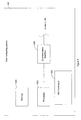
- Figure 1 is a simplified depiction of stored information associated with an extended contact list of the present invention.
- Figure 2 is an exemplary network diagram depicting the extended contact list of Figure 1 hosted by a contact service in accordance with certain aspects of the present invention.
- Figure 3 is a simplified depiction of a computing platform associated with the contact service of Figure 2 in accordance with certain aspects of the present invention.
- Figure 4 is a simplified depiction of a computing platform associated with a service provider which utilizes information stored in the extended contact list of Figure 1 in providing functionality in accordance with certain aspects of the present invention.
- Figure 5 is a simplified depiction of a computing system associated with a user to whom information stored in the extended contact list of Figure 1 belongs in accordance with certain aspects of the present invention.
- Figure 6 is a simplified depiction of a user obtaining network credentials in accordance with certain aspects of the present invention.
- Figure 7 is a simplified exemplary depiction of a user accessing an extended contacts list stored at a network location utilizing network credentials in accordance with certain aspects of the present invention.
- Figure 8 is an exemplary summary view user presentation of the extended contact list in accordance with certain aspects of the present invention.
- Figure 9 is an exemplary detailed view user presentation of the extended contact list showing the association and disassociation of computing application with an entry of the extended contact list in accordance with certain aspects of the present invention.
- Figure 10 is a simplified exemplary depiction of extended contact list information being pushed to a computing application by a contact service in accordance with certain aspects of the present invention.
- Figure 11 is a simplified exemplary depiction of extended contact list information being pulled by a computing application from a contact service in accordance with certain aspects of the present invention.
- An extended contact list for storing information usable by multiple computing applications and from which multiple computing applications may be triggered is provided by the present invention.
- the extended contact list includes not only information identifying and associated with one or more entities, but also information associated with one or more computing applications.
- the storing computing application information is linked to the stored entity information. Linked information is presented together via a contact list user interface.
- the extended contact list in one embodiment, is stored by a contact service at a central location on a network, to be discussed further below.
- the contact service could be .NET My Contacts, discussed above, could be another Web service, or even could be a computing application service provider.
- multiple extended contact lists, each associated with a different user are stored by the contact service.
- an individual user's extended contact list is stored on that user's computer.
- Figure 1 is a simplified depiction of stored information associated with a single entry 100 of the extended contact list of the present invention, no matter where stored. Each entry is segregated into a general portion 105 containing contact information identifying an entity, and zero or more computing application-specific portions containing information for use by a computing application, which could be a Web-based computing application, or a computing application residing on a user's computer. Figure 1 depicts a single application-specific portion 106. However, any single entry could have two or more application-specific portions, or even no application-specific portions.
- General information is any information typically contained in a contact list.
- General information may be, as desired by a user, subdivided into a public portion 105A and a private portion 105B.
- Information in the public portion 105A is information the user is willing to make publicly available to all, which includes potentially all network users.
- Information in the private portion 105B is information the user wishes to protect, i.e., make available to less than (possibly none of) the full public. In the example of Figure 1, the user has chosen to make all general information in entry 100 private.
- each entry includes multiple data fields 107A-107N.
- Some data fields may apply to both the general portion 105 and at least one application-specific portion 106, e.g., data fields 107A-107D.
- Some data fields may only apply to an application-specific portion 106, e.g., data fields 107E-107N in columns 106A and 106B.
- Some data fields may only apply to the general portion 105, e.g., data fields 107E-107F in column 105B.
- the multiple data fields in the general portion 105 include: the entry's name 107A/105B, including first and last name, title, and company; the entry's address 107B/105B, including street, city, state, ZIP, and country; the entry's phone numbers 107C/105B, including work phone number, home phone number, fax phone number, mobile phone number, and other phone number; the entry's e-mail identifier (address) 107D/105B; one or more user- or application- customizable fields 107E/105B; and a categorization, i.e., business, friend, etc, field 107F/105B. Other fields, whether optional or mandatory, may be included and are within the scope of the present invention.
- Figure 1 shows a single application-specific portion 106 included in entry 100, which in this example is related to an EBP application.
- An application-specific portion 106 consists of application-specific data and overrides to information in the general portion 105. Data stored in the application-specific portion 106 is utilized by an application in providing functionality to a user to which the contact list belongs.
- An application-specific portion may be further subdivided.
- a first subdivision is a private portion 106A, consisting of information the user can enter/modify/see and which he wishes to protect, making it available to less than the full public.
- the second subdivision is a hidden portion 106B, consisting of information entered by the application with which the application-specific portion 106 is associated, which the user cannot modify/see, and which is as protected as the private portion.
- This hidden portion 106B consists of scrubbed data and/or data populated into the entry 100 by the application with which the application-specific portion 106 is associated.
- an application-specific portion 106 As the user creates an application-specific portion 106, he may provide overrides for many of the items in the general portion 105. For example, he may refer to the entity by an alternate name, or provide an alternate address, phone number or e-mail identifier. In addition, the user must specify an application to associate with application-specific portion 106. Associating an entry with an application will be discussed further below. The user may further provide additional application-specific fields. For example, for an associated EBP computing application, the user may provide an account number at the entity, and possibly even provide payment account-related information.
- An associated computing application may place scrubbed versions of private portion 106B information in the hidden portion 106B, though this may not always be required. That is, an associated computing application will perform scrubbing when required by that computing application.
- an EBP application may normalize or correct the entity name, address, or payment account information, or the user's account number.
- an associated computing application may insert supplemental information, such as an identifier by which the entity is known to the associated computing application.
- FIG 2 is a network diagram depicting a contact service 202 that maintains the extended contact list in communication with an application service provider, in this example an EBP service provider (EBPSP) 203, and a user 204 via a network 206.
- Network 206 can be the Internet, or one or more other networks.
- EBPSP EBP service provider
- FIG. 2 Only a single application service provider, EBPSP 203, and only a single user, user 204, are depicted in Figure 2.
- the functionality of the contact service 202 could be split, such that one entity maintains the data and controls access to it, while another entity presents the user interface to the data. However, for the sake of simplicity, the discussion below relates to a single entity performing both of these functions.
- the contact service 202 stores an extended contact list on behalf of user 204.
- the EBPSP 203 provides an electronic payment application, sometimes referred to as e-payments, and provides an electronic billing application, sometimes referred to as e-billing, utilizing data stored by the contact service 202.
- the EBPSP 203 can also provide other electronic commerce services. It should be noted that a single application providing both e-payments and e-billing could be provided by the EBPSP 203.
- the contact service 202 maintains a computing system for hosting extended contact lists and communicating with EBPSP 203 and user 204.
- the computing system includes one or more computing platforms, with one computing platform 300 being shown in Figure 3. When multiple computing platforms are utilized, they are networked together.
- Each computing platform 300 consists of one or more processors 303 configured to execute programming instructions, which may be, as desired, hardcoded or softcoded, stored in one or more memories 305.
- Each computing platform 300 also includes one or more communication interfaces 315 for transmitting and receiving data at via network 206. As desired, a communication interface 315 also transmits and/or receives data via one or more other networks not depicted in Figure 2.
- the contact service computing system also includes a data repository 310, which may reside on a computing platform 300, or be distributed on dedicated database servers, or elsewhere on a computing network connecting multiple computing platforms.
- Figure 3 depicts data repository 310 residing on a computing platform 300.
- Data repository 310 includes one or more extended contact lists databases 310A for storing users' contact lists.
- a computing platform 300 includes interfaces, including, but not limited to, any of a display, keyboard, mouse, microphone, disk, tape, and printer, not shown in Figure 3. Such devices are collectively referred to as I/O interfaces.
- the EBPSP 203 is also associated with a computing system.
- Figure 4 is a simplified exemplary depiction of a computing platform 400) for use by the EBPSP 203.
- the computing system of the EBPSP 203 includes one or more computing platforms, with one computing platform 400 being shown in Figure 4. When multiple computing platforms are utilized, they are networked together.
- Each computing platform 400 consists of one or more processors 403 configured to execute programming instructions which may be hardcoded or softcoded, stored in one or more memories 405.
- Each computing platform 400 also includes one or more communication interfaces 415 for transmitting and receiving data at via network 206. As desired, a communication interface 415 also transmits and/or receives data via one or more other networks not depicted in Figure 2.
- the EBPSP computing system also includes a data repository 410, which may reside on a computing platform 400, or be distributed on dedicated database servers, or elsewhere on a computing network connecting multiple computing platforms.
- Figure 4 depicts data repository 410 residing on a computing platform 300.
- Data repository 410 stores information associated with providing EBP services to user 204, and preferably other users.
- a computing platform 400 has I/O interfaces, not shown in Figure 4.
- FIG. 5 is a simplified exemplary depiction of a computing system 500 for use by user 204.
- System 500 includes a processor 503 configured to execute programming instruction stored in a memory 505.
- System 500 also includes a communication interface 515 for transmitting and/or receiving information via the network 206.
- Computing system 500 also includes I/O interfaces 522, which preferably includes at least a display and keyboard.
- an application service provider such as EBPSP 203, hosts the extended contact list instead of the contact service 202.
- the application service provider hosting the extended contact lists would perform the same functions performed by the contact service 202 described herein.
- the user's computing system 500 hosts the extended contact list in memory 505.
- access to the extended contact list is controlled by a user authentication mechanism, such as Microsoft's .NET Passport, when not hosted on the user's computing system 500
- a user authentication mechanism such as Microsoft's .NET Passport
- .NET Passport is shown as the authentication mechanism, though it should be understood that any authentication mechanism could be utilized.
- Figure 6 depicts user 204 obtaining a .NET Passport utilizing a user interface 603.
- EBPSP 203, contact service 202, or any entity participating in the .NET Passport framework could present user interface 603.
- user 204 obtains an ID/password combination that is stored in a .NET Passport data registry 607 in association with information identifying and associated with user 204, typically including an e-mail identifier.
- the first time user 204 directs a Web browser 701 to an extended contact user interface (UI) 705 hosted by the contact service 202 computing system, there are no accompanying authentication credentials from .NET Passport and the extended contact UI 705 detects this.
- the extended contact UI 705 redirects the user's browser to .NET Passport for authentication, detail 703.
- a .NET Passport computing system presents a screen to user 204 asking for authentication credentials (at a minimum, password), and whether it is desired to have this "remembered” for future sessions from this browser 701 at the contact service, detail 704.
- user 204 responds. For simplicity, it is assumed the user 204 indicates that he or she wants the credentials "remembered” so that they do not have to be provided at each visit to the contact service 202.
- .NET Passport updates its local repository 607, provides "cookies" to the user's browser 701, and redirects browser 701 back to the contact service UI 705, as shown in detail 707.
- the redirection includes an encrypted authentication query string that indicates to the contact service 202 that the user 204 has been successfully authenticated.
- the contact service 202 requests any available profile information on the user 204 from the .NET Passport database 607, detail 708.
- .NET Passport returns any available profile information on the user 204 to the contact service 202.
- User 204 is now authenticated.
- the contact service 202 then allows the user 204 full access to the extended contact lists via the user interface 705, detail 710. This could include creating an extended contact list, adding entries to an existing extended contact list, accessing existing entries, and/or modifying existing entries.
- Figure 8 is an exemplary summary view 800 of an extended contact list as presented to user 204 via the contact service UI 705. It should be noted that differently configured contact information presentations could be presented and are within the scope of the present invention. It should also be noted that the exemplary summary view 800 could be presented by another entity hosting the extended contact list, or could be presented by the user system 500 if the extended contact list is hosted by the user system 500.
- entries are presented in an abbreviated form, only showing a subset of key fields of Figure 1.
- the entries are sorted, in this instance by Name 801.
- Entries can also be sorted by company 805, primary contact information 807, category 810, or even by associated application 812, as desired by user 204.
- presented information may combine, as desired, individual data elements (e.g., Name 801 is a combination of last name and first name), or presented information may derive, as desired, from different fields depending on user preference settings (e.g., Primary Contact 807 in some cases is a phone number and in some cases is an e-mail identifier).
- the categorization 810 permits user-specified grouping and filtering.
- Associated applications column 812 indicates the application(s) that are associated with individual entries in the extended contact list, and permits accessing of each application from a position on the entry.
- applications are shown as user-selectable icons.
- a URL or other type of link could be presented.
- a right mouse-click when positioned on the entry could bring up an entry-customized set of choices.
- the envelope symbol is used to denote an application that can send the entity a message.
- This could be the same application invariably (e.g., an e-mail client).
- the application could vary depending on available information (e.g., could trigger a fax or a mailing of a letter).
- another component could reside between the expanded contact list presentation and the invoked application. This might be, as desired, a plug-in or other similar extension to the extended contacts list.
- the intermediary application component receives an identification of the function/icon and a set of parameters (public/private/hidden) associated with the entry.
- a set of parameters public/private/hidden
- the envelope icon among the parameters provided might be a street address, fax number, and/or e-mail address associated with the entity.
- the intermediary component directs a traditional postal delivery of a document to the street address, a fax of a document to the fax number, or an e-mail of the document to the e-mail address, based upon which type of information has been provided, the intermediary component preferably implements rules-based precedence ordering, which it could establish itself, or potentially have established as a user preference via a user preference-setting user interface.
- the $ symbol indicates an EBP application.
- the symbol could indicate the same application invariably, or change according to available information (e.g., could be one type EBP application for business-to-business payments, and another type EBP application for person-to-person payments).
- an intermediary application determines, in one alternative, if the entity is a business or personal entity, and triggers either a business-to-business or a person-to-person payment. Of course, other types of payments could be triggered, depending upon the provided information and/or other factors. Alternatively, a different application icon (e.g., the empty box) could be used to denote a different type EBP application from that associated with the $ symbol.
- FIG 9 is an exemplary detail view of an extended contact list entry. This view is helpful in detailing the associating and disassociating of a computing application with an entry in the extended contact list.
- each entry is associated with a general page 901 for capturing and showing all individual data fields 107A-N in the general portion 105 of the entry 100 of Figure 1, i.e., not those that are application-specific.
- a general page 901 is preferably subdivided into a "public" portion and a "private" portion, or individual fields displayed on the page (not shown in Figure 9) may have an indicator by each to allow the user 204 to direct that a particular field be public 105A or private 105B.
- Each general page 901 includes an "Assoc New App" button 905 to allow the user 204 to associate a computing application with an entry.
- a new page is created 910 (labeled App 1).
- This page supports the capture and showing of just private elements.
- the user must specify the application to be associated, as this typically will define application-specific supplemental fields. Specification of an application can be achieved in any of a number of ways, as will be understood by one of ordinary skill in the art. An application could be selected from a closed list presented by the contact service 202, or the user 204 could be required to enter an application identifier. If the user 204 must enter an application identifier, application-specific fields will have to be entered as custom fields by the user 204).
- a "Dissociate App” button 920 is provided on each application-specific page. If the user 204 wishes to dissociate a computing application from an entry, he can select the "Dissociate App” button 920 on the appropriate application page. Upon selection of a "Dissociate App” button 920, and preferably after application-specific validation and user confirmation, that page is removed (and any associated icon or URL is removed from the summary view). Figure 9 shows App 2 being dissociated from an entry.
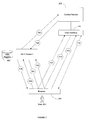
- FIG 10 is a simplified depiction of the "push" scenario in accessing application functionality offered by the EBPSP 203 when the extended contacts list is hosted by the contact service 202.
- the user 204 via Web browser 701, requests to view the summary view of contact information. This request is transmitted by the communications interface 515 of the user system 500 to a communication interface 315 of the contact service 202 via the network 206. It will be appreciated that all communications between the user 204, the contact service 202, and the EBPSP 203, shown in Figure 10 as computing application 1001, are via the network 206.
- the contact user interface 705 requests appropriate information, i.e. contact information for display in the summary view, from the contact service 202, detail 1006.
- the requested information for presentation to user 204 is information stored in the extended contact list database 31 0A.
- the contact service 202 passes the requested information to the contact user interface 705.
- the contact user interface 705 in turn passes the retrieved information to the user's Web browser 701, where it is then presented as a summary view, including application icons, detail 1008.
- the user 204 selects a function to invoke in association with a particular entity, via an I/O device 522.
- the user 204 selects an EBP function offered by the EBPSP 203.
- the user selection is then transmitted back to the contacts user interface 705, detail 1009.
- the contact user interface 705 requests all relevant stored information associated with the EBP application from the contacts service 202, including a network address associated with the EBPSP 203. This may include, for any given associated application, a combination of general and public/hidden application-specific information.
- the contact service 202 passes the requested information to the contact user interface 705, detail 1011.
- the retrieved contact information is bundled as a set of accompanying tagged parameters in a query string or as part of a "post" command or some equivalent Web mechanism in the redirection.
- information identifying the user 204 is included in the bundle.
- the application 1001 transmits an appropriate function page with fields populated from the passed parameters to the user 204, requesting confirmation from the user.
- the function page is then presented to the user.
- the user 204 confirms the function, detail 1014, via an I/O device 522. Thereafter, the application 1001 performs the requested function.
- the application 1001 may beneficially redirect the user browser 701 to the contact user interface 705, appending a set of return tagged parameters to add/update "hidden” values, detail 1015.
- the contacts user interface passes this information to the contacts service 202, detail 1016.
- the contacts service 202 then adds/updates "hidden” values, utilizing passed information. This is the scrubbing of data.
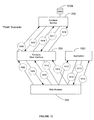
- Figure 11 is a simplified depiction of the "pull" scenario when the extended contact list is hosted by the contact service 202.
- the user 204 via Web browser 701, requests to view a summary view of contact information, as above in Figure 10.
- the contact user interface 705 requests appropriate stored information from the contact service 202, detail 1102, and the contact service 202 passes the requested information to the contact user interface 705, detail 1103, also as above.
- the contact user interface 705 transmits the summary view, including application icons, to the user 204. This information is presented to the user 204.
- the user 204 selects a function to invoke in association with a particular entity, detail 1105, as above.
- the contact user interface 705 requests only an entity identifier from the contact service 202 if not already in a memory , detail 1106. That is, if user 206 has previously requested to invoke a function associated with that entity, the entity identifier may be, as desired, retained by the contacts user interface 705.
- the contact service 202 passes the requested information to the contact user interface 705, detail 1107.
- the contact user interface 705 redirects the user browser 701 to the requested application 1001, bundling only a minimal set of information (entry identifier + crypto-token to delegate authority to access information at contact service 202) as a set of accompanying tagged parameters in a query string or as part of a "post" command or some equivalent Web mechanism, detail 1108.
- a minimal set of information entity identifier + crypto-token to delegate authority to access information at contact service 202
- information identifying the user 204 is included in the bundle.
- the application 1001 requests the full set of relevant information, via network 206, from the contact service 202, using the crypto-token delegation access authorization from the user 204 and the entity identifier.
- the contact service 202 passes the requested information to the application 1001, detail 1110, via network 206.
- the application 1001 transmits an appropriate function page with fields populated from the information received from the contact service 202 to the user 204, requesting confirmation from the user 204, detail 1111.
- This function page is presented to the user 204 by Web browser 701.
- the user 204 confirms the function, via an I/O device 522.
- the application 1001 adds/updates "hidden" values in the appropriate entry directly via the contact service 202, detail 1113.
- the user selection of a function to invoke might not require retrieval of information from the contact service 202 by the contact user interface 705 prior to redirection if the icon or link has already been previously associated with the correct bundle of information.
- the user browser 701 would be directed immediately to the application upon selection of the icon or link. That is, the bundle of information could be stored for easy access by the contacts user interface 705.
- the general 105 and application-specific 106 portions of the contact information may appear to be unified, they could be, as desired maintained in separate data repositories by separate applications.
- the general information may be maintained by the contact service 202, but the application-specific portions could be maintained in a more local repository maintained by another entity.
- the present invention provides data-centric application invocation. That is, via the extended contact list the user 204 first selects data and then a function to be performed utilizing that data, whether a push or a pull scenario is utilized.
- the extended contact list is maintained by the contact service 202, and user 204 invokes an EBP application offered by the EBPSP 203.
- the EBP application could include one or more types of functionality, including, but not limited to, electronic payments, electronic bill presentment, electronic bill issuance, often called invoicing, and financial transaction history viewing.
- the extended contact list can be stored on the user's computing system 500, and user 204 invokes application functionality of any kind either offered by a service provider, or performed by the user's computing system 500.
- the information associated with the EBP application 1001 passed to the EBP application 1001 includes at least information identifying and associated with the entity whose contact information the user 204 is viewing when an application icon is activated, and preferably information identifying the user 204.
- the passed information associated with the entity could be any of, or all of, the entity's name, address, e-mail identifier, the user's account number with the entity, an entity phone number, and/or other application-specific data fields. It should be noted that information indicating a location of the entity, whether on a network or a physical location, does not have to be passed. If the requested transaction is a payment to the entity, the passed information preferably includes information identifying a payment account associated with the user 204. Payment account information could be stored in the extended contacts list, or elsewhere.
- the EBPSP 203 transmits an activation user presentation to the user 204.
- the activation user interface is preferably pre-populated with at least a portion of the passed information.
- the EBPSP 203 presents a screen to the user 204 for the user 204 to supply the missing information.
- the EBPSP 203 could obtain the information without requesting it from the user 204.
- the EBPSP 203 After the EBPSP 203 obtains all necessary information, whether all from the contact service 202, from one or more other sources, or from both the contact service 202 and one or more other sources, the EBPSP 203 fulfills the requested transaction.
- Another source could include the user 204.
- the payment could be a paper payment, such as a draft, check, or other paper instrument, or could be an electronic payment, such as an ACH-based electronic funds transfer.
- the bill could be issued electronically, perhaps utilizing a passed e-mail identifier, or could be a paper bill, perhaps utilizing passed physical address information.
- the electronic bill presentation could be presentation of only bill summary data, with links to another site for bill detail, or bill detail directly.
- the EBPSP 203 could beneficially, as desired, utilize techniques disclosed in United States Patent Application Serial Number 10/285,707, introduced above, in electronically presenting bills to the user 204.
- techniques disclosed in United States Patent No. 6,289,322, assigned to the Assignee of the present application and incorporated herein in its entirety, and United States Patent No. 6,055,567, also assigned to the Assignee of the present application and incorporated herein in its entirety may beneficially be utilized in electronic presentation of a bill.
- the EBPSP 203 could also beneficially utilize techniques disclosed in United States Patent Application Serial Number 10/285,707.
- the presentation of historical data may be sorted, as desired by the user 204, by transaction date, status, or other attributes.
Landscapes
- Engineering & Computer Science (AREA)
- Computer Security & Cryptography (AREA)
- Theoretical Computer Science (AREA)
- General Physics & Mathematics (AREA)
- Physics & Mathematics (AREA)
- General Engineering & Computer Science (AREA)
- Software Systems (AREA)
- Computer Hardware Design (AREA)
- Computer Networks & Wireless Communication (AREA)
- Signal Processing (AREA)
- Information Transfer Between Computers (AREA)
- User Interface Of Digital Computer (AREA)
- Information Retrieval, Db Structures And Fs Structures Therefor (AREA)
Applications Claiming Priority (2)
| Application Number | Priority Date | Filing Date | Title |
|---|---|---|---|
| US10/748,678 US7395319B2 (en) | 2003-12-31 | 2003-12-31 | System using contact list to identify network address for accessing electronic commerce application |
| US748678 | 2003-12-31 |
Publications (2)
| Publication Number | Publication Date |
|---|---|
| EP1550932A2 true EP1550932A2 (fr) | 2005-07-06 |
| EP1550932A3 EP1550932A3 (fr) | 2005-12-28 |
Family
ID=34574774
Family Applications (1)
| Application Number | Title | Priority Date | Filing Date |
|---|---|---|---|
| EP04027298A Withdrawn EP1550932A3 (fr) | 2003-12-31 | 2004-11-17 | Une liste de contact pour accéder à un programme applicatif |
Country Status (3)
| Country | Link |
|---|---|
| US (3) | US7395319B2 (fr) |
| EP (1) | EP1550932A3 (fr) |
| HK (1) | HK1079876A1 (fr) |
Families Citing this family (74)
| Publication number | Priority date | Publication date | Assignee | Title |
|---|---|---|---|---|
| US8037158B2 (en) | 1995-11-13 | 2011-10-11 | Lakshmi Arunachalam | Multimedia transactional services |
| US7930340B2 (en) | 1995-11-13 | 2011-04-19 | Lakshmi Arunachalam | Network transaction portal to control multi-service provider transactions |
| US8271339B2 (en) | 1995-11-13 | 2012-09-18 | Lakshmi Arunachalam | Method and apparatus for enabling real-time bi-directional transactions on a network |
| US7146338B2 (en) | 2001-06-28 | 2006-12-05 | Checkfree Services Corporation | Inter-network financial service |
| US7979348B2 (en) | 2002-04-23 | 2011-07-12 | Clearing House Payments Co Llc | Payment identification code and payment system using the same |
| US7395319B2 (en) | 2003-12-31 | 2008-07-01 | Checkfree Corporation | System using contact list to identify network address for accessing electronic commerce application |
| US8725607B2 (en) | 2004-01-30 | 2014-05-13 | The Clearing House Payments Company LLC | Electronic payment clearing and check image exchange systems and methods |
| BRPI0418721A (pt) * | 2004-04-09 | 2007-09-11 | Telecom Italia Spa | métodos e aparelhos para enviar uma mensagem de correio eletrÈnico em uma rede de comunicação e para encaminhar uma requisição para acesso a uma caixa de correio eletrÈnico a partir de um usuário de uma rede de comunicações, aparelho para gerenciar requisições relacionadas a serviços de correio eletrÈnico, programa e produto de software e rede de comunicações |
| US8209376B1 (en) * | 2004-05-06 | 2012-06-26 | Apple Inc. | Application-specific group listing |
| US7562104B2 (en) * | 2005-02-25 | 2009-07-14 | Microsoft Corporation | Method and system for collecting contact information from contact sources and tracking contact sources |
| US20060195472A1 (en) * | 2005-02-25 | 2006-08-31 | Microsoft Corporation | Method and system for aggregating contact information from multiple contact sources |
| US7593925B2 (en) * | 2005-02-25 | 2009-09-22 | Microsoft Corporation | Method and system for locating contact information collected from contact sources |
| US20060265262A1 (en) * | 2005-05-18 | 2006-11-23 | Microsoft Corporation | Distributed conference scheduling |
| US7685530B2 (en) | 2005-06-10 | 2010-03-23 | T-Mobile Usa, Inc. | Preferred contact group centric interface |
| US8359548B2 (en) | 2005-06-10 | 2013-01-22 | T-Mobile Usa, Inc. | Managing subset of user contacts |
| US8370770B2 (en) | 2005-06-10 | 2013-02-05 | T-Mobile Usa, Inc. | Variable path management of user contacts |
| US8370769B2 (en) | 2005-06-10 | 2013-02-05 | T-Mobile Usa, Inc. | Variable path management of user contacts |
| US8849752B2 (en) * | 2005-07-21 | 2014-09-30 | Google Inc. | Overloaded communication session |
| US8255281B2 (en) | 2006-06-07 | 2012-08-28 | T-Mobile Usa, Inc. | Service management system that enables subscriber-driven changes to service plans |
| US9781071B2 (en) * | 2006-06-28 | 2017-10-03 | Nokia Technologies Oy | Method, apparatus and computer program product for providing automatic delivery of information to a terminal |
| GB0624577D0 (en) * | 2006-12-08 | 2007-01-17 | Skype Ltd | Communication Systems |
| US20080288376A1 (en) | 2007-04-27 | 2008-11-20 | Cashedge, Inc. | Centralized payment hub method and system |
| US8156098B1 (en) * | 2007-04-29 | 2012-04-10 | Aol Inc. | Generating and implementing A-lists to manage user relationships |
| US8844002B2 (en) * | 2007-06-29 | 2014-09-23 | Ebay Inc. | Method and system for notification and request processing |
| US9716764B2 (en) | 2007-07-25 | 2017-07-25 | Yahoo! Inc. | Display of communication system usage statistics |
| US9584343B2 (en) | 2008-01-03 | 2017-02-28 | Yahoo! Inc. | Presentation of organized personal and public data using communication mediums |
| USD631890S1 (en) | 2009-03-27 | 2011-02-01 | T-Mobile Usa, Inc. | Portion of a display screen with a user interface |
| US9355382B2 (en) * | 2009-03-27 | 2016-05-31 | T-Mobile Usa, Inc. | Group based information displays |
| US8893025B2 (en) * | 2009-03-27 | 2014-11-18 | T-Mobile Usa, Inc. | Generating group based information displays via template information |
| USD636400S1 (en) | 2009-03-27 | 2011-04-19 | T-Mobile Usa, Inc. | Portion of a display screen with a user interface |
| USD631891S1 (en) | 2009-03-27 | 2011-02-01 | T-Mobile Usa, Inc. | Portion of a display screen with a user interface |
| US9210247B2 (en) | 2009-03-27 | 2015-12-08 | T-Mobile Usa, Inc. | Managing contact groups from subset of user contacts |
| USD636403S1 (en) | 2009-03-27 | 2011-04-19 | T-Mobile Usa, Inc. | Portion of a display screen with a user interface |
| US9369542B2 (en) | 2009-03-27 | 2016-06-14 | T-Mobile Usa, Inc. | Network-based processing of data requests for contact information |
| US9195966B2 (en) | 2009-03-27 | 2015-11-24 | T-Mobile Usa, Inc. | Managing contact groups from subset of user contacts |
| US8577350B2 (en) | 2009-03-27 | 2013-11-05 | T-Mobile Usa, Inc. | Managing communications utilizing communication categories |
| US8755372B2 (en) * | 2009-04-27 | 2014-06-17 | Five9, Inc. | Secure customer service proxy portal |
| WO2010141216A2 (fr) | 2009-06-02 | 2010-12-09 | Xobni Corporation | Carnet d'adresses à peuplement automatique |
| US8984074B2 (en) | 2009-07-08 | 2015-03-17 | Yahoo! Inc. | Sender-based ranking of person profiles and multi-person automatic suggestions |
| US9721228B2 (en) | 2009-07-08 | 2017-08-01 | Yahoo! Inc. | Locally hosting a social network using social data stored on a user's computer |
| US7930430B2 (en) | 2009-07-08 | 2011-04-19 | Xobni Corporation | Systems and methods to provide assistance during address input |
| US8990323B2 (en) | 2009-07-08 | 2015-03-24 | Yahoo! Inc. | Defining a social network model implied by communications data |
| CN101645856A (zh) | 2009-08-19 | 2010-02-10 | 深圳华为通信技术有限公司 | 联系人信息处理方法及移动终端 |
| US9087323B2 (en) | 2009-10-14 | 2015-07-21 | Yahoo! Inc. | Systems and methods to automatically generate a signature block |
| US8533186B2 (en) * | 2010-01-15 | 2013-09-10 | Blackberry Limited | Method and device for storing and accessing retail contacts |
| US9020938B2 (en) | 2010-02-03 | 2015-04-28 | Yahoo! Inc. | Providing profile information using servers |
| US8620935B2 (en) | 2011-06-24 | 2013-12-31 | Yahoo! Inc. | Personalizing an online service based on data collected for a user of a computing device |
| US8972257B2 (en) | 2010-06-02 | 2015-03-03 | Yahoo! Inc. | Systems and methods to present voice message information to a user of a computing device |
| US10163074B2 (en) * | 2010-07-07 | 2018-12-25 | Ford Global Technologies, Llc | Vehicle-based methods and systems for managing personal information and events |
| WO2012057973A2 (fr) * | 2010-10-26 | 2012-05-03 | Barnes & Noble, Inc | Système et procédé pour obtenir des contacts de réseaux sociaux et de systèmes de courrier électronique |
| US8738574B2 (en) | 2010-12-20 | 2014-05-27 | Ford Global Technologies, Llc | Automatic wireless device data maintenance |
| US8406938B2 (en) | 2011-05-19 | 2013-03-26 | Ford Global Technologies, Llc | Remote operator assistance for one or more user commands in a vehicle |
| US10078819B2 (en) | 2011-06-21 | 2018-09-18 | Oath Inc. | Presenting favorite contacts information to a user of a computing device |
| US9747583B2 (en) * | 2011-06-30 | 2017-08-29 | Yahoo Holdings, Inc. | Presenting entity profile information to a user of a computing device |
| US9612797B2 (en) | 2011-08-25 | 2017-04-04 | Ford Global Technologies, Llc | Method and apparatus for a near field communication system to exchange occupant information |
| US9280541B2 (en) | 2012-01-09 | 2016-03-08 | Five9, Inc. | QR data proxy and protocol gateway |
| JP5911732B2 (ja) * | 2012-02-21 | 2016-04-27 | 京セラ株式会社 | 携帯端末装置、プログラムおよびアプリケーション実行制御方法 |
| US10192200B2 (en) | 2012-12-04 | 2019-01-29 | Oath Inc. | Classifying a portion of user contact data into local contacts |
| US8682529B1 (en) | 2013-01-07 | 2014-03-25 | Ford Global Technologies, Llc | Methods and apparatus for dynamic embedded object handling |
| US9789788B2 (en) | 2013-01-18 | 2017-10-17 | Ford Global Technologies, Llc | Method and apparatus for primary driver verification |
| US9443268B1 (en) | 2013-08-16 | 2016-09-13 | Consumerinfo.Com, Inc. | Bill payment and reporting |
| US10325314B1 (en) | 2013-11-15 | 2019-06-18 | Consumerinfo.Com, Inc. | Payment reporting systems |
| US9361090B2 (en) | 2014-01-24 | 2016-06-07 | Ford Global Technologies, Llc | Apparatus and method of software implementation between a vehicle and mobile device |
| CN105338164A (zh) | 2014-08-01 | 2016-02-17 | 阿里巴巴集团控股有限公司 | 充值提示方法和充值提示装置 |
| US11295308B1 (en) | 2014-10-29 | 2022-04-05 | The Clearing House Payments Company, L.L.C. | Secure payment processing |
| CN104732380A (zh) * | 2015-02-16 | 2015-06-24 | 小米科技有限责任公司 | 一种进行转账处理的方法和装置 |
| JP6578751B2 (ja) * | 2015-06-09 | 2019-09-25 | 富士通株式会社 | 連絡先管理プログラム、連絡先管理システム、及び連絡先管理方法 |
| US11694168B2 (en) | 2015-07-01 | 2023-07-04 | The Clearing House Payments Company L.L.C. | Real-time payment system, method, apparatus, and computer program |
| US11042882B2 (en) | 2015-07-01 | 2021-06-22 | The Clearing House Payments Company, L.L.C. | Real-time payment system, method, apparatus, and computer program |
| US10936631B2 (en) | 2016-04-15 | 2021-03-02 | Microsoft Technology Licensing, Llc | Person centric applications |
| US10218802B2 (en) | 2016-10-18 | 2019-02-26 | Microsoft Technology Licensing, Llc | Tiered notification framework |
| US11436577B2 (en) | 2018-05-03 | 2022-09-06 | The Clearing House Payments Company L.L.C. | Bill pay service with federated directory model support |
| US10880313B2 (en) | 2018-09-05 | 2020-12-29 | Consumerinfo.Com, Inc. | Database platform for realtime updating of user data from third party sources |
| CN114553484B (zh) * | 2022-01-18 | 2024-05-24 | 国电南瑞科技股份有限公司 | 一种基于二维安全标记的双重访问权限控制方法及系统 |
Family Cites Families (58)
| Publication number | Priority date | Publication date | Assignee | Title |
|---|---|---|---|---|
| US4864497A (en) | 1988-04-13 | 1989-09-05 | Digital Equipment Corporation | Method of integrating software application programs using an attributive data model database |
| IT1227258B (it) | 1988-09-30 | 1991-03-28 | Himont Inc | Componenti e catalizzatori per la polimerizzazione di olefine |
| US6289322B1 (en) * | 1998-03-03 | 2001-09-11 | Checkfree Corporation | Electronic bill processing |
| US5566330A (en) | 1991-08-20 | 1996-10-15 | Powersoft Corporation | Method for forming a reusable and modifiable database interface object |
| US5392390A (en) | 1992-04-10 | 1995-02-21 | Intellilink Corp. | Method for mapping, translating, and dynamically reconciling data between disparate computer platforms |
| US5835089A (en) * | 1994-09-26 | 1998-11-10 | Intel Corporation | Application programming interface for shared address book services in a computer system |
| US5897635A (en) * | 1995-06-07 | 1999-04-27 | International Business Machines Corp. | Single access to common user/application information |
| US6049796A (en) | 1997-02-24 | 2000-04-11 | Nokia Mobile Phones Limited | Personal digital assistant with real time search capability |
| US6055567A (en) | 1998-02-02 | 2000-04-25 | Checkfree Corporation | Distributed data accessing technique |
| US6253203B1 (en) | 1998-10-02 | 2001-06-26 | Ncr Corporation | Privacy-enhanced database |
| US6601087B1 (en) * | 1998-11-18 | 2003-07-29 | Webex Communications, Inc. | Instant document sharing |
| US20010011248A1 (en) * | 1999-01-29 | 2001-08-02 | Maria Azua Himmel | Method and apparatus for transmitting and tendering electronic cash using a phone wallet |
| US6344180B1 (en) * | 1999-06-15 | 2002-02-05 | Bionebraska, Inc. | GLP-1 as a diagnostic test to determine β-cell function and the presence of the condition of IGT and type II diabetes |
| US6873974B1 (en) * | 1999-08-17 | 2005-03-29 | Citibank, N.A. | System and method for use of distributed electronic wallets |
| US20040151300A1 (en) * | 2002-05-29 | 2004-08-05 | Evan Marwell | Personalized assistance system and method |
| US6404884B1 (en) * | 1999-10-08 | 2002-06-11 | Grape Technology Group, Inc. | Personalized assistance system and method |
| US7325012B2 (en) * | 1999-12-06 | 2008-01-29 | Interface Software, Inc. | Relationship management system determining contact pathways in a contact relational database |
| AU2909401A (en) | 1999-12-20 | 2001-07-03 | Planetid, Inc. | Information exchange engine providing a critical infrastructure layer and methods of use thereof |
| US7228556B2 (en) * | 1999-12-21 | 2007-06-05 | Tivo Inc. | Distributed, interactive television program guide; system and method |
| US7376587B1 (en) * | 2000-07-11 | 2008-05-20 | Western Union Financial Services, Inc. | Method for enabling transfer of funds through a computer network |
| US20050144121A1 (en) * | 2003-12-24 | 2005-06-30 | Mayo Anthony P. | Transaction system and methodology with inter-party communications capability |
| CA2406084A1 (fr) * | 2000-04-17 | 2001-10-25 | Lonnie S. Clabaugh | Mecanisme sans etat d'extraction de donnees |
| US20050075925A1 (en) * | 2000-05-05 | 2005-04-07 | Yaakov Sash | Web-based address book |
| WO2002003296A1 (fr) * | 2000-06-29 | 2002-01-10 | Dynamic Networks, Inc. | Procede et systeme pour produire un reseau de commerce electronique |
| US7146338B2 (en) | 2001-06-28 | 2006-12-05 | Checkfree Services Corporation | Inter-network financial service |
| US6771640B2 (en) * | 2000-10-23 | 2004-08-03 | Itxc, Inc. | Virtual calling card with arbitrary controls |
| FR2815745B1 (fr) * | 2000-10-25 | 2003-01-10 | Cedric Remy | Procede de paiement par telematique securise |
| WO2002061698A2 (fr) * | 2001-01-20 | 2002-08-08 | Ncr International, Inc. | Terminal en libre-service |
| CA2332656A1 (fr) * | 2001-01-26 | 2002-07-26 | Certapay Inc. | Transfert de paiements en ligne, et systeme et methode de gestion d'identites |
| US20020116396A1 (en) * | 2001-02-22 | 2002-08-22 | Christopher Somers | System for providing electronic contact information from a central source and method for updating contact information |
| US7302634B2 (en) * | 2001-03-14 | 2007-11-27 | Microsoft Corporation | Schema-based services for identity-based data access |
| US7184989B2 (en) * | 2001-03-31 | 2007-02-27 | First Data Corporation | Staged transactions systems and methods |
| US7277923B2 (en) * | 2001-04-13 | 2007-10-02 | Earthlink, Inc. | Systems and methods for automatically accessing internet information from a local application on a handheld internet appliance |
| US20020169748A1 (en) * | 2001-05-11 | 2002-11-14 | Pavel Macholda | Self-updating address book |
| US20040143491A1 (en) * | 2001-08-02 | 2004-07-22 | Marty Steinberg | Method and system for management of purchasing incentives |
| US7092945B2 (en) | 2001-10-25 | 2006-08-15 | Hewlett-Packard Development Company, L.P. | Method and system for obtaining a user's personal address information |
| US7146009B2 (en) * | 2002-02-05 | 2006-12-05 | Surety, Llc | Secure electronic messaging system requiring key retrieval for deriving decryption keys |
| US7254705B2 (en) * | 2002-03-15 | 2007-08-07 | Matsushita Electric Industrial Co., Ltd. | Service providing system in which services are provided from service provider apparatus to service user apparatus via network |
| US7206388B2 (en) * | 2002-03-18 | 2007-04-17 | Openwave Systems Inc. | System and method for providing voice-activated presence information |
| US7035854B2 (en) * | 2002-04-23 | 2006-04-25 | International Business Machines Corporation | Content management system and methodology employing non-transferable access tokens to control data access |
| US7401235B2 (en) * | 2002-05-10 | 2008-07-15 | Microsoft Corporation | Persistent authorization context based on external authentication |
| US20030225688A1 (en) * | 2002-05-28 | 2003-12-04 | Charter One Financial, Inc. | Financial account transfer apparatus and method |
| FI20021213A0 (fi) * | 2002-06-20 | 2002-06-20 | Nokia Corp | Menetelmä ja laite matkaviestintään |
| US20040078191A1 (en) * | 2002-10-22 | 2004-04-22 | Nokia Corporation | Scalable neural network-based language identification from written text |
| US20040143546A1 (en) | 2002-11-01 | 2004-07-22 | Wood Jeff A. | Easy user activation of electronic commerce services |
| US8561069B2 (en) * | 2002-12-19 | 2013-10-15 | Fujitsu Limited | Task computing |
| US7360164B2 (en) * | 2003-03-03 | 2008-04-15 | Sap Ag | Collaboration launchpad |
| US20040181517A1 (en) * | 2003-03-13 | 2004-09-16 | Younghee Jung | System and method for social interaction |
| US7480254B2 (en) * | 2003-05-28 | 2009-01-20 | Nokia Corporation | System, apparatus, and method for providing multi-application support using a single protocol stack |
| US8606602B2 (en) * | 2003-09-12 | 2013-12-10 | Swiss Reinsurance Company Ltd. | Systems and methods for automated transactions processing |
| US7870199B2 (en) * | 2003-10-06 | 2011-01-11 | Aol Inc. | System and method for seamlessly bringing external services into instant messaging session |
| US20050091272A1 (en) * | 2003-10-23 | 2005-04-28 | Smith Walter R. | Contact management |
| US7395319B2 (en) | 2003-12-31 | 2008-07-01 | Checkfree Corporation | System using contact list to identify network address for accessing electronic commerce application |
| US7953759B2 (en) * | 2004-02-17 | 2011-05-31 | Microsoft Corporation | Simplifying application access to schematized contact data |
| US7797293B2 (en) * | 2004-06-24 | 2010-09-14 | Oracle America, Inc. | Adaptive contact list |
| US7533418B1 (en) * | 2004-10-07 | 2009-05-12 | Nortel Networks Limited | Tokens for contact information |
| US7536710B2 (en) * | 2005-01-28 | 2009-05-19 | Microsoft Corporation | Application-backed groups in a common address book |
| US8112354B2 (en) * | 2005-04-08 | 2012-02-07 | Billeo, Inc | Method and system for virtual consolidation of biller direct web sites |
-
2003
- 2003-12-31 US US10/748,678 patent/US7395319B2/en active Active
-
2004
- 2004-11-17 EP EP04027298A patent/EP1550932A3/fr not_active Withdrawn
-
2005
- 2005-12-29 HK HK05112136.5A patent/HK1079876A1/en unknown
-
2008
- 2008-06-30 US US12/164,856 patent/US8463831B2/en not_active Expired - Lifetime
-
2013
- 2013-05-01 US US13/874,805 patent/US10291688B2/en not_active Expired - Lifetime
Non-Patent Citations (1)
| Title |
|---|
| None * |
Also Published As
| Publication number | Publication date |
|---|---|
| US8463831B2 (en) | 2013-06-11 |
| EP1550932A3 (fr) | 2005-12-28 |
| US20080263069A1 (en) | 2008-10-23 |
| US20050182837A1 (en) | 2005-08-18 |
| US7395319B2 (en) | 2008-07-01 |
| HK1079876A1 (en) | 2006-04-13 |
| US20130246931A1 (en) | 2013-09-19 |
| US10291688B2 (en) | 2019-05-14 |
Similar Documents
| Publication | Publication Date | Title |
|---|---|---|
| US7395319B2 (en) | System using contact list to identify network address for accessing electronic commerce application | |
| TW466858B (en) | Method and apparatus for delivering documents over an electronic network | |
| US6826542B1 (en) | System and method for collecting, enhancing and distributing invoices electronically via the internet | |
| US11425116B2 (en) | Data backup and transfer system, method and computer program product | |
| US10332132B2 (en) | Method and apparatus for colleting and disseminating information over a computer network | |
| US8666859B2 (en) | Electronic financial management and analysis system and related methods | |
| US7389355B2 (en) | Customer access solutions architecture | |
| US6282552B1 (en) | Customizable electronic invoice with optional security | |
| US8165934B2 (en) | Automated invoice processing software and services | |
| US6385655B1 (en) | Method and apparatus for delivering documents over an electronic network | |
| US7933834B2 (en) | Interactive bill payment center | |
| US20030069874A1 (en) | Method and system to automate the updating of personal information within a personal information management application and to synchronize such updated personal information management applications | |
| US20030182234A1 (en) | Method and system for document presentment between generic publishers and generic subscribers | |
| US20010023414A1 (en) | Interactive calculation and presentation of financial data results through a single interface on a data-packet-network | |
| JP2002366412A (ja) | アプリケーションサービスプロバイダ(asp)の文書管理システム及び方法 | |
| WO2000067106A1 (fr) | Formulation automatique d'une demande a un service en ligne utilisant une information personnelle conservee dans une application de gestion | |
| US20070219879A1 (en) | System and method for automatically generating expense reports | |
| KR102750317B1 (ko) | 서류 수집 서비스 제공 시스템 | |
| Trevor et al. | DoKumobility: Web services for the mobile worker | |
| JP2003296506A (ja) | 電子納品システム及び電子納品方法 | |
| JP2003296433A (ja) | 電子納品システム及び電子納品方法 | |
| JP2003296505A (ja) | 電子納品システム及び電子納品方法 |
Legal Events
| Date | Code | Title | Description |
|---|---|---|---|
| PUAI | Public reference made under article 153(3) epc to a published international application that has entered the european phase |
Free format text: ORIGINAL CODE: 0009012 |
|
| AK | Designated contracting states |
Kind code of ref document: A2 Designated state(s): AT BE BG CH CY CZ DE DK EE ES FI FR GB GR HU IE IS IT LI LU MC NL PL PT RO SE SI SK TR |
|
| AX | Request for extension of the european patent |
Extension state: AL HR LT LV MK YU |
|
| PUAL | Search report despatched |
Free format text: ORIGINAL CODE: 0009013 |
|
| AK | Designated contracting states |
Kind code of ref document: A3 Designated state(s): AT BE BG CH CY CZ DE DK EE ES FI FR GB GR HU IE IS IT LI LU MC NL PL PT RO SE SI SK TR |
|
| AX | Request for extension of the european patent |
Extension state: AL HR LT LV MK YU |
|
| 17P | Request for examination filed |
Effective date: 20060111 |
|
| REG | Reference to a national code |
Ref country code: HK Ref legal event code: DE Ref document number: 1079876 Country of ref document: HK |
|
| AKX | Designation fees paid |
Designated state(s): AT BE BG CH CY CZ DE DK EE ES FI FR GB GR HU IE IS IT LI LU MC NL PL PT RO SE SI SK TR |
|
| 17Q | First examination report despatched |
Effective date: 20060327 |
|
| STAA | Information on the status of an ep patent application or granted ep patent |
Free format text: STATUS: THE APPLICATION IS DEEMED TO BE WITHDRAWN |
|
| 18D | Application deemed to be withdrawn |
Effective date: 20070516 |
|
| REG | Reference to a national code |
Ref country code: HK Ref legal event code: WD Ref document number: 1079876 Country of ref document: HK |