EP1552662B1 - System und verfahren zur übermittlung von daten zwischen netzwerken, die unter verschiedenen protokollen arbeiten - Google Patents
System und verfahren zur übermittlung von daten zwischen netzwerken, die unter verschiedenen protokollen arbeiten Download PDFInfo
- Publication number
- EP1552662B1 EP1552662B1 EP03771172A EP03771172A EP1552662B1 EP 1552662 B1 EP1552662 B1 EP 1552662B1 EP 03771172 A EP03771172 A EP 03771172A EP 03771172 A EP03771172 A EP 03771172A EP 1552662 B1 EP1552662 B1 EP 1552662B1
- Authority
- EP
- European Patent Office
- Prior art keywords
- network
- node
- interface
- protocol
- communications system
- Prior art date
- Legal status (The legal status is an assumption and is not a legal conclusion. Google has not performed a legal analysis and makes no representation as to the accuracy of the status listed.)
- Expired - Lifetime
Links
- 238000000034 method Methods 0.000 title claims abstract description 13
- 238000004891 communication Methods 0.000 claims abstract description 55
- 238000006243 chemical reaction Methods 0.000 claims description 12
- 101710104937 Non-specific acid phosphatase Proteins 0.000 claims description 5
- 238000001514 detection method Methods 0.000 claims description 2
- 101150020337 TSB2 gene Proteins 0.000 description 8
- 238000012546 transfer Methods 0.000 description 6
- 101150082572 TSB1 gene Proteins 0.000 description 4
- 230000008859 change Effects 0.000 description 3
- 230000004048 modification Effects 0.000 description 2
- 238000012986 modification Methods 0.000 description 2
- 230000008569 process Effects 0.000 description 2
- 230000004308 accommodation Effects 0.000 description 1
- 230000005540 biological transmission Effects 0.000 description 1
- 230000003993 interaction Effects 0.000 description 1
- 238000013507 mapping Methods 0.000 description 1
- 230000006855 networking Effects 0.000 description 1
- 230000008520 organization Effects 0.000 description 1
- 238000011084 recovery Methods 0.000 description 1
- 230000005477 standard model Effects 0.000 description 1
- 108010066082 tartrate-sensitive acid phosphatase Proteins 0.000 description 1
Images


Classifications
-
- H—ELECTRICITY
- H04—ELECTRIC COMMUNICATION TECHNIQUE
- H04L—TRANSMISSION OF DIGITAL INFORMATION, e.g. TELEGRAPHIC COMMUNICATION
- H04L61/00—Network arrangements, protocols or services for addressing or naming
- H04L61/09—Mapping addresses
- H04L61/10—Mapping addresses of different types
- H04L61/106—Mapping addresses of different types across networks, e.g. mapping telephone numbers to data network addresses
-
- H—ELECTRICITY
- H04—ELECTRIC COMMUNICATION TECHNIQUE
- H04L—TRANSMISSION OF DIGITAL INFORMATION, e.g. TELEGRAPHIC COMMUNICATION
- H04L61/00—Network arrangements, protocols or services for addressing or naming
- H04L61/09—Mapping addresses
- H04L61/25—Mapping addresses of the same type
-
- H—ELECTRICITY
- H04—ELECTRIC COMMUNICATION TECHNIQUE
- H04L—TRANSMISSION OF DIGITAL INFORMATION, e.g. TELEGRAPHIC COMMUNICATION
- H04L61/00—Network arrangements, protocols or services for addressing or naming
- H04L61/45—Network directories; Name-to-address mapping
- H04L61/4557—Directories for hybrid networks, e.g. including telephone numbers
-
- H—ELECTRICITY
- H04—ELECTRIC COMMUNICATION TECHNIQUE
- H04L—TRANSMISSION OF DIGITAL INFORMATION, e.g. TELEGRAPHIC COMMUNICATION
- H04L69/00—Network arrangements, protocols or services independent of the application payload and not provided for in the other groups of this subclass
- H04L69/08—Protocols for interworking; Protocol conversion
-
- H—ELECTRICITY
- H04—ELECTRIC COMMUNICATION TECHNIQUE
- H04L—TRANSMISSION OF DIGITAL INFORMATION, e.g. TELEGRAPHIC COMMUNICATION
- H04L69/00—Network arrangements, protocols or services independent of the application payload and not provided for in the other groups of this subclass
- H04L69/08—Protocols for interworking; Protocol conversion
- H04L69/085—Protocols for interworking; Protocol conversion specially adapted for interworking of IP-based networks with other networks
-
- H—ELECTRICITY
- H04—ELECTRIC COMMUNICATION TECHNIQUE
- H04L—TRANSMISSION OF DIGITAL INFORMATION, e.g. TELEGRAPHIC COMMUNICATION
- H04L69/00—Network arrangements, protocols or services independent of the application payload and not provided for in the other groups of this subclass
- H04L69/16—Implementation or adaptation of Internet protocol [IP], of transmission control protocol [TCP] or of user datagram protocol [UDP]
-
- H—ELECTRICITY
- H04—ELECTRIC COMMUNICATION TECHNIQUE
- H04L—TRANSMISSION OF DIGITAL INFORMATION, e.g. TELEGRAPHIC COMMUNICATION
- H04L69/00—Network arrangements, protocols or services independent of the application payload and not provided for in the other groups of this subclass
- H04L69/16—Implementation or adaptation of Internet protocol [IP], of transmission control protocol [TCP] or of user datagram protocol [UDP]
- H04L69/161—Implementation details of TCP/IP or UDP/IP stack architecture; Specification of modified or new header fields
-
- H—ELECTRICITY
- H04—ELECTRIC COMMUNICATION TECHNIQUE
- H04L—TRANSMISSION OF DIGITAL INFORMATION, e.g. TELEGRAPHIC COMMUNICATION
- H04L69/00—Network arrangements, protocols or services independent of the application payload and not provided for in the other groups of this subclass
- H04L69/16—Implementation or adaptation of Internet protocol [IP], of transmission control protocol [TCP] or of user datagram protocol [UDP]
- H04L69/169—Special adaptations of TCP, UDP or IP for interworking of IP based networks with other networks
-
- H—ELECTRICITY
- H04—ELECTRIC COMMUNICATION TECHNIQUE
- H04L—TRANSMISSION OF DIGITAL INFORMATION, e.g. TELEGRAPHIC COMMUNICATION
- H04L69/00—Network arrangements, protocols or services independent of the application payload and not provided for in the other groups of this subclass
- H04L69/18—Multiprotocol handlers, e.g. single devices capable of handling multiple protocols
Definitions
- the present invention relates to the field of communications in general and to communications systems supporting more than one communications protocol and methods relating thereto in particular.
- the International Standard Organization (ISO) has defined a standard model for networking (or communications) protocols known as the Open System Interconnect (OSI) model. This model is based on seven protocol layers. Other models for layered protocols have been specified by the Internet Engineering Task Force (IETF), such as one based on Transmission Control Protocol / Internet Protocol (TCP/IP), see IETF publications RFC 793, RFC 791.
- IETF Internet Engineering Task Force
- a protocol conversion device such as a Transport Service Bridge (TSB) or a Transport-Layer Gateway (TLG) can provide for such data transfer. This transfer is facilitated if the upper layers (e.g. session, presentation, and application entities) of the different protocols are practically identical, with only the lower layers differing. Certain current protocols exhibit such practically identical higher layers of protocol (e.g.. session, presentation and application layers).
- a protocol conversion device such as a Transport Service Bridge (TSB) provides for communication between two networks operating under different protocols but where there is a commonality of protocol above a certain layer, e.g. layer-4.
- a TSB would make the TCP layer service look like an OSI TP4 layer service. This is accomplished by making the TCP layer emulate the TP4 layer.
- the OSI application layer can extend over TCP/IP networks. Hence the same application layer can be used in both types of network. Only the underlying layers change between the two.
- a TSB is described in the IETF document RFC1006 "ISO Transport Service on top of the TCP" Version: 3 , May 1987.
- RFC 1006 defines how to produce OSI transport layer services on top of TCP.
- Other types of TSB are described, for example, in other IETF RFCs.
- a drawback of using a TSB is that it can produce a single point of failure in the communications path between any two terminals that communicate through it.
- terminal here is to be understood to encompass "end systems” in an OSI network and "hosts" in a TCP/IP network.
- a single point of failure is a point of failure that cannot be avoided as there is no alternative path to allow data to bypass it.
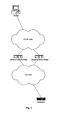
- one or more additional TSBs can be connected in parallel with the first TSB ( Figure 1 ).
- connectionless and connection-orientated layers Some protocols comprise both connectionless and connection-orientated layers. If we consider the example of a network operating under OSI protocol and one operating under TCP/IP, the layers 4 associated with each of the two different protocols will be connection-oriented whereas the layer below (i.e. layer-3 - the Network layer where routing is carried out) will be connectionless.
- the connectionless nature of the Network layers means that, if more than one TSB are provided in parallel, it will be necessary to ensure that all messages communicated between a particular pair of terminals pass through the same TSB. If this is not done, the connection oriented nature of the layer-4 causes the connections to be unstable. An appropriate control protocol is therefore required to nominate one of the TSBs as the "active" TSB used to provide the communications path for those two terminals.
- a connection-oriented layer-4 connection is analogous to a phone call in that there is a 'dialling' (set-up) phase, a 'call' phase, and a 'clear-down' phase.
- the dialling phase of the call includes the transfer of further information beyond simple addressing information (i.e. agreements on how to govern the conversation - how long each party can speak without an acknowledgement, etc.).
- the conversation can be regarded as the exchange of a number of packets of data.
- each packet has sufficient addressing information to get it to its destination, and contains further information such as a sequence number and a specific reference number for that call.
- party A and party B are situated in different administrations, they will have to go through a "bridge" function that is set up when the call is established.
- the call in each network has to be set up separately and a connection established between the two networks in the bridge.
- the directory number (address) used by party A in network A to indicate party B cannot be used in network B: it has to be translated in the bridge to a new format that is understood by network B. If we imagine a situation where two paths exist between the two parties (party A and party B) that wish to converse, each path may pass via a different one of the bridges.
- bridge 1 If party A calls party B and the call is established via bridge 1, two connections are used: one between party A and bridge 1 and one between bridge 1 and party B.
- Bridge 1 and bridge 2 both have routes to party B and although party A has established a connection with bridge 1, as mentioned earlier, each packet has complete addressing information and there is the possibility that some packets could be routed to bridge 2. As no connection exists with bridge 2 these packets will get discarded, interrupting the conversation. As a result, the connection with bridge 1 may also clear down (timeout).
- EP-A-1035708 discloses a communications system for web access and appropriate protocols, which appears to include the feature of the preamble of claim 1.
- RFC 2454: RIP version 2 discloses a communications system comprising some of the features of the preamble of claim 1. This document discloses a known, prior routing system.
- the present invention provides a communications system comprising a first network for the communication of data according to a first protocol and a second network for the communication of data according to a second protocol according to claim 1.
- the present invention also provides a method for the communication of data between a first node in a first network and a second node in a second network, in which data is communicated in the first network according to a first protocol and data is communicated in the second network according to a second protocol according to claim 14.
- FIG. 1 shows a TCP/IP network connected to an OSI network via a number of TSBs connected in parallel (only two TSBs are shown for simplicity). Each of the two networks will typically have a large number of attached terminals, one being shown per network for the purposes of illustration.
- the terminal connected to the TCP/IP network is designated "source” and the terminal connected to the OSI network is designated "destination”.
- Figure 1 shows a conventional arrangement in which two parallel TSBs are used to provide communication between different networks: in this example between a first network operating under the TCP/IP protocol and a second network operating under the OSI protocol.
- the TSBs act to interface between the lower layers of the two protocols and to transfer the upper layers of a first protocol (e.g. OSI) from the "non-native" lower layers of a second protocol (e.g. TCP/IP) to the "Dative" lower layers of its own, first protocol.
- a first protocol e.g. OSI
- TCP/IP Transmission Control Protocol/IP
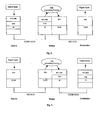
- Figure 2 illustrates the structure of the protocol layers at the source and destination terminals of Figure 1 and in addition the two sets (or "stacks") of protocol layers of one of the TSBs linking the two networks.
- Figure 2 illustrates the source terminal, operating in the TCP/IP network that supports a protocol including a number of upper layers, not shown in detail, of OSI protocol.
- a layer according to RFC 1006 provides accommodation between the upper, OSI, layers and the lower TCP layer which itself is above an IP layer.
- layers below the IP layer (such as Ethernet or PPP for IP, IEEE 8802.2, 8802.3 for OSI over Ethernet and Q.921 for OSI over SDH DCC channels) are not shown in detail.
- the source terminal is connected to the TSB via a TCP/IP Data Communications Network (DCN).
- the TSB supports a TCP/IP-compatible protocol stack comprising similar layers to that of the source terminal.
- the TSB supports an OSI-compatible protocol stack, the lower layers of which comprise a Transport Protocol Class 4 (TP4) layer above a Connectionless Network Layer Protocol (CLNP) layer.
- TP4 Transport Protocol Class 4
- CLNP Connectionless Network Layer Protocol
- TP4 Transport Protocol Class 4
- CLNP Connectionless Network Layer Protocol
- Upper layers, i.e. above TCP or TP4 are not terminated by the TSB. Instead, a single TSB Interworking Function joins the two different protocol stacks together.
- the TSB communicates with the destination terminal via an OSI DCN.
- the destination terminal supports OSI protocol layers with a number of upper OSI protocol layers, not shown in detail, above a TP4 layer which itself is above a CLNP layer.
- Figure 3 shows the same network as Figure 2 but illustrating communication between a source terminal in an OSI DCN supporting OSI protocol upper layers above OSI lower protocol layers and a destination terminal in a TCP/IP DCN supporting OSI protocol upper layers above TCP/IP lower protocol layers.
- the present invention also applies to communication of TCP/IP protocol upper layers, such as hypertext transfer protocol (HTTP), Telnet, etc across TCP/IP and OSI DCNs.
- TCP/IP protocol upper layers such as hypertext transfer protocol (HTTP), Telnet, etc
- HTTP hypertext transfer protocol
- Telnet Telnet
- the RFC 1006 layer is replaced by an equivalent layer able to accommodate TCP/IP upper layer over OSI lower layers.
- the present invention advantageously provides for the active TSB to be to be chosen by the source terminal from a group of TSBs, when initially setting up the communications path, and advantageously copes with failures in either network or in a TSB of a group of TSBs
- TSBs advertise their availability by sending messages to connected terminals.
- the present invention uses information from both protocol layers 3 (network/routing) and 4 (transport) to control the advertising of availability by TSBs.
- the basic control structure according to this preferred embodiment is shown in Figure 4 .
- Routing information is exchanged (see arrows 1) between the TSB and the terminals in each network using level 3 of the appropriate protocol, i.e. IP routing for the TCP/IP DCN and OSI routing for the OSI DCN.
- Figure 4 shows the protocol layers of a TSB with the TSB interworking function in more detail.
- the TSB interworking function comprises functional blocks for connection-control, address-conversion and metric-control.
- the connection-control block monitors the connection state of the layer-4 connection on each side of the TSB and co-ordinates the set-up and teardown of the link.
- the address-conversion block controls the conversion between the addressing used by the lower layers of the protocol on one side of the bridge (IP address/port number) and that used by the equivalent layers on the other side (network service access point/ transport service access point: NSAP/TSAP).
- the mapping between addresses may be set up either by a protocol, manually, or algorithmically (i.e. by a conversion function which processes the address of one domain (or DCN) according to a set of rules and consequently forms an address which is acceptable to the other domain (or DCN)).
- the metric control block controls which metric values are associated with each route advertised by the routing protocols.
- a metric is a value used in assessing the desirability of one route over another, it can be thought of as a cost..
- the arrows 2 to 5 in Figure 4 show the flow of information within the TSB.
- Status control arrows 2 indicate communication, from layer 3 of the appropriate protocol to the address conversion block, of the availability of routes in the relevant domain (i.e. OSI DCN or TCP/IP DCN).
- OSI DCN i.e. OSI DCN or TCP/IP DCN.
- routing is controlled by an IS-IS routing function within layer-3.
- IS refers to "intermediate system”. This availability information indicates whether to advertise each address.
- the address conversion block in turn provides to the metric control block the OSI address information 3 for use in the advertising of routes in the IP domain by the metric control block (or IP address information for the OSI domain if working the other way round).
- Metric control arrow 4 indicates communication of information from the connection control block to the metric control block to allow link failures in either domain to also influence the advertising of routes by the metric control block by means of the metrics associated with each route.
- the metric control block then communicates (see arrows 5) to the respective routing protocol the metric values to use in the appropriate DCN.
- metric value e.g. a default value or a lower value.
- the terminals choose the "active" TSB using the routing process. For example, in the TCP/IP domain, the terminal will use the TSB that advertises a route to the required destination with the lowest metric value. Two transport connections (layers-4 of the two protocols) are established by the terminals and the active TSB (one connection from the source to the active TSB and one from the active TSB to the destination). Once these connections are established, the routing is "locked" to the active TSB by modification of the route metrics advertised by the active TSB. If the "active" TSB detects a failure affecting the chosen route, the TSB stops advertising the route until availability can again be offered. Availability is offered again by re-advertising the route availability with the original, default metric value.
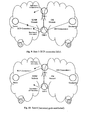
- Figure 5 shows the two TSBs of Figure 1 advertising to the source terminal in the TCP/IP network their availability and the availability of a route from that TSB to the destination in the OSI network prior to the setting up of a connection from the source to the destination.
- both TSBs have identified a route to the destination and, as neither has been selected by the source, each is advertising availability associated with the same (i.e. the default) metric value.
- the TSBs map each IP address in the TCP/IP network relating to a destination in the OSI network onto a different NSAP address in the OSI network.
- Each of the TSBs advertises its availability for a particular IP address relating to a destination in the OSI network if a route is available from that TSB to the corresponding destination in the OSI network and if an address conversion (OSI to TCP/IP) is available.
- OSI to TCP/IP address conversion may be by table look-up or algorithmic
- Each TSB advertising the availability of a route to a particular destination in the OSI network has the ability to terminate the IP connection as if that TSB was the destination IP address. This means that multiple instances of the same TCP/IP terminal will effectively exist in the TCP/IP network. At first this seems to break the rules of IP network addressing as each TCP/IP terminal should be uniquely addressable. However, a routing function is included in the TSBs so that the destination IP address(es) do not map directly to physical ports but belong to virtual ports supported by the routing function.
- IP addresses are not directly accessible at the physical interfaces of the TSB (they are only accessible through the TSB routing function) and hence multiple TSBs can, as a result, be directly connected to the same physical network (i.e. IP sub-net).
- TCP is connection-oriented and relies on sequential delivery of packets from the protocol layer-3 (IP layer).
- IP layer protocol layer-3
- a change in routing would break the sequential delivery of packets from the IP layer and cause the original TCP connection to be terminated. This would in turn cause the OSI connection to be terminated.
- OSI OSI connection
- the invention provides for the connection-state of the OSI connection to influence the routing information held in the TSB such that if a TSB has a connection established for a certain IP address, it changes the metric associated with the associated route to a lower value (see State 2 in Figure 6).
- Figure 6 shows the communication system of Figure 5 following establishment of a TCP/IP connection from the source to TSB 1 and the establishment of an OSI connection from TSB 1 to the destination.
- TSB2 No connection between the destination and source is established via TSB2 which is, as a result, still advertising availability using the default metric.
- TSB1 has a connection established through it, and is advertising availability with a lower value metric. This effectively "locks" the routing to the chosen TSB (i.e. TSB1).
- Figures 7 to 10 illustrate how the system of Figure 5 copes with a failure condition.
- the advertising of multiple available routes via parallel TSBs allows fast recovery from failure conditions, as follows. Failure of either TCP/IP or OSI connections used by an active TSB will cause the active TSB to cease advertising availability. Advertising will either cease indirectly (i.e. if the connection fails in the TCP/IP network) or directly (i.e. if the connection fails in the OSI network):see States 3 - 6 in Figures 7 to 10 .
- Figures 7-10 show the communication system of Figure 5 in the presence of a fault on the OSI connection from the destination terminal to the active TSB: TSB1.
- TSB1 reacts to detection of this fault by ceasing to advertise availability to the source.
- TSB2 is unaffected by the fault and continues to advertise availability in association with the default metric.
- Figure 8 shows the source reacting to the lack of advertising of availability by TSB 1 by choosing TSB2 to connect to the destination.
- TSB2 now selected, changes the metric from the default value to a low value.
- Figure 9 shows the situation some time later when TSB 1 has re-established availability of a path to the destination and has recommenced advertising availability to the source using the default metric.
- Figure 9 also shows a fault in the TCP connection from TSB2 to the source.
- Figure 10 we see the result of the source terminal detecting this fault and changing to TSB 1 for connection to the destination.
- TSB 1 continues to advertise availability but now in association with a lower metric.
- TSB2 ceases to advertise availability on sensing loss of communication with the source terminal. Once the failure condition is removed TSB2 may re-advertise availability.
- the present invention provides simple operation with minimal interaction between TSBs (i.e. avoiding a complicated "hot standby" protocol), whilst exploiting the facilities of existing protocols and supporting single or multiple backup TSBs.
- the invention is not limited to the embodiments set out above which are used to illustrate the principle thereof.
- the routing may equally be "locked" to the active TSB by modification of the route metrics advertised by the non-active TSB(s).
- the invention has application to instances of 3 or more TSBs arranged effectively in parallel.
- the present invention is also applicable to alternative forms of interface for providing communications between networks operating under different protocols, including but not limited to Transport-Layer Gateways.
- the invention has been mainly described, by way of example, with reference to a source terminal in a TCP/IP network and a destination terminal in an OSI network. As indicated above, the invention also applies to systems in which the source entity is an OSI terminal and the destination is a TCP/IP terminal and to networks operating according to other protocols..
Landscapes
- Engineering & Computer Science (AREA)
- Computer Networks & Wireless Communication (AREA)
- Signal Processing (AREA)
- Computer Security & Cryptography (AREA)
- Communication Control (AREA)
- Data Exchanges In Wide-Area Networks (AREA)
Claims (16)
- Kommunikationssystem, welches ein erstes Netz zur Übermittlung von Daten gemäß einem ersten Protokoll und ein zweites Netz zur Übermittlung von Daten gemäß einem zweiten Protokoll umfasst; wobei jedes Netz mindestens einen Knoten umfasst, wobei das System außerdem mehrere Kommunikationsschnittstellen zum Bereitstellen einer Kommunikation zwischen einem ersten Knoten des ersten Netzes und einem zweiten Knoten des zweiten Netzes umfasst;
wobei jede Schnittstelle Mittel zum Senden von Werten zu dem ersten Knoten zum Anzeigen der Verfügbarkeit von Kommunikation zwischen dieser Schnittstelle und dem zweiten Knoten umfasst;
wobei das System Auswahlmittel zum Auswählen einer der Schnittstellen zum Übermitteln von Daten zwischen dem ersten Knoten und dem zweiten Knoten auf der Grundlage der Werte, die von den Schnittstellen zu dem ersten Knoten gesendet wurden, umfasst, dadurch gekennzeichnet, dass jede Schnittstelle Mittel zum Erkennen der Auswahl einer der mehreren Schnittstellen und Mittel zum Ändern, bei Auswahl der ausgewählten Schnittstelle, des von der ausgewählten Schnittstelle zu dem ersten Knoten gesendeten Wertes umfasst, und wobei das Auswahlmittel Mittel zum bevorzugten Auswählen der Schnittstelle umfasst, die mit dem geänderten Wert verknüpft ist. - Kommunikationssystem nach Anspruch 1, wobei jede Schnittstelle Mittel zum Erkennen eines Fehlerzustands und Mittel zum Verhindern des Sendens von Werten durch diese Schnittstelle bei Erkennung eines Fehlerzustands umfasst.
- Kommunikationssystem nach einem der vorhergehenden Ansprüche, wobei jede Schnittstelle Mittel zum Senden der Werte als Teil einer Nachricht aufweist, die eine Adresse umfasst, welche den zweiten Knoten repräsentiert.
- Kommunikationssystem nach Anspruch 3, wobei die in der Nachricht enthaltene Adresse, welche denselben zweiten Knoten repräsentiert, in den von den einzelnen Schnittstellen gesendeten Nachrichten dieselbe ist.
- Kommunikationssystem nach Anspruch 3 oder 4, wobei die Adresse eine IP-Adresse ist, wobei die IP-Adresse auf eine NSAP-Adresse abgebildet wird, die mit dem zweiten Netz verknüpft ist.
- Kommunikationssystem nach Anspruch 3 oder 4, wobei die Adresse eine NSAP-Adresse ist, wobei die NSAP-Adresse auf eine IP-Adresse abgebildet wird, die mit dem zweiten Netz verknüpft ist.
- Kommunikationssystem nach einem der vorhergehenden Ansprüche, wobei das Protokoll des ersten Netzes TCP/IP ist und das Protokoll des zweiten Netzes ISO ist.
- Kommunikationssystem nach einem der Ansprüche 1 bis 6,
wobei das Protokoll des ersten Netzes ISO ist und das Protokoll des zweiten Netzes TCP/IP ist. - Kommunikationssystem nach einem der vorhergehenden Ansprüche, wobei das Auswahlmittel Mittel zum Vermeiden der Verwendung einer beliebigen Schnittstelle umfasst, von welcher es keine Werte empfängt.
- Kommunikationssystem nach einem der vorhergehenden Ansprüche, wobei die Schnittstelle für eine Wandlung zwischen dem ersten und dem zweiten Protokoll sorgt.
- Kommunikationssystem nach einem der vorhergehenden Ansprüche, wobei das Mittel zum Senden von Werten zu einem Knoten eines Netzes dafür eingerichtet ist, die Werte mittels des Protokolls für dieses Netz zu senden.
- Kommunikationssystem nach einem der vorhergehenden Ansprüche, wobei die Protokolle eine Transportschicht und eine Netzwerkschicht umfassen, wobei die Transportschicht Mittel zum Steuern der gesendeten Werte umfasst.
- Kommunikationssystem nach einem der vorhergehenden Ansprüche, wobei die Protokolle Routing-Metriken umfassen, wobei das System Mittel zum Senden der Werte über die Routing-Metriken umfasst.
- Verfahren zur Übermittlung von Daten zwischen einem ersten Knoten in einem ersten Netz und einem zweiten Knoten in einem zweiten Netz, wobei Daten in dem ersten Netz gemäß einem ersten Protokoll übermittelt werden und Daten in dem zweiten Netz gemäß einem zweiten Protokoll übermittelt werden; wobei mehrere Kommunikationsschnittstellen eine Kommunikation zwischen dem ersten Knoten und dem zweiten Knoten bereitstellen;
wobei das Verfahren den Schritt des Sendens von Werten von jeder Schnittstelle zu dem ersten Knoten aufweist, welche die Verfügbarkeit von Kommunikation zwischen dieser Schnittstelle und dem zweiten Knoten anzeigen;
wobei das Verfahren außerdem den Schritt des Auswählens einer der Schnittstellen zum Übermitteln von Daten zwischen dem ersten und dem zweiten Knoten aufweist, wobei die Auswahl auf den Werten beruht, die von den Schnittstellen zu dem ersten Knoten gesendet wurden, dadurch gekennzeichnet, dass das Verfahren die Schritte des Erkennens der Auswahl der ausgewählten Schnittstelle und des Änderns des von der ausgewählten Schnittstelle zu dem ersten Knoten gesendeten Wertes aufweist, und das Verfahren ferner den Schritt des bevorzugten Auswählens der Schnittstelle, die den geänderten Wert sendet, aufweist. - Verfahren nach Anspruch 14, wobei die Protokolle eine Transportschicht und eine Netzwerkschicht umfassen,
wobei das Verfahren den Schritt des Steuerns der gesendeten Werte unter Verwendung der Transportschicht aufweist. - Verfahren nach einem der Ansprüche 14 bis 15, wobei die Protokolle Routing-Metriken umfassen, wobei das Verfahren den Schritt des Sendens der Werte unter Verwendung der Routing-Metriken aufweist.
Applications Claiming Priority (3)
| Application Number | Priority Date | Filing Date | Title |
|---|---|---|---|
| GB0217355 | 2002-07-26 | ||
| GBGB0217355.7A GB0217355D0 (en) | 2002-07-26 | 2002-07-26 | Communications system |
| PCT/GB2003/003220 WO2004012414A1 (en) | 2002-07-26 | 2003-07-28 | System and method for communicating data between networks operating under different protocols |
Publications (2)
| Publication Number | Publication Date |
|---|---|
| EP1552662A1 EP1552662A1 (de) | 2005-07-13 |
| EP1552662B1 true EP1552662B1 (de) | 2008-07-09 |
Family
ID=9941167
Family Applications (1)
| Application Number | Title | Priority Date | Filing Date |
|---|---|---|---|
| EP03771172A Expired - Lifetime EP1552662B1 (de) | 2002-07-26 | 2003-07-28 | System und verfahren zur übermittlung von daten zwischen netzwerken, die unter verschiedenen protokollen arbeiten |
Country Status (10)
| Country | Link |
|---|---|
| US (1) | US20060168247A1 (de) |
| EP (1) | EP1552662B1 (de) |
| JP (1) | JP2005534244A (de) |
| CN (1) | CN1672383A (de) |
| AT (1) | ATE400958T1 (de) |
| AU (1) | AU2003246961A1 (de) |
| CA (1) | CA2488155A1 (de) |
| DE (1) | DE60322088D1 (de) |
| GB (1) | GB0217355D0 (de) |
| WO (1) | WO2004012414A1 (de) |
Families Citing this family (8)
| Publication number | Priority date | Publication date | Assignee | Title |
|---|---|---|---|---|
| GB0600417D0 (en) * | 2006-01-10 | 2006-02-15 | Level 5 Networks Inc | Virtualisation support |
| JP4674181B2 (ja) * | 2006-04-21 | 2011-04-20 | 富士通株式会社 | 伝送装置及びデータ通信チャネル処理方法 |
| US8327017B1 (en) * | 2008-03-12 | 2012-12-04 | United Services Automobile Association (Usaa) | Systems and methods for an autonomous intranet |
| JP5194946B2 (ja) * | 2008-03-28 | 2013-05-08 | 富士通株式会社 | ネットワーク接続装置、および当該装置における信号処理方法 |
| CN106533879B (zh) * | 2015-09-10 | 2020-04-28 | 中兴通讯股份有限公司 | 一种ptn设备中dcn不规则域互通的方法及装置 |
| DE102015016616A1 (de) * | 2015-12-22 | 2017-06-22 | Giesecke & Devrient Gmbh | Vorrichtung und Verfahren zur Verbindung einer Produktionsvorrichtung mit einem Netzwerk |
| US10530902B2 (en) * | 2017-11-30 | 2020-01-07 | Gregory Bullock | Method of operating a protocol translator |
| RU2770458C1 (ru) * | 2021-10-14 | 2022-04-18 | Акционерное общество "Лаборатория Касперского" | Сетевой шлюз и способ передачи данных из первой сети во вторую сеть |
Family Cites Families (8)
| Publication number | Priority date | Publication date | Assignee | Title |
|---|---|---|---|---|
| US6473404B1 (en) * | 1998-11-24 | 2002-10-29 | Connect One, Inc. | Multi-protocol telecommunications routing optimization |
| EP1035708B1 (de) * | 1999-03-05 | 2007-01-17 | International Business Machines Corporation | Verfahren und System zur optimalen Auswahl eines Webfirewalls in einem TCP/IP Netzwerk |
| US7327683B2 (en) * | 2000-03-16 | 2008-02-05 | Sri International | Method and apparatus for disseminating topology information and for discovering new neighboring nodes |
| JP2002007238A (ja) * | 2000-06-21 | 2002-01-11 | Nec Corp | 移動通信システム及びそのゲートウェイ選択方法 |
| US20020176131A1 (en) * | 2001-02-28 | 2002-11-28 | Walters David H. | Protection switching for an optical network, and methods and apparatus therefor |
| ES2225749T3 (es) * | 2001-06-18 | 2005-03-16 | Swisscom Mobile Ag | Procedimiento y sistema para nodos ip moviles en redes heterogeneas. |
| US7096281B2 (en) * | 2001-08-15 | 2006-08-22 | International Business Machines Corporation | Efficient connectivity between multiple topology subnets via common connection network |
| US7215674B1 (en) * | 2002-04-22 | 2007-05-08 | Cisco Technology, Inc. | Supporting applications sensitive to data loss on switched virtual circuits (SVCs) |
-
2002
- 2002-07-26 GB GBGB0217355.7A patent/GB0217355D0/en not_active Ceased
-
2003
- 2003-07-28 AT AT03771172T patent/ATE400958T1/de not_active IP Right Cessation
- 2003-07-28 US US10/522,923 patent/US20060168247A1/en not_active Abandoned
- 2003-07-28 AU AU2003246961A patent/AU2003246961A1/en not_active Abandoned
- 2003-07-28 WO PCT/GB2003/003220 patent/WO2004012414A1/en not_active Ceased
- 2003-07-28 DE DE60322088T patent/DE60322088D1/de not_active Expired - Fee Related
- 2003-07-28 EP EP03771172A patent/EP1552662B1/de not_active Expired - Lifetime
- 2003-07-28 CN CNA038178621A patent/CN1672383A/zh active Pending
- 2003-07-28 JP JP2004523950A patent/JP2005534244A/ja active Pending
- 2003-07-28 CA CA002488155A patent/CA2488155A1/en not_active Abandoned
Also Published As
| Publication number | Publication date |
|---|---|
| CN1672383A (zh) | 2005-09-21 |
| WO2004012414A1 (en) | 2004-02-05 |
| US20060168247A1 (en) | 2006-07-27 |
| ATE400958T1 (de) | 2008-07-15 |
| GB0217355D0 (en) | 2002-09-04 |
| AU2003246961A1 (en) | 2004-02-16 |
| JP2005534244A (ja) | 2005-11-10 |
| CA2488155A1 (en) | 2004-02-05 |
| DE60322088D1 (de) | 2008-08-21 |
| EP1552662A1 (de) | 2005-07-13 |
Similar Documents
| Publication | Publication Date | Title |
|---|---|---|
| JP4208540B2 (ja) | インターネットプロトコルネットワークで負荷割当てボイスオーバーインターネットプロトコルトラフィックに対して分割されたファイアーウォールを使用するソフトスイッチ | |
| US6065061A (en) | Internet protocol based network architecture for cable television access with switched fallback | |
| US8340083B2 (en) | Border control system, method, and software | |
| US7065041B2 (en) | Method for resilient call setup through ATM networks for Softswitch applications | |
| JP4802280B2 (ja) | 多機能サービスを提供するメトロイーサネット(登録商標)ネットワークのネットワーキングにおける高信頼性処理の方法およびシステム | |
| WO1998059477A1 (en) | Network access device dial-up port allocation | |
| WO2005039137A1 (en) | Method for providing backup connection between a primary and secondary network access device | |
| US7565448B1 (en) | Network control system for a communication network | |
| US7246168B1 (en) | Technique for improving the interaction between data link switch backup peer devices and ethernet switches | |
| US7633874B1 (en) | Soft notification messaging for a routing protocol | |
| US20040114578A1 (en) | Methods and systems for locating redundant telephony call processing hosts in geographically separate locations | |
| US20060168247A1 (en) | System and method for communicating data between networks operating under different protocols | |
| US20060198298A1 (en) | System and method for achieving path symmetry in an internet protocol (IP) based network | |
| CN101296126B (zh) | 一种链路故障通告方法、接口管理单元和路由器 | |
| AU2003230349A1 (en) | Method and device for modem relay termination | |
| JP2004509482A (ja) | Ip電話ネットワークにおいて動的にゲートウェイ選択をする方法とシステム | |
| US7430213B2 (en) | Method and telecommunications node for distribution of terminating traffic within telecommunications node | |
| JP2003258843A (ja) | Lan間接続装置切替えシステム及びその方法 | |
| JPH11112570A (ja) | 経路制御方法およびドメインネームシステムサーバ決定方法 | |
| WO2000062489A1 (en) | Routing between communication networks | |
| EP1504578B1 (de) | Einrichtung für modem-relaiskanalabschluss | |
| JP3570506B2 (ja) | ネットワークサーバおよびその制御方法 | |
| WO2005034449A1 (en) | Voip traffic engineering and path resilience using media gateway including next-hop routers | |
| KR100320417B1 (ko) | 서로다른랜프로토콜을사용하는망간의연동시스템및방법 | |
| JP2009506596A (ja) | ダイナミックなシグナリングルーティングを実現する方法及びシステム |
Legal Events
| Date | Code | Title | Description |
|---|---|---|---|
| PUAI | Public reference made under article 153(3) epc to a published international application that has entered the european phase |
Free format text: ORIGINAL CODE: 0009012 |
|
| 17P | Request for examination filed |
Effective date: 20050110 |
|
| AK | Designated contracting states |
Kind code of ref document: A1 Designated state(s): AT BE BG CH CY CZ DE DK EE ES FI FR GB GR HU IE IT LI LU MC NL PT RO SE SI SK TR |
|
| AX | Request for extension of the european patent |
Extension state: AL LT LV MK |
|
| DAX | Request for extension of the european patent (deleted) | ||
| 17Q | First examination report despatched |
Effective date: 20060710 |
|
| RAP1 | Party data changed (applicant data changed or rights of an application transferred) |
Owner name: M(DGP1) LTD |
|
| RAP1 | Party data changed (applicant data changed or rights of an application transferred) |
Owner name: ERICSSON AB |
|
| RAP1 | Party data changed (applicant data changed or rights of an application transferred) |
Owner name: ERICSSON AB |
|
| GRAP | Despatch of communication of intention to grant a patent |
Free format text: ORIGINAL CODE: EPIDOSNIGR1 |
|
| GRAS | Grant fee paid |
Free format text: ORIGINAL CODE: EPIDOSNIGR3 |
|
| GRAA | (expected) grant |
Free format text: ORIGINAL CODE: 0009210 |
|
| AK | Designated contracting states |
Kind code of ref document: B1 Designated state(s): AT BE BG CH CY CZ DE DK EE ES FI FR GB GR HU IE IT LI LU MC NL PT RO SE SI SK TR |
|
| REG | Reference to a national code |
Ref country code: GB Ref legal event code: FG4D |
|
| REG | Reference to a national code |
Ref country code: CH Ref legal event code: EP |
|
| REF | Corresponds to: |
Ref document number: 60322088 Country of ref document: DE Date of ref document: 20080821 Kind code of ref document: P |
|
| REG | Reference to a national code |
Ref country code: IE Ref legal event code: FG4D |
|
| NLV1 | Nl: lapsed or annulled due to failure to fulfill the requirements of art. 29p and 29m of the patents act | ||
| PG25 | Lapsed in a contracting state [announced via postgrant information from national office to epo] |
Ref country code: ES Free format text: LAPSE BECAUSE OF FAILURE TO SUBMIT A TRANSLATION OF THE DESCRIPTION OR TO PAY THE FEE WITHIN THE PRESCRIBED TIME-LIMIT Effective date: 20081020 Ref country code: PT Free format text: LAPSE BECAUSE OF FAILURE TO SUBMIT A TRANSLATION OF THE DESCRIPTION OR TO PAY THE FEE WITHIN THE PRESCRIBED TIME-LIMIT Effective date: 20081209 Ref country code: NL Free format text: LAPSE BECAUSE OF FAILURE TO SUBMIT A TRANSLATION OF THE DESCRIPTION OR TO PAY THE FEE WITHIN THE PRESCRIBED TIME-LIMIT Effective date: 20080709 |
|
| PG25 | Lapsed in a contracting state [announced via postgrant information from national office to epo] |
Ref country code: AT Free format text: LAPSE BECAUSE OF FAILURE TO SUBMIT A TRANSLATION OF THE DESCRIPTION OR TO PAY THE FEE WITHIN THE PRESCRIBED TIME-LIMIT Effective date: 20080709 Ref country code: FI Free format text: LAPSE BECAUSE OF FAILURE TO SUBMIT A TRANSLATION OF THE DESCRIPTION OR TO PAY THE FEE WITHIN THE PRESCRIBED TIME-LIMIT Effective date: 20080709 Ref country code: BG Free format text: LAPSE BECAUSE OF FAILURE TO SUBMIT A TRANSLATION OF THE DESCRIPTION OR TO PAY THE FEE WITHIN THE PRESCRIBED TIME-LIMIT Effective date: 20081009 Ref country code: SI Free format text: LAPSE BECAUSE OF FAILURE TO SUBMIT A TRANSLATION OF THE DESCRIPTION OR TO PAY THE FEE WITHIN THE PRESCRIBED TIME-LIMIT Effective date: 20080709 |
|
| REG | Reference to a national code |
Ref country code: CH Ref legal event code: PL |
|
| PG25 | Lapsed in a contracting state [announced via postgrant information from national office to epo] |
Ref country code: MC Free format text: LAPSE BECAUSE OF NON-PAYMENT OF DUE FEES Effective date: 20080731 Ref country code: BE Free format text: LAPSE BECAUSE OF FAILURE TO SUBMIT A TRANSLATION OF THE DESCRIPTION OR TO PAY THE FEE WITHIN THE PRESCRIBED TIME-LIMIT Effective date: 20080709 |
|
| PG25 | Lapsed in a contracting state [announced via postgrant information from national office to epo] |
Ref country code: DE Free format text: LAPSE BECAUSE OF NON-PAYMENT OF DUE FEES Effective date: 20090203 Ref country code: DK Free format text: LAPSE BECAUSE OF FAILURE TO SUBMIT A TRANSLATION OF THE DESCRIPTION OR TO PAY THE FEE WITHIN THE PRESCRIBED TIME-LIMIT Effective date: 20080709 Ref country code: EE Free format text: LAPSE BECAUSE OF FAILURE TO SUBMIT A TRANSLATION OF THE DESCRIPTION OR TO PAY THE FEE WITHIN THE PRESCRIBED TIME-LIMIT Effective date: 20080709 |
|
| PLBE | No opposition filed within time limit |
Free format text: ORIGINAL CODE: 0009261 |
|
| STAA | Information on the status of an ep patent application or granted ep patent |
Free format text: STATUS: NO OPPOSITION FILED WITHIN TIME LIMIT |
|
| PG25 | Lapsed in a contracting state [announced via postgrant information from national office to epo] |
Ref country code: CZ Free format text: LAPSE BECAUSE OF FAILURE TO SUBMIT A TRANSLATION OF THE DESCRIPTION OR TO PAY THE FEE WITHIN THE PRESCRIBED TIME-LIMIT Effective date: 20080709 Ref country code: SK Free format text: LAPSE BECAUSE OF FAILURE TO SUBMIT A TRANSLATION OF THE DESCRIPTION OR TO PAY THE FEE WITHIN THE PRESCRIBED TIME-LIMIT Effective date: 20080709 Ref country code: RO Free format text: LAPSE BECAUSE OF FAILURE TO SUBMIT A TRANSLATION OF THE DESCRIPTION OR TO PAY THE FEE WITHIN THE PRESCRIBED TIME-LIMIT Effective date: 20080709 |
|
| 26N | No opposition filed |
Effective date: 20090414 |
|
| PG25 | Lapsed in a contracting state [announced via postgrant information from national office to epo] |
Ref country code: LI Free format text: LAPSE BECAUSE OF NON-PAYMENT OF DUE FEES Effective date: 20080731 Ref country code: CH Free format text: LAPSE BECAUSE OF NON-PAYMENT OF DUE FEES Effective date: 20080731 |
|
| REG | Reference to a national code |
Ref country code: FR Ref legal event code: ST Effective date: 20090529 |
|
| PG25 | Lapsed in a contracting state [announced via postgrant information from national office to epo] |
Ref country code: IE Free format text: LAPSE BECAUSE OF NON-PAYMENT OF DUE FEES Effective date: 20080728 |
|
| PG25 | Lapsed in a contracting state [announced via postgrant information from national office to epo] |
Ref country code: IT Free format text: LAPSE BECAUSE OF FAILURE TO SUBMIT A TRANSLATION OF THE DESCRIPTION OR TO PAY THE FEE WITHIN THE PRESCRIBED TIME-LIMIT Effective date: 20080709 |
|
| PG25 | Lapsed in a contracting state [announced via postgrant information from national office to epo] |
Ref country code: FR Free format text: LAPSE BECAUSE OF NON-PAYMENT OF DUE FEES Effective date: 20080731 |
|
| PG25 | Lapsed in a contracting state [announced via postgrant information from national office to epo] |
Ref country code: SE Free format text: LAPSE BECAUSE OF FAILURE TO SUBMIT A TRANSLATION OF THE DESCRIPTION OR TO PAY THE FEE WITHIN THE PRESCRIBED TIME-LIMIT Effective date: 20081009 |
|
| PG25 | Lapsed in a contracting state [announced via postgrant information from national office to epo] |
Ref country code: LU Free format text: LAPSE BECAUSE OF NON-PAYMENT OF DUE FEES Effective date: 20080728 Ref country code: HU Free format text: LAPSE BECAUSE OF FAILURE TO SUBMIT A TRANSLATION OF THE DESCRIPTION OR TO PAY THE FEE WITHIN THE PRESCRIBED TIME-LIMIT Effective date: 20090110 Ref country code: CY Free format text: LAPSE BECAUSE OF FAILURE TO SUBMIT A TRANSLATION OF THE DESCRIPTION OR TO PAY THE FEE WITHIN THE PRESCRIBED TIME-LIMIT Effective date: 20080709 |
|
| PG25 | Lapsed in a contracting state [announced via postgrant information from national office to epo] |
Ref country code: TR Free format text: LAPSE BECAUSE OF FAILURE TO SUBMIT A TRANSLATION OF THE DESCRIPTION OR TO PAY THE FEE WITHIN THE PRESCRIBED TIME-LIMIT Effective date: 20080709 |
|
| PG25 | Lapsed in a contracting state [announced via postgrant information from national office to epo] |
Ref country code: GR Free format text: LAPSE BECAUSE OF FAILURE TO SUBMIT A TRANSLATION OF THE DESCRIPTION OR TO PAY THE FEE WITHIN THE PRESCRIBED TIME-LIMIT Effective date: 20081010 |
|
| PGFP | Annual fee paid to national office [announced via postgrant information from national office to epo] |
Ref country code: GB Payment date: 20180727 Year of fee payment: 16 |
|
| GBPC | Gb: european patent ceased through non-payment of renewal fee |
Effective date: 20190728 |
|
| PG25 | Lapsed in a contracting state [announced via postgrant information from national office to epo] |
Ref country code: GB Free format text: LAPSE BECAUSE OF NON-PAYMENT OF DUE FEES Effective date: 20190728 |