EP1552672B1 - Bereitstellen von telefondiensten durch intelligente endpunkte - Google Patents
Bereitstellen von telefondiensten durch intelligente endpunkte Download PDFInfo
- Publication number
- EP1552672B1 EP1552672B1 EP03785068.2A EP03785068A EP1552672B1 EP 1552672 B1 EP1552672 B1 EP 1552672B1 EP 03785068 A EP03785068 A EP 03785068A EP 1552672 B1 EP1552672 B1 EP 1552672B1
- Authority
- EP
- European Patent Office
- Prior art keywords
- web page
- event
- commands
- web
- operable
- Prior art date
- Legal status (The legal status is an assumption and is not a legal conclusion. Google has not performed a legal analysis and makes no representation as to the accuracy of the status listed.)
- Expired - Lifetime
Links
- 238000000034 method Methods 0.000 claims description 67
- 238000012545 processing Methods 0.000 claims description 58
- 238000004891 communication Methods 0.000 claims description 46
- 230000004044 response Effects 0.000 claims description 43
- 230000008569 process Effects 0.000 claims description 21
- 230000009471 action Effects 0.000 claims description 18
- 230000000694 effects Effects 0.000 claims description 13
- 230000000977 initiatory effect Effects 0.000 claims description 9
- 238000012544 monitoring process Methods 0.000 claims description 6
- 238000004458 analytical method Methods 0.000 claims description 5
- 230000011664 signaling Effects 0.000 claims description 4
- 238000013507 mapping Methods 0.000 claims description 3
- 238000004590 computer program Methods 0.000 claims 3
- 238000013515 script Methods 0.000 description 47
- 230000006870 function Effects 0.000 description 14
- 238000010586 diagram Methods 0.000 description 12
- 230000008901 benefit Effects 0.000 description 8
- 238000005516 engineering process Methods 0.000 description 6
- 238000007726 management method Methods 0.000 description 5
- 230000007246 mechanism Effects 0.000 description 4
- 238000012546 transfer Methods 0.000 description 4
- 230000003993 interaction Effects 0.000 description 3
- 230000005236 sound signal Effects 0.000 description 3
- 238000011161 development Methods 0.000 description 2
- 238000000926 separation method Methods 0.000 description 2
- 230000004913 activation Effects 0.000 description 1
- 230000005540 biological transmission Effects 0.000 description 1
- 230000006835 compression Effects 0.000 description 1
- 238000007906 compression Methods 0.000 description 1
- 230000008878 coupling Effects 0.000 description 1
- 238000010168 coupling process Methods 0.000 description 1
- 238000005859 coupling reaction Methods 0.000 description 1
- 238000013500 data storage Methods 0.000 description 1
- 230000001934 delay Effects 0.000 description 1
- 230000001419 dependent effect Effects 0.000 description 1
- 238000013461 design Methods 0.000 description 1
- 238000001514 detection method Methods 0.000 description 1
- 230000009977 dual effect Effects 0.000 description 1
- 230000008520 organization Effects 0.000 description 1
- 230000000737 periodic effect Effects 0.000 description 1
- 238000012360 testing method Methods 0.000 description 1
- 238000013519 translation Methods 0.000 description 1
- 230000014616 translation Effects 0.000 description 1
Images



Classifications
-
- H—ELECTRICITY
- H04—ELECTRIC COMMUNICATION TECHNIQUE
- H04M—TELEPHONIC COMMUNICATION
- H04M1/00—Substation equipment, e.g. for use by subscribers
- H04M1/247—Telephone sets including user guidance or feature selection means facilitating their use
- H04M1/2478—Telephone terminals specially adapted for non-voice services, e.g. email, internet access
-
- H—ELECTRICITY
- H04—ELECTRIC COMMUNICATION TECHNIQUE
- H04M—TELEPHONIC COMMUNICATION
- H04M1/00—Substation equipment, e.g. for use by subscribers
- H04M1/253—Telephone sets using digital voice transmission
- H04M1/2535—Telephone sets using digital voice transmission adapted for voice communication over an Internet Protocol [IP] network
-
- H—ELECTRICITY
- H04—ELECTRIC COMMUNICATION TECHNIQUE
- H04M—TELEPHONIC COMMUNICATION
- H04M3/00—Automatic or semi-automatic exchanges
- H04M3/42—Systems providing special services or facilities to subscribers
- H04M3/42136—Administration or customisation of services
- H04M3/42178—Administration or customisation of services by downloading data to substation equipment
-
- H—ELECTRICITY
- H04—ELECTRIC COMMUNICATION TECHNIQUE
- H04M—TELEPHONIC COMMUNICATION
- H04M7/00—Arrangements for interconnection between switching centres
- H04M7/006—Networks other than PSTN/ISDN providing telephone service, e.g. Voice over Internet Protocol (VoIP), including next generation networks with a packet-switched transport layer
-
- H—ELECTRICITY
- H04—ELECTRIC COMMUNICATION TECHNIQUE
- H04M—TELEPHONIC COMMUNICATION
- H04M7/00—Arrangements for interconnection between switching centres
- H04M7/06—Arrangements for interconnection between switching centres using auxiliary connections for control or supervision, e.g. where the auxiliary connection is a signalling system number 7 link
- H04M7/066—Arrangements for interconnection between switching centres using auxiliary connections for control or supervision, e.g. where the auxiliary connection is a signalling system number 7 link where the auxiliary connection is via an Internet Protocol network
Definitions
- the present invention relates generally to telephony communications and, more particularly, to providing telephony services using intelligent end points.
- IP Internet protocol
- WO-A1-02/15501 discloses an Internet telephony system for e-commerce. The process is accessible via an Internet web page and executes on the web server via Java-enabled Internet browser software resident on the customer's personal computer.
- WO-A2-O1/31900 discloses a distributed communications network including one or more telephone communications devices having programmable functionality.
- the system is provided with an open architecture such that telephony applications can be modified after initial deployment in the field.
- WO-A2-01/91404 describes a process for launching software routines in response to messages relating to communications sessions.
- User systems contain protocol-aware applications that are aware of the protocol used to establish streaming-type communications and target applications that are launched in response to user-defined rules to perform predetermined tasks.
- WO-A1-02/19732 describes a communication network having an architecture for service script execution and management.
- EP-A1-0833488 describes a web-page interface for a telephone system
- a distributed system provides telephony services, with end point devices processing telephony events using a variety of scripts that implement telephony services. More specifically, these scripts may be implemented in textbased languages and provided to end points using a web client/web server environment.
- Embodiments of the invention provide various technical advantages.
- the distribution of functionality provides flexibility. Different components can handle more or less processing according to capabilities and/or system requirements.
- This distribution of functionality includes the shifting of processing into end points. The shift of processing into end points leverages on the increasing power of these devices.
- End points can implement any suitable portion of the distributed functionalities according to system requirements. For example, while one system may use a central web server to provide scripts to remote web clients, another system may implement both the web server and web client within end points.
- a web client/web server environment allows centralized control and rapid deployment of services. For example, an update within a web server will be virtually instantaneously reflected within the services provided by end points.
- the scripting language supports an open standard for design and customization of telephony services. Moreover, these scripts may leverage upon technologies such as text-based languages, including extensible markup language (XML). These scripts allow for event processing to take place within end points rather than within centralized components.
- XML extensible markup language
- the scripting language provides a development environment that accesses sufficiently low-level functionality of telephony devices without requiring any specific implementation of the functionality. For example, a script can manipulate call legs yet need not be concerned with underlying mechanisms effecting the operations. Thus, scripts developed to implement specific functions can be used on different devices, without regard for the specific mechanisms used by the devices to implement the underlying operations.
- FIGURE 1 illustrates a communication system, indicated generally at 10, that includes telephony devices 12, a server 14, and a call proxy 16, with devices 12, server 14, and call proxy 16 interconnected and communicating using a network 18.
- devices 12 provide telephony services by executing scripts. Each script, when loaded, implements a state within device 12 and provides for processing of telephony events. Device 12 enters new states by loading other scripts. The scripts provide for progression between states using links, and devices 12 and server 14 implement the loading and execution of scripts using a web client/web server environment.
- each script may be an extensible markup language (XML) web page that implements a particular state for a telephony service and links to other web pages implementing other states.
- Device 12 operates by executing a particular web page and, in response to appropriate events, requesting and receiving additional web pages from server 14.
- XML extensible markup language
- Device 12 represents any suitable combination and arrangement of hardware, including controlling logic, for providing telephony services by executing scripts that implement states. Specific functional modules of an exemplary device 12 are discussed in greater detail below with respect to FIGURE 4 .
- Server 14 and call proxy 16 also represent any suitable combination and arrangement of hardware and/or controlling logic operating to support telephony services provided by devices 12.
- server 14 includes a memory 20 maintaining web pages for delivery to devices 12 in response to appropriate requests.
- Call proxy 16 acts as a message relaying and/or translating module for communications between elements of system 10.
- Network 18 represents any suitable combination and arrangement of components supporting communications between devices 12, server 14, and call proxy 16.
- network 18 may include local area networks (LANs), wide area networks (WANs), elements of the public switched telephone network (PSTN), portions of the Internet, and components in other suitable communications networks.
- LANs local area networks
- WANs wide area networks
- PSTN public switched telephone network
- portions of the Internet portions of the Internet
- components in other suitable communications networks include local area networks (LANs), wide area networks (WANs), elements of the public switched telephone network (PSTN), portions of the Internet, and components in other suitable communications networks.
- system 10 contemplates devices 12, server 14, and call proxy 16 interconnecting using any number and type of communication links.
- devices 12 may interconnect with other devices 12 using portions of the PSTN, while linking to server 14 using web-based communication networks.
- a particular embodiment showing specific links between elements is illustrated and described with respect to FIGURE 2 .
- devices 12 load and execute web pages that implement states for the telephony services.
- Each web page includes a script, written in a text-based language, that manipulates lower-level functions of device 12 to implement a particular state.
- Each script contains instructions for device outputs and/or device operations.
- Device outputs include any information presented to a user, such as sounds, lights, and displays. For example, a script may turn on a flashing light emitting diode (LED) to indicate a waiting voicemail message.
- Device operations manipulate the operation of device 12 and communications with other elements.
- Device operations can generate messages to server 14, call proxy 16, and other devices 12.
- Device operations can further command internal operations, such as linking multiple call legs within a conference bridge, routing a call leg to a speaker, or initiating a timer.
- Scripts also include event handlers that specify responses of device 12 to various events. Events include input from users, other devices 12, server 14, call proxy 16, and internal events. An event handler can link to another location within the script, link to another web page, or process the event. By linking to other web pages, events 12 can drive device 12 into new states, as device 12 retrieves and loads new web pages in response to the events.
- device 12 loads a web page implementing an idle state.
- the script in the web page may provide various outputs, such as a feature display and, if appropriate, a message waiting indication.
- device 12 process this off-hook event using the loaded web page (the "idle page").
- the idle page thus attempts to find an event handler that matches to the off-hook event.
- an "off-hook event handler" in the idle page links to another web page for dialing.
- device 12 retrieves and loads the dialing web page and executes the script in the loaded web page.
- the new script in the dialing web page commands device operations, such as activation of a tone generator, as well as device outputs, such as providing the generated tone through a speaker and visually indicating the off-hook state in a display.
- the script further includes an event handler for responding to dialed digits.
- the event handler can, for each digit, display the dialed digit, initialize a timeout timer, and perform digit analysis on the sequence of dialed digits.
- the digit event handler Upon identifying a number to call, the digit event handler then links to another web page for contacting the called party. In this manner, the states of device 12 progress in response to events.
- the preceding example is merely illustrative and is not intended to limit the scope of techniques for implementing similar functionality within device 12 using web pages.
- server 14 and call proxy 16 support devices 12.
- Server 14 provides a centralized repository of web pages for use by devices 12.
- Server 14 communicates the web pages from memory 20 to devices 12 in response to web page requests.
- the centralization of web pages within server 14 facilitates rapid deployment of updates and upgrades, in addition to various other advantages.
- Call proxy 16 mediates communications between devices 12 and between devices 12 and other types of telephony equipment. To perform this mediation, call proxy 16 relays events to and from devices 12 and, if necessary, translates between various protocols. According to particular embodiments, call proxy 16 handles session initiation protocol (SIP) subscription and notification routines for communications with devices 12, while handling traditional telephony signaling with other equipment, such as traditional telephones. For example, call proxy 16 may support a telephone call between device 12 and a traditional telephone device using SIP messaging with device 12 and traditional telephony messaging with the other device, while performing various translations between the protocols. According to particular embodiments, call proxy 16 further supports communications by building and maintaining routing tables for directing calls. These routing tables permit call proxy 16 to match dialed digits to the addresses for reaching an end point associated with the dialed digits.
- SIP session initiation protocol
- call proxy 16 further supports communications by building and maintaining routing tables for directing calls. These routing tables permit call proxy 16 to match dialed digits to the addresses for reaching an end point associated
- system 10 contemplates any suitable distribution of functionalities between various components, so long as devices 12 provide telephony services by loading and executing web pages implementing states.
- devices 12 may locally maintain web pages for a number of services, while server 14 maintains web pages implementing more complex services or for periodic updates of devices 12.
- devices 12 may build and maintain routing tables and provide other functions of call proxy 16.
- FIGURE 2 illustrates a particular arrangement of devices 12 and server 14 within a system, indicated generally at 30, that links devices 12 and server 14 using gateways 32, PSTN 34, a WAN 36, and Internet 38.
- gateways 32 are two sites 40, labeled A and B.
- devices 12 use gateways 32 to link with outside networks.
- gateway 32 links to WAN 36 and PSTN 38.
- gateway 32 links to PSTN 34 and Internet 38.
- system 30 illustrates a particular embodiment in which devices 12 link to server 14 using various networks and further link to each other across separate networks.
- Gateways 32 represent network equipment, such as routers or switches, operating to route and/or translate communications.
- each site 40 includes gateway 32 linking devices 12 to various networks.
- Each site 40 further includes call proxy 16 for directing messages to PSTN 34 and for handling messages received from PSTN 34.
- each gateway 32 may implement some or all of the functionality of call proxy 16, or each device 12 may implement some or all of this functionality.
- devices 12 load and execute web pages, either by retrieving the web pages from local storage or from server 14.
- devices 12 can retrieve web pages using any suitable communication links, such as over WAN 36 or Internet 38.
- devices 12 establish communication sessions with each other or with other types of end points.
- actual communication sessions established with these web pages may take place over different networks.
- devices 12 may communicate with server 14 over web based networks, devices 12 may establish and carry on communications across PSTN 34.
- device A and device B request web pages from server 14, device A through WAN 36 and device B through Internet 38. Communications between device A and device B may then take place across PSTN 34. For example, the loaded web pages may command various signaling that is communicated between device A and device B across PSTN 34.
- system 30 and the preceding description and examples illustrate only a particular embodiment for interconnecting devices 12 and are not intended to limit the scope of the disclosed concepts.
- FIGURE 3 is a block diagram illustrating interactions of the elements that facilitate call processing within devices 12. These elements include a web client 50 which operates within device 12, server 14, and call proxy 16. As shown in this diagram, web client 50 can receive events from itself, a user 52, call proxy 16, and another web client 54. Web client 50 also generates and communicates events to itself, other web client 54, and call proxy 16. Web client 50 further generates output for delivery to user 52.
- client 50 communicates a web page request to server 14, and in response, receives the requested page. For example, in response to a received connection request event, an event handler of a current loaded web page may indicate a new web page for handling the connection request. Thus, in response to the connection request, web client 50 drives to a new state by requesting and loading a web page from server 14.
- Web client 50 requests and loads web pages from web server 14 and performs other activities in response to various events. As shown by this example, these events may come from user 52, call proxy 16, and other web clients 54. From a user 52, web client 50 receives events such as off-hook and on-hook, dialed digits, and features selections. From call proxy 16, web client 50 receives events relayed from other devices 12, events from traditional telephony devices, and other appropriate events. For example, from call proxy 16, web client 50 may receive a SIP notification of an incoming call. Web client 50 may also receive events directly from other web clients 54. For example, other web client 54 may communicate a call notification message directly to web client 50. Thus, devices 12 can operate without centralized control to provide telephony services to users.
- Web client 50 also generates and communicates events and other messages to other elements, such as web server 14, call proxy 16, other web clients 54, and users 52. As previously discussed, web client 50 obtains web pages from web server 14 by generating and communicating web page requests. To communicate with other devices 12 and/or other types of telephony devices, web client 50 communicates events to call proxy 16. For example, in response to a call notification event received from call proxy 16, web client 50 may communicate an connect message back to call proxy 16 upon receiving an off-hook event from user 52. In addition to communicating with other devices through call proxy 16, web client 50 may also communicate events directly to other web clients 54. Web client 50 may additionally generate events for processing by itself. For example, web client 50 may set a timer that can generate an event.
- web client 50 may set a timer. If the timer expires after receiving a dialed digit but before an actual telephone number has been indicated, web client 50 may receive a timer event and, in response, generate a fast busy tone to indicate the time out to user 52.
- the functionalities provided by web client 50, server 15, and call proxy 16 may be divided or combined as appropriate, so long as devices 12 retain the ability to provide telephony services using a series of web pages implementing states.
- device 12 can, in addition to web client 50, include some or all of the functionalities of server 14, and/or call proxy 16. Therefore, some or all of the interactions illustrated in this diagram may take place within devices 12.
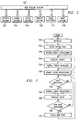
- FIGURE 4 is a block diagram illustrating exemplary functional components of device 12, which includes user interface modules, processing modules, a memory 60, and a network interface 62.
- the user interface modules include a speaker 64, a microphone 66, a display 68, and a user input interface 70.
- Processing modules include a telephony feature support module 72, a conference bridge 74, a media processing module 76, a state engine 80, and a low level processing module 82.
- the user interfaces provide for the exchange of information with users of device 12.
- Speaker 64 generates audio signals
- microphone 66 receives and processes audio signals from a user.
- display 68 device 12 presents information to a user.
- display 68 may include LEDs, graphical displays and other devices for visually displaying or otherwise presenting information.
- User input interface 70 represents any suitable elements for receiving input, other than audio signals, from a user.
- user input interface 70 may include a number keypad, buttons referencing to portions of display 68, a pointing device, and other appropriate input interfaces.
- Network interface 62 provides for communications between device 12 and other equipment.
- network interface 62 may link to gateway 32 and provide for packet-based voice communications.
- system 10 contemplates devices 12 coupling to any suitable communications equipment using any appropriate techniques and protocols.
- network interface 62 supports any appropriate wireless and/or wireline communications protocol.
- Memory 60 represents any suitable data storage element and, in the embodiment illustrated, maintains code 84, configuration data 86, applications 88, and web pages 90.
- Code 84 represents logic executed by various elements of device 12 to implement features and functionality.
- code 84 may include logic used by state engine 80 to interpret and execute scripts.
- Configuration data 86 represents settings and other information for use by device 12 during initialization and operation.
- configuration data 86 may identify a particular server 14 from which device 12 should request web pages.
- Applications 88 include media and/or programs for use by device 12 to locally host telephony applications.
- applications 88 may include media processing software, such as voice recognition programs.
- Media maintained within applications 88 can include data such as user recorded prompts for voicemail applications, messages from other users, and other appropriate information.
- Device 12 uses the information within applications 88 in conjunction with suitable web pages to locally host telephony applications such as voicemail and auto attendant.
- Web pages 90 represent locally maintained web pages for execution by state engine 80.
- device 12 may maintain a limited set of commonly used web pages within memory 60 and then request other web pages from server 14 through network interface 62.
- Low level processing module 82 provides underlying management and control of the operation of device 12. For example, in response to commands from state engine 80, low level processing module 82 may link call legs from network interface 62 to other modules within device 12. Low level processing module 82 provides its functions in response to commands native to the particular device 12. That is, various devices 12 may operate using different types of commands.
- Media processing module 76 provides manipulation and enhancement of signals.
- media processing module 76 includes digital signal processing capability for compression, echo cancellation, silence detection, and other appropriate signal processing.
- Conference bridge 74 supports the conferencing, within device 12, of communications with multiple parties. For example, state engine 80 may command low level processing module 82 to link multiple call legs from network interface 62 to conference bridge 74. Conference bridge 74 may then perform conferencing functions with respect to these multiple call legs. This allows device 12 to support conferencing, a feature traditionally provided by central servers.
- Feature support module 72 handles telephony infrastructure primitives, such as timers, tone generation, and other support functions.
- State engine 80 manages and controls the operation of device 12 by loading and executing web pages with text base scripts. Since these scripts may implement both device output and device operations, state engine 80 includes an output processing module 92 and an operations processing module 94. During operation, state engine 80 loads and executes web pages, either retrieving these pages from memory 60 or from server 14 as appropriate. In performing the activities detailed within the script of a loaded web page, output processing module 92 handles commands that interact with various user interfaces, while operations processing module 94 handles commands instructing the operation of various processing modules. However, because some commands may touch both processing and interface modules, output processing module 92 and operations processing module 94 may work in tandem to effect the procedure implicated by a command. For example, these modules may work together to establish the output of information from a received call leg using speaker 64.
- state engine 80 In executing scripts within web pages, state engine 80 also processes events using event handlers within the web pages. For example, upon detecting an event, state engine 80 may access the loaded web page to determine whether it contains an event handler for the detected event. If so, state engine 80 responds to the event according to the instructions within the event handler. Thus, in operation, state engine 80 acts as an enhanced web browser to drive the display, features, and call control by executing scripts.
- device 12 may load and execute web pages that implement various states of telephony applications such as messaging, personal assistant, auto attendant, "hoteling," and emergency access response. Through the execution of these web pages, device 12 provides locally hosted telephony applications.
- Messaging applications support functions such as voicemail, text messaging, and other appropriate functions.
- Personal assistant applications allow one or more end points to intelligently respond to various telephony and messaging events. For example, personal assistant applications can allow users to specify rules and responses for customizing the operation of a particular device 12 to events, such as an incoming call.
- Auto attendant applications provide services such as voice access to a directory for multiple extensions of an organization.
- Hoteling applications support services of users that do not have a primary end point, such as a primary one of devices 12.
- Emergency access response application permit devices 12 to appropriately interact with emergency services, such as emergency 911 services.
- emergency services such as emergency 911 services.
- the flexibility afforded by implementing telephony services using a series of web pages permits these applications to be hosted within any appropriate equipment, such as devices 12, gateways within various networks, and other suitably enabled equipment.
- devices 12 may support a number of operations. Without the aid of a central server, end points and other supporting equipment should handle functions to provide fault tolerance. For example, if devices 12 within system 10 provide locally hosted voicemail services for users, the unavailability of a particular device 12 could result in the loss of voicemail services for an associated user during the unavailability of device 12. To overcome this problem, the calling end point (or gateway providing access to) device 12 may detect the unavailability of device 12 and provide interim voicemail services.
- a user of one device 12 places a call to another, unavailable device 12.
- the calling device Upon detecting the unavailability of the called device, the calling device prompts the user for a voicemail message to be delivered to the unavailable device at a later time.
- the calling device 12 then stores this voicemail message until the called device 12 is available, at which time it delivers the message.
- Presence indicates the availability of a user or services for a user. For example, a particular user may be associated with multiple devices 12. That user is not present only if all of the associated devices 12 are unavailable. Liveness indicates the availability of a particular device 12.
- devices 12 permit users to associate with multiple devices 12 and/or to roam to other devices 12 through techniques such as logins. For example, if a user has a telephone at work and a telephone at home, both of them may run a personal assistant that implements rules to handle incoming calls. These rules may specify actions such as ring types, forwarding rules, and other appropriate operations. However, only one of these phones, such as the work phone, should be designated as a master application for functions such as messaging. Thus when receiving a call, both telephones respond in a similar fashion, yet only the master application phone will provide voicemail if a call is not answered. If the master telephone becomes unreachable, one of the other associated telephones may temporarily take over as the master application. To achieve this fallback capability, devices 12 use liveness awareness.
- devices 12 execute commands at the request of other devices 12 in order to support end point hosting of applications.
- a calling device 12 may send web pages to a called device 12 to control the display presented to a user.
- a calling device 12 may send call control web pages to a called device 12.
- System 10 contemplates devices 12 exchanging these web pages using any suitable techniques.
- devices 12 may communicate web pages directly to other devices 12 using hyper-text transfer protocol (HTTP).
- HTTP hyper-text transfer protocol
- devices 12 may exchange links to web pages.
- a receiving device 12 may load the identified web page from local memory or from a remote server 14 as appropriate.
- the called end point Upon detecting a call invite message from the calling end point, the called end point begins ringing and sets a timer according to user configurations specifying a wait time before auto-answering. When the timer triggers, the called end point answers the call and communicates a web page to the calling end point.
- This web page can include information such as user interface commands for presenting various messaging options to the user of the calling end point.
- the called end point can customize these options based on the identity of the calling end point. For example, if a good friend is calling, the options may allow the calling end point to contact the called user at another location, while for other people, the options only allow the calling end point to leave a voicemail message. In this fashion, end points can support applications by controlling each others operation through the exchange of web pages, links, scripts, or other suitable controlling commands.
- system 10 contemplates device 12 having any suitable combination and arrangement of elements providing telephony services through the execution of web pages.
- the functionalities performed by the particular elements illustrated may be separated or combined as appropriate, and the functionalities of some or all of these elements may be implemented by logic encoded in media.
- specific examples are provided to illustrate the operation of particular embodiments, these examples are merely illustrative and are not intended to limit the scope of the disclosed concepts.
- FIGURE 5 is a block diagram illustrating a group of related schemas that implement processing of scripts within device 12.
- These schemas include a web feature schema 100 that links with a session schema 102, a phone schema 104, a media schema 106, a bridge schema 108, a user interface schema 110, and a SOAP schema 112.
- These schemas and the underlying text commands forming the schemas define a telephony service creation mark-up language. That is, the schemas define the syntax of a web-based language for scripting the operation of telephone end points, such as devices 12.
- the language leverages the web model and web techniques to support telephony service development and deployment. Whether accessed locally or remotely through server 14, the language enables functionality of device 12 to be completely scripted.
- devices 12 may include personal computers, wireless devices, personal digital assistants, and other suitable equipment. Therefore, the actual mechanisms used to process and support telephony services within these devices may vary widely. However, the common language and schema definitions allow each device 12 to provide telephony services using a common set of web pages despite their underlying differences.
- Each schema defines primitives for accessing various low level functions of devices 12.
- the schemas may provide primitives for creating soft buttons, displaying a list, initiating a multicast session, testing local state variables, looping through an array, creating a set of elements, bridging a session's media to a speaker or a file, creating a whisper mode media connection, performing digit analysis on a number, storing a session identifier, or playing a fast busy tone.
- These primitives are accessible through text based tags within the scripts.
- Session schema 102 supports the creation and management of communication sessions. Session schema 102 may provide interoperability with session initiation protocol (SIP) communications by handling tags that correspond to SIP operations. According to particular embodiments, session schema 102 handles tags that support the following operations: register, invite, refer-invite, reinvite, info, okay, acknowledge, cancel, bye, error, redirect, proxy, notify and subscribe. Moreover, session schema 102 may handle tags for the following events: invite, okay, acknowledge, cancel, bye, hold, reinvite, refer-invite, information, error, redirect, notify, and subscribe.
- SIP session initiation protocol
- an operation to invite another end point to participate in a voice session may result in device 12 communicating a SIP invite message to the identified end point.
- An event for invite responds to the receipt of an invite message from another end point.
- Phone schema 104 supports the management and control of device 12. According to particular embodiments, phone schema 104 handles tags for the following commands: set ring type, set ring volume, set speaker volume, set microphone volume, and set the message waiting indicator. Moreover, phone schema 104 handles tags for the following events: hook status (off-hook or on-hook) and dialing.
- Media schema 106 supports the manipulation of underlying media streams. According to particular embodiments, media schema 106 handles tags for the following commands: starting and stopping media streams and playing tones and messages. In addition, media schema 106 handles tags for the following events: stream events (such as start and stop of a media stream), dual-tone multifrequency (DTMF) events, media timing events, and media errors.
- stream events such as start and stop of a media stream
- DTMF dual-tone multifrequency
- Bridge schema 108 facilities the mixing or separation of media. According to particular embodiments, bridge schema 108 handles tags for splitting, joining and monitoring media streams.
- a split command specifies that media be split from a conference. The media split can be either a one-way or a two-way stream. For example, a two-way selection may represent a bi-directional stream set up for a communication session, or microphone and speaker stream.
- a one-way stream may be a source, such as a microphone or a file, or a sink, for example, a speaker or a file.
- the join command specifies that media be joined to a conference.
- the monitor command specifies mixing rules for a conference within the context of a specific line or within the context of device 12. According to particular embodiments, bridge schema 108 supports monitoring commands for silent monitoring, whisper, and conference.
- User interface schema 110 handles tags supporting the display of output by device 12. For example, user interface schema 110 may handle tags for displaying text boxes, window selectors, context selectors, line selectors, session selectors, and on-hold session selectors. User interface schema 110 may further support tags for commands such as title displays, status displays, soft buttons, prompts, queries and other appropriate interface commands.
- the schemas handled by device 12 may further be extended to provide support for any number of features and protocols.
- the inter-related schemas include SOAP schema 112, which supports simple object access protocol (SOAP) operations.
- SOAP schema 112 could, for example, provide mapping between text-based tags and SOAP operations to permit the addition of complex features, such as a stock ticker, using relatively simple text-based commands.
- web feature schema 110 provides base line operations and for interactions between the various schemas.
- web feature schema 100 may support timers, loops, conditional statements, threads, variables and other operational support.
- web feature schema 110 provides for control flow and signaling hooks to implement applications and features with other child schemas.
- web feature schema 110 handles tags for the following commands: create and close a control context, create and close a line, send a user-defined signal for inter-context communications, subroutine, exceptions, timer, load page, manage window (create, raise, lower, or close window), allocate or deallocate variable, set or check variable, and diagnostics.
- web feature schema 110 handles tags for the following events: user-defined signal and notification of illegal web page.
- web feature schema 110 may handle the creation of a context for a telephone communication session.
- web feature schema 110 further handles variables, subroutines, timers, page loading, and other base line operations.
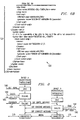
- FIGURE 6 illustrates a script 120 that, when executed by device 12, enables initiation of a voice session.
- script 120 includes an activity section 122 that implements various actions and an event-handling section 124 that implements event handlers.
- activity section 122 script 120 includes commands that invite a destination to participate in a voice session and initiate a call timer.
- event handler section 124 script 120 provides event handlers for events such as a successful connection or an error during connecting.
- script 120 illustrates a particular method for initiating a voice session using particular commands, the example provided is merely illustrative and is not intended to limit the scope of the disclosed concepts.
- FIGURE 7 is a flowchart illustrating a method for device 12 to process web pages to provide telephony services.
- Device 12 initializes at step 150. For example, on power-up, device 12 may load code and configurations that identify settings and an initial web page on a remote server 14. Device 12 fetches the initial page at step 152. As previously discussed, device 12 may locally maintain some or all web pages for use in providing telephony services. Thus, this initial page may be maintained within device 12 and specify start up procedures and other appropriate initialization routines.
- Device 12 disables event processing at step 154. This prevents events from disrupting script execution.
- Device 12 executes the script on the loaded web page to perform the commanded activities at step 156. After executing the activities detailed within the script, device 12 installs the event handlers of the web page at step 158 and enables event processing at step 160. Thus, in operation, device 12 will often execute the activities within a script from start to finish without interruption or delays.
- Device 12 monitors for events at step 162. Upon detecting an event, device 12 processes may disable event processing at step 164 and then process the event at step 166 using the event handlers from the loaded web page. As previously discussed, the event handler chosen to process the event can perform actions to handle the event, link to another location within the loaded web page, and/or link to another web page. If device 12 determines, at step 168, that a new page is indicated by the event handler, device 12 fetches the new page at step 170. After fetching and loading the new web page, device 12 processes the page using the procedure described above.
- the preceding flowchart and accompanying description illustrate a relatively simple method for processing web pages that implement states providing telephony services.
- this flowchart is provided only as an illustrative example, and system 10 contemplates devices 12 using any suitable techniques for processing web pages implementing states for telephony services.
- many of the steps in this flowchart may take place simultaneously and/or in different orders than as shown.
- device 12 may use methods with additional steps, fewer steps, and/or different steps, so long as the method remain appropriate.
- the disabling and enabling of event processing prevents received events from disrupting execution of activities within a script.
- the language implementing telephony services using web pages contemplates the management and control of multiple contexts, and for the use of sub-states within each context.
- the language contemplates the use of nested web page executions. For example, during the execution of activities for a first web page, multiple sub-states for the web page may be implemented by executing two or more nested web pages. Sub-states provide a mechanism for managing the inherent complexity associated with telephony applications.
- An exemplary implementation of a telephone park feature illustrates the use of sub-state processing to provide a telephony feature.
- a first page provides for general control of the park feature, while two sub-state web pages implement processing for: 1) obtaining the appropriate number for "parking" a telephone call, and 2) transferring the telephone call to the selected number.
- device 12 will branch from the main control page into the "get park number” web page, and, after completing execution of the get park number web page, will branch into the transfer web page.
- This type of service implementation using lower level web page building blocks allows for the reuse of web pages implementing modular services.
- the transfer web page may handle transfer events and, as illustrated by the previous example, be incorporated as a sub-state within other services.
- FIGURE 8 is a flow diagram illustrating the states and events for two devices 12 (device A and device B) during the establishment of a communication session.
- device A and device B each proceed through an initialization state into an idle state.
- devices A and B arrive at an idle state in which they await events.
- This idle state is provided by a web page specifying event handlers for responding to various conditions.
- Device A receives an off-hook notification at 180.
- Device A may, for example, receive this off-hook notification as a result of a user lifting a receiver from a cradle.
- Device A process the off-hook event using the idle web page event handlers and identifies a dialing web page to handle the event.
- device A enters the dialing state by fetching and loading the appropriate web page.
- device A receives digits at 182 and provides feedback at 184. For example, using a key pad, the user may dial digits and, in response, device A may generate tones and display the numbers dialed.
- device A may further perform digit analysis using the digits received from the user.
- device A Upon determining that device A has dialed digits identifying device B, device A loads a calling web page implementing activities for contacting device B and events for handling responses. During script execution, the calling web page provides for the transmission of a SIP invite message to device B. In addition, during execution of the calling web page, device A may provide feedback to the user, such as ringing tones, at 186. After sending the SIP invite message to device B and while providing appropriate feedback to the user, device A awaits a response from device B or a timeout event.
- Device B receives the SIP invite message and processes this event using the event handlers of the loaded idle web page.
- the event handler of the idle web page within device B links to a called web page for handling the invite message.
- device B loads the web page for handling the called state.
- device B replies to the invite message from device A by communicating a SIP ringing message to device A.
- device B further provides a ring at 188.
- a user of device B answers the call, providing an off-hook event at step 190.
- the called web page of device B communicates a SIP connect message, such as a SIP OK message, to device A.
- Device A and device B each then proceed to a connected state in which media is streamed between the devices and input and output is communicated with the user.
- system 10 contemplates devices 12 loading and executing any suitable web pages implementing various states to support the establishment of communications between devices 12.
- the described states are merely illustrative, and the loaded web pages may provide for additional states, fewer states and/or different states.
Landscapes
- Engineering & Computer Science (AREA)
- Signal Processing (AREA)
- Computer Vision & Pattern Recognition (AREA)
- Human Computer Interaction (AREA)
- Computer Networks & Wireless Communication (AREA)
- Telephonic Communication Services (AREA)
Claims (37)
- Telefoniegerät (12), das Folgendes umfasst:einen Lautsprecher (64) zum Erzeugen von Audioausgang;ein Mikrofon (66) zum Empfangen von Audioeingang von einem Benutzer;ein Display (68), um dem Benutzer Informationen zu präsentieren;eine Benutzeroberfläche (70) zum Empfangen von Anzeigen von dem Benutzer;eine Netzwerkschnittstelle (62) zum Koppeln mit einem paketgestützten Netzwerk;ein Low-Level-Verarbeitungsmodul (82) zum Steuern des Lautsprechers, des Mikrofons, des Display und der Netzwerkschnittstelle als Reaktion auf native Befehle; undeine Zustandsmaschine (80) zum Laden einer Webseite, die mehrere Textbefehle beinhaltet, wobei ein Teil der Textbefehle Aktionen vorgibt und ein anderer Teil der Textbefehle einen oder mehrere Event-Handler vorgibt, wobei die Zustandsmaschine ferner zum Interpretieren der Textbefehle dient, um Ausgewählte der nativen Befehle zum Implementieren der Aktionen zu bestimmen, um die bestimmten nativen Befehle dem Low-Level-Verarbeitungsmodul bereitzustellen, und um auf Events zu überwachen, die den Event-Handlern entsprechen.
- Telefoniegerät (12) nach Anspruch 1, das ferner einen Speicher umfasst, der mehrere Webseiten enthält, die jeweils einen Zustand zum Bereitstellen von Telefoniediensten implementieren.
- Telefoniegerät (12) nach Anspruch 1, das ferner eine Konferenzbrücke zum Empfangen von Paketen von mehreren durch die Netzwerkschnittstelle gehandhabten Rufzweigen und zum Konferenzieren von Sprachinformationen von den Paketen zum Bilden eines Konferenzanrufs umfasst.
- Telefoniegerät (12) nach Anspruch 1, das ferner Folgendes umfasst:einen Speicher (60) zum Führen einer Routing-Tabelle; undwobei die Zustandsmaschine ferner die Aufgabe hat, eine Serie von Webseiten zu laden und abzuarbeiten, die Multicast-Discovery-Nachrichten zum Entwickeln von Einträgen in der Routing-Tabelle erzeugen, wobei die Einträge Netzwerkadressen für Endpunkte auf Telefonnummern für die Endpunkte mappen.
- Telefoniegerät (12) nach Anspruch 4, wobei die Webseite eine Wählwebseite umfasst und die Event-Handler einen Gewählte-Ziffer-Event-Handler enthalten, der eine Ziffernanalyse bereitstellt, um Übereinstimmungen zwischen gewählten Ziffern und den Einträgen in der Routing-Tabelle zu bestimmen.
- Telefoniegerät (12) nach Anspruch 1, wobei die Aktionen Vorgänge für einen bestimmten Zustand in einem Telefoniedienst ausführen und Ausgänge entsprechend dem jeweiligen Zustand ausführen, und wobei als Reaktion auf die bestimmten nativen Befehle das Low-Level-Verarbeitungsmodul die Ausgaben mittels des Lautsprechers und/oder des Display bewirkt.
- Telefoniegerät (12) nach Anspruch 1, wobei die Event-Handler jeweils, als Reaktion auf ein erkanntes Event, wenigstens eines aus einer Link zu einem Ort auf der Webseite, Antwortaktionen und einer Link zu einer anderen Webseite vorgeben.
- Telefoniegerät (12) nach einem vorherigen Anspruch, wobei die Webseite einen Ruhezustand implementiert, wobei die Aktionen Ausgänge zum Präsentieren von Telefonmerkmalen mittels des Display anzeigen und die Event-Handler einen Off-Hook-Event-Handler mit Links zu einer Wählwebseite beinhalten.
- Verfahren zum Bereitstellen von Telefoniediensten, das Folgendes beinhaltet:Bereitstellen eines Low-Level-Verarbeitungsmodul zum Steuern eines Lautsprechers, eines Mikrofons, eines Display und einer Netzwerkschnittstelle eines Telefoniegeräts als Reaktion auf native Befehle;Laden einer Webseite, die mehrere Textbefehle umfasst, wobei ein Teil der Textbefehle Aktionen vorgibt und ein anderer Teil der Textbefehle einen oder mehrere Event-Handler vorgibt;Interpretieren der Textbefehle zum Bestimmen von Ausgewählten der nativen Befehle zum Implementieren der Aktionen;Bereitstellen der bestimmten nativen Befehle dem Low-Level-Verarbeitungsmodul; undÜberwachen auf Events, die den Event-Handlern entsprechen.
- Verfahren nach Anspruch 9, das ferner das Führen mehrerer Webseiten beinhaltet, die jeweils einen Zustand zum Bereitstellen von Telefoniediensten implementieren.
- Verfahren nach Anspruch 9 oder 10, das ferner Folgendes beinhaltet:Führen einer Routing-Tabelle; undAusführen einer Serie von Webseiten, die Multicast-Discovery-Nachrichten zum Entwickeln von Einträgen in der Routing-Tabelle erzeugen, wobei die Einträge Netzwerkadressen für Endpunkte auf Telefonnummern für die Endpunkte mappen.
- Verfahren nach Anspruch 11, wobei die Webseite eine Wählwebseite umfasst und die Event-Handler einen Gewählte-Ziffer-Event-Handler beinhalten, der Ziffernanalyse bereitstellt, um Übereinstimmungen zwischen gewählten Ziffern und den Einträgen in der Routing-Tabelle zu bestimmen.
- Verfahren nach einem der Ansprüche 9 bis 12, wobei die Aktionen Vorgänge für einen bestimmten Zustand in einem Telefoniedienst ausführen und Ausgaben entsprechend dem bestimmten Zustand durchführen, und wobei als Reaktion auf die bestimmten nativen Befehle das Low-Level-Verarbeitungsmodul die Ausgaben mittels des Lautsprechers und/oder des Display bewirkt.
- Verfahren nach einem der Ansprüche 9 bis 13, wobei die Event-Handler jeweils als Antwort auf ein erkanntes Event wenigstens eines aus einer Link zu einem Ort auf der Webseite, Antwortaktionen und einer Link zu einer anderen Webseite vorgeben.
- Verfahren nach einem der Ansprüche 9 bis 14, das ferner Folgendes beinhaltet:a) Erkennen eines Event, das mit einem der Event-Handler übereinstimmt, wobei der übereinstimmende Event-Handler eine Link zu einer zweiten Webseite beinhaltet;b) Anfordern der zweiten Webseite von einem Webserver;c) Empfangen der zweiten Webseite von dem Webserver, wobei die zweite Webseite mehrere Textbefehle umfasst, wobei ein Teil der Textbefehle der zweiten Webseite Aktionen vorgibt und ein anderer Teil der Textbefehle der zweiten Webseite einen oder mehrere Event-Handler vorgibt;d) Interpretieren der Textbefehle der zweiten Webseite zum Bestimmen von Ausgewählten der nativen Befehle zum Implementieren der Aktionen der zweiten Webseite;e) Bereitstellen der bestimmten nativen Befehle dem Low-Level-Verarbeitungsmodul; undf) Überwachen auf Events, die mit den Event-Handlern der zweiten Webseite oder dem Telefoniedienst von Anspruch 1 übereinstimmen, wobei die Zustandsmaschine ferner die Aufgabe hat, die Schritte a) bis f) auszuführen.
- Verfahren nach einem der Ansprüche 9 bis 15, wobei die Webseite einen Ruhezustand implementiert, wobei die Aktionen Ausgaben zum Präsentieren von Telefonmerkmalen mit dem Display anzeigen, und die Event-Handler einen Off-Hook-Event-Handler mit einer Link zu einer Wählwebseite beinhalten.
- Verfahren nach Anspruch 15, wobei das Anfordern der zweiten Webseite Folgendes beinhaltet: Zugreifen auf einen lokalen Speicher, um zu bestimmen, ob die zweite Webseite in einem lokalen Speicher geführt wird; und wenn sie nicht im lokalen Speicher ist, Kommunizieren einer Webseitenanforderung zu einem Fernwebserver über die Netzwerkschnittstelle.
- Verfahren nach Anspruch 16, das ferner Folgendes beinhaltet:g) Erkennen des von einem Benutzer empfangenen Off-Hook-Events;h) Anfordern der Wählwebseite als Reaktion auf das Off-Hook-Event;i) Empfangen der Wählwebseite, wobei die Wählwebseite mehrere Textbefehle beinhaltet, wobei ein Teil der Textbefehle der Wählwebseite Aktionen vorgibt und ein anderer Teil der Textbefehle der Wählwebseite einen oder mehrere Event-Handler vorgibt, wobei die Aktionen Ausgaben zum Anzeigen von gewählten Ziffern mittels des Display und zum Erzeugen und Präsentieren von gewählten Ziffern entsprechenden Tönen anzeigen, wobei die Event-Handler einen Gewählte-Ziffer-Event-Handler und einen Zieladresse-Identifiziert-Event-Handler beinhalten;j) Interpretieren der Textbefehle der Wählwebseite, um Ausgewählte der nativen Befehle zum Implementieren der Aktionen der Wählwebseite zu bestimmen;k) Bereitstellen der bestimmten nativen Befehle dem Low-Level-Verarbeitungsmodul; undl) Überwachen auf Events, die mit den Event-Handlern der Wählwebseite übereinstimmen.
- Verfahren nach Anspruch 18, das ferner Folgendes beinhaltet:Erzeugen einer SIP-(Session Initiation Protocol)-Invite-Nachricht;Kommunizieren der SIP-Invite-Nachricht zum Empfangen und Verarbeiten durch einen Endpunkt, der durch die gewählten Ziffern identifiziert wird;Empfangen einer von dem identifizierten Endpunkt erzeugten SIP-Connect-Nachricht; undAnfordern, als Reaktion auf die SIP-Connect-Nachricht, einer verbundenen Webseite mit einem Link zu einem in dem Anruf beantworteten Event-Handler.
- Verfahren nach Anspruch 9, das ferner Folgendes beinhaltet:Bereitstellen eines Sitzungsschemas zum Unterstützen von Erzeugung und Management von Kommunikationssitzungen durch Verarbeiten von Textbefehlen für Vorgänge inkl. Einladen, Quittieren, Stornieren und Verabschieden und durch Verarbeiten von Textbefehlen für Events inkl. Einladen, Quittieren, Stornieren, Verabschieden und Halten;Bereitstellen eines Telefonschemas zum Unterstützen von Management und Steuerung eines Telefonieendpunkts durch Verarbeiten von Textbefehlen für Vorgänge inkl. Ruftonlautstärke einstellen, Lautsprecherlautstärke einstellen und Nachricht-wartet-Anzeige einstellen, und durch Verarbeiten von Textbefehlen für Events inkl. Off-Hook, On-Hook und gewählte Ziffer; undBereitstellen eines Webmerkmalschemas zum Unterstützen von Steuerfluss und Signalisierung für die anderen Schemata durch Verarbeiten von Textbefehlen für Vorgänge inkl. Steuerkontext erzeugen, Steuerkontext schließen, Zeitgeber setzen, Variable setzen und Seite laden.
- Verfahren nach Anspruch 20, das ferner das Bereitstellen eines Medienschemas zum Unterstützen von Manipulation von Medienströmen durch Verarbeiten von Textbefehlen für Vorgänge inkl. Medienstrom starten und Medienstrom stoppen und durch Verarbeiten von Textbefehlen für Events inkl. Medienstrom-Start und Medienstrom-Stopp beinhaltet.
- Verfahren nach Anspruch 21, wobei das Medienschema ferner die Aufgabe hat, Textbefehle für Vorgänge inkl. Ton wiedergeben und aufgezeichnete Nachricht wiedergeben und Textbefehle für Events inkl. DTMF-(Dual-Tone Multifrequency)-Event und Medienfehler zu verarbeiten.
- Verfahren nach einem der Ansprüche 20 bis 22, wobei das Webmerkmalschema ferner die Aufgabe hat, Textbefehle für Vorgänge inkl. Inter-Kontext-Signal senden, Subroutine abarbeiten und Ausnahme verwalten zu verarbeiten.
- Verfahren nach Anspruch 23, wobei es der Subroutine-abarbeiten-Vorgang zulässt, dass der Sprachprozessor die Ausführung von einer ersten Webseite zu einer zweiten Webseite und am Ende der zweiten Webseite zurück zur ersten Webseite verlagert.
- Verfahren nach einem der Ansprüche 20 bis 24, wobei das Webmerkmalschema ferner die Aufgabe hat, Textbefehle für Vorgänge inkl. Fenster erzeugen, Fenster heben, Fenster senken oder Fenster schließen zu verarbeiten.
- Verfahren nach einem der Ansprüche 20 bis 25, das ferner das Bereitstellen eines Benutzeroberflächenschemas zum Unterstützen der Anzeige von Ausgaben durch Verarbeiten von Textbefehlen für Vorgänge wie Textbox anzeigen, Fenster auswählen, Zeile auswählen und On-Hold-Sitzung auswählen beinhaltet.
- Verfahren nach einem der Ansprüche 20 bis 26, wobei das Benutzeroberflächenschema ferner die Aufgabe hat, Textbefehle für Vorgänge inkl. Titel anzeigen, Status anzeigen, Softtaste anzeigen und Prompt anzeigen zu verarbeiten und Textbefehle für Events inkl. Softtaste gewählt und auf Prompt antworten zu verarbeiten.
- Verfahren nach Anspruch 9, das ferner Folgendes beinhaltet: Empfangen einer Call-Invite-Nachricht, die von einem fernen Endpunkt erzeugt wird, der eine Sprachkommunikationssitzung anfordert; und, als Reaktion auf die Call-Invite-Nachricht, Kommunizieren einer Webseite zum fernen Endpunkt, wobei die Webseite Benutzeroberflächenbefehle zum Ausführen durch den fernen Endpunkt vorgibt, um einem Benutzer des fernen Endpunkts Informationen zu präsentieren.
- Verfahren nach Anspruch 28, wobei:die Benutzeroberflächenbefehle mehrere Optionen anzeigen; unddie Webseite ferner mehrere Event-Handler entsprechend den Optionen vorgibt, wobei jeder der Event-Handler die Aufgabe hat, ein Event als Reaktion auf eine Auswahl einer entsprechenden Option zu kommunizieren.
- Verfahren nach Anspruch 28, das ferner Folgendes beinhaltet: Empfangen eines gewählten Events von dem fernen Endpunkt als Reaktion darauf, dass der Benutzer eine der Optionen wählt, wobei das gewählte Event die gewählte Option anzeigt; Identifizieren eines Event-Handlers einer geladenen Webseite entsprechend dem gewählten Event; und Abarbeiten des Event-Handlers der geladenen Webseite.
- Verfahren nach Anspruch 29, wobei die Optionen eine Aufhängoption und eine Nachricht-hinterlassen-Option beinhalten.
- Verfahren nach Anspruch 31, das ferner Folgendes beinhaltet:Kommunizieren einer Call-Connect-Nachricht zu dem fernen Endpunkt;Einrichten der Sprachkommunikationssitzung mit dem fernen Endpunkt;Empfangen eines Events von dem fernen Endpunkt entsprechend der Auswahl der Nachricht-hinterlassen-Option;Identifizieren eines Nachrichten-Prompt;Kommunizieren des Nachrichten-Prompt zu dem fernen Endpunkt;Empfangen eines Audiostroms von dem fernen Endpunkt durch die Sprachkommunikationssitzung; und Aufzeichnen des Audiostroms.
- Verfahren nach Anspruch 32, wobei der Nachrichten-Prompt eine Audio-Datei umfasst.
- Verfahren nach Anspruch 32, das ferner, als Reaktion auf den Empfang des Events, das Kommunizieren einer zweiten Webseite zu dem fernen Endpunkt beinhaltet, wobei die zweite Webseite Benutzeroberflächenbefehle beinhaltet, um dem Benutzer Nachrichtenoptionen zu präsentieren.
- Verfahren nach Anspruch 28, das ferner Folgendes beinhaltet: Identifizieren einer Identität des fernen Endpunkts; Anpassen der Benutzeroberflächenbefehle zum Anzeigen mehrerer Optionen auf der Basis der Identität des fernen Endpunkts; und Anpassen der Webseite so, dass sie mehrere Event-Handler entsprechend den Optionen beinhaltet, wobei jeder der Event-Handler die Aufgabe hat, ein Event als Reaktion auf eine Auswahl einer entsprechenden Option zu kommunizieren.
- Verfahren nach Anspruch 28, das ferner Folgendes beinhaltet: Handhaben der Call-Invite-Nachricht mittels eines Call-Invite-Event-Handlers einer geladenen Webseite, wobei der Call-Invite-Event-Handler eine Link zu einer gerufenen Webseite aufweist; Laden der gerufenen Webseite, wobei die gerufene Webseite eine Ausgabe befiehlt, die einen eingehenden Anruf anzeigt, und einen Zeitgeber zum Erkennen einer Nichtbeantwortung des Anrufs startet; Empfangen eines Timeout auf der Basis der Auslösung des Zeitgebers; Handhaben des Timeout-Events mittels eines Timeout-Event-Handlers der gerufenen Webseite, wobei der Timeout-Event-Handler eine Link zu einer Keine-Antwort-Webseite hat; Laden der Keine-Antwort-Webseite, wobei die Keine-Antwort-Webseite die Kommunikation der Webseite zu dem fernen Endpunkt kommuniziert.
- Computerprogramm, Computerprogrammprodukt, das die Befehle des Computerprogramms enthält, ausgelegt zum Ausführen aller Schritte des Verfahrens nach einem der Ansprüche 9 bis 36, wenn das genannte Programm auf einer Zustandsmaschine eines Telefoniegeräts abgearbeitet wird.
Applications Claiming Priority (7)
| Application Number | Priority Date | Filing Date | Title |
|---|---|---|---|
| US213918 | 1988-06-30 | ||
| US214017 | 1994-03-15 | ||
| US10/214,034 US7852828B2 (en) | 2002-08-07 | 2002-08-07 | Extended telephony functionality at end points |
| US10/214,017 US7310413B2 (en) | 2002-08-07 | 2002-08-07 | Language for implementing telephony processing in end points |
| US10/213,918 US7340046B2 (en) | 2002-08-07 | 2002-08-07 | Providing telephony services using intelligent end points |
| US214034 | 2002-08-07 | ||
| PCT/US2003/024895 WO2004015964A1 (en) | 2002-08-07 | 2003-08-07 | Providing telephony services using intelligent end points |
Publications (2)
| Publication Number | Publication Date |
|---|---|
| EP1552672A1 EP1552672A1 (de) | 2005-07-13 |
| EP1552672B1 true EP1552672B1 (de) | 2016-06-15 |
Family
ID=31721401
Family Applications (1)
| Application Number | Title | Priority Date | Filing Date |
|---|---|---|---|
| EP03785068.2A Expired - Lifetime EP1552672B1 (de) | 2002-08-07 | 2003-08-07 | Bereitstellen von telefondiensten durch intelligente endpunkte |
Country Status (5)
| Country | Link |
|---|---|
| EP (1) | EP1552672B1 (de) |
| CN (1) | CN1675912B (de) |
| AU (1) | AU2003259084B9 (de) |
| CA (1) | CA2493780A1 (de) |
| WO (1) | WO2004015964A1 (de) |
Families Citing this family (1)
| Publication number | Priority date | Publication date | Assignee | Title |
|---|---|---|---|---|
| US7940162B2 (en) * | 2006-11-30 | 2011-05-10 | International Business Machines Corporation | Method, system and program product for audio tonal monitoring of web events |
Family Cites Families (5)
| Publication number | Priority date | Publication date | Assignee | Title |
|---|---|---|---|---|
| US6031836A (en) * | 1996-09-13 | 2000-02-29 | Lucent Technologies Inc. | Web-page interface to telephony features |
| US6707811B2 (en) | 1999-03-19 | 2004-03-16 | Estara, Inc. | Internet telephony for ecommerce |
| KR20020064889A (ko) * | 1999-10-26 | 2002-08-10 | 핑텔 코오포레이션 | 프로그래머블 기능을 가지는 1 이상의 텔레포니 통신장치를 포함하는 분산형 통신 네트워크 |
| US7463619B1 (en) | 2000-05-25 | 2008-12-09 | Nortel Networks Limited | Launching a web browser in response to a message relating to communications sessions |
| AU2000274163A1 (en) * | 2000-09-01 | 2002-03-13 | Nokia Corporation | Architecture for service script execution and management |
-
2003
- 2003-08-07 AU AU2003259084A patent/AU2003259084B9/en not_active Ceased
- 2003-08-07 WO PCT/US2003/024895 patent/WO2004015964A1/en not_active Ceased
- 2003-08-07 CA CA002493780A patent/CA2493780A1/en not_active Abandoned
- 2003-08-07 EP EP03785068.2A patent/EP1552672B1/de not_active Expired - Lifetime
- 2003-08-07 CN CN03818787.6A patent/CN1675912B/zh not_active Expired - Fee Related
Also Published As
| Publication number | Publication date |
|---|---|
| AU2003259084B2 (en) | 2009-02-05 |
| EP1552672A1 (de) | 2005-07-13 |
| AU2003259084A1 (en) | 2004-02-25 |
| WO2004015964A1 (en) | 2004-02-19 |
| CN1675912A (zh) | 2005-09-28 |
| CA2493780A1 (en) | 2004-02-19 |
| CN1675912B (zh) | 2012-05-30 |
| AU2003259084B9 (en) | 2009-06-25 |
Similar Documents
| Publication | Publication Date | Title |
|---|---|---|
| US8243717B2 (en) | Providing telephony services using intelligent end points | |
| US9185232B2 (en) | Method and apparatus for creating and distributing cost telephony-switching functionality within an IP network | |
| EP1808004B1 (de) | Bereitstellung eines dienstrahmens an einem endpunkt | |
| KR20070083622A (ko) | 분산형 피어-투-피어 네트워크에서 브리지 호 출현을 위한시스템 및 방법 | |
| US7852828B2 (en) | Extended telephony functionality at end points | |
| US7310413B2 (en) | Language for implementing telephony processing in end points | |
| EP1552672B1 (de) | Bereitstellen von telefondiensten durch intelligente endpunkte | |
| EP1817682B1 (de) | Bereitstellung eines proxy-server-funktion an einem endpunkt | |
| KR100640289B1 (ko) | 통화 서비스를 제공 받기 위한 ip 단말기의 동작 방법및 그 ip 단말기 | |
| US8041013B2 (en) | Transferring multiple dialogs of a call | |
| JP4386908B2 (ja) | 障害対応処理動作中に被呼者情報をカバレッジポイントに提供する方法および装置 |
Legal Events
| Date | Code | Title | Description |
|---|---|---|---|
| PUAI | Public reference made under article 153(3) epc to a published international application that has entered the european phase |
Free format text: ORIGINAL CODE: 0009012 |
|
| 17P | Request for examination filed |
Effective date: 20050223 |
|
| AK | Designated contracting states |
Kind code of ref document: A1 Designated state(s): AT BE BG CH CY CZ DE DK EE ES FI FR GB GR HU IE IT LI LU MC NL PT RO SE SI SK TR |
|
| AX | Request for extension of the european patent |
Extension state: AL LT LV MK |
|
| DAX | Request for extension of the european patent (deleted) | ||
| RIN1 | Information on inventor provided before grant (corrected) |
Inventor name: TIGHE, JAMES, R. Inventor name: FRANCKE, ANDREW, J. Inventor name: HIGGINS, RONALD, D. Inventor name: SANDERS, JEFFREY, A. Inventor name: MCCLUNG, MICHAEL, H. Inventor name: PLATT, RICHARD, B. Inventor name: CHEN, HENRY |
|
| 17Q | First examination report despatched |
Effective date: 20080709 |
|
| GRAP | Despatch of communication of intention to grant a patent |
Free format text: ORIGINAL CODE: EPIDOSNIGR1 |
|
| INTG | Intention to grant announced |
Effective date: 20160105 |
|
| GRAS | Grant fee paid |
Free format text: ORIGINAL CODE: EPIDOSNIGR3 |
|
| GRAA | (expected) grant |
Free format text: ORIGINAL CODE: 0009210 |
|
| AK | Designated contracting states |
Kind code of ref document: B1 Designated state(s): AT BE BG CH CY CZ DE DK EE ES FI FR GB GR HU IE IT LI LU MC NL PT RO SE SI SK TR |
|
| REG | Reference to a national code |
Ref country code: CH Ref legal event code: EP Ref country code: GB Ref legal event code: FG4D |
|
| REG | Reference to a national code |
Ref country code: IE Ref legal event code: FG4D |
|
| REG | Reference to a national code |
Ref country code: AT Ref legal event code: REF Ref document number: 807017 Country of ref document: AT Kind code of ref document: T Effective date: 20160715 |
|
| REG | Reference to a national code |
Ref country code: DE Ref legal event code: R096 Ref document number: 60349053 Country of ref document: DE |
|
| REG | Reference to a national code |
Ref country code: FR Ref legal event code: PLFP Year of fee payment: 14 |
|
| REG | Reference to a national code |
Ref country code: NL Ref legal event code: MP Effective date: 20160615 |
|
| PG25 | Lapsed in a contracting state [announced via postgrant information from national office to epo] |
Ref country code: FI Free format text: LAPSE BECAUSE OF FAILURE TO SUBMIT A TRANSLATION OF THE DESCRIPTION OR TO PAY THE FEE WITHIN THE PRESCRIBED TIME-LIMIT Effective date: 20160615 |
|
| REG | Reference to a national code |
Ref country code: AT Ref legal event code: MK05 Ref document number: 807017 Country of ref document: AT Kind code of ref document: T Effective date: 20160615 |
|
| PG25 | Lapsed in a contracting state [announced via postgrant information from national office to epo] |
Ref country code: NL Free format text: LAPSE BECAUSE OF FAILURE TO SUBMIT A TRANSLATION OF THE DESCRIPTION OR TO PAY THE FEE WITHIN THE PRESCRIBED TIME-LIMIT Effective date: 20160615 Ref country code: SE Free format text: LAPSE BECAUSE OF FAILURE TO SUBMIT A TRANSLATION OF THE DESCRIPTION OR TO PAY THE FEE WITHIN THE PRESCRIBED TIME-LIMIT Effective date: 20160615 Ref country code: GR Free format text: LAPSE BECAUSE OF FAILURE TO SUBMIT A TRANSLATION OF THE DESCRIPTION OR TO PAY THE FEE WITHIN THE PRESCRIBED TIME-LIMIT Effective date: 20160916 |
|
| PG25 | Lapsed in a contracting state [announced via postgrant information from national office to epo] |
Ref country code: BE Free format text: LAPSE BECAUSE OF NON-PAYMENT OF DUE FEES Effective date: 20160831 |
|
| PG25 | Lapsed in a contracting state [announced via postgrant information from national office to epo] |
Ref country code: IT Free format text: LAPSE BECAUSE OF FAILURE TO SUBMIT A TRANSLATION OF THE DESCRIPTION OR TO PAY THE FEE WITHIN THE PRESCRIBED TIME-LIMIT Effective date: 20160615 Ref country code: CZ Free format text: LAPSE BECAUSE OF FAILURE TO SUBMIT A TRANSLATION OF THE DESCRIPTION OR TO PAY THE FEE WITHIN THE PRESCRIBED TIME-LIMIT Effective date: 20160615 Ref country code: SK Free format text: LAPSE BECAUSE OF FAILURE TO SUBMIT A TRANSLATION OF THE DESCRIPTION OR TO PAY THE FEE WITHIN THE PRESCRIBED TIME-LIMIT Effective date: 20160615 Ref country code: EE Free format text: LAPSE BECAUSE OF FAILURE TO SUBMIT A TRANSLATION OF THE DESCRIPTION OR TO PAY THE FEE WITHIN THE PRESCRIBED TIME-LIMIT Effective date: 20160615 Ref country code: RO Free format text: LAPSE BECAUSE OF FAILURE TO SUBMIT A TRANSLATION OF THE DESCRIPTION OR TO PAY THE FEE WITHIN THE PRESCRIBED TIME-LIMIT Effective date: 20160615 |
|
| PG25 | Lapsed in a contracting state [announced via postgrant information from national office to epo] |
Ref country code: BE Free format text: LAPSE BECAUSE OF FAILURE TO SUBMIT A TRANSLATION OF THE DESCRIPTION OR TO PAY THE FEE WITHIN THE PRESCRIBED TIME-LIMIT Effective date: 20160615 Ref country code: AT Free format text: LAPSE BECAUSE OF FAILURE TO SUBMIT A TRANSLATION OF THE DESCRIPTION OR TO PAY THE FEE WITHIN THE PRESCRIBED TIME-LIMIT Effective date: 20160615 Ref country code: PT Free format text: LAPSE BECAUSE OF FAILURE TO SUBMIT A TRANSLATION OF THE DESCRIPTION OR TO PAY THE FEE WITHIN THE PRESCRIBED TIME-LIMIT Effective date: 20161017 Ref country code: ES Free format text: LAPSE BECAUSE OF FAILURE TO SUBMIT A TRANSLATION OF THE DESCRIPTION OR TO PAY THE FEE WITHIN THE PRESCRIBED TIME-LIMIT Effective date: 20160615 |
|
| REG | Reference to a national code |
Ref country code: DE Ref legal event code: R097 Ref document number: 60349053 Country of ref document: DE |
|
| PG25 | Lapsed in a contracting state [announced via postgrant information from national office to epo] |
Ref country code: MC Free format text: LAPSE BECAUSE OF FAILURE TO SUBMIT A TRANSLATION OF THE DESCRIPTION OR TO PAY THE FEE WITHIN THE PRESCRIBED TIME-LIMIT Effective date: 20160615 |
|
| REG | Reference to a national code |
Ref country code: CH Ref legal event code: PL |
|
| PLBE | No opposition filed within time limit |
Free format text: ORIGINAL CODE: 0009261 |
|
| STAA | Information on the status of an ep patent application or granted ep patent |
Free format text: STATUS: NO OPPOSITION FILED WITHIN TIME LIMIT |
|
| PG25 | Lapsed in a contracting state [announced via postgrant information from national office to epo] |
Ref country code: LI Free format text: LAPSE BECAUSE OF NON-PAYMENT OF DUE FEES Effective date: 20160831 Ref country code: CH Free format text: LAPSE BECAUSE OF NON-PAYMENT OF DUE FEES Effective date: 20160831 |
|
| 26N | No opposition filed |
Effective date: 20170316 |
|
| PG25 | Lapsed in a contracting state [announced via postgrant information from national office to epo] |
Ref country code: DK Free format text: LAPSE BECAUSE OF FAILURE TO SUBMIT A TRANSLATION OF THE DESCRIPTION OR TO PAY THE FEE WITHIN THE PRESCRIBED TIME-LIMIT Effective date: 20160615 |
|
| REG | Reference to a national code |
Ref country code: IE Ref legal event code: MM4A |
|
| PG25 | Lapsed in a contracting state [announced via postgrant information from national office to epo] |
Ref country code: IE Free format text: LAPSE BECAUSE OF NON-PAYMENT OF DUE FEES Effective date: 20160807 |
|
| REG | Reference to a national code |
Ref country code: FR Ref legal event code: PLFP Year of fee payment: 15 |
|
| PG25 | Lapsed in a contracting state [announced via postgrant information from national office to epo] |
Ref country code: SI Free format text: LAPSE BECAUSE OF FAILURE TO SUBMIT A TRANSLATION OF THE DESCRIPTION OR TO PAY THE FEE WITHIN THE PRESCRIBED TIME-LIMIT Effective date: 20160615 Ref country code: LU Free format text: LAPSE BECAUSE OF NON-PAYMENT OF DUE FEES Effective date: 20160807 |
|
| PG25 | Lapsed in a contracting state [announced via postgrant information from national office to epo] |
Ref country code: CY Free format text: LAPSE BECAUSE OF FAILURE TO SUBMIT A TRANSLATION OF THE DESCRIPTION OR TO PAY THE FEE WITHIN THE PRESCRIBED TIME-LIMIT Effective date: 20160615 Ref country code: HU Free format text: LAPSE BECAUSE OF FAILURE TO SUBMIT A TRANSLATION OF THE DESCRIPTION OR TO PAY THE FEE WITHIN THE PRESCRIBED TIME-LIMIT; INVALID AB INITIO Effective date: 20030807 |
|
| PG25 | Lapsed in a contracting state [announced via postgrant information from national office to epo] |
Ref country code: TR Free format text: LAPSE BECAUSE OF FAILURE TO SUBMIT A TRANSLATION OF THE DESCRIPTION OR TO PAY THE FEE WITHIN THE PRESCRIBED TIME-LIMIT Effective date: 20160615 |
|
| PG25 | Lapsed in a contracting state [announced via postgrant information from national office to epo] |
Ref country code: BG Free format text: LAPSE BECAUSE OF FAILURE TO SUBMIT A TRANSLATION OF THE DESCRIPTION OR TO PAY THE FEE WITHIN THE PRESCRIBED TIME-LIMIT Effective date: 20160615 |
|
| REG | Reference to a national code |
Ref country code: FR Ref legal event code: PLFP Year of fee payment: 16 |
|
| PGFP | Annual fee paid to national office [announced via postgrant information from national office to epo] |
Ref country code: GB Payment date: 20200827 Year of fee payment: 18 Ref country code: DE Payment date: 20200827 Year of fee payment: 18 Ref country code: FR Payment date: 20200825 Year of fee payment: 18 |
|
| REG | Reference to a national code |
Ref country code: DE Ref legal event code: R119 Ref document number: 60349053 Country of ref document: DE |
|
| GBPC | Gb: european patent ceased through non-payment of renewal fee |
Effective date: 20210807 |
|
| PG25 | Lapsed in a contracting state [announced via postgrant information from national office to epo] |
Ref country code: GB Free format text: LAPSE BECAUSE OF NON-PAYMENT OF DUE FEES Effective date: 20210807 Ref country code: FR Free format text: LAPSE BECAUSE OF NON-PAYMENT OF DUE FEES Effective date: 20210831 Ref country code: DE Free format text: LAPSE BECAUSE OF NON-PAYMENT OF DUE FEES Effective date: 20220301 |
|
| P01 | Opt-out of the competence of the unified patent court (upc) registered |
Effective date: 20230525 |