EP1553525A2 - Machine multifonctionnelle et procédé d'authentification personnelle de la machine multifonctionnelle - Google Patents
Machine multifonctionnelle et procédé d'authentification personnelle de la machine multifonctionnelle Download PDFInfo
- Publication number
- EP1553525A2 EP1553525A2 EP04018405A EP04018405A EP1553525A2 EP 1553525 A2 EP1553525 A2 EP 1553525A2 EP 04018405 A EP04018405 A EP 04018405A EP 04018405 A EP04018405 A EP 04018405A EP 1553525 A2 EP1553525 A2 EP 1553525A2
- Authority
- EP
- European Patent Office
- Prior art keywords
- menu
- user
- multifunction machine
- information
- customized
- Prior art date
- Legal status (The legal status is an assumption and is not a legal conclusion. Google has not performed a legal analysis and makes no representation as to the accuracy of the status listed.)
- Ceased
Links
Images





Classifications
-
- H—ELECTRICITY
- H04—ELECTRIC COMMUNICATION TECHNIQUE
- H04N—PICTORIAL COMMUNICATION, e.g. TELEVISION
- H04N1/00—Scanning, transmission or reproduction of documents or the like, e.g. facsimile transmission; Details thereof
-
- H—ELECTRICITY
- H04—ELECTRIC COMMUNICATION TECHNIQUE
- H04N—PICTORIAL COMMUNICATION, e.g. TELEVISION
- H04N1/00—Scanning, transmission or reproduction of documents or the like, e.g. facsimile transmission; Details thereof
- H04N1/0035—User-machine interface; Control console
- H04N1/00405—Output means
- H04N1/00408—Display of information to the user, e.g. menus
- H04N1/00413—Display of information to the user, e.g. menus using menus, i.e. presenting the user with a plurality of selectable options
-
- G—PHYSICS
- G06—COMPUTING OR CALCULATING; COUNTING
- G06F—ELECTRIC DIGITAL DATA PROCESSING
- G06F21/00—Security arrangements for protecting computers, components thereof, programs or data against unauthorised activity
- G06F21/30—Authentication, i.e. establishing the identity or authorisation of security principals
- G06F21/31—User authentication
- G06F21/34—User authentication involving the use of external additional devices, e.g. dongles or smart cards
- G06F21/35—User authentication involving the use of external additional devices, e.g. dongles or smart cards communicating wirelessly
-
- G—PHYSICS
- G07—CHECKING-DEVICES
- G07C—TIME OR ATTENDANCE REGISTERS; REGISTERING OR INDICATING THE WORKING OF MACHINES; GENERATING RANDOM NUMBERS; VOTING OR LOTTERY APPARATUS; ARRANGEMENTS, SYSTEMS OR APPARATUS FOR CHECKING NOT PROVIDED FOR ELSEWHERE
- G07C9/00—Individual registration on entry or exit
- G07C9/20—Individual registration on entry or exit involving the use of a pass
- G07C9/22—Individual registration on entry or exit involving the use of a pass in combination with an identity check of the pass holder
-
- H—ELECTRICITY
- H04—ELECTRIC COMMUNICATION TECHNIQUE
- H04N—PICTORIAL COMMUNICATION, e.g. TELEVISION
- H04N1/00—Scanning, transmission or reproduction of documents or the like, e.g. facsimile transmission; Details thereof
- H04N1/00127—Connection or combination of a still picture apparatus with another apparatus, e.g. for storage, processing or transmission of still picture signals or of information associated with a still picture
- H04N1/00326—Connection or combination of a still picture apparatus with another apparatus, e.g. for storage, processing or transmission of still picture signals or of information associated with a still picture with a data reading, recognizing or recording apparatus, e.g. with a bar-code apparatus
- H04N1/00342—Connection or combination of a still picture apparatus with another apparatus, e.g. for storage, processing or transmission of still picture signals or of information associated with a still picture with a data reading, recognizing or recording apparatus, e.g. with a bar-code apparatus with a radio frequency tag transmitter or receiver
-
- H—ELECTRICITY
- H04—ELECTRIC COMMUNICATION TECHNIQUE
- H04N—PICTORIAL COMMUNICATION, e.g. TELEVISION
- H04N1/00—Scanning, transmission or reproduction of documents or the like, e.g. facsimile transmission; Details thereof
- H04N1/0035—User-machine interface; Control console
- H04N1/00405—Output means
- H04N1/00408—Display of information to the user, e.g. menus
- H04N1/00413—Display of information to the user, e.g. menus using menus, i.e. presenting the user with a plurality of selectable options
- H04N1/00416—Multi-level menus
- H04N1/00419—Arrangements for navigating between pages or parts of the menu
- H04N1/00427—Arrangements for navigating between pages or parts of the menu using a menu list
-
- H—ELECTRICITY
- H04—ELECTRIC COMMUNICATION TECHNIQUE
- H04N—PICTORIAL COMMUNICATION, e.g. TELEVISION
- H04N1/00—Scanning, transmission or reproduction of documents or the like, e.g. facsimile transmission; Details thereof
- H04N1/0035—User-machine interface; Control console
- H04N1/00501—Tailoring a user interface [UI] to specific requirements
- H04N1/00509—Personalising for a particular user or group of users, e.g. a workgroup or company
- H04N1/00514—Personalising for a particular user or group of users, e.g. a workgroup or company for individual users
-
- H—ELECTRICITY
- H04—ELECTRIC COMMUNICATION TECHNIQUE
- H04N—PICTORIAL COMMUNICATION, e.g. TELEVISION
- H04N1/00—Scanning, transmission or reproduction of documents or the like, e.g. facsimile transmission; Details thereof
- H04N1/00962—Input arrangements for operating instructions or parameters, e.g. updating internal software
- H04N1/0097—Storage of instructions or parameters, e.g. customised instructions or different parameters for different user IDs
-
- H—ELECTRICITY
- H04—ELECTRIC COMMUNICATION TECHNIQUE
- H04N—PICTORIAL COMMUNICATION, e.g. TELEVISION
- H04N1/00—Scanning, transmission or reproduction of documents or the like, e.g. facsimile transmission; Details thereof
- H04N1/32—Circuits or arrangements for control or supervision between transmitter and receiver or between image input and image output device, e.g. between a still-image camera and its memory or between a still-image camera and a printer device
-
- H—ELECTRICITY
- H04—ELECTRIC COMMUNICATION TECHNIQUE
- H04N—PICTORIAL COMMUNICATION, e.g. TELEVISION
- H04N1/00—Scanning, transmission or reproduction of documents or the like, e.g. facsimile transmission; Details thereof
- H04N1/44—Secrecy systems
-
- H—ELECTRICITY
- H04—ELECTRIC COMMUNICATION TECHNIQUE
- H04N—PICTORIAL COMMUNICATION, e.g. TELEVISION
- H04N1/00—Scanning, transmission or reproduction of documents or the like, e.g. facsimile transmission; Details thereof
- H04N1/44—Secrecy systems
- H04N1/4406—Restricting access, e.g. according to user identity
- H04N1/4413—Restricting access, e.g. according to user identity involving the use of passwords, ID codes or the like, e.g. PIN
-
- H—ELECTRICITY
- H04—ELECTRIC COMMUNICATION TECHNIQUE
- H04N—PICTORIAL COMMUNICATION, e.g. TELEVISION
- H04N1/00—Scanning, transmission or reproduction of documents or the like, e.g. facsimile transmission; Details thereof
- H04N1/44—Secrecy systems
- H04N1/4406—Restricting access, e.g. according to user identity
- H04N1/4426—Restricting access, e.g. according to user identity involving separate means, e.g. a server, a magnetic card
-
- G—PHYSICS
- G06—COMPUTING OR CALCULATING; COUNTING
- G06F—ELECTRIC DIGITAL DATA PROCESSING
- G06F2221/00—Indexing scheme relating to security arrangements for protecting computers, components thereof, programs or data against unauthorised activity
- G06F2221/21—Indexing scheme relating to G06F21/00 and subgroups addressing additional information or applications relating to security arrangements for protecting computers, components thereof, programs or data against unauthorised activity
- G06F2221/2115—Third party
-
- G—PHYSICS
- G06—COMPUTING OR CALCULATING; COUNTING
- G06F—ELECTRIC DIGITAL DATA PROCESSING
- G06F2221/00—Indexing scheme relating to security arrangements for protecting computers, components thereof, programs or data against unauthorised activity
- G06F2221/21—Indexing scheme relating to G06F21/00 and subgroups addressing additional information or applications relating to security arrangements for protecting computers, components thereof, programs or data against unauthorised activity
- G06F2221/2149—Restricted operating environment
-
- H—ELECTRICITY
- H04—ELECTRIC COMMUNICATION TECHNIQUE
- H04N—PICTORIAL COMMUNICATION, e.g. TELEVISION
- H04N1/00—Scanning, transmission or reproduction of documents or the like, e.g. facsimile transmission; Details thereof
- H04N1/00127—Connection or combination of a still picture apparatus with another apparatus, e.g. for storage, processing or transmission of still picture signals or of information associated with a still picture
-
- H—ELECTRICITY
- H04—ELECTRIC COMMUNICATION TECHNIQUE
- H04N—PICTORIAL COMMUNICATION, e.g. TELEVISION
- H04N2201/00—Indexing scheme relating to scanning, transmission or reproduction of documents or the like, and to details thereof
- H04N2201/0008—Connection or combination of a still picture apparatus with another apparatus
- H04N2201/0034—Details of the connection, e.g. connector, interface
- H04N2201/0048—Type of connection
- H04N2201/0055—By radio
-
- H—ELECTRICITY
- H04—ELECTRIC COMMUNICATION TECHNIQUE
- H04N—PICTORIAL COMMUNICATION, e.g. TELEVISION
- H04N2201/00—Indexing scheme relating to scanning, transmission or reproduction of documents or the like, and to details thereof
- H04N2201/0077—Types of the still picture apparatus
- H04N2201/0094—Multifunctional device, i.e. a device capable of all of reading, reproducing, copying, facsimile transception, file transception
Definitions
- This invention relates to a multifunction machine that has plural functions, such as a copy function, scanner function, etc., and a personal authentication method of such a multifunction machine.
- a multifunction machine having a user authentication function is developed for security and consumable management. For example, only the user registration information that satisfies registration requirements is stored in a user registration information file. A user is allowed to use the multifunction machine only when the user inputs user registration information that is confirmed being stored in the user registration information file.
- the conventional multifunction machine requires the user to input user authentication information through a touch panel or a keyboard. Accordingly, a smooth operation is disturbed when the user wants to use the multifunction machine immediately or frequently.
- a card having authentication information is inserted into a multifunction machine to read the user authentication information.
- the card insertion operation impedes a smooth operation.
- the present invention is provided to address the above-described problems.
- the purpose of the present invention is to provide a multifunction machine and a personal authentication method that enable personal authentication without any user's operation for the personal authentication, and that enable a user to move smoothly from the personal authentication to the next operation based on the personal authentication. Thus, the operability will be substantially improved.
- a multifunction machine reads user identification information from a memory card over a radio without any contact, sends the identification information read from the memory card to a server to inquire whether user personal information is registered, and displays a message indicating that the user is authenticated, when the registration is confirmed.
- a customized menu for the authenticated user is retrieved from a server, and the retrieved customized menu is displayed.
- a multifunction machine including an information reader that reads user identification information from a memory card over a radio without contact, a storage unit that stores personal information to identify an individual or a group, an authentication unit that performs authentication by comparing the identification information read from the memory card with the personal information stored in the storage unit, and a display that displays a result of the authentication.
- the storage unit can store user customized menus in association with the personal information, and the display can display the customized menu corresponding to the authenticated user.
- personal authentication can be performed without any user's operation for authentication, and the user can move to a menu selection operation smoothly, because the customized menu, which is registered individually, is displayed.
- Fig. 1 is a system configuration diagram illustrating a network multifunction machine system according to an embodiment of the present invention.
- Multifunction machine 100 is connectable to personal information server 102 and accounting server 103 provided on LAN 101.
- Two multifunction machines 100 which have an identical function, are shown on LAN 101.
- LAN 101 is connected to Internet 104.
- WEB server 105 is connected to Internet 104.
- LAN 101 is connected to another LAN 106 through Internet 104.
- another server 107 and multifunction machine 108 are provided on LAN 106.
- a network configuration can be provided with LAN 101 and LAN 106, respectively provided in two separate business offices, and an Intranet connecting LAN 101 and LAN 106.
- the present embodiment explains personal authentication, customized menu delivery and customized menu execution performed on multifunction machine 100 and personal information server 102.
- Fig. 2 is a block diagram illustrating functional configuration of multifunction machine 100 of the present invention.
- Multifunction machine 100 has devices 201-1 through 201-n (n: natural number), including a modem for facsimile communication, a printer for printing print data, and a scanner that scans an original to read image data.
- Device controllers 202-1 through 202-n (n: natural number) control these devices.
- Hard disk (H/D) 210 stores control programs for these devices.
- Job controller 203 which is implemented by a CPU, reads and executes the programs to give control commands to device controllers 202-1 through 202-n.
- Touch panel 204 functions as a user interface. Touch panel 204 displays menus and detects user's operation (selected commands). Panel controller 205 controls touch panel 204.
- the above-described function blocks realize basic (fundamental) functions of the multifunction machine.
- Multifunction machine 100 has RFID controller 206 that detects contents (data) stored in memory card 300 over a radio (through a wireless wave).
- RFID controller 206 radiates a magnetic field toward memory card 300, the returned magnetic field includes effects (information) based on the contents stored in memory card 300.
- RFID controller 206 detects the contents stored in memory card 300 from the returned magnetic field.
- the magnetic field radiated by RFID controller 206 toward memory card 300, and the returned magnetic field are called a "wireless wave.”
- RFID controller 206 reads registration data from and writes new registration data into memory card 300 through the wireless wave without contact, when memory card 300 is present in a detectable area.
- Personal information controller 207 manages registration data read from memory card 300 and a writing address to write new registration data.
- Personal information server I/F unit 208 is an interface to access personal information server 102 provided on LAN 101.
- Accounting server I/F unit 209 is an interface to access accounting server 103.
- RFID controller 206 detects registration information in memory card 300, and personal information controller 207 performs personal authentication at personal information server 102 based on the registration information.
- Multifunction machine 100 stores control programs that control operations of devices 201-1 through 201-n and other programs. Multifunction machine 100 expands data in work area 211 to perform necessary jobs.
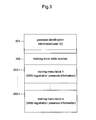
- Fig. 3 is an example of data structure of registration information stored in memory card 300.
- the registration information includes user ID 301, which is personal identification information, training menu table number 302 and training menu tables 303-1 through 303-n (n: natural number).
- Personal information server 102 can store individual customized menus for each user, and multifunction machine 100 can read the customized menus and give commands to execute the customized menus.
- Memory card 300 stores training results, which are setting data of multifunction machine 100 when the customized menus were executed in the past.
- memory card 300 stores four training menu tables 303-1 through 303-4 corresponding to the four customized menus.
- Each of the four training menu tables 303-1 through 303-4 includes setting data at the time of last execution of a corresponding customized menu.
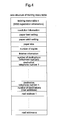
- the training menu table includes setting items necessary for execution of customized menus. In this embodiment, all menus executable at multifunction machine 100 are itemized.
- the training menu table includes resolution information, paper feed setting, paper catch setting, paper size, number of copies, and fmisher information as items associated with menus to perform copy, scanner and printer functions.
- the training menu table further includes the number of destinations (telephone numbers), individual destination telephone numbers, the number of destinations (mail addresses), and individual mail addresses as items associated with menus to perform a FAX function and an electronic mail function.
- Personal information server 102 can store a personal information table for each user.
- Fig. 5 is an example of data structure of the personal information table.
- the personal information table includes user ID 310, which is personal identification information, personal information 311, which includes a division name, etc., registered customized menu table number 312, and registered customized menu tables 313-1 through 313-n (n: natural number).
- User ID 310 is common to user ID 301 shown in Fig. 3.
- Personal information 311 includes a name of individual, division name, and ID codes other than the user ID in this embodiment, but not limited to, as long as the information relates to the individual (user).
- Customized menu tables 313-1 through 313-n include customized menus registered in personal information server 102 by an individual of user ID 310. For example, menu names of customized menus are set "meeting materials," "pamphlet distribution,” and so on.
- the customized menu table data is sent to multifunction machine 100, and the "menu name" of the customized menu is displayed on a panel.
- a server controls multifunction machine 100 by the remote procedure method.
- the server stores control programs to control multifunction machine 100 by the remote procedure method and other necessary data.
- WEB server 105 controls multifunction machine 100 using the remote procedure method in this embodiment. After a selection of menus displayed at (on) multifunction machine 100, WEB server 105 takes over the rest of the process. Therefore, information used by WEB server 105 to take over (including a URL of WEB server 105) is stored in table data of each customized menu table 313-1 through 313-n.
- Fig. 6 is a flowchart illustrating an operation from the time of reading registration information from memory card 300 to the time of display of customized menus.
- a user having memory card 300 stands in front of multifunction machine 100 to do some jobs.
- RFID controller 206 radiates a wireless wave toward memory card 300 held by the user, so as to read the registration information in memory card 300, and stores the read information into work area 211 (S101). As shown in Fig. 3, memory card 300 includes user ID 301 of the user. Personal information controller 207 extracts the user ID from the registration information stored in work area 211, and gives the extracted information to personal information server I/F unit 208 (S102).
- Personal information server I/F unit 208 issues a personal authentication request based on the user ID 301 to the personal information server 102 (S103).
- personal information server 102 Upon receiving the personal authentication request with user ID 301 from personal information server I/F unit 208, personal information server 102 determines whether a personal information table corresponding to the user ID 301 is registered (S104). As shown in Fig. 5, each personal information table includes user ID 310. Accordingly, when there is a personal information table including user ID 310 that matches user ID 301, it is determined that the user's personal information table is registered in personal information server 102. When the user's personal information table is registered, personal information server 102 sends a response including "registered user detection notification," in response to the personal authentication request. When the user's personal information table is not registered, personal information server 102 sends a response including "unregistered user detection notification.”
- personal information controller 207 gives the received "unregistered user detection notification" to panel controller 205 (S105).
- panel controller 205 controls touch panel 204 to display a message indicating that the user is not registered (S106).
- Fig. 7A shows an example of a message displayed on touch panel 204 indicating that a user is not registered.
- personal information server I/F unit 208 stores the user's personal information table data received from personal information server 102 into work area 211 (S107). Further, personal information server I/F unit 208 commands panel controller 205 to display the registered user name, and so on (S108).
- Fig. 7B is an example of a message displayed on touch panel 204 indicating confirmation of a registered user.
- RFID controller 206 reads the registration information stored in memory card 300 held by a user without contact, personal information server 102, which is separately installed from multifunction machine 100, performs personal authentication, and the result of the authentication is displayed on multifunction machine 100. Accordingly, personal authentication can be performed without user's input of a user ID or a code number through touch panel 204 or operation buttons (not shown).
- RFID controller 206 After RFID controller 206 completes the personal authentication based upon the registration information read from memory card 300 as described above, it is determined whether the currently authenticated user's customized menu table is present (S109). When the personal information table data stored in work area 211 at step S 107 includes a customized menu table, it is determined that the user's customized menu table is present. When the personal information table data does not include a customized menu table, it is determined that the user's customized menu table is not present.
- personal information server 102 stores personal information for personal authentication, but does not store a customized menu, which is a user's original menu, it is determined that the user's customized menu table is not present.
- personal information controller 207 commands panel controller 205 to display a standard menu (S110).
- a personal-authenticated user can use at least a standard menu, even if a customized menu has not been registered in personal information server 102.
- the standard menu is a menu other than the customized menus, and can be a default menu screen prepared by a maker (manufacturer).
- Panel controller 205 stores thus prepared default menu screen data.
- the default menu screen can include some selection buttons of basic functions, such as a facsimile function, copy function, scanner function, printer function, and an electronic mail function. Settings necessary to perform each function (such as resolution, paper feed setting, paper catch setting, paper size, number of copies, destination telephone number, destination mail address, etc.) are determined by default values or user input values at each time of use.
- Fig. 8A is an example of a standard menu display. Selection buttons of "copy,” “FAX” and “scanner” are displayed in association with a copy function, a facsimile function and a scanner function. "Mr. **" is the name of a personal-authenticated user.
- panel controller 205 displays the customized menu (menu name) (S112).
- menu names respectively given to customized menu tables 312-1 through 312-n are displayed on touch panel 204 (S112).
- Fig. 8B is an example of a customized menu display.
- RFID controller 206 performs personal authentication based on the registration information read from memory card 300, and customized menus registered for the authenticated user in personal information server 102 are automatically displayed on touch panel 204. Accordingly, mere user's standing in front of multifunction machine 100 creates a status that allows the user to select customized menus registered by the user through touch panel 204.
- Fig. 8B is an example of a display status before a training menu is reflected (used).
- the registration information read from memory card 300 and stored into work area 211 includes a training menu table (S201).
- the item of training menu table number 302 includes a numeral value. It can be determined whether a training menu table is present by checking the numeral value in the training menu table number 302.
- step S202 the operation proceeds to step S202 in which panel controller 205 displays standard settings.
- Fig. 8C is an example of a display of customized menus with standard settings. "Mr.** private box” and “Fax to Mr. **" are customized menus.
- step S203 When it is determined that the training menu table is registered, the operation proceeds to step S203 to read training menu table data from work area 211 and to display message 402 indicating that the setting value is customized in accordance with the read training menu table data.
- Fig. 8D shows message 402 indicating that the paper size is set for A3 size, since the item of "paper size" in the training menu table shown in Fig. 4 includes "A3.”
- the customized information is included in other items, such as resolution or the number of copies, in the training menu table, such information can also be displayed.
- a touch of a menu displayed on touch panel 204 indicates an input of an execution command of a particular menu specified based upon the touch position (S204).
- the training menu table corresponding to the user's selected customized menu includes setting information (resolution, number of copies, destination, etc.) necessary for execution of the menu.
- the setting information with respect to the menu to which an execution command is input at S204 is sent from work area 211 to panel controller 205, and is stored as panel setting information.
- Panel controller 205 confirms each type of panel setting information (resolution, number of copies, destination, etc.) (S205). More in detail, when a command to change the panel setting information is input through touch panel 204 or operation buttons (not shown), the selected setting information is changed according to the contents of the command. The setting information after the change is reflected on the panel setting information.
- Panel controller 205 rewrites the paper size item in the training menu table from A4 to A3.
- the corresponding items in the training menu table are rewritten as well.
- the training menu table data thus changed is stored (registered) in memory card 300 again. Therefore, it is determined whether the panel setting information has been changed (S206).
- panel controller 205 informs RFID controller 206 of the changed training menu table data, and commands RFID controller 206 to write the data into memory card 300 (S207).
- RFID controller 206 writes the changed training menu table data into memory card 300 via a wireless wave without contact.
- panel controller 205 gives the held panel setting information to job controller 203, and informs job controller 203 of the start of a job (S208).
- Job controller 203 is controlled by WEB server 105 using the remote procedure method to perform a menu according to the panel setting information. More in detail, WEB server 105 holds operation screen data necessary for the execution of each job with respect to all menus (including customized menus for an individual user). WEB server 105 retrieves a necessary operation screen along with the progress of the job and sends it to multifunction machine 100, in response to a request from multifunction machine 100. At multifunction machine 100, job controller 203 gives the operation screen data to panel controller 205 to display the operation screen on touch panel 204. Job controller 203 detects an input on the operation panel displayed on touch panel 204, and outputs commands to corresponding one of device controllers 202-1 through 202-n. At this moment, the commands are generated based on the panel setting information.
- job controller 203 requests WEB server 105 to send the next operation screen in response to an input from touch panel 204.
- requests and distributions of operation screens are performed between multifunction machine 100 and WEB server 105 in order to perform jobs corresponding to the selected menu.
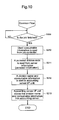
- Fig. 10 is a flowchart illustrating an operation after the execution of the job.
- Job controller 203 stores and manages consumable information per job as a unit.
- the used consumable information is read from job controller 203 (S210).
- a division code is read from personal information 311 stored in work area 211 (S211).
- the division name and consumable information are sent to accounting server I/F unit 209 (S212).
- accounting server I/F unit 209 accesses accounting server 103 and requests registration of the user's division name and consumable information (S213).
- accounting server 103 registers the received division name and consumable information. For example, when consumables are managed per division, the amount of the consumable is added to each corresponding division.
- RFID controller 206 performs personal authentication based upon the registration information read from memory card 300, and after the execution of the job, consumable information incurred from the job execution is written into accounting server 103 per division or individual, by using the result of personal authentication. Accordingly, the consumables can be easily managed per individual or division according to the rigid personal authentication without bothering the user.
- personal information server 102 and accounting server 103 are implemented on separate servers. However, they can be implemented on a physically common server. Further, WEB server 105 controls jobs of multifunction machine 100 by the remote procedure method in the above explanation. However, personal information server 102 can perform the same remote procedure function, instead. Alternatively, personal information server 102 and accounting server 103 can be located on the Internet.
- memory card 300 shown in Fig. 3 stores training menu table information.
- personal information server 102 can store training menu table number 302 and training menu tables 303 in the personal information table.
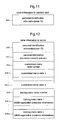
- Fig. 11 illustrates registration information stored in memory card 300 in this variation.
- memory card 300 stores only user ID 301 as personal identification information. It is preferable that only the user ID 301 is stored as registration information in the memory card 300 from the aspect of security.
- Fig. 12 illustrates data structure of user's personal information table in this variation.
- Personal information table includes user ID 310, personal information 311, including a division name, etc., registered customized menu table number 312, and registered customized menu tables 313-1 through 313-n (n: natural number).
- the personal information table further includes training menu table number 314 and individual training menu tables 315-1 through 315-n (n: natural number).
- Customized menus for each user are registered in personal information server 102, and multifunction machine 100 can read and execute the customized menu. Setting contents with respect to the customized menu executed in the past at multifunction machine 100 are registered as training results in training menu table 315.
- the operation using the above-described memory card 300 is explained. First, an operation from reading registration information from memory card 300 to displaying a customized menu is explained. Because the basic operation is the same as that of the flowchart shown in Fig. 6, only the difference is explained here. In this variation, the processes shown in steps S101, S102 and S107 are different from those in Fig. 6. In other words, in the previous embodiment, the registration information that is read from memory card 300 in step S101 includes the information with respect to the training menu tables (302, 303). On the other hand, only the user ID 301 is included in this variation. Thus, an operation to extract user ID 301 from the registration information read from memory card 300 is not necessary.
- user ID 301 read from memory card 300 can be given to personal information server I/F unit 208 without being stored in the work area, to request personal information server 102 to perform personal authentication (S101, S102).
- the table information read out from personal information server 102 and read in multifunction machine 100 includes training menu table number 314 and training menu tables 315-1 through 315-n (n: natural number). Accordingly, training menu table number 314 and training menu tables 315-1 through 315-n are downloaded in multifunction machine 100 at this time.
- the other processes are the same as those shown in Fig. 6.
- step S201 and S207 are different from those shown in Fig. 9.
- training menu information is retrieved from the registration information read from memory card 300.
- training menu information is retrieved from the information read from personal information server 102 in this variation.
- step S206 shown in Fig. 9 that the setting has been changed
- the changed contents are stored (registered) as training menus in the personal information table in personal information server 102.
- the changed contents are stored as training menus in memory card 300 in step S207.
- Other processes are the same as those shown in the flowchart of Fig. 9.
- the multifunction machine 100 does not have personal authentication (identification) information, but personal information server 102 stores personal authentication information and performs personal authentication in response to the request from the multifunction machine 100.
- multifunction machine 100 can store (register) the personal information table and the customized menus.
- the multifunction machine stores the personal information table and the customized menus, and the multifunction machine alone performs personal authentication and displays customized menus.
- Fig. 13 is a functional block diagram illustrating multifunction machine 400 according to the second embodiment of the present invention.
- the functions same as those of multifunction machine 100 of the first embodiment shown in Fig. 2 have the same reference numerals.
- Personal authentication controller 220 performs personal authentication by comparing the personal information read from memory card 300 by RFID controller 206 with registered personal information. The registered personal information is previously stored in hard disk 210.
- Server I/F unit 221 is an interface to access servers on LAN 101 or servers outside of LAN 101 via LAN 101.
- the network configuration can be that shown in Fig. 1.
- Multifunction machine 100 shown in Fig. 1 corresponds to multifunction machine 400 in this embodiment.
- Multifunction machine 400 stores control programs to control operations of devices 201-1 through 201-n and other programs in ROM 222.
- Multifunction machine 400 expands data in work area 211, implemented by a RAM, to perform necessary operations.
- the functional blocks, such as job controller 203, personal information controller 207 and personal authentication controller 220, are implemented by a CPU (not shown) cooperating with relating hardware to perform processes in accordance with program commands.
- Memory card 300 stores personal information shown in Fig. 3.
- memory card 300 stores registration information, including user ID 301 as personal identification information, training menu table number 302, respective training menu tables 303-1 through 303-n.
- Multifunction machine 400 stores customized menus for respective users in hard disk 210, and can read the customized menus to execute.
- Multifunction machine 400 stores (registers) training results, which is the setting contents when the customized menus were executed in the past, in memory card 300.
- the data structure of the training menu table is the same as that shown in Fig. 4.
- Multifunction machine 400 stores each user's personal information table, which is individual registration information, in hard disk 210.
- the personal information table has the same data structure shown in Fig. 5.
- the personal information table includes user ID 310 as personal identification information, personal information 311, such as an individual name and a division name, registered customized menu table number 312, and registered customized menu tables 313-1 through 313-n.
- User ID 310 is common to user ID 301 shown in Fig. 3.
- Such customized menu table data is read from hard disk 210, and "menu names" of the customized menus are displayed on the panel.
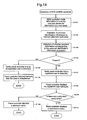
- Fig. 14 is a flowchart illustrating an operation from reading registration information from memory card 300 to displaying customized menus.
- a user having memory card 300 stands in front of multifunction machine 400 to perform some desired jobs.
- RFID controller 206 radiates a wireless wave toward memory card 300 held by the user to read (registration) information in the memory card 300, and stores the read information into work area 211 (S1101).
- memory card 300 includes user ID 301 of the user.
- Personal information controller 207 extracts the user ID from the registration information stored in work area 211, and gives the extracted user ID to personal authentication controller 220 (S1102).
- personal authentication controller 220 may extract the user ID from work area 211.
- Personal authentication controller 220 determines whether there is a personal information table having user ID 310 matching user ID 301 obtained in step S1102 in hard disk 210 (S1103). The presence of a registered personal information table having user ID 310 matching user ID 301 means that the user's personal information table is registered in hard disk 210. When the personal information table is registered, personal authentication controller 220 determines that the personal information table "exists" (S1104), and sends "registered user detection notification" to panel controller 205 (S1107).
- panel controller 205 Upon receiving an "unregistered user detection notification" (S1105), panel controller 205 displays a message indicating an unregistered user on touch panel 204 (S1106).
- Fig. 7A is an example of a message of an unregistered user displayed on touch panel 204.
- panel controller 205 when panel controller 205 receives a "registered user detection notification," panel controller 205 displays registered user's name, and so on (S1108).
- the registered user's name can be obtained from personal information 311 shown in Fig. 5.
- Fig. 7B is an example of a message indicating a registered user displayed on touch panel 204.
- RFID controller 206 reads registration information stored in memory card 300 held by the user without contact, personal authentication is performed on multifunction machine 400, and the result of the authentication is displayed on multifunction machine 400. Accordingly, personal authentication can be performed without user's input of a user ID or a code number through touch panel 204 or operation button (not shown), etc.
- a customized menu table of the currently authenticated user is present (S1109).
- the personal information table data (Fig. 5) stored in hard disk 210 includes a customized menu table, it is determined that the customized menu table is present.
- the personal information table data does not include any customized menu table, it is determined that the customized menu table is not present.
- hard disk 210 stores personal information for personal authentication, but does not store a customized menu, which is a personal menu, it is determined that a customized menu table is not present.
- panel controller 205 displays a standard menu on touch panel 204 (S1110).
- the personal authenticated user can use a standard menu, even though his/her customized menu is not registered in multifunction machine 400.
- step S1109 panel controller 205 displays customized menus (menu names) (S1112).
- menu names set to (given to) respective customized menu tables 313-1 through 313-n are displayed on touch panel 204 (S1112).
- Fig. 8B shows an example of a display of the customized menus.
- multifunction machine 400 automatically displays the customized menu previously registered by the user in multifunction machine 400 on touch panel 204. Accordingly, mere user's standing in front of multifunction machine 400 makes the user's registered customized menus ready to be selectable through touch panel 204.
- Multifunction machine 400 reflects the registration information in the training menus on the displayed contents in accordance with the flowchart shown in Fig. 9 (Figs. 8C and 8D). Further, when the setting contents are changed, the changed data is reflected on the training menu tables in memory card 300. Then, multifunction machine 400 executes a selected job. After the execution of the job, consumable information is registered (stored) in accounting server 103 in accordance with the flowchart shown in Fig. 10.
- memory card 300 stores information regarding training menu tables.
- the information stored in memory card 300 can be limited to the user ID, and other information can be stored in the personal information table in multifunction machine 400.
- step S 1102 shown in Fig. 14 the user ID is extracted from the work area. Meanwhile, the extracting operation performed in step S 1102 is not necessary in this construction (variation), because the registration information itself read from memory card 300 is the user ID.
- the personal-authenticated user's personal information table must be read from hard disk 210 and be stored into the work area.
- the registration information stored in memory card 300 is searched for the training menu table information in step S201 shown in Fig. 9.
- a personal information table as the registration information of hard disk 210 is searched to find the training menu table information.
- the changed contents are registered (trained) in memory card 300 in step S207 shown in Fig. 9.
- the training menus in the personal information table must be changed, the changed contents are registered in hard disk 210.
- the other processes are the same as those in the second embodiment.
Landscapes
- Engineering & Computer Science (AREA)
- Multimedia (AREA)
- Signal Processing (AREA)
- Human Computer Interaction (AREA)
- Theoretical Computer Science (AREA)
- General Physics & Mathematics (AREA)
- Physics & Mathematics (AREA)
- Computer Security & Cryptography (AREA)
- Computer Networks & Wireless Communication (AREA)
- Software Systems (AREA)
- General Engineering & Computer Science (AREA)
- Computer Hardware Design (AREA)
- Facsimiles In General (AREA)
- Control Or Security For Electrophotography (AREA)
Applications Claiming Priority (8)
| Application Number | Priority Date | Filing Date | Title |
|---|---|---|---|
| JP2004003839 | 2004-01-09 | ||
| JP2004003840 | 2004-01-09 | ||
| JP2004003839A JP4348196B2 (ja) | 2004-01-09 | 2004-01-09 | 複合機及び複合機における個人認証方法 |
| JP2004003840A JP4348197B2 (ja) | 2004-01-09 | 2004-01-09 | 複合機及び複合機における個人認証方法 |
| JP2004013419A JP4348200B2 (ja) | 2004-01-21 | 2004-01-21 | 複合機及び複合機における個人認証方法 |
| JP2004013420A JP4348201B2 (ja) | 2004-01-21 | 2004-01-21 | 複合機及び複合機における個人認証方法 |
| JP2004013419 | 2004-01-21 | ||
| JP2004013420 | 2004-01-21 |
Publications (2)
| Publication Number | Publication Date |
|---|---|
| EP1553525A2 true EP1553525A2 (fr) | 2005-07-13 |
| EP1553525A3 EP1553525A3 (fr) | 2005-12-21 |
Family
ID=34596044
Family Applications (1)
| Application Number | Title | Priority Date | Filing Date |
|---|---|---|---|
| EP04018405A Ceased EP1553525A3 (fr) | 2004-01-09 | 2004-08-03 | Machine multifonctionnelle et procédé d'authentification personnelle de la machine multifonctionnelle |
Country Status (3)
| Country | Link |
|---|---|
| US (1) | US7634801B2 (fr) |
| EP (1) | EP1553525A3 (fr) |
| KR (1) | KR100613829B1 (fr) |
Cited By (12)
| Publication number | Priority date | Publication date | Assignee | Title |
|---|---|---|---|---|
| EP1770980A1 (fr) * | 2005-09-30 | 2007-04-04 | Canon Kabushiki Kaisha | Dispositif de transmission de données, son procédé de commande, et dispositif d'entrée/de sortie d'image |
| EP1874027A1 (fr) * | 2006-06-29 | 2008-01-02 | Ricoh Company, Ltd. | Dispositif de formation d'images |
| EP1903767A1 (fr) * | 2006-09-19 | 2008-03-26 | Ricoh Company, Ltd. | Personnalisation des écrans de menus d'une interface utilisateur basé sur l'autorisation d'utilisateur |
| WO2007036891A3 (fr) * | 2005-09-30 | 2008-04-10 | Koninkl Philips Electronics Nv | Application du classement de maturite au moyen des etiquettes rf |
| EP1912424A1 (fr) * | 2006-10-10 | 2008-04-16 | Ricoh Company, Ltd. | Dispositif de balayage sécurisé |
| EP1865437A3 (fr) * | 2006-06-05 | 2008-12-10 | Ricoh Company, Ltd. | Gestion de l'accès à un dispositif de traitement de documents à l'aide d'un jeton d'identification |
| US7540416B2 (en) | 2006-02-14 | 2009-06-02 | Ricoh Company, Ltd. | Smart card authentication system with multiple card and server support |
| EP2284760A3 (fr) * | 2009-08-07 | 2011-12-21 | Canon Kabushiki Kaisha | Système de traitement d'informations, procédé de commande correspondant et programme |
| EP2437479A1 (fr) * | 2010-09-30 | 2012-04-04 | Samsung Electronics Co., Ltd. | Procédé et appareil de formation d'images permettant de générer un écran d'interface utilisateur à afficher pour que l'utilisateur accède à l'appareil de formation d'images |
| GB2544592A (en) * | 2015-09-17 | 2017-05-24 | Canon Kk | Image processing apparatus, display control method in the image processing apparatus, and program |
| EP3314386A4 (fr) * | 2015-06-23 | 2018-05-30 | Ricoh Company, Ltd. | Appareil, système de traitement d'informations, procédé de traitement d'informations, et produit-programme informatique |
| EP3337151A1 (fr) * | 2005-08-29 | 2018-06-20 | Canon Kabushiki Kaisha | Procédé d'affichage d'une interface utilisateur conformément à l'intention de l'utilisateur |
Families Citing this family (48)
| Publication number | Priority date | Publication date | Assignee | Title |
|---|---|---|---|---|
| CN100387433C (zh) * | 2004-02-26 | 2008-05-14 | 松下电器产业株式会社 | 多功能装置 |
| JP4571010B2 (ja) * | 2005-05-16 | 2010-10-27 | 富士通株式会社 | 携帯電話機を節電できるip電話システム、情報処理端末および携帯電話機 |
| KR100739719B1 (ko) * | 2005-08-16 | 2007-07-13 | 삼성전자주식회사 | 팩스 또는 팩스 기능을 갖는 복합기에서, 사용자별 단축다이얼을 제공하는 방법 및 장치 |
| US7788499B2 (en) * | 2005-12-19 | 2010-08-31 | Microsoft Corporation | Security tokens including displayable claims |
| US7868238B2 (en) * | 2006-01-18 | 2011-01-11 | Yamaha Corporation | Electronic musical apparatus, server, electronic musical system, and computer-readable medium including program for implementing control method for the apparatus, the server, and the system |
| US8117459B2 (en) * | 2006-02-24 | 2012-02-14 | Microsoft Corporation | Personal identification information schemas |
| US20070203852A1 (en) * | 2006-02-24 | 2007-08-30 | Microsoft Corporation | Identity information including reputation information |
| US8104074B2 (en) * | 2006-02-24 | 2012-01-24 | Microsoft Corporation | Identity providers in digital identity system |
| JP4635910B2 (ja) * | 2006-03-02 | 2011-02-23 | 富士ゼロックス株式会社 | 画像形成指示装置、画像形成指示プログラム、画像形成指示方法、画像形成用サーバ、画像形成用サーバプログラム、画像形成用サーバでの処理方法、画像形成制御装置、画像形成制御装置用プログラム及び画像形成方法 |
| KR100809941B1 (ko) * | 2006-05-26 | 2008-03-06 | 주식회사 골든오일 | 정보 처리방법 및 시스템과 정보 처리장치와 프로그램기록매체 |
| CN101090314A (zh) * | 2006-06-15 | 2007-12-19 | 松下电器产业株式会社 | 整合票证授予服务于通话起始协议的鉴别方法及其装置 |
| KR100834758B1 (ko) * | 2006-07-05 | 2008-06-05 | 삼성전자주식회사 | 컴퓨터 시스템 보안 장치 및 방법 |
| US8078880B2 (en) * | 2006-07-28 | 2011-12-13 | Microsoft Corporation | Portable personal identity information |
| JP4963939B2 (ja) * | 2006-11-15 | 2012-06-27 | 京セラドキュメントソリュ−ションズ株式会社 | 画像形成装置のパネルカスタマイズ方法 |
| US8407767B2 (en) * | 2007-01-18 | 2013-03-26 | Microsoft Corporation | Provisioning of digital identity representations |
| US8087072B2 (en) * | 2007-01-18 | 2011-12-27 | Microsoft Corporation | Provisioning of digital identity representations |
| US8689296B2 (en) | 2007-01-26 | 2014-04-01 | Microsoft Corporation | Remote access of digital identities |
| JP5164399B2 (ja) * | 2007-03-12 | 2013-03-21 | 京セラドキュメントソリューションズ株式会社 | 画像形成システムおよび画像形成プログラム |
| US20080289020A1 (en) * | 2007-05-15 | 2008-11-20 | Microsoft Corporation | Identity Tokens Using Biometric Representations |
| JP4836054B2 (ja) * | 2007-07-11 | 2011-12-14 | 富士ゼロックス株式会社 | 画像形成装置及びプログラム |
| KR101427657B1 (ko) * | 2008-02-05 | 2014-08-07 | 삼성전자주식회사 | Rfid에 기반한 인쇄정보제공 시스템 및 인쇄정보제공방법 |
| JP2009187471A (ja) * | 2008-02-08 | 2009-08-20 | Oki Data Corp | 情報処理装置 |
| JP5157682B2 (ja) * | 2008-03-17 | 2013-03-06 | 株式会社リコー | 情報処理装置、画像形成装置、操作画面変更方法、操作画面変更プログラムおよび記憶媒体 |
| JP4656219B2 (ja) * | 2008-09-10 | 2011-03-23 | コニカミノルタビジネステクノロジーズ株式会社 | 画像処理装置、画面選択方法および画面選択プログラム |
| JP2011090478A (ja) * | 2009-10-22 | 2011-05-06 | Sharp Corp | ネットワーク画像形成システム、そのシステムに用いられるサーバコンピュータおよび画像形成装置 |
| US20110199623A1 (en) * | 2010-02-12 | 2011-08-18 | Kabushiki Kaisha Toshiba | Image processing apparatus and setting method used in image processing apparatus |
| US8911056B2 (en) * | 2010-03-24 | 2014-12-16 | Seiko Epson Corporation | Electronic instrument and management method |
| JP2012037986A (ja) * | 2010-08-04 | 2012-02-23 | Canon Inc | 画像形成装置及びその制御方法と画像形成システム |
| JP5259769B2 (ja) | 2011-04-13 | 2013-08-07 | シャープ株式会社 | 画像出力システム |
| US9036169B2 (en) | 2011-12-12 | 2015-05-19 | Samsung Electronics Co., Ltd. | Image forming apparatus supporting Wi-Fi direct and method of activating Wi-Fi direct |
| KR101673642B1 (ko) * | 2012-08-10 | 2016-11-07 | 엘에스산전 주식회사 | 디지털 전기 계측, 계전 기기 |
| JP6142646B2 (ja) | 2013-04-30 | 2017-06-07 | ブラザー工業株式会社 | 画像処理装置、及び、画像処理システム |
| US20150316919A1 (en) * | 2013-05-16 | 2015-11-05 | HYTORC Division Unex Corporation | Multifunctional Hydraulic Drive Unit |
| US11037110B1 (en) | 2014-05-20 | 2021-06-15 | Wells Fargo Bank, N.A. | Math based currency point of sale systems and methods |
| US10565645B1 (en) | 2014-05-20 | 2020-02-18 | Wells Fargo Bank, N.A. | Systems and methods for operating a math-based currency exchange |
| US10909509B1 (en) | 2014-05-20 | 2021-02-02 | Wells Fargo Bank, N.A. | Infrastructure for maintaining math-based currency accounts |
| US10970684B1 (en) | 2014-05-20 | 2021-04-06 | Wells Fargo Bank, N.A. | Systems and methods for maintaining deposits of math-based currency |
| US11062278B1 (en) | 2014-05-20 | 2021-07-13 | Wells Fargo Bank, N.A. | Systems and methods for math-based currency credit transactions |
| US11270274B1 (en) | 2014-05-20 | 2022-03-08 | Wells Fargo Bank, N.A. | Mobile wallet using math based currency systems and methods |
| US11170351B1 (en) * | 2014-05-20 | 2021-11-09 | Wells Fargo Bank, N.A. | Systems and methods for identity verification of math-based currency account holders |
| US11176524B1 (en) | 2014-05-20 | 2021-11-16 | Wells Fargo Bank, N.A. | Math based currency credit card |
| US10015236B2 (en) | 2015-01-30 | 2018-07-03 | Ricoh Company, Ltd. | Cloud application activation and update service |
| US10719816B1 (en) | 2015-11-19 | 2020-07-21 | Wells Fargo Bank, N.A. | Systems and methods for math-based currency escrow transactions |
| JP2018107529A (ja) | 2016-12-22 | 2018-07-05 | ブラザー工業株式会社 | 画像処理装置 |
| DE102018111652A1 (de) * | 2018-05-15 | 2019-11-21 | STAHLWILLE Eduard Wille GmbH & Co. KG | Werkzeug und Verfahren zum Betätigen eines Werkzeuges |
| WO2020174735A1 (fr) * | 2019-02-25 | 2020-09-03 | パナソニックIpマネジメント株式会社 | Carte mémoire pour système de transfert de données, dispositif de stockage de données, hôte de système et procédé d'identification de carte mémoire |
| JP7542992B2 (ja) * | 2020-05-22 | 2024-09-02 | キヤノン株式会社 | 画像処理装置、方法、及びプログラム |
| JP2023024153A (ja) * | 2021-08-06 | 2023-02-16 | トヨタ自動車株式会社 | 情報入力システム |
Family Cites Families (21)
| Publication number | Priority date | Publication date | Assignee | Title |
|---|---|---|---|---|
| JPH05273823A (ja) * | 1992-03-26 | 1993-10-22 | Minolta Camera Co Ltd | 複写機 |
| US5629981A (en) * | 1994-07-29 | 1997-05-13 | Texas Instruments Incorporated | Information management and security system |
| JP3160177B2 (ja) | 1995-03-06 | 2001-04-23 | 松下電器産業株式会社 | ファクシミリ型電子メール装置 |
| JP3657677B2 (ja) | 1995-12-15 | 2005-06-08 | 株式会社東芝 | 画像形成装置管理システム |
| EP1267561B2 (fr) | 1996-04-04 | 2013-08-21 | Panasonic System Networks Co., Ltd. | Machine d'impression |
| JP3325800B2 (ja) | 1997-05-19 | 2002-09-17 | 松下電送システム株式会社 | 画像処理装置 |
| JP3762051B2 (ja) | 1997-06-20 | 2006-03-29 | キヤノン株式会社 | 画像読取り装置及びその制御方法 |
| JP3595665B2 (ja) | 1997-11-07 | 2004-12-02 | キヤノン株式会社 | 画像入出力装置および管理方法 |
| JP2000079744A (ja) | 1998-09-03 | 2000-03-21 | Canon Inc | 画像形成装置、操作環境設定方法および記憶媒体 |
| JP2000321938A (ja) | 1999-05-11 | 2000-11-24 | Tohoku Ricoh Co Ltd | 画像形成システム |
| JP3604960B2 (ja) | 1999-07-02 | 2004-12-22 | キヤノン株式会社 | 画像処理装置及び画像処理システム並びにその制御方法 |
| JP2001292262A (ja) | 2000-04-06 | 2001-10-19 | Ricoh Co Ltd | 複合機のユーザー登録装置 |
| JP2001334735A (ja) | 2000-05-30 | 2001-12-04 | Sharp Corp | 画像形成装置とその制御方法 |
| JP2002007264A (ja) | 2000-06-22 | 2002-01-11 | Matsushita Graphic Communication Systems Inc | インターネットファクシミリ端末装置およびそれによる通信方法 |
| JP2002152446A (ja) | 2000-11-09 | 2002-05-24 | Ricoh Co Ltd | 複合機システムとそのメニュー表示方法及び記録媒体 |
| JP4839516B2 (ja) | 2001-02-27 | 2011-12-21 | ソニー株式会社 | 認証システム及び認証方法 |
| US20030088570A1 (en) * | 2001-11-05 | 2003-05-08 | Fuji Xerox Co., Ltd. | Systems and methods for operating a multi-user document device via a personal device portal |
| US7167919B2 (en) * | 2001-12-05 | 2007-01-23 | Canon Kabushiki Kaisha | Two-pass device access management |
| US7487233B2 (en) | 2001-12-05 | 2009-02-03 | Canon Kabushiki Kaisha | Device access based on centralized authentication |
| US6694115B2 (en) * | 2002-01-29 | 2004-02-17 | Hewlett-Packard Development Company, L.P. | Altering print configurations for authorized users |
| JP2003233725A (ja) | 2002-02-08 | 2003-08-22 | Canon Inc | サービス提供システム、サービス提供装置、サービス提供方法およびプログラム |
-
2004
- 2004-07-19 US US10/893,279 patent/US7634801B2/en not_active Expired - Fee Related
- 2004-08-03 EP EP04018405A patent/EP1553525A3/fr not_active Ceased
- 2004-08-06 KR KR1020040062011A patent/KR100613829B1/ko not_active Expired - Fee Related
Cited By (23)
| Publication number | Priority date | Publication date | Assignee | Title |
|---|---|---|---|---|
| US10795546B2 (en) | 2005-08-29 | 2020-10-06 | Canon Kabushiki Kaisha | Method for displaying user interface in accordance with device connection |
| EP3337151A1 (fr) * | 2005-08-29 | 2018-06-20 | Canon Kabushiki Kaisha | Procédé d'affichage d'une interface utilisateur conformément à l'intention de l'utilisateur |
| US8726401B2 (en) | 2005-09-30 | 2014-05-13 | Canon Kabushiki Kaisha | Data transmission apparatus, control method therefor, and image input/output apparatus |
| US8181256B2 (en) | 2005-09-30 | 2012-05-15 | Canon Kabushiki Kaisha | Data transmission apparatus, control method therefor, and image input/output apparatus |
| WO2007036891A3 (fr) * | 2005-09-30 | 2008-04-10 | Koninkl Philips Electronics Nv | Application du classement de maturite au moyen des etiquettes rf |
| EP1770980A1 (fr) * | 2005-09-30 | 2007-04-04 | Canon Kabushiki Kaisha | Dispositif de transmission de données, son procédé de commande, et dispositif d'entrée/de sortie d'image |
| US7540416B2 (en) | 2006-02-14 | 2009-06-02 | Ricoh Company, Ltd. | Smart card authentication system with multiple card and server support |
| US7788712B2 (en) | 2006-06-05 | 2010-08-31 | Ricoh Company, Ltd. | Managing access to a document-processing device using an identification token |
| EP1865437A3 (fr) * | 2006-06-05 | 2008-12-10 | Ricoh Company, Ltd. | Gestion de l'accès à un dispositif de traitement de documents à l'aide d'un jeton d'identification |
| US8844014B2 (en) | 2006-06-05 | 2014-09-23 | Ricoh Company Ltd. | Managing access to a document-processing device using an identification token |
| JP2008011220A (ja) * | 2006-06-29 | 2008-01-17 | Ricoh Co Ltd | 画像形成装置 |
| EP1874027A1 (fr) * | 2006-06-29 | 2008-01-02 | Ricoh Company, Ltd. | Dispositif de formation d'images |
| EP1903767A1 (fr) * | 2006-09-19 | 2008-03-26 | Ricoh Company, Ltd. | Personnalisation des écrans de menus d'une interface utilisateur basé sur l'autorisation d'utilisateur |
| US7570398B2 (en) | 2006-10-10 | 2009-08-04 | Ricoh Company, Ltd. | Secure scanning device |
| EP1912424A1 (fr) * | 2006-10-10 | 2008-04-16 | Ricoh Company, Ltd. | Dispositif de balayage sécurisé |
| EP2284760A3 (fr) * | 2009-08-07 | 2011-12-21 | Canon Kabushiki Kaisha | Système de traitement d'informations, procédé de commande correspondant et programme |
| KR101525267B1 (ko) * | 2009-08-07 | 2015-06-02 | 캐논 가부시끼가이샤 | 정보 처리 시스템, 그 제어 방법 및 기억 매체 |
| US9300824B2 (en) | 2010-09-30 | 2016-03-29 | Samsung Electronics Co., Ltd. | Method and image forming apparatus to generate user interface screen to be displayed to user accessing the image forming apparatus |
| EP2437479A1 (fr) * | 2010-09-30 | 2012-04-04 | Samsung Electronics Co., Ltd. | Procédé et appareil de formation d'images permettant de générer un écran d'interface utilisateur à afficher pour que l'utilisateur accède à l'appareil de formation d'images |
| EP3314386A4 (fr) * | 2015-06-23 | 2018-05-30 | Ricoh Company, Ltd. | Appareil, système de traitement d'informations, procédé de traitement d'informations, et produit-programme informatique |
| US10180849B2 (en) | 2015-06-23 | 2019-01-15 | Ricoh Company, Ltd. | Apparatus, information processing system, information processing method, and computer program product |
| GB2544592A (en) * | 2015-09-17 | 2017-05-24 | Canon Kk | Image processing apparatus, display control method in the image processing apparatus, and program |
| GB2544592B (en) * | 2015-09-17 | 2020-05-27 | Canon Kk | Image processing apparatus, display control method in the image processing apparatus, and program |
Also Published As
| Publication number | Publication date |
|---|---|
| EP1553525A3 (fr) | 2005-12-21 |
| US7634801B2 (en) | 2009-12-15 |
| KR20050073509A (ko) | 2005-07-14 |
| US20050152544A1 (en) | 2005-07-14 |
| KR100613829B1 (ko) | 2006-08-17 |
Similar Documents
| Publication | Publication Date | Title |
|---|---|---|
| EP1553525A2 (fr) | Machine multifonctionnelle et procédé d'authentification personnelle de la machine multifonctionnelle | |
| JP3738761B2 (ja) | 複合型画像処理装置 | |
| KR100832955B1 (ko) | 사용자의 의도에 따라 사용자 인터페이스를 디스플레이하는 장치, 그 방법 및 기억 매체 | |
| JP5523006B2 (ja) | 画像処理装置、ジョブ処理方法及びプログラム | |
| JP6536310B2 (ja) | 画像形成システム、情報処理装置、情報処理方法及びプログラム | |
| JP4402362B2 (ja) | 画像読取装置、その制御方法、プログラムおよび記憶媒体 | |
| JP4911717B2 (ja) | デバイス制御装置及びデバイス制御方法 | |
| JP3980441B2 (ja) | 画像形成装置 | |
| JP5382748B2 (ja) | デバイス制御装置、周辺装置、デバイス制御方法及び周辺装置の制御方法 | |
| JP5382749B2 (ja) | デバイス制御装置及びデバイス制御方法 | |
| US9329818B2 (en) | Image forming device to use temporary account, image forming system having the same, and methods thereof | |
| JP6857047B2 (ja) | 画像形成装置、表示方法およびプログラム | |
| CN102694940A (zh) | 信息处理装置及其控制方法 | |
| JP4348201B2 (ja) | 複合機及び複合機における個人認証方法 | |
| JP2018158529A (ja) | 画像処理装置、システムおよびプログラム | |
| CN103118214A (zh) | 服务器装置、系统以及操作环境的管理方法 | |
| JP4348197B2 (ja) | 複合機及び複合機における個人認証方法 | |
| JP6551105B2 (ja) | 画像形成装置、画面表示方法、およびコンピュータプログラム | |
| JP5548497B2 (ja) | 情報処理装置及び認証システム | |
| JP4348196B2 (ja) | 複合機及び複合機における個人認証方法 | |
| JP2006270353A (ja) | 画像処理装置、データ管理方法、およびコンピュータプログラム | |
| US20100195145A1 (en) | Image processing apparatus, control method for image processing apparatus, and storage medium storing control program therefor | |
| JP4348200B2 (ja) | 複合機及び複合機における個人認証方法 | |
| JP4431877B2 (ja) | 財務会計用情報保存システム及び保存方法 | |
| JP5062037B2 (ja) | データ配信装置、データ配信方法、及びデータ配信プログラム |
Legal Events
| Date | Code | Title | Description |
|---|---|---|---|
| PUAI | Public reference made under article 153(3) epc to a published international application that has entered the european phase |
Free format text: ORIGINAL CODE: 0009012 |
|
| AK | Designated contracting states |
Kind code of ref document: A2 Designated state(s): AT BE BG CH CY CZ DE DK EE ES FI FR GB GR HU IE IT LI LU MC NL PL PT RO SE SI SK TR |
|
| AX | Request for extension of the european patent |
Extension state: AL HR LT LV MK |
|
| PUAL | Search report despatched |
Free format text: ORIGINAL CODE: 0009013 |
|
| AK | Designated contracting states |
Kind code of ref document: A3 Designated state(s): AT BE BG CH CY CZ DE DK EE ES FI FR GB GR HU IE IT LI LU MC NL PL PT RO SE SI SK TR |
|
| AX | Request for extension of the european patent |
Extension state: AL HR LT LV MK |
|
| RIC1 | Information provided on ipc code assigned before grant |
Ipc: 7G 03G 15/00 B Ipc: 7G 06F 1/00 B Ipc: 7H 04N 1/32 B Ipc: 7G 07C 9/00 A |
|
| 17P | Request for examination filed |
Effective date: 20060215 |
|
| AKX | Designation fees paid |
Designated state(s): DE FR GB |
|
| 17Q | First examination report despatched |
Effective date: 20060606 |
|
| RAP1 | Party data changed (applicant data changed or rights of an application transferred) |
Owner name: PANASONIC CORPORATION |
|
| STAA | Information on the status of an ep patent application or granted ep patent |
Free format text: STATUS: THE APPLICATION HAS BEEN REFUSED |
|
| 18R | Application refused |
Effective date: 20090326 |