EP1554365B1 - Utilisation d'homopolymères d' éther vinylique hydrocarbyle pour améliorer l'effet de promoteurs d' écoulement à froid - Google Patents
Utilisation d'homopolymères d' éther vinylique hydrocarbyle pour améliorer l'effet de promoteurs d' écoulement à froid Download PDFInfo
- Publication number
- EP1554365B1 EP1554365B1 EP03748128A EP03748128A EP1554365B1 EP 1554365 B1 EP1554365 B1 EP 1554365B1 EP 03748128 A EP03748128 A EP 03748128A EP 03748128 A EP03748128 A EP 03748128A EP 1554365 B1 EP1554365 B1 EP 1554365B1
- Authority
- EP
- European Patent Office
- Prior art keywords
- fuel
- fuel oil
- cold flow
- oil composition
- component
- Prior art date
- Legal status (The legal status is an assumption and is not a legal conclusion. Google has not performed a legal analysis and makes no representation as to the accuracy of the status listed.)
- Expired - Lifetime
Links
Classifications
-
- C—CHEMISTRY; METALLURGY
- C10—PETROLEUM, GAS OR COKE INDUSTRIES; TECHNICAL GASES CONTAINING CARBON MONOXIDE; FUELS; LUBRICANTS; PEAT
- C10L—FUELS NOT OTHERWISE PROVIDED FOR; NATURAL GAS; SYNTHETIC NATURAL GAS OBTAINED BY PROCESSES NOT COVERED BY SUBCLASSES C10G OR C10K; LIQUIFIED PETROLEUM GAS; USE OF ADDITIVES TO FUELS OR FIRES; FIRE-LIGHTERS
- C10L1/00—Liquid carbonaceous fuels
- C10L1/10—Liquid carbonaceous fuels containing additives
- C10L1/14—Organic compounds
- C10L1/143—Organic compounds mixtures of organic macromolecular compounds with organic non-macromolecular compounds
-
- C—CHEMISTRY; METALLURGY
- C10—PETROLEUM, GAS OR COKE INDUSTRIES; TECHNICAL GASES CONTAINING CARBON MONOXIDE; FUELS; LUBRICANTS; PEAT
- C10L—FUELS NOT OTHERWISE PROVIDED FOR; NATURAL GAS; SYNTHETIC NATURAL GAS OBTAINED BY PROCESSES NOT COVERED BY SUBCLASSES C10G OR C10K; LIQUIFIED PETROLEUM GAS; USE OF ADDITIVES TO FUELS OR FIRES; FIRE-LIGHTERS
- C10L1/00—Liquid carbonaceous fuels
- C10L1/10—Liquid carbonaceous fuels containing additives
- C10L1/14—Organic compounds
- C10L1/18—Organic compounds containing oxygen
- C10L1/185—Ethers; Acetals; Ketals; Aldehydes; Ketones
- C10L1/1852—Ethers; Acetals; Ketals; Orthoesters
-
- C—CHEMISTRY; METALLURGY
- C10—PETROLEUM, GAS OR COKE INDUSTRIES; TECHNICAL GASES CONTAINING CARBON MONOXIDE; FUELS; LUBRICANTS; PEAT
- C10L—FUELS NOT OTHERWISE PROVIDED FOR; NATURAL GAS; SYNTHETIC NATURAL GAS OBTAINED BY PROCESSES NOT COVERED BY SUBCLASSES C10G OR C10K; LIQUIFIED PETROLEUM GAS; USE OF ADDITIVES TO FUELS OR FIRES; FIRE-LIGHTERS
- C10L1/00—Liquid carbonaceous fuels
- C10L1/10—Liquid carbonaceous fuels containing additives
- C10L1/14—Organic compounds
- C10L1/18—Organic compounds containing oxygen
- C10L1/192—Macromolecular compounds
- C10L1/195—Macromolecular compounds obtained by reactions involving only carbon-to-carbon unsaturated bonds
- C10L1/1955—Macromolecular compounds obtained by reactions involving only carbon-to-carbon unsaturated bonds homo- or copolymers of compounds having one or more unsaturated aliphatic radicals each having one carbon bond to carbon double bond, and at least one being terminated by an alcohol, ether, aldehyde, ketonic, ketal, acetal radical
-
- C—CHEMISTRY; METALLURGY
- C10—PETROLEUM, GAS OR COKE INDUSTRIES; TECHNICAL GASES CONTAINING CARBON MONOXIDE; FUELS; LUBRICANTS; PEAT
- C10L—FUELS NOT OTHERWISE PROVIDED FOR; NATURAL GAS; SYNTHETIC NATURAL GAS OBTAINED BY PROCESSES NOT COVERED BY SUBCLASSES C10G OR C10K; LIQUIFIED PETROLEUM GAS; USE OF ADDITIVES TO FUELS OR FIRES; FIRE-LIGHTERS
- C10L1/00—Liquid carbonaceous fuels
- C10L1/10—Liquid carbonaceous fuels containing additives
- C10L1/14—Organic compounds
- C10L1/22—Organic compounds containing nitrogen
- C10L1/222—Organic compounds containing nitrogen containing at least one carbon-to-nitrogen single bond
- C10L1/224—Amides; Imides carboxylic acid amides, imides
-
- C—CHEMISTRY; METALLURGY
- C10—PETROLEUM, GAS OR COKE INDUSTRIES; TECHNICAL GASES CONTAINING CARBON MONOXIDE; FUELS; LUBRICANTS; PEAT
- C10L—FUELS NOT OTHERWISE PROVIDED FOR; NATURAL GAS; SYNTHETIC NATURAL GAS OBTAINED BY PROCESSES NOT COVERED BY SUBCLASSES C10G OR C10K; LIQUIFIED PETROLEUM GAS; USE OF ADDITIVES TO FUELS OR FIRES; FIRE-LIGHTERS
- C10L1/00—Liquid carbonaceous fuels
- C10L1/10—Liquid carbonaceous fuels containing additives
- C10L1/14—Organic compounds
- C10L1/22—Organic compounds containing nitrogen
- C10L1/234—Macromolecular compounds
- C10L1/236—Macromolecular compounds obtained by reactions involving only carbon-to-carbon unsaturated bonds derivatives thereof
- C10L1/2364—Macromolecular compounds obtained by reactions involving only carbon-to-carbon unsaturated bonds derivatives thereof homo- or copolymers derived from unsaturated compounds containing amide and/or imide groups
-
- C—CHEMISTRY; METALLURGY
- C10—PETROLEUM, GAS OR COKE INDUSTRIES; TECHNICAL GASES CONTAINING CARBON MONOXIDE; FUELS; LUBRICANTS; PEAT
- C10L—FUELS NOT OTHERWISE PROVIDED FOR; NATURAL GAS; SYNTHETIC NATURAL GAS OBTAINED BY PROCESSES NOT COVERED BY SUBCLASSES C10G OR C10K; LIQUIFIED PETROLEUM GAS; USE OF ADDITIVES TO FUELS OR FIRES; FIRE-LIGHTERS
- C10L1/00—Liquid carbonaceous fuels
- C10L1/10—Liquid carbonaceous fuels containing additives
- C10L1/14—Organic compounds
- C10L1/16—Hydrocarbons
- C10L1/1616—Hydrocarbons fractions, e.g. lubricants, solvents, naphta, bitumen, tars, terpentine
-
- C—CHEMISTRY; METALLURGY
- C10—PETROLEUM, GAS OR COKE INDUSTRIES; TECHNICAL GASES CONTAINING CARBON MONOXIDE; FUELS; LUBRICANTS; PEAT
- C10L—FUELS NOT OTHERWISE PROVIDED FOR; NATURAL GAS; SYNTHETIC NATURAL GAS OBTAINED BY PROCESSES NOT COVERED BY SUBCLASSES C10G OR C10K; LIQUIFIED PETROLEUM GAS; USE OF ADDITIVES TO FUELS OR FIRES; FIRE-LIGHTERS
- C10L1/00—Liquid carbonaceous fuels
- C10L1/10—Liquid carbonaceous fuels containing additives
- C10L1/14—Organic compounds
- C10L1/18—Organic compounds containing oxygen
- C10L1/192—Macromolecular compounds
- C10L1/195—Macromolecular compounds obtained by reactions involving only carbon-to-carbon unsaturated bonds
- C10L1/196—Macromolecular compounds obtained by reactions involving only carbon-to-carbon unsaturated bonds derived from monomers containing a carbon-to-carbon unsaturated bond and a carboxyl group or salts, anhydrides or esters thereof homo- or copolymers of compounds having one or more unsaturated aliphatic radicals each having one carbon bond to carbon double bond, and at least one being terminated by a carboxyl radical or of salts, anhydrides or esters thereof
-
- C—CHEMISTRY; METALLURGY
- C10—PETROLEUM, GAS OR COKE INDUSTRIES; TECHNICAL GASES CONTAINING CARBON MONOXIDE; FUELS; LUBRICANTS; PEAT
- C10L—FUELS NOT OTHERWISE PROVIDED FOR; NATURAL GAS; SYNTHETIC NATURAL GAS OBTAINED BY PROCESSES NOT COVERED BY SUBCLASSES C10G OR C10K; LIQUIFIED PETROLEUM GAS; USE OF ADDITIVES TO FUELS OR FIRES; FIRE-LIGHTERS
- C10L1/00—Liquid carbonaceous fuels
- C10L1/10—Liquid carbonaceous fuels containing additives
- C10L1/14—Organic compounds
- C10L1/18—Organic compounds containing oxygen
- C10L1/192—Macromolecular compounds
- C10L1/195—Macromolecular compounds obtained by reactions involving only carbon-to-carbon unsaturated bonds
- C10L1/196—Macromolecular compounds obtained by reactions involving only carbon-to-carbon unsaturated bonds derived from monomers containing a carbon-to-carbon unsaturated bond and a carboxyl group or salts, anhydrides or esters thereof homo- or copolymers of compounds having one or more unsaturated aliphatic radicals each having one carbon bond to carbon double bond, and at least one being terminated by a carboxyl radical or of salts, anhydrides or esters thereof
- C10L1/1963—Macromolecular compounds obtained by reactions involving only carbon-to-carbon unsaturated bonds derived from monomers containing a carbon-to-carbon unsaturated bond and a carboxyl group or salts, anhydrides or esters thereof homo- or copolymers of compounds having one or more unsaturated aliphatic radicals each having one carbon bond to carbon double bond, and at least one being terminated by a carboxyl radical or of salts, anhydrides or esters thereof mono-carboxylic
-
- C—CHEMISTRY; METALLURGY
- C10—PETROLEUM, GAS OR COKE INDUSTRIES; TECHNICAL GASES CONTAINING CARBON MONOXIDE; FUELS; LUBRICANTS; PEAT
- C10L—FUELS NOT OTHERWISE PROVIDED FOR; NATURAL GAS; SYNTHETIC NATURAL GAS OBTAINED BY PROCESSES NOT COVERED BY SUBCLASSES C10G OR C10K; LIQUIFIED PETROLEUM GAS; USE OF ADDITIVES TO FUELS OR FIRES; FIRE-LIGHTERS
- C10L1/00—Liquid carbonaceous fuels
- C10L1/10—Liquid carbonaceous fuels containing additives
- C10L1/14—Organic compounds
- C10L1/18—Organic compounds containing oxygen
- C10L1/192—Macromolecular compounds
- C10L1/195—Macromolecular compounds obtained by reactions involving only carbon-to-carbon unsaturated bonds
- C10L1/197—Macromolecular compounds obtained by reactions involving only carbon-to-carbon unsaturated bonds derived from monomers containing a carbon-to-carbon unsaturated bond and an acyloxy group of a saturated carboxylic or carbonic acid
-
- C—CHEMISTRY; METALLURGY
- C10—PETROLEUM, GAS OR COKE INDUSTRIES; TECHNICAL GASES CONTAINING CARBON MONOXIDE; FUELS; LUBRICANTS; PEAT
- C10L—FUELS NOT OTHERWISE PROVIDED FOR; NATURAL GAS; SYNTHETIC NATURAL GAS OBTAINED BY PROCESSES NOT COVERED BY SUBCLASSES C10G OR C10K; LIQUIFIED PETROLEUM GAS; USE OF ADDITIVES TO FUELS OR FIRES; FIRE-LIGHTERS
- C10L1/00—Liquid carbonaceous fuels
- C10L1/10—Liquid carbonaceous fuels containing additives
- C10L1/14—Organic compounds
- C10L1/18—Organic compounds containing oxygen
- C10L1/192—Macromolecular compounds
- C10L1/195—Macromolecular compounds obtained by reactions involving only carbon-to-carbon unsaturated bonds
- C10L1/197—Macromolecular compounds obtained by reactions involving only carbon-to-carbon unsaturated bonds derived from monomers containing a carbon-to-carbon unsaturated bond and an acyloxy group of a saturated carboxylic or carbonic acid
- C10L1/1973—Macromolecular compounds obtained by reactions involving only carbon-to-carbon unsaturated bonds derived from monomers containing a carbon-to-carbon unsaturated bond and an acyloxy group of a saturated carboxylic or carbonic acid mono-carboxylic
-
- C—CHEMISTRY; METALLURGY
- C10—PETROLEUM, GAS OR COKE INDUSTRIES; TECHNICAL GASES CONTAINING CARBON MONOXIDE; FUELS; LUBRICANTS; PEAT
- C10L—FUELS NOT OTHERWISE PROVIDED FOR; NATURAL GAS; SYNTHETIC NATURAL GAS OBTAINED BY PROCESSES NOT COVERED BY SUBCLASSES C10G OR C10K; LIQUIFIED PETROLEUM GAS; USE OF ADDITIVES TO FUELS OR FIRES; FIRE-LIGHTERS
- C10L1/00—Liquid carbonaceous fuels
- C10L1/10—Liquid carbonaceous fuels containing additives
- C10L1/14—Organic compounds
- C10L1/18—Organic compounds containing oxygen
- C10L1/192—Macromolecular compounds
- C10L1/198—Macromolecular compounds obtained otherwise than by reactions involving only carbon-to-carbon unsaturated bonds homo- or copolymers of compounds having one or more unsaturated aliphatic radicals, each having only one carbon to carbon double bond, and at least one being terminated by an acyloxy radical of a saturated carboxylic acid, of carbonic acid
- C10L1/1985—Macromolecular compounds obtained otherwise than by reactions involving only carbon-to-carbon unsaturated bonds homo- or copolymers of compounds having one or more unsaturated aliphatic radicals, each having only one carbon to carbon double bond, and at least one being terminated by an acyloxy radical of a saturated carboxylic acid, of carbonic acid polyethers, e.g. di- polygylcols and derivatives; ethers - esters
-
- C—CHEMISTRY; METALLURGY
- C10—PETROLEUM, GAS OR COKE INDUSTRIES; TECHNICAL GASES CONTAINING CARBON MONOXIDE; FUELS; LUBRICANTS; PEAT
- C10L—FUELS NOT OTHERWISE PROVIDED FOR; NATURAL GAS; SYNTHETIC NATURAL GAS OBTAINED BY PROCESSES NOT COVERED BY SUBCLASSES C10G OR C10K; LIQUIFIED PETROLEUM GAS; USE OF ADDITIVES TO FUELS OR FIRES; FIRE-LIGHTERS
- C10L1/00—Liquid carbonaceous fuels
- C10L1/10—Liquid carbonaceous fuels containing additives
- C10L1/14—Organic compounds
- C10L1/22—Organic compounds containing nitrogen
- C10L1/234—Macromolecular compounds
- C10L1/236—Macromolecular compounds obtained by reactions involving only carbon-to-carbon unsaturated bonds derivatives thereof
- C10L1/2366—Macromolecular compounds obtained by reactions involving only carbon-to-carbon unsaturated bonds derivatives thereof homo- or copolymers derived from unsaturated compounds containing amine groups
-
- C—CHEMISTRY; METALLURGY
- C10—PETROLEUM, GAS OR COKE INDUSTRIES; TECHNICAL GASES CONTAINING CARBON MONOXIDE; FUELS; LUBRICANTS; PEAT
- C10L—FUELS NOT OTHERWISE PROVIDED FOR; NATURAL GAS; SYNTHETIC NATURAL GAS OBTAINED BY PROCESSES NOT COVERED BY SUBCLASSES C10G OR C10K; LIQUIFIED PETROLEUM GAS; USE OF ADDITIVES TO FUELS OR FIRES; FIRE-LIGHTERS
- C10L1/00—Liquid carbonaceous fuels
- C10L1/10—Liquid carbonaceous fuels containing additives
- C10L1/14—Organic compounds
- C10L1/24—Organic compounds containing sulfur, selenium and/or tellurium
- C10L1/2431—Organic compounds containing sulfur, selenium and/or tellurium sulfur bond to oxygen, e.g. sulfones, sulfoxides
- C10L1/2437—Sulfonic acids; Derivatives thereof, e.g. sulfonamides, sulfosuccinic acid esters
-
- C—CHEMISTRY; METALLURGY
- C10—PETROLEUM, GAS OR COKE INDUSTRIES; TECHNICAL GASES CONTAINING CARBON MONOXIDE; FUELS; LUBRICANTS; PEAT
- C10L—FUELS NOT OTHERWISE PROVIDED FOR; NATURAL GAS; SYNTHETIC NATURAL GAS OBTAINED BY PROCESSES NOT COVERED BY SUBCLASSES C10G OR C10K; LIQUIFIED PETROLEUM GAS; USE OF ADDITIVES TO FUELS OR FIRES; FIRE-LIGHTERS
- C10L1/00—Liquid carbonaceous fuels
- C10L1/10—Liquid carbonaceous fuels containing additives
- C10L1/14—Organic compounds
- C10L1/24—Organic compounds containing sulfur, selenium and/or tellurium
- C10L1/2462—Organic compounds containing sulfur, selenium and/or tellurium macromolecular compounds
- C10L1/2468—Organic compounds containing sulfur, selenium and/or tellurium macromolecular compounds obtained by reactions involving only carbon to carbon unsaturated bonds; derivatives thereof
Definitions
- the present invention relates to the use of hydrocarbyl vinyl ether homopolymers to improve the effect of cold flow improvers for fuel oil compositions. Furthermore, the invention relates to the use of an additive comprising such a polymer and a conventional Kaltf adoptedverbeserer to reduce the CFPP value and optionally further to reduce the CFPP2 value and / or the aspiration value of a fuel oil composition.
- Paraffinic waxes containing mineral oils and crude oils show a significant deterioration in the flow properties when the temperature is lowered.
- the reason for this lies in the crystallization of longer-chain paraffins occurring from the cloud point temperature (cloud point), which form large platelet-shaped wax crystals. These wax crystals have a sponge-like structure and lead to the inclusion of other fuel constituents in the crystal composite.
- This additional CFPP occurs during the return of a filtered fuel oil from the pipette of the analyzer (see EN 116 German version 1997, item 4, penultimate sentence, 2nd half-sentence) and is reached when the pipette on reaching the next lower test temperature (lowered by 1 degree) is not completely emptied.
- a so-called aspiration value (a temperature value) can be determined, which manifests itself in the determination of the CFPP value according to EN 116 in the temporary increase in the filling time of the pipette, which subsequently progressively before reaching the actual CFPP value decreases (see EN 116, German version 1997, points 10.1.9 and 10.2.6, note).
- Both CFPP2 and aspiration value cause a reduction in fuel oil quality.
- the DE-A-2 047 448 describes an additive mixture of polyvinyl ethers with ethylene-vinyl acetate copolymers to improve the pumpability of crude oils. The use in fuel oils is not described.
- the EP-A-0360419 describes the use of C 1 -C 17 alkyl vinyl ether homo- or copolymers as cold flow improvers for fuel oils.
- the DE-A-2047448 describes the use of a blend of polyvinyl ethers and ethylene / vinyl acetate copolymers to improve the pumpability of paraffinic base oils.
- the DE-A-2062023 describes the use of a mixture of (A) a polymer having aliphatic side chains having at least 14 carbon atoms and (B) a copolymer of ethylene and an olefinically unsaturated aliphatic C 3 -C 6 monomer to lower the pour point of crude oils and fuels ,
- Suitable polymers (A) include, among many others, alkyl vinyl ether polymers; however, only one acrylic acid ester polymer is exemplified.
- the GB 1,154,966 describes the use of polymers of monoolefinically unsaturated aliphatic compounds having a linear hydrocarbon side chain of at least 18 carbon atoms for lowering the pour point of waxy fuel oils.
- Suitable polymers include vinyl ether homopolymers.
- a disadvantage of the additives of the prior art is that they sometimes or only slightly reduce the CFPP value of fuel oils.
- the prior art does not describe additives which have an effect on the CFPP2 and / or aspiration value of the fuel oils.
- Object of the present invention was therefore to further improve the effect of conventional cold flow improvers.
- the additive should improve the effect of cold flow improvers on reducing the CFPP of fuel oil compositions and, if appropriate, lead to a reduction or elimination of CFPP2 values and / or to avoid aspiration effects.
- the object has been achieved by the use of a homopolymer of a hydrocarbyl vinyl ether to improve the effect of cold flow improvers for fuel oil compositions selected from copolymers of ethylene with at least one vinyl carboxylic acid ester, wherein the weight ratio of effector to cold flow improver is from 1: 5 to 1: 500.
- hydrocarbyl is a hydrocarbon radical which is bonded to the ether function of the vinyl ether via a carbon atom.
- the hydrocarbon radical may be, for example, an aliphatic radical such as alkyl and alkenyl optionally substituted with at least one aromatic and / or alicyclic radical, an alicyclic radical such as cycloalkyl or cycloalkenyl, optionally with at least one aromatic and / or aliphatic radical Substituted radical, or an aromatic radical which is optionally substituted by at least one aliphatic and / or alicyclic radical act.
- the aliphatic and alicyclic radicals may be interrupted by at least one grouping O, S, NR 5 , or CO.
- the hydrocarbon radical may be further substituted by at least one radical such as OR 5 , SR 5 , NR 5 R 6 , COR 5 , COOR 5 or CONR 5 R 6 , wherein the radicals R 5 and R 6 are as defined below.
- C 1 -C 40 -alkyl is in particular methyl, ethyl, n-propyl, isopropyl, n-butyl, sec-butyl, isobutyl, tert-butyl, Pentyl, hexyl, heptyl, octyl, 2-ethylhexyl, nonyl, decyl, undecyl, dodecyl, tridecyl, tetradecyl, pentadecyl, hexadecyl, heptadecyl, octadecyl, nonadecyl, eicosyl, docosyl, tricosyl, tetracosyl, pentacosyl, hexacosyl, heptacosyl, octacosyl, Nonacosyl, squaly
- C 1 -C 4 -alkyl is in particular methyl, ethyl, n-propyl, isopropyl, n-butylp-sec-butyl, isobutyl and tert-butyl.
- aryl is preferably C 6 -C 14 -aryl, such as phenyl, naphthyl, anthracenyl and phenanthryl, where the aryl radical is optionally substituted by one or more radicals selected from C 1 -C 40 -alkyl, OR 5 , SR 5 , NR 5 R 6 , COOR 5 , CONR 5 R 6 and aryl.
- R 1 is preferably C 1 -C 40 -alkyl, more preferably C 1 -C 30 -alkyl and in particular C 2 -C 22 -alkyl.
- the alkyl radical is preferably less branched or linear, in particular linear. Furthermore, the alkyl radical is neither interrupted nor substituted by the groups listed above.
- R 2 , R 3 and R 4 are preferably H.
- preferred compounds of the formula I have a number-average molecular weight Mn in the range from about 1000 to 20,000, in particular 2,000 to 20,000, preferably 3,000 to 15,000.
- Suitable vinylcarboxylic esters are, for example, the vinyl esters of carboxylic acids having 2 to 20 carbon atoms, the hydrocarbon radical of which may be linear or branched.
- carboxylic acids with a branched hydrocarbon radical preference is given to those whose branching is in the ⁇ -position to the carboxyl group, the ⁇ -carbon atom being particularly preferably tertiary, ie the carboxylic acid being a so-called neocarboxylic acid.
- the hydrocarbon radical of the carboxylic acid is linear.
- vinylcarboxylic esters examples include vinyl acetate, vinyl propionate, vinyl butyrate, vinyl neopentanoate, vinyl hexanoate, vinyl neononanoate, vinyl neodecanoate.
- a particularly preferred alkenyl carboxylic acid ester is vinyl acetate.
- copolymers which contain two or more mutually different alkenylcarboxylic acid esters in copolymerized form, these differing in the alkenyl function and / or in the carboxylic acid group. Also suitable are copolymers which, in addition to the alkenylcarboxylic ester (s), contain at least one olefin and / or at least one (meth) acrylic acid ester in copolymerized form.
- Suitable olefins are, for example, those having 3 to 10 carbon atoms and having 1 to 3, preferably 1 or 2, in particular having one, carbon-carbon double bond.
- the carbon-carbon double bond can be arranged both terminally ( ⁇ -olefin) and internally.
- ⁇ -olefins particularly preferably ⁇ -olefins having 3 to 6 carbon atoms, such as propene, 1-butene, 1-pentene and 1-hexene.
- Suitable (meth) acrylic esters are, for example, esters of (meth) acrylic acid with C 1 -C 10 -alkanols, in particular with methanol, ethanol, propanol, isopropanol, n-butanol, sec-butanol, isobutanol, tert-butanol, pentanol, hexanol, Heptanol, octanol, 2-ethylhexanol, nonanol and decanol.
- the ethylenically unsaturated monomer is copolymerized in the copolymer in an amount of preferably from 1 to 30 mol%, particularly preferably from 1 to 25 mol% and in particular from 5 to 20 mol%, based on the total copolymer.
- the copolymer a) preferably has a number average molecular weight M n of from 500 to 20,000, particularly preferably from 1000 to 15,000.
- Preferred comb polymers are obtainable, for example, by the copolymerization of maleic anhydride or fumaric acid with another ethylenically unsaturated monomer, for example with an ⁇ -olefin or an unsaturated ester, such as vinyl acetate, and subsequent esterification of the anhydride or acid function with an alcohol of at least 10 carbon atoms.
- Other preferred comb polymers are copolymers of ⁇ -olefins and esterified comonomers, for example, esterified copolymers of styrene and maleic anhydride or esterified copolymers of styrene and fumaric acid. Also mixtures of comb polymers are suitable.
- Comb polymers may also be polyfumarates or polymaleinates.
- Preferred polyoxyalkylene compounds of the formula III in which both R 9 and R 10 are R 11 are polyethylene glycols and polypropylene glycols having a number average molecular weight of 100 to 5,000.
- Preferred polyoxyalkylenes of the formula III in which one of the radicals R 9 and R 10 is R 11 and the other R 11 is -CO- are polyoxyalkylene esters of fatty acids having 10 to 30 carbon atoms, such as stearic acid or behenic acid.
- Preferred polyoxyalkylene compounds in which both R 9 and R 10 are a radical R 11 -CO- are diesters of fatty acids having 10 to 3 carbon atoms, preferably stearic or behenic acid.
- the polar nitrogen compounds d which are suitably oil soluble, may be both ionic and nonionic and preferably have at least one, more preferably at least 2, substituents of the formula> NR 12 wherein R 12 is a C 8 -C 40 hydrocarbon radical ,
- the nitrogen substituents may also be quaternized, that is in cationic form.
- An example of such nitrogen compounds are ammonium salts and / or amides obtainable by reacting at least one amine substituted with at least one hydrocarbyl radical with a carboxylic acid having 1 to 4 carboxyl groups or with a suitable derivative thereof.
- the amines preferably contain at least one linear C 8 -C 40 -alkyl radical.
- Suitable primary amines are octylamine, nonylamine, decylamine, undecylamine, dodecylamine, tetradecylamine and the higher linear homologs.
- Suitable secondary amines are, for example, dioctadecylamine and methylbehenylamine.
- amine mixtures in particular industrially available amine mixtures, such as fatty amines or hydrogenated tallamines, as described, for example, in Ullmann's Encyclopedia of Industrial Chemistry, 6th edition, 2000 electronic release, chapter "Amines, aliphatic".
- Suitable acids for the reaction are, for example, cyclohexane-1,2-dicarboxylic acid, cyclohexene-1,2-dicarboxylic acid, cyclopentane-1,2-dicarboxylic acid, naphthalenedicarboxylic acid, phthalic acid, isophthalic acid, terephthalic acid and succinic acids substituted by long-chain hydrocarbon radicals.
- A is a linear or branched aliphatic hydrocarbon group optionally substituted by one or more groups selected from O, S , NR and CO
- R 13 and R 14 are a C 9 -C 40 hydrocarbon radical optionally interrupted by one or more groups selected from O, S, NR 5 and CO, and / or is substituted by one or more substituents selected from OH, SH and NR 5 R 6 , wherein R 5 and R 6 are as defined above.
- A is a methylene or polymethylene group having 2 to 20 methylene units.
- radicals R 13 and R 14 are 2-hydroxyethyl, 3-hydroxypropyl, 4-hydroxybutyl, 2-ketopropyl, ethoxyethyl and propoxypropyl.
- the cyclic system can be either homocyclic, heterocyclic, condensed polycyclic or non-condensed polycyclic systems.
- the ring system is carbo- or heteroaromatic, in particular carboaromatic.
- polycyclic ring systems examples include condensed benzoic structures, such as naphthalene, anthracene, phenanthrene and pyrene, condensed non-benzoidic structures, such as azulene, indene, hydrindene and fluorene, uncondensed polycycles, such as diphenyl, heterocycles, such as quinoline, indole, dihydroindole, benzofuran, Coumarin, isocoumarin, benzthiophene, carbazole, diphenylene oxide and diphenylene sulfide, non-aromatic or partially saturated ring systems such as decalin, and three-dimensional structures such as ⁇ -pinene, camphene, bornylene, norborane, norbornene, bicyclooctane and bicyclooctene.
- condensed benzoic structures such as naphthalene, anthracene, phenanthrene and pyrene
- Suitable polar nitrogen compounds are condensates of long-chain primary or secondary amines with carboxyl group-containing polymers.
- Suitable poly (meth) acrylic esters f) are both homo- and copolymers of acrylic and methacrylic acid esters. Preferred are copolymers of at least two mutually different (meth) acrylic acid esters, which differ with respect to the fused alcohol. Optionally, the copolymer contains another, different olefinically unsaturated monomer in copolymerized form. The weight average molecular weight of the polymer is preferably from 50000 to 500000.
- a particularly preferred polymer is a copolymer of methacrylic acid and methacrylic esters of saturated C 14 - and C 15 alcohols, wherein the acid groups are neutralized with hydrogenated tallow amine.
- Suitable poly (meth) acrylic esters are, for example, in WO 00/44857 which is incorporated herein by reference in its entirety.
- Copolymers of ethylene with at least one further ethylenically unsaturated monomer a) are preferably used as the cold flow improver.
- preferred copolymers reference is made to the statements made above.
- Fuel oil compositions are preferably fuels. Suitable fuels are gasolines and middle distillates, such as diesel fuels, heating oil or kerosene, with diesel fuel and heating oil being preferred.
- the fuel oils are, for example, low-sulfur or high-sulfur petroleum refines or stone or lignite distillates, which usually have a boiling range of 150 to 400 ° C.
- the heating oils are preferably low-sulfur heating oils, for example those having a sulfur content of at most 0.1% by weight, preferably of at most 0.05% by weight, more preferably of at most 0.005% by weight, and in particular of at most 0.001% by weight.
- the diesel fuels are, for example, petroleum raffinates, which usually have a boiling range of 100 to 400 ° C. These are mostly distillates with a 95% point up to 360 ° C or even beyond. However, these may also be so-called “ultra low sulfur diesel” or "city diesel", characterized by a 95% point of, for example, a maximum of 345 ° C and a maximum sulfur content of 0.005 wt .-% or by a 95% point of, for example 285 ° C and a maximum sulfur content of 0.001 wt .-%.
- those obtainable by coal gasification or gas liquefaction (“gas to liquid” (GTL) fuels) are suitable.
- GTL gas to liquid
- mixtures of the abovementioned diesel fuels with regenerative fuels such as biodiesel or bioethanol.
- the additive mixture according to the invention is particularly preferably used for the addition of low-sulfur diesel fuels, that is to say having a sulfur content of less than 0.05% by weight, preferably less than 0.02% by weight, in particular less than 0.005% by weight. % and especially less than 0.001% by weight of sulfur or for the addition of heating oil with a low sulfur content, for example with a sulfur content of at most 0.1% by weight, preferably of at most 0.05% by weight, particularly preferably of at most 0.005 Wt .-%, and in particular of at most 0.001 wt .-%, used.
- the hydrocarbyl vinyl ether homopolymer (performance modifier) is preferably used in a proportion based on the total amount of the fuel oil composition, which in itself has substantially no influence on the cold flow properties of the fuel oil compositions. More preferably, the effect enhancer is used in an amount of from 0.0001 to 0.005% by weight, especially from 0.0001 to 0.001% by weight, based on the total amount of the fuel oil composition.
- the weight ratio of effect enhancer to cold flow improver is preferably 1: 5 to 1: 500, more preferably 1: 9 to 1: 500, especially 1:19 to 1: 500 and especially 1:24 to 1: 200.
- the additive mixtures used according to the invention serve to improve the cold flow properties of fuel oil compositions, such as, for example, the lowering of the cloud point, the pour point, the viscosity and in particular the CFPP value.
- the weight ratio of component A to component B is 1: 9 to 1: 500, more preferably 1:15 to 1: 500, even more preferably 1:20 to 1: 500 and especially 1:24 to 1: 200.
- the present invention is a fuel oil composition
- a fuel oil composition comprising a major amount of a hydrocarbon fuel and an effective amount of an additive mixture as defined above and optionally at least one further conventional additive.
- the subject of the present application is an additive concentrate containing an additive mixture as defined above and at least one diluent and optionally at least one further additive.
- Suitable diluents are, for example, fractions obtained in petroleum processing, such as kerosene, naphtha or bright stock. Also suitable are aromatic and aliphatic hydrocarbons and alkoxyalkanols. When middle distillates, especially in diesel fuels and heating oils preferably used diluents are naphtha, kerosene, diesel fuels, aromatic hydrocarbons such as Solvent Naphtha heavy, Solvesso ® or Shellsol ®, as well as mixtures of these solvents and diluents.
- the novel additive mixture is preferably present in the concentrates in an amount of from 0.1 to 80% by weight, more preferably from 1 to 70% by weight and in particular from 20 to 60% by weight, based on the total weight of the concentrate, in front.
- Suitable additives which may be included in the fuel or concentrate of the present invention in addition to the additive mixtures of this invention include detergents, corrosion inhibitors, dehazers, demulsifiers, antifoaming agents, antioxidants, metal deactivators, multifunctional stabilizers, cetane improvers, combustion improvers , Dyestuffs, markers, solubilizers, antistatic agents, lubricity improvers, of the foregoing various cold property improving additives such as flow improvers (“MDFI”), paraffin dispersants (“WASA”) and the combination of the latter two additives (“WAFI").
- MDFI flow improvers
- WASA paraffin dispersants
- WAFI combination of the latter two additives
- hydrocarbyl vinyl ether homopolymers results in an improved effect of common cold flow improvers on the cold flow properties of fuel oil compositions, in particular, more effective reduction of CFPP.
- the cold flow improvers can be used in significantly lower quantities than previously required.
- the effects of improving PVE 1 to 4 were used in an amount of 0.5 to 4% by weight of pure substance, based on the amount of cold flow improver.
- the CFPP values were determined according to EN 116.
- a commercially available automatic CFPP analyzer such as e.g. available from Walter Herzog GmbH, Lauda-Koenigshofen, Germany, type MP842. See also the operating instructions for determining the CFPP 2 value.
Landscapes
- Chemical & Material Sciences (AREA)
- Oil, Petroleum & Natural Gas (AREA)
- Engineering & Computer Science (AREA)
- Chemical Kinetics & Catalysis (AREA)
- General Chemical & Material Sciences (AREA)
- Organic Chemistry (AREA)
- Health & Medical Sciences (AREA)
- Emergency Medicine (AREA)
- Liquid Carbonaceous Fuels (AREA)
- Lubricants (AREA)
- Compositions Of Macromolecular Compounds (AREA)
Claims (17)
- Utilisation d'un homopolymère d'un hydrocarbylvinyléther pour améliorer l'effet d'un agent d'amélioration de l'écoulement à froid pour compositions d'huiles combustibles, qui est choisi parmi les copolymères d'éthylène avec au moins un ester de vinyle d'acide carboxylique, le rapport pondéral de l'agent d'amélioration de l'effet à agent d'amélioration de l'écoulement à froid est de 1:5 à 1:500.
- Utilisation d'un mélange d'additifs, comprenanti) comme composant A au moins un homopolymère d'un hydrocarbylvinyléther etii) comme composant B au moins un agent d'amélioration de l'écoulement à froid, qui est choisi parmi les copolymères d'éthylène avec au moins un ester de vinyle d'acide carboxylique,pour diminuer la valeur CFPP (Cold Filter Plugging Point - TLF - température limite de filtrabilité) d'une composition d'huile combustible et le cas échéant en outre pour diminuer la valeur CFPP2 et/ou pour éviter une valeur d'aspiration, le rapport pondéral du composant A au composant B étant de 1:5 à 1:500.
- Utilisation selon l'une quelconque des revendications précédentes, l'ester de vinyle d'acide carboxylique étant l'acétate de vinyle.
- Utilisation selon l'une quelconque des revendications précédentes, où l'ester de vinyle d'acide carboxylique est copolymérisé en une quantité de 10 à 50% en poids, par rapport à la quantité totale des monomères copolymérisés.
- Utilisation selon l'une quelconque des revendications précédentes, la composition d'huile combustible étant choisie parmi les huiles de chauffage et les gazoles routiers.
- Utilisation selon l'une quelconque des revendications précédentes, la composition d'huile combustible comprenant un distillat de pétrole.
- Utilisation selon l'une quelconque des revendications précédentes, la composition d'huile combustible présentant une teneur en soufre inférieure à 500 ppm (0,05% en poids).
- Utilisation selon l'une quelconque des revendications précédentes, la composition d'huile combustible présentant une proportion de carburant provenant d'une source renouvelable.
- Utilisation selon l'une quelconque des revendications précédentes, l'homopolymère de l'hydrocarbylvinyléther présentant la formule de structure suivante :
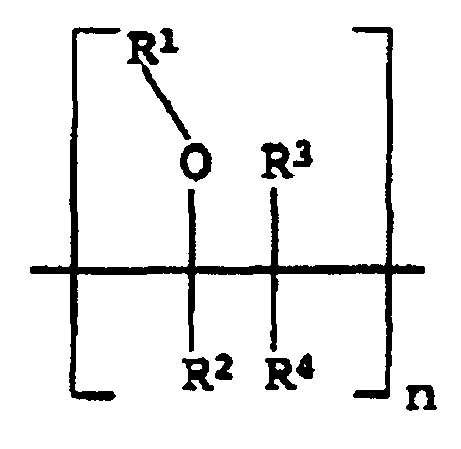 R1 représente C1-C40-alkyle, qui est le cas échéant interrompu par un ou plusieurs groupes, qui sont choisis parmi CO, NR5, O et S et/ou substitué par un ou plusieurs radicaux, qui sont choisis parmi NR5R6, OR5, SR5, COR5, COOR5, CONR5R4 et aryle, ou représente aryle,R2, R3 et R4 représentent, à chaque fois indépendamment l'un de l'autre, H ou C1-C40-alkyle,R5 et R6 représentent, à chaque fois indépendamment l'un de l'autre, H ou C1-C4-alkyle etn représente un nombre de 2 à 3000.
 - Utilisation selon la revendication 9, R2, R3 et R4 représentant H et R1 représentant C1-C40-alkyle.
- Utilisation selon l'une quelconque des revendications précédentes, pour améliorer les propriétés d'écoulement à froid de compositions d'huile combustible.
- Mélange d'additifs, comprenanta) au moins un composant A selon la définition dans l'une quelconque des revendications 2, 9 et 10, etb) au moins un composant B selon la définition dans l'une quelconque des revendications 2, 3 et 4, etle rapport pondéral du composant A au composant B étant de 1:5 à 1:500.
- Composition d'huile combustible, contenant une quantité principale d'un combustible hydrocarboné et une quantité active d'un mélange d'additifs selon la définition dans l'une quelconque des revendications 1 à 10 ou 12 et le cas échéant au moins un autre additif.
- Composition d'huile combustible selon la revendication 13, où il s'agit, pour le combustible, de gazole routier, de mazout ou de kérosène.
- Composition d'huile combustible selon la revendication 14, le gazole routier pouvant être obtenu par raffinage, par gazéification du charbon ou liquéfaction de gaz ou étant un mélange de ces carburants et étant le cas échéant mélangé avec des carburants provenant d'une source renouvelable.
- Composition d'huile combustible selon l'une quelconque des revendications 14 ou 15, le gazole routier présentant une teneur en soufre d'au plus 500 ppm.
- Concentrat d'additifs, contenant un mélange d'additifs selon la définition dans la revendication 12 et au moins un diluant ainsi que le cas échéant au moins un autre additif.
Applications Claiming Priority (3)
| Application Number | Priority Date | Filing Date | Title |
|---|---|---|---|
| DE10247795 | 2002-10-14 | ||
| DE10247795A DE10247795A1 (de) | 2002-10-14 | 2002-10-14 | Verwendung von Hydrocarbylvinyletherhomopolymeren zur Verbesserung der Wirkung von Kaltfliessverbesserern |
| PCT/EP2003/011309 WO2004035715A1 (fr) | 2002-10-14 | 2003-10-13 | Utilisation d'homopolymères d'éther vinylique hydrocarbyle pour améliorer l'effet de promoteurs d'écoulement à froid |
Publications (2)
| Publication Number | Publication Date |
|---|---|
| EP1554365A1 EP1554365A1 (fr) | 2005-07-20 |
| EP1554365B1 true EP1554365B1 (fr) | 2009-04-29 |
Family
ID=32038633
Family Applications (1)
| Application Number | Title | Priority Date | Filing Date |
|---|---|---|---|
| EP03748128A Expired - Lifetime EP1554365B1 (fr) | 2002-10-14 | 2003-10-13 | Utilisation d'homopolymères d' éther vinylique hydrocarbyle pour améliorer l'effet de promoteurs d' écoulement à froid |
Country Status (8)
| Country | Link |
|---|---|
| EP (1) | EP1554365B1 (fr) |
| KR (1) | KR101092726B1 (fr) |
| CN (1) | CN1705734B (fr) |
| AT (1) | ATE430186T1 (fr) |
| AU (1) | AU2003267442A1 (fr) |
| DE (2) | DE10247795A1 (fr) |
| ES (1) | ES2323686T3 (fr) |
| WO (1) | WO2004035715A1 (fr) |
Cited By (3)
| Publication number | Priority date | Publication date | Assignee | Title |
|---|---|---|---|---|
| WO2024115211A1 (fr) * | 2022-11-30 | 2024-06-06 | Basf Se | Homopolymères et copolymères d'éthers vinyliques pour réduire la cristallisation de cristaux de paraffine dans des carburants |
| WO2025201946A1 (fr) | 2024-03-25 | 2025-10-02 | Basf Se | Amélioration des propriétés d'écoulement à froid d'huiles de pyrolyse |
| WO2026057368A1 (fr) | 2024-09-12 | 2026-03-19 | Basf Se | Amélioration des propriétés d'écoulement à froid des bio-huiles |
Families Citing this family (60)
| Publication number | Priority date | Publication date | Assignee | Title |
|---|---|---|---|---|
| DE102010001408A1 (de) | 2009-02-06 | 2010-08-12 | Basf Se | Verwendung von Ketonen als Kraftstoffzusatz zur Verringerung des Kraftstoffverbrauches von Dieselmotoren |
| DE102010039039A1 (de) | 2009-08-24 | 2011-03-03 | Basf Se | Verwendung von organischen Verbindungen als Kraftstoffzusatz zur Verringerung des Kraftstoffverbrauchs von Dieselmotoren |
| EP2563822A1 (fr) | 2010-04-27 | 2013-03-06 | Basf Se | Terpolymère quaternisé |
| US8790426B2 (en) | 2010-04-27 | 2014-07-29 | Basf Se | Quaternized terpolymer |
| CA2803207A1 (fr) | 2010-06-25 | 2011-12-29 | Basf Se | Copolymere quaternise |
| US8911516B2 (en) | 2010-06-25 | 2014-12-16 | Basf Se | Quaternized copolymer |
| AU2011275778B2 (en) | 2010-07-06 | 2016-03-03 | Basf Se | Acid-free quaternised nitrogen compounds and use thereof as additives in fuels and lubricants |
| EP2540808A1 (fr) | 2011-06-28 | 2013-01-02 | Basf Se | Composés d'azote quaternisés et leur utilisation en tant qu'additifs dans des carburants et des lubrifiants |
| US20130133243A1 (en) | 2011-06-28 | 2013-05-30 | Basf Se | Quaternized nitrogen compounds and use thereof as additives in fuels and lubricants |
| EP2589647A1 (fr) | 2011-11-04 | 2013-05-08 | Basf Se | Polyétheramines quaternisées et leur utilisation en tant qu'additifs dans des carburants et des lubrifiants |
| EP2604674A1 (fr) | 2011-12-12 | 2013-06-19 | Basf Se | Utilisation d'alkylamine quaternisé comme additif dans des carburants et des lubrifiants |
| US9062266B2 (en) | 2012-02-10 | 2015-06-23 | Basf Se | Imidazolium salts as additives for fuels |
| WO2013117616A1 (fr) | 2012-02-10 | 2013-08-15 | Basf Se | Sels d'imidazolium en tant qu'additifs pour carburants et combustibles |
| CN104160000A (zh) | 2012-03-07 | 2014-11-19 | 巴斯夫欧洲公司 | 取代的脲或氨基甲酸酯用于进一步改善矿物油和原油的低温流动性能的用途 |
| KR20140141630A (ko) | 2012-03-07 | 2014-12-10 | 바스프 에스이 | 광물 및 합성 비수성 산업용 유체, 특히 연료 또는 윤활제의 사용 특성의 개선을 위한 치환 우레아 또는 우레탄의 용도 |
| US9458401B2 (en) | 2012-03-07 | 2016-10-04 | Basf Se | Use of substituted ureas or urethanes for improvement of the use properties of mineral and synthetic nonaqueous industrial fluids |
| CA2889031A1 (fr) | 2012-10-23 | 2014-05-01 | Basf Se | Sels d'ammonium quaternises d'epoxydes hydrocarbyliques et utilisation desdits sels d'ammonium quaternises d'epoxydes hydrocarbyliques comme additifs de carburants et de lubrifiants |
| US20160130514A1 (en) | 2013-06-07 | 2016-05-12 | Basf Se | Use of nitrogen compounds quaternised with alkylene oxide and hydrocarbyl-substituted polycarboxylic acid as additives in fuels and lubricants |
| EP2811007A1 (fr) | 2013-06-07 | 2014-12-10 | Basf Se | Utilisation avec de l'oxyde d'alkylène et de l'acide polycarbonique à substitution hydrocarbyle d'alkylamines quaternisés comme additifs dans les carburants et lubrifiants |
| RU2694529C9 (ru) | 2013-09-20 | 2019-10-01 | Басф Се | Применение особых производных кватернированных соединений азота в качестве присадок к топливам и смазочным материалам |
| CN106133120B (zh) | 2014-01-29 | 2019-12-13 | 巴斯夫欧洲公司 | 用于燃料和润滑油的腐蚀抑制剂 |
| WO2015113681A1 (fr) | 2014-01-29 | 2015-08-06 | Basf Se | Additifs à base d'acide polycarbonique, destinés à des carburants et à des lubrifiants |
| WO2015184247A1 (fr) | 2014-05-30 | 2015-12-03 | The Lubrizol Corporation | Imide de masse moléculaire élevée contenant des sels d'ammonium quaternaire |
| US20170107441A1 (en) | 2014-05-30 | 2017-04-20 | The Lubrizol Corporation | Epoxide quaternized quaternary ammonium salts |
| SG11201609883PA (en) | 2014-05-30 | 2016-12-29 | Lubrizol Corp | Imidazole containing quaternary ammonium salts |
| EP3149128A1 (fr) | 2014-05-30 | 2017-04-05 | The Lubrizol Corporation | Sels d'ammonium quaternaires contenant des amines ramifiées |
| PL3511396T3 (pl) | 2014-05-30 | 2020-11-16 | The Lubrizol Corporation | Zawierające imid czwartorzędowe sole amoniowe o małej masie cząsteczkowej |
| CN106661472A (zh) | 2014-05-30 | 2017-05-10 | 路博润公司 | 高分子量的含酰胺/酯的季铵盐 |
| JP2017522403A (ja) | 2014-05-30 | 2017-08-10 | ザ ルブリゾル コーポレイションThe Lubrizol Corporation | 低分子量アミド/エステル含有第四級アンモニウム塩 |
| SG11201609849WA (en) | 2014-05-30 | 2016-12-29 | Lubrizol Corp | Coupled quaternary ammonium salts |
| WO2016083090A1 (fr) | 2014-11-25 | 2016-06-02 | Basf Se | Inhibiteurs de corrosion pour carburants et lubrifiants |
| RU2690940C2 (ru) | 2014-11-27 | 2019-06-07 | Басф Се | Сополимер и его применение для уменьшения кристаллизации кристаллов парафина в топливах |
| WO2017009305A1 (fr) | 2015-07-16 | 2017-01-19 | Basf Se | Copolymères utilisés en tant qu'additifs pour carburants et lubrifiants |
| DE212016000150U1 (de) | 2015-07-24 | 2018-03-16 | Basf Se | Korrosionsinhibitoren für Kraft- und Schmierstoffe |
| AU2016362476B2 (en) | 2015-12-02 | 2020-07-30 | The Lubrizol Corporation | Ultra-low molecular weight amide/ester containing quaternary ammonium salts having short hydrocarbon tails |
| US11254646B2 (en) | 2015-12-02 | 2022-02-22 | The Lubrizol Corporation | Ultra-low molecular weight imide containing quaternary ammonium salts having short hydrocarbon tails |
| KR102377096B1 (ko) | 2016-05-24 | 2022-03-21 | 바스프 에스이 | 연료에서 파라핀 결정의 결정화를 감소시키기 위한 공중합체 및 그 사용 |
| PT3481922T (pt) | 2016-07-05 | 2021-03-29 | Basf Se | Inibidores de corrosão para combustíveis e lubrificantes |
| US11078418B2 (en) | 2016-07-05 | 2021-08-03 | Basf Se | Corrosion inhibitors for fuels and lubricants |
| US20190249099A1 (en) | 2016-07-07 | 2019-08-15 | Basf Se | Copolymers as additives for fuels and lubricants |
| WO2018007486A1 (fr) | 2016-07-07 | 2018-01-11 | Basf Se | Polymères utilisés en tant qu'additifs pour carburants et lubrifiants |
| WO2018007445A1 (fr) | 2016-07-07 | 2018-01-11 | Basf Se | Inhibiteurs de corrosion pour carburants et lubrifiants |
| AU2017330331B2 (en) | 2016-09-21 | 2022-04-07 | The Lubrizol Corporation | Polyacrylate antifoam components for use in diesel fuels |
| PL3555244T3 (pl) | 2016-12-15 | 2023-11-06 | Basf Se | Polimery jako dodatki do oleju napędowego w silnikach wy-sokoprężnych z bezpośrednim wtryskiem |
| EP3555242B1 (fr) | 2016-12-19 | 2020-11-25 | Basf Se | Additif destiné à améliorer la stabilité thermique de carburants |
| WO2018188986A1 (fr) | 2017-04-13 | 2018-10-18 | Basf Se | Polymères utilisés en tant qu'additifs pour carburants et lubrifiants |
| EP3684890B1 (fr) | 2017-09-21 | 2025-04-09 | The Lubrizol Corporation | Composants antimousse de type polyacrylate destinés à être utilisés dans des carburants |
| SG11202009252UA (en) | 2018-03-21 | 2020-10-29 | Lubrizol Corp | Polyacrylamide antifoam components for use in diesel fuels |
| GB201810852D0 (en) * | 2018-07-02 | 2018-08-15 | Innospec Ltd | Compositions, uses and methods |
| CN114051527A (zh) | 2019-06-26 | 2022-02-15 | 巴斯夫欧洲公司 | 新的汽油燃料添加剂包 |
| AU2020409092A1 (en) | 2019-12-19 | 2022-07-07 | The Lubrizol Corporation | Wax anti-settling additive composition for use in diesel fuels |
| EP3913035A1 (fr) | 2020-05-20 | 2021-11-24 | Basf Se | Nouvelles compositions de réduction de cristallisation de cristaux de paraffine dans des carburants |
| EP3940043B1 (fr) | 2020-07-14 | 2023-08-09 | Basf Se | Inhibiteurs de corrosion pour carburants et lubrifiants |
| EP4074810B1 (fr) | 2021-04-15 | 2023-11-15 | Basf Se | Nouvelles compositions de réduction de la cristallisation de cristaux de paraffine dans des carburants |
| US20240352371A1 (en) | 2021-08-27 | 2024-10-24 | Basf Se | Aqueous dispersions of paraffin inhibitors |
| WO2023089354A1 (fr) | 2021-11-16 | 2023-05-25 | Hediger Richard | Procédé de production d'un additif pour carburant |
| EP4565669A1 (fr) | 2022-08-05 | 2025-06-11 | The Lubrizol Corporation | Procédés de production de produits de réaction comprenant des sels d'ammonium quaternaire |
| WO2024056479A1 (fr) | 2022-09-12 | 2024-03-21 | Basf Se | Nouvelles compositions pour réduire la cristallisation de cristaux de paraffine dans des combustibles |
| EP4382588A1 (fr) | 2022-12-06 | 2024-06-12 | Basf Se | Additifs pour améliorer la stabilité thermique de carburants |
| EP4658737A1 (fr) | 2023-02-03 | 2025-12-10 | The Lubrizol Corporation | Procédés de production de produits de réaction comprenant des sels d'ammonium quaternaire |
Family Cites Families (8)
| Publication number | Priority date | Publication date | Assignee | Title |
|---|---|---|---|---|
| DE1050111B (fr) * | 1955-12-01 | 1959-02-05 | ||
| NL148099B (nl) * | 1966-03-17 | 1975-12-15 | Shell Int Research | Werkwijze voor het verlagen van het vloeipunt van een brandstofmengsel. |
| GB1285087A (en) * | 1969-12-18 | 1972-08-09 | Shell Int Research | Oil compositions |
| DE2047448A1 (de) * | 1970-09-26 | 1972-03-30 | Badische Anilin & Soda Fabrik AG, 6700 Ludwigshafen | Additiv zur Viskositatserniedrigung in paraffinbasischen Rohölen |
| CA1006453A (en) * | 1972-06-21 | 1977-03-08 | Joseph B. Biasotti | Method for transportation of waxy crude oils |
| GB8820071D0 (en) * | 1988-08-24 | 1988-09-28 | Exxon Chemical Patents Inc | Fuel compositions |
| DE19927561C1 (de) * | 1999-06-17 | 2000-12-14 | Clariant Gmbh | Verwendung hydroxylgruppenhaltiger Copolymere zur Herstellung von Brennstoffölen mit verbesserter Schmierwirkung |
| EP1116780B1 (fr) * | 2000-01-11 | 2005-08-31 | Clariant GmbH | Additif polyfonctionnel pour huiles combustibles |
-
2002
- 2002-10-14 DE DE10247795A patent/DE10247795A1/de not_active Withdrawn
-
2003
- 2003-10-13 CN CN200380101356.4A patent/CN1705734B/zh not_active Expired - Fee Related
- 2003-10-13 EP EP03748128A patent/EP1554365B1/fr not_active Expired - Lifetime
- 2003-10-13 WO PCT/EP2003/011309 patent/WO2004035715A1/fr not_active Ceased
- 2003-10-13 ES ES03748128T patent/ES2323686T3/es not_active Expired - Lifetime
- 2003-10-13 AT AT03748128T patent/ATE430186T1/de active
- 2003-10-13 DE DE50311484T patent/DE50311484D1/de not_active Expired - Lifetime
- 2003-10-13 KR KR1020057006448A patent/KR101092726B1/ko not_active Expired - Fee Related
- 2003-10-13 AU AU2003267442A patent/AU2003267442A1/en not_active Abandoned
Cited By (3)
| Publication number | Priority date | Publication date | Assignee | Title |
|---|---|---|---|---|
| WO2024115211A1 (fr) * | 2022-11-30 | 2024-06-06 | Basf Se | Homopolymères et copolymères d'éthers vinyliques pour réduire la cristallisation de cristaux de paraffine dans des carburants |
| WO2025201946A1 (fr) | 2024-03-25 | 2025-10-02 | Basf Se | Amélioration des propriétés d'écoulement à froid d'huiles de pyrolyse |
| WO2026057368A1 (fr) | 2024-09-12 | 2026-03-19 | Basf Se | Amélioration des propriétés d'écoulement à froid des bio-huiles |
Also Published As
| Publication number | Publication date |
|---|---|
| KR20050061537A (ko) | 2005-06-22 |
| ATE430186T1 (de) | 2009-05-15 |
| CN1705734B (zh) | 2011-07-27 |
| EP1554365A1 (fr) | 2005-07-20 |
| DE10247795A1 (de) | 2004-04-22 |
| KR101092726B1 (ko) | 2011-12-09 |
| DE50311484D1 (de) | 2009-06-10 |
| WO2004035715A1 (fr) | 2004-04-29 |
| AU2003267442A1 (en) | 2004-05-04 |
| CN1705734A (zh) | 2005-12-07 |
| ES2323686T3 (es) | 2009-07-23 |
Similar Documents
| Publication | Publication Date | Title |
|---|---|---|
| EP1554365B1 (fr) | Utilisation d'homopolymères d' éther vinylique hydrocarbyle pour améliorer l'effet de promoteurs d' écoulement à froid | |
| EP1692196B1 (fr) | Compositions d'huiles combustibles presentant de meilleures proprietes d'ecoulement a froid | |
| EP2038380B1 (fr) | Mélange constitué de composés d'azote polaires oléosolubles et d'amides d'acides en tant que dispersant de paraffine pour des carburants | |
| EP2092045B2 (fr) | Agent d'amélioration de l'écoulement à froid. | |
| EP3099767A1 (fr) | Inhibiteurs de corrosion pour carburants et lubrifiants | |
| EP2129752A1 (fr) | Mélange d'agents qui améliorent l'écoulement à froid et d'amines | |
| EP1746147B1 (fr) | Copolymères à base d'oléfines et d'esters d'acides carboxyliques éthylèniquement insaturés pour abaiser le point de trouble des combustibles et des lubrifiants | |
| DE10324101A1 (de) | Brennstoffzusammensetzungen mit verbesserten Kaltfließeigenschaften | |
| EP2417229B1 (fr) | Mélange de composés azotés polaires solubles dans l'huile et de composés aliphatiques solubles dans l'huile servant à abaisser le cloud point dans les carburants diesel | |
| EP1874899A1 (fr) | Compositions de carburants pour turbines a meilleures aptitudes au froid | |
| DE69505683T2 (de) | Oelzusaetze, zusammensetzungen und polymeren zur hinein verwendung | |
| DE10254640A1 (de) | Verwendung von Homopolymeren ethylenisch ungesättigter Ester zur Vebesserung der Wirkung von Kaltfließverbesserern | |
| DE10324102A1 (de) | Brennstoffzusammensetzungen mit verbesserten Kaltfließeingenschaften | |
| EP1627029A1 (fr) | Compositions de combustible contenant des terpolymeres a proprietes de fluidite a froid ameliorees | |
| WO2007131894A2 (fr) | Compositions d'huiles combustibles résistantes au froid | |
| DE10313883A1 (de) | Additivgemisch zur Verbesserung der Schmierfähigkeitseigenschaften von Mineralölprodukten | |
| EP1746146A1 (fr) | Copolymères à base d'oléfines et d'esters d'acides carboxyliques éthylèniquement insaturés pour abaiser le point de trouble des combustibles et des lubrifiants | |
| DE10309571A1 (de) | Brennstoffzusammensetzungen mit verbesserten Kaltfließeigenschaften | |
| EP1770150A1 (fr) | Compositions de turbocombustible ayant des caractéristiques d'écoulement à froid améliorées | |
| EP1705196A1 (fr) | Terpolymères à base d'oléfines, esters carboxyliques insaturés et composés vinylaromatiques, comme additifs pour huiles combustibles et lubrifiants. | |
| DE102005012097A1 (de) | Terpolymere auf Basis von Olefinen, ungesättigten Carbonsäureestern und Vinylaromaten als Additive für Brennstofföle und Schmierstoffe | |
| WO2006097289A1 (fr) | Terpolymeres a base d'olefines, d'esters d'acide carboxylique insatures et de composes aromatiques vinyliques en tant qu'additifs pour des huiles combustibles et des lubrifiants |
Legal Events
| Date | Code | Title | Description |
|---|---|---|---|
| PUAI | Public reference made under article 153(3) epc to a published international application that has entered the european phase |
Free format text: ORIGINAL CODE: 0009012 |
|
| 17P | Request for examination filed |
Effective date: 20050517 |
|
| AK | Designated contracting states |
Kind code of ref document: A1 Designated state(s): AT BE BG CH CY CZ DE DK EE ES FI FR GB GR HU IE IT LI LU MC NL PT RO SE SI SK TR |
|
| AX | Request for extension of the european patent |
Extension state: AL LT LV MK |
|
| DAX | Request for extension of the european patent (deleted) | ||
| 17Q | First examination report despatched |
Effective date: 20050804 |
|
| RAP1 | Party data changed (applicant data changed or rights of an application transferred) |
Owner name: BASF SE |
|
| GRAP | Despatch of communication of intention to grant a patent |
Free format text: ORIGINAL CODE: EPIDOSNIGR1 |
|
| GRAS | Grant fee paid |
Free format text: ORIGINAL CODE: EPIDOSNIGR3 |
|
| GRAA | (expected) grant |
Free format text: ORIGINAL CODE: 0009210 |
|
| RTI1 | Title (correction) |
Free format text: USE OF HOMOPOLYMERS OF HYDROCARBYL VINYLETHERS FOR INCREASING THE EFFECT OF COLD FLOW IMPROVERS |
|
| AK | Designated contracting states |
Kind code of ref document: B1 Designated state(s): AT BE BG CH CY CZ DE DK EE ES FI FR GB GR HU IE IT LI LU MC NL PT RO SE SI SK TR |
|
| REG | Reference to a national code |
Ref country code: GB Ref legal event code: FG4D Free format text: NOT ENGLISH |
|
| REG | Reference to a national code |
Ref country code: CH Ref legal event code: EP |
|
| REF | Corresponds to: |
Ref document number: 50311484 Country of ref document: DE Date of ref document: 20090610 Kind code of ref document: P |
|
| REG | Reference to a national code |
Ref country code: IE Ref legal event code: FG4D |
|
| REG | Reference to a national code |
Ref country code: ES Ref legal event code: FG2A Ref document number: 2323686 Country of ref document: ES Kind code of ref document: T3 |
|
| PG25 | Lapsed in a contracting state [announced via postgrant information from national office to epo] |
Ref country code: PT Free format text: LAPSE BECAUSE OF FAILURE TO SUBMIT A TRANSLATION OF THE DESCRIPTION OR TO PAY THE FEE WITHIN THE PRESCRIBED TIME-LIMIT Effective date: 20090829 Ref country code: FI Free format text: LAPSE BECAUSE OF FAILURE TO SUBMIT A TRANSLATION OF THE DESCRIPTION OR TO PAY THE FEE WITHIN THE PRESCRIBED TIME-LIMIT Effective date: 20090429 |
|
| PG25 | Lapsed in a contracting state [announced via postgrant information from national office to epo] |
Ref country code: SI Free format text: LAPSE BECAUSE OF FAILURE TO SUBMIT A TRANSLATION OF THE DESCRIPTION OR TO PAY THE FEE WITHIN THE PRESCRIBED TIME-LIMIT Effective date: 20090429 Ref country code: SE Free format text: LAPSE BECAUSE OF FAILURE TO SUBMIT A TRANSLATION OF THE DESCRIPTION OR TO PAY THE FEE WITHIN THE PRESCRIBED TIME-LIMIT Effective date: 20090729 |
|
| REG | Reference to a national code |
Ref country code: IE Ref legal event code: FD4D |
|
| PG25 | Lapsed in a contracting state [announced via postgrant information from national office to epo] |
Ref country code: EE Free format text: LAPSE BECAUSE OF FAILURE TO SUBMIT A TRANSLATION OF THE DESCRIPTION OR TO PAY THE FEE WITHIN THE PRESCRIBED TIME-LIMIT Effective date: 20090429 Ref country code: DK Free format text: LAPSE BECAUSE OF FAILURE TO SUBMIT A TRANSLATION OF THE DESCRIPTION OR TO PAY THE FEE WITHIN THE PRESCRIBED TIME-LIMIT Effective date: 20090429 Ref country code: IE Free format text: LAPSE BECAUSE OF FAILURE TO SUBMIT A TRANSLATION OF THE DESCRIPTION OR TO PAY THE FEE WITHIN THE PRESCRIBED TIME-LIMIT Effective date: 20090429 Ref country code: CZ Free format text: LAPSE BECAUSE OF FAILURE TO SUBMIT A TRANSLATION OF THE DESCRIPTION OR TO PAY THE FEE WITHIN THE PRESCRIBED TIME-LIMIT Effective date: 20090429 Ref country code: RO Free format text: LAPSE BECAUSE OF FAILURE TO SUBMIT A TRANSLATION OF THE DESCRIPTION OR TO PAY THE FEE WITHIN THE PRESCRIBED TIME-LIMIT Effective date: 20090429 |
|
| PG25 | Lapsed in a contracting state [announced via postgrant information from national office to epo] |
Ref country code: SK Free format text: LAPSE BECAUSE OF FAILURE TO SUBMIT A TRANSLATION OF THE DESCRIPTION OR TO PAY THE FEE WITHIN THE PRESCRIBED TIME-LIMIT Effective date: 20090429 |
|
| PLBE | No opposition filed within time limit |
Free format text: ORIGINAL CODE: 0009261 |
|
| STAA | Information on the status of an ep patent application or granted ep patent |
Free format text: STATUS: NO OPPOSITION FILED WITHIN TIME LIMIT |
|
| PG25 | Lapsed in a contracting state [announced via postgrant information from national office to epo] |
Ref country code: BG Free format text: LAPSE BECAUSE OF FAILURE TO SUBMIT A TRANSLATION OF THE DESCRIPTION OR TO PAY THE FEE WITHIN THE PRESCRIBED TIME-LIMIT Effective date: 20090729 |
|
| 26N | No opposition filed |
Effective date: 20100201 |
|
| PG25 | Lapsed in a contracting state [announced via postgrant information from national office to epo] |
Ref country code: MC Free format text: LAPSE BECAUSE OF NON-PAYMENT OF DUE FEES Effective date: 20091031 |
|
| REG | Reference to a national code |
Ref country code: FR Ref legal event code: ST Effective date: 20100630 |
|
| PG25 | Lapsed in a contracting state [announced via postgrant information from national office to epo] |
Ref country code: FR Free format text: LAPSE BECAUSE OF NON-PAYMENT OF DUE FEES Effective date: 20091102 |
|
| PG25 | Lapsed in a contracting state [announced via postgrant information from national office to epo] |
Ref country code: GR Free format text: LAPSE BECAUSE OF FAILURE TO SUBMIT A TRANSLATION OF THE DESCRIPTION OR TO PAY THE FEE WITHIN THE PRESCRIBED TIME-LIMIT Effective date: 20090730 |
|
| PG25 | Lapsed in a contracting state [announced via postgrant information from national office to epo] |
Ref country code: GB Free format text: LAPSE BECAUSE OF NON-PAYMENT OF DUE FEES Effective date: 20091013 |
|
| PGFP | Annual fee paid to national office [announced via postgrant information from national office to epo] |
Ref country code: AT Payment date: 20101028 Year of fee payment: 8 |
|
| PG25 | Lapsed in a contracting state [announced via postgrant information from national office to epo] |
Ref country code: LU Free format text: LAPSE BECAUSE OF NON-PAYMENT OF DUE FEES Effective date: 20091013 |
|
| PG25 | Lapsed in a contracting state [announced via postgrant information from national office to epo] |
Ref country code: HU Free format text: LAPSE BECAUSE OF FAILURE TO SUBMIT A TRANSLATION OF THE DESCRIPTION OR TO PAY THE FEE WITHIN THE PRESCRIBED TIME-LIMIT Effective date: 20091030 |
|
| PG25 | Lapsed in a contracting state [announced via postgrant information from national office to epo] |
Ref country code: TR Free format text: LAPSE BECAUSE OF FAILURE TO SUBMIT A TRANSLATION OF THE DESCRIPTION OR TO PAY THE FEE WITHIN THE PRESCRIBED TIME-LIMIT Effective date: 20090429 |
|
| PG25 | Lapsed in a contracting state [announced via postgrant information from national office to epo] |
Ref country code: CY Free format text: LAPSE BECAUSE OF FAILURE TO SUBMIT A TRANSLATION OF THE DESCRIPTION OR TO PAY THE FEE WITHIN THE PRESCRIBED TIME-LIMIT Effective date: 20090429 |
|
| PGFP | Annual fee paid to national office [announced via postgrant information from national office to epo] |
Ref country code: CH Payment date: 20111026 Year of fee payment: 9 |
|
| REG | Reference to a national code |
Ref country code: CH Ref legal event code: PL |
|
| REG | Reference to a national code |
Ref country code: AT Ref legal event code: MM01 Ref document number: 430186 Country of ref document: AT Kind code of ref document: T Effective date: 20121013 |
|
| PG25 | Lapsed in a contracting state [announced via postgrant information from national office to epo] |
Ref country code: AT Free format text: LAPSE BECAUSE OF NON-PAYMENT OF DUE FEES Effective date: 20121013 Ref country code: CH Free format text: LAPSE BECAUSE OF NON-PAYMENT OF DUE FEES Effective date: 20121031 Ref country code: LI Free format text: LAPSE BECAUSE OF NON-PAYMENT OF DUE FEES Effective date: 20121031 |
|
| PGFP | Annual fee paid to national office [announced via postgrant information from national office to epo] |
Ref country code: IT Payment date: 20151022 Year of fee payment: 13 |
|
| PGFP | Annual fee paid to national office [announced via postgrant information from national office to epo] |
Ref country code: ES Payment date: 20151126 Year of fee payment: 13 |
|
| PG25 | Lapsed in a contracting state [announced via postgrant information from national office to epo] |
Ref country code: IT Free format text: LAPSE BECAUSE OF NON-PAYMENT OF DUE FEES Effective date: 20161013 |
|
| PG25 | Lapsed in a contracting state [announced via postgrant information from national office to epo] |
Ref country code: ES Free format text: LAPSE BECAUSE OF NON-PAYMENT OF DUE FEES Effective date: 20161014 |
|
| REG | Reference to a national code |
Ref country code: ES Ref legal event code: FD2A Effective date: 20181123 |
|
| PGFP | Annual fee paid to national office [announced via postgrant information from national office to epo] |
Ref country code: NL Payment date: 20211026 Year of fee payment: 19 |
|
| PGFP | Annual fee paid to national office [announced via postgrant information from national office to epo] |
Ref country code: DE Payment date: 20211027 Year of fee payment: 19 |
|
| PGFP | Annual fee paid to national office [announced via postgrant information from national office to epo] |
Ref country code: BE Payment date: 20211026 Year of fee payment: 19 |
|
| REG | Reference to a national code |
Ref country code: DE Ref legal event code: R119 Ref document number: 50311484 Country of ref document: DE |
|
| REG | Reference to a national code |
Ref country code: NL Ref legal event code: MM Effective date: 20221101 |
|
| REG | Reference to a national code |
Ref country code: BE Ref legal event code: MM Effective date: 20221031 |
|
| PG25 | Lapsed in a contracting state [announced via postgrant information from national office to epo] |
Ref country code: NL Free format text: LAPSE BECAUSE OF NON-PAYMENT OF DUE FEES Effective date: 20221101 Ref country code: DE Free format text: LAPSE BECAUSE OF NON-PAYMENT OF DUE FEES Effective date: 20230503 |
|
| PG25 | Lapsed in a contracting state [announced via postgrant information from national office to epo] |
Ref country code: BE Free format text: LAPSE BECAUSE OF NON-PAYMENT OF DUE FEES Effective date: 20221031 |