EP1556688B1 - Systemes et procedes pour la detection d'echantillons courts et d'echantillons longs - Google Patents
Systemes et procedes pour la detection d'echantillons courts et d'echantillons longs Download PDFInfo
- Publication number
- EP1556688B1 EP1556688B1 EP03809123.7A EP03809123A EP1556688B1 EP 1556688 B1 EP1556688 B1 EP 1556688B1 EP 03809123 A EP03809123 A EP 03809123A EP 1556688 B1 EP1556688 B1 EP 1556688B1
- Authority
- EP
- European Patent Office
- Prior art keywords
- sample
- data
- probability
- distribution
- short
- Prior art date
- Legal status (The legal status is an assumption and is not a legal conclusion. Google has not performed a legal analysis and makes no representation as to the accuracy of the status listed.)
- Expired - Lifetime
Links
Images





Classifications
-
- G—PHYSICS
- G16—INFORMATION AND COMMUNICATION TECHNOLOGY [ICT] SPECIALLY ADAPTED FOR SPECIFIC APPLICATION FIELDS
- G16H—HEALTHCARE INFORMATICS, i.e. INFORMATION AND COMMUNICATION TECHNOLOGY [ICT] SPECIALLY ADAPTED FOR THE HANDLING OR PROCESSING OF MEDICAL OR HEALTHCARE DATA
- G16H10/00—ICT specially adapted for the handling or processing of patient-related medical or healthcare data
- G16H10/40—ICT specially adapted for the handling or processing of patient-related medical or healthcare data for data related to laboratory analysis, e.g. patient specimen analysis
Definitions
- the present invention relates generally to systems and methods for analyzing samples or specimens.
- the invention relates to systems and methods for detecting the unintentional use of short and long samples in the analyses of sample, specimen, or assay fluids.
- Biological samples or specimens that can be tested include a variety of biological fluids, such as blood, plasma, urine, sputum, semen, saliva, ocular lens fluid, cerebral fluid, spinal fluid, and amniotic fluid.
- biological fluids such as blood, plasma, urine, sputum, semen, saliva, ocular lens fluid, cerebral fluid, spinal fluid, and amniotic fluid.
- other fluids can be similarly tested for analyte presence and concentration, including tissue culture media, food and industrial chemicals, and environmental samples.
- Such biological tests of blood plasma and other biological fluids typically require that a sample or specimen be inserted into a clinical analyzer.
- the biological samples or specimens are typically processed with various intermediate steps before testing, such as mixing with a diluent.
- Such clinical analyzers are often capable of quantitatively analyzing a variety of different analytes from a single sample or specimen.
- One such clinical analyzer utilizes a rotor, which divides fluids into predetermined volumes for analysis in a variety of optical tests or assays. These analyzers are designed to measure volumes of a biological fluid, such as blood, remove cellular components, and mix the fluid with an appropriate diluent for analysis, for example by spectrophotometric testing.
- the rotors provide a plurality of discrete volumes of sample or specimen in separate cuvettes in which the sample or specimen is optically analyzed.
- One such centrifugal rotor is disclosed in U.S. Patent No. 6,235,531 to Kopf-Sill et al. , incorporated herein by reference.
- US5,590,052 provides various methods for detecting errors in a blood analysis system.
- the present invention relates to systems and methods for analyzing samples or specimens.
- the invention relates to methods for detecting the accidental use of short and long samples in the analyses of sample, specimen, or assay fluids, such as but not limited to biological fluids.
- sample and specimen can be used interchangeably herein.
- a “short sample” is a sample or diluted sample used in an analyzer that erroneously has too small a sample concentration or volume
- a “long sample” is a sample or diluted sample used in an analyzer that erroneously has too large a sample concentration or volume.
- a system is adapted to detect whether a short sample was used in determining sample data for two or more measurable characteristics of the sample.
- the system includes a data module and an evaluation module.
- the system also includes an analyzer module and optionally an output module.
- the analyzer module such as but not limited to a clinical analyzer with various hardware and/or software components and elements, generates sample data, such as but not limited to values for two or more measurable characteristics of the sample, specimen, or assay.
- the two or more measurable characteristics include the concentration of one or more analytes of the sample, such as blood, plasma, urine, sputum, semen, saliva, ocular lens fluid, cerebral fluid, spinal fluid, amniotic fluid, immuno assays, genomic assays, or other measurable characteristic.
- the two or more measurable characteristics can be any components of drinking water, wastewater, etc. It is contemplated, however, that the sample data may be received from another source, such as previously generated or recorded data.
- the data module stores reference data indicative of one or more distributions of reference sample data, such as data indicative of the value of two or more measurable characteristics of the sample in one or more representative populations.
- the data module contains the relationship data, which contains information necessary for the evaluation module to utilize the parameter data and sample data to identify the probability that the sample is a short sample, a long sample, and/or an acceptable sample. This data can be stored in one or more data fields on a computer-readable medium stored at the data module or otherwise accessible to the data module.
- the evaluation module is adapted to receive the sample data optionally from the analyzer module.
- the evaluation module also contains an identification module that identifies the particular measurable characteristics for which values are included in the sample data and obtains the appropriate reference data, including parameter data and relationship data, from the data module.
- the evaluation module uses the sample data, the parameter data, and relationship data to determine the probability that the analyzed sample is a short sample, long sample, or an acceptable sample.
- An illustrative method according to one aspect of the present invention includes a method for analyzing a sample as defined by claim 6.
- the present invention relates generally to systems and methods for detecting errors in analytical tests of samples or specimens, such as but not limited to blood, plasma, serum, urine, sputum, semen, saliva, ocular lens fluid, cerebral fluid, spinal fluid, amniotic fluid, other biological fluids, or other substances upon which analytical tests are to be performed.
- samples or specimens such as but not limited to blood, plasma, serum, urine, sputum, semen, saliva, ocular lens fluid, cerebral fluid, spinal fluid, amniotic fluid, other biological fluids, or other substances upon which analytical tests are to be performed.
- the invention relates to detecting whether a sample, specimen, or assay used in an analytical test is a short sample, a long sample, or an acceptable sample.
- short sample denotes a sample that has been diluted to a greater degree than occurs in a standard diluted sample, resulting in the values of measurable characteristics of the sample being proportionally smaller than those for a standard sample. This may result from inadequate volume of sample or from an over-supply of reagents or diluents.
- long sample denotes a sample that has been diluted to a lesser degree than occurs in a standard diluted sample, resulting in the total volume being lesser than the standard volume and the resultant values of measurable characteristics of the sample being proportionally larger than those for a standard sample.
- acceptable sample is used herein to denote a sample that is neither a short sample nor a long sample, i.e., substantially similar to a nominal sample with nominal volume.
- Analytes are substances that are the subject of analysis, such as glucose, sodium, antigens, antibodies, or any other substance to be analyzed within a sample, specimen, or assay.
- the analytical tests compatible with the invention can determine information about the various analytes in the sample, such as glucose concentration, sodium concentration, antigen concentration, antibody concentration, or the concentration of any other substance to be analyzed with a sample, specimen, or assay.
- the analytical tests can also determine a variety of other information about a sample, such as values for properties of the sample itself, for example osmolarity, alkalinity, acidity, and the like.
- measurable characteristics Collectively, the analyte and properties of the analyte and/or sample are referred to as "measurable characteristics.”
- sample data refers to data collected from an analytical test of a sample, specimen, or assay, such as any information or values for any of the one or more measurable characteristics of the sample, specimen, or assay.
- a non-exclusive list of sample data, and hence any measurable characteristic includes: total bilirubin (tbil), direct bilirubin (dbil), aspartate amino transferase (ast), creatine kinase (ck), alanine aminotransferase (alt), gamma glutamyl transferase (ggt), alkaline phosphotase (alp), amylase (amy), carbon dioxide (CO 2 ), sodium (Na), postassium (K), chloride (Cl), osmolarity (osmo), blood urea nitrogen (bun), creatinine (cre), glucose (glu), total protein (tp), albumin (alb), calcium (Ca), phosphatase (phos), triglycerides (tbil), direct bili
- sample data can include data gleaned through immuno-assay, genomic assay, or fluid treatment assay, such as but not limited to water treatment. This list is not exhaustive and is intended merely as being exemplary of the assays that may be performed using the systems and method of the present invention.
- One or more of the above sample data, and hence values for any one of the measurable characteristics of the sample, specimen, or assay, can be collected individually or in groupings to provide a more comprehensive analysis of a sample, specimen, or assay for a particular purpose.
- Three exemplary groupings can include, but not limited to, a general chemistry, which includes albumin, alkaline phosphotase, alanine aminotransferase, amylase, aspartate amino transferase, total bilirubin, blood urea nitrogen, calcium, cholesterol, creatinine, glucose, total protein, total protein / albumin, and blood urea nitrogen / creatinine; a basic metabolic panel, which includes blood urea nitrogen, creatinine, glucose, calcium, carbon dioxide, sodium, potassium, chlorine, osmolarity, and blood urea nitrogen / creatinine; and a simple electrolytes test, which quantifies carbon dioxide, sodium, potassium, and chlorine.
- parameter data relates to data indicative of a distribution for at least one measurable characteristic of a sample, specimen, or assay or the values that in part define a curve fit to at least a portion of a distribution for sample data in a representative population tested for the sample, specimen, or assay.
- parameter data can include values such as mean, standard deviation, and other constants for a particular curve fit for the distribution of the at least one measurable characteristic in a representative population of test samples or specimens.
- relationship data relates to data that defines a relationship between the parameter data and the sample data that assists in identifying the sample as a short sample, a long sample, or an acceptable sample.
- the relationship data can includes suitable data, such as one or more equations that define the type of curve fit used to approximate all or a portion of the distribution.
- Embodiments of the present invention provide systems and methods-that quickly and reliably provide a probability indicative of whether sample data is incorrect because it was generated from a particular sample that was accidentally a short or long sample.
- FIG. 1 shows illustrative systems, methods, and modules of one embodiment of the present invention.
- the present invention extends to methods, modules, and systems for identifying whether an analyzed sample, specimen, or assay is a short sample, a long sample, or an acceptable sample.
- the embodiments of the present invention may comprise a special purpose or general-purpose computer including various computer hardware, as discussed in greater detail below.
- Embodiments within the scope of the present invention also include computer-readable media for carrying or having computer-executable instructions or data structures stored thereon.
- Such computer-readable media can be any available media that can be accessed by a general purpose or special purpose computer.
- Such computer-readable media can include RAM, ROM, EEPROM, CD-ROM or other optical disk storage, magnetic disk storage or other magnetic storage devices, or any other medium which can be used to carry or store desired program code means in the form of computer-executable instructions or data structures and which can be accessed by a general purpose or special purpose computer.
- Computer-executable instructions include, for example, instructions and data which cause a general purpose computer, special purpose computer, or special purpose processing device to perform a certain function or group of functions.
- FIG. 1 and the following discussion are intended to provide a brief, general description of a suitable computing environment in which an exemplary embodiment of the invention may be implemented.
- the invention will be described in the general context of computer-executable instructions, such as program modules, being executed by one or more computers, optionally in a network environment.
- program modules include routines, programs, objects, components, data structures, etc. that perform particular tasks or implement particular abstract data types.
- Computer-executable instructions, associated data structures, and program modules represent examples of the program code means for executing steps of the methods disclosed herein.
- the particular sequence of such executable instructions or associated data structures represents examples of corresponding acts for implementing the functions described in such steps.
- the invention may be practiced by a single general purpose or special purpose computer device.
- the invention may be practiced in network computing environments with many types of computer system configurations, including personal computers, hand-held devices, multi-processor systems, microprocessor-based or programmable consumer electronics, network PCs, minicomputers, mainframe computers, and the like.
- the invention may also be practiced in distributed computing environments where tasks are performed by local and remote processing devices that are linked (either by hardwired links, wireless links, or by a combination of hardwired or wireless links) through a communications network.
- program modules may be located in both local and remote memory storage devices.
- Figure 1 depicts an illustrative system 100 that includes an analyzer module 102, a data module 104, an evaluation module 106, and an optional output module 108.
- the dotted line surrounding system 100 illustrates that system 100 is optionally part of a single unit, although it is also contemplated that system 100 can include disparate units connected by way of one or more networks, as represented by the arrows connecting the modules of system 100.
- These networks include, but are not limited to, a wide area network, a local area network, the Internet, or other communication link that allows data to be transmitted from one module to another.
- the analyzer module 102 is adapted to generate sample data that is used by evaluation module 106, which is in communication with data module 104, to determine whether the sample data of a tested sample, specimen, or assay is the result of a short sample, a long sample, or an acceptable sample. In this manner, system 100 provides a mechanism through which sample data can be identified as being accurate or inaccurate, and thereby reliable or not.
- system 100 includes analyzer module 102.
- the analyzer module 102 is adapted to determine or generate sample data of a tested sample, specimen, or assay. Illustratively, analyzer module 102 generates values for one or more measurable characteristic of the tested sample, specimen, or assay.
- the analyzer module 102 includes various hardware and/or software components and elements that facilitate the performance of the above recited function, such as but not limited to, an electro-chemical analyzer.
- Various types of analyzers are currently available or may be developed in the future to perform the function of analyzer module 102, so long as the selected analyzer is capable of determining the sample data.
- analyzer module 102 can utilize a conventional laboratory centrifuge. Under the operation of software and/or hardware modules and components included within the conventional laboratory centrifuge, as represented by analyzer module 102, the centrifuge rotates a centrifugal rotor mounted thereto.
- This centrifugal rotor includes chambers, passages, and vents in a desired geometric pattern or relationship that facilitate separating cellular components from a test sample, such as a biological sample (e.g. whole blood) as the rotor is rotated under the direction of the software and/or hardware of the centrifuge.
- the chambers, passages, and vents aid with measuring a precise volume of the test sample (e.g.
- the test sample or fluid delivered to the cuvettes reacts with a reagent.
- the reagents used are well known and amply described in the patent and scientific literature, such as but not limited to those reagents described in U.S. Patent No. 5,413,732 to Buhl et al. , U.S. Patent No. 5,998,031 to Buhl et al. , U.S. Patent No. 5,776,563 to Buhl et al. , and U.S. Patent No. 5,624,597 to Buhl et al.
- the reactions between the test sample and the reagents in the test curette result in some detectable or measurable changes that may be related to the presence and/or amount of a particular measurable characteristic of the test sample, specimen, or assay.
- the addition of the sample to the test curette may modulate a reaction or other change that results in a change in color, fluorescence, luminescence, or other detectable change in the sample, specimen, or assay.
- test curettes are analyzed to detect for one or more of the measurable characteristics, such as one or more analytes within the sample, specimen, or assay or particular properties of the sample, specimen, or assay, such as but not limited to, those described herein and such others known to one skilled in the art in light of the teaching contained herein.
- the rotor is transparent so that the presence and distribution of the sample, specimen or assay, cellular components thereof, and/or reagents, may be observed within the various internal chambers, passages, and/or cuvettes.
- the rotor is opaque or non-transparent, it is desirable to have one or more suitable optical paths formed within the rotor so that the contents of the cuvettes may be observed.
- sample, specimen or assay is analyzed spectrophotometrically, fluorometrically, using chemiluminescence, using light scatter technology, or through use of other measuring instruments and technologies, and appropriate hardware and/or software, as known to those skilled in the art to generate sample data representative of one or more measurable characteristics of a sample, specimen or assay.
- immunoassays and other specific binding assays may be performed within the cell-free fluid collection chamber or within cuvettes that are connected to the collection chamber.
- data module 104 includes parameter data store 124 and relationship data store 126.
- data module 104 may access parameter data and relationship data stored in one or more other data stores that are local or remote from system 100 but accessible by data module 104.
- data module 104, parameter data store 124, relationship data store 126, or another data store can include one or more databases having hierarchal, relational, flat, or other database structures, while including related database management systems (not shown).
- data module 104 parameter data store 124, relationship data store 126, or another data store can utilize modular or fixed memory, volatile or non-volatile memory, magnetic storage media, CDRW, optical storage media, or other mass storage for storing the information and data described herein.
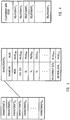
- parameter data store 124 can store reference data as a list of the various analytes, properties, or characteristics that can be identified in a test sample, specimen or assay, i.e., Characteristic A -Characteristic N .
- Each Characteristic A -Characteristic N includes one or more parameters defining all or a portion of a distribution, such as a distribution curve fit, for that specific measurable characteristic.
- parameters of the reference data can include, but are not limited to, mean, standard deviation, constants K 0 , K 1 , K 2 , or other mathematical equations relating to characteristics or properties of the sample, specimen or assay.
- Each parameter includes a related value, Value CMean , Value CSTD , Value CK0 , Value CK1 , Value CK2 , etc., or other values known to those skilled in the art in light of the teaching contained herein. These parameters and values can be stored in one of more fields, with the particular organization of the fields, the parameters, and values, being a data structure.
- parameter data store 124 includes one or more relationship data parameters that define the particular relationship data stored in relationship data store 126 to be used to generate a probability of the sample being a short sample, a long sample, and/or an acceptable sample based upon the measurable characteristics to be tested.
- the relationship data parameter includes a Value CData value.
- the relationship data parameter can be one or more equations that return a probability given a value or values for a particular characteristics or properties of the test sample, specimen, or assay.
- parameter data store 124 further includes a decision level parameter that defines a threshold value that limits whether the tested sample, specimen or assay is a short sample, a long sample, and/or an acceptable sample.
- the value of the decision level parameter, Value CLVL can be a threshold percentage below which the sample is considered a short sample or a long sample. This value can be variably defined by an operator or user of system 100 or hardcoded into system 100.
- the threshold value can be obtained from short sample or long sample cumulative distributions indicating the population of values of the probability that a sample is a short sample or a long sample. For instance, an exemplary cumulative short sample distribution for a general panel of 12 chemistries sample is indicated in Table 1.
- provability values larger than 42.5% were not observed in this exemplary sample; however, provability values larger or lesser than 42.5% may be observed for other samples.
- a threshold level of 42.5% was selected, no false short samples would by detected; however, there is a potential for some real short samples not being detected.
- each cumulative distribution can be calculated for long or short samples for a variety of different samples. Further, each cumulative distribution can provide one or more threshold levels that can be selected by a user or hard coded into the system.
- data module 104 includes relationship data store 126.
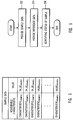
- This relationship data store 126 includes relationship data, Relationship A -Relationship N , indicative of one or more equations that can be used to generate a probability of the particular characteristic, Characteristic A -Characteristic N , being measured in a sample, specimen, or assay. It can be appreciated that one or more of Characteristic A -Characteristic N can use the same relationship data, Relationship A -Relationship N , while it is understood that alternatively each characteristic, Characteristic A -Characteristic N can use different relationship data, Relationship A -Relationship N .
- Relationship A -Relationship N being one or more equations, more generally, the relationship data, Relationship A -Relationship N can be any one or more parameters that define a relationship between the parameter data and the sample data that assists in identifying the sample, specimen, or assay as at least one of a short sample, a long sample, or an acceptable sample.
- Evaluation module 106 contains an identification module 120 that is in communication with a processing module 122.
- Identification module 120 is adapted to receive sample data from analyzer module 102 and determine the specific measurable characteristics identified by the sample data and optionally the values of the same. For example, with reference to Figure 5 , identification module 120 can receive sample data 128 that includes a listing of particular measurable characteristics and associated values, Characteristic ASample -Characteristic ASample and Value ASample -Value NSample respectively.
- identification module 120 can identify each particular Characteristic ASample -Characteristic NSample and obtain the relevant parameter data from data module 104. More specifically, identification module 120 can retrieve parameter data 124, i.e., parameter associated with one or more of Characteristic A -Characteristic A for the specific identified Characteristic ASample -Characteristic NSample , whether directly from data module 104 or from some other data module communicating with data module 104, included in the sample data. Additionally, identification module 120 can retrieve the relevant relationship data from relationship data store 126 before delivering the sample data, the parameter data, and the relationship data to processing module 122.
- parameter data 124 i.e., parameter associated with one or more of Characteristic A -Characteristic A for the specific identified Characteristic ASample -Characteristic NSample , whether directly from data module 104 or from some other data module communicating with data module 104, included in the sample data.
- identification module 120 can retrieve the relevant relationship data from relationship data store 126 before delivering the sample data
- the processing module 122 uses the sample data, the parameter data, and the relationship data, generates data indicative of the probability that the test sample analyzed with analyzer module 102 is a short sample, a long sample, or an acceptable sample. This can be achieved as processing module 122 combines the relationship data and the parameter data to generate a probability derived from the probability equation that uses the specific one or more of the measurable characteristics included in the sample data for the test sample, specimen, or assay. Processing module 122 can further combine the probabilities associated with one or more measurable characteristics of the test sample, specimen, or assay to determine whether any combination of the one or more measurable characteristics results in the test sample, specimen, or assay being identified as a short sample, long sample, or acceptable sample.
- the evaluation module 106 delivers the results of the analysis to output module 108.
- the output module 108 presents the results to the user of system 100, such as an administrator, and optionally stores the same for subsequent access or delivery. Presentation of the results can be achieved in a variety of manners, such as an audio notification, visual notification, combination thereof, or the like that the sample is short, long, or acceptable.
- output module 108 can include a "go/no-go" indicator calibrated to display a particular short sample probability. Such an indicator can use color-coding, such as green, yellow, or red; textual messages; or numerical displays, such as "20% probability" to display the requisite information. The go/no-go indicator can thus quickly relay information to an administrator regarding the short or long sample probability based upon data the administrator has previously entered into the system.
- output module 108 can present the results using a video display, such as but not limited to, a video monitor, a cathode ray tube device, or a flat screen device.
- output module 108 can include one or more light emitting diodes (LED) that indicate whether the sample is short, long, or acceptable.
- LED light emitting diodes
- output module 108 can include three differently colored LEDs, with one LED representative of whether a sample is a short sample, a long sample, or an acceptable sample.
- each LED is the same color.
- a series of LEDs are provided, with a sufficient number of the LEDs being illuminated to illustrate the generated probability value of whether the sample is a short, long, or acceptable sample.
- output module 108 includes or communicates with one or more liquid crystal displays that display the generated probability value of whether the sample is a short, long, or acceptable sample.
- output module 108 can generate a hardcopy of the results, whether the results merely state whether the sample is short, long, or acceptable, or provides one or more of (i) a graphical representation of the probability, (ii) details of the calculations associated with the probability, (iii) at what level of dilution or concentration of the sample a short or long sample will be flagged, combinations thereof, or other information relevant to the testing and flagging of a sample as short, long, or acceptable.
- output module 108 is one structure capable of performing the function of means for displaying the probability results.
- Each of the above examples is an illustrative structure of such means. Additional, one skilled in the art in light of the teaching contained herein can identify various other configurations.
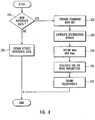
- Illustrative methods according to the invention are depicted in Figures 6-9 and involve multiple steps for identifying that a short, long, or acceptable sample was used in determining sample data in an analyzer module, such as but not limited to a clinical analyzer.
- the method includes first providing sample data, as depicted by block 202.
- parameter data and relationship data related to the sample data are provided, as depicted by block 204.
- the status of the sample i.e., short sample, long sample, and/or acceptable sample, is identified using the sample data and the parameter data, as indicated by block 206.
- the steps of providing sample data and reference data may be reversed. Each of these steps, as depicted by blocks 202, 204, 206, will be further described hereinbelow with reference to Figures 7-9 , respectively.
- decision block 210 in Figure 7 it is determined whether new or stored sample data is to be obtained.
- stored sample data is obtained, as represented by block 212.
- the stored sample data can be obtained from a variety of sources, such as but not limited to, from user input, networked sources, or storage media associated with the analyzer module, the evaluation module, and/or the data module.
- a sample is first obtained, as represented by block 214.
- the sample is then analyzed, as represented by block 216, by the analyzer module, and sample data is generated.
- the sample data is then output from the analyzer module, as represented by block 218.
- the sample data whether obtained from a stored source or newly generated is communicated directly to the evaluation module and/or optionally stored for future access and analysis.
- FIG. 8 one method for generating reference data is therein depicted. Initially it is determined whether new reference data or stored reference data is to be used during the analysis and processing, as represented by decision block 230. In the event that decision block 230 is in the negative, then stored reference data is obtained from data module 104, as represented by block 232.
- the method includes providing a statistically significant standard data set from a representative population for one or more of the measurable characteristics included in the sample data, as represented by block 234.
- This standard data set can be obtained by compiling a statistically significant number of data points to generate a distribution representative of the target population.
- This standard data set is used to create a distribution spread, as represented by block 236, which is optionally represented as a graphical representation.
- the distribution spread defines the occurrence frequency for various measured values for each of the one or more measurable characteristics.
- Each distribution spread is used to determine a distribution maximum value ("Amax"), as represented by block 238, which corresponds to the maximum occurrence frequency for each specific measurable characteristic included in the sample data, i.e., one Amax value for each specific measurable characteristic.
- Amax is defined to be the point at which the probability that the test sample that produce that specific value for the specific measurable characteristic equal to or greater than this distribution maximum value is a short sample is zero percent (0%).
- this Amax is defined to be the point at which the probability that the test sample that produce that specific value for the specific measurable characteristic equal to or less than this distribution maximum value is a long sample is zero percent (0%).
- a distribution minimum value is selected using the distribution spread to correspond to the point where the occurrence frequency is close to or equal to zero, as also represented by block 238.
- the distribution minimum value is then defined to be the point at which the probability that a test sample producing that specific value for the specific measurable characteristic equal to or less than the distribution minimum value is a short sample is one hundred percent (100%).
- the distribution minimum value is then defined to be the point at which the probability that a test sample producing that specific value for the specific measurable characteristic equal to or greater than the distribution minimum value is a long sample is one hundred percent (100%).
- the Amin will correspond to a value for the specific measurable characteristic less than Amax whereas in long sample detection the Amin will correspond to a greater value than Amax.
- one or more parameters are defined that identify the portion of the distribution spread bounded by Amax and Amin, as represented by block 240.
- a curve fit equation with associated one or more parameters, is generated which fits the distribution spread between the Amax and the Amin.
- the curve fit equation may take the form of a Gaussian or other distribution equation, and will include at least one or more parameters, such as but not limited to mean, standard deviation, or other constant as required by the curve fit.
- the parameters that define the path of the curve fit to the distribution spread are the parameter data or reference data stored in parameter data store 124. Although reference is made to Gaussian distribution equation, other forms of curve fit equations can be used and are known to those skilled in the art.
- curve fit equations can include exponential equations, logarithmic equations, polynomial equations, Lorentzian equations, Laplacian equations, Poisson equations, or other curve fits equations known to those skilled in the art in light of the teaching contained herein.
- the generated curve fit equation between Amax and Amin defines the probability of a sample being a short sample for all values between Amax and Amin. Just as at Amax the probability of a sample being a short sample is 0% and at Amin the probability of a sample being short sample is 100%, the equation for the curve between Amax and Amin is normalized to return a short sample probability between 100% (Amax) and 0% (Amin) for a single characteristic from the distribution curve fit for the single characteristic.
- relationship data indicative of the relationship between the parameter data and the sample data is defined, as represented by block 242.
- the relationship data can include one or more probability equations usable to determine, using the parameter data and sample data, the probability that a particular sample datum was determined from a short sample, a long sample, or an acceptable sample.
- the stored data that defines the probability equation is referred to as relationship data and is stored in the data module or some other data store associated with the system.
- the method for determining the probability of short, long, or acceptable sample includes using the identification module of the evaluation module to identify the sample data, as represented by block 260, and the reference data, as represented by block 262.
- the processing module processes the sample data and the reference data and determines the probability of the sample being a short sample, a long sample, or an acceptable sample, as represented by block 264, which is calculated as a numerical value that is converted to a percentage.
- the probability is either output or stored, as described hereinabove and represented by block 266.
- the invention also facilitates comparing the calculated probability to a user defined threshold probability value and in an embodiment outputting the result to the user.
- the method according to the invention encompasses determining the probability of a short, long, or acceptable sample of a sample having any combination of analytes A, B, ... N using the individual probabilities of short, long, or acceptable sample of the variety of analytes.
- the short sample probability is preferably defined as the NAND or "not and" of the short sample probabilities of each measurable characteristic normalized by the number of measurable characteristic under consideration, as presented in equation 1.
- N is the number of measurable characteristics.
- equation 1 N is the number of measurable characteristics.
- equations can also be used to project the likelihood of a short or long sample based on one or more measured sample, specimen, or assay characteristics.
- the long sample probability is preferably defined as the NAND or "not and" of the long sample probabilities of each measurable characteristic normalized by the number of measurable characteristics under consideration, as presented in equation 2, N is the number of measurable characteristics.
- Embodiments of the present invention also provide methods for analyzing a statistically significant number of samples for a particular combination of measurable characteristics to calculate the probability distributions for the combination of measurable characteristics for the samples.
- the distribution of the probabilities can be plotted or tabulated and a threshold limit based on a percentile for flagging the sample can then be established. For example, a test sample having a short sample probability in the 95th percentile or higher can be used to flag that a sample may be a short sample.
- the comparison of the calculated probability of short or long sample with the selected threshold can be used as a warning that an insufficient or abnormal amount of sample was used in the analysis.
- a threshold level of 20 percent or higher is used. Although this is the case for one embodiment, it can be appreciated that the probability can be identified as between about 18% to about 24%, or from about 30% to about 35%, or from about 48% to about 55%.
- threshold values for flagging a sample can be based both on individual sample data and on other probability functions for a plurality of sample data from different analytes.
- the user will typically repeat the test to confirm that the values measured are real and not the product of a "short sample.”
- One aspect of the invention includes using the above methods to detect intentional dilutions of biological samples in analytical tests.
- the above short sample detection methods can be used to identify that a urinalysis, such as is commonly performed as a drug test, and was performed with diluted urine.
- the sample, specimen, or assay can be treated for one or more antibodies associated with drug abuse with the knowledge that embodiments of the present invention will determine when samples or specimens are valid.
- embodiments of the present invention facilitate the verification process of sample, specimen, or assay authentication.
- Figure 10 depicts the frequency distribution for total bilirubin concentration (tbil) as used to create the data in Example 1.
- the line denoted as "Short curve fit” depicts a Gaussian curve fit set to the frequency distribution for A ⁇ Amax.
- the Gaussian curve fits the frequency distribution for A ⁇ Amax very well but is a poor fit for A > Amax.
- Figure 10 depicts the frequency distribution for total bilirubin concentration (tbil) as used to create the data in Examples 1 and 27.
- the line denoted as "Long curve fit” depicts a Gaussian curve fit set to the frequency distribution for A > Amax.
- the Gaussian curve fits the frequency distribution for A > Amax very well, whereas it is a poor fit for A ⁇ Amax.
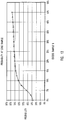
- Figure 11 illustrates the theoretical short sample probability for a sample data set collect for the MetLyte8 collection of analytes and fluid data, including blood urea nitrogen, creatinine, glucose, creatine kinase, carbon dioxide, sodium, potassium, chlorine, osmolarity, and blood urea nitrogen / creatinine.
- a sample analyte or sample fluid characteristic value data set is obtained for an accurately sized and diluted sample.
- the sample data set is then hypothetically multiplied times a sequentially increasing percent sample lost, i.e. 10%, 20%, etc., to obtain lower data results.
- the probability of short sample at percent sample lost is calculated for each datum and they are all then combined through Equation 5 that calculates the probability that a short sample would occur for percent samples lost up to 45 percent.
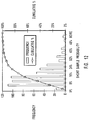
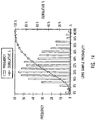
- Figure 12 illustrates how a short sample high probability threshold can be calculated.
- a statistically significant number of actual samples were analyzed for the basic metabolic panel collection of analytes and fluid data and the probability of short sample was calculated for each. The frequency for each probability is plotted in Figure 12 , along with the cumulative distribution of the population of short sample probability values.
- a threshold value can then be selected from this graph to use as a warning flag for high risk of short sample. For example, it may be decided that samples in the highest 5% for cumulative distribution are highly likely to be a short sample. Thus, because the cumulative distribution above 95% is approximately equal to a short sample probability of about 24%, any analytic test that yields a short sample probability of greater than 24% can be flagged as being a short sample.
- the probability of a long sample can be determined for the basic metabolic panel combination of analytes and sample fluid datum: blood urea nitrogen, creatinine, glucose, creatine kinase, carbon dioxide, sodium, potassium, chlorine, osmolarity, and blood urea nitrogen / creatinine.
- a sample data set is obtained and then hypothetically multiplied times a sequentially increasing percent long sample amount, i.e. 102.5%, 105%, etc., to obtain higher values.
- This data is then plugged into equation 6 along with the values in Table 3 to determine long sample probabilities for each of the individual long sample datum. These long sample probabilities are then calculated according to equation 1 and the results are plotted as depicted in Figure 13 (Example 55).
- Figure 14 illustrates how a long sample high probability threshold can be calculated.
- a statistically significant number of actual samples were analyzed for the basic metabolic panel collection of analytes and fluid data and the probability of long sample was calculated for each.
- the frequency for each probability is plotted in Figure 14 , along with the cumulative frequency.
- a threshold value can then be selected from this graph to use as a warning flag for high risk of long sample. For example, it may be decided that samples in the highest 5% for cumulative distribution are highly likely to be a long sample. Thus, because the cumulative distribution about 95% is approximately equal to a long sample probability of about 56%, any single analytic test that yields a long sample probability of greater than 56% can be flagged.
Landscapes
- Health & Medical Sciences (AREA)
- Engineering & Computer Science (AREA)
- Epidemiology (AREA)
- General Health & Medical Sciences (AREA)
- Medical Informatics (AREA)
- Primary Health Care (AREA)
- Public Health (AREA)
- Investigating Or Analysing Biological Materials (AREA)
- Automatic Analysis And Handling Materials Therefor (AREA)
- Investigating Or Analysing Materials By The Use Of Chemical Reactions (AREA)
- Investigating Or Analyzing Materials By The Use Of Electric Means (AREA)
- Medical Treatment And Welfare Office Work (AREA)
Claims (21)
- Système (100) pour analyser un échantillon, le système (100) comprenant :un module analyseur (102) configuré pour analyser l'échantillon pour au moins deux caractéristiques mesurables pour ainsi générer des données d'échantillon, l'au moins une caractéristique mesurable comprenant une concentration, une osmolarité, une acidité, une alcalinité, un changement de couleur, une fluorescence, ou une luminescence ;un module de données (104) adapté pour stocker des données de paramètre et des données de relation, les données de paramètre définissant un ajustement de courbe d'une distribution définissant une fréquence d'occurrence pour les au moins deux caractéristiques mesurables dans une population de sujets représentative, les données de relation comprenant des équations de probabilité utilisables pour déterminer, en utilisant les données de paramètre et les données d'échantillon, la probabilité que l'échantillon soit un échantillon court, un échantillon long ou un échantillon acceptable ; etun module d'évaluation (106) en communication avec le module de données (104) et le module analyseur (102), et programmé pour utiliser les données de paramètre, les données de relation et les données d'échantillon pour déterminer la probabilité que l'échantillon soit un échantillon court, un échantillon long ou un échantillon acceptable en comparant la probabilité déterminée à un niveau seuil de probabilité et en déterminant une probabilité globale que l'échantillon soit l'échantillon court, l'échantillon long ou l'échantillon acceptable pour deux ou plus des caractéristiques mesurables ;dans lequel un échantillon court est un échantillon qui a par erreur une concentration en échantillon trop petite en raison d'une dilution incorrecte, un échantillon long est un échantillon qui a par erreur une concentration en échantillon trop grande en raison d'une dilution incorrecte, et un échantillon acceptable n'est pas un échantillon court ou un échantillon long et a une concentration correcte en échantillon.
- Système selon la revendication 1, dans lequel le module d'évaluation comprend en outre :un module d'identification adapté pour recevoir les données d'échantillon, les données de paramètre et les données de relation ;un module de traitement pour déterminer la probabilité que l'échantillon soit l'échantillon court, l'échantillon long ou l'échantillon acceptable, et dans lequel le module de données comprend en outre des données représentant un ou plusieurs paramètres de niveau de décision, dans lequel chaque paramètre de niveau de décision définit un niveau seuil de probabilité au-dessous duquel l'échantillon est identifié soit comme étant l'échantillon court, soit comme étant l'échantillon long ; etun module de sortie pour notifier à l'utilisateur si l'échantillon est l'échantillon court, l'échantillon long ou l'échantillon acceptable.
- Système selon la revendication 1, dans lequel les au moins deux caractéristiques mesurables comprennent au moins deux parmi la concentration en albumine, phosphatase alcaline, alanine aminotransférase, amylase, aspartate aminotransférase, bilirubine totale, azote uréique sanguin, calcium, cholestérol, créatinine, glucose, protéines totales, protéines totales/albumine, et azote uréique sanguin/créatinine, créatine kinase, dioxyde de carbone, sodium, potassium ou chlore, ou dans lequel les au moins deux caractéristiques mesurables comprennent deux ou plus parmi l'osmolarité, l'alcalinité et l'acidité, ou dans lequel les au moins deux caractéristiques mesurables sont des caractéristiques mesurables du sang, ou dans lequel les au moins deux caractéristiques mesurables sont des caractéristiques mesurables du sérum, ou dans lequel les au moins deux caractéristiques mesurables sont des caractéristiques mesurables de l'urine.
- Système selon la revendication 1, dans lequel les au moins deux caractéristiques mesurables comprennent au moins deux contaminants trouvés dans l'eau, ou dans lequel les au moins deux caractéristiques mesurables comprennent un anticorps associé à un stupéfiant.
- Système selon la revendication 1, dans lequel le module analyseur comprend un analyseur optique, ou un analyseur électrochimique.
- Procédé implémenté par ordinateur pour analyser un échantillon, le procédé comprenant :l'analyse, en utilisant un module analyseur (102), de l'échantillon pour au moins deux caractéristiques mesurables pour ainsi générer des données d'échantillon, les au moins deux caractéristiques mesurables comprenant une concentration, une osmolarité, une acidité, une alcalinité, un changement de couleur, une fluorescence, ou une luminescence ;le stockage de données de paramètre et de données de relation stockées dans un module de données (104), les données de paramètre définissant un ajustement de courbe d'une distribution définissant une fréquence d'occurrence pour les au moins deux caractéristiques mesurables dans une population de sujets représentative, les données de relation comprenant des équations de probabilité utilisables pour déterminer, en utilisant les données de paramètre et les données d'échantillon, la probabilité que l'échantillon soit un échantillon court, un échantillon long ou un échantillon acceptable ;l'utilisation, dans un module d'évaluation (106) en communication avec le module de données (104) et le module analyseur (102), des données de paramètre, des données de relation et des données d'échantillon pour déterminer la probabilité que l'échantillon soit un échantillon court, un échantillon long ou un échantillon acceptable en comparant la probabilité déterminée à un niveau seuil de probabilité et en déterminant une probabilité globale que l'échantillon soit l'échantillon court, l'échantillon long ou l'échantillon acceptable pour deux ou plus des caractéristiques mesurables ;dans lequel un échantillon court est un échantillon qui a par erreur une concentration en échantillon trop petite en raison d'une dilution incorrecte, un échantillon long est un échantillon qui a par erreur une concentration en échantillon trop grande en raison d'une dilution incorrecte, et un échantillon acceptable n'est pas un échantillon court ou un échantillon long et a une concentration correcte en échantillon.
- Procédé selon la revendication 6, comprenant en outre la sortie du résultat pour un utilisateur.
- Procédé selon la revendication 7, comprenant en outre :la détermination de la probabilité que l'échantillon soit l'échantillon court pour chacune des caractéristiques mesurables ; etle calcul des probabilités que l'échantillon soit l'échantillon court pour chacune des deux caractéristiques mesurables ou plus, ou comprenant en outre :la détermination de la probabilité que l'échantillon soit l'échantillon long pour chacune des caractéristiques mesurables ; etle calcul des probabilités que l'échantillon soit l'échantillon long pour chacune des deux caractéristiques mesurables ou plus.
- Procédé selon la revendication 7, comprenant en outre :la détermination de la probabilité d'échantillon court pour chaque caractéristique mesurable dans une pluralité d'échantillons représentatifs ;le calcul des probabilités d'échantillon court pour chaque caractéristique mesurable dans chaque échantillon représentatif pour obtenir la probabilité d'échantillon court pour chaque échantillon représentatif ;la création d'un étalement de distribution des probabilités d'échantillon court pour la pluralité d'échantillons représentatifs ; etla sélection d'une valeur seuil de probabilité qui correspond à une fréquence de probabilité cumulative, dans lequel la valeur seuil de probabilité indique une probabilité élevée que l'échantillon soit un échantillon court.
- Procédé selon la revendication 7, dans lequel l'obtention de données de référence comprend en outre l'accès à des données de référence stockées dans un module de données, ou dans lequel l'obtention de données de référence comprend :la création d'un étalement de distribution définissant la fréquence d'occurrence pour les caractéristiques mesurées définies par les données d'échantillon, l'étalement de distribution comprenant une valeur maximale de distribution et une valeur minimale de distribution ;la définition de la valeur maximale de distribution et de toutes les valeurs des caractéristiques mesurées supérieures à la valeur de caractéristique mesurée associée à la valeur maximale de distribution pour avoir une probabilité d'échantillon court de zéro pour cent et la valeur minimale de distribution pour avoir la probabilité d'échantillon court de 100 pour cent ;l'identification d'un ou de plusieurs paramètres qui définissent l'étalement de distribution limité par la valeur maximale de distribution et la valeur minimale de distribution ; etla définition de données de relation qui définissent une relation entre les un ou plusieurs paramètres et les données d'échantillon, la relation étant utilisée pour déterminer la probabilité que l'échantillon soit l'échantillon court, et dans lequel la valeur minimale de distribution correspond à un point sur l'étalement de distribution où la fréquence d'occurrence de valeur de données d'échantillon est proche de zéro ou égale à zéro, et dans lequel la valeur maximale de distribution correspond à la fréquence d'occurrence de valeur de caractéristique mesurée maximale, ou comprenant en outre l'utilisation d'un ensemble de données statistiquement significatif obtenu à partir d'une population représentative d'échantillons pour créer l'étalement de distribution, ou les deux.
- Procédé selon la revendication 6, dans lequel l'obtention de données de référence comprend :la création d'un étalement de distribution définissant la fréquence d'occurrence pour les caractéristiques mesurées définies par les données d'échantillon, l'étalement de distribution comprenant une valeur maximale de distribution et une valeur minimale de distribution ;la définition de la valeur maximale de distribution et de toutes les valeurs des caractéristiques mesurées inférieures à la valeur de caractéristique mesurée associée à la valeur maximale de distribution pour avoir une probabilité d'échantillon long de zéro pour cent et la valeur minimale de distribution qui a une valeur de caractéristique mesurée supérieure à la valeur de caractéristique mesurée associée à la valeur maximale de distribution pour avoir une probabilité d'échantillon long de 100 pour cent ;l'identification d'un ou de plusieurs paramètres qui définissent l'étalement de distribution limité par la valeur maximale de distribution et la valeur minimale de distribution ; etla définition de données de relation qui définissent une relation entre les un ou plusieurs paramètres et les données d'échantillon, la relation étant utilisée pour déterminer la probabilité que l'échantillon soit un échantillon long, etdans lequel la valeur minimale de distribution correspond à un point sur l'étalement de distribution où la fréquence d'occurrence de valeur de données d'échantillon est proche de zéro ou égale à zéro ; oudans lequel la valeur maximale de distribution correspond à la fréquence d'occurrence de valeur de caractéristique mesurable maximale ; oucomprenant en outre l'utilisation d'un ensemble de données statistiquement significatif obtenu à partir d'une population représentative d'échantillons pour créer l'étalement de distribution.
- Procédé selon la revendication 6, dans lequel les une ou plusieurs données de fluide d'échantillon sont une ou plusieurs parmi l'albumine, la phosphatase alcaline, l'alanine aminotransférase, l'amylase, l'aspartate aminotransférase, la bilirubine totale, l'azote uréique sanguin, le calcium, le cholestérol, la créatinine, le glucose, les protéines totales, les protéines totales/albumine, et l'azote uréique sanguin/créatinine, la créatine kinase, le dioxyde de carbone, le sodium, le potassium, le chlore et l'osmolarité.
- Procédé selon la revendication 6, dans lequel les au moins deux caractéristiques mesurables comprennent un dosage immunologique, ou dans lequel les au moins deux caractéristiques mesurables comprennent une analyse génomique, ou dans lequel les au moins deux caractéristiques mesurables comprennent n'importe quelle caractéristique mesurable de l'eau.
- Procédé selon la revendication 6, pour déterminer si l'échantillon est l'échantillon court, le procédé comprenant :l'obtention de données d'échantillon associées à l'échantillon, les données d'échantillon définissant deux valeurs ou plus pour deux caractéristiques mesurables ou plus de l'échantillon ;l'obtention de données de référence associées aux données d'échantillon, les données de référence comprenant :au moins un paramètre qui définit une partie d'une distribution standard pour les deux caractéristiques mesurables ou plus identifiées par les données d'échantillon ; etdes données de relation définissant une relation entre l'au moins un paramètre et les données d'échantillon qui aident à identifier l'échantillon comme étant l'échantillon court ;la détermination de la probabilité que l'échantillon soit l'échantillon court sur la base des données de relation, et de l'au moins un paramètre, pour ainsi déterminer si l'échantillon est l'échantillon court.
- Procédé selon la revendication 14, comprenant en outre la détermination d'une probabilité globale que l'échantillon soit l'échantillon court pour deux ou plus des caractéristiques mesurables, et comprenant en outre :la détermination de la probabilité que l'échantillon soit l'échantillon court pour chacune des caractéristiques mesurables ; etle calcul des probabilités que l'échantillon soit l'échantillon court pour chacune des caractéristiques mesurables ; ou comprenant en outre :la détermination de la probabilité d'échantillon court pour chaque caractéristique mesurable dans une pluralité d'échantillons représentatifs ;le calcul des probabilités d'échantillon court pour chaque caractéristique mesurable dans chaque échantillon représentatif pour obtenir une probabilité d'échantillon court pour chaque échantillon représentatif ;la création d'un étalement de distribution des probabilités d'échantillon court pour la pluralité d'échantillons représentatifs ; etla sélection d'une valeur seuil de probabilité qui correspond à une fréquence de probabilité cumulative, dans lequel la valeur seuil de probabilité indique une probabilité élevée que l'échantillon soit l'échantillon court.
- Procédé selon la revendication 14, dans lequel l'obtention de données de référence comprend :la création d'un étalement de distribution définissant une fréquence d'occurrence pour les caractéristiques mesurées définies par les données d'échantillon, l'étalement de distribution comprenant une valeur maximale de distribution et une valeur minimale de distribution ;la définition de la valeur maximale de distribution et de toutes les valeurs des caractéristiques mesurées supérieures aux valeurs de caractéristique mesurées associées à la valeur maximale de distribution pour avoir une probabilité d'échantillon court de zéro pour cent et la valeur minimale de distribution pour avoir la probabilité d'échantillon court de 100 pour cent ;l'identification d'un ou de plusieurs paramètres qui définissent l'étalement de distribution limité par la valeur maximale de distribution et la valeur minimale de distribution ; etla définition de données de relation qui définissent une relation entre les un ou plusieurs paramètres et les données d'échantillon, la relation étant utilisée pour déterminer la probabilité que l'échantillon soit l'échantillon court :dans lequel la valeur minimale de distribution correspond à un point sur l'étalement de distribution où la fréquence d'occurrence de valeur de données d'échantillon est proche de zéro ou égale à zéro ; oudans lequel la valeur maximale de distribution correspond à la fréquence d'occurrence de valeur de caractéristique mesurée maximale ; oul'utilisation d'un ensemble de données statistiquement significatif obtenu à partir d'une population représentative d'échantillons pour créer l'étalement de distribution.
- Produit de programme informatique pour implémenter, dans un système (100) qui comprend au moins un processeur, un procédé pour analyser un échantillon, le produit programme informatique comprenant :
un support lisible par ordinateur portant des instructions exécutables par ordinateur pour implémenter le procédé, les instructions exécutables par ordinateur, quand elles sont exécutées, mettant en œuvre les étapes du procédé selon l'une quelconque des revendications 6 à 16. - Système selon la revendication 1, dans lequel l'analyseur est configuré pour analyser un échantillon pour une pluralité de caractéristiques mesurables pour ainsi générer des données d'échantillon, et les données de paramètre comprennent une distribution pour chacune des caractéristiques mesurables dans une population représentative.
- Système selon la revendication 18, dans lequel la pluralité de caractéristiques mesurables est un panel d'électrolytes.
- Système selon la revendication 1, dans lequel le module analyseur comprend un rotor centrifuge, ou dans lequel le module analyseur comprend un spectrophotomètre.
- Système selon la revendication 2, dans lequel le module de sortie est un affichage vidéo ou une DEL.
Applications Claiming Priority (3)
| Application Number | Priority Date | Filing Date | Title |
|---|---|---|---|
| US273873 | 2002-10-18 | ||
| US10/273,873 US7177767B2 (en) | 2002-10-18 | 2002-10-18 | Systems and methods for the detection of short and long samples |
| PCT/US2003/032979 WO2004036180A2 (fr) | 2002-10-18 | 2003-10-17 | Systemes et procedes pour la detection d'echantillons courts et d'echantillons longs |
Publications (3)
| Publication Number | Publication Date |
|---|---|
| EP1556688A2 EP1556688A2 (fr) | 2005-07-27 |
| EP1556688A4 EP1556688A4 (fr) | 2011-10-26 |
| EP1556688B1 true EP1556688B1 (fr) | 2020-11-18 |
Family
ID=32092922
Family Applications (1)
| Application Number | Title | Priority Date | Filing Date |
|---|---|---|---|
| EP03809123.7A Expired - Lifetime EP1556688B1 (fr) | 2002-10-18 | 2003-10-17 | Systemes et procedes pour la detection d'echantillons courts et d'echantillons longs |
Country Status (8)
| Country | Link |
|---|---|
| US (2) | US7177767B2 (fr) |
| EP (1) | EP1556688B1 (fr) |
| JP (1) | JP4633465B2 (fr) |
| AU (1) | AU2003277426B2 (fr) |
| CA (1) | CA2500345C (fr) |
| ES (1) | ES2845348T3 (fr) |
| PT (1) | PT1556688T (fr) |
| WO (1) | WO2004036180A2 (fr) |
Families Citing this family (31)
| Publication number | Priority date | Publication date | Assignee | Title |
|---|---|---|---|---|
| KR101381331B1 (ko) | 2005-05-09 | 2014-04-04 | 테라노스, 인코포레이티드 | 현장진료 유체 시스템 및 그 용도 |
| US7246020B2 (en) * | 2005-06-10 | 2007-07-17 | Par Pharmaceutical, Inc. | System and method for sorting data |
| KR20090003176A (ko) * | 2006-01-17 | 2009-01-09 | 헤마푸레 아베 | 의료용 액세스 장치, 의료용 액세스 장치의 제조 방법 및그러한 액세스 장치를 포함하는 액세스 시스템의 제조 방법 |
| US11287421B2 (en) | 2006-03-24 | 2022-03-29 | Labrador Diagnostics Llc | Systems and methods of sample processing and fluid control in a fluidic system |
| US8741230B2 (en) | 2006-03-24 | 2014-06-03 | Theranos, Inc. | Systems and methods of sample processing and fluid control in a fluidic system |
| US8007999B2 (en) | 2006-05-10 | 2011-08-30 | Theranos, Inc. | Real-time detection of influenza virus |
| US8012744B2 (en) | 2006-10-13 | 2011-09-06 | Theranos, Inc. | Reducing optical interference in a fluidic device |
| US8158430B1 (en) | 2007-08-06 | 2012-04-17 | Theranos, Inc. | Systems and methods of fluidic sample processing |
| US8088593B2 (en) | 2007-10-02 | 2012-01-03 | Theranos, Inc. | Modular point-of-care devices, systems, and uses thereof |
| US8326848B2 (en) * | 2009-08-11 | 2012-12-04 | International Business Machines Corporation | Proactive analytic data set reduction via parameter condition injection |
| CN105808956A (zh) | 2009-10-19 | 2016-07-27 | 提拉诺斯公司 | 集成的健康数据采集和分析系统 |
| US8562911B2 (en) * | 2010-02-05 | 2013-10-22 | Medi Medical Engineering Corp. | Centrifugal rotor and method for using the same for delivering biological sample |
| KR20130105301A (ko) * | 2010-05-06 | 2013-09-25 | 아박시스, 인크. | 예상되는 분석물 상관성의 평가에 의한 현장 시험 결과의 타당성 판정 방법 |
| US9522396B2 (en) | 2010-12-29 | 2016-12-20 | S.D. Sight Diagnostics Ltd. | Apparatus and method for automatic detection of pathogens |
| CN106323875B (zh) | 2011-01-21 | 2019-07-09 | 西拉诺斯知识产权有限责任公司 | 样品使用最大化的系统和方法 |
| WO2013098821A1 (fr) | 2011-12-29 | 2013-07-04 | Parasight Ltd. | Procédés et systèmes de détection de pathogène dans un prélèvement biologique |
| TWI456196B (zh) | 2012-04-24 | 2014-10-11 | Ind Tech Res Inst | 檢體免疫分析檢測裝置 |
| WO2014188405A1 (fr) | 2013-05-23 | 2014-11-27 | Parasight Ltd. | Procédé et système d'imagerie de prélèvement cellulaire |
| IL227276A0 (en) | 2013-07-01 | 2014-03-06 | Parasight Ltd | A method and system for preparing a monolayer of cells, particularly suitable for diagnosis |
| EP3039477B1 (fr) | 2013-08-26 | 2021-10-20 | S.D. Sight Diagnostics Ltd. | Systèmes, procédés et produits programmes d'ordinateur de microscopie numérique |
| US10482595B2 (en) | 2014-08-27 | 2019-11-19 | S.D. Sight Diagnostics Ltd. | System and method for calculating focus variation for a digital microscope |
| EP3859425B1 (fr) | 2015-09-17 | 2024-04-17 | S.D. Sight Diagnostics Ltd. | Méthodes et appareil de détection d'entité dans un échantillon corporel |
| CA3018536A1 (fr) | 2016-03-30 | 2017-10-05 | S.D. Sight Diagnostics Ltd | Distinction entre les composants d'un echantillon de sang |
| EP4177593A1 (fr) | 2016-05-11 | 2023-05-10 | S.D. Sight Diagnostics Ltd. | Support d'échantillon pour mesures optiques |
| EP3455626B1 (fr) | 2016-05-11 | 2025-08-06 | S.D. Sight Diagnostics Ltd. | Exécution des mesures optiques sur un échantillon |
| US10607147B2 (en) * | 2016-06-15 | 2020-03-31 | Arm Limited | Estimating a number of occupants in a region |
| CN111788471B (zh) | 2017-11-14 | 2023-12-12 | 思迪赛特诊断有限公司 | 用于光学测量的样品载体 |
| MX2022004703A (es) | 2019-10-22 | 2022-05-11 | S D Sight Diagnostics Ltd | Contabilidad de errores en mediciones opticas. |
| CA3160702A1 (fr) | 2019-12-12 | 2021-06-17 | S.D. Sight Diagnostics Ltd | Generation artificielle d'image couleur de frottis sanguin |
| BR112022011233A2 (pt) | 2019-12-12 | 2022-08-30 | S D Sight Diagnostics Ltd | Detecção de plaquetas em uma amostra sanguínea |
| EP4073492A1 (fr) | 2019-12-12 | 2022-10-19 | S.D. Sight Diagnostics Ltd. | Analyse d'un analyte disposé dans un milieu |
Family Cites Families (16)
| Publication number | Priority date | Publication date | Assignee | Title |
|---|---|---|---|---|
| JPH01129166A (ja) * | 1987-11-16 | 1989-05-22 | Hitachi Ltd | 疑惑項目判別装置 |
| US5186844A (en) * | 1991-04-01 | 1993-02-16 | Abaxis, Inc. | Apparatus and method for continuous centrifugal blood cell separation |
| US5122284A (en) * | 1990-06-04 | 1992-06-16 | Abaxis, Inc. | Apparatus and method for optically analyzing biological fluids |
| US5242606A (en) * | 1990-06-04 | 1993-09-07 | Abaxis, Incorporated | Sample metering port for analytical rotor having overflow chamber |
| US5061381A (en) * | 1990-06-04 | 1991-10-29 | Abaxis, Inc. | Apparatus and method for separating cells from biological fluids |
| US5776563A (en) * | 1991-08-19 | 1998-07-07 | Abaxis, Inc. | Dried chemical compositions |
| US5413732A (en) * | 1991-08-19 | 1995-05-09 | Abaxis, Inc. | Reagent compositions for analytical testing |
| US5478750A (en) * | 1993-03-31 | 1995-12-26 | Abaxis, Inc. | Methods for photometric analysis |
| US6235531B1 (en) * | 1993-09-01 | 2001-05-22 | Abaxis, Inc. | Modified siphons for improved metering precision |
| US5590052A (en) * | 1994-04-14 | 1996-12-31 | Abaxis, Inc. | Error checking in blood analyzer |
| US6299839B1 (en) * | 1995-08-31 | 2001-10-09 | First Medical, Inc. | System and methods for performing rotor assays |
| US6195158B1 (en) * | 1995-11-21 | 2001-02-27 | Cme Telemetrix Inc. | Apparatus and method for rapid spectrophotometric pre-test screen of specimen for a blood analyzer |
| JPH1038898A (ja) * | 1996-07-30 | 1998-02-13 | Hitachi Koki Co Ltd | 分注装置 |
| FR2757657B1 (fr) * | 1996-12-23 | 1999-02-12 | Logiclab | Procede et systeme de gestion de qualite dans des processus therapeutiques |
| US6388750B1 (en) * | 1998-12-17 | 2002-05-14 | Beckman Coulter, Inc. | Device and method for preliminary testing a neat serum sample in a primary collection tube |
| AU777102B2 (en) * | 2000-01-13 | 2004-09-30 | Ortho-Clinical Diagnostics, Inc. | Failure detection in automated clinical analyzers |
-
2002
- 2002-10-18 US US10/273,873 patent/US7177767B2/en not_active Expired - Lifetime
-
2003
- 2003-10-17 ES ES03809123T patent/ES2845348T3/es not_active Expired - Lifetime
- 2003-10-17 JP JP2004545458A patent/JP4633465B2/ja not_active Expired - Lifetime
- 2003-10-17 AU AU2003277426A patent/AU2003277426B2/en not_active Expired
- 2003-10-17 CA CA2500345A patent/CA2500345C/fr not_active Expired - Lifetime
- 2003-10-17 WO PCT/US2003/032979 patent/WO2004036180A2/fr not_active Ceased
- 2003-10-17 PT PT38091237T patent/PT1556688T/pt unknown
- 2003-10-17 EP EP03809123.7A patent/EP1556688B1/fr not_active Expired - Lifetime
-
2005
- 2005-08-04 US US11/196,941 patent/US7765069B2/en active Active
Non-Patent Citations (1)
| Title |
|---|
| None * |
Also Published As
| Publication number | Publication date |
|---|---|
| CA2500345A1 (fr) | 2004-04-29 |
| CA2500345C (fr) | 2012-12-18 |
| PT1556688T (pt) | 2021-01-27 |
| ES2845348T3 (es) | 2021-07-26 |
| US7177767B2 (en) | 2007-02-13 |
| JP2006503296A (ja) | 2006-01-26 |
| US20050283318A1 (en) | 2005-12-22 |
| EP1556688A4 (fr) | 2011-10-26 |
| US7765069B2 (en) | 2010-07-27 |
| AU2003277426B2 (en) | 2009-08-13 |
| US20040078145A1 (en) | 2004-04-22 |
| AU2003277426A1 (en) | 2004-05-04 |
| WO2004036180A3 (fr) | 2005-03-03 |
| JP4633465B2 (ja) | 2011-02-16 |
| WO2004036180A2 (fr) | 2004-04-29 |
| EP1556688A2 (fr) | 2005-07-27 |
Similar Documents
| Publication | Publication Date | Title |
|---|---|---|
| US7765069B2 (en) | Systems for the detection of short and long samples | |
| Badrick et al. | Patient-based real-time quality control: review and recommendations | |
| Kazmierczak | Laboratory quality control: using patient data to assess analytical performance. | |
| EP2511699B1 (fr) | Systeme de gestion pour un appareil d'analyse d'électrolyte | |
| Harr et al. | ASVCP guidelines: allowable total error guidelines for biochemistry | |
| EP0263870B1 (fr) | Programme d'assurance de qualite interlaboratoire | |
| Oosterhuis et al. | Evaluation of LabRespond, a new automated validation system for clinical laboratory test results | |
| Jhang et al. | Evaluation of linearity in the clinical laboratory | |
| Schifman et al. | Delta check practices and outcomes: a Q-probes study involving 49 health care facilities and 6541 delta check alerts | |
| Duhalde et al. | Point-of-care hemolysis detection in blood gas specimens directly at the emergency department | |
| JP2013525819A (ja) | 予想される検体関係を評価することによるポイント・オブ・ケア検査結果の検証法 | |
| Karakochuk et al. | Emerging evidence and critical issues with the use of single-drop capillary blood for the measurement of hemoglobin concentration in population-level anemia surveys | |
| Obstfeld et al. | Report of the International Council for Standardization in Haematology working group for standardization of reticulocyte parameters | |
| WO2017115775A1 (fr) | Dispositif d'analyse, procédé d'analyse, et système d'analyse | |
| Prence | A practical guide for the validation of genetic tests | |
| Loh et al. | Delta checks | |
| Petrides et al. | Method validation | |
| Baron et al. | Real evidence to assess clinical testing interference risk (REACTIR): A strategy using real world data to assess the prevalence of interfering substances in patients undergoing clinical laboratory testing | |
| McLaughlin et al. | A-333 Comparison between measured total carbon dioxide and calculated bicarbonate in hospitalized patients | |
| Uçar et al. | Interferograms plotted with reference change value (RCV) may facilitate the management of hemolyzed samples | |
| US20250199020A1 (en) | Calibration management of an in-vitro diagnostic system | |
| EP4539053A1 (fr) | Extraction d'informations de laboratoire, cliniques ou de diagnostic à partir d'un test clinique | |
| Sahoo et al. | Comparison of Visual Assessment and Hemolysis Index in Detecting Hemolysis across Common Biochemical Assay: Implications for Sample Rejection in Clinical Laboratory Practice | |
| Innerebner | Quality Assurance and Quality Control in the Laboratory--What Every Operator Needs to Know | |
| 승재이 et al. | Performance Evaluation of the ABL90 FLEX PLUS Point-of-Care Analyzer in Measuring Creatinine Levels |
Legal Events
| Date | Code | Title | Description |
|---|---|---|---|
| PUAI | Public reference made under article 153(3) epc to a published international application that has entered the european phase |
Free format text: ORIGINAL CODE: 0009012 |
|
| 17P | Request for examination filed |
Effective date: 20050518 |
|
| AK | Designated contracting states |
Kind code of ref document: A2 Designated state(s): AT BE BG CH CY CZ DE DK EE ES FI FR GB GR HU IE IT LI LU MC NL PT RO SE SI SK TR |
|
| AX | Request for extension of the european patent |
Extension state: AL LT LV MK |
|
| DAX | Request for extension of the european patent (deleted) | ||
| A4 | Supplementary search report drawn up and despatched |
Effective date: 20110922 |
|
| RIC1 | Information provided on ipc code assigned before grant |
Ipc: C12Q 1/00 20060101ALI20110916BHEP Ipc: G01N 31/00 20060101ALI20110916BHEP Ipc: G06F 19/00 20110101AFI20110916BHEP |
|
| 17Q | First examination report despatched |
Effective date: 20120321 |
|
| STAA | Information on the status of an ep patent application or granted ep patent |
Free format text: STATUS: EXAMINATION IS IN PROGRESS |
|
| REG | Reference to a national code |
Ref country code: DE Ref legal event code: R079 Ref document number: 60352593 Country of ref document: DE Free format text: PREVIOUS MAIN CLASS: G01N0031000000 Ipc: G16H0010400000 |
|
| RIC1 | Information provided on ipc code assigned before grant |
Ipc: G16H 10/40 20180101AFI20200310BHEP |
|
| GRAP | Despatch of communication of intention to grant a patent |
Free format text: ORIGINAL CODE: EPIDOSNIGR1 |
|
| STAA | Information on the status of an ep patent application or granted ep patent |
Free format text: STATUS: GRANT OF PATENT IS INTENDED |
|
| INTG | Intention to grant announced |
Effective date: 20200529 |
|
| GRAS | Grant fee paid |
Free format text: ORIGINAL CODE: EPIDOSNIGR3 |
|
| GRAA | (expected) grant |
Free format text: ORIGINAL CODE: 0009210 |
|
| STAA | Information on the status of an ep patent application or granted ep patent |
Free format text: STATUS: THE PATENT HAS BEEN GRANTED |
|
| AK | Designated contracting states |
Kind code of ref document: B1 Designated state(s): AT BE BG CH CY CZ DE DK EE ES FI FR GB GR HU IE IT LI LU MC NL PT RO SE SI SK TR |
|
| REG | Reference to a national code |
Ref country code: GB Ref legal event code: FG4D |
|
| REG | Reference to a national code |
Ref country code: CH Ref legal event code: EP |
|
| REG | Reference to a national code |
Ref country code: DE Ref legal event code: R096 Ref document number: 60352593 Country of ref document: DE |
|
| REG | Reference to a national code |
Ref country code: IE Ref legal event code: FG4D |
|
| REG | Reference to a national code |
Ref country code: AT Ref legal event code: REF Ref document number: 1336645 Country of ref document: AT Kind code of ref document: T Effective date: 20201215 |
|
| REG | Reference to a national code |
Ref country code: PT Ref legal event code: SC4A Ref document number: 1556688 Country of ref document: PT Date of ref document: 20210127 Kind code of ref document: T Free format text: AVAILABILITY OF NATIONAL TRANSLATION Effective date: 20210121 |
|
| REG | Reference to a national code |
Ref country code: CH Ref legal event code: PUE Owner name: ZOETIS SERVICES LLC, US Free format text: FORMER OWNER: ABAXIS, INC., US |
|
| REG | Reference to a national code |
Ref country code: RO Ref legal event code: EPE |
|
| REG | Reference to a national code |
Ref country code: DE Ref legal event code: R082 Ref document number: 60352593 Country of ref document: DE Representative=s name: KRAUS & WEISERT PATENTANWAELTE PARTGMBB, DE Ref country code: DE Ref legal event code: R081 Ref document number: 60352593 Country of ref document: DE Owner name: ZOETIS SERVICES LLC, PARSIPPANY, US Free format text: FORMER OWNER: ABAXIS INC., UNION CITY, CALIF., US |
|
| REG | Reference to a national code |
Ref country code: AT Ref legal event code: MK05 Ref document number: 1336645 Country of ref document: AT Kind code of ref document: T Effective date: 20201118 |
|
| REG | Reference to a national code |
Ref country code: NL Ref legal event code: MP Effective date: 20201118 |
|
| PG25 | Lapsed in a contracting state [announced via postgrant information from national office to epo] |
Ref country code: FI Free format text: LAPSE BECAUSE OF FAILURE TO SUBMIT A TRANSLATION OF THE DESCRIPTION OR TO PAY THE FEE WITHIN THE PRESCRIBED TIME-LIMIT Effective date: 20201118 Ref country code: GR Free format text: LAPSE BECAUSE OF FAILURE TO SUBMIT A TRANSLATION OF THE DESCRIPTION OR TO PAY THE FEE WITHIN THE PRESCRIBED TIME-LIMIT Effective date: 20210219 |
|
| RAP2 | Party data changed (patent owner data changed or rights of a patent transferred) |
Owner name: ZOETIS SERVICES LLC |
|
| PG25 | Lapsed in a contracting state [announced via postgrant information from national office to epo] |
Ref country code: AT Free format text: LAPSE BECAUSE OF FAILURE TO SUBMIT A TRANSLATION OF THE DESCRIPTION OR TO PAY THE FEE WITHIN THE PRESCRIBED TIME-LIMIT Effective date: 20201118 Ref country code: BG Free format text: LAPSE BECAUSE OF FAILURE TO SUBMIT A TRANSLATION OF THE DESCRIPTION OR TO PAY THE FEE WITHIN THE PRESCRIBED TIME-LIMIT Effective date: 20210218 Ref country code: SE Free format text: LAPSE BECAUSE OF FAILURE TO SUBMIT A TRANSLATION OF THE DESCRIPTION OR TO PAY THE FEE WITHIN THE PRESCRIBED TIME-LIMIT Effective date: 20201118 |
|
| REG | Reference to a national code |
Ref country code: ES Ref legal event code: FG2A Ref document number: 2845348 Country of ref document: ES Kind code of ref document: T3 Effective date: 20210726 |
|
| PG25 | Lapsed in a contracting state [announced via postgrant information from national office to epo] |
Ref country code: SK Free format text: LAPSE BECAUSE OF FAILURE TO SUBMIT A TRANSLATION OF THE DESCRIPTION OR TO PAY THE FEE WITHIN THE PRESCRIBED TIME-LIMIT Effective date: 20201118 Ref country code: CZ Free format text: LAPSE BECAUSE OF FAILURE TO SUBMIT A TRANSLATION OF THE DESCRIPTION OR TO PAY THE FEE WITHIN THE PRESCRIBED TIME-LIMIT Effective date: 20201118 Ref country code: EE Free format text: LAPSE BECAUSE OF FAILURE TO SUBMIT A TRANSLATION OF THE DESCRIPTION OR TO PAY THE FEE WITHIN THE PRESCRIBED TIME-LIMIT Effective date: 20201118 |
|
| REG | Reference to a national code |
Ref country code: DE Ref legal event code: R097 Ref document number: 60352593 Country of ref document: DE |
|
| PG25 | Lapsed in a contracting state [announced via postgrant information from national office to epo] |
Ref country code: DK Free format text: LAPSE BECAUSE OF FAILURE TO SUBMIT A TRANSLATION OF THE DESCRIPTION OR TO PAY THE FEE WITHIN THE PRESCRIBED TIME-LIMIT Effective date: 20201118 |
|
| PLBE | No opposition filed within time limit |
Free format text: ORIGINAL CODE: 0009261 |
|
| STAA | Information on the status of an ep patent application or granted ep patent |
Free format text: STATUS: NO OPPOSITION FILED WITHIN TIME LIMIT |
|
| 26N | No opposition filed |
Effective date: 20210819 |
|
| PG25 | Lapsed in a contracting state [announced via postgrant information from national office to epo] |
Ref country code: NL Free format text: LAPSE BECAUSE OF FAILURE TO SUBMIT A TRANSLATION OF THE DESCRIPTION OR TO PAY THE FEE WITHIN THE PRESCRIBED TIME-LIMIT Effective date: 20201118 |
|
| PG25 | Lapsed in a contracting state [announced via postgrant information from national office to epo] |
Ref country code: SI Free format text: LAPSE BECAUSE OF FAILURE TO SUBMIT A TRANSLATION OF THE DESCRIPTION OR TO PAY THE FEE WITHIN THE PRESCRIBED TIME-LIMIT Effective date: 20201118 |
|
| REG | Reference to a national code |
Ref country code: BE Ref legal event code: MM Effective date: 20211031 |
|
| PG25 | Lapsed in a contracting state [announced via postgrant information from national office to epo] |
Ref country code: MC Free format text: LAPSE BECAUSE OF FAILURE TO SUBMIT A TRANSLATION OF THE DESCRIPTION OR TO PAY THE FEE WITHIN THE PRESCRIBED TIME-LIMIT Effective date: 20201118 |
|
| PG25 | Lapsed in a contracting state [announced via postgrant information from national office to epo] |
Ref country code: LU Free format text: LAPSE BECAUSE OF NON-PAYMENT OF DUE FEES Effective date: 20211017 Ref country code: BE Free format text: LAPSE BECAUSE OF NON-PAYMENT OF DUE FEES Effective date: 20211031 |
|
| PG25 | Lapsed in a contracting state [announced via postgrant information from national office to epo] |
Ref country code: IE Free format text: LAPSE BECAUSE OF NON-PAYMENT OF DUE FEES Effective date: 20211017 |
|
| PGFP | Annual fee paid to national office [announced via postgrant information from national office to epo] |
Ref country code: PT Payment date: 20220926 Year of fee payment: 20 Ref country code: GB Payment date: 20220914 Year of fee payment: 20 |
|
| PGFP | Annual fee paid to national office [announced via postgrant information from national office to epo] |
Ref country code: FR Payment date: 20220916 Year of fee payment: 20 |
|
| PGFP | Annual fee paid to national office [announced via postgrant information from national office to epo] |
Ref country code: RO Payment date: 20221012 Year of fee payment: 20 Ref country code: IT Payment date: 20221019 Year of fee payment: 20 Ref country code: ES Payment date: 20221101 Year of fee payment: 20 Ref country code: DE Payment date: 20220914 Year of fee payment: 20 |
|
| PGFP | Annual fee paid to national office [announced via postgrant information from national office to epo] |
Ref country code: CH Payment date: 20221101 Year of fee payment: 20 |
|
| PG25 | Lapsed in a contracting state [announced via postgrant information from national office to epo] |
Ref country code: HU Free format text: LAPSE BECAUSE OF FAILURE TO SUBMIT A TRANSLATION OF THE DESCRIPTION OR TO PAY THE FEE WITHIN THE PRESCRIBED TIME-LIMIT; INVALID AB INITIO Effective date: 20031017 |
|
| PG25 | Lapsed in a contracting state [announced via postgrant information from national office to epo] |
Ref country code: CY Free format text: LAPSE BECAUSE OF FAILURE TO SUBMIT A TRANSLATION OF THE DESCRIPTION OR TO PAY THE FEE WITHIN THE PRESCRIBED TIME-LIMIT Effective date: 20201118 |
|
| REG | Reference to a national code |
Ref country code: DE Ref legal event code: R071 Ref document number: 60352593 Country of ref document: DE |
|
| REG | Reference to a national code |
Ref country code: ES Ref legal event code: FD2A Effective date: 20231027 |
|
| REG | Reference to a national code |
Ref country code: CH Ref legal event code: PL |
|
| REG | Reference to a national code |
Ref country code: GB Ref legal event code: PE20 Expiry date: 20231016 |
|
| PG25 | Lapsed in a contracting state [announced via postgrant information from national office to epo] |
Ref country code: GB Free format text: LAPSE BECAUSE OF EXPIRATION OF PROTECTION Effective date: 20231016 |
|
| PG25 | Lapsed in a contracting state [announced via postgrant information from national office to epo] |
Ref country code: ES Free format text: LAPSE BECAUSE OF EXPIRATION OF PROTECTION Effective date: 20231018 |
|
| PG25 | Lapsed in a contracting state [announced via postgrant information from national office to epo] |
Ref country code: PT Free format text: LAPSE BECAUSE OF EXPIRATION OF PROTECTION Effective date: 20231026 Ref country code: GB Free format text: LAPSE BECAUSE OF EXPIRATION OF PROTECTION Effective date: 20231016 Ref country code: ES Free format text: LAPSE BECAUSE OF EXPIRATION OF PROTECTION Effective date: 20231018 |
|
| PG25 | Lapsed in a contracting state [announced via postgrant information from national office to epo] |
Ref country code: TR Free format text: LAPSE BECAUSE OF FAILURE TO SUBMIT A TRANSLATION OF THE DESCRIPTION OR TO PAY THE FEE WITHIN THE PRESCRIBED TIME-LIMIT Effective date: 20201118 |
|
| REG | Reference to a national code |
Ref country code: GB Ref legal event code: 732E Free format text: REGISTERED BETWEEN 20250925 AND 20251001 |