EP1557035B1 - Verfahren und vorrichtung zum übertragen eines digitalen bildes mit textmaterial - Google Patents
Verfahren und vorrichtung zum übertragen eines digitalen bildes mit textmaterial Download PDFInfo
- Publication number
- EP1557035B1 EP1557035B1 EP03799061A EP03799061A EP1557035B1 EP 1557035 B1 EP1557035 B1 EP 1557035B1 EP 03799061 A EP03799061 A EP 03799061A EP 03799061 A EP03799061 A EP 03799061A EP 1557035 B1 EP1557035 B1 EP 1557035B1
- Authority
- EP
- European Patent Office
- Prior art keywords
- photograph
- photographic
- jpeg file
- digital
- accordance
- Prior art date
- Legal status (The legal status is an assumption and is not a legal conclusion. Google has not performed a legal analysis and makes no representation as to the accuracy of the status listed.)
- Expired - Lifetime
Links
Images




Classifications
-
- H—ELECTRICITY
- H04—ELECTRIC COMMUNICATION TECHNIQUE
- H04N—PICTORIAL COMMUNICATION, e.g. TELEVISION
- H04N5/00—Details of television systems
- H04N5/76—Television signal recording
- H04N5/765—Interface circuits between an apparatus for recording and another apparatus
- H04N5/77—Interface circuits between an apparatus for recording and another apparatus between a recording apparatus and a television camera
- H04N5/772—Interface circuits between an apparatus for recording and another apparatus between a recording apparatus and a television camera the recording apparatus and the television camera being placed in the same enclosure
-
- H—ELECTRICITY
- H04—ELECTRIC COMMUNICATION TECHNIQUE
- H04N—PICTORIAL COMMUNICATION, e.g. TELEVISION
- H04N5/00—Details of television systems
- H04N5/222—Studio circuitry; Studio devices; Studio equipment
- H04N5/262—Studio circuits, e.g. for mixing, switching-over, change of character of image, other special effects ; Cameras specially adapted for the electronic generation of special effects
-
- H—ELECTRICITY
- H04—ELECTRIC COMMUNICATION TECHNIQUE
- H04N—PICTORIAL COMMUNICATION, e.g. TELEVISION
- H04N1/00—Scanning, transmission or reproduction of documents or the like, e.g. facsimile transmission; Details thereof
- H04N1/32—Circuits or arrangements for control or supervision between transmitter and receiver or between image input and image output device, e.g. between a still-image camera and its memory or between a still-image camera and a printer device
- H04N1/32101—Display, printing, storage or transmission of additional information, e.g. ID code, date and time or title
-
- H—ELECTRICITY
- H04—ELECTRIC COMMUNICATION TECHNIQUE
- H04N—PICTORIAL COMMUNICATION, e.g. TELEVISION
- H04N1/00—Scanning, transmission or reproduction of documents or the like, e.g. facsimile transmission; Details thereof
- H04N1/32—Circuits or arrangements for control or supervision between transmitter and receiver or between image input and image output device, e.g. between a still-image camera and its memory or between a still-image camera and a printer device
- H04N1/32101—Display, printing, storage or transmission of additional information, e.g. ID code, date and time or title
- H04N1/32144—Display, printing, storage or transmission of additional information, e.g. ID code, date and time or title embedded in the image data, i.e. enclosed or integrated in the image, e.g. watermark, super-imposed logo or stamp
-
- H—ELECTRICITY
- H04—ELECTRIC COMMUNICATION TECHNIQUE
- H04N—PICTORIAL COMMUNICATION, e.g. TELEVISION
- H04N1/00—Scanning, transmission or reproduction of documents or the like, e.g. facsimile transmission; Details thereof
- H04N1/387—Composing, repositioning or otherwise geometrically modifying originals
-
- H—ELECTRICITY
- H04—ELECTRIC COMMUNICATION TECHNIQUE
- H04N—PICTORIAL COMMUNICATION, e.g. TELEVISION
- H04N1/00—Scanning, transmission or reproduction of documents or the like, e.g. facsimile transmission; Details thereof
- H04N1/32—Circuits or arrangements for control or supervision between transmitter and receiver or between image input and image output device, e.g. between a still-image camera and its memory or between a still-image camera and a printer device
- H04N1/32101—Display, printing, storage or transmission of additional information, e.g. ID code, date and time or title
- H04N1/32128—Display, printing, storage or transmission of additional information, e.g. ID code, date and time or title attached to the image data, e.g. file header, transmitted message header, information on the same page or in the same computer file as the image
-
- H—ELECTRICITY
- H04—ELECTRIC COMMUNICATION TECHNIQUE
- H04N—PICTORIAL COMMUNICATION, e.g. TELEVISION
- H04N2201/00—Indexing scheme relating to scanning, transmission or reproduction of documents or the like, and to details thereof
- H04N2201/32—Circuits or arrangements for control or supervision between transmitter and receiver or between image input and image output device, e.g. between a still-image camera and its memory or between a still-image camera and a printer device
- H04N2201/3201—Display, printing, storage or transmission of additional information, e.g. ID code, date and time or title
- H04N2201/3261—Display, printing, storage or transmission of additional information, e.g. ID code, date and time or title of multimedia information, e.g. a sound signal
-
- H—ELECTRICITY
- H04—ELECTRIC COMMUNICATION TECHNIQUE
- H04N—PICTORIAL COMMUNICATION, e.g. TELEVISION
- H04N2201/00—Indexing scheme relating to scanning, transmission or reproduction of documents or the like, and to details thereof
- H04N2201/32—Circuits or arrangements for control or supervision between transmitter and receiver or between image input and image output device, e.g. between a still-image camera and its memory or between a still-image camera and a printer device
- H04N2201/3201—Display, printing, storage or transmission of additional information, e.g. ID code, date and time or title
- H04N2201/3261—Display, printing, storage or transmission of additional information, e.g. ID code, date and time or title of multimedia information, e.g. a sound signal
- H04N2201/3264—Display, printing, storage or transmission of additional information, e.g. ID code, date and time or title of multimedia information, e.g. a sound signal of sound signals
-
- H—ELECTRICITY
- H04—ELECTRIC COMMUNICATION TECHNIQUE
- H04N—PICTORIAL COMMUNICATION, e.g. TELEVISION
- H04N2201/00—Indexing scheme relating to scanning, transmission or reproduction of documents or the like, and to details thereof
- H04N2201/32—Circuits or arrangements for control or supervision between transmitter and receiver or between image input and image output device, e.g. between a still-image camera and its memory or between a still-image camera and a printer device
- H04N2201/3201—Display, printing, storage or transmission of additional information, e.g. ID code, date and time or title
- H04N2201/3261—Display, printing, storage or transmission of additional information, e.g. ID code, date and time or title of multimedia information, e.g. a sound signal
- H04N2201/3266—Display, printing, storage or transmission of additional information, e.g. ID code, date and time or title of multimedia information, e.g. a sound signal of text or character information, e.g. text accompanying an image
-
- H—ELECTRICITY
- H04—ELECTRIC COMMUNICATION TECHNIQUE
- H04N—PICTORIAL COMMUNICATION, e.g. TELEVISION
- H04N2201/00—Indexing scheme relating to scanning, transmission or reproduction of documents or the like, and to details thereof
- H04N2201/32—Circuits or arrangements for control or supervision between transmitter and receiver or between image input and image output device, e.g. between a still-image camera and its memory or between a still-image camera and a printer device
- H04N2201/3201—Display, printing, storage or transmission of additional information, e.g. ID code, date and time or title
- H04N2201/3273—Display
-
- H—ELECTRICITY
- H04—ELECTRIC COMMUNICATION TECHNIQUE
- H04N—PICTORIAL COMMUNICATION, e.g. TELEVISION
- H04N2201/00—Indexing scheme relating to scanning, transmission or reproduction of documents or the like, and to details thereof
- H04N2201/32—Circuits or arrangements for control or supervision between transmitter and receiver or between image input and image output device, e.g. between a still-image camera and its memory or between a still-image camera and a printer device
- H04N2201/3201—Display, printing, storage or transmission of additional information, e.g. ID code, date and time or title
- H04N2201/3274—Storage or retrieval of prestored additional information
-
- H—ELECTRICITY
- H04—ELECTRIC COMMUNICATION TECHNIQUE
- H04N—PICTORIAL COMMUNICATION, e.g. TELEVISION
- H04N5/00—Details of television systems
- H04N5/76—Television signal recording
- H04N5/765—Interface circuits between an apparatus for recording and another apparatus
-
- H—ELECTRICITY
- H04—ELECTRIC COMMUNICATION TECHNIQUE
- H04N—PICTORIAL COMMUNICATION, e.g. TELEVISION
- H04N5/00—Details of television systems
- H04N5/76—Television signal recording
- H04N5/91—Television signal processing therefor
- H04N5/913—Television signal processing therefor for scrambling ; for copy protection
-
- H—ELECTRICITY
- H04—ELECTRIC COMMUNICATION TECHNIQUE
- H04N—PICTORIAL COMMUNICATION, e.g. TELEVISION
- H04N9/00—Details of colour television systems
- H04N9/79—Processing of colour television signals in connection with recording
- H04N9/80—Transformation of the television signal for recording, e.g. modulation, frequency changing; Inverse transformation for playback
- H04N9/804—Transformation of the television signal for recording, e.g. modulation, frequency changing; Inverse transformation for playback involving pulse code modulation of the colour picture signal components
- H04N9/8042—Transformation of the television signal for recording, e.g. modulation, frequency changing; Inverse transformation for playback involving pulse code modulation of the colour picture signal components involving data reduction
- H04N9/8047—Transformation of the television signal for recording, e.g. modulation, frequency changing; Inverse transformation for playback involving pulse code modulation of the colour picture signal components involving data reduction using transform coding
-
- H—ELECTRICITY
- H04—ELECTRIC COMMUNICATION TECHNIQUE
- H04N—PICTORIAL COMMUNICATION, e.g. TELEVISION
- H04N9/00—Details of colour television systems
- H04N9/79—Processing of colour television signals in connection with recording
- H04N9/80—Transformation of the television signal for recording, e.g. modulation, frequency changing; Inverse transformation for playback
- H04N9/82—Transformation of the television signal for recording, e.g. modulation, frequency changing; Inverse transformation for playback the individual colour picture signal components being recorded simultaneously only
- H04N9/8205—Transformation of the television signal for recording, e.g. modulation, frequency changing; Inverse transformation for playback the individual colour picture signal components being recorded simultaneously only involving the multiplexing of an additional signal and the colour video signal
Definitions
- the present invention relates to a method and apparatus for appending textual material to JPEG files and transferring these files to a remote source.
- the current technology on the market permits cameras to take digital or non-digital pictures, and attach date and time stamps to the picture.
- the date and time stamps become permanent non-modifiable information that is either attached to the developed picture or pasted as pixels into a digital picture. This implies that if a particular viewer of the picture does not want to view the additional data attached to the picture, they will not have the opportunity to do so. Furthermore, if someone wants to modify or remove that data, that is also not possible.
- U.S. patents have issued generally relating to the subject matter of transferring JPEG files.
- U.S. Patent 6,014,170, issued to Pont et al is directed to an information processing apparatus which stores information in recording units.
- Each recording unit includes at least one of a main image data, a sub-image data, and audio data.
- the main image data, sub-image data as well as the audio data are stored in a random access memory in a mixed form.
- the main image data includes header information and image data.
- the header information includes index information, information indicating the type of data, information indicating the date when the image was taken, information indicating the start address of an area in which the data was stored, and information indicating the data length of the image data.
- the data structure for the sub-image data would be similar to the image structure of the main image data.
- this patent does not describe a situation in which when data is transferred from one location to a second location, such information such as textual data or other types of captioned material could be altered by an authorized user.
- U.S. Patent 5,805,215 issued to Mizoguchi shows an information processing method and apparatus utilizing a notebook-type electronic camera. Various information relating to a particular image, such as the date of the image is automatically recorded along with the image data.
- U.S. Patent 5,170,253, issued to Horiuchi et al illustrates an apparatus for superimposing a title onto an image produced by a video camera. A title to be displayed is elected by a control signal from a control signal input terminal.
- Both the patents to Mizoguchi and Horiuchi et al, while discussing adding material to a digital photograph, neither of these patents suggest a manner for insuring that only authorized individuals could alter the non-photographic material after it is sent from a first location to a second location.
- the US patent document 2002/021304A discloses an image processing system comprising a control unit for adding to an image object add information specified as a processing target and for adding information specified that decorates the image object.
- the US patent document 6,014,170A discloses an information processing apparatus that is connectable to other electronic units so as to form a system to apply specified processing to image and audio data input from the electronic units.
- the deficiencies of the prior art are addressed in the present invention which would allow individuals to take digital pictures and attach textual data to the picture file itself so that the data will accompany the picture wherever it goes. If it is sent through the Internet or any other medium, the accompanying text, or, additionally, an audio file, is always attached to the digital picture both in the picture itself and as an ASCII text so that it is capable of being edited.
- Information provided in a JPEG marker would include a password allowing only a certain individual or individuals to edit the digital, non-picture material.
- the present invention would allow individuals to modify certain information in the digital picture, but not allow modification of other information in the picture. Additionally, the present invention would allow certain individuals to modify one type of information and other individuals to modify a different type of information.
- the text/audio material that is attached to the picture will be viewable for anyone that receives the picture.
- the user would determine exactly where and how this text will be displayed with the photograph.
- the textual material can be produced as a caption displayed around any of the borders of the picture or could be directly included in the picture itself by overlaying certain pixels of the picture.
- only those having the appropriate photograph tags application will be permitted to modify the text if they so desire, providing that the owner of the picture has sent permission to allow this.
- certain individuals would have the ability to modify all of the textual/audio material, while other individuals could only edit a portion of this material.
- the non-photographic material will be provided in the digital photographic file in its raw form, so that if the creator requires modification of a text, this will be possible.
- the actual textual/audio data will be stored inside the JPEG file, it will now be possible to search all of one's photographs on their personal computer or other device for textual data. For example, if textual material, such as the location of a photograph is added to the digital photograph, the owner of these photographs could search for only those photographs which were taken at a certain location or of a particular individual. Furthermore, if a number of photographers sent captioned material to a news organization, such as a newspaper, this organization could search for all of the photographs submitted by a certain photographer, or on a certain subject, or by the date of the picture. The combination that could be searched would vary with the type of material stored in the JPEG file.
- each picture into a separate database suppository of data that describes attributes about that picture, and when joined together with many other photograph tagged pictures, it becomes possible to build a database of pictures, where each picture has information describing the contents of the picture. Thus, when joined with many other pictures, this will form a database of pictures that can be searched and processed as a group or as individual pictures.
- the application software utilized to produce the desired results of attaching textual captions and audio material directly to a digital photograph, viewing this photograph as well as editing this photograph would reside in many different devices, such as personal computers, hand-held computers or even cameras that will know how to edit and display this digital data in any form.
- the photography tagged technology would be published as a software developing kit preventing (SDK) so that third parties may integrate the concept of adding and editing textual and audio captions into digital photographs in their own products.
- SDK software developing kit preventing
- the present invention extends the current market file format restoring digital pictures in the JPEG format by utilizing certain reserve tags in the JPEG file for adding the data required to store the metadata into the JPEG file for editing.
- FIG. 1 illustrates the environment in which the present invention would operate.
- a picture is taken utilizing any type of standard digital camera 10.
- This digital picture is transferred to a first computer or similar input device 12 and is ultimately transferred to a second computer or a similar memory device 14.
- the digital picture is transferred to the hard drive 18 of the first digital computer 12 by any conventional means such as physically loading a disk into the hard drive 18 or by wired or wireless communication between the camera 10 and the hard drive 18.
- the computer is provided with a monitor 20 and keyboard 22.
- the keyboard 22 is provided with standard alphanumeric keys 24 as well as standard function keys 26.
- the keyboard 22 is connected to a standard memory contained in the hard drive 18 by a connection 40.
- the hard drive 18 is connected to the monitor 20 by connection 42.
- the second computer 14 includes a hard drive 28 provided with a memory therein, a monitor 30, as well as a standard keyboard 32 including standard alphanumeric keys 34 and standard function keys 36.
- the keyboard 32 is connected to the hard drive 28 via a communication line 44 and the display 30 is connected to the hard drive 28 via a communication line 46.
- Information is transmitted between the hard drive 18 of the first computer 12 and the hard drive 28 of the first computer 14 via any known communications link 38 such as a wired link, a wireless link as well as the Internet.
- Figure 2 broadly illustrates the operation features 50 of a standard digital camera 10. These features include an image capturing device 52 for capturing an image as well as a storage device 54 for capturing one or more images in a digital format. A CPU 56 controls the operation of the digital camera in concert with a memory 58. The information contained in the storage device 54 is then introduced to a network interface 60 for the purpose of transmitting the digital image or images to a communications network 62 such as the Internet or any other type of wired or wireless communication.
- a communications network 62 such as the Internet or any other type of wired or wireless communication.
- the purposed of the present invention is to allow a caption to be added to a photograph in such a manner that both the caption and the photograph are stored as one JPEG file such that the entire file can be transferred from one memory device such as a computer to a second memory device such as a computer. Additionally, the present invention would allow the textual information to be altered by an individual having permission from the person generating the photograph and appended captioned material. It is also noted that a caption need not be limited to textual material and could also include sound such as a verbal commentary for music or any other type of supporting sound to enrich the photograph. This sound file will be any standard sound file format such as WAV.
- textual material would include a caption describing the contents of the photograph, the photographer's name, a copyright notice as well as a time stamp.
- the photographer's name as well as the copyright notice would include as ASCII string with the name of the photographer as well as the copyright notice.
- textual material utilized with this invention would include one or more of the above-noted metadata attributes as well as any additional attributes which would fulfill the scope of the appended claims.
- the computer or memory device could also be a camera or cellular phone.
- the above-noted textual attributes can be appended to the bottom of the photograph or embedded in any form directly in the photograph.
- Information relating to the position of the textual material would be included in the JPEG file.
- the present invention would allow the textual material to be displayed in various fonts, colors and sizes as well as a display angle in the digital photograph.
- the X,Y position in the picture of any of the above-noted textual attributes as well as the rotation angle, background color (if the textual material is not embedded in the picture) as well as the text color, font name, font size and font style (any combination of bold, underline, italics or the like) would also be stored in the JPEG file format.
- a standard JPEG format utilizes markers to break the JPEG file stream into its component structures. Each marker is two bytes in length with the first byte always having the value FF and the second byte containing a code that specifies the marker type.
- the JPEG standard is fairly flexible when it comes to ordering the markers within a file. The only rule that is employed is that each file must begin with a start of image (SOI) marker and end with an end of image (EOI) marker. In most cases, all other markers can appear in any order.
- SOI start of image
- EOI end of image
- Figure 3 would illustrate a typical JPEG file that would appear, for example, on the display 30 of the first computer 12 as well as the second computer 14.
- the JPEG file as depicted on the display would include a major portion 70 on which a digital photograph would appear.
- Appended to the bottom of the JPEG file photograph would be the photograph tag section of the JPEG 74.
- This section as illustrated in Figure 3 would include a caption marker 76, a copyright marker 78 as well as a header marker 80.
- Other textual material such as the photographer's name as well as a description of the photograph could also appear in section 74.
- the beginning of the JPEG file would include an SOI marker 82 and would end with the EOI marker 84.
- the JPEG format supports general purpose markers for third party applications for a multitude of uses.
- the JPEG format contains a set of 16 markers designated as APP0 - APP15 that are used to store application specific data. These markers would allow information beyond what is specified in the JPEG standard to be stored. Although it is unimportant which of these markers are utilized in the present invention, the photography tag for the present invention will store all of the relevant textual data in the APP10 marker.
- the JPEG file format does not require that any and all of these markers be used. They are merely definitions of markers that a standard application that opens and reads the JPEG file can ignore. Since they are used for application specific data, it is quite probable that most of the JPEG files will not have any APP markers.
- the concept of assigning numbers to these APP markers gives 15 possible APP markers that may be used.
- the present invention has chosen to use the APP10 marker purely on an arbitrary basis. However, if another application decides to employ the APP10 marker for their own internal reasons, the APP 10 marker of the present invention will be differentiated from these other APP10 markers by the inclusion of a signature in the marker structure that is 8 bytes long.
- the APP10 marker utilized in the present invention inside the JPEG file will contain basically the same data structure as shown in Table I.
- the structure of the data will be expanded below for Header Marker and TextData marker types. For Sound type, the data is the raw sound bits.
- the photography tag application requires three types of markers, namely a header marker, a non displayable data marker and a displayable text data marker.
- the particular type of marker will be indicated in the type field in the header structure as shown in Table I.
- the header marker 80 (see Figure 3 ) resides just in front of the EOI marker 84.
- This marker is the first one loaded by the photography tag software development kit (SDK) and will have a fixed size so that it can be accessed correctly.
- SDK photography tag software development kit
- the structure of the header marker is shown in Table II.
- the header marker is used to point to the first photography tag marker in the file so that it can be quickly accessed rather than to scan all the markers in the file sequentially.
- the header marker also contains the height in bytes of an external caption area appended to the JPEG file if the user decides that the caption will not be embedded in the picture but displayed in an attached area 76 (see Figure 3 ) under or above the picture.
- the header marker would also contain where the caption is positioned, a password or passwords allowing the protection of all of the data in the picture and allowing an individual to alter this data, the background color of the caption area, the current photography tag version number as well as the length of the structure so that it can support backwards compatibility. This is important since the length of the header is read as the first piece of data when the structure is loaded and is the last bit of the header structure located just before the JPEG EOI tag.
- the header marker also contains the particular photography tag version number being utilized.
- PtrToFirstMarker DWord A pointer to a location in the file that contains the first photograph tag HeightOfCaption Word Height in bytes of external caption area, zero if not used CaptionPosition Byte 1 - Top 2 - Bottom 3 - Right 4 - Left Password Char(8) 8 character password that allows protection of all data in the picture Frame Width Word If the user wants to attach a frame to the photo, then this number is greater than 0. The number will determine the width of the frame in pixels. BackgroundClr DWord Color of background for caption area if used VersionNo Word Version of the current photograph tag LengthOfHdr Word Length of this structure. So we can support backwards compatibility
- the non displayable data marker can hold any form of data for a single element and would include the concept of open field names. This means that the application can create its own field types. As shown in Table III, these internal fields could contain but are not limited to the type of caption, the name of a photographer, the copyright notice, the date of the photograph, a textual description as well as sound. Other types of fields such as a price of the photograph could also be included.
- Table III The structure of the non displayable data marker is shown in Table III. This data marker allows a user to store any form of the data in the JPEG file that is not used for displaying. This data can be used for searching various items in this database. It is important to note that this data need not be textual and would also include sound data.
- the caption marker 76 as well as the copyright marker 78 is stored in the JPEG file in front of the header marker 80.
- the types of textual data which is stored in this file could include a caption, a time stamp, the name of the photographer, a copyright notice as well as a sound commentary.
- the structure of the test data marker is shown in Table IV. If the text is to be embedded into the JPEG file picture, it stores the bits of the picture before the overlay so that it may support editing and rebuilding of the old picture, if needed. All of the text fields are designed to be of variable length, thereby requiring that there be a length field proceeding each of the text field data attributes.
- the displayable text marker is illustrated in Table IV.
- the displayable text marker stores the display attributes of a piece of text and is basically a superset of the non displayable marker since it contains all of the information contained in Table III as well as all of the information contained in Table IV.
- Table IV also contains the display attributes of the text.
- the displayable text marker would store the bits of the picture before any overlay is created. This is important so that the photograph and the textual material may be edited subsequent to the compilation of the JPEG file as well as rebuilding the photograph created before the overlay, if this is necessary.
- the RGBBits store the bits of the picture area being overlayed.
- FIGS 7 and 8 show a typical photograph.
- the photograph 150 shown in Figure 7 contains the phrase "A Stroll in the Park” 152 provided within a rectangle 154.
- the photograph 160 in Figure 8 eliminates the phrase "a stroll in the park” which is not contained in the rectangle 162. Consequently, if the picture 150 was edited to eliminate the phrase "A Stroll in the Park", the pixels of the picture which were overlayed by that particular phrase would now be included in their proper location within the rectangle 162. Consequently, by storing the information in RGBBits whenever the text needs to be edited, the pixels are simply reloaded without the text in a process called decomposing as will be subsequently explained.
- the photography tag application is loaded into the memory of one of the computers 12, 14 or the camera 10, cell phone or any other memory device so that the appropriate textual material can be created and appended to the JPEG file.
- This data could also be modified by an authorized user as will be described.
- Each of the type of data included in the memory will be connected as a link list, whereby the photography tag header 90 points to the photography tag caption marker 92 which in turn points to the photography tag copyright marker 94.
- other types of textual material would operate in the same manner such as the photographer's name, a time stamp as well as a sound commentary.
- the present invention utilizes a software developing kit which is loaded in both the device in which the JPEG file including the textual material is created or compiled as well as the device in which the complete JPEG file including the textual material would be sent.
- a JPEG file would be loaded into the device which could be a camera, computer, cell phone or similar implement.
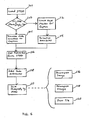
- the photography tag software would then check whether the JPEG file has any of the photography tag markers inside the file. If this is the case, the header marker 80 (see Figure 3 ) is then located which points to the first tag which in turn points to the next tag as previously described. If there is no photography tag marker in the JPEG file at step 100 or 102, the proper markers are created as shown in steps 112, 114.
- step 104 If a JPEG file is loaded having the proper markers, all of the data markers are loaded into a memory as shown in step 104. This is true whether the JPEG file has all of the markers therein when it is loaded or whether the markers have recently been created. At this point, it is now possible to gain access to each of the data markers. It is now also possible to obtain all of the picture bits of the bit map located in the JPEG file so that the picture can be displayed on a screen as illustrated by step 106. At this point, any of the data attributes provided in the data marker can be edited as step 108. As will be subsequently explained, this edit step can only be accomplished if the potential editor has entered the proper password. After all of the data attributes have been reviewed and edited, if necessary, the JPEG file will now be saved as step 110.
- the process of saving the photography tag file is accomplished by initially decomposing the image at step 116 in which the actual photograph is decomposed and then rebuilt, eliminating the photography tag inside of the JPEG file. This means that the end of the decomposition step 116 the photograph would be as if it returned to its original pre-captioned state. This is important since all of the textual data must be rebuilt within the photograph after it has been edited.
- the method of decomposing would initially include the step of traversing through all of the data marker nodes. For each node, the RGBBits attribute is obtained. These bits are the original picture pixels of the area that the text is currently overlaying. If there is no overlay, this step would not be necessary. For each RGBBit it has to be re-overlayed on top of the rectangle position (a second attribute in Table IV). This step would effectively erase the pixels that have the text of the marker and would return the original rectangle pixels that were included before the text overlay. This step must be done for all of the text markers that have been created in the photography tag JPEG file.
- step 118 after all of the old data has been removed and the image returned to its original pre-photography tag state, the picture must be recomposed.
- the recomposed image is saved as step 120 by saving the picture pixels of the JPEG, saving the photography tag data markers, saving the photography tag header and then rewriting the EOI marker.
- the produced JPEG file including the textual material can be transmitted to various devices as shown in Figure 1 .
- the present invention allows the transference and editing of a JPEG file including textual material.
- the photography tag software includes a security mechanism allowing the creator of the JPEG file to protect the data inside the file from being modified without permission of the creator. This security system would also decide which photography tags will be viewed on the picture as well as how they will be viewed.
- the security aspect of the present invention operates since the header marker as illustrated in Table II includes a password. Therefore, as shown in Figure 6 , when the JPEG with a photography tag is loaded into one of the devices shown in Figure 1 , at step 130, a check would be made at step 132 to determine whether a user at step 136 entered a password. Unless a valid password is entered, all editing operation would be halted. The software, at step 138, would check to insure that a validated password as contained in the header marker was entered by the user. If this was not the case, the user would have another opportunity to enter a valid password. If a valid password is not entered after predetermined attempts, no editing would be allowed. If, however, at step 140 a valid password was entered, normal editing processing at step 134 would be enabled.
- the software of the present invention can be composed in a manner allowing a first individual to edit all of the non-photographic material included in the JPEG file, but preventing a second individual from modifying some of this data, but allowing this second individual to change other sections of the data. This is accomplished by including more than one password as shown in Table II and illustrated in Figure 6 . Based upon the assignment of different passwords to different individuals, full or limited access would be given for the purpose of editing the non-photographic material on the JPEG file. Finally, the application could be formulated preventing any editing of some of the data, such as the time stamp.
Landscapes
- Engineering & Computer Science (AREA)
- Multimedia (AREA)
- Signal Processing (AREA)
- Television Signal Processing For Recording (AREA)
- Editing Of Facsimile Originals (AREA)
- Compression Of Band Width Or Redundancy In Fax (AREA)
- Silver Salt Photography Or Processing Solution Therefor (AREA)
- Television Systems (AREA)
- Image Processing (AREA)
- Apparatus For Radiation Diagnosis (AREA)
Claims (23)
- Verfahren zum Erstellen einer JPEG-Mediendatei, bestehend aus den folgenden Schritten:Erstellen eines digitalen Originalfotos mit n digitalen Pixeln, wobei die n digitalen Pixel eine erste Sektion innerhalb der n digitalen Pixel umfassen, die m digitale Pixel enthält;Transferieren des digitalen Originalfotos zu einer ersten Speichereinrichtung (54), die mit einem ersten Mikroprozessor (18) versehen ist, der eine erste Dateneingabeeinrichtung (22) aufweist, undweiterhin durch die folgenden Schritte gekennzeichnet:Editieren des digitalen Originalfotos mittels der Dateneingabeeinrichtung (22) durch Ersetzen der ersten, m digitale Pixel enthaltenden Sektion durch eine zweite Sektion m digitaler Pixel nicht fotografischen Materials, so dass eine alterierte digitale Fotografie erzeugt wird;Erstellen einer JPEG-Mediendatei durch Speicherung des alterierten digitalen Fotos und der ersten Sektion digitaler Pixel als Einzeldatei, wobei die erste Sektion innerhalb von fotografischen Tag-Markern (74) gespeichert ist, die an das alterierte digitale Foto angehängt werden; undEinfügen wenigstens eines Passworts in die fotografischen Tag-Marker (74), damit eine autorisierte Person das nichtfotografische Material editieren kann.
- Verfahren zum Erstellen einer JPEG-Datei nach Anspruch 1, umfassend den Schritt des Transferierens der JPEG-Datei zu einer zweiten Speichereinrichtung (54), die in einem zweiten Mikroprozessor (28) vorgesehen ist, der eine zweite Dateneingabeeinrichtung (32) aufweist.
- Verfahren zum Erstellen einer JPEG-Datei nach Anspruch 1, bei dem das nichtfotografische Material ein Textmaterial ist.
- Verfahren zum Erstellen einer JPEG-Datei nach Anspruch 3, weiterhin umfassend den Schritt des Einfügens von wenigstens zwei ungleichen Passwörtern in die fotografischen Tag-Marker (74), um es unterschiedlichen Personen zu ermöglichen, unterschiedliche Teile des Textmaterials zu editieren.
- Verfahren nach Anspruch 1, weiterhin umfassend den Schritt des Speicherns der zweiten Sektion m digitaler Pixel in den fotografischen Tag-Markern (74), die an die alterierte digitale Fotografie angehängt werden.
- System zum Erstellen einer JPEG-Datei, die ein Foto (70) und ein nichtfotografisches Material (74) in einer Einzeldatei enthält, umfassend:eine Kamera (10), die ein digitales Originalfoto erzeugt, das n digitale Pixel enthält;eine Einrichtung (62) zum Transferieren des digitalen Originalfotos zu einer ersten Speichereinrichtung (54), die einen ersten Mikroprozessor (18) enthält, der ein erstes Display (20) hat, wobei das digitale Originalfoto eine erste Sektion umfasst, die m digitale Pixel enthält und eine Mediendatei in der ersten Speichereinrichtung (54) bildet, und dadurch gekennzeichnet, dass das System weiterhin umfasst:eine erste Dateneingabeeinrichtung (22), die mit dem ersten Mikroprozessor (18) verbunden ist, um die erste Sektion des digitalen Fotos durch eine zweite Sektion m digitaler Pixel nicht fotografischen Materials zu ersetzen, wodurch ein alteriertes digitales Foto erzeugt wird;eine Vorrichtung zum Erstellen einer JPEG-Datei, wobei die JPEG-Datei das alterierte digitale Foto mit der zweiten Sektion m digitaler Pixel enthält, die die erste Sektion m digitaler Pixel ersetzt, die JPEG-Dateien fotografische Tag-Marker (74) enthalten, die fotografischen Tag-Marker die erste Sektion m digitaler Pixel enthalten, und das alterierte Foto und der fotografischen Tag-Marker (74) eine erweiterte Medieneinzeldatei bilden; undeine Vorrichtung (22) zum Einfügen eines Passworts in die fotografischen Tag-Marker (74), damit eine autorisierte Person das nichtfotografische Material editieren kann.
- System nach Anspruch 6, bei dem die Einrichtung (22) zum Einfügen eines Passworts (136) wenigstens zwei ungleiche Passwörter in die fotografischen Tag-Marker (74) einfügt, um es unterschiedlichen Personen zu ermöglichen, verschiedene Teile des nichtfotografischen Materials zu editieren.
- System nach Anspruch 6, bei dem die fotografischen Tag-Marker (74) außerdem die zweite Sektion m digitaler Pixel umfassen.
- System zum Erstellen einer JPEG-Datei nach Anspruch 6, weiterhin aufweisend eine Einrichtung (62) zum Transferieren der gesamten JPEG-Datei zu einer zweiten Speichereinrichtung (54), die in einem zweiten Mikroprozessor (28) vorgesehen ist.
- System zum Erstellen einer JPEG-Datei nach Anspruch 9, bei dem der erste (18) und der zweite (28) Mikroprozessor mit einer Einrichtung (56) versehen sind, die in der JPEG-Datei nach im nichtfotografischen Material enthaltenen Termen sucht.
- System zum Erstellen einer JPEG-Datei nach Anspruch 6, weiterhin umfassend eine zweite Dateneingabeeinrichtung (32) und einen zweiten Mikroprozessor (28), die es einem Benutzer ermöglichen, die JPEG-Datei mittels der zweiten Dateneingabeeinrichtung (32) zu editieren, nachdem die JPEG-Datei zum zweiten Mikroprozessor (28) transferiert wurde.
- System zum Erstellen einer JPEG-Datei nach Anspruch 6, bei dem das nichtfotografische Material Audiomaterial ist.
- System nach Anspruch 6, bei dem das nichtfotografische Material Textmaterial (152) ist.
- System nach Anspruch 13, bei dem das Textmaterial längs wenigstens eines Randes des alterierten digitalen Fotos angeordnet ist.
- JPEG-Datei zum Wiedergeben eines alterierten Fotos (150) auf einer Displayeinrichtung, wobei das alterierte Foto originär mehrere n digitale Pixel enthält, die dazu dienen, ein Originalfoto zu erzeugen, die n digitalen Pixel eine erste Sektion in den n digitalen Pixeln umfassen, die m digitale Pixel enthält, und die JPEG-Datei gekennzeichnet ist durch:das alterierte Foto mit der ersten Sektion, die m digitale Pixel erhält, die durch eine Sektion m digitaler Pixel nichtfotografischen Materials ersetzt ist;fotografische Tag-Marker (74), die an das alterierte Foto angehängt sind, um die JPEG-Datei zu erstellen, wobei die fotografischen Tag-Marker (74) weiterhin die erste Sektion m digitaler Pixel umfassen; undwobei einer der fotografischen Tag-Marker ein Passwort (136) enthält, das es einer autorisierten Person ermöglicht, das nichtfotografische Material zu editieren.
- JPEG-Datei nach Anspruch 15, wobei das alterierte Foto ein zusätzliches nichtfotografisches Material enthält, das an die Ränder des Fotos (76) angehängt ist, und die fotografischen Tags (74) ebenfalls das zusätzliche nichtfotografische Material enthalten.
- JPEG-Datei nach Anspruch 15, weiterhin aufweisend nichtfotografisches Tonmaterial, das an die JPEG-Datei angehängt ist.
- JPEG-Datei nach Anspruch 15, bei der die fotografischen Tag-Marker (74) einen Header-Marker (80) enthalten, der mit die erste Sektion, die m digitale Pixel enthält, und die zweite Sektion, die m digitale Pixel enthält, versehen ist.
- JPEG-Datei nach Anspruch 15, bei der die fotografischen Tag-Marker (152) weiterhin die zweite Sektion m digitaler Pixel enthält.
- JPEG-Datei nach Anspruch 18, bei der der Header-Marker (80) unmittelbar vor dem Ende des Bildtags (EOI) angeordnet ist, der in JPEG-Standarddateien enthalten ist.
- JPEG-Datei nach Anspruch 15, bei der einer der fotografischen Tag-Marker (74) wenigstens zwei ungleiche Passwörter enthält, die es unterschiedlichen Personen ermöglichen, verschiedene Abschnitte des nichtfotografischen Materials zu editieren.
- JPEG-Datei nach Anspruch 15, bei der einer der fotografischen Tag-Marker (74) ein Header-Marker (80) ist, in dem das Passwort gespeichert ist.
- JPEG-Datei nach Anspruch 21, bei der einer der fotografischen Tag-Marker (74) ein Header-Marker (80) ist, in dem die Passwörter (136) gespeichert sind.
Applications Claiming Priority (3)
| Application Number | Priority Date | Filing Date | Title |
|---|---|---|---|
| US261409 | 2002-10-02 | ||
| US10/261,409 US6888569B2 (en) | 2002-10-02 | 2002-10-02 | Method and apparatus for transmitting a digital picture with textual material |
| PCT/IB2003/004947 WO2004030437A2 (en) | 2002-10-02 | 2003-09-30 | Method and apparatus for transmitting a digital picture with textual material |
Publications (3)
| Publication Number | Publication Date |
|---|---|
| EP1557035A2 EP1557035A2 (de) | 2005-07-27 |
| EP1557035A4 EP1557035A4 (de) | 2007-06-06 |
| EP1557035B1 true EP1557035B1 (de) | 2009-12-30 |
Family
ID=32041816
Family Applications (1)
| Application Number | Title | Priority Date | Filing Date |
|---|---|---|---|
| EP03799061A Expired - Lifetime EP1557035B1 (de) | 2002-10-02 | 2003-09-30 | Verfahren und vorrichtung zum übertragen eines digitalen bildes mit textmaterial |
Country Status (10)
| Country | Link |
|---|---|
| US (1) | US6888569B2 (de) |
| EP (1) | EP1557035B1 (de) |
| JP (1) | JP2006501754A (de) |
| KR (1) | KR20050083715A (de) |
| CN (1) | CN100450154C (de) |
| AT (1) | ATE454009T1 (de) |
| AU (1) | AU2003276507A1 (de) |
| CA (1) | CA2541133A1 (de) |
| DE (1) | DE60330792D1 (de) |
| WO (1) | WO2004030437A2 (de) |
Families Citing this family (32)
| Publication number | Priority date | Publication date | Assignee | Title |
|---|---|---|---|---|
| US7272788B2 (en) * | 2000-12-29 | 2007-09-18 | Fotomedia Technologies, Llc | Client-server system for merging of metadata with images |
| AU2002255568B8 (en) * | 2001-02-20 | 2014-01-09 | Adidas Ag | Modular personal network systems and methods |
| JP2004528631A (ja) * | 2001-02-28 | 2004-09-16 | ミュージックレベリオン.コム・インコーポレーテッド | デジタルオンライン交換 |
| US8166098B1 (en) * | 2002-06-17 | 2012-04-24 | At&T Intellectual Property I, Lp | System and method for dynamically capturing digital images from image capture devices |
| US20080129758A1 (en) * | 2002-10-02 | 2008-06-05 | Harry Fox | Method and system for utilizing a JPEG compatible image and icon |
| JP3687675B2 (ja) * | 2002-12-25 | 2005-08-24 | 株式会社ニコン | 電子透かし機能を有する電子カメラ、および画像処理プログラム |
| FI114601B (fi) * | 2003-06-11 | 2004-11-15 | Nokia Corp | Menetelmä ja järjestelmä kuvan käsittelemiseksi, laite sekä kuvatallenne |
| US7426187B2 (en) * | 2003-10-21 | 2008-09-16 | Nokia Corporation | False sync code protection (FSP) decoding by software |
| US20060036466A1 (en) * | 2004-03-31 | 2006-02-16 | Tarr Christopher A | System and method for providing custom stock images |
| KR100733835B1 (ko) | 2005-04-20 | 2007-07-03 | 주식회사 코아로직 | 음성 및 오디오 데이터를 포함한 제이피이지 파일의 생성장치, 그의 생성 방법 및 그의 저장 매체 |
| US7715586B2 (en) * | 2005-08-11 | 2010-05-11 | Qurio Holdings, Inc | Real-time recommendation of album templates for online photosharing |
| US8447828B2 (en) | 2005-09-21 | 2013-05-21 | Qurio Holdings, Inc. | System and method for hosting images embedded in external websites |
| KR101366805B1 (ko) * | 2006-05-30 | 2014-02-21 | 삼성전자주식회사 | 사용자 관심 사항에 기초한 이동 통신 장치의애플리케이션의 런칭 패드 장치 및 구동 방법 |
| KR100856407B1 (ko) | 2006-07-06 | 2008-09-04 | 삼성전자주식회사 | 메타 데이터를 생성하는 데이터 기록 및 재생 장치 및 방법 |
| JP2008039906A (ja) | 2006-08-02 | 2008-02-21 | Casio Comput Co Ltd | 情報処理システム、情報処理装置、画像表示装置及びそのプログラム |
| DE102007022737B4 (de) * | 2007-05-15 | 2010-01-21 | Siemens Ag | Transfer von medizinischen Berichten mittels eines Berichtspaketes |
| WO2009088947A2 (en) * | 2008-01-02 | 2009-07-16 | Arcscan, Inc. | Components for an ultrasonic arc scanning apparatus |
| JP5105550B2 (ja) * | 2009-03-19 | 2012-12-26 | カシオ計算機株式会社 | 画像合成装置及びプログラム |
| KR20110027589A (ko) * | 2009-09-09 | 2011-03-16 | 삼성전자주식회사 | 전자 장치에서 정보를 삽입하고 공유하는 방법 및 장치 |
| CN104509089A (zh) * | 2012-07-31 | 2015-04-08 | 索尼公司 | 信息处理设备、信息处理方法以及程序 |
| US9009123B2 (en) | 2012-08-14 | 2015-04-14 | Shuttersong Incorporated | Method of combining image files and other files |
| US10972746B2 (en) | 2012-08-14 | 2021-04-06 | Shuttersong Incorporated | Method of combining image files and other files |
| CN103067441B (zh) * | 2012-11-27 | 2016-09-21 | 小米科技有限责任公司 | 一种图片分享的方法、装置和设备 |
| CN103327277A (zh) * | 2013-07-05 | 2013-09-25 | 成都品果科技有限公司 | 留声照片生成方法及图片数据与声音数据合并存储方法 |
| US10444959B2 (en) * | 2014-06-02 | 2019-10-15 | Fujifilm North America Corporation | Method and apparatus for managing multiple views for graphics data |
| CN104463469A (zh) * | 2014-12-09 | 2015-03-25 | 国家电网公司 | 一种电网基建工程数码照片管理方法及装置 |
| WO2016144327A1 (en) * | 2015-03-10 | 2016-09-15 | Mark Carlson | Selfie graph |
| US11588872B2 (en) | 2017-06-12 | 2023-02-21 | C-Hear, Inc. | System and method for codec for combining disparate content |
| US10187443B2 (en) | 2017-06-12 | 2019-01-22 | C-Hear, Inc. | System and method for encoding image data and other data types into one data format and decoding of same |
| US11553258B2 (en) | 2018-07-10 | 2023-01-10 | Nokia Technologies Oy | Apparatus, a method and a computer program for video coding and decoding |
| CN109658759A (zh) * | 2019-02-26 | 2019-04-19 | 安康学院 | 一种新型电工电子实验报告与考评系统 |
| CN113312911B (zh) * | 2021-05-26 | 2022-07-12 | 上海晏鼠计算机技术股份有限公司 | 一种基于大纲的自动授权与文段智能创作方法 |
Family Cites Families (22)
| Publication number | Priority date | Publication date | Assignee | Title |
|---|---|---|---|---|
| CA2158988C (en) * | 1993-03-25 | 2000-06-13 | Bruno Delean | Method and system for image processing |
| JP3203290B2 (ja) * | 1994-03-31 | 2001-08-27 | 富士写真フイルム株式会社 | ディジタル電子スチル・カメラおよびメモリ・カードへの記録方法 |
| US5805215A (en) * | 1994-04-21 | 1998-09-08 | Canon Kabushiki Kaisha | Information processing method and apparatus for storing additional data about an image |
| FR2719137B1 (fr) * | 1994-04-25 | 1996-07-26 | Fontaine Picourex Valere | Procédé et dispositif pour la transmission de fichiers comportant au moins un premier type d'informations de faible volume et un deuxième type d'informations de volume important. |
| US6249316B1 (en) * | 1996-08-23 | 2001-06-19 | Flashpoint Technology, Inc. | Method and system for creating a temporary group of images on a digital camera |
| JP3375852B2 (ja) * | 1997-06-13 | 2003-02-10 | 三洋電機株式会社 | ディジタルカメラ |
| JP3658144B2 (ja) * | 1997-06-13 | 2005-06-08 | 株式会社リコー | デジタルスチルカメラ |
| US6483540B1 (en) * | 1997-06-16 | 2002-11-19 | Casio Computer Co., Ltd. | Image data processing apparatus method and program storage medium for processing image data |
| US6014170A (en) * | 1997-06-20 | 2000-01-11 | Nikon Corporation | Information processing apparatus and method |
| US5973734A (en) * | 1997-07-09 | 1999-10-26 | Flashpoint Technology, Inc. | Method and apparatus for correcting aspect ratio in a camera graphical user interface |
| US6154576A (en) * | 1997-12-03 | 2000-11-28 | Flashpoint Technology, Inc. | System and method for anti-aliasing of text overlays on electronic images |
| US6445460B1 (en) * | 1999-04-13 | 2002-09-03 | Flashpoint Technology, Inc. | Method and system for providing and utilizing file attributes with digital images |
| JP3539915B2 (ja) * | 2000-07-14 | 2004-07-07 | 沖電気工業株式会社 | Jpeg動画像記録装置 |
| US20020021304A1 (en) * | 2000-08-18 | 2002-02-21 | Harutaka Eguchi | Image processing system for adding add information to image object, image processing method and medium |
| US7262797B2 (en) * | 2001-02-22 | 2007-08-28 | Ge Inspection Technologies Lp | Method and system for storing calibration data within image files |
| JP2002297154A (ja) * | 2001-03-30 | 2002-10-11 | Minolta Co Ltd | データ提供方式及びデータ提供装置及びデータ取得方式及び端末装置 |
| US7110026B2 (en) * | 2001-07-03 | 2006-09-19 | Logitech Europe S.A. | Image tagging for post processing |
| US7151920B2 (en) * | 2001-12-18 | 2006-12-19 | Nokia Corporation | System for protecting pictures used in wireless communication messages |
| JP2003224750A (ja) * | 2002-01-29 | 2003-08-08 | Ricoh Co Ltd | デジタルカメラおよび画像編集システム |
| US7302118B2 (en) * | 2002-02-07 | 2007-11-27 | Microsoft Corporation | Transformation of images |
| US20030174218A1 (en) * | 2002-03-14 | 2003-09-18 | Battles Amy E. | System for capturing audio segments in a digital camera |
| US20030210335A1 (en) * | 2002-05-07 | 2003-11-13 | Carau Frank Paul | System and method for editing images on a digital still camera |
-
2002
- 2002-10-02 US US10/261,409 patent/US6888569B2/en not_active Expired - Lifetime
-
2003
- 2003-09-30 AU AU2003276507A patent/AU2003276507A1/en not_active Abandoned
- 2003-09-30 WO PCT/IB2003/004947 patent/WO2004030437A2/en not_active Ceased
- 2003-09-30 KR KR1020057005783A patent/KR20050083715A/ko not_active Ceased
- 2003-09-30 CA CA002541133A patent/CA2541133A1/en not_active Abandoned
- 2003-09-30 AT AT03799061T patent/ATE454009T1/de not_active IP Right Cessation
- 2003-09-30 CN CNB03825493XA patent/CN100450154C/zh not_active Expired - Fee Related
- 2003-09-30 DE DE60330792T patent/DE60330792D1/de not_active Expired - Lifetime
- 2003-09-30 EP EP03799061A patent/EP1557035B1/de not_active Expired - Lifetime
- 2003-09-30 JP JP2004541123A patent/JP2006501754A/ja active Pending
Also Published As
| Publication number | Publication date |
|---|---|
| CN1708981A (zh) | 2005-12-14 |
| AU2003276507A1 (en) | 2004-04-23 |
| US20040066459A1 (en) | 2004-04-08 |
| US6888569B2 (en) | 2005-05-03 |
| WO2004030437A3 (en) | 2004-08-12 |
| WO2004030437A2 (en) | 2004-04-15 |
| JP2006501754A (ja) | 2006-01-12 |
| WO2004030437B1 (en) | 2004-09-23 |
| ATE454009T1 (de) | 2010-01-15 |
| DE60330792D1 (de) | 2010-02-11 |
| EP1557035A4 (de) | 2007-06-06 |
| EP1557035A2 (de) | 2005-07-27 |
| CA2541133A1 (en) | 2004-04-15 |
| CN100450154C (zh) | 2009-01-07 |
| KR20050083715A (ko) | 2005-08-26 |
Similar Documents
| Publication | Publication Date | Title |
|---|---|---|
| EP1557035B1 (de) | Verfahren und vorrichtung zum übertragen eines digitalen bildes mit textmaterial | |
| US7386576B2 (en) | Data file storage device with automatic filename creation function, data file storage program and data file storage method | |
| US6483602B1 (en) | Laboratory system, method of controlling operation thereof, playback apparatus and method, film image management method, image data copying system and method of copying image data | |
| US7388606B2 (en) | Method and apparatus for creating a digital picture with a watermark as well as removing the watermark from the digital picture | |
| AU2005323033A1 (en) | Method and apparatus for creating a digital picture with a removable watermark | |
| US8429205B2 (en) | Associating data with media signals in media signal systems through auxiliary data steganographically embedded in the media signals | |
| US7675554B2 (en) | Methods and systems for managing bragbook images | |
| US6850695B1 (en) | Natural language labeling of images using multiple words | |
| US20130073942A1 (en) | Method, System, and Computer-Readable Medium To Uniformly Render Document Annotation Across Different Comuter Platforms | |
| US20040230608A1 (en) | System and method for providing multiple renditions of document content | |
| JPH11175533A (ja) | 画像検索装置 | |
| EP1535461B1 (de) | Layout-prozess für multimedia-nachrichten | |
| JP2003319330A (ja) | 情報記録方法、情報記録端末、情報記録システム、及び記録媒体 | |
| US20150070733A1 (en) | Simultaneous digital image and the image file's internal metadata printing system | |
| EP1143700A2 (de) | Verfahren, Vorrichtung und Aufzeichnungsmedium zur Anzeige von Schablonen | |
| FI114601B (fi) | Menetelmä ja järjestelmä kuvan käsittelemiseksi, laite sekä kuvatallenne | |
| TW200413993A (en) | Information management system of contact end | |
| JP2004178370A (ja) | 高速インターネット利用によるパソコンに向けて、新聞記事の閲覧と主要な新聞記事項目の一覧表示と、この主要な記事について解説する動画、ならびに付帯の音声サウンドを一括同時に配信するニュースコンテンツの生成 | |
| JP2005007814A (ja) | 名刺製作装置、該装置の制御方法および制御プログラム、該プログラムを記録した記録媒体 | |
| KR100652701B1 (ko) | 이동 통신 단말기의 웹 사이트로의 일기 등록 장치 및 방법 | |
| JP2008527844A (ja) | ウォーターマーク付きデジタル画像の作成、ならびにデジタル画像からのウォーターマークの除去、およびjpeg互換イメージの利用のための方法および装置 | |
| HK1118410A (en) | Method and apparatus for creating a digital picture with a watermark as well as removing the watermark from the digital picture and utilizing a jpeg compatible image |
Legal Events
| Date | Code | Title | Description |
|---|---|---|---|
| PUAI | Public reference made under article 153(3) epc to a published international application that has entered the european phase |
Free format text: ORIGINAL CODE: 0009012 |
|
| 17P | Request for examination filed |
Effective date: 20050429 |
|
| AK | Designated contracting states |
Kind code of ref document: A2 Designated state(s): AT BE BG CH CY CZ DE DK EE ES FI FR GB GR HU IE IT LI LU MC NL PT RO SE SI SK TR |
|
| AX | Request for extension of the european patent |
Extension state: AL LT LV MK |
|
| DAX | Request for extension of the european patent (deleted) | ||
| RAP1 | Party data changed (applicant data changed or rights of an application transferred) |
Owner name: PHOTAGS, INC. |
|
| A4 | Supplementary search report drawn up and despatched |
Effective date: 20070509 |
|
| RIC1 | Information provided on ipc code assigned before grant |
Ipc: H04N 5/76 20060101ALI20070427BHEP Ipc: H04N 1/32 20060101AFI20070427BHEP Ipc: H04N 5/262 20060101ALI20070427BHEP |
|
| 17Q | First examination report despatched |
Effective date: 20071121 |
|
| GRAC | Information related to communication of intention to grant a patent modified |
Free format text: ORIGINAL CODE: EPIDOSCIGR1 |
|
| GRAP | Despatch of communication of intention to grant a patent |
Free format text: ORIGINAL CODE: EPIDOSNIGR1 |
|
| GRAS | Grant fee paid |
Free format text: ORIGINAL CODE: EPIDOSNIGR3 |
|
| GRAA | (expected) grant |
Free format text: ORIGINAL CODE: 0009210 |
|
| RAP1 | Party data changed (applicant data changed or rights of an application transferred) |
Owner name: SMITH MICRO SOFTWARE, INC. |
|
| AK | Designated contracting states |
Kind code of ref document: B1 Designated state(s): AT BE BG CH CY CZ DE DK EE ES FI FR GB GR HU IE IT LI LU MC NL PT RO SE SI SK TR |
|
| REG | Reference to a national code |
Ref country code: GB Ref legal event code: FG4D |
|
| REG | Reference to a national code |
Ref country code: CH Ref legal event code: EP |
|
| REG | Reference to a national code |
Ref country code: IE Ref legal event code: FG4D |
|
| REF | Corresponds to: |
Ref document number: 60330792 Country of ref document: DE Date of ref document: 20100211 Kind code of ref document: P |
|
| PG25 | Lapsed in a contracting state [announced via postgrant information from national office to epo] |
Ref country code: SE Free format text: LAPSE BECAUSE OF FAILURE TO SUBMIT A TRANSLATION OF THE DESCRIPTION OR TO PAY THE FEE WITHIN THE PRESCRIBED TIME-LIMIT Effective date: 20091230 Ref country code: FI Free format text: LAPSE BECAUSE OF FAILURE TO SUBMIT A TRANSLATION OF THE DESCRIPTION OR TO PAY THE FEE WITHIN THE PRESCRIBED TIME-LIMIT Effective date: 20091230 |
|
| REG | Reference to a national code |
Ref country code: NL Ref legal event code: VDEP Effective date: 20091230 |
|
| PG25 | Lapsed in a contracting state [announced via postgrant information from national office to epo] |
Ref country code: SI Free format text: LAPSE BECAUSE OF FAILURE TO SUBMIT A TRANSLATION OF THE DESCRIPTION OR TO PAY THE FEE WITHIN THE PRESCRIBED TIME-LIMIT Effective date: 20091230 |
|
| PG25 | Lapsed in a contracting state [announced via postgrant information from national office to epo] |
Ref country code: AT Free format text: LAPSE BECAUSE OF FAILURE TO SUBMIT A TRANSLATION OF THE DESCRIPTION OR TO PAY THE FEE WITHIN THE PRESCRIBED TIME-LIMIT Effective date: 20091230 |
|
| PG25 | Lapsed in a contracting state [announced via postgrant information from national office to epo] |
Ref country code: BG Free format text: LAPSE BECAUSE OF FAILURE TO SUBMIT A TRANSLATION OF THE DESCRIPTION OR TO PAY THE FEE WITHIN THE PRESCRIBED TIME-LIMIT Effective date: 20100330 Ref country code: ES Free format text: LAPSE BECAUSE OF FAILURE TO SUBMIT A TRANSLATION OF THE DESCRIPTION OR TO PAY THE FEE WITHIN THE PRESCRIBED TIME-LIMIT Effective date: 20100410 Ref country code: RO Free format text: LAPSE BECAUSE OF FAILURE TO SUBMIT A TRANSLATION OF THE DESCRIPTION OR TO PAY THE FEE WITHIN THE PRESCRIBED TIME-LIMIT Effective date: 20091230 Ref country code: EE Free format text: LAPSE BECAUSE OF FAILURE TO SUBMIT A TRANSLATION OF THE DESCRIPTION OR TO PAY THE FEE WITHIN THE PRESCRIBED TIME-LIMIT Effective date: 20091230 Ref country code: PT Free format text: LAPSE BECAUSE OF FAILURE TO SUBMIT A TRANSLATION OF THE DESCRIPTION OR TO PAY THE FEE WITHIN THE PRESCRIBED TIME-LIMIT Effective date: 20100430 Ref country code: NL Free format text: LAPSE BECAUSE OF FAILURE TO SUBMIT A TRANSLATION OF THE DESCRIPTION OR TO PAY THE FEE WITHIN THE PRESCRIBED TIME-LIMIT Effective date: 20091230 |
|
| PG25 | Lapsed in a contracting state [announced via postgrant information from national office to epo] |
Ref country code: CZ Free format text: LAPSE BECAUSE OF FAILURE TO SUBMIT A TRANSLATION OF THE DESCRIPTION OR TO PAY THE FEE WITHIN THE PRESCRIBED TIME-LIMIT Effective date: 20091230 Ref country code: SK Free format text: LAPSE BECAUSE OF FAILURE TO SUBMIT A TRANSLATION OF THE DESCRIPTION OR TO PAY THE FEE WITHIN THE PRESCRIBED TIME-LIMIT Effective date: 20091230 Ref country code: BE Free format text: LAPSE BECAUSE OF FAILURE TO SUBMIT A TRANSLATION OF THE DESCRIPTION OR TO PAY THE FEE WITHIN THE PRESCRIBED TIME-LIMIT Effective date: 20091230 |
|
| PG25 | Lapsed in a contracting state [announced via postgrant information from national office to epo] |
Ref country code: GR Free format text: LAPSE BECAUSE OF FAILURE TO SUBMIT A TRANSLATION OF THE DESCRIPTION OR TO PAY THE FEE WITHIN THE PRESCRIBED TIME-LIMIT Effective date: 20100331 Ref country code: CY Free format text: LAPSE BECAUSE OF FAILURE TO SUBMIT A TRANSLATION OF THE DESCRIPTION OR TO PAY THE FEE WITHIN THE PRESCRIBED TIME-LIMIT Effective date: 20091230 |
|
| PLBE | No opposition filed within time limit |
Free format text: ORIGINAL CODE: 0009261 |
|
| STAA | Information on the status of an ep patent application or granted ep patent |
Free format text: STATUS: NO OPPOSITION FILED WITHIN TIME LIMIT |
|
| 26N | No opposition filed |
Effective date: 20101001 |
|
| PG25 | Lapsed in a contracting state [announced via postgrant information from national office to epo] |
Ref country code: DK Free format text: LAPSE BECAUSE OF FAILURE TO SUBMIT A TRANSLATION OF THE DESCRIPTION OR TO PAY THE FEE WITHIN THE PRESCRIBED TIME-LIMIT Effective date: 20091230 |
|
| PG25 | Lapsed in a contracting state [announced via postgrant information from national office to epo] |
Ref country code: IT Free format text: LAPSE BECAUSE OF FAILURE TO SUBMIT A TRANSLATION OF THE DESCRIPTION OR TO PAY THE FEE WITHIN THE PRESCRIBED TIME-LIMIT Effective date: 20091230 |
|
| PG25 | Lapsed in a contracting state [announced via postgrant information from national office to epo] |
Ref country code: MC Free format text: LAPSE BECAUSE OF NON-PAYMENT OF DUE FEES Effective date: 20100930 |
|
| REG | Reference to a national code |
Ref country code: CH Ref legal event code: PL |
|
| PG25 | Lapsed in a contracting state [announced via postgrant information from national office to epo] |
Ref country code: LI Free format text: LAPSE BECAUSE OF NON-PAYMENT OF DUE FEES Effective date: 20100930 Ref country code: IE Free format text: LAPSE BECAUSE OF NON-PAYMENT OF DUE FEES Effective date: 20100930 Ref country code: CH Free format text: LAPSE BECAUSE OF NON-PAYMENT OF DUE FEES Effective date: 20100930 |
|
| PG25 | Lapsed in a contracting state [announced via postgrant information from national office to epo] |
Ref country code: HU Free format text: LAPSE BECAUSE OF FAILURE TO SUBMIT A TRANSLATION OF THE DESCRIPTION OR TO PAY THE FEE WITHIN THE PRESCRIBED TIME-LIMIT Effective date: 20100701 Ref country code: LU Free format text: LAPSE BECAUSE OF NON-PAYMENT OF DUE FEES Effective date: 20100930 |
|
| PG25 | Lapsed in a contracting state [announced via postgrant information from national office to epo] |
Ref country code: TR Free format text: LAPSE BECAUSE OF FAILURE TO SUBMIT A TRANSLATION OF THE DESCRIPTION OR TO PAY THE FEE WITHIN THE PRESCRIBED TIME-LIMIT Effective date: 20091230 |
|
| REG | Reference to a national code |
Ref country code: DE Ref legal event code: R082 Ref document number: 60330792 Country of ref document: DE Representative=s name: PATENTANWAELTE WEICKMANN & WEICKMANN, DE Ref country code: DE Ref legal event code: R082 Ref document number: 60330792 Country of ref document: DE Representative=s name: WEICKMANN & WEICKMANN PATENTANWAELTE - RECHTSA, DE Ref country code: DE Ref legal event code: R082 Ref document number: 60330792 Country of ref document: DE Representative=s name: WEICKMANN & WEICKMANN PATENT- UND RECHTSANWAEL, DE |
|
| REG | Reference to a national code |
Ref country code: FR Ref legal event code: PLFP Year of fee payment: 14 |
|
| REG | Reference to a national code |
Ref country code: FR Ref legal event code: PLFP Year of fee payment: 15 |
|
| REG | Reference to a national code |
Ref country code: FR Ref legal event code: PLFP Year of fee payment: 16 |
|
| PGFP | Annual fee paid to national office [announced via postgrant information from national office to epo] |
Ref country code: GB Payment date: 20220927 Year of fee payment: 20 Ref country code: DE Payment date: 20220928 Year of fee payment: 20 |
|
| PGFP | Annual fee paid to national office [announced via postgrant information from national office to epo] |
Ref country code: FR Payment date: 20220926 Year of fee payment: 20 |
|
| REG | Reference to a national code |
Ref country code: DE Ref legal event code: R071 Ref document number: 60330792 Country of ref document: DE |
|
| REG | Reference to a national code |
Ref country code: GB Ref legal event code: PE20 Expiry date: 20230929 |
|
| PG25 | Lapsed in a contracting state [announced via postgrant information from national office to epo] |
Ref country code: GB Free format text: LAPSE BECAUSE OF EXPIRATION OF PROTECTION Effective date: 20230929 |