EP1559481A1 - Screeningtest zum Nachweis von Biomolekülen - Google Patents
Screeningtest zum Nachweis von Biomolekülen Download PDFInfo
- Publication number
- EP1559481A1 EP1559481A1 EP05075236A EP05075236A EP1559481A1 EP 1559481 A1 EP1559481 A1 EP 1559481A1 EP 05075236 A EP05075236 A EP 05075236A EP 05075236 A EP05075236 A EP 05075236A EP 1559481 A1 EP1559481 A1 EP 1559481A1
- Authority
- EP
- European Patent Office
- Prior art keywords
- well
- substrate
- binding
- membrane
- plate
- Prior art date
- Legal status (The legal status is an assumption and is not a legal conclusion. Google has not performed a legal analysis and makes no representation as to the accuracy of the status listed.)
- Withdrawn
Links
Images






Classifications
-
- B—PERFORMING OPERATIONS; TRANSPORTING
- B01—PHYSICAL OR CHEMICAL PROCESSES OR APPARATUS IN GENERAL
- B01L—CHEMICAL OR PHYSICAL LABORATORY APPARATUS FOR GENERAL USE
- B01L3/00—Containers or dishes for laboratory use, e.g. laboratory glassware; Droppers
- B01L3/50—Containers for the purpose of retaining a material to be analysed, e.g. test tubes
- B01L3/502—Containers for the purpose of retaining a material to be analysed, e.g. test tubes with fluid transport, e.g. in multi-compartment structures
- B01L3/5025—Containers for the purpose of retaining a material to be analysed, e.g. test tubes with fluid transport, e.g. in multi-compartment structures for parallel transport of multiple samples
- B01L3/50255—Multi-well filtration
-
- B—PERFORMING OPERATIONS; TRANSPORTING
- B01—PHYSICAL OR CHEMICAL PROCESSES OR APPARATUS IN GENERAL
- B01L—CHEMICAL OR PHYSICAL LABORATORY APPARATUS FOR GENERAL USE
- B01L2300/00—Additional constructional details
- B01L2300/08—Geometry, shape and general structure
- B01L2300/0809—Geometry, shape and general structure rectangular shaped
- B01L2300/0829—Multi-well plates; Microtitration plates
-
- B—PERFORMING OPERATIONS; TRANSPORTING
- B01—PHYSICAL OR CHEMICAL PROCESSES OR APPARATUS IN GENERAL
- B01L—CHEMICAL OR PHYSICAL LABORATORY APPARATUS FOR GENERAL USE
- B01L2300/00—Additional constructional details
- B01L2300/16—Surface properties and coatings
- B01L2300/161—Control and use of surface tension forces, e.g. hydrophobic, hydrophilic
- B01L2300/163—Biocompatibility
-
- B—PERFORMING OPERATIONS; TRANSPORTING
- B01—PHYSICAL OR CHEMICAL PROCESSES OR APPARATUS IN GENERAL
- B01L—CHEMICAL OR PHYSICAL LABORATORY APPARATUS FOR GENERAL USE
- B01L2400/00—Moving or stopping fluids
- B01L2400/04—Moving fluids with specific forces or mechanical means
- B01L2400/0403—Moving fluids with specific forces or mechanical means specific forces
- B01L2400/0409—Moving fluids with specific forces or mechanical means specific forces centrifugal forces
-
- B—PERFORMING OPERATIONS; TRANSPORTING
- B01—PHYSICAL OR CHEMICAL PROCESSES OR APPARATUS IN GENERAL
- B01L—CHEMICAL OR PHYSICAL LABORATORY APPARATUS FOR GENERAL USE
- B01L3/00—Containers or dishes for laboratory use, e.g. laboratory glassware; Droppers
- B01L3/50—Containers for the purpose of retaining a material to be analysed, e.g. test tubes
- B01L3/508—Rigid containers without fluid transport within
- B01L3/5085—Rigid containers without fluid transport within for multiple samples, e.g. microtitration plates
- B01L3/50855—Rigid containers without fluid transport within for multiple samples, e.g. microtitration plates using modular assemblies of strips or of individual wells
-
- G—PHYSICS
- G01—MEASURING; TESTING
- G01N—INVESTIGATING OR ANALYSING MATERIALS BY DETERMINING THEIR CHEMICAL OR PHYSICAL PROPERTIES
- G01N1/00—Sampling; Preparing specimens for investigation
- G01N1/28—Preparing specimens for investigation including physical details of (bio-)chemical methods covered elsewhere, e.g. G01N33/50, C12Q
- G01N1/40—Concentrating samples
- G01N1/4005—Concentrating samples by transferring a selected component through a membrane
- G01N2001/4016—Concentrating samples by transferring a selected component through a membrane being a selective membrane, e.g. dialysis or osmosis
-
- G—PHYSICS
- G01—MEASURING; TESTING
- G01N—INVESTIGATING OR ANALYSING MATERIALS BY DETERMINING THEIR CHEMICAL OR PHYSICAL PROPERTIES
- G01N1/00—Sampling; Preparing specimens for investigation
- G01N1/28—Preparing specimens for investigation including physical details of (bio-)chemical methods covered elsewhere, e.g. G01N33/50, C12Q
- G01N1/40—Concentrating samples
- G01N1/4077—Concentrating samples by other techniques involving separation of suspended solids
- G01N2001/4088—Concentrating samples by other techniques involving separation of suspended solids filtration
Definitions
- This invention relates to novel plate devices for use in high-throughput screening assays.
- the most common method used to measure the level of protein binding exhibited by compounds is equilibrium dialysis assays.
- a set concentration of drug usually 1 ⁇ M
- human plasma usually 3 ml
- the mixture is added to dialysis tubing with a molecular weight cut-off of 30 kDa.
- the mixture is allowed to incubate in a large volume of water (usually 4 litre) for 24 hours at 37oC. Following the incubation the sample is collected and the concentration of drug is calculated. If the compound is completely unbound to protein, the concentration following dialysis would be 0, if 50% bound the concentration would be 0.5 uM, etc.
- polypropylene is currently considered the best type of commercially available plastic plate based on its low non-specific binding properties and solvent resistance. Even the non-specific binding (NSB) to polypropylene can interfere with the calculation of accurate plasma protein binding values.
- the filtration device includes a filtrate unit-holder plate and comprises a polyolefin, most preferably polypropylene, and Teflon® resin, most preferably about 2.5% Teflon® resin and about 97.5% polypropylene.
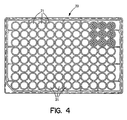
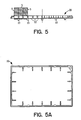
- Said plate contains a plurality of through-holes, each of which is capable of securely holding a filter unit, such as a Microcon-3, 10, 30 or 100® filter unit (see Figures 4, 5, 7 and 8).
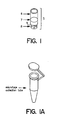
- Said filter unit (see Figure 1) contains a reservoir and a filter membrane, contained within the filter unit-holder plate.
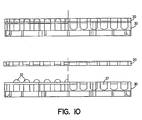
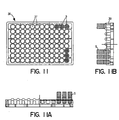
- the filter unit also contains a base, which is positioned in an opening in each of the filter unit-holder plate through-holes and into a preferably reversible-well collection plate (see Figures 9, 10, 11 and 12).
- Said "reversible-well collection plate” also comprises a polymeric material and an additive to which biomolecules exhibit minimal or no binding, preferably polypropylene and Teflon® resin (most preferably, again, at about 2.5% Teflon® resin and about 97.5% polypropylene) and also contains a plurality of wells.
- the collection plate is designed such that its wells can accommodate either end of the filter unit.
- the filter unit-holder plate and collection plates, along with the filter units contained therein, are securely fastened together and used in high-throughput screening assays for the binding of small molecules and peptides to proteins.
- the design of the plates, and their composition, allows for several advantages in the conducting of such screens, as is described herein.
- the filtrate plate device of the present invention consists of a multi-well plate and holder with a unique micro-array format designed to fit 96 Microcon filter units, for example.
- the holder contains a plurality of through-holes where the filter units are inserted.
- the ridge of the filter unit lies on top of the through-hole and the bottom (base) of the filter unit passes through.
- the set-up was designed so that several mm of the base of the filter unit protrudes into the wells of the collection plate. This is one way to prevent well to well spill-over during the centrifugation.
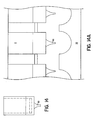
- a spout 60 ( Figure 14) could be used to avoid cross-contamination.
- the holder/plate sandwich can be spun in a tabletop centrifuge with a swinging bucket to collect the filtrate.
- the plates were designed to allow stacking of the sandwiches on top of one another to allow more plates to be spun at one time.
- sample preparation units are inserted into the custom-designed holder which is then placed on top of the collection plate.
- 200 ul of sample for example, is added to the filter units in the presence or absence of the small molecule at a concentration of 1 uM.
- the plates are placed in a swinging bucket rotor, containing microtiter plate holders. The plates are spun at suitable speeds, such as 3000 g for 30 minutes.
- the free small molecules typically molecular weight 300-600 Daltons
- the bound molecules are retained with the plasma proteins, which range in molecular weight from 20,000 to 500,000 Daltons.
- the collection plate contains the free compound (filtrate) and the filter reservoir contains the bound compound (retentate).
- the free compound contained in the filtrate can be determined by mass spectrometry, electrospray or a bioassay.
- filter unit-holder and collection plates are designed with V-grooves on the outer exterior of the plates that make them amenable to automation using robotics.
- the present invention is directed to a polymeric blend for use in sample preparation, measurement (such as pipettes) or storage (such as tubes) devices which exhibits minimal or no binding to biomolecules (i.e., molecules that affect or are involved in life processes, including synthetic small molecules, peptides, proteins, nucleic acids such as DNA and RNA, oligonucleotides, polysaccharides, lipids, etc.).
- the polymeric blend is preferably used in parts of the devices where contact with the liquid sample occurs or is likely to occur.
- the device comprises a filter unit holder plate, a filtration device such as the MICROCON filter unit commercially available from Millipore Corporation, and one or more optional collection units.
- a filter unit 5 suitable for use in the present invention.
- the filter unit shown is a MICROCON-10 filter unit commercially available from Millipore Corporation. It includes a sample reservoir 6, a base 8 situated below the sample reservoir 6 as depicted in the figure, and a membrane 7 separating the reservoir 6 from the base 8.
- the membrane is supported in the unit 5, and a liquid tight seal is provided between the periphery of the sample reservoir 6, the membrane 7 and the membrane support, such as with an O-ring.
- One or more filtrate ducts are provided in the unit 5 to allow the passage of filtrate from the membrane 7 into the base 8.
- the membrane is a retentive membrane, such as a YM membrane capable of retaining large molecules while allowing small molecules to pass through (the passage of small molecules through the membrane allows one to determine whether they have bound to the serum proteins, for example).
- Figure 2 illustrates the binding of molecules to such membranes.
- the binding of 50 biomolecules, a series of hydroxamic acids was determined by incubating each molecule at a range of concentrations, 1-1000 nM, with each of the three membranes.
- the drug was allowed to incubate with the membrane in a volume of 500 ⁇ l for 30 minutes at 37°C. Following the incubation, the samples were collected and the drug concentrations were calculated. The decrease in concentration was used to calculate the levels of binding to membrane.
- the YM membrane gives equivalent or lower binding of the small molecules than the Spectr/por or the Slide-A-Lyzer membranes. In most cases the YM membrane gives substantially lower binding.
- the present invention provides a filter unit holder plate 20 (see Figures 4, 5 and 6) comprising a polymeric material, such as a polyolefin, PFA, PTFE, CORIAN or a thermoplastic, such as styrene, acetobutylstyrene, polycarbonate or acrylic, preferably a polyolefin, most preferably polypropylene.
- a polymeric material such as a polyolefin, PFA, PTFE, CORIAN or a thermoplastic, such as styrene, acetobutylstyrene, polycarbonate or acrylic, preferably a polyolefin, most preferably polypropylene.
- An additive which exhibits minimal or no binding characteristics with respect to biomolecules, for example proteins and/or DNA and/or RNA, is added to the polymeric material in an amount suitable to render the resulting blend non-binding.
- Suitable additives include Tefton® resin, polyetheretherketone (PEEK), polyphenylene sulfide (PPS or RYTON), perfluoroalkyoxyalkane (PFA), fluorinated ethylenepropylene (FEP), and CORIAN (a mixture of natural minerals and pure acrylic).
- PEEK polyetheretherketone
- PPS or RYTON polyphenylene sulfide
- PFA perfluoroalkyoxyalkane
- FEP fluorinated ethylenepropylene
- CORIAN a mixture of natural minerals and pure acrylic.
- the polymer is polypropylene and (the additive is Teflon® resin.
- the filter unit holder plate 20 contains a plurality of through-holes 21, such as 96 through-holes, wherein: each of said through-holes is capable of securely containing a filtration device, such as a Microcon-3, 10, 30 or 100® filter unit; said through-holes 21 containing an opening 22 on their bottom surface sufficient in size to allow the base 8 of said filter unit 5, but not the reservoir 6 or filter membrane 7 of said filter unit 5, to pass through the bottom surface and into a filtrate collection device ( Figure 5); said through-holes 21 preferably having a circular circumference; said through-holes 21 preferably being symmetrically arranged in the plate; and the center of each through-hole 21 being aligned vertically with the through-holes 21 in the rows above and below said through-hole and the center of each through-hole is aligned horizontally with the center of the through-holes in columns to the left and right of said through-hole 21.
- a filtration device such as a Microcon-3, 10, 30 or 100® filter unit
- each filter unit 5, and more particularly, the base 8 of each filter unit 5, sits in a respective opening 22 in each through-hole 21 of the filter unit holder 20.
- the outer diameter of the base 8 is slightly less than the diameter of the opening 22, allowing the base to tightly fit into the through-hole 21.
- Below the membrane 7, the base 8 has an outer diameter smaller than the outer diameter of the reservoir 6, thus forming a shoulder 9 ( Figure 1).
- the shoulder 9 lies on top of the opening 22, providing a vertical stop preventing the unit 5 from penetrating further into the well 21.
- the lower free end of the base 8 protrudes slightly through the opening 22 so that any filtrate flowing from the base flows into a corresponding well in the collection plate (discussed below) without leaking or contaminating other nearby wells.
- the filter unit 5 should not be inserted too deeply in the through-hole 21, since the O-ring used to seal the membrane in the unit 5 may be stressed and fail as a result.
- the lower free end of the base 8 could be substantially planar or planar with the bottom surface of the filter holder 20, and spouts 60 ( Figures 14, 14A) could be used to direct the flow of filtrate in order to avoid cross-contamination.
- the spout 60 can be part of the filter unit 5, and positioned an optimum distance from the well of the collection plate into which the fluid will drop.
- the exterior bottom surface of said filter unit holder plate 20 contains a plurality of pegs 23 ( Figure 5) protruding therefrom sufficient in number and size to connect said plate to a reversible-well collection plate (said "reversible-well collection plate” is the reversible collection plate described and claimed herein).
- the collection plate surface can contain a plurality of nubs which are received in corresponding recesses in the bottom of the filter unit holder 20 to facilitate their assembly.
- the external dimensions of said filter unit holder plate 20 are about the same as the external dimensions of a standard 96-well plate used for high-throughput screening assays.
- said filter unit holder plate 20 is composed of from about 1-10% Teflon® resin and from about 90-99 % polypropylene, most preferably, of about 2.5% Tefton® resin and about 97.5% polypropylene.
- Teflon® resin inhibits the binding of molecules to the surface of the wells 21 of the plates, and thus makes for more efficient and reliable assays.
- This invention also provides a collection plate 30 ( Figures 6-12) which is preferably a reversible-well collection plate. Since the collection plate 30 will contact sample, it preferably comprises the polymeric blend of the present invention, most preferably polypropylene and Teflon® resin.
- the collection plate 30 also preferably contains a plurality of wells 37, wherein: each of said wells 37 is capable of securely containing a Microcon-3, 10, 30 or 100® filter unit; the top of each said well 37 is capable of securely containing either end of the filter unit; wherein the wells 37 can have a U-shaped bottom surface sufficient to allow said surface to securely contain either end of said filter unit; and wherein: the side and bottom surfaces of said filtrate collection plate can contain a plurality of V-shaped grooves sufficient in number and size to allow the plate to be manipulated by a standard robotic or automated device; and, the external dimensions of said filtrate collection plate are about the same as the external dimensions of a standard 96-well plate.
- the collection plate 30 preferably includes a plurality of aligned semi-circular in cross-section pins 32 which assist in aligning the collection plate 30 underneath the holder 20, or on top of the filter units 5 during recovery.
- Each of the pins 32 is centrally positioned about four symmetrical wells 37, and is dimensioned to fit between four corresponding filter units 5 in the recovery mode.
- the plate is composed of from about 1-20% Teflon® resin and from about 80-99% polypropylene, more preferably 1-10% Teflon resin and 90-99% polypropylene, most preferably, about 2.5% Teflon® resin and about 97.5% polypropylene.
- Binding performance must be weighed against cost in determining optimum amounts of TEFLON resin.
- Other plastics and additives mentioned above with respect to the filter unit holder 20 are also suitable materials of construction for the collection plate.
- the filter unit is a Micron-10® filter unit.
- a reversible-well collection plate comprising polypropylene and Teflon® resin and containing 96 wells substantially as shown in Figures 9, 10, 11 and 12 is particularly preferred.
- the filter unit also can be constructed of the polymeric blend of the present invention.
- the filter unit holder and collection plates are designed to work, in connection with filter units, together in high-throughput screening assays for separating out small molecules ("small” generally meaning molecules having a molecular weight of about 300-600 daltons, although smaller and larger molecules may be separated as well) which bind to certain proteins from those which don't.
- this invention further provides a high-throughput screening assay for the detection of the binding of small molecules to protein which comprises the steps of:
- Said assay is readily conducted by ordinarily skilled artisans given the teachings of this invention and without undue experimentation.
- said artisans are well able to determine sufficient centrifuging speeds and time for both the filtrate collection (e.g., 3000 rpm for 30 minutes) and retentate collection (e.g., five minutes) steps.
- Said assay offers a number of advantages not presently available in the high-throughput screening art. For example, due to the incorporation of Teflon® resin into both plates, small molecules are inhibited from sticking to the surfaces of the plates' wells, thus leading to more accurate assessments of free and bound molecules. Also, due to the nature of the structure of the wells of the reversible-well plates, having the capacity to attach to either end of the filter units, filtrate can be collected from the initial filter units in a convenient step.
- the Microcon-10 filter units were purchased from Millipore Corporation (Danvers, MA catalogue #42407).
- the Microcon-10 filter device contains a low binding, anisotropic, hydrophilic-regenerated cellulose membrane (YM membrane) with a size exclusion of 10,000 daltons ( Figure 1).
- the sample reservoir containing the membrane was inserted into a microfuge tube.
- the sample reservoir will hold up 500 ul of solution.
- the liquid was passed through the size-exclusion membrane via centrifugation in a tabletop, micro-centrifuge.
- the aim of the first experiment was to demonstrate that the YM membrane shows very low levels of binding to small molecules; if a membrane is shown to bind to a large number of different small molecules, the use of that membrane for determining an accurate protein binding value for a molecule is not possible.
- Binding properties of the YM membrane with that of two commercially available dialysis membranes, Spectra/Por (Spectrum, Website, CA catlogue#132670) and Slide-A-Lyzer (Pierce, Rockford, IL catalogue # 66426) were compared; both dialysis membranes contained a molecular weight cut-off of 10,000 daltons.
- the two other dialysis membranes showed very high binding - 25 molecules showed greater than 10% binding to the Slide-A-Lyzer, with molecules 44 to 50 exhibiting greater than 25% binding.
- the Spectra/Por membrane also showed very high binding - with 20 molecules exhibiting greater than 10% binding and molecules 44 to 50 showing greater than 20% binding.
- the aim of the next experiment was to determine whether or not we could use the Microcon-10 filter units in an assay to calculate accurate protein binding values of small molecules. Also, to determine if the protein binding values generated using the Microcon-10 filter units is comparable to those values generated using the standard equilibrium dialysis method.
- 50 small molecules ranging in molecular weight from 200 to 400 daltons were analyzed in parallel for binding to human serum proteins using the Microcon-10 filter units or equilibrium dialysis with the Spectra/por membranes.
- each of the 50 molecules were diluted to a final concentration of 1 uM into 500 ul of whole human serum. The samples were allowed to incubate for 30 minutes at 37°C in an incubator. Following the incubation the samples were transferred to the Microcon-10 sample reservoirs and the free drug was separated from serum bound drug by spinning the filter units at 12,000 g at 37oC for 10 minutes.
- each of the 50 molecules was diluted to a final concentration of 1 uM into 500 of whole human serum.
- the samples were allowed to incubate for 30 minutes at 37°C in an incubator. Following the incubation, the samples were transferred to dialysis tubing with a surface area of 3cm 2 and sealed with dialysis clamps. The tubing was placed in 4 litres of water that was pre-equilibrated to 37°C.
- Each 4-litre beaker contained 10 dialysis bags, and the samples were allowed to dialyze for 24 hours. Following the incubation, the samples were collected and the concentration of drug remaining in the bag was calculated.
- the decrease in drug concentration is measure of protein binding and is calculated by simply dividing the starting concentration [1uM] by the concentration of drug remaining following dialysis.
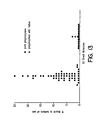
- the protein binding values generated in both assays were compared (see Figure 3). There is a strong positive correlation between the binding values generated using equilibrium dialysis and Microcon-10 centrifugation. The R 2 value is 0.98 for the 50 small molecules analyzed in the study.
- Both the retentate and filtrate collection plates were originally composed of pure polypropylene. However, following a protein-binding assay, the free drug contained in the filtrate showed binding to the surface of the well. This binding to polypropylene was seen for many small molecules. Therefore, in many cases the calculated concentration of drug in the filtrate was incorrect and lead to the extrapolation of erroneous protein binding values.
- a novel mixture of plastic was formulated. Teflon resin was mixed with pure polypropylene and used to make the retentate and filtrate plates. The hybrid plastic contained 2.5% Teflon resin and 97.5% polypropylene.
- the binding of 50 small molecules to both plastics were determined. This was done by incubating each of the small molecules at a range of concentrations (1-1000 nM) in the well of a plate composed of pure polypropylene or polypropylene with 2.5% Teflon. The small molecules were allowed to incubate in the well in a volume of 200 ⁇ l of water for 30 minutes at 37°C.
Landscapes
- Health & Medical Sciences (AREA)
- Chemical & Material Sciences (AREA)
- Analytical Chemistry (AREA)
- General Health & Medical Sciences (AREA)
- Hematology (AREA)
- Clinical Laboratory Science (AREA)
- Chemical Kinetics & Catalysis (AREA)
- Sampling And Sample Adjustment (AREA)
Applications Claiming Priority (3)
| Application Number | Priority Date | Filing Date | Title |
|---|---|---|---|
| US14552799P | 1999-07-16 | 1999-07-16 | |
| US145527P | 1999-07-16 | ||
| EP00947347A EP1220716B8 (de) | 1999-07-16 | 2000-07-14 | Schwach bindende vorrichtung zur rückhaltung von flüssigkeiten und zur filterung |
Related Parent Applications (1)
| Application Number | Title | Priority Date | Filing Date |
|---|---|---|---|
| EP00947347A Division EP1220716B8 (de) | 1999-07-16 | 2000-07-14 | Schwach bindende vorrichtung zur rückhaltung von flüssigkeiten und zur filterung |
Publications (1)
| Publication Number | Publication Date |
|---|---|
| EP1559481A1 true EP1559481A1 (de) | 2005-08-03 |
Family
ID=34655034
Family Applications (1)
| Application Number | Title | Priority Date | Filing Date |
|---|---|---|---|
| EP05075236A Withdrawn EP1559481A1 (de) | 1999-07-16 | 2000-07-14 | Screeningtest zum Nachweis von Biomolekülen |
Country Status (1)
| Country | Link |
|---|---|
| EP (1) | EP1559481A1 (de) |
Citations (7)
| Publication number | Priority date | Publication date | Assignee | Title |
|---|---|---|---|---|
| US4210697A (en) * | 1978-09-15 | 1980-07-01 | Pall Corporation | Process for preparing hydrophobic porous fibrous sheet material of high strength and porosity and product |
| EP0106764A1 (de) * | 1982-10-14 | 1984-04-25 | Norsolor S.A. | Verfahren zur Herstellung von thermoplastischen Kompositmaterialien mit einer Matrix und einer polymeren fibrillierten verstärkten Phase |
| US4666991A (en) * | 1984-11-05 | 1987-05-19 | Sagami Chemical Research Center | Fluorine-containing graft copolymer and adhesive and composite membrane made thereof |
| US5346999A (en) * | 1985-01-18 | 1994-09-13 | Applied Biosystems, Inc. | Method of nucleic acid extraction |
| WO1996041810A1 (en) * | 1995-06-08 | 1996-12-27 | Progen Industries Limited | Method and apparatus for dna extraction |
| WO1997008306A1 (en) * | 1995-08-31 | 1997-03-06 | Sequenom, Inc. | Filtration processes, kits and devices for isolating plasmids |
| US5853894A (en) * | 1997-02-03 | 1998-12-29 | Cytonix Corporation | Laboratory vessel having hydrophobic coating and process for manufacturing same |
-
2000
- 2000-07-14 EP EP05075236A patent/EP1559481A1/de not_active Withdrawn
Patent Citations (7)
| Publication number | Priority date | Publication date | Assignee | Title |
|---|---|---|---|---|
| US4210697A (en) * | 1978-09-15 | 1980-07-01 | Pall Corporation | Process for preparing hydrophobic porous fibrous sheet material of high strength and porosity and product |
| EP0106764A1 (de) * | 1982-10-14 | 1984-04-25 | Norsolor S.A. | Verfahren zur Herstellung von thermoplastischen Kompositmaterialien mit einer Matrix und einer polymeren fibrillierten verstärkten Phase |
| US4666991A (en) * | 1984-11-05 | 1987-05-19 | Sagami Chemical Research Center | Fluorine-containing graft copolymer and adhesive and composite membrane made thereof |
| US5346999A (en) * | 1985-01-18 | 1994-09-13 | Applied Biosystems, Inc. | Method of nucleic acid extraction |
| WO1996041810A1 (en) * | 1995-06-08 | 1996-12-27 | Progen Industries Limited | Method and apparatus for dna extraction |
| WO1997008306A1 (en) * | 1995-08-31 | 1997-03-06 | Sequenom, Inc. | Filtration processes, kits and devices for isolating plasmids |
| US5853894A (en) * | 1997-02-03 | 1998-12-29 | Cytonix Corporation | Laboratory vessel having hydrophobic coating and process for manufacturing same |
Similar Documents
| Publication | Publication Date | Title |
|---|---|---|
| EP1220716B1 (de) | Schwach bindende vorrichtung zur rückhaltung von flüssigkeiten und zur filterung | |
| CN102131737B (zh) | 用于尿沉渣分析的多层载玻片 | |
| US7713708B2 (en) | Immunological assay system and method | |
| WO2019094775A1 (en) | Integrated fluidic circuit and device for droplet manipulation and methods thereof | |
| US12458925B2 (en) | Membrane devices for filtration and extraction | |
| KR20150054689A (ko) | 일체화된 반응 및 검출 수단을 구비하는 멀티웰 큐베트 | |
| US8034242B2 (en) | Dialysis device | |
| EP0789835B1 (de) | Vorrichtung zur akkumulierung von substanzen und verfahren zur optischen analyse von substanzen unter verwendung der vorrichtung | |
| KR100503257B1 (ko) | 응집반응및분리용기 | |
| CN103599817B (zh) | 免疫学化验系统和方法 | |
| KR102520865B1 (ko) | 가압식 검체 샘플링 장치 | |
| TWM632682U (zh) | 血液分組測試 | |
| WO2009093157A1 (en) | Combined cell and protein analysis on a substrate | |
| KR20210008000A (ko) | 샘플 내에서 입자 농도를 결정하기 위한 장치 및 방법 | |
| US7407815B2 (en) | Liquid crystal cassette | |
| US20160354774A1 (en) | Centrifugal flow channel device and centrifugal flow channel body | |
| JP2005528630A (ja) | 薬物の結合性を研究するための限外ろ過装置 | |
| CN106062170B (zh) | 用于收集靶材料的仪器、系统和方法 | |
| US20230127232A1 (en) | Flow assay cartridge | |
| WO1989006162A1 (en) | Methods and apparatus assessing tumor resistance |
Legal Events
| Date | Code | Title | Description |
|---|---|---|---|
| PUAI | Public reference made under article 153(3) epc to a published international application that has entered the european phase |
Free format text: ORIGINAL CODE: 0009012 |
|
| AC | Divisional application: reference to earlier application |
Ref document number: 1220716 Country of ref document: EP Kind code of ref document: P |
|
| AK | Designated contracting states |
Kind code of ref document: A1 Designated state(s): CH DE FR GB IT LI |
|
| 17P | Request for examination filed |
Effective date: 20050825 |
|
| AKX | Designation fees paid |
Designated state(s): CH DE FR GB IT LI |
|
| STAA | Information on the status of an ep patent application or granted ep patent |
Free format text: STATUS: THE APPLICATION IS DEEMED TO BE WITHDRAWN |
|
| 18D | Application deemed to be withdrawn |
Effective date: 20061031 |