EP1562178A1 - Postprocesseur de résultats de reconnaissance pour application dans systèmes de reconnaissance de la parole - Google Patents
Postprocesseur de résultats de reconnaissance pour application dans systèmes de reconnaissance de la parole Download PDFInfo
- Publication number
- EP1562178A1 EP1562178A1 EP05250568A EP05250568A EP1562178A1 EP 1562178 A1 EP1562178 A1 EP 1562178A1 EP 05250568 A EP05250568 A EP 05250568A EP 05250568 A EP05250568 A EP 05250568A EP 1562178 A1 EP1562178 A1 EP 1562178A1
- Authority
- EP
- European Patent Office
- Prior art keywords
- results
- list
- user
- recognition
- postprocessor
- Prior art date
- Legal status (The legal status is an assumption and is not a legal conclusion. Google has not performed a legal analysis and makes no representation as to the accuracy of the status listed.)
- Withdrawn
Links
Images


Classifications
-
- G—PHYSICS
- G10—MUSICAL INSTRUMENTS; ACOUSTICS
- G10L—SPEECH ANALYSIS TECHNIQUES OR SPEECH SYNTHESIS; SPEECH RECOGNITION; SPEECH OR VOICE PROCESSING TECHNIQUES; SPEECH OR AUDIO CODING OR DECODING
- G10L15/00—Speech recognition
- G10L15/06—Creation of reference templates; Training of speech recognition systems, e.g. adaptation to the characteristics of the speaker's voice
- G10L15/065—Adaptation
Definitions
- the present invention relates generally to improvements in automated voice response systems. More particularly, the invention relates to a recognition results postprocessor for performing processing on a recognition results list in light of user configuration details and previous recognition results, in order to improve recognition accuracy.
- Automated voice response systems typically receive a voice input from a user and then construct a recognition results list of possible matches to the user input. Frequently, the system simply presents the matches to the user in order, seeking confirmation that a match is the input intended by the user. For example, a system may receive an input such as "John Smith” from the user, compare the input to a list of existing names in the directory to create a list of possible matches including the names "John Smith,” “Jane Smith,” “Jake Smith” and “Johann Smithers,” and simply present these names to the user in order. Sometimes, given the current state of recognition technology, none of the presented names will match what the user intended, and the system will ask the user to repeat the voice input. The system will then create a new list of possible matches for presentation to the user.
- a system employing voice recognition may include a number of modules or applications that use voice recognition results, and each such module or application may use recognition results in different ways.
- a system may provide directory lookup and voice dialing for persons inside an organization, may provide bank account information services for persons who may call from outside the organization and may provide general educational information for persons who may call from outside the organization.
- Each module may have its own configuration parameters and may require different treatment of recognition results in order to achieve the best and most efficient matching.
- some modules may have information available that can be taken advantage of to improve results, while others may not.
- a module that provides services to users within an organization may have a user profile available for each user, while such information may not be available to a module that provides services to external users whose identity is not known in advance.
- a system includes a central server hosting various modules providing services to users.
- the modules may suitably employ voice recognition in order to interpret user inputs.
- a module requires a response from a user, it provides a prompt to the user, asking the user to provide a voice input.
- a voice recognition module receives the input and prepares a recognition results list of candidate recognition results, with each candidate recognition result representing an estimate by the voice recognition module of the user input.
- a confidence score that is, a score representing the confidence that a particular result matches the user input, is associated with each candidate recognition result, and the candidate recognition results are suitably ranked by confidence score.
- the results postprocessor receives parameters from the module that is to act on the recognition result, and also retrieves or is provided with information such as user information and prior results information.
- the prior results information suitably represents the results of past recognition attempts by the module that is to act on the recognition result.
- Each attempt to recognize what the user is saying may be defined as a transaction, and the module requiring the voice input indicates the start and stop of each transaction to the results postprocessor.
- the results postprocessor is updated with events or results that occur during a transaction, such as rejections of a candidate recognition result by a user.
- the results postprocessor processes the recognition results list in light of known user information and results information previously provided, as well as information relating to occurrences during the transaction. Once the recognition results list has been processed, the candidate results are presented to the user for acceptance or rejection.
- Fig. 1 illustrates a system 100 employing a central exchange 102, serving a plurality of users communicating through the use of telephone sets such as the sets 103A...103N.
- the telephone sets may be internal or external to an organization by or for which the system 100 is maintained.
- the central exchange 102 communicates with a server 104, operative to provide various services to users of telephone sets such as the telephone sets 103A...103N.
- the server 104 includes a processor 106, memory 108 and long term storage 110.
- the server 104 hosts various modules, suitably implemented as software residing on the long term storage 110 and executed as needed by the processor 106.
- the modules suitably include a directory lookup module 112, a voice dialing module 114, a voice mail module 116 and an information lookup module 118.
- the server 104 therefore hosts a voice recognition module 120, that receives voice inputs from a user and interprets the voice inputs to issue commands and provide data to the modules 112-118.
- the server 104 also hosts a user interface module 122, that provides an initial interface to the user, allowing the user to select the desired module.
- the user interface module 122 presents one or more voice prompts to the user in order to allow selection of the desired module.
- the interface module 122 may simply ask the user what he or she wishes to do, and may interpret the user's response in order to select the desired module.
- the interface module 122 may present a menu of choices to the user and interpret a user response provided after the presentation of choices.
- the user provides a voice input in response to the prompts provided by the module 122.
- This voice input is processed by the voice recognition module 120 and passed to the user interface module 122.
- the user interface module 122 then invokes the selected one of the modules 112-118.
- the invoked module presents its own initial menu to the user, and the user then provides a response which is interpreted by the voice recognition module 120.
- the voice recognition module 120 operates by creating a list of possible matches to the user's voice input. Creation of the list of possible matches depends on the module for which the voice recognition module is performing voice recognition. For example, for directory lookup or voice dialing, the list of possible matches may be created by searching a directory of names, while for voicemail or information lookup, the list of possible matches may be created by examining a list of commands.
- the voice recognition module 120 creates a recognition results list 124 of possible matches, which may then be presented to the user for confirmation.
- the recognition results list suitably comprises information used for matching to the user's voice input, such as the name of a party, and may also include additional information, such as information that can be found in a directory entry associated with the party.
- the recognition results list also suitably includes a confidence score for each entry, indicating a level of confidence in the correctness of the match. Preparation of the recognition results list 124, and computation of the confidence scores for the entries in the list 124, may be accomplished using known voice recognition techniques.
- the voice recognition module maintains an attempt counter 125 that tracks the number of times an attempt at recognition has been made in a current transaction, but all choices in the list 124 have been rejected. If the value stored in the attempt counter 125 exceeds predetermined criteria, the attempt at voice recognition may be abandoned and other means employed to determine the user intent.
- a recognition results postprocessor 126 operates on the list 124 in order to take into account factors such as past experience, user preferences and predetermined parameters.
- the recognition results postprocessor 126 receives information from a user data repository 128 and the module 112-118 for which the recognition is being performed.
- the information from the user data repository 128 may include information for each user, such as a user model 130.
- the user model 130 includes information that can be used to evaluate whether a particular candidate recognition result is the result intended by the user.
- One example of information that may be included in the user model 130 is a likely contact cache 132.
- the likely contact cache 132 includes names and associated directory records of persons the user is considered more likely to call.
- the use of a cache similar to that discussed herein is addressed in "Methods and Apparatus for Data Caching to Improve Name Recognition in Large Namespaces," U.S. Patent Serial No. 10/772,885, assigned to a common assignee with the present invention and filed on even date herewith, and incorporated herein by reference in its entirety.
- the information provided by a module such as one of the modules 112-118 may include recognition history, either over the immediately ongoing recognition attempt, past recognition attempts or both. For example, suppose that the user is attempting to place a call using the voice dialing module 114. The user has provided the name "John Smith,” and the recognition results list 124 includes the names “Jane Smith,” “Jake Smith,” and “Johann Smithers.” The voice dialing module 114 has presented these names to the user for confirmation, and the user has rejected them. The voice dialing module 114 then prompts the user to repeat the input, and the voice recognition module 120 processes the repeated input to create a new recognition list.
- the voice dialing module indicates to the recognition results postprocessor 126 that the names "Jane Smith,” “Jake Smith,” and “Johann Smithers” have been rejected in the immediately prior recognition attempt, allowing the recognition results postprocessor 126 to remove these names from any list that is generated for the current attempt.
- the recognition results postprocessor 126 may incorporate the information received from the module 114 into a results history file 134, allowing the postprocessor 126 to subsequently evaluate a list created in a recognition attempt in light of the fact that these names have previously been rejected and may therefore have an increased probability of being incorrect.
- Fig. 2 illustrates additional details of the recognition results postprocessor 126, showing, for purposes of example, the interaction between the postprocessor 126 and the voice dialing module 114. While the voice dialing module 114 is shown in Fig. 2 and discussed below by way of example, it will be recognized that in the system 100, the postprocessor 126 interacts in a similar way with each of the other modules 112, 116 and 118. In addition, it will be recognized that a postprocessor such as the postprocessor 126 could operate in a way similar to that discussed below in order to provide services to any module or device that needed to choose a particular voice recognition result.
- the recognition results postprocessor 126 includes a processing module 202.
- the results postprocessor 126 also receives the results of user decisions, that is, the confirmation or rejection of a suggested recognition result.
- the results postprocessor 126 stores rejected results in a skip list 204 and stores accepted results in a results cache 206.
- the skip list 204 is typically constructed for a single transaction and cleared after the transaction is completed.
- the recognition results cache 206 may suitably include historical data retrieved from the historical results file 134 by the module 114 and passed to the postprocessor 126 by the module 114 at an appropriate time, for example at the beginning of a recognition transaction or at the beginning of a telephone call.
- the results postprocessor 126 also employs various recognition parameters from the module for which the recognition is performed, such as the module 114.
- a module such as the module 114 needs voice recognition to be performed, it suitably initiates a voice recognition transaction and provides the postprocessor 126 with an indication that the transaction is starting.
- the module 114 invokes the voice recognition module 120, which receives a user input and creates the list 124.
- the module 114 also passes commands and parameters to the processing module 202. The commands and parameters indicate various criteria the postprocessor 126 is to use in evaluating the list 124.
- Size of the list 124 that is, the maximum number of entries to be included in the list 124.
- Size of the results cache that is, the maximum number of entries to be maintained in the results cache.
- Final list size that is, the maximum number of recognition results to be returned to the module 114 after processing by the postprocessor 126.
- Upper and lower rejection thresholds for including recognition results in the list 124 are typically associated with a confidence level and the recognition results are ranked by confidence level. If a result exceeds the upper threshold, it will be retained, while if the result falls below the lower threshold, it will be rejected. If a result falls between the upper and lower thresholds, it will be retained only if it appears in the results cache 206.
- the confidence increase value is an amount by which to increase the confidence score of a recognition result if it appears in the results cache 206.
- the typical effect of this confidence increase value is a reordering of the list 124. An item appearing in the list and also appearing in the results cache is likely to be promoted over items appearing in the list and not appearing in the results cache.
- the processing module 202 may employ several possible methods of processing the entries in the list 124 depending on whether they appear in the results cache 206. These methods may include “greedy,” where all result cache items appear above non-cache items, "conservative, " where the first cache item is promoted to the top and the confidence value associated with the rest of the cache items is increased by the amount equal to the difference between the first non-cache and cache item confidence and "fixed,” where the confidence value of all cache items is increased by a fixed amount, and may be selected based on a command from the module 114.
- Confidence delta value This is a value that will be subtracted from the highest confidence score associated with an entry in the list 124.
- the use of the confidence delta value allows setting of a range of confidence values within which the results in the list 124 will be considered. Setting the confidence delta value to 0 prevents specification of the confidence range.
- the module 114 passes a parameter to the postprocessor 126 to select use or nonuse of the skip list 204.
- the module 114 passes a parameter to the postprocessor 126 to select use or nonuse of the results cache 136.
- the module 114 may also issue commands to the postprocessor 126. These commands include commands to start, stop or abort a recognition transaction, to pass the list 124 to the postprocessor 126, to direct the postprocessor 126 to furnish the current estimated best result to the module 114, or to retrieve a specified intermediate result.
- the module 114 will set parameters such that the skip list 204 and the results cache 206 are both used.
- the list 124 and the results cache 206 will be set to a predetermined maximum size and the upper and lower confidence thresholds will be set to values estimated to provide reasonable upper and lower confidence bounds for entries in the list.
- the user model 130 will include elements such as the likely contact cache 132 and may include elements such as a user results cache 208.
- the user results cache 208 includes recognition results that have previously been confirmed during voice recognition transactions for the user. Entries in the user results cache may be considered more likely to be correct user recognition results in a particular transaction. If the model 130 includes a user results cache such as the cache 208, the user results cache 208 may be examined and selected entries added to the results cache 206.
- the postprocessor 126 To take an example of the operation of the postprocessor 126, suppose that a user "Bob," whose user model is the user model 130, invokes the voice dialing module 114.
- the voice dialing module 114 directs the postprocessor 126 to initiate a transaction and passes parameters to the postprocessor 126, as discussed above.
- the module 114 adds entries to the results cache 206, indicating past results of the operation of the module 114.
- the postprocessor 126 retrieves and examines the user model 130 and combines the user results cache 208 with the results cache 206.
- the module 114 presents a voice prompt to the user and invokes the recognition module 120.
- the recognition module 120 creates a set of recognition results by comparing the user's voice input to a stored collection of data. For telephone dialing operations, this collection may suitably take the form of a directory 209, while for operations such as information retrieval, the collection may take the form of a dictionary 210, a database, or the like.
- the postprocessor 126 examines the list 124 in light of the criteria provided to the postprocessor 126 at the beginning of the transaction and accepts the entries meeting the criteria.
- the postprocessor 126 examines the results cache 206 and the user contact cache 132 and performs reordering of the list 124, taking into account any matches between the list 124 and the caches 132 and 206. At this point, no entries are present in the skip list 204, so the skip list 204 is ignored.
- the voice recognition module 120 has created the following list: Result No. Recognition Result Confidence 1 Joanne Smith 60 2 Jane Smith 58
- the module 114 engages in the following dialog with the user. System "Joanne Smith?" User No. System "Jane Smith?" User “No.” System "Please say the name again.”
- the module 114 has provided the postprocessor 126 with the result of each attempt at confirmation. In this case, both results have been rejected, and each rejected result has been added to the skip list 204. In this case, none of the results in the list 124 matches the party that the user intended, so each result in the list was presented to the user. It will be recognized that in some instances, a user will accept an entry before an entire list of possibilities is presented.
- the postprocessor 126 examines the user model 130 and discovers that the name "John Smith” is in the results cache 206. The name "John Smith” is present in the results cache 206 because it appears in the likely contact list 132 for the user.
- the postprocessor examined the user model 130, as well as results information received from the module 114, and created the results cache 206.
- the entry for "John Smith" in the results cache 206 includes information related to the specific way in which the user is likely to contact the party. This information includes his location, as well as the expected contact method, for example, office telephone or mobile telephone. This information is retrieved from the results cache and added to the entry for "John Smith” in the list 124. In addition, the entry for "John Smith” is promoted to the top of the list 124.
- the module 114 presents the results to the user.
- the interaction between the module 114 and the user may now proceed as follows: System "John Smith?” User “Yes.”
- the system 100 might ask if it should dial the mobile number for John Smith in Columbia, SC.
- the processing performed by the postprocessor 126 made the recognition process much more efficient.
- postprocessing did not greatly speed the interaction because none of the results in the list 124 was a match.
- it was not known whether or not any of the results was a match so there was nothing for the module 114 to do other than to present the results to the user for confirmation or rejection.
- the speed of the process was greatly increased.
- the previously rejected result was again rejected, but this time there was no need to present it to the user.
- information reflecting previous experience was used to assign a higher priority to one result and to include additional information with that result. This approach advantageously makes use of previous experience information so that the first choice presented to the user is a choice that was deemed more likely correct in the light of experience.
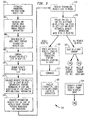
- Fig. 3 illustrates a process 300 of voice recognition according to an aspect of the present invention.
- the process 300 may suitably be implemented using a system similar to the system 100 of Fig. 1.
- steps 302 upon invocation by a user of a voice activated module providing services to a user as directed by user voice responses, parameters are established for processing of a voice recognition result list to be returned to the module.
- the parameters may suitably include parameters to be used to determine which results are to be included in a results list and various criteria for examining and reordering the results list.
- user information and module results information is retrieved and examined, and stored in an easily accessible format so as to be used in evaluating a results list.
- the user information may suitably comprise a user model including a contacts cache
- the module results information may suitably include historical results relating to confirmation or rejection of recognition results previously presented to the module.
- a recognition results list is prepared.
- the recognition results list is compared to a skip list reflecting results that have already been rejected by the voice activated module during the current transaction. At the beginning of the transaction, the skip list is empty, but as the transaction continues, rejected results are added to the skip list.
- results present in the skip list are removed from the recognition results list.
- the recognition results list is evaluated in light of the user information and reordering of the results list, as well as association of additional information with results list entries, is performed in light of the user information. For example, if a recognition result corresponds to an entry in a user contact cache, that recognition result may be moved higher in the list. In addition, information found in the contact cache, such as a preferred contact method, may be added to the entry in the results list.
- the recognition results list is presented to the voice activated module:
- the entries in the list are presented to the user for acceptance or rejection. Whenever a user rejects an entry, the entry is added to the skip list.
- further updates to the historical results information may be performed. For example, the number of times a result has been accepted or rejected may be updated. Past experience of a high number of acceptances or rejections of a result appearing in a recognition results list may tend to indicate the likelihood that the result is or is not a match to a user input in the current transaction.
- step 320 the historical results are updated, the recognition transaction is concluded and services are performed or information entries recorded according to the information or command provided by the recognition result.
- step 350 If the user rejects all entries, the process proceeds to step 322 and an attempt counter is examined. If the value of the attempt counter exceeds a predetermined value, the transaction is concluded, the process proceeds to step 380 and techniques other than voice recognition are employed to receive user input. If the value of the attempt counter does not exceed the predetermined value, the process proceeds to step 324, the attempt counter is incremented and the user is prompted to repeat the input. Depending on the value of the attempt counter and user experience information stored in the user model, additional explanatory prompts may also be provided. The process then returns to step 306.
Landscapes
- Engineering & Computer Science (AREA)
- Artificial Intelligence (AREA)
- Computational Linguistics (AREA)
- Health & Medical Sciences (AREA)
- Audiology, Speech & Language Pathology (AREA)
- Human Computer Interaction (AREA)
- Physics & Mathematics (AREA)
- Acoustics & Sound (AREA)
- Multimedia (AREA)
- Telephonic Communication Services (AREA)
Applications Claiming Priority (2)
| Application Number | Priority Date | Filing Date | Title |
|---|---|---|---|
| US772488 | 2004-02-05 | ||
| US10/772,488 US7899671B2 (en) | 2004-02-05 | 2004-02-05 | Recognition results postprocessor for use in voice recognition systems |
Publications (1)
| Publication Number | Publication Date |
|---|---|
| EP1562178A1 true EP1562178A1 (fr) | 2005-08-10 |
Family
ID=34679377
Family Applications (1)
| Application Number | Title | Priority Date | Filing Date |
|---|---|---|---|
| EP05250568A Withdrawn EP1562178A1 (fr) | 2004-02-05 | 2005-02-02 | Postprocesseur de résultats de reconnaissance pour application dans systèmes de reconnaissance de la parole |
Country Status (4)
| Country | Link |
|---|---|
| US (1) | US7899671B2 (fr) |
| EP (1) | EP1562178A1 (fr) |
| AU (1) | AU2005200320A1 (fr) |
| CA (1) | CA2492997A1 (fr) |
Cited By (5)
| Publication number | Priority date | Publication date | Assignee | Title |
|---|---|---|---|---|
| KR100976643B1 (ko) * | 2006-10-12 | 2010-08-18 | 큐엔엑스 소프트웨어 시스템즈 (웨이브마커스) 인코포레이티드 | 자동 음성 인식 시스템용 적응형 콘텍스트 |
| US8468019B2 (en) | 2008-01-31 | 2013-06-18 | Qnx Software Systems Limited | Adaptive noise modeling speech recognition system |
| CN103456296A (zh) * | 2012-05-31 | 2013-12-18 | 三星电子株式会社 | 提供语音识别功能的方法及其电子设备 |
| EP3089158A4 (fr) * | 2013-12-26 | 2016-11-02 | Panasonic Ip Man Co Ltd | Dispositif de traitement de reconnaissance de paroles, procede de traitement de reconnaissance de paroles et dispositif d'affichage |
| CN109791767A (zh) * | 2016-09-30 | 2019-05-21 | 罗伯特·博世有限公司 | 用于语音识别的系统和方法 |
Families Citing this family (40)
| Publication number | Priority date | Publication date | Assignee | Title |
|---|---|---|---|---|
| US7899671B2 (en) * | 2004-02-05 | 2011-03-01 | Avaya, Inc. | Recognition results postprocessor for use in voice recognition systems |
| US8005668B2 (en) * | 2004-09-22 | 2011-08-23 | General Motors Llc | Adaptive confidence thresholds in telematics system speech recognition |
| US20060215821A1 (en) * | 2005-03-23 | 2006-09-28 | Rokusek Daniel S | Voice nametag audio feedback for dialing a telephone call |
| US7865364B2 (en) * | 2005-05-05 | 2011-01-04 | Nuance Communications, Inc. | Avoiding repeated misunderstandings in spoken dialog system |
| US8024195B2 (en) * | 2005-06-27 | 2011-09-20 | Sensory, Inc. | Systems and methods of performing speech recognition using historical information |
| US8117268B2 (en) | 2006-04-05 | 2012-02-14 | Jablokov Victor R | Hosted voice recognition system for wireless devices |
| US8510109B2 (en) | 2007-08-22 | 2013-08-13 | Canyon Ip Holdings Llc | Continuous speech transcription performance indication |
| US8190431B2 (en) * | 2006-09-25 | 2012-05-29 | Verizon Patent And Licensing Inc. | Method and system for providing speech recognition |
| US8055502B2 (en) * | 2006-11-28 | 2011-11-08 | General Motors Llc | Voice dialing using a rejection reference |
| US8352264B2 (en) | 2008-03-19 | 2013-01-08 | Canyon IP Holdings, LLC | Corrective feedback loop for automated speech recognition |
| US8352261B2 (en) * | 2008-03-07 | 2013-01-08 | Canyon IP Holdings, LLC | Use of intermediate speech transcription results in editing final speech transcription results |
| US9973450B2 (en) | 2007-09-17 | 2018-05-15 | Amazon Technologies, Inc. | Methods and systems for dynamically updating web service profile information by parsing transcribed message strings |
| US8825770B1 (en) | 2007-08-22 | 2014-09-02 | Canyon Ip Holdings Llc | Facilitating presentation by mobile device of additional content for a word or phrase upon utterance thereof |
| US9053489B2 (en) | 2007-08-22 | 2015-06-09 | Canyon Ip Holdings Llc | Facilitating presentation of ads relating to words of a message |
| US8301454B2 (en) | 2008-08-22 | 2012-10-30 | Canyon Ip Holdings Llc | Methods, apparatuses, and systems for providing timely user cues pertaining to speech recognition |
| US8208609B2 (en) * | 2008-12-15 | 2012-06-26 | Centurylink Intellectual Property Llc | System and method for voice activated dialing from a home phone |
| EP2259252B1 (fr) * | 2009-06-02 | 2012-08-01 | Nuance Communications, Inc. | Procédé de reconnaissance vocale pour sélectionner une combinaison d'éléments de liste via une saisie vocale |
| US9263034B1 (en) | 2010-07-13 | 2016-02-16 | Google Inc. | Adapting enhanced acoustic models |
| CN102737631A (zh) * | 2011-04-15 | 2012-10-17 | 富泰华工业(深圳)有限公司 | 互功式语音识别电子装置及方法 |
| US9009041B2 (en) * | 2011-07-26 | 2015-04-14 | Nuance Communications, Inc. | Systems and methods for improving the accuracy of a transcription using auxiliary data such as personal data |
| US9483459B1 (en) * | 2012-03-31 | 2016-11-01 | Google Inc. | Natural language correction for speech input |
| US20130317805A1 (en) * | 2012-05-24 | 2013-11-28 | Google Inc. | Systems and methods for detecting real names in different languages |
| US20150031416A1 (en) | 2013-07-23 | 2015-01-29 | Motorola Mobility Llc | Method and Device For Command Phrase Validation |
| US8862467B1 (en) * | 2013-12-11 | 2014-10-14 | Google Inc. | Contextual speech recognition |
| US9530408B2 (en) | 2014-10-31 | 2016-12-27 | At&T Intellectual Property I, L.P. | Acoustic environment recognizer for optimal speech processing |
| US10706843B1 (en) * | 2017-03-09 | 2020-07-07 | Amazon Technologies, Inc. | Contact resolution for communications systems |
| JP2018167339A (ja) * | 2017-03-29 | 2018-11-01 | 富士通株式会社 | 発話制御プログラム、情報処理装置及び発話制御方法 |
| KR102389625B1 (ko) * | 2017-04-30 | 2022-04-25 | 삼성전자주식회사 | 사용자 발화를 처리하는 전자 장치 및 이 전자 장치의 제어 방법 |
| US11552795B2 (en) * | 2018-01-22 | 2023-01-10 | Microsoft Technology Licensing, Llc | Key recovery |
| US10848443B2 (en) * | 2018-07-23 | 2020-11-24 | Avaya Inc. | Chatbot socialization |
| US11094326B2 (en) * | 2018-08-06 | 2021-08-17 | Cisco Technology, Inc. | Ensemble modeling of automatic speech recognition output |
| WO2021054495A1 (fr) * | 2019-09-19 | 2021-03-25 | 엘지전자 주식회사 | Dispositif d'affichage et serveur d'intelligence artificielle |
| WO2021060575A1 (fr) * | 2019-09-24 | 2021-04-01 | 엘지전자 주식회사 | Serveur à intelligence artificielle et procédé de fonctionnement associé |
| EP4037328A4 (fr) * | 2019-09-27 | 2023-08-30 | LG Electronics Inc. | Dispositif d'affichage et système d'intelligence artificielle |
| KR20210108098A (ko) * | 2020-02-25 | 2021-09-02 | 삼성전자주식회사 | 전자 장치 및 그 제어 방법 |
| US11509467B2 (en) | 2020-02-25 | 2022-11-22 | Microsoft Technology Licensing, Llc | Story assisted mnemonic phrase |
| US11798538B1 (en) * | 2020-09-21 | 2023-10-24 | Amazon Technologies, Inc. | Answer prediction in a speech processing system |
| US11935519B2 (en) * | 2020-10-15 | 2024-03-19 | Google Llc | Preserving speech hypotheses across computing devices and/or dialog sessions |
| EP4332958B1 (fr) * | 2021-06-07 | 2026-07-29 | Panasonic Intellectual Property Corporation of America | Système de reconnaissance vocale, procédé de reconnaissance vocale, et programme de reconnaissance vocale |
| US12403924B2 (en) * | 2021-07-30 | 2025-09-02 | Nissan North America, Inc. | Systems and methods for responding to audible commands and/or adjusting vehicle components based thereon |
Citations (4)
| Publication number | Priority date | Publication date | Assignee | Title |
|---|---|---|---|---|
| WO2000038175A1 (fr) * | 1998-12-21 | 2000-06-29 | Koninklijke Philips Electronics N.V. | Modele de langage base sur un historique de reconnaissance vocale |
| US6173266B1 (en) * | 1997-05-06 | 2001-01-09 | Speechworks International, Inc. | System and method for developing interactive speech applications |
| WO2001069449A2 (fr) * | 2000-03-14 | 2001-09-20 | Sri International | Acces a des informations electroniques a partir d'un reseau via des interfaces en ligne en code machine via des entrees en langage naturel parle |
| GB2375211A (en) * | 2001-05-02 | 2002-11-06 | Vox Generation Ltd | Adaptive learning in speech recognition |
Family Cites Families (34)
| Publication number | Priority date | Publication date | Assignee | Title |
|---|---|---|---|---|
| US5452397A (en) * | 1992-12-11 | 1995-09-19 | Texas Instruments Incorporated | Method and system for preventing entry of confusingly similar phases in a voice recognition system vocabulary list |
| AU5803394A (en) * | 1992-12-17 | 1994-07-04 | Bell Atlantic Network Services, Inc. | Mechanized directory assistance |
| CA2091658A1 (fr) * | 1993-03-15 | 1994-09-16 | Matthew Lennig | Methode et appareil utilisant la reconnaissance vocale pour automatiser l'assistance telephonique |
| US5566272A (en) * | 1993-10-27 | 1996-10-15 | Lucent Technologies Inc. | Automatic speech recognition (ASR) processing using confidence measures |
| NZ302748A (en) * | 1995-03-07 | 1999-04-29 | British Telecomm | Speech recognition using a priori weighting values |
| DE19708184A1 (de) * | 1997-02-28 | 1998-09-03 | Philips Patentverwaltung | Verfahren zur Spracherkennung mit Sprachmodellanpassung |
| US6167377A (en) * | 1997-03-28 | 2000-12-26 | Dragon Systems, Inc. | Speech recognition language models |
| EP1021757A1 (fr) * | 1997-07-25 | 2000-07-26 | Starvox, Inc. | Appareil et procede pour passerelle vocale integree |
| US6404876B1 (en) * | 1997-09-25 | 2002-06-11 | Gte Intelligent Network Services Incorporated | System and method for voice activated dialing and routing under open access network control |
| US5983177A (en) * | 1997-12-18 | 1999-11-09 | Nortel Networks Corporation | Method and apparatus for obtaining transcriptions from multiple training utterances |
| WO2000005710A1 (fr) * | 1998-07-21 | 2000-02-03 | British Telecommunications Public Limited Company | Reconnaissance de la parole |
| US6243713B1 (en) * | 1998-08-24 | 2001-06-05 | Excalibur Technologies Corp. | Multimedia document retrieval by application of multimedia queries to a unified index of multimedia data for a plurality of multimedia data types |
| US6499013B1 (en) * | 1998-09-09 | 2002-12-24 | One Voice Technologies, Inc. | Interactive user interface using speech recognition and natural language processing |
| DE19842151A1 (de) * | 1998-09-15 | 2000-03-23 | Philips Corp Intellectual Pty | Verfahren zur Adaption von linguistischen Sprachmodellen |
| US6523004B1 (en) * | 1999-07-19 | 2003-02-18 | International Business Machines Corporation | Method and apparatus for disambiguating lists of elements for speech interfaces |
| US6601026B2 (en) * | 1999-09-17 | 2003-07-29 | Discern Communications, Inc. | Information retrieval by natural language querying |
| JP2002092029A (ja) * | 2000-09-20 | 2002-03-29 | Denso Corp | ユーザ情報推定装置 |
| US6959436B2 (en) * | 2000-12-15 | 2005-10-25 | Innopath Software, Inc. | Apparatus and methods for intelligently providing applications and data on a mobile device system |
| US7085723B2 (en) * | 2001-01-12 | 2006-08-01 | International Business Machines Corporation | System and method for determining utterance context in a multi-context speech application |
| US7027987B1 (en) * | 2001-02-07 | 2006-04-11 | Google Inc. | Voice interface for a search engine |
| US20020151334A1 (en) * | 2001-04-11 | 2002-10-17 | Motorola, Inc | Communications device with call frequency analyzer |
| US6925154B2 (en) * | 2001-05-04 | 2005-08-02 | International Business Machines Corproation | Methods and apparatus for conversational name dialing systems |
| JP4215418B2 (ja) * | 2001-08-24 | 2009-01-28 | インターナショナル・ビジネス・マシーンズ・コーポレーション | 単語予測方法、音声認識方法、その方法を用いた音声認識装置及びプログラム |
| US7043432B2 (en) * | 2001-08-29 | 2006-05-09 | International Business Machines Corporation | Method and system for text-to-speech caching |
| US7103542B2 (en) * | 2001-12-14 | 2006-09-05 | Ben Franklin Patent Holding Llc | Automatically improving a voice recognition system |
| DE10207895B4 (de) * | 2002-02-23 | 2005-11-03 | Harman Becker Automotive Systems Gmbh | Verfahren zur Spracherkennung und Spracherkennungssystem |
| US20030204399A1 (en) * | 2002-04-25 | 2003-10-30 | Wolf Peter P. | Key word and key phrase based speech recognizer for information retrieval systems |
| WO2004012431A1 (fr) * | 2002-07-29 | 2004-02-05 | British Telecommunications Public Limited Company | Perfectionnements apportes ou ayant trait a l'apport d'informations destine a des centres d'appels |
| US7133828B2 (en) * | 2002-10-18 | 2006-11-07 | Ser Solutions, Inc. | Methods and apparatus for audio data analysis and data mining using speech recognition |
| US6993482B2 (en) * | 2002-12-18 | 2006-01-31 | Motorola, Inc. | Method and apparatus for displaying speech recognition results |
| US7222072B2 (en) * | 2003-02-13 | 2007-05-22 | Sbc Properties, L.P. | Bio-phonetic multi-phrase speaker identity verification |
| US7464031B2 (en) * | 2003-11-28 | 2008-12-09 | International Business Machines Corporation | Speech recognition utilizing multitude of speech features |
| US7729912B1 (en) * | 2003-12-23 | 2010-06-01 | At&T Intellectual Property Ii, L.P. | System and method for latency reduction for automatic speech recognition using partial multi-pass results |
| US7899671B2 (en) * | 2004-02-05 | 2011-03-01 | Avaya, Inc. | Recognition results postprocessor for use in voice recognition systems |
-
2004
- 2004-02-05 US US10/772,488 patent/US7899671B2/en active Active
-
2005
- 2005-01-18 CA CA002492997A patent/CA2492997A1/fr not_active Abandoned
- 2005-01-27 AU AU2005200320A patent/AU2005200320A1/en not_active Abandoned
- 2005-02-02 EP EP05250568A patent/EP1562178A1/fr not_active Withdrawn
Patent Citations (4)
| Publication number | Priority date | Publication date | Assignee | Title |
|---|---|---|---|---|
| US6173266B1 (en) * | 1997-05-06 | 2001-01-09 | Speechworks International, Inc. | System and method for developing interactive speech applications |
| WO2000038175A1 (fr) * | 1998-12-21 | 2000-06-29 | Koninklijke Philips Electronics N.V. | Modele de langage base sur un historique de reconnaissance vocale |
| WO2001069449A2 (fr) * | 2000-03-14 | 2001-09-20 | Sri International | Acces a des informations electroniques a partir d'un reseau via des interfaces en ligne en code machine via des entrees en langage naturel parle |
| GB2375211A (en) * | 2001-05-02 | 2002-11-06 | Vox Generation Ltd | Adaptive learning in speech recognition |
Cited By (8)
| Publication number | Priority date | Publication date | Assignee | Title |
|---|---|---|---|---|
| KR100976643B1 (ko) * | 2006-10-12 | 2010-08-18 | 큐엔엑스 소프트웨어 시스템즈 (웨이브마커스) 인코포레이티드 | 자동 음성 인식 시스템용 적응형 콘텍스트 |
| US8468019B2 (en) | 2008-01-31 | 2013-06-18 | Qnx Software Systems Limited | Adaptive noise modeling speech recognition system |
| CN103456296A (zh) * | 2012-05-31 | 2013-12-18 | 三星电子株式会社 | 提供语音识别功能的方法及其电子设备 |
| EP2677518A3 (fr) * | 2012-05-31 | 2015-03-11 | Samsung Electronics Co., Ltd | Procédé pour fournir une fonction de reconnaissance vocale et son dispositif électronique |
| EP3089158A4 (fr) * | 2013-12-26 | 2016-11-02 | Panasonic Ip Man Co Ltd | Dispositif de traitement de reconnaissance de paroles, procede de traitement de reconnaissance de paroles et dispositif d'affichage |
| US9767795B2 (en) | 2013-12-26 | 2017-09-19 | Panasonic Intellectual Property Management Co., Ltd. | Speech recognition processing device, speech recognition processing method and display device |
| CN109791767A (zh) * | 2016-09-30 | 2019-05-21 | 罗伯特·博世有限公司 | 用于语音识别的系统和方法 |
| CN109791767B (zh) * | 2016-09-30 | 2023-09-05 | 罗伯特·博世有限公司 | 用于语音识别的系统和方法 |
Also Published As
| Publication number | Publication date |
|---|---|
| AU2005200320A1 (en) | 2005-08-25 |
| CA2492997A1 (fr) | 2005-08-05 |
| US20050177376A1 (en) | 2005-08-11 |
| US7899671B2 (en) | 2011-03-01 |
Similar Documents
| Publication | Publication Date | Title |
|---|---|---|
| US7899671B2 (en) | Recognition results postprocessor for use in voice recognition systems | |
| CA2492921C (fr) | Methodes et appareil pour mettre les donnees en memoire cache afin d'ameliorer la reconnaissance des noms dans les grands espaces de noms | |
| US7933773B1 (en) | Natural language understanding monitoring system for identifying a task | |
| US7127395B1 (en) | Method and system for predicting understanding errors in a task classification system | |
| US7043439B2 (en) | Machine interface | |
| US6356868B1 (en) | Voiceprint identification system | |
| USRE38101E1 (en) | Methods and apparatus for performing speaker independent recognition of commands in parallel with speaker dependent recognition of names, words or phrases | |
| WO2003088211A1 (fr) | Selection dynamique et adaptative de vocabulaire et de modeles acoustiques sur la base d'un contexte d'appel pour la reconnaissance de la parole | |
| JPH07181994A (ja) | 信頼性評価を用いた自動音声言語認識処理 | |
| US7668716B2 (en) | Incorporation of external knowledge in multimodal dialog systems | |
| US20090287483A1 (en) | Method and system for improved speech recognition | |
| JP7475922B2 (ja) | 知識情報作成支援装置 | |
| US20060287868A1 (en) | Dialog system | |
| US7136459B2 (en) | Methods and apparatus for data caching to improve name recognition in large namespaces | |
| CN108810296B (zh) | 一种智能外呼方法及装置 | |
| US20050177374A1 (en) | Methods and apparatus for context and experience sensitive prompting in voice applications | |
| JP2020204711A (ja) | 登録システム | |
| US5845245A (en) | Method and apparatus for reducing false rejection in a speech recognition system | |
| CN118283182A (zh) | 基于ai的智能语音呼叫预测方法、程序产品、设备及介质 | |
| JP2005275601A (ja) | 音声による情報検索システム | |
| CA2492916C (fr) | Methodes et appareil pour fournir de l'aide contextuelle et fondee sur l'experience dans des applications vocales | |
| JP3945187B2 (ja) | 対話管理装置 | |
| CN119850219A (zh) | 一种客服转接的方法、装置、设备及介质 | |
| CN113507541A (zh) | 来电意图展示方法及装置 | |
| CN116860950B (zh) | 一种术语对话机器人语料更新方法及系统 |
Legal Events
| Date | Code | Title | Description |
|---|---|---|---|
| PUAI | Public reference made under article 153(3) epc to a published international application that has entered the european phase |
Free format text: ORIGINAL CODE: 0009012 |
|
| AK | Designated contracting states |
Kind code of ref document: A1 Designated state(s): AT BE BG CH CY CZ DE DK EE ES FI FR GB GR HU IE IS IT LI LT LU MC NL PL PT RO SE SI SK TR |
|
| AX | Request for extension of the european patent |
Extension state: AL BA HR LV MK YU |
|
| 17P | Request for examination filed |
Effective date: 20060206 |
|
| AKX | Designation fees paid |
Designated state(s): AT BE BG CH CY CZ DE DK EE ES FI FR GB GR HU IE IS IT LI LT LU MC NL PL PT RO SE SI SK TR |
|
| 17Q | First examination report despatched |
Effective date: 20060310 |
|
| RAP1 | Party data changed (applicant data changed or rights of an application transferred) |
Owner name: AVAYA INC. |
|
| STAA | Information on the status of an ep patent application or granted ep patent |
Free format text: STATUS: THE APPLICATION IS DEEMED TO BE WITHDRAWN |
|
| 18D | Application deemed to be withdrawn |
Effective date: 20140902 |