EP1563099B1 - Induction de la transition de permeabilite mitochondriale - Google Patents
Induction de la transition de permeabilite mitochondriale Download PDFInfo
- Publication number
- EP1563099B1 EP1563099B1 EP03810339A EP03810339A EP1563099B1 EP 1563099 B1 EP1563099 B1 EP 1563099B1 EP 03810339 A EP03810339 A EP 03810339A EP 03810339 A EP03810339 A EP 03810339A EP 1563099 B1 EP1563099 B1 EP 1563099B1
- Authority
- EP
- European Patent Office
- Prior art keywords
- group
- alkyl
- aryl
- hydrogen
- cycloalkyl
- Prior art date
- Legal status (The legal status is an assumption and is not a legal conclusion. Google has not performed a legal analysis and makes no representation as to the accuracy of the status listed.)
- Expired - Lifetime
Links
- 0 CBC(CC(C)NC(CSCC(C(*C[*-])=O)NC(CCC(*)*C)=O)=O)C[C@@](*)*=*CC Chemical compound CBC(CC(C)NC(CSCC(C(*C[*-])=O)NC(CCC(*)*C)=O)=O)C[C@@](*)*=*CC 0.000 description 7
Images






Classifications
-
- C—CHEMISTRY; METALLURGY
- C07—ORGANIC CHEMISTRY
- C07K—PEPTIDES
- C07K7/00—Peptides having 5 to 20 amino acids in a fully defined sequence; Derivatives thereof
- C07K7/04—Linear peptides containing only normal peptide links
- C07K7/06—Linear peptides containing only normal peptide links having 5 to 11 amino acids
-
- A—HUMAN NECESSITIES
- A61—MEDICAL OR VETERINARY SCIENCE; HYGIENE
- A61K—PREPARATIONS FOR MEDICAL, DENTAL OR TOILETRY PURPOSES
- A61K31/00—Medicinal preparations containing organic active ingredients
- A61K31/28—Compounds containing heavy metals
- A61K31/285—Arsenic compounds
-
- A—HUMAN NECESSITIES
- A61—MEDICAL OR VETERINARY SCIENCE; HYGIENE
- A61P—SPECIFIC THERAPEUTIC ACTIVITY OF CHEMICAL COMPOUNDS OR MEDICINAL PREPARATIONS
- A61P17/00—Drugs for dermatological disorders
- A61P17/06—Antipsoriatics
-
- A—HUMAN NECESSITIES
- A61—MEDICAL OR VETERINARY SCIENCE; HYGIENE
- A61P—SPECIFIC THERAPEUTIC ACTIVITY OF CHEMICAL COMPOUNDS OR MEDICINAL PREPARATIONS
- A61P19/00—Drugs for skeletal disorders
- A61P19/02—Drugs for skeletal disorders for joint disorders, e.g. arthritis, arthrosis
-
- A—HUMAN NECESSITIES
- A61—MEDICAL OR VETERINARY SCIENCE; HYGIENE
- A61P—SPECIFIC THERAPEUTIC ACTIVITY OF CHEMICAL COMPOUNDS OR MEDICINAL PREPARATIONS
- A61P25/00—Drugs for disorders of the nervous system
-
- A—HUMAN NECESSITIES
- A61—MEDICAL OR VETERINARY SCIENCE; HYGIENE
- A61P—SPECIFIC THERAPEUTIC ACTIVITY OF CHEMICAL COMPOUNDS OR MEDICINAL PREPARATIONS
- A61P25/00—Drugs for disorders of the nervous system
- A61P25/14—Drugs for disorders of the nervous system for treating abnormal movements, e.g. chorea, dyskinesia
- A61P25/16—Anti-Parkinson drugs
-
- A—HUMAN NECESSITIES
- A61—MEDICAL OR VETERINARY SCIENCE; HYGIENE
- A61P—SPECIFIC THERAPEUTIC ACTIVITY OF CHEMICAL COMPOUNDS OR MEDICINAL PREPARATIONS
- A61P25/00—Drugs for disorders of the nervous system
- A61P25/28—Drugs for disorders of the nervous system for treating neurodegenerative disorders of the central nervous system, e.g. nootropic agents, cognition enhancers, drugs for treating Alzheimer's disease or other forms of dementia
-
- A—HUMAN NECESSITIES
- A61—MEDICAL OR VETERINARY SCIENCE; HYGIENE
- A61P—SPECIFIC THERAPEUTIC ACTIVITY OF CHEMICAL COMPOUNDS OR MEDICINAL PREPARATIONS
- A61P29/00—Non-central analgesic, antipyretic or antiinflammatory agents, e.g. antirheumatic agents; Non-steroidal antiinflammatory drugs [NSAID]
-
- A—HUMAN NECESSITIES
- A61—MEDICAL OR VETERINARY SCIENCE; HYGIENE
- A61P—SPECIFIC THERAPEUTIC ACTIVITY OF CHEMICAL COMPOUNDS OR MEDICINAL PREPARATIONS
- A61P35/00—Antineoplastic agents
-
- A—HUMAN NECESSITIES
- A61—MEDICAL OR VETERINARY SCIENCE; HYGIENE
- A61P—SPECIFIC THERAPEUTIC ACTIVITY OF CHEMICAL COMPOUNDS OR MEDICINAL PREPARATIONS
- A61P37/00—Drugs for immunological or allergic disorders
- A61P37/02—Immunomodulators
-
- A—HUMAN NECESSITIES
- A61—MEDICAL OR VETERINARY SCIENCE; HYGIENE
- A61P—SPECIFIC THERAPEUTIC ACTIVITY OF CHEMICAL COMPOUNDS OR MEDICINAL PREPARATIONS
- A61P43/00—Drugs for specific purposes, not provided for in groups A61P1/00-A61P41/00
-
- A—HUMAN NECESSITIES
- A61—MEDICAL OR VETERINARY SCIENCE; HYGIENE
- A61P—SPECIFIC THERAPEUTIC ACTIVITY OF CHEMICAL COMPOUNDS OR MEDICINAL PREPARATIONS
- A61P9/00—Drugs for disorders of the cardiovascular system
-
- A—HUMAN NECESSITIES
- A61—MEDICAL OR VETERINARY SCIENCE; HYGIENE
- A61P—SPECIFIC THERAPEUTIC ACTIVITY OF CHEMICAL COMPOUNDS OR MEDICINAL PREPARATIONS
- A61P9/00—Drugs for disorders of the cardiovascular system
- A61P9/10—Drugs for disorders of the cardiovascular system for treating ischaemic or atherosclerotic diseases, e.g. antianginal drugs, coronary vasodilators, drugs for myocardial infarction, retinopathy, cerebrovascula insufficiency, renal arteriosclerosis
-
- C—CHEMISTRY; METALLURGY
- C07—ORGANIC CHEMISTRY
- C07F—ACYCLIC, CARBOCYCLIC OR HETEROCYCLIC COMPOUNDS CONTAINING ELEMENTS OTHER THAN CARBON, HYDROGEN, HALOGEN, OXYGEN, NITROGEN, SULFUR, SELENIUM OR TELLURIUM
- C07F5/00—Compounds containing elements of Groups 3 or 13 of the Periodic Table
- C07F5/06—Aluminium compounds
-
- C—CHEMISTRY; METALLURGY
- C07—ORGANIC CHEMISTRY
- C07F—ACYCLIC, CARBOCYCLIC OR HETEROCYCLIC COMPOUNDS CONTAINING ELEMENTS OTHER THAN CARBON, HYDROGEN, HALOGEN, OXYGEN, NITROGEN, SULFUR, SELENIUM OR TELLURIUM
- C07F9/00—Compounds containing elements of Groups 5 or 15 of the Periodic Table
- C07F9/66—Arsenic compounds
- C07F9/70—Organo-arsenic compounds
- C07F9/74—Aromatic compounds
- C07F9/78—Aromatic compounds containing amino groups
-
- C—CHEMISTRY; METALLURGY
- C07—ORGANIC CHEMISTRY
- C07F—ACYCLIC, CARBOCYCLIC OR HETEROCYCLIC COMPOUNDS CONTAINING ELEMENTS OTHER THAN CARBON, HYDROGEN, HALOGEN, OXYGEN, NITROGEN, SULFUR, SELENIUM OR TELLURIUM
- C07F9/00—Compounds containing elements of Groups 5 or 15 of the Periodic Table
- C07F9/66—Arsenic compounds
- C07F9/70—Organo-arsenic compounds
- C07F9/80—Heterocyclic compounds
-
- C—CHEMISTRY; METALLURGY
- C07—ORGANIC CHEMISTRY
- C07F—ACYCLIC, CARBOCYCLIC OR HETEROCYCLIC COMPOUNDS CONTAINING ELEMENTS OTHER THAN CARBON, HYDROGEN, HALOGEN, OXYGEN, NITROGEN, SULFUR, SELENIUM OR TELLURIUM
- C07F9/00—Compounds containing elements of Groups 5 or 15 of the Periodic Table
- C07F9/66—Arsenic compounds
- C07F9/70—Organo-arsenic compounds
- C07F9/80—Heterocyclic compounds
- C07F9/82—Arsenic compounds containing one or more pyridine rings
-
- C—CHEMISTRY; METALLURGY
- C07—ORGANIC CHEMISTRY
- C07K—PEPTIDES
- C07K5/00—Peptides containing up to four amino acids in a fully defined sequence; Derivatives thereof
- C07K5/04—Peptides containing up to four amino acids in a fully defined sequence; Derivatives thereof containing only normal peptide links
- C07K5/06—Dipeptides
-
- C—CHEMISTRY; METALLURGY
- C07—ORGANIC CHEMISTRY
- C07K—PEPTIDES
- C07K5/00—Peptides containing up to four amino acids in a fully defined sequence; Derivatives thereof
- C07K5/04—Peptides containing up to four amino acids in a fully defined sequence; Derivatives thereof containing only normal peptide links
- C07K5/08—Tripeptides
-
- G—PHYSICS
- G01—MEASURING; TESTING
- G01N—INVESTIGATING OR ANALYSING MATERIALS BY DETERMINING THEIR CHEMICAL OR PHYSICAL PROPERTIES
- G01N33/00—Investigating or analysing materials by specific methods not covered by groups G01N1/00 - G01N31/00
- G01N33/48—Biological material, e.g. blood, urine; Haemocytometers
- G01N33/50—Chemical analysis of biological material, e.g. blood, urine; Testing involving biospecific ligand binding methods; Immunological testing
- G01N33/5005—Chemical analysis of biological material, e.g. blood, urine; Testing involving biospecific ligand binding methods; Immunological testing involving human or animal cells
- G01N33/5008—Chemical analysis of biological material, e.g. blood, urine; Testing involving biospecific ligand binding methods; Immunological testing involving human or animal cells for testing or evaluating the effect of chemical or biological compounds, e.g. drugs, cosmetics
- G01N33/5011—Chemical analysis of biological material, e.g. blood, urine; Testing involving biospecific ligand binding methods; Immunological testing involving human or animal cells for testing or evaluating the effect of chemical or biological compounds, e.g. drugs, cosmetics for testing antineoplastic activity
-
- G—PHYSICS
- G01—MEASURING; TESTING
- G01N—INVESTIGATING OR ANALYSING MATERIALS BY DETERMINING THEIR CHEMICAL OR PHYSICAL PROPERTIES
- G01N33/00—Investigating or analysing materials by specific methods not covered by groups G01N1/00 - G01N31/00
- G01N33/48—Biological material, e.g. blood, urine; Haemocytometers
- G01N33/50—Chemical analysis of biological material, e.g. blood, urine; Testing involving biospecific ligand binding methods; Immunological testing
- G01N33/5005—Chemical analysis of biological material, e.g. blood, urine; Testing involving biospecific ligand binding methods; Immunological testing involving human or animal cells
- G01N33/5008—Chemical analysis of biological material, e.g. blood, urine; Testing involving biospecific ligand binding methods; Immunological testing involving human or animal cells for testing or evaluating the effect of chemical or biological compounds, e.g. drugs, cosmetics
- G01N33/5076—Chemical analysis of biological material, e.g. blood, urine; Testing involving biospecific ligand binding methods; Immunological testing involving human or animal cells for testing or evaluating the effect of chemical or biological compounds, e.g. drugs, cosmetics involving cell organelles, e.g. Golgi complex, endoplasmic reticulum
- G01N33/5079—Mitochondria
-
- G—PHYSICS
- G01—MEASURING; TESTING
- G01N—INVESTIGATING OR ANALYSING MATERIALS BY DETERMINING THEIR CHEMICAL OR PHYSICAL PROPERTIES
- G01N33/00—Investigating or analysing materials by specific methods not covered by groups G01N1/00 - G01N31/00
- G01N33/48—Biological material, e.g. blood, urine; Haemocytometers
- G01N33/50—Chemical analysis of biological material, e.g. blood, urine; Testing involving biospecific ligand binding methods; Immunological testing
- G01N33/53—Immunoassay; Biospecific binding assay; Materials therefor
- G01N33/575—Immunoassay; Biospecific binding assay; Materials therefor for cancer
-
- G—PHYSICS
- G01—MEASURING; TESTING
- G01N—INVESTIGATING OR ANALYSING MATERIALS BY DETERMINING THEIR CHEMICAL OR PHYSICAL PROPERTIES
- G01N33/00—Investigating or analysing materials by specific methods not covered by groups G01N1/00 - G01N31/00
- G01N33/48—Biological material, e.g. blood, urine; Haemocytometers
- G01N33/50—Chemical analysis of biological material, e.g. blood, urine; Testing involving biospecific ligand binding methods; Immunological testing
- G01N33/68—Chemical analysis of biological material, e.g. blood, urine; Testing involving biospecific ligand binding methods; Immunological testing involving proteins, peptides or amino acids
- G01N33/6872—Intracellular protein regulatory factors and their receptors, e.g. including ion channels
-
- G—PHYSICS
- G01—MEASURING; TESTING
- G01N—INVESTIGATING OR ANALYSING MATERIALS BY DETERMINING THEIR CHEMICAL OR PHYSICAL PROPERTIES
- G01N2333/00—Assays involving biological materials from specific organisms or of a specific nature
- G01N2333/435—Assays involving biological materials from specific organisms or of a specific nature from animals; from humans
- G01N2333/475—Assays involving growth factors
- G01N2333/515—Angiogenesic factors; Angiogenin
-
- G—PHYSICS
- G01—MEASURING; TESTING
- G01N—INVESTIGATING OR ANALYSING MATERIALS BY DETERMINING THEIR CHEMICAL OR PHYSICAL PROPERTIES
- G01N2500/00—Screening for compounds of potential therapeutic value
- G01N2500/10—Screening for compounds of potential therapeutic value involving cells
Definitions
- the present invention relates to modification of mitochondrial membrane permeability in cells and in particular, the identification and use of compounds which selectively induce the MPT in proliferating cells.
- Mitochondria provide ATP to support normal cell function and their perturbation leads to apoptotic and necrotic cell death (Crompton, 1999).
- An important factor in apoptosis and necrosis is the mitochondrial permeability transition (MPT), which occurs as a result of calcium overload.
- the cause of the MPT is the opening of a non-specific pore in the inner mitochondrial membrane, known as the mitochondrial permeability transition pore (MPTP) (Crompton et al, 1987).
- MPTP mitochondrial permeability transition pore
- Oxidative stress, adenine nucleotide depletion and elevated inorganic phosphate greatly increase the sensitivity of the pore to calcium concentration.
- Opening of the MPTP is accompanied by equilibration of all small solutes ( ⁇ 1.4kD) across the inner mitochondrial membrane.
- the resultant high protein concentration in the matrix exerts a colloidal osmotic pressure that is responsible for extensive swelling of mitochondria, and ultimately, apoptosis or necrosis.
- Adenine nucleotide translocator is a 30 kD protein that spans the inner mitochondrial membrane and is central to the MPTP (Crompton et al, 1988).
- the present invention relates to a process for identifying compounds which bind to ANT in mitochondria and selectively induce the MPT in proliferating cells relative to non-proliferating or growth quiescent cells.
- an in vitro process for identifying a compound which selectively induces the mitochondrial permeability transition (MPT) in proliferating cells comprises contacting a cell or cell extract with a compound, determining whether the compound binds to adenine nucleotide translocator (ANT), and determining whether the compound selectively induces the MPT in proliferating cells.
- MPT mitochondrial permeability transition
- an in vitro process for screening a plurality of compounds to identify a compound which selectively induces MPT in proliferating cells comprises contacting a cell or a cell extract with the plurality of compounds, determining whether any of the compounds bind to ANT, and if so, separately determining for each of the plurality of compounds whether the compound selectively induces the MPT in proliferating cells.
- selectivity for proliferating cells may be determined, for example, by comparing the effect of compounds identified as binding to ANT on the MPT in proliferating cells with the effect on the MPT in non-proliferating or growth quiescent cells.
- the determination of induction of the MPT may involve measuring changes in Cytochrome C release.
- the determination of induction may involve measuring changes in cellular superoxide concentration.
- the compound may be a dithiol reactive compound.
- the compound may have an arsenoxide (or arsenoxide equivalent) moiety.
- the arsenoxide (or arsenoxide equivalent) compound may have the formula (I): A- ⁇ (XBX') n B'-Y] p (I) wherein
- the compound of formula (I) may have more than 6 carbon atoms.
- A may be selected from the group consisting of natural, unnatural and synthetic amino acids, hydrophilic amines, peptides and polypeptides, including dipeptides, tripeptides, tetrapeptides, pentapeptides, sugar residues such as monosaccharides, disaccharides, and oligosaccharides (including substituted variants), and thiol containing proteins, or a combination thereon.
- A may be selected from the group consisting of glutathione, gluoasamine, cysteinylglycine, cysteic acid, aspartic acid, glutamic add, lysine, and arginine, wherein the sulfur atom of each sulfur containing compound may be optionally oxidised to form a sulfoxide or sulfone.
- A may comprise a sugar residue, disaccharide or oligosaccharide residue such as, for exmaple, glucose, fructose, mannose, xylose, lyxose, galactose, hexose, sucrose, sorbose, galactosyl-sucrose, sorbitol, mannitol, xylitol, etc.
- A may be a hydrophilic amine such as a primary, secondary, or tertiary alkyl-, aryl- or aralkyl-amine, or a heterocyclic amine such as pyridine, pyrrole, imidazole etc.
- amino acids are known to those of skill in the art and are listed, for instance in standard reference texts, such as King and Stansfield, A Dictionary of Genetics, 4th Edition, Oxford University Press, 1990 , the contents of which are incorporated herein by reference.
- the amino acids may be ⁇ , ⁇ or ⁇ amino acids.
- the present invention also includes the L- and D-forms of amino adds.
- amino acids examples include glycine, alanine, valine, leucine, isoleucine, methionine, proline, phenylalanine, tryptophan, serine, threonine, cysteine, tyrosine, asparagine, glutamine, aspartic acid, glutamic acid, lysine, arginine and histidine.
- A may be selected from the group consisting of tri-acid ureas, peptides including dipeptides, tripeptides, tetrapeptides, and pentapeptides.
- glutathione Cys-Glu-Gly, Arg-Gly-Asp-Cys, Val-Thr-Cys-Gly, Gly-Gly-Cys, Lys-Glu-Gly, Arg-Gly-Asp-Lys, Val-Thr-Lys-Gly, Gly-Gly-Lys, Ser-Glu-Gly, Arg-Gly-Asp-Ser, Val-Thr Ser-Gly, Gly-Gly-Ser, Asp-Glu-Gly, Arg-Gly-Asp-Asp, Val-Thr-Asp-Gly, Gly-Gly-Asp, Glu-Glu-Gly, Arg-Gly-Asp-Glu, Val-Thr-Glu-Gly, Arg-
- A is a tripeptide.
- A may be glutathione and in one form the compound may be represented by Formula (II): wherein (XBX') n B' comprises any suitable linker group, and Y comprises an arsenoxide or an arsenoxide equivalent.
- p is an Integer selected from 1 to 5.
- p may be 1, 2, 3, 4, or 5.
- p is 1 or 2.
- p is 1.
- n is an integer from 0 to 15.
- n may be 0, 1, 2, 3, 4, 5, 6, 7, 8, 9, 10, 11, 12, 13, 14, or 15.
- n is an integer selected from 0 to 10.
- n is an integer selected from 0 to 5, for example, n may be 0, 1, 2, 3, 4, or 5.
- X is selected from the group consisting of -NR, -S(O)-, -S(O)O-, -S(O) 2 -, -S(O) 2 O-, -C(O)-, -C(S)-, -C(O)O-, C(S)O-, -C(S)S-, -P(O)(R 1 )-, and -P(O)(R 1 )O-, or is absent
- B is selected from the group consisting of C 1 -C 10 alkylene, C 2 -C 10 alkenylene, C 2 -C 10 alkynylene, C 3 -C 10 cycloalkylene, C 6 -C 10 cycloalkenylene, C 3 -C 10 heterocycloalkylene, C 5 -C 10 heterocycloalkenylene, C 6 -C 12 arylene, heteroarylene and C 2 -C 10 acyl;
- X' is selected from the group consisting of -NR-, -O-, -S-, -Se-, -S-S-, S(O)-, -OS(O)-, OS(O)O-, -OS(O) 2 , -OS(O) 2 O-, -S(O)O-, -S(O) 2 -, -S(O) 2 O-, -OP(O)(R 1 )-, -OP(O)(R 1 )O-, -OP(O)(R 1 )OP(O)(R 1 )C)-, -C(O)-, -C(S)-, -C(O)O-, C(S)O-, -C(S)S-, -P(O)(R 1 )-, -P(O)(R 1 )O-, and or is absent; wherein E is O, S, Se, NR or N(R) 2 + ;
- X is selected from the group consisting of NH, -C(O)-, -C(S)-, -C(O)O-, C(S)O-, and -C(S)S-, or is absent;
- B is selected from the group consisting of C 1 -C 5 alkylene, C 2 -C 5 alkenylene, C 2 -C 5 alkynylene, C 3 -C 10 cycloalkylene, C 5 -C 10 cycloalkenylene, C 6 -C 12 arylene and C 2 -C 5 acyl;
- X' is selected from the group consisting of -O-, -S-, -NR-, -S-S-, -S(O)-, -S(O) 2 -, -P(O)(R 1 )-, -OP(O)(R 1 )-, OP(O)(R 1 )O-, -OP(O)(R 1 )OP(O)(R 1 )O-, -C(O)-, -C(S)-, -C(O)O-, C(S)O-, -C(S)S-, -Se-, or is absent; wherein E is O, S or N(R) 2 + ;
- X is absent
- X is absent
- X is absent
- R 7 to R 10 are independently selected from the group consisting of hydrogen, halogen, hydroxy, amino, nitro, cyano, carboxy, C 1 -C 5 alkoxy, methyl, ethyl, isopropyl, tert-butyl, phenyl and -NHC(O)CH 2 Q wherein Q is halogen, -OS(O) 2 CH 3 , -OS(O) 2 C 6 H 5 and -OS(O) 2 -p tolyl.
- the compound of formula (III) may be represented as
- the substituents attached to the arylene ring may be at any available position on the arylene ring.
- an arsenoxide compound identified in accordance with the present invention is selected from the following compounds:
- GSAO (4( N -( S -glutathionylacetyl)amino)-phenylarsenoxide) has been previously described in International patent application WO 01/21628 .
- an arsenoxide compound which may interact with ANT is a compound according to Formula (VI): wherein G is selected from the group consisting of hydrogen, halogen, hydroxy, amino, nitro, cyano, carboxy, C 1 -C 5 alkoxy, C 1 -C 5 alkyl and C 6 -C 12 aryl and -NHC(O)CH 2 Q, wherein Q is halogen, -OS(O) 2 CH 3 , -OS(O) 2 C 6 H 5 or -OS(O) 2 - p tolyl.
- G is selected from the group consisting of hydrogen, halogen, hydroxy, amino, nitro, cyano, carboxy, C 1 -C 5 alkoxy, C 1 -C 5 alkyl and C 6 -C 12 aryl and -NHC(O)CH 2 Q, wherein Q is halogen, -OS(O) 2 CH 3 , -OS(O) 2 C 6 H 5 or -OS(O) 2
- G is selected from the group consisting of hydrogen, halogen, hydroxy, amino, nitro, carboxy, C 1 -C 5 alkoxy, methyl, ethyl, isopropyl, tert-butyl, phenyl, and -NHC(O)CH 2 Q, wherein Q is the group consisting of halogen, -OS(O) 2 CH 3 , -OS(O) 2 C 6 H 5 and -OS(O) 2 -p tolyl.
- G is hydroxy, fluorine, amino, or nitro.
- group G is in an ortho-, meta-, or para- relationship to the arsenoxide group.
- G is in an ortho- or para- relationship to the arsenoxide group.
- the activity of the arsenic atom may be modified by the group G, when G and the arsenic atom are in an ortho or para relationship, to one another.
- G is an electron donating group such as OH (ionised to O- at physiological pH)
- the arsenic atom may be deactivated towards dithiols and may become more selective, for example, only reacting with very reactive dithiols.
- G is an electron withdrawing group, such as NO 2
- electron density may be drawn away from the arsenic atom, making it more reactive to dithiols. Selective inhibition of some redox proteins and not others may be achieved by manipulation of G.
- arsenoxide equivalent includes dithiol reactive entities, such as As, Ge, Sn and Sb species. More typically an arsenoxide equivalent can be represented by -D(Z 1 )(Z 2 ).
- Arsenoxide equivalents are expected to exhibit identical or substantially identical activity to that of the corresponding arsenoxide.
- D will be, for example, As, RSn, Sb, or RGe
- Z 1 and Z 2 will be labile groups (i.e. groups easily displaced under physiological conditions).
- Z 1 and Z 2 may be identical or different, and may either be connected or independent from each other (bound only to the arsenic atom).
- arsenoxide equivalents of the form D(Z 1 )(Z 2 ) when D is As and Z 1 and Z 2 are OH, the arsenoxide equivalent may be in equilibrium with polymeric species, as depicted below.
- the dehydration reaction is reversible, and therefore soluble polymeric anhydrides are expected to behave as arsenoxide equivalents, that is, they are expected to bind to closely spaced dithiols in substantially the same way as the monomeric -As(OH) 2 species.
- R' is selected from the group consisting of hydrogen, C 1 -C 10 alkyl, C 6 -C 12 aryl, and carboxy, or is one of the twenty amino add side chains;
- (XBX')B' is as defined above.
- MPT Mitochondrial Permeability Transition
- MPTP Mitochondrial Permeability Transition Pore
- ANT stands for adenine nucleotide translocator.
- EGTA is ethylene glycol-bis(beta-aminoethyl ether)-N,N,N'N'-tetraacetic acid.
- PAO stands for phenyl arsenoxide
- substantially cell membrane impermeable group refers to any group which limits the rate at which a compound passes through a cell membrane and into the cell
- a substantially cell membrane impermeable group may limit the rate of entry of a compound into a cell by virtue of one or more properties such as, for example, charge, size (molecular weight), polarity, lipophilicity, hydrophilicity, etc.
- arsenical as used herein, includes any compound that contains arsenic.
- acyl as used herein, includes monovalent and divalent alkyl, alkenyl, alkynyl, cycloalkyl and cycloalkenyl moieties possessing a terminal carbonyl substituent wherein attachment may occur at the hydrocarbon moiety, the carbonyl moiety or both.
- alkyl as used herein, includes within its meaning monovalent, saturated, straight and branched chain hydrocarbon radicals.
- alkenyl as used herein, includes within its meaning, monovalent, straight and branched chain hydrocarbon radicals having at least one double bond.
- alkynyl as used herein, includes within its meaning, monovalent, straight and branched chain hydrocarbon radicals having at least one triple bond.
- alkylene as used herein, includes within its meaning divalent, saturated, straight chain hydrocarbon radicals.
- alkenylene as used herein, includes within its meaning, divalent, straight chain hydrocarbon radicals having at least one double bond.
- alkynylene as used herein, includes within its meaning, divalent, straight chain hydrocarbon radicals having at least one triple bond.
- aryl as used herein, includes within its meaning monovalent, single, polynuclear, conjugated and fused aromatic hydrocarbon radicals.
- arylene as used herein, includes within its meaning divalent, single, polynuclear, conjugated and fused aromatic hydrocarbon radicals.
- closely spaced dithiol includes within its meaning thiols that are chemically vicinal, as well as thiols brought Into spacial apposition by virtue of molecular confirmation.
- cycloalkyl as used herein, includes within its meaning monovalent, saturated, monocyclic, bicyclic, polycyclic or fused polycyclic hydrocarbon radicals.
- cycloalkylene as used herein, includes within its meaning divalent, saturated, monocyclic, bicyclic, polycyclic or fused polycyclic hydrocarbon radicals.
- cycloalkenyl as used herein, includes within its meaning monovalent, saturated, monocylic, bicylic, polycyclic or fused polycyclic hydrocarbon radicals having at least one double bond.
- cycloalkenylene as used herein, includes within its meaning divalent, saturated, monocyclic, bicyclic, polycyclic or fused polycyclic hydrocarbon radicals having at least one double bond.
- halo as used herein, includes fluoro, chloro, bromo and iodo.
- heteroaryl as used herein, includes within its meaning monovalent, single, polynuclear, conjugated and fused aromatic radicals having 1 to 12 atoms wherein 1 to 6 atoms are heteroatoms selected from O, N and S.
- heteroarylene as used herein, includes within its meaning divalent, single, polynuclear, conjugated and fused aromatic radicals having 1 to 12 atoms wherein 1 to 6 atoms are heteroatoms selected from 0, N and S.
- heterocycloalkyl as used herein, includes within its meaning monovalent, saturated, monocyclic, bicyclic, polycyclic or fused radicals wherein 1 to 5 atoms are heteroatoms selected from 0, N or S.
- heterocycloalkylene includes within its meaning divalent, saturated, monocyclic, bicyclic, polycyclic or fused polycyclic radicals wherein 1 to 5 atoms are heteroatoms elected from 0, N or S.
- heterocycloalkenyl as used herein, includes within its meaning monovalent, saturated, monocyclic, bicyclic, polycyclic or fused polycyclic radicals having at least 1 double bond and wherein 1 to 5 atoms are heteroatoms selected from 0, N or S.
- heterocycloalkenylene as used herein, Includes within its meaning divalent saturated, monocyclic, bicyclic, polycyclic or fused polycyclic radicals having at least one double bond and wherein 1 to 5 atoms are heteroatoms selected from O, N or S.
- phenylarsonic acid as used herein, is to be considered synonymous with “benzene arsonic acid”.
- the present invention relates to in vitro processes for identifying compounds which bind to ANT in mitochondria and selectively induce the MPT In proliferating cells, relative to non-proliferating cells.
- ANT is a 30 kD protein that spans the inner mitochondrial membrane and is central to the MPTP (Crompton et al., 1988). There are three unpaired cysteines on the matrix side of ANT - Cys 57 , Cys 160 and Cys 257 . (Halestrap et al., 1997). ANT activity is controlled by the binding of Ca 2+ , cyclophilin D and adenine nucleotides. Cyclophilin D (Crompton et al., 1988) and adenine nucleotides (Haworth & Hunter, 1979a,b; Haworth & Hunter, 2000) bind to the matrix side of ANT, while the site(s) for interaction of Ca 2+ has yet to be determined.
- the primary trigger for opening of the MPTP is a rise in matrix Ca 2+ concentration. Chelation of Ca 2+ with EGTA blocks pore opening. The specificity of the trigger site (presumably on ANT) for Ca 2+ appears to be absolute as other divalent metal ions such as Mg 2+ act as inhibitors (Haworth & Hunter, 1979a). Binding of cyclophilin D to ANT is necessary for pore opening at sub-millimolar Ca 2+ concentrations (Halestrap et al., 2002). Cyclosporin A (CsA) blocks pore opening by binding to cyclophilin D and displacing It from ANT (Crompton et al., 1988).
- CsA Cyclosporin A
- Matrix ADP is also an important modulator of pore opening that binds to ANT and decreases the sensitivity of the bigger site to Ca 2+ (Haworth & Hunter, 1979a,b). Bonkrekic acid (BKA) also interacts with ANT and decreases sensitivity to Ca 2+ (Hunter & Haworth, 1979).
- the process for identifying a compound which induces the MPT in proliferating cells in accordance with the invention comprises contacting a cell or cell extract with a candidate compound, determining whether the compound binds to ANT, and then determining whether the compound selectively induces the MPT in proliferating cells. Assessing whether a compound selectively induces the MPT in proliferating cells may be determined by comparing the effect of a compound identified as binding to ANT on the MPT in proliferating cells with the effect of the compound on the MPT in non-proliferating or growth quiescent calls.
- Monitoring induction of MPT can be done using standard techniques known to those in the art. For example, spectrophotometrically monitoring the change in light scattering at a given wavelength, for differing concentrations of compound.
- a suitable wavelength is typically 520nm.
- Detecting the uptake of a compound Into the mitochondria of a cell can be carried out using standard techniques.
- fluorescent labelled compounds can be used or a fluorophore can be attached to a compound.
- suitable fluorophores include fluorescein and CyTM5.5.
- Sub-cellular localisation of compounds can be detected by standard techniques including confocal fluorescence microscopy.
- compounds can be attached to other detectable groups, eg biotin, and detected by staining with streptavidin, such as Streptavidin-Alexa Fluor 488.
- Mitochondrial transmembrane potential can be assessed using standard techniques, including, for example, dyes, such as JC-1, and stains, such as annexin V-FITC. By such techniques it is possible to determine whether cells have undergone the MPT and assess whether apoptosis has been induced.
- Reactive oxygen species such as superoxide anion (O 2 - ) and hydrogen peroxide (H 2 O 2 ) are generated as a by-product of ATP production and play an important role as signalling intermediates in cellular proliferation, but at elevated concentrations they arrest proliferation and Induce apoptosis by damaging lipids, proteins, DNA, and RNA (Zanetti et al., 2001).
- O 2 - is converted in the mitochondria to H 2 O 2 by Mn superoxide dismutase (SOD), but can also be released from mitochondria through anion channels, where it is dismuted to H 2 O 2 by cytosolic Cu/Zn SOD (Vanden Hoek et al., 1998).
- BRAA was prepared by a modification of the method described in Donoghue et al (2000) and WO 01/21628 .
- p-Arsanilic acid (20.6 g, 95 mmol) was added in portions to a solution of sodium carbonate (20 g,189 mmol) in water (200 mL). When all solids had dissolved, the solution was found to be pH 10, and was chilled at 4°C for 2 hours.
- Bromoacetyl bromide (15 mL, 173 mmol) In dry dichloromethane (35 mL) was added In two portions, each addition followed by vigorous shaking for 2 to 3 min. The mixture was allowed to stand for a few minutes, and the lower organic layer was drained off.
- BRAA 4-( N -(Bromoacetyl)amino)benzenearsonic acid
- BRAA (3.38 g,10 mmol), reduced glutathione (3.23 g,10.5 mmol) and sodium bicarbonate (3.15 g, 37.5 mmol) were mixed together, and the solid mixture was dissolved in portions in 0.5 M bicarbonate buffer (100 mL). The clear solution was found to be pH 9, and was thoroughly mixed and left overnight at room temperature. On the following day, the solution was acidified to neutral pH with the dropwise addition of 32% hydrochloric acid, and the product precipitated from absolute ethanol (1L) by dropwise addition of the acidified solution to the well-stirred alcohol. The mixture was stirred at room temperature for 1 hour, and then left for 3 hours until the precipitate had settled.
- the clear ethanolic solution was decanted until ⁇ 300 mL were left, and then this was swirled and centrifuged at 2000g for 5 min.
- the product 4-( N -(( S -glutathionyl)acetyl)amino)-benzenearsonic acid (GSAA) was washed by re-suspension in fresh absolute ethanol and centrifuged again. The washing was repeated two more times, and the final suspension was dried to a white solid, GSAA, by rotary evaporation.
- the GSAA was characterised by 1 H-NMR (D 2 O, 300 MHz) and 13 C-NMR (D 2 O, 75 MHz) and has a molecular weight of 564.
- BRAA was prepared as described above. BRAA was then converted to 4-( N -(bromoacetyl)amino)-benzenearsonous acid (BRAO) using the method described in Donoghue et al (2000).
- BRAO 4-( N -(bromoacetyl)amino)-benzenearsonous acid
- the procedure for the conversion of BRAO to GSAO is a modification of that described in Donoghue et al. (2000), as follows.
- Reduced glutathione (16 g, 52 mmol) was dissolved in deoxygenated water (1 L) under a nitrogen atmosphere (deoxygenated water was prepared by bolling followed by cooling to room temperature, all the time under an atmosphere of nitrogen).
- BRAO 25 g, 77 mmol
- Triethylamine (16 mL, 11.6 g, 115 mmol) was added, and the mixture was stirred for at least 18 hours, all the time under nitrogen. Some colourless solid was removed by rapid vacuum filtration, and the filtrate was concentrated to a viscous gel on a rotary evaporator.
- the gel was diluted with ethanol (250 mL), the rate of stirring was increased, and then acetone (250 mL) was added, with formation of a white solid. After stirring for 2 hours under nitrogen, the solid was collected by vacuum filtration, and dried at room temperature under vacuum to a constant weight. Analysis of the material by 1 H-NMR allowed the amount of triethylamine to be determined. An equivalent amount of sodium hydroxide (ie.1 mmol NaOH per mmol triethylamine) was added in the form of a 10 M aqueous solution to a solution of the material in the minimum amount of deoxygenated water.
- sodium hydroxide ie.1 mmol NaOH per mmol triethylamine
- GSAO as the sodium salt
- the GSAO was characterised by the following methods: 1 H-NMR (D 2 O, 400 MHz), 13 C-NMR (D 2 O, 100 MHz), HPLC, and infrared spectroscopy (nujol mull).
- the elemental analysis was consistent with a composition of GSAO.2H 2 O, and the mass spectrum gave the parent molecular ion at 549.1 m.u. [GSAO+H] + .
- the purity of GSAO was > 94% by HPLC.
- GSCA was prepared in a similar manner to GSAA, using 4-aminobenzoic acid instead of p- arsanilic acid as follows.
- a chilled alkaline solution of 4-aminobenzoic add (13 g, 95 mmol) was prepared as described above for p-arsanilic acid, and reacted in an identical manner with bromoacetyl bromide.
- the lower organic layer was drained off, and 4-( N -(bromoacetyl)amino)-benzoic acid (BRCA) precipitated directly from solution by itself.
- BRCA 4-( N -(bromoacetyl)amino)-benzoic acid
- GSAO-B was produced as described by Donoghue et al. (2000) and has a molecular weight of 1001.
- a solution of fluorescein-5-EX succinimidyl ester (Molecular Probes, Eugene, OR) (2.4 mg, 4.1 ⁇ mol) in DMSO (240 ⁇ L) was added to GSAO or GSAA (33.8 mM) in Mes buffer, pH 5.5 (5 mM, 473 ⁇ L), the mixture was diluted with bicarbonate buffer, pH 9 (0.5 M, 3.287 mL) and allowed to stand at room temperature for 80 min.
- the reaction was then diluted with glycine (100 mM) in PBS (4 mL), and allowed to stand at room temperature overnight.
- the final solution contained trivalent arsenical (2.00 mM) and glycine (50 mM).
- the molar ratio of fluorescein-5X to GSAO or GSAA was ⁇ 1.5:1.
- the molecular weights of GSAO- and GSAA-fluorescein (GSAO-F and GSAA-F) are 1024 and 1040, respectively.
- o-Arsanilic acid (4.70 g, 21.7 mmol) was dissolved in 1.85 M KOH (25 mL) then treated with Na 2 CO 3 (6 g) and diluted with H 2 O (25 mL). The solution was cooled in ice for 30 min then added to a 250 mL separating funnel. A solution of bromoacetyl bromide (4 mL, 46.0 mmol) In CH 2 Cl 2 (20 mL) was added cautiously to the separating funnel over approximately 30 mins with frequent shaking and release of CO 2 (g). After CO 2 evolution had ceased, the CH 2 Cl 2 was separated and the aqueous layer was acidified with conc. H 2 SO 4 . A white precipitate resulted which was collected by filtration (6 g, 82% yield).
- the tube was capped and stored at 4°C for 1.5 h.
- the solution was centrifuged and decanted leaving a white solid, which was redissolved in MeCN-Water.
- the crude sample was analysed by RP-HPLC and LCMS.
- the product was purified by semi-preparative RP-HPLC, The fractions were dried on speed-vac.
- the tube was capped and stored at 4°C for 1.5 h.
- the solution was centrifuged and decanted leaving a white solid, which was redissolved in MeCN-Water
- the crude sample was analysed by RP-HPLC and LCMS.
- the product was purified by semi-preparative RP-HPLC. The fractions were dried on speed-vac.
- the tube was capped and stored at 4°C for 1.5 h.
- the solution was centrifuged and decanted leaving a white solid, which was redissolved in MeCN-Water.
- the crude sample was analysed by RP-HPLC and LCMS.
- the product was purified by semi-preparative RP-HPLC. The fractions were dried on speed-vac.
- the tube was capped and stored at 4° C for 1.5 h.
- the solution was centrifuged and decanted leaving a white solid, which was redissolved In MeCN-Water.
- the crude sample was analysed by RP-HPLC and LCMS.
- the product was purified by semi-preparative RP-HPLC. The fractions were dried on speed-vac.
- the tube was capped and stored at 4°C for 1.5 h.
- the solution was centrifuged and decanted leaving a white solid, which was redissolved In MeCN-Water.
- the crude sample was analysed by RP-HPLC and LCMS.
- the product was purified by semi-preparative RP-HPLC. The fractions were dried on speed-vac.
- Reduction of pressionoic acid dissolve the peptide in 10 mL 0.1 M sodium bicarbonate, DTT solution (99 mg, 0.65 mmol) degazed with N 2 .
- the pH of the solution was confirmed to be pH ⁇ 8 and blanket mixture with N 2 .
- the tube was capped and stored at 4°C for 1.5 h.
- the solution was centrifuged and decanted leaving a white solid, which was redissolved in MeCN-Water.
- the crude sample was analysed by RP-HPLC and LCMS.
- the product was purified by semi-preparative RP-HPLC. The fractions were dried on speed-vac.
- the tube was capped and stored at 4°C for 1.5 h.
- the solution was centrifuged and decanted leaving a white solid, which was redissolved in MeCN-Water.
- the crude sample was analysed by RP-HPLC and LCMS.
- the product was purified by semi-preparative RP-HPLC. The fractions were dried on speed-vac.
- the solution was centrifuged and decanted leaving a white solid, which was redissolved in MeCN-Water.
- the crude sample was analysed by RP-HPLC and LCMS.
- the product was purified by semi-preparative RP-HPLC. The fractions were dried on speed-vac.
- the solution was centrifuged and decanted leaving a white solid, which was redissolved in MeCN-Water.
- the crude sample was analysed by RP-HPLC and LCMS.
- the product was purified by semi-preparative RP-HPLC. The fractions were dried on speed-vac.
- the tube was capped and stored at 4°C for 1.5 h.
- the solution was centrifuged and decanted leaving a white solid, which was redissolved in MeCN-Water.
- the crude sample was analysed by RP-HPLC and LCMS.
- the product was purified by semi-preparative RP-HPLC. The fractions were dried on speed-vac.
- the tube was capped and stored at 4°C for 1.5 h.
- the solution was centrifuged and decanted leaving a white solid, which was redissolved in MeCN-Water.
- the crude sample was analysed by RP-HPLC and LCMS.
- the product was purified by semi-preparative RP-HPLC. The fractions were dried on speed-vac.
- the tube was capped and stored at 4°C for 1.5 h.
- the solution was centrifuged and decanted leaving a white solid, which was redissolved in MeCN-Water.
- the crude sample was analysed by RP-HPLC and LCMS.
- the product was purified by semi-preparative RP-HPLC. The fractions were dried on speed-vac.
- the tube was capped and stored at 4°C for 1.5 h.
- the solution was centrifuged and decanted leaving a white solid, which was redissolved in MeCN-Water.
- the crude sample was analysed by RP-HPLC and LCMS.
- the product was purified by semi-preparative RP-HPLC. The fractions were dried on speed-vac.
- the tube was capped and stored at 4°C for 1.5 h.
- the solution was centrifuged and decanted leaving a white solid, which was redissolved in MeCN-Water.
- the crude sample was analysed by RP-HPLC and LCMS.
- the product was purified by semi-preparative RP-HPLC. The fractions were dried on speed-vac.
- the concentrations of GSAO, GSAO-B and GSAO-F were measured by titrating with dimercaptopropanol and calculating the remaining free thiols with 5,5'-dithiobis(2-nitrobenzoic acid) (Sigma, St. Louis, MO) (Donoghue et al., 2000).
- the conjugates were sterile filtered and stored at 4°C in the dark until use. There was no significant loss in the active concentration of stock solutions of the arsenicals for at least a week when stored under these conditions.
- Mitochondria were isolated from the livers of ⁇ 250g mate Wistar rats using differential centrifugation as described previously (Schnaitman & Greenawalt, 1968). The final mitochondrial pellet was resuspended In 3 mM HEPES-KOH, pH 7.0 buffer containing 213 mM mannitol, 71 mM sucrose and 10 mM sodium succinate at a concentration of 30 mg of protein per mL MPT induction was assessed spectrophotometrically by suspending the liver mitochondria at 0.5 mg of protein per mL at 25°C in 3 mM HEPES-KOH, pH 7.0 buffer containing 75 mM mannitol, 250 mM sucrose, 10 mM sodium succinate, and 2 ⁇ M rotenone.
- Rat liver mitochondria were suspended at 1 mg of protein per mL at 25°C in 3 mM HEPES-KOH, pH 7.0 buffer containing 213 mM mannitol; 71 mM sucrose and 10 mM sodium succinate and incubated with 100 ⁇ M GSAO-B in absence or presence of 400 ⁇ M 2,3-dimercaptopropanol (Fluka, Buchs, SG; Switzerland) at room temperature on a rotating wheel for 1 h.
- the labelled mitochondria were washed three times with PBS and sonicated In 0.3 mL of ice-cold 25 mM Tris, pH 7.4 buffer containing 140 mM NaCl, 2.7 mM KCl, 0.5% Triton X-100, 0.05% Tween-20,10 ⁇ M leupeptin, 10 ⁇ M aprotinin, 50 ⁇ g.mL -1 4,2-(aminoethyl)-benzene sulfonyl fluoride and 5 mM EDTA.
- Lysate was clarified by centrifugation at 18000g for 10 min at 4°C and incubated with 30 ⁇ L of streptavidin-dynabeads (Dynal, Oslo, Norway) for 60 min at 4°C on a rotating wheel to isolate the biotin-labelled proteins.
- the beads were washed 5 times with sonication buffer and the biotin-labelled proteins were released from the beads by boiling in 30 ⁇ l of SDS-Laemmli buffer for 2 minutes. Samples were resolved on 8-16% gradient iGels under reducing conditions and transferred to PVDF membrane.
- Proteins were detected by Western blot using a 1:500 dilution of goat anti-human ANT polyclonal antibody (Santa Cruz Biotechnology, Santa Cruz, CA) and 1:2000 dilution of rabbit anti-goat peroxidase-conjugated antibodies (Dako, Carpinteria, California).
- Rat liver sub-mitochondrial particles were prepared by sonication and differential centrifugation according to Majima et al. (1998). The particles were suspended at 20 mg of protein per mL in 10 mM Tris, pH 7.2 buffer containing 250 mM sucrose and 0.2 mM EDTA and incubated without or with 200 nmol GSAO per mg of protein for 10 min at 25°C, followed by 20 nmol of eosin-5-maleimide per mg of protein for 1 min at 0°C in the dark. The labelling was terminated by addition of 10 ⁇ mol of dithiothreitol per mg of protein. The proteins were resolved on 4-20% gradient iGels and the eosin-labelled ANT was visualised by UV transillumination using a Fluor-STM Multilmager (Bio-Rad, Hercules, CA).
- GSAO GSAO
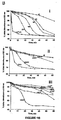
- Fig. 1A triggered swelling of isolated rat liver mitochondria (Fig. 1Bi ).
- the rate of swelling increased with increasing GSAO concentration and time of incubation.
- the trivalent arsenical molety of GSAO was responsible for this activity as the corresponding pentavalent arsenical (4-( N -(( S -glutathionyl)acetyl)amino)benzenearsonic acid, GSAA) or carboxylic acid (4-( N -(( S -glutathionyl)acetyl)amino)benzolc add, GSCA) compounds (Fg. 1A) were without effect ( Fig. 1Bii ). Positive controls for pore opening were Ca 2+ and Pi ions ( Fig. 1Bi ) and PAO ( Fig. 1Bii ).
- ANT activity is controlled by the binding of Ca 2+ , cyclophilin D and adenine nucleotides, Cyclophilin D (Crompton et al., 1988) and adenine nucleotides (Haworth & Hunter, 1979a,b) bind to the matrix side of ANT, while the site(s) for interaction of Ca 2 + has yet to be determined.
- the primary trigger for opening of the MPTP is a rise in matrix Ca 2+ concentration. Chelation of Ca 2+ with EGTA blocks pore opening. The specificity of the trigger site for Ca 2+ appears to be absolute as other divalent metal ions such as Mg 2+ act as inhibitors (Haworth & Hunter, 1979a).
- Cyclosporin A blocks pore opening by binding to cyclophilin D and displacing it from ANT (Crompton et al., 1988).
- Matrix ADP is also an important modulator of pore opening that binds to ANT and decreases the sensitivity of the trigger site to Ca 2+ (Haworth & Hunter, 1979a,b).
- Bonkrekic acid BKA also interacts with ANT and decreases sensitivity to Ca 2+ (Hunter & Haworth, 1979).
- ANT Direct interaction of ANT with a blotin-tagged GSAO (4-( N -( S -( N -(6-((6-((biotinoyl)amino)hexanoyl)amino)hexanoyl)-glutathionyl)acetyl)amino) phenylarsenoxide, GSAO-B) is shown in Fig. 1D .
- the labeling of ANT with GSAO-B was specific as it was competed for by a 4-fold molar excess of the small synthetic dithiol, dimercaptopropanol.
- Bovine aortic endothelial (BAE) cells ATCC, Rockville, MD were cultured in DMEM supplemented with 10% foetal calf serum (FCS), 2 mM L-glutamine, and 5 U.mL -1 penicillin/streptomycin (Gibco, Galthersburg, MD).
- FCS foetal calf serum
- HMEC-1 The human microvascular endothelial call line, HMEC-1 (Ades et al., 1992), was cultured in MCDB131 medium (Gibco) supplemented with 10% FCS, 2 mM L-glutamine, 5 U.mL -1 penicillin/streptomycin, 10 ng.mL -1 epidermal growth factor (Sigma, St. Louis, MO) and 1 ⁇ g.mL -1 hydrocortisone (Sigma).
- Cell culture plasticware was purchased from Coming Costar (Coming, NY). Trypsin/EDTA solution was from Gibco.
- BAE cells were seeded at a density of 10 4 cells per well into 8-well Labtek glass chamber slides (Nunc, Naperville, IL) and allowed to adhere overnight. The cells were washed once and the medium was replaced with Hanks Balanced Salt Solution (HBSS) (Gibco). The cells were then incubated for 1 h with 50 ⁇ M GSAO-F, 50 ⁇ M GSAO-F and 250 ⁇ M dimercaptopropanol, or 50 ⁇ M GSAA-F. All cells were counterstained with 100 nM MitotrackerTM Red CMXRos (Molecular Probes, Eugene, OR).
- HBSS Hanks Balanced Salt Solution
- the cells were then washed three times with HBSS, fixed for 10 min with 80% acetone and 20% methanol, and washed three times with HBSS.
- Slides were mounted in VectaShield antifade agent (Vector Laboratories, Burlingame, CA) and sealed with nail polish. Images were captured using a Leica DM IRB inverted microscope and confocal system, with Leica confocal software.
- GSAO GSAO-F
- GSAO-F fluorescein
- GSAO-F The mitochondrial accumulation of GSAO-F was specific for the dithiol reactivity of GSAO as it was abolished in the presence of a five-fold molar excess of the small synthetic dithiol, dimercaptopropanol (Figure 2iii), and the corresponding pentavalent arsenical, GSAA-F, did not stain the cells ( Figure 2v). Mitochondrial localisation was also seen in BAE cells Incubated with GSAO-B, followed by staining with streptavidin-Alexa Fluor 488 (data not shown).
- ANT is abundant in the inner mitochondrial membrane. Sequestration of GSAO on the matrix face of ANT would drive entropic import of GSAO into the matrix. This mechanism is supported by the finding that GSAA, which has effectively the same charge and size as GSAO, did not react with ANT or accumulate in mitochondria.
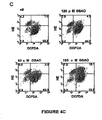
- GSAO inhibited ATP production, increased superoxide levels and triggered mitochondrial depolarisation and apoptosis in proliferating, but not growth-quiescent, endothelial cells
- BAE cells in six-well culture plates were arrested for 24 h in 0.5% serum or left in 10% serum, then treated for 24 h with 0, 60 or 150 ⁇ M GSAO.
- the cells were washed once then resuspended in 0.4 mL PBS containing 0.3% bovine serum albumin.
- a 50 ⁇ l sample of cells was mixed with 50 ⁇ L water and 100 ⁇ L ATP releasing agent (Sigma) and ATP concentration was measured using a luciferin/luciferase ATP assay mix (Sigma). Light units were converted to ATP concentrations using an ATP standard in place of the 50 ⁇ L water. Cell number was counted using a Beckman Coulter Counter and mol of ATP was expressed per million cells.
- BAE or HMEC-1 cells were seeded at a density of 10 4 cells per cell into 96 well plates and allowed to adhere overnight and then treated as indicated.
- the cells were seeded in medium containing 10% serum, allowed to adhere overnight, then washed with PBS and arrested for 24 h in medium containing 0.25% serum. Attached cells remaining after treatments were measured using methylene blue (Oliver et al., 1989).
- proliferating or growth-quiescent BAE cells were treated for 24 or 48 h with GSAO In six-well culture plates, then detached with trypsin/EDTA, washed once, and resuspended at 2 x 10 6 cells per mL in serum-free medium.
- Cells were then incubated for 15 min at room temperature with dihydroethidine (5 ⁇ M, Molecular Probes) or 30 min at room temperature with JC-1 (0.5 ⁇ g.mL -1 , Molecular Probes), annexin V-FITC (50 ⁇ l.mL -1 ) (Pharmingen, La Jolla, CA, USA), or acridine orange 10-nonyl bromide (5 ⁇ M, Molecular Probes). Cells were then washed once, resuspended in 0.5 mL serum-free medium, transferred to ice, and fluorescence was quantitated immediately by flow cytometry.
- dihydroethidine 5 ⁇ M, Molecular Probes
- JC-1 0.5 ⁇ g.mL -1 , Molecular Probes
- annexin V-FITC 50 ⁇ l.mL -1
- acridine orange 10-nonyl bromide 5 ⁇ M, Molecular Probes
- GSAO concentrated in mitochondria in viable cells and perturbed mitochondrial function and cell viability. Proliferating cells having a greater mitochondrial mass and respiration than growth-quiescent cells. To test whether GSAO might have selective effects on proliferating cells, proliferating or growth-quiescent BAE cells were incubated for 48 h with increasing concentrations of GSAO.
- the GSAO IC 50 for reduction in viability of proliferating BAE cells was ⁇ 75 ⁇ M ( Fig. 3Ai ), whereas the compound had little effect on growth-quiescent cells.
- the control compounds, GSAA and GSCA had no significant effect on the viability of proliferating BAE cells at concentrations up to 1.0 mM (data not shown).
- the effect of GSAO on proliferating cell viability was time-dependent.
- the GSAO IC 50 decreased from ⁇ 75 ⁇ M to ⁇ 25 ⁇ M when the incubation time increased from 48 to 72 h (data not shown).
- PAO in contrast, was equally toxic to both proliferating and growth-quiescent BAE cells with an IC 50 of ⁇ 200 nM ( Fig.
- GSAO GSAO binding to ANT in proliferating endothelial cells affected ATP production.
- the ATP content of proliferating BAE cells was approximately twice that of growth-quiescent cells and incubation with 150 ⁇ M GSAO for 24 h reduced ATP levels in proliferating cells to that of growth-quiescent cells ( Fig. 4ai ). This result mirrors the selective effects of GSAO on proliferating cell viability ( Fig. 4ai ).
- mitochondrial mass was measured using nonyl acridine orange.
- This dye binds to cardiolipin in the mitochondrial membrane (Petit et al., 1992).
- the mitochondrial mass of proliferating cells was approximately twice that of growth-quiescent cells, which was unchanged by GSAO treatment ( Fig. 4aii ).
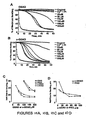
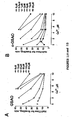
- Rat liver mitochondria were suspended at 1 mg of protein per mL at 25°C in 3 mM HEPES, pH 7.0 buffer containing 75 mM mannitol, 250 mM sucrose, 10 mM sodium succinate, and 2 ⁇ M rotenone and treated with the ANT-binding compounds for 0 to 60 min. Reagent concentrations are indicated in the figure legends. Mitochondria in 0.25 mL of reaction were pelleted by centrifugation at 8000g for 5 min and the supernatants were concentrated 10-fold by ultrafiltration through a Microcon YM-3 membrane (Millipore, Bedford, MA).
- the concentrated supernatants were resolved on 8-16% gradient iGels from Gradipore (Sydney, Australia) under non-reducing conditions and transferred to PVDF membrane. Proteins were detected by Western blot using anti-human cytochrome c polyclonal antibodies (Product 556433, BD Pharmingen) and anti-rabbit peroxidase-conjugated antibodies (Dako, Carpinteria, California). Chemiluminescence films were analyzed using a GS-700 Imaging Densitometer and Multi-Analyst software (Bio-Rad, Hercules, California).
- the screening was performed using rat liver mitochondria frozen for 1 or 2 days at -80°C after isolation.
- the mitochondria swelling was measured by monitoring the decrease In light scattering at 520 nm using a microplate reader.
- Mitochondria were isolated from the livers of ⁇ 250 g male Wistar rats using differential centrifugation as described previously (Don et al., 2003). The final mitochondrial pellet was resuspended in 3 mM HEPES-KOH, pH 7.0 buffer containing 213 mM mannitol, 71 mM sucrose and 10 mM sodium succinate at a concentration of 30 mg of protein per mL Mitochondrial permeability transition induction was assessed spectrophotometrically by suspending the liver mitochondria at 0.5 mg of protein per mL at 25°C in 3 mM HEPES-KOH, pH 7.0 buffer containing 75 mM mannitol, 250 mM sucrose, 10 mM sodium succinate, and 2 mM rotenone. Swelling was measured by monitoring the associated decrease in light scattering at 520 nm using a microplate reader.
- ANT pore formation is controlled by the binding of Ca 2+ , cyclophilin D and adenine nucleotides under physiological conditions.
- the primary trigger for opening of the mitochondrial permeability transition pore is a rise in matrix Ca 2+ concentration.
- Chelation of Ca 2+ with EGTA blocks pore opening, as does an excess of other divalent metal ions such as Mg 2+ . Both EGTA and Mg 2+ blocked GSAO-dependent swelling ( Fig. 11 ).
- Binding of cyclophilin D to ANT is necessary for pore opening at sub-millimolar Ca 2+ concentrations.
- Cyclosporin A (CsA) blocks pore opening by binding to cyclophilin D and displacing it from ANT.
- ADP inhibits pore opening by binding to ANT and decreasing the sensitivity of the trigger site to Ca 2+ .
- CsA and ADP blocked the effect of o-GSAO on pore opening ( Fig. 12 ).
Landscapes
- Health & Medical Sciences (AREA)
- Life Sciences & Earth Sciences (AREA)
- Chemical & Material Sciences (AREA)
- Engineering & Computer Science (AREA)
- Organic Chemistry (AREA)
- Biomedical Technology (AREA)
- Immunology (AREA)
- General Health & Medical Sciences (AREA)
- Medicinal Chemistry (AREA)
- Molecular Biology (AREA)
- Urology & Nephrology (AREA)
- Hematology (AREA)
- Bioinformatics & Cheminformatics (AREA)
- Pharmacology & Pharmacy (AREA)
- Animal Behavior & Ethology (AREA)
- Public Health (AREA)
- Veterinary Medicine (AREA)
- Biochemistry (AREA)
- Nuclear Medicine, Radiotherapy & Molecular Imaging (AREA)
- General Chemical & Material Sciences (AREA)
- Chemical Kinetics & Catalysis (AREA)
- Cell Biology (AREA)
- Food Science & Technology (AREA)
- Biotechnology (AREA)
- Physics & Mathematics (AREA)
- General Physics & Mathematics (AREA)
- Microbiology (AREA)
- Pathology (AREA)
- Analytical Chemistry (AREA)
- Proteomics, Peptides & Aminoacids (AREA)
- Neurology (AREA)
- Neurosurgery (AREA)
- Toxicology (AREA)
- Tropical Medicine & Parasitology (AREA)
- Biophysics (AREA)
- Genetics & Genomics (AREA)
- Epidemiology (AREA)
- Heart & Thoracic Surgery (AREA)
- Cardiology (AREA)
- Rheumatology (AREA)
Claims (25)
- Procédé in vitro d'identification d'un composé qui induit sélectivement la transition de perméabilité mitochondriale (MPT) dans des cellules proliférantes, dans lequel ledit procédé consiste à mettre une cellule ou un extrait de cellule en contact avec un composé, à déterminer si le composé se lie à un agent de translocation de nucléotide d'adénine (ANT) et à déterminer si le composé induit sélectivement la MPT dans des cellules proliférantes.
- Procédé in vitro selon la revendication 1 de détection de plusieurs composés pour identifier un composé qui induit sélectivement une MPT dans des cellules proliférantes, dans lequel ledit procédé consiste à mettre une cellule ou un extrait de cellule en contact avec les plusieurs composés, à déterminer si l'un quelconque des composés se lie à l'ANT et, si ceci est le cas, à déterminer séparément pour chacun des plusieurs composés si le composé induit sélectivement la MPT dans des cellules proliférantes.
- Procédé in vitro selon la revendication 1 ou 2, dans lequel la sélectivité pour des cellules proliférantes est déterminée en comparant l'effet des composés identifiés comme se liant à l'ANT sur la MPT dans des cellules proliférantes avec l'effet sur la MPT dans des cellules non proliférantes ou quiescentes de croissance.
- Procédé in vitro selon la revendication 1 ou 2, dans lequel ladite détermination d'induction de la MPT implique la mesure des modifications dans la libération de cytochrome C.
- Procédé in vitro selon la revendication 1 ou 2, dans lequel ladite détermination d'induction de la MPT implique la mesure des modifications dans la concentration de peroxyde cellulaire.
- Procédé in vitro selon l'une quelconque des revendications 1 à 5, dans lequel le composé est un composé réactif au dithiol.
- Procédé in vitro selon l'une quelconque des revendications 1 à 5, dans lequel le composé présente une moitié d'oxyde d'arsénic (ou équivalent d'oxyde d'arsénic).
- Procédé in vitro selon la revendication 7, dans lequel le composé est de la formule (I) :
A-[(XBX')nB'-Y]p (I)
dans laquelleA comprend au moins un groupe suspendu ;(XBX')nB' comprend un groupe d'agent de liaison approprié, où X est choisi parmi -NR, -S(O)-, -S(O)O-, -S(O)2-, -S(O)2O-,-C(O)-, -C(S)-, -C(O)O-, C(S)O-, -C(S)S-, -P(O)(R1)- et -P(O)(R1)O-, ou est absent ;B est choisi parmi un groupe alkylène en C1-C10, alcénylène en C2-C10, alcynylène en C2-C10, cycloalkylène en C3-C10, cycloalcénylène en C5-C10, hétérocycloalkylène en C3-C10, hétérocycloalcénylène en C5-C10, arylène, hétéroarylène en C6-C12 et acyle en C2-C10 ;X' est choisi parmi -NR-, -O-, -S-, -Se-, -S-S-, S(O)-, -OS(O)-, OS(O)O-, -OS(O)2, -OS(O)2O-, -S(O)O-, -S(O)2-, -S(O)2O-, -OP(O)(R1)-, -OP(O)(R1)O-, -OP(O)(R1)OP(O)(R1)O-, -C(O)-, -C(S)-, -C(O)O-, C(S)O-, -C(S)S-, -P(O)(R1)-, -P(O)(R1)O- et ou est absent ; où E est O, S, Se, NR ou N(R)2 + ;B' est choisi parmi un groupe alkylène en C1-C10, alcénylène en C2-C10, alcynylène en C2-C10, cycloalkylène en C3-C10, cycloalcénylène en C5-C10, hétérocycloalkylène en C3-C10, hétérocycloalcénylène en C5-C10, arylène et hétéroarylène en C6-C12 ou est absent ; et oùchaque R est indépendamment choisi parmi un atome d'hydrogène, un groupe alkyle en C1-C10, alcényle en C2-C10, alcynyle en C2-C10, cycloalkyle en C3-C10, cycloalcényle en C5-C10, hétérocycloalkyle en C3-C10, hétérocycloalcényle en C5-C10, aryle en C6-C12, hétéroaryle, R2 et acyle en C2-C10 ;R' est identique à R ou deux R' peuvent être pris ensemble avec les atomes d'azote auxquels ils sont liés pour former un noyau hétérocyclique saturé ou insaturé à 5 ou 6 éléments ;chaque R1 est indépendamment choisi parmi un atome d'hydrogène, un groupe alkyle en C1-C10, alcényle en C2-C10, alcynyle en C2-C10, cycloalkyle en C3-C10, cycloalcényle en C5-C10, hétérocycloalkyle en C3-C10, hétérocycloalcényle en C5-C10, aryle en C6-C12, hétéroaryle, halo, OR2 et N(R)2 ;chaque R2 est indépendamment choisi parmi un atome d'hydrogène, un groupe alkyle en C1-C10, alcényle en C2-C10, alcynyle en C2-C10, cycloalkyle en C3-C10, cycloalcényle en C5-C10, hétérocycloalkyle en C3-C10, hétérocycloalcényle en C5-C10, aryle, hétéroaryle en C6-C12 et -C(O)R5 ;chaque R5 est indépendamment choisi parmi un atome d'hydrogène, un groupe alkyle en C1-C10, alcényle en C2-C10, alcynyle en C2-C10, cycloalkyle en C3-C10, cycloalcényle en C5-C10, hétérocycloalkyle en C3-C10, hétérocycloalcényle en C5-C10, aryle en C6-C12, hétéroaryle, alcoxy en C1-C10, alcényloxy en C3-C10, alcynyloxy en C3-C10, cycloalkyloxy en C3-C10, cycloalcényloxy en C5-C10, hétérocycloalkyloxy en C3-C10, hétérocycloalcényloxy en C5-C10, aryloxy en C6-C12, hétéroaryloxy, alkylthio en C1-C10, alcénylthio en C3-C10, alcynylthio en C3-C10, cycloalkylthio en C3-C10, cycloalcénylthio en C5-C10, hétérocycloalkylthio en C3-C10, hétérocycloalcénylthio en C5-C10, arylthio en C6-C12, hétéroarylthio, OH, SH et N(R)2 ;où pour chaque cas où B et/ou B' est un groupe arylène, les substituants directement fixés aux noyaux arylène respectifs (comprenant un oxyde d'arsénic ou un équivalent d'oxyde d'arsénic) peuvent être dans une relation para, méta ou ortho ; etoù chaque groupe alkylène, alcénylène, alcynylène, cycloalkylène, cycloalcénylène, hétérocycloalkylène, hétérocycloalcénylène, arylène, hétéroarylène et acyle peut être indépendamment substitué par un atome d'hydrogène, un groupe alkyle en C1-C10, alcényle en C2-C10, alcynyle en C2-C10, cycloalkyle en C3-C10, cycloalcényle en C5-C10, hétérocycloalkyle en C3-C10, hétérocycloalcényle en C5-C10, aryle en C6-C12, hétéroaryle, cyano, cyanate, isocyanate, OR2a, SR6, nitro, oxyde d'arsénic, -S(O)R3, -OS(O)R3, -S(O)2R1, -OS(O)2R3, -P(O)R4R4, -OP(O)R4R4, -N(R")2, -NRC(O)(CH2)mQ, -C(O)R5 ;
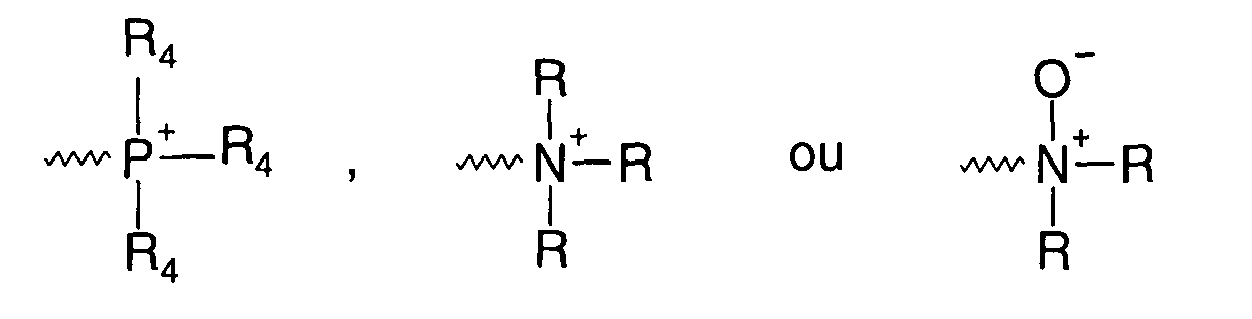 où R, R1 et R5 sont comme définis ci-dessus ; etR2a est choisi parmi un atome d'hydrogène, un groupe alkyle en C1-C5, alcényle en C2-C5, alcynyle en C2-C5, cycloalkyle en C3-C10, cycloalcényle en C5-C10, aryle en C6-C12, -S(O)R3, -S(O)2R3, -P(O)(R4)2, N(R)2 et -C(O)R5 ;chaque R3 est indépendamment choisi parmi un atome d'hydrogène, un groupe alkyle en C1-C10, alcényle en C2-C10, alcynyle en C2-C10, cycloalkyle en C3-C10, cycloalcényle en C5-C10, hétérocycloalkyle en C3-C10, hétérocycloalcényle en C5-C10, aryle, hétéroaryle en C6-C12, alcoxy en C1-C10, alcényloxy en C3-C10, alcynyloxy en C3-C10, cycloalkyloxy en C3-C10, cycloalcényloxy en C5-C10, hétérocycloalkyloxy en C3-C10, hétérocycloalcényloxy en C5-C10, aryloxy, hétéroaryloxy en C6-C12, alkylthio en C1-C10, alcénylthio en C3-C10, alcynylthio en C3-C10, cycloalkylthio en C3-C10, cycloalcénylthio en C5-C10, hétérocycloalkylthio en C3-C10, hétérocycloalcénylthio en C5-C10, arylthio, hétéroarylthio en C6-C12 et N(R)2 ;chaque R4 est indépendamment choisi parmi un atome d'hydrogène, un groupe alkyle en C1-C10, alcényle en C2-C10, alcynyle en C2-C10, cycloalkyle en C3-C10, cycloalcényle en C5-C10, hétérocycloalkyle en C3-C10, hétérocycloalcényle en C5-C10, aryle, hétéroaryle en C6-C12, alcoxy en C1-C10, alcényloxy en C3-C10, alcynyloxy en C3-C10, cycloalkyloxy en C3-C10, cycloalcényloxy en C5-C10, hétérocycloalkyloxy en C3-C10, hétérocycloalcényloxy en C5-C10, aryloxy, hétéroaryloxy en C6-C12, alkylthio en C1-C10, alcénylthio en C3-C10, alcynylthio en C3-C10, cycloalkylthio en C3-C10, cycloalcénylthio en C5-C10, hétérocycloalkylthio en C3-C10, hétérocycloalcénylthio en C6-C10, arylthio, hétéroarylthio en C6-C12, halo et N(R)2 ;R6 est choisi parmi un groupe alkyle en C1-C10, alcényle en C2-C10, alcynyle en C2-C10, cycloalkyle en C3-C10, cycloalcényle en C5-C10, hétérocycloalkyle en C3-C10, hétérocycloalcényle en C5-C10, aryle, hétéroaryle en C6-C12, alkylthio en C1-C10, alcénylthio en C3-C10, alcynylthio en C3-C10, cycloalkylthio en C3-C10, cycloalcénylthio en C5-C10, hétérocycloalkylthio en C3-C10, hétérocycloalcénylthio en C5-C10, arylthio en C6-C12, hétéroarylthio, -S(O)R3, -S(O)2R3 et C(O)R5,R" est identique à R ou deux R" pris ensemble avec l'atome N auquel ils sont fixés peuvent former un système de noyau hétérocyclique aromatique saturé ou insaturé ;Q est choisi parmi un atome d'halogène et -OS(O)2Q1 ; où Q1 est choisi parmi un groupe alkyle en C1-C4, perfluoroalkyle en C1-C4, phényle, p-méthylphényle ; etm est égal à de 1 à 5,n est un nombre entier de 0 à 20Y comprend au moins un oxyde d'arsénic ou équivalent d'oxyde d'arsénic ;p est un nombre entier de 1 à 10, et dans lequel le composé de la formule (I) possède plus de 6 atomes de carbone.
 - Procédé in vitro selon la revendication 8, dans lequel A est choisi parmi des amino-acides naturels, non naturels et synthétiques, des amines hydrophiles, des peptides, des polypeptides, des résidus du sucre, des oligosaccharides et des protéines contenant un thiol, de petits résidus acides, des résidus contenant un groupe hydroxyle ou une combinaison de ceux-ci.
- Procédé in vitro selon la revendication 9, dans lequel ladite amine hydrophile est choisie parmi des alkylamines primaires, des arylamines primaires, des aralkylamines primaires, des alkylamines secondaires, des arylamines secondaires, des aralkylamines secondaires, des alkylamines tertiaires, des arylamines tertiaires et des aralkylamines tertiaires et des amines hétérocycliques.
- Procédé in vitro selon la revendication 9 ou 10, dans lequel A est choisi parmi des dipeptides, des tripeptides, des tétrapeptides, des pentapeptides, la glutathione, la glucosamine, des saccharides, des disaccharides, des oligosaccharides, dans lequel l'atome de soufre de chaque résidu contenant du soufre peut être facultativement oxydé pour former un sulfoxyde ou une sulfone.
- Procédé in vitro selon la revendication 11, dans lequel A est choisi parmi un peptide comprenant un ou plusieurs parmi la cystéinylglycine, l'acide cystéique, l'acide aspartique, l'acide glutamique, la lysine et l'arginine ; le glucose, le fructose, le mannose, le xylose, le lyxose, le galactose, l'hexose, le saccharose, le sorbose, le galactosyl-saccharose, le sorbitol, le mannitol et le xylitol.
- Procédé in vitro selon l'une quelconque des revendications 8 à 12, dans lequelX est choisi parmi -C(O)-, -C(S)-, -C(O)O-, C(S)O- et -C(S)Sou est absent ;B est choisi parmi un groupe alkylène en C1-C5, alcénylène en C2-C5, alcynylène en C2-C5, cycloalkylène en C3-C10, cycloalcénylène en C5-C10, arylène en C6-C12 ou acyle en C2-C5 ;X' est choisi parmi -O-, -S-, -NR-, -S-S-, -S(O)-, -S(O)-, -P(O)(R1)-, -OP(O)(R1)-, -OP(O)(R1)O-, -OP(O)(R1)OP(O)(R1)O, -C(O)-, -C(S)-, -C(O)O-, C(S)O-, -C(S)S-, -Se-,
 ou est absent ; où E est 0, S ou N(R)2+;n est égal à 0, 1 ou 2 ; etB' est choisi parmi un groupe alkylène en C1-C5, alcénylène en C2-C5, alcynylène en C2-C5, cycloalkylène en C3-C10, cycloalcénylène en C5-C10 et arylène en C6-C12 ou est absent ; et oùchaque R est indépendamment choisi parmi un atome d'hydrogène, un groupe alkyle en C1-C5, alcényle en C2-C5, alcynyle en C2-C5, cycloalkyle en C3-C10, cycloalcényle en C5-C10, aryle en C6-C12, OR2 et acyle en C2-C10 ;R' est identique à R ;chaque R1 est indépendamment choisi parmi un atome d'hydrogène, un groupe alkyle en C1-C5, alcényle en C2-C5, alcynyle en C2-C5, cycloalkyle en C3-C10, cycloalcényle en C5-C10, aryle en C6-C12, halo, OR2 et N(R)2 ;chaque R2 est indépendamment choisi parmi un atome d'hydrogène, un groupe alkyle en C1-C5, alcényle en C2-C5, alcynyle en C2-C5, cycloalkyle en C3-C10, cycloalcényle en C5-C10, aryle en C6-C12, et -C(O)R5 ;chaque R5 est indépendamment choisi parmi un atome d'hydrogène, un groupe alkyle en C1-C5, alcényle en C2-C5, alcynyle en C2-C5, cycloalkyle en C3-C10, cycloalcényle en C5-C10, aryle en C6-C12, alcoxy en C1-C5, alcényloxy en C3-C5, alcynyloxy en C3-C5, cycloalkyloxy en C3-C10, cycloalcényloxy en C5-C10, aryloxy en C6-C12, alkylthio en C1-C5, alcénylthio en C3-C5, alcynylthio en C3-C5, cycloalkylthio en C3-C10, cycloalcénylthio en C5-C10, arylthio en C6-C12, OH, SH et N(R)2 ;où pour chaque cas où B et/ou B' est le groupe arylène, les substituants directement fixés aux noyaux arylène respectifs (incluant un oxyde d'arsénic ou un équivalent d'oxyde d'arsénic), peuvent être dans une relation para, méta ou ortho, etoù chaque groupe alkylène, alcénylène, alcynylène, cycloalkylène, cycloalcénylène, arylène et acyle peut être indépendamment substitué par un atome d'hydrogène, un groupe alkyle en C1-C5, alcényle en C2-C5, alcynyle en C2-C5, cycloalkyle en C3-C10, cycloalcényle en C5-C10, aryle en C6-C12, cyano, halo, cyanate, isocyanate, OR2a, SR6, nitro, oxyde d'arsénic, -S(O)R3, -OS(O)R3, -S(O)2R3, -OS(O)2R3, -P(O)R4R4, -OP(O)R4R4, -N(R")2, NRC(O)(CH2)mQ, -C(O)R5,
 où R, R1 et R5 sont comme définis ci-dessus ; etR2a est choisi parmi un atome d'hydrogène, un groupe alkyle en C1-C5, alcényle en C2-C5, alcynyle en C2-C5, cycloalkyle en C3-C10, cycloalcényle en C5-C10, aryle en C6-C12, -S(O)R3, -S(O)2R3, -P(O)(R4)2, N(R)2 et -C(O)R5 ;chaque R3 est indépendamment choisi parmi un atome d'hydrogène, un groupe alkyle en C1-C5, alcényle en C2-C5, alcynyle en C2-C5, cycloalkyle en C3-C10, cycloalcényle en C5-C10, aryle en C6-C12, alcoxy en C1-C5, alcényloxy en C3-C5, alcynyloxy en C3-C5, cycloalkyloxy en C3-C10, cycloalcényloxy en C5-C10, aryloxy en C6-C12, alkylthio en C1-C5, alcénylthio en C3-C5, alcynylthio en C3-C5, cycloalkylthio en C3-C10, cycloalcénylthio en C5-C10, arylthio en C6-C12 et N(R)2 ;chaque R4 est indépendamment choisi parmi un atome d'hydrogène, un groupe alkyle en C1-C5, alcényle en C2-C5, alcynyle en C2-C5, cycloalkyle en C3-C1, cycloalcényle en C5-C10, aryle en C6-C12, alcoxy en C1-C5, alcényloxy en C3-C5, alcynyloxy en C3-C6, cycloalkyloxy en C3-C10, cycloalcényloxy en C5-C10, aryloxy en C6-C12, alkylthio en C1-C5, alcénylthio en C3-C5, alcynylthio en C3-C5, cycloalkylthio en C3-C5, cycloalcénylthio en C3-C5, arylthio en C6-C12, halo et N(R)2 ;R6 est indépendamment choisi parmi un groupe alkyle en C1-C5, alcényle en C2-C5, alcynyle en C2-C5, cycloalkyle en C3-C10, cycloalcényle en C5-C10 ; aryle en C6-C12, alkylthio en C1-C5, alcénylthio en C3-C5, alcynylthio en C3-C5, cycloalkylthio en C3-C10, cycloalcénylthio en C5-C10, arylthio en C6-C12, -S(O)R3, -S(O)2R3 et -C(O)R5 ;R" est identique à R ;Q est choisi parmi un atome d'halogène et -OS(O)2Q1 ; où Q1 est choisi parmi un groupe alkyle en C1-C4, perfluoroalkyle en C1-C4, phényle, p-méthylphényle ;m est égal à de 1 à 5.
 - Procédé in vitro selon l'une quelconque des revendications 8 à 13, dans lequelX est absent ;B est choisi parmi un groupe alkylène en C1-C5, arylène en C5-C12 ou acyle en C2-C5 ;X' est choisi parmi -O-, -S-, -NR-, -S-S-, -S(O)-, -S(O)2-, -P(O)(R1)-, -C(O)-, -C(S)-, -C(O)O-, C(S)O-, -C(S)S-, -Se-, et
 ou est absent ; où E est 0, S ou N(R)2+ ;n est égal à 0, 1 ou 2; etB' est un groupe alkylène en C1-C5, arylène en C6-C12 ou est absent ; et oùchaque R est indépendamment choisi parmi un atome d'hydrogène, un groupe alkyle en C1-C5, cycloalkyle en C3-C10, aryle en C6-C12, OR2 et acyle en C2-C10 ;R' est identique à R ;chaque R1 est indépendamment choisi parmi un atome d'hydrogène, un groupe alkyle en C1-C5, cycloalkyle en C3-C10, aryle en C6-C12, halo, OR2 et N(R)2 ;chaque R2 est indépendamment choisi parmi un atome d'hydrogène, un groupe alkyle en C1-C5, cycloalkyle en C3-C10, aryle en C6-C12, et -C(O)R5 :chaque R5 est indépendamment choisi parmi un atome d'hydrogène, un groupe alkyle en C1-C5, alcényle en C2-C5, cycloalkyle en C3-C10, cycloalcényle en C5-C10, aryle en C6-C12, alcoxy en C1-C5, alcényloxy en C3-C5, cycloalkyloxy en C3-C10, cycloalcényloxy en C5-C10, aryloxy en C6-C12, alkylthio en C1-C5, alcénylthio en C3-C5, cycloalkylthio en C3-C10, cycloalcénylthio en C5-C10, arylthio en C6-C12, OH, SH et N(R)2 ;où pour chaque cas où B et/ou B' est le groupe arylène, les substituants directement fixés aux noyaux arylène respectifs (incluant un oxyde d'arsénic ou un équivalent d'oxyde d'arsénic), peuvent être dans une relation para, méta ou ortho, etoù chaque groupe alkylène, alcénylène, alcynylène, cycloalkylène, cycloalcénylène, arylène et acyle peut être indépendamment substitué par un atome d'hydrogène, un groupe alkyle en C1-C5, alcényle en C2-C5, alcynyle en C2-C5, cycloalkyle en C3-C10, cycloalcényle en C5-C10, aryle en C6-C12, halo, cyano, cyanate, isocyanate, OR2a, SR6, nitro, oxyde d'arsénic, -S(O)R3, -OS(O)R3, -S(O)2R3, -OS(O)2R3, -P(O)R4R4, -OP(O)R4R4, -N(R")2, -NRC(O)(CH2)mQ, -C(O)R5,
 où R, R1 et R5 sont comme définis ci-dessus ; etR2a est choisi parmi un atome d'hydrogène, un groupe alkyle en C1-C5, cycloalkyle en C3-C10, aryle en C6-C12, -S(O)R3, -S(O)2R3, - P(O)(R4)2 et -C(O)R5 ;chaque R3 est indépendamment choisi parmi un atome d'hydrogène, un groupe alkyle en C1-C5, cycloalkyle en C3-C10, aryle en C6-C12, alcoxy en C1-C5, cycloalkyloxy en C3-C10, aryloxy en C6-C12, alkylthio en C1-C5, cycloalkylthio en C3-C10, arylthio en C6-C12 et N(R)2 ;chaque R4 est indépendamment choisi parmi un atome d'hydrogène, un groupe alkyle en C1-C5, cycloalkyle en C3-C10, aryle en C6-C12, alcoxy en C1-C5, cycloalkyloxy en C3-C10, aryloxy en C6-C12, alkylthio en C1-C5, cycloalkylthio en C3-C5, halo et N(R)2 ;R6 est indépendamment choisi parmi un groupe alkyle en C1-C5, cycloalkyle en C3-C10, aryle en C6-C12, alkylthio en C1-C5, cycloalkylthio en C3-C10, arylthio en C6-C12, -S(O)R3, -S(O)2R3 et -C(O)R5 ;R" est identique à R ;Q est choisi parmi un atome d'halogène et -OS(O)2Q1 ; où Q1 est choisi parmi un groupe alkyle en C1-C4, perfluoroalkyle en C1-C4, phényle, p-méthylphényle ;m est égal à de 1 à 5.
 - Procédé in vitro selon l'une quelconque des revendications 8 à 14, dans lequelX est absent ;B est choisi parmi un groupe alkylène en C1-C5, arylène en C5-C12 ou acyle en C2-C5 ;X' est choisi parmi -O-, -S-, -NR-, -C(O)- et -C(O)O- ou est absent;n est égal à 1 ; etB' est un groupe alkylène en C1-C5, arylène en C6-C12 ou est absent; etoù pour chaque cas où B et/ou B' est le groupe arylène, les substituants directement fixés aux noyaux arylène respectifs (incluant un oxyde d'arsénic ou un équivalent d'oxyde d'arsénic), peuvent être dans une relation para, méta ou ortho, etoù chaque groupe alkylène, arylène et acyle peut être indépendamment substitué par un atome d'hydrogène, un groupe alkyle en C1-C5, alcényle en C2-C5, alcynyle en C2-C5, cycloalkyle en C3-C10, cycloalcényle en C5-C10, aryle en C6-C12, halo, cyano, cyanate, isocyanate, OR2a, SR6, nitro, oxyde d'arsénic, -S(O)R3, -S(O)2R3, - P(O)R4R4, -N(R")2, -NRC(O)(CH2)mQ, -C(O)R5,
 où chaque R est indépendamment choisi parmi un atome d'hydrogène, un groupe alkyle en C1-C5, aryle en C6-C12 et acyle en C2-C5 ;R2a est choisi parmi un atome d'hydrogène, un groupe alkyle en C1-C5, aryle en C6-C12, -S(O)2R3, -P(O)(R4)2 et -C(O)R5 ;chaque R3 est indépendamment choisi parmi un atome d'hydrogène, un groupe alkyle en C1-C5, aryle en C6-C12, alcoxy en C1-C5, aryloxy en C6-C12, alkylthio en C1-C5 et arylthio en C6-C12 ;chaque R4 est indépendamment choisi parmi un atome d'hydrogène, un groupe alkyle en C1-C5, aryle en C6-C12, alcoxy en C1-C5, aryloxy en C6-C12, alkylthio en C1-C5, arylthio en C6-C12, halo et N(R)2 ;chaque R5 est indépendamment choisi parmi un atome d'hydrogène, un groupe alkyle en C1-C5, aryle en C6-C12, alcoxy en C1-C5, aryloxy en C6-C12, alkylthio en C1-C5, arylthio en C6-C12, OH, SH et N(R)2 ;R6 est indépendamment choisi parmi un groupe alkyle en C1-C5, aryle en C6-C12, alkylthio en C1-C5, arylthio en C6-C12, -S(O)R3, -S(O)2R3 et -C(O)R5 ;R" est identique à R ci-dessus ;Q est choisi parmi un atome d'halogène et -OS(O)2Q1 ; où Q1 est choisi parmi un groupe alkyle en C1-C4, perfluoroalkyle en C1-C4, phényle, p-méthylphényle ; etm est égal à 2, 3, 4 ou 5.
 - Procédé in vitro selon l'une quelconque des revendications 8 à 15, dans lequelX est absent ;B est un groupe acyle en C2-C5 ;X' est NR;n est égal à 1 ;B' est le groupe phénylène ; etR est H ;dans lequel les substituants directement liés au noyau phénylène peuvent être dans une relation para, méta ou ortho.
- Procédé in vitro selon la revendication 16, dans lequel ledit composé est :

- Procédé in vitro selon la revendication 17, dans lequel R7 à R10 sont indépendamment choisis parmi un atome d'hydrogène, un atome d'halogène, un groupe hydroxy, amino, nitro, cyano, carboxy, alcoxy en C1-C5, méthyle, éthyle, isopropyle, tert-butyle, phényle et -NHC(O)CH2Q, où Q est un atome d'halogène, -OS(O)2CH3, -OS(O)2C6H5 et -OS(O)2-p-tolyle.
- Procédé in vitro selon la revendication 16 ou 17, dans lequel le groupe oxyde d'arsénic (-As=O) est à la position 4 dans le noyau phénylène.
- Procédé in vitro selon l'une quelconque des revendications 1 à 19, dans lequel le composé est choisi parmi :


- Procédé in vitro selon l'une quelconque des revendications 1 à 19, dans lequel le composé est représenté par la formule VII :
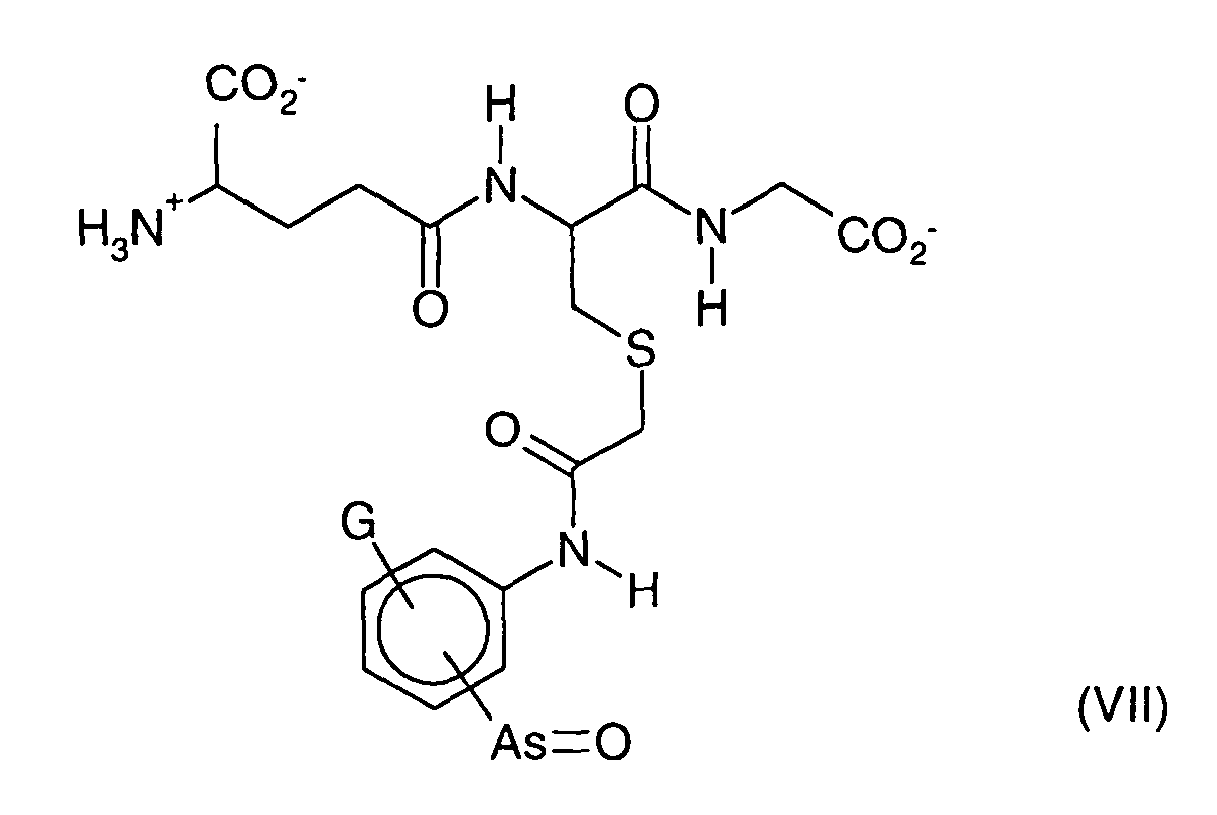
- Procédé in vitro selon la revendication 21, dans lequel G est choisi parmi un atome d'hydrogène, un atome d'halogène, un groupe hydroxy, amino, nitro, carboxy, alcoxy en C1-C8, méthyle, éthyle, isopropyle, tert-butyle, phényle et -NHC(O)CH2Q, où Q est un atome d'halogène, -OS(O)2CH3, -OS(O)2C6CH5 ou -OS(O)2-p-tolyle.
- Procédé in vitro selon la revendication 21 ou 22, dans lequel G est choisi parmi un groupe hydroxy, un atome de fluor, un groupe amino et nitro.
- Procédé in vitro selon l'une quelconque des revendications 1 à 23, dans lequel le groupe oxyde d'arsénic (-As=O) est remplacé par un équivalent d'oxyde d'arsénic comme défini ici.
- Procédé in vitro selon la revendication 24, dans lequel l'équivalent d'oxyde d'arsénic est toute espèce réactive au dithiol qui présente essentiellement la même affinité pour les dithiols que -As=O.
Priority Applications (1)
| Application Number | Priority Date | Filing Date | Title |
|---|---|---|---|
| EP09004714.3A EP2088206B1 (fr) | 2002-11-07 | 2003-11-07 | Induction de la transition de perméabilité mitochondriale |
Applications Claiming Priority (5)
| Application Number | Priority Date | Filing Date | Title |
|---|---|---|---|
| AU2002952526A AU2002952526A0 (en) | 2002-11-07 | 2002-11-07 | Induction of the mitochondrial permeability transition |
| AU2002952526 | 2002-11-07 | ||
| AU2003906109A AU2003906109A0 (en) | 2003-11-05 | A Substantially Cell Membrane Impermeable Arsenoxide Compound and Use Thereof | |
| AU2003906109 | 2003-11-05 | ||
| PCT/AU2003/001483 WO2004042079A1 (fr) | 2002-11-07 | 2003-11-07 | Induction de la transition de permeabilite mitochondriale |
Related Child Applications (1)
| Application Number | Title | Priority Date | Filing Date |
|---|---|---|---|
| EP09004714.3A Division EP2088206B1 (fr) | 2002-11-07 | 2003-11-07 | Induction de la transition de perméabilité mitochondriale |
Publications (3)
| Publication Number | Publication Date |
|---|---|
| EP1563099A1 EP1563099A1 (fr) | 2005-08-17 |
| EP1563099A4 EP1563099A4 (fr) | 2008-03-12 |
| EP1563099B1 true EP1563099B1 (fr) | 2009-07-22 |
Family
ID=32313402
Family Applications (2)
| Application Number | Title | Priority Date | Filing Date |
|---|---|---|---|
| EP03810339A Expired - Lifetime EP1563099B1 (fr) | 2002-11-07 | 2003-11-07 | Induction de la transition de permeabilite mitochondriale |
| EP09004714.3A Expired - Lifetime EP2088206B1 (fr) | 2002-11-07 | 2003-11-07 | Induction de la transition de perméabilité mitochondriale |
Family Applications After (1)
| Application Number | Title | Priority Date | Filing Date |
|---|---|---|---|
| EP09004714.3A Expired - Lifetime EP2088206B1 (fr) | 2002-11-07 | 2003-11-07 | Induction de la transition de perméabilité mitochondriale |
Country Status (9)
| Country | Link |
|---|---|
| US (2) | US20060166208A1 (fr) |
| EP (2) | EP1563099B1 (fr) |
| JP (1) | JP4426456B2 (fr) |
| CN (1) | CN101863958B (fr) |
| AT (1) | ATE437239T1 (fr) |
| CA (1) | CA2504935C (fr) |
| DE (1) | DE60328513D1 (fr) |
| ES (1) | ES2330519T3 (fr) |
| WO (1) | WO2004042079A1 (fr) |
Families Citing this family (15)
| Publication number | Priority date | Publication date | Assignee | Title |
|---|---|---|---|---|
| AUPR874601A0 (en) * | 2001-11-08 | 2001-11-29 | Unisearch Limited | Selective targeting of apoptotic cells |
| EP1474128B1 (fr) | 2002-01-07 | 2016-06-01 | Board Of Regents, The University Of Texas System | Acide s-dimethyl-arsino-thiosuccinique, acide s-dimethyl-arsino-2-thiobenzoique, s-(dimethyl-arsino) glutathione utilises comme traitements anticancereux |
| EP1563099B1 (fr) | 2002-11-07 | 2009-07-22 | Newsouth Innovations Pty Limited | Induction de la transition de permeabilite mitochondriale |
| US20110003321A1 (en) * | 2005-12-14 | 2011-01-06 | Kyushu University National University Corporation | Monitoring of Intercellular Mitochondorial Polarization |
| EP2069371B1 (fr) * | 2006-11-01 | 2013-03-13 | NewSouth Innovations Pty Limited | Composés d'organo-arsénoxydes et leur utilisation |
| EP2097111B1 (fr) * | 2006-11-08 | 2015-07-15 | Molecular Insight Pharmaceuticals, Inc. | Hétérodimères d'acide glutamique |
| WO2009043114A1 (fr) * | 2007-10-04 | 2009-04-09 | Newsouth Innovations Pty Limited | Composé d'oxyde d'arsenic et son procédé d'utilisation |
| EP2073004A1 (fr) * | 2007-12-19 | 2009-06-24 | Helmholtz Zentrum München Deutsches Forschungszentrum für Gesundheit und Umwelt (GmbH) | Analyse électrophorétique de la mitochondrie isolée pour la détection des dommages cellulaires ou tissulaires |
| ITRM20120058A1 (it) * | 2012-02-20 | 2013-08-21 | Pisanelli Giovanni Codacci | Famiglia di molecole a base di zuccheri ad uso terapeutico e relativo procedimento di produzione |
| CN105874319B (zh) * | 2013-12-03 | 2019-04-09 | 香港科技大学 | 采用正电荷aie荧光团特异性检测和量化心磷脂和分离线粒体及该aie荧光团的制造方法 |
| JP6468781B2 (ja) * | 2014-10-02 | 2019-02-13 | 株式会社ヘルスケアシステムズ | ミトコンドリア膜透過性の評価方法、ミトコンドリア膜透過性の亢進を抑制する物質のスクリーニング方法、ミトコンドリア膜透過性を亢進する物質のスクリーニング方法、及びミトコンドリア膜透過性の亢進抑制剤 |
| IL272705B2 (en) | 2017-10-17 | 2024-07-01 | Univ Wollongong | Anti-cancer agent |
| TWI841540B (zh) * | 2018-10-29 | 2024-05-11 | 伍倫貢大學 | 抗癌劑及其之藥學組合物和用途 |
| WO2020206503A1 (fr) | 2019-04-12 | 2020-10-15 | Centenary Institute Of Cancer Medicine And Cell Biology | Conjugués et leur utilisation comme agents d'imagerie |
| EP3733197A1 (fr) * | 2019-04-30 | 2020-11-04 | Stephen N. Pitcher | Composition antioxydante anaérobie |
Family Cites Families (23)
| Publication number | Priority date | Publication date | Assignee | Title |
|---|---|---|---|---|
| US2370092A (en) * | 1942-05-04 | 1945-02-20 | Parke Davis & Co | Organic amine derivatives and method of obtaining same |
| US2409291A (en) * | 1942-05-19 | 1946-10-15 | Squibb & Sons Inc | Chemotherapeutic sulfanilamide derivatives |
| US2465308A (en) * | 1946-11-27 | 1949-03-22 | Hoffmann La Roche | Arsenoso compounds and method of preparation |
| US2664432A (en) * | 1947-01-28 | 1953-12-29 | Ernst A H Friedheim | Heterocyclic metal and sulfur organic compounds |
| US2553515A (en) * | 1948-12-11 | 1951-05-15 | Hoffmann La Roche | N-(p-arsenoso-benzyl)-urea |
| US2951766A (en) * | 1957-07-15 | 1960-09-06 | Le Roy A White | Antiseptic plastic |
| BE786573A (fr) | 1971-07-20 | 1973-01-22 | Hoechst Ag | Medicament a base de composes arsenicaux organiques et de derives du benzimidazole |
| FR2640269B1 (fr) * | 1988-12-13 | 1991-03-15 | Maes Ludo | Composes organometalliques, leurs modes de preparation et compositions pharmaceutiques les contenant |
| US5270196A (en) * | 1989-10-20 | 1993-12-14 | Bristol-Myers Squibb Company | Arylsulfatase from streptomyces |
| FR2684382B1 (fr) * | 1991-12-02 | 1994-10-21 | Rhone Merieux | Medicaments et preparations pures de dichlorhydrate de melarsomine, leur procede d'obtention et produits intermediaires obtenus. |
| WO1998051297A1 (fr) | 1997-05-14 | 1998-11-19 | The University Of New Mexico | Inhibition de proteine disulfure isomerase de surface cellulaire |
| US6875451B2 (en) | 1997-10-15 | 2005-04-05 | Polarx Biopharmaceuticals Inc. | Compositions and methods for the treatment of primary and metastatic neoplastic diseases using arsenic compounds |
| CN1233476A (zh) | 1998-04-24 | 1999-11-03 | 陆道培 | 治疗急性白血病的药物及其制备方法 |
| FR2781674B1 (fr) | 1998-07-31 | 2002-06-28 | Inst Nat Sante Rech Med | Utilisation de nouveaux agents inducteurs de mort cellulaire en synergie avec les interferons |
| CA2349444A1 (fr) * | 1998-11-03 | 2000-05-11 | Mitokor | Production d'un translocateur de nucleotide d'adenine (ant), nouveaux ligands a l'ant et essais de criblage associes |
| US6191123B1 (en) | 1999-03-19 | 2001-02-20 | Parker Hughes Institute | Organic-arsenic compounds |
| EP1210596A2 (fr) * | 1999-06-22 | 2002-06-05 | Mitokor | Compositions et procedes d'analyse de conditions infracellulaires et traitement par transert d'energie |
| AUPQ296799A0 (en) * | 1999-09-20 | 1999-10-14 | Unisearch Limited | A cell-membrane impermeable trivalent organoarsenical derivative and use thereof |
| AUPR379801A0 (en) * | 2001-03-19 | 2001-04-12 | Unisearch Limited | Use of a substantially cell membrane impermeable compound for treating arthritis |
| AUPR598901A0 (en) | 2001-06-28 | 2001-07-19 | Unisearch Limited | Inhibition of angiogenesis by targeting protein tyrosine phosphatases |
| AUPR874601A0 (en) * | 2001-11-08 | 2001-11-29 | Unisearch Limited | Selective targeting of apoptotic cells |
| EP1563099B1 (fr) | 2002-11-07 | 2009-07-22 | Newsouth Innovations Pty Limited | Induction de la transition de permeabilite mitochondriale |
| EP2069371B1 (fr) | 2006-11-01 | 2013-03-13 | NewSouth Innovations Pty Limited | Composés d'organo-arsénoxydes et leur utilisation |
-
2003
- 2003-11-07 EP EP03810339A patent/EP1563099B1/fr not_active Expired - Lifetime
- 2003-11-07 EP EP09004714.3A patent/EP2088206B1/fr not_active Expired - Lifetime
- 2003-11-07 CN CN2010101672934A patent/CN101863958B/zh not_active Expired - Fee Related
- 2003-11-07 JP JP2004548941A patent/JP4426456B2/ja not_active Expired - Fee Related
- 2003-11-07 US US10/534,922 patent/US20060166208A1/en not_active Abandoned
- 2003-11-07 WO PCT/AU2003/001483 patent/WO2004042079A1/fr not_active Ceased
- 2003-11-07 DE DE60328513T patent/DE60328513D1/de not_active Expired - Lifetime
- 2003-11-07 ES ES03810339T patent/ES2330519T3/es not_active Expired - Lifetime
- 2003-11-07 AT AT03810339T patent/ATE437239T1/de not_active IP Right Cessation
- 2003-11-07 CA CA2504935A patent/CA2504935C/fr not_active Expired - Fee Related
-
2013
- 2013-10-25 US US14/063,748 patent/US9353152B2/en not_active Expired - Fee Related
Also Published As
| Publication number | Publication date |
|---|---|
| WO2004042079A1 (fr) | 2004-05-21 |
| EP1563099A1 (fr) | 2005-08-17 |
| CA2504935A1 (fr) | 2004-05-21 |
| HK1132015A1 (en) | 2010-02-12 |
| HK1073868A1 (en) | 2005-10-21 |
| EP1563099A4 (fr) | 2008-03-12 |
| ES2330519T3 (es) | 2009-12-11 |
| DE60328513D1 (de) | 2009-09-03 |
| CN101863958A (zh) | 2010-10-20 |
| JP2006518986A (ja) | 2006-08-24 |
| US20060166208A1 (en) | 2006-07-27 |
| US9353152B2 (en) | 2016-05-31 |
| CA2504935C (fr) | 2012-04-10 |
| JP4426456B2 (ja) | 2010-03-03 |
| US20140121165A1 (en) | 2014-05-01 |
| EP2088206A3 (fr) | 2009-09-16 |
| EP2088206B1 (fr) | 2013-07-03 |
| CN101863958B (zh) | 2012-07-18 |
| ATE437239T1 (de) | 2009-08-15 |
| EP2088206A2 (fr) | 2009-08-12 |
Similar Documents
| Publication | Publication Date | Title |
|---|---|---|
| US9353152B2 (en) | Induction of the mitochondrial permeability transition | |
| JP4064945B2 (ja) | 光学的方法による膜内外電位差の検出 | |
| Ballatori et al. | Roles of MRP2 and oatp1 in hepatocellular export of reduced glutathione | |
| US7115401B2 (en) | Detection of transmembrane potentials by optical methods | |
| WO2004062475A2 (fr) | Dosages fluorescents de proteines kinases | |
| HK1073868B (en) | Induction of the mitochondrial permeability transition | |
| US7026166B2 (en) | Fluorogenic dyes | |
| AU2003275772B2 (en) | Induction of the mitochondrial permeability transition | |
| AU2006328833A1 (en) | Novel compounds which interact with PEA-15 | |
| AU2008200304B2 (en) | Induction of the mitochondrial permeability transition | |
| HK1132015B (en) | Induction of the mitochondrial permeability transition | |
| Ji et al. | Double-component diazeniumdiolate derivatives as anti-cancer agents | |
| Kuil et al. | Cell permeable ITAM constructs for the modulation of mediator release in mast cells | |
| Oliveira et al. | Improvement of the pharmacological properties of amidated kyotorphin by means of iodination | |
| Masum | Design and Synthesis of C3-symmetric and Luminescent Iridium Complex-Peptide Hybrids for Detection and Cell Death Induction of Cancer Cells | |
| Wollack | Exploitation of prenylation in biomolecules: Cell-penetrating prenylated peptides and prenylated proteins | |
| HK1090422B (en) | A system for determining the electrical potential across a membrane |
Legal Events
| Date | Code | Title | Description |
|---|---|---|---|
| PUAI | Public reference made under article 153(3) epc to a published international application that has entered the european phase |
Free format text: ORIGINAL CODE: 0009012 |
|
| 17P | Request for examination filed |
Effective date: 20050525 |
|
| AK | Designated contracting states |
Kind code of ref document: A1 Designated state(s): AT BE BG CH CY CZ DE DK EE ES FI FR GB GR HU IE IT LI LU MC NL PT RO SE SI SK TR |
|
| AX | Request for extension of the european patent |
Extension state: AL LT LV MK |
|
| REG | Reference to a national code |
Ref country code: HK Ref legal event code: DE Ref document number: 1073868 Country of ref document: HK |
|
| DAX | Request for extension of the european patent (deleted) | ||
| RAP1 | Party data changed (applicant data changed or rights of an application transferred) |
Owner name: NEWSOUTH INNOVATIONS PTY LIMITED |
|
| A4 | Supplementary search report drawn up and despatched |
Effective date: 20080213 |
|
| RIC1 | Information provided on ipc code assigned before grant |
Ipc: C12Q 1/68 20060101AFI20040524BHEP Ipc: G01N 33/50 20060101ALI20080205BHEP Ipc: G01N 33/574 20060101ALI20080205BHEP Ipc: G01N 33/68 20060101ALI20080205BHEP |
|
| 17Q | First examination report despatched |
Effective date: 20080530 |
|
| GRAP | Despatch of communication of intention to grant a patent |
Free format text: ORIGINAL CODE: EPIDOSNIGR1 |
|
| GRAS | Grant fee paid |
Free format text: ORIGINAL CODE: EPIDOSNIGR3 |
|
| GRAA | (expected) grant |
Free format text: ORIGINAL CODE: 0009210 |
|
| AK | Designated contracting states |
Kind code of ref document: B1 Designated state(s): AT BE BG CH CY CZ DE DK EE ES FI FR GB GR HU IE IT LI LU MC NL PT RO SE SI SK TR |
|
| REG | Reference to a national code |
Ref country code: GB Ref legal event code: FG4D |
|
| REG | Reference to a national code |
Ref country code: CH Ref legal event code: EP |
|
| REG | Reference to a national code |
Ref country code: IE Ref legal event code: FG4D |
|
| REF | Corresponds to: |
Ref document number: 60328513 Country of ref document: DE Date of ref document: 20090903 Kind code of ref document: P |
|
| REG | Reference to a national code |
Ref country code: ES Ref legal event code: FG2A Ref document number: 2330519 Country of ref document: ES Kind code of ref document: T3 |
|
| REG | Reference to a national code |
Ref country code: HK Ref legal event code: GR Ref document number: 1073868 Country of ref document: HK |
|
| PG25 | Lapsed in a contracting state [announced via postgrant information from national office to epo] |
Ref country code: SE Free format text: LAPSE BECAUSE OF FAILURE TO SUBMIT A TRANSLATION OF THE DESCRIPTION OR TO PAY THE FEE WITHIN THE PRESCRIBED TIME-LIMIT Effective date: 20090722 Ref country code: AT Free format text: LAPSE BECAUSE OF FAILURE TO SUBMIT A TRANSLATION OF THE DESCRIPTION OR TO PAY THE FEE WITHIN THE PRESCRIBED TIME-LIMIT Effective date: 20090722 Ref country code: FI Free format text: LAPSE BECAUSE OF FAILURE TO SUBMIT A TRANSLATION OF THE DESCRIPTION OR TO PAY THE FEE WITHIN THE PRESCRIBED TIME-LIMIT Effective date: 20090722 |
|
| PG25 | Lapsed in a contracting state [announced via postgrant information from national office to epo] |
Ref country code: SI Free format text: LAPSE BECAUSE OF FAILURE TO SUBMIT A TRANSLATION OF THE DESCRIPTION OR TO PAY THE FEE WITHIN THE PRESCRIBED TIME-LIMIT Effective date: 20090722 |
|
| PG25 | Lapsed in a contracting state [announced via postgrant information from national office to epo] |
Ref country code: PT Free format text: LAPSE BECAUSE OF FAILURE TO SUBMIT A TRANSLATION OF THE DESCRIPTION OR TO PAY THE FEE WITHIN THE PRESCRIBED TIME-LIMIT Effective date: 20091122 Ref country code: BG Free format text: LAPSE BECAUSE OF FAILURE TO SUBMIT A TRANSLATION OF THE DESCRIPTION OR TO PAY THE FEE WITHIN THE PRESCRIBED TIME-LIMIT Effective date: 20091022 |
|
| PG25 | Lapsed in a contracting state [announced via postgrant information from national office to epo] |
Ref country code: CZ Free format text: LAPSE BECAUSE OF FAILURE TO SUBMIT A TRANSLATION OF THE DESCRIPTION OR TO PAY THE FEE WITHIN THE PRESCRIBED TIME-LIMIT Effective date: 20090722 Ref country code: DK Free format text: LAPSE BECAUSE OF FAILURE TO SUBMIT A TRANSLATION OF THE DESCRIPTION OR TO PAY THE FEE WITHIN THE PRESCRIBED TIME-LIMIT Effective date: 20090722 Ref country code: EE Free format text: LAPSE BECAUSE OF FAILURE TO SUBMIT A TRANSLATION OF THE DESCRIPTION OR TO PAY THE FEE WITHIN THE PRESCRIBED TIME-LIMIT Effective date: 20090722 Ref country code: RO Free format text: LAPSE BECAUSE OF FAILURE TO SUBMIT A TRANSLATION OF THE DESCRIPTION OR TO PAY THE FEE WITHIN THE PRESCRIBED TIME-LIMIT Effective date: 20090722 |
|
| PLBE | No opposition filed within time limit |
Free format text: ORIGINAL CODE: 0009261 |
|
| STAA | Information on the status of an ep patent application or granted ep patent |
Free format text: STATUS: NO OPPOSITION FILED WITHIN TIME LIMIT |
|
| PG25 | Lapsed in a contracting state [announced via postgrant information from national office to epo] |
Ref country code: SK Free format text: LAPSE BECAUSE OF FAILURE TO SUBMIT A TRANSLATION OF THE DESCRIPTION OR TO PAY THE FEE WITHIN THE PRESCRIBED TIME-LIMIT Effective date: 20090722 Ref country code: BE Free format text: LAPSE BECAUSE OF FAILURE TO SUBMIT A TRANSLATION OF THE DESCRIPTION OR TO PAY THE FEE WITHIN THE PRESCRIBED TIME-LIMIT Effective date: 20090722 |
|
| 26N | No opposition filed |
Effective date: 20100423 |
|
| PG25 | Lapsed in a contracting state [announced via postgrant information from national office to epo] |
Ref country code: MC Free format text: LAPSE BECAUSE OF NON-PAYMENT OF DUE FEES Effective date: 20091130 |
|
| REG | Reference to a national code |
Ref country code: CH Ref legal event code: PL |
|
| PG25 | Lapsed in a contracting state [announced via postgrant information from national office to epo] |
Ref country code: IE Free format text: LAPSE BECAUSE OF NON-PAYMENT OF DUE FEES Effective date: 20091107 Ref country code: LI Free format text: LAPSE BECAUSE OF NON-PAYMENT OF DUE FEES Effective date: 20091130 Ref country code: CH Free format text: LAPSE BECAUSE OF NON-PAYMENT OF DUE FEES Effective date: 20091130 Ref country code: GR Free format text: LAPSE BECAUSE OF FAILURE TO SUBMIT A TRANSLATION OF THE DESCRIPTION OR TO PAY THE FEE WITHIN THE PRESCRIBED TIME-LIMIT Effective date: 20091023 |
|
| PG25 | Lapsed in a contracting state [announced via postgrant information from national office to epo] |
Ref country code: LU Free format text: LAPSE BECAUSE OF NON-PAYMENT OF DUE FEES Effective date: 20091107 |
|
| PG25 | Lapsed in a contracting state [announced via postgrant information from national office to epo] |
Ref country code: HU Free format text: LAPSE BECAUSE OF FAILURE TO SUBMIT A TRANSLATION OF THE DESCRIPTION OR TO PAY THE FEE WITHIN THE PRESCRIBED TIME-LIMIT Effective date: 20100123 |
|
| PG25 | Lapsed in a contracting state [announced via postgrant information from national office to epo] |
Ref country code: TR Free format text: LAPSE BECAUSE OF FAILURE TO SUBMIT A TRANSLATION OF THE DESCRIPTION OR TO PAY THE FEE WITHIN THE PRESCRIBED TIME-LIMIT Effective date: 20090722 |
|
| PG25 | Lapsed in a contracting state [announced via postgrant information from national office to epo] |
Ref country code: CY Free format text: LAPSE BECAUSE OF FAILURE TO SUBMIT A TRANSLATION OF THE DESCRIPTION OR TO PAY THE FEE WITHIN THE PRESCRIBED TIME-LIMIT Effective date: 20090722 |
|
| REG | Reference to a national code |
Ref country code: FR Ref legal event code: PLFP Year of fee payment: 13 |
|
| REG | Reference to a national code |
Ref country code: FR Ref legal event code: PLFP Year of fee payment: 14 |
|
| REG | Reference to a national code |
Ref country code: DE Ref legal event code: R082 Ref document number: 60328513 Country of ref document: DE Representative=s name: KLUNKER IP PATENTANWAELTE PARTG MBB, DE |
|
| REG | Reference to a national code |
Ref country code: FR Ref legal event code: PLFP Year of fee payment: 15 |
|
| PGFP | Annual fee paid to national office [announced via postgrant information from national office to epo] |
Ref country code: FR Payment date: 20171012 Year of fee payment: 15 Ref country code: NL Payment date: 20171115 Year of fee payment: 15 Ref country code: DE Payment date: 20171031 Year of fee payment: 15 |
|
| PGFP | Annual fee paid to national office [announced via postgrant information from national office to epo] |
Ref country code: ES Payment date: 20171201 Year of fee payment: 15 Ref country code: IT Payment date: 20171123 Year of fee payment: 15 Ref country code: GB Payment date: 20171101 Year of fee payment: 15 |
|
| REG | Reference to a national code |
Ref country code: DE Ref legal event code: R119 Ref document number: 60328513 Country of ref document: DE |
|
| REG | Reference to a national code |
Ref country code: NL Ref legal event code: MM Effective date: 20181201 |
|
| GBPC | Gb: european patent ceased through non-payment of renewal fee |
Effective date: 20181107 |
|
| PG25 | Lapsed in a contracting state [announced via postgrant information from national office to epo] |
Ref country code: NL Free format text: LAPSE BECAUSE OF NON-PAYMENT OF DUE FEES Effective date: 20181201 |
|
| PG25 | Lapsed in a contracting state [announced via postgrant information from national office to epo] |
Ref country code: FR Free format text: LAPSE BECAUSE OF NON-PAYMENT OF DUE FEES Effective date: 20181130 Ref country code: IT Free format text: LAPSE BECAUSE OF NON-PAYMENT OF DUE FEES Effective date: 20181107 Ref country code: DE Free format text: LAPSE BECAUSE OF NON-PAYMENT OF DUE FEES Effective date: 20190601 |
|
| PG25 | Lapsed in a contracting state [announced via postgrant information from national office to epo] |
Ref country code: GB Free format text: LAPSE BECAUSE OF NON-PAYMENT OF DUE FEES Effective date: 20181107 |
|
| REG | Reference to a national code |
Ref country code: ES Ref legal event code: FD2A Effective date: 20200102 |
|
| PG25 | Lapsed in a contracting state [announced via postgrant information from national office to epo] |
Ref country code: ES Free format text: LAPSE BECAUSE OF NON-PAYMENT OF DUE FEES Effective date: 20181108 |