EP1564403B1 - Procédé de commande d'un moteur à combustion interne - Google Patents
Procédé de commande d'un moteur à combustion interne Download PDFInfo
- Publication number
- EP1564403B1 EP1564403B1 EP05100439.8A EP05100439A EP1564403B1 EP 1564403 B1 EP1564403 B1 EP 1564403B1 EP 05100439 A EP05100439 A EP 05100439A EP 1564403 B1 EP1564403 B1 EP 1564403B1
- Authority
- EP
- European Patent Office
- Prior art keywords
- stop operation
- internal combustion
- combustion engine
- time
- period
- Prior art date
- Legal status (The legal status is an assumption and is not a legal conclusion. Google has not performed a legal analysis and makes no representation as to the accuracy of the status listed.)
- Expired - Lifetime
Links
- 238000002485 combustion reaction Methods 0.000 title claims description 65
- 238000000034 method Methods 0.000 title claims description 27
- 238000001816 cooling Methods 0.000 claims description 24
- 239000003054 catalyst Substances 0.000 claims description 16
- 239000002826 coolant Substances 0.000 claims description 16
- 239000003990 capacitor Substances 0.000 claims description 12
- 230000008569 process Effects 0.000 claims description 6
- 238000010792 warming Methods 0.000 claims description 6
- 238000010438 heat treatment Methods 0.000 claims description 5
- 230000004913 activation Effects 0.000 claims description 2
- 238000010586 diagram Methods 0.000 claims 2
- 230000003197 catalytic effect Effects 0.000 claims 1
- 238000002347 injection Methods 0.000 claims 1
- 239000007924 injection Substances 0.000 claims 1
- 238000004146 energy storage Methods 0.000 description 25
- 239000003344 environmental pollutant Substances 0.000 description 10
- 231100000719 pollutant Toxicity 0.000 description 10
- 239000000446 fuel Substances 0.000 description 7
- 238000004378 air conditioning Methods 0.000 description 6
- 230000005540 biological transmission Effects 0.000 description 3
- 230000032683 aging Effects 0.000 description 2
- 230000003466 anti-cipated effect Effects 0.000 description 2
- 230000008901 benefit Effects 0.000 description 2
- 230000008859 change Effects 0.000 description 2
- 239000000498 cooling water Substances 0.000 description 2
- 238000000746 purification Methods 0.000 description 2
- 239000007858 starting material Substances 0.000 description 2
- 238000004140 cleaning Methods 0.000 description 1
- 125000004122 cyclic group Chemical group 0.000 description 1
- 230000003247 decreasing effect Effects 0.000 description 1
- 230000006735 deficit Effects 0.000 description 1
- 238000007599 discharging Methods 0.000 description 1
- 230000036541 health Effects 0.000 description 1
- 230000000977 initiatory effect Effects 0.000 description 1
- 230000005923 long-lasting effect Effects 0.000 description 1
- 230000002853 ongoing effect Effects 0.000 description 1
- 230000009467 reduction Effects 0.000 description 1
- 238000007363 ring formation reaction Methods 0.000 description 1
- 238000011144 upstream manufacturing Methods 0.000 description 1
Images
Classifications
-
- F—MECHANICAL ENGINEERING; LIGHTING; HEATING; WEAPONS; BLASTING
- F02—COMBUSTION ENGINES; HOT-GAS OR COMBUSTION-PRODUCT ENGINE PLANTS
- F02N—STARTING OF COMBUSTION ENGINES; STARTING AIDS FOR SUCH ENGINES, NOT OTHERWISE PROVIDED FOR
- F02N11/00—Starting of engines by means of electric motors
- F02N11/08—Circuits specially adapted for starting of engines
- F02N11/0814—Circuits specially adapted for starting of engines comprising means for controlling automatic idle-start-stop
- F02N11/0818—Conditions for starting or stopping the engine or for deactivating the idle-start-stop mode
- F02N11/0833—Vehicle conditions
- F02N11/084—State of vehicle accessories, e.g. air condition or power steering
-
- B—PERFORMING OPERATIONS; TRANSPORTING
- B60—VEHICLES IN GENERAL
- B60W—CONJOINT CONTROL OF VEHICLE SUB-UNITS OF DIFFERENT TYPE OR DIFFERENT FUNCTION; CONTROL SYSTEMS SPECIALLY ADAPTED FOR HYBRID VEHICLES; ROAD VEHICLE DRIVE CONTROL SYSTEMS FOR PURPOSES NOT RELATED TO THE CONTROL OF A PARTICULAR SUB-UNIT
- B60W10/00—Conjoint control of vehicle sub-units of different type or different function
- B60W10/04—Conjoint control of vehicle sub-units of different type or different function including control of propulsion units
- B60W10/06—Conjoint control of vehicle sub-units of different type or different function including control of propulsion units including control of combustion engines
-
- B—PERFORMING OPERATIONS; TRANSPORTING
- B60—VEHICLES IN GENERAL
- B60W—CONJOINT CONTROL OF VEHICLE SUB-UNITS OF DIFFERENT TYPE OR DIFFERENT FUNCTION; CONTROL SYSTEMS SPECIALLY ADAPTED FOR HYBRID VEHICLES; ROAD VEHICLE DRIVE CONTROL SYSTEMS FOR PURPOSES NOT RELATED TO THE CONTROL OF A PARTICULAR SUB-UNIT
- B60W20/00—Control systems specially adapted for hybrid vehicles
- B60W20/10—Controlling the power contribution of each of the prime movers to meet required power demand
- B60W20/11—Controlling the power contribution of each of the prime movers to meet required power demand using model predictive control [MPC] strategies, i.e. control methods based on models predicting performance
-
- F—MECHANICAL ENGINEERING; LIGHTING; HEATING; WEAPONS; BLASTING
- F02—COMBUSTION ENGINES; HOT-GAS OR COMBUSTION-PRODUCT ENGINE PLANTS
- F02N—STARTING OF COMBUSTION ENGINES; STARTING AIDS FOR SUCH ENGINES, NOT OTHERWISE PROVIDED FOR
- F02N11/00—Starting of engines by means of electric motors
- F02N11/08—Circuits specially adapted for starting of engines
- F02N11/0814—Circuits specially adapted for starting of engines comprising means for controlling automatic idle-start-stop
- F02N11/0818—Conditions for starting or stopping the engine or for deactivating the idle-start-stop mode
- F02N11/0825—Conditions for starting or stopping the engine or for deactivating the idle-start-stop mode related to prevention of engine restart failure, e.g. disabling automatic stop at low battery state
-
- B—PERFORMING OPERATIONS; TRANSPORTING
- B60—VEHICLES IN GENERAL
- B60L—PROPULSION OF ELECTRICALLY-PROPELLED VEHICLES; SUPPLYING ELECTRIC POWER FOR AUXILIARY EQUIPMENT OF ELECTRICALLY-PROPELLED VEHICLES; ELECTRODYNAMIC BRAKE SYSTEMS FOR VEHICLES IN GENERAL; MAGNETIC SUSPENSION OR LEVITATION FOR VEHICLES; MONITORING OPERATING VARIABLES OF ELECTRICALLY-PROPELLED VEHICLES; ELECTRIC SAFETY DEVICES FOR ELECTRICALLY-PROPELLED VEHICLES
- B60L2240/00—Control parameters of input or output; Target parameters
- B60L2240/40—Drive Train control parameters
- B60L2240/44—Drive Train control parameters related to combustion engines
- B60L2240/445—Temperature
-
- B—PERFORMING OPERATIONS; TRANSPORTING
- B60—VEHICLES IN GENERAL
- B60W—CONJOINT CONTROL OF VEHICLE SUB-UNITS OF DIFFERENT TYPE OR DIFFERENT FUNCTION; CONTROL SYSTEMS SPECIALLY ADAPTED FOR HYBRID VEHICLES; ROAD VEHICLE DRIVE CONTROL SYSTEMS FOR PURPOSES NOT RELATED TO THE CONTROL OF A PARTICULAR SUB-UNIT
- B60W2510/00—Input parameters relating to a particular sub-units
- B60W2510/06—Combustion engines, Gas turbines
- B60W2510/0676—Engine temperature
-
- B—PERFORMING OPERATIONS; TRANSPORTING
- B60—VEHICLES IN GENERAL
- B60W—CONJOINT CONTROL OF VEHICLE SUB-UNITS OF DIFFERENT TYPE OR DIFFERENT FUNCTION; CONTROL SYSTEMS SPECIALLY ADAPTED FOR HYBRID VEHICLES; ROAD VEHICLE DRIVE CONTROL SYSTEMS FOR PURPOSES NOT RELATED TO THE CONTROL OF A PARTICULAR SUB-UNIT
- B60W2510/00—Input parameters relating to a particular sub-units
- B60W2510/24—Energy storage means
- B60W2510/242—Energy storage means for electrical energy
- B60W2510/244—Charge state
-
- B—PERFORMING OPERATIONS; TRANSPORTING
- B60—VEHICLES IN GENERAL
- B60W—CONJOINT CONTROL OF VEHICLE SUB-UNITS OF DIFFERENT TYPE OR DIFFERENT FUNCTION; CONTROL SYSTEMS SPECIALLY ADAPTED FOR HYBRID VEHICLES; ROAD VEHICLE DRIVE CONTROL SYSTEMS FOR PURPOSES NOT RELATED TO THE CONTROL OF A PARTICULAR SUB-UNIT
- B60W2555/00—Input parameters relating to exterior conditions, not covered by groups B60W2552/00, B60W2554/00
- B60W2555/20—Ambient conditions, e.g. wind or rain
-
- F—MECHANICAL ENGINEERING; LIGHTING; HEATING; WEAPONS; BLASTING
- F02—COMBUSTION ENGINES; HOT-GAS OR COMBUSTION-PRODUCT ENGINE PLANTS
- F02N—STARTING OF COMBUSTION ENGINES; STARTING AIDS FOR SUCH ENGINES, NOT OTHERWISE PROVIDED FOR
- F02N11/00—Starting of engines by means of electric motors
- F02N11/08—Circuits specially adapted for starting of engines
- F02N11/0814—Circuits specially adapted for starting of engines comprising means for controlling automatic idle-start-stop
- F02N11/0818—Conditions for starting or stopping the engine or for deactivating the idle-start-stop mode
- F02N11/0829—Conditions for starting or stopping the engine or for deactivating the idle-start-stop mode related to special engine control, e.g. giving priority to engine warming-up or learning
-
- F—MECHANICAL ENGINEERING; LIGHTING; HEATING; WEAPONS; BLASTING
- F02—COMBUSTION ENGINES; HOT-GAS OR COMBUSTION-PRODUCT ENGINE PLANTS
- F02N—STARTING OF COMBUSTION ENGINES; STARTING AIDS FOR SUCH ENGINES, NOT OTHERWISE PROVIDED FOR
- F02N11/00—Starting of engines by means of electric motors
- F02N11/08—Circuits specially adapted for starting of engines
- F02N11/0862—Circuits specially adapted for starting of engines characterised by the electrical power supply means, e.g. battery
- F02N11/0866—Circuits specially adapted for starting of engines characterised by the electrical power supply means, e.g. battery comprising several power sources, e.g. battery and capacitor or two batteries
-
- F—MECHANICAL ENGINEERING; LIGHTING; HEATING; WEAPONS; BLASTING
- F02—COMBUSTION ENGINES; HOT-GAS OR COMBUSTION-PRODUCT ENGINE PLANTS
- F02N—STARTING OF COMBUSTION ENGINES; STARTING AIDS FOR SUCH ENGINES, NOT OTHERWISE PROVIDED FOR
- F02N11/00—Starting of engines by means of electric motors
- F02N11/08—Circuits specially adapted for starting of engines
- F02N2011/0881—Components of the circuit not provided for by previous groups
- F02N2011/0885—Capacitors, e.g. for additional power supply
-
- F—MECHANICAL ENGINEERING; LIGHTING; HEATING; WEAPONS; BLASTING
- F02—COMBUSTION ENGINES; HOT-GAS OR COMBUSTION-PRODUCT ENGINE PLANTS
- F02N—STARTING OF COMBUSTION ENGINES; STARTING AIDS FOR SUCH ENGINES, NOT OTHERWISE PROVIDED FOR
- F02N11/00—Starting of engines by means of electric motors
- F02N11/08—Circuits specially adapted for starting of engines
- F02N2011/0881—Components of the circuit not provided for by previous groups
- F02N2011/0888—DC/DC converters
-
- F—MECHANICAL ENGINEERING; LIGHTING; HEATING; WEAPONS; BLASTING
- F02—COMBUSTION ENGINES; HOT-GAS OR COMBUSTION-PRODUCT ENGINE PLANTS
- F02N—STARTING OF COMBUSTION ENGINES; STARTING AIDS FOR SUCH ENGINES, NOT OTHERWISE PROVIDED FOR
- F02N2200/00—Parameters used for control of starting apparatus
- F02N2200/02—Parameters used for control of starting apparatus said parameters being related to the engine
- F02N2200/023—Engine temperature
-
- F—MECHANICAL ENGINEERING; LIGHTING; HEATING; WEAPONS; BLASTING
- F02—COMBUSTION ENGINES; HOT-GAS OR COMBUSTION-PRODUCT ENGINE PLANTS
- F02N—STARTING OF COMBUSTION ENGINES; STARTING AIDS FOR SUCH ENGINES, NOT OTHERWISE PROVIDED FOR
- F02N2200/00—Parameters used for control of starting apparatus
- F02N2200/02—Parameters used for control of starting apparatus said parameters being related to the engine
- F02N2200/026—Catalyst temperature
-
- F—MECHANICAL ENGINEERING; LIGHTING; HEATING; WEAPONS; BLASTING
- F02—COMBUSTION ENGINES; HOT-GAS OR COMBUSTION-PRODUCT ENGINE PLANTS
- F02N—STARTING OF COMBUSTION ENGINES; STARTING AIDS FOR SUCH ENGINES, NOT OTHERWISE PROVIDED FOR
- F02N2200/00—Parameters used for control of starting apparatus
- F02N2200/06—Parameters used for control of starting apparatus said parameters being related to the power supply or driving circuits for the starter
- F02N2200/061—Battery state of charge [SOC]
-
- F—MECHANICAL ENGINEERING; LIGHTING; HEATING; WEAPONS; BLASTING
- F02—COMBUSTION ENGINES; HOT-GAS OR COMBUSTION-PRODUCT ENGINE PLANTS
- F02N—STARTING OF COMBUSTION ENGINES; STARTING AIDS FOR SUCH ENGINES, NOT OTHERWISE PROVIDED FOR
- F02N2200/00—Parameters used for control of starting apparatus
- F02N2200/08—Parameters used for control of starting apparatus said parameters being related to the vehicle or its components
- F02N2200/0804—Temperature inside the vehicle cabin
-
- F—MECHANICAL ENGINEERING; LIGHTING; HEATING; WEAPONS; BLASTING
- F02—COMBUSTION ENGINES; HOT-GAS OR COMBUSTION-PRODUCT ENGINE PLANTS
- F02N—STARTING OF COMBUSTION ENGINES; STARTING AIDS FOR SUCH ENGINES, NOT OTHERWISE PROVIDED FOR
- F02N2200/00—Parameters used for control of starting apparatus
- F02N2200/08—Parameters used for control of starting apparatus said parameters being related to the vehicle or its components
- F02N2200/0806—Air condition state
-
- F—MECHANICAL ENGINEERING; LIGHTING; HEATING; WEAPONS; BLASTING
- F02—COMBUSTION ENGINES; HOT-GAS OR COMBUSTION-PRODUCT ENGINE PLANTS
- F02N—STARTING OF COMBUSTION ENGINES; STARTING AIDS FOR SUCH ENGINES, NOT OTHERWISE PROVIDED FOR
- F02N2200/00—Parameters used for control of starting apparatus
- F02N2200/08—Parameters used for control of starting apparatus said parameters being related to the vehicle or its components
- F02N2200/0809—Electrical loads
-
- F—MECHANICAL ENGINEERING; LIGHTING; HEATING; WEAPONS; BLASTING
- F02—COMBUSTION ENGINES; HOT-GAS OR COMBUSTION-PRODUCT ENGINE PLANTS
- F02N—STARTING OF COMBUSTION ENGINES; STARTING AIDS FOR SUCH ENGINES, NOT OTHERWISE PROVIDED FOR
- F02N2200/00—Parameters used for control of starting apparatus
- F02N2200/08—Parameters used for control of starting apparatus said parameters being related to the vehicle or its components
- F02N2200/0811—Heating state
-
- F—MECHANICAL ENGINEERING; LIGHTING; HEATING; WEAPONS; BLASTING
- F02—COMBUSTION ENGINES; HOT-GAS OR COMBUSTION-PRODUCT ENGINE PLANTS
- F02N—STARTING OF COMBUSTION ENGINES; STARTING AIDS FOR SUCH ENGINES, NOT OTHERWISE PROVIDED FOR
- F02N2200/00—Parameters used for control of starting apparatus
- F02N2200/12—Parameters used for control of starting apparatus said parameters being related to the vehicle exterior
- F02N2200/122—Atmospheric temperature
-
- F—MECHANICAL ENGINEERING; LIGHTING; HEATING; WEAPONS; BLASTING
- F02—COMBUSTION ENGINES; HOT-GAS OR COMBUSTION-PRODUCT ENGINE PLANTS
- F02N—STARTING OF COMBUSTION ENGINES; STARTING AIDS FOR SUCH ENGINES, NOT OTHERWISE PROVIDED FOR
- F02N2300/00—Control related aspects of engine starting
- F02N2300/20—Control related aspects of engine starting characterised by the control method
- F02N2300/2006—Control related aspects of engine starting characterised by the control method using prediction of future conditions
-
- Y—GENERAL TAGGING OF NEW TECHNOLOGICAL DEVELOPMENTS; GENERAL TAGGING OF CROSS-SECTIONAL TECHNOLOGIES SPANNING OVER SEVERAL SECTIONS OF THE IPC; TECHNICAL SUBJECTS COVERED BY FORMER USPC CROSS-REFERENCE ART COLLECTIONS [XRACs] AND DIGESTS
- Y02—TECHNOLOGIES OR APPLICATIONS FOR MITIGATION OR ADAPTATION AGAINST CLIMATE CHANGE
- Y02T—CLIMATE CHANGE MITIGATION TECHNOLOGIES RELATED TO TRANSPORTATION
- Y02T10/00—Road transport of goods or passengers
- Y02T10/10—Internal combustion engine [ICE] based vehicles
- Y02T10/40—Engine management systems
Definitions
- the invention relates to a method for operating an internal combustion engine of a motor vehicle, in particular a hybrid vehicle, wherein during operation of the motor vehicle upon entry of at least one predetermined first condition, a stop operation for the internal combustion engine is requested, in which the internal combustion engine is stopped, and at least at least a predetermined second condition, the engine is restarted independently of a torque request by a driver and / or upon entry of at least one predetermined second condition, a restart of the internal combustion engine is requested independently of a torque request by a driver, according to the preamble of patent claim 1.
- a motor vehicle with an internal combustion engine During operation of a motor vehicle with an internal combustion engine, it is not turned off in the stoppage phases as a rule and continues in idling mode. A part of the energy delivered here by the internal combustion engine is used for the supply of the electrical system of the motor vehicle or for comfort functions, such as an air conditioner.
- the engine in idling mode requires the largest proportion of the energy contained in the introduced fuel quantity for maintaining the engine running or to compensate for the heat and friction losses and additionally runs in a range thermodynamically poor efficiencies, it is energetically unfavorable to the engine Standstill of the vehicle continue to run. For this reason, there are already vehicles with so-called start-stop function, which shuts down the engine in a vehicle standstill to reduce fuel consumption or switches to a stop mode.
- hybrid vehicles which contain both an internal combustion engine and an electric motor
- the internal combustion engine is typically turned off in standstill phases via a start-stop function.
- hybrid vehicles have significantly more powerful electric motors compared to a conventional starter, which allows a higher level of comfort, especially when starting the engine.
- the connection of the electric motor to the engine crankshaft can be done in various ways. So this can be connected via a clutch or directly to the crankshaft of the engine or coupled via a belt drive or a transmission.
- an automatic engine start / stop device which automatically stops or restarts an internal combustion engine of the hybrid motor vehicle depending on driving conditions of a hybrid motor vehicle with an additional electric motor.
- the device determines a state of charge of the battery (SOC - S tate O f C harge) and allows stopping the engine only when the state of charge SOC exceeds a predetermined value, which ensures that can be restarted exclusively with the electric motor or that a reduction of the remaining battery charge is prevented in a short period of time.
- the stop operation is suppressed when the cooling water temperature falls below a predetermined temperature value, wherein the predetermined temperature value is selected in dependence on the ambient temperature. With a higher ambient temperature, a lower predetermined temperature value is selected.
- the stop operation is always suppressed when the ambient temperature is below a predetermined first temperature threshold and above a predetermined second temperature threshold so as not to affect the comfort in the interior of the vehicle. If the ambient temperature is between the first and second temperature thresholds, the stop mode is suppressed if the cooling water temperature is below a predetermined temperature threshold.
- a prediction of an anticipated time period after which a condition occurs which results in a forced restart of the internal combustion engine during the stop operation is in DE 100 38 280 A1 but not revealed.
- the invention is based on the object, a method of o.g. Type with respect to life of electrical energy storage, comfort in the passenger compartment, improve pollutant emissions and fuel economy.
- a period of time after which the second condition presumably occurs after activation of the stop mode and / or for the restart of the internal combustion engine and / or at least one second condition is determined. or for requesting a restart of the internal combustion engine will lead, and that the time period is compared with a predetermined threshold value for a minimum duration of the stop operation, wherein the stop mode is inhibited if at least one time period is shorter than the predetermined threshold value, and the stop mode is permitted if one, several or all Periods are equal to or longer than the predetermined threshold.
- the time period is calculated, estimated or read from a map.
- the second predetermined condition comprises a minimum state of charge (SOC threshold - S tate O f C harge) at least one electrical energy storage, in particular a battery and / or a storage capacitor, wherein from a current state of charge of the electrical energy storage at the time of the request of the stop operation and an electrical power consumption of a vehicle electrical system of the motor vehicle is determined according to which discharge duration of one, several or all electrical energy storage with stopped internal combustion engine of the energy storage in question is expected to reach the minimum state of charge, this discharge duration as a time period for comparison with the predetermined threshold is set for a minimum duration of the stop mode.
- SOC threshold - S tate O f C harge at least one electrical energy storage, in particular a battery and / or a storage capacitor
- the electrical power consumption of the electrical system of the motor vehicle is determined by the electrical power consumption of such electrical consumers, in particular ignition and / or electrical injectors, is deducted from a current total electrical power consumption at the time of request of the stop operation, while stopped internal combustion engine do not consume electrical power.
- an individual minimum state of charge (SOC threshold or SOC limit or SOH limit value - " S tate Of Health”) is set for each energy store.
- an electrical system of the motor vehicle is connected to an electrical energy storage of the motor vehicle when activated stop operation, which has the highest cycle strength of all existing energy storage in the motor vehicle.
- the second predetermined condition comprises a minimum coolant temperature of a coolant of the internal combustion engine, wherein it is determined from a current coolant temperature at the time of the request of the stop operation and a current ambient temperature at the time of the request of the stop operation, after which cooling time the coolant temperature when the internal combustion engine is stopped, the minimum coolant temperature is expected to reach, this cooling time being set as the time period for comparison with the predetermined threshold for a minimum duration of the stop operation.
- the second predetermined condition comprises a minimum engine temperature of the internal combustion engine, wherein it is determined from a current engine temperature at the time of requesting the stop operation and a current ambient temperature at the time of requesting the stop operation, after which cooling the engine temperature at stopped Internal combustion engine is expected to reach the minimum engine temperature, this cooling period is set as a time period for comparison with the predetermined threshold for a minimum duration of the stop operation.
- the second predetermined condition includes a minimum catalyst temperature of a catalyst in an exhaust line of the internal combustion engine, wherein it is determined from a current catalyst temperature at the time of requesting the stop operation and a current ambient temperature at the time of requesting the stop operation Cooling time is the catalyst temperature at a stopped engine, the minimum catalyst temperature is expected to reach, this cooling time is set as a time period for comparison with the predetermined threshold for a minimum duration of the stop mode.
- the second predetermined condition comprises a minimum air temperature in the passenger compartment of the motor vehicle, wherein a current air temperature in the passenger compartment at the time of the request for the stop operation and an actual ambient temperature at the time of the request of the stop operation, after which cooling period the passenger compartment air temperature with the engine stopped is expected to reach the minimum passenger compartment air temperature, said period of cooling being the time period for comparison with the predetermined threshold for a minimum duration of time Stop operation is set. This is optionally also carried out for air humidity or air quality.
- the second predetermined condition comprises a maximum air temperature in a passenger compartment of the motor vehicle, wherein it is determined from a current air temperature in the passenger compartment at the time of requesting the stop operation and a current ambient temperature at the time of the request of the stop operation, after which Warm-up period, the air temperature in the passenger compartment with the engine stopped is expected to reach the maximum air temperature in the passenger compartment, this warm-up time is set as a time period for comparison with the predetermined threshold for a minimum duration of the stop mode.
- cooling time or the warm-up time In order to determine the cooling time or the warm-up time, geometric data of the motor vehicle and / or heat capacities of the motor vehicle are additionally taken into account in an advantageous manner.
- a physical modeling of heat transport processes is preferably carried out to determine the cooling time or the warm-up time.
- the cooling time or the warm-up time is read from a characteristic map which contains empirically determined values.
- stop operation or “stop phase” here refers to a switching off of the internal combustion engine of the motor vehicle for a certain time during the intended use of the motor vehicle, to be distinguished from this is the stopping of the internal combustion engine by a user when the motor vehicle is parked or is turned off and should not be operated for a certain time.
- a stop phase at a short time interval after a cold engine start does not make sense, since there are relatively steep negative gradients for fuel consumption and pollutant emissions, especially in the initial engine warm-up phase. An interruption of the engine warming would thus increase the fuel consumption and the pollutant raw emissions of the operating phase after the restart, which is why the stop operation makes sense only after exceeding a certain coolant temperature limit.
- the energy for the starting process is higher and this is due to cold intake manifold and combustion chamber walls associated with additional pollutant emissions.
- ensuring a sufficient heat output of the passenger compartment via the air-coolant heat exchanger can lead to a stop operation not being permitted, especially at even low engine coolant temperatures.
- Another aspect relating to the release of the stop mode results when using an air conditioner.
- the internal combustion engine In a mechanical, for example via a belt drive of the internal combustion engine driven air conditioning compressor, the internal combustion engine must be operated at idle to ensure the function of the air conditioning. It is conceivable inter alia, depending on the current passenger compartment interior temperature and the outside temperature to allow the shutdown of the air conditioning and thus the engine at vehicle standstill for a certain time, for example, if the internal temperature is still low enough and the outside temperature is not very high. However, there are also unfavorable boundary conditions here, d. H. For example, if the internal temperature is not yet lowered enough or is a high outside temperature, the air conditioning and thus the engine must remain switched on in the vehicle standstill to meet the comfort requirements.
- the exhaust gas purification system must also have a sufficiently high temperature so that the pollutant emissions resulting from a restart of the internal combustion engine after termination of the stop operation can be converted with sufficiently high efficiency.
- the so-called light-off temperature of the catalyst (s) should be exceeded.
- ongoing action to increase the catalyst temperature not be interrupted by a stop operation.
- a problem can arise when the exhaust gas cleaning system for very long stop phases below the allowable temperature (preferably light-off temperature) cools down, because then the restart can be emissions-critical.
- the allowable temperature limit for the exhaust gas purification system may increase with increasing catalyst aging.
- a very important factor for the release of the stop operation is the state of the electrical energy storage, such as battery or storage capacitor, since during the stop phase, the electrical system of the motor vehicle from this or this is supplied and then a motor restart via the E Machine (or starter) must be guaranteed.
- the state of charge of the energy storage or the energy storage must be sufficiently high to cover the power requirements of the electrical system of the motor vehicle during the stop phase. Since the life of electrical energy storage devices, such as batteries, etc., on the enforced, d. H. defines stored and stored energy, a stop phase and the subsequent charging phase while driving also leads to increased cyclization or to an increased aging of the electrical energy storage.
- a capacitor store is provided which can be loaded cyclically virtually indefinitely.
- the disadvantage of a capacitor storage device relative to a battery is above all the considerably lower storable energy (energy density) relative to the volume. This means that a capacitor storage can provide a comparatively small amount of energy to batteries due to the limited space available in a motor vehicle in the load case.
- various causes may cause the stop operation for the internal combustion engine to be prohibited in the case of a vehicle stoppage.
- the boundary conditions during a stop phase may change, so that a restart of the engine makes sense or required.
- Such conditions which, when entered, result in a restart of the internal combustion engine during a stop phase and / or a request for a restart of the internal combustion engine are referred to herein as "second conditions", while “first conditions” when entering a request for the stop Phase during operation of the internal combustion engine lead. Since a possibly only a very short-lasting stop phase energetically and also due to the pollutant emission peaks at restart does not make sense, as long as no driver request for a restart or resumption of driving, the stop phase persist a certain minimum period of time.
- the second condition does not necessarily alone lead to the restart of the internal combustion engine.
- the restart of the internal combustion engine in a manual transmission takes place only if the brake and / or clutch occurs simultaneously with the second condition of the driver.
- the second condition for restarting the internal combustion engine may be sufficient.
- a non-admission or Stop phase interruption may cause prediction calculations to be made in a controller, preferably an engine or hybrid controller, and to associate the stop phase enable condition with the result of the calculation.
- the release condition is a minimum time for the stop phase and the result of the calculation or determination is an anticipated period of time until the corresponding second condition is likely to occur.
- the current line receiving the electrical system known, based on this value and the SOC value (SOC - S tate O f C harge) of / the energy store (s) and possibly other variables, such as line resistance and efficiencies in the energy converter chains, such as DC / DC converters are calculated for what period of time the electrical system of the motor vehicle from the / the energy storage can be expected to be supplied to a critical SOC threshold or more energy storage is achieved.
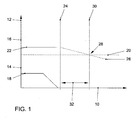
- This is illustrated graphically in the single FIGURE.
- On the horizontal axis 10 is the time and on the vertical axis 12 at 14 is a vehicle speed vfzg and plotted at 16 a current SOC value for a battery of the motor vehicle.
- a graph 18 shows the course of the vehicle speed vfzg 14 over time and a dashed line 20 shows a predetermined SOC limit, wherein the SOC limit represents a second condition for restarting the internal combustion engine during a stop phase and falls below this SOC limit 20 means the occurrence of this second condition.
- a solid line 22 represents a current SOC value.
- the dashed line 26 is determined before the release of the stop operation from the current SOC value 22 at time 24 of the request for the stop phase and an estimated current consumption of the electrical system of the motor vehicle, which a drop in the SOC value over the Time due to the discharge of the battery / capacitor storage after stopping the internal combustion engine represents.
- a point in time 30 can be determined at an intersection point 28 of the decreasing SOC value 26 with the SOC limit value 22 at which the second condition "SOC limit value undershot" is likely to occur, which would lead to the restart of the internal combustion engine or to the request the restart of the internal combustion engine would lead.
- the stop mode is released and the engine stopped or stopped. However, if the time period 32 is shorter than the minimum time for the stop phase, the stop operation is not released and the engine is not switched off despite vehicle standstill, but continue to operate at idle, to avoid inadmissible emptying of the energy storage or.
- the energy storage system may include one or more batteries, one or more storage capacitors, or a combination of at least one battery and at least one a storage capacitor include.
- a separate meaningful SOC limit will be predetermined.
- the power supply is initially handled in the stop mode from the higher cycle-fixed energy storage and only when it is empty, is switched to the less cycle-fixed energy storage.
- the power consumption of the electrical system of the motor vehicle during the stop phase by changing or switching off electrical consumers can change is optional provided known changes in power consumption of the electrical system of the motor vehicle due to the shutdown of the engine to be considered or included in the prediction calculation.
- an ignition or electric injectors in stop phases will consume no electrical energy, so that the current consumption of the vehicle electrical system during the stop phase is lower than at the time of the request of the stop phase, in which the internal combustion engine is still in operation ,
- prediction calculations or determinations for other variables may also be carried out before possible stop phases.
- the heat capacity of coolant or engine or catalyst and possibly an upstream exhaust system and an external or ambient temperature is calculated or determined how long it takes to fall below critical temperature limits. Falling below a predetermined temperature limit represents the occurrence of a second condition, which leads to the restart of the internal combustion engine during a stop phase and / or leads to the request of the restart of the internal combustion engine.
- the predetermined temperature limit value is chosen so that not too high pollutant levels are achieved by the process of starting the internal combustion engine during restart of the internal combustion engine during a stop phase.
- the physical processes in the prediction calculations or determinations are also considered in detail, such as the convective heat transfer at the components and the heat conduction in the components. If on the basis of this calculation minimum periods of time for the stop phase are not reached, the stop mode is already suppressed beforehand, ie despite a request, for example due to a vehicle standstill, not permitted.
- Prediction calculations or determinations for the release of the stop operation can also be carried out with regard to the vehicle air conditioning. For example, a shutdown of the engine during periods of inactivity of the motor vehicle is allowed for a certain time, if the cooling power requirement for the vehicle interior at high ambient temperatures or the heating power requirement for the vehicle interior at low ambient temperatures only low, i. the ambient temperature is not too high or too low. In this case, it is provided, for example, to calculate the air heating on the basis of the current air temperature in the passenger compartment, the outside temperature and possibly geometric data and heat capacities of the vehicle and to determine therefrom a time span until permissible values are exceeded. Optionally, a detailed physical modeling of the heat transport processes is provided. Alternatively, the calculation of the interior heating is carried out via empirically determined values in vehicle preliminary tests which are stored in the control unit.
- an advantageous strategy for the operation of a motor vehicle with start-stop function is provided by the invention, which on the one hand avoids unacceptable discharging the electrical energy storage with greater probability and on the other hand, the comfort, the pollutant emission behavior and fuel consumption optimized or improved.
Landscapes
- Engineering & Computer Science (AREA)
- Chemical & Material Sciences (AREA)
- Combustion & Propulsion (AREA)
- Mechanical Engineering (AREA)
- General Engineering & Computer Science (AREA)
- Transportation (AREA)
- Automation & Control Theory (AREA)
- Control Of Vehicle Engines Or Engines For Specific Uses (AREA)
- Output Control And Ontrol Of Special Type Engine (AREA)
- Hybrid Electric Vehicles (AREA)
Claims (14)
- Procédé de commande d'un moteur à combustion interne de véhicule automobile, notamment d'un véhicule hybride, un fonctionnement en mode arrêt étant demandé pour le moteur à combustion interne pendant le fonctionnement du véhicule automobile en cas de survenue d'au moins une première condition prédéfinie, dans lequel le moteur à combustion interne est arrêté, et le moteur à combustion interne étant redémarré indépendamment d'une demande de couple de rotation par un conducteur en cas de survenue d'au moins une deuxième condition prédéfinie et/ou un redémarrage du moteur à combustion interne étant demandé indépendamment d'une demande de couple de rotation par un conducteur en cas de survenue d'au moins une deuxième condition prédéfinie, caractérisé en ce qu'en cas de demande de fonctionnement en mode arrêt, un intervalle de temps relatif à au moins une deuxième condition est défini après lequel cette deuxième condition est entrée de façon prévisionnelle après activation du fonctionnement en mode arrêt et conduit au redémarrage du moteur à combustion interne et/ou à une demande de redémarrage du moteur à combustion interne et que l'intervalle de temps est comparé à une valeur seuil prédéfinie pour une durée minimale de fonctionnement en mode arrêt, le fonctionnement en mode arrêt étant entravé lorsqu'au moins un intervalle de temps est plus court que la valeur seuil prédéfinie et le fonctionnement en mode arrêt étant autorisé lorsqu'un, plusieurs ou tous les intervalles de temps sont supérieurs ou égaux à la valeur seuil prédéfinie.
- Procédé selon la revendication 1, caractérisé en ce que l'intervalle de temps est calculé, estimé ou sélectionné à partir d'une courbe caractéristique.
- Procédé selon au moins l'une quelconque des revendications précédentes, caractérisé en ce que la deuxième condition prédéfinie comprend le fait d'atteindre un état de charge minimale (seuil SOC - State Of Charge) d'au moins un accumulateur d'énergie électrique, notamment d'une batterie et/ou d'un condensateur d'accumulateur, afin de déterminer, à partir d'un état actuel de charge de l'accumulateur d'énergie électrique à l'instant de la demande de fonctionnement en mode arrêt et d'une puissance absorbée d'un réseau de bord du véhicule automobile, après quelle durée de décharge d'un, de plusieurs ou de tous les accumulateurs d'énergie électrique en cas de moteur à combustion interne arrêté, l'accumulateur d'énergie atteindra de façon prévisible l'état de charge minimale, cette durée de décharge étant définie comme intervalle de temps dans la comparaison avec la valeur seuil prédéfinie pour une durée minimale de fonctionnement en mode arrêt.
- Procédé selon la revendication 3, caractérisé en ce que la puissance absorbée du réseau de bord du véhicule automobile est définie en ce que la puissance absorbée prélevée par certains récepteurs électriques, notamment l'allumage et/ou les soupapes d'injection électriques, ne consomme aucune puissance électrique en cas de moteur à combustion interne arrêté, parmi une puissance absorbée totale momentanée à l'instant de la demande de fonctionnement en mode arrêt.
- Procédé selon la revendication 3 ou 4, caractérisé en ce qu'un état de charge minimale (seuil SOC) est défini pour chaque accumulateur d'énergie.
- Procédé selon au moins l'une quelconque des revendications précédentes, caractérisé en ce qu'en cas de fonctionnement en mode arrêt activé, un réseau de bord électrique du véhicule automobile est relié à un accumulateur d'énergie électrique du véhicule automobile comportant la plus haute résistance cyclique parmi tous les accumulateurs d'énergie présents dans le véhicule automobile.
- Procédé selon au moins l'une quelconque des revendications précédentes, caractérisé en ce que la deuxième condition prédéfinie comprend le fait d'atteindre une température de moyen de refroidissement minimale d'un moyen de refroidissement du moteur à combustion interne, afin de définir, à partir d'une température actuelle de moyen de refroidissement à l'instant de la demande de fonctionnement en mode arrêt et d'une température ambiante actuelle à l'instant de la demande de fonctionnement en mode arrêt, après quelle durée de refroidissement la température de moyen de refroidissement atteindra de façon prévisible, en cas de moteur à combustion interne arrêté, la température de moyen de refroidissement minimale, cette durée de refroidissement étant définie comme intervalle de temps à comparer avec la valeur seuil prédéfinie pour une durée minimale de fonctionnement en mode arrêt.
- Procédé selon au moins l'une quelconque des revendications précédentes, caractérisé en ce que la deuxième condition prédéfinie comprend le fait d'atteindre une température minimale de moteur du moteur à combustion interne, afin de définir, à partir d'une température de moteur actuelle à l'instant de la demande de fonctionnement en mode arrêt et d'une température ambiante actuelle à l'instant de la demande de fonctionnement en mode d'arrêt, après quelle durée de refroidissement la température de moteur atteindra de façon prévisible, en cas de moteur à combustion interne arrêté, la température minimale de moteur, cette durée de refroidissement étant définie comme intervalle de temps à comparer à la valeur seuil prédéfinie pour une durée minimale de fonctionnement en mode arrêt.
- Procédé selon au moins l'une quelconque des revendications précédentes, caractérisé en ce que la deuxième condition prédéfinie comprend le fait d'atteindre une température minimale de catalyseur d'un catalyseur dans une colonne d'échappement du moteur à combustion interne, afin de définir, à partir d'une température de catalyseur actuelle à l'instant de la demande de fonctionnement en mode arrêt et d'une température ambiante actuelle à l'instant de la demande de fonctionnement en mode arrêt, après quelle durée de refroidissement la température de catalyseur atteindra de façon prévisible, en cas de moteur à combustion interne arrêté, la température minimale de catalyseur, cette durée de refroidissement étant définie comme intervalle de temps à comparer à la valeur seuil prédéfinie pour une durée minimale de fonctionnement en mode arrêt.
- Procédé selon au moins l'une quelconque des revendications précédentes, caractérisé en ce que la deuxième condition prédéfinie comprend le fait d'atteindre une température minimale d'air dans un habitacle du véhicule automobile, afin de définir, à partir d'une température actuelle d'air dans l'habitacle à l'instant de la demande de fonctionnement en mode arrêt et d'une température ambiante actuelle à l'instant de la demande de fonctionnement en mode arrêt, après quelle durée de refroidissement la température d'air de l'habitacle atteindra de façon prévisible, en cas de moteur à combustion interne arrêté, la température minimale d'air dans l'habitacle, cette durée de refroidissement étant définie comme intervalle de temps à comparer à la valeur seuil prédéfinie pour une durée minimale de fonctionnement en mode arrêt.
- Procédé selon au moins l'une quelconque des revendications précédentes, caractérisé en ce que la deuxième condition prédéfinie comprend le fait d'atteindre une température maximale d'air dans un habitacle du véhicule automobile afin de définir, à partir d'une température actuelle d'air dans l'habitacle à l'instant de la demande de fonctionnement en mode arrêt et d'une température ambiante actuelle à l'instant de la demande de fonctionnement en mode arrêt, après quel temps de chauffage la température d'air de l'habitacle atteindra de façon prévisible, en cas de moteur à combustion interne arrêté, la température maximale d'air dans l'habitacle, ce temps de chauffage étant défini comme intervalle de temps à comparer à la valeur seuil prédéfinie pour une durée minimale de fonctionnement en mode arrêt.
- Procédé selon la revendication 10 ou 11, caractérisé en ce que pour définir la durée de refroidissement et/ou le temps de chauffage, on prend en outre en compte les données géométriques du véhicule automobile et/ou les capacités thermiques du véhicule automobile.
- Procédé selon au moins l'une quelconque des revendications 10 à 12, caractérisé en ce que pour définir la durée de refroidissement et/ou le temps de chauffage, on réalise une modélisation physique du processus de transport de chaleur.
- Procédé selon au moins l'une quelconque des revendications 10 à 12, caractérisé en ce que la durée de refroidissement et/ou le temps de chauffage sont sélectionnés à partir d'une courbe caractéristique contenant des valeurs calculées empiriquement.
Applications Claiming Priority (2)
| Application Number | Priority Date | Filing Date | Title |
|---|---|---|---|
| DE102004006991 | 2004-02-12 | ||
| DE102004006991.3A DE102004006991B4 (de) | 2004-02-12 | 2004-02-12 | Verfahren zum Betreiben einer Brennkraftmaschine |
Publications (3)
| Publication Number | Publication Date |
|---|---|
| EP1564403A2 EP1564403A2 (fr) | 2005-08-17 |
| EP1564403A3 EP1564403A3 (fr) | 2011-03-23 |
| EP1564403B1 true EP1564403B1 (fr) | 2014-12-17 |
Family
ID=34684029
Family Applications (1)
| Application Number | Title | Priority Date | Filing Date |
|---|---|---|---|
| EP05100439.8A Expired - Lifetime EP1564403B1 (fr) | 2004-02-12 | 2005-01-25 | Procédé de commande d'un moteur à combustion interne |
Country Status (2)
| Country | Link |
|---|---|
| EP (1) | EP1564403B1 (fr) |
| DE (1) | DE102004006991B4 (fr) |
Families Citing this family (21)
| Publication number | Priority date | Publication date | Assignee | Title |
|---|---|---|---|---|
| FR2926043B1 (fr) * | 2008-01-07 | 2009-12-11 | Peugeot Citroen Automobiles Sa | Systeme d'arret et de redemarrage automatique du moteur thermique d'un vehicule et procede de pilotage dudit systeme. |
| DE102008013021A1 (de) * | 2008-03-07 | 2009-09-10 | Dr. Ing. H.C. F. Porsche Aktiengesellschaft | Verfahren zum Wiederstart einer Haupt-Antriebsquelle eines Hybridfahrzeuges |
| JP4807372B2 (ja) * | 2008-03-28 | 2011-11-02 | マツダ株式会社 | 内燃機関システムの制御方法および内燃機関システム |
| US8408177B2 (en) | 2008-03-28 | 2013-04-02 | Mazda Motor Corporation | Control method for internal combustion engine system, and internal combustion engine system |
| FR2932848B1 (fr) * | 2008-06-24 | 2011-06-17 | Peugeot Citroen Automobiles Sa | Procede de commande du dispositif d'arret et de redemarrage automatique du moteur thermique d'un vehicule. |
| US7908877B2 (en) | 2008-07-18 | 2011-03-22 | GM Global Technology Operations LLC | Vehicle HVAC control |
| DE102009029990B4 (de) * | 2009-06-23 | 2018-03-08 | Bayerische Motoren Werke Aktiengesellschaft | Verfahren zur Steuerung eines automatischen Abschalt- und Anschaltvorgangs einer Antriebseinheit in einem Kraftfahrzeug |
| DE102009050520B4 (de) * | 2009-10-23 | 2021-01-28 | Bayerische Motoren Werke Aktiengesellschaft | Verfahren zur Steuerung eines automatischen Abschalt- und Anschaltvorgangs einer Antriebseinheit in einem Kraftfahrzeug |
| DE102010029210B4 (de) * | 2010-05-21 | 2015-06-11 | Robert Bosch Gmbh | Verfahren und Vorrichtung zum Starten und Stoppen einer Brennkraftmaschine |
| WO2012052072A1 (fr) * | 2010-05-22 | 2012-04-26 | Audi Ag | Véhicule à moteur à combustion interne et à entraînement électrique, et procédé permettant de faire fonctionner un tel véhicule |
| FR2966205B1 (fr) * | 2010-10-19 | 2018-01-12 | Psa Automobiles Sa. | Procede pour la mise en œuvre d'un dispositif de demarrage equipant un moteur d'un vehicule automobile |
| JP5609709B2 (ja) * | 2010-11-30 | 2014-10-22 | 株式会社デンソー | エンジンの自動停止制御装置 |
| US9266520B2 (en) | 2011-11-11 | 2016-02-23 | Ford Global Technologies, Llc | Dynamic tuning of engine auto stop criteria |
| EP2803549B1 (fr) * | 2013-05-17 | 2018-01-03 | Volvo Car Corporation | Commande de température de transmission améliorée |
| US9045132B1 (en) * | 2013-12-19 | 2015-06-02 | Ford Global Technologies, Llc | System and method for engine idle stop control with starter motor protection |
| DE102015215161A1 (de) * | 2015-08-07 | 2017-02-09 | Continental Automotive Gmbh | Verfahren zum Betreiben eines Start-Stopp-Systems und Start-Stopp-System |
| US10150349B2 (en) * | 2015-09-01 | 2018-12-11 | Nissan Motor Co., Ltd. | Vehicle traveling control method and vehicle traveling control device |
| FR3071796A1 (fr) * | 2017-10-02 | 2019-04-05 | Psa Automobiles Sa | Procede de gestion d'une autorisation de roulage d'un vehicule automobile avec moteur arrete |
| DE102019001736B4 (de) | 2019-03-14 | 2025-01-23 | Günter Fendt | Verfahren zur Steuerung einer Start-Stopp-Funktion für ein Hybrid-Kraftfahrzeug |
| JP7459367B2 (ja) * | 2021-02-18 | 2024-04-01 | 日産自動車株式会社 | ハイブリッド車両制御方法及びハイブリッド車両制御装置 |
| CN119858541B (zh) * | 2025-01-24 | 2025-10-03 | 江铃汽车股份有限公司 | 一种插电式混动车型发动机自适应控制方法及系统 |
Family Cites Families (5)
| Publication number | Priority date | Publication date | Assignee | Title |
|---|---|---|---|---|
| JP3453976B2 (ja) * | 1995-12-27 | 2003-10-06 | トヨタ自動車株式会社 | 車両用制御装置 |
| JP3880752B2 (ja) * | 1999-08-06 | 2007-02-14 | 本田技研工業株式会社 | エンジン自動始動停止制御装置 |
| JP3754604B2 (ja) * | 2000-06-27 | 2006-03-15 | 本田技研工業株式会社 | 車両のエンジン自動停止始動装置 |
| DE10139567A1 (de) * | 2001-08-10 | 2003-02-20 | Zahnradfabrik Friedrichshafen | Verfahren zur Vereinfachung des Startvorgangs für ein Kraftfahrzeug |
| EP1316460A1 (fr) * | 2001-11-30 | 2003-06-04 | Ford Global Technologies, Inc. | Procédé et agencement pour équilibrer les puissances d'un véhicule électrique hybride |
-
2004
- 2004-02-12 DE DE102004006991.3A patent/DE102004006991B4/de not_active Expired - Fee Related
-
2005
- 2005-01-25 EP EP05100439.8A patent/EP1564403B1/fr not_active Expired - Lifetime
Also Published As
| Publication number | Publication date |
|---|---|
| DE102004006991B4 (de) | 2014-01-30 |
| DE102004006991A1 (de) | 2005-09-01 |
| EP1564403A2 (fr) | 2005-08-17 |
| EP1564403A3 (fr) | 2011-03-23 |
Similar Documents
| Publication | Publication Date | Title |
|---|---|---|
| EP1564403B1 (fr) | Procédé de commande d'un moteur à combustion interne | |
| DE10040094B4 (de) | Automatische Start-Stopp-Steuer/Regel-Vorrichtung für eine Brennkraftmaschine | |
| DE602005005431T2 (de) | Verfahren zur Steuerung eines Verbrennungsmotors in einem Start-Stopp-Betrieb | |
| DE112011102914B4 (de) | Steuerung zur Regeneration einer Nachbehandlungseinrichtung in einem Fahrzeug mit Hybridantrieb | |
| DE60300513T2 (de) | System zur Steuerung der Stromversorgung für Fahrzeuge und Verfahren | |
| DE10137775B4 (de) | Steuervorrichtung für ein Hybridfahrzeug | |
| DE10015844B4 (de) | Elektromotorantriebssteuervorrichtung | |
| DE102004002706B4 (de) | Automatische Stopp/Start-Steuerung für einen Verbrennungsmotor | |
| DE10301470A1 (de) | Kontrollvorrichtung und-Verfahren für eine Vorrichtung zum Speichern von Energie in motorisierten Fahrzeugen | |
| DE102014220860B4 (de) | Verfahren zum Betreiben eines Hybridfahrzeugs und Hybridfahrzeug | |
| DE102017103717A1 (de) | System und Verfahren zur Stromversorgung von Komponenten und Nebenaggregaten in einem Start-Stopp- und einem Hybrid-Fahrzeug | |
| DE112012003427T5 (de) | Fahrzeugantriebsvorrichtung | |
| DE10030290A1 (de) | Verfahren und System zur automatischen Steuerung des Abschaltens und Wiederanlassens eines Verbrennungsmotors eines Fahrzeugs bei dessen vorübergehenden Außerbetriebsetzungen | |
| DE10153509A1 (de) | Verfahren und Vorrichtung zur Steuerung der Batterieladung in einem Hybridelektrofahrzeug | |
| EP1735172B1 (fr) | Procede pour faire fonctionner un vehicule automobile hybride | |
| DE60301978T2 (de) | System und Verfahren zur Steuerung der Stromversorgung eines Hybrid-Fahrzeugs | |
| EP1468865A2 (fr) | Dispositif et procédé de gestion d'énergie d'un véhicule à moteur | |
| DE102011112343B4 (de) | Verfahren und Vorrichtung zur Regeneration eines Filters eines Fahrzeugs | |
| DE102009057174A1 (de) | Verfahren und Vorrichtung zur Steuerung von Hybrid-Funktionen in einem Kraftfahrzeug | |
| DE102006051832A1 (de) | Verfahren und Vorrichtung zur Momentensteuerung eines Hybridkraftfahrzeugs nach einem Startvorgang | |
| DE102004024213B4 (de) | Verfahren zur Steuerung eines Betriebes eines Kraftfahrzeuges, insbesondere einer Start-Stopp-Automatik, sowie Kraftfahrzeug | |
| DE102018212925B4 (de) | Verfahren zum Betreiben einer Hybridantriebseinrichtung für ein Kraftfahrzeug sowie entsprechende Hybridantriebseinrichtung | |
| DE102006001201A1 (de) | Verfahren zur Steuerung eines Batterieladungsvorgangs | |
| DE102015208374B4 (de) | Verfahren zum Betreiben eines Hybridantriebs in einem Kraftfahrzeug mit regenerationsfähigem Katalysator | |
| DE102017218919A1 (de) | Stromerzeugungs-Steuersystem |
Legal Events
| Date | Code | Title | Description |
|---|---|---|---|
| PUAI | Public reference made under article 153(3) epc to a published international application that has entered the european phase |
Free format text: ORIGINAL CODE: 0009012 |
|
| AK | Designated contracting states |
Kind code of ref document: A2 Designated state(s): AT BE BG CH CY CZ DE DK EE ES FI FR GB GR HU IE IS IT LI LT LU MC NL PL PT RO SE SI SK TR |
|
| AX | Request for extension of the european patent |
Extension state: AL BA HR LV MK YU |
|
| PUAL | Search report despatched |
Free format text: ORIGINAL CODE: 0009013 |
|
| AK | Designated contracting states |
Kind code of ref document: A3 Designated state(s): AT BE BG CH CY CZ DE DK EE ES FI FR GB GR HU IE IS IT LI LT LU MC NL PL PT RO SE SI SK TR |
|
| AX | Request for extension of the european patent |
Extension state: AL BA HR LV MK YU |
|
| 17P | Request for examination filed |
Effective date: 20110427 |
|
| 17Q | First examination report despatched |
Effective date: 20110608 |
|
| AKX | Designation fees paid |
Designated state(s): AT BE BG CH CY CZ DE DK EE ES FI FR GB GR HU IE IS IT LI LT LU MC NL PL PT RO SE SI SK TR |
|
| RAP1 | Party data changed (applicant data changed or rights of an application transferred) |
Owner name: VOLKSWAGEN AKTIENGESELLSCHAFT |
|
| GRAP | Despatch of communication of intention to grant a patent |
Free format text: ORIGINAL CODE: EPIDOSNIGR1 |
|
| RIC1 | Information provided on ipc code assigned before grant |
Ipc: B60W 20/00 20060101ALI20140704BHEP Ipc: F02N 11/08 20060101AFI20140704BHEP Ipc: B60W 10/06 20060101ALI20140704BHEP |
|
| INTG | Intention to grant announced |
Effective date: 20140723 |
|
| GRAS | Grant fee paid |
Free format text: ORIGINAL CODE: EPIDOSNIGR3 |
|
| GRAA | (expected) grant |
Free format text: ORIGINAL CODE: 0009210 |
|
| AK | Designated contracting states |
Kind code of ref document: B1 Designated state(s): AT BE BG CH CY CZ DE DK EE ES FI FR GB GR HU IE IS IT LI LT LU MC NL PL PT RO SE SI SK TR |
|
| REG | Reference to a national code |
Ref country code: GB Ref legal event code: FG4D Free format text: NOT ENGLISH |
|
| REG | Reference to a national code |
Ref country code: CH Ref legal event code: EP |
|
| REG | Reference to a national code |
Ref country code: IE Ref legal event code: FG4D Free format text: LANGUAGE OF EP DOCUMENT: GERMAN |
|
| REG | Reference to a national code |
Ref country code: AT Ref legal event code: REF Ref document number: 702138 Country of ref document: AT Kind code of ref document: T Effective date: 20150115 |
|
| REG | Reference to a national code |
Ref country code: DE Ref legal event code: R096 Ref document number: 502005014622 Country of ref document: DE Effective date: 20150129 |
|
| PG25 | Lapsed in a contracting state [announced via postgrant information from national office to epo] |
Ref country code: LT Free format text: LAPSE BECAUSE OF FAILURE TO SUBMIT A TRANSLATION OF THE DESCRIPTION OR TO PAY THE FEE WITHIN THE PRESCRIBED TIME-LIMIT Effective date: 20141217 Ref country code: FI Free format text: LAPSE BECAUSE OF FAILURE TO SUBMIT A TRANSLATION OF THE DESCRIPTION OR TO PAY THE FEE WITHIN THE PRESCRIBED TIME-LIMIT Effective date: 20141217 |
|
| REG | Reference to a national code |
Ref country code: LT Ref legal event code: MG4D |
|
| PG25 | Lapsed in a contracting state [announced via postgrant information from national office to epo] |
Ref country code: SE Free format text: LAPSE BECAUSE OF FAILURE TO SUBMIT A TRANSLATION OF THE DESCRIPTION OR TO PAY THE FEE WITHIN THE PRESCRIBED TIME-LIMIT Effective date: 20141217 Ref country code: GR Free format text: LAPSE BECAUSE OF FAILURE TO SUBMIT A TRANSLATION OF THE DESCRIPTION OR TO PAY THE FEE WITHIN THE PRESCRIBED TIME-LIMIT Effective date: 20150318 |
|
| PG25 | Lapsed in a contracting state [announced via postgrant information from national office to epo] |
Ref country code: NL Free format text: LAPSE BECAUSE OF FAILURE TO SUBMIT A TRANSLATION OF THE DESCRIPTION OR TO PAY THE FEE WITHIN THE PRESCRIBED TIME-LIMIT Effective date: 20141217 |
|
| PG25 | Lapsed in a contracting state [announced via postgrant information from national office to epo] |
Ref country code: CZ Free format text: LAPSE BECAUSE OF FAILURE TO SUBMIT A TRANSLATION OF THE DESCRIPTION OR TO PAY THE FEE WITHIN THE PRESCRIBED TIME-LIMIT Effective date: 20141217 Ref country code: RO Free format text: LAPSE BECAUSE OF FAILURE TO SUBMIT A TRANSLATION OF THE DESCRIPTION OR TO PAY THE FEE WITHIN THE PRESCRIBED TIME-LIMIT Effective date: 20141217 Ref country code: SK Free format text: LAPSE BECAUSE OF FAILURE TO SUBMIT A TRANSLATION OF THE DESCRIPTION OR TO PAY THE FEE WITHIN THE PRESCRIBED TIME-LIMIT Effective date: 20141217 Ref country code: PT Free format text: LAPSE BECAUSE OF FAILURE TO SUBMIT A TRANSLATION OF THE DESCRIPTION OR TO PAY THE FEE WITHIN THE PRESCRIBED TIME-LIMIT Effective date: 20150417 Ref country code: EE Free format text: LAPSE BECAUSE OF FAILURE TO SUBMIT A TRANSLATION OF THE DESCRIPTION OR TO PAY THE FEE WITHIN THE PRESCRIBED TIME-LIMIT Effective date: 20141217 Ref country code: ES Free format text: LAPSE BECAUSE OF FAILURE TO SUBMIT A TRANSLATION OF THE DESCRIPTION OR TO PAY THE FEE WITHIN THE PRESCRIBED TIME-LIMIT Effective date: 20141217 |
|
| REG | Reference to a national code |
Ref country code: CH Ref legal event code: PL |
|
| PG25 | Lapsed in a contracting state [announced via postgrant information from national office to epo] |
Ref country code: LU Free format text: LAPSE BECAUSE OF FAILURE TO SUBMIT A TRANSLATION OF THE DESCRIPTION OR TO PAY THE FEE WITHIN THE PRESCRIBED TIME-LIMIT Effective date: 20150125 Ref country code: IS Free format text: LAPSE BECAUSE OF FAILURE TO SUBMIT A TRANSLATION OF THE DESCRIPTION OR TO PAY THE FEE WITHIN THE PRESCRIBED TIME-LIMIT Effective date: 20150417 Ref country code: PL Free format text: LAPSE BECAUSE OF FAILURE TO SUBMIT A TRANSLATION OF THE DESCRIPTION OR TO PAY THE FEE WITHIN THE PRESCRIBED TIME-LIMIT Effective date: 20141217 |
|
| REG | Reference to a national code |
Ref country code: DE Ref legal event code: R097 Ref document number: 502005014622 Country of ref document: DE |
|
| PG25 | Lapsed in a contracting state [announced via postgrant information from national office to epo] |
Ref country code: MC Free format text: LAPSE BECAUSE OF FAILURE TO SUBMIT A TRANSLATION OF THE DESCRIPTION OR TO PAY THE FEE WITHIN THE PRESCRIBED TIME-LIMIT Effective date: 20141217 |
|
| PLBE | No opposition filed within time limit |
Free format text: ORIGINAL CODE: 0009261 |
|
| STAA | Information on the status of an ep patent application or granted ep patent |
Free format text: STATUS: NO OPPOSITION FILED WITHIN TIME LIMIT |
|
| PG25 | Lapsed in a contracting state [announced via postgrant information from national office to epo] |
Ref country code: CH Free format text: LAPSE BECAUSE OF NON-PAYMENT OF DUE FEES Effective date: 20150131 Ref country code: LI Free format text: LAPSE BECAUSE OF NON-PAYMENT OF DUE FEES Effective date: 20150131 Ref country code: DK Free format text: LAPSE BECAUSE OF FAILURE TO SUBMIT A TRANSLATION OF THE DESCRIPTION OR TO PAY THE FEE WITHIN THE PRESCRIBED TIME-LIMIT Effective date: 20141217 |
|
| REG | Reference to a national code |
Ref country code: IE Ref legal event code: MM4A |
|
| 26N | No opposition filed |
Effective date: 20150918 |
|
| PG25 | Lapsed in a contracting state [announced via postgrant information from national office to epo] |
Ref country code: IT Free format text: LAPSE BECAUSE OF FAILURE TO SUBMIT A TRANSLATION OF THE DESCRIPTION OR TO PAY THE FEE WITHIN THE PRESCRIBED TIME-LIMIT Effective date: 20141217 |
|
| REG | Reference to a national code |
Ref country code: FR Ref legal event code: PLFP Year of fee payment: 12 |
|
| PG25 | Lapsed in a contracting state [announced via postgrant information from national office to epo] |
Ref country code: IE Free format text: LAPSE BECAUSE OF NON-PAYMENT OF DUE FEES Effective date: 20150125 |
|
| PG25 | Lapsed in a contracting state [announced via postgrant information from national office to epo] |
Ref country code: SI Free format text: LAPSE BECAUSE OF FAILURE TO SUBMIT A TRANSLATION OF THE DESCRIPTION OR TO PAY THE FEE WITHIN THE PRESCRIBED TIME-LIMIT Effective date: 20141217 |
|
| REG | Reference to a national code |
Ref country code: AT Ref legal event code: MM01 Ref document number: 702138 Country of ref document: AT Kind code of ref document: T Effective date: 20150125 |
|
| PG25 | Lapsed in a contracting state [announced via postgrant information from national office to epo] |
Ref country code: AT Free format text: LAPSE BECAUSE OF NON-PAYMENT OF DUE FEES Effective date: 20150125 |
|
| REG | Reference to a national code |
Ref country code: FR Ref legal event code: PLFP Year of fee payment: 13 |
|
| PG25 | Lapsed in a contracting state [announced via postgrant information from national office to epo] |
Ref country code: BG Free format text: LAPSE BECAUSE OF FAILURE TO SUBMIT A TRANSLATION OF THE DESCRIPTION OR TO PAY THE FEE WITHIN THE PRESCRIBED TIME-LIMIT Effective date: 20141217 Ref country code: HU Free format text: LAPSE BECAUSE OF FAILURE TO SUBMIT A TRANSLATION OF THE DESCRIPTION OR TO PAY THE FEE WITHIN THE PRESCRIBED TIME-LIMIT; INVALID AB INITIO Effective date: 20050125 |
|
| PG25 | Lapsed in a contracting state [announced via postgrant information from national office to epo] |
Ref country code: CY Free format text: LAPSE BECAUSE OF FAILURE TO SUBMIT A TRANSLATION OF THE DESCRIPTION OR TO PAY THE FEE WITHIN THE PRESCRIBED TIME-LIMIT Effective date: 20141217 |
|
| PG25 | Lapsed in a contracting state [announced via postgrant information from national office to epo] |
Ref country code: BE Free format text: LAPSE BECAUSE OF NON-PAYMENT OF DUE FEES Effective date: 20150131 |
|
| PG25 | Lapsed in a contracting state [announced via postgrant information from national office to epo] |
Ref country code: TR Free format text: LAPSE BECAUSE OF FAILURE TO SUBMIT A TRANSLATION OF THE DESCRIPTION OR TO PAY THE FEE WITHIN THE PRESCRIBED TIME-LIMIT Effective date: 20141217 |
|
| REG | Reference to a national code |
Ref country code: FR Ref legal event code: PLFP Year of fee payment: 14 |
|
| REG | Reference to a national code |
Ref country code: DE Ref legal event code: R082 Ref document number: 502005014622 Country of ref document: DE |
|
| P01 | Opt-out of the competence of the unified patent court (upc) registered |
Effective date: 20230523 |
|
| PGFP | Annual fee paid to national office [announced via postgrant information from national office to epo] |
Ref country code: DE Payment date: 20240131 Year of fee payment: 20 Ref country code: GB Payment date: 20240123 Year of fee payment: 20 |
|
| PGFP | Annual fee paid to national office [announced via postgrant information from national office to epo] |
Ref country code: FR Payment date: 20240125 Year of fee payment: 20 |
|
| REG | Reference to a national code |
Ref country code: DE Ref legal event code: R071 Ref document number: 502005014622 Country of ref document: DE |
|
| REG | Reference to a national code |
Ref country code: GB Ref legal event code: PE20 Expiry date: 20250124 |
|
| PG25 | Lapsed in a contracting state [announced via postgrant information from national office to epo] |
Ref country code: GB Free format text: LAPSE BECAUSE OF EXPIRATION OF PROTECTION Effective date: 20250124 |