EP1566451A2 - Reactif pour la detection du gene codant la toxine shiga dans des Escherichia coli enterohemorrhagiques. - Google Patents
Reactif pour la detection du gene codant la toxine shiga dans des Escherichia coli enterohemorrhagiques. Download PDFInfo
- Publication number
- EP1566451A2 EP1566451A2 EP05002103A EP05002103A EP1566451A2 EP 1566451 A2 EP1566451 A2 EP 1566451A2 EP 05002103 A EP05002103 A EP 05002103A EP 05002103 A EP05002103 A EP 05002103A EP 1566451 A2 EP1566451 A2 EP 1566451A2
- Authority
- EP
- European Patent Office
- Prior art keywords
- rna
- sequence
- oligonucleotide
- primer
- seq
- Prior art date
- Legal status (The legal status is an assumption and is not a legal conclusion. Google has not performed a legal analysis and makes no representation as to the accuracy of the status listed.)
- Withdrawn
Links
Images


Classifications
-
- A—HUMAN NECESSITIES
- A47—FURNITURE; DOMESTIC ARTICLES OR APPLIANCES; COFFEE MILLS; SPICE MILLS; SUCTION CLEANERS IN GENERAL
- A47G—HOUSEHOLD OR TABLE EQUIPMENT
- A47G19/00—Table service
- A47G19/22—Drinking vessels or saucers used for table service
- A47G19/23—Drinking vessels or saucers used for table service of stackable type
-
- C—CHEMISTRY; METALLURGY
- C12—BIOCHEMISTRY; BEER; SPIRITS; WINE; VINEGAR; MICROBIOLOGY; ENZYMOLOGY; MUTATION OR GENETIC ENGINEERING
- C12Q—MEASURING OR TESTING PROCESSES INVOLVING ENZYMES, NUCLEIC ACIDS OR MICROORGANISMS; COMPOSITIONS OR TEST PAPERS THEREFOR; PROCESSES OF PREPARING SUCH COMPOSITIONS; CONDITION-RESPONSIVE CONTROL IN MICROBIOLOGICAL OR ENZYMOLOGICAL PROCESSES
- C12Q1/00—Measuring or testing processes involving enzymes, nucleic acids or microorganisms; Compositions therefor; Processes of preparing such compositions
- C12Q1/68—Measuring or testing processes involving enzymes, nucleic acids or microorganisms; Compositions therefor; Processes of preparing such compositions involving nucleic acids
- C12Q1/6844—Nucleic acid amplification reactions
- C12Q1/6865—Promoter-based amplification, e.g. nucleic acid sequence amplification [NASBA], self-sustained sequence replication [3SR] or transcription-based amplification system [TAS]
-
- A—HUMAN NECESSITIES
- A47—FURNITURE; DOMESTIC ARTICLES OR APPLIANCES; COFFEE MILLS; SPICE MILLS; SUCTION CLEANERS IN GENERAL
- A47G—HOUSEHOLD OR TABLE EQUIPMENT
- A47G2400/00—Details not otherwise provided for in A47G19/00-A47G23/16
- A47G2400/02—Hygiene
Definitions
- the present invention relates to a detection reagent for detecting entero-hemorrhagic Escherichia coli in clinical examinations, public health examinations, food evaluations and food poisoning examinations.
- Shiga-toxin family is a potent toxin produced by entero-hemorrhagic Escherichia coli (EHEC) such as pathogenic Escherichia coli O157.
- EHEC entero-hemorrhagic Escherichia coli
- Major symptoms associated with infection by EHEC include watery stool followed by severe abdominal pain and bloody stool.
- HUS hemolytic uremic syndrome
- encephalopathy encephalopathy
- stx is also broadly classified as type 1 (stx1) or type 2 (stx2) based on differences in antigenicity.
- O157 antigen test and other tests are known methods for detecting and identifying EHEC
- methods which detect a specific sequence present in the EHEC gene or RNA derived from said gene following the amplification of such a sequence are preferable in terms of sensitivity, speed and ease of procedure.
- a method that amplifies a target nucleic acid at a constant temperature is particularly preferable in terms of automation of a testing system.
- an RNA amplification process comprises the steps of producing a cDNA with an RNA-dependent DNA polymerase using a specific sequence of an RNA derived from stx1 or stx2 as a template, as well as a first primer having a sequence complementary to said specific sequence, and a second primer having a sequence homologous to said specific sequence, thereby forming a double-strand RNA-DNA, wherein the first primer or the second primer has a sequence in which a promoter sequence of an RNA polymerase is added to the 5' end of one of the primers, degrading the RNA of the double-strand RNA-DNA by ribonuclease H, thereby producing a single-strand DNA, and producing a double-strand DNA having the promoter sequence capable of transcribing the RNA composed of the RNA sequence or the sequence complementary to the RNA sequence with a DNA-dependent DNA polymerase using said single-strand DNA as a template, wherein said double-strand DNA produces
- the RNA amplification process is carried out in the presence of an oligonucleotide that has been labeled with an intercalator fluorescent pigment, wherein the sequence of said oligonucleotide is complementary to at least a portion of the sequence of the RNA transcription product and, in the situation where complementary binding of said oligonucleotide to said RNA transcription product occurs, the fluorescent properties of the reaction solution change in comparison with the situation where no complex is formed, whereby the detection can be carried out by measuring the fluorescent intensity of the reaction solution.
- the aforementioned method has problems in terms of its sensitivity and speed.
- the detection time is about 17 minutes, which is slower than the detection time with an stx1 RNA detection reagent (10 2 copies of stx1 RNA are detected in about 14 minutes) (see Example 1).
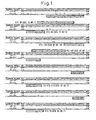
- the second primer of the aforementioned method may have a mismatch in the base sequence caused by a difference in the genotype, and EHEC carrying a genotype having a mismatch is thought to result in a slower detection time or be unable to be detected (refer to Fig. 1).
- the object of the present invention is to provide a detection reagent for stx2 RNA that has superior speed and specificity independent of differences in genotype.
- the inventors of the present invention developed a reagent capable of solving the problem of mismatches (see Fig. 1) and detecting an initial amount of stx2 RNA of 10 2 copies in about 14 minutes on the basis of designing oligonucleotides from sites where there is no alteration in the different genotypes.
- the present invention relates to a detection reagent for use in detecting Shiga-toxin family gene type 2 (stx2) of entero-hemorrhagic Escherichia coli present in a sample that is used in a detection method using an RNA amplification process, comprising the steps of:
- the highly stringent conditions refer to any hybridization conditions and, for example, are those indicated in the following examples consisting of carrying out a hybridization at a temperature of 41°C to 44°C in the presence of 60 mM Tris, 17 mM magnesium chloride, 100-150 mM potassium chloride and 1 mM DTT.
- an oligonucleotide having a sequence complementary to the aforementioned first primer with its sequence from the 5' end to the 3' end being reversed should be used as the first primer
- an oligonucleotide having a sequence complementary to the aforementioned second primer with its sequence from the 5' end to the 3' end being reversed should be used as the second primer.
- the aforementioned RNA amplification process is carried out in the presence of a cleaving oligonucleotide that cleaves the aforementioned target RNA at the 5' end of the aforementioned specific sequence and has a sequence complementary to the region adjacent to and overlapping with the 5' end of said specific sequence.
- the aforementioned first primer is an oligonucleotide of the sequence shown in SEQ. ID No. 1
- the aforementioned second primer is an oligonucleotide of the sequence shown in SEQ. ID No. 2.
- the aforementioned first primer is an oligonucleotide of the sequence shown in SEQ. ID No. 1
- the aforementioned second primer is an oligonucleotide of the sequence shown in SEQ. ID No. 2.
- the aforementioned RNA amplification process is carried out in the presence of an oligonucleotide labeled with an intercalator fluorescent pigment, and the detection of EHEC is carried out by measuring the fluorescent intensity of the reaction solution.
- the sequence of said oligonucleotide is complementary to at least a portion of the sequence of the RNA transcription product, and in the situation where complementary binding of said oligonucleotide to said RNA transcription product occurs, the fluorescent properties of the reaction solution change in comparison with the situation where no complex is formed.
- the aforementioned oligonucleotide labeled with an intercalator pigment consists of at least the 10 contiguous bases shown in SEQ. ID No. 3.
- a detection method using the detection reagent of the invention of the present application is useful for detecting stx2 RNA of entero-hemorrhagic Escherichia coli, regardless of differences in genotype, more rapidly and with higher specificity than the method of the prior art (Japanese Unexamined Patent Publication No. 2002-253257).
- the entire length of the base sequences listed in each of the sequence listings can be used for the first and second primers, respectively, as about 10 bases are sufficient for specific binding to a specific nucleic acid sequence or the like, a combination of oligonucleotides consisting of at least 10 contiguous bases in each sequence may also be used.
- the amplification process of the present invention includes the NASBA method, 3SR method and the TRC method (see, e.g., Japanese Unexamined Patent Publication No. 2000-014400), which amplifies stx2 RNA sequence by the concerted action of reverse transcriptase and RNA polymerase (by reacting them under conditions where the reverse transcriptase and RNA polymerase act in concert).
- temperature it is preferably 35 to 50°C.
- a preferable method for cleaving the target RNA in this manner consists of cleaving the target RNA with ribonuclease H or the like by adding an oligonucleotide having a sequence complementary to the region adjacent to and overlapping with the 5' end of the specific sequence (cleaving oligonucleotide).
- the number of overlapping bases is particularly preferably 5 or 6 bases.
- the 3' end hydroxyl group is preferably chemically modified and, for example, may be aminated, in order to suppress an elongation reaction from the 3' end.
- the aforementioned nucleic acid amplification is preferably carried out in the presence of an oligonucleotide labeled with an intercalator fluorescent pigment followed by measurement of the change in the fluorescent properties of the reaction solution.
- the intercalator fluorescent pigment is bound to the phosphorous atom in the oligonucleotide by means of a linker
- the intercalator portion that forms a double strand with the target nucleic acid intercalates to the double strand portion resulting in a change in fluorescent properties, thereby resulting in the characteristic of not requiring separation and analysis (Ishiguro, T. et al. (1996) Nucleic Acid Res. 24 (24) 4992-4997).
- the sequence bound by said oligonucleotide may be any sequence specific for stx2 RNA, and although there are no particular limitations thereon, a sequence consisting of at least 10 contiguous bases in the sequence shown in SEQ. ID No. 3 or its complementary sequence is preferable.
- the hydroxyl group at the 3' end of said oligonucleotide is preferably chemically modified to suppress the elongation reaction which may occur by using this oligonucleotide as a primer, and an example of this is the method described in Japanese Unexamined Patent Publication No. 2000-316587.
- stx2 RNA of EHEC can be amplified and detected in a single tube, at a constant temperature and in a single step, rapidly and with high sensitivity, thereby facilitating application to automation.
- Composition of Reaction Solution (concentrations are shown as the concentration in the final reaction solution volume of 30 ⁇ L) 60 mM Tris-HCl buffer (pH 8.6) 17 mM magnesium chloride 100 mM potassium chloride (for stx1) or 150 mM potassium chloride (for stx2) 6 U RNase inhibitor 1 mM DTT 0.25 mM each of dATP, dCTP, dGTP and dTTP 3.6 mM ITP 3.0 mM each of ATP, CTP, GTP and UTP 0.16 ⁇ M cleaving oligonucleotide 1.0 ⁇ M second primer 1.0 ⁇ M first primer 25 nM oligonucleotide labeled with intercalator pigment 13% DMSO
- reaction solution in each of the PCR tubes was measured, over time, at an excitation wavelength of 470 nm and fluorescent wavelength of 520 nm, while being incubated at 44°C (for stx1) or 41°C (for stx2), using a fluorescent spectrophotometer equipped with a temperature control function and capable of directly measuring the tube.
- the time-dependent changes in the fluorescent intensity ratio of the stx1 and stx2 samples are shown in Figures 2(A) and 2(B).
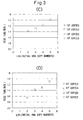
- the results obtained for the relationship between the logarithmic value of the initial RNA amount and the "rise time” are shown for the stx1 and stx2 samples in Figures 3(C) and 3(D).
- the initial RNA amount ranged from 10 2 copies/test to 10 5 copies/test for both stx1 and stx2.
- Table 1 shows the combinations of the first primer, the second primer, the cleaving oligonucleotide and the oligonucleotide labeled with intercalator pigment used in the experimental system.
- the sites corresponding to the oligonucleotides in stx2 RNA of EHEC are shown for each of the oligonucleotide combinations for detection of stx2 in Fig. 1.
- the hydroxyl group on the 3' end of the base sequence of the cleaving oligonucleotide was aminated.
- the region from the 1st "A” to the 22nd “A” from the 5' end of the base sequence of the first primer is a T7 promoter region, and the subsequent region from the 23rd "G” to the 28th “A” is an enhancer sequence.
- the oligonucleotides labeled with intercalator pigment were labeled with intercalator pigment at the phosphorous atom between the 6th "C” and 7th "G” from the 5' end of YO-VT1-S-G (SEQ. ID No. 9), and between the 12th "T” and 13th "A” from the 5' end of YO-VT2-S-G (SEQ. ID No. 3), and the hydroxyl group on the 3' end was modified with a glycol group.
- reaction solution in each of the PCR tubes was measured, over time, at an excitation wavelength of 470 nm and fluorescent wavelength of 520 nm, while being incubated at 43°C, using a fluorescent spectrophotometer equipped with a temperature control function and capable of directly measuring the tube.
- the detection method of the invention of the present application is useful for detecting stx2 RNA of entero-hemorrhagic Escherichia coli , regardless of differences in genotype, more rapidly and with higher specificity than the method of the prior art (Japanese Unexamined Patent Publication No. 2002-253257).
- the oligonucleotide of the invention of the present application is not limited to that of the base sequences listed in the sequence listings (having 20 to 23 bases), but rather can be a nucleotide comprised of at least 10 contiguous bases in those sequences. This is because it is clear that a base sequence of about 10 bases is sufficient for ensuring specificity to a target nucleic acid of a primer or probe under comparatively low-temperature (preferably 43°C) conditions.
Landscapes
- Chemical & Material Sciences (AREA)
- Life Sciences & Earth Sciences (AREA)
- Organic Chemistry (AREA)
- Engineering & Computer Science (AREA)
- Zoology (AREA)
- Wood Science & Technology (AREA)
- Proteomics, Peptides & Aminoacids (AREA)
- Health & Medical Sciences (AREA)
- Biophysics (AREA)
- Chemical Kinetics & Catalysis (AREA)
- Immunology (AREA)
- Microbiology (AREA)
- Molecular Biology (AREA)
- Analytical Chemistry (AREA)
- Physics & Mathematics (AREA)
- Biotechnology (AREA)
- Biochemistry (AREA)
- Bioinformatics & Cheminformatics (AREA)
- General Engineering & Computer Science (AREA)
- General Health & Medical Sciences (AREA)
- Genetics & Genomics (AREA)
- Measuring Or Testing Involving Enzymes Or Micro-Organisms (AREA)
- Investigating Or Analysing Biological Materials (AREA)
Applications Claiming Priority (2)
| Application Number | Priority Date | Filing Date | Title |
|---|---|---|---|
| JP2004026996A JP4501443B2 (ja) | 2004-02-03 | 2004-02-03 | 腸管出血性大腸菌の志賀毒素群遺伝子の検出試薬 |
| JP2004026996 | 2004-02-03 |
Publications (2)
| Publication Number | Publication Date |
|---|---|
| EP1566451A2 true EP1566451A2 (fr) | 2005-08-24 |
| EP1566451A3 EP1566451A3 (fr) | 2006-02-01 |
Family
ID=34709071
Family Applications (1)
| Application Number | Title | Priority Date | Filing Date |
|---|---|---|---|
| EP05002103A Withdrawn EP1566451A3 (fr) | 2004-02-03 | 2005-02-02 | Reactif pour la detection du gene codant la toxine shiga dans des Escherichia coli enterohemorrhagiques. |
Country Status (5)
| Country | Link |
|---|---|
| US (1) | US7345161B2 (fr) |
| EP (1) | EP1566451A3 (fr) |
| JP (1) | JP4501443B2 (fr) |
| KR (1) | KR20060041607A (fr) |
| CN (1) | CN1661112B (fr) |
Cited By (1)
| Publication number | Priority date | Publication date | Assignee | Title |
|---|---|---|---|---|
| US20140005061A1 (en) * | 2012-06-29 | 2014-01-02 | Life Technologies Corporation | Compositions and methods for detection of multiple microorganisms |
Families Citing this family (6)
| Publication number | Priority date | Publication date | Assignee | Title |
|---|---|---|---|---|
| US9023352B2 (en) | 2007-02-20 | 2015-05-05 | Tufts University | Methods, compositions and kits for treating a subject using a recombinant heteromultimeric neutralizing binding protein |
| JP2010110235A (ja) * | 2008-11-04 | 2010-05-20 | Tosoh Corp | 核酸プローブを用いた核酸の変異検出方法 |
| CN103890192A (zh) * | 2011-09-28 | 2014-06-25 | 纳幕尔杜邦公司 | 用于stec细菌的检测和鉴定的序列以及它们的使用 |
| WO2015100409A2 (fr) | 2013-12-26 | 2015-07-02 | Tufts University | Procédés, compositions et kits de traitement d'un sujet à l'aide d'une protéine de liaison neutralisante recombinante |
| US11001625B2 (en) | 2014-12-10 | 2021-05-11 | Tufts University | VHH based binding antibodies for anthrax and botulinum toxins and methods of making and using therefor |
| US12077576B2 (en) | 2020-07-02 | 2024-09-03 | Trustees Of Tufts College | VHH polypeptides that bind to Clostridium difficile toxin b and methods of use thereof |
Family Cites Families (12)
| Publication number | Priority date | Publication date | Assignee | Title |
|---|---|---|---|---|
| JP2905945B2 (ja) * | 1991-03-26 | 1999-06-14 | 塩野義製薬株式会社 | Vero毒素遺伝子の型別検出方法およびそれに用いるプライマ− |
| JP2775663B2 (ja) * | 1993-06-15 | 1998-07-16 | 株式会社島津製作所 | 細菌検出のためのオリゴヌクレオチドおよびそれを用いた検出法 |
| CA2218601A1 (fr) * | 1995-03-24 | 1996-10-03 | Ophidian Pharmaceuticals, Inc. | Traitement contre escherichia coli producteur de verotoxines |
| JPH11137298A (ja) * | 1997-11-13 | 1999-05-25 | Toyobo Co Ltd | 細菌毒素遺伝子増幅用オリゴヌクレオチドおよびその用途 |
| JP2001095576A (ja) * | 1999-09-28 | 2001-04-10 | Shimadzu Corp | 腸管出血性大腸菌の検出法 |
| DE19946296A1 (de) * | 1999-09-28 | 2001-03-29 | Roche Diagnostics Gmbh | Multiplex-PCR zum Nachweis von EHEC-Infektionen |
| US6642000B1 (en) * | 1999-11-12 | 2003-11-04 | University Of Chicago | PCR amplification on microarrays of gel immobilized oligonucleotides |
| US6605451B1 (en) * | 2000-06-06 | 2003-08-12 | Xtrana, Inc. | Methods and devices for multiplexing amplification reactions |
| JP2002253257A (ja) * | 2001-03-02 | 2002-09-10 | Tosoh Corp | ベロ毒素検出のためのオリゴヌクレオチドおよび検出法 |
| US20030215814A1 (en) * | 2002-05-17 | 2003-11-20 | Cockerill Franklin R. | Detection of Shiga toxin- or Shiga-like toxin-producing organisms |
| JP2004024035A (ja) * | 2002-06-21 | 2004-01-29 | Tosoh Corp | 核酸の検出方法 |
| JP2004081054A (ja) * | 2002-08-26 | 2004-03-18 | Eiken Chem Co Ltd | 腸管出血性大腸菌ベロトキシン検出のためのプライマーおよびそれを用いた腸管出血性大腸菌の同定法 |
-
2004
- 2004-02-03 JP JP2004026996A patent/JP4501443B2/ja not_active Expired - Fee Related
-
2005
- 2005-02-02 EP EP05002103A patent/EP1566451A3/fr not_active Withdrawn
- 2005-02-02 KR KR1020050009717A patent/KR20060041607A/ko not_active Ceased
- 2005-02-03 US US11/048,794 patent/US7345161B2/en not_active Expired - Fee Related
- 2005-02-03 CN CN200510001641XA patent/CN1661112B/zh not_active Expired - Fee Related
Cited By (1)
| Publication number | Priority date | Publication date | Assignee | Title |
|---|---|---|---|---|
| US20140005061A1 (en) * | 2012-06-29 | 2014-01-02 | Life Technologies Corporation | Compositions and methods for detection of multiple microorganisms |
Also Published As
| Publication number | Publication date |
|---|---|
| CN1661112B (zh) | 2010-07-28 |
| US20060115823A1 (en) | 2006-06-01 |
| JP2005218317A (ja) | 2005-08-18 |
| EP1566451A3 (fr) | 2006-02-01 |
| JP4501443B2 (ja) | 2010-07-14 |
| CN1661112A (zh) | 2005-08-31 |
| KR20060041607A (ko) | 2006-05-12 |
| US7345161B2 (en) | 2008-03-18 |
Similar Documents
| Publication | Publication Date | Title |
|---|---|---|
| JP6651735B2 (ja) | クラミジア・トラコマチスを検出するためのオリゴヌクレオチドプライマーおよび当該プライマーを用いたクラミジア・トラコマチスの検出方法 | |
| JP5838550B2 (ja) | クラミジア・トラコマチスrnaの検出方法及び検出試薬 | |
| US20090181365A1 (en) | Norovirus detection reagent | |
| US7345161B2 (en) | Detection reagent for shiga toxin family gene of entero-hemorrhagic Escherichia coli | |
| US7495094B2 (en) | Detection reagent for thermostable direct hemolysin-related hemolysin gene of Vibrio parahaemolyticus | |
| EP1134292A2 (fr) | Oligonucléotides pour la détéction de vibrio parahaemolyticus et méthode de détection pour vibrio parahaemolyticus utilisant les mêmes oligonucléotides | |
| JP6733215B2 (ja) | プライマー及びマイコプラズマ・ニューモニエの検出方法 | |
| JP2011078389A (ja) | サポウイルスrnaの検出方法および検出試薬 | |
| EP1512754B1 (fr) | Réactif de détection pour le géne TDH de vibrio parahaemolyticus | |
| US7514241B2 (en) | Oligonucleotide and method for detecting Verotoxin | |
| EP1253206B1 (fr) | Procede d'amplification ou de detection de l'arn du vih-1 | |
| JP2003284565A (ja) | 非定型抗酸菌Mycobacteriumintracellulare検出のためのオリゴヌクレオチドおよび検出法 | |
| EP1352974A1 (fr) | Oligonucléotides pour la détection de mycobactérie atypique Mycobacterium avium et méthode de détection | |
| JP2022185222A (ja) | マイコバクテリウム・アブセッサス コンプレックス菌検出に用いるオリゴヌクレオチド及びその検出方法 | |
| JP2005245434A (ja) | ノロウイルスの検出試薬 | |
| JP2001340086A (ja) | 腸炎ビブリオ菌の耐熱性溶血毒遺伝子の検出法 | |
| JPWO2006019065A1 (ja) | α1,4−N−アセチルグルコサミン転移酵素(α4GnT)mRNAの測定方法 |
Legal Events
| Date | Code | Title | Description |
|---|---|---|---|
| PUAI | Public reference made under article 153(3) epc to a published international application that has entered the european phase |
Free format text: ORIGINAL CODE: 0009012 |
|
| AK | Designated contracting states |
Kind code of ref document: A2 Designated state(s): AT BE BG CH CY CZ DE DK EE ES FI FR GB GR HU IE IS IT LI LT LU MC NL PL PT RO SE SI SK TR |
|
| AX | Request for extension of the european patent |
Extension state: AL BA HR LV MK YU |
|
| PUAL | Search report despatched |
Free format text: ORIGINAL CODE: 0009013 |
|
| AK | Designated contracting states |
Kind code of ref document: A3 Designated state(s): AT BE BG CH CY CZ DE DK EE ES FI FR GB GR HU IE IS IT LI LT LU MC NL PL PT RO SE SI SK TR |
|
| AX | Request for extension of the european patent |
Extension state: AL BA HR LV MK YU |
|
| 17P | Request for examination filed |
Effective date: 20060306 |
|
| AKX | Designation fees paid |
Designated state(s): DE FR GB IT |
|
| 17Q | First examination report despatched |
Effective date: 20090123 |
|
| GRAP | Despatch of communication of intention to grant a patent |
Free format text: ORIGINAL CODE: EPIDOSNIGR1 |
|
| RTI1 | Title (correction) |
Free format text: DETECTION METHOD FOR THE SHIGA TOXIN GENE OF THE ENTERO-HEMORRHAGIC ESCHERICHIA COLI FAMILY |
|
| STAA | Information on the status of an ep patent application or granted ep patent |
Free format text: STATUS: THE APPLICATION IS DEEMED TO BE WITHDRAWN |
|
| 18D | Application deemed to be withdrawn |
Effective date: 20110419 |