EP1568695A1 - Dérivés de 3,4-dihydroquinazoline comme agents de blocage des canaux calciques de type T et procédés pour leur préparation - Google Patents
Dérivés de 3,4-dihydroquinazoline comme agents de blocage des canaux calciques de type T et procédés pour leur préparation Download PDFInfo
- Publication number
- EP1568695A1 EP1568695A1 EP04030302A EP04030302A EP1568695A1 EP 1568695 A1 EP1568695 A1 EP 1568695A1 EP 04030302 A EP04030302 A EP 04030302A EP 04030302 A EP04030302 A EP 04030302A EP 1568695 A1 EP1568695 A1 EP 1568695A1
- Authority
- EP
- European Patent Office
- Prior art keywords
- dihydroquinazoline
- salt
- calcium channel
- heteroaryl
- group
- Prior art date
- Legal status (The legal status is an assumption and is not a legal conclusion. Google has not performed a legal analysis and makes no representation as to the accuracy of the status listed.)
- Granted
Links
Images

Classifications
-
- C—CHEMISTRY; METALLURGY
- C07—ORGANIC CHEMISTRY
- C07D—HETEROCYCLIC COMPOUNDS
- C07D401/00—Heterocyclic compounds containing two or more hetero rings, having nitrogen atoms as the only ring hetero atoms, at least one ring being a six-membered ring with only one nitrogen atom
- C07D401/02—Heterocyclic compounds containing two or more hetero rings, having nitrogen atoms as the only ring hetero atoms, at least one ring being a six-membered ring with only one nitrogen atom containing two hetero rings
- C07D401/04—Heterocyclic compounds containing two or more hetero rings, having nitrogen atoms as the only ring hetero atoms, at least one ring being a six-membered ring with only one nitrogen atom containing two hetero rings directly linked by a ring-member-to-ring-member bond
-
- C—CHEMISTRY; METALLURGY
- C07—ORGANIC CHEMISTRY
- C07D—HETEROCYCLIC COMPOUNDS
- C07D239/00—Heterocyclic compounds containing 1,3-diazine or hydrogenated 1,3-diazine rings
- C07D239/70—Heterocyclic compounds containing 1,3-diazine or hydrogenated 1,3-diazine rings condensed with carbocyclic rings or ring systems
- C07D239/72—Quinazolines; Hydrogenated quinazolines
- C07D239/74—Quinazolines; Hydrogenated quinazolines with only hydrogen atoms, hydrocarbon or substituted hydrocarbon radicals, attached to ring carbon atoms of the hetero ring
-
- A—HUMAN NECESSITIES
- A61—MEDICAL OR VETERINARY SCIENCE; HYGIENE
- A61P—SPECIFIC THERAPEUTIC ACTIVITY OF CHEMICAL COMPOUNDS OR MEDICINAL PREPARATIONS
- A61P25/00—Drugs for disorders of the nervous system
- A61P25/04—Centrally acting analgesics, e.g. opioids
-
- A—HUMAN NECESSITIES
- A61—MEDICAL OR VETERINARY SCIENCE; HYGIENE
- A61P—SPECIFIC THERAPEUTIC ACTIVITY OF CHEMICAL COMPOUNDS OR MEDICINAL PREPARATIONS
- A61P25/00—Drugs for disorders of the nervous system
- A61P25/06—Antimigraine agents
-
- A—HUMAN NECESSITIES
- A61—MEDICAL OR VETERINARY SCIENCE; HYGIENE
- A61P—SPECIFIC THERAPEUTIC ACTIVITY OF CHEMICAL COMPOUNDS OR MEDICINAL PREPARATIONS
- A61P25/00—Drugs for disorders of the nervous system
- A61P25/08—Antiepileptics; Anticonvulsants
-
- A—HUMAN NECESSITIES
- A61—MEDICAL OR VETERINARY SCIENCE; HYGIENE
- A61P—SPECIFIC THERAPEUTIC ACTIVITY OF CHEMICAL COMPOUNDS OR MEDICINAL PREPARATIONS
- A61P43/00—Drugs for specific purposes, not provided for in groups A61P1/00-A61P41/00
-
- A—HUMAN NECESSITIES
- A61—MEDICAL OR VETERINARY SCIENCE; HYGIENE
- A61P—SPECIFIC THERAPEUTIC ACTIVITY OF CHEMICAL COMPOUNDS OR MEDICINAL PREPARATIONS
- A61P9/00—Drugs for disorders of the cardiovascular system
-
- A—HUMAN NECESSITIES
- A61—MEDICAL OR VETERINARY SCIENCE; HYGIENE
- A61P—SPECIFIC THERAPEUTIC ACTIVITY OF CHEMICAL COMPOUNDS OR MEDICINAL PREPARATIONS
- A61P9/00—Drugs for disorders of the cardiovascular system
- A61P9/04—Inotropic agents, i.e. stimulants of cardiac contraction; Drugs for heart failure
-
- A—HUMAN NECESSITIES
- A61—MEDICAL OR VETERINARY SCIENCE; HYGIENE
- A61P—SPECIFIC THERAPEUTIC ACTIVITY OF CHEMICAL COMPOUNDS OR MEDICINAL PREPARATIONS
- A61P9/00—Drugs for disorders of the cardiovascular system
- A61P9/10—Drugs for disorders of the cardiovascular system for treating ischaemic or atherosclerotic diseases, e.g. antianginal drugs, coronary vasodilators, drugs for myocardial infarction, retinopathy, cerebrovascula insufficiency, renal arteriosclerosis
-
- A—HUMAN NECESSITIES
- A61—MEDICAL OR VETERINARY SCIENCE; HYGIENE
- A61P—SPECIFIC THERAPEUTIC ACTIVITY OF CHEMICAL COMPOUNDS OR MEDICINAL PREPARATIONS
- A61P9/00—Drugs for disorders of the cardiovascular system
- A61P9/12—Antihypertensives
-
- C—CHEMISTRY; METALLURGY
- C07—ORGANIC CHEMISTRY
- C07D—HETEROCYCLIC COMPOUNDS
- C07D239/00—Heterocyclic compounds containing 1,3-diazine or hydrogenated 1,3-diazine rings
- C07D239/70—Heterocyclic compounds containing 1,3-diazine or hydrogenated 1,3-diazine rings condensed with carbocyclic rings or ring systems
- C07D239/72—Quinazolines; Hydrogenated quinazolines
- C07D239/78—Quinazolines; Hydrogenated quinazolines with hetero atoms directly attached in position 2
- C07D239/84—Nitrogen atoms
Definitions
- the present invention relates to 3,4-dihydroquinazoline derivatives or a salt thereof as T-type calcium channel blockers and a method of preparing the same.
- the present invention further relates to a composition comprising the same for blocking the T-type calcium channel.
- a voltage-dependent Ca 2+ channel works primarily. That is, the voltage-dependent Ca 2+ channel as a membrane protein regulates various intracellular functions (e.g., muscle contraction, neurogenesis, synapse plasticity, secretion of neurotransmitter and hormone, gene expression, etc.) by controlling an inflow of calcium ion from a cell exterior.
- the voltage-dependent Ca 2+ channel can be functionally classified into two groups depending on its biophysical property: a low voltage-activated Ca 2+ channel (hereinafter referred to as "LVA”), which is activated at lower voltage; and a high voltage-activated Ca 2+ channel (hereinafter referred to as "HVA”), which is activated at higher voltage.
- the HVA calcium channel is subdivided into L-, P/Q-, N- and R-types depending on a pharmacological property of the current induced thereby.
- the LVA calcium channel is characterized by small conductivity being very quickly activated and inactivated. Thus, it belongs to T (transient)-type calcium channel (Tsien, R. W. et al., Trends Neurosci. 1988, 11, 431-438).
- T-type calcium channel is involved in bursting firing of nerve cells (Huguenard, J. R. et al., Annu. Rev. Physiol. 1996, 58, 329-348), pacemaker activity of the heart (Zhou, Z. et al., J. Mol. Cell. Cardiol. 1994, 26, 1211-1219), secretion of aldosterone (Rossier, M. F. et al., Endocrinology 1996, 137, 4817-4826), fertilization (Arnoult, C. et al., Proc. Natl. Acad. Sci. 1996 , 93, 13004-13009) and pain relief (Ikeda, H. et al., Science 2003, 299, 1237-1240).
- the T-type calcium channel may become over-expressed due to genetic or environmental causes, such as epilepsy (Tsakiridou, E. et al., J. Neurosci. 1995, 15, 3110-3117), high blood pressure (Self, D. A. et al., J. Vacs. Res. 1994, 31, 359-366), ventricular hypertrophy (Nuss, H. B. et al., Circ. Res. 1995, 73, 777-7825), pain (Shin, H. S. et al., Science 2003, 302, 117-119), and angina pectoris (Van der Vring, J.A. et al., Am. J. Ther. 1999, 6, 229-233).
- epilepsy Tesakiridou, E. et al., J. Neurosci. 1995, 15, 3110-3117
- high blood pressure Self, D. A. et al., J. Vacs. Res. 1994, 31, 359-366
- a representative drug for blocking the T-type calcium channel is Mibefradil of Hoffman La Roche Ltd. (registered trademark: Posicor).
- the drug was found to be effective in treating high blood pressure, angina pectoris and cerebral apoplexy. It has been placed in the market as a treating agent for high blood pressure since May of 1997. However, a side effect caused by a drug-drug interaction due to inhibition of CYP 3A4 hepatic enzyme was discovered. As such, the drug was withdrawn from the market on June of 1999, which was just 13 months from first entering the market.
- the object of the present invention is to provide a T-type calcium channel blocker having a new structural backbone, which shows therapeutic effects superior to Mibefradil without causing any side effects.
- the present invention provides novel 3,4-dihydroquinazole derivatives of Formula 1 or a salt thereof, which can be effectively used as selective T-type calcium channel blockers, and a method of preparing the same. Further, the present invention provides a composition comprising the same and a pharmaceutically acceptable carrier for blocking the T-type calcium channel. Furthermore, the present invention provides a method of treating a disorder selected from the group consisting of angina pectoris, high blood pressure, myocardial disease, pain and epilepsy by administering a therapeutically effective amount of a 3,4-dihydroquinazoline derivative or a pharmaceutically acceptable salt thereof wherein, n is an integer ranging from 1 to 4;
- R 1 is selected from the group consisting of hydrogen, hydroxy, halogen, nitro, C 1 -C 8 alkyl, C 3 -C 6 cycloalkyl, C 2 -C 6 alkenyl, C 2 -C 6 alkynyl, substituted or unsubstituted aryl and heteroaryl, C 1 -C 6 alkoxy, C 3 -C 6 cycloalkoxy, (aryl or heteroaryl)oxy, C 1 -C 6 thioalkoxy, C 3 -C 6 cyclothioalkoxy, (aryl or heteroaryl)thiooxy and amino;
- R 2 is C 1 -C 6 alkyl, C 3 -C 6 cycloalkyl, C 1 -C 6 alkoxyalkyl, C 3 -C 6 cycloalkoxyalkyl, C 1 -C 6 alkenyl; substituted or unsubstituted aryl and heteroaryl; 4-morpholinyl; piperazinyl having a random substituent at the 4 th position; 1-pyrrolidinyl; 1-piperidinyl; or -NR 1 R 2 , wherein R 1 and R 2 are each independently selected from the group consisting of C 1 -C 6 alkyl, C 3 -C 6 cycloalkyl, substituted or unsubstituted aryl and heteroaryl;
- R 3 is selected from the group consisting of C 1 -C 6 alkyl, C 3 -C 6 cycloalkyl, C 1 -C 6 alkoxyalkyl, C 3 -C 6 cycloalkoxyalkyl, substituted or unsubstituted aryl and heteroaryl;
- R 4 is X-(CH 2 ) n -Y (NH) o -S(O) m -Z, wherein X is oxygen or nitrogen; n is an integer ranging from 1 to 4; Y is substituted or unsubstituted C 3 -C 6 cycloalkyl, aryl or heteroaryl; o is an integer of 0 or 1; m is an integer ranging from 0 to 2; Z is selected from the group consisting of substituted or unsubstituted C 3 -C 6 cycloalkyl, aryl and heteroaryl, with the proviso that if o is 0, S(O) m -Z is not present.
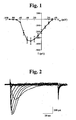
- Fig. 1 is a graph showing the property of T-type calcium channel, which is activated mostly at a low voltage of -30 mV.
- Fig. 2 is a graph showing the property of T-type calcium channel in which the activated current is quickly activated and inactivated.
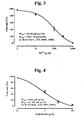
- Fig. 3 is a graph showing the inhibitory effect of T-type calcium channel caused by Ni 2+ .
- Fig. 4 is a graph showing the inhibitory effect of Mibefradil on T-type calcium channel.
- Fig. 5 is a graph showing the inhibitory effect of the compound of the present invention on T-type calcium channel.
- Fig. 6 is a graph showing the cytotoxicity of the compound of the present invention.
- the present disclosure is based on investigations of 3,4-dihydroquinazole derivatives, which are effective for selectively blocking the T-type calcium channel.
- the compound of the present invention may be prepared by such processes as shown in Reaction Schemes 1 and 2, which are given for the purposes of illustration only and are not intended to limit the scope of the present invention.
- a carbodiimide compound (4) as an intermediate of the compound of the present invention can be synthesized according to a conventional method described by Wang, F., et al. (Tetrahedron Lett. 1997, 38, 8651-8654) if properly modified.
- methyl 2-nitrocinnamate (1) as a starting material is treated with SnCl 2 at an appropriate temperature (preferably 70°C) to reduce a nitro group into an amine group.
- the carbodiimide is prepared through aza-Wittig reaction between iminophosphoranes and hetero-cumulenes (isocyanate or tioisocyanate) (Wamhoff, H. et al., Adv. Heterocycl.
- the present invention employs a method of synthesizing the carbodiimide from a urea-type compound.
- an amine compound (2) thus obtained is dissolved in tetrahydrofuran (THF) or benzene (preferably benzene), in which phenylisocinate is added thereto. Then, the mixture is stirred at a room temperature in order to obtain a urea-type compound (3).
- the urea-type compound is subjected to dehydration reaction using dibromotriphenylphosphine and triethylamine to obtain the carbodiimide compound (4) (Gololobov, Y. G et al., Tetrahedron 1992, 48, 1353-1406; Larksarp, C. et al., J. Org: Chem. 1998, 63, 6229-6233).
- phenylisocyanate is replaced by isocyanate or tioisocyanate, it is capable of incorporating various substituents at the third position of dihydroquinazoline.
- the carbodiimide compound (4) reacts with various heteroatomic nucleophils such as alcohol, thioalcohol and amine (preferably piperidine in Reaction Scheme 1) under the presence of a solvent (e.g., benzene), the heteroatom carries out nucleophil adding reaction to a central carbon of the carbodiimide group.
- a solvent e.g., benzene
- the compound (5) is subjected to intermolecular sequential 1,4-addition reaction in order to obtain 3,4-dihydroquinazoline (6) as an intermediate of the compound of the present invention.
- a methyl ester group of the intermediate compound (6) of the present invention is hydrolyzed into lithium hydroxide in a solvent mixture of THF and water at a proper temperature (preferably 60 °C) to obtain a free carboxylic compound (7) quantitatively.
- the free carboxylic compound (7) is subjected to a coupling reaction with various alcohol and amine (preferably nitrobenzylamine in Reaction Scheme 2) by using 1-[3-(dimethylamine)propyl]-3-ethylcarbodiimide hydrochloric acid (EDC) and 1-hydroxybenzotriazole (HOBT) in order to obtain an amido compound (8) (Gaucher, A. et al., Tetrahedron: Asymmetry 2001, 12, 2571-2580; Dhaon, M.
- the amido compound (8) is subjected to hydrogenation to reduce its nitro group into an amino group under the presence of methanol as a solvent and palladium (Pd) as a catalyst. This is to obtain an amine compound (9).
- the amine compound (9) is subjected to a coupling reaction with various sulfonylhalide (preferably 4-fluorobenzenesulfonyl chloride in Reaction Scheme 2) to obtain a sulfonamido compound (10), which is the final compound of the present invention.
- Methyl 2-nitrocinnamate (1) (0.202 g, 0.975 mmol) was dissolved in 20 ml of ethyl acetate and SnCl 2 ⁇ 2H 2 O (1.11 g, 4.87 mmol) was added thereto.
- the reaction mixture was heated at 70 °C for 1 hour. After the reaction was completed, the reaction mixture was cooled to a room temperature.
- the reaction mixture was adjusted to a weak alkaline solution with a saturated sodium bicarbonate solution and then filtered with fine clay layer (Celite 545). A water layer was extracted with ethyl acetate three times, in which an organic layer collected therefrom was dried with anhydrous magnesium sulfate. Thereafter, the solvent was removed under reduced pressure.
- Methyl 2-aminocinnamate (2) (6.35 g, 35.8 mmol) was dissolved in 150 ml of benzene and phenylisocyanate (5.12 g, 43.0 mmol) was slowly dropped thereto at a room temperature. The reaction mixture was stirred for 12 hours to obtain a solid precipitate. Then, the precipitate was washed with ether in order to obtain the title compound (3) in the form of a white crystal (10.2 g, 96%) (mp 184°C).
- the compound (3) (6.04 g, 20.4 mmol) and triethylamine (6.19 g, 61.2 mmol) were dissolved in 30 ml of dichloromethane and dibromotriphenyl-phosphine (12.9 g, 30.6 mmol) was gently added thereto at 0°C .
- the reaction mixture was stirred for 1 hour and extracted with dichloromethane three times. An organic layer collected therefrom was dried with anhydrous sodium sulfate and the solvent was removed under reduced pressure.
- the compound (6) (0.235g, 0.645 mmol) was dissolved in 10 ml of THF/water (1:1) and a hydrate of lithium hydroxide (0.135 g, 3.23 mmol) was added thereto at a room temperature.
- the reaction mixture was stirred at 60 °C for 2 hours.
- the pH of the reaction mixture was adjusted to 3 ⁇ 4 and the reaction mixture was extracted with dichloromethane three times.
- An organic layer was dried with anhydrous magnesium sulfate and the solvent was removed under reduced pressure to quantitatively obtain the title compound in the form of a white crystal (7) (mp 238°C).
- the compound (7) (0.22 g, 0.63 mmol) and 1-hydroxybenzotriazol (HOBT) (0.13 g, 0.94 mmol) were dissolved in 20 ml of dichloromethane/THF (1: 1) and 4-nitrobenzylamine (0.18 mg, 0.94 mmol) was dropped thereto at 0°C. The reaction mixture was stirred at the same temperature for 1 hour. Then, 1-[3-(dimethylamine)propyl]-3-ethylcarbodiimide hydrochloric acid (EDC) (0.14 g, 0.75 mmol) was added to the reaction mixture and further stirred for 12 hours.
- EDC 1-[3-(dimethylamine)propyl]-3-ethylcarbodiimide hydrochloric acid
- the compound (9) (0.11 g, 0.26 mmol) was dissolved in 10 ml of dichloromethane and pyridine (0.06 g, 0.76 mmol) was added thereto.
- the compounds prepared in the above Examples were subjected to a test for channel inhibitory effect using frog unfertilized oocytes expressing ⁇ 1H of T-type calcium channel as a primary screening method.
- the candidate compounds for blocking T-type calcium channel blockers showing 50% or more inhibitory effect were selected and subjected to the test for T-type calcium channel activity according to an electrophysiological whole cell patch clamp method.
- Such method uses mammalian HEK 293 cell line selectively expressing ⁇ 1G among T-type calcium channel encoding genes, wherein the ⁇ 1G is mainly expressed at nerve cells (derived from human kidney cancer cells and it was established by Prof.
- the candidate compounds confirmed their T-type calcium channel blocking activities were subjected to cytotoxicity test according to 3-(4,5-dimethylthiazole-2-yl)-2,5-dimethyltetrazolium bromide (MTT) assay. As a result, it has been found that the compounds of the present invention show good inhibitory effect on the T-type calcium channel.
- pGEM-HEA In order to express a gene encoding T-type calcium channel ⁇ 1H (Ca v 3.2) (Cribbs, L. L. et al., Circ. Res., 1998, 83, 103-109) in unfertilized Xenopus oocytes, pGEM-HEA was treated with restriction enzyme AflII to obtain a DNA fragment containing 5'-terminal region having the T-type calcium channel cDNA (AF051946). cRNA having a corresponding sequence to that of the fragment was synthesized using T7 RNA polymerase according to the manufacturer's instructions (mMESSAGE mMACHINE kit, Ambion, Austin, U.S.A.).
- the synthesized cRNA was quantified by measuring the O.D. value with a spectrophotometer.
- unfertilized oocytes were prepared from female Xenopus laevis (Xenopus I, U.S.A.) according to the following method. After the frog's abdomen was incised by about 1 cm, three to four lobes were detached therefrom with scissors and separated into small pieces to which several oocytes were attached.
- the small pieces were hydrolyzed in OR solution (82.5 mM NaCl, 2.5 mM KCl, 1 mM MgCl 2 , 5 mM HEPES, pH 7.6) and supplemented with collagenase type IA (Sigma, U.S.A.) to remove defolliculation.
- OR solution 82.5 mM NaCl, 2.5 mM KCl, 1 mM MgCl 2 , 5 mM HEPES, pH 7.6
- collagenase type IA Sigma, U.S.A.
- cRNA 2 to 5 ng of cRNA was injected into each oocyte using Nano-injector.
- the oocytes were subjected to a test in order to examine the electrical properties of the channel expressed therefrom 4 to 5 days after the injection while being maintained at 18 °C.
- the current of the calcium channel expressed from the Xenopus unfertilized oocytes was measured according to a two-electrode voltage clamping method.
- the current was measured in 10 mM Ba 2+ solution (10 mM Ba(OH) 2 , 90 mM NaOH, 1 mM KCl, 0.1 mM EDTA, 5 mM HEPES, pH was adjusted to 7.4 with methanesulfonic acid).
- the voltage clamp and current measurement were regulated with an amplifier for unfertilized oocytes (Model OC-725C, Warner Instrument Corp., U.S.A.), and analog signals were converted into digital signals using Digidata 2000A (Analog-Digital converter, Axon Instrument).
- the acquisition, storage and analysis of all data were recorded in Pentium IV computer via pCLAMP8.
- the data were mainly collected at 5 KHz and filtered at 1 KHz (Model 902 filter; Frequency devices located at Harverhill, MA, U.S.A.).
- the T-type current was generated by imposing test electric potential of -20 mV every 15 seconds on the unfertilized oocytes, the potential of which was fixed at -90 mV.
- a blocking percentage was calculated by comparing the potentials before and after the drug treatment. The results are shown in Table 2.
- HEK 293 cells were cultured in Dulbecco's modified Eagle's medium (DMEM) supplemented with 10% fetal bovine serum (FBS) and 1% penicillin/streptomycin (v/v) in 36.5 °C humidified incubator (95% air-5% CO 2 ).
- DMEM Dulbecco's modified Eagle's medium
- FBS fetal bovine serum
- penicillin/streptomycin v/v
- the cells used for the T-type calcium channel activity assay were cultured on a cover slip coated with poly-L-lysine (0.5 mg/ml) whenever sub-cultured and their calcium channel activity was recorded 2 to 7 days after the cultivation.
- the current of the T-type calcium channel at a single cell level was measured according to an electrophysiological whole cell patch clamping method using EPC-9 amplifier (HEKA, German).
- EPC-9 amplifier EPC-9 amplifier
- a cell exterior solution [140 mM NaCl, 2 mM CaCl 2 , 10 mM HEPES (pH 7.4)] and a cell interior solution [KC1130 mM, HEPES 10 mM, EGTA 11 mM, MgATP 5 mM (pH 7.4)] were employed.
- the inward current caused by the T-type calcium channel activation was measured according to a T-type calcium channel protocol activated at low current. Such current occurs when the cells were converted into a whole-cell recording mode by stabbing a microglass electrode having 3-4 M ⁇ resistance, which was filled with the cell interior solution into a single cell and depolarized at -30 mV (50 ms duration period) every 10 seconds with fixing membrane potential to -100 mV
- Example 2 In order to confirm whether the cells and methods used in Test Example 2 are a suitable screening system for selecting T-type calcium channel blockers, the results obtained in Example 2 were compared with those of ⁇ 1G T-type calcium channel study reported in a public document (Monteil, A. et al., J. Biol. Chem. 275, 6090-6100, 2000). As can be seen in Fig. 1, it has been confirmed that since the screening system of the present invention showed 1) the maximum activation at low voltage of -30 mV (Fig. 1), 2) the fast activation-inactivation of the activated current (Fig. 2), and 3) the same IC 50 as those of Ni 2+ and Mibefradil known as T-type calcium channel blockers (Figs.
- the candidate compounds were subjected to a test for their inhibitory effects on the T-type calcium channel according to the screening system of the present invention, as follows.
- DMSO dimethylsulfoxide
- the inhibitory effect on the T-type calcium channel current was examined in 10 ⁇ M sample solution (containing 0.1% DMSO) prepared by diluting the stock solution by 1000-fold.
- the cells were treated with each compound at a concentration of 10 ⁇ M for 30 to 60 sec with the cell exterior solution. Then, the inhibition level of peak current caused by the compound was calculated as a percentage and shown in Fig. 5.
- MTT assay was conducted as follows.
- the cultured HEK 293 cells were treated with each compound at concentrations of 10 ⁇ M and 100 ⁇ M.
- a solvent i.e. 0.1% DMSO
- H 2 O 2 125 ⁇ M
- the cells were treated with 50 ⁇ l of MTT (1 mg/ml,) dissolved in PBS for 4 hours.
- KYS05001 showed almost the same calcium channel inhibitory effect as Mibefradil, while KYS05041 and KYS05042 showed about 3.4 and 4.2-fold higher channel inhibitory effect than Mibefradil, respectively.
- mice Male Sprague-Dawley rats having about 250 g of an average body weight were employed as experimental animals. After the rats were anesthetized with sodium pentobarbital (50 mg/kg, i.p .), the abdomen was cut open immediately. MPG located on the left side of the prostate was extracted and then transferred in cold (4°C) Hank's balanced salt solution (HBSS, GibcoBRL). The connective tissue encompassing the ganglion was stripped therefrom and a small gap was made carefully on the naked ganglion with a sharp knife.
- HBSS Hank's balanced salt solution
- the ganglion was cultured in 10 ml of modified Earle's balanced salt solution (EBSS, pH 7.4, GibcoBRL) supplemented with 0.7 mg/ml of collagenase (type D), 0.3 mg/ml of trypsin and 0.1 mg/ml of DNAse type I at 35°C for 1 hour (Zhu et al., J. Physiol. Lond. 1995, 489, 363-375). At this time, 3.6 g/l of glucose and 10 mM HEPES were added to EBSS.
- EBSS modified Earle's balanced salt solution
- the culture flask was shaken to separate call clusters into a single nerve cell and subjected to centrifugation at 1000 rpm with a clinical centrifuge (International Equipment Company, MA, U.S.A.).
- the separated single nerve cells were resuspended in MEM (GibcoBRL) supplemented with 10% fetal bovine serum, 1 % glutamine and 1 % penicillin/streptomycin. They were then spread on a polystyrene culture dish (35 mm) coated with poly-L-lysine.
- the culture dish was incubated at 37°C humidified incubator (95% air-5% CO 2 ) and the cells were used in the following experiment within 24 hours after the separation.
- An electrode was made from a borosilicate glass capillary tube (outer diameter; 1.65 mm, inner diameter; 1.2 mm, Coming 7052, Garner Glass Co., Claremont, CA, U.S.A.) using P-97 Flaming-Brown micropipette puller (Sutter Instrument Co., Novato, CA, U.S.A.) and forged smoothly by heating with a microforge.
- the electrode showing 1 ⁇ 3 M ⁇ of resistance when filled with a solution was used for the following experiment.
- the culture dish containing the nerve cells was placed on an inverted microscope and the cell exterior solution was flowed into the dish at a flow rate of about 1 ⁇ 2 ml/min.
- the membrane capacitance and series resistance were corrected by 80% or more with an amplifier.
- the voltage generation and record of calcium current were carried out using S4 software (provided by Dr. Stephen R. Ikeda, National Institute on Alcohol Abuse and Alcoholism, NIH, USA) equipped in Macintosh computer, which was connected to an analogue/digital converter (Digidata 1200, Axon Instruments Co.).
- the calcium current which passed through a low band pass filter at 2 ⁇ 5 kHz, was stored in Macintosh computer and analyzed with IGOR PRO (Wave-Metrics, Lake Oswego, OR, U.S.A.). All the experiments were conducted at a room temperature ranging from 20 to 22°C.
- the electrode for measuring the calcium current was filled with the solution comprising 120 mM N-methyl-D-glucamine (NMG) methanesulfonate (MS), 20 mM tetraethylammonium (TEA)-MS, 20 mM HCl, 11 mM EGTA, 10 mM HEPES, 1 mM CaCl 2 , 4 mM MgATP, 0.3 mM Na 2 GTP and 14 mM tris-phosphocreatine (pH 7.2, 290 mOsm).
- NMG N-methyl-D-glucamine
- TAA tetraethylammonium
- the extracellular infusion fluid was composed of 140 mM MS, 145 mM TEA-OH, 10 mM HEPES, 15 mM glucose, 10 mM CaCl 2 and 0.0003 mM tetrodotoxin (TTX, pH 7.4, 320 mOsm).
- the electrode for measuring the sodium current was filled with the solution comprising 30 mM NaCl, 140 mM NMG-MS, 11 mM EGTA, 10 mM HEPES, 1 mM CaCl 2 , 4 mM MgATP and 0.3 mM Na 2 GTP (pH 7.2, 290 mOsm).
- the extracellular infusion fluid was composed of 50 mM NaCl, 90 mM TEACl, 10 mM HEPES, 15 mM glucose, 10 mM CaCl 2 and 10 mM MgCl 2 (pH 7.4, 320 mOsm).
- KYS05001, KYS05041 and KYS05042 showed higher selectivity for the calcium channel than the sodium channel. Further, in case of examining the selectivity for the sub-types of the calcium channel, KYS05041 and KYS05042 showed relatively lower selectivity. This is because it inhibited both the T-type (LVA) and N-type (HVA) calcium channels. However, KYS05001 showed higher selectivity and selectively inhibited only the T-type (LVA) calcium channel.
- the substituent R 1 in formula ⁇ 1> is hydrogen;
- R 2 is an N-bonded tertiary amine, preferably a cyclic amine such as 1-piperidinyl;
- R 3 is aryl such as phenyl; and/or
- R 4 is a benzylamino group or a derivative, preferably a sulfonamide thereof.
- the present invention relates to 3,4-dihydroquinazoline derivatives as T-type calcium channel blockers and a method of preparing the same, preferably from a carbodiimide.
- the present invention further relates to a composition comprising the 3,4-dihydroquinazoline derivatives of the present invention which can be effectively used for preventing and treating angina pectoris, high blood pressure, myocardial disease, pain and epilepsy by blocking the T-type calcium channel.
Landscapes
- Health & Medical Sciences (AREA)
- Chemical & Material Sciences (AREA)
- Organic Chemistry (AREA)
- Engineering & Computer Science (AREA)
- Bioinformatics & Cheminformatics (AREA)
- Veterinary Medicine (AREA)
- General Health & Medical Sciences (AREA)
- Public Health (AREA)
- Chemical Kinetics & Catalysis (AREA)
- General Chemical & Material Sciences (AREA)
- Medicinal Chemistry (AREA)
- Nuclear Medicine, Radiotherapy & Molecular Imaging (AREA)
- Animal Behavior & Ethology (AREA)
- Pharmacology & Pharmacy (AREA)
- Life Sciences & Earth Sciences (AREA)
- Cardiology (AREA)
- Heart & Thoracic Surgery (AREA)
- Pain & Pain Management (AREA)
- Biomedical Technology (AREA)
- Neurology (AREA)
- Neurosurgery (AREA)
- Vascular Medicine (AREA)
- Urology & Nephrology (AREA)
- Hospice & Palliative Care (AREA)
- Pharmaceuticals Containing Other Organic And Inorganic Compounds (AREA)
- Plural Heterocyclic Compounds (AREA)
Applications Claiming Priority (2)
| Application Number | Priority Date | Filing Date | Title |
|---|---|---|---|
| KR2004012144 | 2004-02-24 | ||
| KR1020040012144A KR100610731B1 (ko) | 2004-02-24 | 2004-02-24 | T-형 칼슘 채널 차단제로서 유용한 3,4-디히드로퀴나졸린유도체 및 그의 제조 방법 |
Publications (2)
| Publication Number | Publication Date |
|---|---|
| EP1568695A1 true EP1568695A1 (fr) | 2005-08-31 |
| EP1568695B1 EP1568695B1 (fr) | 2016-03-09 |
Family
ID=34747933
Family Applications (1)
| Application Number | Title | Priority Date | Filing Date |
|---|---|---|---|
| EP04030302.6A Expired - Lifetime EP1568695B1 (fr) | 2004-02-24 | 2004-12-21 | Dérivés de 3,4-dihydroquinazoline comme agents de blocage des canaux calciques de type T et procédés pour leur préparation |
Country Status (5)
| Country | Link |
|---|---|
| US (1) | US7271260B2 (fr) |
| EP (1) | EP1568695B1 (fr) |
| JP (1) | JP4174470B2 (fr) |
| KR (1) | KR100610731B1 (fr) |
| CN (1) | CN100358874C (fr) |
Cited By (10)
| Publication number | Priority date | Publication date | Assignee | Title |
|---|---|---|---|---|
| WO2008007835A1 (fr) * | 2006-07-13 | 2008-01-17 | Korea Institute Of Science And Technology | Dérivés 2,4-quinazoline à activité sur le canal calcique de type t et procédé d'élaboration |
| WO2008136631A1 (fr) * | 2007-05-08 | 2008-11-13 | Dongwoo Syntech Co., Ltd. | Dérivés de 3,4-dihydroquinazoline |
| WO2014021383A1 (fr) | 2012-07-31 | 2014-02-06 | 協和発酵キリン株式会社 | Composé hétérocyclique à cycles condensés |
| US9000186B2 (en) | 2011-02-01 | 2015-04-07 | Kyowa Hakko Kirin Co., Ltd. | Ring-fused heterocyclic derivative |
| WO2017070680A1 (fr) | 2015-10-22 | 2017-04-27 | Cavion Llc | Procédés pour traiter le syndrome d'angelman et des troubles associés |
| USRE46791E1 (en) | 2003-05-02 | 2018-04-17 | Aicuris Anti-Infective Cures Gmbh | Substituted dihydroquinazolines |
| US11130750B2 (en) | 2017-02-15 | 2021-09-28 | Cavion, Inc. | Calcium channel inhibitors |
| US11324733B2 (en) | 2017-04-26 | 2022-05-10 | Cavion, Inc. | Methods for improving memory and cognition and for treating memory and cognitive disorders |
| US11427540B2 (en) | 2019-07-11 | 2022-08-30 | Praxis Precision Medicines, Inc. | Formulations of T-type calcium channel modulators and methods of use thereof |
| WO2025255502A1 (fr) | 2024-06-07 | 2025-12-11 | Cavion, Inc. | Modulateurs du canal pyridyl amide cav3 |
Families Citing this family (23)
| Publication number | Priority date | Publication date | Assignee | Title |
|---|---|---|---|---|
| DE10251914A1 (de) * | 2002-11-08 | 2004-05-19 | Bayer Ag | Substituierte Chinazoline |
| DE10320780A1 (de) * | 2003-05-09 | 2005-01-20 | Bayer Healthcare Ag | Heterocyclyl-substituierte Dihydrochinazoline |
| DE10352499A1 (de) * | 2003-11-11 | 2005-06-09 | Bayer Healthcare Ag | Substituierte Dihydrochinazoline II |
| DE102004022672A1 (de) * | 2004-05-07 | 2005-11-24 | Bayer Healthcare Ag | Substituierte Azachinazoline |
| DE102005027517A1 (de) | 2005-06-15 | 2006-12-21 | Bayer Healthcare Ag | Verfahren zur Herstellung von Dihydrochinazolinen |
| KR100758317B1 (ko) * | 2006-05-01 | 2007-09-13 | 한국과학기술연구원 | 몰폴린-2-온 유도체를 포함하는 t-형 칼슘 채널 차단용조성물 |
| KR101014887B1 (ko) | 2008-06-26 | 2011-02-15 | 한국과학기술연구원 | 칼슘이온 채널 조절제로서 유효한 이미다졸릴알킬카르보닐유도체 및 그의 제조방법 |
| KR101052065B1 (ko) | 2008-10-15 | 2011-07-27 | 한국과학기술연구원 | 칼슘이온 채널 조절제로서 유효한 피라졸릴메틸아민-피페라진 유도체와 이의 제조방법 |
| WO2011148956A1 (fr) | 2010-05-24 | 2011-12-01 | トーアエイヨー株式会社 | Dérivé d'imidazole condensé |
| KR101473453B1 (ko) * | 2012-07-31 | 2014-12-19 | 경희대학교 산학협력단 | 신규한 화합물, 이의 제조방법 및 이를 포함하는 약제학적 조성물 |
| AR095079A1 (es) | 2013-03-12 | 2015-09-16 | Hoffmann La Roche | Derivados de octahidro-pirrolo[3,4-c]-pirrol y piridina-fenilo |
| NO3074400T3 (fr) | 2013-11-26 | 2018-04-14 | ||
| MA39792B1 (fr) | 2014-03-26 | 2019-12-31 | Hoffmann La Roche | Composés bicycliques en tant qu'inhibiteurs de production d'autotaxine (atx) et d'acide lysophosphatidique (lpa) |
| KR101693326B1 (ko) | 2014-05-23 | 2017-01-05 | 경희대학교 산학협력단 | 3,4-디히드로퀴나졸린 유도체 및 그를 포함하는 복합제 |
| WO2015182724A1 (fr) | 2014-05-28 | 2015-12-03 | トーアエイヨー株式会社 | Dérivés de tropane substitués |
| MA41898A (fr) * | 2015-04-10 | 2018-02-13 | Hoffmann La Roche | Dérivés de quinazolinone bicyclique |
| MX387736B (es) | 2015-09-04 | 2025-03-18 | Hoffmann La Roche | Derivados de fenoximetilo. |
| PE20180451A1 (es) | 2015-09-24 | 2018-03-05 | Hoffmann La Roche | Nuevos compuestos biciclicos como inhibidores de atx |
| CN107635995B (zh) | 2015-09-24 | 2022-08-19 | 豪夫迈·罗氏有限公司 | 作为atx抑制剂的二环化合物 |
| MX2017015034A (es) | 2015-09-24 | 2018-04-13 | Hoffmann La Roche | Nuevos compuestos biciclicos como inhibidores duales de autotaxina (atx)/anhidrasa carbonica (ca). |
| MA49879A (fr) | 2017-03-16 | 2020-06-24 | Hoffmann La Roche | Composés hétérocycliques utiles en tant qu'inhibiteurs doubles d'atx/ca |
| CN110382484B (zh) | 2017-03-16 | 2022-12-06 | 豪夫迈·罗氏有限公司 | 新的作为atx抑制剂的二环化合物 |
| TW202602439A (zh) | 2018-10-03 | 2026-01-16 | 美商卡凡恩公司 | 以(r)-2-(4-異丙基苯基)-n-(1-(5-(2,2,2-三氟乙氧基)吡啶-2-基)乙基)乙醯胺治療自發性震顫 |
Citations (2)
| Publication number | Priority date | Publication date | Assignee | Title |
|---|---|---|---|---|
| WO2003007953A1 (fr) * | 2001-07-18 | 2003-01-30 | Washington University | Procedes et compositions de modulation des canaux calciques de type t |
| WO2003031415A1 (fr) * | 2001-10-10 | 2003-04-17 | Aryx Therapeutics | Composes a base de mibefradil en tant que bloqueurs de canaux calciques, utilises dans le traitement de l'hypertension et de l'angine |
Family Cites Families (3)
| Publication number | Priority date | Publication date | Assignee | Title |
|---|---|---|---|---|
| JPS6136273A (ja) * | 1984-07-26 | 1986-02-20 | Mitsubishi Yuka Yakuhin Kk | 2−フエニルアルキル−4(3h)−キナゾリノン誘導体 |
| US6562319B2 (en) * | 2001-03-12 | 2003-05-13 | Yissum Research Development Company Of The Hebrew University Of Jerusalem | Radiolabeled irreversible inhibitors of epidermal growth factor receptor tyrosine kinase and their use in radioimaging and radiotherapy |
| US20060052345A1 (en) * | 2002-11-04 | 2006-03-09 | Nps Pharmaceuticals, Inc. | Quinazolinone compounds as calcilytics |
-
2004
- 2004-02-24 KR KR1020040012144A patent/KR100610731B1/ko not_active Expired - Fee Related
- 2004-12-20 US US11/018,786 patent/US7271260B2/en not_active Expired - Fee Related
- 2004-12-21 EP EP04030302.6A patent/EP1568695B1/fr not_active Expired - Lifetime
- 2004-12-27 CN CNB2004100954478A patent/CN100358874C/zh not_active Expired - Fee Related
- 2004-12-28 JP JP2004380218A patent/JP4174470B2/ja not_active Expired - Fee Related
Patent Citations (2)
| Publication number | Priority date | Publication date | Assignee | Title |
|---|---|---|---|---|
| WO2003007953A1 (fr) * | 2001-07-18 | 2003-01-30 | Washington University | Procedes et compositions de modulation des canaux calciques de type t |
| WO2003031415A1 (fr) * | 2001-10-10 | 2003-04-17 | Aryx Therapeutics | Composes a base de mibefradil en tant que bloqueurs de canaux calciques, utilises dans le traitement de l'hypertension et de l'angine |
Non-Patent Citations (5)
| Title |
|---|
| MUNIKUMAR REDDY DODDAREDDY ET AL: "First pharmacophoric hypothesis for T-type calcium channel blockers", BIOORGANIC & MEDICINAL CHEMISTRY, vol. 12, 2004, pages 1605 - 1611, XP002332319 * |
| S. I. ERTEL ET AL: "Mibefradfil (Ro 40-5967): the first selective T-type Ca2+ channel blocker", EXPERT OPINION ON INVESTIGATIONAL DRUGS, vol. 6, no. 5, 1997, pages 569 - 582, XP002332318 * |
| TAKAO SAITO ET AL: "A Facile and Efficient Carbodiimide-Mediated Synthesis of Dihydroquinazolines via a Tandem Nucleophilic Addition-Intramolecular Hetero Conjugate Addition Annulation Strategy", TETRAHEDRON LETTERS, ELSEVIER SCIENCE PUBLISHERS, AMSTERDAM, NL, vol. 37, no. 2, 1996, pages 209 - 212, XP002326650, ISSN: 0040-4039 * |
| WANG F ET AL: "Solid-Phase Synthesis of 3,4-Dihydroquinazoline", TETRAHEDRON LETTERS, ELSEVIER SCIENCE PUBLISHERS, AMSTERDAM, NL, vol. 38, no. 50, 15 December 1997 (1997-12-15), pages 8651 - 8654, XP004097142, ISSN: 0040-4039 * |
| YONG SUP LEE ET AL: "3,4-Dihydroquinazoline derivatives as novel selective T-type Ca2+ channel blockers", BIOORGANIC & MEDICINAL CHEMISTRY LETTERS, OXFORD, GB, vol. 14, 2004, pages 3379 - 3384, XP002326652, ISSN: 0960-894X * |
Cited By (16)
| Publication number | Priority date | Publication date | Assignee | Title |
|---|---|---|---|---|
| USRE49698E1 (en) | 2003-02-05 | 2023-10-17 | Aic246 Ag & Co. Kg | Substituted dihydroquinazolines |
| USRE46791E1 (en) | 2003-05-02 | 2018-04-17 | Aicuris Anti-Infective Cures Gmbh | Substituted dihydroquinazolines |
| WO2008007835A1 (fr) * | 2006-07-13 | 2008-01-17 | Korea Institute Of Science And Technology | Dérivés 2,4-quinazoline à activité sur le canal calcique de type t et procédé d'élaboration |
| WO2008136631A1 (fr) * | 2007-05-08 | 2008-11-13 | Dongwoo Syntech Co., Ltd. | Dérivés de 3,4-dihydroquinazoline |
| US8168646B2 (en) | 2007-05-08 | 2012-05-01 | Dongwoo Syntech Co., Ltd. | 3,4-dihydroquinazoline derivatives |
| US9000186B2 (en) | 2011-02-01 | 2015-04-07 | Kyowa Hakko Kirin Co., Ltd. | Ring-fused heterocyclic derivative |
| WO2014021383A1 (fr) | 2012-07-31 | 2014-02-06 | 協和発酵キリン株式会社 | Composé hétérocyclique à cycles condensés |
| WO2017070680A1 (fr) | 2015-10-22 | 2017-04-27 | Cavion Llc | Procédés pour traiter le syndrome d'angelman et des troubles associés |
| US11273218B2 (en) | 2015-10-22 | 2022-03-15 | Cavion, Inc. | Methods for treating Angelman syndrome and related disorders |
| US11130750B2 (en) | 2017-02-15 | 2021-09-28 | Cavion, Inc. | Calcium channel inhibitors |
| US11324733B2 (en) | 2017-04-26 | 2022-05-10 | Cavion, Inc. | Methods for improving memory and cognition and for treating memory and cognitive disorders |
| US11427540B2 (en) | 2019-07-11 | 2022-08-30 | Praxis Precision Medicines, Inc. | Formulations of T-type calcium channel modulators and methods of use thereof |
| US11649207B2 (en) | 2019-07-11 | 2023-05-16 | Praxis Precision Medicines, Inc. | Formulations of T-type calcium channel modulators and methods of use thereof |
| US12077502B2 (en) | 2019-07-11 | 2024-09-03 | Praxis Precision Medicines, Inc. | Formulations of T-type calcium channel modulators and methods of use thereof |
| US12528772B2 (en) | 2019-07-11 | 2026-01-20 | Praxis Precision Medicines, Inc. | Formulations of T-type calcium channel modulators and methods of use thereof |
| WO2025255502A1 (fr) | 2024-06-07 | 2025-12-11 | Cavion, Inc. | Modulateurs du canal pyridyl amide cav3 |
Also Published As
| Publication number | Publication date |
|---|---|
| CN1660820A (zh) | 2005-08-31 |
| US20050197351A1 (en) | 2005-09-08 |
| JP2005239708A (ja) | 2005-09-08 |
| KR100610731B1 (ko) | 2006-08-09 |
| CN100358874C (zh) | 2008-01-02 |
| JP4174470B2 (ja) | 2008-10-29 |
| US7271260B2 (en) | 2007-09-18 |
| KR20050084739A (ko) | 2005-08-29 |
| EP1568695B1 (fr) | 2016-03-09 |
Similar Documents
| Publication | Publication Date | Title |
|---|---|---|
| EP1568695B1 (fr) | Dérivés de 3,4-dihydroquinazoline comme agents de blocage des canaux calciques de type T et procédés pour leur préparation | |
| CA2939501C (fr) | Derives d'isoquinoline et leur utilisation | |
| CA2934473C (fr) | Indazoles et leur utilisation | |
| EP3009427B1 (fr) | Inhibiteurs de benzimidazole du canal de sodium | |
| JP3421323B2 (ja) | ピペリジンccr−3受容体拮抗薬 | |
| KR101449348B1 (ko) | Kv7 칼륨 채널 개방제로서의 피페리디닐 피리미딘 아미드 | |
| JP2017503837A (ja) | ピリジン類及びピリミジン類並びにその使用 | |
| CN1646500A (zh) | 芳基取代的嘧啶及其用途 | |
| CZ20012807A3 (cs) | Indolové deriváty a jejich pouľití jako antagonistů MCP-1 | |
| CN105612152A (zh) | 氮杂螺[4.5]癸烷衍生物及其用途 | |
| CN1426397A (zh) | 氨基吡啶类化合物及其作为抗惊厥剂和钠通道阻滞剂的应用 | |
| WO2008094909A2 (fr) | Composés de quinazolinone et de pyrimidinone fusionnés et leur utilisation dans le traitement de maladies ou d'affections induites par les canaux sodiques | |
| WO2018064498A1 (fr) | Méthodes de traitement de l'épilepsie et d'états neurologiques associés | |
| KR20010022509A (ko) | 페닐 고리의 2번 위치에서 치환된1-(n-페닐아미노알킬)-피페라진 유도체 | |
| CN101119965B (zh) | 萘满和茚满衍生物及其用途 | |
| CN103709097A (zh) | 1,3-取代脲或硫脲化合物、其制备方法、药物组合物和应用 | |
| TW201902875A (zh) | 聯芳基哌啶醯胺化合物及其使用方法 | |
| DE60313769T2 (de) | 3-(pyridinyl-amino)-1h-indol-2-carbonsäure-verbindungen als inhibitoren der interleukin-4 genexpression | |
| KR20160147278A (ko) | 새로운 유형의 kcnq 칼륨 통로 작동제, 그의 제조 방법 및 그의 용도 | |
| WO2004089877A1 (fr) | Hydroxynaphtylamides | |
| KR101697834B1 (ko) | Kcnq칼륨통로 작동제로 사용가능한 신규화합물, 그 제조방법과 용도 | |
| Park et al. | Synthesis and SAR studies of a novel series of T-type calcium channel blockers | |
| CN1110490C (zh) | 磺酰胺取代的稠合七元环化合物,它们作为药物的用途以及含有它们的药物制剂 | |
| CN117736163A (zh) | 一种苯基哌嗪衍生物或其药物学上的盐、制备方法及其在制备治疗疼痛药物中的应用 | |
| CN119143691B (zh) | 一种噻二唑类衍生物及其制备方法和应用 |
Legal Events
| Date | Code | Title | Description |
|---|---|---|---|
| PUAI | Public reference made under article 153(3) epc to a published international application that has entered the european phase |
Free format text: ORIGINAL CODE: 0009012 |
|
| AK | Designated contracting states |
Kind code of ref document: A1 Designated state(s): AT BE BG CH CY CZ DE DK EE ES FI FR GB GR HU IE IS IT LI LT LU MC NL PL PT RO SE SI SK TR |
|
| AX | Request for extension of the european patent |
Extension state: AL BA HR LV MK YU |
|
| RIN1 | Information on inventor provided before grant (corrected) |
Inventor name: LEE, YONG SUPDEPT. OF PHARMACEUTICAL SCIENCE Inventor name: RHIM, HYEOWHON Inventor name: LEE, JAE YEOL |
|
| 17P | Request for examination filed |
Effective date: 20060222 |
|
| AKX | Designation fees paid |
Designated state(s): AT BE BG CH CY CZ DE DK EE ES FI FR GB GR HU IE IS IT LI LT LU MC NL PL PT RO SE SI SK TR |
|
| 17Q | First examination report despatched |
Effective date: 20080409 |
|
| GRAP | Despatch of communication of intention to grant a patent |
Free format text: ORIGINAL CODE: EPIDOSNIGR1 |
|
| INTG | Intention to grant announced |
Effective date: 20150824 |
|
| GRAS | Grant fee paid |
Free format text: ORIGINAL CODE: EPIDOSNIGR3 |
|
| GRAA | (expected) grant |
Free format text: ORIGINAL CODE: 0009210 |
|
| AK | Designated contracting states |
Kind code of ref document: B1 Designated state(s): AT BE BG CH CY CZ DE DK EE ES FI FR GB GR HU IE IS IT LI LT LU MC NL PL PT RO SE SI SK TR |
|
| REG | Reference to a national code |
Ref country code: GB Ref legal event code: FG4D |
|
| REG | Reference to a national code |
Ref country code: AT Ref legal event code: REF Ref document number: 779403 Country of ref document: AT Kind code of ref document: T Effective date: 20160315 Ref country code: CH Ref legal event code: EP |
|
| REG | Reference to a national code |
Ref country code: IE Ref legal event code: FG4D |
|
| REG | Reference to a national code |
Ref country code: DE Ref legal event code: R096 Ref document number: 602004048748 Country of ref document: DE |
|
| REG | Reference to a national code |
Ref country code: LT Ref legal event code: MG4D |
|
| REG | Reference to a national code |
Ref country code: NL Ref legal event code: MP Effective date: 20160309 |
|
| PG25 | Lapsed in a contracting state [announced via postgrant information from national office to epo] |
Ref country code: ES Free format text: LAPSE BECAUSE OF FAILURE TO SUBMIT A TRANSLATION OF THE DESCRIPTION OR TO PAY THE FEE WITHIN THE PRESCRIBED TIME-LIMIT Effective date: 20160309 Ref country code: GR Free format text: LAPSE BECAUSE OF FAILURE TO SUBMIT A TRANSLATION OF THE DESCRIPTION OR TO PAY THE FEE WITHIN THE PRESCRIBED TIME-LIMIT Effective date: 20160610 Ref country code: FI Free format text: LAPSE BECAUSE OF FAILURE TO SUBMIT A TRANSLATION OF THE DESCRIPTION OR TO PAY THE FEE WITHIN THE PRESCRIBED TIME-LIMIT Effective date: 20160309 |
|
| REG | Reference to a national code |
Ref country code: AT Ref legal event code: MK05 Ref document number: 779403 Country of ref document: AT Kind code of ref document: T Effective date: 20160309 |
|
| PG25 | Lapsed in a contracting state [announced via postgrant information from national office to epo] |
Ref country code: LT Free format text: LAPSE BECAUSE OF FAILURE TO SUBMIT A TRANSLATION OF THE DESCRIPTION OR TO PAY THE FEE WITHIN THE PRESCRIBED TIME-LIMIT Effective date: 20160309 Ref country code: PL Free format text: LAPSE BECAUSE OF FAILURE TO SUBMIT A TRANSLATION OF THE DESCRIPTION OR TO PAY THE FEE WITHIN THE PRESCRIBED TIME-LIMIT Effective date: 20160309 Ref country code: SE Free format text: LAPSE BECAUSE OF FAILURE TO SUBMIT A TRANSLATION OF THE DESCRIPTION OR TO PAY THE FEE WITHIN THE PRESCRIBED TIME-LIMIT Effective date: 20160309 Ref country code: NL Free format text: LAPSE BECAUSE OF FAILURE TO SUBMIT A TRANSLATION OF THE DESCRIPTION OR TO PAY THE FEE WITHIN THE PRESCRIBED TIME-LIMIT Effective date: 20160309 |
|
| PG25 | Lapsed in a contracting state [announced via postgrant information from national office to epo] |
Ref country code: EE Free format text: LAPSE BECAUSE OF FAILURE TO SUBMIT A TRANSLATION OF THE DESCRIPTION OR TO PAY THE FEE WITHIN THE PRESCRIBED TIME-LIMIT Effective date: 20160309 Ref country code: IS Free format text: LAPSE BECAUSE OF FAILURE TO SUBMIT A TRANSLATION OF THE DESCRIPTION OR TO PAY THE FEE WITHIN THE PRESCRIBED TIME-LIMIT Effective date: 20160709 |
|
| PG25 | Lapsed in a contracting state [announced via postgrant information from national office to epo] |
Ref country code: SK Free format text: LAPSE BECAUSE OF FAILURE TO SUBMIT A TRANSLATION OF THE DESCRIPTION OR TO PAY THE FEE WITHIN THE PRESCRIBED TIME-LIMIT Effective date: 20160309 Ref country code: PT Free format text: LAPSE BECAUSE OF FAILURE TO SUBMIT A TRANSLATION OF THE DESCRIPTION OR TO PAY THE FEE WITHIN THE PRESCRIBED TIME-LIMIT Effective date: 20160711 Ref country code: RO Free format text: LAPSE BECAUSE OF FAILURE TO SUBMIT A TRANSLATION OF THE DESCRIPTION OR TO PAY THE FEE WITHIN THE PRESCRIBED TIME-LIMIT Effective date: 20160309 Ref country code: AT Free format text: LAPSE BECAUSE OF FAILURE TO SUBMIT A TRANSLATION OF THE DESCRIPTION OR TO PAY THE FEE WITHIN THE PRESCRIBED TIME-LIMIT Effective date: 20160309 Ref country code: CZ Free format text: LAPSE BECAUSE OF FAILURE TO SUBMIT A TRANSLATION OF THE DESCRIPTION OR TO PAY THE FEE WITHIN THE PRESCRIBED TIME-LIMIT Effective date: 20160309 |
|
| REG | Reference to a national code |
Ref country code: DE Ref legal event code: R097 Ref document number: 602004048748 Country of ref document: DE |
|
| REG | Reference to a national code |
Ref country code: FR Ref legal event code: PLFP Year of fee payment: 13 |
|
| PG25 | Lapsed in a contracting state [announced via postgrant information from national office to epo] |
Ref country code: IT Free format text: LAPSE BECAUSE OF FAILURE TO SUBMIT A TRANSLATION OF THE DESCRIPTION OR TO PAY THE FEE WITHIN THE PRESCRIBED TIME-LIMIT Effective date: 20160309 Ref country code: BE Free format text: LAPSE BECAUSE OF FAILURE TO SUBMIT A TRANSLATION OF THE DESCRIPTION OR TO PAY THE FEE WITHIN THE PRESCRIBED TIME-LIMIT Effective date: 20160309 |
|
| PLBE | No opposition filed within time limit |
Free format text: ORIGINAL CODE: 0009261 |
|
| STAA | Information on the status of an ep patent application or granted ep patent |
Free format text: STATUS: NO OPPOSITION FILED WITHIN TIME LIMIT |
|
| PG25 | Lapsed in a contracting state [announced via postgrant information from national office to epo] |
Ref country code: DK Free format text: LAPSE BECAUSE OF FAILURE TO SUBMIT A TRANSLATION OF THE DESCRIPTION OR TO PAY THE FEE WITHIN THE PRESCRIBED TIME-LIMIT Effective date: 20160309 |
|
| 26N | No opposition filed |
Effective date: 20161212 |
|
| PG25 | Lapsed in a contracting state [announced via postgrant information from national office to epo] |
Ref country code: BG Free format text: LAPSE BECAUSE OF FAILURE TO SUBMIT A TRANSLATION OF THE DESCRIPTION OR TO PAY THE FEE WITHIN THE PRESCRIBED TIME-LIMIT Effective date: 20160609 |
|
| PG25 | Lapsed in a contracting state [announced via postgrant information from national office to epo] |
Ref country code: SI Free format text: LAPSE BECAUSE OF FAILURE TO SUBMIT A TRANSLATION OF THE DESCRIPTION OR TO PAY THE FEE WITHIN THE PRESCRIBED TIME-LIMIT Effective date: 20160309 |
|
| REG | Reference to a national code |
Ref country code: CH Ref legal event code: PL |
|
| PG25 | Lapsed in a contracting state [announced via postgrant information from national office to epo] |
Ref country code: MC Free format text: LAPSE BECAUSE OF FAILURE TO SUBMIT A TRANSLATION OF THE DESCRIPTION OR TO PAY THE FEE WITHIN THE PRESCRIBED TIME-LIMIT Effective date: 20160309 |
|
| PG25 | Lapsed in a contracting state [announced via postgrant information from national office to epo] |
Ref country code: LI Free format text: LAPSE BECAUSE OF NON-PAYMENT OF DUE FEES Effective date: 20161231 Ref country code: CH Free format text: LAPSE BECAUSE OF NON-PAYMENT OF DUE FEES Effective date: 20161231 Ref country code: LU Free format text: LAPSE BECAUSE OF NON-PAYMENT OF DUE FEES Effective date: 20161221 |
|
| PG25 | Lapsed in a contracting state [announced via postgrant information from national office to epo] |
Ref country code: IE Free format text: LAPSE BECAUSE OF NON-PAYMENT OF DUE FEES Effective date: 20161221 |
|
| REG | Reference to a national code |
Ref country code: FR Ref legal event code: PLFP Year of fee payment: 14 |
|
| PG25 | Lapsed in a contracting state [announced via postgrant information from national office to epo] |
Ref country code: CY Free format text: LAPSE BECAUSE OF FAILURE TO SUBMIT A TRANSLATION OF THE DESCRIPTION OR TO PAY THE FEE WITHIN THE PRESCRIBED TIME-LIMIT Effective date: 20160309 Ref country code: HU Free format text: LAPSE BECAUSE OF FAILURE TO SUBMIT A TRANSLATION OF THE DESCRIPTION OR TO PAY THE FEE WITHIN THE PRESCRIBED TIME-LIMIT; INVALID AB INITIO Effective date: 20041221 |
|
| PG25 | Lapsed in a contracting state [announced via postgrant information from national office to epo] |
Ref country code: TR Free format text: LAPSE BECAUSE OF FAILURE TO SUBMIT A TRANSLATION OF THE DESCRIPTION OR TO PAY THE FEE WITHIN THE PRESCRIBED TIME-LIMIT Effective date: 20160309 |
|
| PGFP | Annual fee paid to national office [announced via postgrant information from national office to epo] |
Ref country code: GB Payment date: 20231120 Year of fee payment: 20 |
|
| PGFP | Annual fee paid to national office [announced via postgrant information from national office to epo] |
Ref country code: FR Payment date: 20231121 Year of fee payment: 20 Ref country code: DE Payment date: 20231120 Year of fee payment: 20 |
|
| REG | Reference to a national code |
Ref country code: DE Ref legal event code: R071 Ref document number: 602004048748 Country of ref document: DE |
|
| REG | Reference to a national code |
Ref country code: GB Ref legal event code: PE20 Expiry date: 20241220 |
|
| PG25 | Lapsed in a contracting state [announced via postgrant information from national office to epo] |
Ref country code: GB Free format text: LAPSE BECAUSE OF EXPIRATION OF PROTECTION Effective date: 20241220 |
|
| PG25 | Lapsed in a contracting state [announced via postgrant information from national office to epo] |
Ref country code: GB Free format text: LAPSE BECAUSE OF EXPIRATION OF PROTECTION Effective date: 20241220 |