EP1568794A1 - Superalliage a cristal unique a base de ni - Google Patents
Superalliage a cristal unique a base de ni Download PDFInfo
- Publication number
- EP1568794A1 EP1568794A1 EP03777308A EP03777308A EP1568794A1 EP 1568794 A1 EP1568794 A1 EP 1568794A1 EP 03777308 A EP03777308 A EP 03777308A EP 03777308 A EP03777308 A EP 03777308A EP 1568794 A1 EP1568794 A1 EP 1568794A1
- Authority
- EP
- European Patent Office
- Prior art keywords
- less
- single crystal
- based single
- crystal super
- super alloy
- Prior art date
- Legal status (The legal status is an assumption and is not a legal conclusion. Google has not performed a legal analysis and makes no representation as to the accuracy of the status listed.)
- Granted
Links
Images

Classifications
-
- C—CHEMISTRY; METALLURGY
- C22—METALLURGY; FERROUS OR NON-FERROUS ALLOYS; TREATMENT OF ALLOYS OR NON-FERROUS METALS
- C22C—ALLOYS
- C22C19/00—Alloys based on nickel or cobalt
- C22C19/03—Alloys based on nickel or cobalt based on nickel
- C22C19/05—Alloys based on nickel or cobalt based on nickel with chromium
- C22C19/051—Alloys based on nickel or cobalt based on nickel with chromium and Mo or W
- C22C19/057—Alloys based on nickel or cobalt based on nickel with chromium and Mo or W with the maximum Cr content being less 10%
Definitions
- the present invention relates to a Ni-based single crystal super alloy, and more particularly, to a technology employed for improving the creep characteristics of Ni-besed single crystal super alloy.
- Ni-based single crystal super alloys after performing solution treatment at a prescribed temperature, aging treatment is performed to obtain an Ni-based single crystal super alloy.
- This alloy is referred to as a so-called precipitation hardened alloy, and has a from in which the precipitation phase in the form of a ⁇ ' phase is precipitated in a matrix in the form of a ⁇ phase.
- CMSX-2 Cannon-Muskegon, US Patent No. 4,582,548
- CMSX-4 Cannon-Muskegon, US Patent No. 4,643,782
- Rene'N6 General Electric, US Patent No. 5,455,120
- CMSX-10K Canon-Muskegon, US Patent No. 5,366,695
- 3B General Electric, US Patent No. 5,151,249 is a fourth-generation alloy.
- CMSX-2 which is a first-generation alloy
- CMSX-4 which is a second-generation alloy
- their creep strength is inferior to third-generation alloys.
- the third-generation alloys of ReneN6 and CMSX-10 are alloys designed to have improved creep strength at high temperatures in comparison with second-generation alloys, since the composite ratio of Re (5 wt% or more) exceeds the amount of Re that dissolves into the matrix ( ⁇ phase), the excess Re compounds with other elements and as a result, a so-called TCP (topologically close packed) phase precipitates at high temperatures causing the problem of decreased creep strength.
- the object of the present invention is to provide a Ni-based single crystal super alloy that makes it possible to improve strength by preventing precipitation of the TCP phase at high temperatures.
- the Ni-based single crystal super alloy of the present invention is characterized by having a composition comprising 5.0-7.0 wt% of Al, 4.0-10.0 wt% of Ta, 1.1-4.5 wt% of Mo, 4.0-10.0 wt% ofW, 3.1-8.0 wt% of Re, 0-0.50 wt% of Hf, 2.0-5.0 wt% of Cr, 0-9.9 wt% of Co and 4.1-14.0 wt% of Ru in terms of its weight ratio, with the remainder consisting of Ni and unavoidable impurities.
- the Ni-based single crystal super alloy of the present invention is characterized by having a composition comprising 5.0-7.0 wt% of Al, 4.0-6.0 wt% of Ta, 1.1-4.5 wt% of Mo, 4.0-10.0 wt% of W, 3.1-8.0 wt% of Re, 0-0.50 wt% of Hf, 2.0-5.0 wt% of Cr, 0-9.9 wt% of Co, and 4.1-14.0 wt% of Ru in terms of weight ratio, with the remainder consisting of Ni and unavoidable impurities.
- the Ni-based single crystal super alloy of the present invention is characterized by having a composition comprising 5.0-7.0 wt% of Al, 4.0-6.0 wt% of Ta, 2.9-4.5 wt% of Mo, 4.0-10.0 wt% of W, 3.1-8.0 wt% of Re, 0-0.50 wt% of Hf, 2.0-5.0 wt% of Cr, 0-9.9 wt% of Co and 4.1-14.0 wt% of Ru in terms of weight ratio, with the remainder consisting of Ni and unavoidable impurities.
- the Ni-based single crystal super alloy of the present invention is preferably having a composition comprising 5.9 wt% of Al, 5.9 wt% of Ta, 3.9 wt% of Mo, 5.9 wt% of W, 4.9 wt% of Re, 0.10 wt% of Hf, 2.9 wt% of Cr, 5.9 wt% of Co and 5.0 wt% of Ru in terms of weight ratio, with the remainder consisting of Ni and unavoidable impurities, in the Ni-based single crystal super alloys previously described.
- the creep endurance temperature at 137 MPa and 1000 hours can be made to be 1344 K (1071°C).
- the Ni-based single crystal super alloy of the present invention is preferably having a composition comprising 5.8 wt% of Co, 2.9 wt% of Cr, 3.1 wt% of Mo, 5.8 wt% of W, 5.8 wt% of Al, 5.6 wt% of Ta, 5.0 wt% of Ru, 4.9 wt% of Re and 0.10 wt% of Hf in terms of weight ratio, with the remainder consisting of Ni and unavoidable impurities, in the Ni-based single crystal super alloys previously described.
- the creep endurance temperature at 137 MPa and 1000 hours can be made to be 1366 K (1093°C).
- the Ni-based single crystal super alloy of the present invention is preferably having a composition comprising 5.8 wt% of Co, 2.9 wt% of Cr, 3.9 wt% of Mo, 5.8 wt% of W, 5.8 wt% of Al, 5.8 wt% (5.82 wt%) or 5.6 wt% of Ta, 6.0 wt% of Ru, 4.9 wt% of, Re and 0.10 wt% of Hf in terms of weight ratio, with the remainder consisting of Ni and unavoidable impurities, in the Ni-based single crystal super alloys previously described.
- the creep endurance temperature at 137 MPa and 1000 hours can be made to be 1375 K (1102°C) or 1379 K (1106°C).
- 0-2.0 wt% of Ti in terms of weight ratio can be included in the Ni-based single crystal super alloys previously described.
- Ni-based single crystal super alloys previously described.
- At least one of elements selected from B, C, Si, Y, La, Ce, V and Zr can be included in the Ni-based single crystal super alloys previously described
- 0.05 wt% or less of B, 0.15 wt% or less of C, 0.1 wt% or less of Si, 0.1 wt% or less of Y, 0.1 wt% or less of La, 0.1 wt% or less of Ce, 1 wt% or less of V and 0.1 wt% or less of Zr in terms of weight ratio are included in the alloys.
- the above described Ni-based single crystal super alloy is more preferably having a composition comprising 5.0-7.0 wt% of Al, 4.0-10.0 wt% of Ta, 1.1-4.5 wt% of Mo, 4.0-10.0 wt% of W, 3.1-8.0 wt% of Re, 0-0.50 wt% of Hf, 2.0-5.0 wt% of Cr, 0-9.9 wt% of Co, 10.0-14.0 wt% of Ru, 4.0 wt% or less of Nb, 2.0 wt% or less of Ti, 0.05 wt% or less of B, 0.15 wt% or less of C, 0.1 wt% or less of Si, 0.1 wt% or less ofY, 0.1 wt% or less of La, 0.1 wt% or less of Ce, 1 wt% or less of V and 0.1 wt% or less of Zr.
- the above described Ni-based single crystal super alloy is more preferably having a composition comprising 5.8-7.0 wt% of Al, 4.0-5.6 wt% of Ta, 3.3-4.5 wt% of Mo, 4.0-10.0 wt% of W, 3.1-8.0 wt% of Re, 0-0.50 wt% of Hf, 29-4.3 wt% of Cr, 0-9.9 wt% of Co, 4.1-14.0 wt% of Ru, 4.0 wt% or less of Nb, 2.0 wt% or less of Ti, 0.05 wt% or less ofB, 0.15 wt% or less of C, 0.1 wt% or less of Si, 0.1 wt% or less of Y, 0.1 wt% or less of La, 0.1 wt% or less of Ce, 1 wt% or less of V and 0.1 wt% or less of Zr.
- the above described Ni-based single crystal super alloy is more preferably having a composition comprising 5.0-7.0 wt% ofAl, 4.0-10.0 wt% of Ta, 1.1-4.5 wt% of Mo, 4.0-10.0 wt% of W, 3.1-8.0 wt% of Re, 0-0.50 wt% of Hf, 2.9-5.0 wt% of Cr, 0-9.9 wt% of Co, 6.5-14.0 wt% of Ru, 4.0 wt% or less of Nb, 2.0 wt% or less of Ti, 0.05 wt% or less ofB, 0.15 wt% or less of C, 0.1 wt% or less of Si, 0.1 wt% or less of Y, 0.1 wt% or less of La, 0.1 wt% or less of Ce, 1 wt% or less of V and 0.1 wt% or less of Zr.
- the above described Ni-based single crystal super alloy is more preferably having a composition comprising 5.0-7.0 wt% of Al, 4.0-6.0 wt% of Ta, 3.3-4.5 wt% of Mo, 4.0-10.0 wt% of W, 3.1-8.0 wt% of Re, 0-0.50 wt% of Hf, 2.0-5.0 wt% of Cr, 0-9.9 wt% of Co, 4.1-14.0 wt% of Ru, 4.0 wt% or less of Nb, 2.0 wt% or less of Ti, 0.05 wt% or less of B, 0.15 wt% or less of C, 0.1 wt% or less of Si, 0.1 wt% or less of Y, 0.1 wt% or less of La, 0.1 wt% or less of Ce, 1 wt% or less of V and 0.1 wt% or less of Zr.
- the above described Ni-based single crystal super alloy is more preferably having a composition comprising 5.0-7.0 wt% of Al, 4.0-5.6 wt% of Ta, 3.3-4.5 wt% of Mo, 4.0-10.0 wt% of W, 3.1-8.0 wt% of Re, 0-0.50 wt% of Hi, 2.0-5.0 wt% of Cr, 0-9.9 wt% of Co, 4.1-14.0 wt% of Ru, 4.0 wt% or less of Nb, 2.0 wt% or less of Ti, 0.05 wt% or less of B, 0.15 wt% or less of C, 0.1 wt% or less of Si, 0.1 wt% or less of Y, 0.1 wt% or less of La, 0.1 wt% or less of Ce, 1 wt% or less of V and 0.1 wt% or less of Zr.
- the above described Ni-based single crystal super alloy is more preferably having a composition comprising 5.0-7.0 wt% of Al, 4.0-10.0 wt% of Ta, 3.1-4.5 wt% of Mo, 4.0-10.0 wt% of W, 3.1-8.0 wt% of Re, 0-0.50 wt% of Hf, 2.0-5.0 wt% of Cr, 0-9.9 wt% of Co, 4.1-14.0 wt% of Ru, 4.0 wt% or less of Nb, 0.05 wt% or less ofB, 0.15 wt% or less of C, 0.1 wt% or less of Si, 0.1 wt% or less of Y, 0.1 wt% or less of La, 0.1 wt% or less of Ce, 1 wt% or less of V and 0.1 wt% or less of Zr.
- the above described Ni-based single crystal super alloy is more preferably having a composition comprising 5.8-7.0 wt% of Al, 4.0-10.0 wt% of Ta, 3.1-4.5 wt% of Mo, 4.0-10.0 wt% of W, 3.1-8.0 wt% of Re, 0-0.50 wt% of Hf, 2.0-5.0 wt% of Cr, 0-9.9 wt% of Co, 4.1-14.0 wt% of Ru, 4.0 wt% or less of Nb, 2.0 wt% or less of Ti, 0.05 wt% or less ofB, 0.15 wt% or less of C, 0.1 wt% or less of Si, 0.1 wt% or less of Y, 0.1 wt% or less of La, 0.1 wt% or less of Ce, 1 wt% or less of V and 0.1 wt% or less of Zr.
- the above described Ni-based single crystal super alloy is more preferably having a composition comprising 5.0-7.0 wt% of Al, 4.0-10.0 wt% of Ta, 3.1-4.5 wt% of Mo, 4.0-10.0 wt% of W, 3.1-8.0 wt% of Re, 0-0.50 wt% of Hf, 2.9-4.3 wt% of Cr, 0-9.9 wt% of Co, 4.1-14.0 wt% of Ru, 4.0 wt% or less of Nb, 2.0 wt% or less of Ti, 0.05 wt% or less of B, 0.15 wt% or less of C, 0.1 wt% or less of Si, 0.1 wt% or less ofY, 0.1 wt% or less of La, 0.1 wt% or less of Ce, 1 wt% or less of V and 0.1 wt% or less of Zr.
- the above described Ni-based single crystal super alloy is more preferably having a composition comprising 5.0-7.0 wt% of Al, 4.0-10.0 wt% of Ta+Nb+Ti, 3.3-4.5 wt% of Mo, 4.0-10.0 wt% ofW, 3.1-8.0 wt% of Re, 0-0.50 wt% of Hf, 2.0-5.0 wt% of Cr, 0-9.9 wt% of Co, 4.1-14.0 wt% ofRu, 0.05 wt% or less of B, 0.15 wt% or less of C, 0.1 wt% or less of Si, 0.1 wt% or less of Y, 0.1 wt% or less of La, 0.1 wt% or less of Ce, 1 wt% or less of V and 0.1 wt% or less of Zr.
- the Ni-based single crystal super alloy of the present invention is characterized by a2 ⁇ 0.999a1 when the lattice constant of the matrix is taken to be a1 and the lattice constant of the precipitation phase is taken to be a2 in the Ni-based single crystal super alloys previously described.
- the relationship between a1 and a2 is such that a2 ⁇ 0.999a1 when the lattice constant of the matrix is taken to be a1 and the lattice constant of the precipitation phase is taken to be a2, and since the lattice constant a2 of the precipitation phase is -0.1% or less of the lattice constant a1 of the matrix, the precipitation phase that precipitates in the matrix precipitates so as to extend continuously in the direction perpendicular to the direction of the load.
- strength at high temperatures can be enhanced without dislocation defects moving within the alloy structure under stress.
- the lattice constant of the crystals of the precipitation phase a2 is 0.9965 or less of the lattice constant of the crystals of the matrix a1
- Ni-based single crystal super alloy of the present invention is characterized by comprising the feature that the dislocation space of the alloy is 40 nm or less.
- the Ni-based single crystal super alloy of the present invention is an alloy comprised of Al, Ta, Mo, W, Re, Hf, Cr, Co, Ru, Ni (remainder) and unavoidable impurities.
- the above Ni-based single crystal super alloy is an alloy having a composition comprising 5.0-7.0 wt% of Al, 4.0-10.0 wt% of Ta, 1.1-4.5 wt% of Mo, 4.0-10.0 wt% of W, 3.1-8.0 wt% of Re, 0-0.50 wt% of Hf, 2.0-5.0 wt% of Cr, 0-9.9 wt% of Co and 4.1-14.0 wt% of Ru, with the remainder consisting of Ni and unavoidable impurities.
- the above Ni-based single crystal super alloy is an alloy having a composition comprising 5.0-7.0 wt% of Al, 4.0-6.0 wt% of Ta, 1.1-4.5 wt% of Mo, 4.0-10.0 wt% of W, 3.1-8.0 wt% of Re, 0-0.50 wt% of Hf, 2.0-5.0 wt% of Cr, 0-9.9 wt% of Co and 4.1-14.0 wt% of Ru, with the remainder consisting of Ni and unavoidable impurities.
- the above Ni-based single crystal super alloy is an alloy having a composition comprising 5.0-7.0 wt% of Al, 4.0-6.0 wt% of Ta, 2.9-4.5 wt% of Mo, 4.0-10.0 wt% of W, 3.1-8.0 wt% of Re, 0-0.50 wt% of Hf, 2.0-5.0 wt% of Cr, 0-9.9 wt% of Co and 4.1-14.0 wt% of Ru, with the remainder consisting of Ni and unavoidable impurities.
- All of the above alloys have an austenite phase in the form of a ⁇ phase (matrix) and an intermediate regular phase in the form of a ⁇ ' phase (precipitation phase) that is dispersed and precipitated in the matrix.
- the ⁇ ' phase is mainly composed of an intermetallic compound represented by Ni 3 Al, and the strength of the Ni-based single crystal super alloy at high temperatures is improved by this ⁇ ' phase.
- the composite ratio of Cr is preferably within the range of 20 wt% or more to 5.0 wt% or less, and more preferably 2.9 wt%. This ratio is more preferably within the range of 2.9 wt% or more to 5.0 wt% or less, more preferably within the range of 2.9 wt% or more to 4.3 wt% or less, and most preferably 2.9 wt%. If the composite ratio of Cr is less than 2.0 wt%, the desired high-temperature corrosion resistance cannot be secured, thereby making this undesirable. If the composite ratio of Cr exceeds 5.0 wt%, in addition to precipitation of the ⁇ ' phase being inhibited, harmful phases such as a ⁇ phase or ⁇ phase form that cause a decrease in strength at high temperatures, thereby making this undesirable.
- Mo In addition to improving strength at high temperatures by dissolving into the matrix in the form of the ⁇ phase in the presence of W and Ta, Mo also improves strength at high temperatures due to precipitation hardening. Furthermore, Mo also improves the aftermentioned lattice misfit and dislocation networks of the alloy which relate characteristics of this alloy.
- the composite ratio of Mo is preferably within the range of 1.1 wt% or more to 4.5 wt% or less, more preferably within the range of 2.9 wt% or more to 4.5 wt% or less. This ratio is more preferably within the range of 3.1 wt% or more to 4.5 wt% or less, more preferably within the range of 3.3wt% or more to 4.5 wt% or less, and most preferably 3.1 wt% or 3.9 wt%. If the composite ratio of Mo is less than 1.1 wt%, strength at high temperatures cannot be maintained at the desired level, thereby making this undesirable. If the composite ratio of Mo exceeds 4.5 wt%, strength at high temperatures decreases, and corrosion resistance at high temperatures also decreases, thereby making this undesirable.
- W improves strength at high temperatures due to the actions of solution hardening and precipitation hardening in the presence of Mo and Ta as previously mentioned.
- the composite ratio of W is preferably within the range of 4.0 wt% or more to 10.0 wt% or less, and most preferably 5.9 wt% or 5.8 wt%. If the composite ratio of W is less than 4.0 wt%, strength at high temperatures cannot be maintained at the desired level, thereby making this undesirable. If the composite ratio of W exceeds 10.0 wt%, high-temperature corrosion resistance decreases, thereby making this undesirable.
- Ta improves strength at high temperatures due to the actions of solution hardening and precipitation hardening in the presence of Mo and W as previously mentioned, and also improves strength at high temperatures as a result of a portion of the Ta undergoing precipitation hardening relative to the ⁇ ' phase.
- the composite ratio of Ta is preferably within the range of 4.0 wt% or more to 10.0 wt% or less, more preferably within the range of 4.0 wt% or more to 6.0 wt% or less. This ratio is more preferably within the range of 4.0 wt% or more to 5.6 wt% or less, and most preferably 5.6 wt% or 5.82 wt%.
- the composite ratio of Ta is less than 4.0 wt%, strength at high temperatures cannot be maintained at the desired level, thereby making this undesirable. If the composite ratio of Ta exceeds 10.0 wt%, the ⁇ phase and ⁇ phase form that cause a decrease in strength at high temperatures, thereby making this undesirable.
- Al improves strength at high temperatures by compounding with Ni to form an intermetallic compound represented by Ni 3 Al, which composes the ⁇ ' phase that finely and uniformly disperses and precipitates in the matrix, at a ratio of 60-70% in terms of volume percent.
- the composite ratio of Al is preferably within the range of 5.0 wt% or more to 7.0 wt% or less. This ratio is more preferably within the range of 5.8 wt% or more to 7.0 wt% or less, and most preferably 5.9 wt% or 5.8 wt%. If the composite ratio of Al is less than 5.0 wt%, the precipitated amount of the ⁇ ' phase becomes insufficient, and strength at high temperatures cannot be maintained at the desired level, thereby making this undesirable.
- the composite ratio of Al exceeds 7.0 wt%, a large amount of a coarse ⁇ phase referred to as the eutectic ⁇ ' phase is formed, and this eutectic ⁇ ' phase prevents solution treatment and makes it impossible to maintain strength at high temperatures at a high level, thereby making this undesirable.
- Hf is an element that segregates at the grain boundary and improves strength at high temperatures by strengthening the grain boundary as a result of being segregated at the grain boundary between the ⁇ phase and ⁇ ' phase.
- the composite ratio of Hf is preferably within the range of 0.01 wt% or more to 0.50 wt% or less, and most preferably 0.10 wt%. If the composite ratio of Hf is less than 0.01 wt%, the precipitated amount of the ⁇ ' phase becomes insufficient and strength at high temperatures cannot be maintained at the desired level, thereby making this undesirable. However, the composite ratio of Hf may be within the range of 0 wt% or more to less than 0.01 wt% if necessary. Furthermore, if the composite ratio of Hf exceeds 0.50 wt%, local melting is induced which results in the risk of decreased strength at high temperatures, thereby making this undesirable.
- Co improves strength at high temperatures by increasing the solution limit at high temperatures relative to the matrix such as Al and Ta, and dispersing and precipitating a fine ⁇ ' phase by heat treatment
- the composite ratio of Co is preferably within the range of 0.1 wt% or more to 9.9 wt% or less, and most preferably 5.8 wt%. If the composite ratio of Co is less than 0.1 wt%, the precipitated amount of the ⁇ ' phase becomes insufficient and the strength at high temperatures cannot be maintained, thereby making this undesirable. However, the composite ratio of Co may be within the range of 0 wt% or more to less than 0.1 wt%, if necessary.
- the composite ratio of Co exceeds 9.9 wt%, the balance with other elements such as Al, Ta, Mo, W, Hf and Cr is disturbed resulting in the precipitation of harmful phases that cause a decrease in strength at high temperatures, thereby making this undesirable.
- the composite ratio of Re is preferably within the range of 3.1 wt% or more to 8.0 wt% or less, and most preferably 4.9 wt%. If the composite ratio of Re is less than 3.1 wt%, solution strengthening of the ⁇ phase becomes insufficient and strength at high temperatures cannot be maintained at the desired level, thereby making this undesirable. If the composite ratio of Re exceeds 8.0 wt%, the TCP phase precipitates at high temperatures and strength at high temperatures cannot be maintained at a high level, thereby making this undesirable.
- the composite ratio of Ru is preferably within the range of 4.1 wt% or more to 14.0 wt% or less. This ratio is more preferably within the range of 10.0 wt% or more to 14.0 wt% or less, or preferably within the range of 6.5 wt% or more to 14.0 wt% or less, and most preferably 5.0 wt%, 6.0 wt% or 7.0 wt%. If the composite ratio of Ru is less than 1.0 wt%, the TCP phase precipitates at high temperatures and strength at high temperatures cannot be maintained at a high level, thereby making this undesirable.
- the composite ratio of Ru is less than 4.1 wt%, strength at high temperatures decreases compared to the case when the composite ratio of Ru is 4.1 wt% or more. Furthermore, if the composite ratio of Ru exceeds 14.0 wt%, the ⁇ phase precipitates and strength at high temperatures deceases which is also undesirable.
- the composite ratios of Al, Ta, Mo, W, Hf, Cr, Co and Ni to the optimum ratios, together with improving strength at high temperatures by setting the aftermentioned lattice misfit and dislocation networks of the alloy which are calculated from the lattice constant of the ⁇ phase and the lattice constant of the ⁇ ' phase within their optimum ranges, and precipitation of the TCP phase can be inhibited by adding Ru.
- the composite ratios of Al, Cr, Ta and Mo to the aforementioned ratios, the production cost for the alloy can be decreased.
- relative strength of the alloy can be increased and the lattice misfit and dislocation networks of the alloy can be adjusted to the optimum value.
- lattice constant a2 of the crystals of the precipitation phase is preferably -0.1% or less lattice constant a1 of the crystals of the matrix.
- the lattice constant of the crystals of the precipitation phase a2 is 0.9965 or less of the lattice constant of the crystals of the matrix a1.
- the above-described relationship between a1 and a2 becomes a2 ⁇ 0.9965a1.
- the percentage of the lattice constant a2 relative to the lattice constant a1 is called "lattice misfit".
- the composition of the composite elements that compose the Ni-based single crystal super alloy is suitably adjusted.
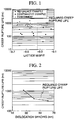
- FIG. 1 shows a relationship between the lattice misfit of the alloy and the time until the alloy demonstrates creep rupture (creep rupture life).
- the preferable value of the lattice misfit is determined to - 0.35 or lower.
- the composition of Mo is maintained to a high level, and the composition of the other composite elements is suitably adjusted.
- Ti can be further included in the above Ni-based super crystal super alloy.
- the composite ratio of Ta is preferably within the range of 0 wt% or more to 2.0 wt% or less. If the composite ratio of Ti exceeds 2.0 wt%, the harmful phase precipitates and the strength at high temperatures cannot be maintained, thereby making this undesirable.
- Nb can be further included in the above Ni-based super crystal super alloy,
- the composite ratio of Nb is preferably within the range of 0 wt% or more to 4.0 wt% or less. If the composite ratio of Nb exceeds 4.0 wt%, the harmful phase precipitates and the strength at high temperatures cannot be maintained, thereby making this undesirable.
- strength at high temperatures can be improved by adjusting the total composite ratio of Ta, Nb and Ti (Ta+Nb+Ti) within the range of 4.0 wt% or more to 10.0 wt% or less.
- B, C, Si, Y, La, Ce, V and Zr and the like can be included in the above Ni-based super crystal super alloy, for example.
- the composite ratio of each element is preferably 0.05 wt% or less of B, 0.15 wt% or less of C, 0.1 wt% or less of Si, 0.1 wt% or less of Y, 0.1 wt% or less of La, 0.1 wt% or less of Ce, 1 wt% or less of V and 0.1 wt% or less of Zr. If the composite ratio of each element exceeds the above range, the harmful phase precipitates and the strength at high temperatures cannot be maintained, thereby making this undesirable.
- a dislocation space of the alloy is 40 nm or less.
- the reticulated dislocation (displacement of atoms which are connected as a line) in the alloy is called dislocation networks, and a space between adjacent reticulations is called "dislocation space".
- FIG. 2 shows a relationship between the dislocation space of the alloy and the time until the alloy demonstrates creep rupture (creep rupture life).
- the preferable value of the dislocation space is determined to 40 nm or lower.
- the composition of Mo is maintained to a high level, and the composition of the other composite elements is suitably adjusted.
- FTG. 3 is a transmission electron microgram of the Ni-based single crystal super alloy showing an embodiment (aftermentioned embodiment 3) of the dislocation networks and dislocation space of the Ni-based single crystal super alloy of the present invention. As shown in FIG. 3, in case of the Ni-based single crystal super alloy of the present invention, the dislocation space is 40 nm or lower.
- Ni-based single crystal super alloys may cause reverse partitioning, however, in Ni-based single crystal super alloy of the present invention does not cause reverse partitioning.
- solution treatment and aging treatment were performed on the alloy ingots followed by observation of the state of the alloy structure with a scanning electron microscope (SEM).
- Solution treatment consisted of holding for 1 hour at 1573K (1300°C) followed by heating to 1613K (1340°C) and holding for 5 hours.
- aging treatment consisted of consecutively performing primary aging treatment consisting of holding for 4 hours at 1273K-1423K (1000°C -1150°C) and secondary aging treatment consisting of holding for 20 hours at 1143K (870°C).
- reference example 5 having a composition of 4.0 wt% ofRu
- embodiments 1, 2, 4, 9, 10 and 11 having a composition approximately 5.0 wt% ofRu
- embodiments 3, 12 and 13 having a composition of 6.0 wt% of Ru
- embodiment 14 having a composition of 7,0 wt% of Ru, were determined to have high strength at high temperature.
- samples of reference examples 1-6 and embodiments 1-14 were determined to have a high withstand temperature (1356K (1083°C)) equal to or greater than the alloys of the prior art (comparative Examples 1-5).
- samples of reference example 1-6 and embodiments 1-14 were determined to have a high withstand temperature (embodiment 1: 1344K (1071°C), embodiment 2:1366K (1093°C), embodiment 3:1375K (1102°C), embodiment 4:1372K (1099°C), embodiment 5:1379K (1106°C), embodiment 6: 1379K (1106°C), embodiment 7:1379K (1106°C), embodiment 8: 1363K (1090°C), embodiment 9:1358K (1085°C), embodiment 10:1362K (1089°C), embodiment 11:1361K (1088°C), embodiment 12: 1363K (1090°C), embodiment 13: 1366K (1093°C) and embodiment 14:1384K (1111°C)).
- this alloy bas a higher heat resistance temperature than Ni-based single crystal super alloys of the prior art, and was determined to have high strength even at high temperatures.
- the composite ratio of Ru is preferably be determined to a range so as to keep the balance against the composition of the other composite elements is suitably adjusted (4.1 wt% or more to 14.0 wt% or less, for example).
Landscapes
- Chemical & Material Sciences (AREA)
- Engineering & Computer Science (AREA)
- Materials Engineering (AREA)
- Mechanical Engineering (AREA)
- Metallurgy (AREA)
- Organic Chemistry (AREA)
- Crystals, And After-Treatments Of Crystals (AREA)
- Turbine Rotor Nozzle Sealing (AREA)
- Heat Treatment Of Sheet Steel (AREA)
Applications Claiming Priority (3)
| Application Number | Priority Date | Filing Date | Title |
|---|---|---|---|
| JP2002355756 | 2002-12-06 | ||
| JP2002355756 | 2002-12-06 | ||
| PCT/JP2003/015619 WO2004053177A1 (fr) | 2002-12-06 | 2003-12-05 | Superalliage a cristal unique a base de ni |
Publications (3)
| Publication Number | Publication Date |
|---|---|
| EP1568794A1 true EP1568794A1 (fr) | 2005-08-31 |
| EP1568794A4 EP1568794A4 (fr) | 2006-11-02 |
| EP1568794B1 EP1568794B1 (fr) | 2009-02-04 |
Family
ID=32500797
Family Applications (1)
| Application Number | Title | Priority Date | Filing Date |
|---|---|---|---|
| EP03777308A Expired - Lifetime EP1568794B1 (fr) | 2002-12-06 | 2003-12-05 | Superalliage a cristal unique a base de ni |
Country Status (8)
| Country | Link |
|---|---|
| US (1) | US20060011271A1 (fr) |
| EP (1) | EP1568794B1 (fr) |
| JP (1) | JP3814662B2 (fr) |
| CN (1) | CN100357467C (fr) |
| AU (1) | AU2003289214A1 (fr) |
| CA (1) | CA2508698C (fr) |
| DE (1) | DE60326083D1 (fr) |
| WO (1) | WO2004053177A1 (fr) |
Cited By (8)
| Publication number | Priority date | Publication date | Assignee | Title |
|---|---|---|---|---|
| EP1498503A4 (fr) * | 2002-03-27 | 2006-01-25 | Nat Inst For Materials Science | Superalliage a base de ni solidifie de maniere directionnelle et superalliage a cristal unique a base de ni |
| EP1760164A1 (fr) * | 2005-09-01 | 2007-03-07 | General Electric Company | Superalliage de nickel |
| EP1990434A1 (fr) * | 2006-12-13 | 2008-11-12 | United Technologies Corporation | Alliages de cristal simple à densité modérée, faible et extrêmement faible pour applications AN2 élevées |
| EP1930455A4 (fr) * | 2005-09-27 | 2010-01-13 | Nat Inst For Materials Science | Superalliage a base de nickel ne presentant pas de tendance a l'oxydation |
| WO2010111200A1 (fr) * | 2009-03-24 | 2010-09-30 | General Electric Company | Superalliage à base de nickel superrésistant à l'oxydation et à un endommagement cyclique et articles formés à partir de celui-ci |
| WO2011041183A1 (fr) * | 2009-09-30 | 2011-04-07 | General Electric Company | Superalliage à base de nickel résistant à la superoxydation et à un endommagement cyclique et articles formés à partir de celui-ci |
| EP1997923A4 (fr) * | 2006-03-20 | 2012-02-01 | Nat Inst For Materials Science | SUPERALLIAGE A BASE DE Ni, SON PROCEDE DE PRODUCTION ET COMPOSANT DE LAME DE TURBINE OU DE PALETTE DE TURBINE |
| EP2006402A4 (fr) * | 2006-03-31 | 2012-02-01 | Nat Inst For Materials Science | SUPERALLIAGE À BASE DE Ni ET SON PROCÉDÉ DE FABRICATION |
Families Citing this family (21)
| Publication number | Priority date | Publication date | Assignee | Title |
|---|---|---|---|---|
| CN100482824C (zh) * | 2005-04-30 | 2009-04-29 | 中国科学院金属研究所 | 一种含铼镍基单晶高温合金及其制备工艺 |
| CN100460542C (zh) * | 2006-06-14 | 2009-02-11 | 中国科学院金属研究所 | 一种无铼第二代镍基单晶高温合金 |
| CN101652487B (zh) * | 2006-09-13 | 2012-02-08 | 独立行政法人物质.材料研究机构 | Ni基单结晶超合金 |
| US8388890B2 (en) * | 2006-09-21 | 2013-03-05 | Tyco Electronics Corporation | Composition and method for applying an alloy having improved stress relaxation resistance |
| US9499886B2 (en) | 2007-03-12 | 2016-11-22 | Ihi Corporation | Ni-based single crystal superalloy and turbine blade incorporating the same |
| CA2680650C (fr) * | 2007-03-12 | 2012-07-03 | Ihi Corporation | Superalliage monocristallin a base de nickel et pale de turbine comportant cet alliage |
| CN100557092C (zh) * | 2007-12-17 | 2009-11-04 | 北京航空航天大学 | 采用籽晶法与螺旋选晶法组合制备Ni基单晶高温合金的方法 |
| JP5467307B2 (ja) * | 2008-06-26 | 2014-04-09 | 独立行政法人物質・材料研究機構 | Ni基単結晶超合金とそれよりえられた合金部材 |
| US8216509B2 (en) * | 2009-02-05 | 2012-07-10 | Honeywell International Inc. | Nickel-base superalloys |
| CN102803528B (zh) | 2009-04-17 | 2015-04-22 | 株式会社Ihi | Ni基单晶超合金及使用其的涡轮叶片 |
| JP5757507B2 (ja) * | 2010-09-24 | 2015-07-29 | 公立大学法人大阪府立大学 | Reが添加されたNi基2重複相金属間化合物合金及びその製造方法 |
| US20160214350A1 (en) | 2012-08-20 | 2016-07-28 | Pratt & Whitney Canada Corp. | Oxidation-Resistant Coated Superalloy |
| WO2014109453A1 (fr) * | 2013-01-08 | 2014-07-17 | Lg Siltron Inc. | Tranche de monocristaux de silicium, son procédé de fabrication et procédé de détection de défauts |
| JP6226231B2 (ja) | 2013-09-18 | 2017-11-08 | 株式会社Ihi | 熱遮蔽コーティングしたNi合金部品及びその製造方法 |
| CN105506387B (zh) * | 2015-12-21 | 2017-08-08 | 谷月恒 | 一种高比蠕变强度的镍基单晶高温合金及其制备方法和应用 |
| CN107034388A (zh) * | 2017-03-17 | 2017-08-11 | 泰州市金鹰精密铸造有限公司 | 镍基单晶高温合金涡轮叶片的制备工艺 |
| CN109797433B (zh) * | 2019-01-23 | 2021-05-25 | 深圳市万泽中南研究院有限公司 | 单晶高温合金、热端部件及设备 |
| CN111961920B (zh) * | 2020-08-09 | 2022-02-11 | 浙江大学 | 一种高承温能力的镍基单晶高温合金及其制备方法 |
| CN112522543A (zh) * | 2020-11-18 | 2021-03-19 | 贵州工程应用技术学院 | 一种高浓度Re/Ru高承温能力高蠕变抗力镍基单晶超合金 |
| CN113913942A (zh) * | 2021-01-13 | 2022-01-11 | 中国航发北京航空材料研究院 | 镍基单晶合金、用途和热处理方法 |
| JPWO2024101048A1 (fr) | 2022-11-09 | 2024-05-16 |
Family Cites Families (14)
| Publication number | Priority date | Publication date | Assignee | Title |
|---|---|---|---|---|
| US4582548A (en) * | 1980-11-24 | 1986-04-15 | Cannon-Muskegon Corporation | Single crystal (single grain) alloy |
| US4643782A (en) * | 1984-03-19 | 1987-02-17 | Cannon Muskegon Corporation | Single crystal alloy technology |
| US4719080A (en) * | 1985-06-10 | 1988-01-12 | United Technologies Corporation | Advanced high strength single crystal superalloy compositions |
| CA1315572C (fr) * | 1986-05-13 | 1993-04-06 | Xuan Nguyen-Dinh | Materiaux monocristallins a phase stable |
| US5151249A (en) * | 1989-12-29 | 1992-09-29 | General Electric Company | Nickel-based single crystal superalloy and method of making |
| US5455120A (en) * | 1992-03-05 | 1995-10-03 | General Electric Company | Nickel-base superalloy and article with high temperature strength and improved stability |
| US5366695A (en) * | 1992-06-29 | 1994-11-22 | Cannon-Muskegon Corporation | Single crystal nickel-based superalloy |
| US5482789A (en) * | 1994-01-03 | 1996-01-09 | General Electric Company | Nickel base superalloy and article |
| US6007645A (en) * | 1996-12-11 | 1999-12-28 | United Technologies Corporation | Advanced high strength, highly oxidation resistant single crystal superalloy compositions having low chromium content |
| JPH10330872A (ja) * | 1997-05-29 | 1998-12-15 | Toshiba Corp | Ni基耐熱超合金及びNi基耐熱超合金部品 |
| JPH11256258A (ja) * | 1998-03-13 | 1999-09-21 | Toshiba Corp | Ni基単結晶超合金およびガスタービン部品 |
| JPH11310839A (ja) * | 1998-04-28 | 1999-11-09 | Hitachi Ltd | 高強度Ni基超合金方向性凝固鋳物 |
| FR2780982B1 (fr) * | 1998-07-07 | 2000-09-08 | Onera (Off Nat Aerospatiale) | Superalliage monocristallin a base de nickel a haut solvus |
| US6190471B1 (en) * | 1999-05-26 | 2001-02-20 | General Electric Company | Fabrication of superalloy articles having hafnium- or zirconium-enriched protective layer |
-
2003
- 2003-12-05 WO PCT/JP2003/015619 patent/WO2004053177A1/fr not_active Ceased
- 2003-12-05 DE DE60326083T patent/DE60326083D1/de not_active Expired - Lifetime
- 2003-12-05 CA CA2508698A patent/CA2508698C/fr not_active Expired - Lifetime
- 2003-12-05 US US10/537,477 patent/US20060011271A1/en not_active Abandoned
- 2003-12-05 EP EP03777308A patent/EP1568794B1/fr not_active Expired - Lifetime
- 2003-12-05 JP JP2004558425A patent/JP3814662B2/ja not_active Expired - Lifetime
- 2003-12-05 CN CNB2003801095013A patent/CN100357467C/zh not_active Expired - Lifetime
- 2003-12-05 AU AU2003289214A patent/AU2003289214A1/en not_active Abandoned
Cited By (10)
| Publication number | Priority date | Publication date | Assignee | Title |
|---|---|---|---|---|
| EP1498503A4 (fr) * | 2002-03-27 | 2006-01-25 | Nat Inst For Materials Science | Superalliage a base de ni solidifie de maniere directionnelle et superalliage a cristal unique a base de ni |
| EP1760164A1 (fr) * | 2005-09-01 | 2007-03-07 | General Electric Company | Superalliage de nickel |
| EP1930455A4 (fr) * | 2005-09-27 | 2010-01-13 | Nat Inst For Materials Science | Superalliage a base de nickel ne presentant pas de tendance a l'oxydation |
| EP1997923A4 (fr) * | 2006-03-20 | 2012-02-01 | Nat Inst For Materials Science | SUPERALLIAGE A BASE DE Ni, SON PROCEDE DE PRODUCTION ET COMPOSANT DE LAME DE TURBINE OU DE PALETTE DE TURBINE |
| EP2006402A4 (fr) * | 2006-03-31 | 2012-02-01 | Nat Inst For Materials Science | SUPERALLIAGE À BASE DE Ni ET SON PROCÉDÉ DE FABRICATION |
| EP1990434A1 (fr) * | 2006-12-13 | 2008-11-12 | United Technologies Corporation | Alliages de cristal simple à densité modérée, faible et extrêmement faible pour applications AN2 élevées |
| US7704332B2 (en) | 2006-12-13 | 2010-04-27 | United Technologies Corporation | Moderate density, low density, and extremely low density single crystal alloys for high AN2 applications |
| US8366838B2 (en) | 2006-12-13 | 2013-02-05 | United Technologies Corporation | Moderate density, low density, and extremely low density single crystal alloys for high AN2 applications |
| WO2010111200A1 (fr) * | 2009-03-24 | 2010-09-30 | General Electric Company | Superalliage à base de nickel superrésistant à l'oxydation et à un endommagement cyclique et articles formés à partir de celui-ci |
| WO2011041183A1 (fr) * | 2009-09-30 | 2011-04-07 | General Electric Company | Superalliage à base de nickel résistant à la superoxydation et à un endommagement cyclique et articles formés à partir de celui-ci |
Also Published As
| Publication number | Publication date |
|---|---|
| CA2508698C (fr) | 2012-05-15 |
| CA2508698A1 (fr) | 2004-06-24 |
| CN100357467C (zh) | 2007-12-26 |
| EP1568794A4 (fr) | 2006-11-02 |
| AU2003289214A8 (en) | 2004-06-30 |
| CN1745186A (zh) | 2006-03-08 |
| AU2003289214A1 (en) | 2004-06-30 |
| WO2004053177A1 (fr) | 2004-06-24 |
| EP1568794B1 (fr) | 2009-02-04 |
| US20060011271A1 (en) | 2006-01-19 |
| JP3814662B2 (ja) | 2006-08-30 |
| JPWO2004053177A1 (ja) | 2006-04-13 |
| DE60326083D1 (de) | 2009-03-19 |
Similar Documents
| Publication | Publication Date | Title |
|---|---|---|
| EP1568794A1 (fr) | Superalliage a cristal unique a base de ni | |
| EP1262569B1 (fr) | Superalliage monocristallin à base de nickel | |
| EP1507879B1 (fr) | Alliage a base de nickel | |
| US6966956B2 (en) | Ni-based single crystal super alloy | |
| JP5177559B2 (ja) | Ni基単結晶超合金 | |
| CN101680059B (zh) | Ni基单晶超合金及使用其的涡轮叶片 | |
| EP2305845B1 (fr) | SUPERALLIAGE MONOCRISTALLIN À BASE DE Ni ET ÉLÉMENT D ALLIAGE L UTILISANT EN TANT QUE BASE | |
| JP5467307B2 (ja) | Ni基単結晶超合金とそれよりえられた合金部材 | |
| CA2230732C (fr) | Alliage d'aluminium et de titane pouvant etre utilise a haute temperature | |
| RU2518838C2 (ru) | МОНОКРИСТАЛЛИЧЕСКИЙ СУПЕРСПЛАВ НА ОСНОВЕ Ni И ЛОПАТКА ТУРБИНЫ | |
| JPH09157779A (ja) | 低熱膨張Ni基超耐熱合金およびその製造方法 | |
| US8968643B2 (en) | Ni-based single crystal super alloy | |
| US5192497A (en) | Superalloys with low thermal-expansion coefficient | |
| WO2022106134A1 (fr) | Superalliage à base de nickel présentant une haute résistance à l'oxydation, une haute résistance à la corrosion et une bonne aptitude au traitement | |
| EP0533059B1 (fr) | Superalliage à faible coefficient de dilatation thermique | |
| KR20240017621A (ko) | 니켈기 초내열합금 및 그의 제조 방법 |
Legal Events
| Date | Code | Title | Description |
|---|---|---|---|
| PUAI | Public reference made under article 153(3) epc to a published international application that has entered the european phase |
Free format text: ORIGINAL CODE: 0009012 |
|
| 17P | Request for examination filed |
Effective date: 20050606 |
|
| AK | Designated contracting states |
Kind code of ref document: A1 Designated state(s): AT BE BG CH CY CZ DE DK EE ES FI FR GB GR HU IE IT LI LU MC NL PT RO SE SI SK TR |
|
| AX | Request for extension of the european patent |
Extension state: AL LT LV MK |
|
| RAP1 | Party data changed (applicant data changed or rights of an application transferred) |
Owner name: ISHIKAWAJIMA-HARIMA HEAVY INDUSTRIES CO., LTD. Owner name: INDEPENDENT ADMINISTRATIVE INSTITUTION NATIONALINS |
|
| RIN1 | Information on inventor provided before grant (corrected) |
Inventor name: KOIZUMI, YUTAKA, NAT. INST. FOR MAT. SCIENCE Inventor name: MASAKI, SHOJU, ISHIKAWAJIMA-HARIMA HEAVY IND. CO. Inventor name: HARADA, HIROSHI, NAT. INST. FOR MAT. SCIENCE Inventor name: YOKOKAWA, TADAHARU, NAT. INST. FOR MAT. SCIENCE Inventor name: AOKI, YASUHIRO, ISHIKAWAJIMA-HARIMA HEAVY IND. CO. Inventor name: ARAI, MIKIYA, ISHIKAWAJIMA-HARIMA HEAVY IND. CO. Inventor name: KOBAYASHI, TOSHIHARU NAT. INS. FOR MAT. SCIENCE |
|
| DAX | Request for extension of the european patent (deleted) | ||
| RBV | Designated contracting states (corrected) |
Designated state(s): CH DE FR GB LI |
|
| A4 | Supplementary search report drawn up and despatched |
Effective date: 20061005 |
|
| 17Q | First examination report despatched |
Effective date: 20070214 |
|
| RAP1 | Party data changed (applicant data changed or rights of an application transferred) |
Owner name: INDEPENDENT ADMINISTRATIVE INSTITUTION NATIONAL IN Owner name: IHI CORPORATION |
|
| GRAP | Despatch of communication of intention to grant a patent |
Free format text: ORIGINAL CODE: EPIDOSNIGR1 |
|
| GRAS | Grant fee paid |
Free format text: ORIGINAL CODE: EPIDOSNIGR3 |
|
| GRAA | (expected) grant |
Free format text: ORIGINAL CODE: 0009210 |
|
| AK | Designated contracting states |
Kind code of ref document: B1 Designated state(s): CH DE FR GB LI |
|
| REG | Reference to a national code |
Ref country code: GB Ref legal event code: FG4D |
|
| REG | Reference to a national code |
Ref country code: CH Ref legal event code: EP |
|
| REG | Reference to a national code |
Ref country code: CH Ref legal event code: NV Representative=s name: SERVOPATENT GMBH |
|
| REF | Corresponds to: |
Ref document number: 60326083 Country of ref document: DE Date of ref document: 20090319 Kind code of ref document: P |
|
| PLBE | No opposition filed within time limit |
Free format text: ORIGINAL CODE: 0009261 |
|
| STAA | Information on the status of an ep patent application or granted ep patent |
Free format text: STATUS: NO OPPOSITION FILED WITHIN TIME LIMIT |
|
| 26N | No opposition filed |
Effective date: 20091105 |
|
| REG | Reference to a national code |
Ref country code: FR Ref legal event code: PLFP Year of fee payment: 13 |
|
| REG | Reference to a national code |
Ref country code: FR Ref legal event code: PLFP Year of fee payment: 14 |
|
| REG | Reference to a national code |
Ref country code: FR Ref legal event code: PLFP Year of fee payment: 15 |
|
| REG | Reference to a national code |
Ref country code: CH Ref legal event code: PCAR Free format text: NEW ADDRESS: WANNERSTRASSE 9/1, 8045 ZUERICH (CH) |
|
| PGFP | Annual fee paid to national office [announced via postgrant information from national office to epo] |
Ref country code: GB Payment date: 20221027 Year of fee payment: 20 Ref country code: FR Payment date: 20221110 Year of fee payment: 20 Ref country code: DE Payment date: 20221102 Year of fee payment: 20 |
|
| PGFP | Annual fee paid to national office [announced via postgrant information from national office to epo] |
Ref country code: CH Payment date: 20230101 Year of fee payment: 20 |
|
| REG | Reference to a national code |
Ref country code: DE Ref legal event code: R071 Ref document number: 60326083 Country of ref document: DE |
|
| REG | Reference to a national code |
Ref country code: CH Ref legal event code: PL |
|
| REG | Reference to a national code |
Ref country code: GB Ref legal event code: PE20 Expiry date: 20231204 |
|
| PG25 | Lapsed in a contracting state [announced via postgrant information from national office to epo] |
Ref country code: GB Free format text: LAPSE BECAUSE OF EXPIRATION OF PROTECTION Effective date: 20231204 |
|
| PG25 | Lapsed in a contracting state [announced via postgrant information from national office to epo] |
Ref country code: GB Free format text: LAPSE BECAUSE OF EXPIRATION OF PROTECTION Effective date: 20231204 |