EP1569424B1 - Système et procédé de remplacement du code d' un numero de téléphone - Google Patents
Système et procédé de remplacement du code d' un numero de téléphone Download PDFInfo
- Publication number
- EP1569424B1 EP1569424B1 EP04004269.9A EP04004269A EP1569424B1 EP 1569424 B1 EP1569424 B1 EP 1569424B1 EP 04004269 A EP04004269 A EP 04004269A EP 1569424 B1 EP1569424 B1 EP 1569424B1
- Authority
- EP
- European Patent Office
- Prior art keywords
- phone
- toll
- communication device
- free number
- telephone communication
- Prior art date
- Legal status (The legal status is an assumption and is not a legal conclusion. Google has not performed a legal analysis and makes no representation as to the accuracy of the status listed.)
- Expired - Lifetime
Links
Images




Classifications
-
- H—ELECTRICITY
- H04—ELECTRIC COMMUNICATION TECHNIQUE
- H04M—TELEPHONIC COMMUNICATION
- H04M1/00—Substation equipment, e.g. for use by subscribers
- H04M1/66—Substation equipment, e.g. for use by subscribers with means for preventing unauthorised or fraudulent calling
- H04M1/677—Preventing the dialling or sending of predetermined telephone numbers or selected types of telephone numbers, e.g. long distance numbers
-
- H—ELECTRICITY
- H04—ELECTRIC COMMUNICATION TECHNIQUE
- H04M—TELEPHONIC COMMUNICATION
- H04M1/00—Substation equipment, e.g. for use by subscribers
- H04M1/26—Devices for calling a subscriber
- H04M1/27—Devices whereby a plurality of signals may be stored simultaneously
- H04M1/274—Devices whereby a plurality of signals may be stored simultaneously with provision for storing more than one subscriber number at a time, e.g. using toothed disc
- H04M1/2745—Devices whereby a plurality of signals may be stored simultaneously with provision for storing more than one subscriber number at a time, e.g. using toothed disc using static electronic memories, e.g. chips
- H04M1/27485—Appending a prefix to or inserting a pause into a dialling sequence
-
- H—ELECTRICITY
- H04—ELECTRIC COMMUNICATION TECHNIQUE
- H04M—TELEPHONIC COMMUNICATION
- H04M15/00—Arrangements for metering, time-control or time indication ; Metering, charging or billing arrangements for voice wireline or wireless communications, e.g. VoIP
- H04M15/08—Metering calls to called party, i.e. B-party charged for the communication
-
- H—ELECTRICITY
- H04—ELECTRIC COMMUNICATION TECHNIQUE
- H04M—TELEPHONIC COMMUNICATION
- H04M15/00—Arrangements for metering, time-control or time indication ; Metering, charging or billing arrangements for voice wireline or wireless communications, e.g. VoIP
- H04M15/70—Administration or customization aspects; Counter-checking correct charges
- H04M15/745—Customizing according to wishes of subscriber, e.g. friends or family
-
- H—ELECTRICITY
- H04—ELECTRIC COMMUNICATION TECHNIQUE
- H04W—WIRELESS COMMUNICATION NETWORKS
- H04W4/00—Services specially adapted for wireless communication networks; Facilities therefor
- H04W4/24—Accounting or billing
-
- H—ELECTRICITY
- H04—ELECTRIC COMMUNICATION TECHNIQUE
- H04M—TELEPHONIC COMMUNICATION
- H04M2215/00—Metering arrangements; Time controlling arrangements; Time indicating arrangements
- H04M2215/01—Details of billing arrangements
- H04M2215/0108—Customization according to wishes of subscriber, e.g. customer preferences, friends and family, selecting services or billing options, Personal Communication Systems [PCS]
-
- H—ELECTRICITY
- H04—ELECTRIC COMMUNICATION TECHNIQUE
- H04M—TELEPHONIC COMMUNICATION
- H04M2215/00—Metering arrangements; Time controlling arrangements; Time indicating arrangements
- H04M2215/01—Details of billing arrangements
- H04M2215/0168—On line or real-time flexible customization or negotiation according to wishes of subscriber
-
- H—ELECTRICITY
- H04—ELECTRIC COMMUNICATION TECHNIQUE
- H04M—TELEPHONIC COMMUNICATION
- H04M2215/00—Metering arrangements; Time controlling arrangements; Time indicating arrangements
- H04M2215/20—Technology dependant metering
- H04M2215/2026—Wireless network, e.g. GSM, PCS, TACS
-
- H—ELECTRICITY
- H04—ELECTRIC COMMUNICATION TECHNIQUE
- H04M—TELEPHONIC COMMUNICATION
- H04M2215/00—Metering arrangements; Time controlling arrangements; Time indicating arrangements
- H04M2215/32—Involving wireless systems
-
- H—ELECTRICITY
- H04—ELECTRIC COMMUNICATION TECHNIQUE
- H04M—TELEPHONIC COMMUNICATION
- H04M2215/00—Metering arrangements; Time controlling arrangements; Time indicating arrangements
- H04M2215/62—Called party billing, e.g. reverse billing, freephone, collect call, 0800 or 0900
Definitions
- This patent document generally relates to a system and method of placing telephone calls, and in particular relates to the automatic implementation of replace codes.
- NANP North American Numbering Plan
- Many numbering plans also provide for toll-free numbers.
- a recipient of a call to a toll-free number pays the cost of the call for the tolls incurred within the numbering plan, but does not pay the costs for additional tolls, such as an international toll.
- Many callers however, incorrectly assume that international tolls, such as tolls incurred for telephone calls placed from Europe to North America, will be covered by the recipient of the toll-free call.
- many toll-free numbers are not accepted by telecommunication carriers (both wire and wireless) when the toll-free number is placed from a different country of the recipient or from a different numbering plan of the recipient due to the telecommunication carriers' experience with callers refusing to pay the international portion of the call.
- the toll-free codes 800, 888, and 877 have corresponding replace codes 880, 881, and 882.
- the caller pays the same international call charge as for a standard call to the United States. For example, if a caller in Germany attempts to place a call to a United States toll-free number 1-800-XXX-XXX, the caller may use the replace code 880. The call to the number 1-880-XXX-XXXX is not blocked by the international carrier, and the caller pays a toll for an international call to the United States.
- a caller may find it inconvenient to remember or even obtain corresponding replace codes for particular numbers. Furthermore, a caller may not even know if replace codes are available for a particular numbering plan of the country to which the caller is calling. Thus, a caller may spend a significant amount of time searching for the correct replace code for a call recipient's toll-free number or searching for the call recipient's direct dial number.
- Patent document US-5-563-933-A discloses a similar method to assist a caller reach toll-free numbers when outside the preferred geographic region by offering alternate payment options or, alternatively, announcing the direct dial telephone number to the caller to which the 800-type telephone number translates, so that he may dial it directly himself on a subsequent call.
- the processing to support these services is handled by the carriers, and the subscribers are typically charged a resultant processing fee or service fee.
- the objective of the invention is to provide a telephone communication device that allows a user to complete a call to a toll-free number even outside the preferred geographic range for toll-free operations so that the user does not have to remember numbers, make decisions or have to pay processing fees to the carrier.
- the present invention provides a telephone communication device according to claim 1 and a processor-implemented method according to claim 10.
- Fig. 1 is a block diagram of a mobile device 100.
- the mobile device 100 may comprise a display subsystem 102, a processing subsystem 104, a memory subsystem 106, a keyboard subsystem 108, a communication subsystem 110, and an audio subsystem comprising a speaker 112 and a microphone 114.
- the mobile device 100 may be any mobile communication device adapted to operate within a wireless communication network and is preferably a two-way communication device. A more detailed description of the mobile device 100 and an exemplary operating environment for the mobile device 100 is described with respect to Figs. 10 and 11 below.
- the mobile device 100 may be referred to as a data messaging device, a two-way pager, a cellular telephone with or without data messaging capabilities, a wireless Internet appliance or a data communication device (with or without telephony capabilities).
- Data communication functions such as e-mail, instant messaging, paging, and the like, are primarily facilitated by the display subsystem 102, the keyboard subsystem 108, and the communication subsystem 110, which provide the primary user interface and communication capability for composing, reading and replying to data communications.
- Voice communication functions are further facilitated by the audio subsystem comprising the speaker 112 and the microphone 114.
- the memory subsystem 106 stores mobile device program code comprising program instructions that are executable by the processing subsystem 104.
- the mobile device 100 is thus a programmable device that may be programmed to carry out multiple functions upon execution of the mobile device program code by the processing subsystem 104.
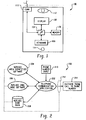
- Fig. 2 is a structure block diagram of a phone number replace code system 200 that may be implemented in the mobile device 100 of Fig. 1 , or in any other telephone communication device, such as a desktop phone system connected to a Public Switched Telephone Network (PSTN) system, or a mobile device operable to communication over a PSTN system.
- the phone number replace code system 200 comprises a telephone communication application 202, a service area identifier software 204, a replace code mode software 206, and replace code data 208.
- Some national numbering plans have implemented "replace codes" for particular phone numbers, e.g., toll-free numbers.
- Each national numbering plan may define its own replace codes.
- the NANP numbering plan for example, has designated the replace codes 880, 881, and 882 for the toll-free codes 800, 877, and 888, respectively.
- the caller pays the same international call charge as for a standard call.
- the call to the number modified by the replace code is not blocked by the international carrier.
- the user of the mobile device 100 may use corresponding replace codes to place the phone call.
- the replace code system 200 is operable to automatically insert replace codes for a phone number depending on whether the phone number corresponds to a national numbering plan for the service area in which the mobile device 100 is operating.
- the telephone communication application 202 is an application operative to place telephone calls in response to a phone number input 210.
- the telephone communication application 202 may comprise corresponding software and/or hardware that facilitates mobile device telephony functions.
- the service area identifier software 204 is operative to determine whether the phone number input 210 corresponds to the national numbering plan of the current service area in which the mobile device 100 is operating.
- the replace code data 208 is accessed to replace a subset of the phone number input 210 with corresponding replace code numbers, as indicated by the control loop 212.
- Function block 214 is then called to initiate a phone call to the phone number.
- the phone number corresponding to function block 214 may be the phone number input 210, or the phone number as modified with a corresponding replace code number.
- the service area identifier software 204 may comprise processor executable instructions stored on a processor readable medium and is operable to determine the current service area in which the mobile device 100 is operating.
- the service area of the mobile device 100 may be determined by a system identifier that is broadcast by the wireless network in communication with the mobile device 100.
- a Location Area Identity (LAI) is continuously transmitted over a Broadcast Control Channel (BCCH).
- the LAI uniquely identifies a Location Area (LA) within any Public Land Mobile Network (PLMN), and comprises a Mobile Country Code (MCC), a Mobile Network Code (MNC) and a Location Area Code (LAC).
- MCC Mobile Country Code
- MNC Mobile Network Code
- LAC Location Area Code
- the MCC is a three digit number uniquely identifying a given country, and the MNC is either a two or three digit number used to uniquely identify a given network from within a specified country.
- the service area identifier module 204 may determine the service area in which the mobile device 100 is operating.
- the service area identifier software 204 may be operable to determine if the current service area in which the mobile device 100 is operating is the same service area from where wireless service for the mobile device 100 is provided.
- each mobile device 100 includes a Subscriber Identity Module (SIM).
- SIM Subscriber Identity Module
- Each SIM has stored therein an International Mobile Subscriber Identity (IMSI) identifier.
- IMSI is a unique identifier allocated to each mobile subscriber in a GSM network and comprises an MCC, and MNC, and a Mobile Station Identification Number (MSIN).
- the MCC in the IMSI corresponds to the country in which wireless service for the mobile device 100 is provided.
- the service area identifier software 204 can determine if the current service area in which the mobile device 100 is operating is the same service area from where wireless service for the mobile device 100 is provided.
- the service area identifier software 204 may be operable to receive a user input comprising indicia of the service area in which the mobile device 100 is operating. For example, the user of the mobile device 100 may select from a list of countries the current country in which the mobile device 100 is operating. Alternatively, the user of the mobile device 100 may select an "Out of Home Country” or "Out of Home Numbering Plan” mode. The "Out of Home Country” mode may be selected if the user of the mobile device is away from his home country.
- the "Out of Home Numbering Plan" mode may be selected if the user of the mobile device is in a country that has a different national numbering plan than the numbering plan in which wireless service is provided, e.g., if the user lives in a NANP country and travels to the United Kingdom, the user may select the "Out of Home Numbering Plan" mode.
- the replace code mode software 204 may comprise processor executable instructions stored on a processor readable medium and is operable to cause the mobile device 100 to automatically insert replace codes whenever a corresponding number is input, regardless of the geographic location of the mobile device 100.
- the replace code mode software 204 may be activated by a person who travels frequently; for example, an employee of a company may program into the mobile device 100 the company's toll-free number, and then activate the replace code mode to automatically insert the corresponding replace code for the company's toll-free number.
- the replace code data 208 comprises data related to replace codes for particular national numbering plans.
- the replace code data 208 may comprise the toll-free replace codes for NANP toll-free numbers. Additional replace codes for NANP numbers and other national numbering plans may also be stored for other such national numbering plans implementing replace codes.
- the mobile device 100 may be operable to automatically implement replace codes for a plurality of national numbering plans if such data is stored in the mobile device 100 memory. For example, if a user of the mobile device 100 places a call to the United States while in the United Kingdom, NANP replace codes, as applicable, can be used. Likewise, if the user places a call from the United States to a European country, replace codes for that European country, if designated and applicable to the number called, can be used.
- the replace code data 208 may also store the particular types of national numbering plans for service areas. Defining service areas by number plans facilitates the implementation of replace codes based on the particular numbering plan of the service area rather than the particular country in which the mobile device 100 is operating. For example, the United States and Canada are NANP countries, while the United Kingdom is not. Accordingly, replace codes may not be required for a NANP toll-free number when the mobile device 100 is operating in the United States and Canada, but may be required when operating in the United Kingdom. Thus, the automatic implementation of replace codes may be activated by determining the particular numbering plan of the service area in which the mobile device 100 is operating, rather than the country.
- the replace code data may store additional information related to intra-numbering plan toll charges and implement replace codes according to the intra-numbering plan toll charges.
- Fig. 3 is a flow diagram 300 for determining a current service area in which a mobile device is operating.
- the mobile device receives a system identifier from the wireless network.
- a system identifier from a wireless network includes service area indicia, such as a MCC or MNC.
- the system identifier is interrogated by the mobile device to determine the current service area in which the mobile device is operating.
- the current service area indicia are stored in the mobile device memory.
- Fig. 4 is a flow diagram 310 for determining a current service area in which a mobile device is operating based on user input. This process may be implemented if the user desires to manually provide indicia of the current service area for the mobile device.
- the mobile device receives user input indicia of the current service area in which the mobile device is operating.
- the user input indicia may specify the current service area, e.g., Germany, United Kingdom, United States, etc.
- the user input indicia may specify that the current service area is not the home service area from which the mobile device receives wireless service, e.g., if the mobile device service provider is located in the United States, and the user will be travelling extensively in Europe, the user may elect to specify that the current service area is not the United States rather than frequently updating the mobile device during travel.
- the latter option of specifying that the current service area is not the home service area may be useful for the case in which the mobile device utilizes replace codes for the home service area only.
- automatic implementation of the replaces codes may be activated by specifying that the mobile device is not operating in the home service area, e.g., not in Canada, or not in the United States, or not in a NANP country.
- Figs. 5 - 9 are flow diagrams for automatically implementing replace codes in phone numbers and initiating phone calls.
- Flow diagram 320 of Fig. 5 implements replace codes based on the national numbering plan of the current service area.
- the mobile device receives a phone number as input. The phone number input may be received by the user manually entering the phone number, or by selecting a contact in an address book, and the like.
- Step 324 determines if the phone number corresponds to the national numbering plan of the current service area. The determination may be made comparing the numbering plan of the current service area to the numbering plan to which the phone number corresponds, or may be made by comparing the country of the current service area to the country to which the phone number corresponds. For example, the country code of the phone number may be interrogated to determine the country or national numbering plan to which the phone number corresponds.
- the replace code data 208 may be interrogated to determine if any intra-numbering plan toll charges apply, as shown in optional step 326.
- the mobile device may initiate the phone call to the phone number as input, as shown in step 328.
- step 330 determines if the phone number has a corresponding replace code for a subset of the phone number. If the phone number does not have a corresponding replace code for a subset of the phone number, e.g., the phone number is a direct dial to a non-toll-free number, then the mobile device may initiate the phone call to the phone number as input, as shown in step 328.
- step 332 the subset of the input phone number is replaced with the corresponding replace code to obtain a replace code number.
- step 334 the mobile device initiates a phone call to the replace code phone number.
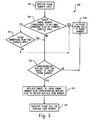
- Flow diagram 340 of Fig. 6 implements replace codes based on the country of the current service area.
- the mobile device receives a phone number input.
- the phone number input may be received by the user manually entering the phone number, or by selecting a contact in an address book, and the like.
- Step 344 determines if the country called is the same as the country of the current service area. The determination may be made comparing the country of the current service area to the country to which the phone number corresponds. For example, the country code of the phone number may be interrogated to determine the country called, and the country called may be compared to the country identified by the wireless network currently providing service to the mobile device. Alternatively, the country called may be compared to a country that the user has manually specified as the current service area of the mobile device.
- step 346 determines if the phone number has a corresponding replace code for a subset of the phone number. If the phone number does not have a corresponding replace code for a subset of the phone number, e.g., the phone number is a direct dial to a non-toll-free number, then the mobile device may initiate the phone call to the input phone number, as shown in step 346.
- step 350 the subset of the input phone number is replaced with the corresponding replace code to obtain a replace code number.
- the mobile device initiates a phone call to the replace code phone number.
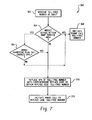
- Flow diagram 360 of Fig. 7 implements replace codes for toll-free numbers based on a NANP service area.
- the mobile device receives a NANP toll-free phone number as input.
- the phone number may be received by the user manually entering the phone number, or by selecting a contact in an address book, and the like.
- Step 364 determines if the mobile device is within a NANP service area. The determination may be made by comparing the country of the current service area to a list of NANP countries or by a user-specified input. If it is determined that the mobile device is within a NANP service area, then the replace code data 208 may optionally be interrogated to determine if any intra-numbering plan toll charges apply, as shown in optional step 366.
- the mobile device may initiate the phone call to the phone number as input, as shown in step 368.
- step 370 replaces a subset of the phone number with the corresponding replace code to obtain a replace code number.
- step 372 the mobile device initiates a phone call to the replace code phone number.
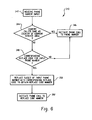
- Flow diagram 380 of Fig. 8 implements replace codes based on a replace code mode.
- the mobile device receives a phone number as input.
- the phone number may be received by the user manually entering the phone number, or by selecting a contact in an address book, and the like.
- Step 384 determines if the mobile device is in a replace code mode.
- the replace code mode may be activated by a user of the mobile device. Alternatively, the replace code mode may be activated automatically when the mobile device determines that it is operating in a different country than the home country of the mobile device, or by similar decision processes.
- step 386 determines if the phone number has a corresponding replace code for a subset of the phone number. If the phone number does not have a corresponding replace code for a subset of the phone number, then the mobile device may initiate the phone call to the phone number, as shown in step 390.
- step 392 the subset of the phone number is replaced with the corresponding replace code to obtain a replace code number.
- step 394 the mobile device initiates a phone call to the replace code phone number.
- Flow diagram 400 of Fig. 9 implements replace codes based on call connections.
- the mobile device receives a phone number as input.
- the phone number may be received by the user manually entering the phone number, or by selecting a contact in an address book, and the like.
- Step 404 initiates a phone call to the phone number, and step 406 determines if the phone call is connected. The determination may be made automatically, such as by monitoring for the connection, or by a user input, such as by the user selecting a key if the call is not connected.
- step 408 determines if the phone number has a corresponding replace code for a subset of the phone number. If the phone number does not have a corresponding replace code for a subset of the phone number, then the process ends.
- step 410 the subset of the phone number is replaced with the corresponding replace code to obtain a replace code number.
- step 412 the mobile device initiates a phone call to the replace code phone number.
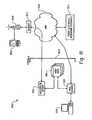
- the mobile device 100 of Fig. 1 may be used in a number of wireless systems, such as the example system 2000 of Fig. 10 .
- the example redirector system 2000 of Fig. 10 redirects electronic messages to and from a mobile communication device 2020.
- the example redirection system 2000 includes an enterprise server 2004, a mail server 2002, a storage medium 2006 for electronic messaging (e.g., e-mail) account data, and a wireless gateway 2016. Also illustrated are the mobile communication device 2020, a wireless network 2018, a wide area network (WAN) 2012, a firewall 2010, a desktop client 2008, and one or more other electronic messaging systems 2014.
- WAN wide area network
- the mail server 2002 may include electronic messaging software executing on a computer within a local area computer network (LAN).
- the mail server 2002 is coupled to local network devices 2004, 2006, 2008 via the LAN, and is coupled to remote network devices 2014, 2016 via the WAN 2012.
- the LAN and WAN 2012 may be separated by a firewall 2010.
- the mail server 2002 maintains an electronic message account within the electronic message account database 2006 for each desktop client 2008 in the LAN.
- the electronic message account database 2006 may be one or more storage devices coupled to the mail server 2002, and may be included within the same network device as the mail server 2002 or in one or more separate devices within the LAN.
- the desktop client 2008 may be one of a plurality of computers (e.g., personal computers, terminals, laptop computers, or other processing devices) coupled to the mail server 2002 via the LAN that executes electronic messaging software to send and receive electronic messages via the mail server.
- Electronic messages sent from the desktop client 2008 are stored by the mail server 2002 in an outgoing message storage location (an "outbox") within a corresponding electronic message account 2006. If the outgoing message is addressed to an electronic message account within the LAN, then the mail server 2002 delivers the message to an incoming message storage location (an "inbox") in the appropriate electronic message account 2006. If the outgoing message is addressed to an electronic message account in another electronic messaging system 2014, however, then the message is delivered via the WAN 2012. Similarly, incoming electronic messages addressed to the electronic message account 2006 is received by the mail server 2002 and stored to the electronic message account database 2006 within the appropriate incoming message storage location ("inbox"). The incoming electronic message may then be retrieved from the electronic message account 2006 by the desktop client 2008, or may be automatically pushed to the desktop client 2008 by the mail server 2002.
- an outgoing message storage location an "outbox"
- the enterprise server 2004 may include electronic message redirection software executing on a computer within the LAN.
- the enterprise server 2004 is operational to redirect electronic messages from the electronic message account 2006 to the mobile communication device 2020 and to place messages sent from the mobile communication device 2020 into the electronic message account 2006 for delivery by the mail server 2002.
- the enterprise server 2004 stores mobile device information, such as a wireless identification (e.g., a PIN), used to communicate with the mobile communication device 2020.
- the enterprise server 2004 may, for example, communicate with the mobile communication device 2020 using a direct TCP/IP level connection with the wireless gateway 2016, which provides an interface between the WAN 2012 and the wireless network 2018.
- the electronic message is detected by the enterprise server 2004, and a copy of the message and any necessary mobile device information are sent over the WAN 2012 to the wireless gateway 2016.
- the enterprise server 2004 may encapsulate a copy of the message into one or more data packets along with a wireless identification (e.g., a PIN) for the mobile communication device 2020, and transmit the data packet(s) to the wireless gateway 2016 over a direct TCP/IP level connection.
- the wireless gateway 2016 may then use the wireless identification and/or other mobile device information to transmit the data packet(s) containing the electronic message over the wireless network 2018 to the mobile communication device 2020.
- Electronic messages sent from the mobile communication device 2020 may be encapsulated into one or more data packets along with a network identification for the enterprise server 2004 and then transmitted over the wireless network 2018 to the wireless gateway 2016.
- the wireless gateway 2016 may use the network identification for the enterprise server 2004 to forward the data packet(s) over the WAN 2012 to the enterprise server 2004, preferably via a direct TCP/IP level connection.
- the enterprise server 2004 Upon receiving the data packet(s) from the wireless gateway 2016, the enterprise server 2004 places the enclosed electronic message into the outbox of the associated electronic message account 2006.
- the mail server 2002 detects the electronic message in the outbox and delivers the message, as described above.
- Security may be maintained outside of the firewall 2010 by encrypting all electronic messages sent between the enterprise server 2004 and the mobile communication device 2020. For instance, an electronic message to be redirected to the mobile communication device 2020 may be encrypted and compressed by the enterprise server 2004, and the encrypted message may then be encapsulated into one or more data packets for delivery to the mobile communication device 2020. To maintain security, the electronic message may remain encrypted over the entire communication path 2016, 2018, and 2012 from the enterprise server 2004 to the mobile communication device 2020. Similarly, electronic messages sent from the mobile communication device 2020 may be encrypted and compressed by the mobile communication device 2020 before being packetized and transmitted to the enterprise server 2004, and may remain encrypted over the entire communication path 2016, 2018, 2012 from the mobile communication device 2020 to the enterprise server 2004.
- the enterprise server 2004 may include a communication subsystem, a memory subsystem and a processing subsystem.
- the communication subsystem may be operable to communicate with the wireless gateway 2016 over the WAN 2012.
- the memory subsystem may be operable to store data and program information.
- the processing subsystem may be operable to store and retrieve data in the memory subsystem and execute programs stored in the memory subsystem, and to cause the communication subsystem to transmit and receive information over the WAN 2012.
- Fig. 11 is a block diagram illustrating an example mobile communication device 2100.
- the block diagram for the example mobile communication device 2100 can be considered a more detailed block diagram of the mobile device 100 of Fig. 1 .
- the mobile device 2100 includes a processing subsystem 2138, a communications subsystem 2111, a short-range communications subsystem 2140, and a memory subsystem 2124, 2126, and various other device subsystems and/or software modules 2142.
- the mobile device 2100 also includes a user interface, which may include a display 2122, a serial port 2130, keyboard 2132, a speaker 2134, a microphone 2136, one or more auxiliary input/output devices 2128, and/or other user interface devices.
- the processing subsystem 2138 controls the overall operation of the mobile device 2100.
- Operating system software executed by the processing subsystem 2138 may be stored in a persistent store, such as a flash memory 2124, but may also be stored in other types of memory devices in the memory subsystem, such as a read only memory (ROM) or similar storage element.
- system software, specific device applications, or parts thereof may be temporarily loaded into a volatile store, such as a random access memory (RAM) 2126.
- Communication signals received by the mobile device 2100 may also be stored to RAM 2126.
- the processing subsystem 2138 in addition to its operating system functions, enables execution of software applications 2124 on the device 2100.
- a predetermined set of applications that control basic device operations, such as data and voice communications, may be installed on the device 2100 during manufacture, or subsequent to manufacture.
- a personal information manager (PIM) application including an electronic messaging application, may be installed on the device.
- the PIM may, for example, be operable to organize and manage data items, such as e-mail, calendar events, voice mails, appointments, and task items.
- the PIM application may also be operable to send and receive data items via the wireless network 2119.
- the communication subsystem 2111 includes a receiver 2112, a transmitter 2114 and one or more antennas 2116, 2118.
- the communication subsystem 2111 also includes a processing module, such as a digital signal processor (DSP) 2120 or other processing device(s), and local oscillators (LOs) 2113.
- DSP digital signal processor
- LOs local oscillators
- a mobile device 2100 may include a communication subsystem 2111 designed to operate within the MobitexTM mobile communication system, the DataTACTM mobile communication system, a GSM network, a GPRS network, a UMTS network, and/or an EDGE network.
- a communication subsystem 2111 designed to operate within the MobitexTM mobile communication system, the DataTACTM mobile communication system, a GSM network, a GPRS network, a UMTS network, and/or an EDGE network.
- Network access requirements vary depending upon the type of communication system. For example, in the Mobitex and DataTAC networks, mobile devices are registered on the network using a unique personal identification number or PIN associated with each device. In UMTS and GSM/GPRS networks, however, network access is associated with a subscriber or user of a device or with the subscription that the user has been provided. A GPRS device therefore requires a subscriber identity module, commonly referred to as a SIM card, in order to operate on a GSM/GPRS network.
- SIM card subscriber identity module
- the mobile device 2100 may send and receive communication signals over the communication network 2119.
- Signals received by the antenna 2116 from the communication network 2119 are routed to the receiver 2112, which provides signal amplification, frequency down conversion, filtering, channel selection, etc., and may also provide analog to digital conversion. Analog-to-digital conversion of the received signal allows the DSP to perform more complex communication functions, such as demodulation and decoding.
- signals to be transmitted to the network 2119 are processed (e.g., modulated and encoded) by the DSP 2120 and are then provided to the transmitter 2114 for digital to analog conversion, frequency up conversion, filtering, amplification and transmission to the communication network 2119 (or networks) via the antenna 2118.
- the DSP 2120 provides for receiver 2112 and transmitter 2114 control. For example, gains applied to communication signals in the receiver 2112 and transmitter 2114 may be adaptively controlled through automatic gain control algorithms implemented in the DSP 2120.
- a received signal such as a text message or web page download
- the communication subsystem 2111 input to the processing device 2138.
- the received signal is then further processed by the processing device 2138 for output to a display 2122, or alternatively to some other auxiliary I/O device 2128.
- a device user may also compose data items, such as e-mail messages, using a keyboard 2138 and/or some other auxiliary I/O device 2128, such as a touchpad, a rocker switch, a thumb-wheel, or some other type of input device.
- the composed data items may then be transmitted over the communication network 2119 via the communication subsystem 2111.
- a voice communication mode In a voice communication mode, overall operation of the device is substantially similar to the data communication mode, except that received signals are output to a speaker 2134, and signals for transmission are generated by a microphone 2136.
- Alternative voice or audio I/O subsystems such as a voice message recording subsystem, may also be implemented on the device 2100.
- the display 2122 may also be utilized in voice communication mode, for example, to display the identity of a calling party, the duration of a voice call, or other voice call related information.
- the short-range communications subsystem 2140 enables communication between the mobile device 2100 and other proximate systems or devices, which need not necessarily be similar devices.
- the short-range communications subsystem 2140 may include an infrared device and associated circuits and components, or a BluetoothTM communication module to provide for communication with similarly-enabled systems and devices.
- the apparatus, methods, flow diagrams, and structure block diagrams described in this patent document may be implemented in the mobile devices described herein by mobile device program code comprising program instructions that are executable by the mobile device processing subsystem. Other implementations may also be used, however, such as firmware or even appropriately designed hardware configured to carry out the methods and flow diagrams described in this patent document. Additionally, the flow diagrams and structure block diagrams described in this patent document, which describe particular methods and/or corresponding acts in support of steps and corresponding functions in support of disclosed structural means, may also be utilized to implement corresponding software structures and algorithms, and equivalents thereof.
- mobile devices may use the systems and methods described herein, including GSM devices, CDMA devices, iDEN devices, TDMA devices, analog devices, WCDMA devices, or other wireless devices.
- the systems and methods described herein may be used to facilitate voice and/or data calls.
- the mobile device may also use wired communications.
- the apparatus and methods described in this patent document may be implemented in other computing devices, such as a desktop phone, laptop computer with telephony capabilities, a desktop computer with telephony capabilities, or any other electronic device operable to communication over one or more wired and/or wireless telephone networks.
Landscapes
- Engineering & Computer Science (AREA)
- Signal Processing (AREA)
- Computer Networks & Wireless Communication (AREA)
- Computer Security & Cryptography (AREA)
- Business, Economics & Management (AREA)
- Accounting & Taxation (AREA)
- Mobile Radio Communication Systems (AREA)
- Telephone Function (AREA)
Claims (14)
- Dispositif de communication téléphonique (100) exploitable pour initier et recevoir des communications sur un ou plusieurs réseaux de communication, le dispositif de communication téléphonique comprenant :un sous-système de traitement (104), un sous-système de mémoire (106), un sous-système d'affichage (102), un sous-système de communication (110), et un sous-système d'entrée/sortie (112, 114), le sous-système de traitement (104) couplé au sous-système de mémoire (106), sous-système d'affichage (102), sous-système d'entrée/sortie (112, 114) et sous-système de communication (110), et exploitable pour stocker et récupérer des données dans le sous-système de mémoire (106), pour exécuter des instructions stockées dans le sous-système de mémoire (106), recevoir des données d'entrée en provenance du sous-système d'entrée/sortie (112, 114), et pour amener le sous-système de communication (110) à transmettre et recevoir des données sur le réseau de communication ; etun code de programme de dispositif de communication téléphonique comprenant des instructions de programme exécutables par le sous-système de traitement (104) et stockées dans le sous-système de mémoire (106) et lors de l'exécution amènent le dispositif de communication téléphonique à :recevoir un numéro de téléphone sans frais comme entrée pour initier un appel téléphonique ;déterminer si le numéro de téléphone sans frais correspond à un plan de numérotage national de la zone de service actuelle desservant le dispositif de communication téléphonique ;lors de la détermination selon laquelle le numéro de téléphone sans frais correspond au plan de numérotage national de la zone de service actuelle desservant le dispositif de communication téléphonique (100), déterminer si des taxes interurbaines intra-plan de numérotage s'appliquent et initier un appel téléphonique vers le numéro de téléphone sans frais si aucune taxe interurbaine intra-plan de numérotage ne s'applique ;lors de la détermination selon laquelle le numéro de téléphone sans frais ne correspond pas au plan de numérotage national de la zone de service actuelle desservant le dispositif de communication téléphonique (100) ou que des taxes interurbaines intra-plan de numérotage s'appliquent, déterminer si le numéro de téléphone sans frais a un code de remplacement associé pour un quelconque sous-ensemble du numéro de téléphone sans frais ; etlors de la détermination selon laquelle le numéro de téléphone sans frais a un code de remplacement associé pour un quelconque sous-ensemble du numéro de téléphone sans frais, remplacer le quelconque sous-ensemble du numéro de téléphone sans frais par le code de remplacement correspondant pour obtenir un numéro de code de remplacement et initier un appel téléphonique vers le numéro de code de remplacement.
- Dispositif de communication téléphonique selon la revendication 1, dans lequel les instructions de programme exécutables par le dispositif de communication téléphonique qui amènent le dispositif de communication téléphonique à déterminer si le numéro de téléphone sans frais correspond à un plan de numérotage national de la zone de service actuelle desservant le dispositif de communication téléphonique comprennent des instructions de programme qui lors de l'exécution amènent le dispositif de communication téléphonique à effectuer la détermination sur la base d'un indicatif de pays.
- Dispositif de communication téléphonique selon la revendication 2, dans lequel l'indicatif de pays est reçu à partir d'une entrée d'utilisateur.
- Dispositif de communication téléphonique selon la revendication 2, dans lequel le dispositif de communication téléphonique est un dispositif mobile, et dans lequel l'indicatif de pays est reçu en provenance d'un réseau sans fil en communication avec le dispositif mobile.
- Dispositif de communication téléphonique selon l'une des revendications 1 à 4, dans lequel les instructions de programme exécutables par le dispositif de communication téléphonique qui amènent le dispositif de communication téléphonique à déterminer si le numéro de téléphone sans frais correspond à un plan de numérotage national de la zone de service actuelle desservant le dispositif de communication téléphonique comprennent des instructions de programme qui lors de l'exécution amènent le dispositif de communication téléphonique à fonctionner dans un mode de code de remplacement et lors d'un tel fonctionnement déterminer automatiquement si le numéro de téléphone sans frais a un code de remplacement associé pour un quelconque sous-ensemble du numéro de téléphone sans frais et lors de la détermination selon laquelle le numéro de téléphone sans frais a un code de remplacement associé pour un quelconque sous-ensemble du numéro de téléphone sans frais, remplacer le quelconque sous-ensemble du numéro de téléphone sans frais par le code de remplacement correspondant pour obtenir un numéro de code de remplacement et initier un appel téléphonique vers le numéro de code de remplacement.
- Dispositif de communication téléphonique selon l'une des revendications 1 à 5, dans lequel les instructions de programme exécutables par le dispositif de communication téléphonique qui amènent le dispositif de communication téléphonique à déterminer si le numéro de téléphone sans frais a un code de remplacement associé pour un quelconque sous-ensemble du numéro de téléphone sans frais comprennent des instructions de programme qui lors de l'exécution amènent le dispositif de communication téléphonique à :déterminer le plan de numérotage national auquel le numéro de téléphone sans frais correspond ;identifier des codes de remplacement correspondant au plan de numérotage national auquel le numéro de téléphone sans frais correspond ; eteffectuer la détermination de si le numéro de téléphone sans frais a un code de remplacement associé pour un quelconque sous-ensemble du numéro de téléphone sans frais sur la base de codes de remplacement identifiés.
- Dispositif de communication téléphonique selon l'une des revendications 1 à 6, dans lequel le dispositif de communication téléphonique est un dispositif mobile.
- Dispositif de communication téléphonique selon l'une des revendications 1 à 7, comprenant en outre un code de programme de dispositif de communication téléphonique comprenant des instructions de programme exécutables par le sous-système de traitement et stockées dans le sous-système de mémoire et lors de l'exécution amènent le dispositif de communication téléphonique à :déterminer si l'appel téléphonique initié vers le numéro de téléphone sans frais a connecté ;lors de la détermination selon laquelle l'appel téléphonique initié vers le numéro de téléphone sans frais n'a pas connecté, déterminer si le numéro de téléphone sans frais a un code de remplacement associé pour un quelconque sous-ensemble du numéro de téléphone sans frais ; etlors de la détermination selon laquelle le numéro de téléphone sans frais a un code de remplacement associé pour un quelconque sous-ensemble du numéro de téléphone sans frais, remplacer le quelconque sous-ensemble du numéro de téléphone sans frais par le code de remplacement correspondant pour obtenir un numéro de code de remplacement et initier un appel téléphonique vers le numéro de code de remplacement.
- Dispositif de communication téléphonique selon la revendication 8, dans lequel la détermination est effectuée sur la base d'une entrée d'utilisateur.
- Procédé mis en oeuvre par processeur consistant à passer un appel téléphonique à partir d'un dispositif de communication téléphonique, dans lequel le dispositif de communication téléphonique comprend un sous-système de traitement, le procédé comprenant les étapes consistant à :recevoir un numéro de téléphone sans frais comme entrée pour initier un appel téléphonique ; etdéterminer si le numéro de téléphone sans frais requiert une modification par un code de remplacement associé, où la détermination de si le numéro de téléphone sans frais requiert une modification par un code de remplacement associé comprend la détermination de si le numéro de téléphone sans frais correspond à un plan de numérotage national de la zone de service actuelle desservant le dispositif de communication téléphonique ;lors de la détermination selon laquelle le numéro de téléphone sans frais correspond au plan de numérotage national de la zone de service actuelle desservant le dispositif de communication téléphonique (100), déterminer si des taxes interurbaines intra-plan de numérotage s'appliquent et initier un appel téléphonique depuis le dispositif de communication téléphonique vers le numéro de téléphone sans frais si aucune taxe interurbaine intra-plan de numérotage ne s'applique ;lors de la détermination selon laquelle le numéro de téléphone sans frais ne correspond pas au plan de numérotage national de la zone de service actuelle desservant le dispositif de communication téléphonique (100) ou que des taxes interurbaines intra-plan de numérotage s'appliquent, déterminer si le numéro de téléphone sans frais a un code de remplacement associé pour un quelconque sous-ensemble du numéro de téléphone sans frais ; etlors de la détermination selon laquelle le numéro de téléphone sans frais a un code de remplacement associé pour un quelconque sous-ensemble du numéro de téléphone sans frais, remplacer le quelconque sous-ensemble du numéro de téléphone sans frais par le code de remplacement correspondant pour obtenir un numéro de code de remplacement et initier un appel téléphonique depuis le dispositif de communication téléphonique vers le numéro de code de remplacement.
- Procédé selon la revendication 10, dans lequel le dispositif de communication téléphonique est un dispositif mobile.
- Procédé selon la revendication 10 ou la revendication 11, dans lequel la détermination de si le numéro de téléphone sans frais requiert une modification par un code de remplacement associé comprend :la détermination de si le pays appelé est le même que le pays dans lequel le dispositif mobile fonctionne ;la détermination selon laquelle le numéro de téléphone sans frais ne requiert pas de modification par un code de remplacement associé si le pays appelé est le même que le pays dans lequel le dispositif mobile fonctionne ; etla détermination selon laquelle le numéro de téléphone sans frais requiert une modification par un code de remplacement associé si le pays appelé n'est pas le même que le pays dans lequel le dispositif mobile fonctionne.
- Procédé selon l'une des revendications 10 à 12, dans lequel la détermination de si le numéro de téléphone sans frais requiert une modification par un code de remplacement associé comprend :la détermination de si le dispositif mobile fonctionne dans un mode de code de remplacement ;la détermination selon laquelle le numéro de téléphone sans frais ne requiert pas de modification par un code de remplacement associé si le dispositif mobile ne fonctionne pas dans un mode de code de remplacement ; etla détermination selon laquelle le numéro dé téléphone sans frais requiert une modification par un code de remplacement associé si le dispositif mobile fonctionne dans un mode de code de remplacement.
- Dispositif de communication téléphonique selon l'une des revendications 1 à 9, comprenant en outre :des moyens pour déterminer si un numéro de téléphone sans frais requiert une modification par un code de remplacement associé ;des moyens pour passer un appel depuis le dispositif de communication téléphonique vers le numéro de code de remplacement lors de la détermination selon laquelle le numéro de téléphone sans frais ne requiert pas de modification par un code de remplacement associé ; etdes moyens pour modifier le numéro de téléphone sans frais par le code de remplacer afin d'obtenir un numéro de code de remplacement et pour passer un appel depuis le dispositif de communication téléphonique vers le numéro de code de remplacement lors de la détermination selon laquelle le numéro de téléphone sans frais requiert une modification par un code de remplacement associé.
Priority Applications (3)
| Application Number | Priority Date | Filing Date | Title |
|---|---|---|---|
| EP04004269.9A EP1569424B1 (fr) | 2004-02-25 | 2004-02-25 | Système et procédé de remplacement du code d' un numero de téléphone |
| CA2498584A CA2498584C (fr) | 2004-02-25 | 2005-02-25 | Systeme de code et methode de remplacement des numeros telephoniques |
| HK05110997.7A HK1079639B (en) | 2005-12-01 | Phone number replace code system and method |
Applications Claiming Priority (1)
| Application Number | Priority Date | Filing Date | Title |
|---|---|---|---|
| EP04004269.9A EP1569424B1 (fr) | 2004-02-25 | 2004-02-25 | Système et procédé de remplacement du code d' un numero de téléphone |
Publications (2)
| Publication Number | Publication Date |
|---|---|
| EP1569424A1 EP1569424A1 (fr) | 2005-08-31 |
| EP1569424B1 true EP1569424B1 (fr) | 2015-09-23 |
Family
ID=34745890
Family Applications (1)
| Application Number | Title | Priority Date | Filing Date |
|---|---|---|---|
| EP04004269.9A Expired - Lifetime EP1569424B1 (fr) | 2004-02-25 | 2004-02-25 | Système et procédé de remplacement du code d' un numero de téléphone |
Country Status (2)
| Country | Link |
|---|---|
| EP (1) | EP1569424B1 (fr) |
| CA (1) | CA2498584C (fr) |
Families Citing this family (2)
| Publication number | Priority date | Publication date | Assignee | Title |
|---|---|---|---|---|
| US6968214B2 (en) | 2004-02-25 | 2005-11-22 | Research In Motion Limited | Phone number replace code system and method |
| WO2008022646A1 (fr) * | 2006-08-22 | 2008-02-28 | Skotty Gmbh & Co. Kg | Procédé et dispositif pour l'établissement d'une connexion de communication entre un téléphone mobile et un abonné par un central téléphonique |
Family Cites Families (6)
| Publication number | Priority date | Publication date | Assignee | Title |
|---|---|---|---|---|
| US5563933A (en) | 1994-11-02 | 1996-10-08 | At&T | Method and apparatus for facilitating the completing of telephone regional toll-free calls from outside the region |
| WO1997003514A1 (fr) * | 1995-07-13 | 1997-01-30 | Kes & Bishop, Inc. | Systeme et procede d'interface utilisateur ameliorant les telecommunications |
| JP3453063B2 (ja) * | 1998-05-28 | 2003-10-06 | シャープ株式会社 | 携帯型電話機 |
| GB2377857A (en) | 2001-07-19 | 2003-01-22 | Inventec Appliances Corp | Method for dialling an international call from a roaming mobile |
| US20030190037A1 (en) * | 2002-04-04 | 2003-10-09 | John Hruska | Method for automated dialing of telephone number prefixes |
| JP2003333165A (ja) * | 2002-05-10 | 2003-11-21 | Ntt Docomo Inc | 国際ダイヤル操作機能付き移動端末、国際ダイヤルプログラム、及び、国際ダイヤルシステム |
-
2004
- 2004-02-25 EP EP04004269.9A patent/EP1569424B1/fr not_active Expired - Lifetime
-
2005
- 2005-02-25 CA CA2498584A patent/CA2498584C/fr not_active Expired - Fee Related
Also Published As
| Publication number | Publication date |
|---|---|
| HK1079639A1 (en) | 2006-04-07 |
| EP1569424A1 (fr) | 2005-08-31 |
| CA2498584C (fr) | 2010-04-06 |
| CA2498584A1 (fr) | 2005-08-25 |
Similar Documents
| Publication | Publication Date | Title |
|---|---|---|
| US7489950B2 (en) | Phone number replace code system and method | |
| US6295447B1 (en) | Method and system for enabling the control of execution of features in a telecommunications network | |
| US7272392B2 (en) | Connection set-up in a communication system | |
| KR100952970B1 (ko) | 네트워크 간 전기 통신 서비스를 관리하기 위한 무선 장치 | |
| US20050170854A1 (en) | Network support for multi-line mobile device | |
| US6549769B1 (en) | System and method for integrating text messaging to an outbound call system | |
| US6393274B1 (en) | Wireless telecommunication system having subscriber advanced personal service | |
| US20070111714A1 (en) | Methods and apparatus for recognizing home network provider of incoming wireless calls | |
| US6600817B1 (en) | Method and apparatus for monitoring communication connections within and across time zones | |
| US20060148458A1 (en) | Time service for telephone calls | |
| US20050113078A1 (en) | Methods, networks, and computer program products for selectively routing communications based on routing rules | |
| US20060205411A1 (en) | Apparatus and method for merging wireless telephone service with existing wired telephone equipment in a facility | |
| US8675836B2 (en) | System for establishing publicly accessible telephone numbers and methods thereof | |
| US7613471B2 (en) | Method of providing SMS callback | |
| US6646542B1 (en) | Global paging system using packet-switched digital data network and remote country designation | |
| CA2498584C (fr) | Systeme de code et methode de remplacement des numeros telephoniques | |
| HK1079639B (en) | Phone number replace code system and method | |
| US8116750B1 (en) | System and method for network control of at least one cellular telephone | |
| WO2000005858A1 (fr) | Numerotation abregee intelligente pour terminal abonne a un reseau prive | |
| WO2004057885A1 (fr) | Dispositifs et procedes servant a fournir des services de telecommunication | |
| WO2006018854A1 (fr) | Systeme et procede d'appels internationaux | |
| US20010007822A1 (en) | Paging system which a voids long distance and time dependent charges to the initiating party | |
| HK1085875A1 (en) | System and method for using a first communication over a first communication medium to establish a second communication over a second communication medium |
Legal Events
| Date | Code | Title | Description |
|---|---|---|---|
| PUAI | Public reference made under article 153(3) epc to a published international application that has entered the european phase |
Free format text: ORIGINAL CODE: 0009012 |
|
| AK | Designated contracting states |
Kind code of ref document: A1 Designated state(s): AT BE BG CH CY CZ DE DK EE ES FI FR GB GR HU IE IT LI LU MC NL PT RO SE SI SK TR |
|
| AX | Request for extension of the european patent |
Extension state: AL LT LV MK |
|
| 17P | Request for examination filed |
Effective date: 20051220 |
|
| REG | Reference to a national code |
Ref country code: HK Ref legal event code: DE Ref document number: 1079639 Country of ref document: HK |
|
| AKX | Designation fees paid |
Designated state(s): AT BE BG CH CY CZ DE DK EE ES FI FR GB GR HU IE IT LI LU MC NL PT RO SE SI SK TR |
|
| AXX | Extension fees paid |
Extension state: MK Payment date: 20051220 Extension state: LV Payment date: 20051220 Extension state: AL Payment date: 20051220 Extension state: LT Payment date: 20051220 |
|
| 17Q | First examination report despatched |
Effective date: 20100427 |
|
| RAP1 | Party data changed (applicant data changed or rights of an application transferred) |
Owner name: BLACKBERRY LIMITED |
|
| RAP1 | Party data changed (applicant data changed or rights of an application transferred) |
Owner name: BLACKBERRY LIMITED |
|
| GRAP | Despatch of communication of intention to grant a patent |
Free format text: ORIGINAL CODE: EPIDOSNIGR1 |
|
| INTG | Intention to grant announced |
Effective date: 20150410 |
|
| GRAS | Grant fee paid |
Free format text: ORIGINAL CODE: EPIDOSNIGR3 |
|
| GRAA | (expected) grant |
Free format text: ORIGINAL CODE: 0009210 |
|
| AK | Designated contracting states |
Kind code of ref document: B1 Designated state(s): AT BE BG CH CY CZ DE DK EE ES FI FR GB GR HU IE IT LI LU MC NL PT RO SE SI SK TR |
|
| AX | Request for extension of the european patent |
Extension state: AL LT LV MK |
|
| REG | Reference to a national code |
Ref country code: GB Ref legal event code: FG4D |
|
| REG | Reference to a national code |
Ref country code: CH Ref legal event code: EP |
|
| REG | Reference to a national code |
Ref country code: AT Ref legal event code: REF Ref document number: 751752 Country of ref document: AT Kind code of ref document: T Effective date: 20151015 |
|
| REG | Reference to a national code |
Ref country code: IE Ref legal event code: FG4D |
|
| REG | Reference to a national code |
Ref country code: DE Ref legal event code: R096 Ref document number: 602004047932 Country of ref document: DE |
|
| REG | Reference to a national code |
Ref country code: NL Ref legal event code: MP Effective date: 20150923 |
|
| PG25 | Lapsed in a contracting state [announced via postgrant information from national office to epo] |
Ref country code: FI Free format text: LAPSE BECAUSE OF FAILURE TO SUBMIT A TRANSLATION OF THE DESCRIPTION OR TO PAY THE FEE WITHIN THE PRESCRIBED TIME-LIMIT Effective date: 20150923 Ref country code: GR Free format text: LAPSE BECAUSE OF FAILURE TO SUBMIT A TRANSLATION OF THE DESCRIPTION OR TO PAY THE FEE WITHIN THE PRESCRIBED TIME-LIMIT Effective date: 20151224 |
|
| REG | Reference to a national code |
Ref country code: LT Ref legal event code: MG9D |
|
| REG | Reference to a national code |
Ref country code: AT Ref legal event code: MK05 Ref document number: 751752 Country of ref document: AT Kind code of ref document: T Effective date: 20150923 |
|
| REG | Reference to a national code |
Ref country code: FR Ref legal event code: PLFP Year of fee payment: 13 |
|
| REG | Reference to a national code |
Ref country code: HK Ref legal event code: GR Ref document number: 1079639 Country of ref document: HK |
|
| PG25 | Lapsed in a contracting state [announced via postgrant information from national office to epo] |
Ref country code: SE Free format text: LAPSE BECAUSE OF FAILURE TO SUBMIT A TRANSLATION OF THE DESCRIPTION OR TO PAY THE FEE WITHIN THE PRESCRIBED TIME-LIMIT Effective date: 20150923 |
|
| PG25 | Lapsed in a contracting state [announced via postgrant information from national office to epo] |
Ref country code: NL Free format text: LAPSE BECAUSE OF FAILURE TO SUBMIT A TRANSLATION OF THE DESCRIPTION OR TO PAY THE FEE WITHIN THE PRESCRIBED TIME-LIMIT Effective date: 20150923 |
|
| PG25 | Lapsed in a contracting state [announced via postgrant information from national office to epo] |
Ref country code: CZ Free format text: LAPSE BECAUSE OF FAILURE TO SUBMIT A TRANSLATION OF THE DESCRIPTION OR TO PAY THE FEE WITHIN THE PRESCRIBED TIME-LIMIT Effective date: 20150923 Ref country code: SK Free format text: LAPSE BECAUSE OF FAILURE TO SUBMIT A TRANSLATION OF THE DESCRIPTION OR TO PAY THE FEE WITHIN THE PRESCRIBED TIME-LIMIT Effective date: 20150923 Ref country code: ES Free format text: LAPSE BECAUSE OF FAILURE TO SUBMIT A TRANSLATION OF THE DESCRIPTION OR TO PAY THE FEE WITHIN THE PRESCRIBED TIME-LIMIT Effective date: 20150923 Ref country code: IT Free format text: LAPSE BECAUSE OF FAILURE TO SUBMIT A TRANSLATION OF THE DESCRIPTION OR TO PAY THE FEE WITHIN THE PRESCRIBED TIME-LIMIT Effective date: 20150923 Ref country code: EE Free format text: LAPSE BECAUSE OF FAILURE TO SUBMIT A TRANSLATION OF THE DESCRIPTION OR TO PAY THE FEE WITHIN THE PRESCRIBED TIME-LIMIT Effective date: 20150923 |
|
| PGFP | Annual fee paid to national office [announced via postgrant information from national office to epo] |
Ref country code: DE Payment date: 20160226 Year of fee payment: 13 |
|
| PG25 | Lapsed in a contracting state [announced via postgrant information from national office to epo] |
Ref country code: RO Free format text: LAPSE BECAUSE OF FAILURE TO SUBMIT A TRANSLATION OF THE DESCRIPTION OR TO PAY THE FEE WITHIN THE PRESCRIBED TIME-LIMIT Effective date: 20150923 Ref country code: PT Free format text: LAPSE BECAUSE OF FAILURE TO SUBMIT A TRANSLATION OF THE DESCRIPTION OR TO PAY THE FEE WITHIN THE PRESCRIBED TIME-LIMIT Effective date: 20160125 Ref country code: AT Free format text: LAPSE BECAUSE OF FAILURE TO SUBMIT A TRANSLATION OF THE DESCRIPTION OR TO PAY THE FEE WITHIN THE PRESCRIBED TIME-LIMIT Effective date: 20150923 Ref country code: BE Free format text: LAPSE BECAUSE OF NON-PAYMENT OF DUE FEES Effective date: 20160229 |
|
| PGFP | Annual fee paid to national office [announced via postgrant information from national office to epo] |
Ref country code: FR Payment date: 20160217 Year of fee payment: 13 |
|
| REG | Reference to a national code |
Ref country code: DE Ref legal event code: R097 Ref document number: 602004047932 Country of ref document: DE |
|
| PLBE | No opposition filed within time limit |
Free format text: ORIGINAL CODE: 0009261 |
|
| STAA | Information on the status of an ep patent application or granted ep patent |
Free format text: STATUS: NO OPPOSITION FILED WITHIN TIME LIMIT |
|
| 26N | No opposition filed |
Effective date: 20160624 |
|
| PG25 | Lapsed in a contracting state [announced via postgrant information from national office to epo] |
Ref country code: DK Free format text: LAPSE BECAUSE OF FAILURE TO SUBMIT A TRANSLATION OF THE DESCRIPTION OR TO PAY THE FEE WITHIN THE PRESCRIBED TIME-LIMIT Effective date: 20150923 |
|
| PG25 | Lapsed in a contracting state [announced via postgrant information from national office to epo] |
Ref country code: MC Free format text: LAPSE BECAUSE OF FAILURE TO SUBMIT A TRANSLATION OF THE DESCRIPTION OR TO PAY THE FEE WITHIN THE PRESCRIBED TIME-LIMIT Effective date: 20150923 Ref country code: LU Free format text: LAPSE BECAUSE OF FAILURE TO SUBMIT A TRANSLATION OF THE DESCRIPTION OR TO PAY THE FEE WITHIN THE PRESCRIBED TIME-LIMIT Effective date: 20160225 |
|
| REG | Reference to a national code |
Ref country code: CH Ref legal event code: PL |
|
| GBPC | Gb: european patent ceased through non-payment of renewal fee |
Effective date: 20160225 |
|
| PG25 | Lapsed in a contracting state [announced via postgrant information from national office to epo] |
Ref country code: CH Free format text: LAPSE BECAUSE OF NON-PAYMENT OF DUE FEES Effective date: 20160229 Ref country code: LI Free format text: LAPSE BECAUSE OF NON-PAYMENT OF DUE FEES Effective date: 20160229 |
|
| PG25 | Lapsed in a contracting state [announced via postgrant information from national office to epo] |
Ref country code: SI Free format text: LAPSE BECAUSE OF FAILURE TO SUBMIT A TRANSLATION OF THE DESCRIPTION OR TO PAY THE FEE WITHIN THE PRESCRIBED TIME-LIMIT Effective date: 20150923 |
|
| REG | Reference to a national code |
Ref country code: IE Ref legal event code: MM4A |
|
| PG25 | Lapsed in a contracting state [announced via postgrant information from national office to epo] |
Ref country code: BE Free format text: LAPSE BECAUSE OF FAILURE TO SUBMIT A TRANSLATION OF THE DESCRIPTION OR TO PAY THE FEE WITHIN THE PRESCRIBED TIME-LIMIT Effective date: 20150923 |
|
| PG25 | Lapsed in a contracting state [announced via postgrant information from national office to epo] |
Ref country code: GB Free format text: LAPSE BECAUSE OF NON-PAYMENT OF DUE FEES Effective date: 20160225 Ref country code: IE Free format text: LAPSE BECAUSE OF NON-PAYMENT OF DUE FEES Effective date: 20160225 |
|
| REG | Reference to a national code |
Ref country code: DE Ref legal event code: R119 Ref document number: 602004047932 Country of ref document: DE |
|
| REG | Reference to a national code |
Ref country code: FR Ref legal event code: ST Effective date: 20171031 |
|
| PG25 | Lapsed in a contracting state [announced via postgrant information from national office to epo] |
Ref country code: DE Free format text: LAPSE BECAUSE OF NON-PAYMENT OF DUE FEES Effective date: 20170901 Ref country code: FR Free format text: LAPSE BECAUSE OF NON-PAYMENT OF DUE FEES Effective date: 20170228 |
|
| PG25 | Lapsed in a contracting state [announced via postgrant information from national office to epo] |
Ref country code: CY Free format text: LAPSE BECAUSE OF FAILURE TO SUBMIT A TRANSLATION OF THE DESCRIPTION OR TO PAY THE FEE WITHIN THE PRESCRIBED TIME-LIMIT Effective date: 20150923 Ref country code: HU Free format text: LAPSE BECAUSE OF FAILURE TO SUBMIT A TRANSLATION OF THE DESCRIPTION OR TO PAY THE FEE WITHIN THE PRESCRIBED TIME-LIMIT; INVALID AB INITIO Effective date: 20040225 |
|
| PG25 | Lapsed in a contracting state [announced via postgrant information from national office to epo] |
Ref country code: TR Free format text: LAPSE BECAUSE OF FAILURE TO SUBMIT A TRANSLATION OF THE DESCRIPTION OR TO PAY THE FEE WITHIN THE PRESCRIBED TIME-LIMIT Effective date: 20150923 |
|
| PG25 | Lapsed in a contracting state [announced via postgrant information from national office to epo] |
Ref country code: BG Free format text: LAPSE BECAUSE OF FAILURE TO SUBMIT A TRANSLATION OF THE DESCRIPTION OR TO PAY THE FEE WITHIN THE PRESCRIBED TIME-LIMIT Effective date: 20150923 |