EP1569488B1 - Procédé, système et dispositif pour spécifier la neutralisation sélective de la fonctionnalité ne-pas-déranger - Google Patents
Procédé, système et dispositif pour spécifier la neutralisation sélective de la fonctionnalité ne-pas-déranger Download PDFInfo
- Publication number
- EP1569488B1 EP1569488B1 EP04251154A EP04251154A EP1569488B1 EP 1569488 B1 EP1569488 B1 EP 1569488B1 EP 04251154 A EP04251154 A EP 04251154A EP 04251154 A EP04251154 A EP 04251154A EP 1569488 B1 EP1569488 B1 EP 1569488B1
- Authority
- EP
- European Patent Office
- Prior art keywords
- ignorednd
- user device
- talk request
- dnd
- request
- Prior art date
- Legal status (The legal status is an assumption and is not a legal conclusion. Google has not performed a legal analysis and makes no representation as to the accuracy of the status listed.)
- Expired - Lifetime
Links
- 238000000034 method Methods 0.000 title claims abstract description 23
- 238000012545 processing Methods 0.000 claims abstract description 76
- 238000004891 communication Methods 0.000 claims abstract description 42
- 230000004044 response Effects 0.000 claims description 5
- 238000012986 modification Methods 0.000 claims description 3
- 230000004048 modification Effects 0.000 claims description 3
- 238000007726 management method Methods 0.000 description 12
- 238000010586 diagram Methods 0.000 description 7
- 230000009471 action Effects 0.000 description 3
- 230000001413 cellular effect Effects 0.000 description 3
- 230000008859 change Effects 0.000 description 3
- 230000000977 initiatory effect Effects 0.000 description 2
- 230000004913 activation Effects 0.000 description 1
- 238000007792 addition Methods 0.000 description 1
- 238000012508 change request Methods 0.000 description 1
- 230000007423 decrease Effects 0.000 description 1
- 230000002708 enhancing effect Effects 0.000 description 1
- 230000003155 kinesthetic effect Effects 0.000 description 1
- 230000002093 peripheral effect Effects 0.000 description 1
- 238000012552 review Methods 0.000 description 1
- 230000001052 transient effect Effects 0.000 description 1
- 230000000007 visual effect Effects 0.000 description 1
Images



Classifications
-
- H—ELECTRICITY
- H04—ELECTRIC COMMUNICATION TECHNIQUE
- H04M—TELEPHONIC COMMUNICATION
- H04M3/00—Automatic or semi-automatic exchanges
- H04M3/42—Systems providing special services or facilities to subscribers
- H04M3/436—Arrangements for screening incoming calls, i.e. evaluating the characteristics of a call before deciding whether to answer it
-
- H—ELECTRICITY
- H04—ELECTRIC COMMUNICATION TECHNIQUE
- H04W—WIRELESS COMMUNICATION NETWORKS
- H04W4/00—Services specially adapted for wireless communication networks; Facilities therefor
- H04W4/16—Communication-related supplementary services, e.g. call-transfer or call-hold
-
- H—ELECTRICITY
- H04—ELECTRIC COMMUNICATION TECHNIQUE
- H04M—TELEPHONIC COMMUNICATION
- H04M2203/00—Aspects of automatic or semi-automatic exchanges
- H04M2203/20—Aspects of automatic or semi-automatic exchanges related to features of supplementary services
- H04M2203/2005—Temporarily overriding a service configuration
-
- H—ELECTRICITY
- H04—ELECTRIC COMMUNICATION TECHNIQUE
- H04W—WIRELESS COMMUNICATION NETWORKS
- H04W8/00—Network data management
- H04W8/18—Processing of user or subscriber data, e.g. subscribed services, user preferences or user profiles; Transfer of user or subscriber data
Definitions
- the invention relates to communication systems and more particularly to call management for systems which provide do-not-disturb (DnD) functions.
- DnD do-not-disturb
- a user of a device or near a device is often alerted to an incoming call via an indication to the user in audible form such as a tone or ring, in kinesthetic form such as a vibration, or in visual form such as a flashing light.
- Some communications systems provide devices which alert the user in a relatively non-intrusive manner. However, there are situations when a user may decide not to receive an incoming call. In some communications systems, due to the way in which they operate, an incoming call and its alert can be intrusive and distracting or even dangerous.
- Push-to-talk TM services In wireless communication systems which provide dispatch services, push-to-talkTM (PTT TM ) services are often provided.
- Push-to-talk TM services typically provide walkie-talkie-like functionality or two-way half-duplex voice communication which enables a single user to communicate with another single user (as in a private session) or enables the single user to communicate with a group of other users (as in a group session).
- walkie-talkie-like functionality and half-duplex voice functionality are to be taken generally to mean any network delivered voice communication functionality which at any one time is capable of transmitting voice communication from a talking or transmitting party's device to a listening or receiving party's device, but does not simultaneously transmit voice communication from the receiving party's device to the talking party's device, while the talking party's device is transmitting voice to the receiving party's device.
- Groups can operate in automatic answer mode or in manual answer mode.
- push-to-talk TM for a group in automatic answer mode, voice reception is instantaneous, and requires no recipient action.
- recipient action is required to accept or decline the incoming talk request. Situations may arise where automatic communication or a request for communication would be intrusive, and a user may wish to have no interruptions from calls for a period of time. Additionally, the user may wish not to have to take any action to deny talk requests during that period.
- DnD do-not-disturb
- Do-not-disturb makes the user inaccessible for call delivery.
- This DnD functionality is provided for users of half-duplex voice systems and full duplex voice systems, who do not want to be disturbed. This feature is also defined in IS-41-based systems.
- a user In known systems providing DnD such as the Push-to-Talk TM over Cellular (PoC) system (part of the OMA standard), a user typically requests activation of DnD from the user device, which sends a request to a GLMS (group list management server) or similar call processing server to activate a DnD setting resident at the GLMS for the user device.
- GLMS group list management server
- the GLMS stops all subsequent incoming talk session requests directed to the user's device. According to some standards this is accompanied by the GLMS sending a busy indication to the calling party.
- Access lists are used to specify who is permitted or not permitted to establish a PTT TM session with a specific user device. Both a reject list, and an accept list can be stored for a user device, so that calls from specific user devices on these lists are respectively rejected or accepted automatically.
- a standard system architecture in which wireless dispatch call management is performed is defined by the OMA (open mobile alliance) standard.
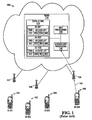
- Depicted in Figure 1 is an OMA compliant system which includes push-to-talk TM over cellular (PoC) services.
- the overall architecture of the known OMA compliant system is generally indicated by reference numeral 100, and includes a known GLMS (group list management server) 110 which manages groups and lists (e.g. contact and access lists) that are needed for the PoC service.
- the BTSs base transceiver stations
- the illustrated example shows four user devices 101,102,103,104 having respective identifiers (ID) 001,002,003, and 004.
- the known GLMS 110 provides list management operations to create, modify, retrieve and delete groups and lists, and to provide storage therefor.
- Data store 120 provides storage for the known GLMS which includes access lists and DnD flags stored by user device.
- the data for the DnD flags and access lists are shown in respect of known user devices 101, 102, and 103 in association with IDs 001,002,003.
- the access list is provided for each known user device (101, 102, 103) and specifies which other known user devices are permitted to reach the respective known user device (101, 102, or 103) over PoC. For example, for user device 101 having ID 001, the access list contains 002,004,006, indicating that the devices having these Ids are allowed to reach the user device 101.
- the known GLMS 110 also stores for each known user device a DnD flag which may either be a "yes” or a "no" value which dictates whether or not the user device is in a state of do-not-disturb.
- Each user device's DnD flag and access list helps facilitate management of talk requests directed to that user device.
- the user device is permitted to query and set the value of the DnD flag of that user device, but generally is not permitted to directly query or set the value of a DnD flag of another user device.
- Figure 1 depicts a known user device 104 with ID 004 which is sending a group talk request 109 for a session with other known user devices 101, 102, and 103, all of which are part of the group as defined by OMA.
- the talk request 109 is received and forwarded by the Radio Access Network (RAN) 105 to the known system 100.
- RAN Radio Access Network
- DnD Processing 130 and Access List Processing 140 take place to determine if the talk request 109 is forwarded.
- each of the known user devices 101, 102, and 103 has an associated DnD flag of "YES" in the data store 120 of the known GLMS 110, none of the known user devices 101, 102, and 103, are forwarded the talk request 109 which would take place over RANs 106 and 107.
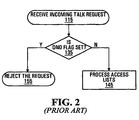
- Figure 2 shows the steps performed by a known GLMS in a known OMA compliant system to manage incoming calls for a user device using the stored DnD flag and access list for that user device.
- the known GLMS receives an incoming talk request specifying the user device as the device being called.
- the known GLMS checks the DnD flag associated with the user device identified in the talk request. If the DnD flag is set to "NO" then processing of the call continues at step 145 wherein the access lists are processed to assess whether the talk request should be forwarded to the user device or not. If the DnD flag 130 is set to "YES" then the talk request is rejected in step 155, and the user's device is not disturbed.
- WO02102040 discloses the processing of calls in a full duplex communications system.
- a Call Administration Service 'CAS' When a Call Administration Service 'CAS' is activated, a CAS processor routes an incoming call in accordance with subscriber provisioning information.
- a first step of routing an incoming call is to extract from the call a caller identifier such as a caller number or name.
- the call identifier is then compared to an access table established as part of the subscriber's provisioning information. If the extracted caller identifier matches an entry in the access table then the call is routed to the subscriber.
- the subscriber is able to pre-arrange for calls from predetermined callers to be routed to him/her whilst other calls from other callers are not routed based on the caller's identity whilst the CAS is activated.
- the present invention provides methods, systems, and devices for selective override of do-not-disturb in a wireless communications network, in which a user is provided with an option to query and modify the ignoring of do-not-disturb (DnD) for certain reasons associated with an incoming call.
- DnD do-not-disturb
- the DnD is ignored when the incoming call is an urgent call.
- DnD is ignored when an incoming call is an emergency call.
- a network call processing server manages and performs selective override of do-not-disturb in an OMA compatible system.
- a mobile device is adapted to send to a dispatch network of the wireless communications network a request to query or modify an ignoreDnD attribute, including an ignoreDnD flag, along with associated ignoreDnD reasons.
- the invention provides a method of talk request processing in a do-not-disturb (DnD) capable communication system, the method comprising: receiving a talk request for a requested communications session involving a user device capable of wallcie-talkie-like functionality; and selectively overriding DnD functionality for the requested communications session based on an ignoreDnD attribute for the user device applied to a criterion or condition of the talk request other than a user device identifier.
- DnD do-not-disturb
- the invention provides a talk request processing system in a do-not-disturb (DnD) capable communication system, the talk request processing system comprising: a receiver adapted to receive a talk request for a requested communications session involving a user device capable of wallcie-tallcie-like functionality; and a network call processing function adapted to selectively override DnD functionality for the requested communications session based on an ignoreDnD attribute for the user device applied to a criterion or condition of the talk request other than a user device identifier.
- DnD do-not-disturb
- the invention provides a user device capable of walkie-talkie-like functionality for a do-not-disturb (DnD) capable communication system, the user device comprising: a user interface adapted to accept an external input to modify an ignoreDnD attribute for the user device, the ignoreDnD attribute concerning a criterion or condition of a talk request other than a user device identifier such that based on said ignoreDnD attribute, DnD functionality for a communication session requested by the talk request is selectively overridden; and an ignoreDnD attribute request generator responsive to said external input adapted to send a network call processing server a request to update the ignoreDnD attribute of the user device.
- DnD do-not-disturb
- the invention provides a computer readable medium containing code means for execution by a processor of the system or device according to the invention for implementing the method according to the invention.
- an incoming call be forwarded to a particular user device even if that user device has its DnD flag set at a call processing server not to disturb the user.
- Such a situation may occur for example, in an emergency, or when the call is urgent or for any other reason the subscriber or user would deem that this should be the case.
- methods, systems, and devices for ignoring the DnD flag under certain circumstances, and hence overriding the DnD flag, and for querying and modifying data stored for use in overriding the DnD flag.
- PTT TM capable PoC networks and wireless devices. More generally embodiments described herein are applicable in the context of the network and wireless devices participating in walkie-talkie-like functionality, of which PTT TM is but one example.
- the modified OMA system of Figure 3 provides a modified push-to-talk TM over cellular (PoC) service according to the example embodiment, and incorporates a new ignoreDnD flag in conjunction with a new ignore reason list of ignore reason values to determine whether or not, for any particular talk request, the DnD flag of the called device is to be ignored, and hence DnD functionality overridden.
- PoC push-to-talk TM over cellular
- the specific modified system of Figure 3 generally indicated by reference numeral 200, includes a modified GLMS (group list management server) 210.
- the GLMS 210 is a specific example of a call processing server.
- the GLMS 210 includes a data store 220, an access list processing unit 240, an ignoreDnD processing unit 250, and a DnD processing unit 230.
- the data store 220, access list processing unit 240, ignoreDnD processing unit 250, and DnD processing unit 230 are coupled to each other for data exchange.
- each one of the GLMS 210 and the units 250, 240, 230 may be implemented in hardware, software, firmware, or any combination of hardware, software and firmware.
- RANs radio access networks
- 206 radio access networks
- 207 of the system coupled through the system 200 to the GLMS 210
- user devices 201, 202, 203, and 204 having identifiers 011,012,013,014 respectively which may be actively coupled to the system via RANs 205, 206, and 207.
- FIG. 3 shows DND processing unit 230, ignoreDnD processing unit 250 and access list processing unit 240 as separate elements. More generally, these may be implemented separately, or in combination, and may be implemented in hardware, software, firmware, or any combination of hardware, software and firmware. In a preferred embodiment, this functionality is included as software which is added to call processing functionality which would be conventionally provided in the GLMS 210. This new functionality may be provided on the GLMS 210 as shown in Figure 3 , and/or may be implemented on a separate device or devices, in a distributed or consolidated manner. Alternative this functionality may be provided independent of the GLMS, such as would necessarily be the case in systems not having a GLMS.
- FIG. 3 is particular to GLMS in an OMA context.
- OMA implementations are not limited to the example of Figure 3 .
- embodiments of the invention are applicable in any context in which DnD functionality (or DnD-like functionality) is being employed in networks providing a walkie-talkie-like function.
- the example of Figure 3 shows a network consisting of three RANs 205,206,207, and a GLMS 210. More generally, any appropriate network capable of providing walkie-talkie-like connectivity can be employed. This may employ greater or fewer than three RANs, or may employ different equipment altogether. Also, the example of Figure 3 shows four user devices 201,202,203,204. The actual number of users in a given system will typically be a transient characteristic. A greater or fewer number of users may be present at any given instant.
- the data store 220 contains DnD flags and access lists in respect of user devices having identifiers 011, 012, and 013.
- the data for the user device 201 having identifier 011 is indicated generally by 271.
- the device identifiers may be of any suitable form depending upon the system and network in which they are implemented.
- the access list such as access list 274 for user device 201, is provided for each user device (201, 202, 203) and specifies which other users are permitted to reach the respective user device (201, 202, or 203) over PoC.
- the modified GLMS 210 also stores for each user device a DnD flag, such as DnD flag 273 for user device 201, which may either be a "YES" or a "NO".
- DnD flag 273 which is a logical boolean flag having two possible values; true and false.
- the DnD flag 273 may be any form of data or data type which may have any number of possible values capable of representing the presence or absence of a do-not-disturb state, or equivalently the presence or absence of a "free-to-disturb" state.
- the modified GLMS 210 stores an ignoreDnD flag for each user device, such as ignoreDND flag 275 for user device 011 (which may have a value of "YES" or "NO") and an ignore reason list 276 for each user device.
- the ignoreDnD flag 275 and the ignore reason list 276 together form an ignoreDnD attribute 277.
- the ignoreDnD flag 275 is a logical boolean flag having two possible values; true and false.
- the ignoreDnD flag 275 may be any form of data or data type which may have any number of possible values, capable of representing whether or not the DnD flag (or other information) is to be ignored (overriden).
- the ignore reason list is for storing one or more reasons which a user may select to narrow down the circumstances in which the DnD flag is to be ignored. Examples of reasons are "urgent” and "emergency", but any suitable set of reasons may be allowed in a given system.
- no ignore reasons list is employed at all. Rather ignoreDnD processing proceeds solely on the basis of the ignoreDnD flag.
- Each user device's DnD flag, ignoreDnD flag, ignore reason list, and access list helps facilitate management of talk requests directed to that user device.
- the modified GLMS 210 manages groups and lists (e.g. contact and access lists) that are used for the modified PoC service. Specifically, the GLMS 210 provides list management operations to create, modify, retrieve and delete groups and lists, and to provide storage therefor.
- Data store 220 provides storage for the modified GLMS 210 including access lists 274, DnD flags 271, ignoreDnD flags 275, and ignore reason lists 276 by user device.
- the DnD processing unit 230 performs modified DND processing 230
- the ignoreDnD processing unit 250 performs new ignoreDnD processing
- access list processing unit 240 performs access list processing.
- a user is allowed to select the value of the ignoreDnD flag and the ignore reason list stored in the GLMS 110 for the user's device. This can be done by enhancing the current method that is used to update the access list in GLMS.
- the user can also query the current values of the ignoreDnD flag and ignore reasons list.
- the user is not permitted to query or set the value of the ignoreDnD flag or any value of the ignore reason list of any other user's device.
- a class of special users such as administrators may be given permissions to query and/or modify the value of the ignoreDnD flag and the values in the ignore reason list of other user's devices.
- RANs 205, 206, and 207 are for transmitting and receiving signals over channels between the network 200, and user devices.
- An example of a specific configuration is shown in Figure 3 , in which at one moment in time user device 204 is in communication with RAN 205.
- RAN 206 is in communication with user devices 202 and 203.
- User device 201 is neither receiving nor transmitting to any particular RAN.
- Radio access network 207 is neither receiving nor transmitting any signals to any particular user device. It should be understood that the particular configuration of user devices and base transceiver stations represents a "snapshot" of a possible configuration of user devices in communication with the system 200, and in general at different times will have different numbers of user devices and different types of connections to different user devices depending upon what is happening within the network at that time.
- the user device 204 with ID 014 sends a group talk request as per the underlying PTT TM initiation protocol for a session with user devices 201, 202, and 203, all of which are part of the group.
- the talk request 209 is marked as "urgent" and is received and forwarded by RAN 205 to the modified system 200.
- the existing PTT TM initiation protocol can be enhanced to include a priority of each call request.
- each of the user devices 201, 202, and 203 have an associated DnD flag 273 of "YES" in the data store 220 of the GLMS 110. If all of the user devices had ignoreDnD flag 275 values of "NO", then none of the user devices 201, 202, and 203, would be forwarded the talk request 209.
- the ignoreDnD flag 275 of each of devices 201, 202, and 203 is set to "YES".
- User device 201 (ID 011) has one ignore reason value, namely "EMERG” for emergency, associated with it.
- User device 202 has two ignore reason values, namely "URG” for urgent, and "EMERG", associated with it.
- User device 203 (ID 013) has one ignore reason value, namely "URG", associated with it.
- the user device requesting to talk has sent an "urgent" talk request, and hence only those user devices for which there is an ignore reason value of "urgent” will be forwarded the talk request. Any users whose DnD flag is not set will also be forwarded the talk request. As such only user devices 202 and 203 (having IDs 012 and 013) are forwarded respective talk requests 219 and 229 via RAN 206.
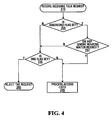
- FIG. 4 shows the steps performed by a modified call service management server in a modified communications system according to an example embodiment to manage incoming calls for a user device.
- a call processing function for example a call processing server (CPS), manages the incoming calls with use of a new ignoreDnD flag, a new ignore reason list, and a stored DnD flag, and an access list for the user device.
- CPS call processing server
- the network receives an incoming talk request specifying the user device as the target device which is being sent the talk request.
- the modified GLMS checks the ignoreDnD flag associated with the target device.
- ignoreDnD flag is set to "NO” then DnD functionality is not overridden and processing of the talk request continues at step 235 wherein the DnD flag is tested, and if the DnD flag is "YES”, the talk request is rejected in step 265 and if the tested DnD flag is "NO", processing of the talk request continues to the step of processing access lists 245.
- step 257 processing of the talk request continues at step 257 wherein the ignore reason list is compared to a criterion or condition of the talk request. If any of the ignore reason values matches a criterion or condition of the talk request, processing of the talk request proceeds to the step of processing access lists 245, and the DnD functionality (step 235) is ignored and overridden. If none of the ignore reason values match the criteria of the talk request, the DnD functionality is not overridden, the DnD flag is tested at step 235, and if the DnD flag is "YES", the talk request is rejected in step 265 and if the DnD flag is "NO", processing of the talk request continues to the next step of processing access lists 245.
- the step 235 along with 265 and 245 collectively are responsible for DnD functionality. In some embodiments, the steps 255 and 257 collectively are responsible for ignoreDnD attribute processing.
- ignoreDnD functionality is ignored only if any one of the ignore reason values matches a current state of the talk request. If a user wishes always to ignore DnD functionality, the ignore reason list is set to contain every possible criteria of a talk request, and if the user wanted not to be disturbed by any call, the list would contain no possible status for any talk request.
- the ignoreDnD flag 306 and ignore reason list 308 are incorporated into an ignoreDnD attribute 305 of a modified DnD attribute 300.
- the standard DnD flag 302 forms part of the DnD attribute 300 and its value is a 1-bit boolean 302.
- the ignoreDnD attribute 305 includes an ignoreDnD flag 306 which has as its value a 1-bit boolean, and an ignore reason list 308, which lists up to four possible reasons why the DnD should be ignored, each reason having as its value a 2-bit value.
- Each of these variables may be of longer or shorter bit-length depending upon the specific implementation. In some embodiments, there may be more than four ignore reasons and hence the bit-length would be longer than 2-bits.
- the example of Figure 5A shows headings "DnD attribute" etc. In an actual data store, these headings do not need to be stored as the location of contents is known.
- the DnD flag is always ignored if the incoming call is an emergency call, and hence the ignoreDnD flag would not be required, as long as the ignore reasons were always processed.
- an ignoreDnD flag could be set to "YES” and no reason provided as long as the ignoreDnD is only set to "YES” for emergency calls, and if the method step 257 of determining if any ignore reasons match a criterion of the request is always skipped.
- any one 2-bit encoded reason may represent a state that the talk request must meet.
- each of the 2-bit encoded reasons may be any one selected from the group of, 00 (Emergency), 01 (Urgent), 10 reservel, 11 reserve2.
- the GLMS can be updated by a user at any time as part of a user's change of profile. These reasons are not encoded in the PTT TM request itself, only the PTT TM call type (for example an emergency call or an urgent call) is encoded in the PTT TM request.
- the existing protocol can be enhanced to include the call type in the call request and ignore DnD reason in the user change request.
- an ignoreDnD flag 406 and an ignore reason list 408 are incorporated into a new ignoreDnD attribute 405.
- the standard DnD flag 401 is separate from the ignoreDnD attribute 405 and its value is a 1-bit boolean 402.
- the ignoreDnD flag has its value a 1-bit boolean 408.
- Each entry in the ignore reason list 408, which lists possible reasons why the DnD should be ignored, is a 2-bit value 408.
- any one 2-bit encoded reason may represent a state or criterion that the talk request must meet.
- the 2-bit reason could represent a 2-bit state flag accompanying the talk request or a 2-bit state flag rendered in response to receipt of the talk request to reflect the state of the talk request.
- each of the 2-bit encoded reasons may be any one selected from the group of, 00 (Emergency), 01 (Urgent), 10 reserve, and 11 reserve, and any talk request may, but not necessarily, be characterized as being an emergency request (00), an urgent request (01), or neither.
- new functionality is incorporated in the user device 500 itself.
- a user would make a selection using any suitable form of user interface (UI) which could be, for example, but not limited to, keys 515, touch screen capability of a user interface (UI) display screen 510, or a voice command responsive interface, to select, query or modify a value for one of the ignoreDnD flag, or ignore reason values.
- UI user interface
- the user interface displays choices of which of the new variables to change and provides functionality for editing them in accordance with the possible range of values each may have.
- the new request generator 520 is adapted to send a request to query and/or modify settings of the new variables in the network, for example in the GLMS.
- the request generator, and the request data input/editor are implemented as additions/modifications to software running on the device 500. Alternatively separate hardware and/or software and/or firmware may be used.
- the existing protocol can be enhanced for users to change their DnD setting profiles.
- any voice communications system which uses do-not-disturb functionality could be adapted in accordance with the invention to provide functionality to ignore the do-not-disturb state in certain circumstances.
- the method and system are adapted to provide peripheral support for a wired device which is capable of participating in wireless sessions with various talkgroups, and which has an associated ignoreDnD attribute and services provided therefor.
- a wired device participates via a network interworking function, so that although the wired device is not within the wireless network, it appears as though it is, and participates in a group call like a wireless device.
- the wired user device is provided with services to enable query and modifications to the ignoreDnD attribute so that DnD may be overridden.
- talk request processing along with do-not-disturb functionality occurs in a manner analogous to the manner described hereinabove.
Landscapes
- Engineering & Computer Science (AREA)
- Signal Processing (AREA)
- Computer Networks & Wireless Communication (AREA)
- Databases & Information Systems (AREA)
- Mobile Radio Communication Systems (AREA)
- Telephonic Communication Services (AREA)
- Telephone Function (AREA)
- Testing Or Measuring Of Semiconductors Or The Like (AREA)
- Inspection Of Paper Currency And Valuable Securities (AREA)
- Paper (AREA)
- Polysaccharides And Polysaccharide Derivatives (AREA)
Claims (22)
- Procédé de traitement de demandes de discussion dans un système de communication disposant d'une fonctionnalité ne pas déranger (200), abrégé par NpD, le procédé comprenant :la réception d'une demande de discussion (215) pour une session de communication demandée impliquant un dispositif utilisateur (201, 202, 203, 204, 500) disposant d'une fonctionnalité de type émetteur-récepteur portatif; etl'annulation sélective de la fonctionnalité NpD (255, 235, 257) pour la session de communication demandée, en fonction d'un attribut ignorer NpD (277, 305, 405) pour le dispositif utilisateur (201, 202, 203, 204, 500) appliqué à un critère ou à une condition de la demande de discussion autre que l'identifiant du dispositif utilisateur.
- Procédé selon la revendication 1, comprenant en outre :pour ledit dispositif utilisateur (201, 202, 203, 204, 500), l'association à celui-ci d'une liste d'accès (274) précisant quels autres dispositifs utilisateurs sont autorisés à atteindre ledit dispositif utilisateur ;lors de l'annulation de ladite fonctionnalité NpD, traiter la liste d'accès (274) afin d'évaluer si la demande de discussion devrait ou non être transférée au dispositif utilisateur (201, 202, 203, 204, 500).
- Procédé selon la revendication 1 ou la revendication 2, dans lequel le dispositif utilisateur (201, 202, 203, 204, 500) est un dispositif sans fil.
- Procédé selon l'une quelconque des revendications 1 à 3, dans lequel l'attribut ignorer NpD (277, 305, 405) comprend un drapeau ignorer NpD (275, 306, 406) et dans lequel l'annulation sélective de ladite fonctionnalité NpD (255, 235, 257) est une fonction du drapeau ignorer NpD (275, 306, 406).
- Procédé selon l'une quelconque des revendications 1 à 4, dans lequel l'attribut ignorer NpD (277, 305, 405) comprend au moins une valeur prédéterminée ignorer la raison (276, 308, 408) et dans lequel l'annulation sélective de ladite fonctionnalité NpD (255, 235, 257) est une fonction de la au moins une valeur prédéterminée ignorer la raison (276, 308, 408).
- Procédé selon la revendication 5, dans lequel la demande de discussion (209, 219, 229) a un état actuel associé, l'état actuel étant l'un d'un certain nombre d'états actuels possibles pour la demande de discussion (209, 219, 229), dans lequel chaque valeur prédéterminée ignorer la raison (276, 308, 408) représente un état actuel possible correspondant pour la demande de discussion (209, 219, 229), le procédé comprenant en outre :l'évaluation du drapeau ignorer NpD (255) pour déterminer si un traitement ignorer NpD supplémentaire doit être effectué, et si l'évaluation du drapeau ignorer NpD (255) détermine qu'un traitement ignorer NpD supplémentaire doit être effectué :dans lequel ladite fonctionnalité NpD est annulée si un quelconque état actuel possible correspondant correspond à l'état actuel de la demande de discussion (209, 219, 229).la détermination de l'état actuel de la demande de discussion (209, 219, 229) ; etpour chacune de la au moins une valeur prédéterminée ignorer la raison (276, 308, 408), la comparaison (257) de l'état actuel possible correspondant avec l'état actuel de la demande de discussion (209, 219, 229) ;
- Procédé selon la revendication 6, dans lequel chaque état actuel possible du nombre d'états actuels possibles pour la demande de discussion (209, 219, 229) est un état prioritaire de la demande de discussion (209, 219, 229) au moment où elle est reçue.
- Procédé selon l'une des revendications 6 ou 7, dans lequel le nombre d'états actuels possibles pour la demande de discussion (209, 219, 229) comprend au moins un état parmi « urgent » et « urgence ».
- Procédé selon l'une quelconque des revendications 1 à 8, comprenant en outre le maintien de l'attribut ignorer NpD (277, 305, 405) pour une pluralité de dispositifs utilisateurs (201, 202, 203, 204, 500) en fonction d'entrées reçues des dispositifs utilisateurs (201, 202, 203, 204, 500).
- Système de traitement de demandes de discussion dans un système de communication disposant d'une fonctionnalité ne pas déranger (200), abrégé par NpD, le système de traitement de demandes de discussion comprenant :un récepteur (205, 206, 207) conçu pour recevoir une demande de discussion (209, 219, 229) pour une session de communication demandée impliquant un dispositif utilisateur (201, 202, 203, 204, 500) disposant d'une fonctionnalité de type émetteur-récepteur portatif; etune fonction de traitement d'appel de réseau (250, 220, 230) conçue pour annuler de manière sélective la fonctionnalité NpD pour la session de communication demandée, en fonction d'un attribut ignorer NpD (277, 305, 405) pour le dispositif utilisateur (201, 202, 203, 204, 500) appliqué à un critère ou à une condition de la demande de discussion autre que l'identifiant du dispositif utilisateur.
- Système de traitement de demandes de discussion selon la revendication 10, dans lequel la fonction de traitement d'appel de réseau est en outre conçue pour :pour ledit dispositif utilisateur (201, 202, 203, 204, 500), l'association à celui-ci d'une liste d'accès (274) précisant quels autres dispositifs utilisateurs sont autorisés à atteindre ledit dispositif utilisateur ;lors de l'annulation de ladite fonctionnalité NpD, traiter la liste d'accès (274) afin d'évaluer si la demande de discussion devrait ou non être transférée au dispositif utilisateur (201, 202, 203, 204, 500).
- Système de traitement de demandes de discussion selon la revendication 10 ou la revendication 11, dans lequel le dispositif utilisateur (201, 202, 203, 204, 500) est un dispositif sans fil.
- Système de traitement de demandes de discussion selon l'une des revendications 10 à 12, dans lequel la fonction d'appel de réseau (250, 220, 230) comprend :une mémoire de données (220) conçue pour mémoriser l'attribut ignorer NpD (277, 305, 405) pour le dispositif utilisateur (201, 202, 203, 204, 500) ;une fonction de traitement NpD (230) conçue pour fournir la fonctionnalité NpD ; etune fonction de traitement ignorer NpD (250) conçue pour annuler la fonctionnalité NpD pour la session de communication demandée en fonction de l'attribut ignorer NpD (277, 305, 305) mémorisé dans la mémoire de données (220) pour le dispositif utilisateur (201, 202, 203, 204, 500).
- Système de traitement de demandes de discussion selon la revendication 13, dans lequel l'attribut ignorer NpD (277, 305, 405) comprend un drapeau ignorer NpD (275, 306, 406) et au moins une valeur prédéterminée ignorer la raison (276, 308, 408), et dans lequel la fonction de traitement ignorer NpD (250) annule de manière sélective ladite fonctionnalité NpD en fonction du drapeau ignorer NpD (275, 306, 406) et de la au moins une valeur prédéterminée ignorer la raison (276, 308, 408).
- Système de traitement de demandes de discussion selon la revendication 14, dans lequel la demande de discussion (209, 219, 229) a un état actuel associé, l'état actuel étant l'un d'un certain nombre d'états actuels possibles pour la demande de discussion (209, 219, 229), dans lequel chaque valeur prédéterminée ignorer la raison représente un état actuel possible correspondant pour la demande de discussion (209, 219, 229), dans lequel la fonction de traitement ignorer NpD (250) :extrait l'attribut ignorer NpD (277, 305, 405) de la mémoire de données (220) ; etévalue le drapeau ignorer NpD (275, 306, 406) pour déterminer si un traitement ignorer NpD (255) supplémentaire doit être effectué, et si l'évaluation du drapeau ignorer NpD (275, 306, 406) détermine qu'un traitement ignorer NpD (255) supplémentaire doit être effectué ;détermine l'état actuel de la demande de discussion (209, 219, 229) ; etpour chacune de la au moins une valeur prédéterminée ignorer la raison (276, 308, 408) compare (257) l'état actuel possible correspondant avec l'état actuel de la demande de discussion (209, 219, 229) ;dans lequel ladite fonctionnalité NpD est annulée si un quelconque état actuel possible correspondant correspond à l'état actuel de la demande de discussion (209, 219, 229).
- Système de traitement de demandes de discussion selon la revendication 15, dans lequel chaque état actuel possible du nombre d'états actuels possibles pour la demande de discussion (209, 219, 229) est un état prioritaire de la demande de discussion (209, 219, 229) au moment où elle est reçue.
- Système de traitement de demandes de discussion selon l'une des revendications 15 ou 16, dans lequel le nombre d'états actuels possibles pour la demande de discussion (209, 219, 229) comprend au moins un état parmi « urgent » et « urgence ».
- Système de traitement de demandes de discussion selon l'une quelconque des revendications 10 à 17, conçu en outre pour maintenir l'attribut ignorer NpD (277, 305, 405) pour chacun d'une pluralité de dispositifs utilisateurs (201, 202, 203, 204, 500) ou en fonction d'entrées reçues des dispositifs utilisateurs (201, 202, 203, 204, 500).
- Dispositif utilisateur (201, 202, 203, 204, 500) disposant d'une fonctionnalité de type émetteur-récepteur portatif pour un système de communication disposant d'une fonctionnalité ne pas déranger (200), abrégé par NpD, le dispositif utilisateur (201, 202, 203, 204, 500) comprenant :une interface utilisateur (515, 530) conçue pour accepter une entrée extérieure afin de modifier un attribut ignorer NpD (277, 305, 405) pour le dispositif utilisateur, l'attribut ignorer NpD concernant un critère ou une condition d'une demande de discussion autre qu'un identifiant du dispositif utilisateur, de façon à annuler de manière sélective la fonctionnalité NpD pour une session de communication demandée par la demande de discussion en fonction dudit attribut ignorer NpD ; etun générateur de demande d'attribut ignorer NpD (520) réagissant à ladite entrée extérieure, conçu pour envoyer à un serveur de traitement d'appel de réseau (210) une demande de mise à jour de l'attribut ignorer NpD (277, 305, 405) du dispositif utilisateur (201, 202, 203, 204, 500).
- Dispositif utilisateur (201, 202, 203, 204, 500) selon la revendication 19, dans lequel le dispositif utilisateur (201, 202, 203, 204, 500) est un dispositif sans fil.
- Dispositif utilisateur (201, 202, 203, 204, 500) selon l'une des revendications 19 ou 20, comprenant en outre :un dispositif d'affichage de l'interface utilisateur (510) destiné à afficher les modifications pour l'attribut ignorer NpD (277, 305, 405) indiquées par l'entrée extérieure, dans lequel l'interface utilisateur (515) est en outre conçue pour accepter une entrée de demande extérieure d'extraction d'un attribut ignorer NpD (277, 305, 405) pour le dispositif utilisateur (201, 202, 203, 204, 500), le générateur de demande d'attribut ignorer NpD (520) étant en outre conçu pour :dans lequel le dispositif d'affichage de l'interface utilisateur (510) est conçu pour afficher l'attribut ignorer NpD (277, 305, 405) pour le dispositif utilisateur (201, 202, 203, 204, 500) en réponse à la réception par le générateur de demande d'attribut ignorer NpD (520) de la réponse à ladite demande.(a) envoyer à un serveur de traitement d'appel de réseau (210) une demande d'extraction de l'attribut ignorer NpD (277, 305, 405) du dispositif utilisateur (201, 202, 203, 204, 500) ; et(b) recevoir une réponse du réseau (200) à ladite demande ;
- Support lisible par ordinateur contenant un moyen de codage pour exécution par un processeur du système selon l'une quelconque des revendications 10 à 18 ou du dispositif selon l'une quelconque des revendications 19 à 21 pour mettre en oeuvre le procédé selon l'une quelconque des revendications 1 à 9.
Priority Applications (12)
| Application Number | Priority Date | Filing Date | Title |
|---|---|---|---|
| AT07122960T ATE477688T1 (de) | 2004-02-27 | 2004-02-27 | Verfahren, system und vorrichtung zur bestimmung der selektiven nichtberücksichtigung der do-not- disturb-funktion |
| AT04251154T ATE387070T1 (de) | 2004-02-27 | 2004-02-27 | Verfahren, system und vorrichtung zur bestimmung der selektiven nichtberücksichtigung der do-not- disturb-funktion |
| DE602004028675T DE602004028675D1 (de) | 2004-02-27 | 2004-02-27 | Verfahren, System und Vorrichtung zur Bestimmung der selektiven Nichtberücksichtigung der do-not-disturb-Funktion |
| EP07122960A EP1892967B1 (fr) | 2004-02-27 | 2004-02-27 | Procédé, système et dispositif pour spécifier la neutralisation sélective de la fonctionnalité ne-pas-déranger |
| DE602004011891T DE602004011891T2 (de) | 2004-02-27 | 2004-02-27 | Verfahren, System und Vorrichtung zur Bestimmung der selektiven Nichtberücksichtigung der do-not-disturb-Funktion |
| EP04251154A EP1569488B1 (fr) | 2004-02-27 | 2004-02-27 | Procédé, système et dispositif pour spécifier la neutralisation sélective de la fonctionnalité ne-pas-déranger |
| CN200580000672.1A CN1820493B (zh) | 2004-02-27 | 2005-02-28 | 指定选择性地撤消免打扰功能的方法、系统和设备 |
| KR1020067006914A KR100834426B1 (ko) | 2004-02-27 | 2005-02-28 | DnD(Do-not-disturb) 기능의 선택적 무시를조건으로 지정하기 위한 방법, 시스템, 및 장치 |
| JP2006520645A JP4129549B2 (ja) | 2004-02-27 | 2005-02-28 | Do−not−disturb機能の選択的なオーバーライドを特定するための方法、システムおよび装置 |
| CA2498994A CA2498994C (fr) | 2004-02-27 | 2005-02-28 | Methode, systeme et dispositif de neutralisation selective de la fonction ne-pas-deranger |
| PCT/CA2005/000297 WO2005084000A1 (fr) | 2004-02-27 | 2005-02-28 | Procede, systeme et dispositif pour specifier l'annulation selective d'une fonction « ne pas deranger » |
| HK06102381.7A HK1081375B (en) | 2006-02-23 | Method, system, and device for specifying selective override of do-not-disturb functionality |
Applications Claiming Priority (1)
| Application Number | Priority Date | Filing Date | Title |
|---|---|---|---|
| EP04251154A EP1569488B1 (fr) | 2004-02-27 | 2004-02-27 | Procédé, système et dispositif pour spécifier la neutralisation sélective de la fonctionnalité ne-pas-déranger |
Related Child Applications (1)
| Application Number | Title | Priority Date | Filing Date |
|---|---|---|---|
| EP07122960A Division EP1892967B1 (fr) | 2004-02-27 | 2004-02-27 | Procédé, système et dispositif pour spécifier la neutralisation sélective de la fonctionnalité ne-pas-déranger |
Publications (2)
| Publication Number | Publication Date |
|---|---|
| EP1569488A1 EP1569488A1 (fr) | 2005-08-31 |
| EP1569488B1 true EP1569488B1 (fr) | 2008-02-20 |
Family
ID=34746122
Family Applications (2)
| Application Number | Title | Priority Date | Filing Date |
|---|---|---|---|
| EP04251154A Expired - Lifetime EP1569488B1 (fr) | 2004-02-27 | 2004-02-27 | Procédé, système et dispositif pour spécifier la neutralisation sélective de la fonctionnalité ne-pas-déranger |
| EP07122960A Expired - Lifetime EP1892967B1 (fr) | 2004-02-27 | 2004-02-27 | Procédé, système et dispositif pour spécifier la neutralisation sélective de la fonctionnalité ne-pas-déranger |
Family Applications After (1)
| Application Number | Title | Priority Date | Filing Date |
|---|---|---|---|
| EP07122960A Expired - Lifetime EP1892967B1 (fr) | 2004-02-27 | 2004-02-27 | Procédé, système et dispositif pour spécifier la neutralisation sélective de la fonctionnalité ne-pas-déranger |
Country Status (8)
| Country | Link |
|---|---|
| EP (2) | EP1569488B1 (fr) |
| JP (1) | JP4129549B2 (fr) |
| KR (1) | KR100834426B1 (fr) |
| CN (1) | CN1820493B (fr) |
| AT (2) | ATE477688T1 (fr) |
| CA (1) | CA2498994C (fr) |
| DE (2) | DE602004011891T2 (fr) |
| WO (1) | WO2005084000A1 (fr) |
Families Citing this family (7)
| Publication number | Priority date | Publication date | Assignee | Title |
|---|---|---|---|---|
| CN100377605C (zh) * | 2005-12-30 | 2008-03-26 | 华为技术有限公司 | 临时群组的会话请求方法 |
| CA2654076A1 (fr) * | 2006-06-06 | 2007-12-13 | Sanjiv Agarwal | Appareil de telephone et procede pour emettre et recevoir des appels avec des reperes d'urgence |
| CN101212724B (zh) * | 2006-12-29 | 2012-05-09 | 华为技术有限公司 | 一种实现移动集群预占优先呼叫的方法及集群服务器及终端 |
| WO2009126073A1 (fr) * | 2008-04-08 | 2009-10-15 | Telefonaktiebolaget L M Ericsson (Publ) | Serveur de messagerie vocale instantanée (poc) capable de changer des définitions de priorité de session lors de la réception d’un message prioritaire autorisé |
| US10171391B2 (en) | 2017-01-25 | 2019-01-01 | International Business Machines Corporation | Automatic and dynamic management of instant messenger do not disturb state via enterprise application |
| FR3070569B1 (fr) | 2017-08-23 | 2020-09-25 | Streamwide | Procede de filtrage dynamique d'une communication de groupe |
| WO2020103065A1 (fr) * | 2018-11-22 | 2020-05-28 | 海能达通信股份有限公司 | Procédé de communication pour intercommunication et terminal d'intercommunication |
Family Cites Families (11)
| Publication number | Priority date | Publication date | Assignee | Title |
|---|---|---|---|---|
| US4278844A (en) * | 1979-03-26 | 1981-07-14 | Bell Telephone Laboratories, Incorporated | Communication system selective call screening arrangement |
| JPS61154344A (ja) | 1984-12-27 | 1986-07-14 | Nec Corp | 選択着信拒否方式 |
| US5467388A (en) * | 1994-01-31 | 1995-11-14 | Bell Atlantic Network Services, Inc. | Method and apparatus for selectively blocking incoming telephone calls |
| AU2001237013A1 (en) * | 2000-02-17 | 2001-08-27 | Bellsouth Intellectual Property Corporation | Call screening that prompts caller for an access code |
| US6970706B2 (en) | 2000-12-05 | 2005-11-29 | Siemens Communications, Inc. | Hierarchical call control with selective broadcast audio messaging system |
| US20020085698A1 (en) * | 2000-12-29 | 2002-07-04 | Gateway, Inc. | Communication device with privacy mode |
| US20020186827A1 (en) * | 2001-06-12 | 2002-12-12 | Griffiths Michael A. | Method and system for implementing call administration in a public switched telephone network |
| US6771947B1 (en) * | 2001-06-12 | 2004-08-03 | Bellsouth Intellectual Property Corporation | Method and system for call administration |
| CN1210936C (zh) * | 2002-06-18 | 2005-07-13 | 华为技术有限公司 | 一种移动通信系统中定时免打扰业务的实现方法 |
| US6763243B2 (en) | 2002-07-02 | 2004-07-13 | Motorola, Inc. | Method and apparatus for providing prioritized multi-party communication sessions in a wireless communication system |
| SE0300555D0 (sv) * | 2003-02-24 | 2003-02-24 | Ericsson Telefon Ab L M | Improvements in or relating to push-to-talk services |
-
2004
- 2004-02-27 EP EP04251154A patent/EP1569488B1/fr not_active Expired - Lifetime
- 2004-02-27 EP EP07122960A patent/EP1892967B1/fr not_active Expired - Lifetime
- 2004-02-27 DE DE602004011891T patent/DE602004011891T2/de not_active Expired - Lifetime
- 2004-02-27 DE DE602004028675T patent/DE602004028675D1/de not_active Expired - Lifetime
- 2004-02-27 AT AT07122960T patent/ATE477688T1/de not_active IP Right Cessation
- 2004-02-27 AT AT04251154T patent/ATE387070T1/de not_active IP Right Cessation
-
2005
- 2005-02-28 CA CA2498994A patent/CA2498994C/fr not_active Expired - Lifetime
- 2005-02-28 KR KR1020067006914A patent/KR100834426B1/ko not_active Expired - Lifetime
- 2005-02-28 JP JP2006520645A patent/JP4129549B2/ja not_active Expired - Lifetime
- 2005-02-28 WO PCT/CA2005/000297 patent/WO2005084000A1/fr not_active Ceased
- 2005-02-28 CN CN200580000672.1A patent/CN1820493B/zh not_active Expired - Lifetime
Also Published As
| Publication number | Publication date |
|---|---|
| JP4129549B2 (ja) | 2008-08-06 |
| KR20060083217A (ko) | 2006-07-20 |
| JP2006528442A (ja) | 2006-12-14 |
| HK1081375A1 (en) | 2006-05-12 |
| EP1569488A1 (fr) | 2005-08-31 |
| CN1820493B (zh) | 2012-10-17 |
| CA2498994C (fr) | 2011-08-09 |
| EP1892967A1 (fr) | 2008-02-27 |
| DE602004011891D1 (de) | 2008-04-03 |
| EP1892967B1 (fr) | 2010-08-11 |
| DE602004028675D1 (de) | 2010-09-23 |
| WO2005084000A1 (fr) | 2005-09-09 |
| CA2498994A1 (fr) | 2005-08-27 |
| ATE387070T1 (de) | 2008-03-15 |
| ATE477688T1 (de) | 2010-08-15 |
| KR100834426B1 (ko) | 2008-06-04 |
| DE602004011891T2 (de) | 2009-04-23 |
| CN1820493A (zh) | 2006-08-16 |
Similar Documents
| Publication | Publication Date | Title |
|---|---|---|
| US7856213B2 (en) | Method, system, and device for specifying selective override of do-not-disturb functionality | |
| CN102037748B (zh) | 在无线通信系统内设立通信会话 | |
| EP2324649B1 (fr) | Hiérarchisation de communications de groupe au niveau d un dispositif de communication sans fil | |
| US20060178128A1 (en) | Method of operating a mobile communication device and mobile communication system during an emergency situation | |
| US20060166649A1 (en) | Method and apparatus for screening and retaining the identity of a party requesting information | |
| JP2005525051A (ja) | 通信装置の動作特性の遠隔変更方法 | |
| CN101385309A (zh) | 用于无线系统中的多个同时群组通信的系统及方法 | |
| US7546133B2 (en) | System and method for automatic user availability setting | |
| EP1892967B1 (fr) | Procédé, système et dispositif pour spécifier la neutralisation sélective de la fonctionnalité ne-pas-déranger | |
| KR20060016890A (ko) | 이동통신 시스템에서의 푸시투토크 방식의 통화 방법 | |
| US7933620B2 (en) | Transmit channel request messaging for half-duplex voice communications systems | |
| US7295851B2 (en) | Methods for setting up dispatch calls | |
| HK1081375B (en) | Method, system, and device for specifying selective override of do-not-disturb functionality | |
| EP1976312B1 (fr) | Procédé et système pour la messagerie de requête de canal de transmission pour systèmes de communication vocaux en semi-duplex | |
| KR20080048523A (ko) | 선택적 호 무선 통신기에서 호를 처리하는 것과 이를 위한방법 | |
| EP1813086B1 (fr) | Interface d'utilisateur graphique pour communications avec poussoir de conversation | |
| JP5302370B2 (ja) | 通信装置の動作特性の遠隔変更方法 | |
| JP2008301531A (ja) | 通信装置の動作特性の遠隔変更方法 | |
| HK1081376B (en) | Transmit channel request messaging for half-duplex voice communications systems |
Legal Events
| Date | Code | Title | Description |
|---|---|---|---|
| PUAI | Public reference made under article 153(3) epc to a published international application that has entered the european phase |
Free format text: ORIGINAL CODE: 0009012 |
|
| 17P | Request for examination filed |
Effective date: 20040326 |
|
| AK | Designated contracting states |
Kind code of ref document: A1 Designated state(s): AT BE BG CH CY CZ DE DK EE ES FI FR GB GR HU IE IT LI LU MC NL PT RO SE SI SK TR |
|
| AX | Request for extension of the european patent |
Extension state: AL LT LV MK |
|
| REG | Reference to a national code |
Ref country code: HK Ref legal event code: DE Ref document number: 1081375 Country of ref document: HK |
|
| AKX | Designation fees paid |
Designated state(s): AT BE BG CH CY CZ DE DK EE ES FI FR GB GR HU IE IT LI LU MC NL PT RO SE SI SK TR |
|
| AXX | Extension fees paid |
Extension state: LT Payment date: 20040326 Extension state: MK Payment date: 20040326 Extension state: LV Payment date: 20040326 Extension state: AL Payment date: 20040326 |
|
| GRAP | Despatch of communication of intention to grant a patent |
Free format text: ORIGINAL CODE: EPIDOSNIGR1 |
|
| GRAS | Grant fee paid |
Free format text: ORIGINAL CODE: EPIDOSNIGR3 |
|
| GRAA | (expected) grant |
Free format text: ORIGINAL CODE: 0009210 |
|
| AK | Designated contracting states |
Kind code of ref document: B1 Designated state(s): AT BE BG CH CY CZ DE DK EE ES FI FR GB GR HU IE IT LI LU MC NL PT RO SE SI SK TR |
|
| AX | Request for extension of the european patent |
Extension state: AL LT LV MK |
|
| REG | Reference to a national code |
Ref country code: GB Ref legal event code: FG4D |
|
| REG | Reference to a national code |
Ref country code: CH Ref legal event code: EP |
|
| REG | Reference to a national code |
Ref country code: IE Ref legal event code: FG4D |
|
| REF | Corresponds to: |
Ref document number: 602004011891 Country of ref document: DE Date of ref document: 20080403 Kind code of ref document: P |
|
| REG | Reference to a national code |
Ref country code: HK Ref legal event code: GR Ref document number: 1081375 Country of ref document: HK |
|
| PG25 | Lapsed in a contracting state [announced via postgrant information from national office to epo] |
Ref country code: FI Free format text: LAPSE BECAUSE OF FAILURE TO SUBMIT A TRANSLATION OF THE DESCRIPTION OR TO PAY THE FEE WITHIN THE PRESCRIBED TIME-LIMIT Effective date: 20080220 Ref country code: ES Free format text: LAPSE BECAUSE OF FAILURE TO SUBMIT A TRANSLATION OF THE DESCRIPTION OR TO PAY THE FEE WITHIN THE PRESCRIBED TIME-LIMIT Effective date: 20080531 |
|
| NLV1 | Nl: lapsed or annulled due to failure to fulfill the requirements of art. 29p and 29m of the patents act | ||
| ET | Fr: translation filed | ||
| PG25 | Lapsed in a contracting state [announced via postgrant information from national office to epo] |
Ref country code: AT Free format text: LAPSE BECAUSE OF FAILURE TO SUBMIT A TRANSLATION OF THE DESCRIPTION OR TO PAY THE FEE WITHIN THE PRESCRIBED TIME-LIMIT Effective date: 20080220 |
|
| PG25 | Lapsed in a contracting state [announced via postgrant information from national office to epo] |
Ref country code: SI Free format text: LAPSE BECAUSE OF FAILURE TO SUBMIT A TRANSLATION OF THE DESCRIPTION OR TO PAY THE FEE WITHIN THE PRESCRIBED TIME-LIMIT Effective date: 20080220 Ref country code: BE Free format text: LAPSE BECAUSE OF FAILURE TO SUBMIT A TRANSLATION OF THE DESCRIPTION OR TO PAY THE FEE WITHIN THE PRESCRIBED TIME-LIMIT Effective date: 20080220 |
|
| REG | Reference to a national code |
Ref country code: CH Ref legal event code: PL |
|
| PG25 | Lapsed in a contracting state [announced via postgrant information from national office to epo] |
Ref country code: DK Free format text: LAPSE BECAUSE OF FAILURE TO SUBMIT A TRANSLATION OF THE DESCRIPTION OR TO PAY THE FEE WITHIN THE PRESCRIBED TIME-LIMIT Effective date: 20080220 Ref country code: CZ Free format text: LAPSE BECAUSE OF FAILURE TO SUBMIT A TRANSLATION OF THE DESCRIPTION OR TO PAY THE FEE WITHIN THE PRESCRIBED TIME-LIMIT Effective date: 20080220 Ref country code: LI Free format text: LAPSE BECAUSE OF NON-PAYMENT OF DUE FEES Effective date: 20080229 Ref country code: MC Free format text: LAPSE BECAUSE OF NON-PAYMENT OF DUE FEES Effective date: 20080228 Ref country code: PT Free format text: LAPSE BECAUSE OF FAILURE TO SUBMIT A TRANSLATION OF THE DESCRIPTION OR TO PAY THE FEE WITHIN THE PRESCRIBED TIME-LIMIT Effective date: 20080721 Ref country code: NL Free format text: LAPSE BECAUSE OF FAILURE TO SUBMIT A TRANSLATION OF THE DESCRIPTION OR TO PAY THE FEE WITHIN THE PRESCRIBED TIME-LIMIT Effective date: 20080220 Ref country code: SK Free format text: LAPSE BECAUSE OF FAILURE TO SUBMIT A TRANSLATION OF THE DESCRIPTION OR TO PAY THE FEE WITHIN THE PRESCRIBED TIME-LIMIT Effective date: 20080220 Ref country code: SE Free format text: LAPSE BECAUSE OF FAILURE TO SUBMIT A TRANSLATION OF THE DESCRIPTION OR TO PAY THE FEE WITHIN THE PRESCRIBED TIME-LIMIT Effective date: 20080520 Ref country code: CH Free format text: LAPSE BECAUSE OF NON-PAYMENT OF DUE FEES Effective date: 20080229 |
|
| PG25 | Lapsed in a contracting state [announced via postgrant information from national office to epo] |
Ref country code: RO Free format text: LAPSE BECAUSE OF FAILURE TO SUBMIT A TRANSLATION OF THE DESCRIPTION OR TO PAY THE FEE WITHIN THE PRESCRIBED TIME-LIMIT Effective date: 20080220 |
|
| PLBE | No opposition filed within time limit |
Free format text: ORIGINAL CODE: 0009261 |
|
| STAA | Information on the status of an ep patent application or granted ep patent |
Free format text: STATUS: NO OPPOSITION FILED WITHIN TIME LIMIT |
|
| 26N | No opposition filed |
Effective date: 20081121 |
|
| PG25 | Lapsed in a contracting state [announced via postgrant information from national office to epo] |
Ref country code: EE Free format text: LAPSE BECAUSE OF FAILURE TO SUBMIT A TRANSLATION OF THE DESCRIPTION OR TO PAY THE FEE WITHIN THE PRESCRIBED TIME-LIMIT Effective date: 20080220 Ref country code: IE Free format text: LAPSE BECAUSE OF NON-PAYMENT OF DUE FEES Effective date: 20080227 |
|
| PG25 | Lapsed in a contracting state [announced via postgrant information from national office to epo] |
Ref country code: BG Free format text: LAPSE BECAUSE OF FAILURE TO SUBMIT A TRANSLATION OF THE DESCRIPTION OR TO PAY THE FEE WITHIN THE PRESCRIBED TIME-LIMIT Effective date: 20080520 |
|
| PG25 | Lapsed in a contracting state [announced via postgrant information from national office to epo] |
Ref country code: CY Free format text: LAPSE BECAUSE OF FAILURE TO SUBMIT A TRANSLATION OF THE DESCRIPTION OR TO PAY THE FEE WITHIN THE PRESCRIBED TIME-LIMIT Effective date: 20080220 |
|
| PG25 | Lapsed in a contracting state [announced via postgrant information from national office to epo] |
Ref country code: IT Free format text: LAPSE BECAUSE OF FAILURE TO SUBMIT A TRANSLATION OF THE DESCRIPTION OR TO PAY THE FEE WITHIN THE PRESCRIBED TIME-LIMIT Effective date: 20080220 |
|
| PG25 | Lapsed in a contracting state [announced via postgrant information from national office to epo] |
Ref country code: HU Free format text: LAPSE BECAUSE OF FAILURE TO SUBMIT A TRANSLATION OF THE DESCRIPTION OR TO PAY THE FEE WITHIN THE PRESCRIBED TIME-LIMIT Effective date: 20080821 Ref country code: LU Free format text: LAPSE BECAUSE OF NON-PAYMENT OF DUE FEES Effective date: 20080227 |
|
| PG25 | Lapsed in a contracting state [announced via postgrant information from national office to epo] |
Ref country code: TR Free format text: LAPSE BECAUSE OF FAILURE TO SUBMIT A TRANSLATION OF THE DESCRIPTION OR TO PAY THE FEE WITHIN THE PRESCRIBED TIME-LIMIT Effective date: 20080220 |
|
| PG25 | Lapsed in a contracting state [announced via postgrant information from national office to epo] |
Ref country code: GR Free format text: LAPSE BECAUSE OF FAILURE TO SUBMIT A TRANSLATION OF THE DESCRIPTION OR TO PAY THE FEE WITHIN THE PRESCRIBED TIME-LIMIT Effective date: 20080521 |
|
| REG | Reference to a national code |
Ref country code: DE Ref legal event code: R082 Ref document number: 602004011891 Country of ref document: DE Representative=s name: MERH-IP MATIAS ERNY REICHL HOFFMANN, DE |
|
| REG | Reference to a national code |
Ref country code: DE Ref legal event code: R081 Ref document number: 602004011891 Country of ref document: DE Owner name: BLACKBERRY LIMITED, WATERLOO, CA Free format text: FORMER OWNER: RESEARCH IN MOTION LTD., WATERLOO, ONTARIO, CA Effective date: 20140925 Ref country code: DE Ref legal event code: R082 Ref document number: 602004011891 Country of ref document: DE Representative=s name: MERH-IP MATIAS ERNY REICHL HOFFMANN, DE Effective date: 20140925 Ref country code: DE Ref legal event code: R082 Ref document number: 602004011891 Country of ref document: DE Representative=s name: MERH-IP MATIAS ERNY REICHL HOFFMANN PATENTANWA, DE Effective date: 20140925 |
|
| REG | Reference to a national code |
Ref country code: FR Ref legal event code: PLFP Year of fee payment: 13 |
|
| REG | Reference to a national code |
Ref country code: FR Ref legal event code: PLFP Year of fee payment: 14 |
|
| REG | Reference to a national code |
Ref country code: FR Ref legal event code: PLFP Year of fee payment: 15 |
|
| PGFP | Annual fee paid to national office [announced via postgrant information from national office to epo] |
Ref country code: FR Payment date: 20230223 Year of fee payment: 20 |
|
| PGFP | Annual fee paid to national office [announced via postgrant information from national office to epo] |
Ref country code: GB Payment date: 20230227 Year of fee payment: 20 Ref country code: DE Payment date: 20230223 Year of fee payment: 20 |
|
| REG | Reference to a national code |
Ref country code: DE Ref legal event code: R071 Ref document number: 602004011891 Country of ref document: DE |
|
| REG | Reference to a national code |
Ref country code: GB Ref legal event code: PE20 Expiry date: 20240226 |
|
| PG25 | Lapsed in a contracting state [announced via postgrant information from national office to epo] |
Ref country code: GB Free format text: LAPSE BECAUSE OF EXPIRATION OF PROTECTION Effective date: 20240226 |
|
| REG | Reference to a national code |
Ref country code: DE Ref legal event code: R082 Ref document number: 602004011891 Country of ref document: DE Ref country code: DE Ref legal event code: R081 Ref document number: 602004011891 Country of ref document: DE Owner name: MALIKIE INNOVATIONS LTD., IE Free format text: FORMER OWNER: BLACKBERRY LIMITED, WATERLOO, ONTARIO, CA |