EP1574590A1 - Verfahren zur Herstellung von Profilen aus Leichtmetallwerkstoff mittels Strangpressen - Google Patents
Verfahren zur Herstellung von Profilen aus Leichtmetallwerkstoff mittels Strangpressen Download PDFInfo
- Publication number
- EP1574590A1 EP1574590A1 EP04005770A EP04005770A EP1574590A1 EP 1574590 A1 EP1574590 A1 EP 1574590A1 EP 04005770 A EP04005770 A EP 04005770A EP 04005770 A EP04005770 A EP 04005770A EP 1574590 A1 EP1574590 A1 EP 1574590A1
- Authority
- EP
- European Patent Office
- Prior art keywords
- extrusion
- light metal
- volume
- recipient
- die
- Prior art date
- Legal status (The legal status is an assumption and is not a legal conclusion. Google has not performed a legal analysis and makes no representation as to the accuracy of the status listed.)
- Granted
Links
Images

Classifications
-
- B—PERFORMING OPERATIONS; TRANSPORTING
- B21—MECHANICAL METAL-WORKING WITHOUT ESSENTIALLY REMOVING MATERIAL; PUNCHING METAL
- B21C—MANUFACTURE OF METAL SHEETS, WIRE, RODS, TUBES, PROFILES OR LIKE SEMI-MANUFACTURED PRODUCTS OTHERWISE THAN BY ROLLING; AUXILIARY OPERATIONS USED IN CONNECTION WITH METAL-WORKING WITHOUT ESSENTIALLY REMOVING MATERIAL
- B21C23/00—Extruding metal; Impact extrusion
- B21C23/002—Extruding materials of special alloys so far as the composition of the alloy requires or permits special extruding methods of sequences
Definitions
- the invention relates to a process for the preparation of Profiles of light metal material, in particular magnesium material, by extrusion, in which a volume of material through a die, which is the shape of the desired Profiles intended to form the profile is pressed.
- a major disadvantage of this known method is the achievable limited press speed, which is justified in the process itself, but also in the material volume forming light metal or Light alloy materials.
- Extrusion or extrusion is the volume of material over the stamp by the shaping Die pressed. This arises between the Material volume and the surrounding recipient a Friction surface, on the one hand to an increase in pressure, on the other hand, but also to a warming of the surface leads. Due to the one-sided on the metal volume in the Recipients applied pressure results as a result, that the flow behavior of the light metal or light alloy material determined by the matrix becomes. This results in a heating of the profile surface, the heating depends on the speed is, with the light metal or light alloy material is pressed through the die. It follows in turn that by means of the known Method the pressing speed is limited insofar as it does to a local melting on the profile surface comes out of the die at the exit. One speaks in this case, the so-called hot cracking.
- This type can be greatly simplified and much higher production speeds simultaneous improvement of the properties of the produced Profiles should be available, as they are with previous production methods were not achievable, wherein by means of the method in principle in the state oftechnik known extrusion molding or extrusion to be used, i. e. that necessary for the execution of the method apparatus Effort and process management should be largely be carried out by means of per se known techniques can.
- the production of the fine-grained casting material Material volume according to the invention by a variation of the composition of the material by a conventional light metal or light metal alloy material with proven properties of said grain refiner is supplied. That with the invention aspired and achieved fine-grained microstructure of the light metal or light metal alloy material, preferably Magnesium or magnesium alloy material is so receives such a fine-grained texture that thereby a significant improvement in mechanical properties, especially ductility, measured as Elongation at break in the tensile test is achieved.
- the deformability of the light metal or Alloy alloy material is also a significant Improvement of the extrusion process achieved, so that the much finer-grained structure of the material volume in the recipient of the extrusion at considerably lower temperatures can be pressed, which also leads to the fact that the sustainable light metal or light metal alloy material profile itself turn is much more fine-grained, resulting in an improvement the material properties of the profile leads and to a much higher pressing speed, since according to the invention the hot cracking of the profile surface avoided becomes.
- the fine grain of the microstructure of the invention manufacturable profiles also has stabilizing, well-distributed precipitations in the material result, the lead to an increase in the mechanical characteristics.
- the inventive method can considerably lower temperatures than previous methods be performed.
- Grain refiners are advantageously the metals Zirconium, strontium and calcium, especially then if magnesium material or magnesium alloy materials form the light metal material.
- Also suitable as grain refiners are the metals of rare earths, especially if magnesium or magnesium alloy materials the light metal materials form.
- the method is advantageously carried out in such a way that the temperature of the material volume in the recipient an extrusion device in the execution the extrusion process in the range of 150 to 350 ° C. is located, i. significantly below the temperature ranges, which is needed in conventional extrusion which are in the range of 300 to 450 ° C.
- the Temperature for the extrusion process depends on both the composition of the light metal or light alloy alloy material from as well as essentially from the pressure exerted on the metal volume in the recipient Print.
- the speed of the extrusion is up to 250 m min -1 , which corresponds to a nearly doubling of the pressing speeds achievable by means of previous methods.
- the extrusion by means of a hydrostatic Pressing process has the extraordinary Advantage that by means of hydrostatic extrusion the deformability of the light metal or light alloy material, especially magnesium material, can be significantly increased and the temperatures during the pressing process can be lowered again s, as a result, the friction between the material volume and the surrounding recipient in fact omitted and the applied pressure does not counteract Must overcome frictional forces.
- the hydrostatic pressing process can thus approximately the entire applied Pressing pressure are used to build up the pressure, to apply for the pressure needed is to push the metal volume through the die.
- the extrusion molding apparatus 10 shown in FIG. 1, by means of a so-called. "direct" extrusion process is executable includes a recipient 12, in the one Material volume 15, eg. From light metal or Alloy alloy material, in particular magnesium material, is introduced. Concluding the recipient 12, in Figs. 1 and 3 shown on the right is a die 14 is provided to receive the according to desired cross section of the profile 16 is formed is. The die 14 substantially opposite, in the 1 and 3 shown on the left, is a pressure plate 13, comparable to the seal 17 acc. the extrusion device 10 acc. Fig. 3 is provided. On the in the recipient 12 located material volume 15 is on the Pressing disc 13 by means of a punch 11 exerted pressure See Fig. 1. By means not shown here separately Warming agent will be located in the recipient Volume of material 15 is heated and in the course of the pressing process via the die 14 as a strand or profile 16 the extrusion device 10 led out.
- a recipient 12 in the one Material volume 15, eg. From light metal
- the extrusion molding device 10 acc. Fig. 3 differs However, from the gem. Fig. 1 in that the Stamp 11 at its free end with a seal 17th is provided, which ensures that the in the recipient 12 arranged material volume 15, which is a pressure fluid 18, the material volume 15 in the recipient 12th surrounds, not exit from the extrusion device 10 can.
- the die 14 is opposite the recipient 12 provided with a seal 20.
- the stamp 11 If the stamp 11 is moved into the recipient 12, builds in the recipient 12 via the pressure fluid 18 a on all sides on the material volume 15 impacting pressure on.
- the pressure builds from all sides equally on the volume of material 15, as a result as a strand or profile 16, the extrusion device 10 leaves.
- the method for producing profiles 16 from Light metal or light metal alloy materials, especially magnesium materials, by means of extrusion is preferably with an extrusion device 10 acc. Fig. 3, by means of said "hydrostatic" Extrusion is possible, executed.
- the light metal or light metal alloy material becomes the training of the for the extrusion process usable material volume a grain fine, the For example, zirconium, strontium and calcium are formed can, attached. This turns the microfine structure of the light metal or light metal alloy material refined. As grain refiner also the metals of the rare earths are used.
- pressing ratio cross-sectional area of the starting material in relation to the cross-sectional area of the profile.
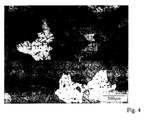
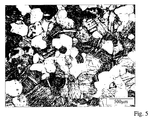
- Figs. 4 and 5 in which the structure of a continuously cast metal block, ie a material volume 15 from AZ 31 compared to a material modified with zirconium as a fine material designated ME 10, see , Fig. 5, is shown.
- a comparison of both figures reveals a significant grain refining. It is found for the material AZ 31 particle size 400-600 ⁇ m and for the modified or gefeinten Material ME 10 particle size 100-200 ⁇ m.
- the Zulegleiters Kunststoff for example, for the application of the hydrostatic extrusion process, s. also Fig. 3, is assembled in Tab. 1.
- the variation of the base alloys (ME 10, ZE 10, AZ 31 - AZ 61) are given Zulegleiterskonzentrationen.
- Table 2 shows the composition of alloys, which had been studied by way of example.
Landscapes
- Engineering & Computer Science (AREA)
- Mechanical Engineering (AREA)
- Extrusion Of Metal (AREA)
- Forging (AREA)
- Compounds Of Alkaline-Earth Elements, Aluminum Or Rare-Earth Metals (AREA)
Abstract
Description
- Fig. 1
- beispielhaft den schematischen Aufbau einer Strangpreßeinrichtung, mit der ein direktes Strangpreßverfahren ausführbar ist,
- Fig. 2
- beispielhaft den schematischen Aufbau einer Strangpreßeinrichtung, mit der ein indirektes Strangpreßverfahren ausführbar ist,
- Fig. 3
- beispielhaft den schematischen Aufbau einer Strangpreßeinrichtung, mit der ein hydrostatisches Strangpreßverfahren ausführbar ist, wie es bevorzugt beim erfindungsgemäßen Verfahren verwendet wird,
- Fig. 4
- eine Aufnahme mittels lichtoptischer Mikroskopie eines Gefüges eines konventionellen stranggegossenen Metallvolumens (Metallblock) aus AZ 31 und
- Fig. 5
- eine Darstellung wie Fig. 4, bei der jedoch der Metallwerkstoff Me 10 mit Zirkonium modifiziert bzw. gefeint worden ist.
| Zusammensetzung von optimieren Legierungen für den hydrostatischen Strangpreßprozeß | |||||||
| Name | ZN | Al | Mn | Ca | Zr | S.E. | Sr |
| ME mod. | - | - | 0,2-1,1 | - | 0,2-0,8 | 0,15-0,25 | - |
| ZE mod. | 1,0-1,4 | - | - | - | 0,2-0,8 | 0,15-0,25 | - |
| ME mod. | - | - | 0,2-1,1 | - | - | 0,15-0,25 | 0-0,2 |
| ZE mod. | 1,0-1,4 | - | - | - | - | 0,15-0,25 | 0-0,2 |
| AM mod | 0-0,2 | 1,8-6,5 | 0,2-0,5 | 0,3-2,0 | - | 0-3,0 | - |
| Zusammensetzung von Beispiellegierungen | ||||||
| Name | Zn | Al | Mn | Ca | Zr | S.E. |
| ME10 mod. | - | - | 0,19 | - | 0,18 | 0,22 |
| ZE10 mod | 1,4 | - | - | - | 0,54 | 0,2 |
| AM60 mod | 0,22 | 5,6 | 0,38 | 0,32 | - | - |
| Mechanische Kennwerte ausgewählter konventioneller modifizierter Legierungen nach dem hydrostatischen Strangpressen (Beispiele aus Tab. 2) | |||||
| Legierung | Zugversuch | Druckversuch | |||
| Rp02 [MPa] | Rm [MPa] | Bruchdehnung [%] | Rp02 [MPa] | Rm [MPa] | |
| M1 | 192 | 268 | 12 | 86 | 396 |
| ZM21 | 175 | 258 | 23 | 116 | 418 |
| AZ31 | 198 | 278 | 23 | 155 | 418 |
| ME10 + Zr | 192 | 237 | 32 | 171 | 364 |
| ZE10 + Zr | 235 | 273 | 25 | 164 | 388 |
| AM60 + Ca | 207 | 302 | 25 | 174 | 414 |
- 10
- Strangpreßvorrichtung
- 11
- Stempel
- 12
- Rezipient
- 13
- Preßscheibe
- 14
- Matrize
- 15
- Werkstoffvolumen (Leichtmetall- bzw. LeichtmetallLegierungswerkstoff)
- 16
- Strang (Profil)
- 17
- Dichtung
- 18
- Druckflüssigkeit
- 19
- Verschlußstück
- 20
- Dichtung
Claims (7)
- Verfahren zur Herstellung von Profilen aus Leichtmetallwerkstoff, insbesondere Magnesiumwerkstoff, mittels Strangpressen, bei dem ein Werkstoffvolumen durch eine Matrize, die die Form des gewünschten Profils bestimmt, zur Ausbildung des Profils gepreßt wird, dadurch gekennzeichnet, daß dem Metall zur Ausbildung des für den Strangpreßvorgang verwendbaren Werkstoffvolumens ein Kornfeiner zugesetzt wird.
- Verfahren nach Anspruch 1, dadurch gekennzeichnet, daß als Kornfeiner die Metalle Zirkonium, Strontium und Calcium verwendet werden.
- Verfahren nach einem oder beiden der Ansprüche 1 oder 2, dadurch gekennzeichnet, daß als Kornfeiner die Metalle der Seltenen Erden verwendet werden.
- Verfahren nach einem oder mehreren der Ansprüche 1 bis 3, dadurch gekennzeichnet, daß die Temperatur des Werkstoffvolumens beim Ausführen des Strangpreßvorganges < 300° C.
- Verfahren nach einem oder mehreren der Ansprüche 1 bis 3, dadurch gekennzeichnet, daß die Temperatur des Werkstoffvolumens beim Ausführen des Strangpreßvorganges im Bereich von 150 bis 350° C liegt.
- Verfahren nach einem oder mehreren der Ansprüche 1 bis 5, dadurch gekennzeichnet, daß die Geschwindigkeit des Strangpressens bis zu 250 m min-1 beträgt.
- Verfahren nach einem oder mehreren der Ansprüche 1 bis 6, dadurch gekennzeichnet, daß das Strangpressen mittels eines hydrostatischen Preßverfahrens bewirkt wird.
Priority Applications (10)
| Application Number | Priority Date | Filing Date | Title |
|---|---|---|---|
| PL04005770T PL1574590T3 (pl) | 2004-03-11 | 2004-03-11 | Sposób wytwarzania profili z materiału na bazie magnezu za pomocą wyciskania |
| AT04005770T ATE360711T1 (de) | 2004-03-11 | 2004-03-11 | Verfahren zur herstellung von profilen aus magnesiumwerkstoff mittels strangpressen |
| DE502004003603T DE502004003603D1 (de) | 2004-03-11 | 2004-03-11 | Verfahren zur Herstellung von Profilen aus Magnesiumwerkstoff mittels Strangpressen |
| EP04005770A EP1574590B1 (de) | 2004-03-11 | 2004-03-11 | Verfahren zur Herstellung von Profilen aus Magnesiumwerkstoff mittels Strangpressen |
| PCT/EP2005/002268 WO2005087962A1 (de) | 2004-03-11 | 2005-03-03 | Verfahren zur herstellung von profilen aus leichtmetallwerkstoff mittels strangpressen |
| JP2007502242A JP4852032B2 (ja) | 2004-03-11 | 2005-03-03 | 押出法による軽金属素材からなる線材を製造するための方法 |
| US10/592,331 US8590356B2 (en) | 2004-03-11 | 2005-03-03 | Method for the production of profiles of a light metal material by means of extrusion |
| AU2005221782A AU2005221782B2 (en) | 2004-03-11 | 2005-03-03 | Method for the production of profiles of a light metal material by means of extrusion |
| CA2559400A CA2559400C (en) | 2004-03-11 | 2005-03-03 | Method for the production of profiles of a light metal material by means of extrusion |
| IL177934A IL177934A (en) | 2004-03-11 | 2006-09-07 | Method of manufacturing profiles from magnesium by extrusion |
Applications Claiming Priority (1)
| Application Number | Priority Date | Filing Date | Title |
|---|---|---|---|
| EP04005770A EP1574590B1 (de) | 2004-03-11 | 2004-03-11 | Verfahren zur Herstellung von Profilen aus Magnesiumwerkstoff mittels Strangpressen |
Publications (2)
| Publication Number | Publication Date |
|---|---|
| EP1574590A1 true EP1574590A1 (de) | 2005-09-14 |
| EP1574590B1 EP1574590B1 (de) | 2007-04-25 |
Family
ID=34814297
Family Applications (1)
| Application Number | Title | Priority Date | Filing Date |
|---|---|---|---|
| EP04005770A Expired - Lifetime EP1574590B1 (de) | 2004-03-11 | 2004-03-11 | Verfahren zur Herstellung von Profilen aus Magnesiumwerkstoff mittels Strangpressen |
Country Status (10)
| Country | Link |
|---|---|
| US (1) | US8590356B2 (de) |
| EP (1) | EP1574590B1 (de) |
| JP (1) | JP4852032B2 (de) |
| AT (1) | ATE360711T1 (de) |
| AU (1) | AU2005221782B2 (de) |
| CA (1) | CA2559400C (de) |
| DE (1) | DE502004003603D1 (de) |
| IL (1) | IL177934A (de) |
| PL (1) | PL1574590T3 (de) |
| WO (1) | WO2005087962A1 (de) |
Cited By (3)
| Publication number | Priority date | Publication date | Assignee | Title |
|---|---|---|---|---|
| EP1941953A1 (de) * | 2006-10-09 | 2008-07-09 | Neuman Aluminium Fliesspresswerk GmbH | Verfahren und Werkzeug zum Fliesspressen von Magnesium-Knetlegierungen |
| EP2395119A1 (de) * | 2010-05-21 | 2011-12-14 | Helmholtz-Zentrum Geesthacht Zentrum für Material- und Küstenforschung GmbH | Verfahren zur Umformung einer Magnesiumbasislegierung durch Strangpressen |
| DE102022118222A1 (de) | 2022-05-27 | 2023-11-30 | GM Global Technology Operations LLC | Verfahren zum Strangpressen von grobkörnigen Magnesiumlegierungen mit niedrigem Aluminiumgehalt |
Citations (10)
| Publication number | Priority date | Publication date | Assignee | Title |
|---|---|---|---|---|
| GB652223A (en) * | 1945-03-22 | 1951-04-18 | Magnesium Elektron Ltd | Improvements in or relating to magnesium base alloys |
| GB907404A (en) * | 1959-05-01 | 1962-10-03 | Dow Chemical Co | Shaped articles of light metals or their alloys and process for their production |
| US3113052A (en) * | 1960-07-05 | 1963-12-03 | Aluminum Co Of America | Method of making aluminum base alloy extruded product |
| GB1187305A (en) * | 1967-05-22 | 1970-04-08 | Dow Chemical Co | Process for production of Extruded Magnesium-Lithium Alloy Articles |
| US3926690A (en) * | 1972-08-23 | 1975-12-16 | Alcan Res & Dev | Aluminium alloys |
| US4711762A (en) * | 1982-09-22 | 1987-12-08 | Aluminum Company Of America | Aluminum base alloys of the A1-Cu-Mg-Zn type |
| US5147603A (en) * | 1990-06-01 | 1992-09-15 | Pechiney Electrometallurgie | Rapidly solidified and worked high strength magnesium alloy containing strontium |
| US5503690A (en) * | 1994-03-30 | 1996-04-02 | Reynolds Metals Company | Method of extruding a 6000-series aluminum alloy and an extruded product therefrom |
| EP1069195A2 (de) * | 1999-07-13 | 2001-01-17 | Alcoa Inc. | Verbesserte Gusslegierungen |
| US6412164B1 (en) * | 2000-10-10 | 2002-07-02 | Alcoa Inc. | Aluminum alloys having improved cast surface quality |
Family Cites Families (26)
| Publication number | Priority date | Publication date | Assignee | Title |
|---|---|---|---|---|
| US2639809A (en) * | 1947-04-02 | 1953-05-26 | Dow Chemical Co | Extrusion of continuous metal articles |
| US3231372A (en) * | 1963-09-27 | 1966-01-25 | Dow Chemical Co | Magnesium-base alloys containing rare earth metals |
| DE1229067B (de) | 1964-01-11 | 1966-11-24 | Bayer Ag | Verfahren zur Herstellung von Polyisocyanaten |
| US3290742A (en) * | 1964-02-06 | 1966-12-13 | Dow Chemical Co | Grain refining process |
| US3884062A (en) * | 1968-12-09 | 1975-05-20 | Atomic Energy Authority Uk | Forming of materials |
| JPS5146463Y2 (de) | 1973-02-16 | 1976-11-10 | ||
| SE383691B (sv) | 1973-03-07 | 1976-03-29 | Asea Ab | Forfarande for framstellning av stenger, trad eller ror genom hydrostatisk strengpressning samt pressemns att anvendas vid forfarandet |
| JPS5524962B2 (de) * | 1974-02-02 | 1980-07-02 | ||
| JPS5120055A (en) * | 1974-08-10 | 1976-02-17 | Hitachi Cable | Ekiatsunyoru sozaino kakoho |
| US4462234A (en) * | 1980-06-19 | 1984-07-31 | Battelle Development Corporation | Rapid extrusion of hot-short-sensitive alloys |
| JPS60221545A (ja) * | 1984-03-19 | 1985-11-06 | Kobe Steel Ltd | 切削表面仕上り性に優れた感光ドラム用押出アルミニウム合金 |
| JPS61108416A (ja) * | 1984-10-30 | 1986-05-27 | Kobe Steel Ltd | 高強度Al−Mg系合金押出材の製造方法 |
| JPS61183434A (ja) * | 1985-02-08 | 1986-08-16 | Kobe Steel Ltd | 静水圧押出された冷間鍛造用高強度Al−Mg系アルミニウム合金 |
| JPS61190051A (ja) * | 1985-02-20 | 1986-08-23 | Sumitomo Light Metal Ind Ltd | 低線膨張係数を有するAl系中空形材の製造方法 |
| FR2642439B2 (de) * | 1988-02-26 | 1993-04-16 | Pechiney Electrometallurgie | |
| JPH01261806A (ja) * | 1988-04-13 | 1989-10-18 | Daido Steel Co Ltd | 希土類磁石とその製造方法 |
| FR2651244B1 (fr) | 1989-08-24 | 1993-03-26 | Pechiney Recherche | Procede d'obtention d'alliages de magnesium par pulverisation-depot. |
| JPH05120055A (ja) | 1991-10-24 | 1993-05-18 | Nec Corp | テストパタン発生装置 |
| DE19915276A1 (de) * | 1999-04-03 | 2000-10-05 | Volkswagen Ag | Verfahren zum Herstellen einer Magnesiumlegierung durch Strangpressen und Verwendung der stranggepreßten Halbzeuge und Bauteile |
| US6695935B1 (en) * | 1999-05-04 | 2004-02-24 | Corus Aluminium Walzprodukte Gmbh | Exfoliation resistant aluminium magnesium alloy |
| CA2337630C (en) * | 2000-02-24 | 2005-02-01 | Mitsubishi Aluminum Co., Ltd. | Die casting magnesium alloy |
| JP4534181B2 (ja) * | 2000-11-20 | 2010-09-01 | 三菱アルミニウム株式会社 | 強度、切削性およびクリンチング性に優れた機械部品用アルミニウム合金押出し材 |
| US6627012B1 (en) * | 2000-12-22 | 2003-09-30 | William Troy Tack | Method for producing lightweight alloy stock for gun frames |
| US7018954B2 (en) * | 2001-03-09 | 2006-03-28 | American Superconductor Corporation | Processing of magnesium-boride superconductors |
| JP3808757B2 (ja) * | 2001-11-19 | 2006-08-16 | 株式会社神戸製鋼所 | 高延性Mg合金素材の製法 |
| US7383713B2 (en) * | 2005-03-30 | 2008-06-10 | Aleris Aluminum Koblenz Gmbh | Method of manufacturing a consumable filler metal for use in a welding operation |
-
2004
- 2004-03-11 AT AT04005770T patent/ATE360711T1/de not_active IP Right Cessation
- 2004-03-11 PL PL04005770T patent/PL1574590T3/pl unknown
- 2004-03-11 EP EP04005770A patent/EP1574590B1/de not_active Expired - Lifetime
- 2004-03-11 DE DE502004003603T patent/DE502004003603D1/de not_active Expired - Lifetime
-
2005
- 2005-03-03 WO PCT/EP2005/002268 patent/WO2005087962A1/de not_active Ceased
- 2005-03-03 JP JP2007502242A patent/JP4852032B2/ja not_active Expired - Fee Related
- 2005-03-03 US US10/592,331 patent/US8590356B2/en not_active Expired - Fee Related
- 2005-03-03 AU AU2005221782A patent/AU2005221782B2/en not_active Ceased
- 2005-03-03 CA CA2559400A patent/CA2559400C/en not_active Expired - Fee Related
-
2006
- 2006-09-07 IL IL177934A patent/IL177934A/en active IP Right Grant
Patent Citations (10)
| Publication number | Priority date | Publication date | Assignee | Title |
|---|---|---|---|---|
| GB652223A (en) * | 1945-03-22 | 1951-04-18 | Magnesium Elektron Ltd | Improvements in or relating to magnesium base alloys |
| GB907404A (en) * | 1959-05-01 | 1962-10-03 | Dow Chemical Co | Shaped articles of light metals or their alloys and process for their production |
| US3113052A (en) * | 1960-07-05 | 1963-12-03 | Aluminum Co Of America | Method of making aluminum base alloy extruded product |
| GB1187305A (en) * | 1967-05-22 | 1970-04-08 | Dow Chemical Co | Process for production of Extruded Magnesium-Lithium Alloy Articles |
| US3926690A (en) * | 1972-08-23 | 1975-12-16 | Alcan Res & Dev | Aluminium alloys |
| US4711762A (en) * | 1982-09-22 | 1987-12-08 | Aluminum Company Of America | Aluminum base alloys of the A1-Cu-Mg-Zn type |
| US5147603A (en) * | 1990-06-01 | 1992-09-15 | Pechiney Electrometallurgie | Rapidly solidified and worked high strength magnesium alloy containing strontium |
| US5503690A (en) * | 1994-03-30 | 1996-04-02 | Reynolds Metals Company | Method of extruding a 6000-series aluminum alloy and an extruded product therefrom |
| EP1069195A2 (de) * | 1999-07-13 | 2001-01-17 | Alcoa Inc. | Verbesserte Gusslegierungen |
| US6412164B1 (en) * | 2000-10-10 | 2002-07-02 | Alcoa Inc. | Aluminum alloys having improved cast surface quality |
Cited By (4)
| Publication number | Priority date | Publication date | Assignee | Title |
|---|---|---|---|---|
| EP1941953A1 (de) * | 2006-10-09 | 2008-07-09 | Neuman Aluminium Fliesspresswerk GmbH | Verfahren und Werkzeug zum Fliesspressen von Magnesium-Knetlegierungen |
| EP2395119A1 (de) * | 2010-05-21 | 2011-12-14 | Helmholtz-Zentrum Geesthacht Zentrum für Material- und Küstenforschung GmbH | Verfahren zur Umformung einer Magnesiumbasislegierung durch Strangpressen |
| DE102022118222A1 (de) | 2022-05-27 | 2023-11-30 | GM Global Technology Operations LLC | Verfahren zum Strangpressen von grobkörnigen Magnesiumlegierungen mit niedrigem Aluminiumgehalt |
| DE102022118222B4 (de) | 2022-05-27 | 2025-06-26 | GM Global Technology Operations LLC | Verfahren zum Bilden eines stranggepressten Knüppels aus einem aus grobkörniger Magnesiumlegierung bestehenden Knüppel |
Also Published As
| Publication number | Publication date |
|---|---|
| US8590356B2 (en) | 2013-11-26 |
| ATE360711T1 (de) | 2007-05-15 |
| IL177934A (en) | 2011-06-30 |
| EP1574590B1 (de) | 2007-04-25 |
| US20090044589A1 (en) | 2009-02-19 |
| JP2007535408A (ja) | 2007-12-06 |
| DE502004003603D1 (de) | 2007-06-06 |
| AU2005221782A1 (en) | 2005-09-22 |
| IL177934A0 (en) | 2006-12-31 |
| JP4852032B2 (ja) | 2012-01-11 |
| WO2005087962A8 (de) | 2006-10-12 |
| CA2559400A1 (en) | 2005-09-22 |
| WO2005087962A1 (de) | 2005-09-22 |
| CA2559400C (en) | 2014-04-15 |
| AU2005221782B2 (en) | 2010-10-14 |
| PL1574590T3 (pl) | 2007-09-28 |
Similar Documents
| Publication | Publication Date | Title |
|---|---|---|
| DE102010009005B4 (de) | Verfahren zum Verbessern der mechanischen Eigenschaften von Druckgussteilen aus einer Aluminiumlegierung | |
| DE3323835C2 (de) | Verfahren zur Herstellung aushärtbarer hochfester Aluminiumlegierungen mit verbesserter Ermüdungsbeständigkeit und Zähigkeit | |
| DE10062310C2 (de) | Verfahren zur Behandlung metallischer Werkstoffe | |
| EP1438150B1 (de) | Vorrichtung und verfahren zur herstellung feinkristalliner werkstoffe | |
| DE102019005917A1 (de) | Verfahren und Vorrichtung zum Herstellen eines Bauteils aus einem Faserverbundwerkstoff | |
| DE112008001968T5 (de) | Bilden von Magnesiumlegierungen mit verbesserter Duktilität | |
| DE69609694T2 (de) | Verfahren zur Herstellung eines Stossfängers aus synthetischem Harz für ein Kraftfahrzeug | |
| DE10361691B4 (de) | Verfahren zur Herstellung von Magnesiumlegierungs-Billets für ein Thixoforming-Verfahren | |
| EP1574590B1 (de) | Verfahren zur Herstellung von Profilen aus Magnesiumwerkstoff mittels Strangpressen | |
| DE2733009B1 (de) | Verfahren und Anordnung zum Strangpressen eines granulierten,vorzugsweise pulvermetallurgischen Werkstoffes | |
| DE69219508T2 (de) | Verschleissfeste Aluminiumlegierung und Verfahren zu ihrer Bearbeitung | |
| DE1452184A1 (de) | Verfahren und Vorrichtung zur Formung von Materialien | |
| EP1281459B1 (de) | Verfahren zum Thixospritzgiessen zur Herstellung von Metallteilen | |
| DE69218109T2 (de) | Verdichtete und verfestigte Wirkstoffe aus Aluminium-Legierung | |
| DE2149546B2 (de) | Verfahren zur herstellung von superplastischen bleilegierungen | |
| WO2007042002A2 (de) | Verfahren zur herstellung feinkörniger, polykristalliner werkstoffe oder werkstücke sowie matrize dazu | |
| DE202021002230U1 (de) | Vorrichtung zum Niederdruckguss-Schmieden (NDGS) von Leichtmetallen | |
| DE102020005760A1 (de) | Verfahren und Vorrichtung zur Herstellung eines Bauteils | |
| DE102004029588A1 (de) | Verfahren zur Herstellung von Profilen aus Magnesiumwerkstoffen | |
| DE102014109764A1 (de) | Verfahren zur Herstellung eines metallischen Bauteils, metallisches Bauteil und Vorrichtung zur Herstellung eines metallischen Bauteils | |
| EP4302898A1 (de) | Verfahren zum giessen eines gussteils aus einer leichtmetallschmelze sowie kernpaket, gussteil und giessvorrichtung | |
| DE1527462C (de) | Gesenkformen und Gesenk hierfür | |
| DE202006011370U1 (de) | Durch Giessen und Schmieden qualitativ verbessertes Produkt aus rostfreiem Stahl | |
| DE202022103231U1 (de) | Eine Vorrichtung zur Herstellung von Aluminium-Hybrid-Verbundwerkstoffen | |
| AT164497B (de) | Verfahren zur Herstellung von Leichtmetallkörpern |
Legal Events
| Date | Code | Title | Description |
|---|---|---|---|
| PUAI | Public reference made under article 153(3) epc to a published international application that has entered the european phase |
Free format text: ORIGINAL CODE: 0009012 |
|
| AK | Designated contracting states |
Kind code of ref document: A1 Designated state(s): AT BE BG CH CY CZ DE DK EE ES FI FR GB GR HU IE IT LI LU MC NL PL PT RO SE SI SK TR |
|
| AX | Request for extension of the european patent |
Extension state: AL LT LV MK |
|
| 17P | Request for examination filed |
Effective date: 20050905 |
|
| AKX | Designation fees paid |
Designated state(s): AT BE BG CH CY CZ DE DK EE ES FI FR GB GR HU IE IT LI LU MC NL PL PT RO SE SI SK TR |
|
| RTI1 | Title (correction) |
Free format text: METHOD OF MANUFACTURING PROFILES FROM MAGNESIUM BY EXTRUSION |
|
| GRAP | Despatch of communication of intention to grant a patent |
Free format text: ORIGINAL CODE: EPIDOSNIGR1 |
|
| RIN1 | Information on inventor provided before grant (corrected) |
Inventor name: VET, PIET-JAN Inventor name: SILLEKENS, WIM Inventor name: HOOGENDAM, PIETER Inventor name: SCHADE VAN WESTRUM, JAN Inventor name: BOHLEN, JAN, DR. Inventor name: KAINER, KARL ULRICH, PROF. DR. Inventor name: MEIJER, LUUD |
|
| GRAS | Grant fee paid |
Free format text: ORIGINAL CODE: EPIDOSNIGR3 |
|
| GRAA | (expected) grant |
Free format text: ORIGINAL CODE: 0009210 |
|
| AK | Designated contracting states |
Kind code of ref document: B1 Designated state(s): AT BE BG CH CY CZ DE DK EE ES FI FR GB GR HU IE IT LI LU MC NL PL PT RO SE SI SK TR |
|
| PG25 | Lapsed in a contracting state [announced via postgrant information from national office to epo] |
Ref country code: FI Free format text: LAPSE BECAUSE OF FAILURE TO SUBMIT A TRANSLATION OF THE DESCRIPTION OR TO PAY THE FEE WITHIN THE PRESCRIBED TIME-LIMIT Effective date: 20070425 |
|
| REG | Reference to a national code |
Ref country code: GB Ref legal event code: FG4D Free format text: NOT ENGLISH |
|
| REG | Reference to a national code |
Ref country code: IE Ref legal event code: FG4D Free format text: LANGUAGE OF EP DOCUMENT: GERMAN |
|
| REG | Reference to a national code |
Ref country code: CH Ref legal event code: EP |
|
| REF | Corresponds to: |
Ref document number: 502004003603 Country of ref document: DE Date of ref document: 20070606 Kind code of ref document: P |
|
| PG25 | Lapsed in a contracting state [announced via postgrant information from national office to epo] |
Ref country code: SE Free format text: LAPSE BECAUSE OF FAILURE TO SUBMIT A TRANSLATION OF THE DESCRIPTION OR TO PAY THE FEE WITHIN THE PRESCRIBED TIME-LIMIT Effective date: 20070725 |
|
| GBT | Gb: translation of ep patent filed (gb section 77(6)(a)/1977) |
Effective date: 20070711 |
|
| PG25 | Lapsed in a contracting state [announced via postgrant information from national office to epo] |
Ref country code: ES Free format text: LAPSE BECAUSE OF FAILURE TO SUBMIT A TRANSLATION OF THE DESCRIPTION OR TO PAY THE FEE WITHIN THE PRESCRIBED TIME-LIMIT Effective date: 20070805 |
|
| PG25 | Lapsed in a contracting state [announced via postgrant information from national office to epo] |
Ref country code: PT Free format text: LAPSE BECAUSE OF FAILURE TO SUBMIT A TRANSLATION OF THE DESCRIPTION OR TO PAY THE FEE WITHIN THE PRESCRIBED TIME-LIMIT Effective date: 20070925 |
|
| REG | Reference to a national code |
Ref country code: PL Ref legal event code: T3 |
|
| ET | Fr: translation filed | ||
| REG | Reference to a national code |
Ref country code: IE Ref legal event code: FD4D |
|
| PG25 | Lapsed in a contracting state [announced via postgrant information from national office to epo] |
Ref country code: SI Free format text: LAPSE BECAUSE OF FAILURE TO SUBMIT A TRANSLATION OF THE DESCRIPTION OR TO PAY THE FEE WITHIN THE PRESCRIBED TIME-LIMIT Effective date: 20070425 Ref country code: BG Free format text: LAPSE BECAUSE OF FAILURE TO SUBMIT A TRANSLATION OF THE DESCRIPTION OR TO PAY THE FEE WITHIN THE PRESCRIBED TIME-LIMIT Effective date: 20070725 Ref country code: CZ Free format text: LAPSE BECAUSE OF FAILURE TO SUBMIT A TRANSLATION OF THE DESCRIPTION OR TO PAY THE FEE WITHIN THE PRESCRIBED TIME-LIMIT Effective date: 20070425 Ref country code: IE Free format text: LAPSE BECAUSE OF FAILURE TO SUBMIT A TRANSLATION OF THE DESCRIPTION OR TO PAY THE FEE WITHIN THE PRESCRIBED TIME-LIMIT Effective date: 20070425 Ref country code: DK Free format text: LAPSE BECAUSE OF FAILURE TO SUBMIT A TRANSLATION OF THE DESCRIPTION OR TO PAY THE FEE WITHIN THE PRESCRIBED TIME-LIMIT Effective date: 20070425 |
|
| PG25 | Lapsed in a contracting state [announced via postgrant information from national office to epo] |
Ref country code: SK Free format text: LAPSE BECAUSE OF FAILURE TO SUBMIT A TRANSLATION OF THE DESCRIPTION OR TO PAY THE FEE WITHIN THE PRESCRIBED TIME-LIMIT Effective date: 20070425 |
|
| PLBE | No opposition filed within time limit |
Free format text: ORIGINAL CODE: 0009261 |
|
| STAA | Information on the status of an ep patent application or granted ep patent |
Free format text: STATUS: NO OPPOSITION FILED WITHIN TIME LIMIT |
|
| 26N | No opposition filed |
Effective date: 20080128 |
|
| PG25 | Lapsed in a contracting state [announced via postgrant information from national office to epo] |
Ref country code: GR Free format text: LAPSE BECAUSE OF FAILURE TO SUBMIT A TRANSLATION OF THE DESCRIPTION OR TO PAY THE FEE WITHIN THE PRESCRIBED TIME-LIMIT Effective date: 20070726 |
|
| PG25 | Lapsed in a contracting state [announced via postgrant information from national office to epo] |
Ref country code: RO Free format text: LAPSE BECAUSE OF FAILURE TO SUBMIT A TRANSLATION OF THE DESCRIPTION OR TO PAY THE FEE WITHIN THE PRESCRIBED TIME-LIMIT Effective date: 20070425 |
|
| BERE | Be: lapsed |
Owner name: GKSS-FORSCHUNGSZENTRUM GEESTHACHT G.M.B.H. Effective date: 20080331 |
|
| PG25 | Lapsed in a contracting state [announced via postgrant information from national office to epo] |
Ref country code: MC Free format text: LAPSE BECAUSE OF NON-PAYMENT OF DUE FEES Effective date: 20080331 |
|
| REG | Reference to a national code |
Ref country code: CH Ref legal event code: PL |
|
| PG25 | Lapsed in a contracting state [announced via postgrant information from national office to epo] |
Ref country code: CH Free format text: LAPSE BECAUSE OF NON-PAYMENT OF DUE FEES Effective date: 20080331 Ref country code: EE Free format text: LAPSE BECAUSE OF FAILURE TO SUBMIT A TRANSLATION OF THE DESCRIPTION OR TO PAY THE FEE WITHIN THE PRESCRIBED TIME-LIMIT Effective date: 20070425 Ref country code: LI Free format text: LAPSE BECAUSE OF NON-PAYMENT OF DUE FEES Effective date: 20080331 |
|
| PG25 | Lapsed in a contracting state [announced via postgrant information from national office to epo] |
Ref country code: BE Free format text: LAPSE BECAUSE OF NON-PAYMENT OF DUE FEES Effective date: 20080331 |
|
| PG25 | Lapsed in a contracting state [announced via postgrant information from national office to epo] |
Ref country code: CY Free format text: LAPSE BECAUSE OF FAILURE TO SUBMIT A TRANSLATION OF THE DESCRIPTION OR TO PAY THE FEE WITHIN THE PRESCRIBED TIME-LIMIT Effective date: 20070425 |
|
| PG25 | Lapsed in a contracting state [announced via postgrant information from national office to epo] |
Ref country code: AT Free format text: LAPSE BECAUSE OF NON-PAYMENT OF DUE FEES Effective date: 20080311 |
|
| PG25 | Lapsed in a contracting state [announced via postgrant information from national office to epo] |
Ref country code: LU Free format text: LAPSE BECAUSE OF NON-PAYMENT OF DUE FEES Effective date: 20080311 Ref country code: HU Free format text: LAPSE BECAUSE OF FAILURE TO SUBMIT A TRANSLATION OF THE DESCRIPTION OR TO PAY THE FEE WITHIN THE PRESCRIBED TIME-LIMIT Effective date: 20071026 |
|
| PG25 | Lapsed in a contracting state [announced via postgrant information from national office to epo] |
Ref country code: TR Free format text: LAPSE BECAUSE OF FAILURE TO SUBMIT A TRANSLATION OF THE DESCRIPTION OR TO PAY THE FEE WITHIN THE PRESCRIBED TIME-LIMIT Effective date: 20070425 |
|
| PGFP | Annual fee paid to national office [announced via postgrant information from national office to epo] |
Ref country code: IT Payment date: 20110321 Year of fee payment: 8 Ref country code: FR Payment date: 20110317 Year of fee payment: 8 |
|
| REG | Reference to a national code |
Ref country code: DE Ref legal event code: R081 Ref document number: 502004003603 Country of ref document: DE Owner name: HELMHOLTZ-ZENTRUM GEESTHACHT ZENTRUM FUER MATE, DE Free format text: FORMER OWNER: GKSS-FORSCHUNGSZENTRUM GEESTHACHT GMBH, 21502 GEESTHACHT, DE Effective date: 20110418 |
|
| PGFP | Annual fee paid to national office [announced via postgrant information from national office to epo] |
Ref country code: PL Payment date: 20110304 Year of fee payment: 8 |
|
| REG | Reference to a national code |
Ref country code: FR Ref legal event code: ST Effective date: 20121130 |
|
| PG25 | Lapsed in a contracting state [announced via postgrant information from national office to epo] |
Ref country code: FR Free format text: LAPSE BECAUSE OF NON-PAYMENT OF DUE FEES Effective date: 20120402 |
|
| PG25 | Lapsed in a contracting state [announced via postgrant information from national office to epo] |
Ref country code: IT Free format text: LAPSE BECAUSE OF NON-PAYMENT OF DUE FEES Effective date: 20120311 |
|
| PG25 | Lapsed in a contracting state [announced via postgrant information from national office to epo] |
Ref country code: PL Free format text: LAPSE BECAUSE OF NON-PAYMENT OF DUE FEES Effective date: 20120311 |
|
| REG | Reference to a national code |
Ref country code: PL Ref legal event code: LAPE |
|
| PGFP | Annual fee paid to national office [announced via postgrant information from national office to epo] |
Ref country code: NL Payment date: 20210319 Year of fee payment: 18 |
|
| PGFP | Annual fee paid to national office [announced via postgrant information from national office to epo] |
Ref country code: DE Payment date: 20210323 Year of fee payment: 18 Ref country code: GB Payment date: 20210324 Year of fee payment: 18 |
|
| REG | Reference to a national code |
Ref country code: DE Ref legal event code: R119 Ref document number: 502004003603 Country of ref document: DE |
|
| REG | Reference to a national code |
Ref country code: NL Ref legal event code: MM Effective date: 20220401 |
|
| GBPC | Gb: european patent ceased through non-payment of renewal fee |
Effective date: 20220311 |
|
| PG25 | Lapsed in a contracting state [announced via postgrant information from national office to epo] |
Ref country code: NL Free format text: LAPSE BECAUSE OF NON-PAYMENT OF DUE FEES Effective date: 20220401 Ref country code: GB Free format text: LAPSE BECAUSE OF NON-PAYMENT OF DUE FEES Effective date: 20220311 Ref country code: DE Free format text: LAPSE BECAUSE OF NON-PAYMENT OF DUE FEES Effective date: 20221001 |