EP1580669A2 - Dynamisches Referenzdatenlagersystem - Google Patents
Dynamisches Referenzdatenlagersystem Download PDFInfo
- Publication number
- EP1580669A2 EP1580669A2 EP05006324A EP05006324A EP1580669A2 EP 1580669 A2 EP1580669 A2 EP 1580669A2 EP 05006324 A EP05006324 A EP 05006324A EP 05006324 A EP05006324 A EP 05006324A EP 1580669 A2 EP1580669 A2 EP 1580669A2
- Authority
- EP
- European Patent Office
- Prior art keywords
- dynamic reference
- reference repository
- repository
- pertinent
- pertinent input
- Prior art date
- Legal status (The legal status is an assumption and is not a legal conclusion. Google has not performed a legal analysis and makes no representation as to the accuracy of the status listed.)
- Withdrawn
Links
Images


Classifications
-
- G—PHYSICS
- G06—COMPUTING OR CALCULATING; COUNTING
- G06F—ELECTRIC DIGITAL DATA PROCESSING
- G06F16/00—Information retrieval; Database structures therefor; File system structures therefor
- G06F16/20—Information retrieval; Database structures therefor; File system structures therefor of structured data, e.g. relational data
- G06F16/23—Updating
- G06F16/2308—Concurrency control
- G06F16/2315—Optimistic concurrency control
- G06F16/2322—Optimistic concurrency control using timestamps
-
- G—PHYSICS
- G06—COMPUTING OR CALCULATING; COUNTING
- G06F—ELECTRIC DIGITAL DATA PROCESSING
- G06F16/00—Information retrieval; Database structures therefor; File system structures therefor
- G06F16/20—Information retrieval; Database structures therefor; File system structures therefor of structured data, e.g. relational data
- G06F16/27—Replication, distribution or synchronisation of data between databases or within a distributed database system; Distributed database system architectures therefor
Definitions
- the present invention relates generally to the field of database management. More particularly, the present invention relates to methods and systems for dynamically populating and updating a database on a computer network. Even more particularly, the present invention relates to a method and system for a dynamic enterprise architecture reference repository.
- a client computer requests information from a server computer.
- the server computer provides the requested information to the client computer.
- client computers which are serviced by server computers.
- Server computers are typically operated by larger entities such as information providers, commercial organizations, government entities, and universities.
- a client-server computer network can exist in the form of an intranet.
- An intranet is a client-server network configured for the private use of an enterprise and its authorized users.
- one or more servers can be configured to host one or more databases.
- Databases are well known in the art.
- a database is a specialized program for dedicated storage of large amounts of information.
- databases are logical storage configurations that provide for flexible and efficient data storage and retrieval, as well as specialized functions for relating and cross-referencing data.
- a user of the client-server computer network can thus rapidly and easily access the data stored in a database. The data can be retrieved, used, modified and saved back to the database in an efficient manner and in a way that multiple network users can use and track changes to the data.
- prior art complex database systems are updated and maintained manually in a haphazard manner, either by a dedicated database technician or by individual users inputting updates to a knowledge database as they become aware of new information, such as through personal interactions, personal reading, meetings, or through some other information conduit.
- This haphazard means of updating a complex database is especially problematic when the information domain of interest is rapidly changing. Maintaining currency and consistency of the knowledge domain reference material is therefore an ongoing challenge for current database management methods and systems.
- the present invention provides a method and system for maintaining a dynamic reference repository within an enterprise that substantially addresses the above-identified needs. This method first discovers pertinent inputs to the dynamic reference repository and retrieves those pertinent inputs. Then these pertinent inputs are managed and distributed to update the dynamic reference repository. Additional embodiment may catalogue the pertinent input and/or maintain these pertinent inputs to the dynamic reference repository.
- a customizable agent searches to discover and retrieve these pertinent inputs from resources operably coupled to the dynamic reference repository.
- resources include networks, such as the Internet, internal networks (intranets), and any other like coupled resources.
- customizable agents may discover and retrieve pertinent inputs from SMEs. Utilities within the customizable agents operate to conduct SME reviews, assessments, or interviews. For example, the agent may initiate contact with a SME via email. This email may provide a link to website where the agents conduct SME reviews, assessments, or interviews with an interactive website. Additionally, inputs may be received as communications addressed directly to the dynamic reference repository. Examples of such inputs include emails, faxes, or other like forms of communication known to those skilled in the art.
- the customizable agents may be created, edited and managed using an interface, such as a graphical user interface (GUI) or other like interface known to those skilled in the art.
- GUI graphical user interface
- This interface operably couples to the dynamic reference repository and facilitates the user(s) creation, development, and management of the customizable agents and their searches. Searches may be run automatically or may be executed according to a specified periodicity with prioritized searches of specified or discovered reference materials.
- the searches conducted by the customizable agents or communications received by the dynamic reference repository may be neutral to data type. This means that the agents are robust enough to identify and retrieve the pertinent inputs no matter what the data type. This ability requires that the agents be able to evolve as new data formats are introduced. Common data types include but are not limited to electronic forms such as those compatible with Microsoft Office, internet documents, email documents, or any other compatible forms of electronic communication. Thus these communications may include graphics, text, video or audio communications that the customizable agents are able to identify and retrieve pertinent inputs from. Additionally the customizable agents may recognize and filter the pertinent input based on context. Pertinent inputs when discovered and retrieved may be time stamped prior to dissemination within the dynamic reference repository.
- Another embodiment provides a dynamic reference repository having a database or system of databases. Additionally, a resource containing raw information is operably coupled to the dynamic repository.
- a processing module within the dynamic reference repository executes a set of instructions. This set of instructions, which may take the form of a customizable agent, identifies and retrieves pertinent inputs to the dynamic reference repository located within resources available to the dynamic reference repository. Furthermore this set of instructions may manage and distribute the pertinent inputs to the dynamic reference repository and to users thereof. In certain cases the set of instructions may actually be modified based on the pertinent inputs.
- the processing module executes instructions that catalogue and maintain the pertinent inputs.
- the resources may include the Internet, intranet, subject matter expert, or other like resources known to those skilled in the art.
- the dynamic reference repository instantiation may further include a user interface that allows users to create, edit and manage the customizable agents. These customizable agents may further include utilities that extract the pertinent inputs from communications received by the dynamic reference repository, or to conduct SME reviews, assessments, or interviews. As before these customizable agents may be neutral to data type and may discover pertinent inputs by executing periodic prioritized searches of reference materials located within the resources coupled to the dynamic reference repository.
- FIGURE 1 illustrates knowledge flow within an enterprise architecture in accordance with the present invention
- FIGURE 2 provides an overview of knowledge mapping within enterprise architecture repository system in accordance with the present invention
- FIGURE 3 represents a data base in accordance with the present invention
- FIGURE 4 provides a conceptual block diagram of one embodiment in accordance with the present invention.
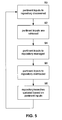
- FIGURE 5 provides a logic diagram depicting the flow associated with creating and/or maintaining a dynamic reference repository such as enterprise architecture repository in accordance with the present invention.
- FIGUREs Preferred embodiments of the present invention are illustrated in the FIGUREs, like numerals being used to refer to like and corresponding parts of the various drawings.
- the present invention can provide a means of automated reference knowledge management in the domain of enterprise architecture.
- the embodiments of the present invention are intended to address the reference knowledge acquisition and management problems in support of enterprise architecture development that are lacking in the prior art.
- Various embodiments provide a set of new software functionalities for discovering, retrieving, cataloging, managing, maintaining, sharing and distributing pertinent reference documents and Subject Matter Expert (SME) inputs to a database system.
- Discovery and retrieval of reference knowledge to and from a database can be provided through customizable agent searches / retrievals from the Internet, an intranet, or any other network based reference source, and through automated filtering and prioritizing.
- Embodiments of this invention can further comprise utilities for gathering SME reviews, assessments and interviews.
- embodiments of this invention can comprise a graphical user interface (GUI) for developing, customizing and managing search agents, filters, and rankings and for otherwise interfacing with the database and its associated features.
- GUI graphical user interface
- Proactive monitoring of emergent reference materials can be performed by custom-designed agent searches in the network domains.
- the embodiments can provide periodic and prioritized reports and updates of desired reference materials.
- the embodiments can also provide utilities for managing desired reference materials, to include integrated assessments, associations, and peer notifications. Such utilities can comprise computer-executable software instructions operable to perform the desired functionality.
- Embodiments further have the capability to be neutral to data type (format), allowing for the capture of reference material in many potential electronic and digital formats.
- a database incorporating an embodiment of the present invention can be organized around a user-customizable ontology and taxonomy of an enterprise architecture domain, enabling users to categorize and interrelate reference materials (data).
- the taxonomy will facilitate the mapping of enterprise requirements and pertinent technologies to a desired capability. Utilities for these capability mappings will allow users to evaluate the potential of numerous technical solutions to a given requirement.
- Another embodiment provides an enterprise maintaining a database, or system of databases, the ability to maintain an integrated, shared and distributed knowledge base of current domain documents, artifacts, and SME expertise that pertains to the enterprise's area of interest.
- This collection of information may take any number of electronic forms, including but not limited to typical office software productivity products, web documentation, e-mail documentation, and other like formats known to those skilled in the art.
- the embodiments of this invention can provide for integrated access to the knowledge database system through a single user interface, instead of through multiple disparate interfaces to multiple databases.
- an enterprise architecture database system can enable each user's research to be used by every other user, eliminating the need for redundant research activities by all users.
- Embodiments may include a database organized around a thorough ontology and taxonomy of the architecture domain. Such a database will further comprise utilities for analyzing and drawing logical linkages among the domain documents, assessments and SME inputs. Further still, embodiments provide for currency and consistency of the stored information by proactive monitoring of the domain. Utilities can be provided for SME assessments, peer user notifications, time stamping of reference and collaboration documents, and categorization and logical mapping of inputs to the database.
- the present invention in fact provides a definition or a method of defining a common set of data, databases, and sources of information that can be accessed through an enterprise architecture.
- the present invention provides an intelligent database, a database that can update its sources of information automatically, provide those updates to all of the users in the enterprise architecture, and provide notice of those updates to the users of the enterprise architecture.
- a common data depository within enterprise architecture is provided with the ability to be intelligently managed/organized based on the results of searches conducted by customizable search agents.
- the common depository may be an existing resource updated by or a new resource created with the results of the search.
- the method and system of this invention provide a means by which common data repository in support of enterprise architecture can be maintained current in an automated fashion and further provides a means of informing users of that data depository of the currency and of any changes in the common data depository.
- the present invention can manage its searches in an intelligent manner such that a database can be populated and maintained current.
- the present invention can repopulate, update and even redefine contextually the terms and definitions underlying the database and the agents based on discovered or received inputs.
- the agents can interpret similar or even identical terms or definitions contextually. For example, acronyms used within different resources must be interpreted differently to avoid returning non-pertinent inputs to a search.
- TCS Tactical Control Station
- TCS Time Critical Strike
- the agents are able to tag a term, such as the above acronyms and contextually relate the term with its source. This allows the terms to be differentiated and properly used, thus maintaining the integrity of the assigned meaning. This avoids the time consuming processes that requires manually filtering searches or conducting multiple limited searches which are the
- This invention need not be limited to use with government agencies. Rather this application has many potential commercial applications for any organization that seeks to track and maintain current large amounts of information.
- the information obtained from the customizable agents may be format neutral.
- Format neutral is taken to mean that as standards evolve for example, data delivery standards such as going from a tape drive, to a floppy, to a CD, to a DVD, these different formats and data delivery standards may not be compatible with one another.
- the agents can integrate data from various sources and various different formats into a common standard used within the enterprise architecture system.
- Application of this invention accounts for all of these different formats and different systems to provide an end product accessible by a common interface. This feature may involve manual input in term of deciding what formats to support and which ones are being phasing out.
- FIGURE 1 provides a context in which to place the method and system of this invention.
- This invention focuses on the management, deployment and currency (keeping data up to date) of information that comes into a database within the enterprise architecture 10. Additionally, the present invention gathers the information to achieve these functions.
- FIGURE 1 illustrates knowledge flow 12 within enterprise architecture 10.
- Resources 20 may be within the enterprise or accessible by or available to enterprise architecture 10. From resources 20 one may glean pertinent inputs 21 which transition to the enterprise architecture development 22.
- Pertinent inputs 21 from resources 20 help define the enterprise architecture development 22 and determine how that architecture may be deployed and utilized by analysis and procurement communities 24.
- Framework 26 of enterprise architecture 22 allows analysis of alternatives 28 and acquisition decisions 30 to be determined.
- FIGURE 2 provides an overview of knowledge mapping 30 within enterprise architecture repository system 32.
- clients such as government agencies are shifting their focus from procuring systems to procuring capabilities 38. Identifying capabilities facilitates the recognition of associated shortfalls, needs and development plans.
- Capabilities 38 provide a unifying concept with which to relate concepts of requirements 14, technologies 16 and inputs of SMEs 18. By examining required capabilities, requirements and technologies are identified and refined with the assistance of SMEs 18. Further, the required capabilities may also be refined with the assistance of SMEs 18. The identified requirements and technologies are then used to identify pertinent inputs with which to populate the repository.
- FIGURE 2 demonstrates how requirements 14, technologies 16 and inputs of SMEs 18 map to potential capabilities 38.
- Requirements 14 may include operational 40, systems 42, technical 44, standards 46, or other like requirements known to those skilled in the art.
- the technologies 16 may include basic science 48, theory 50, solutions 52, technology sources 54, or other like input into technologies 16.
- SMEs 18 derive their expertise from operational expertise 56, systems expertise 58, technical expertise 60, or other like experience. This information for requirements, 14 technologies, 16 and subject matter expertise 18 may be derived from source domain information 62.
- FIGURE 2 depicts that by mapping to potential capabilities 38, requirements 14 call for capabilities 38 that technologies 16 provide. These capabilities 38 occur at the intersection between requirements 14, which may be issued from the procuring entity, and technologies 16.
- SMEs 18 help to further refine the potential capabilities 38 that necessitate requirements 14 and technologies 16.
- SMEs 18 might be a consultant on a particular technology.
- SMEs might also provide input into the nuts and bolts of an organization or enterprise and how the organization or enterprise focuses and performs a task.
- FIGURE 2 shows that the present invention may dynamically and automatically update requirements 14, technologies 16 and the identified SMEs 18 relative to capabilities 38.
- requirements 14, technologies 16 and SMEs 18 may remain current and refined. If there is a change in capability 38, agents can refine the requirements 14, technologies, 16 and SMEs 18 that support this capability.
- information obtained from the customizable search agents may be format neutral (i.e., method and system of this invention can maintain consistency of the underlying reference repository for different problem sets). For example this could mean that for different capabilities, problems, projects, etc. that are solving the different issues, the underlying reference repository may be the same but can be dynamically updated and used for the particular problem set while maintaining consistency at its base level so that other users for different problem sets can still have the same information available.
- Source domain information 62 represents the vast amount of knowledge that is out there that can be culled for the specific knowledge requirements that one is looking to populate a reference repository 32 with. That knowledge can then be pulled from that source domain information in a set manner according to the algorithm however it may be set and then refined further mapped to a particular capability and the same set of knowledge can be mapped to different capabilities as needed and with specificity.
- FIGURE 3 represents a database in accordance with the method and system of this invention and shows how the knowledge is gathered from a large set of knowledge resources culled and refined and then related to the potential capabilities that are the specific capabilities that are required.
- FIGURE 3 is intended to show that a single interface can be used to provide the entry point into the database, the reference repository from all those knowledge sources. A single interface can be used to access this repository. Once this reference repository is put together, various users at different locations, different large groups widely spaced both in a physical location and different networks can access via the interface into the dynamic reference repository using a common set of import / export tools such as XML or HTML.
- this database is dynamic and can have agents to search and retrieve information rather than waiting for people to manually input it as they become aware of it.
- Automatic searches, ranking and notifications are key features. This is because not all users will be interested in the same thing and in fact each user will probably be interested in only a certain number of those things. A user may not want to be notified of every update of change to the database but in fact only notified of those changes that he or she may be interested in tracking.
- the method and system of this invention provide that capability.
- a user for example could provide a list of keywords or key subjects of interest to him or her and could do this upon subscribing to the server such as subscribing to the database, the knowledge base or whatever implementation the invention takes and then when those particular subjects or keywords or changes to those are found the user is updated only on those. The information can then be pushed out to that user. Further, based on, for example past usage by a user or the past habits, search habits, characteristics of a particular user, the method and system of the present invention has the capability to learn from that and tailor or update a search dynamically for that user so as to optimize the results that come back to that user.
- the method and system of this invention might be able to monitor for example terms reference a key term that is being searched for.
- a search for a particular type of lens, and in the literature of that particularly type of lens may start to be being referred to by a different name by those people in the art or the market space of interest.
- the method and system of this invention can understand that change in name might not necessarily mean a change in substance and retrieve articles, knowledge, or pieces of information even though they reference the term being referred to by a different name in the literature.
- Customizable agents can identify and retrieve pertinent information from domain 62 with specific knowledge requirements with which to populate the enterprise architecture reference repository 32. Customizable agents may be refined manually or automatically to further map to a particular capability 38 and in so doing more efficiently and contextually extract the pertinent information from resources for domain 62. Thus, different customizable agents can contextually map information from domain 62 to different capabilities 38 as needed with specificity in order to properly populate enterprise architecture reference repository 44.
- FIGURE 3 depicts that database 70 may be thought of as a dynamic reference repository.
- the present invention maintains this database 70 by discovering pertinent inputs 72 to database 70. These inputs are determined by capabilities 38 and retrieved from requirements 14, technologies 16 and SMEs 18. These pertinent inputs 72 are derived from broad resources 74 which contain library services, automated customized searches, mapping support, ranked search results, continual service updates, SME assessment services, automated notifications to architects and SMEs. However, in this case an intelligent agent can discover and retrieve pertinent inputs 72 from this broad domain of resource 74 and funnel these pertinent inputs into the capability 38. Thus these customizable agents are able to cull a large set of knowledge resources and produce refined and contextual results which appropriately populate database 70 in order to facilitate shared knowledge.
- a single interface 80 may be used to access database 70 and customizable agents 78. This interface may allow a user to create, edit, and manage customizable search agents 78 in order to properly create, populate, and maintain contextual information extracted from resources 74 in order to provide shared knowledge throughout the enterprise.
- database 70 is dynamic and may have multiple agents 78 that contextually search, identify, and retrieve pertinent information 72 from resources 74. These customizable search agents track and retrieve this pertinent information rather than waiting for users to manually update database 70.
- FIGURE 4 provides a conceptual block diagram of one embodiment of the present invention.
- database 70 interfaces with users 82 via user interface 80.
- Processing module 84 is operably coupled to database 70 and executes a set of software instructions, agents 78 that identify pertinent inputs 72 to the enterprise architecture repository 32 within resource 74.
- Processing module 84 may be a single processing device or a plurality of processing devices.
- a processing device may be a microprocessor, micro-controller, digital signal processor, microcomputer, central processing unit, field programmable gate array, programmable logic device, state machine, logic circuitry, analog circuitry, digital circuitry, and/or any device that manipulates signals (analog and/or digital) based on operational instructions stored in memory.
- the memory may be a single memory device or a plurality of memory devices.
- Such a memory device may be a read-only memory, random access memory, volatile memory, non-volatile memory, static memory, dynamic memory, flash memory, cache memory, and/or any device that stores digital information.
- the processing module 84 implements one or more of its functions via a state machine, analog circuitry, digital circuitry, and/or logic circuitry
- the memory storing the corresponding operational instructions may be embedded within, or external to, the circuitry comprising the state machine, analog circuitry, digital circuitry, and/or logic circuitry.
- the memory stores, and the processing module 84 executes, operational instructions corresponding to at least some of the steps and/or functions illustrated in FIGURE 5.
- Resources 74 may be an internal network such as the Internet, an external resource such as the Internet, or a portal through which external communications 86 are received.
- Processing module 84 is further able to manage and distribute the pertinent inputs identified within resources 74 to properly populate and update database 70 within the enterprise architecture repository 32. These processes may further include the cataloguing and maintenance of pertinent inputs identified within resources 74.
- FIGURE 5 provides a logic diagram depicting the flow associated with creating and/or maintaining a dynamic reference repository such as enterprise architecture repository 32.
- Step 90 pertinent inputs to dynamic reference repository are discovered and then retrieved in Step 92. These pertinent inputs are then managed and distributed to update the dynamic reference repository in Steps 94 and 96 respectively. The repository, and potentially the search agents, is then updated based on the pertinent inputs in step 98. Additional embodiments may include the cataloguing and maintenance of these pertinent inputs to maintain data currency for the dynamic reference repository.
- this search agent may perform automated or manually prompted searches to discover and retrieve the pertinent inputs from resources operably coupled to dynamic reference repository.
- resources may include the Internet, local networks such as Internet, input from subject matter experts to include assessments, interviews, reviews, or other communications that are addressed directly to the dynamic reference repository such as emails, faxes, voice or other communications as known to those skilled in the art.
- These customizable agent searches may be developed using a user interface with dynamic reference repository. This user interface allows the user to develop, customize and inter-manage the customizable agent in order to create, update, and maintain the currency and consistency of the dynamic reference repository. Further, the customizable agents may search automatically based on a specified periodicity, search initiation criteria or when manually directed. These searches may be prioritized to specific reference materials.
Landscapes
- Engineering & Computer Science (AREA)
- Theoretical Computer Science (AREA)
- Databases & Information Systems (AREA)
- Data Mining & Analysis (AREA)
- Physics & Mathematics (AREA)
- General Engineering & Computer Science (AREA)
- General Physics & Mathematics (AREA)
- Computing Systems (AREA)
- Information Retrieval, Db Structures And Fs Structures Therefor (AREA)
- Stored Programmes (AREA)
- Management, Administration, Business Operations System, And Electronic Commerce (AREA)
Applications Claiming Priority (4)
| Application Number | Priority Date | Filing Date | Title |
|---|---|---|---|
| US55661304P | 2004-03-26 | 2004-03-26 | |
| US556613P | 2004-03-26 | ||
| US10/824,449 US7756823B2 (en) | 2004-03-26 | 2004-04-14 | Dynamic reference repository |
| US824449 | 2004-04-14 |
Publications (2)
| Publication Number | Publication Date |
|---|---|
| EP1580669A2 true EP1580669A2 (de) | 2005-09-28 |
| EP1580669A3 EP1580669A3 (de) | 2006-11-08 |
Family
ID=34864617
Family Applications (1)
| Application Number | Title | Priority Date | Filing Date |
|---|---|---|---|
| EP05006324A Withdrawn EP1580669A3 (de) | 2004-03-26 | 2005-03-23 | Dynamisches Referenzdatenlagersystem |
Country Status (2)
| Country | Link |
|---|---|
| US (1) | US7756823B2 (de) |
| EP (1) | EP1580669A3 (de) |
Families Citing this family (24)
| Publication number | Priority date | Publication date | Assignee | Title |
|---|---|---|---|---|
| US7437358B2 (en) * | 2004-06-25 | 2008-10-14 | Apple Inc. | Methods and systems for managing data |
| US7774326B2 (en) | 2004-06-25 | 2010-08-10 | Apple Inc. | Methods and systems for managing data |
| US7730012B2 (en) | 2004-06-25 | 2010-06-01 | Apple Inc. | Methods and systems for managing data |
| US7769579B2 (en) | 2005-05-31 | 2010-08-03 | Google Inc. | Learning facts from semi-structured text |
| US20060162546A1 (en) * | 2005-01-21 | 2006-07-27 | Sanden Corporation | Sealing member of a compressor |
| US9208229B2 (en) | 2005-03-31 | 2015-12-08 | Google Inc. | Anchor text summarization for corroboration |
| US7587387B2 (en) | 2005-03-31 | 2009-09-08 | Google Inc. | User interface for facts query engine with snippets from information sources that include query terms and answer terms |
| US8682913B1 (en) | 2005-03-31 | 2014-03-25 | Google Inc. | Corroborating facts extracted from multiple sources |
| US7831545B1 (en) * | 2005-05-31 | 2010-11-09 | Google Inc. | Identifying the unifying subject of a set of facts |
| US8996470B1 (en) | 2005-05-31 | 2015-03-31 | Google Inc. | System for ensuring the internal consistency of a fact repository |
| WO2007002412A2 (en) * | 2005-06-22 | 2007-01-04 | Affiniti, Inc. | Systems and methods for retrieving data |
| US8260785B2 (en) | 2006-02-17 | 2012-09-04 | Google Inc. | Automatic object reference identification and linking in a browseable fact repository |
| US8122026B1 (en) | 2006-10-20 | 2012-02-21 | Google Inc. | Finding and disambiguating references to entities on web pages |
| EP2092441A1 (de) * | 2006-10-31 | 2009-08-26 | Nielsen Media Research, Inc. et al | Verfahren und systeme zur informationsabfrage aus datenquellen |
| EP2102749A2 (de) * | 2006-12-22 | 2009-09-23 | Autiq As | Agentenverwaltungssystem |
| US8347202B1 (en) | 2007-03-14 | 2013-01-01 | Google Inc. | Determining geographic locations for place names in a fact repository |
| US8812435B1 (en) | 2007-11-16 | 2014-08-19 | Google Inc. | Learning objects and facts from documents |
| US20090204702A1 (en) * | 2008-02-08 | 2009-08-13 | Autiq As | System and method for network management using self-discovering thin agents |
| US20100161344A1 (en) * | 2008-12-12 | 2010-06-24 | Dyson David S | Methods and apparatus to prepare report requests |
| US8966434B2 (en) | 2011-06-06 | 2015-02-24 | Microsoft Corporation | Repository based development using project development tools in enterprise management environment |
| US8688793B2 (en) | 2011-11-08 | 2014-04-01 | Blackberry Limited | System and method for insertion of addresses in electronic messages |
| US9483344B2 (en) | 2012-04-05 | 2016-11-01 | Assurant, Inc. | System, method, apparatus, and computer program product for providing mobile device support services |
| US9413893B2 (en) * | 2012-04-05 | 2016-08-09 | Assurant, Inc. | System, method, apparatus, and computer program product for providing mobile device support services |
| US20240386082A1 (en) * | 2023-05-16 | 2024-11-21 | Michael Center | Method of digital badging and micro credentialing |
Family Cites Families (16)
| Publication number | Priority date | Publication date | Assignee | Title |
|---|---|---|---|---|
| US5715443A (en) * | 1994-07-25 | 1998-02-03 | Apple Computer, Inc. | Method and apparatus for searching for information in a data processing system and for providing scheduled search reports in a summary format |
| US6070143A (en) * | 1997-12-05 | 2000-05-30 | Lucent Technologies Inc. | System and method for analyzing work requirements and linking human resource products to jobs |
| US6484155B1 (en) * | 1998-07-21 | 2002-11-19 | Sentar, Inc. | Knowledge management system for performing dynamic distributed problem solving |
| US6363377B1 (en) * | 1998-07-30 | 2002-03-26 | Sarnoff Corporation | Search data processor |
| US20010047355A1 (en) * | 2000-03-16 | 2001-11-29 | Anwar Mohammed S. | System and method for analyzing a query and generating results and related questions |
| CA2361022A1 (en) * | 2000-11-03 | 2002-05-03 | Charles Allan Armstrong | Knowledge management system |
| US6907416B2 (en) * | 2001-06-04 | 2005-06-14 | Honeywell International Inc. | Adaptive knowledge management system for vehicle trend monitoring, health management and preventive maintenance |
| US7017183B1 (en) * | 2001-06-29 | 2006-03-21 | Plumtree Software, Inc. | System and method for administering security in a corporate portal |
| US6654751B1 (en) * | 2001-10-18 | 2003-11-25 | Networks Associates Technology, Inc. | Method and apparatus for a virus information patrol |
| US20030093310A1 (en) * | 2001-11-09 | 2003-05-15 | Macrae David G. | Business management process |
| US6834274B2 (en) * | 2002-01-07 | 2004-12-21 | Dennis W. Tafoya | Building a learning organization using knowledge management |
| US7222297B2 (en) * | 2002-01-14 | 2007-05-22 | International Business Machines Corporation | System and method for using XML to normalize documents |
| US7346529B2 (en) * | 2002-05-07 | 2008-03-18 | David R. Flores | Method for developing an enterprise alignment framework hierarchy by compiling and relating sets of strategic business elements |
| US7028038B1 (en) * | 2002-07-03 | 2006-04-11 | Mayo Foundation For Medical Education And Research | Method for generating training data for medical text abbreviation and acronym normalization |
| US7308414B2 (en) * | 2003-05-07 | 2007-12-11 | Pillsbury Winthrop Shaw Pittman Llp | System and method for analyzing an operation of an organization |
| US7237266B2 (en) * | 2003-06-30 | 2007-06-26 | At&T Intellectual Property, Inc. | Electronic vulnerability and reliability assessment |
-
2004
- 2004-04-14 US US10/824,449 patent/US7756823B2/en not_active Expired - Fee Related
-
2005
- 2005-03-23 EP EP05006324A patent/EP1580669A3/de not_active Withdrawn
Also Published As
| Publication number | Publication date |
|---|---|
| US20050216489A1 (en) | 2005-09-29 |
| US7756823B2 (en) | 2010-07-13 |
| EP1580669A3 (de) | 2006-11-08 |
Similar Documents
| Publication | Publication Date | Title |
|---|---|---|
| US7756823B2 (en) | Dynamic reference repository | |
| Selby et al. | BrAPI—an application programming interface for plant breeding applications | |
| US8812444B2 (en) | Managing disconnected investigations | |
| US20110231372A1 (en) | Adaptive Archive Data Management | |
| US7584161B2 (en) | Software system for managing information in context | |
| US20120221596A1 (en) | Method and System for Automated Search for, and Retrieval and Distribution of, Information | |
| US7403989B2 (en) | Facilitating improved workflow | |
| CN102446311B (zh) | 过程驱动的业务智能 | |
| US20110154209A1 (en) | Platform for proactive discovery and delivery of personalized content to targeted enterprise users | |
| US20100114691A1 (en) | Managing a marketing template used in an e-mail marketing campaign | |
| US20040212636A1 (en) | Systems and methods for relating events to a date or date range selection | |
| CN1763742A (zh) | 向用户提供集成帮助信息的系统和方法 | |
| KR20010031249A (ko) | 정보 관리 시스템 | |
| US20100070493A1 (en) | System for searching network accessible data sets | |
| CN1347529A (zh) | 数据仓库环境下使信息可视化的方法 | |
| US20140164008A1 (en) | Methods and systems for business development and licensing and competitive intelligence | |
| Thomas et al. | Using agents to improve the usability and usefulness of the World-Wide Web | |
| Post et al. | Protempa: A method for specifying and identifying temporal sequences in retrospective data for patient selection | |
| EP1367513A2 (de) | Verbessertes Arbeitsablaufsystem | |
| US20200104861A1 (en) | Web-based system for customer relationship management and method for operating the same | |
| US8103660B2 (en) | Computer method and system for contextual management and awareness of persistent queries and results | |
| Tang et al. | Recent shortcuts: using recent interactions to support shared activities | |
| Cho | Intellectual structure evolution of open access research observed through correlation index of keyword centrality | |
| Bird et al. | The Open Language Archives Community: a 20-year update | |
| EP1304640A2 (de) | System und Verfahren für das Verwenden Netz-basierter Wizards und Werkzeuge |
Legal Events
| Date | Code | Title | Description |
|---|---|---|---|
| PUAI | Public reference made under article 153(3) epc to a published international application that has entered the european phase |
Free format text: ORIGINAL CODE: 0009012 |
|
| AK | Designated contracting states |
Kind code of ref document: A2 Designated state(s): AT BE BG CH CY CZ DE DK EE ES FI FR GB GR HU IE IS IT LI LT LU MC NL PL PT RO SE SI SK TR |
|
| AX | Request for extension of the european patent |
Extension state: AL BA HR LV MK YU |
|
| PUAL | Search report despatched |
Free format text: ORIGINAL CODE: 0009013 |
|
| AK | Designated contracting states |
Kind code of ref document: A3 Designated state(s): AT BE BG CH CY CZ DE DK EE ES FI FR GB GR HU IE IS IT LI LT LU MC NL PL PT RO SE SI SK TR |
|
| AX | Request for extension of the european patent |
Extension state: AL BA HR LV MK YU |
|
| 17P | Request for examination filed |
Effective date: 20070508 |
|
| AKX | Designation fees paid |
Designated state(s): DE FR GB IT |
|
| 17Q | First examination report despatched |
Effective date: 20070720 |
|
| STAA | Information on the status of an ep patent application or granted ep patent |
Free format text: STATUS: THE APPLICATION IS DEEMED TO BE WITHDRAWN |
|
| 18D | Application deemed to be withdrawn |
Effective date: 20071201 |