EP1582033B1 - Procede pour une station sans fil de localisation et d'association a un reseau sans fil - Google Patents
Procede pour une station sans fil de localisation et d'association a un reseau sans fil Download PDFInfo
- Publication number
- EP1582033B1 EP1582033B1 EP03808073.5A EP03808073A EP1582033B1 EP 1582033 B1 EP1582033 B1 EP 1582033B1 EP 03808073 A EP03808073 A EP 03808073A EP 1582033 B1 EP1582033 B1 EP 1582033B1
- Authority
- EP
- European Patent Office
- Prior art keywords
- wireless network
- station
- recited
- mobility agent
- information
- Prior art date
- Legal status (The legal status is an assumption and is not a legal conclusion. Google has not performed a legal analysis and makes no representation as to the accuracy of the status listed.)
- Expired - Lifetime
Links
Images



Classifications
-
- H—ELECTRICITY
- H04—ELECTRIC COMMUNICATION TECHNIQUE
- H04W—WIRELESS COMMUNICATION NETWORKS
- H04W48/00—Access restriction; Network selection; Access point selection
- H04W48/16—Discovering, processing access restriction or access information
-
- H—ELECTRICITY
- H04—ELECTRIC COMMUNICATION TECHNIQUE
- H04L—TRANSMISSION OF DIGITAL INFORMATION, e.g. TELEGRAPHIC COMMUNICATION
- H04L41/00—Arrangements for maintenance, administration or management of data switching networks, e.g. of packet switching networks
- H04L41/04—Network management architectures or arrangements
- H04L41/046—Network management architectures or arrangements comprising network management agents or mobile agents therefor
- H04L41/048—Network management architectures or arrangements comprising network management agents or mobile agents therefor mobile agents
-
- H—ELECTRICITY
- H04—ELECTRIC COMMUNICATION TECHNIQUE
- H04L—TRANSMISSION OF DIGITAL INFORMATION, e.g. TELEGRAPHIC COMMUNICATION
- H04L41/00—Arrangements for maintenance, administration or management of data switching networks, e.g. of packet switching networks
- H04L41/50—Network service management, e.g. ensuring proper service fulfilment according to agreements
- H04L41/5003—Managing SLA; Interaction between SLA and QoS
- H04L41/5009—Determining service level performance parameters or violations of service level contracts, e.g. violations of agreed response time or mean time between failures [MTBF]
-
- H—ELECTRICITY
- H04—ELECTRIC COMMUNICATION TECHNIQUE
- H04L—TRANSMISSION OF DIGITAL INFORMATION, e.g. TELEGRAPHIC COMMUNICATION
- H04L63/00—Network architectures or network communication protocols for network security
- H04L63/02—Network architectures or network communication protocols for network security for separating internal from external traffic, e.g. firewalls
- H04L63/029—Firewall traversal, e.g. tunnelling or, creating pinholes
-
- H—ELECTRICITY
- H04—ELECTRIC COMMUNICATION TECHNIQUE
- H04L—TRANSMISSION OF DIGITAL INFORMATION, e.g. TELEGRAPHIC COMMUNICATION
- H04L63/00—Network architectures or network communication protocols for network security
- H04L63/04—Network architectures or network communication protocols for network security for providing a confidential data exchange among entities communicating through data packet networks
- H04L63/0428—Network architectures or network communication protocols for network security for providing a confidential data exchange among entities communicating through data packet networks wherein the data content is protected, e.g. by encrypting or encapsulating the payload
-
- H—ELECTRICITY
- H04—ELECTRIC COMMUNICATION TECHNIQUE
- H04W—WIRELESS COMMUNICATION NETWORKS
- H04W88/00—Devices specially adapted for wireless communication networks, e.g. terminals, base stations or access point devices
- H04W88/08—Access point devices
-
- H—ELECTRICITY
- H04—ELECTRIC COMMUNICATION TECHNIQUE
- H04W—WIRELESS COMMUNICATION NETWORKS
- H04W8/00—Network data management
- H04W8/02—Processing of mobility data, e.g. registration information at HLR [Home Location Register] or VLR [Visitor Location Register]; Transfer of mobility data, e.g. between HLR, VLR or external networks
-
- H—ELECTRICITY
- H04—ELECTRIC COMMUNICATION TECHNIQUE
- H04W—WIRELESS COMMUNICATION NETWORKS
- H04W80/00—Wireless network protocols or protocol adaptations to wireless operation
- H04W80/04—Network layer protocols, e.g. mobile IP [Internet Protocol]
Definitions
- the present invention relates generally to communication networks, and in particular to a wireless station of a wireless data network finding at L2 one or more access points that are in communication with a mobility agent, such that the wireless station can associate with such an access point to enable Mobile IP services.
- Wireless networks such as wireless local area networks (WLANs) are known.
- WLAN wireless local area networks
- stations are able to communicate wirelessly within a local network.
- infrastructure network all communication is via an access point that acts as a base station. Any entity on the WLAN can also communicate with a node on any other wired or wireless network that is connected to the WLAN, e.g., via the access point.
- Mobile IP is a well known extension of the Internet Protocol (IP) that enables a node on an IP-based network to change its physical attachment point in the network, e.g., the Internet, while retaining the same IP address by which it is identified on its home network.
- Agents providing Mobile IP services send IP packets that include advertisements of the services they provide.
- determining IP services is a process that occurs at L3 of the communication protocol.
- WLANs typically enable a wireless node to move from place to place within a small area, e.g., at a LAN level, without disrupting communications
- mobile IP provides IP address mobility across a global network such as the Internet.
- a station in a WLAN is not guaranteed to function seamlessly as Mobile IP node.
- a prior art wireless station associates with an access point at L2. Because the availability of IP services is determined at L3, prior art wireless stations do not function seamlessly with Mobile IP.
- a station on a WLAN also to be able to communicate using Mobile IP.
- Mobile IP The purpose of Mobile IP is to enable a mobile node to retain its home IP address even when it is away from its home subnetwork of an overall network such as the Internet. This is accomplished by the addition of a mobility agent, a router known in MIPv4 as a foreign agent, that provides the node with a "care-of" address for the mobile node. MIPv6 provides a slightly different mechanism. The care-of address is part of the IP packet itself, so that foreign agents are not required.
- the mobile node's home network similarly adds a mobility agent, in this case a router known as a home agent, which forwards IP packets addresses to the mobile node's IP address to the node's care-of address on the foreign network.
- a MIPv4 mobile node When a MIPv4 mobile node determines that it is not attached to its home network, it listens for router advertisements from a foreign agent. Such foreign agent advertisements contain one or more care-of addresses. After obtaining a care-of address, the mobile node then registers with the foreign agent, and subsequently, registers the care-of address with its home agent. Once these registrations are complete, the home agent intercepts IP packets containing the IP address of the mobile node and forwards them, via an IP tunnel, to the care-of address. When these IP packets reach the foreign network, the foreign agent redirects them to the mobile IP node at its care-of address.
- the foreign agent removes them from the tunnel and the home agent together act as proxies for the mobile node's IP address, routing inbound and outbound traffic to and from the mobile node using its home IP address.
- the home agent When a mobile note again changes its attachment point to the Internet, it locates a new foreign agent, obtains a new care-of address, and re-registers with its home agent.
- RFC 3344 there is only one active care-of address for each foreign agent or access router, and therefore a single reverse tunnel to the Home Agent needs to be set up.
- An infrastructure WLAN includes an access point (AP) to act as a base station in the WLAN so that any wireless communication between stations in the WLAN occurs via the AP.
- the AP is connected to a wired network such as a LAN which in turn may be connected to a wide area network (WAN) such as the Internet. Any station in the WLAN can thus communicate with both the wired LAN or WAN via the AP.
- a wired network such as a LAN
- WAN wide area network
- a station attempts to associate with an AP by scanning in "RF monitor mode" for signals, known as “beacon signals,” that periodically originate from an AP.
- Beacon signals serve to uniquely identify the AP within the WLAN.
- a station detects a beacon, it switches into send-receive mode and executes an association protocol with the AP. At the successful end of the association protocol, the station is said to be associated with the AP.
- the AP is responsible for delivering network traffic to the station (and other associated stations). While an AP may associate with multiple stations, a station may associate with only one AP at a time, even though there may be more than one AP that the station can physically communicate with. When an associated station loses communication with its AP, the station must re-associate, either with a different AP, or the same AP.
- the association between a station and an AP is initiated by a station, not an AP.
- the station selects an AP it can communicate with, e.g., after receiving a beacon signal, and begins the association protocol.
- the criteria for a station selecting one AP over another is not specified in the IEEE 802.11 standard, but in practice, at minimum it is based on the quality of the wireless signal from the available APs. As previously noted, once associated, the station does not directly wirelessly communicate with any station not associated with its AP.
- the associating of a station with an AP occurs at the link layer (layer-2) of the protocol.
- the providing of Mobile IP services by foreign agents and home agents uses IP packets, and thus occurs at the network layer (layer-3). Because the association procedure occurs at a lower protocol layer than Mobile IP services, the association between an AP and a station occurs at a protocol layer wherein there is ignorance of Mobile IP services, and thus occurs without regard to whether the AP is in communication with any mobility agents.
- WLAN wireless local area network
- an AP is a wireless base station through which communication is managed in an infrastructure network (see BSS).
- An AP may be in communication with other wired or wireless networks. When compared to functions in a wired network, it is analogous to an Ethernet hub with optional access control to other networks.
- Access Router A router that provides access between two or more networks, for example, between a WLAN and a LAN, or between a LAN and the Internet. See also Mobility Agent.
- Ad Hoc Network See IBBS.
- association In the IEEE 802.11 standards, association is the procedure used to establish a binding between an access point and a station, to make the station part of the wireless network managed by the AP. Note that prior to association, a station may be in passive scanning mode, called RF monitor mode herein (see below), but while associated the station is in send-receive mode (see below), called "station” mode in the case of an IEEE 802.11 STA.
- RF monitor mode passive scanning mode
- send-receive mode see below
- Associated station In an IEEE 802.11 BSS (or ESS) WLAN, communications between stations and other networks is managed by an AP. A station becomes an associated station when it has been successfully accepted by the AP to be part of the wireless network managed by that AP.
- IEEE 802.11 BSS or ESS
- Beacon A periodic 802.11 frame transmitted by an AP that provides information required by stations for establishing and maintaining an association with the AP.
- the beacon contains the unique identifier called the Service Set Identifier (SSID) for the wireless network of the AP. See also SSID.
- SSID Service Set Identifier
- BSS Basic Service Set
- IBSS an independent BSS.
- BSS An IEEE 802.11 Extended Service Set is a WLAN that includes two or more BSSs, the APs of which may provide service to overlapping physical areas. The APs behave as a single logical router for all nodes in the ESS.
- Foreign Agent A type of Mobility Agent, specifically an IPv4 router on a mobile node's visited network that provides routing services to the mobile node while registered.
- the foreign agent detunnels and delivers IP packets that were tunneled by the mobile node's home agent to the mobile node.
- the foreign agent may serve as a default router for registered mobile nodes.
- Foreign agents do not exist in Mobile IPV6.
- the IP packets themselves include the care-of address and the services provided by a foreign agent in IPv4 is provided by an access router.
- Foreign Agent Advertisement A Mobility Agent advertisement sent by a foreign agent. See Mobility Agent advertisement.
- HA Home Agent
- a type of mobility agent specifically a Mobile IPv4 or Mobile IP version 6 router on a mobile node's home link that maintains current location information for the mobile node in the form of a current care-of address and, while the mobile node is away from home, intercepts packets on the home link destined to the mobile node's home address and tunnels packets for delivery to the mobile node's registered care-of address.
- a Home Agent is a mobility agent.
- IP IP address that is assigned for an extended period of time to a mobile node. It remains unchanged, regardless of where the node is attached to the network.
- Home Network A network, possibly virtual, having a network prefix matching that of a mobile node's home address. Note that standard IP routing mechanisms will deliver IP packets destined to a mobile node's home address to the mobile node's home network.
- IBSS In the IEEE 802.11 standards, an Independent Basic Service Set (EBSS) is a WLAN with two or more wireless nodes that communicate directly without associating with an AP. Also referred to as an ad hoc wireless network in contrast to an infrastructure wireless network.
- EBSS Independent Basic Service Set
- IP the Internet Protocol, e.g., IP version 4 (IPv4) or IP version 6 (IPv6).
- IPv4 IP version 4
- IPv6 IP version 6
- an interface is used herein in several contexts.
- an interface also an L3 interface
- a node is a device that implements IP
- an L2 link is a communication facility or medium over which nodes can communicate at the link layer (L2), such as a simple or bridged Ethernet.
- L2 link is a communication facility or medium over which nodes can communicate at the link layer (L2), such as a simple or bridged Ethernet.
- L2 link layer such as a simple or bridged Ethernet.
- a wireless network device provides a bi-directional interface to a WLAN after a station associates with the AP of the WLAN.
- Interface Identifier A number used to identify a node's interface on a link.
- the interface identifier is the set of remaining low-order bits in the node's IP address after the subnet prefix.
- IRDP Internet Router Discovery Protocol
- a protocol for routers on a network broadcast their presence to other nodes on the network.
- a router supporting this protocol periodically broadcasts an Internet Control Message Protocol (ICMP) IP packet containing a "router advertisement.”
- ICMP Internet Control Message Protocol
- a node on the network may at any time invoke a router advertisement by broadcasting a "router solicitation.”
- Mobile IP defines (RFC 3344) extensions to this protocol that identifies the router advertisement as a "home agent advertisement” and/or a "foreign agent advertisement.” See Mobility Agent Advertisement below.
- Mobility Agent In MIPv4, the Mobility Agents are foreign agents that receive data from home agents, and the home agents. In IPv6, the Mobility Agents are access routers and home agents.
- MIPv4 MIPv4
- IPv6 Mobility Agents are access routers and home agents.
- One aspect of the present invention is the discovery at L2 of mobility agents such as home agents, foreign agents and/or access routers.
- the term Mobility Agent is used herein as a general term encompassing foreign agents, home agents, and access routers.
- Mobility Agent Advertisement Mobility agent advertisements are transmitted by a mobility agent to advertise its services. Mobile nodes use these advertisements to determine their current point of attachment e.g., to the Internet.
- a mobility agent advertisement is an Internet Control Message Protocol (ICMP) IP packet that includes a Router Advertisement that has been extended to also carry a mobility agent advertisement Extension. The exact function of the advertisement— home agent, foreign agent, or access router—is identified by a FLAGS field in the extension header.
- ICMP Internet Control Message Protocol
- IP Mobility An IETF document (RFC 3344) that describes the infrastructure in which a mobile node may change its attachment point from one network or subnetwork to another without changing its home (IP) address.
- RRC 3344 An IETF document (RFC 3344) that describes the infrastructure in which a mobile node may change its attachment point from one network or subnetwork to another without changing its home (IP) address.
- Mobile IPv4 Mobile IP for IP version 4. Same as (RFC 3344).
- Mobile IPv6 Mobile IP to work with IP version 6. See, for example, David B. Johnson, Charles E. Perkins, and Jari Arkko: "Mobility Support in IPv6" (document title “draft-ietf-mobileip-ipv6-18.txt", available on the Internet at http://www.ietf.org/internet-drafts/draft-ietf-mobileip-ipv6-18.txt.
- the care-of-address is included in the IP packet itself. Therefore, in Mobile IPv6, foreign agents do not exist. The only Mobile IP requirement placed upon the foreign network is to provide an access router capable of routing packets to the Mobile IP node's home address.
- Mobile Network A network that moves together with a Mobile Router. See also Mobile Router.
- Mobile Node In Mobile IP, a node in a network, e.g., a host or router that changes its point of attachment from one network or subnetwork to another.
- a mobile node may change its location without changing its IP address; it may continue to communicate with other Internet nodes at any location using its (constant) IP address, assuming link-layer connectivity to a point of attachment is available.
- Mobile nodes may remain at a stationary location or be in motion.
- mobile stations and portable stations as defined in IEEE 802.11 can also be mobile nodes if they support Mobile IP.
- Mobile Router A mobile node that is a router.
- a mobile router provides for the mobility of one or more networks moving together, for example, on an airplane or a ship.
- the nodes connected to a network served by the Mobile Router may themselves be mobile nodes or routers.
- a STA of an infrastructure wireless network that provides routing may be a mobile router.
- Mobile Station In the IEEE 802.11, a type of station that is able to use network communications while in motion.
- a mobile station is a type of mobile node when Mobile IP enabled. See also portable station.
- Portable Station In the IEEE 802.11 standards, a type of station that may be moved from location to location, but that is only able to use network communications while stationary at a fixed location (i.e., not in motion).
- a portable station is a type of mobile node when Mobile IP enabled. See also mobile station.
- Re-association In the IEEE 802.11 standards, The process whereby a station associated with an AP transfers association to another—possibly the same—AP. Also commonly referred to as a "hand-off.”
- RF Monitor Mode As used herein, a mode for a station during which a wireless network device listens to all MAC frame types (control, management and data) regardless of the AP from where the frames originate or belong to. This means that, if the radio module is in an area covered by more than one AP, it will listen to the traffic broadcast in each AP or wireless network.
- the purpose of this mode is essentially to enable a wireless station to "scan" for broadcasts from APs, e.g., the broadcast of beacons in the IEEE 802.11 standard, in order to locate an AP with a good enough signal strength with which to associate. It is assumed that one or more of the wireless network device or devices used in embodiments of the invention have an RF monitor mode or equivalent.
- IEEE 802.11 beacons contain information about the access point, including the service set identifier (SSID) of the WLAN of the AP, supported data rates, and so forth.
- SSID service set identifier
- the wireless network device provides this information along with the signal strength to compare access points and decide upon which one to associate with.
- a wireless network device in RF monitor mode can receive from more than one AP, but not transmit information.
- Other modes include send-receive mode, also called station mode.
- a router is a device implementing IP that forwards IP packets not explicitly addressed to itself.
- Router Advertisement An IP packet, in particular an ICMP IP packet periodically broadcasts to all nodes on the network served by a router.
- IPv4 extensions to the advertisements, referred to as to Agent Advertisements, carry information identifying the router as a foreign agent and/or a home agent.
- Send-Receive Mode In the IEEE 802.11 standard, the communication state wherein a station is able to communicate bidirectionally with its associated AP. Also called station mode. See also RF Monitor mode.
- SSID In the IEEE 802.11 standards, a Service Set Identifier of a wireless local area network. In a simple infrastructure network (BSS), the SSID also identifies the AP. The SSID is sometimes called the wireless network identifier. Many wireless network devices for the IEEE 802.11 standard give a special meaning to a SSID with zero length, called the broadcast SSID. If requested to associate with the broadcast SSID, the station will go to RF monitor mode and scan for all the 802.11 broadcast beacons containing an SSID. In the prior art, the station may then associate with the first AP it finds independent of any L3 information such as whether or not the AP is in communication with a mobility agent.
- L3 information such as whether or not the AP is in communication with a mobility agent.
- STA A node of a wireless network conforming to one of the IEEE 802.11 standards, in particular, a device that contains an IEEE 802.11 conformant medium access control (MAC) and physical layer (PHY) interface to the wireless medium.
- MAC medium access control
- PHY physical layer
- a station includes a wireless network device that, after associating with an access point of a wireless network, provides a bi-directional interface to that wireless network.
- Visited Network In Mobile IP, a network other than a mobile node's home network, to which the mobile node is currently attached. When attached to a foreign network, the node is said to be "visiting" that network.
- Wired Equivalent Privacy An 802.11 security protocol for wireless networks.
- the WEP encryption method is designed to provide security.
- Wireless Network device A device that includes a wireless transceiver, i.e., a wireless receiver and a wireless transmitter, and capable of bi-directional wireless communication.
- a wireless network device can operate in RF Monitor mode prior to the station containing the wireless network device associating with a wireless network.
- a wireless network device after associating with an access point of a wireless network, provides a bi-directional interface to that wireless network.
- WLAN Wireless Local Area Network, e.g. a wireless network conforming to one of the IEEE 802.11 standards.
- Mobile IP refers to a Mobile IP-enabled network node as a "Mobile Node”.
- IEEE 802.11 defines two types of stations: a “mobile” station, able to communicate while in motion, and a “portable” station able to communicate only while at a fixed location.
- the term Mobile Node when referring to a wireless station means a wireless station that is Mobile IP enabled and that is either an IEEE 802.11 "mobile station” or an IEEE 802.11 "portable station” in the case of the station conforming to one of the IEEE 802.11 standards.
- FIG. 3 illustrates a network and a mobile node able to access its home agent through the Internet by means of an access router, the mobile node also being able to directly access a mobility anchor point.
- Figure 4 illustrates steps for determining if a router is a mobility anchor point or if a router advertisement from the router contains a mobility anchor point option.
- the present invention provides a method as set out in claim 1. In another aspect, the present invention provides a carrier medium as set out in claim 61.
- the present invention provides an apparatus as set out in claim 62.
- the present invention provides a method as set out in claim 97.
- the present invention provides an access point as set out in claim 100.
- the method further includes storing information about the wireless networks that the station can hear in a database, including L3 information from the one or more mobility agents.
- the one or more wireless networks whose APs transmit L2 data units conform to one of the IEEE 802.11 standards.
- the information stored about each wireless network includes one or more of an identifier of the wireless network, the L3 information in the L2 data unit received from the AP of the wireless network, a time stamp of when the L2 data unit was received from the AP, and an indication of the signal strength of the L2 data unit from the AP.
- FIG. 1 shows in simplified form one example of a network topology in which the embodiments of the present invention can operate.
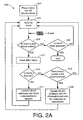
- FIG. 2A shows a simplified flow chart of one aspect of the invention, according to which a station in monitor mode listens at L2 to all the L2 network traffic from all the APs in its radio range to ascertain whether there are APs in communcation with any mobility agents.
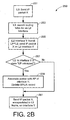
- FIG. 2B shows one embodiment of a process of sending any IP packet, optionally going through association with an AP if the interface selected is a floating interface in an up (mimicked) up state.
- FIG. 3 shows a simplified flow chart of one embodiment of a re-association process.
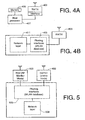
- FIG. 4A shows a simplified block diagram of one wireless station embodiments.
- FIG. 4B shows the STA of FIG. 4A in more detail.
- STA includes in its memory an access point database "WLAN database.”
- WLAN database access point database
- An aspect of the invention provides a set of floating interfaces between the protocol stack that sends to and receives IP packets and one or more wireless networks even though there may not be an association yet with the wireless networks.
- FIG. 5 shows a STA that includes a first wireless network device and a wireless network device in RF monitor mode such that the STA can re-associate relatively quickly according to one aspect of the invention.
- FIG. 6 shows a simplified flow chart of how the STA shown in FIG. 5 monitors L2 network traffic to ascertain whether any APs are in communication with mobility agents.
- the present invention provides a mechanism for a station of a wireless network to gather information at L2, prior to associating with an AP, about APs it can "hear," including both L2 information and such L3 information as whether or not an AP is forwarding one or more mobility agent advertisements.
- This information can be used to emulate, at L2, one or more interfaces to one or more WLANs as if the station was associated to the WLAN, without there necessarily being any association with any WLAN, e.g., prior to associating with any WLAN, where an interface in this context means the STA's attachment at L2 to a WLAN.
- Such an emulated interface is also called a floating interface herein because there is not necessarily any association yet.
- a floating interface can be presented to L3 in the same manner as an actual interface, so that L3 can perform such functions as mobility agent discovery in the same manner with floating interfaces as with actual interfaces.
- the gathered information can be provided to the network layer (L3) of the STA.
- L3 can decide to respond at L3 with another entity that provides mobile IP services.
- Such a.response can then cause the STA to associate with an AP that can communicate with that other entity, for example so that the STA can provide or benefit from mobile IP services.
- the STA's associating with such an AP converts the emulated interface to an actual interface to a selected WLAN.
- a STA that provides routing can be a mobile router by being associated with an access point that is in communication with one or more foreign agents or MIPv6 access routers.
- a STA can be a foreign agent if it is associated with an access point that is in communication with one or more home agents.
- FIG. 1 shows in simplified form one example of a network topology in which the embodiments of the present invention can operate. While a topology such as shown in FIG. 1 is prior art, the networks shown in FIG. 1 with any STA practicing any of the method described herein is not prior art.
- Network 100 is a network that may include one or more other networks. In one embodiment, network 100 is the Internet.
- STA 127 is Mobile IP-enabled.
- a mobility agent, home agent 101 shown as HA 101 for STA 127's home network is coupled to network 100.
- Network 102 is a second network, e.g., a LAN, to which are coupled two foreign agents FA1 and FA2, shown as 103 and 105, respectively.
- Network 102 is coupled to network 100 via an access router 104.
- WLAN1 115, WLAN2 117, and WLAN3 119 are also connected to network 102.
- WLAN1 115, WLAN2 117, and WLAN3 119 are each an infrastructure network with an access point AP1 121, AP2 123, and AP3 125, respectively.
- Foreign agent traffic to and from FA1 and FA2 to WLAN1 is via the link 107.
- Foreign agent traffic to and from FA1 and FA2 to WLAN3 is via the link 111.
- WLAN2 117 is coupled to the LAN 102 via a local router 109 configured to block foreign agent traffic to and from WLAN2.
- link 113 contains no foreign agent traffic to and from WLAN2.
- the dotted lines 141, 143, and 145 represent the limit of acceptable signal coverage for AP1, AP2, and AP3, respectively. Note that the shape of the coverage limit is in practice complex and time varying. The term "acceptable" means that all locations within the coverage area meet the signal quality standards of any station.
- Location A1 129 represents a location within coverage area 141;
- location A2 131 represents a location within coverage areas 141 and 143;
- location A3 133 represents a location within coverage areas 141, 143, and 145;
- location L4 135 represents a location within coverage areas 143 and 145.
- a Mobile IP-enabled STA at location A1 seeks to associate with an AP, and is scanning for beacons.
- location A1 is within the coverage area of AP1, but outside the coverage areas of AP2 and AP3.
- the STA detects the beacon from AP1, and associates with it.
- L3 at the STA detects foreign agent advertisements from either FA1 or FA2 sent via AP1, which triggers the STA's Mobile IP capabilities, enabling it to register with either foreign agent FA1 or FA2. If the STA is a router with Mobile IF capabilities is can then be a wireless mobile router.
- a Mobile IP-enabled STA at location A2 seeks to associate with an AP, and is scanning for beacons.
- the STA is within the coverage area of both AP1 and AP2.
- the STA is just as likely to hear the beacon from AP1 as from AP2. If the STA hears the beacon from AP1 first, events proceed as in case #1. However, if the STA hears the beacon from AP2 first, it associates with AP2. Because local router 109 does not route FA advertisements, the STA is unable to establish communication with either FA1 or FA2. Note that in this case, the STA fails to discover an FA half the time.
- the STA may preferentially associate with AP2—despite an acceptable signal from AP1 that is in communication with a FA.
- a Mobile IP-enabled STA at location A3 seeks to associate with an AP, and is scanning for beacons.
- the STA is within the coverage area of AP1, AP2, and AP3.
- the STA is just as likely to hear the beacon from any one of the these APs. If the STA hears the beacon from AP1 or AP3 first, because these two APs send FA advertisements from FA1 and/or FA2, events proceed similar to case 1. However, if the STA hears the beacon from AP2 first, it associates with AP2. Because local router 109 does not route FA advertisements, the STA is unable to establish communication with either FA1 or FA2.
- the STA fails to discover an FA one third of the time. Moreover, if the signal quality from AP2 is higher than the other two APs, the STA may preferentially associate with AP2— despite an acceptable signal from AP1 and AP3, either of which can communicate with a FA.
- One embodiment of the invention includes the station, in RF monitor mode, screening all the frames the station can hear, examining the beacons that contain the AP's SSID, extracting from the PHY sublayer the RSSI (Received Signal Strength Indicator), and building a list of the available APs.
- this screening is implemented as a module of the protocol stack operating for the wireless network device and in another embodiment by a user-level computer program. The program accesses and configures the protocol stack via a command line interface (CLI).
- CLI command line interface
- IOS Cisco Internetworking Operating System
- CLI command line interface
- the program or module operates at L2.
- the process reads L3 packets in the L2 frames, and can pass the L3 contents of MAC level broadcasts, such as IP IRDP packets used to advertise a foreign agent, to the L3 layer.
- MAC level broadcasts such as IP IRDP packets used to advertise a foreign agent
- one embodiment of the invention is a method for a station to identify and gather information about the APs that its wireless network device can hear on the WAN prior to association with any AP.
- the information is available to any process at the station, e.g., L3 at the station.
- the information includes IP mobility information, e.g., whether the AP is sending mobility agent advertisement.
- the information is used to build a set of one or more floating interfaces to available WLANs, in the form of APs for association.
- An L3 process can then select from among the available APs using one or more criteria. For example, the L3 process can then select an AP that is in communication with one or more Mobility Agents or an AP that meets some signal strength criterion or a combination of criteria.
- FIG. 1 An illustrative example of a network topology in which the invention can operate is shown in FIG. 1 , although the invention can operate in any network where there exist one or more APs. Some of the APs may be sending advertisements from one or more mobility agents while other APs may not be in communication with any mobility agent.
- FIG. 4A shows a simplified block diagram of one wireless station embodiment that includes a wireless network device 403 that includes a wireless transceiver and that provides and accepts MAC frames to/from a protocol stack in a host processor 407.
- the wireless network device 403 provides an (actual) bi-directional interface to the WLAN, i.e., connection point to the AP at the STA.
- the processor 407 of the wireless includes a memory 405 that may include volatile and non-volatile memory. The embodiments of the processes described herein operate of the processor and use the memory.
- FIG. 2A shows a simplified flow chart of an L2 process 200 that in one embodiment operates on the processor 407.
- process 200 includes the station listening in RF monitor mode to all the network traffic from all the APs in its radio range in order to gather AP information, including mobility agent information. The station is assumed not to be associated with an AP.
- a device-specific command from the program or module causes the station to place the wireless network device 403 into RF monitor mode.
- State 203 is a wait state waiting for an event such as a new link-layer PDUs (MAC frames) arriving at the wireless network device 403.
- MAC frames new link-layer PDUs
- the new MAC frame arriving is read at L2 in a step 211.
- each MAC frame includes additional information, for example the SSID of the WLAN, i.e., the identifier of the AP that originated the packet. Also provided, for example by the wireless network device as ancillary information, is an indication of the quality of the wireless signal at the time the MAC frame was received.
- the L2 frames may have L3 information encapsulated, e.g., in the form of IP packets.
- the IP packet may include a mobility agent advertisement such as a foreign agent advertisement or a home agent advertisement.
- the link layer prior to association of the STA e.g., while in RF monitor mode would not concern itself with any encapsulated L3 information such as mobile IP information.
- an L2-level process "peeks" inside the payload portion of each just-received L2-frame in order to collect L3 information such as Mobile IP information.
- the collecting of L3 information includes ascertaining whether the frame encapsulates information from a mobility agent, and, if so, whether that information contains a mobile agent advertisement.
- information about the AP that transmitted the received L2 packet is stored as a record in a data structure stored in the memory 405 of the STA and called the "WLAN database" herein.
- the WLAN database 409 thus includes information on the APs that the STA hears in RF monitor mode.
- a STA hearing an AP means that the signal at the STA received from the AP is of a sufficient strength for the AP and STA to wirelessly communicate.
- Each record in the WLAN database includes a set of fields on information about an AP from which an L2 packet was received.
- the information in the record includes L2 information and also L3 information that would not normally be available until after the station was associated with the AP.
- Each record in the WLAN database thus provides a floating interface to the WLAN via one of the APs that the station can hear.
- the floating interface can be provided to the network layer (L3) at the station as if it was an actual interface to a WLAN even though there may not be association to that WLAN.
- each record includes an indication of the state of the floating interface from the states shown in Table 1 below.
- Table 1 [00100] State [00101] Description of State [00102] Interface down The AP of the WLAN is not found in the wireless medium Interface up, protocol down The AP of the WLAN is found but cannot be associated with. [00103] Protocol up (mimicked) [00104] The AP of the WLAN is found and is available for association. [00105] Protocol up (real) [00106] The WLAN is currently associated with the station.
- each record of the WLAN database includes the following fields in each record of the WLAN database: an identifier of the WLAN in the form of the SSID of the WLAN of the AP the frame was received from, the IP packet from the received L2 frame, a time stamp of when the frame was received, an indication of the signal strength of the frame from the AP, the state of the floating interface to the WLAN.
- each record also includes an indication of any mobility information contained in any IP packet in the received L2 frame, e.g., of any mobility advertisement from a mobility agent.
- each record in the WLAN database includes a flag field that when set indicates that the record is the Most-Recently-Used-Association (MRUA) record.
- MRUA Most-Recently-Used-Association
- the MRUA always holds the record for the AP that was used for the most recent association or re-association.
- the MRUA record is never evicted from the WLAN database, for example to create space for more records.
- the WLAN database includes a field that indicates the N-last associations with APs that wirelessly transmitted mobility information from different mobility agents.
- the WLAN database is searchable and orderable by one or more fields, including the time stamp and one or more of the headers in the stored L2 frame.
- FIG. 4B shows a STA that includes, in addition to a conventional protocol stack, a WLAN database that provides a set of floating interfaces 409 of the WLANs that a wireless network device 403 can hear.
- the floating interfaces are provided to the network layer 411 of the protocol stack.
- the STA's memory 405 includes volatile memory and the WLAN database is located in the volatile memory, e.g., DRAM.
- the STA's memory 405 includes non-volatile memory, e.g. SRAM, and the WLAN database is located in the non-volatile memory.
- the WLAN database is accessible to other processes operating on the STA, or to other processes on other processors on the network.
- One station embodiment includes more than one wireless device (or a device with several channels that can simultaneously provide interfaces to different WLANs) each capable of association with a WLAN, so each capable of providing an interface to a WLAN.
- each record in the WLAN database further includes an identifier of the wireless device that would provide the actual interface after association with the WLAN of the floating interface, and information on one or more capabilities of the actual interface to the WLAN, such as speed, latency, and so forth.
- the WLAN database includes records, i.e., provides floating interfaces for the APs that the STA can hear whether or not the AP sends one or more L2 frames that include mobility agent information.
- the WLAN database includes records only for APs that the STA can hear and that have transmitted mobility agent information. In such an alternate embodiment, if it is ascertained in the peeking that the L2 frame does not contain an IP packet from a mobility agent, flow returns to 203 to accept another L2 frame.
- a step 213 it is ascertained whether the MAC frame is a beacon. If yes, the WLAN database is updated with the SSID contained in the beacon. If the frame is not a beacon, is is ascertained in a step 215 whether the frame encapsulates information from a mobility agent, and, if so, whether that information contains a mobilily agent advertisement.
- the process returns to wait state 203 to wait for another event such as a new MAC frame arriving at the station.
- the WLAN database is updated with this information (step 219).
- the insertion of the new L3 information includes ordering—e.g., sorting—the records according to one or more ordering criteria.
- the purpose of ordering is to present the information to L3 in a desired order so that L3 automatically selects a floating interface for association according to one or more selection criteria.
- the ordering criteria map to the selection criteria.
- the ordering criteria (and/or interface selection criteria) include ordering (and/or selecting) according to one or more application-related requirements. For example, an application may have a set of SSIDs that it prefers for one or more reasons such as: security characteristics of the WLANs, quality of service each WLAN provides, cost of access, and so forth.
- the ordering criteria include ordering (and/or selecting) according to one or more quality of service parameters, such as required quality of service.
- the ordering criteria (and/or interface selection criteria) include L3 information such as what mobility agent information is included.
- the ordering criteria (and/or interface selection criteria) include the capabilities of the physical interface to the WLAN, such as speed, latency, and so forth).
- records that include a mobility agent advertisement are given priority.
- the ordering criteria include ordering according to received signal quality.
- One embodiment orders according to a combination of more than one ordering criteria, such as giving priority to those records that include mobility agent information, and further ordering such prioritized, i.e., mobility-agent-related records according to signal strength.
- step 219 of updating the WLAN database includes discarding those records not meeting one or more acceptance criteria.
- the acceptance criteria include the received signal quality meeting or exceeding a pre-defined level of quality.
- the acceptance criteria include only accepting IP packets that are of foreign agent advertisements that indicate that the foreign agent is not "busy", i.e., that the foreign agent is accepting registrations.
- the process of FIG. 2A thus provides a WLAN database of available WLANs that includes L2 and L3 information. This information is available at any time to another process, e.g., L3.
- the process of FIG. 2A occurs from time to time so that the information in the WLAN database is up-to-date. In one embodiment, the process is-repeated periodically. That is, the WLAN database is updated from time to time by placing the station into RF monitor mode and updating the information in the WLAN database with new MAC frames.
- the process of FIG. 2A thus provides a WLAN database of available WLANs that includes L2 and L3 information. Any process (e.g. L3) at the station can obtain information from the WLAN database at any time.
- the floating interfaces in one embodiment behave as real interfaces. This includes the interfaces being included in one or more routing tables. In general, an interface (floating or not) appears in a routing table at the station when it is in state "up.” In one aspect of the invention, this includes floating interfaces that are in the "protocol up (mimicked)" state. Thus, in one embodiment, the L2 module or process that, for any reason, puts the interface in state "up,” also adds the interface to the routing table associated with the L2 link the interface is attached to.
- Another aspect of this invention is selecting an interface from the set of floating interfaces in the WLAN database.
- One embodiment includes a method of selecting an interface based on one or more selection criteria.
- the interface selection criteria include selecting according to one or more application-related requirements. In one embodiment, the interface selection criteria include selecting according to one or more quality of service parameters, such as required quality of service. In one embodiment, the interface selection criteria include L3 information such as what mobility agent information is included. When the station is capable of having more than one physical interface to more than one WLAN, the selection criteria include the capabilities of the physical interface to the WLAN; such as speed, latency, and so forth. In one embodiment, the interface selection criteria include L2 information such as the signal strength of frames from the AP of the WLAN. The selection is preferably made according to a combination of criteria.
- an L3 process sends IP data to the selected floating interface.
- the process is the L3 of the protocol stack.
- the selected floating interface is assumed to be in "protocol up (mimicked)" state. Sending data to such a protocol causes the wireless device to go from RF monitor (scan) mode into station mode and associate with the corresponding SSID of the selected floating interface.
- one embodiment includes dropping an existing association.
- the process modifies the record of the AP database by changing the interface state to "protocol up (real)" and further changed updates the MRUA flags.
- the associating in one embodiment occurs immediately, or in another embodiment, only when there are packets to send on that interface.
- selected IP packets e.g., those containing a router advertisement message of type foreign agent in the record of the WLAN database are made available from L2 to L3 according to an order. This mimics an L2/L3 interface providing the network layer with IP packets, even though there is no communication from the network level of another entity.
- the records are first ordered in step 219 according to one or more ordering criteria (see above).
- the L3 packets are presented to L3 in the order so that L3 automatically selects a floating interface for association according to one or more selection criteria.
- the network layer receives the IP packets with the mobility agent advertisements even though the STA is not yet part of a WLAN, i.e., associated, and not yet in bi-directional communication with the mobility agent.
- the station is also a router configured to provide mobile router services and includes a wireless device to provide a physical interface to a WLAN, and dedicated to connect to mobility agents that are foreign agents or access routers that transmit mobility advertisements.
- the process described above provides a WLAN database of floating interfaces.
- WLAN database records are each floating interfaces to WLANs that receive mobility information from foreign agents or IPv6 access routers.
- the wireless network device 403 stays in RF monitor mode until the mobile IP opens a floating interface by sending an IP packet to a mobility agent such as a foreign agent in order to register to the mobility agent.
- the station may "lock" an association in a floating interface that is in the protocol up (real) state so that L2 may not de-associate the floating interface as might occur when there is a request to associate with a different WLAN.
- the locking of floating interfaces is used, for example, when implementing a mobile router. Once a mobile router completes registration with a foreign agent or access router, it can lock the floating interface.
- the network layer accepts the IP packets from L2 as if in normal communication. Assume that the first few IP packets include mobility agent advertisements, e.g., from a foreign agent or a home agent.
- the network layer selects a mobility agent and typically responds by sending an IP packet to the selected mobility agent by passing the mobility agent-bound IP packet to L2 at the STA via a selected interface.
- FIG. 2B is a flow chart of one embodiment of a process 250 of sending an IP packet, optionally going through association with an AP if the interface selected in the process is a floating interface in the "protocol up (mimicked)" state.
- process 250 includes for example associating with one of the APs in the WLAN database as a result of the network layer of the STA sending an IP packet to one of the mobility agents connected to the APs of the WLAN records in the WLAN database.
- L3 selects to send an IP packet ("Packet X").
- L3 searches the station's routing table for a suitable L2 interface on which to send the IP packet.
- the routing table includes information about the floating interfaces from the WLAN database.
- Step 255 assumes that a suitable L2 interface ("interface Y") is found.
- the IP packet X is sent from L3 to L2 on the L2 interface Y.
- the link layer Upon receipt of an IP packet X from the network layer, in a step 257, the link layer examines the state of the selected Interface Y to ascertain whether or not it is in the state "protocol up (mimicked)." If yes, at a step 259, the STA associates with the AP identified by the SSID of its WLAN of interface Y. Step 259 further includes updating the WLAN database to mark the record of interface Y as the MRUA record. The associating of the STA takes the STA from RF monitor mode to STA mode. Once associated, the link layer passes (step 261) the just-received IP packet X, encapsulated in an L2 frame, on interface Y so that it can be communicated via the just associated AP to the foreign agent. This, for example, may be to register with the mobility agent.
- the station is associated with an AP that is in communication with one or more mobility agents. If IPv4 is in use, the mobility agent is a foreign agent or a home agent. If IPv6 is in use, the mobility agent is an access router or a home agent.
- step 257 If in step 257 it is ascertained that the interface Y is not in “protocol up (mimicked)” state, it is assumed to be in “protocol up (real)” and the process continues with step 261 of sending the IP packet X, encapsulated in an L2 frame, on interface Y.
- the station may "lock" an association in a floating interface that is in the protocol up (real) state so that L2 may not de-associate the floating interface as might occur when there is a request to associate with a different WLAN.
- the locking of floating interfaces is used, for example, when implementing a mobile router. Once a mobile router completes registration with a foreign agent or access router, it can lock the floating interface.
- Steps 213 and 215 of FIG. 2A include parsing an L2 frame, ascertaining whether the frame is a beacon, ascertaining whether any given frame includes an IP packet, and ascertaining whether the IP packet contains a mobility agent advertisement.
- the advertisement is further qualified as a foreign agent advertisement (in the IPv4 case), as an access router advertisement (in the IPv6 case), or as a home agent.
- one embodiment of step 215 includes, in the case that the frame is not a beacon, identifying the payload portion of the MAC frame and determining whether this particular packet is an IP packet, for example by examining the contents of the payload at the offset where the IP version number is stored. If a valid IP version, e.g., a 4 or a 6, is found at this location, the parsing process may branch differently depending on the IP version number. For version 4, a MIPv4 mobility agent advertisement is searched for, while for version 6, a mobility agent or a router advertisement IP packet is searched for. In both cases, the IP packet searched for is of the type ICMP.
- One embodiment of the present invention is a method for a station that is associated with a first WLAN to be re-associated with a second (possibly the same) WLAN.
- the AP of the first WLAN is in communication with a first mobility agent
- the re-association is such that the station preferably retains communication with the first mobility agent.
- Re-association is triggered by a variety of events. These events include, but are not limited to the wireless signal quality becomes unacceptable, physical impairment of the wireless signal, and failure of the AP with which the station is associated. the signal quality may degrade because the station physically moves to another location or because of some other degradation in the air interface. The physical impairment of the wireless signal may be by a person or object.
- the re-association process described herein also occurs when, in the case that the station includes more than one wireless network device, connection to the WLAN is swapped automatically from the present wireless network device to another one of the wireless network devices. This might happen, for example, when there is a need for the station to associate with a particular WLAN that only the present wireless network device can hear.
- FIG. 3 shows a flow chart of one embodiment of a re-association process 300.
- the station's link layer may determine that a re-association is required. In such a case, the state of the floating interface is modified to down. As explained earlier, without benefit of the present invention, the station may re-associate with the first available AP with suitable signal quality.
- the AP of the associated WLAN is able to communicate with one or more mobility agents as determined, for example, by the AP periodically sending a mobility agent advertisement from a mobility agent.
- step 309 where a WLAN, i.e., an SSID, is selected for re-association.
- the WLAN database prior to the attempt at re-association, is first updated. In some embodiment, this also even when there is no signal degradation or other reason for re-associating, but rather in order to ensure that the information in the WLAN database on the floating interfaces is up-to-date.
- the L2 process 300 places the station's wireless transceiver into RF monitor mode.
- RF monitor mode the station listens to all wireless traffic from all APs it can hear. As noted earlier, such monitoring is not possible when the station is associated with an actual AP.
- Step 305 the WLAN database is updated to ensure that each record is reliable according to one or more reliability criteria.
- Step 305 includes updating the state of each record, i.e., each floating interface in the WLAN database.
- one criterion for a record in the WLAN database to be reliable is that the record's AP can still be reliably communicated with on the wireless medium.
- One embodiment of step 305 includes the station monitoring AP beacon signals from the APs in the WLAN database, making certain that every AP in the WLAN database still exists. Records other than the MRUA are purged in step 305 if no beacon signal of a sufficiently high signal quality is detected for that record's SSID.
- the MRUA record is kept because it contains information about the first mobility agent, i.e., an agent the AP was able to communicate with.
- the time required to purge one or more records from the WLAN database is small compared to the time that would be required to rebuild the WLAN database.
- step 305 further includes checking the timestamp of each WLAN database record and discarding records of more than a pre-defined age, other than the MRUA record.
- the overall reliability of the database is checked.
- the reliability is a function of the number of records that still contain reliable information and that include the mobility agent information.
- the database is judged reliable if it still contains a reliable MRUA record.
- the process 300 continues in a step 309 (see below). If on the other hand, the WLAN database is judged unreliable, the database is built up by adding reliable records starting a wait state 315 wherein the station waits, in RF monitor mode, for an event. The process of building up the database is essentially the same as illustrated in the flowchart of FIG. 2A . In one embodiment, an extra check is made to ensure that there are enough records in the WLAN database that include mobility information, e.g., router advertisement messages. Thus, starting from the wait state 315, when an event occurs, a step 317 ascertains that the event is a new MAC frame arriving. If not, the process returns to the wait state.
- mobility information e.g., router advertisement messages
- a timer is also checked to ensure it has not elapsed.
- a new MAC frame arrives, it is read in a step 319.
- the frame is checked to ascertain if it a beacon, and if yes, the WLAN database is updated with information such as the signal quality, and the process returns to the wait state 315.
- a step 323 parses the frame and ascertains whether it contains mobility information, e.g., a foreign agent advertisement. If not the process returns to the wait state 315.
- the WLAN database is updated with the information, e.g., the foreign agent information.
- the database updating step of process 327 further includes ordering the records according to one or more ordering criteria. This step is similar to the ordering described above described above. In one embodiment, the ordering criteria include ordering according to what mobility agent information is included.
- a check is made in a step 329 to ascertain whether or not there are enough appropriate messages stored in the WLAN database.
- the number required for sufficiency is variable, derived dynamically on history.
- the number required for sufficiency is based upon a prior knowledge of the number of mobility agents on the network.
- a sufficient number is one record that includes an L2 frame encapsulating L3 mobility information. In yet another embodiment the number is greater than one. If it is ascertained that an insufficient amount of mobility agent information is included in the WLAN database, the process continues with the wait state 315 of waiting for another L2 frame.
- the WLAN database is reliable, or once the database has been sufficiently rebuilt, it contains at least the MRUA record.
- a WLAN i.e., an SSID is selected for re-association according to one or more re-association criteria.
- the re-association criteria include that the selected wireless network, i.e., selected SSTD, is in communication with the foreign agent that sent the router advertisement message contained in the router advertisement message portion of the MRUA record.
- step 309 includes searching the (non-MRUA) records of the WLAN database for one or more records whose foreign agent IP addresses matches the address of the mobility agent contained in the IP packet portion of the MRUA record.
- the re-association criteria further include the received wireless signal quality. Thus, if more than one match is found, the SSID with the highest received wireless signal quality is selected for re-association.
- step 309 includes searching the WLAN database for alternative mobility agents of the same kind, e.g., another foreign agent or another home agent. If records for more than one alternative mobility agent are found, step 309 includes selecting the mobility agent with the highest wireless signal quality. In one embodiment, if no re-association is possible, the process returns to RF monitor mode (step 303) again.
- a step 311 the STA re-associates with the selected AP.
- This step includes updating the MRUA record as required and updating the interface state field from protocol up (mimicked) to protocol up (real).
- the station is re-associated with a WLAN whose AP is in communication with the mobility agent from the most recent association. If no such AP exists, the station is re-associated with an AP in communication with a different, but suitable mobility agent.
- the re-association process signals to the L3 processes in the station that a re-association has occurred. If L3 at the mobile router is registered with a foreign agent or access router via the WLAN of the floating interface that has re-associated, an L3 process in the station polls the foreign agent or access router in order to assert its registration station. In one embodiment, the station attempts at L3 to register with the foreign agent or access router. Once registration is successful or re-asserted, the mobile router causes the association with the WLAN to be locked on the wireless network device.
- a WLAN i.e., the AP of the WAN that is present in the air can no more be associated with, due to locked floating interfaces
- the process providing the floating interfaces sets the matching floating interface to "protocol down.” Once an interface is freed up that allows the association to that SSID (even if swapping is required), it is set back to "protocol up (mimicked)."
- the WLAN database includes a field that indicates the N-last associations with APs that wirelessly transmitted mobility information from N different mobility agents.
- the processes described above of building the WLAN databases and of re-associating the STA with an AP are modified.
- the re-association process 300 can by modified to re-associate with a maximum number of the last N associations.
- Some station embodiments include more than one wireless network device.
- Each wireless network device can only associate with one WLAN at a given point in time.
- each wireless network device can go into its own RF monitor mode.
- the flow chart of FIG. 2A and 3 includes each device monitoring for beacons it can hear. This is used, for example, if it is possible albeit unlikely that two wireless devices can hear non-identical sets of APs.
- multiple wireless devices is meant that the stations can have multiple interfaces to WLANs active at the same time. It may be that one physical device provides the plurality of interfaces, and the term multiple wireless network devices includes the case of the station having one such multiple-interface device.
- the time to locate mobility agents is unpredictable, and depends upon configuration of the routers that act as mobility agents. Therefore, the time between mobility agent advertisements can be relatively long. This is especially true on high traffic networks, where broadcast and multicast traffic may be restricted, e.g., by network administrators. Moreover, in critical applications where re-association needs to happen rapidly, such as on a mobile network where the access router is itself a wireless station, slow re-association results in loss of connectivity to every node on the network. It is therefore desirable to have a relatively fast re-association process.
- the speed of association or re-association may be dominated by the time spent in RF monitor mode collecting mobility agent IP packets.
- the STA includes a second wireless network device dedicated to listening to APs in RF monitor mode.
- the listening includes collecting mobility agent information such as advertisements to build up the WLAN database.
- the WLAN database is shared.
- the second wireless network device is used for a floating interface because its mode does not change to station mode and it never associates with a WLAN.
- FIG. 5 shows one such alternate station embodiment.
- the STA includes a first wireless network device 403 providing WLAN services and a second wireless network device 503.
- the second wireless network device does not include a transmitter, i.e., is a receive-only device, while in another embodiment, the second wireless network device uses the receiver portion of an included transceiver.
- the first wireless network device 403 provides an actual interface to the WLAN of the AP, while the second wireless network device 503 monitors network traffic in RF monitor mode.
- the two wireless network devices are coupled to the network layer 511 of a protocol stack included in the STA via a set of floating interfaces 505 that use a WLAN database stored in memory.
- the monitoring of the AP traffic by the second wireless network device 503 adds information to the WLAN database 509, including adding mobility agent information, as described above.
- the initial association includes sending an IP packet to the network layer via the floating interfaces 505 so that the network layer can preferentially "respond" to a mobility agent, even when there is no actual communication yet between the STA and the mobility agent.
- the response is intercepted by a selected floating interface in protocol up (mimicked) state, causing the STA to associate—using the first wireless network device 403— with the AP from which the mobility agent information was transmitted. After that, communication may proceed via the first wireless network device 403.
- the second wireless network device continues monitoring in RF monitor mode and updating the WLAN database. When re-association becomes necessary, the set of floating interfaces provide the WLAN database record for the AP that is the best candidate for re-association.
- the process 200 of initial building of the WLAN database may use data received at the first or the second wireless network device.
- Step 201 is not necessary when the second wireless network device is always in RF monitor mode.
- the process accepts a MAC frame from the second wireless network device.
- the process 250 of associating associates the STA with the selected WLAN (i.e., an AP) in step 213 using the first wireless network device.
- Step 215 passes the IP packet to the MAC layer also using the first wireless network device.
- FIG. 6 is a flow chart of one embodiment of an AP updating process 600 and a re-association process 650 that uses the two wireless devices shown in FIG. 5 .
- the updating process 600 uses the second wireless network device assumed to be in RF monitor mode.
- State 601 is wait state wherein the second second wireless network device 503 waits for an event such a a new frame arriving.
- step 603 determiners if a new MAC frame has arrived, and step 605 reads the MAC frame newly arrived at the interface of the second wireless network device 503.
- Step 607 ascertains whether or not the frame includes mobility agent information.
- Step 608 updates the WLAN database using, if appropriate, information from the received frame.
- Step 608 in one embodiment includes ordering the records of the WLAN database according to one or more ordering criteria.
- process 600 continually updates the WLAN database so that when re-association is needed, no time is wasted updating or re-building the WLAN database.
- the updating process 608 can contain one or more of the updating, analyzing, and ordering steps described above.
- the STA For re-association, the STA is assumed to be in station mode using the first wireless network device 403.
- the L2 re-association process 650 accesses the WLAN database, searches its records for the best candidate for association, and selects a record. After the selection of the AP, in a step 613, the process updates the MRUA record and changes the interface state for the record. The process then causes the STA to associate with the selected WLAN's AP using the first wireless network device.
- selection process 611 includes searching the WLAN database records for an AP that is in communication with the mobility agent indicated in the IP packet in MRUA record so that re-association is with the AP that can communicate with that mobility agent. If more than one match is found, the SSID of the AP that sent a frame with the highest wireless signal quality is selected. If no matching IP addresses are found, in the one embodiment of the invention, the WLAN database is searched for alternative mobility agents. By thus retaining the same mobility agent across the re-association, the mobile nodes on the network are saved from having to establish communications with new mobility agents.
- One use of an embodiment of the invention is implementing a mobile router by integrating a WLAN directly into a STA that is also a router using the floating interfaces described herein.
- the Mobile Router needs to select the one that fits its requirements better, based on configured rules and dynamic availability of resources, signal strength, channel availability, antennas, foreign agents in IPv4, access router in IPv6, and so forth. It is thus advantageous to use a blend of information available at layer 2 and layer 3 to select the proper AP or wireless network device.
- a router having one or more wireless network devices monitors the radio signals from APs it can hear and associates with the AP, i.e., becomes a STA to the WLAN of that AP using a blend information available at layer 2 and layer 3 to select the proper AP or wireless network device. This can occur prior to the router associating with any AP, while without benefit of the invention, gathering such layer 3 information requires first associating with an AP.
- WLANs often include some form of access control is used.
- the method and apparatus described herein may be modified in a straightforward manner to account for access control.
- Wired-Equivalent Privacy WEP encryption prevents the contents of an L2 frames received at the station from being read unless the station is authorized.
- the WLAN database still includes L2 information on each AP it can hear, such as an indication of the signal strength.
- the L3 information is only provided for those WLANs whose AP the station is authorized to associate with.
- the station caries a set of encryption keys, e.g., WEP keys that enable it to decode encrypted information it the L2 frames.
- the method includes, for each AP, trying one of its encryption keys.
- a captive portal When using a captive portal, the AP allows association, but the first time a higher layer level communication occurs, e.g., the station sends an L3 packet to a foreign agent, the AP intercepts such higher level communication and requests authorization from the station prior to permitting the communication. For example, if the portal is a "for-fee" portal, the request may be for authorization to bill a previously set-up account, or for credit card information, and so forth.
- Embodiments of the present invention works with such a mechanism in a transparent manner because the access control mechanism takes effect only after association.
- the station selects an access point (i.e., a WLAN) for association from the WLAN database, and suppose the selection is because the signal strength from the selected AP is good enough, and it is known that the AP is in communication with a foreign agent.
- L3 at the station received an advertisement from the foreign agent via the floating interface for the selected WLAN and as a result sends a registration request to the foreign agent.
- An embodiment of the inventive method intercepts the L3 registration request, determines the AP with which to associate, associates with the AP, and then sends the L3 registration request to the foreign agent via the access point.
- the portal mechanism at the access point intercepts the registration request and responds to the station with a request for authorization. The communication proceeds, i.e., the AP sends the registration request to the foreign agent only after authorization is verified.
- embodiments of the present invention may be embodied as a method, an apparatus such as a special purpose apparatus, an apparatus such as a data processing system, a wireless station, or a carrier medium, e.g., a computer program product.
- the carrier medium carries one or more computer readable code segments for controlling a processing system to implement a method.
- aspects of the present invention may take the form of a method, an entirely hardware embodiment, an entirely software embodiment or an embodiment combining software and hardware aspects.
- the present invention may take the form of carrier medium (e.g., a computer program product on a computer-readable storage medium) carrying computer-readable program code segments embodied in the medium.
- carrier medium e.g., a computer program product on a computer-readable storage medium
- Any suitable computer readable medium may be used including a magnetic storage device such as a diskette or a hard disk, or an optical storage device such as a CD-ROM.
- the term data unit typically refers to a protocol data unit of information.
- a packet, a frame, etc. each refers to a data unit.
- the description above describes a station that includes a wireless network device. After the station associates with a WLAN, the wireless network device provides a bi-directional interface to the WLAN. Wireless network devices that have several simultaneous channels are known, and each channel is then capable of providing a bi-directional interface to a WLAN. It should be appreciated that this is essentially the same as a station that includes more than one wireless network device, so that when the description herein mentions a station that includes a plurality of wireless network devices, each capable of providing a bi-directional interface to an associated WLAN, this includes the case of the station having one or more wireless interfaces, one or more of which are capable of providing a plurality of bi-directional interfaces.
- the invention is not restricted to the IEEE 802.11 standard, and may be applicable to other WLAN or communication standards, including, for example, bluetooth, GSM, PHS, and other cellular wireless telephony standards, wherever it is desired to recognize at L2 of a wireless station whether or not a WLAN or another station can provide mobile IP services, e.g., is in communication with one or more mobility agents.
- LMDS multimedia mobile access communication
- wireless Ethernet Hiperlan I, Hiperlan II, and multimedia mobile access communication
- MMAC multimedia mobile access communication
- LMDS local multipoint distribution service
- wireless digital video wireless USB links
- wireless IEEE 1394 links wireless IEEE 1394 links
- TDMA packet radios low-cost point-to-point links
- voice-over-IP portable "cell phones” wireless Internet telephones
- the invention is not restricted to using a traditional database, e.g., a table as the data structure is not required to be in the form of a traditional database, e.g., a table as the structure for the WLAN database. Any data structure that can maintain the required information may be used.
- the AP data structure is a table.
- the data structure is a list.
- Other data structures also are possible, as would be clear to those in the art, and the invention is not restricted to any particular form for the WLAN database.
Landscapes
- Engineering & Computer Science (AREA)
- Computer Networks & Wireless Communication (AREA)
- Signal Processing (AREA)
- Computer Security & Cryptography (AREA)
- Computer Hardware Design (AREA)
- Computing Systems (AREA)
- General Engineering & Computer Science (AREA)
- Mobile Radio Communication Systems (AREA)
- Small-Scale Networks (AREA)
Claims (102)
- Procédé fonctionnant au niveau d'une couche liaison (L2) d'un protocole de réseau multicouche dans une station sans fil (127) ayant un dispositif de réseau sans fil, le dispositif capable de fournir une interface de couche liaison (L2) à un réseau sans fil (115), le procédé comprenant :avant que la station ne soit associée à un réseau sans fil via le dispositif de réseau sans fil, la station recevant de manière sans fil des unités de données L2 transmises depuis un ou plusieurs points d'accès sans fil « AP » (121, 123, 125) d'un ou plusieurs réseaux sans fil (115, 117, 119) que la station (127) peut entendre ; etla station collectant des informations concernant les unités de données L2 reçues, comprenant des informations L2 et des informations L3,les informations L3 collectées au niveau de L2 comprenant si un AP envoie un ou plusieurs paquets L3 depuis un ou plusieurs agents de mobilité (103, 104, 105),de sorte que la station puisse décider si s'associer à un réseau sans fil (115, 117, 119) via un AP sur la base d'un ou plusieurs critères comprenant si l'AP est en communication avec un agent de mobilité (103).
- Procédé selon la revendication 1, comprenant en outre :le stockage d'informations concernant les réseaux sans fil (115, 117, 119) que la station peut entendre dans une base de données, comprenant des informations L3 provenant des un ou plusieurs agents de mobilité (103).
- Procédé selon la revendication 1 ou 2, dans lequel les un ou plusieurs réseaux sans fil (115, 117, 119) dont les AP (121, 123, 125) transmettent des unités de données L2 sont conformes à une des normes IEEE 802.11.
- Procédé selon l'une quelconque des revendications précédentes, dans lequel les informations stockées concernant chaque réseau sans fil (115, 117, 119) comprennent un identificateur du réseau sans fil, les informations L3 dans l'unité de données L2 reçue de l'AP (121, 123, 125) du réseau sans fil, une estampille temporelle de quand l'unité de données L2 a été reçue de l'AP, et une indication de l'intensité de signal de l'unité de données L2 de l'AP.
- Procédé selon l'une quelconque des revendications précédentes,
dans lequel la station (127) comprend une pluralité de dispositifs de réseau sans fil chacun capable de fournir une interface à un réseau sans fil (115) ; et,
dans lequel les informations stockées concernant chaque réseau sans fil (115, 117, 119) comprennent en outre une indication de quel dispositif de réseau sans fil a reçu l'unité de données L2. - Procédé selon l'une quelconque des revendications précédentes, dans lequel les informations stockées concernant chaque réseau sans fil (115, 117, 119) comprennent une indication de toute information de mobilité contenue dans toute information L3 dans l'unité de données L2 reçue de l'AP (121, 123, 125) du réseau sans fil.
- Procédé selon l'une quelconque des revendications précédentes, dans lequel la base de données stocke en outre une indication de l'information de réseau sans fil qui est de l'association la plus récente à un réseau sans fil (115, 117, 119).
- Procédé selon l'une quelconque des revendications précédentes, comprenant en outre :la mise à jour périodique de la base de données,dans lequel la base de données comprend un enregistrement pour chaque réseau sans fil (115, 117, 119), et dans lequel l'enregistrement du réseau sans fil associé le plus récemment n'est pas évincé de la base de données.
- Procédé selon l'une quelconque des revendications précédentes, comprenant en outre :la mise à jour périodique de la base de données.
- Procédé selon l'une quelconque des revendications précédentes, comprenant en outre :avant que la station (127) ne soit associée à un réseau sans fil, L3 acceptant un ou plusieurs paquets L3 trouvés à l'étape de collecte.
- Procédé selon la revendication 10, dans lequel l'acceptation par L3 se fait dans un ordre selon un ou plusieurs critères d'ordonnancement.
- Procédé selon l'une quelconque des revendications précédentes, comprenant en outre :l'association à un réseau sans fil particulier (115) d'où une unité de données L2 a été reçue qui contient un paquet L3 particulier contenant une annonce d'agent de mobilité,de sorte qu'après l'association, l'interface de réseau sans fil de la station (127) fournisse une interface au réseau sans fil particulier (115) qui est en communication avec l'agent de mobilité (103) qui a envoyé le paquet L3 particulier.
- Procédé selon la revendication 10, dans lequel au moins un des paquets L3 acceptés par L3 est une annonce d'agent de mobilité.
- Procédé selon la revendication 13, comprenant en outre :l'association à un réseau sans fil particulier d'où une unité de données L2 contenant un agent de mobilité particulier a été reçue,de sorte qu'après l'association, l'interface de réseau sans fil de la station (127) fournisse une interface au réseau sans fil particulier (115) qui est en communication avec l'agent de mobilité (103) qui a envoyé l'annonce d'agent de mobilité particulière.
- Procédé selon la revendication 14, comprenant en outre :au niveau de L3 de la station, l'enregistrement auprès de l'agent de mobilité (103) en échangeant des paquets L3 avec l'agent de mobilité.
- Procédé selon la revendication 15, comprenant en outre :après l'association, la détermination qu'une réassociation est nécessaire ;la sélection pour la réassociation d'un réseau sans fil selon un ou plusieurs critères de réassociation ; et,la réassociation au réseau sans fil sélectionné.
- Procédé selon la revendication 16, dans lequel les critères de réassociation comprennent le fait que le réseau sans fil sélectionné (115) est en communication avec l'agent de mobilité auprès duquel la station (127) s'est enregistrée au moment de la détermination selon laquelle une réassociation est nécessaire.
- Procédé selon la revendication 14,
dans lequel l'agent de mobilité qui a envoyé l'annonce d'agent de mobilité particulière est un agent étranger IP Mobile (103) envoyant des paquets IP se conformant à IPv4 ou un routeur d'accès envoyant des paquets IP se conformant à IPv4 ; et,
la station (127) est un routeur qui fournit des services IP Mobile,
de sorte qu'après l'association à un AP en communication avec l'agent de mobilité qui a envoyé l'annonce d'agent de mobilité particulière, la station soit un routeur mobile. - Procédé selon la revendication 18, comprenant en outre :après l'association à un AP en communication avec l'agent de mobilité, le verrouillage de l'association.
- Procédé selon la revendication 13, dans lequel la collecte d'informations avant l'association comprend :l'émulation d'une ou plusieurs interfaces à un ou plusieurs réseaux sans fil que la station peut entendre, chaque dite interface émulée formant ainsi une interface flottante qui, après l'association, peut devenir une interface réelle à un réseau sans fil qui est en communication avec un agent de mobilité.
- Procédé selon la revendication 20,
dans lequel le rapport d'une annonce d'agent de mobilité L3 particulière à L3 se fait via une interface flottante aux réseaux sans fil particuliers d'où l'unité de données L2 contenant l'annonce d'agent de mobilité particulière a été reçue,
de sorte que le paquet L3 rapporté particulier apparaisse pour L3 comme s'il provenait d'une interface réelle même si la station n'est pas encore associée au réseau sans fil particulier de l'interface flottante. - Procédé selon la revendication 21, comprenant en outre :l'association au réseau sans fil particulier d'où l'unité de données L2 contenant l'annonce d'agent de mobilité L3 particulière a été reçue,de sorte qu'après l'association, l'interface de réseau sans fil de la station fournisse une interface au réseau sans fil particulier qui est en communication avec l'agent de mobilité qui a envoyé l'annonce d'agent de mobilité L3 particulière.
- Procédé selon la revendication 2, comprenant en outre :la sélection d'un réseau sans fil pour l'association dont l'AP peut être entendu par la station, la sélection se faisant selon un ou plusieurs critères de sélection,dans lequel au moins un des critères de sélection utilise au moins certaines des informations collectées.
- Procédé selon la revendication 23, dans lequel les critères de sélection comprennent le fait que l'unité de données L2 reçue de l'AP du réseau sans fil sélectionné comprend une annonce d'agent de mobilité, de sorte qu'après l'association, la station soit en communication avec un agent de mobilité ;
l'association à un réseau sans fil particulier d'où une unité de données L2 contenant un paquet L3 particulier a été reçue,
de sorte qu'après l'association, l'interface de réseau sans fil de la station fournisse une interface au réseau sans fil particulier qui est en communication avec l'agent de mobilité qui a envoyé le paquet L3 particulier. - Procédé selon la revendication 24, comprenant en outre :l'association à un réseau sans fil sélectionné particulier d'où une unité de données L2 contenant une annonce d'agent de mobilité particulière a été reçue,de sorte qu'après l'association, l'interface de réseau sans fil de la station fournisse une interface au réseau sans fil particulier qui est en communication avec l'agent de mobilité qui a envoyé l'annonce d'agent de mobilité particulière.
- Procédé selon la revendication 25, comprenant en outre .
au niveau de L3 de la station, l'enregistrement auprès de l'agent de mobilité en échangeant des paquets L3 avec l'agent de mobilité. - Procédé selon la revendication 26, comprenant en outre :après l'association, la détermination qu'une réassociation est nécessaire ;la sélection pour la réassociation d'un réseau sans fil selon un ou plusieurs critères de réassociation ; et,la réassociation au réseau sans fil sélectionné.
- Procédé selon la revendication 27, dans lequel les critères de réassociation comprennent le fait que le réseau sans fil sélectionné est en communication avec l'agent de mobilité auprès duquel la station s'est enregistrée au moment de la détermination selon laquelle une réassociation est nécessaire.
- Procédé selon la revendication 25,
dans lequel l'agent de mobilité qui a envoyé l'annonce d'agent de mobilité particulière est un agent étranger IP Mobile envoyant des paquets IP se conformant à IPv4 ou un routeur d'accès envoyant des paquets IP se conformant à IPv4, et
dans lequel ladite station est un routeur qui fournit des services IP Mobile,
de sorte qu'après l'association à un AP en communication avec l'agent de mobilité qui a envoyé l'annonce d'agent de mobilité particulière, la station soit un routeur mobile. - Procédé selon la revendication 2,
dans lequel la station comprend un ou plusieurs dispositifs de réseau sans fil chacun capable de fournir une interface de couche liaison à un réseau sans fil, et
dans lequel la réception est d'unités de données L2 d'AP que chacun des dispositifs de réseau sans fil peut entendre,
le procédé comprenant en outre :sur la base des informations collectées, l'émulation au niveau de L2 d'une ou plusieurs interfaces à un ou plusieurs réseaux sans fil dont les AP peuvent être entendus par les un ou plusieurs dispositifs de réseau sans fil comme si la station était associée au réseau sans fil via le dispositif, sans qu'il y ait nécessairement d'association avec un quelconque réseau sans fil, chaque interface émulée formant ainsi une interface flottante à un réseau sans fil via un dispositif de réseau sans fil qui, après l'association, peut devenir une interface réelle au réseau sans fil via le dispositif de réseau sans fil,L3 acceptant un ou plusieurs paquets L3 qui étaient dans des unités de données L2 d'un ou plusieurs AP via une ou plusieurs interfaces flottantes comme si la station était associée aux un ou plusieurs AP dont les unités de données L2 comprenaient les paquets L3. - Procédé selon la revendication 30, dans lequel l'acceptation par L3 se fait dans un ordre selon un ou plusieurs critères d'ordonnancement.
- Procédé selon la revendication 1,
dans lequel la station comprend un ou plusieurs dispositifs de réseau sans fil chacun capable de fournir une interface de couche liaison à un réseau sans fil, et
dans lequel la réception est d'unités de données L2 d'AP que chacun des dispositifs de réseau sans fil peut entendre,
le procédé comprenant en outre :sur la base des informations collectées, l'émulation au niveau de L2 d'une ou plusieurs interfaces à un ou plusieurs réseaux sans fil dont les AP peuvent être entendus par les un ou plusieurs dispositifs de réseau sans fil comme si la station était associée au réseau sans fil via le dispositif sans qu'il y ait nécessairement d'association avec le réseau sans fil, chaque interface émulée formant ainsi une interface flottante à un réseau sans fil via un dispositif de réseau sans fil qui, après l'association, peut devenir une interface réelle au réseau sans fil via le dispositif de réseau sans fil ; et,le stockage d'informations concernant les interfaces flottantes dans une base de données. - Procédé selon la revendication 32, dans lequel les informations stockées concernant chaque interface flottante comprennent un identificateur du réseau sans fil de l'interface flottante et un ou plusieurs parmi les informations L3 dans les informations L2 reçues de l'AP du réseau sans fil, une estampille temporelle de quand les informations L2 reçues ont été reçues de l'AP, une indication de l'intensité de signal des informations L2 de l'AP, et l'état de l'interface flottante au réseau sans fil.
- Procédé selon la revendication 33,
dans lequel la station comprend une pluralité de dispositifs de réseau sans fil chacun capable de fournir une interface à un réseau sans fil, et
dans lequel la base de données comprend en outre une indication du dispositif de réseau sans fil auquel est destinée l'interface flottante. - Procédé selon la revendication 33, dans lequel les informations stockées concernant chaque interface flottante comprennent une indication de toute information de mobilité contenue dans toute information L3 dans les informations L2 reçues.
- Procédé selon la revendication 33, dans lequel la base de données stocke en outre une indication de quelle interface flottante était l'association la plus récemment utilisée à un réseau sans fil.
- Procédé selon la revendication 36, comprenant en outre :la mise à jour périodique de la base de données d'interfaces flottantes,dans lequel la base de données comprend un enregistrement pour chaque interface flottante, et dans lequel l'enregistrement de l'interface flottante la plus récemment utilisée dans une association n'est pas évincé de la base de données de réseau sans fil.
- Procédé selon la revendication 36, comprenant en outre :la mise à jour périodique de la base de données d'interfaces flottantes.
- Procédé selon la revendication 1, dans lequel l'étape de collecte d'informations comprend :avant que la station ne soit associée à un réseau sans fil, l'analyse desdites unités de données L2 reçues pour identifier les un ou plusieurs AP (121, 123, 125), et pour établir si l'une quelconque desdites unités de données L2 contient une annonce d'agent de mobilité L3 ;avant que la station ne soit associée à un réseau sans fil, s'il est établi qu'une unité de données L2 contient une annonce d'agent de mobilité L3, le rapport de l'annonce à L3 au niveau de la station (127) comme si la station était associée au réseau (115) de l'AP (121) qui a transmis l'unité de données L2 contenant l'annonce d'agent de mobilité L3 ;dans le cas où L3 au niveau de la station (127) répond à l'annonce d'agent de mobilité L3 en passant à la L2 de la station une réponse L3 à l'annonce d'agent de mobilité L3 adressée à l'agent de mobilité (103) qui a envoyé l'annonce d'agent de mobilité L3, l'acceptation de la réponse L3 de L3 au niveau de la station (127) avant que la station ne soit associée à un réseau sans fil (115) ; et,après ladite analyse desdites unités de données L2, le rapport à L3, et l'acceptation de la réponse L3, associant la station (127) à l'AP (121) qui a transmis l'unité de données L2 contenant l'annonce d'agent de mobilité L3 ;de sorte que la station s'associe à un AP (121) qui est en communication avec un agent de mobilité (103).
- Procédé selon la revendication 39, dans lequel l'agent de mobilité est un agent étranger IP Mobile envoyant des paquets IP se conformant à IPv4 ou un routeur d'accès envoyant des paquets IP se conformant à IPv6.
- Procédé selon la revendication 40, dans lequel l'analyse comprend :l'établissement de si ladite unité de données L2 contient un paquet IP dont le champ de protocole l'identifie comme un paquet ICMP ; ets'il est établi que l'unité de données L2 comprend un paquet ICMP, la vérification que le paquet ICMP contient une extension ICMP avec un champ TYPE identifiant ledit paquet IP comme une annonce de routeur.
- Procédé selon la revendication 41, dans lequel l'agent de mobilité est un agent étranger se conformant à IPv4, et dans lequel l'analyse comprend :la vérification que le paquet IP est un paquet IPv4, ets'il est établi que le paquet IP est une annonce de routeur, l'établissement de si le paquet ICMP contient une extension ICMP avec un champ TYPE identifiant l'annonce de routeur comme une annonce d'agent étranger.
- Procédé selon la revendication 41, dans lequel l'agent de mobilité est un routeur d'accès se conformant à IPv6, et dans lequel l'analyse comprend :la vérification que ledit paquet IP est un paquet IPv6.
- Procédé selon la revendication 39, dans lequel l'unité de données L2 reçue comprend une indication de qualité de signal, dans lequel le rapport comprend :la sélection d'une ou plusieurs unités de données qui comprennent un paquet L3, la sélection se faisant selon un ou plusieurs critères de sélection ; et,pour chaque unité de données L2 sélectionnée, le passage du paquet L3 contenu dans l'unité de données L2 sélectionnée à la couche réseau comme si la station étant associée à l'AP qui a transmis l'unité de données sélectionnée,le passage se faisant selon un ordre basé sur un ou plusieurs critères d'ordonnancement,et dans lequel l'analyse comprend en outre l'examen de la qualité de signal d'une unité de données de tout AP identifié.
- Procédé selon la revendication 44,
dans lequel les un ou plusieurs critères de sélection comprennent le fait que l'agent de mobilité est un agent étranger IP Mobile envoyant des paquets IP se conformant à IPv4 ou un routeur d'accès envoyant des paquets IP se conformant à IPv4. - Procédé selon la revendication 45,
dans lequel l'analyse comprend l'examen de l'intensité de signal des unités de données L2 reçues, et
dans lequel les un ou plusieurs critères d'ordonnancement comprennent l'intensité de signal des unités de données L2 reçues,
de sorte que des paquets L3 dans des unités de données L2 avec une qualité de signal reçu supérieure et qui comprennent une annonce de mobilité de FA ou de routeur d'accès soient rapportés à L3 avant des paquets L3 avec une qualité de signal sans fil inférieure. - Procédé selon la revendication 39,
dans lequel l'agent de mobilité est un agent étranger IP Mobile envoyant des paquets IP se conformant à IPv4 ou un routeur d'accès envoyant des paquets IP se conformant à IPv4, et
dans lequel ladite station est un routeur qui fournit des services IP Mobile,
de sorte qu'après l'association à un AP en communication avec l'agent de mobilité, la station soit un routeur mobile. - Procédé selon la revendication 47, comprenant en outre :après l'association à un AP en communication avec l'agent de mobilité, le verrouillage de l'association.
- Procédé selon la revendication 1, le procédé comprenant en outre :la détermination qu'une réassociation est nécessaire ;la sélection pour la réassociation d'un réseau sans fil que la station pourrait entendre, la sélection se faisant selon un ou plusieurs critères de réassociation dont au moins un utilise des informations L3, les informations L3 étant fournies dans une base de données stockée d'informations collectées au niveau de la station par le processus de collecte de données L2 ; et,la réassociation au réseau sans fil sélectionné ;dans lequel l'étape de collecte d'informations comprend l'examen des unités de données L2 reçues.
- Procédé selon la revendication 49, dans lequel le premier réseau sans fil est conforme à une des normes IEEE 802.11.
- Procédé selon la revendication 49, dans lequel les informations stockées dans la base de données concernant chaque réseau sans fil comprennent un identificateur du réseau sans fil, les informations L3 dans l'unité de données L2 reçue de l'AP du réseau sans fil, une estampille temporelle de quand l'unité de données L2 a été reçue de l'AP, et une indication de l'intensité de signal de l'unité de données L2 de l'AP.
- Procédé selon la revendication 51, dans lequel les informations stockées concernant chaque réseau sans fil comprennent une indication de toute information de mobilité contenue dans toute information L3 dans l'unité de données L2 reçue.
- Procédé selon la revendication 51, dans lequel la base de données stocke en outre une indication de l'information de réseau sans fil qui est de l'association la plus récente à un réseau sans fil.
- Procédé selon la revendication 53, comprenant en outre :la mise à jour périodique de la base de données,dans lequel la base de données comprend un enregistrement pour chaque réseau sans fil, et dans lequel l'enregistrement du réseau sans fil associé le plus récemment n'est pas évincé de la base de données.
- Procédé selon la revendication 51, comprenant en outre :la mise à jour périodique de la base de données.
- Procédé selon la revendication 55, dans lequel la mise à jour comprend :la réception sans fil d'unités de données L2 transmises depuis un ou plusieurs points d'accès sans fil (AP) d'un ou plusieurs réseaux sans fil que la station peut entendre alors que la station n'est associée à aucun réseau sans fil utilisé pour la réception sans fil ; etla mise à jour de la base de données en utilisant les unités de données L2 reçues de manière sans fil.
- Procédé selon la revendication 56, dans lequel la réception sans fil d'unités de données L2 de la mise à jour se fait via le premier dispositif de réseau sans fil.
- Procédé selon la revendication 56, dans lequel la station comprend en outre un second dispositif de réseau sans fil et dans lequel la réception sans fil d'unités de données L2 de la mise à jour se fait via le second dispositif de réseau sans fil.
- Procédé selon la revendication 49, dans lequel l'agent de mobilité est un agent étranger IP Mobile envoyant des paquets IP se conformant à IPv4 ou un routeur d'accès envoyant des paquets IP se conformant à IPv6.
- Procédé selon la revendication 52,
dans lequel le premier agent de mobilité est un agent étranger IP Mobile envoyant des paquets IP se conformant à IPv4 ou un routeur d'accès envoyant des paquets IP se conformant à IPv4, et
dans lequel ladite station comprend un routeur qui fournit des services IP Mobile lorsque la station est enregistrée au niveau de L3 auprès du premier agent de mobilité,
de sorte qu'avant la détermination qu'une réassociation est nécessaire et après la réassociation, la station soit un routeur mobile. - Support porteur portant des segments de code lisibles par ordinateur pour donner pour instruction à un ou plusieurs processeurs de mettre en oeuvre un procédé selon l'une quelconque des revendications précédentes.
- Appareil fonctionnant au niveau de la couche liaison (L2) d'un protocole de réseau multicouche dans une station sans fil (127) ayant un dispositif de réseau sans fil, le dispositif étant capable de fournir une interface de couche liaison (L2) à un réseau sans fil (115, 117, 119), l'appareil comprenant :des moyens pour recevoir de manière sans fil des unités de données L2 transmises depuis un ou plusieurs points d'accès sans fil « AP » (121, 123, 125) d'un ou plusieurs réseaux sans fil (115, 117, 119) que la station peut entendre, la réception se faisant avant que la station (127) ne soit associée à un réseau sans fil (115, 117, 119) via le dispositif de réseau sans fil ; etdes moyens pour collecter des informations concernant les unités de données L2 reçues, comprenant des informations L2 et des informations L3, les informations L3 collectées au niveau de L2 comprenant si un AP (121, 123, 125) envoie un ou plusieurs paquets L3 depuis un ou plusieurs agents de mobilité (103, 105),de sorte que la station puisse décider si s'associer à un réseau sans fil (115, 117, 119) via un AP sur la base d'un ou plusieurs critères comprenant si l'AP est en communication avec un agent de mobilité (103).
- Appareil selon la revendication 62, comprenant en outre :des moyens pour stocker des informations concernant les réseaux sans fil que la station peut entendre dans une base de données, les informations comprenant des informations L3 provenant des un ou plusieurs agents de mobilité.
- Appareil selon la revendication 63, dans lequel les un ou plusieurs réseaux sans fil dont les AP transmettent des unités de données L2 sont conformes à une des normes IEEE 802.11.
- Appareil selon la revendication 63, comprenant en outre :des moyens pour s'associer à un réseau sans fil particulier d'où une unité de données L2 a été reçue qui contient un paquet L3 particulier contenant une annonce d'agent de mobilité,de sorte qu'après l'association, l'interface de réseau sans fil de la station fournisse une interface au réseau sans fil particulier qui est en communication avec l'agent de mobilité qui a envoyé le paquet L3 particulier.
- Appareil selon la revendication 63, dans lequel les informations stockées concernant chaque réseau sans fil comprennent un identificateur du réseau sans fil, les informations L3 dans l'unité de données L2 reçue de l'AP du réseau sans fil, une estampille temporelle de quand l'unité de données L2 a été reçue de l'AP, et une indication de l'intensité de signal de l'unité de données L2 de l'AP.
- Appareil selon la revendication 66, dans lequel les informations stockées concernant chaque réseau sans fil comprennent une indication de toute information de mobilité contenue dans toute information L3 dans l'unité de données L2 reçue de l'AP du réseau sans fil.
- Appareil selon la revendication 66, dans lequel la base de données stocke en outre une indication de l'information de réseau sans fil qui est de l'association la plus récente à un réseau sans fil.
- Appareil selon la revendication 68, comprenant en outre :des moyens pour mettre à jour périodiquement la base de données,dans lequel la base de données comprend un enregistrement pour chaque réseau sans fil, et dans lequel l'enregistrement du réseau sans fil associé le plus récemment n'est pas évincé de la base de données.
- Appareil selon la revendication 66, comprenant en outre :des moyens pour mettre à jour périodiquement la base de données.
- Appareil selon la revendication 63, comprenant en outre :des moyens pour accepter par L3 un ou plusieurs paquets L3 trouvés à l'étape de collecte, l'acceptation par L3 se faisant avant que la station ne soit associée à un réseau sans fil.
- Appareil selon la revendication 71, dans lequel les moyens pour accepter par L3 acceptent dans un ordre selon un ou plusieurs critères d'ordonnancement.
- Appareil selon la revendication 71, dans lequel les moyens pour accepter par L3 acceptent au moins une annonce d'agent de mobilité.
- Appareil selon la revendication 71, comprenant en outre :des moyens pour s'associer à un réseau sans fil particulier d'où une unité de données L2 a été reçue qui contient un paquet L3 particulier contenant une annonce d'agent de mobilité,de sorte qu'après l'association, l'interface de réseau sans fil de la station fournisse une interface au réseau sans fil particulier qui est en communication avec l'agent de mobilité qui a envoyé le paquet L3 particulier.
- Appareil selon la revendication 74, comprenant en outre :des moyens pour enregistrer la station auprès de l'agent de mobilité en échangeant des paquets L3 avec l'agent de mobilité.
- Appareil selon la revendication 74,
dans lequel l'agent de mobilité qui a envoyé l'annonce d'agent de mobilité particulière est un agent étranger IP Mobile envoyant des paquets IP se conformant à IPv4 ou un routeur d'accès envoyant des paquets IP se conformant à IPv4, et
dans lequel ladite station est un routeur qui fournit des services IP Mobile,
de sorte qu'après l'association à un AP en communication avec l'agent de mobilité qui a envoyé l'annonce d'agent de mobilité particulière, la station soit un routeur mobile. - Appareil selon la revendication 73, dans lequel les moyens pour collecter des informations avant l'association comprennent :des moyens pour émuler une ou plusieurs interfaces à un ou plusieurs réseaux sans fil que la station peut entendre, chaque dite interface émulée formant ainsi une interface flottante qui, après l'association, peut devenir une interface réelle à un réseau sans fil qui est en communication avec un agent de mobilité.
- Appareil selon la revendication 77,
dans lequel les moyens pour rapporter rapportent une annonce d'agent de mobilité L3 particulière à L3 via une interface flottante aux réseaux sans fil particuliers d'où l'unité de données L2 contenant l'annonce d'agent de mobilité particulière a été reçue,
de sorte que le paquet L3 rapporté particulier apparaisse pour L3 comme s'il provenait d'une interface réelle même si la station n'est pas encore associée au réseau sans fil particulier de l'interface flottante. - Appareil selon la revendication 63, comprenant en outre :des moyens pour sélectionner un réseau sans fil pour l'association dont l'AP peut être entendu par la station, les moyens de sélection sélectionnant selon un ou plusieurs critères de sélection,dans lequel au moins un des critères de sélection utilise au moins certaines des informations collectées.
- Appareil selon la revendication 79, dans lequel les critères de sélection comprennent le fait que l'unité de données L2 reçue de l'AP du réseau sans fil sélectionné comprend une annonce d'agent de mobilité, de sorte qu'après l'association, la station soit en communication avec un agent de mobilité.
- Appareil selon la revendication 80, comprenant en outre :des moyens pour s'associer à un réseau sans fil particulier d'où une unité de données L2 a été reçue qui contient un paquet L3 particulier contenant une annonce d'agent de mobilité,de sorte qu'après l'association, l'interface de réseau sans fil de la station fournisse une interface au réseau sans fil particulier qui est en communication avec l'agent de mobilité qui a envoyé le paquet L3 particulier.
- Appareil selon la revendication 81,
dans lequel l'agent de mobilité qui a envoyé l'annonce d'agent de mobilité particulière est un agent étranger IP Mobile envoyant des paquets IP se conformant à IPv4 ou un routeur d'accès envoyant des paquets IP se conformant à IPv4, et
dans lequel ladite station est un routeur qui fournit des services IP Mobile,
de sorte qu'après l'association à un AP en communication avec l'agent de mobilité qui a envoyé l'annonce d'agent de mobilité particulière, la station soit un routeur mobile. - Appareil selon la revendication 80, dans lequel l'agent de mobilité est un agent étranger IP Mobile envoyant des paquets IP se conformant à IPv4 ou un routeur d'accès envoyant des paquets IP se conformant à IPv6.
- Appareil selon la revendication 73,
dans lequel les moyens pour accepter par L3 acceptent dans un ordre selon un ou plusieurs critères d'ordonnancement,
dans lequel les moyens pour collecter des informations comprennent des moyens pour examiner l'intensité de signal des unités de données L2 reçues, et
dans lequel les un ou plusieurs critères d'ordonnancement comprennent l'intensité de signal des unités de données L2 reçues,
de sorte que des paquets L3 dans des unités de données L2 avec une qualité de signal reçu supérieure et qui comprennent une annonce de mobilité de FA ou de routeur d'accès soient rapportés à L3 avant des paquets L3 avec une qualité de signal sans fil inférieure. - Appareil selon la revendication 62, l'appareil comprenant en outre :des moyens pour déterminer qu'une réassociation est nécessaire après que la station sans fil s'est enregistrée auprès d'un premier agent de mobilité et associée à un premier réseau sans fil qui est en communication avec le premier agent de mobilité ;des moyens pour sélectionner pour réassocier un réseau sans fil (115) que la station (127) pourrait entendre, les moyens de sélection sélectionnant selon un ou plusieurs critères de réassociation, dont au moins un utilise des informations L3, les informations L3 étant fournies dans une base de données stockée d'informations collectées au niveau de la station (127) par le processus de collecte de données L2 ; et,des moyens pour se réassocier au réseau sans fil sélectionné (115) ;dans lequel le processus de collecte L2 comprend :la réception sans fil d'unités de données L2 transmises depuis un ou plusieurs points d'accès sans fil (121, 123, 125) d'un ou plusieurs réseaux sans fil (115, 117, 119) que la station (127) peut entendre alors que la station n'est pas nécessairement associée à un quelconque réseau sans fil ; et,l'examen des unités de données L2 reçues.
- Appareil selon la revendication 85, dans lequel dans lequel le premier réseau sans fil (115) est conforme à une des normes IEEE 802.11.
- Appareil selon la revendication 85, dans lequel les informations stockées dans la base de données concernant chaque réseau sans fil comprennent un identificateur du réseau sans fil, les informations L3 dans l'unité de données L2 reçue de l'AP du réseau sans fil, une estampille temporelle de quand l'unité de données L2 a été reçue de l'AP, et une indication de l'intensité de signal de l'unité de données L2 de l'AP.
- Appareil selon la revendication 87, dans lequel les informations stockées concernant chaque réseau sans fil comprennent une indication de toute information de mobilité contenue dans toute information L3 dans l'unité de données L2 reçue.
- Appareil selon la revendication 87, dans lequel la base de données stocke en outre une indication de l'information de réseau sans fil qui est de l'association la plus récente à un réseau sans fil.
- Appareil selon la revendication 89, comprenant en outre :des moyens pour mettre à jour périodiquement la base de données,dans lequel la base de données comprend un enregistrement pour chaque réseau sans fil, et dans lequel l'enregistrement du réseau sans fil associé le plus récemment n'est pas évincé de la base de données.
- Appareil selon la revendication 87, comprenant en outre :des moyens pour mettre à jour périodiquement la base de données.
- Appareil selon la revendication 91, dans lequel les moyens pour mettre à jour comprennent :des moyens pour recevoir de manière sans fil des unités de données L2 transmises depuis un ou plusieurs points d'accès sans fil d'un ou plusieurs réseaux sans fil que la station peut entendre alors que la station n'est associée à aucun réseau sans fil utilisé pour la réception sans fil ; et,des moyens pour mettre à jour la base de données en utilisant les unités de données L2 reçues de manière sans fil.
- Appareil selon la revendication 92, dans lequel les moyens pour recevoir de manière sans fil reçoivent des unités de données L2 via le premier dispositif de réseau sans fil.
- Appareil selon la revendication 92, dans lequel la station comprend en outre un second dispositif de réseau sans fil et dans lequel les moyens pour recevoir de manière sans fil reçoivent des unités de données L2 via le second dispositif de réseau sans fil.
- Appareil selon la revendication 85, dans lequel l'agent de mobilité est un agent étranger IP Mobile envoyant des paquets IP se conformant à IPv4 ou un routeur d'accès envoyant des paquets IP se conformant à IPv6.
- Appareil selon la revendication 88,
dans lequel le premier agent de mobilité est un agent étranger IP Mobile envoyant des paquets IP se conformant à IPv4 ou un routeur d'accès envoyant des paquets IP se conformant à IPv4, et
dans lequel la station comprend un routeur qui fournit des services IP Mobile lorsque la station est enregistrée au niveau de L3 auprès du premier agent de mobilité,
de sorte qu'avant la détermination qu'une réassociation est nécessaire et après la réassociation, la station soit un routeur mobile. - Procédé effectué par un point d'accès (AP) capable de fournir une interface L2 à un réseau sans fil (115, 117, 119) et fonctionnant au niveau d'une couche L2 d'un protocole de réseau multicouche ayant des couches L1, L2 et L3, le procédé comprenant :le point d'accès transmettant des unités de données L2 comprenant, dans le cas où le point d'accès est en communication avec un agent de mobilité (103, 104, 105), une ou plusieurs annonces de mobilité L3 provenant de l'agent de mobilité (103, 104, 105),pour permettre à une station sans fil (127) recevant les unités de données L2 transmises, avant l'association au point d'accès, de décider si s'associer à un réseau sans fil (115, 117, 119) via le point d'accès de transmission sur la base d'un ou plusieurs critères comprenant si le point d'accès de transmission est en communication avec un agent de mobilité.
- Procédé selon la revendication 97, dans lequel la transmission comprend également une indication de la qualité du signal sans fil.
- Procédé selon la revendication 97 ou 98, dans lequel les unités de données L2 transmises depuis le point d'accès sont conformes à une des normes IEEE 802.11.
- Point d'accès de réseau sans fil pour le fonctionnement au niveau d'une couche liaison L2 d'un réseau sans fil (115, 117, 119) configuré pour fonctionner conformément à un protocole de réseau multicouche ayant des couches L1, L2 et L3, le point d'accès comprenant :des moyens pour comprendre dans une unité de données L3 de couche liaison L2 des informations d'annonce de mobilité L3 d'un agent de mobilité avec lequel le point d'accès est en communication ; etdes moyens pour transmettre des unités de données de couche liaison pour la réception par une ou plusieurs stations mobiles avec lesquelles le point d'accès peut communiquer de manière sans fil pour permettre à une dite station sans fil (127) recevant les unités de données L2 transmises de décider, avant l'association au point d'accès, si s'associer à un réseau sans fil (115, 117, 119) via le point d'accès sur la base d'un ou plusieurs critères comprenant si le point d'accès de transmission est en communication avec un agent de mobilité.
- Point d'accès selon la revendication 100, dans lequel les moyens de transmission sont exploitables également pour comprendre une indication de la qualité du signal sans fil.
- Point d'accès selon la revendication 100 ou 101, dans lequel les moyens de transmission sont exploitables pour transmettre des unités de données L2 qui sont conformes à une des normes IEEE 802.11.
Applications Claiming Priority (3)
| Application Number | Priority Date | Filing Date | Title |
|---|---|---|---|
| US263632 | 1994-06-22 | ||
| US10/263,632 US7257105B2 (en) | 2002-10-03 | 2002-10-03 | L2 method for a wireless station to locate and associate with a wireless network in communication with a Mobile IP agent |
| PCT/US2003/027346 WO2004034647A2 (fr) | 2002-10-03 | 2003-08-29 | Procede l2 pour station radio de localisation et d'association a un reseau radio communiquant avec un agent mobile de protocole internet |
Publications (2)
| Publication Number | Publication Date |
|---|---|
| EP1582033A2 EP1582033A2 (fr) | 2005-10-05 |
| EP1582033B1 true EP1582033B1 (fr) | 2013-04-10 |
Family
ID=32042038
Family Applications (2)
| Application Number | Title | Priority Date | Filing Date |
|---|---|---|---|
| EP06026919A Expired - Lifetime EP1772998B1 (fr) | 2002-10-03 | 2003-08-29 | Procédé permettant à une station sans fil de déterminer des métriques de réseau avant son association à un point d'accès d'un réseau sans fil |
| EP03808073.5A Expired - Lifetime EP1582033B1 (fr) | 2002-10-03 | 2003-08-29 | Procede pour une station sans fil de localisation et d'association a un reseau sans fil |
Family Applications Before (1)
| Application Number | Title | Priority Date | Filing Date |
|---|---|---|---|
| EP06026919A Expired - Lifetime EP1772998B1 (fr) | 2002-10-03 | 2003-08-29 | Procédé permettant à une station sans fil de déterminer des métriques de réseau avant son association à un point d'accès d'un réseau sans fil |
Country Status (6)
| Country | Link |
|---|---|
| US (3) | US7257105B2 (fr) |
| EP (2) | EP1772998B1 (fr) |
| CN (1) | CN1685669B (fr) |
| AU (1) | AU2003260139B2 (fr) |
| CA (1) | CA2492466C (fr) |
| WO (1) | WO2004034647A2 (fr) |
Families Citing this family (231)
| Publication number | Priority date | Publication date | Assignee | Title |
|---|---|---|---|---|
| US7697504B2 (en) * | 2000-12-29 | 2010-04-13 | Tropos Networks, Inc. | Mesh network that includes fixed and mobile access nodes |
| US7483984B1 (en) * | 2001-12-19 | 2009-01-27 | Boingo Wireless, Inc. | Method and apparatus for accessing networks by a mobile device |
| DE10207976B4 (de) * | 2002-02-25 | 2004-04-15 | Siemens Ag | Verfahren zum netzübergreifenden Verbindungsaufbau und Netzübergangseinrichtung zur Realisierung des Verfahrens |
| EP1493240B1 (fr) * | 2002-04-08 | 2009-02-25 | AirMagnet, Inc. | Surveillance d'un reseau local |
| US20060171335A1 (en) * | 2005-02-03 | 2006-08-03 | Michael Yuen | Backup channel selection in wireless LANs |
| US7257105B2 (en) | 2002-10-03 | 2007-08-14 | Cisco Technology, Inc. | L2 method for a wireless station to locate and associate with a wireless network in communication with a Mobile IP agent |
| KR100913869B1 (ko) | 2002-10-28 | 2009-08-26 | 삼성전자주식회사 | 무선단말장치 및 무선랜 접속정보를 자동으로 생성하고변경하는 방법 |
| US20050148321A1 (en) * | 2002-11-13 | 2005-07-07 | Yoichiro Igarashi | Network access control system |
| KR100510127B1 (ko) * | 2002-12-31 | 2005-08-25 | 삼성전자주식회사 | 무선랜 환경에서 핸드오버 방법 및 모바일 노드의핸드오버 장치 |
| US6940843B2 (en) * | 2003-02-14 | 2005-09-06 | Cisco Technology, Inc. | Selecting an access point according to a measure of received signal quality |
| US7242950B2 (en) | 2003-02-18 | 2007-07-10 | Sbc Properties, L.P. | Location determination using historical data |
| US20040236939A1 (en) * | 2003-02-20 | 2004-11-25 | Docomo Communications Laboratories Usa, Inc. | Wireless network handoff key |
| US7869822B2 (en) * | 2003-02-24 | 2011-01-11 | Autocell Laboratories, Inc. | Wireless network apparatus and system field of the invention |
| US7215661B2 (en) | 2003-02-24 | 2007-05-08 | Autocell Laboratories, Inc. | Method for associating access points with stations in a wireless network |
| US7146130B2 (en) * | 2003-02-24 | 2006-12-05 | Qualcomm Incorporated | Wireless local access network system detection and selection |
| US20040165563A1 (en) * | 2003-02-24 | 2004-08-26 | Hsu Raymond T. | Wireless local access network system detection and selection |
| US9003048B2 (en) * | 2003-04-01 | 2015-04-07 | Microsoft Technology Licensing, Llc | Network zones |
| KR100513863B1 (ko) * | 2003-04-29 | 2005-09-09 | 삼성전자주식회사 | 호스트의 이동성을 지원할 수 있는 무선 근거리 네트워크시스템 및 그의 동작방법 |
| JP4276895B2 (ja) * | 2003-05-26 | 2009-06-10 | 株式会社日立製作所 | 計測システム |
| JP3996096B2 (ja) * | 2003-06-23 | 2007-10-24 | 東京電力株式会社 | 無線lan通信システム |
| US7016328B2 (en) * | 2003-06-24 | 2006-03-21 | Tropos Networks, Inc. | Method for allowing a client to access a wireless system |
| US20040264413A1 (en) * | 2003-06-26 | 2004-12-30 | Oren Kaidar | Device, system and method for channel scanning |
| US7266101B2 (en) * | 2003-06-30 | 2007-09-04 | Motorola, Inc. | Fast handover through proactive registration |
| US7293088B2 (en) * | 2003-07-28 | 2007-11-06 | Cisco Technology, Inc. | Tag location, client location, and coverage hole location in a wireless network |
| US6990428B1 (en) * | 2003-07-28 | 2006-01-24 | Cisco Technology, Inc. | Radiolocation using path loss data |
| US7286515B2 (en) * | 2003-07-28 | 2007-10-23 | Cisco Technology, Inc. | Method, apparatus, and software product for detecting rogue access points in a wireless network |
| FR2858502B1 (fr) * | 2003-08-01 | 2006-02-24 | Cit Alcatel | Dispositif et procede de traitement de donnees de trafic reseau pour l'auto-configuration d'un routeur |
| US8554945B1 (en) * | 2003-08-29 | 2013-10-08 | Sprint Communications Company L.P. | Cellular extension of wireless local area networks |
| US20050058112A1 (en) * | 2003-09-15 | 2005-03-17 | Sony Corporation | Method of and apparatus for adaptively managing connectivity for mobile devices through available interfaces |
| US7769392B2 (en) * | 2003-09-23 | 2010-08-03 | At&T Intellectual Property I, L.P. | Method and system for forwarding wireless communications |
| KR100962647B1 (ko) * | 2003-10-27 | 2010-06-11 | 삼성전자주식회사 | 모바일 단말기의 이동성 지원 방법 및 그 시스템 |
| US8000297B2 (en) * | 2003-11-26 | 2011-08-16 | Electronics And Telecommunciations Research Institute | Access router based mobile IPv6 fast handover method |
| US20050117544A1 (en) * | 2003-12-02 | 2005-06-02 | Agere Systems, Incorporated | System and method for evaluating candidate networks for mobile communication device data throughput |
| US8046000B2 (en) | 2003-12-24 | 2011-10-25 | Nortel Networks Limited | Providing location-based information in local wireless zones |
| US20050180366A1 (en) * | 2004-02-13 | 2005-08-18 | Excell Matthew W. | Voice over internet communications convergence system |
| US7260408B2 (en) * | 2004-02-20 | 2007-08-21 | Airespace, Inc. | Wireless node location mechanism using antenna pattern diversity to enhance accuracy of location estimates |
| US7286833B2 (en) * | 2004-02-27 | 2007-10-23 | Airespace, Inc. | Selective termination of wireless connections to refresh signal information in wireless node location infrastructure |
| US7205938B2 (en) * | 2004-03-05 | 2007-04-17 | Airespace, Inc. | Wireless node location mechanism responsive to observed propagation characteristics of wireless network infrastructure signals |
| US7116988B2 (en) | 2004-03-16 | 2006-10-03 | Airespace, Inc. | Location of wireless nodes using signal strength weighting metric |
| US7366509B2 (en) * | 2004-03-18 | 2008-04-29 | Utstarcom, Inc. | Method and system for identifying an access point into a wireless network |
| US7768943B1 (en) * | 2004-03-25 | 2010-08-03 | Verizon Corporate Services Group Inc. | No-sight routing for ad-hoc networks |
| US8144595B1 (en) | 2004-03-25 | 2012-03-27 | Verizon Corporate Services Group Inc. | Variable translucency no-sight routing for AD-HOC networks |
| US7433696B2 (en) * | 2004-05-18 | 2008-10-07 | Cisco Systems, Inc. | Wireless node location mechanism featuring definition of search region to optimize location computation |
| KR100636143B1 (ko) * | 2004-06-02 | 2006-10-18 | 삼성전자주식회사 | 무선 네트워크 장치의 자동 설정 방법 및 장치 |
| US7505443B2 (en) * | 2004-06-24 | 2009-03-17 | Kapsch Trafficcom Inc. | System and method for broadcasting application-specific information in wireless local area networks |
| US7697489B1 (en) * | 2004-07-12 | 2010-04-13 | Sprint Spectrum L.P. | Method and system for timer-based mobile IP re-registration in a wireless wide area network |
| US20100194526A1 (en) * | 2004-07-22 | 2010-08-05 | Stanton Concepts Inc. | Tool Operated Combination Lock |
| US20090280862A1 (en) * | 2004-07-22 | 2009-11-12 | Stanton Concepts Inc. | Tool Operated Combination Lock |
| US7286835B1 (en) * | 2004-09-10 | 2007-10-23 | Airespace, Inc. | Enhanced wireless node location using differential signal strength metric |
| US7706326B2 (en) * | 2004-09-10 | 2010-04-27 | Interdigital Technology Corporation | Wireless communication methods and components that implement handoff in wireless local area networks |
| US7603460B2 (en) * | 2004-09-24 | 2009-10-13 | Microsoft Corporation | Detecting and diagnosing performance problems in a wireless network through neighbor collaboration |
| US7330457B2 (en) * | 2004-10-07 | 2008-02-12 | Polytechnic University | Cooperative wireless communications |
| US7643451B2 (en) * | 2004-10-15 | 2010-01-05 | Nortel Networks Limited | Method and apparatus for extending a mobile unit data path between access points |
| US7512381B1 (en) * | 2004-10-15 | 2009-03-31 | Nortel Networks Limited | Monitoring mobile terminals via local wireless access points |
| US8843995B2 (en) * | 2004-11-02 | 2014-09-23 | Blackberry Limited | Generic access network (GAN) controller selection in PLMN environment |
| US7366511B2 (en) * | 2004-12-20 | 2008-04-29 | Nokia Corporation | Apparatus, and associated method, for facilitating network scanning by a WLAN terminal operable in a multiple-network WLAN system |
| US8041319B2 (en) * | 2004-12-23 | 2011-10-18 | Avaya Inc. | Method and apparatus to intelligently perform scanning and assist scanning by profiling scanning history |
| US20060171305A1 (en) * | 2005-02-03 | 2006-08-03 | Autocell Laboratories, Inc. | Access point channel forecasting for seamless station association transition |
| US20060171304A1 (en) * | 2005-02-03 | 2006-08-03 | Hill David R | WLAN background scanning |
| US7630713B2 (en) * | 2005-02-18 | 2009-12-08 | Lenovo (Singapore) Pte Ltd. | Apparatus, system, and method for rapid wireless network association |
| KR100713145B1 (ko) * | 2005-02-18 | 2007-05-02 | 삼성전자주식회사 | 무선 센서 네트워크에서의 전력소모를 최소화하는 네트워크형성방법 |
| US20060251013A1 (en) * | 2005-05-04 | 2006-11-09 | Interdigital Technology Corporation | Resource allocation in multi-access point wireless networks |
| WO2006120533A2 (fr) * | 2005-05-06 | 2006-11-16 | Nokia Corporation | Mecanisme permettant la decouverte d'attributs de liaison/reseau dans les reseaux wlan |
| US20060256772A1 (en) * | 2005-05-12 | 2006-11-16 | Yahoo! Inc. | Selecting a network for routing real-time audio |
| JP2006332863A (ja) * | 2005-05-24 | 2006-12-07 | Fujitsu Ltd | 情報携帯端末装置、及び無線通信システム |
| WO2006129600A1 (fr) * | 2005-06-02 | 2006-12-07 | Sharp Kabushiki Kaisha | Systeme et procede de communication |
| US8751648B2 (en) * | 2005-06-03 | 2014-06-10 | Wefi, Inc. | Providing and receiving network access |
| US8589532B2 (en) * | 2005-06-24 | 2013-11-19 | Qualcomm Incorporated | Apparatus and method for determining WLAN access point position |
| KR100664946B1 (ko) * | 2005-06-28 | 2007-01-04 | 삼성전자주식회사 | 고속 핸드오버를 수행하기 위한 장치 및 방법 |
| KR100664945B1 (ko) * | 2005-06-28 | 2007-01-04 | 삼성전자주식회사 | 고속 핸드오버를 수행하기 위한 장치 및 방법 |
| US8311543B2 (en) * | 2005-07-07 | 2012-11-13 | Qualcomm Incorporated | Methods and devices for interworking of wireless wide area networks and wireless local area networks or wireless personal area networks |
| CN101253739B (zh) * | 2005-07-07 | 2013-05-15 | 高通股份有限公司 | 用于无线广域网和无线局域网或无线个域网的交互工作的方法和装置 |
| US8364148B2 (en) * | 2005-07-07 | 2013-01-29 | Qualcomm Incorporated | Methods and devices for interworking of wireless wide area networks and wireless local area networks or wireless personal area networks |
| US8126477B2 (en) * | 2005-07-07 | 2012-02-28 | Qualcomm Incorporated | Methods and devices for interworking of wireless wide area networks and wireless local area networks or wireless personal area networks |
| RU2417539C2 (ru) * | 2005-07-07 | 2011-04-27 | Квэлкомм Инкорпорейтед | Способ и устройство для межсетевого взаимодействия беспроводных глобальных сетей и беспроводных локальных сетей или беспроводных персональных локальных сетей |
| US7583684B2 (en) * | 2005-08-24 | 2009-09-01 | The Boeing Corporation | Automatic commandable SSID switching |
| WO2007029881A2 (fr) * | 2005-09-09 | 2007-03-15 | Matsushita Electric Industrial Co., Ltd. | Terminal de communication radio et appareil de communication cote reseau |
| US20070070911A1 (en) * | 2005-09-29 | 2007-03-29 | Goldberg Keith J | Method for testing links in a wireless network |
| US20070076662A1 (en) | 2005-09-30 | 2007-04-05 | Nikhil Jain | Handoffs in a wireless local area network |
| US20070081503A1 (en) * | 2005-10-07 | 2007-04-12 | Carl Mower | System and method for evaluating operation of a wireless device in a wireless network |
| CN1953446B (zh) * | 2005-10-21 | 2010-09-29 | 联想(北京)有限公司 | 通信系统和通信方法 |
| US8411616B2 (en) | 2005-11-03 | 2013-04-02 | Piccata Fund Limited Liability Company | Pre-scan for wireless channel selection |
| TW200719653A (en) * | 2005-11-04 | 2007-05-16 | Interdigital Tech Corp | Method and apparatus for mapping 3GPP service primitives to media independent handover event services |
| US8514861B2 (en) * | 2006-01-03 | 2013-08-20 | Meshnetworks, Inc. | Apparatus and method for multicasting data in a communication network |
| US8102813B2 (en) * | 2006-04-28 | 2012-01-24 | Microsoft Corporation | Coordinating a transition of a roaming client between wireless access points using another client in physical proximity |
| JP4641973B2 (ja) * | 2006-05-10 | 2011-03-02 | 富士通株式会社 | 片方向通信方法、移動局装置及び無線基地局装置 |
| US8565766B2 (en) | 2007-02-05 | 2013-10-22 | Wefi Inc. | Dynamic network connection system and method |
| US8644828B2 (en) | 2007-02-05 | 2014-02-04 | Wefi Inc. | Method and system for selecting a wireless network |
| US8818322B2 (en) | 2006-06-09 | 2014-08-26 | Trapeze Networks, Inc. | Untethered access point mesh system and method |
| US9094257B2 (en) | 2006-06-30 | 2015-07-28 | Centurylink Intellectual Property Llc | System and method for selecting a content delivery network |
| US8184549B2 (en) | 2006-06-30 | 2012-05-22 | Embarq Holdings Company, LLP | System and method for selecting network egress |
| US8717911B2 (en) | 2006-06-30 | 2014-05-06 | Centurylink Intellectual Property Llc | System and method for collecting network performance information |
| US8000318B2 (en) | 2006-06-30 | 2011-08-16 | Embarq Holdings Company, Llc | System and method for call routing based on transmission performance of a packet network |
| US8488447B2 (en) | 2006-06-30 | 2013-07-16 | Centurylink Intellectual Property Llc | System and method for adjusting code speed in a transmission path during call set-up due to reduced transmission performance |
| US8289965B2 (en) | 2006-10-19 | 2012-10-16 | Embarq Holdings Company, Llc | System and method for establishing a communications session with an end-user based on the state of a network connection |
| US7948909B2 (en) | 2006-06-30 | 2011-05-24 | Embarq Holdings Company, Llc | System and method for resetting counters counting network performance information at network communications devices on a packet network |
| US8194643B2 (en) | 2006-10-19 | 2012-06-05 | Embarq Holdings Company, Llc | System and method for monitoring the connection of an end-user to a remote network |
| US7613150B2 (en) * | 2006-07-20 | 2009-11-03 | Symbol Technologies, Inc. | Hitless restart mechanism for non-stop data-forwarding in the event of L3-mobility control-plane failure in a wireless switch |
| US7852843B2 (en) * | 2006-07-21 | 2010-12-14 | Cortina Systems, Inc. | Apparatus and method for layer-2 to layer-7 search engine for high speed network application |
| US8767686B2 (en) * | 2006-07-25 | 2014-07-01 | Boingo Wireless, Inc. | Method and apparatus for monitoring wireless network access |
| US20080031277A1 (en) * | 2006-08-04 | 2008-02-07 | Edward Walter | Methods and apparatus to determine communication carrier capabilities |
| US8619623B2 (en) * | 2006-08-08 | 2013-12-31 | Marvell World Trade Ltd. | Ad-hoc simple configuration |
| US7916080B2 (en) | 2006-08-18 | 2011-03-29 | Wifi Rail, Inc. | Antenna system for communicating with mobile devices |
| US8064391B2 (en) | 2006-08-22 | 2011-11-22 | Embarq Holdings Company, Llc | System and method for monitoring and optimizing network performance to a wireless device |
| US8107366B2 (en) | 2006-08-22 | 2012-01-31 | Embarq Holdings Company, LP | System and method for using centralized network performance tables to manage network communications |
| US8130793B2 (en) | 2006-08-22 | 2012-03-06 | Embarq Holdings Company, Llc | System and method for enabling reciprocal billing for different types of communications over a packet network |
| US8199653B2 (en) | 2006-08-22 | 2012-06-12 | Embarq Holdings Company, Llc | System and method for communicating network performance information over a packet network |
| US8223655B2 (en) | 2006-08-22 | 2012-07-17 | Embarq Holdings Company, Llc | System and method for provisioning resources of a packet network based on collected network performance information |
| US7940735B2 (en) | 2006-08-22 | 2011-05-10 | Embarq Holdings Company, Llc | System and method for selecting an access point |
| US8144586B2 (en) | 2006-08-22 | 2012-03-27 | Embarq Holdings Company, Llc | System and method for controlling network bandwidth with a connection admission control engine |
| US8531954B2 (en) | 2006-08-22 | 2013-09-10 | Centurylink Intellectual Property Llc | System and method for handling reservation requests with a connection admission control engine |
| US7843831B2 (en) | 2006-08-22 | 2010-11-30 | Embarq Holdings Company Llc | System and method for routing data on a packet network |
| US8549405B2 (en) | 2006-08-22 | 2013-10-01 | Centurylink Intellectual Property Llc | System and method for displaying a graphical representation of a network to identify nodes and node segments on the network that are not operating normally |
| US8194555B2 (en) | 2006-08-22 | 2012-06-05 | Embarq Holdings Company, Llc | System and method for using distributed network performance information tables to manage network communications |
| US8619600B2 (en) | 2006-08-22 | 2013-12-31 | Centurylink Intellectual Property Llc | System and method for establishing calls over a call path having best path metrics |
| US8228791B2 (en) | 2006-08-22 | 2012-07-24 | Embarq Holdings Company, Llc | System and method for routing communications between packet networks based on intercarrier agreements |
| US8238253B2 (en) | 2006-08-22 | 2012-08-07 | Embarq Holdings Company, Llc | System and method for monitoring interlayer devices and optimizing network performance |
| US8407765B2 (en) | 2006-08-22 | 2013-03-26 | Centurylink Intellectual Property Llc | System and method for restricting access to network performance information tables |
| US8189468B2 (en) | 2006-10-25 | 2012-05-29 | Embarq Holdings, Company, LLC | System and method for regulating messages between networks |
| US8750158B2 (en) | 2006-08-22 | 2014-06-10 | Centurylink Intellectual Property Llc | System and method for differentiated billing |
| US7684332B2 (en) | 2006-08-22 | 2010-03-23 | Embarq Holdings Company, Llc | System and method for adjusting the window size of a TCP packet through network elements |
| US8102770B2 (en) | 2006-08-22 | 2012-01-24 | Embarq Holdings Company, LP | System and method for monitoring and optimizing network performance with vector performance tables and engines |
| US8537695B2 (en) | 2006-08-22 | 2013-09-17 | Centurylink Intellectual Property Llc | System and method for establishing a call being received by a trunk on a packet network |
| US8576722B2 (en) * | 2006-08-22 | 2013-11-05 | Centurylink Intellectual Property Llc | System and method for modifying connectivity fault management packets |
| US8015294B2 (en) | 2006-08-22 | 2011-09-06 | Embarq Holdings Company, LP | Pin-hole firewall for communicating data packets on a packet network |
| US8274905B2 (en) | 2006-08-22 | 2012-09-25 | Embarq Holdings Company, Llc | System and method for displaying a graph representative of network performance over a time period |
| US8144587B2 (en) | 2006-08-22 | 2012-03-27 | Embarq Holdings Company, Llc | System and method for load balancing network resources using a connection admission control engine |
| US8224255B2 (en) | 2006-08-22 | 2012-07-17 | Embarq Holdings Company, Llc | System and method for managing radio frequency windows |
| US9479341B2 (en) | 2006-08-22 | 2016-10-25 | Centurylink Intellectual Property Llc | System and method for initiating diagnostics on a packet network node |
| US8040811B2 (en) | 2006-08-22 | 2011-10-18 | Embarq Holdings Company, Llc | System and method for collecting and managing network performance information |
| US8743703B2 (en) | 2006-08-22 | 2014-06-03 | Centurylink Intellectual Property Llc | System and method for tracking application resource usage |
| US8307065B2 (en) | 2006-08-22 | 2012-11-06 | Centurylink Intellectual Property Llc | System and method for remotely controlling network operators |
| US20080075035A1 (en) * | 2006-09-22 | 2008-03-27 | Intermec Ip Corp. | System and method for providing fast roaming |
| WO2008038950A1 (fr) * | 2006-09-28 | 2008-04-03 | Samsung Electronics Co., Ltd. | Système et procédé permettant de combiner la mobilité commandée par réseau et la mobilité commandée par équipement utilisateur entre différentes versions ip |
| US7835749B1 (en) | 2006-10-03 | 2010-11-16 | Cisco Technology, Inc. | Location inspector in wireless networks |
| US7616555B2 (en) * | 2006-10-03 | 2009-11-10 | Cisco Technology, Inc. | Minimum variance location estimation in wireless networks |
| US7626969B2 (en) * | 2006-10-04 | 2009-12-01 | Cisco Technology, Inc. | Relative location of a wireless node in a wireless network |
| US7983667B2 (en) | 2006-10-05 | 2011-07-19 | Cisco Technology, Inc. | Radio frequency coverage map generation in wireless networks |
| US8732315B2 (en) * | 2006-10-16 | 2014-05-20 | Marvell International Ltd. | Automatic ad-hoc network creation and coalescing using WiFi protected setup |
| US8233456B1 (en) | 2006-10-16 | 2012-07-31 | Marvell International Ltd. | Power save mechanisms for dynamic ad-hoc networks |
| US9308455B1 (en) | 2006-10-25 | 2016-04-12 | Marvell International Ltd. | System and method for gaming in an ad-hoc network |
| US8614954B2 (en) * | 2006-10-26 | 2013-12-24 | Hewlett-Packard Development Company, L.P. | Network path identification |
| US7904092B2 (en) * | 2007-01-04 | 2011-03-08 | Cisco Technology, Inc. | Locally adjusted radio frequency coverage maps in wireless networks |
| US7986666B2 (en) * | 2007-01-17 | 2011-07-26 | Qualcomm Incorporated | Creation and transmittal of add messages |
| US8000276B2 (en) * | 2007-02-05 | 2011-08-16 | Wefi, Inc. | Providing easy access to radio networks |
| AU2008213766B2 (en) * | 2007-02-07 | 2011-08-18 | 0856972 B.C. Ltd. | Method and system for registering and verifying the identity of wireless networks and devices |
| US8428002B2 (en) * | 2007-04-18 | 2013-04-23 | Broadcom Corporation | Cooperative transceiving between wireless interface devices of a host device |
| US8358638B2 (en) * | 2007-05-24 | 2013-01-22 | Wefi, Inc. | Dynamically created and expanded wireless network |
| US8111692B2 (en) | 2007-05-31 | 2012-02-07 | Embarq Holdings Company Llc | System and method for modifying network traffic |
| CN103533639A (zh) * | 2007-06-21 | 2014-01-22 | 高通股份有限公司 | 用于确定蜂窝通信网络中基站的位置的方法和装置 |
| WO2009006585A1 (fr) * | 2007-07-03 | 2009-01-08 | Marvell Semiconductor, Inc. | Jeu ad-hoc sensible à l'emplacement |
| JP2010535453A (ja) * | 2007-08-02 | 2010-11-18 | フェアチャイルド セミコンダクター コーポレイション | シリアルストリームを介してlcd、カメラ、キーパッド、及びgpioデータをインタリーブ、及び、直列化/非直列化する方法、及び回路 |
| US8442003B2 (en) * | 2007-09-06 | 2013-05-14 | Qualcomm Incorporated | Routing in a mesh network |
| KR20090044740A (ko) | 2007-11-01 | 2009-05-07 | 삼성전자주식회사 | 무선 네트워크 시스템에서의 액세스 포인트 변경 장치 및방법 |
| US8625538B2 (en) * | 2007-11-13 | 2014-01-07 | International Business Machines Corporation | Method and apparatus for association control in mobile wireless networks |
| US20090124284A1 (en) * | 2007-11-14 | 2009-05-14 | Shimon Scherzer | System and method for providing seamless broadband internet access to web applications |
| GB0800838D0 (en) | 2008-01-17 | 2008-02-27 | Eads Defence And Security Syst | Secure communication system |
| US7746868B2 (en) * | 2008-01-25 | 2010-06-29 | Cisco Technology, Inc. | Transporting multi-basic service set (BSS) frames over wired medium preserving BSS-ID |
| US8315197B2 (en) | 2008-01-25 | 2012-11-20 | Cisco Technology, Inc. | Bridging wireless and wired media in a computer network |
| WO2009098432A1 (fr) * | 2008-02-04 | 2009-08-13 | Britsh Telecommunications Public Limited Company | Procédé et système de connexion automatique à un réseau |
| DE102008016720A1 (de) * | 2008-03-31 | 2009-10-01 | Deutsche Telekom Ag | Verfahren und Kommunikationssystem zum Bestimmen der Qualität wenigsten einer IP-Verbindung zwischen einer mobilen Einrichtung und einem mit einem öffentlichen IP-basierten Kommunikationsnetz verbundenen Server |
| US8068425B2 (en) | 2008-04-09 | 2011-11-29 | Embarq Holdings Company, Llc | System and method for using network performance information to determine improved measures of path states |
| US8073945B2 (en) * | 2008-04-25 | 2011-12-06 | At&T Intellectual Property I, L.P. | Method and apparatus for providing a measurement of performance for a network |
| US8571560B1 (en) | 2008-09-23 | 2013-10-29 | Sprint Communications Company L.P. | Selecting a wireless access point based on status information |
| US8868791B2 (en) * | 2008-09-29 | 2014-10-21 | Toshiba America Research, Inc. | System and method for evaluating multiple connectivity options |
| WO2010037128A1 (fr) * | 2008-09-29 | 2010-04-01 | Kabushiki Kaisha Toshiba | Pré-évaluation de points d'accès multiples à un réseau |
| US9014136B2 (en) * | 2008-10-13 | 2015-04-21 | T-Mobile Usa, Inc. | System and method to provide fast wide-area mobile IP handoffs |
| WO2010043066A1 (fr) * | 2008-10-13 | 2010-04-22 | 上海贝尔股份有限公司 | Procédé et dispositif de commande auxiliaire de messages d'annonce d'agent mobile dans un équipement réseau |
| US9426228B2 (en) * | 2008-11-10 | 2016-08-23 | Nokia Technologies Oy | Cross layer service discovery for wireless networks |
| KR101146139B1 (ko) * | 2008-12-22 | 2012-05-16 | 한국전자통신연구원 | 패킷 전송 네트워크에서의 단말의 이동성 제공 방법 및 패킷 전송 네트워크 시스템, 게이트웨이 스위치 |
| EP2203016A1 (fr) * | 2008-12-24 | 2010-06-30 | Thomson Licensing | Procédé et dispositif pour déterminer la qualité de canal |
| US8819791B2 (en) * | 2009-03-16 | 2014-08-26 | Apple Inc. | Captive network negotiation interface and automation |
| US20100283576A1 (en) * | 2009-05-05 | 2010-11-11 | Stanton Concepts Inc. | Key for A Lock Having An Open Architecture |
| CN101896009B (zh) * | 2009-05-18 | 2013-03-27 | 中兴通讯股份有限公司 | 远端射频单元自发现及拓扑结构自建立系统及方法 |
| US20100302968A1 (en) * | 2009-05-29 | 2010-12-02 | Interdigital Patent Holdings, Inc. | Communication access technology management |
| ES2432072T3 (es) * | 2009-06-18 | 2013-11-29 | Anyfi Networks Ab | Un punto de acceso, un servidor y un sistema para distribuir un número ilimitado de redes inalámbricas IEEE 802.11 virtuales a través de una infraestructura heterogénea |
| US8750265B2 (en) * | 2009-07-20 | 2014-06-10 | Wefi, Inc. | System and method of automatically connecting a mobile communication device to a network using a communications resource database |
| US9158649B2 (en) * | 2009-08-14 | 2015-10-13 | Microsoft Technology Licensing, Llc | Methods and computer program products for generating a model of network application health |
| US20110066488A1 (en) * | 2009-09-17 | 2011-03-17 | Ad Infuse, Inc. | Mobile ad routing |
| US9411647B2 (en) * | 2010-01-22 | 2016-08-09 | Qualcomm Incorporated | Hierarchical routing and interface selection for multi-processor multimode network devices |
| CN101801083B (zh) * | 2010-01-26 | 2012-04-18 | 杭州华三通信技术有限公司 | 提高无线定位网络中ap无线接入效率的方法及设备 |
| KR101587003B1 (ko) * | 2010-09-07 | 2016-01-20 | 삼성전자주식회사 | 무선 통신 시스템에서 와이 파이 연결 확인을 위한 장치 및 방법 |
| US8667148B1 (en) * | 2010-10-04 | 2014-03-04 | Netblazr Inc. | Minimal effort network subscriber registration |
| JP5618745B2 (ja) * | 2010-10-06 | 2014-11-05 | キヤノン株式会社 | 通信装置、通信方法、及びプログラム |
| EP2676471B1 (fr) * | 2011-02-14 | 2014-11-05 | Thomson Licensing | Dépannage de la connectivité wifi par mesure du temps aller-retour de paquets émis avec des taux de modulation différents |
| US9716659B2 (en) | 2011-03-23 | 2017-07-25 | Hughes Network Systems, Llc | System and method for providing improved quality of service over broadband networks |
| US9240950B2 (en) | 2011-03-23 | 2016-01-19 | Hughes Network Systems, Llc | System and method for providing quality of service over dedicated local loop networks |
| US10637782B2 (en) | 2011-03-23 | 2020-04-28 | Hughes Network Systems, Llc | System and method for policy-based multipath WAN transports for improved quality of service over broadband networks |
| US9389299B2 (en) | 2011-06-20 | 2016-07-12 | Microsoft Technology Licensing, Llc | Mobile communication device maintaining lifetrails in a battery efficient manner |
| US9218216B2 (en) | 2011-07-22 | 2015-12-22 | Cisco Technology, Inc. | Centrally driven performance analysis of low power and Lossy Networks |
| US8856290B2 (en) * | 2011-10-24 | 2014-10-07 | General Instrument Corporation | Method and apparatus for exchanging configuration information in a wireless local area network |
| JP5948942B2 (ja) * | 2012-02-21 | 2016-07-06 | 沖電気工業株式会社 | 無線アクセス装置、無線端末、プログラムおよび無線通信システム |
| US10616782B2 (en) | 2012-03-29 | 2020-04-07 | Mgage, Llc | Cross-channel user tracking systems, methods and devices |
| EP2645783A1 (fr) | 2012-03-30 | 2013-10-02 | British Telecommunications Public Limited Company | Détection de point d'accès |
| US9173185B1 (en) | 2012-04-10 | 2015-10-27 | Sprint Spectrum L.P. | Methods and systems for managing registration signaling based on off-time duration |
| US8942772B2 (en) * | 2012-05-21 | 2015-01-27 | Qualcomm Incorporated | Systems, apparatus, and methods for arbitration of antenna switch configuration among different clients |
| KR101453973B1 (ko) * | 2012-07-02 | 2014-10-22 | 삼성전자주식회사 | 와이 파이 접속을 위한 방법 및 그 전자 장치 |
| US9565622B2 (en) * | 2012-07-05 | 2017-02-07 | Qualcomm Incorporated | Detecting services provided by a wireless node before device discovery and connection establishment |
| US9338740B2 (en) * | 2012-07-18 | 2016-05-10 | Alcatel Lucent | Method and apparatus for selecting a wireless access point |
| EP2883333B1 (fr) * | 2012-08-08 | 2018-10-03 | Hughes Network Systems, LLC | Fournir une qualité de service améliorée sur des réseaux à large bande |
| ES2808373T3 (es) * | 2012-09-18 | 2021-02-26 | Nokia Technologies Oy | Asociación en red inalámbrica |
| US9648559B2 (en) * | 2013-03-08 | 2017-05-09 | Futurewei Technologies, Inc. | Systems and methods for differentiated fast initial link setup |
| US9907006B2 (en) * | 2013-06-03 | 2018-02-27 | Avago Technologies General Ip (Singapore) Pte. Ltd. | Cross radio access technology access with handoff and interference management using communication performance data |
| US9888422B2 (en) * | 2013-06-03 | 2018-02-06 | Avago Technologies General Ip (Singapore) Pte. Ltd. | System and method for adaptive access and handover configuration based on prior history in a multi-RAT environment |
| US9049613B2 (en) * | 2013-06-06 | 2015-06-02 | Seven Networks, Inc. | Radio or network evaluation for selection based on measurements using application layer protocols at a mobile device |
| EP2816761A1 (fr) * | 2013-06-17 | 2014-12-24 | Thomson Licensing | Passerelle de réseau à compatibilité d'affichage WiFi |
| GB2516848B8 (en) * | 2013-08-01 | 2020-11-18 | Here Global Bv | Assigning location information to wireless local area network access points |
| US9173146B2 (en) | 2013-08-06 | 2015-10-27 | Google Technology Holdings LLC | Method and device for accepting or rejecting a request associated with a mobile device wirelessly connecting to a network |
| WO2015021343A1 (fr) * | 2013-08-08 | 2015-02-12 | Hughes Network Systems, Llc | Système et procédé permettant de fournir une qualité de service améliorée sur des réseaux large bande |
| CN103457773B (zh) * | 2013-09-03 | 2016-12-07 | 无锡贝利珠计算机科技有限公司 | 一种终端客户体验管理的方法及装置 |
| US9232465B2 (en) | 2013-10-17 | 2016-01-05 | Google Technology Holdings LLC | Method and device for selecting or excluding an access point for use in wirelessly connecting to a network |
| US9588216B2 (en) | 2013-11-12 | 2017-03-07 | Qualcomm Incorporated | Method and apparatus for delivering assistance data from a server to a device identifying virtual access points |
| US9648577B1 (en) * | 2014-02-12 | 2017-05-09 | Wireless Registry, Inc. | ADSS enabled global roaming system |
| US9983291B2 (en) | 2014-11-10 | 2018-05-29 | Qualcomm Incorporated | Methods, apparatuses, and devices for mobile device position estimation using virtual access points |
| KR102255182B1 (ko) | 2014-12-17 | 2021-05-24 | 삼성전자주식회사 | 통신 시스템에서 아이들 모드의 이동 단말이 모바일 종단 서비스를 수신하기 위한 방법 및 장치 |
| CN104539464B (zh) * | 2015-01-19 | 2019-04-16 | 北京极科极客科技有限公司 | 节点故障诊断方法及装置 |
| US9392471B1 (en) * | 2015-07-24 | 2016-07-12 | Viavi Solutions Uk Limited | Self-optimizing network (SON) system for mobile networks |
| CN108781445B (zh) | 2016-03-11 | 2023-06-06 | 日本电气株式会社 | 无线lan系统、无线lan基站、无线lan终端和通信方法 |
| US10250624B2 (en) * | 2016-08-05 | 2019-04-02 | Oak Tree Logic, Llc | Method and device for robust detection, analytics, and filtering of data/information exchange with connected user devices in a gateway-connected user-space |
| US10038649B2 (en) | 2016-11-18 | 2018-07-31 | Vmware, Inc. | Packet generation and injection |
| US10713223B2 (en) | 2017-06-01 | 2020-07-14 | Salesforce.Com, Inc. | Opportunistic gossip-type dissemination of node metrics in server clusters |
| US10693951B2 (en) | 2017-06-01 | 2020-06-23 | Salesforce.Com, Inc. | Decentralized, resource aware load distribution in a distributed system |
| US20190044809A1 (en) * | 2017-08-30 | 2019-02-07 | Intel Corporation | Technologies for managing a flexible host interface of a network interface controller |
| CN109188354B (zh) * | 2018-08-29 | 2021-01-26 | 新华三技术有限公司 | 一种无线定位方法及装置 |
| ES2981738T3 (es) * | 2018-12-21 | 2024-10-10 | Nokia Technologies Oy | Establecimiento de acceso inalámbrico |
| US11032175B2 (en) * | 2018-12-31 | 2021-06-08 | Hughes Network Systems | Packet loss isolation test |
| CN110856211B (zh) * | 2019-11-14 | 2022-10-11 | 成都天奥集团有限公司 | 一种非地面移动通信网络下基于l2内部数据迁移的低时延切换方法 |
| CN114222321B (zh) * | 2021-12-31 | 2024-01-12 | 山东有人物联网股份有限公司 | 一种无线网络的接入控制系统及方法 |
| US12418850B2 (en) | 2022-08-26 | 2025-09-16 | T-Mobile Usa. Inc. | Disabling roaming in overlapping coverage areas of wireless telecommunications networks |
| US12225623B2 (en) | 2022-08-26 | 2025-02-11 | T-Mobile Usa, Inc. | Selective roaming in wireless telecommunications networks |
| FR3142644A1 (fr) * | 2022-11-29 | 2024-05-31 | Orange | Réseau radio courte portée avec paramètre de connectivité |
Family Cites Families (36)
| Publication number | Priority date | Publication date | Assignee | Title |
|---|---|---|---|---|
| US5870474A (en) * | 1995-12-04 | 1999-02-09 | Scientific-Atlanta, Inc. | Method and apparatus for providing conditional access in connection-oriented, interactive networks with a multiplicity of service providers |
| US5815811A (en) * | 1989-06-29 | 1998-09-29 | Symbol Technologies, Inc. | Preemptive roaming in a cellular local area wireless network |
| US6002918A (en) | 1989-06-29 | 1999-12-14 | Symbol Technologies, Inc. | Power-saving arrangement and method for mobile units in communications network |
| US5845265A (en) | 1995-04-26 | 1998-12-01 | Mercexchange, L.L.C. | Consignment nodes |
| US5907544A (en) | 1996-05-10 | 1999-05-25 | Rypinski; Chandos A. | Hub controller architecture and function for a multiple access-point wireless communication network |
| US6496704B2 (en) * | 1997-01-07 | 2002-12-17 | Verizon Laboratories Inc. | Systems and methods for internetworking data networks having mobility management functions |
| US6212175B1 (en) | 1997-04-22 | 2001-04-03 | Telxon Corporation | Method to sustain TCP connection |
| ID24678A (id) | 1997-06-06 | 2000-07-27 | Salbu Res & Dev Pty Ltd | Metode pengoperasian suatu jaringan multi stasiun |
| US6421714B1 (en) | 1997-10-14 | 2002-07-16 | Lucent Technologies | Efficient mobility management scheme for a wireless internet access system |
| US6625135B1 (en) | 1998-05-11 | 2003-09-23 | Cargenie Mellon University | Method and apparatus for incorporating environmental information for mobile communications |
| US6446121B1 (en) * | 1998-05-26 | 2002-09-03 | Cisco Technology, Inc. | System and method for measuring round trip times in a network using a TCP packet |
| US6421339B1 (en) | 1998-06-12 | 2002-07-16 | Nortel Networks Limited | Methods and systems for call forwarding |
| US6195705B1 (en) | 1998-06-30 | 2001-02-27 | Cisco Technology, Inc. | Mobile IP mobility agent standby protocol |
| US6269099B1 (en) | 1998-07-01 | 2001-07-31 | 3Com Corporation | Protocol and method for peer network device discovery |
| US6363056B1 (en) * | 1998-07-15 | 2002-03-26 | International Business Machines Corporation | Low overhead continuous monitoring of network performance |
| US6320873B1 (en) | 1998-08-27 | 2001-11-20 | Qualcomm Incorporated | CDMA transmission of packet-switched data |
| US6434134B1 (en) | 1998-12-11 | 2002-08-13 | Lucent Technologies, Inc. | Dynamic address assignment for wireless devices accessing packet-based wired networks |
| US6243581B1 (en) | 1998-12-11 | 2001-06-05 | Nortel Networks Limited | Method and system for seamless roaming between wireless communication networks with a mobile terminal |
| US6272129B1 (en) | 1999-01-19 | 2001-08-07 | 3Com Corporation | Dynamic allocation of wireless mobile nodes over an internet protocol (IP) network |
| EP1226697B1 (fr) | 1999-11-03 | 2010-09-22 | Wayport, Inc. | Systeme de communication a reseau reparti permettant a des fournisseurs multi-reseaux d'utiliser une infrastructure commune a reseau reparti |
| US6424639B1 (en) | 1999-12-22 | 2002-07-23 | Qualcomm, Incorporated | Notifying a mobile terminal device of a change in point of attachment to an IP internetwork to facilitate mobility |
| US20010036834A1 (en) | 2000-03-03 | 2001-11-01 | Subir Das | Supporting fast intra-domain handoffs and paging in wireless cellular networks |
| US6947401B2 (en) | 2000-03-08 | 2005-09-20 | Telefonaktiebolaget Lm Ericsson (Publ) | Hierarchical mobility management for wireless networks |
| US6992994B2 (en) | 2000-04-17 | 2006-01-31 | Telcordia Technologies, Inc. | Methods and systems for a generalized mobility solution using a dynamic tunneling agent |
| US7082114B1 (en) * | 2000-08-18 | 2006-07-25 | Nortel Networks Limited | System and method for a wireless unit acquiring a new internet protocol address when roaming between two subnets |
| US20020078238A1 (en) | 2000-09-14 | 2002-06-20 | Troxel Gregory Donald | Routing messages between nodes at a foreign sub-network |
| US7055107B1 (en) | 2000-09-22 | 2006-05-30 | Wireless Valley Communications, Inc. | Method and system for automated selection of optimal communication network equipment model, position, and configuration |
| US7120138B2 (en) | 2001-07-02 | 2006-10-10 | Koninklijke Philips Electronics N.V. | Dynamic frequency selection with recovery for a basic service set network |
| US7089014B2 (en) | 2001-08-06 | 2006-08-08 | Metric Systems Corporation | Wireless communication system control apparatus and method |
| US7545754B2 (en) * | 2001-11-02 | 2009-06-09 | Ntt Docomo, Inc. | Geographically adjacent access router discovery and caching for mobile nodes |
| JP4289030B2 (ja) * | 2002-07-30 | 2009-07-01 | パナソニック株式会社 | 移動管理方法および移動端末 |
| US7130614B2 (en) * | 2002-08-30 | 2006-10-31 | Nokia Corporation | Mobile unit attachment/update to cellular communication network |
| US7257105B2 (en) * | 2002-10-03 | 2007-08-14 | Cisco Technology, Inc. | L2 method for a wireless station to locate and associate with a wireless network in communication with a Mobile IP agent |
| JP3990976B2 (ja) * | 2002-12-19 | 2007-10-17 | 株式会社エヌ・ティ・ティ・ドコモ | 移動ノード、モビリティ制御装置、通信制御方法及び通信システム |
| CN100559899C (zh) * | 2003-07-01 | 2009-11-11 | 株式会社日立制作所 | 移动IPv6本地代理无缝切换方法 |
| KR100547153B1 (ko) * | 2003-10-30 | 2006-01-26 | 삼성전자주식회사 | 고속으로 링크 계층 및 네트워크 계층에 접속하는 장치 및방법 |
-
2002
- 2002-10-03 US US10/263,632 patent/US7257105B2/en not_active Expired - Lifetime
- 2002-10-21 US US10/274,600 patent/US7613142B2/en active Active
-
2003
- 2003-08-29 CA CA2492466A patent/CA2492466C/fr not_active Expired - Fee Related
- 2003-08-29 WO PCT/US2003/027346 patent/WO2004034647A2/fr not_active Ceased
- 2003-08-29 CN CN03823456.4A patent/CN1685669B/zh not_active Expired - Fee Related
- 2003-08-29 EP EP06026919A patent/EP1772998B1/fr not_active Expired - Lifetime
- 2003-08-29 EP EP03808073.5A patent/EP1582033B1/fr not_active Expired - Lifetime
- 2003-08-29 AU AU2003260139A patent/AU2003260139B2/en not_active Ceased
-
2007
- 2007-07-10 US US11/775,789 patent/US7839832B2/en not_active Expired - Fee Related
Also Published As
| Publication number | Publication date |
|---|---|
| CN1685669A (zh) | 2005-10-19 |
| WO2004034647B1 (fr) | 2005-02-17 |
| US20040066757A1 (en) | 2004-04-08 |
| EP1582033A2 (fr) | 2005-10-05 |
| US20040066759A1 (en) | 2004-04-08 |
| US20080013487A1 (en) | 2008-01-17 |
| US7613142B2 (en) | 2009-11-03 |
| EP1772998B1 (fr) | 2012-12-26 |
| CN1685669B (zh) | 2010-05-26 |
| AU2003260139B2 (en) | 2009-02-19 |
| EP1772998A2 (fr) | 2007-04-11 |
| US7257105B2 (en) | 2007-08-14 |
| US7839832B2 (en) | 2010-11-23 |
| AU2003260139A1 (en) | 2004-05-04 |
| CA2492466A1 (fr) | 2004-04-22 |
| WO2004034647A2 (fr) | 2004-04-22 |
| WO2004034647A3 (fr) | 2004-12-09 |
| EP1772998A3 (fr) | 2009-10-07 |
| CA2492466C (fr) | 2010-10-12 |
Similar Documents
| Publication | Publication Date | Title |
|---|---|---|
| US7839832B2 (en) | Using an L2 method to locate and associate with a wireless network in communication with a mobile IP agent | |
| CN101601255B (zh) | 轻型移动性体系结构 | |
| EP1486080B1 (fr) | Procédé et dispositif pour l'alerte de noeuds mobiles a caractéristiques d'accès souhaitables | |
| JP3587984B2 (ja) | 移動通信システム、パケットゲートウェイ装置、位置情報管理方法、および、位置情報通知方法 | |
| US10111159B2 (en) | Access point detection | |
| US8050232B2 (en) | Handover optimisation in a WLAN radio access network | |
| US20100054190A1 (en) | Mobile ip addressing | |
| US20150078359A1 (en) | Access point detection | |
| US20070002833A1 (en) | Method, system and apparatus for assigning and managing IP addresses for wireless clients in wireless local area networks (WLANs) | |
| US20050220048A1 (en) | Internet connection service method, system, and medium for mobile nodes | |
| US8244253B2 (en) | Method and apparatus for supporting fast mobility IP with link identifier prefix in wireless communication system | |
| US20030158938A1 (en) | Methods of performing mobile IP registration in a wireless communication system | |
| US7873036B2 (en) | Method and apparatus to provide group management of multiple link identifiers for collective mobility | |
| EP1547320B1 (fr) | Procede permettant a une station sans fil de determiner des metriques de reseau avant son association a un point d'acces d'un reseau sans fil | |
| JP4721739B2 (ja) | 無線lanシステム | |
| TWI390933B (zh) | 傳遞媒體獨立交接能力資訊之無線通信方法及系統 | |
| HK1165656A (en) | Method and apparatus for packet data service discovery | |
| MX2007002900A (es) | Metodos y componentes para comunicacion inalambrica para facilitar compatibilidad de tipo de redes multiples. |
Legal Events
| Date | Code | Title | Description |
|---|---|---|---|
| PUAI | Public reference made under article 153(3) epc to a published international application that has entered the european phase |
Free format text: ORIGINAL CODE: 0009012 |
|
| 17P | Request for examination filed |
Effective date: 20041221 |
|
| AK | Designated contracting states |
Kind code of ref document: A2 Designated state(s): AT BE BG CH CY CZ DE DK EE ES FI FR GB GR HU IE IT LI LU MC NL PT RO SE SI SK TR |
|
| AX | Request for extension of the european patent |
Extension state: AL LT LV MK |
|
| DAX | Request for extension of the european patent (deleted) | ||
| 17Q | First examination report despatched |
Effective date: 20061006 |
|
| GRAP | Despatch of communication of intention to grant a patent |
Free format text: ORIGINAL CODE: EPIDOSNIGR1 |
|
| RIC1 | Information provided on ipc code assigned before grant |
Ipc: H04L 12/28 20060101AFI20121012BHEP Ipc: H04L 29/06 20060101ALI20121012BHEP |
|
| RAP1 | Party data changed (applicant data changed or rights of an application transferred) |
Owner name: CISCO TECHNOLOGY, INC. |
|
| GRAS | Grant fee paid |
Free format text: ORIGINAL CODE: EPIDOSNIGR3 |
|
| GRAA | (expected) grant |
Free format text: ORIGINAL CODE: 0009210 |
|
| AK | Designated contracting states |
Kind code of ref document: B1 Designated state(s): AT BE BG CH CY CZ DE DK EE ES FI FR GB GR HU IE IT LI LU MC NL PT RO SE SI SK TR |
|
| REG | Reference to a national code |
Ref country code: GB Ref legal event code: FG4D |
|
| REG | Reference to a national code |
Ref country code: CH Ref legal event code: EP Ref country code: AT Ref legal event code: REF Ref document number: 606526 Country of ref document: AT Kind code of ref document: T Effective date: 20130415 |
|
| REG | Reference to a national code |
Ref country code: IE Ref legal event code: FG4D |
|
| REG | Reference to a national code |
Ref country code: DE Ref legal event code: R096 Ref document number: 60343769 Country of ref document: DE Effective date: 20130529 |
|
| PG25 | Lapsed in a contracting state [announced via postgrant information from national office to epo] |
Ref country code: SI Free format text: LAPSE BECAUSE OF FAILURE TO SUBMIT A TRANSLATION OF THE DESCRIPTION OR TO PAY THE FEE WITHIN THE PRESCRIBED TIME-LIMIT Effective date: 20130410 |
|
| REG | Reference to a national code |
Ref country code: AT Ref legal event code: MK05 Ref document number: 606526 Country of ref document: AT Kind code of ref document: T Effective date: 20130410 |
|
| REG | Reference to a national code |
Ref country code: NL Ref legal event code: VDEP Effective date: 20130410 |
|
| PG25 | Lapsed in a contracting state [announced via postgrant information from national office to epo] |
Ref country code: AT Free format text: LAPSE BECAUSE OF FAILURE TO SUBMIT A TRANSLATION OF THE DESCRIPTION OR TO PAY THE FEE WITHIN THE PRESCRIBED TIME-LIMIT Effective date: 20130410 Ref country code: FI Free format text: LAPSE BECAUSE OF FAILURE TO SUBMIT A TRANSLATION OF THE DESCRIPTION OR TO PAY THE FEE WITHIN THE PRESCRIBED TIME-LIMIT Effective date: 20130410 Ref country code: GR Free format text: LAPSE BECAUSE OF FAILURE TO SUBMIT A TRANSLATION OF THE DESCRIPTION OR TO PAY THE FEE WITHIN THE PRESCRIBED TIME-LIMIT Effective date: 20130711 Ref country code: PT Free format text: LAPSE BECAUSE OF FAILURE TO SUBMIT A TRANSLATION OF THE DESCRIPTION OR TO PAY THE FEE WITHIN THE PRESCRIBED TIME-LIMIT Effective date: 20130812 Ref country code: ES Free format text: LAPSE BECAUSE OF FAILURE TO SUBMIT A TRANSLATION OF THE DESCRIPTION OR TO PAY THE FEE WITHIN THE PRESCRIBED TIME-LIMIT Effective date: 20130721 Ref country code: NL Free format text: LAPSE BECAUSE OF FAILURE TO SUBMIT A TRANSLATION OF THE DESCRIPTION OR TO PAY THE FEE WITHIN THE PRESCRIBED TIME-LIMIT Effective date: 20130410 Ref country code: BE Free format text: LAPSE BECAUSE OF FAILURE TO SUBMIT A TRANSLATION OF THE DESCRIPTION OR TO PAY THE FEE WITHIN THE PRESCRIBED TIME-LIMIT Effective date: 20130410 Ref country code: SE Free format text: LAPSE BECAUSE OF FAILURE TO SUBMIT A TRANSLATION OF THE DESCRIPTION OR TO PAY THE FEE WITHIN THE PRESCRIBED TIME-LIMIT Effective date: 20130410 |
|
| PG25 | Lapsed in a contracting state [announced via postgrant information from national office to epo] |
Ref country code: CY Free format text: LAPSE BECAUSE OF FAILURE TO SUBMIT A TRANSLATION OF THE DESCRIPTION OR TO PAY THE FEE WITHIN THE PRESCRIBED TIME-LIMIT Effective date: 20130410 Ref country code: BG Free format text: LAPSE BECAUSE OF FAILURE TO SUBMIT A TRANSLATION OF THE DESCRIPTION OR TO PAY THE FEE WITHIN THE PRESCRIBED TIME-LIMIT Effective date: 20130710 |
|
| PG25 | Lapsed in a contracting state [announced via postgrant information from national office to epo] |
Ref country code: CZ Free format text: LAPSE BECAUSE OF FAILURE TO SUBMIT A TRANSLATION OF THE DESCRIPTION OR TO PAY THE FEE WITHIN THE PRESCRIBED TIME-LIMIT Effective date: 20130410 Ref country code: EE Free format text: LAPSE BECAUSE OF FAILURE TO SUBMIT A TRANSLATION OF THE DESCRIPTION OR TO PAY THE FEE WITHIN THE PRESCRIBED TIME-LIMIT Effective date: 20130410 Ref country code: DK Free format text: LAPSE BECAUSE OF FAILURE TO SUBMIT A TRANSLATION OF THE DESCRIPTION OR TO PAY THE FEE WITHIN THE PRESCRIBED TIME-LIMIT Effective date: 20130410 Ref country code: SK Free format text: LAPSE BECAUSE OF FAILURE TO SUBMIT A TRANSLATION OF THE DESCRIPTION OR TO PAY THE FEE WITHIN THE PRESCRIBED TIME-LIMIT Effective date: 20130410 |
|
| PLBE | No opposition filed within time limit |
Free format text: ORIGINAL CODE: 0009261 |
|
| STAA | Information on the status of an ep patent application or granted ep patent |
Free format text: STATUS: NO OPPOSITION FILED WITHIN TIME LIMIT |
|
| PG25 | Lapsed in a contracting state [announced via postgrant information from national office to epo] |
Ref country code: RO Free format text: LAPSE BECAUSE OF FAILURE TO SUBMIT A TRANSLATION OF THE DESCRIPTION OR TO PAY THE FEE WITHIN THE PRESCRIBED TIME-LIMIT Effective date: 20130410 Ref country code: IT Free format text: LAPSE BECAUSE OF FAILURE TO SUBMIT A TRANSLATION OF THE DESCRIPTION OR TO PAY THE FEE WITHIN THE PRESCRIBED TIME-LIMIT Effective date: 20130410 |
|
| 26N | No opposition filed |
Effective date: 20140113 |
|
| REG | Reference to a national code |
Ref country code: CH Ref legal event code: PL |
|
| REG | Reference to a national code |
Ref country code: DE Ref legal event code: R097 Ref document number: 60343769 Country of ref document: DE Effective date: 20140113 |
|
| PG25 | Lapsed in a contracting state [announced via postgrant information from national office to epo] |
Ref country code: MC Free format text: LAPSE BECAUSE OF FAILURE TO SUBMIT A TRANSLATION OF THE DESCRIPTION OR TO PAY THE FEE WITHIN THE PRESCRIBED TIME-LIMIT Effective date: 20130410 Ref country code: LI Free format text: LAPSE BECAUSE OF NON-PAYMENT OF DUE FEES Effective date: 20130831 Ref country code: CH Free format text: LAPSE BECAUSE OF NON-PAYMENT OF DUE FEES Effective date: 20130831 |
|
| REG | Reference to a national code |
Ref country code: IE Ref legal event code: MM4A |
|
| REG | Reference to a national code |
Ref country code: FR Ref legal event code: ST Effective date: 20140430 |
|
| PG25 | Lapsed in a contracting state [announced via postgrant information from national office to epo] |
Ref country code: IE Free format text: LAPSE BECAUSE OF NON-PAYMENT OF DUE FEES Effective date: 20130829 |
|
| PG25 | Lapsed in a contracting state [announced via postgrant information from national office to epo] |
Ref country code: FR Free format text: LAPSE BECAUSE OF NON-PAYMENT OF DUE FEES Effective date: 20130902 |
|
| PG25 | Lapsed in a contracting state [announced via postgrant information from national office to epo] |
Ref country code: TR Free format text: LAPSE BECAUSE OF FAILURE TO SUBMIT A TRANSLATION OF THE DESCRIPTION OR TO PAY THE FEE WITHIN THE PRESCRIBED TIME-LIMIT Effective date: 20130410 |
|
| PG25 | Lapsed in a contracting state [announced via postgrant information from national office to epo] |
Ref country code: HU Free format text: LAPSE BECAUSE OF FAILURE TO SUBMIT A TRANSLATION OF THE DESCRIPTION OR TO PAY THE FEE WITHIN THE PRESCRIBED TIME-LIMIT; INVALID AB INITIO Effective date: 20030829 Ref country code: LU Free format text: LAPSE BECAUSE OF NON-PAYMENT OF DUE FEES Effective date: 20130829 |
|
| PGFP | Annual fee paid to national office [announced via postgrant information from national office to epo] |
Ref country code: GB Payment date: 20200827 Year of fee payment: 18 Ref country code: DE Payment date: 20200827 Year of fee payment: 18 |
|
| REG | Reference to a national code |
Ref country code: DE Ref legal event code: R119 Ref document number: 60343769 Country of ref document: DE |
|
| GBPC | Gb: european patent ceased through non-payment of renewal fee |
Effective date: 20210829 |
|
| PG25 | Lapsed in a contracting state [announced via postgrant information from national office to epo] |
Ref country code: GB Free format text: LAPSE BECAUSE OF NON-PAYMENT OF DUE FEES Effective date: 20210829 Ref country code: DE Free format text: LAPSE BECAUSE OF NON-PAYMENT OF DUE FEES Effective date: 20220301 |
|
| P01 | Opt-out of the competence of the unified patent court (upc) registered |
Effective date: 20230525 |