EP1582219A1 - Inhibiteurs de la connexine 26 et inhibiteurs de metastases cancereuses - Google Patents
Inhibiteurs de la connexine 26 et inhibiteurs de metastases cancereuses Download PDFInfo
- Publication number
- EP1582219A1 EP1582219A1 EP03814541A EP03814541A EP1582219A1 EP 1582219 A1 EP1582219 A1 EP 1582219A1 EP 03814541 A EP03814541 A EP 03814541A EP 03814541 A EP03814541 A EP 03814541A EP 1582219 A1 EP1582219 A1 EP 1582219A1
- Authority
- EP
- European Patent Office
- Prior art keywords
- connexin
- group
- cancer metastasis
- inhibitor
- fatty acid
- Prior art date
- Legal status (The legal status is an assumption and is not a legal conclusion. Google has not performed a legal analysis and makes no representation as to the accuracy of the status listed.)
- Withdrawn
Links
- 0 **[C@]1O[C@]1NC1OC1* Chemical compound **[C@]1O[C@]1NC1OC1* 0.000 description 1
Images



Classifications
-
- A—HUMAN NECESSITIES
- A61—MEDICAL OR VETERINARY SCIENCE; HYGIENE
- A61K—PREPARATIONS FOR MEDICAL, DENTAL OR TOILETRY PURPOSES
- A61K31/00—Medicinal preparations containing organic active ingredients
- A61K31/33—Heterocyclic compounds
- A61K31/335—Heterocyclic compounds having oxygen as the only ring hetero atom, e.g. fungichromin
- A61K31/336—Heterocyclic compounds having oxygen as the only ring hetero atom, e.g. fungichromin having three-membered rings, e.g. oxirane, fumagillin
-
- A—HUMAN NECESSITIES
- A61—MEDICAL OR VETERINARY SCIENCE; HYGIENE
- A61K—PREPARATIONS FOR MEDICAL, DENTAL OR TOILETRY PURPOSES
- A61K31/00—Medicinal preparations containing organic active ingredients
- A61K31/16—Amides, e.g. hydroxamic acids
-
- A—HUMAN NECESSITIES
- A61—MEDICAL OR VETERINARY SCIENCE; HYGIENE
- A61P—SPECIFIC THERAPEUTIC ACTIVITY OF CHEMICAL COMPOUNDS OR MEDICINAL PREPARATIONS
- A61P35/00—Antineoplastic agents
- A61P35/04—Antineoplastic agents specific for metastasis
Definitions
- the present invention relates to a connexin 26 inhibitor for specifically inhibiting a function of connexin 26, and a novel cancer metastasis inhibitor utilizing the connexin 26 inhibitor.
- Connexin is a collective term of a family of connective membrane proteins. Connexin forms a gap junction. Depending on differences of its molecular weight, more than 12 types of connexin have been found. Connexin having a molecular weight of 26 kDa is termed as connexin 26, and connexin having a molecular weight of 43 kDa is termed as connexin 43.
- Connexon Hexamer of connexin is termed as connexon.
- Connexon forms a tubular structure, which penetrates cell membranes.
- the gap junction is cell-to-cell connection of connexons.
- ions and low molecular weight proteins are transferred from a cell to a cell. This mechanism is believed to be necessary for sustaining homeostatic growth of epithelial cells.
- connexin 26 is closely related to cancer metastasis. Further, it has been found that inhibition of a function of connexin 26 biochemically inhibits cancer metastasis (Japanese Laid-Open Patent Publication No. 17184/2001, " Tokukai 2001-17184", publication date: January 23, 2001, Ito, A. et al.: J. Clin. Invest., 105:1189-1197, 2000) .
- oleamide which is an amide derivative of oleic acid, for example (Japanese Laid-Open Patent Publication No. 523696/2001, " Tokuhyo 2001-523696", December 27, 2001, Boger, D. L. et al., Proc. Nat. Acad. Sci. USA., 95:4810-4815. 1998.).
- cancer metastasis can be inhibited by biochemically inhibiting the function of connexin 26.
- the compound is expected to be a cancer metastasis inhibitor. If a cancer metastasis inhibitor is developed, it is expected that the cancer treatment will be improved dramatically by using the cancer metastasis inhibitor in cancer extirpation operations or using the cancer metastasis inhibitor in combination with an anticancer agent..
- an object of the present invention is to provide a connexin 26 inhibitor which inhibits cancer metastasis by specifically inhibiting the function of connexin 26, and a cancer metastasis inhibitor utilizing the connexin 26 inhibitor.
- the inhibitors do not inhibit the function by directly bonding with connexin 26.
- oxirane-containing aliphatic amide specifically inhibits connexin 26 without inhibiting connexin 43.
- connexin 43 exists in central nerves or myocardial cells in a large amount. It is considered that decrease in the amount of connexin 43 causes adverse effects such as arrhythmia or the like. Therefore, it was concluded that the oxirane-containing aliphatic amide of the present invention, which does not inhibit the function of connexin 43, can act as a cancer metastasis inhibitor with less side effects against the function of connexin 43. Based on this, the present invention was completed.
- the connexin 26 inhibitor of the present invention is a compound inhibiting a function of connexin 26, the compound having a three-membered ring having substituents in cis configuration in its molecule.
- Inhibiting the function of connexin 26 means that the function of connexin 26 is inhibited (controlled) by administering the connexin 26 more than before the administration. That is, an amount of connexin 26 decreases, or gap junctions formed by connexin 26 is inhibited, for example.
- At least one of the substituents have a functional group having a carbonyl group at an end thereof.
- the functional group having the carbonyl group be a primary amide.
- the three-membered ring be oxirane.
- the connexin 26 inhibitor of the present invention be a compound represented by General Formula (1): where R is a hydrogen atom or a hydrocarbon group, X is one of a hydrogen atom, a methansulfonyl group, an ethansulfonyl group, an acetyl group, a trifluoroacetyl group, a hydroxyl group, an alkoxy group and an amino group; m is an integer of from 4 to 10; and n is an integer of from 4 to 7.
- R is a hydrogen atom or a hydrocarbon group
- X is one of a hydrogen atom, a methansulfonyl group, an ethansulfonyl group, an acetyl group, a trifluoroacetyl group, a hydroxyl group, an alkoxy group and an amino group
- m is an integer of from 4 to 10
- n is an integer of from 4 to 7.
- the connexin 26 inhibitor and cancer metastasis inhibitor of the present invention may be a compound inhibiting a function of connexin 26 and containing unsaturated fatty acid amide having a double bond with cis configuration.
- GJIC gap junction cell-to-cell communication
- GJIC gap junction cell-to-cell communication
- the connexin 26 inhibitor of the present invention inhibits formation of a gap junction containing connexin 26. Thus, cell-to-cell communication is blocked. As a result, cancer metastasis can be inhibited.
- the cancer metastasis inhibitor of the present invention has the connexin 26 inhibitor of the present invention as an active principle.
- the cancer metastasis inhibitor of the present invention contains the connexin 26 inhibitor which inhibits cancer metastasis. Therefore, a novel anticancer drug that has not been developed can be provided. This enables inhibiting cancer metastasis, so that efficacy of cancer treatments can be dramatically improved.
- a connexin 26 inhibitor of the present invention specifically inhibits a function of connexin 26, which is one of subtypes of a protein family forming a gap junction.
- the inhibition takes effect not by directly bonding to connexin 26, but by changing a property of a cell membrane so that the function of connexin 26, which is membrane protein, will be inhibited.
- the function of connexin 26 it is meant by the wording "inhibiting the function of connexin 26" to inhibit (suppress), by administering the connexin 26 inhibitor of the present invention, the function to which connexin 26 relates, so that the function becomes less active after the administration of the connexin 26 inhibitor. That is, the function to which connexin 26 relates is inhibited to the extent where connexin 26 does not function normally.
- peritoneal administration of connexin 26 was performed. However, administration is not limited to the peritoneal administration, and may be oral administration or other administration method. Because the effectiveness was shown with the peritoneal administration, there is a high possibility that oral administration will achieve a similar effectiveness.
- the connexin 26 of the present invention contains, in its molecule, substituents bonding to a three-membered ring of a cis configuration.
- the three-membered ring structure is contained in the molecule (more specifically in a main chain of the molecule).
- the three-membered ring are rings such as ethylene oxide, aziridine, cyclopropane, and the like.
- ethylene oxide sin called, epoxide
- epoxide is preferable which can be easily produced.
- ethylene oxide is cis-oxirane, in which substituents are bonded in the cis configuration.
- substituents are bonded in the cis configuration.
- One of the substituents contains a functional group having a carbonyl group at its end.
- Examples of the functional group are: amides, hydrazides, carboxylic acids, esters, hydroxamic acids, ketones, aldehydes, and the like. Among these, amides and hydrazides that contain nitrogen are preferable, and primary amides are more preferable. As described later, a terminal amide bond provides higher inhibitory activity against connexin 26.
- the connexin 26 inhibitor has an oxirane structure of the cis configuration and a terminal amide structure in its molecule (more specifically in a main chain of the molecule).
- Each of the substituents of the cis configuration is a hydrocarbon group.
- One of the substituents contains the functional group having the carboxyl group at its end.
- hydrocarbon group examples include: straight-chained or branched alkyl groups having a carbon number of 1 through 12, cyclic alkyl groups with a carbon number of 3 through 12, straight-chained or branched alkenyl groups with a carbon number of 2 through 12, cyclic alkenyl groups with a carbon number of 3 through 12, and an aryl groups such as phenyl group and the like.
- alkyl groups are: methyl group, ethyl group, propyl group, isopropyl group, butyl group, isobutyl group, t-butyl group, pentyl group, isopentyl group, t-pentyl group, hexyl group, octyl group, cyclopropyl group, cyclobutyl group, cyclopentyl group, cyclohexyl group, and methylcyclohexyl group, and the like.
- alkenyl group includes allyl group.
- the hydrocarbon group may have an inactive atom or a functional group as long as the connexin 26 inhibitory action is not lost.
- the cis-oxirane is preferably a disubstituted oxirane, but may be a trisubstituted or tetrasubstituted oxirane. It has been known that oleamide, which is an amide derived from oleic acid, inhibits a gap junction derived from glial cells (Japanese Laid-Open Patent Publication No. 523696/2001, " Tokuhyo 2001-523696").
- the connexin 26 inhibitor of the present invention is preferably an oxirane-containing aliphatic amide derived from a fatty acid.
- the oxirane-containing aliphatic amide has an oxirane structure (preferably in cis configuration) in its molecule (more specifically, in a main chain of fatty acid), and a terminal carboxyl group of the fatty acid converted into an amide (that is, the terminal carboxyl group is a derivative).
- the connexin 26 inhibitor of the present invention is made of a compound having a fatty acid as its main chain, the fatty acid having the oxirane (three-membered ring) structure having substituents in the cis configuration in its molecule (preferably a compound having an amide as the terminal carboxyl group of the fatty acid).
- the oxirane-containing aliphatic amide is preferably derived from a straight-chained fatty acid similar to biogenic fatty acid. Specifically, a carbon number of the fatty acid is preferably 12 through 21, more preferably 16 through 20, and most preferably 18 (e.g. oleic acid).
- the "biogenic fatty acid” is biosynthesized through in vivo metabolism and decomposition. That is, the biogenic fatty acid is contained in vivo in general.
- the connexin 26 inihibitor becomes similar to a biomolecule. Therefore, the connexin 26 inhibitor can be used as a cancer metastasis inhibitor with less side effects.
- the oxirane structure is not particularly limited. However, the oxirane structure is preferably located between the 9th and 10th carbons. With this arrangement, a higher inhibitory activity against the connexin 26 is attained.
- the connexin 26 inhibitor of the present invention is preferably an oxirane-containing aliphatic amide represented by the following general formula (1):
- the hydrocarbon group is one of the hydrocarbon groups exemplified in the above the hydrocarbon groups having the substituents in the cis configuration.
- the substituent X combined with the terminal amide is one of a hydrogen atom, a methansulfonyl group, an ethansulfonyl group, an acetyl group, a trifluoroacety group, a hydroxyl group, an alkoxy group, and an amino group. That is, the substituent X (excluding a hydrogen atom) is a protecting group of a nitrogen atom in the amide group. When hydrazide has an amino group for the substituent X, the amino group may be combined with a substituent or protecting group.
- the connexin 26 inhibitor of the present invention may be an unsaturated fatty acid amide having a double bond with cis configuration, such as oleic acid.
- a primary amid is preferable.
- a carbon number of the unsaturated fatty acid is preferably 12 through 21, more preferably 16 through 20, and most preferably 18 (e.g. oleamide).
- the location of the double bond in the unsaturated fatty acid amide is not particularly limited. However, it is preferably located at the 9th position (between the 9th and 10th carbons counted from the terminal amide carbonyl carbon; ⁇ 9 cis double bond), thereby enhancing the inhibitory activity against connexin 26.
- the unsaturated fatty acid amide may be a straight-chained or a branched fatty acid and contain another functional group in its molecule. Also, the terminal amide may be the functional group having a carbonyl group, as long as the unsaturated fatty acid inhibits the function of the connexin 26.
- the oxirane-containing aliphatic amide derived from the fatty acid can be produced in a following manner.
- the connexin 26 inhibitor containing an oxirane-containing aliphatic amide can be produced easily from a fatty acid containing an alkene and a carboxylic acid in its molecule.
- the oxirane-containing aliphatic amide can be produced easily from unsaturated fatty acids widely available in nature. Unsaturated fatty acids are also biosynthesized in vivo. Thus, the oxirane-containing aliphatic amide produced from an unsaturated fatty acid becomes a connexin 26 inhibitor that is more similar to a biomolecule.
- the Method for producing connexin 26 inhibitor from the unsaturated fatty acid includes two steps; (i) the step of transforming a double bond of the unsaturated fatty acid into oxirane with a peracid; and (ii) the step of converting carboxylic acid of unsaturated fatty acid into an amide with ammonia.
- the unsaturated fatty acid of the cis configuration in the production method is, e.g., any compound selected from sterculic acid, palmitoleic acid, oleic acid, recinoleic acid, petroselinic acid, vaccenic acid, linoleic acid, eleostearic acid, punicic acid, arachidonic acid, icosenoic acid, and eicosapentaenoic acid.
- the selection is not limited to these.
- the double bond in the unsaturated fatty acid is preferably located in position 9. With this, the inhibitory activity against the connexin 26 is enhanced.
- the connexin 26 inhibitor can be easily produced.
- production of the connexin 26 inhibitor can be established in a short time, by screening a larger number of candidate compounds produced through combinatorial synthesis in accordance with the following method for evaluating the connexin 26 inhibitory activity, so as to select a compound that exhibiting the connexine 26 inhibitory activity.
- the connexin 26 inhibitor may be isolated from nature or generated by use of microorganisms.
- the connexin 26 inhibitory activity can be evaluated with dye-transfer assay, for example. Specifically, a gap junction level (GJIC score) against the connexin 26 is used for evaluation (c.f. Japanese Laid-Open Patent Publication No. 17184/2001, " Tokukai 2001-17184, publication date: January 23, 2001, and M. Mensil et al. Cancer Res. Vol55, 629-639 1995.).
- GJIC score gap junction level against the connexin 26 is used for evaluation (c.f. Japanese Laid-Open Patent Publication No. 17184/2001, " Tokukai 2001-17184, publication date: January 23, 2001, and M. Mensil et al. Cancer Res. Vol55, 629-639 1995.).
- labelling dye which can be transferred to outside of cells only through the gap junctions, is introduced into cells. Then the cells are smeared on a monolayer culture or a tissue culture. If gap junctions are formed between (a) the cells (donor cells) to which the dye has been introduced and (b) cells of the monolayer culture or tissue culture (cells adjacent to the donor cells), dye transfer from the donor cells to the adjacent cells can be observed. This method is used for observing cell-to-cell transfer of fluorescent dye under fluorescent microscope or the like.
- the connexin 26 is one of the molecules forming the gap junction.
- a candidate compound having the connexin 26 inhibitory activity inhibits the function of the connexin 26
- the gap junction cannot be formed between the cells.
- the labeling material that can be transferred only through the gap junction cannot bed transferred between the cells.
- the connexin 26 inhibitor is determined to have the inhibitory activity. Conversely, when the transfer of the labeling material between many cells is observed, the connexin 26 inhibitor is determined to exhibit little inhibitory action.
- GJIC score can be calculated as described in following examples. That is, if no dye-coupling occurs with respect to the donor cells, "0" is scored; “1” is scored if dye-coupling from the donor cell to an adjacent receptive cell occurs; and “2” is scored if dye-coupling from the donor cell to a second adjacent cell occurs. In this manner, when dye-coupling to n th adjacent cell from the donor cell occurs, “n” (an integer) is scored. This "n” is the GJIC score.
- the gap junction cell-to-cell communication (GJIC) score with respect to connexin 26 is four or smaller preferably, and three or smaller more preferably. When the GJIC score is as such, the function of the connexin 26 can be inhibited certainly.
- GJIC gap junction cell-to-cell communication
- the connexin 26 inhibitor of the present invention inhibits at least the function of the connexin 26, and may inhibit connexin of other subtypes.
- connexin 26 inhibitor as an anticancer agent (cancer metastasis inhibitor)
- connexin 43 is highly specific to myocardial cells, a gap junction formed by the connexin 43 transmits stimuli of muscle contraction to cardiac muscle. Therefore, inhibiting the function of the connexin 43 might cause side effects such as arryhythmia.
- the connexin 26 inhibitor of the present invention have not only the connexin 26 inhibitory action, but also a greater gap junction cell-to-cell communication (GJIC) score. This enables preventing the side effects such as arryhythmia caused by inhibiting the function of the connexin 43.
- GJIC gap junction cell-to-cell communication
- the gap junction cell-to-cell communication (GJIC) score is preferably six or greater, and seven or greater more preferably. With this, the function of the connexin 43 will not be inhibited.
- cancer metastasis can be inhibited by biochemicaly inhibiting the function of the connexin 26 (disclosed in Japanese Laid-Open Patent Publication No. 17184/2001, " Tokuhyo 2001/17184", Ito, A. et al.: J. Clin. Invest., 105: 1189-1197, 2000).
- the cancer metastasis inhibitor of the present invention it is only necessary for the cancer metastasis inhibitor of the present invention to contain the connexin 26 inhibitor of the present invention.
- the connexin 26 In using the connexin 26 inhibitor as a cancer metastasis inhibitor, the connexin 26 might be metabolized. In some cases, for example, substitution reaction, addition reaction, or elimination reaction may occur in the molecule of the connexin protein inhibitor, so that a change occurs in the molecule of the compound exhibiting the connexin 26 inhibitory action.
- the connexin 26 inhibitor encompasses (i) a connexin 26 inhibitor exhibiting cancer metastasis inhibitory activity without being metabolically activated, and (ii) a connexin 26 inhibitor exhibiting cancer metastasis inhibitory activity with being metabolically activated.
- drugs are foreign materials to living organisms, drugs are designed to have structures similar to biomolecules in drug development. With this, there is a possibility that drugs with less side effects can be developed.
- fatty acids are synthesized such as palmitic acid, stearinic acid, oleic acid, linolic acid, linoleic acid, and arachidonic acid, for example.
- the double bond of unsaturated fatty acids can be easily converted into oxirane.
- fatty acids can be easily converted into amide because fatty acids have a carboxyl group at its end.
- acetyl CoA by metabolizing fatty acids.
- the oxirane-containing aliphatic amide is highly preferable.
- the conversion from the double bond to oxirane and the conversion from calboxylic acid to amide can be easily carried out. Therefore, oxirane and the double bond are equivalent, while calboxylic acid and amide are equivalent. Besides this, substitutions among atoms with similar radii (e.g. substitution from hydrogen to fluorine) are also equivalent.
- the functional group having (i) oxirane of the cis configuration and the functional group having (ii) a carbonyl group at its end encompass not only oxirane and the amide structure, but also groups almost equivalents thereto and easily transformed to oxirane and the amide structure.
- connexin 26 inhibitor includes any one of (i) the connexin 26 inhibitor of the present invention and (ii) a compound that is in vivo metabolized into the connexin 26 inhibitor.
- the cancer metastasis inhibitor of the present invention is a drug containing (i) the connexin 26 inhibitor of the present invention, (ii) or a compound having a molecule equivalent to the connexin 26 inhibitor of the present invention, (iii) a compound that is in vivo converted to an active metabolite that exhibits cancer metastasis inhibitory action, the active metabolite being the connexin 26 inhibitor of the present invention or a molecule equivalent to the connexin 26 inhibitor of the present invention.
- Molecules are recognized stereospecifically in living organisms.
- one molecular structure of a racemic body can be recognized, whereas another molecular structure thereof cannot.
- one molecule exhibits medicinal activity, whereas the other molecule does not.
- the other molecule rather exhibits a side effect.
- the cancer metastasis inhibitor also preferably contains an optically active substance of the connexin 26 inhibitor which exhibits cancer metastasis inhibitory action.
- the connexin 26 inhibitor preferably has an asymmetric three-membered ring structure. That is, in the above production method, the step for transforming the double bond to oxirane may be an asymmetric reaction, so as to inhibit cancer metastasis effectively without causing side effects.
- the cancer metastasis inhibitor can further reduces side effects.
- the oxirane-containing fatty amide derived from the fatty acid exhibits the inhibitory action against connexin 26, while exhibiting no inhibitory action against connexin 43. That is, the oxirane-containing fatty amide is free from side effects such as arrhythmia or the like caused as a result of the inhibitory action against connexin 43.
- the oxirane-containing aliphatic amide is highly preferable to be used as a safe cancer metastasis inhibitor having less side effects.
- the cancer metastasis inhibitor may be a prodrug from which the connexin 26 inhibitor or the molecule equivalent thereto is produced in vivo as an active metabolite.
- the structure of the connexin 26 inhibitor can be modified to improve absorption, distribution, metabolism, and/or excretion in vivo .
- the cancer metastasis inhibitor may contain the connexin 26 inhibitor with an amount allowing the cancer metastasis inhibitory action in vivo.
- the cancer metastasis inhibitor also contain a common drug addictive, such as an excipient, a binder, or the like with an appropriate amount, in addition to the connexin 26 inhibitor.
- oleamide which is an amide derivative of oleic acid, and its derivatives (oleamide and its derivatives are denominated as "oleamides") inhibit gap junctions (Boger, D. L. et al., Proc. Nat. Acad. Sci. USA., 95:4810-4815. 1998.).
- selectivity of inhibitory action of oleamides against the subtypes of connexin has not been examined.
- the present inventors examined the selectivity of the inhibitory action of oleamides against the subtypes of connexin for the first time.
- the oxirane-containing aliphatic amide represented by general formula (1) exhibited strong inhibitory action against connexin 26 as much as oleamide, while exhibiting no inhibitory action against connexin 43. That is, the oxirane-containing aliphatic amide represented by general formula (1) has high selectivity against connexin 26.
- the oxirane-containing aliphatic amide presented by the general formula (1) which exhibits no inhibitory action against connexin 43 while exhibiting specific inhibitory action against connexin 26, is a cancer metastasis inhibitor with less side effects.
- oleamide is considered to be inappropriate as a cancer metastasis inhibitor.
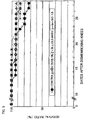
- the following examples showed that even when administering oleamide, death rates due to causes other than cancer were low (refer to Figs. 4 and 5).
- oleamide can be sufficiently used as a cancer metastasis inhibitor.
- the cancer metastasis inhibitor of the present invention inhibits (suppresses) spontaneous metastasis of cancer.
- drug efficacy has been tested (the inhibitory degrees of cancer metastasis have been evaluated) by metastasizing cancer experimentally, not by transplanting cancer cells. That is, cancer cells were injected intravenously, and effectiveness was examined based on cancer metastasis into lungs in two weeks after the administration of cancer metastasis inhibitor.
- cancer cells were transplanted, and drug efficacy was examined based on cancer metastasis after the transplantation. Accordingly, the efficacy can be examined under a condition similar to real cancer. That is, the cancer metastasis inhibitor of the present invention inhibits (suppresses) spontaneous metastasis of cancer, which directly reflects cancer metastasis of humans.
- the cancer metastasis inhibitor of the present invention is a highly useful drug.
- magnetic nuclear resonance ( 1 H-NMR) spectrum was measured with tetramethylsilane as internal reference material by using a spectrometer JEOL JNM-AL300 (300 MHz).
- Mass spectroscopy (MS) spectrum was measured according to a direct method using 20eV or 70eV, by using a spectrometer JEOL JNM-LMS300.
- Merck Kiesege 160 70-230 mesh ASTM was used as an absorbent.
- oxirane-containing amide MI-18: 8-[(2S*3R*)-3-octyloxirane-2-yl] octanamide (54 mg, 96%) was obtained.
- This oxirane-containing amide was one of the compounds contained in the general formula (1).
- HeLa cells Human uterocervical squamaous carcinoma cells (HeLa cells) were purchased from American type culture collection (Manassas, VA). A HeLa subclone (HeLa Cx26), which expressed rat Cx26 stably, was obtained previously (Duflot - Dancer et al., Oncogen, 1997). All cells were incubated in Dulbecco's modified eagle's medium (DMEM) with 10 % fetal calf serum (FCS).
- DMEM Dulbecco's modified eagle's medium
- FCS % fetal calf serum
- a pCX4bsr vector was derived from the pCXbsr vector (T Akagi., et al., 2000, Proc. Natl. Acad. Sci. USA) with minor modification.
- the pCX4bsr vector was kindly given by Dr. T Akagi (Osaka Bioscience Institute, Osaka, Japan).
- the pBluescriptII SK + plasmid vector contained a cDNA fragment of an entire coding region of rat Cx43 between the Spel and ClaI sites, and was constructed previously (Y. Omori., et al., 1998, Int. J. Cancer).
- the Cx43cDNA was excised by digesting NotI and HincII, and being ligated with the pCX4bsr where NotI and HincII were digested.
- HeLa cells were transfected with the resulting pCX4bsr-Cx43 vector by using the TransFast transfection regent. After transfection, cells were selected by resistance to blasticidin (3 ⁇ g/ml) for three weeks to obtain single colonies.
- One of the stably transformed clones (HeLa-Cx43) was used for dye-transfer assay.
- HeLa-Cx26 or HeLa-Cx43 was suspended in DMEM containing 10% FCS. Both cells were cultured either on 6-well plates or coverslips at the bottom of 6-well plates. The former cells were used as donor cells, and the latter cells as recipient cells. Initial plating was adjusted to yield subconfluent monolayers next day. Next day, calcein-AM and DiI were added to the culture of donor cells at concentrations of 4 ⁇ M and 10 ⁇ M, respectively, and incubated for one hour. Double-labeled donor cells were trypsinized and washed three times with phosphate-buffered saline. A thousand single donor cells suspended in DMEM containing 10 % FCS were gently overlaid on unlabeled recipient cells.
- GJIC gap junction cell-to-cell communication
- Donor cells were scored as 0 for no dye-coupling, as 1 for dye-coupling from a donor cell to an adjacent recipient cell, and as 2 or 3 when calcein transferred to the adjacent recipient cell further transfers to a second or a third adjacent cell, subsequently, in a direction away from the donor cell. Up to "8" is set because it was difficult to evaluate dye transfer from the donor cell to cells which are eight or more cells away therefrom. Per factor, at least 25 donor cells were used for scoring under a condition that the donor was a single cell that was at least 10 cells away from another single donor. The experiments were repeated three times and mean and standard deviation of score counts were calculated for each factor. For comparison, an unpaired Student's test was done, and a P value ⁇ 0.01 was considered to be significant difference.
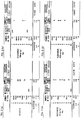
- Fig. 1 illustrates the result of evaluating inhibitory activity of oleamide produced in Example 1 and the oxirane-containing amide produced in Example 2 against connexin 26 and connexin 43. As illustrated in Fig. 1, it was confirmed that both of the compounds exhibits inhibitory activity against connexin 26, and that oxirane-containing amide specifically inhibits only connexin 26.
- mice After subcutaneously inoculating 1 x 10 5 BL6 cells (substrains of B16 mouse melanoma cells) to a planter of each C57B1/6 mouse, the mice were classified into three groups.
- mice were treated in the above manners on consecutive days after the BL6 cells inoculation. Then, on about 18th day, tumors (about six mm in diameter) formed at inoculation points were removed by dismembering at knee joints. Then the mice were treated in the above manners for another two days after the dismembering. After that, the mice were fed without the treatments. At four weeks after the dismembering at the knee joints, the mice were euthanized, and metastasized tubercles in both left and right lungs (the number of focuses) were counted visually (refer to Fig. 2 (a) through (c) and Fig. 3). Cancer metastasis inhibitory action was evaluated using 10 mice for each group. It was found that the groups of oleamide administration had fewer metastasized tubercles and significantly exhibited cancer metastasis inhibitory action compared with the group having no administration.
- mice After subcutaneously inoculating 1 x 10 5 BL6 cells (substrains of B16 mouse melanoma cells) to a planter of each C57B1/6 mouse, the mice were classified into three groups.
- mice were treated in the above manners every day after the BL6 cells inoculation. Then, on about 18th day, tumors (about eight mm radical) formed at the injected points were removed by dismembering at knee joints. Then the mice were treated in the above manners for another two days after the dismembering. After that, mice were fed without the treatments. At four weeks after dismembering at the knee joints, the mice were euthanized, and metastasized tubercles in both left and right lungs (the number of focuses) were counted visually (refer to Fig. 2 (a) through (c) and Fig. 3). Cancer metastasis inhibitory action was evaluated using 15 mice for each group.
- the present invention provides a connexin 26 inhibitor which specifically inhibits a function of connexin 26. Further, the present invention provides a cancer metastasis inhibitor having the connexin 26 inhibitor of the present invention as an active principle.
- the cancer metastasis inhibitor of the present invention specifically inhibits the function of connexin 26, without inhibiting the function of connexin 43. Therefore, it is possible to provide a safe cancer metastasis inhibitor with less side effects such as arrhythmia or the like. Thus, cancer metastasis is inhibited, so that the efficacy of cancer treatments can be dramatically improved.
Landscapes
- Health & Medical Sciences (AREA)
- Veterinary Medicine (AREA)
- Chemical & Material Sciences (AREA)
- Medicinal Chemistry (AREA)
- Pharmacology & Pharmacy (AREA)
- Life Sciences & Earth Sciences (AREA)
- Animal Behavior & Ethology (AREA)
- General Health & Medical Sciences (AREA)
- Public Health (AREA)
- Epidemiology (AREA)
- Oncology (AREA)
- Chemical Kinetics & Catalysis (AREA)
- General Chemical & Material Sciences (AREA)
- Nuclear Medicine, Radiotherapy & Molecular Imaging (AREA)
- Organic Chemistry (AREA)
- Pharmaceuticals Containing Other Organic And Inorganic Compounds (AREA)
- Medicines That Contain Protein Lipid Enzymes And Other Medicines (AREA)
Applications Claiming Priority (3)
| Application Number | Priority Date | Filing Date | Title |
|---|---|---|---|
| JP2002349155 | 2002-11-29 | ||
| JP2002349155 | 2002-11-29 | ||
| PCT/JP2003/015243 WO2004060398A1 (fr) | 2002-11-29 | 2003-11-28 | Inhibiteurs de la connexine 26 et inhibiteurs de metastases cancereuses |
Publications (2)
| Publication Number | Publication Date |
|---|---|
| EP1582219A1 true EP1582219A1 (fr) | 2005-10-05 |
| EP1582219A4 EP1582219A4 (fr) | 2007-11-28 |
Family
ID=32708056
Family Applications (1)
| Application Number | Title | Priority Date | Filing Date |
|---|---|---|---|
| EP03814541A Withdrawn EP1582219A4 (fr) | 2002-11-29 | 2003-11-28 | Inhibiteurs de la connexine 26 et inhibiteurs de metastases cancereuses |
Country Status (4)
| Country | Link |
|---|---|
| US (1) | US20060058379A1 (fr) |
| EP (1) | EP1582219A4 (fr) |
| JP (1) | JP4331115B2 (fr) |
| WO (1) | WO2004060398A1 (fr) |
Families Citing this family (3)
| Publication number | Priority date | Publication date | Assignee | Title |
|---|---|---|---|---|
| WO2006049157A1 (fr) * | 2004-11-02 | 2006-05-11 | The New Industry Research Organization | Dérivé oligomérique de l’oléamide présentant un effet inhibiteur de la connexine-26 et emploi dudit dérivé dans les thérapies anticancéreuses, etc. |
| WO2008016139A1 (fr) * | 2006-08-04 | 2008-02-07 | Osaka University | Dérivé fluorescent d'oléamide et ses utilisations |
| CA2961894C (fr) | 2014-09-19 | 2023-12-12 | Memorial Sloan-Kettering Cancer Center | Methodes de traitement de la metastase du cerveau au moyen d'inhibiteurs de jonction lacunaire |
Family Cites Families (4)
| Publication number | Priority date | Publication date | Assignee | Title |
|---|---|---|---|---|
| JP2001523695A (ja) * | 1997-11-24 | 2001-11-27 | ザ スクリップス リサーチ インスティテュート | ギャップ結合連絡の阻害剤 |
| JP4282163B2 (ja) * | 1999-07-12 | 2009-06-17 | 株式会社医学生物学研究所 | 癌転移能検査方法、および癌転移抑制薬のスクリーニング方法 |
| US7019031B2 (en) * | 2000-10-23 | 2006-03-28 | The Arizona Disease Control Research Commission | Anticancer agents based on regulation of protein prenylation |
| WO2002069896A2 (fr) * | 2001-03-01 | 2002-09-12 | Northwest Hospital | Apoptose de cellules cancereuses humaines induite par chimiotherapie et augmentee par connexine afin d'inhiber la proliferation de cellules cancereuses |
-
2003
- 2003-11-28 US US10/536,805 patent/US20060058379A1/en not_active Abandoned
- 2003-11-28 EP EP03814541A patent/EP1582219A4/fr not_active Withdrawn
- 2003-11-28 JP JP2004564477A patent/JP4331115B2/ja not_active Expired - Fee Related
- 2003-11-28 WO PCT/JP2003/015243 patent/WO2004060398A1/fr not_active Ceased
Also Published As
| Publication number | Publication date |
|---|---|
| EP1582219A4 (fr) | 2007-11-28 |
| JP4331115B2 (ja) | 2009-09-16 |
| JPWO2004060398A1 (ja) | 2006-05-11 |
| US20060058379A1 (en) | 2006-03-16 |
| WO2004060398A1 (fr) | 2004-07-22 |
Similar Documents
| Publication | Publication Date | Title |
|---|---|---|
| JP6182457B2 (ja) | カチオン性脂質を含有するドラックデリバリーシステムのための脂質ナノ粒子 | |
| JP5611967B2 (ja) | イソプレニル化合物およびその方法。 | |
| CN101199503A (zh) | Hif羟化酶抑制剂 | |
| CN102655745B (zh) | 抗细菌剂用于治疗上皮相关病况的用途 | |
| JPWO2003070754A1 (ja) | ヒストン脱アセチル化酵素阻害剤およびその製造方法 | |
| AU2012258665B2 (en) | Quinone compounds for treating Ape1 mediated diseases | |
| US20250243159A9 (en) | Biomolecule-polymer-pharmaceutical agent conjugates for delivering the pharmaceutical agent | |
| JP2021534215A (ja) | 病的症状の治療における使用のための芳香族分子 | |
| EP1582219A1 (fr) | Inhibiteurs de la connexine 26 et inhibiteurs de metastases cancereuses | |
| RU2672553C2 (ru) | Соединения и способы лечения лейкемии | |
| JP2021534212A (ja) | 病的状態の治療における使用のための芳香族分子 | |
| JP2021024852A (ja) | 機能不全ミトコンドリアを消去するための複合体、および細胞老化を抑制するための複合体 | |
| TWI331993B (en) | Aminocyclohexyl ether compounds and uses thereof | |
| WO2018227012A1 (fr) | Matériaux à base de lipides pour l'administration d'acides nucléiques | |
| JP2011102268A (ja) | トリプトファン誘導体およびその用途 |
Legal Events
| Date | Code | Title | Description |
|---|---|---|---|
| PUAI | Public reference made under article 153(3) epc to a published international application that has entered the european phase |
Free format text: ORIGINAL CODE: 0009012 |
|
| 17P | Request for examination filed |
Effective date: 20050628 |
|
| AK | Designated contracting states |
Kind code of ref document: A1 Designated state(s): AT BE BG CH CY CZ DE DK EE ES FI FR GB GR HU IE IT LI LU MC NL PT RO SE SI SK TR |
|
| RBV | Designated contracting states (corrected) |
Designated state(s): CH DE FR GB LI |
|
| RIN1 | Information on inventor provided before grant (corrected) |
Inventor name: ITO, AKIHIKOD Inventor name: NOJIMA, HIROSHI Inventor name: KITA, YASUYUKI Inventor name: MORITA, NOBUYOSHI |
|
| STAA | Information on the status of an ep patent application or granted ep patent |
Free format text: STATUS: THE APPLICATION HAS BEEN WITHDRAWN |
|
| A4 | Supplementary search report drawn up and despatched |
Effective date: 20071029 |
|
| 18W | Application withdrawn |
Effective date: 20071005 |