EP1586059B1 - Rechnerisches verfahren und vorrichtung zur vorhersage der polypeptidaggregation oder lösbarkeit - Google Patents
Rechnerisches verfahren und vorrichtung zur vorhersage der polypeptidaggregation oder lösbarkeit Download PDFInfo
- Publication number
- EP1586059B1 EP1586059B1 EP04703201A EP04703201A EP1586059B1 EP 1586059 B1 EP1586059 B1 EP 1586059B1 EP 04703201 A EP04703201 A EP 04703201A EP 04703201 A EP04703201 A EP 04703201A EP 1586059 B1 EP1586059 B1 EP 1586059B1
- Authority
- EP
- European Patent Office
- Prior art keywords
- polypeptide
- aggregation
- coil
- code
- charge
- Prior art date
- Legal status (The legal status is an assumption and is not a legal conclusion. Google has not performed a legal analysis and makes no representation as to the accuracy of the status listed.)
- Expired - Lifetime
Links
Images


Classifications
-
- G—PHYSICS
- G16—INFORMATION AND COMMUNICATION TECHNOLOGY [ICT] SPECIALLY ADAPTED FOR SPECIFIC APPLICATION FIELDS
- G16B—BIOINFORMATICS, i.e. INFORMATION AND COMMUNICATION TECHNOLOGY [ICT] SPECIALLY ADAPTED FOR GENETIC OR PROTEIN-RELATED DATA PROCESSING IN COMPUTATIONAL MOLECULAR BIOLOGY
- G16B15/00—ICT specially adapted for analysing two-dimensional [2D] or three-dimensional [3D] molecular structures, e.g. structural or functional relations or structure alignment
-
- G—PHYSICS
- G01—MEASURING; TESTING
- G01N—INVESTIGATING OR ANALYSING MATERIALS BY DETERMINING THEIR CHEMICAL OR PHYSICAL PROPERTIES
- G01N33/00—Investigating or analysing materials by specific methods not covered by groups G01N1/00 - G01N31/00
- G01N33/48—Biological material, e.g. blood, urine; Haemocytometers
- G01N33/50—Chemical analysis of biological material, e.g. blood, urine; Testing involving biospecific ligand binding methods; Immunological testing
- G01N33/68—Chemical analysis of biological material, e.g. blood, urine; Testing involving biospecific ligand binding methods; Immunological testing involving proteins, peptides or amino acids
- G01N33/6803—General methods of protein analysis not limited to specific proteins or families of proteins
-
- G—PHYSICS
- G16—INFORMATION AND COMMUNICATION TECHNOLOGY [ICT] SPECIALLY ADAPTED FOR SPECIFIC APPLICATION FIELDS
- G16B—BIOINFORMATICS, i.e. INFORMATION AND COMMUNICATION TECHNOLOGY [ICT] SPECIALLY ADAPTED FOR GENETIC OR PROTEIN-RELATED DATA PROCESSING IN COMPUTATIONAL MOLECULAR BIOLOGY
- G16B15/00—ICT specially adapted for analysing two-dimensional [2D] or three-dimensional [3D] molecular structures, e.g. structural or functional relations or structure alignment
- G16B15/20—Protein or domain folding
-
- G—PHYSICS
- G16—INFORMATION AND COMMUNICATION TECHNOLOGY [ICT] SPECIALLY ADAPTED FOR SPECIFIC APPLICATION FIELDS
- G16B—BIOINFORMATICS, i.e. INFORMATION AND COMMUNICATION TECHNOLOGY [ICT] SPECIALLY ADAPTED FOR GENETIC OR PROTEIN-RELATED DATA PROCESSING IN COMPUTATIONAL MOLECULAR BIOLOGY
- G16B20/00—ICT specially adapted for functional genomics or proteomics, e.g. genotype-phenotype associations
-
- G—PHYSICS
- G16—INFORMATION AND COMMUNICATION TECHNOLOGY [ICT] SPECIALLY ADAPTED FOR SPECIFIC APPLICATION FIELDS
- G16B—BIOINFORMATICS, i.e. INFORMATION AND COMMUNICATION TECHNOLOGY [ICT] SPECIALLY ADAPTED FOR GENETIC OR PROTEIN-RELATED DATA PROCESSING IN COMPUTATIONAL MOLECULAR BIOLOGY
- G16B20/00—ICT specially adapted for functional genomics or proteomics, e.g. genotype-phenotype associations
- G16B20/50—Mutagenesis
Definitions
- This invention relates to methods for determining the effect of an amino acid modification on the rate of aggregation of a polypeptide by calculating the propensity of a modified polypeptide to aggregate, i.e. the solubility of a modified polypeptide, relative to a reference polypeptide.
- the invention further relates to a method for designing a modified polypeptide with a particular ability to aggregate, i.e. a particular solubility.
- the invention further relates to such methods carried out by means of computer software and to computer hardware programmed for carrying out the methods.
- a specific peptide or protein that is normally soluble is deposited, either intact or in fragmented form, into insoluble aggregates that accumulate in one or more type(s) of tissue.
- Numerous mutations have been found to be associated with familial forms of protein deposition diseases and more than 100 have been shown directly to involve the sequence of the peptide or protein responsible for aggregation (Siepen and Westhead, 2002). Many of these mutations have been identified over the past 5 years, and the number is expected to increase dramatically in the near future.
- hydrophobic residues are usually embedded within the core of a protein, thus the opportunity for these residues to interact is limited.
- proteins are dynamic and an equilibrium exists between the stable and folded conformation, and destabilised, partially or fully unfolded states.
- the free energy value ( ⁇ G, kJ mol -1 ) for a protein provides an indication of the stability of the protein. Aggregation occurs when proteins in their native state denature; as the protein unfolds, intramolecular bonds are broken, allowing the polypeptide main chain (backbone) and hydrophobic side chains to be exposed. Hydrogen bonds and other interactions can then form between the partially or fully denatured protein molecules, resulting in intermolecular associations and aggregate formation.
- aggregates in particular fibrils, for example for use as plastic materials, in electronics, as conductors, for catalysis or as a slow release form of the polypeptide, or where polypeptide fibrils are to be spun into a polypeptide "yam" for various applications; for example, as described in published patent applications WO0017328 (Dobson ) and WO0242321 (Dobson & McPhee ).
- Chiti (2002a) concluded that the measured changes in aggregation rate upon mutation positively correlated with changes in the hydrophobicity and ⁇ -sheet propensity of the regions of the protein in which the mutations are located.
- Chiti (2002b) examined AcP mutations that altered the charge state of the AcP protein without affecting significantly the hydrophobicity or secondary structure propensitities of the polypeptide chain. An inverse correlation was reported between the rate of aggregation of protein variants under denaturing conditions and the overall net charge of the protein.
- the factors that affect the rate of aggregation of a protein are diverse. When amino acid substitutions are made in a protein, several factors are involved to different extents. A single mutation can increase the net charge, thereby disfavouring aggregation (for example, the replacement of Ala for Asp in a positively charged protein). Nevertheless, the same mutation can increase hydrophobicity, thereby bringing an accelerating contribution to the aggregation rate. Finally, the same mutation also changes the ⁇ -helical and ⁇ -sheet propensities of the polypeptide chain, introducing other factors. The relationship between the factors and their relative importance to aggregation (solubility) are not well characterised.
- methods of the invention may be used to identify or design polypeptide sequences with a reduced aggregation propensity, re-designed polypeptides could be administered by methods such as gene therapy to treat certain disorders, particularly those associated with protein aggregation.
- the ability to identify or design polypeptides with specific aggregation properties will be important for development and manufacture of polypeptides for applications in the material and device areas, such as those described in WO0017328 (Dobson ) and WO0242321 (Dobson & McPhee ).
- Amyloid fibril formation is also discussed in a paper entitled " The fibril one on-line database: Mutations, experimental conditions, and trends associated with amyloid fibril formation” by Siepen et al in Protein Science, vol 11, no 7, July 2002, pages 1862-1866 XP2279770.
- the invention is as set out in the independent claims.
- a prediction method for predicting the effect of an amino acid modification on the rate of aggregation (solubility) of a reference polypeptide comprises calculating the difference in hydrophobicity ( ⁇ Hydr) between the reference polypeptide and a modified polypeptide, calculating the difference in ⁇ -sheet propensity ( ⁇ G coil- ⁇ + ⁇ G ⁇ -coil ) between the reference polypeptide and modified polypeptide, calculating the difference in charge ( ⁇ Charge) between the reference polypeptide and modified polypeptide and calculating: [x * ⁇ Hydr] + [y * ( ⁇ G coil- ⁇ + ⁇ G ⁇ -coil )]-[z * ⁇ Charge], wherein x, y and z are scaling factors.
- a value for [x * ⁇ Hydr] + [y * ( ⁇ G coil- ⁇ + ⁇ G ⁇ -coil )]-[z * ⁇ Charge] of a first sign indicates that the modified polypeptide has a greater propensity to aggregate relative to the reference polypeptide and a value for [x * ⁇ Hydr] + [y * ( ⁇ G coil- ⁇ + ⁇ G ⁇ -coil )]-[z * ⁇ Charge] of a sign opposite to the first sign indicates that the modified polypeptide has a reduced propensity to aggregate relative to the reference polypeptide.
- a positive value for ln( v mod / v ref ) indicates that the modified polypeptide has a greater propensity to aggregate (lower solubility) relative to the reference polypeptide; and a negative value for ln( v mod / v ref ), indicates that the modified polypeptide has a reduced propensity to aggregate (higher solubility) relative to the reference polypeptide.
- the scaling factor x is a value from 0.59 to 0.64 to, the scaling factor y is a value from 0.19 to 0.22 and the scaling factor z is a value from 0.49 to 0.51. It is particularly preferred that the scaling factor x is 0.6, 0.63 or 0.633, the scaling factor y is 0.2 or 0.198 and the scaling factor z is 0.5, 0.49 or 0.491.
- an identification method for identifying an amino acid modification that reduces the aggregation rate (increases the solubility) of a reference polypeptide comprising using a method of the invention to predict the change in aggregation rate for one or more modified polypeptide(s), the modified polypeptide having one or more amino acid modification(s) when compared to the reference polypeptide, comparing the predicted aggregation rates of the reference and said one or more modified polypeptides, and identifying one or more modified polypeptide(s) having a predicted reduced aggregation rate relative to the reference polypeptide.
- an identification method for identifying an amino acid modification that increases the aggregation rate (decreases the solubility) of a polypeptide comprising using a method of the invention to predict the change in aggregation rate for one or more modified polypeptide(s), each modified polypeptide having one or more amino acid modification(s) when compared to the reference polypeptide, comparing the predicted aggregation rates of the reference and said one or more modified polypeptide(s) and identifying one or more modified polypeptides having a predicted increased aggregation rate relative to the reference polypeptide.
- a method for making a polypeptide having a reduced aggregation rate (increased solubility) comprising using a method of the invention to identify a modification predicted to reduce the aggregation rate of a polypeptide and making a modified polypeptide having said modification.
- a method for making a polypeptide having an increased aggregation rate (decreased solubility) comprising using a method of the invention to identify a modification predicted to increase the aggregation rate of a polypeptide and making a modified polypeptide having said modification.
- the reference and modified polypeptide(s) are structurally related in terms of amino acid composition and sequence. Structurally related polypeptides have at least 60%, preferably at least 70%, more preferably at least 80 %, yet more preferably at least 90%, further preferably at least 95% amino acid sequence homology. In an alternative aspect, the reference and modified polypeptide(s) are structurally unrelated. Preferably the reference polypeptide is a wild type polypeptide and the modified polypeptide is a mutant thereof. A modified polypeptide is preparable by chemical modification and/or by modification(s) such as substitution, deletion and/or addition of one or more amino acids of the reference protein.
- amino acid substituted or added to the reference protein may be a natural amino acid or a chemically synthesised or chemically modified amino acid.
- 1 to 20, 1 to 16, 1 to 12, or 1 to 10 amino acids are substituted, deleted and/or added; most preferably 1, 2, 3, 4, 5, or 6 amino acids are substituted, deleted and/or added.
- the modification of the polypeptide is by amino acid substitution, which can be substitution of one or more amino acids, preferably by substitution of 1 to 20, 1 to 16, 1 to 12, or 1 to 10 amino acids, more preferably substitution of 1, 2, 3, 4, 5, or 6 amino acids.
- modification the polypeptide may be by deletion of one or more amino acids, preferably by deletion of 1, to 20, 1 to 16, 1 to 12, or 1 to 10 amino acids; more preferably by deletion of 1, 2, 3, 4, 5, or 6 amino acids.
- the reference polypeptide may be a natural polypeptide from any species, or a non-natural "designed" polypeptide. Proposed modifications of the reference polypeptide may be selected by comparing the amino acid sequence of a reference polypeptide with the amino acid sequence of a related polypeptide or polypeptides from different species. It is preferred that modification be made in regions of a polypeptide that are polymorphic between different species. Proposed modifications of a reference protein may also be selected by comparing the amino acid sequence of the reference protein with naturally occurring or induced polypeptide variants of the reference protein, preferably by comparing wild type and mutant polypeptides.
- the reference polypeptide is preferably a human polypeptide. Proposed modifications of a human reference polypeptide may be selected by comparing a human reference polypeptide with a related polypeptide from a non-human source. Modification may be such that an amino acid in the human form of a polypeptide is modified to the amino acid present at that position in a related polypeptide from a non-human source. Alternatively, the reference polypeptide may be a non-human polypeptide and the modification may be such that the non-human polypeptide is "humanised”.
- modification is such that an activity of the polypeptide is maintained or improved.
- the modification may be outside the active site of the polypeptide or may be within the active site of the polypeptide.
- polypeptide as used herein encompasses proteins and peptides.
- modified (e.g. mutant) polypeptides can be designed that are more/less liable to aggregate (that have a lesser or greater solubility) than the reference (e.g. wild type) polypeptide, or that have a propensity to aggregate within a desired range.
- the change of aggregation rate as a result of a modification can be expressed as ln(v mod /v ref ), e.g. (ln(v mut /v wt )).
- the rate of aggregation may also be expressed in terms of an aggregation time, such as a half time of aggregation, and a ratio of aggregation rate is equivalent to a ratio of aggregation times, as discussed further later.
- a consensus hydrophobicity scale can be used to assign a hydrophobicity value for each amino acid.
- Different hydrophobicity scales may be used for different pH values, for example, scales described in Cowan, R. & Whittaker, R.G. (1990) Peptide Research 3: 75 - 80 ) may be used to calculate the hydrophobicity of polypeptides at low pH.
- An averaged hydrophobicity scale can be used, which can be obtained by using a combination of scales, such as those available in the literature (e.g. Fauchere J.-L & Pliska V.E. (1983) Eur. J. Med. Chem. 18: 369 - 375 ; Kyte J., Doolittle R.F. (1982) J. Mol.
- the hydrophobicity value for each amino acid is assigned using the values given in Table 1 for hydrophobicity of the 20 amino acid residues at neutral pH based on the partition coefficients from water to octanol; the data are from column 6 of Table 4.8 in Creighton (1993) ( Creighton, T. E. In Proteins. Structure and molecular properties. Second edition. W. H. Freeman & Company (New York, 1993), p. 154 .).
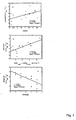
- the scaling factor x can be derived by plotting observed ln( v mod / v ref ), e.g. ln( v mut / v wt ), versus ⁇ Hydr for a number of polypeptide sequences, which may be unrelated or related (e.g. a collection of AcP mutants) and determining the line of best fit, the scaling-factor x is the slope (gradient) of the line.
- the individual values for ⁇ G coil- ⁇ and ⁇ G ⁇ -coil are calculated.
- the predicted ⁇ -helical propensities can be calculated using modelling software/algorithms such as AGADIR ( www.embl-heidelberg.de/Services/serrano/agadir/agadir-start.html ) Munoz & Serrano (1994) Nature Structural Biol 1, 399 - 409 ; Mu ⁇ oz & Serrano (1994) J Mol Biol 245, 297 - 308 ; Mu ⁇ oz & Serrano (1997) Biopolymers 41 495 509 and Lacroix et al (1998) J Mol Biol 284 173 - 191 ; PHD ( Rost, B. et al, (1993) J Mol Biol 232, 584-599 ); PROF ( Rost, B.
- Table 1 provides ⁇ -sheet propensity values for 19 amino acid residues (all except proline), these are normalised from 0 (high ⁇ -sheet propensity) to 1 (low ⁇ -sheet propensity). These data are from column 4 of Table 1 of Street and Mayo (1999) ( Street, A. G. & Mayo, S. L. Intrinsic ⁇ -sheet propensities result from van der Waals interactions between side chains and the local backbone. Proc. Natl. Acad. Sci. USA, 96, 9074-9076 (1999 )). The ⁇ -sheet propensity of proline is not reported due to the difficulty in determining it experimentally. The ⁇ -sheet propensity of glycine is obtained from theoretical calculations.
- the scaling factor y can be derived by plotting observed ln( v mod / v ref ) versus ( ⁇ G coil- ⁇ + ⁇ G ⁇ -coil ) for a number of unrelated or related polypeptide sequences (e.g. by plotting observed ln( v mut / v wt ) versus ( ⁇ G coil- ⁇ + ⁇ G ⁇ -coil ) for a number of AcP polypeptide mutations) and determining the line of best fit, the scaling factor y is the slope (gradient) of the line.
- the scaling factor z can be derived by plotting observed ln( v mod / v ref ) versus ⁇ Charge for a number of related or unrelated polypeptide sequences, e.g. by plotting observed ln( v mut / v wt ) for a number of AcP polypeptide mutants, and determining the line of best fit; the scaling factor z is the slope (gradient) of the line.
- the scaling factors x, y, and z can be refined by plotting a larger number of data points for further polypeptide modifications.
- a multiple regression analysis can be used to determine the scaling factors x for ⁇ Hydr, y for ⁇ G coil- ⁇ + ⁇ G ⁇ -coil , and z for ⁇ Charge.
- the multiple regression analysis method consists of calculating simultaneously the individual scaling factors x, y, and z for a given set of polypeptides (e.g. mutant polypeptides) for which the experimental values of ln( v mod / v ref ) (e.g. ln( v mut / v wt )) are available.
- Initial estimations for the values of x, y and z can be used in the calculations.
- the calculated ln( v mod / v ref ) values are compared with the values obtained experimentally.
- the calculations can be repeated through a number of iterations, each time using a different combination of x, y, and z values. The iterations will end when a set of best values is found for x, y and z, i.e. when minimal difference between the calculated and experimental value of ln( v mod / v ref ) is found.
- the calculation can be modified by inclusion of another term or terms, such as a stability factor to correct for mutations that affect protein stability.
- Terms can be added to the equation to represent other factors that affect aggregation rate, such as the position of the mutation along the sequence, non-cumulative effects of double substitutions, distance in sequence between double substitutions. Refinement of the equation by inclusion of additional factors can improve the accuracy of the method. Accordingly, methods of the invention can further comprise an additional calculation step or steps, for example, an additional step in which a stability factor is used to correct for mutations that affect protein stability.
- code to, when running, identify a polypeptide comprising: code to predict the change in aggregation rate for one or more modified polypeptides, comprising code as described above; and further code to identify one or more of said modified polypeptides dependent upon said predicted change in aggregation rate.
- a computer system for determining a rate of aggregation of a second polypeptide in relation to a reference polypeptide, said second polypeptide and said reference polypeptide each having an amino acid sequence, the amino acid sequence of said second polypeptide comprising a modified version of the amino acid sequence of said reference polypeptide
- the computer system comprising a data store for storing data comprising hydrophobicity data, ⁇ -sheet propensity data and charge data for a set of amino acids; a program store storing processor implementable code; and a processor, coupled to said program store and to said data store for implementing said stored code, the code comprising code for controlling the processor to: input an amino acid sequence for said second polypeptide; read hydrophobicity data for said second polypeptide amino acid sequence from said data store and determine a hydrophobicity value for said second polypeptide; read change data for said second polypeptide amino acid sequence from said data store and determine a ⁇ -sheet propensity value for said second polypeptide; determine an ⁇ -helix pro
- the ⁇ -sheet propensity may be expressed in terms of free energy.
- the set of amino acids may comprise, for example, all the natural amino acid residues.
- the ⁇ -helix propensities of the reference and modified polypeptide sequences may be determined using a code within the computer system or a request may be sent to a separate computer system, for example on a network, and ⁇ -helix propensity data received back from this second computer system.
- the hydrophobicity data, charge data and secondary structural propensity data for the reference and modified polypeptides may be determined from scales of values for each amino acid that were previously published and input to the computer system and/or stored, for example in the data store.
- the relative rate of aggregation determined by the apparatus may simply comprise a determination of whether the aggregation rates (or in other embodiments, the solubility) of the second polypeptide is above or below that of the reference polypeptide; alternatively a quantitative determination of the relative aggregation rates of these polypeptides may be made.
- One or more of the scaling factors may be selected responsive to, for example, the type of polypeptide for which the determination is being made.
- the computer system may be used to evaluate a plurality of second polypeptides, presenting the results, for example, as an ordered list or graph and/or selecting a promising candidate sequence for synthesis and further evaluation.
- Embodiments of the methods may be implemented using computer programme code in peptide synthesis apparatus, preferably apparatus for automatically synthesising a polypeptide based upon results obtained by applying the methods.
- the program code may be provided on a data carrier or storage medium, such as a hard or floppy disk, ROM or CD-ROM, or on an optical or electrical signal carrier, for example via a communications network.
- the processor control code may comprise program code in any conventional programming language for example C or assembler or machine code, and embodiments of the invention may be implemented on a general purpose computer system.
- the change of aggregation rate as a result of a mutation was expressed in all cases as the natural logarithm of the ratio of the aggregation rate constants of the mutant and wild-type protein (ln( v mut / v wt )).
- the hydrophobicity values of the 20 amino acid residues at neutral pH are based on the partition coefficients from water to octanol. These data are from column 6 of Table 4.8 in Creighton (1993) ( Creighton, T. E. In Proteins. Structure and molecular properties. Second edition. W. H. Freeman & Company (New York, 1993), p. 154 .)).
- the ⁇ -sheet propensities of the 20 amino acid residues are normalised from 0 (high ⁇ -sheet propensity) to 1 (low ⁇ -sheet propensity). These data are from column 1 of Table 4 of Street and Mayo (1999) ( Street, A. G. & Mayo, S. L.
- Intrinsic ⁇ -sheet propensities result from van der Waals interactions between side chains and the local backbone. Proc. Natl. Acad. Sci. USA, 96, 9074-9076 (1999 )). The ⁇ -sheet propensity of proline is not reported due to the difficulty in determining it experimentally. The ⁇ -sheet propensity of glycine is obtained from theoretical calculations. The values of charge are at neutral pH. Values in brackets are at a pH lower than 6.0, when the histidine residue is positively charged. Table 1.
- Equation 1 the change of aggregation rate ln( v mut / v wt ) was calculated for 27 amino acid substitutions of AcP within the two regions of the sequence that appear to be relevant for aggregation and encompassing residues 16-31 and 87-98.
- the change of aggregation rate for each mutation was determined experimentally, as described in Example 1, under conditions in which all protein variants consist of ensembles of relatively unstructured conformations.
- the calculated versus the experimental values of ln( v mut / v wt ) for all the mutations of AcP were plotted as shown in Figure 2b .
- Example 3 Comparison of observed versus calculated change in rate of aggregation on mutation for a range of polypeptides
- Equation 1 The combined function, Equation 1, was applied to calculate the change in aggregation rate upon mutation ( calculated ln( v mut / v wt )) for 26 mutations in the polypeptides amylin, prion peptides, ⁇ -synuclein, amyloid ⁇ -peptide, tau, leucine rich repeat and a model peptide, as listed in Table 2.
- Equation 1 was tested against other systems to evaluate its applicability to broader systems. Calculations used to derive Equation 1 are based on the aggregation kinetics experienced by protein and peptide variants that differ in a single residue from the original sequence.
- the rates ( v mut and v wt ) used in the expression correspond to the exponential phase of aggregation for each one of the peptides, and do not include any possible lag period or nucleation phase preceding that stage.
- the aggregation times for each one of the peptides could be defined in two different ways: the first one was the nucleation time or time that precedes the initiation of aggregation or the development of turbidity in the solution ( T1 ), and the second one would correspond to the half time of aggregation or the time at which variations in the measurements used for monitoring aggregation (light scattering, or any other method) reached half of it maximum value ( T2 ). This might enable the application of the equation to the prediction of aggregation propensities for a much broader range of molecules with important design aspects.
- Equation 1 can be used to predict the aggregation behaviour of a given polypeptide that has more than one amino acid modification compared to the original polypeptide sequence. Moreover, it suggests that in systems where a lag phase is present, or the aggregation rate can be difficult to calculate, alternative kinetic parameters represented by the times of aggregation (either T1 -nucleation time- or T2 -half time of aggregation-) can provide valid values to compare with the predictions given by Equation 1.
- Peptides A ⁇ (1- 40) and A ⁇ (1- 42) that are associated with Alzheimer's disease show differences in their aggregation propensities.
- the peptides differ in sequence only by two residues at the C-terminus.
- the methods of the invention explain the higher propensity to aggregate of the 42 residues form, relative to the 40 residues form, of the amyloid ⁇ peptide associated with Alzheimer's disease (Jarrett et al., 1993).
- the change of ⁇ -sheet propensity resulting from insertion can be calculated similarly. This leads to the prediction that the long form aggregates 7 times faster than the short form, in good agreement with the kinetic profile reported by Jarrett et al., 1993 who found acceleration of 7-8 times ( Jarrett JT, Berger EP, Lansbury PT Jr.
- the carboxy terminus of the beta amyloid protein is critical for the seeding of amyloid formation: implications for the pathogenesis of Alzheimer's disease. Biochemistry, 32, 4693-4697 (1993 )).
- Example 6 Computer system for operating the method of the invention
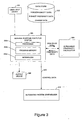
- a general purpose computer system 300 comprises a processor 300a coupled to programme memory 300b storing computer programme code to implement embodiments of the method, as described further below, and interfaces 300c such as conventional computer screen, keyboard, mouse, and printer, as well as other interfaces such as a network interface, a control interface for a peptide synthesiser and software interfaces such as a database interface.
- the computer system 300 accepts user input from a input device 304 such as a keyboard, input data file, or network interface, and provides an output to an output device 308 such as a printer, network interface, or data storage device.
- Input device 304 receives an input comprising an amino acid sequence for the modified (e.g. mutant) peptide as well as pH and temperature values appropriate to an environment for which the aggregation rate of the polypeptide is determined.
- a glycine/proline correction factor such as a weight for a structural distortion factor interfering with inter-molecular ⁇ -sheet formation or aggregation, may also be inputted.
- the output device 308 provides a comparative aggregation rate information such as a log (base 10 or natural) aggregation ratio, for example, a ratio of half times for aggregation of a mutant as compared with a wild type polypeptide.
- Computer system 300 is coupled to a data store 302 which stores hydrophobicity data, ⁇ -sheet propensity data (either as propensity data per se or in terms of free energy) and charge data. This data is stored for each amino acid (residue) and preferably a plurality of sets of each of these data types is stored corresponding to different values of pH and temperature.
- the computer system in the illustrated embodiment, is shown interfacing with an ⁇ -helix propensity calculator 306.
- ⁇ -helix propensity code may be stored within programme memory 300b and operate in a unitary fashion with the aggregation rate determination code described below.
- the ⁇ -helix propensity calculator receives sequence data, indirectly from the user input device, and provides ⁇ -helix propensity data in return.
- This data and the data in data store 302 may either be determined on an amino acid by amino acid basis or may be determined taking into account sequence context, for example, using a window over the sequence to modify data values dependent upon neighbouring amino acids.
- computer system 300 may also provide a data control output 310 to an automated peptide synthesiser 312.
- the control data will generally comprise an amino acid sequence of a polypeptide.
- computer system 300 may be programmed to automatically compare the properties of a number of modified (e.g. mutant) polypeptides and select one or more of those which are predicted to have favourable properties for automated synthesis.
- An example of such an automated peptide synthesiser would be an ABI 433A Peptide Synthesiser (Applied Biosystems).
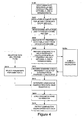
- Figure 4 shows a procedure for determining a comparative aggregation rate along the lines described above.
- Figure 4 represents a flow diagram of an embodiment of code running in programme memory 300b of Figure 3 .
- a user inputs an amino acid sequence, pH and temperature data, optionally with C- and N- terminus data for the sequence. Then at step S402 the computer system reads hydrophobicity data for the input sequence from the data store and sums this to provide an estimate of hydrophobicity for the peptide coded by the sequence. Where, as is strongly preferable, data for a range of pH and temperature values is available, data most closely corresponding to the desired pH and temperature is retrieved.
- the procedure reads charge data and ⁇ -sheet propensity data from the data store in a similar manner, summing the charge data to provide a charge estimate for the polypeptide corresponding to the input sequence and, similarly, summing the ⁇ -sheet propensity data (normally expressed in terms of free energy).
- proline no ⁇ -sheet propensity value is available and so a proline residue may be skipped when summarising these values or an arbitrary ⁇ -sheet propensity value or one corresponding to another amino acid may be employed.
- an arbitrary value of 1, or a value corresponding to another amino acid can be used.
- steps S402 and S406 may employ a "window" (for example of 3, 5, 7, or more amino acids) that would include a correction for the effect of flanking residues on the properties of a particular amino acid, (i.e. to take account of near neighbours within an amino acid sequence), rather than considering each amino acid of the sequence individually.
- a "window" for example of 3, 5, 7, or more amino acids
- Step S408 the procedure provides the input sequence to an ⁇ -helix propensity calculator, with the pH and temperature data, and, where available, with the C- and N- terminus data.
- An ⁇ -helix propensity calculator S408a operates on this data and returns data back to the procedure at step S410, the returned data comprising an ⁇ -helix propensity value for the complete sequence.
- the procedure determines the comparative aggregation rate of the polypeptide defined by the input amino acid sequence as compared with a reference polypeptide, using equation 1 above. It can be seen from equation 1 that a determination of comparative aggregation rate requires a difference in hydrophobicity, secondary structural propensity, and charge, and values for hydrophobicity, secondary structural propensity and charge for the reference polypeptides may either be determined by repeating steps S400 to S410 for the reference polypeptide or by reading stored values of these parameters from data store 302, or in any other conventional manner.
- the parameters or scaling factors in equation 1 operating on the differences in hydrophobicity, structural propensity and charge can be selected from sets of suitable parameters (step S414) in response to input data such as polypeptide type data.
- suitable parameters such as polypeptide type data.
- a completely random coil polypeptide may use different parameters to a partially unfolded or structured polypeptide.
- a polypeptide rich in a specific type of residue, such as aromatic or charged amino acids may require different parameters.
- an optional correction may be applied at step S416 for proline and or glycine residues in order to account for additional conformational or structural preferences that may hinder formation of inter-molecular ⁇ -sheet or aggregated structures by a given polypeptide and then at step S418 the system outputs the result of the comparative aggregation rate calculation.
- This may comprise a simple positive or negative value indicating whether the aggregation rate of the modified polypeptide (e.g. mutant) is greater or less than that of the reference polypeptide, but preferably this comprises quantitative data relating to the comparative aggregation rates such as a log aggregation rate ratio.
- Figure 5 shows a flow diagram of one advantageous implementation of the procedure of Figure 4 .
- Figure 5 shows a method of screening modified polypeptides (e.g. mutations) in order to select candidates with promising properties for further investigation and, optionally, synthesis.
- modified polypeptides e.g. mutations
- the procedure may also allow a modification or range of modifications to be specified, for example in terms of a pre-determined set or selection of amino acids.
- the procedure Following initialisation, at step S502 the procedure generates a modified sequence representing one of the possible permutations defined by the input data and then, at step S504, determines a comparative aggregation rate for modified polypeptide in comparison with the reference polypeptide, for example using the procedure at Figure 4 . Then, at step S506, the procedure checks whether there are any more permutations for which to perform the calculation, and if so returns to step S502 until a complete set of possible permutations has been generated. Then, at step S508, the set of comparative aggregation rate data for each modified polypeptide (in comparison with the reference protein) is output, for example as an autolist, graph, or in any other convenient manner.
- This data may then be used, for example to identify candidates for synthesis and/or for comparison with other data such as immunogenicity/antigenicity.
- one or more of the 'best' modified polypeptides for example mutants with a particularly high or low aggregation rate, may be collected and the sequence data for these modified polypeptides output to an automated peptide synthesiser such as synthesiser 312 of Figure 3 to automatically produce the mutant proteins for, say, further investigation.
Landscapes
- Life Sciences & Earth Sciences (AREA)
- Health & Medical Sciences (AREA)
- Physics & Mathematics (AREA)
- Engineering & Computer Science (AREA)
- Bioinformatics & Cheminformatics (AREA)
- Chemical & Material Sciences (AREA)
- Spectroscopy & Molecular Physics (AREA)
- Molecular Biology (AREA)
- Biophysics (AREA)
- Bioinformatics & Computational Biology (AREA)
- Biotechnology (AREA)
- General Health & Medical Sciences (AREA)
- Theoretical Computer Science (AREA)
- Evolutionary Biology (AREA)
- Medical Informatics (AREA)
- Proteomics, Peptides & Aminoacids (AREA)
- Analytical Chemistry (AREA)
- Genetics & Genomics (AREA)
- Urology & Nephrology (AREA)
- Biomedical Technology (AREA)
- Crystallography & Structural Chemistry (AREA)
- Hematology (AREA)
- Immunology (AREA)
- Medicinal Chemistry (AREA)
- Microbiology (AREA)
- Food Science & Technology (AREA)
- Cell Biology (AREA)
- Biochemistry (AREA)
- General Physics & Mathematics (AREA)
- Pathology (AREA)
- Peptides Or Proteins (AREA)
- Measuring Or Testing Involving Enzymes Or Micro-Organisms (AREA)
- Medicines That Contain Protein Lipid Enzymes And Other Medicines (AREA)
- Investigating Or Analysing Biological Materials (AREA)
- Management, Administration, Business Operations System, And Electronic Commerce (AREA)
Claims (33)
- Computer-implementiertes Vorhersageverfahren zum Vorhersagen der Auswirkung einer Aminosäuremodifizierung auf die Rate der Aggregation (Löslichkeit) eines Referenzpolypeptids, umfassend:Berechnen der Differenz in der Hydrophobizität (ΔHydr) zwischen dem Referenzpolypeptid und einem modifizierten Polypeptid;Berechnen der Differenz in der β-Faltblatt-Neigung (ΔΔGKnäuel-α + ΔΔGβ-Knäuel) zwischen dem Referenzpolypeptid und einem modifizierten Polypeptid;Berechnen der Differenz in der Ladung (Δ Ladung) zwischen dem Referenzpolypeptid und einem modifizierten Polypeptid;Berechnen: [x * ΔHydr] + [y * (ΔΔGKnäuel-α + ΔΔGβ-Knäuel)]-[z * Δ Ladung], wobei x, y und z Skalierungsfaktoren sind; undVorhersagen der Auswirkung der Aminosäuremodifizierung auf die Rate der Aggregation (Löslichkeit) aus [x * ΔHydr] + [y * (ΔΔGKnäuel-α + ΔΔGβ-Knäuel)]-[z * Δ Ladung], wobei ein Wert für [x * ΔHydr] + [y * (ΔΔGKnäuel-α + ΔΔGβ-Knäuel)]-[z * Δ Ladung] mit einem ersten Vorzeichen anzeigt, daß das modifizierte Polypeptid eine größere Neigung zu aggregieren (niedrigere Löslichkeit) relativ zu dem Referenzpolypeptid hat und ein Wert für [x * ΔHydr] + [y * (ΔΔGKnäuel-α + ΔΔGβ-Knäuel)]-[z * Δ Ladung] mit einem Vorzeichen entgegengesetzt zu dem ersten Vorzeichen anzeigt, daß das modifizierte Polypeptid eine verringerte Neigung zu aggregieren (höhere Löslichkeit) relativ zu dem Referenzpolypeptid hat.
- Verfahren gemäß Anspruch 1, wobei die Auswirkung der Aminosäuremodifizierung auf die Rate der Aggregation als ln(νMod/νRef) ausgedrückt wird, wobei ein positiver Wert für ln(νMod/νRef) anzeigt, daß das modifizierte Polypeptid eine größere Neigung zu aggregieren (niedrigere Löslichkeit) relativ zu dem Referenzpolypeptid hat und ein negativer Wert für ln(νMod/νRef) anzeigt, daß das modifizierte Polypeptid eine verringerte Neigung zu aggregieren (höhere Löslichkeit) relativ zu dem Referenzpolypeptid hat.
- Verfahren gemäß Anspruch 1 oder 2, wobei der Skalierungsfaktor x ein Wert von 0,59 bis 0,64 ist, der Skalierungsfaktor y ein Wert von 0,19 bis 0,22 ist und der Skalierungsfaktor z ein Wert von 0,49 bis 0,51 ist.
- Verfahren gemäß Anspruch 1, wobei x 0,6 ist, y 0,2 ist und z 0,5 ist.
- Verfahren gemäß Anspruch 1, wobei x 0,63 ist, y 0,20 ist und z 0,49 ist.
- Computer-implementiertes Verfahren zum Identifizieren einer Aminosäuremodifizierung, die die Aggregationsrate eines Referenzpolypeptids verringert (die Löslichkeit vergrößert), umfassend:Verwenden eines Verfahrens gemäß einem der Ansprüche 1 bis 5, um die Veränderung in der Aggregationsrate für ein oder mehrere modifizierte Polypeptid(e) vorherzusagen, wobei jedes modifizierte Polypeptid, wenn verglichen mit dem Referenzpolypeptid, eine oder mehrere Aminosäuremodifizierung(en) hat,Vergleichen der vorhergesagten Aggregationsraten der Referenz und des einen oder der mehreren modifizierten Polypeptide, undIdentifizieren von einem oder mehreren modifizierten Polypeptid(en) mit einer vorhergesagten verringerten Aggregationsrate relativ zu dem Referenzpolypeptid.
- Computer-implementiertes Verfahren zum Identifizieren einer Aminosäuremodifizierung, die die Aggregationsrate eines Referenzpolypeptids vergrößert (die Löslichkeit verringert), umfassend:Verwenden eines Verfahrens gemäß einem der Ansprüche 1 bis 5, um die Veränderung in der Aggregationsrate für ein oder mehrere modifizierte Polypeptid(e) vorherzusagen, wobei jedes modifizierte Polypeptid, wenn verglichen mit dem Referenzpolypeptid, eine oder mehrere Aminosäuremodifizierung(en) hat,Vergleichen der vorhergesagten Aggregationsraten der Referenz und des einen oder der mehreren modifizierten Polypeptide, undIdentifizieren von einem oder mehreren modifizierten Polypeptid(en) mit einer vorhergesagten vergrößerten Aggregationsrate relativ zu dem Referenzpolypeptid.
- Computer-implementiertes Verfahren zum Herstellen eines Polypeptids mit verringerter Aggregationsrate, umfassend:Verwenden des Verfahrens von Anspruch 6, um eine Modifizierung zu identifizieren, von der vorhergesagt wird, die Aggregationsrate des Polypeptids zu verringern; undHerstellen eines Polypeptids mit verringerter Aggregationsrate mit der Modifizierung.
- Computer-implementiertes Verfahren zum Herstellen eines Polypeptids mit vergrößerter Aggregationsrate, umfassend:Verwenden des Verfahrens von Anspruch 7, um eine Modifizierung zu identifizieren, von der vorhergesagt wird, die Aggregationsrate des Polypeptids zu vergrößern; undHerstellen eines Polypeptids mit vergrößerter Aggregationsrate mit der Modifizierung.
- Verfahren gemäß einem der vorhergehenden Ansprüche, wobei die Modifizierung eine oder mehrere Aminosäuresubstitution(en), -deletion(en) und/oder -addition(en) umfaßt.
- Computerprogramm, umfassend einen Softwarecode, um, wenn laufend, die Auswirkung einer Aminosäuremodifizierung auf die Rate der Aggregation eines Polypeptids vorherzusagen, wobei der Code den Code umfaßt zum:Eingeben einer Aminosäuremodifizierung, die das Polypeptid in eine modifizierte Form des Polypeptids umwandeln würde;Berechnen einer Differenz in der Hydrophobizität (ΔHydr) zwischen dem Polypeptid und dem modifizierten Polypeptid;Berechnen einer Differenz in der β-Faltblatt-Neigung (ΔΔGKnäuel-α + ΔΔGβ-Knäuel) zwischen dem Polypeptid und dem modifizierten Polypeptid;Berechnen einer Differenz in der Ladung (Δ Ladung) zwischen dem Polypeptid und dem modifizierten Polypeptid;Berechnen: [x * ΔHydr] + [y * (ΔΔGKnäuel-α + ΔΔGβ-Knäuel)]-[z * Δ Ladung], wobei x, y und z Skalierungsfaktoren sind; undVorhersagen der Auswirkung der Aminosäuremodifizierung auf die Rate der Aggregation (Löslichkeit) aus [x * ΔHydr] + [y * (ΔΔGKnäuel-α + ΔΔGβ-Knäuel)]-[z * Δ Ladung], wobei ein Wert für [x * ΔHydr] + [y * (ΔΔGKnäuel-α + ΔΔGβ-Knäuel)]-[z * Δ Ladung] mit einem ersten Vorzeichen anzeigt, daß das modifizierte Polypeptid eine größere Neigung zu aggregieren (niedrigere Löslichkeit) relativ zu dem Referenzpolypeptid hat und ein Wert für [x * ΔHydr] + [y * (ΔΔGKnäuel-α + ΔΔGβ-Knäuel)]-[z * Δ Ladung] mit einem Vorzeichen entgegengesetzt zu dem ersten Vorzeichen anzeigt, daß das modifizierte Polypeptid eine verringerte Neigung zu aggregieren (höhere Löslichkeit) relativ zu dem Referenzpolypeptid hat.
- Computerprogramm, umfassend einen Softwarecode, um, wenn laufend, ein modifiziertes Polypeptid zu identifizieren, wobei der Code umfaßt:einen Code, um eine Veränderung in der Aggregationsrate für ein oder mehrere modifizierte Polypeptide vorherzusagen, wobei jedes modifizierte Polypeptid, wenn verglichen mit dem Referenzpolypeptid, eine oder mehrere Aminosäuremodifizierung(en) hat, wobei die Veränderung in der Rate eine Veränderung von einer Aggregationsrate des Referenzpolypeptids ist, wobei der Code den Code nach Anspruch 11 umfaßt; undeinen Code zum Identifizieren von einem oder mehreren von den modifizierten Polypeptide, abhängig von der vorhergesagten Veränderung in der Aggregationsrate.
- Datenträger, tragend das Programm der Ansprüche 11 und 12.
- Computersystem zum Bestimmen einer Rate der Aggregation eines zweiten Polypeptids im Hinblick auf ein Referenzpolypeptid, wobei das zweite Polypeptid und das Referenzpolypeptid jeweils eine Aminosäuresequenz haben, wobei die Aminosäuresequenz des zweiten Polypeptids eine modifizierte Version der Aminosäuresequenz des Referenzpolypeptids umfaßt, wobei das Computersystem umfaßt:einen Datenspeicher zum Speichern von Daten, umfassend Hydrophobizitätsdaten, β-Faltblatt-Neigungs-Daten und Ladungsdaten für eine Gruppe von Aminosäuren;einen Programmspeicher, speichernd den Prozessor-implementierbaren Code; undeinen Prozessor, gekoppelt mit dem Programmspeicher und dem Datenspeicher zum Implementieren des gespeicherten Codes, wobei der Code einen Code zum Steuern des Prozessors umfaßt zum:Eingeben einer Aminosäuresequenz für das zweite Polypeptid;Lesen von Hydrophobizitätsdaten für die Aminosäuresequenz des zweiten Polypeptids aus dem Datenspeicher und Bestimmen eines Hydrophobizitätswertes für das zweite Polypeptid;Lesen von Ladungsdaten für die Aminosäuresequenz des zweiten Polypeptids aus dem Datenspeicher und Bestimmen eines β-Faltblatt-Neigungs-Werts für das zweite Polypeptid;Bestimmen eines α-Helix-Neigungs-Werts für das zweite Polypeptid;Erhalten von Hydrophobizitätsdaten, Ladungsdaten, β-Faltblatt-Neigungs-Daten und einem α-Helix-Neigungs-Wert für das Referenzpolypeptid; undBestimmen der relativen Rate der Aggregation unter Verwendung der Hydrophobizitäts-, Ladungs-, β-Faltblatt- und α-Helix-Neigungs-Daten für das zweite Polypeptid und das Referenzpolypeptid, indem xΔH+yΔG-zΔC ausgewertet wird, wo x, y und z Skalierungsfaktoren sind, ΔH eine Differenz in der Hydrophobizität zwischen dem zweiten Polypeptid und dem Referenzpolypeptid darstellt, ΔG eine Differenz zwischen dem zweiten Polypeptid und dem Referenzpolypeptid in der Neigung, sich von einer α-Helix-Struktur in eine β-Faltblatt-Struktur umzuwandeln, darstellt und ΔC eine Differenz in der Ladung zwischen dem zweiten Polypeptid und dem Referenzpolypeptid darstellt und wobei ein Wert für xΔH+yΔG-zΔC mit einem ersten Vorzeichen anzeigt, daß das zweite Polypeptid eine größere Neigung zu aggregieren relativ zu dem Referenzpolypeptid hat, und ein Wert für xΔH+yΔG-zΔC mit einem Vorzeichen entgegengesetzt zu dem ersten Vorzeichen anzeigt, daß das zweite Polypeptid eine verringerte Neigung zu aggregieren relativ zu dem Referenzpolypeptid hat.
- Computersystem nach Anspruch 14, wobei der Code zum Bestimmen der relativen Rate der Aggregation einen Code zum Bestimmen eines ungefähren Werts für einen Logarithmus eines Verhältnisses einer Aggregationsrate des zweiten Polypeptids zu einer Aggregationsrate des Referenzpolypeptids umfaßt.
- Computersystem nach Anspruch 14 oder 15, wobei der Code zum Bestimmen eines Hydrophobizitätswertes für das zweite Polypeptid konfiguriert ist, Hydrophobizitätswerte für Aminosäuren der Sequenz für das zweite Polypeptid zu kombinieren, indem Nachbarn einer Aminosäure in der Sequenz berücksichtigt werden.
- Computersystem nach Anspruch 14, 15 oder 16, wobei der Code zum Bestimmen eines β-Faltblatt-Neigungs-Wertes für das zweite Polypeptid konfiguriert ist, β-Faltblatt-Neigungs-Werte für Aminosäuren der Sequenz für das zweite Polypeptid zu kombinieren, indem Nachbarn einer Aminosäure in der Sequenz berücksichtigt werden.
- Computersystem nach einem der Ansprüche 14 bis 17, wobei der Code weiterhin einen Code zum Eingeben eines Korrekturfaktors für Glycin und/oder Prolin umfaßt und wobei der Code zum Bestimmen der relativen Rate der Aggregation weiterhin einen Code zum Anwenden des Korrekturfaktors umfaßt.
- Computersystem nach einem der Ansprüche 14 bis 18, wobei der Datenspeicher zum Speichern der Hydrophobizitätsdaten, β-Faltblatt-Neigungs-Daten und Ladungsdaten für eine Mehrzahl von Temperaturen und/oder pH-Werten konfiguriert ist, wobei der Code weiterhin einen Code zum Eingeben von pH- und/oder Temperatur-Daten für das zweite Polypeptid umfaßt und wobei der Code zum Lesen der Hydrophobizitätsdaten, β-Faltblatt-Neigungs-Daten und Ladungsdaten konfiguriert ist, Daten zum Lesen aus dem Datenspeicher abhängig von den pH- und/oder Temperatur-Eingabe-Daten auszuwählen.
- Computersystem nach Anspruch 19, wobei der Code weiterhin einen Code zum Eingeben von Auswahldaten und einen Code zum Auswählen eines Skalierungsfaktors aus dem Datenspeicher in Reaktion auf die Auswahldaten umfaßt.
- Computersystem nach einem der Ansprüche 14 bis 20, wobei der Code weiterhin einen Code zum Generieren von Sequenzen für ein oder mehrere zweite Polypeptide, einen Code zum Bestimmen einer relativen Rate der Aggregation von jeder von der einen oder den mehreren Sequenzen des zweiten Polypeptids und einen Code zum Ausgeben von Daten entsprechend den bestimmten relativen Raten der Aggregation umfaßt.
- Computersystem nach einem der Ansprüche 14 bis 20, wobei der Code weiterhin einen Code zum Generieren von Sequenzen für ein oder mehrere von den zweiten Polypeptiden, einen Code zum Bestimmen der relativen Rate der Aggregation von jeder von der einen oder den mehreren Sequenzen des zweiten Polypeptids, einen Code zum Auswählen der generierten Sequenz und einen Code zum Ausgeben der ausgewählten Sequenzen umfaßt.
- Computerprogramm, umfassend den Software-Code von einem der Ansprüche 14 bis 22.
- Computer-lesbarer Datenträger, umfassend das Programm von Anspruch 23.
- Computer-implementiertes Verfahren zum Bestimmen eines Indikators der relativen Aggregationsrate, wobei der Indikator der relativen Aggregationsrate eine Rate der Aggregation eines zweiten Polypeptids im Vergleich zu einer Rate der Aggregation eines Referenzpolypeptids vorhersagt, wobei das zweite Polypeptid, wenn verglichen mit dem Referenzpolypeptid, eine oder mehrere Aminosäuremodifizierung(en) umfaßt, wobei das Verfahren umfaßt:Bestimmen einer Differenz in der Hydrophobizität (ΔHydr) zwischen dem zweiten Polypeptid und dem Referenzpolypeptid;Bestimmen einer Differenz in der Differenz in der β-Faltblatt-Neigung (ΔΔGKnäuel-α + ΔΔGβ-Knäuel) zwischen dem zweiten Polypeptid und dem Referenzpolypeptid;Bestimmen einer Differenz in der Ladung (Δ Ladung) zwischen dem zweiten Polypeptid und dem Referenzpolypeptid;Bilden einer gewichteten Kombination der Differenz in der Hydrophobizität, der Differenz in der Neigung der sekundären Struktur, der Differenz in der Ladung, um den Indikator der relativen Aggregationsrate zu bestimmen, indem [x * ΔHydr] + [y * (ΔΔGKnäuel-α + ΔΔGβ-Knäuel)]-[z * Δ Ladung] berechnet wird, wobei x, y und z Skatierungsfaktoren sind und wobei ein Wert für [x * ΔHydr] + [y * (ΔΔGKnäuel-α + ΔΔGβ-Knäuel)]-[z * Δ Ladung] mit einem ersten Vorzeichen anzeigt, daß das zweite Polypeptid eine größere Neigung zu aggregieren (niedrigere Löslichkeit) relativ zu dem Referenzpolypeptid hat und ein Wert für [x * ΔHydr] + [y * (ΔΔGKnäuel-α + ΔΔGβ-Knäuel)]-[z * Δ Ladung] mit einem Vorzeichen entgegengesetzt zu dem ersten Vorzeichen anzeigt, daß das zweite Polypeptid eine verringerte Neigung zu aggregieren (höhere Löslichkeit) relativ zu dem Referenzpolypeptid hat.
- Verfahren nach Anspruch 25, wobei der Indikator der relativen Aggregationsrate einen Logarithmus eines Verhältnisses von Aggregationsraten des zweiten und des Referenzpolypeptids umfaßt.
- Verfahren nach den Ansprüchen 25 oder 26, weiterhin umfassend Bestimmen von Gewichten für die gewichtete Kombination unter Verwendung bekannter Aggregationsraten für Mutationen des Referenzpolypeptids.
- Verfahren nach den Ansprüchen 25, 26 oder 27, weiterhin umfassend Bestimmen von Gewichten für die gewichtete Kombination unter Verwendung bekannter Aggregationsraten für Mutationen eines zweiten Referenzpolypeptids.
- Computer-implementiertes Verfahren zum Auswählen eines Polypeptids zur Synthese, umfassend:Erzeugen einer Gruppe von Kandidatenpolypeptiden aus einer Referenzpolypeptidsequenz;Bestimmen einer relativen Rate der Aggregation für jeden von den Kandidaten unter Verwendung des Verfahrens nach einem der Ansprüche 25 bis 28; undAuswählen des Kandidaten zur Synthese abhängig von dem Ergebnis der Bestimmung der relativen Aggregationsrate.
- Computerprogramm, angepaßt, das Verfahren von einem der Ansprüche 25 bis 29 durchzuführen.
- Computerprogramm, angepaßt, das Verfahren durchzuführen, ein Polypeptid zur Synthese auszuwählen, umfassend die Schritte:Erzeugen einer Gruppe von Kandidatenpolypeptiden aus einer Referenzpolypeptidsequenz;Bestimmen einer relativen Rate der Aggregation für jeden von den Kandidaten unter Verwendung des Verfahrens von einem der Ansprüche 25 bis 29; undAuswählen des Kandidaten zur Synthese abhängig von den Ergebnissen der Bestimmung der relativen Aggregationsrate.
- Computer-lesbarer Datenträger, umfassend das Computerprogramm der Ansprüche 30 oder 31.
- Computersystem, umfassend Mittel zum Ausführen des Verfahrens der Ansprüche 25 bis 29.
Priority Applications (2)
| Application Number | Priority Date | Filing Date | Title |
|---|---|---|---|
| SI200431390T SI1586059T1 (sl) | 2003-01-20 | 2004-01-19 | Raäśunalniĺ ka metoda in naprava za predvidevanje agregacije ali topnosti polipeptida |
| CY20101100457T CY1110093T1 (el) | 2003-01-20 | 2010-05-21 | Υπολογιστικη μεθοδος και συσκευη για προβλεψη συσσωματωσης ή διαλυτοτητας πολυπεπτιδιου |
Applications Claiming Priority (5)
| Application Number | Priority Date | Filing Date | Title |
|---|---|---|---|
| GB0301235A GB2398072B (en) | 2003-01-20 | 2003-01-20 | Method and apparatus for predicting polypeptide aggregation or solubility |
| GB0301235 | 2003-01-20 | ||
| US44191403P | 2003-01-21 | 2003-01-21 | |
| US441914P | 2003-01-21 | ||
| PCT/GB2004/000089 WO2004066168A1 (en) | 2003-01-20 | 2004-01-19 | Computational method and apparatus for predicting polypeptide aggregation or solubility |
Publications (2)
| Publication Number | Publication Date |
|---|---|
| EP1586059A1 EP1586059A1 (de) | 2005-10-19 |
| EP1586059B1 true EP1586059B1 (de) | 2010-02-24 |
Family
ID=32773961
Family Applications (1)
| Application Number | Title | Priority Date | Filing Date |
|---|---|---|---|
| EP04703201A Expired - Lifetime EP1586059B1 (de) | 2003-01-20 | 2004-01-19 | Rechnerisches verfahren und vorrichtung zur vorhersage der polypeptidaggregation oder lösbarkeit |
Country Status (9)
| Country | Link |
|---|---|
| US (3) | US7379824B2 (de) |
| EP (1) | EP1586059B1 (de) |
| AT (1) | ATE459056T1 (de) |
| CY (1) | CY1110093T1 (de) |
| DE (1) | DE602004025669D1 (de) |
| DK (1) | DK1586059T3 (de) |
| ES (1) | ES2341648T3 (de) |
| PT (1) | PT1586059E (de) |
| WO (1) | WO2004066168A1 (de) |
Families Citing this family (5)
| Publication number | Priority date | Publication date | Assignee | Title |
|---|---|---|---|---|
| DK1586059T3 (da) | 2003-01-20 | 2010-06-14 | Cambridge Entpr Ltd | Beregningsfremgangsmåde og apparat til forudsigelse af et polypeptids aggregering eller opløselighed |
| GB0325817D0 (en) | 2003-11-05 | 2003-12-10 | Univ Cambridge Tech | Method and apparatus for assessing polypeptide aggregation |
| GB2455102A (en) * | 2007-11-28 | 2009-06-03 | Cambridge Entpr Ltd | Protein Aggregation Prediction Systems |
| DK2839001T3 (en) * | 2012-04-18 | 2017-12-11 | Vib Vzw | METHODS AND PROCEDURES FOR THE PREPARATION OF IMPROVED PROTEINS |
| WO2025123288A1 (zh) * | 2023-12-14 | 2025-06-19 | 中国科学院深圳先进技术研究院 | 一种通过电荷修饰增强药物靶向生物分子凝聚体的方法 |
Family Cites Families (7)
| Publication number | Priority date | Publication date | Assignee | Title |
|---|---|---|---|---|
| EP1255209A3 (de) * | 1997-04-11 | 2009-02-11 | California Institute Of Technology | Gerät und Verfahren für automatischen Protein-Entwurf |
| US6188965B1 (en) | 1997-04-11 | 2001-02-13 | California Institute Of Technology | Apparatus and method for automated protein design |
| JP2002526508A (ja) | 1998-09-21 | 2002-08-20 | イシス・イノベイシヨン・リミテツド | フィブリル |
| AU2002223886A1 (en) | 2000-11-24 | 2002-06-03 | Isis Innovation Limited | Mixed fibrils |
| WO2002042341A1 (en) | 2000-11-27 | 2002-05-30 | Bp Chemicals Limited | Process for the continuous gas-phase (co-) polymerisation of olefins in a fluidised bed reactor |
| DK1586059T3 (da) * | 2003-01-20 | 2010-06-14 | Cambridge Entpr Ltd | Beregningsfremgangsmåde og apparat til forudsigelse af et polypeptids aggregering eller opløselighed |
| GB0325817D0 (en) * | 2003-11-05 | 2003-12-10 | Univ Cambridge Tech | Method and apparatus for assessing polypeptide aggregation |
-
2004
- 2004-01-19 DK DK04703201.6T patent/DK1586059T3/da active
- 2004-01-19 DE DE602004025669T patent/DE602004025669D1/de not_active Expired - Lifetime
- 2004-01-19 AT AT04703201T patent/ATE459056T1/de active
- 2004-01-19 EP EP04703201A patent/EP1586059B1/de not_active Expired - Lifetime
- 2004-01-19 WO PCT/GB2004/000089 patent/WO2004066168A1/en not_active Ceased
- 2004-01-19 PT PT04703201T patent/PT1586059E/pt unknown
- 2004-01-19 ES ES04703201T patent/ES2341648T3/es not_active Expired - Lifetime
-
2005
- 2005-07-19 US US11/184,548 patent/US7379824B2/en not_active Expired - Fee Related
-
2008
- 2008-04-02 US US12/061,489 patent/US8849578B2/en not_active Expired - Fee Related
- 2008-04-04 US US12/098,030 patent/US7930157B2/en not_active Expired - Fee Related
-
2010
- 2010-05-21 CY CY20101100457T patent/CY1110093T1/el unknown
Also Published As
| Publication number | Publication date |
|---|---|
| ATE459056T1 (de) | 2010-03-15 |
| US20060025977A1 (en) | 2006-02-02 |
| US20080183455A1 (en) | 2008-07-31 |
| DK1586059T3 (da) | 2010-06-14 |
| CY1110093T1 (el) | 2015-01-14 |
| PT1586059E (pt) | 2010-05-28 |
| EP1586059A1 (de) | 2005-10-19 |
| US20080262742A1 (en) | 2008-10-23 |
| US8849578B2 (en) | 2014-09-30 |
| US7379824B2 (en) | 2008-05-27 |
| WO2004066168A1 (en) | 2004-08-05 |
| ES2341648T3 (es) | 2010-06-24 |
| DE602004025669D1 (de) | 2010-04-08 |
| US7930157B2 (en) | 2011-04-19 |
Similar Documents
| Publication | Publication Date | Title |
|---|---|---|
| US8155888B2 (en) | Method and apparatus for assessing polypeptide aggregation | |
| Teixeira et al. | IDPConformerGenerator: a flexible software suite for sampling the conformational space of disordered protein states | |
| Sgourakis et al. | The Alzheimer’s peptides Aβ40 and 42 adopt distinct conformations in water: a combined MD/NMR study | |
| Yoo et al. | Refined parameterization of nonbonded interactions improves conformational sampling and kinetics of protein folding simulations | |
| JP5683959B2 (ja) | タンパク質凝集予測システム | |
| Coskuner et al. | The structures of the E22Δ mutant-type amyloid-β alloforms and the impact of E22Δ mutation on the structures of the wild-type amyloid-β alloforms | |
| Meinhardt et al. | Similarities in the thermodynamics and kinetics of aggregation of disease‐related Aβ (1–40) peptides | |
| Sosnick et al. | Characterizing the protein folding transition state using ψ analysis | |
| US8849578B2 (en) | Computational method and apparatus for predicting polypeptide aggregation or solubility | |
| Robinson et al. | Are AMBER force fields and implicit solvation models additive? A folding study with a balanced peptide test set | |
| Barrick | What have we learned from the studies of two-state folders, and what are the unanswered questions about two-state protein folding? | |
| Takeda et al. | Probing the effect of amino-terminal truncation for Aβ1− 40 peptides | |
| He et al. | Investigation of the structure of full-length tau proteins with coarse-grained and all-atom molecular dynamics simulations | |
| Zhou et al. | An analysis of the helix‐to‐strand transition between peptides with identical sequence | |
| Kuznetsov et al. | Comparative computational analysis of prion proteins reveals two fragments with unusual structural properties and a pattern of increase in hydrophobicity associated with disease‐promoting mutations | |
| Yuwen et al. | Role of electrostatic interactions in binding of peptides and intrinsically disordered proteins to their folded targets: 2. The model of encounter complex involving the double mutant of the c-Crk N-SH3 domain and peptide Sos | |
| Worth et al. | Use of multiple molecular dynamics trajectories to study biomolecules in solution: the YTGP peptide | |
| Aggarwal et al. | Interaction volume is a measure of the aggregation propensity of amyloid-β | |
| GB2398072A (en) | Method of predicting polypeptide aggregation | |
| Zou et al. | Local interactions that contribute minimal frustration determine foldability | |
| Varenyk et al. | Exploring structural insights of Aβ42 and α-synuclein monomers and heterodimer: A comparative study using implicit and explicit solvent simulations | |
| JP2930851B2 (ja) | 蛋白質の立体構造の予測精度演算方法及び予測精度演算装置 | |
| WO2001037191A2 (en) | Method for manipulating protein or dna sequence data (in order to generate complementary peptide ligands) | |
| JP2006507562A (ja) | アンサンブルベースの構造エネルギーを使用した一塩基多型(snps)の意義の予測 | |
| Bennett | Computational Molecular Biology Final Project 6/6/02 Utilization of primary and secondary structure elements to predict a protein’s propensity to form |
Legal Events
| Date | Code | Title | Description |
|---|---|---|---|
| PUAI | Public reference made under article 153(3) epc to a published international application that has entered the european phase |
Free format text: ORIGINAL CODE: 0009012 |
|
| 17P | Request for examination filed |
Effective date: 20050721 |
|
| AK | Designated contracting states |
Kind code of ref document: A1 Designated state(s): AT BE BG CH CY CZ DE DK EE ES FI FR GB GR HU IE IT LI LU MC NL PT RO SE SI SK TR |
|
| AX | Request for extension of the european patent |
Extension state: AL LT LV MK |
|
| DAX | Request for extension of the european patent (deleted) | ||
| 17Q | First examination report despatched |
Effective date: 20061123 |
|
| RAP1 | Party data changed (applicant data changed or rights of an application transferred) |
Owner name: CAMBRIDGE ENTERPRISE LIMITED |
|
| RIC1 | Information provided on ipc code assigned before grant |
Ipc: G06F 19/00 20060101AFI20090623BHEP |
|
| GRAP | Despatch of communication of intention to grant a patent |
Free format text: ORIGINAL CODE: EPIDOSNIGR1 |
|
| GRAS | Grant fee paid |
Free format text: ORIGINAL CODE: EPIDOSNIGR3 |
|
| GRAA | (expected) grant |
Free format text: ORIGINAL CODE: 0009210 |
|
| AK | Designated contracting states |
Kind code of ref document: B1 Designated state(s): AT BE BG CH CY CZ DE DK EE ES FI FR GB GR HU IE IT LI LU MC NL PT RO SE SI SK TR |
|
| REG | Reference to a national code |
Ref country code: GB Ref legal event code: FG4D |
|
| REG | Reference to a national code |
Ref country code: CH Ref legal event code: EP |
|
| REG | Reference to a national code |
Ref country code: IE Ref legal event code: FG4D |
|
| REF | Corresponds to: |
Ref document number: 602004025669 Country of ref document: DE Date of ref document: 20100408 Kind code of ref document: P |
|
| REG | Reference to a national code |
Ref country code: RO Ref legal event code: EPE |
|
| REG | Reference to a national code |
Ref country code: PT Ref legal event code: SC4A Free format text: AVAILABILITY OF NATIONAL TRANSLATION Effective date: 20100521 |
|
| REG | Reference to a national code |
Ref country code: CH Ref legal event code: NV Representative=s name: SERVOPATENT GMBH |
|
| REG | Reference to a national code |
Ref country code: NL Ref legal event code: T3 |
|
| REG | Reference to a national code |
Ref country code: GR Ref legal event code: EP Ref document number: 20100401230 Country of ref document: GR |
|
| REG | Reference to a national code |
Ref country code: DK Ref legal event code: T3 |
|
| REG | Reference to a national code |
Ref country code: SE Ref legal event code: TRGR |
|
| REG | Reference to a national code |
Ref country code: ES Ref legal event code: FG2A Ref document number: 2341648 Country of ref document: ES Kind code of ref document: T3 |
|
| REG | Reference to a national code |
Ref country code: SK Ref legal event code: T3 Ref document number: E 7297 Country of ref document: SK |
|
| REG | Reference to a national code |
Ref country code: HU Ref legal event code: AG4A Ref document number: E008020 Country of ref document: HU |
|
| PLBE | No opposition filed within time limit |
Free format text: ORIGINAL CODE: 0009261 |
|
| STAA | Information on the status of an ep patent application or granted ep patent |
Free format text: STATUS: NO OPPOSITION FILED WITHIN TIME LIMIT |
|
| 26N | No opposition filed |
Effective date: 20101125 |
|
| PGFP | Annual fee paid to national office [announced via postgrant information from national office to epo] |
Ref country code: TR Payment date: 20120207 Year of fee payment: 9 |
|
| PGFP | Annual fee paid to national office [announced via postgrant information from national office to epo] |
Ref country code: LU Payment date: 20121126 Year of fee payment: 10 |
|
| PGFP | Annual fee paid to national office [announced via postgrant information from national office to epo] |
Ref country code: IE Payment date: 20121212 Year of fee payment: 10 Ref country code: CZ Payment date: 20121120 Year of fee payment: 10 Ref country code: MC Payment date: 20121122 Year of fee payment: 10 |
|
| PGFP | Annual fee paid to national office [announced via postgrant information from national office to epo] |
Ref country code: PT Payment date: 20121210 Year of fee payment: 10 |
|
| PGFP | Annual fee paid to national office [announced via postgrant information from national office to epo] |
Ref country code: EE Payment date: 20130118 Year of fee payment: 10 Ref country code: BG Payment date: 20130122 Year of fee payment: 10 Ref country code: FI Payment date: 20130109 Year of fee payment: 10 Ref country code: RO Payment date: 20130114 Year of fee payment: 10 Ref country code: DK Payment date: 20130115 Year of fee payment: 10 Ref country code: HU Payment date: 20121211 Year of fee payment: 10 |
|
| PGFP | Annual fee paid to national office [announced via postgrant information from national office to epo] |
Ref country code: SI Payment date: 20121211 Year of fee payment: 10 Ref country code: CY Payment date: 20121211 Year of fee payment: 10 Ref country code: GR Payment date: 20130131 Year of fee payment: 10 Ref country code: BE Payment date: 20130107 Year of fee payment: 10 Ref country code: SK Payment date: 20130204 Year of fee payment: 11 |
|
| PGFP | Annual fee paid to national office [announced via postgrant information from national office to epo] |
Ref country code: AT Payment date: 20121220 Year of fee payment: 10 |
|
| REG | Reference to a national code |
Ref country code: PT Ref legal event code: MM4A Free format text: LAPSE DUE TO NON-PAYMENT OF FEES Effective date: 20140721 |
|
| BERE | Be: lapsed |
Owner name: CAMBRIDGE ENTERPRISE LTD Effective date: 20140131 |
|
| PG25 | Lapsed in a contracting state [announced via postgrant information from national office to epo] |
Ref country code: LU Free format text: LAPSE BECAUSE OF NON-PAYMENT OF DUE FEES Effective date: 20140119 Ref country code: MC Free format text: LAPSE BECAUSE OF NON-PAYMENT OF DUE FEES Effective date: 20140131 |
|
| REG | Reference to a national code |
Ref country code: DK Ref legal event code: EBP Effective date: 20140131 |
|
| REG | Reference to a national code |
Ref country code: AT Ref legal event code: MM01 Ref document number: 459056 Country of ref document: AT Kind code of ref document: T Effective date: 20140119 |
|
| REG | Reference to a national code |
Ref country code: GR Ref legal event code: ML Ref document number: 20100401230 Country of ref document: GR Effective date: 20140801 |
|
| REG | Reference to a national code |
Ref country code: EE Ref legal event code: MM4A Ref document number: E004430 Country of ref document: EE Effective date: 20140131 |
|
| REG | Reference to a national code |
Ref country code: SI Ref legal event code: KO00 Effective date: 20140909 |
|
| PG25 | Lapsed in a contracting state [announced via postgrant information from national office to epo] |
Ref country code: BG Free format text: LAPSE BECAUSE OF NON-PAYMENT OF DUE FEES Effective date: 20140930 Ref country code: FI Free format text: LAPSE BECAUSE OF NON-PAYMENT OF DUE FEES Effective date: 20140119 Ref country code: CY Free format text: LAPSE BECAUSE OF NON-PAYMENT OF DUE FEES Effective date: 20140119 Ref country code: EE Free format text: LAPSE BECAUSE OF NON-PAYMENT OF DUE FEES Effective date: 20140131 Ref country code: CZ Free format text: LAPSE BECAUSE OF NON-PAYMENT OF DUE FEES Effective date: 20140119 Ref country code: GR Free format text: LAPSE BECAUSE OF NON-PAYMENT OF DUE FEES Effective date: 20140801 Ref country code: RO Free format text: LAPSE BECAUSE OF NON-PAYMENT OF DUE FEES Effective date: 20140119 |
|
| REG | Reference to a national code |
Ref country code: IE Ref legal event code: MM4A |
|
| PG25 | Lapsed in a contracting state [announced via postgrant information from national office to epo] |
Ref country code: HU Free format text: LAPSE BECAUSE OF NON-PAYMENT OF DUE FEES Effective date: 20140120 Ref country code: SI Free format text: LAPSE BECAUSE OF NON-PAYMENT OF DUE FEES Effective date: 20140120 Ref country code: AT Free format text: LAPSE BECAUSE OF NON-PAYMENT OF DUE FEES Effective date: 20140119 |
|
| PG25 | Lapsed in a contracting state [announced via postgrant information from national office to epo] |
Ref country code: PT Free format text: LAPSE BECAUSE OF NON-PAYMENT OF DUE FEES Effective date: 20140721 |
|
| PG25 | Lapsed in a contracting state [announced via postgrant information from national office to epo] |
Ref country code: BE Free format text: LAPSE BECAUSE OF NON-PAYMENT OF DUE FEES Effective date: 20140131 Ref country code: IE Free format text: LAPSE BECAUSE OF NON-PAYMENT OF DUE FEES Effective date: 20140119 Ref country code: DK Free format text: LAPSE BECAUSE OF NON-PAYMENT OF DUE FEES Effective date: 20140131 |
|
| REG | Reference to a national code |
Ref country code: SK Ref legal event code: MM4A Ref document number: E 7297 Country of ref document: SK Effective date: 20150119 |
|
| PG25 | Lapsed in a contracting state [announced via postgrant information from national office to epo] |
Ref country code: SK Free format text: LAPSE BECAUSE OF NON-PAYMENT OF DUE FEES Effective date: 20150119 |
|
| REG | Reference to a national code |
Ref country code: FR Ref legal event code: PLFP Year of fee payment: 13 |
|
| PGFP | Annual fee paid to national office [announced via postgrant information from national office to epo] |
Ref country code: CH Payment date: 20151218 Year of fee payment: 13 Ref country code: GB Payment date: 20151110 Year of fee payment: 13 |
|
| PGFP | Annual fee paid to national office [announced via postgrant information from national office to epo] |
Ref country code: SE Payment date: 20151104 Year of fee payment: 13 Ref country code: NL Payment date: 20151124 Year of fee payment: 13 Ref country code: FR Payment date: 20151123 Year of fee payment: 13 Ref country code: ES Payment date: 20151209 Year of fee payment: 13 |
|
| PGFP | Annual fee paid to national office [announced via postgrant information from national office to epo] |
Ref country code: IT Payment date: 20160107 Year of fee payment: 13 Ref country code: DE Payment date: 20151104 Year of fee payment: 13 |
|
| REG | Reference to a national code |
Ref country code: DE Ref legal event code: R119 Ref document number: 602004025669 Country of ref document: DE |
|
| PG25 | Lapsed in a contracting state [announced via postgrant information from national office to epo] |
Ref country code: TR Free format text: LAPSE BECAUSE OF NON-PAYMENT OF DUE FEES Effective date: 20140119 |
|
| REG | Reference to a national code |
Ref country code: CH Ref legal event code: PL |
|
| REG | Reference to a national code |
Ref country code: NL Ref legal event code: MM Effective date: 20170201 |
|
| GBPC | Gb: european patent ceased through non-payment of renewal fee |
Effective date: 20170119 |
|
| REG | Reference to a national code |
Ref country code: FR Ref legal event code: ST Effective date: 20170929 |
|
| PG25 | Lapsed in a contracting state [announced via postgrant information from national office to epo] |
Ref country code: CH Free format text: LAPSE BECAUSE OF NON-PAYMENT OF DUE FEES Effective date: 20170131 Ref country code: LI Free format text: LAPSE BECAUSE OF NON-PAYMENT OF DUE FEES Effective date: 20170131 Ref country code: FR Free format text: LAPSE BECAUSE OF NON-PAYMENT OF DUE FEES Effective date: 20170131 |
|
| PG25 | Lapsed in a contracting state [announced via postgrant information from national office to epo] |
Ref country code: GB Free format text: LAPSE BECAUSE OF NON-PAYMENT OF DUE FEES Effective date: 20170119 Ref country code: DE Free format text: LAPSE BECAUSE OF NON-PAYMENT OF DUE FEES Effective date: 20170801 Ref country code: SE Free format text: LAPSE BECAUSE OF NON-PAYMENT OF DUE FEES Effective date: 20170120 Ref country code: NL Free format text: LAPSE BECAUSE OF NON-PAYMENT OF DUE FEES Effective date: 20170201 |
|
| PG25 | Lapsed in a contracting state [announced via postgrant information from national office to epo] |
Ref country code: IT Free format text: LAPSE BECAUSE OF NON-PAYMENT OF DUE FEES Effective date: 20170119 |
|
| PG25 | Lapsed in a contracting state [announced via postgrant information from national office to epo] |
Ref country code: ES Free format text: LAPSE BECAUSE OF NON-PAYMENT OF DUE FEES Effective date: 20170120 |
|
| REG | Reference to a national code |
Ref country code: ES Ref legal event code: FD2A Effective date: 20180626 |