EP1587620B1 - Hydrierungskatalysatoren - Google Patents
Hydrierungskatalysatoren Download PDFInfo
- Publication number
- EP1587620B1 EP1587620B1 EP04700999A EP04700999A EP1587620B1 EP 1587620 B1 EP1587620 B1 EP 1587620B1 EP 04700999 A EP04700999 A EP 04700999A EP 04700999 A EP04700999 A EP 04700999A EP 1587620 B1 EP1587620 B1 EP 1587620B1
- Authority
- EP
- European Patent Office
- Prior art keywords
- catalyst
- alkyl
- aryl
- hydrogen
- heterocycloalkyl
- Prior art date
- Legal status (The legal status is an assumption and is not a legal conclusion. Google has not performed a legal analysis and makes no representation as to the accuracy of the status listed.)
- Expired - Lifetime
Links
Classifications
-
- C—CHEMISTRY; METALLURGY
- C07—ORGANIC CHEMISTRY
- C07B—GENERAL METHODS OF ORGANIC CHEMISTRY; APPARATUS THEREFOR
- C07B53/00—Asymmetric syntheses
-
- B—PERFORMING OPERATIONS; TRANSPORTING
- B01—PHYSICAL OR CHEMICAL PROCESSES OR APPARATUS IN GENERAL
- B01J—CHEMICAL OR PHYSICAL PROCESSES, e.g. CATALYSIS OR COLLOID CHEMISTRY; THEIR RELEVANT APPARATUS
- B01J29/00—Catalysts comprising molecular sieves
- B01J29/04—Catalysts comprising molecular sieves having base-exchange properties, e.g. crystalline zeolites
- B01J29/06—Crystalline aluminosilicate zeolites; Isomorphous compounds thereof
- B01J29/70—Crystalline aluminosilicate zeolites; Isomorphous compounds thereof of types characterised by their specific structure not provided for in groups B01J29/08 - B01J29/65
-
- B—PERFORMING OPERATIONS; TRANSPORTING
- B01—PHYSICAL OR CHEMICAL PROCESSES OR APPARATUS IN GENERAL
- B01J—CHEMICAL OR PHYSICAL PROCESSES, e.g. CATALYSIS OR COLLOID CHEMISTRY; THEIR RELEVANT APPARATUS
- B01J31/00—Catalysts comprising hydrides, coordination complexes or organic compounds
- B01J31/16—Catalysts comprising hydrides, coordination complexes or organic compounds containing coordination complexes
- B01J31/24—Phosphines, i.e. phosphorus bonded to only carbon atoms, or to both carbon and hydrogen atoms, including e.g. sp2-hybridised phosphorus compounds such as phosphabenzene, phosphole or anionic phospholide ligands
- B01J31/2404—Cyclic ligands, including e.g. non-condensed polycyclic ligands, the phosphine-P atom being a ring member or a substituent on the ring
- B01J31/2409—Cyclic ligands, including e.g. non-condensed polycyclic ligands, the phosphine-P atom being a ring member or a substituent on the ring with more than one complexing phosphine-P atom
- B01J31/2414—Cyclic ligands, including e.g. non-condensed polycyclic ligands, the phosphine-P atom being a ring member or a substituent on the ring with more than one complexing phosphine-P atom comprising aliphatic or saturated rings
-
- C—CHEMISTRY; METALLURGY
- C07—ORGANIC CHEMISTRY
- C07D—HETEROCYCLIC COMPOUNDS
- C07D207/00—Heterocyclic compounds containing five-membered rings not condensed with other rings, with one nitrogen atom as the only ring hetero atom
- C07D207/02—Heterocyclic compounds containing five-membered rings not condensed with other rings, with one nitrogen atom as the only ring hetero atom with only hydrogen or carbon atoms directly attached to the ring nitrogen atom
- C07D207/18—Heterocyclic compounds containing five-membered rings not condensed with other rings, with one nitrogen atom as the only ring hetero atom with only hydrogen or carbon atoms directly attached to the ring nitrogen atom having one double bond between ring members or between a ring member and a non-ring member
- C07D207/22—Heterocyclic compounds containing five-membered rings not condensed with other rings, with one nitrogen atom as the only ring hetero atom with only hydrogen or carbon atoms directly attached to the ring nitrogen atom having one double bond between ring members or between a ring member and a non-ring member with hetero atoms or with carbon atoms having three bonds to hetero atoms with at the most one bond to halogen, e.g. ester or nitrile radicals, directly attached to ring carbon atoms
- C07D207/24—Oxygen or sulfur atoms
- C07D207/26—2-Pyrrolidones
- C07D207/263—2-Pyrrolidones with only hydrogen atoms or radicals containing only hydrogen and carbon atoms directly attached to other ring carbon atoms
- C07D207/27—2-Pyrrolidones with only hydrogen atoms or radicals containing only hydrogen and carbon atoms directly attached to other ring carbon atoms with substituted hydrocarbon radicals directly attached to the ring nitrogen atom
-
- B—PERFORMING OPERATIONS; TRANSPORTING
- B01—PHYSICAL OR CHEMICAL PROCESSES OR APPARATUS IN GENERAL
- B01J—CHEMICAL OR PHYSICAL PROCESSES, e.g. CATALYSIS OR COLLOID CHEMISTRY; THEIR RELEVANT APPARATUS
- B01J2231/00—Catalytic reactions performed with catalysts classified in B01J31/00
- B01J2231/60—Reduction reactions, e.g. hydrogenation
- B01J2231/64—Reductions in general of organic substrates, e.g. hydride reductions or hydrogenations
- B01J2231/641—Hydrogenation of organic substrates, i.e. H2 or H-transfer hydrogenations, e.g. Fischer-Tropsch processes
- B01J2231/645—Hydrogenation of organic substrates, i.e. H2 or H-transfer hydrogenations, e.g. Fischer-Tropsch processes of C=C or C-C triple bonds
-
- B—PERFORMING OPERATIONS; TRANSPORTING
- B01—PHYSICAL OR CHEMICAL PROCESSES OR APPARATUS IN GENERAL
- B01J—CHEMICAL OR PHYSICAL PROCESSES, e.g. CATALYSIS OR COLLOID CHEMISTRY; THEIR RELEVANT APPARATUS
- B01J2531/00—Additional information regarding catalytic systems classified in B01J31/00
- B01J2531/80—Complexes comprising metals of Group VIII as the central metal
- B01J2531/82—Metals of the platinum group
- B01J2531/822—Rhodium
Definitions
- the present invention relates to catalysts, which are useful for asymmetric hydrogenation reactions.
- Asymmetric hydrogenation is often an essential step in the synthesis of enantiomerically pure products. Due to the increasing utilisation of pure enantiomers as pharmaceuticals, catalytic hydrogenation reactions of this type have been widely investigated during the last decade.
- WO 93/01199 describes chiral catalysts based on 1,2-bis(2,5-dialkylphospholano)benzene, also known as "DUPHOS" ligands.
- WO 01/64637 describes the use of homogeneous catalysts containing chiral ligands such as DUPHOS for the asymmetric hydrogenation of prochiral alkenes. Those catalysts provide relatively good selectivity and conversion rate, but they can not easily be recovered from the reaction mixture.
- WO 02/36261 describes metal-ligand complexes such as metal-DUPHOS immobilised on mesoporous alumino silicates.
- the present invention overcomes these problems.
- the invention relates to a catalyst comprising a chiral transition metal - (1,2-bis(2,5-dialkylphospholano)benzene) complex immobilised on a zeolitic support having
- Zeolites can be described as crystalline, (hydrated) metallosilicates with a framework structure. Their three-dimensional, polyanionic networks are constructed of SiO 4 and MeO 4 tetrahedra linked through oxygen atoms. Me designates an element of valence 3. The substitution of Si by an element of valence 3 generates a charge imbalance, necessitating the inclusion of a cation.
- Zeolites can be represented by the chemical formula M x/n (MeO 2 ) x (SiO 2 ) y (H 2 O) z where M is the charge compensating cation (such as sodium, potassium, magnesium and calcium), n is the cation valence and z represents the moles of water contained in the zeolitic voids. In general, z is between 0 and 2(x+y).
- the preferred zeolites are the aluminosilicates, where Me is aluminium. Many zeolites occur naturally as minerals, but there are also synthetic zeolites, which have the same properties except that in some cases Al and Si have been replaced wholly or in part by other elements such as Ga, Fe, B, Ge or Ti.
- zeolites are designated by a letter, acronym or other convenient symbols, as illustrated by zeolite A, X,Y, L, ZSM-5 and BETA.
- Both natural and synthetic zeolites can be used as support in the catalyst according to the present invention.
- the zeolites can be used as powder. They can also be transformed via existing technologies into granules, extrudates or pellets.
- the formed samples usually contain between 0 and 60% binder like silica gel, alumina or clay.
- the zeolitic support used in the present invention is preferably chosen between BETA and US-Y topology zeolites, more preferably between BETA zeolites.
- BETA zeolites consist of an intergrowth of two distinct structures termed polymorphs A and B.
- the polymorphs grow as two-dimensional sheets and the sheets randomly alternate between the two. Both polymorphs have a three dimensional network of 12-ring pores.
- the intergrowth of the polymorphs does not significantly affect the pores in two of the dimensions, but in the direction of the faulting, the pore becomes tortuous, but not blocked.
- ITQ-17 a pure polymorph C denoted ITQ-17 resulting from the intergrowth of zeolite BETA has been synthesized ( A. Corma et al. Chem. Comm. (2001) page 1487 and WO 02/30819 ).
- the US-Y zeolites useable for the catalyst according to the invention are generally US-Y zeolites which are dealuminated via steaming and acid leaching procedures, such as described in DE 199 13 395 .
- the zeolites used as supports in the catalysts of the present invention preferably have a SiO 2 /Me 2 O 3 molar ratio of at most 40 and most preferably of at most 30.
- the SiO 2 /Me 2 O 3 molar ratio is preferably of at least 6.
- the external surface area (S ext ) is defined as the surface developed by pores having a mean diameter superior to 0,8 nm (non ultra-micropore volume).
- S ext is obtained from the treatment of nitrogen adsorption isotherms recorded at 77K according to the procedure described in M.J. Remy, G. Poncelet. J Phys Chem 99 773-779, (1995 ).
- Particularly suitable zeolitic supports are those having a S ext of at least 200 m 2 /g.
- Particularly suitable zeolitic supports have an ultra-micropore volume of at least 0.08 cm 3 /g.
- the ultra-micropore volume V ⁇ is defined herein as the volume developed by pores with diameter smaller than 0.8 nm and can be measured according to the procedure described in M.J. Remy, G. Poncelet. J Phys Chem 99 773-779, (1995 ).
- the transition metal is usually selected from rhodium (Rh), ruthenium (Ru), and iridium (Ir). It is preferably Rh or Ru and more preferably Rh.
- the alkyl substituent in the 1,2-bis(2,5-dialkylphospholano)benzene comprises in general from 1 to 8 carbon atoms and is preferably methyl, ethyl or isopropyl. Most preferred is 1,2-bis(2,5-dimethylphospholano)benzene (Me-DUPHOS).
- (S,S)-Me-DUPHOS The structure of (S,S)-Me-DUPHOS is shown below:
- the DUPHOS ligand may be associated to a counterion and/or an olefin.
- the counterion is usually selected from halides, BPh 4 (-), ClO 4 (-), BF 4 (-), PF 6 (-), PCl 6 (-), OAc(-), triflate, mesylate or tosylate.
- the preferred counterion is BF 4 (-).
- the olefin is usually selected from ethylene, 1,3-butadiene, benzene, cyclohexadiene, norbornadiene and cycloocta-1,5-diene (COD). Preferred is COD.
- the catalysts according to the invention may be prepared by common procedures known to the one skilled in the art, such as described in WO 02/36261 . They may be obtained by impregnation of the zeolitic support with a solution of the transition metal-DUPHOS complex. Generally about 1 to 250 ⁇ mol DUPHOS, preferably 5 to 10 ⁇ mol, is used per g of zeolite.
- the catalyst of the present invention is useful for the hydrogenation of unsaturated substrates.
- the invention catalyst is particularly useful for the production of substantially enantiomerically pure products by hydrogenation of prochiral substrates such as alkenes, ketones, imines and ketimines containing double bonds and in particular for the hydrogenation of functionalised olefines.
- the solid catalyst is particularly useful for the hydrogenation of compounds of general formula (A) in the form of a Z or an E isomer, such as described in WO 01/64637 : wherein X is -CONR 5 R 6 , -COOR 7 , -COR 8 or -CN;
- alkyl as used herein, includes saturated monovalent hydrocarbon radicals having straight, branched or cyclic moieties or combinations thereof and contains 1-20 carbon atoms, preferably 1-5 carbon atoms, optionally substituted by 1 to 5 substituents independently selected from the group consisting of halogen, hydroxy, thiol, amino, nitro, cyano, acyl, acyloxy, sulfonyl, sulfinyl, alkylamino, carboxy, ester, ether, amido, sulfonic acid, sulfonamide, alkylthio, arylthio, oxyester, oxyamido, heterocycloalkyl, heteroaryl, (C1-C5)alkoxy, (C6-C10)aryloxy, (C6-C10)aryl.
- alkenyl as used herein, is defined as including branched, unbranched and cyclic unsaturated hydrocarbon radicals having at least one double bond, optionally substituted such as described for alkyl radicals here above.
- heterocycloalkyl represents a cyclic alkyl, having at least one O, S and/or N atom interrupting the carbocyclic ring structure such as tetrahydrofuranyl, tetrahydropyranyl, piperidinyl, piperazinyl, morpholino and pyrrolidinyl groups or the same substituted by at least a group selected from halogen, hydroxy, thiol, amino, nitro, cyano.
- alkoxy as used herein includes -O-alkyl groups wherein “alkyl” is defined above.
- alkylthio as used herein, includes -S-alkyl groups wherein “alkyl” is defined above.
- alkylamino as used herein, includes -NHalkyl or -N(alkyl) 2 groups wherein “alkyl” is defined above.
- aryl as used herein, includes an organic radical derived from an aromatic hydrocarbon by removal of one hydrogen, such as phenyl or naphthyl, optionally substituted by 1 to 5 substituents independently selected from the group halogen, hydroxy, thiol, amino, nitro, cyano, acyl, acyloxy, sulfonyl, sulfinyl, alkylamino, carboy, ester, ether, amido, sulfonic acid, sulfonamide, alkylthio, oxyester, oxyamido, aryl, (C1-C6)alkoxy, (C6-C10)aryloxy and (C1-C6)alkyl.
- the aryl radical generally consists of 1-3 rings, preferably one ring, and contains in general 3-30 carbon atoms, preferably 6-10 carbon atoms.
- arylamino as used herein, includes -NHaryl or -N(aryl) 2 groups wherein “aryl” is defined above.
- aryloxy includes -O-aryl groups wherein “aryl” is defined as above.
- arylthio includes -S-aryl groups wherein “aryl” is defined as above.
- heteroaryl represents an "aryl” as defined above, having at least one O, S and/or N interrupting the carbocyclic ring structure, such as pyridyl, furyl, pyrrolyl, thienyl, isothiazolyl, imidazolyl, benzimidazolyl, tetrazolyl, pyrazinyl, pyrimidyl, quinolyl, isoquinolyl, isobenzofuryl, benzothienyl, pyrazolyl, indolyl, isoindolyl, purinyl, carbazolyl, isoxazolyl, thiazolyl, oxazolyl, benzthiazolyl, or benzoxazolyl, optionally substituted by 1 to 5 substituents independently selected from the group consisting of hydroxy, halogen, thiol, amino, nitro, cyano, acyl, acyl
- arylalkyl as used herein represents a group of the formula aryl-(C1-C4 alkyl)-.
- acyl represents a group of formula alkyl-CO-, aryl-CO-, heteroaryl-CO- or arylalkyl -CO-, wherein the various hydrocarbon radicals are as defined in this section.
- acyloxy represents a group of formula alkyl-CO-O-, aryl-CO-O-, heteroaryl-CO-O- or arylalkyl-CO-O-, wherein the various hydrocarbon radicals are as defined in this section.
- sulfonyl represents a group of the formula -SO 2 -alkyl or -SO 2 -aryl wherein “alkyl” and “aryl” are defined above.
- sulfinyl represents a group of the formula -SO-alkyl or -SO-aryl wherein “alkyl” and “aryl” are defined above.
- sulfonamide represents a group of formula -SO 2 NH 2 .
- esters means a group of formula -COO-alkyl, or -COO-aryl wherein “alkyl” and “aryl” are defined above.
- oxyester means a group of formula -O-COO-alkyl, or -O-COO-aryl wherein “alkyl” and “aryl” are defined above.
- ether means a group of formula alkyl-O-alkyl or alkyl-O-aryl or aryl-O-aryl wherein “alkyl” and “aryl” are defined above.
- amido means a group of formula -CONRR' wherein R and R' are independently selected from hydrogen, "alkyl” or “aryl”.
- oxyamido means a group of formula -O-CONRR' wherein R and R' are independently selected from hydrogen, "alkyl” or "aryl”.
- the catalyst is particularly suitable for the hydrogenation of substrates of formula (A) wherein R 1 is alkyl, R 2 and R 4 are hydrogen, R 3 is H, optionally halogenated alkyl or alkenyl and X is -CONH 2 , -COOMe, -COOEt or -COOH and more particularly for the hydrogenation of methyl or ethyl(Z,E)-2-(2-oxotetrahydro-1H-1-pyrrolyl)-2-butenoate.
- the invention therefore further relates to a process for the hydrogenation of unsaturated substrates such as described above wherein a catalyst according to the invention is used.
- the temperature at which the process is conducted is generally comprised between 0 and 65°C, preferably between 15 and 30°C.
- the reaction is usually performed under hydrogen pressure in the range of 1 to 50 bar and preferably at 2 to 6 bar.
- the amount of catalyst used in the process according to the invention is such that the substrate: catalyst (transition metal) molar ratios are in the range of 20 to 50000:1.
- the substrate: catalyst ratio is preferably superior to 1000, most preferably superior to 5000.
- a suitable solvent are selected from ethers, alcohols or mixtures thereof. More preferably the solvent is a mixture of ether and alcohol, particularly in a volume ratio 2:1.
- the most preferred solvent is diisopropyl ether and its mixture with methanol.
- the use of ethers or mixtures of ethers with alcohols permits to have a particularly low degree of metal leaching.
- the process according to the invention permits to obtain a high conversion, usually superior to 95 % and a high conversion rate. Surprisingly it has been found that the conversion is as rapid or can even be more rapid than with a homogeneous catalyst.
- the process according to the invention permits to obtain a high selectivity.
- the catalyst according to the invention presents a high activity, so that very high substrate:catalyst ratios can be used.
- the catalyst presents a high activity at substrate:catalyst ratios higher than 5000, even higher than 10000 or 15000.
- the contamination of the final products with catalyst residues, especially with the transition-metal is low. This also reduces the cost of the final product.
- the catalyst according to the invention permits an easy recovery and reuse, which is ecologically and economically very advantageous.
- Example1 Asymmetric hydrogenation of Methyl(Z,E)-2-(2 oxotetrahydro-1H-1-pyrrolyl)-2-butenoate with [Rh-(S,S-MeDUPHOS)(COD)BF 4 - ] immobilised on BETA zeolite.
- reaction samples were collected after 2 and 14 hours.
- the products were analysed by chiral gas chromatography (using a HP 6890 equipped with a FI detector and a Chirasil-DexCB fused silica column) and atomic absorption spectroscopy (at 343.5 nm with a Varion Techtron AA6).
- the conversion, turn-over frequency (TOF) and enantiomeric excess (% ee) are shown in Table 1.
- the conversion is defined as [number of moles substrate converted/initial number of moles substrate in the reaction mixture] ⁇ 100.
- the TOF is defined as (number of moles substrate converted/number of moles DUPHOS)/time.
- Example 1 was reproduced except that diisopropylether was used as solvent. The reaction conditions and results are shown in Table 1.
- Example 1 was reproduced except that a mixture of methanol and diisopropylether in a volume ratio 1:2 was used as solvent. The reaction conditions and results are shown in Table 1.
- Example 1 was reproduced except that a mixture of methanol and diethylether in a volume ratio 1:2 was used as solvent. The results are shown in Table 1.
- Example 1 was reproduced except that non-supported Rh-(S,S-MeDUPHOS)(COD)BF 4 - was used as catalyst. The results are shown in Table 1.
- Example 1 was reproduced except that the catalyst was supported on mesoporous alumino silicate Al-MCM-41 synthesized according to the procedure of Yu et al . ( J.Yu, J.L. Shi, L.Z. Wang, M.L. Ruan, D.S. Yan, Ceramics International 26:(4) 359-362 (2000 )). The results are shown in Table 1.
- Example 1 was reproduced except that the catalyst was supported on a US-Y zeolite (CBV 720) from Zeolyst. The properties of the zeolite and the results are shown in Table 1.
- Example 1 was reproduced except that the catalyst was supported on a US-Y zeolite from Zeolyst (CBV 760). This zeolitic support had a SiO 2 /Al 2 O 3 ratio outside the scope of the invention. The properties of the zeolite and the results are shown in Table 1.
- Example 1 was reproduced except that the catalyst was supported on a US-Y zeolite from Zeolyst (CBV 600) having an external surface area outside the scope of the invention.
- the properties of the zeolite and the results are shown in Table 1.
- Example 1 was reproduced except that the catalyst was supported on a ZSM-5 zeolite.
- the properties of the zeolite and the results are shown in Table 1.
- Table 1 Ex n° Support SiO 2 /Al 2 O 3 (1) Sext (m 2 /g) (2) V ⁇ (ml/g) (3) Solvent S/C (%) Time (h) Conv.
- Table 1 shows that the catalyst according to the invention permits to obtain a higher conversion rate in comparison with DUPHOS supported on supports having properties outside of the scope of this invention.
- Example 1 was reproduced except that dimethyl itaconate was used as substrate and a zeolite BETA supplied from Zeolyst (in powder form) was used. The reaction conditions and results are shown in Table 2.
- Example 11 was reproduced except that diisopropylether was used as solvent.
- the reaction conditions and results are shown in Table 2.
- Example 12 was reproduced except that a catalyst supported on a mesoporous alumino silicate Al-MCM-41 support having the properties described in Table 2 was used instead of the invention catalyst.
- Table 2 Ex n° Support SiO 2 /Al 2 O 3 Sext (m 2 /g) V ⁇ (ml/g) Solvent S/C (%) Time (h) Conversion (%) TOF (h -1 ) ee (%) 11 Zeolite 26 192 0.19 MeOH 3984 1.0 74.7 2974 97.6 BETA 2.1 99.0 1894 97.4 12 Zeolite 26 192 0.19 DIPE 17152 1.3 15.0 1932.4 100.0 BETA 17.3 83.1 821.9 98.1 13R Al-MCM-41 20 610 - DIPE 18517 1.3 0.7 96.2 100.0 18.7 4.7 46.8 91.3
Landscapes
- Chemical & Material Sciences (AREA)
- Organic Chemistry (AREA)
- Engineering & Computer Science (AREA)
- Materials Engineering (AREA)
- Chemical Kinetics & Catalysis (AREA)
- Crystallography & Structural Chemistry (AREA)
- Inorganic Chemistry (AREA)
- Organic Low-Molecular-Weight Compounds And Preparation Thereof (AREA)
- Catalysts (AREA)
Claims (12)
- Katalysator, umfassend einen chiralen Übergangsmetall-(1,2-Bis(2,5-dialkylphospholano)-benzol)-Komplex, immobilisiert auf einem zeolithischen Träger mit- einem Molverhältnis SiO2/Me2O3 zwischen 5 und 50, wobei Me ein Element mit der Wertigkeit 3 darstellt, und- einer äußeren Oberfläche, entwickelt durch Poren mit einem mittleren Durchmesser von mehr als 0,8 nm, von mindestens 90 m2/g.
- Katalysator nach Anspruch 1 mit einem Ultramikroporenvolumen von mindestens 0,08 cm3/g.
- Katalysator nach den Ansprüchen 1 oder 2, wobei der Träger ein Zeolith mit BETA-Topologie ist.
- Katalysator nach einem der Ansprüche 1 bis 3, wobei der zeolithische Träger ein Molverhältnis SiO2/Me2O3 von höchstens 30 hat.
- Katalysator nach einem der Ansprüche 1 bis 4, wobei Me Al ist.
- Katalysator nach einem der Ansprüche 1 bis 5, wobei das Übergangsmetall Rh ist.
- Verfahren zur Hydrierung prochiraler Substrate mit einem Katalysator nach einem der Ansprüche 1 bis 6.
- Verfahren nach Anspruch 7, wobei die Substrate funktionalisierte Olefine sind.
- Verfahren nach Anspruch 8, wobei das Substrat eine Verbindung der allgemeinen Formel (A)
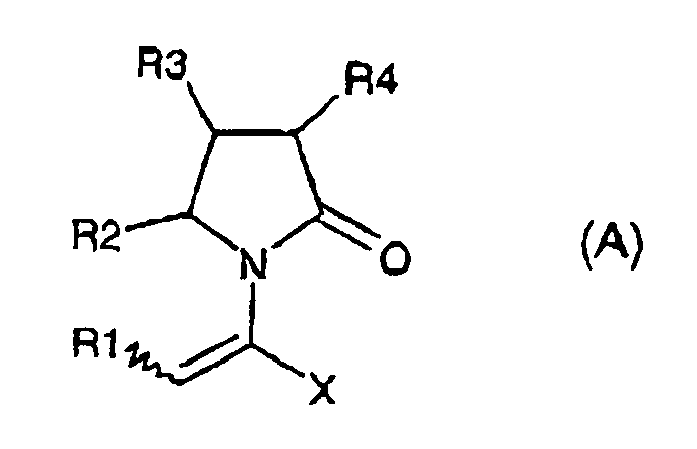 X -CONR5R6, -COOR7, -COR8 oder -CN ist;R1 Wasserstoff, Alkyl, Aryl, Heterocycloalkyl, Heteroaryl, Halogen, Nitro, Cyano, Acyl, Ester, Amido oder Carboxy ist;R2, R3, R4 gleich oder verschieden sind und jeder unabhängig Wasserstoff, Halogen, Hydroxy, Amino, Nitro, Cyano, Acyl, Acyloxy, Sulfonyl, Sulfinyl, Alkylamino, Carboxy, Ester, Ether, Amido, Sulfonsäure, Sulfonamid, Alkylthio, Arylthio, Alkyl, Alkoxy, Oxyester, Oxyamido, Aryl, Arylamino, Aryloxy, Heterocycloalkyl, Heteroaryl oder Alkenyl ist;R5 und R6 gleich oder verschieden sind und jeder unabhängig Wasserstoff, Hydroxy, Alkyl, Aryl, Heterocycloalkyl, Heteroaryl, Alkoxy, Aryloxy ist;R7 Wasserstoff, Alkyl, Aryl, Heterocycloalkyl oder Heteroacyl ist; undR8 Wasserstoff, Hydroxy, Thiol, Halogen, Alkyl, Aryl, Heterocycloalkyl, Heteroaryl, Alkylthio, Arylthio ist.
 - Verfahren nach Anspruch 9, wobei das Substrat Methyl(Z,E)-2-(2-oxotetrahydro-1H-1-pyrrolyl)-2-butenoat ist.
- Verfahren nach einem der Ansprüche 7 bis 10, durchgeführt in einem Lösungsmittel, ausgewählt aus Ethern, Alkoholen und deren Gemischen.
- Verfahren nach Anspruch 11, wobei das Lösungsmittel Diisopropylether oder sein Gemisch mit Methanol ist.
Priority Applications (1)
| Application Number | Priority Date | Filing Date | Title |
|---|---|---|---|
| EP04700999A EP1587620B1 (de) | 2003-01-13 | 2004-01-09 | Hydrierungskatalysatoren |
Applications Claiming Priority (4)
| Application Number | Priority Date | Filing Date | Title |
|---|---|---|---|
| EP03000497 | 2003-01-13 | ||
| EP03000497 | 2003-01-13 | ||
| EP04700999A EP1587620B1 (de) | 2003-01-13 | 2004-01-09 | Hydrierungskatalysatoren |
| PCT/EP2004/000107 WO2004062797A1 (en) | 2003-01-13 | 2004-01-09 | Hydrogenation catalysts |
Publications (2)
| Publication Number | Publication Date |
|---|---|
| EP1587620A1 EP1587620A1 (de) | 2005-10-26 |
| EP1587620B1 true EP1587620B1 (de) | 2009-09-09 |
Family
ID=32695587
Family Applications (1)
| Application Number | Title | Priority Date | Filing Date |
|---|---|---|---|
| EP04700999A Expired - Lifetime EP1587620B1 (de) | 2003-01-13 | 2004-01-09 | Hydrierungskatalysatoren |
Country Status (11)
| Country | Link |
|---|---|
| US (1) | US7504353B2 (de) |
| EP (1) | EP1587620B1 (de) |
| CN (1) | CN1735459A (de) |
| AT (1) | ATE442200T1 (de) |
| AU (1) | AU2004204338A1 (de) |
| CA (1) | CA2512333A1 (de) |
| DE (1) | DE602004023051D1 (de) |
| ES (1) | ES2333327T3 (de) |
| NO (1) | NO20053818L (de) |
| PL (1) | PL377901A1 (de) |
| WO (1) | WO2004062797A1 (de) |
Families Citing this family (3)
| Publication number | Priority date | Publication date | Assignee | Title |
|---|---|---|---|---|
| GB0420605D0 (en) * | 2004-09-16 | 2004-10-20 | Johnson Matthey Plc | "Heterogenised" homogeneous catalysts |
| US20080175887A1 (en) * | 2006-11-20 | 2008-07-24 | Lixiao Wang | Treatment of Asthma and Chronic Obstructive Pulmonary Disease With Anti-proliferate and Anti-inflammatory Drugs |
| CN101602012B (zh) * | 2008-06-12 | 2012-04-18 | 中国石油化工股份有限公司 | 含有芳烃磺酸基团的介孔材料及其制备方法和应用 |
Family Cites Families (5)
| Publication number | Priority date | Publication date | Assignee | Title |
|---|---|---|---|---|
| ATE202500T1 (de) * | 1995-10-13 | 2001-07-15 | Leuven K U Res & Dev | Chiraler fester katalysator, seine erzeugung und seine verwendung zur hesrtellung von praktischen enantiomerenreinen produkten |
| DE19820411A1 (de) * | 1998-05-07 | 2000-01-27 | Wolfgang F Hoelderich | Chirale Heterogenkatalysatoren, Verfahren zu deren Herstellung und deren Einsatz in der enantioselektiven Hydrierung von ungesättigten Verbindungen |
| DE19913395A1 (de) * | 1999-03-24 | 2000-09-28 | Wolfgang Hoelderich | Einschlußverbindungen mit zeolithischem Wirtsgitter, deren Herstellung und Einsatz |
| GB0004297D0 (en) * | 2000-02-23 | 2000-04-12 | Ucb Sa | 2-oxo-1 pyrrolidine derivatives process for preparing them and their uses |
| GB0026890D0 (en) * | 2000-11-03 | 2000-12-20 | Ici Plc | Catalyst |
-
2004
- 2004-01-09 AT AT04700999T patent/ATE442200T1/de not_active IP Right Cessation
- 2004-01-09 US US10/541,531 patent/US7504353B2/en not_active Expired - Fee Related
- 2004-01-09 WO PCT/EP2004/000107 patent/WO2004062797A1/en not_active Ceased
- 2004-01-09 PL PL377901A patent/PL377901A1/pl unknown
- 2004-01-09 CN CNA2004800021534A patent/CN1735459A/zh active Pending
- 2004-01-09 EP EP04700999A patent/EP1587620B1/de not_active Expired - Lifetime
- 2004-01-09 AU AU2004204338A patent/AU2004204338A1/en not_active Abandoned
- 2004-01-09 ES ES04700999T patent/ES2333327T3/es not_active Expired - Lifetime
- 2004-01-09 CA CA002512333A patent/CA2512333A1/en not_active Abandoned
- 2004-01-09 DE DE602004023051T patent/DE602004023051D1/de not_active Expired - Lifetime
-
2005
- 2005-08-12 NO NO20053818A patent/NO20053818L/no not_active Application Discontinuation
Also Published As
| Publication number | Publication date |
|---|---|
| CN1735459A (zh) | 2006-02-15 |
| ES2333327T3 (es) | 2010-02-19 |
| US20060224001A1 (en) | 2006-10-05 |
| EP1587620A1 (de) | 2005-10-26 |
| CA2512333A1 (en) | 2004-07-29 |
| NO20053818L (no) | 2005-08-12 |
| ATE442200T1 (de) | 2009-09-15 |
| DE602004023051D1 (de) | 2009-10-22 |
| US7504353B2 (en) | 2009-03-17 |
| AU2004204338A1 (en) | 2004-07-29 |
| WO2004062797A1 (en) | 2004-07-29 |
| PL377901A1 (pl) | 2006-02-20 |
Similar Documents
| Publication | Publication Date | Title |
|---|---|---|
| Alonso et al. | Transition-metal-catalyzed addition of heteroatom− hydrogen bonds to alkynes | |
| Doyle et al. | New aspects of catalytic asymmetric cyclopropanation | |
| Nieto‐Oberhuber et al. | Gold (i)‐Catalyzed Cyclizations of 1, 6‐Enynes: Alkoxycyclizations and exo/endo Skeletal Rearrangements | |
| KR100559112B1 (ko) | 에폭시화법 | |
| Schuster et al. | Modification of faujasites to generate novel hosts for “ship-in-a-bottle” complexes | |
| Martín et al. | Organic synthesis of high added value molecules with MOF catalysts | |
| Corma et al. | Preparation of new chiral dioxomolybdenum complexes heterogenised on modified USY-zeolites efficient catalysts for selective epoxidation of allylic alcohols | |
| EP2431353B1 (de) | Verfahren zur Herstellung von Amin Verbindung | |
| EP3710422B1 (de) | Verfahren zur herstellung von enantiomerisch und diastereomerisch angereicherten cyclobutanaminen und -amiden | |
| CN103140285A (zh) | 载体化离子液相(silp)催化剂体系在含烯烃混合物加氢甲酰化得到具有高含量在2位未支化的醛的醛混合物中的应用 | |
| Alcón et al. | From homogeneous to heterogeneous catalysis: zeolite supported metal complexes with C2-multidentate nitrogen ligands. Application as catalysts for olefin hydrogenation and cyclopropanation reactions | |
| Hems et al. | Asymmetric hydrogenation using chiral Rh complexes immobilised with a new ion-exchange strategy | |
| Nicholas | Protecting group for the carbon-carbon double bond | |
| Alyabyev et al. | Gold as a catalyst. Part III. Addition to double bonds | |
| US7504353B2 (en) | Hydrogenation catalysts | |
| Gök et al. | Preparation of mesoporous silica and organosilica nanostructures functionalized with C2‐symmetric diol and their catalytic performance in diethylzinc addition to aromatic aldehydes | |
| Chakravarti et al. | Three-dimensional mesoporous cage type aluminosilicate: An efficient catalyst for ring opening of epoxides with aromatic and aliphatic amines | |
| Schuster et al. | Highly stereoselective epoxidation of (−)-α-pinene over chiral transition metal (salen) complexes occluded in zeolitic hosts | |
| KR101148505B1 (ko) | 고활성 분말 촉매를 사용하는 고도의 입체 장애아미노-에테르 알콜 및 다이아미노폴리알케닐에테르의개선된 합성 방법 | |
| Imachi et al. | Intramolecular carbonyl-ene reaction of citronellal to isopulegol over ZnBr2-loading mesoporous silica catalysts | |
| Fabra et al. | Surface-enhanced stereoselectivity in Mukaiyama aldol reactions catalyzed by clay-supported bis (oxazoline)–copper complexes | |
| Molnar et al. | Organic Transformations over Silica Materials Modified by Covalently Bonded Surface Functional Groups. | |
| CN1116290C (zh) | 由二烷氧基丁烯制备四氢呋喃 | |
| ISHIZUKA et al. | Asymmetric hydrogenation of 3, 4-methylenedioxy-α-acetamidocinnamic acid using newly developed silica gel-supported chiral rhodium (I)-phosphine complexes | |
| Fuerte et al. | Heterogenised chiral amines as environmentally friendly base catalysts for enantioselective Michael addition |
Legal Events
| Date | Code | Title | Description |
|---|---|---|---|
| PUAI | Public reference made under article 153(3) epc to a published international application that has entered the european phase |
Free format text: ORIGINAL CODE: 0009012 |
|
| 17P | Request for examination filed |
Effective date: 20050816 |
|
| AK | Designated contracting states |
Kind code of ref document: A1 Designated state(s): AT BE BG CH CY CZ DE DK EE ES FI FR GB GR HU IE IT LI LU MC NL PT RO SE SI SK TR |
|
| AX | Request for extension of the european patent |
Extension state: AL LT LV MK |
|
| DAX | Request for extension of the european patent (deleted) | ||
| GRAP | Despatch of communication of intention to grant a patent |
Free format text: ORIGINAL CODE: EPIDOSNIGR1 |
|
| GRAS | Grant fee paid |
Free format text: ORIGINAL CODE: EPIDOSNIGR3 |
|
| GRAA | (expected) grant |
Free format text: ORIGINAL CODE: 0009210 |
|
| RAP1 | Party data changed (applicant data changed or rights of an application transferred) |
Owner name: UCB PHARMA, S.A. |
|
| AK | Designated contracting states |
Kind code of ref document: B1 Designated state(s): AT BE BG CH CY CZ DE DK EE ES FI FR GB GR HU IE IT LI LU MC NL PT RO SE SI SK TR |
|
| REG | Reference to a national code |
Ref country code: GB Ref legal event code: FG4D |
|
| REG | Reference to a national code |
Ref country code: CH Ref legal event code: EP |
|
| REG | Reference to a national code |
Ref country code: IE Ref legal event code: FG4D |
|
| REF | Corresponds to: |
Ref document number: 602004023051 Country of ref document: DE Date of ref document: 20091022 Kind code of ref document: P |
|
| REG | Reference to a national code |
Ref country code: CH Ref legal event code: NV Representative=s name: HEPP WENGER RYFFEL AG |
|
| PG25 | Lapsed in a contracting state [announced via postgrant information from national office to epo] |
Ref country code: FI Free format text: LAPSE BECAUSE OF FAILURE TO SUBMIT A TRANSLATION OF THE DESCRIPTION OR TO PAY THE FEE WITHIN THE PRESCRIBED TIME-LIMIT Effective date: 20090909 Ref country code: SE Free format text: LAPSE BECAUSE OF FAILURE TO SUBMIT A TRANSLATION OF THE DESCRIPTION OR TO PAY THE FEE WITHIN THE PRESCRIBED TIME-LIMIT Effective date: 20090909 |
|
| NLV1 | Nl: lapsed or annulled due to failure to fulfill the requirements of art. 29p and 29m of the patents act | ||
| REG | Reference to a national code |
Ref country code: ES Ref legal event code: FG2A Ref document number: 2333327 Country of ref document: ES Kind code of ref document: T3 |
|
| PG25 | Lapsed in a contracting state [announced via postgrant information from national office to epo] |
Ref country code: NL Free format text: LAPSE BECAUSE OF FAILURE TO SUBMIT A TRANSLATION OF THE DESCRIPTION OR TO PAY THE FEE WITHIN THE PRESCRIBED TIME-LIMIT Effective date: 20090909 Ref country code: SI Free format text: LAPSE BECAUSE OF FAILURE TO SUBMIT A TRANSLATION OF THE DESCRIPTION OR TO PAY THE FEE WITHIN THE PRESCRIBED TIME-LIMIT Effective date: 20090909 |
|
| PG25 | Lapsed in a contracting state [announced via postgrant information from national office to epo] |
Ref country code: CY Free format text: LAPSE BECAUSE OF FAILURE TO SUBMIT A TRANSLATION OF THE DESCRIPTION OR TO PAY THE FEE WITHIN THE PRESCRIBED TIME-LIMIT Effective date: 20090909 |
|
| PG25 | Lapsed in a contracting state [announced via postgrant information from national office to epo] |
Ref country code: RO Free format text: LAPSE BECAUSE OF FAILURE TO SUBMIT A TRANSLATION OF THE DESCRIPTION OR TO PAY THE FEE WITHIN THE PRESCRIBED TIME-LIMIT Effective date: 20090909 Ref country code: PT Free format text: LAPSE BECAUSE OF FAILURE TO SUBMIT A TRANSLATION OF THE DESCRIPTION OR TO PAY THE FEE WITHIN THE PRESCRIBED TIME-LIMIT Effective date: 20100111 Ref country code: CZ Free format text: LAPSE BECAUSE OF FAILURE TO SUBMIT A TRANSLATION OF THE DESCRIPTION OR TO PAY THE FEE WITHIN THE PRESCRIBED TIME-LIMIT Effective date: 20090909 Ref country code: EE Free format text: LAPSE BECAUSE OF FAILURE TO SUBMIT A TRANSLATION OF THE DESCRIPTION OR TO PAY THE FEE WITHIN THE PRESCRIBED TIME-LIMIT Effective date: 20090909 |
|
| PG25 | Lapsed in a contracting state [announced via postgrant information from national office to epo] |
Ref country code: SK Free format text: LAPSE BECAUSE OF FAILURE TO SUBMIT A TRANSLATION OF THE DESCRIPTION OR TO PAY THE FEE WITHIN THE PRESCRIBED TIME-LIMIT Effective date: 20090909 |
|
| PG25 | Lapsed in a contracting state [announced via postgrant information from national office to epo] |
Ref country code: AT Free format text: LAPSE BECAUSE OF FAILURE TO SUBMIT A TRANSLATION OF THE DESCRIPTION OR TO PAY THE FEE WITHIN THE PRESCRIBED TIME-LIMIT Effective date: 20090909 |
|
| PLBE | No opposition filed within time limit |
Free format text: ORIGINAL CODE: 0009261 |
|
| STAA | Information on the status of an ep patent application or granted ep patent |
Free format text: STATUS: NO OPPOSITION FILED WITHIN TIME LIMIT |
|
| PG25 | Lapsed in a contracting state [announced via postgrant information from national office to epo] |
Ref country code: DK Free format text: LAPSE BECAUSE OF FAILURE TO SUBMIT A TRANSLATION OF THE DESCRIPTION OR TO PAY THE FEE WITHIN THE PRESCRIBED TIME-LIMIT Effective date: 20090909 |
|
| 26N | No opposition filed |
Effective date: 20100610 |
|
| PG25 | Lapsed in a contracting state [announced via postgrant information from national office to epo] |
Ref country code: MC Free format text: LAPSE BECAUSE OF NON-PAYMENT OF DUE FEES Effective date: 20100131 |
|
| PG25 | Lapsed in a contracting state [announced via postgrant information from national office to epo] |
Ref country code: GR Free format text: LAPSE BECAUSE OF FAILURE TO SUBMIT A TRANSLATION OF THE DESCRIPTION OR TO PAY THE FEE WITHIN THE PRESCRIBED TIME-LIMIT Effective date: 20091210 |
|
| PGFP | Annual fee paid to national office [announced via postgrant information from national office to epo] |
Ref country code: IE Payment date: 20110112 Year of fee payment: 8 |
|
| PGFP | Annual fee paid to national office [announced via postgrant information from national office to epo] |
Ref country code: LU Payment date: 20110215 Year of fee payment: 8 |
|
| PGFP | Annual fee paid to national office [announced via postgrant information from national office to epo] |
Ref country code: BE Payment date: 20110225 Year of fee payment: 8 |
|
| PGFP | Annual fee paid to national office [announced via postgrant information from national office to epo] |
Ref country code: IT Payment date: 20120112 Year of fee payment: 9 |
|
| BERE | Be: lapsed |
Owner name: UCB PHARMA, S.A. Effective date: 20120131 |
|
| PG25 | Lapsed in a contracting state [announced via postgrant information from national office to epo] |
Ref country code: HU Free format text: LAPSE BECAUSE OF FAILURE TO SUBMIT A TRANSLATION OF THE DESCRIPTION OR TO PAY THE FEE WITHIN THE PRESCRIBED TIME-LIMIT Effective date: 20100310 Ref country code: BG Free format text: LAPSE BECAUSE OF FAILURE TO SUBMIT A TRANSLATION OF THE DESCRIPTION OR TO PAY THE FEE WITHIN THE PRESCRIBED TIME-LIMIT Effective date: 20090909 |
|
| REG | Reference to a national code |
Ref country code: IE Ref legal event code: MM4A |
|
| PG25 | Lapsed in a contracting state [announced via postgrant information from national office to epo] |
Ref country code: TR Free format text: LAPSE BECAUSE OF FAILURE TO SUBMIT A TRANSLATION OF THE DESCRIPTION OR TO PAY THE FEE WITHIN THE PRESCRIBED TIME-LIMIT Effective date: 20090909 |
|
| PG25 | Lapsed in a contracting state [announced via postgrant information from national office to epo] |
Ref country code: BE Free format text: LAPSE BECAUSE OF NON-PAYMENT OF DUE FEES Effective date: 20120131 |
|
| PG25 | Lapsed in a contracting state [announced via postgrant information from national office to epo] |
Ref country code: IE Free format text: LAPSE BECAUSE OF NON-PAYMENT OF DUE FEES Effective date: 20120109 |
|
| PGFP | Annual fee paid to national office [announced via postgrant information from national office to epo] |
Ref country code: CH Payment date: 20130114 Year of fee payment: 10 Ref country code: GB Payment date: 20130109 Year of fee payment: 10 Ref country code: DE Payment date: 20130103 Year of fee payment: 10 Ref country code: ES Payment date: 20130207 Year of fee payment: 10 Ref country code: FR Payment date: 20130204 Year of fee payment: 10 |
|
| PG25 | Lapsed in a contracting state [announced via postgrant information from national office to epo] |
Ref country code: LU Free format text: LAPSE BECAUSE OF NON-PAYMENT OF DUE FEES Effective date: 20120109 |
|
| REG | Reference to a national code |
Ref country code: DE Ref legal event code: R119 Ref document number: 602004023051 Country of ref document: DE |
|
| REG | Reference to a national code |
Ref country code: CH Ref legal event code: PL |
|
| GBPC | Gb: european patent ceased through non-payment of renewal fee |
Effective date: 20140109 |
|
| PG25 | Lapsed in a contracting state [announced via postgrant information from national office to epo] |
Ref country code: DE Free format text: LAPSE BECAUSE OF NON-PAYMENT OF DUE FEES Effective date: 20140801 Ref country code: LI Free format text: LAPSE BECAUSE OF NON-PAYMENT OF DUE FEES Effective date: 20140131 Ref country code: CH Free format text: LAPSE BECAUSE OF NON-PAYMENT OF DUE FEES Effective date: 20140131 |
|
| REG | Reference to a national code |
Ref country code: FR Ref legal event code: ST Effective date: 20140930 |
|
| REG | Reference to a national code |
Ref country code: DE Ref legal event code: R119 Ref document number: 602004023051 Country of ref document: DE Effective date: 20140801 |
|
| PG25 | Lapsed in a contracting state [announced via postgrant information from national office to epo] |
Ref country code: FR Free format text: LAPSE BECAUSE OF NON-PAYMENT OF DUE FEES Effective date: 20140131 Ref country code: GB Free format text: LAPSE BECAUSE OF NON-PAYMENT OF DUE FEES Effective date: 20140109 |
|
| PG25 | Lapsed in a contracting state [announced via postgrant information from national office to epo] |
Ref country code: IT Free format text: LAPSE BECAUSE OF NON-PAYMENT OF DUE FEES Effective date: 20140109 |
|
| PG25 | Lapsed in a contracting state [announced via postgrant information from national office to epo] |
Ref country code: ES Free format text: LAPSE BECAUSE OF NON-PAYMENT OF DUE FEES Effective date: 20140110 |