EP1589416A2 - Méthode et système pour générer un code source pour un programme d'ordinateur - Google Patents
Méthode et système pour générer un code source pour un programme d'ordinateur Download PDFInfo
- Publication number
- EP1589416A2 EP1589416A2 EP20050008903 EP05008903A EP1589416A2 EP 1589416 A2 EP1589416 A2 EP 1589416A2 EP 20050008903 EP20050008903 EP 20050008903 EP 05008903 A EP05008903 A EP 05008903A EP 1589416 A2 EP1589416 A2 EP 1589416A2
- Authority
- EP
- European Patent Office
- Prior art keywords
- source code
- subject
- generated
- file
- subjects
- Prior art date
- Legal status (The legal status is an assumption and is not a legal conclusion. Google has not performed a legal analysis and makes no representation as to the accuracy of the status listed.)
- Ceased
Links
Images





Classifications
-
- G—PHYSICS
- G06—COMPUTING OR CALCULATING; COUNTING
- G06F—ELECTRIC DIGITAL DATA PROCESSING
- G06F8/00—Arrangements for software engineering
- G06F8/30—Creation or generation of source code
- G06F8/35—Creation or generation of source code model driven
Definitions
- the invention relates to a method and system for generating a source code for a computer program for executing or simulating a process in which several subjects communicate with each other.
- the invention is Method for generating a source code for a computer program for Execution or simulation of a complex process, with a variety of Subjects who communicate with each other.
- the invention is based on the object, a method and a system for generating a source code for a computer program for execution or simulation to create a complex process that does not address the above disadvantages subject.
- the object is achieved by a method having the features of claim 1 and solved by a system having the features of claim 13.
- the invention has for its object to provide a method with where a source code automatically generated for a complex process is validated can.
- the source code produced by the method according to the invention can either be converted from a conventional compiler into an executable program or be executed directly by an interpreter.
- the program is immediately without further processing executable.
- a manual edit of the automatically generated Source code is not necessary.
- the source code is thus immediately executable.
- Another benefit of creating a separate source code file for each subject is that the individual source code files on different computers in a network are executable.
- the communication between the individual Subjects used (SEND, RECEIVE) are designed to that a network-wide communication is executable.
- inventive methods can thus be generated computer programs, which are executable distributed on a network, the type of network arbitrary can be. It can be local area networks (LAN), intranets or the internet, as well Be networks with mixed topology.
- the source code file with References to data provided by the process file, so that when executing the source code the corresponding data of the process file are read out and in dependence These data commands are called.
- the data of the Process file used for direct control of the source code. This has As a result, when you create the process file automatically a substantial part of the computer program to be executed is generated and the automatically generated Source code can be kept very compact.
- the source code file only three different types of functions, namely SEND, RECEIVE and DO.
- a process file Process automatically converted into a source code for a computer program.
- Process can be both technical and business or both technical as well as business components.
- Essential for the invention is that in the process individual actors can be specified, the natural Persons as well as certain devices or parts of devices or other Stations in the process that either communicate with other actors and / or perform actions. These actors are referred to below as subjects designated.
- FIG. 6 is a diagram of a simplified process for the automatic recording of truck tolls on German motorways.
- the inventive method is for much more complex processes intended.
- the process shown in Fig. 6 comprises nine subjects 1, each by a rectangular box are shown.
- the Subjects 1 are each given the name of the subject.
- the subjects are called: Truck driver, GPS, OBU_Position, OBU_Fahren, OBU_Kontrolle, Toll_Collection_Center, Billing_Center, BAG_Control and Transport_Company.
- the subject truck driver represents the natural person of the truck driver who is to capture the truck toll on a so-called on-board unit (OBU) the data of his Trucks, such as Axis number, pollutant class, cost center has to enter.
- the on-board unit is represented in this process by three subjects, viz OBU_Fahren 1/2, OBU_Position 1/3 and OBU_Kontrolle 1/4.
- the subject OBU_Position 1/3 is related to the subject GPS 1/5, which is a GPS receiver to record the current position of the truck.
- the subject Billing_Center 1/7 Generates an invoice and sends it to the transport company involved in this process represented by the subject Transport_Company 1/8.
- Transport_Company 1/8 On a toll road Motorway trucks are controlled by the Bundesautobahngesellschaft, by a vehicle of the Federal Motorway Company driving next to a truck and by means of a radio device establishes a communication to the on-board unit and its State and data queries.
- This control unit is in an existing diagram for the subject BAG_Kontrolle 1/9 shown with the subject OBU_Control 1/4, which is part of the on-board unit.
- a subject manager 4 (FIG. 10: subject manager for OBU_drive), which is single in a single window shows certain functions 5 to be executed. These functions 5 can entered and edited in this window. These functions 5 are exclusive SEND, RECEIVE and DO. Double clicking will create a new one Function introduced and a corresponding window 4 shown. At the same time opens a corresponding input window 6, in which the name of the function, the Type of function and other parameters can be set.
- Fig. 11 is the corresponding input window 6 to the function driving data opened, this function 5 is a SEND function, as specified in "state type": with "send".
- the Further functions specified here 5 "Parameter input”, “Start” and “End” are RECEPTION functions.
- the communication between the individual functions can again be represented by arrows 7 as in the process diagram, wherein in each case a small box is opened, in which with SEND functions the Name and the recipient of the message to be transmitted is registered and at RECEIVING functions the name of the corresponding sender and the message is entered for which the RECEIVE function waits. It is also possible, that a RECEIVE function will receive messages from different senders can, for example the function "parameter input", which is both the truck_data from the truck driver as well as the message start_mobile route from the OBU_Position can receive.
- the subject manager may perform those in the subject Functions are set in a corresponding manner.
- the complete subject diagram to the subject OBU_Fahren is shown in the subject manager in FIG.
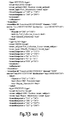
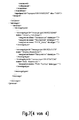
- Fig. 7 shows a section of the process file for the example of the automatic Toll collection.
- This process file is named "Automatic_Log_in.jpp".
- These File contains the data for the subject OBU_Fahren.
- OBU_Fahren In the process file is for each Subject provided a corresponding record.
- Such a record includes the name of the subject ("OBU_Fahren”, a subject number ("subject 1081921986090 "), details of the computer on which the subject is to be executed should be brought, with static or dynamic IP address, if necessary the IP address of the server), optional information such as the name of the developer and the version.
- a subject of the internal type means that it is subject of the process with which it communicates and means of the external type, that from another process added to this subject a data connection becomes, to which the subject does not belong.
- the external subject can be part of another process, which in turn includes several subjects communicating with each other. With such an external It is therefore possible for subject to correlate several existing processes couple.
- the type of subject can run independently (pure Java) or be characterized as not independently executable (interface). If the subject is not is independently executable, an interface is generated by other programs can be used to communicate with the subject.
- a subject may be part of a cluster, e.g. in a process where several on-board units are to be considered.
- the subject becomes OBU_Fahren e.g. once created and copied multiple times, with all subjects then OBU_Fahren Form clusters.
- the messages to be sent by specifying the message recipient, by the name of the message and by the name of the individual Message-containing parameters, of which optionally the data type and Data content can be specified.
- an input buffer and its size set.
- the input buffer is called an input pool and its By default, size is 1,000 messages.
- Fig. 5 shows schematically simplified the structure of such a process file for two subjects, subject 1 and subject 2, each having two functions, namely function 1.1 and function 1.2 or function 2.1 and 2.2 feature.
- the functions 1.1 and 2.2 are of the type RECEIVED and functions 1.2 and 2.1 are of type SEND. With these functions, the messages are message 1 and Message 2 exchanged.
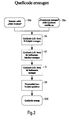
- step S1 a method for generating the source code is called, which is explained in more detail below.
- the generated source code is compiled in a processor code (S3). If the processor code is present for a subject, then this process section is completed (S4).
- a separate source code is generated for each subject. hereby Very complex processes are broken down into individual sub-processes, for which simple a source code can be generated.
- step S2 (generate source code) will be described below with reference to FIG. explained in more detail.
- the method can generate source code either by calling in the Method Create processor code (S5a) or by the user by calling of the "Make Sources" command (S5b).
- step S6 the method becomes "Generate source code for subject” called, with which the source code for a subject is produced.
- Step S7 and S8 are optional, with step S7 generating a Source code for a Refinement interface concerns and the step S8 the source code for Refinement concerns.
- an interface is provided (S7), with which the manually generated Program section coupled to the automatically generated program section becomes.
- step S9 the process file, or a copy thereof, to the respective subject stored for which the source code is generated. This is the procedure for Generating the source code ends (S10).
- step S12 a Java® class is created for a subject.
- This Java® class The methods of a preprogrammed standard class inherited by a number of methods are added. This class is called “subject” and is shown in Appendix A.
- a source code file is initialized, that is, a method for initialization the class is written to the source code.
- This method is written in Java® referred to as a constructor. This constructor becomes the process filename and the subject ID entered.
- step S14 the Java® method "main” is entered into the source code.
- This main method contains a call to a run method inherited from the class shown in Appendix A.
- method calls for refinement functions can also be written to the source code (S15). With the step S16, this process section is finished.
- step S17 subject data is read from the process file.
- step S19 becomes an input pool and connections to remote partner subjects initialized.
- the input pool is a buffer. This buffer is created for each subject and is for receiving data.
- the initialization of the connections to partner objects done by creating a remote subject for the corresponding one Subject, merely to send the data to another, specific subject serves. The remote subject thus writes data to be transferred to the input pool another subject.
- step S20 the data of the start function are first extracted from the process file read and set the program to the start function.
- step S21 possible function transitions to further functions are determined.
- a query S22
- step S25 a standard window for the TUN function is opened. In this standard window, the user becomes aware of multiple function transitions asked which function should follow (S26). This will thus the Action of the subject by a query or a decision of the user replaced.
- step S26 the process flow goes to step S27 in which the Process file the data of the next function are read out and the program is set to the next function. The process flow then goes back back to the step S21.
- step S28 from the process file, the data for transmitting the message, namely the name of the message, the receiver and optional parameters read.
- step S29 a standard window for the SEND function is opened.
- step S30 parameter values can be requested by the user, which should be transmitted with the message.
- step S31 the messages transmitted to the recipient, i. that they move from the subject to the remote subject be passed the data into the input pool of the recipient writes.
- step S32 transmission errors are handled, if any should occur.
- the handling of transmission errors is partly also in the remote subject.
- step S24 If the query in step S24 indicates that the function is a RECEIVE function, so the process flow goes to step S33.
- step S33 the Data about the valid message, namely the name of the sender according to the valid function transition is read.
- step S35 a non-active waiting for the corresponding message is initiated.
- the non-active waiting is based on the so-called monitor concept, already in October 1974 by Hoare C.A.R. in the article "Monitors: An operating system structuring concept "in Commun. ACM 17, 10.
- This monitor concept can be simplified as a shift of the wait function from the program level to the Operating system level or processor level. It is essential that This monitor concept prevents a large number of tasks in one Multitasking system are active at the same time and always processor power to Claiming to wait.
- the monitor concept makes the wait monitored by a plurality of tasks from a single operating system task.
- This monitor concept allows in a simple way that a variety programs or tasks run parallel to each other and to data from Wait for a different task or a different program without that As a result, the processor performance is significantly affected.
- Java is the monitor concept implemented by the methods "notify”, “notifyAll” and “wait”. These Methods are also called by the "run” method above.
- step S36 After receiving a message, it is read from the input pool in step S36. After that, it is checked for validity (S37). Is not the message valid, the process flow goes back to the step S35. Is the message valid, it is displayed to the user in the already opened window (S38).
- step S38 it is also possible if a subject has several different messages can receive all received messages in step S38. in this connection However, it is expedient that the procedure goes to step S27 first, after the user has a single of the received and presented Messages acknowledged, because otherwise after the receipt of the first message no more messages are received in the one RECEIVE function can. Otherwise several RECEIVE functions would have to be provided for this purpose become.
- Fig. 8 shows the sequence of an automatically generated source code, the manually programmed Program sections called Refinements are added are.
- This program sequence essentially corresponds to that of FIG. 4, wherein identical method steps are denoted by the same reference numerals. These process steps are not explained to avoid repetition.
- the Method according to FIG. 8 differs from the method according to FIG. 4 in that that after the query of the function type in step S24 in each case one more Query (S39, S40, S41) is executed, in which it is determined whether the function is refined is, that is, whether refinements have been added.
- the procedure goes to the step S42 via, with the at least automatically transition to the next function is set.
- too predetermined program are called.
- programs can be used be integrated into the process from ready-made libraries that then be executed. The method according to the invention can thus be combined with existing libraries that already exist for many applications are. Typical applications include managing and querying Databases.
- step S43 which is identical to the step explained above S28 is where the process file contains the data for transmitting the message, namely the name of the message, the receiver and optional parameters read become.
- step S44 parameter values are obtained by a method from a refinement file read in, which is to be transmitted with the message. After that, the Sends messages to the recipient (S45) and deals with any errors (S46). Thereafter, the process flow goes back to the step S27.
- step S47 corresponds to the data to the valid message, namely the name of the sender read in according to the valid function transition.
- Steps S48, S49 and S50 correspond to the steps described above S35, S36 and S37 and are used for automatic reception and to check the Validity of the respective message.
- step S51 a through the Refinement file called certain method of processing the received messages. Thereafter, the process flow goes back to the step S27.
- FIG. 11 shows a window 8 of the validation program open.
- the validation procedure is not such a validation program necessary. However, it simplifies the simultaneous start of the different Source codes, which can also be referred to as different subprograms. Because in this validation program the individual subjects are individually selected it is possible to start only part of a process and to validate.
- the windows of all subjects of the process shown in FIG means that all source code has been started.
- the top bar in the windows is in each case the name of the subject is displayed.
- the windows are minimized.
- the subject Toll_Collection_Center is assigned the function "FAHRDATEN" executed. This is a function of the type RECEIVE with which the transmission of driving data is maintained.
- a "Maximize" button which is operated with the mouse, causing the Windows are converted in a maximized representation.
- the windows of the subjects Truck drivers and OBU drivers are shown in the maximized representation.
- the user in the window becomes a truck driver asked if a new_drive should be executed. He confirms this with the button "continue", the next function is carried out in the subject truck driver, with which the user is prompted to enter the appropriate data, such as Number of axles, pollutant class, cost center and a logical value for the new one Enter the drive.
- the message automatically arrives the subject OBU_Fahren sent and in the appropriate window as "transition from truck driver: LKW_Daten ".
- the button show "you can enter a another window 11 can be opened to display the message.
- the Accept button allows the message to be accepted, bringing in the subject OBU_Fahren the function parameter input to the function start (see Fig.
- the validation of automatically generated source code files can start immediately after the automatic generation of the source code are executed without any additional a program code has to be inserted manually. This is a significant advantage the method according to the invention, which is based on the one hand that the communication is generated completely automatically between the individual subjects and on the other hand that the activity of the individual subjects (function TUN) by a Request to the user is replaced, if not already program items There are libraries that are automatically included.
- the invention thus allows the generation of an automatically executable and validatable Program structure for very complex processes with a few hundreds or Thousands of subjects, then as needed by manually created programs or supplemented by existing programs.
- Figure 15 shows a system for carrying out the method according to the invention.
- the System includes a computer system 12, within the meaning of the present invention a single computer as well as a network comprising a plurality of computers can be.
- the computer system 12 has at least one input device 13 comprising a keyboard and a computer mouse, and an output device 14 on.
- the output device is typically a monitor or a projector.
- a Java® platform 15 is provided in the computer system 12 .
- the inventive method described above is by software or Computer programs realized.
- This software points as a central program a source code generator 16.
- the source code generator 16 is provided with a Program 17 connected to create a process diagram, comprising the The process manager described above and the subject manager described above.
- a data link 18 via which a user the corresponding data for creating the process diagram can be entered can and from the program, the data to the output device 14 for Representing the diagram can be output.
- the Diagram created in the form of a block diagram each subject a separate Block is assigned.
- the process file is generated graphically. In principle, it would also be possible to write the text of the process file with an editor. The graphic generation however, the process file is much simpler and more intuitive to execute.
- the process file is forwarded to the source code generator 16 given that generates a source code 19 for each subject.
- the source code of each Subjects each represent a separate program that has data connections 20 are linked together.
- the source code can be shared individually or all together be started at the same time.
- system according to the invention is a network with several computers, it is it is not necessary that there is a Java® platform 15 on each computer. If the source code 19 of a subject is compiled, it can be at another Computer on the network where it was not created to run directly.
- a tool (method: generate source code) created with which source code is automatically generated.
- a manual processing the automatically generated source code is not necessary.
- the source code is thus immediately executable.
Landscapes
- Engineering & Computer Science (AREA)
- Software Systems (AREA)
- General Engineering & Computer Science (AREA)
- Theoretical Computer Science (AREA)
- Physics & Mathematics (AREA)
- General Physics & Mathematics (AREA)
- Stored Programmes (AREA)
Applications Claiming Priority (2)
| Application Number | Priority Date | Filing Date | Title |
|---|---|---|---|
| DE102004019958 | 2004-04-23 | ||
| DE102004019958 | 2004-04-23 |
Publications (2)
| Publication Number | Publication Date |
|---|---|
| EP1589416A2 true EP1589416A2 (fr) | 2005-10-26 |
| EP1589416A3 EP1589416A3 (fr) | 2007-10-31 |
Family
ID=34935625
Family Applications (1)
| Application Number | Title | Priority Date | Filing Date |
|---|---|---|---|
| EP20050008903 Ceased EP1589416A3 (fr) | 2004-04-23 | 2005-04-22 | Méthode et système pour générer un code source pour un programme d'ordinateur |
Country Status (2)
| Country | Link |
|---|---|
| US (2) | US7861221B2 (fr) |
| EP (1) | EP1589416A3 (fr) |
Cited By (5)
| Publication number | Priority date | Publication date | Assignee | Title |
|---|---|---|---|---|
| EP2479664A1 (fr) * | 2011-01-17 | 2012-07-25 | Metasonic AG | Système et procédé de production d'un code source pour un programme informatique |
| EP2631794A1 (fr) | 2012-02-27 | 2013-08-28 | Deutsche Telekom AG | Procédé et système de réseau pour la préparation d'un processus d'application sur un serveur de processus en réseau d'une infrastructure de réseau |
| EP2648094A2 (fr) | 2012-04-03 | 2013-10-09 | Metasonic AG | Procédé et système de production d'un code source pour un programme informatique pour l'exécution et la simulation d'un processus |
| DE202013104421U1 (de) | 2013-09-02 | 2014-12-03 | Metasonic Gmbh | System zum Erzeugen eines Quellcodes für ein Computerprogramm zur Ausführung und Simulation eines Prozesses |
| DE202014102071U1 (de) | 2013-12-19 | 2015-03-23 | Metasonic Gmbh | System eines Datenmodells für ein Computerprogramm zur Ausführung und Simulation eines Prozesses |
Families Citing this family (6)
| Publication number | Priority date | Publication date | Assignee | Title |
|---|---|---|---|---|
| EP1589416A3 (fr) * | 2004-04-23 | 2007-10-31 | jCOM1 AG | Méthode et système pour générer un code source pour un programme d'ordinateur |
| US7620661B2 (en) * | 2005-10-27 | 2009-11-17 | International Business Machines Corporation | Method for improving the performance of database loggers using agent coordination |
| US20090193392A1 (en) * | 2008-01-29 | 2009-07-30 | Michael David Downen | Dynamic intermediate language modification and replacement |
| CN106557308B (zh) * | 2015-09-29 | 2020-11-03 | 腾讯科技(深圳)有限公司 | 一种软件持续集成方法及装置 |
| US10817552B2 (en) | 2017-03-27 | 2020-10-27 | Microsoft Technology Licensing, Llc | Input-output example encoding |
| US10795645B2 (en) | 2017-03-27 | 2020-10-06 | Microsoft Technology Licensing, Llc | Neural network for program synthesis |
Family Cites Families (8)
| Publication number | Priority date | Publication date | Assignee | Title |
|---|---|---|---|---|
| US5610828A (en) * | 1986-04-14 | 1997-03-11 | National Instruments Corporation | Graphical system for modelling a process and associated method |
| US5353243A (en) * | 1989-05-31 | 1994-10-04 | Synopsys Inc. | Hardware modeling system and method of use |
| DE69130587T2 (de) * | 1990-05-10 | 1999-05-06 | Hewlett-Packard Co., Palo Alto, Calif. | System zum Integrieren von Anwenderprogrammen in eine heterogene Netzwerkumgebung |
| US6212672B1 (en) * | 1997-03-07 | 2001-04-03 | Dynamics Research Corporation | Software development system with an executable working model in an interpretable intermediate modeling language |
| DE10008632B4 (de) | 2000-02-24 | 2004-02-26 | Gunter Gemmel | Verfahren und System zum Erzeugen eines Computerprogramms |
| US8640027B2 (en) * | 2000-06-13 | 2014-01-28 | National Instruments Corporation | System and method for configuring a hardware device to execute a prototype |
| US7694272B2 (en) * | 2002-10-21 | 2010-04-06 | Sungard (Israel) Ltd | Method, a language and a system for the definition and implementation of software solutions by using a visualizable computer executable modeling language |
| EP1589416A3 (fr) * | 2004-04-23 | 2007-10-31 | jCOM1 AG | Méthode et système pour générer un code source pour un programme d'ordinateur |
-
2005
- 2005-04-22 EP EP20050008903 patent/EP1589416A3/fr not_active Ceased
- 2005-04-22 US US11/112,966 patent/US7861221B2/en active Active
-
2010
- 2010-11-15 US US12/946,406 patent/US8429611B2/en not_active Expired - Lifetime
Non-Patent Citations (1)
| Title |
|---|
| JOHN DAVIS II ET AL: "Overview of the Ptolemy Project", TECHNICAL MEMORANDUM UCB/ERL M01/11, 6 March 2001 (2001-03-06), Berkeley, California 94720, pages 1 - 23, XP055111194, Retrieved from the Internet <URL:http://ptolemy.eecs.berkeley.edu/publications/papers/01/overview/overview.pdf> [retrieved on 20140401] * |
Cited By (8)
| Publication number | Priority date | Publication date | Assignee | Title |
|---|---|---|---|---|
| EP2479664A1 (fr) * | 2011-01-17 | 2012-07-25 | Metasonic AG | Système et procédé de production d'un code source pour un programme informatique |
| EP2631794A1 (fr) | 2012-02-27 | 2013-08-28 | Deutsche Telekom AG | Procédé et système de réseau pour la préparation d'un processus d'application sur un serveur de processus en réseau d'une infrastructure de réseau |
| EP2648094A2 (fr) | 2012-04-03 | 2013-10-09 | Metasonic AG | Procédé et système de production d'un code source pour un programme informatique pour l'exécution et la simulation d'un processus |
| DE102012102883A1 (de) | 2012-04-03 | 2013-10-10 | Metasonic Ag | Verfahren und System zum Erzeugen eines Quellcodes für ein Computerprogramm zur Ausführung und Simulation eines Prozesses |
| EP2648094A3 (fr) * | 2012-04-03 | 2015-07-22 | Metasonic AG | Procédé et système de production d'un code source pour un programme informatique pour l'exécution et la simulation d'un processus |
| DE202013104421U1 (de) | 2013-09-02 | 2014-12-03 | Metasonic Gmbh | System zum Erzeugen eines Quellcodes für ein Computerprogramm zur Ausführung und Simulation eines Prozesses |
| DE102013109560A1 (de) | 2013-09-02 | 2015-03-05 | Metasonic Gmbh | System zum Erzeugen eines Quellcodes für ein Computerprogramm zur Ausführung und Simulation eines Prozesses |
| DE202014102071U1 (de) | 2013-12-19 | 2015-03-23 | Metasonic Gmbh | System eines Datenmodells für ein Computerprogramm zur Ausführung und Simulation eines Prozesses |
Also Published As
| Publication number | Publication date |
|---|---|
| US7861221B2 (en) | 2010-12-28 |
| EP1589416A3 (fr) | 2007-10-31 |
| US8429611B2 (en) | 2013-04-23 |
| US20050240899A1 (en) | 2005-10-27 |
| US20110113403A1 (en) | 2011-05-12 |
Similar Documents
| Publication | Publication Date | Title |
|---|---|---|
| DE60127795T2 (de) | System und Verfahren zur Metrik- und Statusdarstellung | |
| DE60038705T2 (de) | Verfahren und vorrichtung für die aktivitäts-basierte zusammenarbeit eines rechnersystems, ausgestattet mit einem kommunikations-manager | |
| DE69801420T2 (de) | System und verfahren zum erstellen, ausführen und warten vond zwischenbetrieb-lichen vorgängen | |
| DE69636157T2 (de) | Verfahren und System zum graphischen Anzeigen und zur Navigation durch ein interaktives Sprachantwortmenü | |
| DE69713409T2 (de) | Dokumenten-Verwaltungssystem unter Verwendung von objekt- und agentorientierten Methoden | |
| DE69832354T2 (de) | Netzwerkverwaltungsrahmenwerk | |
| US8429611B2 (en) | Method and system for generating a source code for a computer program | |
| DE69129536T2 (de) | Objektbasiertes rechnersystem | |
| DE10348337A1 (de) | Inhaltsverwaltungsportal und Verfahren zum Kommunizieren von Informationen | |
| DE112018005049T5 (de) | Transformieren einer spezifikation in ein dauerhaftes computerprogramm | |
| EP2648094B1 (fr) | Procédé et système de production d'un code source pour un programme informatique pour l'exécution et la simulation d'un processus | |
| DE10309620A1 (de) | Dynamisches Expertenschnittstellensystem und Verfahren | |
| DE69328452T2 (de) | System zur Entwicklung von Software aus einer Spezifikation in natürlicher Sprache mittels Objektnetzwerken | |
| DE69633373T2 (de) | Verfahren und Gerät zur Programmierung eines Aufgabentickets in einem Dokumentenverarbeitungssystem | |
| DE19960048A1 (de) | Zeitgesteuerte Startbedingungen für Aktivitäten in Workflow-Management-Systemen | |
| DE60114949T2 (de) | Leitweglenkung | |
| DE102005018864B4 (de) | Verfahren und System zum Erzeugen eines Quellcodes für ein Computerprogramm | |
| DE10290696T5 (de) | Verfahren und System zum drahtlosen Zugriff auf einen Computer eines Benutzers | |
| EP2479664B1 (fr) | Système et procédé de production d'un code source pour un programme informatique | |
| DE10244459A1 (de) | Rechner- und/oder Software-Architektur unter Verwendung von Micro-Kernel- und Multi-Tier-Konzept mit Komponententechnik | |
| DE202006021112U1 (de) | Vorrichtung zum Bearbeiten von Geschäftsgegenständen, elektronischen Formaten und Arbeitsabläufen | |
| DE4310615A1 (de) | Verfahren und Vorrichtung zur Bereitstellung eines vom Benutzer konfigurierbaren Systems, welches mehrere unterschiedliche Tasks und Softwaretools vereinigt und verwaltet | |
| WO2021245247A1 (fr) | Procédé de création et d'exécution d'un programme de commande pour commander un système d'automatisation, et système d'automatisation | |
| DE60308325T2 (de) | Informationswegeleitung | |
| DE102005010405B4 (de) | Systemanordnung und Verfahren zur automatisierten Applikationsentwicklung mit Benutzerführung |
Legal Events
| Date | Code | Title | Description |
|---|---|---|---|
| PUAI | Public reference made under article 153(3) epc to a published international application that has entered the european phase |
Free format text: ORIGINAL CODE: 0009012 |
|
| AK | Designated contracting states |
Kind code of ref document: A2 Designated state(s): AT BE BG CH CY CZ DE DK EE ES FI FR GB GR HU IE IS IT LI LT LU MC NL PL PT RO SE SI SK TR |
|
| AX | Request for extension of the european patent |
Extension state: AL BA HR LV MK YU |
|
| RIC1 | Information provided on ipc code assigned before grant |
Ipc: G06F 11/36 20060101ALI20070726BHEP Ipc: G06F 9/44 20060101AFI20050831BHEP |
|
| PUAL | Search report despatched |
Free format text: ORIGINAL CODE: 0009013 |
|
| AK | Designated contracting states |
Kind code of ref document: A3 Designated state(s): AT BE BG CH CY CZ DE DK EE ES FI FR GB GR HU IE IS IT LI LT LU MC NL PL PT RO SE SI SK TR |
|
| AX | Request for extension of the european patent |
Extension state: AL BA HR LV MK YU |
|
| 17P | Request for examination filed |
Effective date: 20071123 |
|
| 17Q | First examination report despatched |
Effective date: 20080201 |
|
| AKX | Designation fees paid |
Designated state(s): AT BE BG CH CY CZ DE DK EE ES FI FR GB GR HU IE IS IT LI LT LU MC NL PL PT RO SE SI SK TR |
|
| RAP1 | Party data changed (applicant data changed or rights of an application transferred) |
Owner name: METASONIC AG |
|
| 19U | Interruption of proceedings before grant |
Effective date: 20140801 |
|
| 19W | Proceedings resumed before grant after interruption of proceedings |
Effective date: 20150401 |
|
| APBK | Appeal reference recorded |
Free format text: ORIGINAL CODE: EPIDOSNREFNE |
|
| APBN | Date of receipt of notice of appeal recorded |
Free format text: ORIGINAL CODE: EPIDOSNNOA2E |
|
| APBR | Date of receipt of statement of grounds of appeal recorded |
Free format text: ORIGINAL CODE: EPIDOSNNOA3E |
|
| APAF | Appeal reference modified |
Free format text: ORIGINAL CODE: EPIDOSCREFNE |
|
| RAP1 | Party data changed (applicant data changed or rights of an application transferred) |
Owner name: ALLGEIER IT SOLUTIONS GMBH |
|
| APBT | Appeal procedure closed |
Free format text: ORIGINAL CODE: EPIDOSNNOA9E |
|
| STAA | Information on the status of an ep patent application or granted ep patent |
Free format text: STATUS: THE APPLICATION HAS BEEN REFUSED |
|
| 18R | Application refused |
Effective date: 20201118 |