EP1594867B1 - Composes d'amides substitues tri(cyclo) - Google Patents
Composes d'amides substitues tri(cyclo) Download PDFInfo
- Publication number
- EP1594867B1 EP1594867B1 EP04707845A EP04707845A EP1594867B1 EP 1594867 B1 EP1594867 B1 EP 1594867B1 EP 04707845 A EP04707845 A EP 04707845A EP 04707845 A EP04707845 A EP 04707845A EP 1594867 B1 EP1594867 B1 EP 1594867B1
- Authority
- EP
- European Patent Office
- Prior art keywords
- tetrahydropyran
- alkyl
- cyclopropanesulfonylphenyl
- propionamide
- pharmaceutically acceptable
- Prior art date
- Legal status (The legal status is an assumption and is not a legal conclusion. Google has not performed a legal analysis and makes no representation as to the accuracy of the status listed.)
- Expired - Lifetime
Links
- 0 CC(CC(C(O)=O)c1cc(*)c(C)cc1)N** Chemical compound CC(CC(C(O)=O)c1cc(*)c(C)cc1)N** 0.000 description 9
- ADQJFBQXLAAVQA-YGPZHTELSA-N CCC[C@H]1C(C)CCC1 Chemical compound CCC[C@H]1C(C)CCC1 ADQJFBQXLAAVQA-YGPZHTELSA-N 0.000 description 1
- RJCAVVNLWRIGDQ-UHFFFAOYSA-N O=C(C(CC1CCOCC1)c(cc1)ccc1S(C1CC1)(=O)=O)N=O Chemical compound O=C(C(CC1CCOCC1)c(cc1)ccc1S(C1CC1)(=O)=O)N=O RJCAVVNLWRIGDQ-UHFFFAOYSA-N 0.000 description 1
- YCEWONVQDDNADN-UHFFFAOYSA-N O=C(CCNC1SC=CN1)C(CCC1CCOCCC1)c(cc1)ccc1S(C1CC1)(=O)=O Chemical compound O=C(CCNC1SC=CN1)C(CCC1CCOCCC1)c(cc1)ccc1S(C1CC1)(=O)=O YCEWONVQDDNADN-UHFFFAOYSA-N 0.000 description 1
Classifications
-
- C—CHEMISTRY; METALLURGY
- C07—ORGANIC CHEMISTRY
- C07D—HETEROCYCLIC COMPOUNDS
- C07D231/00—Heterocyclic compounds containing 1,2-diazole or hydrogenated 1,2-diazole rings
- C07D231/02—Heterocyclic compounds containing 1,2-diazole or hydrogenated 1,2-diazole rings not condensed with other rings
- C07D231/10—Heterocyclic compounds containing 1,2-diazole or hydrogenated 1,2-diazole rings not condensed with other rings having two or three double bonds between ring members or between ring members and non-ring members
- C07D231/12—Heterocyclic compounds containing 1,2-diazole or hydrogenated 1,2-diazole rings not condensed with other rings having two or three double bonds between ring members or between ring members and non-ring members with only hydrogen atoms, hydrocarbon or substituted hydrocarbon radicals, directly attached to ring carbon atoms
-
- A—HUMAN NECESSITIES
- A61—MEDICAL OR VETERINARY SCIENCE; HYGIENE
- A61P—SPECIFIC THERAPEUTIC ACTIVITY OF CHEMICAL COMPOUNDS OR MEDICINAL PREPARATIONS
- A61P3/00—Drugs for disorders of the metabolism
-
- A—HUMAN NECESSITIES
- A61—MEDICAL OR VETERINARY SCIENCE; HYGIENE
- A61P—SPECIFIC THERAPEUTIC ACTIVITY OF CHEMICAL COMPOUNDS OR MEDICINAL PREPARATIONS
- A61P3/00—Drugs for disorders of the metabolism
- A61P3/08—Drugs for disorders of the metabolism for glucose homeostasis
- A61P3/10—Drugs for disorders of the metabolism for glucose homeostasis for hyperglycaemia, e.g. antidiabetics
-
- A—HUMAN NECESSITIES
- A61—MEDICAL OR VETERINARY SCIENCE; HYGIENE
- A61P—SPECIFIC THERAPEUTIC ACTIVITY OF CHEMICAL COMPOUNDS OR MEDICINAL PREPARATIONS
- A61P43/00—Drugs for specific purposes, not provided for in groups A61P1/00-A61P41/00
-
- C—CHEMISTRY; METALLURGY
- C07—ORGANIC CHEMISTRY
- C07D—HETEROCYCLIC COMPOUNDS
- C07D211/00—Heterocyclic compounds containing hydrogenated pyridine rings, not condensed with other rings
- C07D211/04—Heterocyclic compounds containing hydrogenated pyridine rings, not condensed with other rings with only hydrogen or carbon atoms directly attached to the ring nitrogen atom
- C07D211/06—Heterocyclic compounds containing hydrogenated pyridine rings, not condensed with other rings with only hydrogen or carbon atoms directly attached to the ring nitrogen atom having no double bonds between ring members or between ring members and non-ring members
- C07D211/08—Heterocyclic compounds containing hydrogenated pyridine rings, not condensed with other rings with only hydrogen or carbon atoms directly attached to the ring nitrogen atom having no double bonds between ring members or between ring members and non-ring members with hydrocarbon or substituted hydrocarbon radicals directly attached to ring carbon atoms
- C07D211/18—Heterocyclic compounds containing hydrogenated pyridine rings, not condensed with other rings with only hydrogen or carbon atoms directly attached to the ring nitrogen atom having no double bonds between ring members or between ring members and non-ring members with hydrocarbon or substituted hydrocarbon radicals directly attached to ring carbon atoms with substituted hydrocarbon radicals attached to ring carbon atoms
- C07D211/34—Heterocyclic compounds containing hydrogenated pyridine rings, not condensed with other rings with only hydrogen or carbon atoms directly attached to the ring nitrogen atom having no double bonds between ring members or between ring members and non-ring members with hydrocarbon or substituted hydrocarbon radicals directly attached to ring carbon atoms with substituted hydrocarbon radicals attached to ring carbon atoms with hydrocarbon radicals, substituted by carbon atoms having three bonds to hetero atoms with at the most one bond to halogen, e.g. ester or nitrile radicals
-
- C—CHEMISTRY; METALLURGY
- C07—ORGANIC CHEMISTRY
- C07D—HETEROCYCLIC COMPOUNDS
- C07D213/00—Heterocyclic compounds containing six-membered rings, not condensed with other rings, with one nitrogen atom as the only ring hetero atom and three or more double bonds between ring members or between ring members and non-ring members
- C07D213/02—Heterocyclic compounds containing six-membered rings, not condensed with other rings, with one nitrogen atom as the only ring hetero atom and three or more double bonds between ring members or between ring members and non-ring members having three double bonds between ring members or between ring members and non-ring members
- C07D213/04—Heterocyclic compounds containing six-membered rings, not condensed with other rings, with one nitrogen atom as the only ring hetero atom and three or more double bonds between ring members or between ring members and non-ring members having three double bonds between ring members or between ring members and non-ring members having no bond between the ring nitrogen atom and a non-ring member or having only hydrogen or carbon atoms directly attached to the ring nitrogen atom
- C07D213/24—Heterocyclic compounds containing six-membered rings, not condensed with other rings, with one nitrogen atom as the only ring hetero atom and three or more double bonds between ring members or between ring members and non-ring members having three double bonds between ring members or between ring members and non-ring members having no bond between the ring nitrogen atom and a non-ring member or having only hydrogen or carbon atoms directly attached to the ring nitrogen atom with substituted hydrocarbon radicals attached to ring carbon atoms
- C07D213/54—Radicals substituted by carbon atoms having three bonds to hetero atoms with at the most one bond to halogen, e.g. ester or nitrile radicals
- C07D213/55—Acids; Esters
-
- C—CHEMISTRY; METALLURGY
- C07—ORGANIC CHEMISTRY
- C07D—HETEROCYCLIC COMPOUNDS
- C07D233/00—Heterocyclic compounds containing 1,3-diazole or hydrogenated 1,3-diazole rings, not condensed with other rings
- C07D233/54—Heterocyclic compounds containing 1,3-diazole or hydrogenated 1,3-diazole rings, not condensed with other rings having two double bonds between ring members or between ring members and non-ring members
- C07D233/56—Heterocyclic compounds containing 1,3-diazole or hydrogenated 1,3-diazole rings, not condensed with other rings having two double bonds between ring members or between ring members and non-ring members with only hydrogen atoms or radicals containing only hydrogen and carbon atoms, attached to ring carbon atoms
-
- C—CHEMISTRY; METALLURGY
- C07—ORGANIC CHEMISTRY
- C07D—HETEROCYCLIC COMPOUNDS
- C07D249/00—Heterocyclic compounds containing five-membered rings having three nitrogen atoms as the only ring hetero atoms
- C07D249/02—Heterocyclic compounds containing five-membered rings having three nitrogen atoms as the only ring hetero atoms not condensed with other rings
- C07D249/08—1,2,4-Triazoles; Hydrogenated 1,2,4-triazoles
-
- C—CHEMISTRY; METALLURGY
- C07—ORGANIC CHEMISTRY
- C07D—HETEROCYCLIC COMPOUNDS
- C07D277/00—Heterocyclic compounds containing 1,3-thiazole or hydrogenated 1,3-thiazole rings
- C07D277/02—Heterocyclic compounds containing 1,3-thiazole or hydrogenated 1,3-thiazole rings not condensed with other rings
- C07D277/20—Heterocyclic compounds containing 1,3-thiazole or hydrogenated 1,3-thiazole rings not condensed with other rings having two or three double bonds between ring members or between ring members and non-ring members
- C07D277/22—Heterocyclic compounds containing 1,3-thiazole or hydrogenated 1,3-thiazole rings not condensed with other rings having two or three double bonds between ring members or between ring members and non-ring members with only hydrogen atoms, hydrocarbon or substituted hydrocarbon radicals, directly attached to ring carbon atoms
- C07D277/30—Radicals substituted by carbon atoms having three bonds to hetero atoms with at the most one bond to halogen, e.g. ester or nitrile radicals
-
- C—CHEMISTRY; METALLURGY
- C07—ORGANIC CHEMISTRY
- C07D—HETEROCYCLIC COMPOUNDS
- C07D277/00—Heterocyclic compounds containing 1,3-thiazole or hydrogenated 1,3-thiazole rings
- C07D277/02—Heterocyclic compounds containing 1,3-thiazole or hydrogenated 1,3-thiazole rings not condensed with other rings
- C07D277/20—Heterocyclic compounds containing 1,3-thiazole or hydrogenated 1,3-thiazole rings not condensed with other rings having two or three double bonds between ring members or between ring members and non-ring members
- C07D277/32—Heterocyclic compounds containing 1,3-thiazole or hydrogenated 1,3-thiazole rings not condensed with other rings having two or three double bonds between ring members or between ring members and non-ring members with hetero atoms or with carbon atoms having three bonds to hetero atoms with at the most one bond to halogen, e.g. ester or nitrile radicals, directly attached to ring carbon atoms
- C07D277/38—Nitrogen atoms
- C07D277/40—Unsubstituted amino or imino radicals
-
- C—CHEMISTRY; METALLURGY
- C07—ORGANIC CHEMISTRY
- C07D—HETEROCYCLIC COMPOUNDS
- C07D277/00—Heterocyclic compounds containing 1,3-thiazole or hydrogenated 1,3-thiazole rings
- C07D277/02—Heterocyclic compounds containing 1,3-thiazole or hydrogenated 1,3-thiazole rings not condensed with other rings
- C07D277/20—Heterocyclic compounds containing 1,3-thiazole or hydrogenated 1,3-thiazole rings not condensed with other rings having two or three double bonds between ring members or between ring members and non-ring members
- C07D277/32—Heterocyclic compounds containing 1,3-thiazole or hydrogenated 1,3-thiazole rings not condensed with other rings having two or three double bonds between ring members or between ring members and non-ring members with hetero atoms or with carbon atoms having three bonds to hetero atoms with at the most one bond to halogen, e.g. ester or nitrile radicals, directly attached to ring carbon atoms
- C07D277/38—Nitrogen atoms
- C07D277/44—Acylated amino or imino radicals
- C07D277/46—Acylated amino or imino radicals by carboxylic acids, or sulfur or nitrogen analogues thereof
-
- C—CHEMISTRY; METALLURGY
- C07—ORGANIC CHEMISTRY
- C07D—HETEROCYCLIC COMPOUNDS
- C07D307/00—Heterocyclic compounds containing five-membered rings having one oxygen atom as the only ring hetero atom
- C07D307/02—Heterocyclic compounds containing five-membered rings having one oxygen atom as the only ring hetero atom not condensed with other rings
- C07D307/34—Heterocyclic compounds containing five-membered rings having one oxygen atom as the only ring hetero atom not condensed with other rings having two or three double bonds between ring members or between ring members and non-ring members
- C07D307/38—Heterocyclic compounds containing five-membered rings having one oxygen atom as the only ring hetero atom not condensed with other rings having two or three double bonds between ring members or between ring members and non-ring members with substituted hydrocarbon radicals attached to ring carbon atoms
- C07D307/54—Radicals substituted by carbon atoms having three bonds to hetero atoms with at the most one bond to halogen, e.g. ester or nitrile radicals
-
- C—CHEMISTRY; METALLURGY
- C07—ORGANIC CHEMISTRY
- C07D—HETEROCYCLIC COMPOUNDS
- C07D309/00—Heterocyclic compounds containing six-membered rings having one oxygen atom as the only ring hetero atom, not condensed with other rings
- C07D309/02—Heterocyclic compounds containing six-membered rings having one oxygen atom as the only ring hetero atom, not condensed with other rings having no double bonds between ring members or between ring members and non-ring members
- C07D309/04—Heterocyclic compounds containing six-membered rings having one oxygen atom as the only ring hetero atom, not condensed with other rings having no double bonds between ring members or between ring members and non-ring members with only hydrogen atoms, hydrocarbon or substituted hydrocarbon radicals, directly attached to ring carbon atoms
-
- C—CHEMISTRY; METALLURGY
- C07—ORGANIC CHEMISTRY
- C07D—HETEROCYCLIC COMPOUNDS
- C07D309/00—Heterocyclic compounds containing six-membered rings having one oxygen atom as the only ring hetero atom, not condensed with other rings
- C07D309/02—Heterocyclic compounds containing six-membered rings having one oxygen atom as the only ring hetero atom, not condensed with other rings having no double bonds between ring members or between ring members and non-ring members
- C07D309/08—Heterocyclic compounds containing six-membered rings having one oxygen atom as the only ring hetero atom, not condensed with other rings having no double bonds between ring members or between ring members and non-ring members with hetero atoms or with carbon atoms having three bonds to hetero atoms with at the most one bond to halogen, e.g. ester or nitrile radicals, directly attached to ring carbon atoms
-
- C—CHEMISTRY; METALLURGY
- C07—ORGANIC CHEMISTRY
- C07D—HETEROCYCLIC COMPOUNDS
- C07D333/00—Heterocyclic compounds containing five-membered rings having one sulfur atom as the only ring hetero atom
- C07D333/02—Heterocyclic compounds containing five-membered rings having one sulfur atom as the only ring hetero atom not condensed with other rings
- C07D333/04—Heterocyclic compounds containing five-membered rings having one sulfur atom as the only ring hetero atom not condensed with other rings not substituted on the ring sulphur atom
- C07D333/06—Heterocyclic compounds containing five-membered rings having one sulfur atom as the only ring hetero atom not condensed with other rings not substituted on the ring sulphur atom with only hydrogen atoms, hydrocarbon or substituted hydrocarbon radicals, directly attached to the ring carbon atoms
- C07D333/24—Radicals substituted by carbon atoms having three bonds to hetero atoms with at the most one bond to halogen, e.g. ester or nitrile radicals
-
- C—CHEMISTRY; METALLURGY
- C07—ORGANIC CHEMISTRY
- C07D—HETEROCYCLIC COMPOUNDS
- C07D333/00—Heterocyclic compounds containing five-membered rings having one sulfur atom as the only ring hetero atom
- C07D333/02—Heterocyclic compounds containing five-membered rings having one sulfur atom as the only ring hetero atom not condensed with other rings
- C07D333/04—Heterocyclic compounds containing five-membered rings having one sulfur atom as the only ring hetero atom not condensed with other rings not substituted on the ring sulphur atom
- C07D333/26—Heterocyclic compounds containing five-membered rings having one sulfur atom as the only ring hetero atom not condensed with other rings not substituted on the ring sulphur atom with hetero atoms or with carbon atoms having three bonds to hetero atoms with at the most one bond to halogen, e.g. ester or nitrile radicals, directly attached to ring carbon atoms
- C07D333/28—Halogen atoms
-
- C—CHEMISTRY; METALLURGY
- C07—ORGANIC CHEMISTRY
- C07D—HETEROCYCLIC COMPOUNDS
- C07D335/00—Heterocyclic compounds containing six-membered rings having one sulfur atom as the only ring hetero atom
- C07D335/02—Heterocyclic compounds containing six-membered rings having one sulfur atom as the only ring hetero atom not condensed with other rings
-
- C—CHEMISTRY; METALLURGY
- C07—ORGANIC CHEMISTRY
- C07D—HETEROCYCLIC COMPOUNDS
- C07D405/00—Heterocyclic compounds containing both one or more hetero rings having oxygen atoms as the only ring hetero atoms, and one or more rings having nitrogen as the only ring hetero atom
- C07D405/02—Heterocyclic compounds containing both one or more hetero rings having oxygen atoms as the only ring hetero atoms, and one or more rings having nitrogen as the only ring hetero atom containing two hetero rings
- C07D405/10—Heterocyclic compounds containing both one or more hetero rings having oxygen atoms as the only ring hetero atoms, and one or more rings having nitrogen as the only ring hetero atom containing two hetero rings linked by a carbon chain containing aromatic rings
-
- C—CHEMISTRY; METALLURGY
- C07—ORGANIC CHEMISTRY
- C07D—HETEROCYCLIC COMPOUNDS
- C07D405/00—Heterocyclic compounds containing both one or more hetero rings having oxygen atoms as the only ring hetero atoms, and one or more rings having nitrogen as the only ring hetero atom
- C07D405/02—Heterocyclic compounds containing both one or more hetero rings having oxygen atoms as the only ring hetero atoms, and one or more rings having nitrogen as the only ring hetero atom containing two hetero rings
- C07D405/12—Heterocyclic compounds containing both one or more hetero rings having oxygen atoms as the only ring hetero atoms, and one or more rings having nitrogen as the only ring hetero atom containing two hetero rings linked by a chain containing hetero atoms as chain links
-
- C—CHEMISTRY; METALLURGY
- C07—ORGANIC CHEMISTRY
- C07D—HETEROCYCLIC COMPOUNDS
- C07D407/00—Heterocyclic compounds containing two or more hetero rings, at least one ring having oxygen atoms as the only ring hetero atoms, not provided for by group C07D405/00
- C07D407/02—Heterocyclic compounds containing two or more hetero rings, at least one ring having oxygen atoms as the only ring hetero atoms, not provided for by group C07D405/00 containing two hetero rings
- C07D407/12—Heterocyclic compounds containing two or more hetero rings, at least one ring having oxygen atoms as the only ring hetero atoms, not provided for by group C07D405/00 containing two hetero rings linked by a chain containing hetero atoms as chain links
-
- C—CHEMISTRY; METALLURGY
- C07—ORGANIC CHEMISTRY
- C07D—HETEROCYCLIC COMPOUNDS
- C07D409/00—Heterocyclic compounds containing two or more hetero rings, at least one ring having sulfur atoms as the only ring hetero atoms
- C07D409/02—Heterocyclic compounds containing two or more hetero rings, at least one ring having sulfur atoms as the only ring hetero atoms containing two hetero rings
- C07D409/10—Heterocyclic compounds containing two or more hetero rings, at least one ring having sulfur atoms as the only ring hetero atoms containing two hetero rings linked by a carbon chain containing aromatic rings
-
- C—CHEMISTRY; METALLURGY
- C07—ORGANIC CHEMISTRY
- C07D—HETEROCYCLIC COMPOUNDS
- C07D413/00—Heterocyclic compounds containing two or more hetero rings, at least one ring having nitrogen and oxygen atoms as the only ring hetero atoms
- C07D413/02—Heterocyclic compounds containing two or more hetero rings, at least one ring having nitrogen and oxygen atoms as the only ring hetero atoms containing two hetero rings
- C07D413/12—Heterocyclic compounds containing two or more hetero rings, at least one ring having nitrogen and oxygen atoms as the only ring hetero atoms containing two hetero rings linked by a chain containing hetero atoms as chain links
-
- C—CHEMISTRY; METALLURGY
- C07—ORGANIC CHEMISTRY
- C07D—HETEROCYCLIC COMPOUNDS
- C07D417/00—Heterocyclic compounds containing two or more hetero rings, at least one ring having nitrogen and sulfur atoms as the only ring hetero atoms, not provided for by group C07D415/00
- C07D417/02—Heterocyclic compounds containing two or more hetero rings, at least one ring having nitrogen and sulfur atoms as the only ring hetero atoms, not provided for by group C07D415/00 containing two hetero rings
- C07D417/12—Heterocyclic compounds containing two or more hetero rings, at least one ring having nitrogen and sulfur atoms as the only ring hetero atoms, not provided for by group C07D415/00 containing two hetero rings linked by a chain containing hetero atoms as chain links
-
- C—CHEMISTRY; METALLURGY
- C07—ORGANIC CHEMISTRY
- C07D—HETEROCYCLIC COMPOUNDS
- C07D417/00—Heterocyclic compounds containing two or more hetero rings, at least one ring having nitrogen and sulfur atoms as the only ring hetero atoms, not provided for by group C07D415/00
- C07D417/14—Heterocyclic compounds containing two or more hetero rings, at least one ring having nitrogen and sulfur atoms as the only ring hetero atoms, not provided for by group C07D415/00 containing three or more hetero rings
-
- C—CHEMISTRY; METALLURGY
- C07—ORGANIC CHEMISTRY
- C07D—HETEROCYCLIC COMPOUNDS
- C07D491/00—Heterocyclic compounds containing in the condensed ring system both one or more rings having oxygen atoms as the only ring hetero atoms and one or more rings having nitrogen atoms as the only ring hetero atoms, not provided for by groups C07D451/00 - C07D459/00, C07D463/00, C07D477/00 or C07D489/00
- C07D491/02—Heterocyclic compounds containing in the condensed ring system both one or more rings having oxygen atoms as the only ring hetero atoms and one or more rings having nitrogen atoms as the only ring hetero atoms, not provided for by groups C07D451/00 - C07D459/00, C07D463/00, C07D477/00 or C07D489/00 in which the condensed system contains two hetero rings
- C07D491/08—Bridged systems
Definitions
- the present invention is directed to tri(cyclo) substituted amide compounds.
- the present invention is directed to amide compounds substituted i) at the carbonyl carbon with an ethyl/ethenyl attached to a phenyl ring and an aryl/heteroaryl/heterocyclic ring, and ii) at the amino with a nitrogen bearing heteroaryl ring, which are modulators of glucokinase and are useful in the prophylactic or therapeutic treatment of hyperglycemia and type II diabetes.
- GK Glucokinase
- WO2003095438 published after the priority date of the present application, describes N -heteroaryl phenylacetamides and related compounds as GK activators for the treatment of type II diabetes.
- U.S. Patent No. 6,610,846 describes the preparation of cycloalkylheteroaryl propionamides as GK activators.
- International Patent Publication No. WO2003000262 describes vinyl phenyl GK activators.
- International Patent Publication No. WO2003000267 describes aminonicotinate derivatives as GK modulators.
- International Patent Publication No. WO2003015774 published after the priority date of the present application, describes compounds as GK modulators.
- International Patent Publication No. WO2003015774 published after the priority date of the present application, describes compounds as GK modulators.
- WO2003047626 published after the priority date of the present application, describes the use of a GK activator in combination with a glucagon antagonist for treating type II diabetes.
- International Patent Publication No. WO2003055482 published after the priority date of the present application, describes amide derivatives as GK activators.
- International Patent Publication No. WO2003080585 published after the priority date of the present application, describes aminobenzamide derivatives with GK activity for the treatment of diabetes and obesity.
- International Patent Publication No. WO2003097824 published after the priority date of the present application, describes human liver GK crystals and their used for structure-based drug design.
- International Patent Publication No. WO2004002481 published after the priority date of the present application, discloses arylcarbonyl derivatives as GK activators.
- Compounds represented by Formula (I): or pharmaceutically acceptable salts thereof, are useful in the prophylactic or therapeutic treatment of hyperglycemia and type II diabetes.
- the present invention is directed to a compound of Formula (I): or a pharmaceutically acceptable salt thereof, wherein:
- the carbon atom linking the aryl ring and Q-bearing sidechain to the carbonyl carbon is a chiral centre. Accordingly, the compound may be present either as a racemate, or as a single enantiomer in the ( R )- or ( S )-configuration.
- the ( R )-enantiomers are preferred.
- the present invention is directed to a compound represented by Formula (Ia): or a pharmaceutically acceptable salt thereof, wherein Q, T, R 1 -R 6 , m, and ⁇ are as defined above in Formula (I).
- the present invention is directed to a compound represented by Formula (Ia), or a pharmaceutically acceptable salt thereof, wherein Q is an aryl.
- the present invention is directed to a compound represented by Formula (Ia), or a pharmaceutically acceptable salt thereof, wherein Q is a 5- or 6-membered heteroaryl ring.
- the present invention is directed to a compound represented by Formula (Ia), or a pharmaceutically acceptable salt thereof, wherein Q is a thienyl, furyl, thiazolyl, or pyridyl ring.
- the present invention is directed to a compound represented by Formula (Ia), or a pharmaceutically acceptable salt thereof, wherein Q is a 4-8-membered heterocyclic ring.
- the present invention is directed to a compound represented by Formula (Ia), or a pharmaceutically acceptable salt thereof, wherein Q is tetrahydropyranyl, piperidinyl, tetrahydrothiopyranyl, 1-oxo-tetrahydrothiopyranyl or 1,1-dioxo-tetrahydrothiopyranyl.
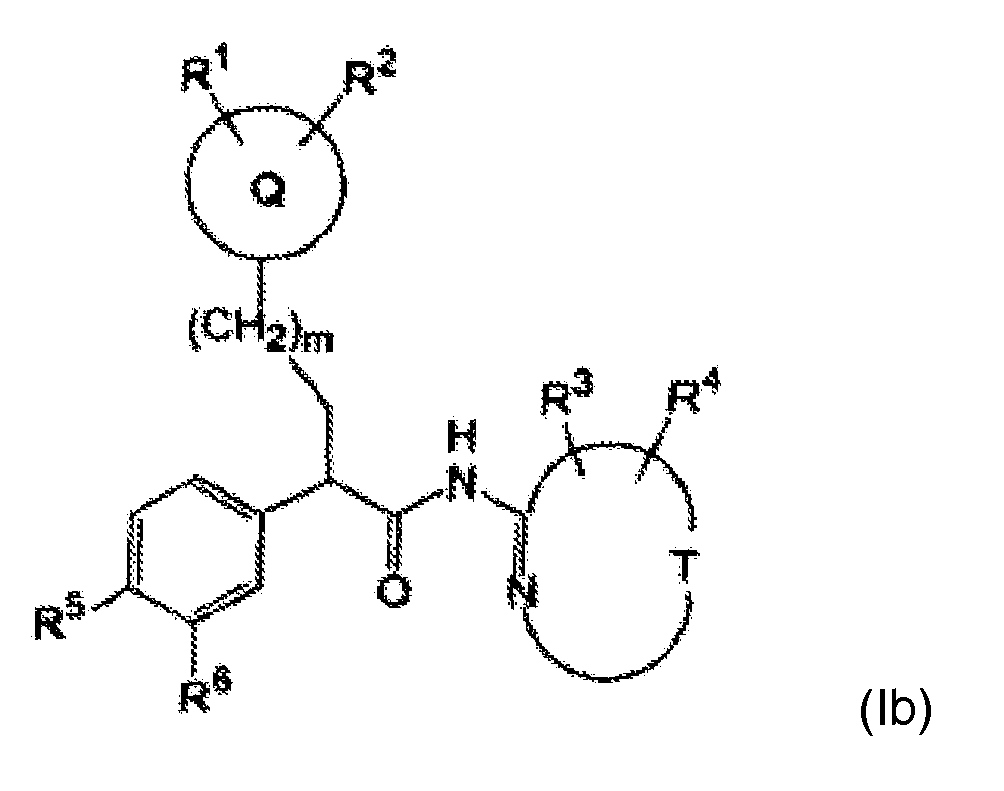
- the present invention is directed to a compound represented by Formula (Ib): or a pharmaceutically acceptable salt thereof, wherein Q, T, R 1 -R 6 and m are as defined above in Formula (I).
- the present invention is directed to a compound represented by Formula (Ib), or a pharmaceutically acceptable salt thereof, wherein: Q is a 5- or 6-membered heteroaryl ring.
- the present invention is directed to a compound represented by Formula (Ib), or a pharmaceutically acceptable salt thereof, wherein: Q is a thienyl, furyl, thiazolyl, or pyridyl ring.
- the present invention is directed to a compound represented by Formula (Ib), or a pharmaceutically acceptable salt thereof, wherein: Q is a 4-8-membered heterocyclic ring.
- the present invention is directed to a compound represented by Formula (Ib), or a pharmaceutically acceptable salt thereof, wherein: Q is tetrahydropyranyl, piperidinyl, tetrahydrothiopyranyl, 1-oxo-tetrahydrothiopyranyl, or 1,1-dioxo-tetrahydrothiopyranyl.
- the molecular weight of the compounds of formula (I) is preferably less than 800, more preferably less than 600, most preferably less than 500.
- Q is preferably 2-furyl, 2-thienyl, tetrahydropyranyl, tetrahydrothiopyranyl, 1-oxo-tetrahydrothiopyranyl, or 1,1-dioxo-tetrahydrothiopyranyl; more preferably 4-tetrahydropyranyl or 4-tetrahydrothiopyranyl; most preferably 4-tetrahydropyranyl.
- Q is a heteroaryl or heterocyclic group it is preferably linked to the -(CH 2 ) m - group through a carbon atom.
- Q is a heteroaryl group it preferably does not have a substituent R 1 or R 2 other than hydrogen at a position adjacent to point of attachment to the -(CH 2 ) m -group.
- the group of formula is preferably a monocyclic heteroaryl group. More preferably it is thiazolyl, thiadiazolyl, oxazolyl, isoxazolyl, pyrimidinyl, pyrazinyl, or pyridyl; more preferably 2-thiazolyl, 5-[1,2,4]thiadiazolyl, 2-[1,3,4]thiadiazolyl, 4-pyrimidinyl, 2-pyrazinyl, 3-isoxazolyl, or 2-pyridyl; even more preferably 2-thiazolyl, 5-[1,2,4]thiadiazolyl, 4-pyrimidinyl, 2-pyrazinyl, or 2-pyridyl; most preferably 2-thiazolyl, 2-pyrazinyl, or 2-pyridyl.
- the group of formula is 2-thiazolyl, or 2-pyrazinyl.
- the group of formula is 2-thiazolyl and R 3 is 5-fluoro and R 4 is hydrogen; or 2-pyrazinyl and R 3 and R 4 are hydrogen; especially preferred is 2-thiazolyl where R 3 is 5-fluoro and R 4 is hydrogen.
- R 1 and R 2 are preferably hydrogen.
- R 3 and R 4 are preferably independently selected from hydrogen, halogen, and methyl, more preferably R 3 and R 4 are independently selected from hydrogen, fluoro, and methyl.
- R 3 is preferably hydrogen or halogen; more preferably hydrogen, fluoro, chloro or bromo; even more preferably hydrogen, fluoro, or chloro; most preferably hydrogen or fluoro.
- R 4 is preferably hydrogen, halogen, or methyl; more preferably hydrogen or methyl.
- R 5 is preferably SO 2 cyclopropyl.
- R 6 is preferably hydrogen, chloro, fluoro, or trifluoromethyl; more preferably hydrogen.
- R 7 , R 77 , and R 8 are preferably C 1-4 alkyl, C 3-7 -cycloalkyl, heteroaryl, or 4-7-membered heterocyclic group; more preferably C 1-3 -alkyl, 4-6-membered heterocyclic group, or C 3-5 cycloalkyl; most preferably methyl, ethyl, n -propyl, cyclopropyl, cyclobutyl, oxetanyl, or tetrahydrofuryl, and especially methyl, ethyl, n -propyl, cyclopropyl, or cyclobutyl.
- R 8 is preferably C 1-3 alkyl, or C 3-4 cycloalkyl.
- R 8 is preferably C 3-4 cycloalkyl, especially cyclopropyl.
- R 7 is preferably not hydrogen.
- R 9 and R 10 are preferably independently C 0-4 alkyl e.g. one of R 9 and R 10 is hydrogen and the other is ethyl, or combine to form a 4-8-membered heterocyclic ring. R 9 and R 10 are preferably not both hydrogen.
- R 99 and R 100 are preferably C 0-4 alkyl.
- m is preferably 0.
- n is preferably 2 or 3.
- a preferred group of compounds are compounds of Formula (I), or pharmaceutically acceptable salts thereof, wherein:
- preferred compounds of this invention include those in which several or each variable in Formula (I) is selected from the preferred, more preferred, most preferred, especially or particularly listed groups for each variable. Therefore, this invention is intended to include all combinations of preferred, more preferred, most preferred, especially and particularly listed groups.
- alkyl as well as other groups having the prefix “alk” such as, for example, alkoxy, alkanyl, alkenyl, alkynyl, and the like, means carbon chains which may be linear or branched or combinations thereof. Examples of alkyl groups include methyl, ethyl, propyl, isopropyl, butyl, sec- and tert -butyl, pentyl, hexyl, heptyl and the like. "Alkenyl”, “alkynyl” and other like terms include carbon chains having at least one unsaturated carbon-carbon bond.
- C 0-4 alkyl is used to mean an alkyl having 0-4 carbons - that is, 0,1,2, 3, or 4 carbons in a straight or branched configuration.
- An alkyl having no carbon is hydrogen when the alkyl is a terminal group.
- An alkyl having no carbon is a direct bond when the alkyl is a bridging (connecting) group.
- cycloalkyl and “carbocyclic ring” mean carbocycles containing no heteroatoms, and include mono-, bi-, and tricyclic saturated carbocycles, as well as fused and bridged systems.
- fused ring systems can include one ring that is partially or fully unsaturated, such as a benzene ring, to form fused ring systems, such as benzofused carbocycles.
- Cycloalkyl includes such fused ring systems as spirofused ring systems.
- cycloalkyl and carbocyclic rings include C 3-8 cycloalkyl such as cyclopropyl, cyclobutyl, cyclopentyl, cyclohexyl, and decahydronaphthalene, adamantane, indanyl, 1,2,3,4-tetrahydronaphthalene and the like.
- halogen includes fluorine, chlorine, bromine, and iodine atoms.
- aryl includes, for example, phenyl and naphthyl.
- heterocyclic ring includes 4-8-membered saturated rings containing one or two heteroatoms chosen from oxygen, sulfur, and nitrogen. The heteroatoms are not directly attached to one another.
- heterocyclic rings include oxetane, tetrahydrofuran, tetrahydropyran, oxepane, oxocane, thietane, tetrahydrothiophene, tetrahydrothiopyran, thiepane, thiocane, azetidine, pyrrolidine, piperidine, azepane, azocane, [1,3]dioxane, oxazolidine, piperazine, and the like.
- heterocyclic rings include the oxidised forms of the sulfur-containing rings.
- tetrahydrothiophene 1-oxide, tetrahydrothiophene 1,1-dioxide, tetrahydrothiopyran 1-oxide, and tetrahydrothiopyran 1,1-dioxide are also considered to be heterocyclic rings.
- heteroaryl includes 5- or 6-membered heteroaryl rings containing 1-4 heteroatoms chosen from oxygen, sulfur, and nitrogen.
- heteroaryl rings are furyl, thienyl, pyrrolyl, pyrazolyl, imidazolyl, oxazolyl, isoxazolyl, thiazolyl, isothiazolyl, triazolyl, oxadiazolyl, thiadiazolyl, tetrazolyl, pyridinyl, pyridazinyl, pyrimidinyl, pyrazinyl, and triazinyl.
- the above formulas are shown without a definitive stereochemistry at certain positions.
- the present invention includes all stereoisomers (e.g. geometric isomers, optical isomers, diastereoisomers, etc.) and pharmaceutically acceptable salts thereof, except where specifically drawn or stated otherwise. Further, mixtures of stereoisomers as well as isolated specific stereoisomers are also included, except where specifically drawn or stated otherwise.
- stereoisomers e.g. geometric isomers, optical isomers, diastereoisomers, etc.
- pharmaceutically acceptable salts thereof e.g. geometric isomers, optical isomers, diastereoisomers, etc.
- mixtures of stereoisomers as well as isolated specific stereoisomers are also included, except where specifically drawn or stated otherwise.
- the products of such procedures can be a mixture of stereoisomers.
- the present invention includes any possible tautomers and pharmaceutically acceptable salts thereof, and mixtures thereof, except where specifically drawn or stated otherwise.
- the compound of the above formulas and pharmaceutically acceptable salts thereof exist in the form of solvates or polymorphic forms
- the present invention includes any possible solvates and polymorphic forms.
- a type of a solvent that forms the solvate is not particularly limited so long as the solvent is pharmacologically acceptable. For example, water, ethanol, propanol, acetone or the like can be used.
- the compounds of Formula (I) are intended for pharmaceutical use they are preferably provided in substantially pure form, for example at least 60% pure, more suitably at least 75% pure, especially at least 98% pure (% are on a weight for weight basis).
- the invention also encompasses a pharmaceutical composition that is comprised of a compound of Formula (I), or a pharmaceutically acceptable salt thereof, in combination with a pharmaceutically acceptable carrier.
- composition is comprised of a pharmaceutically acceptable carrier and a non-toxic therapeutically effective amount of a compound of Formula (I) as described above, or a pharmaceutically acceptable salt thereof.
- the invention encompasses a pharmaceutical composition for the prophylaxis or treatment of hyperglycemia and diabetes by the activation of GK, comprising a pharmaceutically acceptable carrier and a non-toxic therapeutically effective amount of compound of Formula (I) as described above, or a pharmaceutically acceptable salt thereof.
- the invention also provides the use of a compound of Formula (I), or a pharmaceutically acceptable salt thereof as a pharmaceutical.
- the compounds and compositions of the present invention are effective for treating hyperglycemia in mammals such as, for example, humans.
- the invention also provides a compound of Formula (I), or a pharmaceutically acceptable salt thereof, for use as a GK activator.
- the invention also provides a compound of Formula (I), or a pharmaceutically acceptable salt thereof, for use in the prophylactic or therapeutic treatment of hyperglycemia or diabetes.
- the invention also provides a compound of Formula (I), or a pharmaceutically acceptable salt thereof, for use in the prevention of diabetes in a human demonstrating pre-diabetic hyperglycemia or impaired glucose tolerance.
- the invention also provides the use of a compound of Formula (I), or a pharmaceutically acceptable salt thereof, in the manufacture of a medicament for the activation of GK.
- the invention also provides the use of a compound of Formula (I), or a pharmaceutically acceptable salt thereof, in the manufacture of a medicament for the prophylactic or therapeutic treatment of hyperglycemia or diabetes.
- the invention also provides the use of a compound of Formula (I), or a pharmaceutically acceptable salt thereof, in the manufacture of a medicament for the prevention of diabetes in a human demonstrating pre-diabetic hyperglycemia or impaired glucose tolerance.
- the compounds and compositions of the present invention may be optionally employed in combination with one or more other anti-diabetic agents or anti-hyperglycemic agents, which include, for example, sulfonylureas (e.g. glyburide, glimepiride, glipyride, glipizide, chlorpropamide, gliclazide, glisoxepid, acetohexamide, glibornuride, tolbutamide, tolazamide, carbutamide, gliquidone, glyhexamide, phenbutamide, tolcyclamide, etc.), biguanides (e.g. metformin, phenformin, buformin, etc.), glucagon antagonists (e.g.
- sulfonylureas e.g. glyburide, glimepiride, glipyride, glipizide, chlorpropamide, gliclazide, glisoxepid, acetohexamide
- glucosidase inhibitors e.g. acarbose, miglitol, etc.
- insulin secetagogues e.g. insulin sensitizers (e.g. troglitazone, rosiglitazone, pioglitazone, etc.) and the like; or anti-obesity agents (e.g. sibutramine, orlistat, etc.) and the like.
- anti-obesity agents e.g. sibutramine, orlistat, etc.
- the compounds and compositions of the present invention and the other anti-diabetic agents or anti-hyperglycemic agents may be administered simultaneously, sequentially or separately.
- salts refers to salts prepared from pharmaceutically acceptable non-toxic bases or acids.
- pharmaceutically acceptable non-toxic bases including inorganic bases and organic bases.
- Salts derived from such inorganic bases include aluminum, ammonium, calcium, cupric, cuprous, ferric, ferrous, lithium, magnesium, manganic, manganous, potassium, sodium, zinc and the like salts. Particularly preferred are the ammonium, calcium, magnesium, potassium and sodium salts.
- Salts derived from pharmaceutically acceptable organic non-toxic bases include salts of primary, secondary, and tertiary amines, as well as cyclic amines and substituted amines such as naturally occurring and synthetic amines.
- organic non-toxic bases from which salts can be formed include, for example, arginine, betaine, caffeine, choline, N',N'-dibenzylethylenediamine, diethylamine, 2-diethylaminoethanol, 2-dimethylaminoethanol, ethanolamine, ethylenediamine, N-ethylmorpholine, N-ethylpiperidine, glucamine, glucosamine, histidine, isopropylamine, lysine, methylglucamine, morpholine, piperazine, piperidine, polyamine resins, procaine, purines, theobromine, triethylamine, trimethylamine, tripropylamine, tromethamine and the like.
- the compound of the present invention When the compound of the present invention is basic, its corresponding salt can be conveniently prepared from pharmaceutically acceptable non-toxic acids, including inorganic and organic acids.
- Such acids include, for example, acetic, benzenesulfonic, benzoic, camphorsulfonic, citric, ethanesulfonic, fumaric, gluconic, glutamic, hydrobromic, hydrochloric, isethionic, lactic, maleic, malic, mandelic, methanesulfonic, mucic, nitric, pamoic, pantothenic, phosphoric, succinic, sulfuric, tartaric, p-toluenesulfonic acid and the like.
- Particularly preferred are citric, hydrobromic, hydrochloric, maleic, phosphoric, sulfuric, methanesulfonic, and tartaric acids.
- compositions of the present invention comprise a compound of Formula (I), or a pharmaceutically acceptable salt thereof, as an active ingredient, a pharmaceutically acceptable carrier and optionally other therapeutic ingredients or adjuvants.
- the compositions include compositions suitable for oral, rectal, topical, and parenteral (including subcutaneous, intramuscular, and intravenous) administration, as well as administration through inhaling, although the most suitable route in any given case will depend on the particular host, and nature and severity of the conditions for which the active ingredient is being administered.
- the pharmaceutical compositions may be conveniently presented in unit dosage form and prepared by any of the methods well known in the art of pharmacy.
- compositions according to the invention are preferably adapted for oral administration.
- the compounds of Formula (I), or pharmaceutically acceptable salts thereof, of this invention can be combined as the active ingredient in intimate admixture with a pharmaceutical carrier according to conventional pharmaceutical compounding techniques.
- the carrier may take a wide variety of forms depending on the form of preparation desired for administration, e.g. oral or parenteral (including intravenous).
- the pharmaceutical compositions of the present invention can be presented as discrete units suitable for oral administration such as capsules, cachets or tablets each containing a predetermined amount of the active ingredient.
- compositions can be presented as a powder, as granules, as a solution, as a suspension in an aqueous liquid, as a non-aqueous liquid, as an oil-in-water emulsion, or as a water-in-oil liquid emulsion.
- the compound represented by Formula (I), or a pharmaceutically acceptable salt thereof may also be administered by controlled release means and/or delivery devices.
- the compositions may be prepared by any of the methods of pharmacy. In general, such methods include a step of bringing into association the active ingredient with the carrier that constitutes one or more necessary ingredients.
- the compositions are prepared by uniformly and intimately admixing the active ingredient with liquid carriers or finely divided solid carriers or both. The product can then be conveniently shaped into the desired presentation.
- compositions of this invention may include a pharmaceutically acceptable carrier and a compound of Formula (I), or a pharmaceutically acceptable salt thereof.
- the compounds of Formula (I), or pharmaceutically acceptable salts thereof, can also be included in pharmaceutical compositions in combination with one or more other therapeutically active compounds.
- compositions of this invention include a pharmaceutically acceptable liposomal formulation containing a compound of Formula (I) or a pharmaceutically acceptable salt thereof.
- the pharmaceutical carrier employed can be, for example, a solid, liquid, or gas.
- solid carriers include lactose, terra alba, sucrose, talc, gelatin, agar, pectin, acacia, magnesium stearate, and stearic acid.
- liquid carriers are sugar syrup, peanut oil, olive oil, and water.
- gaseous carriers include carbon dioxide and nitrogen.
- any convenient pharmaceutical media may be employed.
- water, glycols, oils, alcohols, flavoring agents, preservatives, coloring agents, and the like may be used to form oral liquid preparations such as suspensions, elixirs and solutions; while carriers such as starches, sugars, microcrystalline cellulose, diluents, granulating agents, lubricants, binders, disintegrating agents, and the like may be used to form oral solid preparations such as powders, capsules and tablets. Because of their ease of administration, tablets and capsules are the preferred oral dosage units whereby solid pharmaceutical carriers are employed.
- tablets may be coated by standard aqueous or nonaqueous techniques.
- a tablet containing the composition of this invention may be prepared by compression or molding, optionally with one or more accessory ingredients or adjuvants.
- Compressed tablets may be prepared by compressing, in a suitable machine, the active ingredient in a free-flowing form such as powder or granules, optionally mixed with a binder, lubricant, inert diluent, surface active or dispersing agent or other such excipient.
- excipients may be, for example, inert diluents such as calcium carbonate, sodium carbonate, lactose, calcium phosphate or sodium phosphate; granulating and disintegrating agents, for example, corn starch, or alginic acid; binding agents, for example, starch, gelatin or acacia; and lubricating agents, for example, magnesium stearate, stearic acid or talc.
- the tablets may be uncoated or they may be coated by known techniques to delay disintegration and absorption in the gastrointestinal tract and thereby provide a sustained action over a longer time.
- a time delay material such as glyceryl monostearate or glyceryl distearate may be used.
- the active ingredient is mixed with an inert solid diluent, for example, calcium carbonate, calcium phosphate or kaolin.
- the active ingredient is mixed with water or an oil medium, for example, peanut oil, liquid paraffin or olive oil.
- Molded tablets may be made by molding in a suitable machine, a mixture of the powdered compound moistened with an inert liquid diluent.
- Each tablet preferably contains from about 0.05mg to about 5g of the active ingredient and each cachet or capsule preferably containing from about 0.05mg to about 5g of the active ingredient.
- a formulation intended for the oral administration to humans may contain from about 0.5mg to about 5g of active agent, compounded with an appropriate and convenient amount of carrier material which may vary from about 5 to about 95 percent of the total composition.
- Unit dosage forms will generally contain between from about 1mg to about 2g of the active ingredient, typically 25mg, 50mg, 100mg, 200mg, 300mg, 400mg, 500mg, 600mg, 800mg, or 1000mg.
- compositions of the present invention suitable for parenteral administration may be prepared as solutions or suspensions of the active compounds in water.
- a suitable surfactant can be included such as, for example, hydroxypropylcellulose.
- Dispersions can also be prepared in glycerol, liquid polyethylene glycols, and mixtures thereof in oils. Further, a preservative can be included to prevent the detrimental growth of microorganisms.
- compositions of the present invention suitable for injectable use include sterile aqueous solutions or dispersions.
- the compositions can be in the form of sterile powders for the extemporaneous preparation of such sterile injectable solutions or dispersions.
- the final injectable form must be sterile and must be effectively fluid for easy syringability.
- the pharmaceutical compositions must be stable under the conditions of manufacture and storage; thus, preferably should be preserved against the contaminating action of microorganisms such as bacteria and fungi.
- the carrier can be a solvent or dispersion medium containing, for example, water, ethanol, polyol (e.g. glycerol, propylene glycol and liquid polyethylene glycol), vegetable oils, and suitable mixtures thereof.
- compositions of the present invention can be in a form suitable for topical use such as, for example, an aerosol, cream, ointment, lotion, dusting powder, or the like. Further, the compositions can be in a form suitable for use in transdermal devices. These formulations may be prepared, utilizing a compound of Formula (I), or a pharmaceutically acceptable salt thereof, via conventional processing methods. As an example, a cream or ointment is prepared by admixing hydrophilic material and water, together with about 5wt% to about 10wt% of the compound, to produce a cream or ointment having a desired consistency.
- a cream or ointment is prepared by admixing hydrophilic material and water, together with about 5wt% to about 10wt% of the compound, to produce a cream or ointment having a desired consistency.
- compositions of this invention can be in a form suitable for rectal administration wherein the carrier is a solid. It is preferable that the mixture forms unit dose suppositories. Suitable carriers include cocoa butter and other materials commonly used in the art. The suppositories may be conveniently formed by first admixing the composition with the softened or melted carrier(s) followed by chilling and shaping in molds.
- compositions of this invention can be in a form suitable for inhaled administration.
- Such administration can be in forms and utilizing carriers described in, for example, 1) Particulate Interactions in Dry Powder Formulations for Inhalation, Xian Zeng et al, 2000 , Taylor and Francis, 2) Pharmaceutical Inhalation Aerosol Technology, Anthony Hickey, 1992, Marcel Dekker , 3) Respiratory Drug Delivery, 1990, Editor: P.R. Byron, CRC Press .
- compositions described above may include, as appropriate, one or more additional carrier ingredients such as diluents, buffers, flavoring agents, binders, surface-active agents, thickeners, lubricants, preservatives (including anti-oxidants) and the like.
- additional carrier ingredients such as diluents, buffers, flavoring agents, binders, surface-active agents, thickeners, lubricants, preservatives (including anti-oxidants) and the like.
- additional carrier ingredients such as diluents, buffers, flavoring agents, binders, surface-active agents, thickeners, lubricants, preservatives (including anti-oxidants) and the like.
- additional carrier ingredients such as diluents, buffers, flavoring agents, binders, surface-active agents, thickeners, lubricants, preservatives (including anti-oxidants) and the like.
- other adjuvants can be included to render the formulation isotonic with the blood of the intended recipient.
- dosage levels on the order of from about 0.01mg/kg to about 150mg/kg of body weight per day are useful in the treatment of the above-indicated conditions, or alternatively about 0.5mg to about 10g per patient per day.
- diabetes may be effectively treated by the administration of from about 0.01 to 100mg of the compound per kilogram of body weight per day, or alternatively about 0.5mg to about 7g per patient per day.
- the specific dose level for any particular patient will depend upon a variety of factors including the age, body weight, general health, sex, diet, time of administration, route of administration, rate of excretion, drug combination and the severity of the disease in the particular diabetic patient undergoing therapy. Further, it is understood that the compounds and salts thereof of this invention can be administered at subtherapeutic levels prophylactically in anticipation of a hyperglycemic condition.
- the compounds of Formula (I) may exhibit advantageous properties compared to known glucokinase activators, e.g. as illustrated in the assays described herein.
- the compounds of Formula (Ia) can be prepared following the protocol illustrated in Scheme 1 below: wherein Q, T, R 1 -R 6 , m and ⁇ are as described above, and R 11 is C 0-4 alkyl.
- the aldehydes II and phenylacetic acids or esters III are commercially available or are readily prepared using known techniques.
- IV may be prepared by the Perkin reaction ( G. Karminski-Zamola et al., Tetrahedron 1982, 38, 1329-1335 ).
- a carboxylic acid anhydride e.g. acetic anhydride
- a tertiary amine base e.g. triethylamine
- an amine base such as piperidine
- an amine base such as piperidine
- the ⁇ , ⁇ -unsaturated carboxylic acids IV may be condensed with heteroaromatic amines V , many of which are commercially available, using a variety of coupling conditions, e.g. polymer supported carbodiimide-1-hydroxybenzotriazole in N,N -dimethylformamide at 20°C (for representative procedures, see http://www.argotech.com/PDF/resins/ps_carbodiimide.pdf and available from Argonaut Technologies, Inc., Foster City, California), to give (Ia).
- polymer supported carbodiimide-1-hydroxybenzotriazole in N,N -dimethylformamide at 20°C for representative procedures, see http://www.argotech.com/PDF/resins/ps_carbodiimide.pdf and available from Argonaut Technologies, Inc., Foster City, California
- the compounds of Formula (Ib) can be made by the route displayed in Scheme 2 below: wherein Q, T, R 1 -R 6 and m are as described above, V is CO 2 R 11 or CO 2 CH 2 Ph, and X is chloro, bromo, iodo, or -OSO 2 R 12 ; wherein R 11 is as described above and R 12 is C 1-4 alkyl, optionally substituted with one or more fluorines, or optionally substituted aryl.
- the halides and sulfonate esters VI are commercially available or are readily prepared using known techniques. These alkylating agents may be reacted with the dianions of the phenylacetic acids VII, generated at -78°C in tetrahydrofuran with ⁇ 2 equivalents of a strong base, such as lithium diisopropylamide, to generate VIII directly (F. T. Bizzarro et al., WO 00/58293 ). Alternatively, the ⁇ -carbanion of phenylacetic ester VII, generated at -78°C in tetrahydrofuran by a strong base, such as lithium bis(trimethylsilyl)amide ( L. Snyder et al., J. Org. Chem.
- esters can be alkylated by VI to give ⁇ -substituted esters. Saponification of these esters, employing, for example, sodium hydroxide in aqueous methanol at 20°C to reflux, leads to the carboxylic acids VIII.
- the carboxylic acids VIII may be condensed with heteroaromatic amines V using a variety of coupling conditions, e.g. polymer supported carbodiimide-1-hydroxybenzotriazole in N,N -dimethylformamide at 20°C (for representative procedures, see http://www.argotech.comIPDF/resins/ps_carbodiimide.pdf and available from Argonaut Technologies, Inc., Foster City, California), to give amides (Ib).
- coupling conditions e.g. polymer supported carbodiimide-1-hydroxybenzotriazole in N,N -dimethylformamide at 20°C (for representative procedures, see http://www.argotech.comIPDF/resins/ps_carbodiimide.pdf and available from Argonaut Technologies, Inc., Foster City, California), to give amides (Ib).
- the compound of Formula (Ib) has an asymmetric carbon atom which interlinks the amide carbonyl carbon, the aryl ring, and the Q-containing sidechain.
- the preferred stereoconfiguration at the asymmetric centre is (R).
- racemic VIII can be condensed with a chiral oxazolidinone derivative (see, for instance, F. T. Bizzarro et al. WO 00/58293 ) to generate a mixture of diastereoisomeric imides that are separable by any conventional method, e.g. column chromatography.
- the compounds of Formula (I) may be prepared singly or as compound libraries comprising at least 2, for example 5 to 1,000, compounds and more preferably 10 to 100 compounds of Formula (I).
- Compound libraries may be prepared by a combinatorial "split and mix” approach or by multiple parallel synthesis using either solution or solid phase chemistry, using procedures known to those skilled in the art.
- labile functional groups in the intermediate compounds e.g. hydroxy, carboxy and amino groups
- the protecting groups may be removed at any stage in the synthesis of the compounds of Formula (I) or may be present on the final compound of Formula (I).
- a comprehensive discussion of the ways in which various labile functional groups may be protected and methods for cleaving the resulting protected derivatives is given in, for example, Protective Groups in Organic Chemistry, T.W. Greene and P.G.M. Wuts, (1991) Wiley-Interscience, New York, 2nd editi on.
- Preferred compounds of formula (IV) are those wherein:
- Preferred compounds of formula (VIII) are those wherein:
- the compound 5-fluorothiazol-2-ylamine may be provided as an amide or acid addition salt thereof.
- Suitable acid addition salts include those formed with inorganic and organic acids. Such acids include, for example, acetic, trifluoroacetic, benzenesulfonic, benzoic, camphorsulfonic, citric, ethanesulfonic, fumaric, gluconic, glutamic, hydrobromic, hydrochloric, hydrofluoric isethionic, lactic, maleic, malic, mandelic, methanesulfonic, mucic, nitric, pamoic, pantothenic, phosphoric, succinic, sulfuric, tartaric, p-toluenesulfonic acid, triflic and the like. Particularly preferred are the hydrohalide salts especially the hydrochloride.
- the amides and acid addition salts of 5-fluorothiazol-2-ylamine may be useful as intermediates for the synthesis of compounds
- NEt 3 (15.4mL, 110mmol) was added to a stirred suspension of 2-(4-methanesulfonylphenyl)-3-(tetrahydropyran-4-yl)propanoic acid (30.0g, 96.0mmol) in anhydrous THF (300mL) at 0°C. After 10min, pivaloyl chloride (13.6mL, 110mmol) was added dropwise over 20min and the mixture was stirred at 0°C for 2h.
- NEt 3 (63.4mL, 455mmol) was added to a stirred suspension of 5-bromothiazol-2-ylamine hydrobromide (102.7g, 379mmol) in CH 2 Cl 2 (1.5L). After 1h, TFAA (64.2mL, 455mmol) was added dropwise at 0°C over 15min. The mixture was allowed to warm to 20°C over 1h, before being stirred for an additional 2h. H 2 O (600mL) was added and the resulting precipitate was collected. The aqueous layer of the filtrate was separated and extracted with CHCl 3 (3 ⁇ 300mL). The combined organic extracts were washed with brine, dried (Na 2 SO 4 ), filtered and concentrated.
- GK activity was assayed by coupling the production of G6P by GST-GK to the generation of NADPH with G6PDH as the coupling enzyme.
- the GK assay was performed at 30°C in a flat bottom 96-well assay plate from Costar with a final incubation volume of 100 ⁇ L.
- the assay buffer contained: 25mM Hepes buffer (pH 7.4), 12.5mM KCl, 5mM D-Glc, 5mM ATP, 6.25mM NADP, 25mM MgCl 2 , 1mM dithiothreitol, test compound or 5% DMSO, 3.0unit/mL G6PDH, and 0.4 ⁇ L/mL GST-GK, derived from human liver GK.
- ATP, G6PDH, and NADP were purchased from Roche Diagnostics.
- the other reagents were >98% pure and were purchased from Kanto Chemicals.
- test compounds were dissolved in DMSO, before being added to the assay buffer without ATP. This mix was preincubated in the temperature controlled chamber of a SPECTRAmax 250 microplate spectrophotometer (Molecular Devices Corporation, Sunnyvale, CA) for 10min, then the reaction was started by the addition of 10 ⁇ L ATP solution.
- SPECTRAmax 250 microplate spectrophotometer Molecular Devices Corporation, Sunnyvale, CA
- C57BL/6J mice were dosed orally via gavage with GK activator at 50mg/kg body weight. Blood Glc determinations were made 5 times during the 6h post-dose study period.
Landscapes
- Chemical & Material Sciences (AREA)
- Organic Chemistry (AREA)
- Health & Medical Sciences (AREA)
- Diabetes (AREA)
- Public Health (AREA)
- Life Sciences & Earth Sciences (AREA)
- Veterinary Medicine (AREA)
- General Health & Medical Sciences (AREA)
- Engineering & Computer Science (AREA)
- Chemical Kinetics & Catalysis (AREA)
- General Chemical & Material Sciences (AREA)
- Medicinal Chemistry (AREA)
- Nuclear Medicine, Radiotherapy & Molecular Imaging (AREA)
- Animal Behavior & Ethology (AREA)
- Pharmacology & Pharmacy (AREA)
- Bioinformatics & Cheminformatics (AREA)
- Obesity (AREA)
- Hematology (AREA)
- Endocrinology (AREA)
- Emergency Medicine (AREA)
- Pharmaceuticals Containing Other Organic And Inorganic Compounds (AREA)
- Plural Heterocyclic Compounds (AREA)
- Acyclic And Carbocyclic Compounds In Medicinal Compositions (AREA)
- Medicines That Contain Protein Lipid Enzymes And Other Medicines (AREA)
- Thiazole And Isothizaole Compounds (AREA)
- Nitrogen Condensed Heterocyclic Rings (AREA)
- Preparation Of Compounds By Using Micro-Organisms (AREA)
Claims (32)
- Composé de formule (I) :
 Q représente un groupe aryle, un cycle hétéroaryle de 5 ou 6 membres, ou un cycle hétérocyclique de 4 à 8 membres ;T conjointement au -N=C- auquel il est attaché forme un cycle hétéroaryle, ou un cycle hétérocyclique où la liaison N=C est le seul site d'insaturation ;R1 et R2 représentent, chacun de manière indépendante, un atome d'hydrogène, un groupe hydroxy, un atome d'halogène, un groupe cyano, nitro, vinyle, éthynyle, méthoxy, OCFnH3-n, -N(alkyle en C0-4)(alkyle en C0-4), CHO ou alkyle en C1-2 éventuellement substitué par 1 à 5 substituant(s) halogène, hydroxy, cyano, méthoxy, -N(alkyle en C0-2)(alkyle en C0-2), SOCH3, ou SO2CH3 indépendant(s); ou R1 et R2 forment ensemble un cycle carbocyclique ou hétérocyclique ; ou R1 et R2 peuvent être pris ensemble pour représenter un atome d'oxygène attaché au cycle via une double liaison ;R3 et R4 représentent, chacun de manière indépendante, un atome d'hydrogène, d'halogène, un groupe OCFnH3-n, méthoxy, CO2R77, cyano, nitro, CHO, CONR99R100, CON(OCH3)CH3, ou alkyle en C1-2, hétéroaryle, ou cycloalkyle en C3-7 éventuellement substitué par 1 à 5 substituant(s) halogène, hydroxy, cyano, méthoxy, -NHCO2CH3, ou -N(alkyle en C0-2)(alkyle en C0-2) indépendant(s) ; ou R3 et R4 forment ensemble un cycle aromatique, hétéroaromatique, carbocyclique, ou hétérocyclique de 5 à 8 membres ;R5 représente un groupe SO2cycloalkyle en C3-4 ;R6 représente un atome d'hydrogène, un groupe hydroxy, un atome d'halogène, un groupe cyano, nitro, CO2R7, CHO, COR8, C(OH)R7R8, C(=NOR7)R8, CONR9R10, SR7, SOR8, SO2R8, SO2NR9R10, CH2NR9R10, NR9R10, -N(alkyl en C0-4)SO2R8, NHCOR7, ou un groupe alkyle en C1-4, un groupe alcényle en C2-4, un groupe alcynyle en C2-4, un groupe alcoxy en C1-4, un groupe aryle, ou un groupe hétéroaryle, dans lequel n'importe quel groupe est, éventuellement, substitué par 1 à 6 substituant(s) halogène, cyano, nitro, hydroxy, alcoxy en C1-2, -N(alkyle en C0-2)(alkyle en C0-2), alkyle en C1-2, CFnH3-n, aryle, hétéroaryle, -COalkyle en C1-2, -CON(alkyle en C0-2)(alkyle en C0-2), SCH3, SOCH3, SO2CH3, ou -SO2N(alkyle en C0-2)(alkyle en C0-2) indépendant(s) ;R7 et R77 représentent, chacun de manière indépendante, un atome d'hydrogène, ou un groupe alkyle en C1-4, un groupe alcényle en C2-4, un groupe alcynyle en C2-4, un groupe cycloalkyle en C3-7, un groupe aryle, un groupe hétéroaryle, ou un groupe hétérocyclique de 4 à 7 membres, dans lesquels n'importe quel groupe est, éventuellement, substitué par 1 à 6 substituant(s) halogène, cyano, nitro, hydroxy, alcoxy en C1-2, -N(alkyle en C0-2)(alkyle en C0-2), alkyle en C1-2, cycloalkyle en C3-7, cycle hétérocyclique de 4 à 7 membres, CFnH3-n, aryle, hétéroaryle, CO2H, -COalkyle en C1-2, -CON(alkyle en C0-2)(alkyle en C0-2), SOCH3, SO2CH3, ou -SO2N(alkyle en C0-2)(alkyle en C0-2) indépendant(s) ;R8 représente un groupe alkyle en C1-4, un groupe alcényle en C2-4, un groupe alcynyle en C2-4, un groupe cycloalkyle en C3-7, un groupe aryle, un groupe hétéroaryle, ou un groupe hétérocyclique de 4 à 7 membres, dans lequel n'importe quel groupe est, éventuellement, substitué par 1 à 6 substituant(s) halogène, cyano, nitro, hydroxy, alcoxy en C1-2, -N(alkyle en C0-2)(alkyle en C0-2), alkyle en C1-2, cycloalkyle en C3-7, cycle hétérocyclique de 4 à 7 membres, CFnH3-n, aryle, hétéroaryle, CO2H, CO(alkyle en C1-2), -CON(alkyle en C0-2)(alkyle en C0-2), SOCH3, SO2CH3, ou -SO2N(alkyle en C0-2)(alkyle en C0-2) indépendant(s) ;R9, R10, R99, et R100 représentent, chacun de manière indépendante, un atome d'hydrogène, ou un groupe alkyle en C1-4, un groupe cycloalkyle en C3-7, un groupe aryle, un groupe hétéroaryle, ou un groupe hétérocyclique de 4 à 7 membres, dans lesquels n'importe quel groupe est, éventuellement, substitué par 1 à 6 substituant(s) halogène, cyano, nitro, hydroxy, alcoxy en C1-2, -N(alkyle en C0-2)(alkyle en C0-2), alkyle en C1-2, cycloalkyle en C3-7, cycle hétérocyclique de 4 à 7 membres, CFnH3-n, aryle, hétéroaryle, CO(alkyle en C1-2), 2), -CON(alkyle en C0-2)(alkyle en C0-2), SOCH3, SO2CH3, ou -SO2N(alkyle en C0-2)(alkyle en C0-2) indépendant(s) ; ou R9 et R10 ou bien R99 et R100 forment ensemble un système de cycle hétérobicyclique de 6 à 8 membres ou un cycle hétérocyclique de 4 à 8 membres qui est éventuellement substitué par 1 à 2 substituant(s) alkyle en C1-2, CH2OCH3, CO(alkyle en C0-2), hydroxy, ou SO2CH3 indépendant(s) ;n vaut 1,2 ou 3 ;m vaut 0 ou 1 ; etla ligne pointillée conjointement avec la ligne pleine forme une double liaison facultative, et Δ indique que la double liaison a la configuration (E).
- Composé selon la revendication 1, ou un sel pharmaceutiquement acceptable de celui-ci, dans lequel la ligne pointillée conjointement avec la ligne pleine forme une double liaison.
- Composé selon la revendication 1, ou un sel pharmaceutiquement acceptable de celui-ci, dans lequel la ligne pointillée conjointement avec la ligne pleine forme une simple liaison.
- Composé selon la revendication 3, ou un sel pharmaceutiquement acceptable de celui-ci, dans lequel la ligne pointillée conjointement avec la ligne pleine forme une simple liaison, et la configuration absolue au niveau du centre asymétrique α sur le carbone du carbonyle de l'amide est (R).
- Composé selon l'une quelconque des revendications précédentes, dans lequel m vaut 0.
- Composé selon l'une quelconque des revendications précédentes, ou un sel pharmaceutiquement acceptable de celui-ci, dans lequel Q représente un groupe thiényle, furyle, thiazolyle, pyridyle, tétrahydropyranyle, pipéridinyle, tétrahydrothiopyranyle, 1-oxo-tétrahydrothiopyranyle ou 1,1-dioxotétrahydrothiopyranyle.
- Composé selon la revendication 6, ou un sel pharmaceutiquement acceptable de celui-ci, dans lequel Q représente un groupe 4-tétrahydropyranyle.
- Composé selon l'une quelconque des revendications précédentes, ou un sel pharmaceutiquement acceptable de celui-ci, dans lequel le groupe de formule
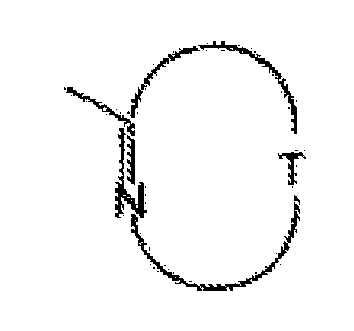
- Composé selon la revendication 8, ou un sel pharmaceutiquement acceptable de celui-ci, dans lequel le groupe de formule

- Composé selon la revendication 9, ou un sel pharmaceutiquement acceptable de celui-ci, dans lequel le groupe de formule
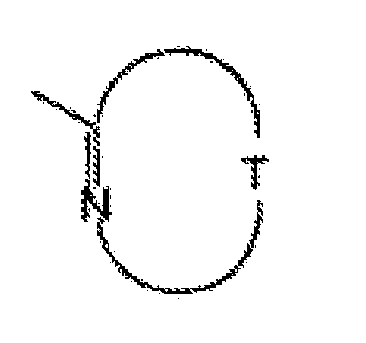
- Composé selon l'une quelconque des revendications précédentes, ou un sel pharmaceutiquement acceptable de celui-ci, dans lequel R3 et R4 sont choisis, de manière indépendante, parmi un atome d'hydrogène, un atome d'halogène, et un groupe méthyle.
- Composé selon l'une quelconque des revendications précédentes, ou un sel pharmaceutiquement acceptable de celui-ci, dans lequel R6 représente un atome d'hydrogène, de chlore, de fluor ou un groupe trifluorométhyle.
- Composé selon l'une quelconque des revendications précédentes, ou un sel pharmaceutiquement acceptable de celui-ci, dans lequel R6 représente un atome d'hydrogène.
- Composé selon la revendication 1 choisi parmi :le 2-(4-cyclopropanesulfonylphényl)-3-(tétrahydropyran-4-yl)-N-thiazol-2-ylpropionamide ;le 2-(4-cyclopropanesulfonylphényl)-N-(5-fluorothiazol-2-yl)-3-(tétrahydropyran-4-yl)propionamide ;le 2-(4-cyclopropanesulfonylphényl)-N-(3-méthyl-[1,2,4]thiadiazol-5-yl)-3-(tétrahydropyran-4-yl)propionamide ;le 2-(4-cyclopropanesulfonylphényl)-N-pyrazin-2-yl-3-(tétrahydropyran-4-yl)propionamide ;le 2-(4-cyclopropanesulfonylphényl)-3-(tétrahydropyran-4-yl)-N-[1,2,4]thiadiazol-5-ylpropionamide ;le (E)-2-(4-cyclopropanesulfonylphényl)-3-(tétrahydropyran-4-yl)-N-thiazol-2-ylacrylamide ;le 2-(4-cyclopropanesulfonylphényl)-N-(5-formylthiazol-2-yl)-3-(tétrahydropyran-4-yl)propionamide ;le (2R)-2-(4-cyclopropanesulfonylphényl)-N-(5-fluorothiazol-2-yl)-3-(tétrahydropyran-4-yl)propionamide ;le (2R)-2-(4-cyclopropanesulfonylphényl)-3-(tétrahydropyran-4-yl)-N-[1,2,4]thiadiazol-5-ylpropionamide ;le (2R)-2-(4-cyclopropanesulfonylphényl)-N-pyrazin-2-yl-3-(tétrahydropyran-4-yl)propionamide ;le (2R)-2-(4-cyclopropanesulfonylphényl)-N-(5-fluoropyridin-2-yl)-3-(tétrahydropyran-4-yl)propionamide ;le (2R)-2-(4-cyclopropanesulfonylphényl)-3-(tétrahydropyran-4-yl)-N-thiazol-2-ylpropionamide ;le (2R)-2-(4-cyclopropanesulfonylphényl)-N-(3-méthyl-[1,2,4]thiadiazol-5-yl)-3-(tétrahydropyran-4-yl)propionamide ;le (2R)-2-(4-cyclobutanesulfonylphényl)-N-pyrazin-2-yl-3-(tétrahydropyran-4-yl)propionamide ;le (2R)-2-(4-cyclobutanesulfonylphényl)-N-pyrimidin-4-yl-3-(tétrahydropyran-4-yl)propionamide ;le (2R)-2-(4-cyclobutanesulfonylphényl)-N-isoxazol-3-yl-3-(tétrahydropyran-4-yl)propionamide ;le (2R)-2-(4-cyclobutanesulfonylphényl)-N-(1-méthyl-1H-pyrazol-3-yl)-3-(tétrahydropyran-4-yl)propionamide ;le (2R)-2-(4-cyclobutanesulfonylphényl)-N-(5-fluorothiazol-2-yl)-3-(tétrahydropyran-4-yl)propionamide ;le (E)-2-(4-cyclopropanesulfonylphényl)-N-(5-fuoropyridin-2-yl)-3-(tétrahydropyran-4-yl)acrylamide ;le (E)-2-(4-cyclopropanesulfonylphényl)-N-(5-fluorothiazol-2-yl)-3-(tétrahydropyran-4-yl)acrylamide ;le N-(5-cyanothiazol-2-yl)-2-(4-cyclopropanesulfonylphényl)-3-(tétrahydropyran-4-yl)propionamide ; etle 2-(4-cyclobutanesulfonylphényl)-3-(tétrahydropyran-4-yl)-N-thiazol-2-ylpropionamide ;ou un sel pharmaceutiquement acceptable de celui-ci.
- Composé selon la revendication 1 choisi parmi :le 2-(4-cyclopropanesulfonylphényl)-3-(tétrahydropyran-4-yl)-N-thiazol-2-ylpropionamide ;le 2-(4-cyclopropanesulfonylphényl)-N-(5-fluorothiazol-2-yl)-3-(tétrahydropyran-4-yl)propionamide ;le 2-(4-cyclopropanesulfonylphényl)-N-(3-méthyl-[1,2,4]thiadiazol-5-yl)-3-(tétrahydropyran-4-yl)propionamide ;le 2-(4-cyclopropanesulfonylphényl)-N-pyrazin-2-yl-3-(tétrahydropyran-4-yl)propionamide ;le 2-(4-cyclopropanesulfonylphényl)-3-(tétrahydropyran-4-yl)-N-[1,2,4]thiadiazol-5-ylpropionamide ;le (E)-2-(4-cyclopropanesulfonylphényl)-3-(tétrahydropyran-4-yl)-N-thiazol-2-ylacrylamide ;le (2R)-2-(4-cyclopropanesulfonylphényl)-N-(5-fluorothiazol-2-yl)-3-(tétrahydropyran-4-yl)propionamide ;le (2R)-2-(4-cyclopropanesulfonylphényl)-3-(tétrahydropyran-4-yl)-N-[1,2,4]thiadiazol-5-ylpropionamide ;le (2R)-2-(4-cyclopropanesulfonylphényl)-N-pyrazin-2-yl-3-(tétrahydropyran-4-yl)propionamide ;le (2R)-2-(4-cyclopropanesulfonylphényl)-N-(5-fluoropyridin-2-yl)-3-(tétrahydropyran-4-yl)propionamide ;le (2R)-2-(4-cyclopropanesulfonylphényl)-3-(tétrahydropyran-4-yl)-N-thiazol-2-ylpropionamide ;le (2R)-2-(4-cyclopropanesulfonylphényl)-N-(3-méthyl-[1,2,4]thiadiazol-5-yl)-3-(tétrahydropyran-4-yl)propionamide ;le (2R)-2-(4-cyclobutanesulfonylphényl)-N-pyrazin-2-yl-3-(tétrahydropyran-4-yl)propionamide ;le (2R)-2-(4-cyclobutanesulfonylphényl)-N-(5-fluorothiazol-2-yl)-3-(tétrahydropyran-4-yl)propionamide ;le (E)-2-(4-cyclopropanesulfonylphényl)-N-(5-fluorothiazol-2-yl)-3-(tétrahydropyran-4-yl)acrylamide ; etle 2-(4-cyclobutanesulfonylphényl)-3-(tétrahydropyran-4-yl)-N-thiazol-2-ylpropionamide ;ou un sel pharmaceutiquement acceptable de celui-ci.
- Composé selon la revendication 1, choisi parmi :le (2R)-2-(4-cyclobutanesulfonylphényl)-N-pyrazin-2-yl-3-(tétrahydropyran-4-yl)propionamide ; etle (2R)-2-(4-cyclobutanesulfonylphényl)-N-(5-fluorothiazol-2-yl)-3-(tétrahydropyran-4-yl)propionamide ;ou un sel pharmaceutiquement acceptable de celui-ci.
- Composé selon la revendication 1 qui est le (2R)-2-(4-cyclopropanesulfonylphényl)-N-(5-fluorothiazol-2-yl)-3-(tétrahydropyran-4-yl)propionamide, ou un sel pharmaceutiquement acceptable de celui-ci.
- Composé selon la revendication 1 qui est le (2R)-2-(4-cyclopropanesulfonylphényl)-N-pyrazin-2-yl-3-(tétrahydropyran-4-yl)propionamide, ou un sel pharmaceutiquement acceptable de celui-ci.
- Composé selon la revendication 1 qui est le (2R)-2-(4-cyclobutane-sulfonylphényl)-N-(1-méthyl-1 H-pyrazol-3-yl)-3-(tétrahydropyran-4-yl)propionamide, ou un sel pharmaceutiquement acceptable de celui-ci.
- Composé de formule (I) selon la revendication 1 :
 Q représente un groupe 4-tétrahydropyranyle ;T conjointement au -N=C- auquel il est attaché forme un cycle 2-pyrazinyle ou 2-thiazolyle ;R1 et R2 représentent un atome d'hydrogène ;R3 et R4 représentent, chacun de manière indépendante, un atome d'hydrogène ou de fluor ;R5 représente un groupe SO2cycloalkyle en C3-4 ;R6 représente un atome d'hydrogène ;m vaut 0 ; etla ligne pointillée conjointement avec la ligne pleine forme une double liaison facultative, et Δ indique que la double liaison a la configuration (E).
- Composition pharmaceutique comprenant un composé selon l'une quelconque des revendications 1 à 20, ou un sel pharmaceutiquement acceptable de celui-ci, et un support pharmaceutiquement acceptable.
- Composé selon l'une quelconque des revendications 1 à 20, ou un sel pharmaceutiquement acceptable de celui-ci, pour une utilisation dans le traitement prophylactique ou thérapeutique d'une maladie où l'activation de la GK est souhaitable.
- Composé selon l'une quelconque des revendications 1 à 20, ou un sel pharmaceutiquement acceptable de celui-ci, pour une utilisation dans le traitement prophylactique ou thérapeutique de l'hyperglycémie ou du diabète.
- Composé selon la revendication 23, pour une utilisation en combinaison avec un ou plusieurs autre(s) agent(s) antihyperglycémiant(s) ou agent(s) antidiabétique(s).
- Composé selon l'une quelconque des revendications 1 à 20, ou un sel pharmaceutiquement acceptable de celui-ci, pour une utilisation dans la prévention du diabète chez un humain présentant une hyperglycémie prédiabétique ou une tolérance au glucose diminuée.
- Utilisation d'un composé selon l'une quelconque des revendications 1 à 20, ou d'un sel pharmaceutiquement acceptable de celui-ci, dans la fabrication d'un médicament destiné au traitement d'une maladie telle que définie selon l'une quelconque des revendications 22 à 25.
- Procédé pour la préparation d'un composé de formule (Ia)


- Procédé pour la préparation d'un composé de formule (Ib)


- Composé de formule (IV) :

R1 et R2 représentent un atome d'hydrogène ;
R5 représente un groupe SO2(cycloalkyle en C3-4) ;
R6 représente un atome d'hydrogène ;
m vaut 0 ; et
Δ indique que la double liaison a la configuration (E). - Composé de formule (IV) selon la revendication 29 choisi parmi :l'acide (E)-2-(4-cyclopropanesulfonylphényl)-3-(tétrahydropyran-4-yl)acrylique ; etl'acide (E)-2-(4-cyclopropanesulfinylphényl)-3-(tétrahydropyran-4-yl)acrylique.
- Composé de formule (VIII) :

R1 et R2 représentent un atome d'hydrogène ;
R5 représente un groupe SO2(cycloalkyle en C3-4) ;
R6 représente un atome d'hydrogène ; et
m vaut 0. - Composé de formule (VIII) selon la revendication 31 choisi parmi :l'acide 2-(4-cyclopropanesulfonylphényl)-3-(tétrahydropyran-4-yl)propionique ;l'acide 2-(4-cyclobutanesulfonylphényl)-3-(tétrahydropyran-4-yl)propionique ;l'acide (2R)-2-(4-cyclopropanesulfonylphényl)-3-(tétrahydropyran-4-yl)propionique ; etl'acide (2R)-2-(4-cyclobutanesulfonylphényl)-3-(tétrahydropyran-4-yl)propionique.
Priority Applications (3)
| Application Number | Priority Date | Filing Date | Title |
|---|---|---|---|
| SI200430768T SI1594867T1 (sl) | 2003-02-11 | 2004-02-10 | Fenilacetamidi in njihova uporaba kot glukokinazni modulatorji |
| EP08150303A EP2168962A3 (fr) | 2003-02-11 | 2004-02-10 | Phénylacétamides et leur utilisation en tant que modulateurs de la glucokinase |
| CY20081100579T CY1110254T1 (el) | 2003-02-11 | 2008-06-03 | Φαινυλακεταμιδια και χρησις των ως διαμορφωται γλυκοκινασης |
Applications Claiming Priority (7)
| Application Number | Priority Date | Filing Date | Title |
|---|---|---|---|
| US44668303P | 2003-02-11 | 2003-02-11 | |
| US446683P | 2003-02-11 | ||
| US49443403P | 2003-08-11 | 2003-08-11 | |
| US494434P | 2003-08-11 | ||
| US51280003P | 2003-10-20 | 2003-10-20 | |
| US512800P | 2003-10-20 | ||
| PCT/US2004/003968 WO2004072031A2 (fr) | 2003-02-11 | 2004-02-10 | Composes d'amides substitues tri(cyclo) |
Related Child Applications (1)
| Application Number | Title | Priority Date | Filing Date |
|---|---|---|---|
| EP08150303A Division EP2168962A3 (fr) | 2003-02-11 | 2004-02-10 | Phénylacétamides et leur utilisation en tant que modulateurs de la glucokinase |
Publications (2)
| Publication Number | Publication Date |
|---|---|
| EP1594867A2 EP1594867A2 (fr) | 2005-11-16 |
| EP1594867B1 true EP1594867B1 (fr) | 2008-04-09 |
Family
ID=32872762
Family Applications (2)
| Application Number | Title | Priority Date | Filing Date |
|---|---|---|---|
| EP04707845A Expired - Lifetime EP1594867B1 (fr) | 2003-02-11 | 2004-02-10 | Composes d'amides substitues tri(cyclo) |
| EP08150303A Withdrawn EP2168962A3 (fr) | 2003-02-11 | 2004-02-10 | Phénylacétamides et leur utilisation en tant que modulateurs de la glucokinase |
Family Applications After (1)
| Application Number | Title | Priority Date | Filing Date |
|---|---|---|---|
| EP08150303A Withdrawn EP2168962A3 (fr) | 2003-02-11 | 2004-02-10 | Phénylacétamides et leur utilisation en tant que modulateurs de la glucokinase |
Country Status (26)
| Country | Link |
|---|---|
| US (2) | US7214681B2 (fr) |
| EP (2) | EP1594867B1 (fr) |
| JP (1) | JP4757188B2 (fr) |
| KR (1) | KR101120916B1 (fr) |
| AR (1) | AR043157A1 (fr) |
| AT (1) | ATE391718T1 (fr) |
| AU (1) | AU2004212500B2 (fr) |
| BR (1) | BRPI0407139A (fr) |
| CA (1) | CA2515670A1 (fr) |
| CY (1) | CY1110254T1 (fr) |
| DE (1) | DE602004012969T2 (fr) |
| DK (1) | DK1594867T3 (fr) |
| EA (1) | EA012700B1 (fr) |
| ES (1) | ES2303628T3 (fr) |
| HR (1) | HRP20050687A2 (fr) |
| IL (1) | IL169954A (fr) |
| MA (1) | MA27708A1 (fr) |
| MX (1) | MXPA05008406A (fr) |
| MY (1) | MY145590A (fr) |
| NO (1) | NO20053742L (fr) |
| NZ (1) | NZ541759A (fr) |
| PL (1) | PL378117A1 (fr) |
| PT (1) | PT1594867E (fr) |
| SI (1) | SI1594867T1 (fr) |
| TW (1) | TWI314553B (fr) |
| WO (1) | WO2004072031A2 (fr) |
Families Citing this family (85)
| Publication number | Priority date | Publication date | Assignee | Title |
|---|---|---|---|---|
| SE0102299D0 (sv) | 2001-06-26 | 2001-06-26 | Astrazeneca Ab | Compounds |
| SE0102764D0 (sv) | 2001-08-17 | 2001-08-17 | Astrazeneca Ab | Compounds |
| PL375021A1 (en) | 2002-10-03 | 2005-11-14 | Novartis Ag | Substituted (thiazol-2-yl) -amide or sulfonamide as glycokinase activators useful in the treatment of type 2 diabetes |
| GB0226930D0 (en) | 2002-11-19 | 2002-12-24 | Astrazeneca Ab | Chemical compounds |
| GB0226931D0 (en) | 2002-11-19 | 2002-12-24 | Astrazeneca Ab | Chemical compounds |
| US7781451B2 (en) * | 2004-04-02 | 2010-08-24 | Novartis Ag | Thiazolopyridine derivatives, pharmaceut ical conditions containing them and methods of treating glucokinase mediated conditions |
| PT1735322E (pt) | 2004-04-02 | 2012-01-12 | Novartis Ag | Derivados de sulfonamido-tiazolopiridina como activadores de glucoquinase úteis para o tratamento de diabetes de tipo 2 |
| EA012204B1 (ru) * | 2004-04-21 | 2009-08-28 | Прозидион Лимитед | Три(цикло)замещённые амидные соединения |
| MX2007001650A (es) * | 2004-08-12 | 2007-07-13 | Prosidion Ltd | Fenilacetamidas substituidas y su uso como activadores de glucocinasa. |
| GB0418058D0 (en) * | 2004-08-12 | 2004-09-15 | Prosidion Ltd | Fluorination process |
| GB0418046D0 (en) * | 2004-08-12 | 2004-09-15 | Prosidion Ltd | Eantioselective process |
| AU2006264649A1 (en) | 2005-06-30 | 2007-01-11 | Prosidion Limited | GPCR agonists |
| KR20110084339A (ko) | 2005-07-09 | 2011-07-21 | 아스트라제네카 아베 | 당뇨병 치료에 있어 glk 활성화제로서 사용하기 위한 헤테로아릴 벤즈아미드 유도체 |
| RU2420525C2 (ru) * | 2005-07-11 | 2011-06-10 | Мицубиси Танабе Фарма Корпорейшн | Производные оксимов и их получение |
| JP2007063225A (ja) | 2005-09-01 | 2007-03-15 | Takeda Chem Ind Ltd | イミダゾピリジン化合物 |
| NZ566877A (en) | 2005-09-29 | 2010-05-28 | Sanofi Aventis | Phenyl-1,2,4-oxadiazolone derivatives, processes for their preparation and their use as pharmaceuticals |
| GT200600429A (es) * | 2005-09-30 | 2007-04-30 | Compuestos organicos | |
| GT200600428A (es) * | 2005-09-30 | 2007-05-21 | Compuestos organicos | |
| JP2009514836A (ja) * | 2005-11-03 | 2009-04-09 | プロシディオン・リミテッド | トリシクロ置換型アミド |
| US20080293741A1 (en) * | 2005-11-03 | 2008-11-27 | Matthew Colin Thor Fyfe | Tricyclo Substituted Amides as Glucokinase Modulators |
| CA2626475A1 (fr) * | 2005-11-03 | 2007-05-10 | Prosidion Limited | Amides a substitution tricyclo |
| WO2007061923A2 (fr) * | 2005-11-18 | 2007-05-31 | Takeda San Diego, Inc. | Activateurs de la glucokinase |
| JP5236499B2 (ja) * | 2006-01-27 | 2013-07-17 | アレイ バイオファーマ、インコーポレイテッド | グルコキナーゼ活性化剤 |
| EP2001875A2 (fr) | 2006-03-08 | 2008-12-17 | Takeda San Diego, Inc. | Activateurs de la glucokinase |
| PE20080251A1 (es) | 2006-05-04 | 2008-04-25 | Boehringer Ingelheim Int | Usos de inhibidores de dpp iv |
| EP2049518B1 (fr) | 2006-05-31 | 2011-08-31 | Takeda San Diego, Inc. | Derives de l'indazole et de l'isoindazole comme agents de l'activation de glucokinase |
| US7910747B2 (en) | 2006-07-06 | 2011-03-22 | Bristol-Myers Squibb Company | Phosphonate and phosphinate pyrazolylamide glucokinase activators |
| US7888504B2 (en) * | 2006-07-06 | 2011-02-15 | Bristol-Myers Squibb Company | Glucokinase activators and methods of using same |
| JP2009544648A (ja) * | 2006-07-24 | 2009-12-17 | エフ.ホフマン−ラ ロシュ アーゲー | グルコキナーゼ活性化剤としてのピラゾール類 |
| JP2010500300A (ja) | 2006-08-08 | 2010-01-07 | サノフィ−アベンティス | アリールアミノアリール−アルキル−置換イミダゾリジン−2,4−ジオン、それらの製造法、それらの化合物を含有する薬剤、およびそれらの使用 |
| DE102006047620B4 (de) | 2006-10-09 | 2008-11-27 | Clariant International Limited | Verfahren zur Herstellung tertiärer Amide von Alkylphenylcarbonsäuren |
| JP5615550B2 (ja) | 2006-10-09 | 2014-10-29 | クラリアント・ファイナンス・(ビーブイアイ)・リミテッド | 脂肪酸アルカノールアミドの製造方法 |
| DE102006047617B4 (de) | 2006-10-09 | 2008-11-27 | Clariant International Limited | Verfahren zur Herstellung basischer (Meth)acrylamide |
| DE102006047618B3 (de) | 2006-10-09 | 2007-11-15 | Clariant International Limited | Verfahren zur Herstellung von Bisbenzoxazolen |
| US7902248B2 (en) | 2006-12-14 | 2011-03-08 | Hoffmann-La Roche Inc. | Oxime glucokinase activators |
| JP5419706B2 (ja) * | 2006-12-20 | 2014-02-19 | タケダ カリフォルニア インコーポレイテッド | グルコキナーゼアクチベーター |
| TW200831081A (en) * | 2006-12-25 | 2008-08-01 | Kyorin Seiyaku Kk | Glucokinase activator |
| WO2008084872A1 (fr) * | 2007-01-10 | 2008-07-17 | Mitsubishi Tanabe Pharma Corporation | Dérivé d'hydrazone |
| DE102007005045B4 (de) | 2007-01-26 | 2008-12-18 | Sanofi-Aventis | Phenothiazin Derivate, Verfahren zu ihrer Herstellung und ihre Verwendung als Arzneimittel |
| US8034819B2 (en) * | 2007-03-07 | 2011-10-11 | Kyorin Pharmaceutical Co., Ltd. | Glucokinase activator |
| WO2008116107A2 (fr) | 2007-03-21 | 2008-09-25 | Takeda San Diego, Inc. | Activateurs de glucokinase |
| EP2025674A1 (fr) | 2007-08-15 | 2009-02-18 | sanofi-aventis | Tetrahydronaphthaline substituée, son procédé de fabrication et son utilisation en tant que médicament |
| AR070107A1 (es) * | 2008-01-15 | 2010-03-17 | Lilly Co Eli | R-2-(4-ciclopropansulfonil-fenil)-n-pirazin-2-il-3-(tetrahidropiran-4-il)-propionamida en forma cristalina, composicion farmaceutica que la comprende y su uso para la manufactura de un medicamento util para la prevencion o tratamiento de hiperglicemia |
| AU2009205070A1 (en) | 2008-01-18 | 2009-07-23 | Astellas Pharma Inc. | Phenyl acetamide derivative |
| DE102008017216B4 (de) | 2008-04-04 | 2013-08-14 | Clariant International Ltd. | Kontinuierliches Verfahren zur Herstellung von Fettsäureamiden |
| US8258134B2 (en) | 2008-04-16 | 2012-09-04 | Hoffmann-La Roche Inc. | Pyridazinone glucokinase activators |
| US7741327B2 (en) | 2008-04-16 | 2010-06-22 | Hoffmann-La Roche Inc. | Pyrrolidinone glucokinase activators |
| CN102089291B (zh) | 2008-04-28 | 2016-08-17 | 杏林制药株式会社 | 环戊基丙烯酰胺衍生物 |
| WO2009139438A1 (fr) * | 2008-05-15 | 2009-11-19 | 田辺三菱製薬株式会社 | Procédé de production d'un acide carboxylique optiquement actif |
| JP5513492B2 (ja) | 2008-05-16 | 2014-06-04 | タケダ カリフォルニア インコーポレイテッド | グルコキナーゼ活性剤 |
| WO2010003624A2 (fr) | 2008-07-09 | 2010-01-14 | Sanofi-Aventis | Composés hétérocycliques, leurs procédés de préparation, médicaments comprenant lesdits composés et leur utilisation |
| WO2010068601A1 (fr) | 2008-12-08 | 2010-06-17 | Sanofi-Aventis | Hydrate de fluoroglycoside hétéroaromatique cristallin, ses procédés de fabrication, ses procédés d'utilisation et compositions pharmaceutiques le contenant |
| UA104742C2 (uk) | 2008-12-19 | 2014-03-11 | Эли Лилли Энд Компани | Похідні арилциклопропілацетаміду, застосовні як активатори глюкокінази |
| DE102009031059A1 (de) | 2009-06-30 | 2011-01-05 | Clariant International Ltd. | Vorrichtung zur kontinuierlichen Durchführung chemischer Reaktionen bei hohen Temperaturen |
| SG178880A1 (en) | 2009-08-26 | 2012-04-27 | Sanofi Sa | Novel crystalline heteroaromatic fluoroglycoside hydrates, pharmaceuticals comprising these compounds and their use |
| DE102009042522A1 (de) | 2009-09-22 | 2011-04-07 | Clariant International Ltd. | Kontinuierliches Umesterungsverfahren |
| DE102009042523B4 (de) | 2009-09-22 | 2012-02-16 | Clariant International Ltd. | Vorrichtung und Verfahren zur kontinuierlichen Durchführung heterogen katalysierter chemischer Reaktionen bei hohen Temperaturen |
| WO2011058193A1 (fr) | 2009-11-16 | 2011-05-19 | Mellitech | Dérivés de [1,5]-diazocine |
| US8222416B2 (en) | 2009-12-14 | 2012-07-17 | Hoffmann-La Roche Inc. | Azaindole glucokinase activators |
| WO2011107494A1 (fr) | 2010-03-03 | 2011-09-09 | Sanofi | Nouveaux dérivés aromatiques de glycoside, médicaments contenants ces composés, et leur utilisation |
| US8178689B2 (en) | 2010-06-17 | 2012-05-15 | Hoffman-La Roche Inc. | Tricyclic compounds |
| EP2582709B1 (fr) | 2010-06-18 | 2018-01-24 | Sanofi | Dérivés d'azolopyridin-3-one en tant qu'inhibiteurs de lipases et de phospholipases |
| US8530413B2 (en) | 2010-06-21 | 2013-09-10 | Sanofi | Heterocyclically substituted methoxyphenyl derivatives with an oxo group, processes for preparation thereof and use thereof as medicaments |
| EP2402327B1 (fr) | 2010-06-29 | 2018-03-07 | Impetis Biosciences Ltd. | Composés d'acétamide en tant qu'activateurs de la glucokinase, leur procédé et applications médicales |
| TW201215388A (en) | 2010-07-05 | 2012-04-16 | Sanofi Sa | (2-aryloxyacetylamino)phenylpropionic acid derivatives, processes for preparation thereof and use thereof as medicaments |
| TW201215387A (en) | 2010-07-05 | 2012-04-16 | Sanofi Aventis | Spirocyclically substituted 1,3-propane dioxide derivatives, processes for preparation thereof and use thereof as a medicament |
| TW201221505A (en) | 2010-07-05 | 2012-06-01 | Sanofi Sa | Aryloxyalkylene-substituted hydroxyphenylhexynoic acids, process for preparation thereof and use thereof as a medicament |
| US8877794B2 (en) * | 2010-08-13 | 2014-11-04 | Abbott Laboratories | Phenalkylamine derivatives, pharmaceutical compositions containing them, and their use in therapy |
| JP2013544787A (ja) | 2010-10-13 | 2013-12-19 | タケダ カリフォルニア インコーポレイテッド | アザインダゾール誘導体の調製方法 |
| DE102010056564A1 (de) | 2010-12-30 | 2012-07-05 | Clariant International Limited | Hydroxylgruppen und Estergruppen tragende Polymere und Verfahren zu ihrer Herstellung |
| DE102010056565A1 (de) | 2010-12-30 | 2012-07-05 | Clariant International Ltd. | Verfahren zur Modifizierung Hydroxylgruppen tragender Polymere |
| EP2683698B1 (fr) | 2011-03-08 | 2017-10-04 | Sanofi | Dérivés benzyl-oxathiazine substitués avec adamantane ou noradamantane, médicaments contenant ces composés et leur utilisation |
| EP2683704B1 (fr) | 2011-03-08 | 2014-12-17 | Sanofi | Dérivés oxathiazine ramifiés, procédé pour leur préparation, utilisation en tant que médicament, agents pharmaceutiques contenant ces dérivés et leur utilisation |
| WO2012120055A1 (fr) | 2011-03-08 | 2012-09-13 | Sanofi | Dérivés oxathiazine di- et tri-substitués, procédé pour leur préparation, utilisation en tant que médicament, agent pharmaceutique contenant ces dérivés et utilisation |
| US8809324B2 (en) | 2011-03-08 | 2014-08-19 | Sanofi | Substituted phenyl-oxathiazine derivatives, method for producing them, drugs containing said compounds and the use thereof |
| WO2012120054A1 (fr) | 2011-03-08 | 2012-09-13 | Sanofi | Dérivés oxathiazine di- et tri-substitués, procédé pour leur préparation, utilisation en tant que médicament, agent pharmaceutique contenant ces dérivés et utilisation |
| EP2683703B1 (fr) | 2011-03-08 | 2015-05-27 | Sanofi | Nouveaux dérivés phényl-oxathiazine substitués, procédé pour leur préparation, agent pharmaceutique contenant ces composés et leur utilisation |
| US8846666B2 (en) | 2011-03-08 | 2014-09-30 | Sanofi | Oxathiazine derivatives which are substituted with benzyl or heteromethylene groups, method for producing them, their use as medicine and drug containing said derivatives and the use thereof |
| WO2012120056A1 (fr) | 2011-03-08 | 2012-09-13 | Sanofi | Dérivés oxathiazine tétra-substitués, procédé pour leur préparation, utilisation en tant que médicament, agent pharmaceutique contenant ces dérivés et utilisation |
| EP2766349B1 (fr) | 2011-03-08 | 2016-06-01 | Sanofi | Dérivés d'oxathiazine substitués par des carbocycles ou des hétérocycles, leur procédé de préparation, médicaments contenant ces composés et leur utilisation |
| WO2013037390A1 (fr) | 2011-09-12 | 2013-03-21 | Sanofi | Dérivés amides d'acide 6-(4-hydroxyphényl)-3-styryl-1h-pyrazolo[3,4-b]pyridine-4-carboxylique en tant qu'inhibiteurs de kinase |
| EP2567959B1 (fr) | 2011-09-12 | 2014-04-16 | Sanofi | Dérivés d'amide d'acide 6-(4-hydroxy-phényl)-3-styryl-1h-pyrazolo[3,4-b]pyridine-4-carboxylique en tant qu'inhibiteurs de kinase |
| EP2760862B1 (fr) | 2011-09-27 | 2015-10-21 | Sanofi | Dérivés d'amide d'acide 6-(4-hydroxyphényl)-3-alkyl-1h-pyrazolo[3,4-b]pyridine-4-carboxylique utilisés comme inhibiteurs de kinase |
| AU2013321961A1 (en) | 2012-09-26 | 2015-03-05 | Kowa Company, Ltd. | Novel phenylacetamide compound and pharmaceutical containing same |
| BR112021002207A2 (pt) | 2018-08-10 | 2021-05-04 | Diapin Therapeutics, Llc | tri-peptídeos e tratamento de distúrbios metabólicos, cardiovasculares e inflamatórios |
Family Cites Families (30)
| Publication number | Priority date | Publication date | Assignee | Title |
|---|---|---|---|---|
| US320050A (en) * | 1885-06-16 | Geoege t | ||
| US219887A (en) * | 1879-09-23 | Improvement in wooden printing-types | ||
| US4046768A (en) * | 1976-06-17 | 1977-09-06 | Velsicol Chemical Corporation | 1-Thiazolyl-5-pyridylcarbonyloxyimidazolidinones |
| HK1046139B (zh) | 1999-03-29 | 2004-12-10 | 霍夫曼-拉罗奇有限公司 | 葡糖激酶活化剂 |
| US6320050B1 (en) * | 1999-03-29 | 2001-11-20 | Hoffmann-La Roche Inc. | Heteroaromatic glucokinase activators |
| US6610846B1 (en) * | 1999-03-29 | 2003-08-26 | Hoffman-La Roche Inc. | Heteroaromatic glucokinase activators |
| MXPA02001498A (es) * | 1999-08-12 | 2003-07-21 | Pharmacia & Italia S P A | Derivados de 3(5)-amino-pirazol, procedimiento para la preparacion de los mismos y usos como agentes antitumorales. |
| US6353111B1 (en) | 1999-12-15 | 2002-03-05 | Hoffmann-La Roche Inc. | Trans olefinic glucokinase activators |
| EP1282612B1 (fr) * | 2000-05-03 | 2004-12-29 | F. Hoffmann-La Roche Ag | Activateurs heteroaromatiques de la glucokinase a base d'alkynyle-phenyle |
| ATE304011T1 (de) | 2000-05-03 | 2005-09-15 | Hoffmann La Roche | Hydantoin-enthaltende glucokinase aktivatoren |
| US6489485B2 (en) * | 2000-05-08 | 2002-12-03 | Hoffmann-La Roche Inc. | Para-amine substituted phenylamide glucokinase activators |
| MXPA02010795A (es) * | 2000-05-08 | 2003-03-27 | Hoffmann La Roche | Activadores de glucocinasa de fenilamida sustituida por para-amino. |
| BR0110704A (pt) * | 2000-05-08 | 2003-01-28 | Hoffmann La Roche | Fenil - acetamidas substituìdas e seu uso como ativadores de glicocinase |
| CA2416229C (fr) * | 2000-07-20 | 2007-09-18 | F. Hoffmann-La Roche Ag | Composes de benzene acetamide substitues par alpha-acyle et des alpha-heteroatomes en tant qu'activateurs de glucokinase |
| US6369232B1 (en) * | 2000-08-15 | 2002-04-09 | Hoffmann-La Roche Inc. | Tetrazolyl-phenyl acetamide glucokinase activators |
| US6433188B1 (en) * | 2000-12-06 | 2002-08-13 | Wendy Lea Corbett | Fused heteroaromatic glucokinase activators |
| EP1341774B1 (fr) * | 2000-12-06 | 2006-02-01 | F. Hoffmann-La Roche Ag | Activateurs de glucokinase heteroaromatiques fusionnes |
| US6482951B2 (en) | 2000-12-13 | 2002-11-19 | Hoffmann-La Roche Inc. | Isoindolin-1-one glucokinase activators |
| SE0102300D0 (sv) | 2001-06-26 | 2001-06-26 | Astrazeneca Ab | Compounds |
| SE0102299D0 (sv) | 2001-06-26 | 2001-06-26 | Astrazeneca Ab | Compounds |
| SE0102764D0 (sv) | 2001-08-17 | 2001-08-17 | Astrazeneca Ab | Compounds |
| EP1453541A1 (fr) | 2001-12-03 | 2004-09-08 | Novo Nordisk A/S | Utilisation d'un activateur de la glucokinase combine a un antagoniste du glucagon pour le traitement du diabete de type 2 |
| US6911545B2 (en) * | 2001-12-19 | 2005-06-28 | Hoffman-La Roche Inc. | Crystals of glucokinase and methods of growing them |
| KR101018318B1 (ko) | 2001-12-21 | 2011-03-04 | 노보 노르디스크 에이/에스 | Gk 활성제로서의 아미드 유도체 |
| WO2003080585A1 (fr) | 2002-03-26 | 2003-10-02 | Banyu Pharmaceutical Co., Ltd. | Derive aminobenzamide |
| BR0309546A (pt) * | 2002-04-26 | 2005-02-15 | Hoffmann La Roche | Composto, composição farmacêutica que compreende o mesmo, processo para a sua preparação e utilização e método para tratamento profilático ou terapêutico de diabetes do tipo ii |
| AU2003235307A1 (en) | 2002-05-16 | 2003-12-02 | Banyu Pharmaceutical Co., Ltd. | Crystal of glucokinase protein, and method for drug design using the crystal |
| CA2744893A1 (fr) | 2002-06-27 | 2004-01-08 | Novo Nordisk A/S | Derives d'arylcarbonyle servant d'activateurs de glucokinase |
| PL375021A1 (en) | 2002-10-03 | 2005-11-14 | Novartis Ag | Substituted (thiazol-2-yl) -amide or sulfonamide as glycokinase activators useful in the treatment of type 2 diabetes |
| WO2004063179A1 (fr) * | 2003-01-06 | 2004-07-29 | Eli Lilly And Company | Arylcyclopropylacetamides substitues servant d'activateurs de glucokinase |
-
2004
- 2004-02-03 PL PL378117A patent/PL378117A1/pl not_active Application Discontinuation
- 2004-02-10 US US10/776,584 patent/US7214681B2/en not_active Expired - Fee Related
- 2004-02-10 AU AU2004212500A patent/AU2004212500B2/en not_active Ceased
- 2004-02-10 NZ NZ541759A patent/NZ541759A/en not_active IP Right Cessation
- 2004-02-10 PT PT04707845T patent/PT1594867E/pt unknown
- 2004-02-10 SI SI200430768T patent/SI1594867T1/sl unknown
- 2004-02-10 EP EP04707845A patent/EP1594867B1/fr not_active Expired - Lifetime
- 2004-02-10 WO PCT/US2004/003968 patent/WO2004072031A2/fr not_active Ceased
- 2004-02-10 DK DK04707845T patent/DK1594867T3/da active
- 2004-02-10 EA EA200501095A patent/EA012700B1/ru not_active IP Right Cessation
- 2004-02-10 AT AT04707845T patent/ATE391718T1/de active
- 2004-02-10 CA CA002515670A patent/CA2515670A1/fr not_active Abandoned
- 2004-02-10 HR HR20050687A patent/HRP20050687A2/hr not_active Application Discontinuation
- 2004-02-10 JP JP2006503482A patent/JP4757188B2/ja not_active Expired - Fee Related
- 2004-02-10 BR BR0407139-5A patent/BRPI0407139A/pt not_active Application Discontinuation
- 2004-02-10 EP EP08150303A patent/EP2168962A3/fr not_active Withdrawn
- 2004-02-10 MX MXPA05008406A patent/MXPA05008406A/es active IP Right Grant
- 2004-02-10 ES ES04707845T patent/ES2303628T3/es not_active Expired - Lifetime
- 2004-02-10 DE DE602004012969T patent/DE602004012969T2/de not_active Expired - Lifetime
- 2004-02-10 KR KR1020057014855A patent/KR101120916B1/ko not_active Expired - Fee Related
- 2004-02-11 AR ARP040100429A patent/AR043157A1/es not_active Application Discontinuation
- 2004-02-11 TW TW093103369A patent/TWI314553B/zh not_active IP Right Cessation
- 2004-02-11 MY MYPI20040408A patent/MY145590A/en unknown
-
2005
- 2005-07-28 IL IL169954A patent/IL169954A/en not_active IP Right Cessation
- 2005-08-04 NO NO20053742A patent/NO20053742L/no not_active Application Discontinuation
- 2005-08-11 MA MA28433A patent/MA27708A1/fr unknown
-
2007
- 2007-04-16 US US11/735,685 patent/US7582632B2/en not_active Expired - Fee Related
-
2008
- 2008-06-03 CY CY20081100579T patent/CY1110254T1/el unknown
Also Published As
Similar Documents
| Publication | Publication Date | Title |
|---|---|---|
| US7582632B2 (en) | Tri(cyclo) substituted amide compounds | |
| US7745491B2 (en) | Substituted phenylacetamides and their use as glucokinase activators | |
| US20080242869A1 (en) | Tri(Cyclo) Substituted Amide Compounds | |
| US7262196B2 (en) | Tri(cyclo) substituted amide glucokinase activator compounds | |
| JP2006517590A5 (fr) | ||
| WO2007051846A1 (fr) | Amides a substitution tricyclo | |
| EP1948622A1 (fr) | Amides a substitution tricyclo comme modulateurs de la glucokinase | |
| CN1809561B (zh) | 苯基乙酰胺及它们作为葡糖激酶调节剂的应用 | |
| HK1082507B (en) | Phenylacetamides and their use as glucokinase modulators | |
| HK1082507A1 (en) | Phenylacetamides and their use as glucokinase modulators | |
| CN100567276C (zh) | 三(环)取代的酰胺类化合物 |
Legal Events
| Date | Code | Title | Description |
|---|---|---|---|
| PUAI | Public reference made under article 153(3) epc to a published international application that has entered the european phase |
Free format text: ORIGINAL CODE: 0009012 |
|
| 17P | Request for examination filed |
Effective date: 20050912 |
|
| AK | Designated contracting states |
Kind code of ref document: A2 Designated state(s): AT BE BG CH CY CZ DE DK EE ES FI FR GB GR HU IE IT LI LU MC NL PT RO SE SI SK TR |
|
| AX | Request for extension of the european patent |
Extension state: AL LT LV MK |
|
| REG | Reference to a national code |
Ref country code: HK Ref legal event code: DE Ref document number: 1082507 Country of ref document: HK |
|
| 17Q | First examination report despatched |
Effective date: 20060524 |
|
| RIN1 | Information on inventor provided before grant (corrected) |
Inventor name: FYFE, MATTHEW, COLIN, THOR Inventor name: NAWANO, MASAO Inventor name: PROCTER, MARTIN, JAMES Inventor name: YASUDA, KOSUKE Inventor name: GARDNER, LISA, SARAH Inventor name: RASAMISON, CHRYSTELLE, MARIE,PROSIDION LIMITED Inventor name: SCHOFIELD, KAREN, LESLEY Inventor name: SHAH, VILASBEN, KANJI |
|
| GRAP | Despatch of communication of intention to grant a patent |
Free format text: ORIGINAL CODE: EPIDOSNIGR1 |
|
| GRAS | Grant fee paid |
Free format text: ORIGINAL CODE: EPIDOSNIGR3 |
|
| GRAA | (expected) grant |
Free format text: ORIGINAL CODE: 0009210 |
|
| AK | Designated contracting states |
Kind code of ref document: B1 Designated state(s): AT BE BG CH CY CZ DE DK EE ES FI FR GB GR HU IE IT LI LU MC NL PT RO SE SI SK TR |
|
| AX | Request for extension of the european patent |
Extension state: AL LT LV MK |
|
| REG | Reference to a national code |
Ref country code: GB Ref legal event code: FG4D |
|
| REG | Reference to a national code |
Ref country code: CH Ref legal event code: EP |
|
| REG | Reference to a national code |
Ref country code: IE Ref legal event code: FG4D |
|
| REF | Corresponds to: |
Ref document number: 602004012969 Country of ref document: DE Date of ref document: 20080521 Kind code of ref document: P |
|
| REG | Reference to a national code |
Ref country code: PT Ref legal event code: SC4A Free format text: AVAILABILITY OF NATIONAL TRANSLATION Effective date: 20080521 |
|
| REG | Reference to a national code |
Ref country code: RO Ref legal event code: EPE |
|
| REG | Reference to a national code |
Ref country code: GR Ref legal event code: EP Ref document number: 20080401393 Country of ref document: GR |
|
| REG | Reference to a national code |
Ref country code: CH Ref legal event code: NV Representative=s name: E. BLUM & CO. AG PATENT- UND MARKENANWAELTE VSP |
|
| REG | Reference to a national code |
Ref country code: SE Ref legal event code: TRGR |
|
| REG | Reference to a national code |
Ref country code: DK Ref legal event code: T3 |
|
| REG | Reference to a national code |
Ref country code: ES Ref legal event code: FG2A Ref document number: 2303628 Country of ref document: ES Kind code of ref document: T3 |
|
| REG | Reference to a national code |
Ref country code: HU Ref legal event code: AG4A Ref document number: E003676 Country of ref document: HU |
|
| ET | Fr: translation filed | ||
| REG | Reference to a national code |
Ref country code: HK Ref legal event code: GR Ref document number: 1082507 Country of ref document: HK |
|
| PLBE | No opposition filed within time limit |
Free format text: ORIGINAL CODE: 0009261 |
|
| STAA | Information on the status of an ep patent application or granted ep patent |
Free format text: STATUS: NO OPPOSITION FILED WITHIN TIME LIMIT |
|
| 26N | No opposition filed |
Effective date: 20090112 |
|
| PGFP | Annual fee paid to national office [announced via postgrant information from national office to epo] |
Ref country code: LU Payment date: 20130222 Year of fee payment: 10 |
|
| PGFP | Annual fee paid to national office [announced via postgrant information from national office to epo] |
Ref country code: DK Payment date: 20130225 Year of fee payment: 10 Ref country code: GB Payment date: 20130222 Year of fee payment: 10 Ref country code: FI Payment date: 20130219 Year of fee payment: 10 Ref country code: ES Payment date: 20130221 Year of fee payment: 10 Ref country code: IE Payment date: 20130219 Year of fee payment: 10 Ref country code: SE Payment date: 20130222 Year of fee payment: 10 Ref country code: DE Payment date: 20130221 Year of fee payment: 10 |
|
| PGFP | Annual fee paid to national office [announced via postgrant information from national office to epo] |
Ref country code: AT Payment date: 20130226 Year of fee payment: 10 |
|
| PGFP | Annual fee paid to national office [announced via postgrant information from national office to epo] |
Ref country code: RO Payment date: 20140124 Year of fee payment: 11 Ref country code: MC Payment date: 20140219 Year of fee payment: 11 Ref country code: EE Payment date: 20140218 Year of fee payment: 11 Ref country code: BG Payment date: 20140130 Year of fee payment: 11 Ref country code: NL Payment date: 20140217 Year of fee payment: 11 Ref country code: CZ Payment date: 20140127 Year of fee payment: 11 Ref country code: CH Payment date: 20140214 Year of fee payment: 11 Ref country code: SK Payment date: 20140124 Year of fee payment: 11 |
|
| PGFP | Annual fee paid to national office [announced via postgrant information from national office to epo] |
Ref country code: GR Payment date: 20140226 Year of fee payment: 11 Ref country code: IT Payment date: 20140224 Year of fee payment: 11 Ref country code: TR Payment date: 20140117 Year of fee payment: 11 Ref country code: HU Payment date: 20140110 Year of fee payment: 11 Ref country code: SI Payment date: 20140121 Year of fee payment: 11 Ref country code: FR Payment date: 20140228 Year of fee payment: 11 Ref country code: BE Payment date: 20140218 Year of fee payment: 11 |
|
| PGFP | Annual fee paid to national office [announced via postgrant information from national office to epo] |
Ref country code: PT Payment date: 20140127 Year of fee payment: 11 |
|
| PGFP | Annual fee paid to national office [announced via postgrant information from national office to epo] |
Ref country code: CY Payment date: 20140207 Year of fee payment: 11 |
|
| REG | Reference to a national code |
Ref country code: DE Ref legal event code: R119 Ref document number: 602004012969 Country of ref document: DE |
|
| REG | Reference to a national code |
Ref country code: DK Ref legal event code: EBP Effective date: 20140228 |
|
| PG25 | Lapsed in a contracting state [announced via postgrant information from national office to epo] |
Ref country code: LU Free format text: LAPSE BECAUSE OF NON-PAYMENT OF DUE FEES Effective date: 20140210 |
|
| REG | Reference to a national code |
Ref country code: SE Ref legal event code: EUG |
|
| REG | Reference to a national code |
Ref country code: AT Ref legal event code: MM01 Ref document number: 391718 Country of ref document: AT Kind code of ref document: T Effective date: 20140210 |
|
| GBPC | Gb: european patent ceased through non-payment of renewal fee |
Effective date: 20140210 |
|
| PG25 | Lapsed in a contracting state [announced via postgrant information from national office to epo] |
Ref country code: FI Free format text: LAPSE BECAUSE OF NON-PAYMENT OF DUE FEES Effective date: 20140210 |
|
| REG | Reference to a national code |
Ref country code: DE Ref legal event code: R119 Ref document number: 602004012969 Country of ref document: DE Effective date: 20140902 |
|
| PG25 | Lapsed in a contracting state [announced via postgrant information from national office to epo] |
Ref country code: SE Free format text: LAPSE BECAUSE OF NON-PAYMENT OF DUE FEES Effective date: 20140211 Ref country code: AT Free format text: LAPSE BECAUSE OF NON-PAYMENT OF DUE FEES Effective date: 20140210 |
|
| REG | Reference to a national code |
Ref country code: IE Ref legal event code: MM4A |
|
| PG25 | Lapsed in a contracting state [announced via postgrant information from national office to epo] |
Ref country code: DK Free format text: LAPSE BECAUSE OF NON-PAYMENT OF DUE FEES Effective date: 20140228 Ref country code: DE Free format text: LAPSE BECAUSE OF NON-PAYMENT OF DUE FEES Effective date: 20140902 Ref country code: GB Free format text: LAPSE BECAUSE OF NON-PAYMENT OF DUE FEES Effective date: 20140210 Ref country code: IE Free format text: LAPSE BECAUSE OF NON-PAYMENT OF DUE FEES Effective date: 20140210 |
|
| PG25 | Lapsed in a contracting state [announced via postgrant information from national office to epo] |
Ref country code: BE Free format text: LAPSE BECAUSE OF NON-PAYMENT OF DUE FEES Effective date: 20150228 |
|
| REG | Reference to a national code |
Ref country code: PT Ref legal event code: MM4A Free format text: LAPSE DUE TO NON-PAYMENT OF FEES Effective date: 20150810 |
|
| REG | Reference to a national code |
Ref country code: NL Ref legal event code: V1 Effective date: 20150901 |
|
| REG | Reference to a national code |
Ref country code: LT Ref legal event code: MM9D Effective date: 20150210 |
|
| PG25 | Lapsed in a contracting state [announced via postgrant information from national office to epo] |
Ref country code: NL Free format text: LAPSE BECAUSE OF NON-PAYMENT OF DUE FEES Effective date: 20150901 |
|
| REG | Reference to a national code |
Ref country code: CH Ref legal event code: PL |
|
| REG | Reference to a national code |
Ref country code: EE Ref legal event code: MM4A Ref document number: E002151 Country of ref document: EE Effective date: 20150228 |
|
| PG25 | Lapsed in a contracting state [announced via postgrant information from national office to epo] |
Ref country code: SK Free format text: LAPSE BECAUSE OF NON-PAYMENT OF DUE FEES Effective date: 20150210 Ref country code: CZ Free format text: LAPSE BECAUSE OF NON-PAYMENT OF DUE FEES Effective date: 20150210 Ref country code: EE Free format text: LAPSE BECAUSE OF NON-PAYMENT OF DUE FEES Effective date: 20150228 Ref country code: MC Free format text: LAPSE BECAUSE OF NON-PAYMENT OF DUE FEES Effective date: 20150302 Ref country code: PT Free format text: LAPSE BECAUSE OF NON-PAYMENT OF DUE FEES Effective date: 20150810 Ref country code: CY Free format text: LAPSE BECAUSE OF NON-PAYMENT OF DUE FEES Effective date: 20150210 Ref country code: BG Free format text: LAPSE BECAUSE OF NON-PAYMENT OF DUE FEES Effective date: 20150930 Ref country code: LI Free format text: LAPSE BECAUSE OF NON-PAYMENT OF DUE FEES Effective date: 20150228 Ref country code: RO Free format text: LAPSE BECAUSE OF NON-PAYMENT OF DUE FEES Effective date: 20150210 Ref country code: CH Free format text: LAPSE BECAUSE OF NON-PAYMENT OF DUE FEES Effective date: 20150228 |
|
| REG | Reference to a national code |
Ref country code: SK Ref legal event code: MM4A Ref document number: E 3601 Country of ref document: SK Effective date: 20150210 |
|
| REG | Reference to a national code |
Ref country code: GR Ref legal event code: ML Ref document number: 20080401393 Country of ref document: GR Effective date: 20150902 |
|
| REG | Reference to a national code |
Ref country code: FR Ref legal event code: ST Effective date: 20151030 |
|
| PG25 | Lapsed in a contracting state [announced via postgrant information from national office to epo] |
Ref country code: HU Free format text: LAPSE BECAUSE OF NON-PAYMENT OF DUE FEES Effective date: 20150211 Ref country code: SI Free format text: LAPSE BECAUSE OF NON-PAYMENT OF DUE FEES Effective date: 20150211 Ref country code: GR Free format text: LAPSE BECAUSE OF NON-PAYMENT OF DUE FEES Effective date: 20150902 |
|
| REG | Reference to a national code |
Ref country code: SI Ref legal event code: KO00 Effective date: 20151023 |
|
| PG25 | Lapsed in a contracting state [announced via postgrant information from national office to epo] |
Ref country code: IT Free format text: LAPSE BECAUSE OF NON-PAYMENT OF DUE FEES Effective date: 20150210 |
|
| PG25 | Lapsed in a contracting state [announced via postgrant information from national office to epo] |
Ref country code: FR Free format text: LAPSE BECAUSE OF NON-PAYMENT OF DUE FEES Effective date: 20150302 |
|
| PG25 | Lapsed in a contracting state [announced via postgrant information from national office to epo] |
Ref country code: ES Free format text: LAPSE BECAUSE OF NON-PAYMENT OF DUE FEES Effective date: 20140211 |
|
| PG25 | Lapsed in a contracting state [announced via postgrant information from national office to epo] |
Ref country code: TR Free format text: LAPSE BECAUSE OF NON-PAYMENT OF DUE FEES Effective date: 20150210 |