EP1595105B9 - Undurchdringbarer flexibeler verbundwerkstoff - Google Patents
Undurchdringbarer flexibeler verbundwerkstoff Download PDFInfo
- Publication number
- EP1595105B9 EP1595105B9 EP03772241A EP03772241A EP1595105B9 EP 1595105 B9 EP1595105 B9 EP 1595105B9 EP 03772241 A EP03772241 A EP 03772241A EP 03772241 A EP03772241 A EP 03772241A EP 1595105 B9 EP1595105 B9 EP 1595105B9
- Authority
- EP
- European Patent Office
- Prior art keywords
- ballistic
- penetration
- composite material
- polymer
- fibres
- Prior art date
- Legal status (The legal status is an assumption and is not a legal conclusion. Google has not performed a legal analysis and makes no representation as to the accuracy of the status listed.)
- Expired - Lifetime
Links
Images


Classifications
-
- F—MECHANICAL ENGINEERING; LIGHTING; HEATING; WEAPONS; BLASTING
- F41—WEAPONS
- F41H—ARMOUR; ARMOURED TURRETS; ARMOURED OR ARMED VEHICLES; MEANS OF ATTACK OR DEFENCE, e.g. CAMOUFLAGE, IN GENERAL
- F41H5/00—Armour; Armour plates
- F41H5/02—Plate construction
- F41H5/04—Plate construction composed of more than one layer
- F41H5/0471—Layered armour containing fibre- or fabric-reinforced layers
- F41H5/0485—Layered armour containing fibre- or fabric-reinforced layers all the layers being only fibre- or fabric-reinforced layers
-
- Y—GENERAL TAGGING OF NEW TECHNOLOGICAL DEVELOPMENTS; GENERAL TAGGING OF CROSS-SECTIONAL TECHNOLOGIES SPANNING OVER SEVERAL SECTIONS OF THE IPC; TECHNICAL SUBJECTS COVERED BY FORMER USPC CROSS-REFERENCE ART COLLECTIONS [XRACs] AND DIGESTS
- Y10—TECHNICAL SUBJECTS COVERED BY FORMER USPC
- Y10T—TECHNICAL SUBJECTS COVERED BY FORMER US CLASSIFICATION
- Y10T442/00—Fabric [woven, knitted, or nonwoven textile or cloth, etc.]
- Y10T442/20—Coated or impregnated woven, knit, or nonwoven fabric which is not [a] associated with another preformed layer or fiber layer or, [b] with respect to woven and knit, characterized, respectively, by a particular or differential weave or knit, wherein the coating or impregnation is neither a foamed material nor a free metal or alloy layer
-
- Y—GENERAL TAGGING OF NEW TECHNOLOGICAL DEVELOPMENTS; GENERAL TAGGING OF CROSS-SECTIONAL TECHNOLOGIES SPANNING OVER SEVERAL SECTIONS OF THE IPC; TECHNICAL SUBJECTS COVERED BY FORMER USPC CROSS-REFERENCE ART COLLECTIONS [XRACs] AND DIGESTS
- Y10—TECHNICAL SUBJECTS COVERED BY FORMER USPC
- Y10T—TECHNICAL SUBJECTS COVERED BY FORMER US CLASSIFICATION
- Y10T442/00—Fabric [woven, knitted, or nonwoven textile or cloth, etc.]
- Y10T442/20—Coated or impregnated woven, knit, or nonwoven fabric which is not [a] associated with another preformed layer or fiber layer or, [b] with respect to woven and knit, characterized, respectively, by a particular or differential weave or knit, wherein the coating or impregnation is neither a foamed material nor a free metal or alloy layer
- Y10T442/2615—Coating or impregnation is resistant to penetration by solid implements
-
- Y—GENERAL TAGGING OF NEW TECHNOLOGICAL DEVELOPMENTS; GENERAL TAGGING OF CROSS-SECTIONAL TECHNOLOGIES SPANNING OVER SEVERAL SECTIONS OF THE IPC; TECHNICAL SUBJECTS COVERED BY FORMER USPC CROSS-REFERENCE ART COLLECTIONS [XRACs] AND DIGESTS
- Y10—TECHNICAL SUBJECTS COVERED BY FORMER USPC
- Y10T—TECHNICAL SUBJECTS COVERED BY FORMER US CLASSIFICATION
- Y10T442/00—Fabric [woven, knitted, or nonwoven textile or cloth, etc.]
- Y10T442/20—Coated or impregnated woven, knit, or nonwoven fabric which is not [a] associated with another preformed layer or fiber layer or, [b] with respect to woven and knit, characterized, respectively, by a particular or differential weave or knit, wherein the coating or impregnation is neither a foamed material nor a free metal or alloy layer
- Y10T442/2615—Coating or impregnation is resistant to penetration by solid implements
- Y10T442/2623—Ballistic resistant
-
- Y—GENERAL TAGGING OF NEW TECHNOLOGICAL DEVELOPMENTS; GENERAL TAGGING OF CROSS-SECTIONAL TECHNOLOGIES SPANNING OVER SEVERAL SECTIONS OF THE IPC; TECHNICAL SUBJECTS COVERED BY FORMER USPC CROSS-REFERENCE ART COLLECTIONS [XRACs] AND DIGESTS
- Y10—TECHNICAL SUBJECTS COVERED BY FORMER USPC
- Y10T—TECHNICAL SUBJECTS COVERED BY FORMER US CLASSIFICATION
- Y10T442/00—Fabric [woven, knitted, or nonwoven textile or cloth, etc.]
- Y10T442/30—Woven fabric [i.e., woven strand or strip material]
-
- Y—GENERAL TAGGING OF NEW TECHNOLOGICAL DEVELOPMENTS; GENERAL TAGGING OF CROSS-SECTIONAL TECHNOLOGIES SPANNING OVER SEVERAL SECTIONS OF THE IPC; TECHNICAL SUBJECTS COVERED BY FORMER USPC CROSS-REFERENCE ART COLLECTIONS [XRACs] AND DIGESTS
- Y10—TECHNICAL SUBJECTS COVERED BY FORMER USPC
- Y10T—TECHNICAL SUBJECTS COVERED BY FORMER US CLASSIFICATION
- Y10T442/00—Fabric [woven, knitted, or nonwoven textile or cloth, etc.]
- Y10T442/30—Woven fabric [i.e., woven strand or strip material]
- Y10T442/3854—Woven fabric with a preformed polymeric film or sheet
Definitions
- the present invention relates to an anti-penetration flexible composite material.
- the present invention relates to a high flexible composite material having high ballistic properties and very comfortable anti-ballistic articles, produced with this material.
- Articles resistant to penetration generally consist of a series of overlying layers of particular ballistic fabrics.
- the fibres can be arranged in different constructions, which are well known in the art such as the warp and weft structure to give a woven fabric or such as the uni, multi or semidirectional structures.
- the above fibres are generally present in the form of weft-warp fabrics or unidirectional, semi-unidirectional, bi-axial or multi-axial fabrics.
- a further disadvantage observed with the use of traditional ballistic fabrics is that the difference in involution of the warp yarn with respect to the weft yarn generally produces an unbalanced fabric which causes the non-homogeneous propagation of stress and elongations in the weft and warp directions.
- WO 91/12136 which forms a basis for the preamble of claim 1, discloses a method for treating lengths of resin-impregnated sheets so that they can be supplied in roll form for subsequent processing or use.
- the sheets are impregnated by using a thermosetting resin which is cured or a thermoplastic resin which is hardened after heat and then pressed.
- weft-warp fabrics have been improved by sewing the overlying layers, for example as illustrated in American patent U.S. 5,619,748 .
- resin finishing treatment is effected on the fibres.
- the function of the resin is to allow the energy transfer between the fibrils of the fibres by means of delamination processes between fibril and resin. This consequently improves the energy absorption.
- a typical example of a ballistic fabric of the weft-warp type with resin is described in American patent U.S. 6,127,291 .
- the use of another type of fabric for ballistic purposes, the so-called unidirectional fabric whose fibres are impregnated with a solid matrix which contributes to increasing shock-resistance, is also known, for example from American patent U.S. 4,173,138 .
- a unidirectional ballistic fabric having a polymeric matrix of an elastomeric nature, in particular made of Kraton, with a modulus lower than about 41,300 kPa, is also known from U.S. patent 4,623,574 .
- U.S. Pat. No. 5,090,053 discloses a composite shock absorbing material for use in impact absorbing bumpers, protective sporting equipment and in protective garments, comprising a open mesh array formed by a plurality of intersecting interconnected strands and a plurality of plies of said mesh secured in overlying relation, wherein each of said strands has a core surrounded by a visco-elastic polymer which preferably consists of sorbothane, a solid polymer.
- the composite material can be provided with a cooling system for fluid passages interconnected at each strand intersection the open mesh array of the composite is not suitable to stop bullets or knives it can be used only as trauma liner.
- a hard armour plate composite comprising a hard impact layer based on ceramic material attached to a sub-layer laminate being formed by a laminate of alternating fiber layers and metal plates. The fibers in the sub-layer laminate are impregnated with a bonding synthetic solid material having viscoelastic properties.
- the tangent of the loss angle ⁇ measured at 20°C and at a frequency of 1 Hertz has the values 0.01 ⁇ tangent ⁇ ⁇ 100 and the loss-shear modulus, in the same conditions, has the value 10 2 Pa ⁇ G" ⁇ 10 9 Pa.
- the disclosed armour plate composite is not flexible at all which results in a very rigid structure having a very low comfort.
- One of the general objectives of the present invention therefore consists in avoiding or reducing the incidence of some of the drawbacks of the ballistic articles of the known art, by providing an anti-penetration flexible composite material.
- a further objective of the present invention consists in providing a ballistic article which is highly resistant to the penetration of bullets and sharpened bodies in general, with a high comfort of use.
- a last but not least important objective of the present invention consists in providing a bullet-proof vest which is flexible and comfortable also when worn for long periods of time and with a high resistance to the penetration of sharpened bodies.
- a first aspect of the present invention relates to an anti-penetration flexible composite material comprising a plurality of ballistic fibres arranged on overlying layers, in which at least a portion of said fibres is impregnated with a polymer in the form of a viscous or visco-elastic liquid which maintains its fluid characteristics.
- polymer refers to both a polymeric material and also a natural or synthetic resin, and their mixtures.
- the final ballistic characteristics are increased and also the flexibility properties are improved.
- the polymer used is a visco-elastic liquid, it is continuously deformed when subjected to share forces and tends to re-acquire its form in the absence of said forces.
- the used visco-elastic polymer which is in liquid form, retains its fluid characteristics such that the anti-penetration flexible composite material of the invention remains permanently wetted by said polymer.
- fibre generally refers to an elongated body whose length is much greater than its transversal section.
- ballistic fibres comprise those fibres which are used for producing materials, fabrics, end-products and articles having a resistance to the penetration against bullets, cutting blades, screwdrivers, bayonets and any object generally having a pointed or sharpened form.
- ballistic fibres which can be used within the scope of the invention include fibres based on polyvinyl alcohol, polyacrylonitrile, polybenzobisoxazole (PBO), polyolefinic, polimidic, polyaramidic, polyamidic, carbon or glass fibres and their mixtures.
- Preferred ballistic fibres for the purposes of the invention are selected from aromatic polyamidic fibres (aramidic fibres), polyethylene fibres, polybenzobisoxazole (PBO) fibres and their mixtures.
- aromatic polyamidic fibres aromatic polyamidic fibres
- PBO polybenzobisoxazole
- polyaramidic fibres are particularly preferred, as they have a high tenacity, conveniently equal to or higher than the value of 2,000 MPa.
- ballistic fibres having an impact strength equal to at least 15 J/g, a modulus of at least 200 g/dtex, a breaking strength of at least 10 g/dtex, a count from 50 to 5,000 dtex and a count of the fibrils ranging from 0.5 to 20 dtex, is also advantageous.
- the fibres used in the flexible composite material of the invention can typically be in an impregnated, non-coated form, or they can be coated by other materials, for example polymeric materials.
- the fibres can be previously pre-treated, for example, prestretched, preheated or pre-wetted.
- the ballistic fibres of the material of the invention are arranged in one layer and preferably in a plurality of overlying layers forming an anti-penetration multi-layer structure.
- the ballistic fibres can be arranged in different constructions, for example as a fabric of the unidirectional or multidirectional type, as a warp west fabric, as a semi-unidirectional or semi-multidirectional fabric in which at least 70% by weight of the fibres in the structure are aligned with the same direction, as a heddle fabric, as bi-axial or multi-axial fabric, as non-woven fabric, or as a felt.
- the layer of fibres can be made by means of different operating procedures, for example by traditional weft-warp looms, multi-axial looms, knitting looms, or unidirectional or bi-directional looms, needle-puncture machines, and other textile machines known to persons skilled in the art. It is also possible to use mixed techniques using one or more of the above machines.
- the composite material is in the form of a fabric preferably of the multi-axial type, in which the fibres have a high impact strength.
- the weight of these fabrics typically ranges from 0.05 to 0.9 Kg/m 2 and preferably from 0.07 to 0.5 Kg/m 2 , values which allow a favourable ratio to be obtained between penetration resistance and weight.
- the ballistic protection can be conveniently increased by the superimposition of two or more network layers of fibres or by the superimposition of layers of fabric with different constructions.
- the layers of fibres can be sewn together in a series of layers or connected to each other with various connection means, for example by resorting to the use of cross-linkable plastomeric, elastomeric or thermosetting crosslinkable resins or polymers or their mixtures, for example in the form of films, felts or powders.
- the layers of overlying fibres can be arranged at random or along predefined directions and angles with respect to the main direction of the fibres.
- the ballistic fibres or at least a portion thereof, are placed in contact or impregnated with a polymer in the form of a viscous, conveniently visco-elastic liquid which maintains its fluid characteristics, conveniently at all the working temperatures.
- visco-elastic liquid refers to a liquid which has both an elastic and viscous behaviour.
- Viscous behaviour means that the liquid medium undergoes continuous deformation when subjected to shear stress and remains deformed even when the stress is no longer applied.
- Elastic behaviour means that the liquid medium undergoes deformation when subjected to shear stress and then returns to the original form when the stress is no longer applied.
- the material parameters used to describe a viscous or visco-elastic liquid are viscosity (with respect to the viscous behaviour) and elastic modulus (G') and the loss of elastic modulus (G") to describe the visco-elastic behaviour.
- the viscosity and modulus in a polymer are generally correlated to the shear rate, molecular weight, temperature, pressure, crystallinity, concentration and composition.
- the dynamic viscosity of the fluid polymer used within the scope of the invention is advantageously greater than 250 mPa x s, and preferably ranges from 5,000 to 500,000 mPa*s and more preferably from 50,000 to 25,000,000 mPa*s at 25°C
- a kinematic viscosity of the fluid polymer used with the scope of the invention is advantageously greater than 200 cST.
- Tg glass transition temperature
- the liquid polymer used within the scope of the invention conveniently has a Tg lower than 0°C, and preferably ranges from -40°C to -128°C.
- the liquid polymer suitable for the present invention is preferably chemically stable, stable to light, to degradation by the environment , not subject to spontaneous polymerization, not harmful for the health, hydrophobic, and conveniently has a negligible vapour pressure at mild temperatures (20-40°C). Furthermore, the polymer of the invention conveniently maintains a high viscosity index correlated to the temperature.
- the liquid polymer has a liquid behaviour also at temperature lower than -40°C and preferably up to -128°C and has G" > G', conveniently at all the temperatures and frequencies.
- a fibre is thus provided, which is in contact or impregnated or wetted with a polymer in the form of a viscous or visco-elastic liquid suitable for ballistic purposes.
- a flexible ballistic composite material which comprises a series of said ballistic fibres put in contact or impregnated with a polymer in the form of a viscous liquid or visco-elastic liquid.
- the ballistic fibres can be completely coated or impregnated with said liquid polymer or they can be only partially coated or impregnated.
- the coating of the ballistic fibres or portions thereof with the liquid polymer of the invention can be conveniently effected before the realization of the network of fibres or is preferably the sizing agent of the fibres.
- the liquid also acts as a spinning and weaving coadjuvant, i.e. as a finishing agent.
- the viscous or visco-elastic liquid can be dissolved in a suitable dissolving medium in order to control its viscosity before being applied to the fibres.
- the coating can be effected in various ways: for example by dipping the network of fibres in the liquid polymer, or alternatively the liquid polymer can be sprayed onto the surface through nozzles.
- Another possibility is to impregnate the network of fibres by passing it above a rotating cylinder wet by the liquid polymer.
- the solvent is conveniently evaporated before subjecting the network of fibres to possible additional process.
- the network of impregnated fibres can then be further processed by subjecting it to pressure and temperature.
- the network can be subjected to temperature and pressure before and or after impregnation.
- fillers can be added to the viscous or visco-elastic liquid polymer, in the form of particles or similar, such as for example metallic powders, mineral-based powders, for example silicon carbide, calcium carbonate, silicon, silicon dioxide, micro-balloons, whiskers, in a quantities ranging, for example, from 0.1 to 300% by weight with respect to the weight of the resin.
- One or more thickening agents can also be added to the viscous liquid polymer in order to modify the viscosity profile or provide thixotropy.
- polymers can be used which modify the viscosity, such as block polymers, paraffinic oils, waxes and their mixtures. It is also possible to add to the liquid polymer other substances suitable for providing specific characteristics to the network of fibres such as hydro-oil repellency, such as silicones, fluorocarbons and oils.
- the fillers and other polymers added must not however vary the physical state of the polymer of the invention.
- Polymers or resins in the form of a viscous or visco-elastic liquid which are suitable for the purposes of the invention comprise polyolefins, in particular polyalpha-olefins or modified polyolefins (among which polyethylene, polypropylene), polyvinyl alcohol derivatives, polyisoprenes, polybutadienes, polybutenes, polyisobutylenes, polyesters, polyacrylates, polyamides, polysulfones, polysulfides; polyurethanes, polycarbonates, polyfluoro-carbons, silicones, glycols, among which polypropylene and polyethylene glycol; liquid block copolymers such as polybutadiene-co-acrylonitrile, polystyrene-polybutadiene-polystyrene, ethylene co-polypropylene, resins among which polyacrylic, epoxy, phenolic resins, optionally modified, and liquid rubbers.
- polyolefins in particular poly
- Particularly suitable fluid polymers advantageously have a molecular weight higher than or equal to 250, preferably ranging from 250 to 50,000 and however such as to maintain the fluid state and a high viscosity.
- Particularly suitable fluids within the scope of the invention are non-Newtonian liquid fluids, also thixotropic and preferably visco-elastic liquids.
- the polymer in the form of a viscous or visco-elastic liquid is present in quantities, conveniently ranging from 0.05% to 50% by weight with respect to the weight of the ballistic fibres and preferably from 5 to 30% by weight, with respect to the weight of the fibres.
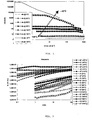
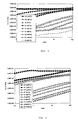
- the rheological behaviour of the polybutene-based fluid polymer depends on the shear rate (deformation rate), the frequency of load application and the temperature, according to the following preferred characterization:
- An extremely useful fabric for the purposes of the present invention is preferably obtained on a multi-axial loom and is made up of two or more layers of ballistic fibre interconnected by a polymeric film and optionally sewing threads.
- the fabric is bi-axial and has been made preferably with 1100 dtex aramidic yarn; during the deposition phase of the ballistic threads a polymeric film is conveniently inserted between the two adjacent layers of the threads themselves.
- the fabric is advantageously stabilized by means of sewing threads which bind the two layers of ballistic fibres and subsequently is worked by calendering and impregnated by a liquid polymer and pressed with temperature.
- Typical pressure values during the calendering range from 5 to 50 bar, typical temperature values range from 75 to 150°C in relation on the type of polymer inserted between the two layers of fibres.
- the values obtained by the impregnation are in a quantity ranging from 10 to 30 g/m 2 ; an optional subsequent pressure applied on the fabric impregnated with liquid polymer, conveniently effected at 5/10 bar, homogenizes the distribution of the liquid polymer onto the fabric.
- the weight of the finished fabric is typically about 500 g/m 2 .
- the fabric is impregnated by total immersion in the liquid polymer, object of the present invention, with a quantity of about 20 gr/m 2 .
- the process ends with a calendaring which is effected on hot rolls at 100°C with a pressure of 1 bar.
- the fabric is made on traditional weft-warp looms, as untraditional semi-unidirectional fabric, impregnated with liquid polymer and subsequently optionally pressed under heat.
- a film comprising a polymer selected from thermoplastic, thermosetting, elastomeric, crosslinkable or mixtures thereof, can be laminated on the surfaces of the fabric wet with the liquid resins by means of heat and temperature.
- the fabric is made up of two or more overlying layers of unidirectional or semi-unidirectional fibres (with an interlacing point angle typically ranging from 80 to 100°), between which a polymeric film is inserted; the fabric is treated with the liquid polymer of the invention and calendered and/or pressed.
- body armour is provided, in particular a bullet-proof vest, made with the ballistic composite material as described above.
- protective end-products or articles comprising the ballistic composite material of the invention.
- a flexibility index was defined according to the following test: two flat horizontal surfaces are placed on top of one another, each being connected on one side by a zip. The dimension of the surfaces is equal to 660 x 50 mm.
- the above surfaces are supported by a vertical structure which crosses the horizontal surfaces on one side of the orientation surface.
- the network of fibres having dimensions of 400 x 400 mm is inserted between the two horizontal surfaces with one side parallel to the side of the horizontal surface.
- the distance from the side of the fibre network to the first side of the horizontal surface is equal to 100 mm.
- the flexibility index is the ratio of the horizontal distance of one side of a non-folded panel from the vertical surface and the distance of a folded panel from the vertical surface.
- the impact of the bullet induces a deformation of the ballistic protection in the rear side whose value is inversely correlated to the quantity of energy absorbed by the protection itself.
- the values of these deformations are taken in a plasticine in a way well known to the person skilled on the art.
- a greater energy absorbed by the protection corresponds to a lesser energy transferred to the wearer of the vest.
- the measuring systems were:
- the ballistic panel was prepared by superimposing 8 layers of +/- 45° biaxial fabric, an aramid 1100 dtex was used as ballistic yarn.
- a non-ballistic yarn was used to keep the fibres correctly aligned in each single layer.
- the weight for each layer was 475 g/m 2 .
- the total weight was 3,8 kg/m 2 .
- the main properties of the viscous liquid fluid are the following:
- the index of foldability or flexibility index for each layer was 0.400.
- the index of foldability or flexibility index for the pack was 0.433.
- the ballistic test was carried out following NIJ 01.01.003 class II shooting with 0.357 158 grs SJSP bullet. No perforation occurred.
- the registered trauma in the plasticine was 34 mm.
- the index of foldability for each single layer was 0.480;
- the index of foldability for the pack was 0.581
- the ballistic test was carried out following NIJ 01.01.003 for the class II shooting with 0.357 158 grs SJSP bullet.
- the index of foldability for each single layer was 0.127;
- the index of foldability for the pack was 0.133.
- the ballistic pack was made by simple superimposition of the said 23 layers. Total weight was 4,530 kg/m 2 The ballistic test was carried out following NIJ 01.01.003 for the class II shooting with 0.357 158 grs SJSP bullet. No perforation occurred. The registered trauma in the plasticine was 41 mm.
- Style 802 (8.5 treads /cm in warp - 8.5 treads/cm in weft - count 1100 dtex - weight 190 g/m 2 in loom state) were impregnated with 7 g/m 2 of liquid viscous fluid as per example 1.
- the index of foldability for each layer was 0.127.
- the index of foldability for the pack was 0.133.
- the ballistic pack was made by superimposition of said 24 layers of fibres. Total weight was 4,728 kg/m 2
- the ballistic test was carried out following NIJ 01.01.003 for the class II shooting with 0.357 158 grs SJSP bullet. No perforation occurred.
- the registered trauma in the plasticine was 36 mm
- the panel was central cross stitched with two small stitches of 50 mm. each.
- the weight was 4,560 kg/m 2 .
- the index of foldability for the pack was 0.233
- the ballistic test was made as per example 3.
- the pack was made by superimposing 24 layers and subsequently and stitching with two peripheric sewing with aramid yarn.
- the index of foldability for the pack was 0,743.
- the test was carried out as per example 3.
- the registered trauma was 43 mm.
- the pack was sewn in a pattern of 40x40 mm with aramid yarn at 45° degrees in respect to the direction of the ballistic fibres.
- the ballistic test was carried out following NIJ 01.01.003 shooting with 0.357 158 grs SJSP bullet. No perforation was registered. The trauma was 39 mm.
- the fabric is made with aramid yarn 930 dtex.
- a plastomeric film was inserted between the two substrates making the single layer.
- the two substrates have the ballistic fibres forming an angle of about 90°.
- the pack was made by superimposition of the said 22 layer to achieve a total weight of 4,950/kg per square meter.
- the index of foldability for each layer was 0.307.
- the index of foldability of the pack was 0.373.
- the ballistic test was carried out following the NJY 01.01.003 with class III A with a 0,44 Magnum caliber SJSP bullet. No penetration occurred and the trauma was 41 mm.
- the index of foldability for each layer was 0.233
- the ballistic test was carried out following NIJ 01.01.003 class III A with a 0,44 Magnum caliber SJSP bullet. The test failed because the trauma exceeded the requirements of the specifications.
- the total weight was 5.065 m 2 .
- the index of foldability of each layer was 0.307.
- the index of foldability of the pack was 0.373.
- the ballistic test was carried out following NIJ 01.01.003 for the class II with 0.357 Magnun caliber SJSP bullet. No perforation was registered. The trauma was 38 mm.
- the quantity of polymer was 10 g/m 2 .
- the total weight was 5, 130 kg/m 2 .
- the index of foldability for each layer was 0.500.
- the index of foldability of the pack was 0.443.
- the test was carried out following NIJ 01.01.003 class II with a 0,357 Magnum caliber SJSP bullet. No penetration occurred and the trauma was 38 mm.
- a unidirectional construction with layer crossing at 90° and weighting 263 g/m 2 was made with 1100 dtex aramide fibres.
- the total weight was 4,470 kg/m 2 .
- the index of foldability of each single layer was 0.447
- the index of foldability of the pack was 0.383.
- the pack was tested in order to find the ballistic limit with 9 mm FMJ bullet DM 11A 1 B 2 .
- V 50 limit was 475 m/sec.
- the textile construction as per example 12 was impregnated by using a thermoplastic elastomer named Kraton D-1161 (replacing Kraton D-1107 but having similar mechanical features) which is well known to be a very performing matrix in Ballistic Construction.
- the quantity of resin was 7 g/m 2 .
- the total weight was 4.488 kg/m 2 .
- the index of foldability for the single layer was 0.717.
- the index of foldability of the pack was 0.740.
- the stratification was tested in order to achieve the limit of the perforation rate with a projectile of 9 mm.
- the ballistic limit found was 473 m/sec.
- the ballistic properties does not change.
- the foldability index is greater when a viscoelastic liquid is applied (0.127 compared to 0.233).
- the ballistic properties are superior when the liquid is applied to (the non coated panel failed the test related to the trauma) even with inferior total specific weight.
- the trauma is of 36 mm vs. 43 mm in the peripheral stitched fabric, of 39 mm in the quilt stitched fabric and of 44 mm in the central stitched fabric.
- Foldability index is comparable (0.307 compared to 0.233) when viscoelastic liquid fluid is applied and the ballistic properties are superior when the polymeric liquid is applied (the non coated panel failed the test related to the trauma) even with inferior total specific weight.
Landscapes
- Engineering & Computer Science (AREA)
- Ceramic Engineering (AREA)
- General Engineering & Computer Science (AREA)
- Aiming, Guidance, Guns With A Light Source, Armor, Camouflage, And Targets (AREA)
- Laminated Bodies (AREA)
- Reinforced Plastic Materials (AREA)
- Polymers With Sulfur, Phosphorus Or Metals In The Main Chain (AREA)
Claims (29)
- Flexibles ballistisches Antipenetrations-Kompositmaterial, umfassend eine Mehrzahl von ballistischen Fasern, angeordnet in überlagernden Lagen, wobei mindestens ein Teil der Fasern mit einem Polymer benetzt oder imprägniert ist, dadurch gekennzeichnet, dass das Polymer in Form einer viskosen oder viskoelastischen Flüssigkeit vorliegt, welche ihre Fluidcharakteristika beibehält, derart, dass das flexible ballistische Antipenetrations-Kompositmaterial dauerhaft mit dem Polymer benetzt bleibt.
- Flexibles ballistisches Antipenetrations-Kompositmaterial nach Anspruch 1, wobei das Polymer eine nicht-Newton'sche viskoelastische Flüssigkeit ist.
- Flexibles ballistisches Antipenetrations-Kompositmaterial nach einem der Ansprüche 1-2, wobei das Polymer in Form einer viskoelastischen Flüssigkeit vorliegt, wobei die dissipative Komponente bezüglich der elastischen Komponente größer, G">G', ist.
- Flexibles ballistisches Antipenetrations-Kompositmaterial nach Anspruch 1, wobei das Polymer eine dynamische Viskosität im Bereich von 250 bis 25 000 000 mPa·s bei 25 °C aufweist.
- Flexibles ballistisches Antipenetrations-Kompositmaterial nach einem der Ansprüche 1-4, wobei das Polymer ein Molekulargewicht im Bereich von 250 bis 50 000 aufweist.
- Flexibles ballistisches Antipenetrations-Kompositmaterial nach einem der Ansprüche 1-5, wobei das Polymer eine kinematische Viskosität von mehr als 200 cST bei 25 °C aufweist.
- Flexibles ballistisches Antipenetrations-Kompositmaterial nach einem der Ansprüche 1-6, wobei das Polymer ausgewählt ist aus der Gruppe, welche Polyolefine, Polyvinylalkohol-Derivate, Polyisoprene, Polybutadiene, Polybutene, Polyisobutylene, Polyester, Polyacrylate, Polyamide, Polysulfone, Polysulfide; Polyurethane, Polycarbonate, Fluorkohlenstoffe, Silicone, Glycole, flüssige Block-Copolymere, Polyacryl-, Epoxid-, Phenol-, Flüssigkautschuke und deren Mischungen umfasst.
- Flexibles ballistisches Antipenetrations-Kompositmaterial nach einem der Ansprüche 1-7, wobei das Polymer bis hinab zu einer Temperatur von -128 °C in Flüssigform vorliegt.
- Flexibles ballistisches Antipenetrations-Kompositmaterial nach einem der Ansprüche 1-8, wobei das Polymer eine Flüssigkeit mit thixotropem Verhalten ist.
- Flexibles ballistisches Antipenetrations-Kompositmaterial nach einem der Ansprüche 1-9, wobei die Fasern in einer Form angeordnet sind, die ausgewählt ist aus einem Schuss-Kette-Gewebe, einer unidirektionalen Struktur, einer semi-unidirektionalen Struktur, einer multidirektionalen Struktur, einer semi-multidirektionalen Struktur, einer bi- oder multiaxialen Struktur oder Kombinationen hiervon.
- Flexibles ballistisches Antipenetrations-Kompositmaterial nach einem der Ansprüche 1-10, wobei die ballistischen Fasern ausgewählt sind aus der Gruppe, welche Polyvinylalkohol-, Polyacrylnitril-, Polyethylen-, Polybenzobisoxazol-(PBO-), Polyimid-, Polyaramid-, Polyamid-, heterozyklische Aramid-, Kohlenstoff- oder Glasfasern und Mischungen hiervon umfasst.
- Flexibles ballistisches Antipenetrations-Kompositmaterial nach einem der Ansprüche 1-11, wobei die Festigkeit der ballistischen Fasern mindestens 15 g/den beträgt.
- Flexibles ballistisches Antipenetrations-Kompositmaterial nach einem der Ansprüche 1-12, wobei der Modul der ballistischen Fasern mindestens 200 g/den beträgt.
- Flexibles ballistisches Antipenetrations-Kompositmaterial nach einem der Ansprüche 1-13, wobei die Energie bis zum Bruch der ballistischen Fasern mindestens 10 J/g beträgt.
- Flexibles ballistisches Antipenetrations-Kompositmaterial nach einem der Ansprüche 1-14, wobei die Feinheit der ballistischen Fasern im Bereich von 50 bis 3000 dtex liegt und/oder die Feinheit jeder Fibrille im Bereich von 0,5 bis 20 dtex liegt.
- Flexibles ballistisches Antipenetrations-Kompositmaterial nach einem der Ansprüche 1-15, wobei ein Teil der ballistischen Fasern in Kontakt steht mit einem thermoplastischen, duroplastischen, elastomeren, vernetzbaren Polymer und deren Mischungen.
- Flexibles ballistisches Antipenetrations-Kompositmaterial nach einem der Ansprüche 1-16, wobei mindestens ein Teil der ballistischen Fasern mit dem Polymer in Form einer viskosen oder viskoelastischen Flüssigkeit imprägniert ist.
- Flexibles ballistisches Antipenetrations-Kompositmaterial nach einem der Ansprüche 1-17, ferner umfassend einen Polymerfilm zwischen oder außenseitig einer oder mehrerer der Lagen von ballistischen Fasern.
- Flexibles ballistisches Antipenetrations-Kompositmaterial nach Anspruch 18, wobei der Polymerfilm ein Polymer oder ein Harz umfasst, die jeweils unabhängig voneinander thermoplastisch oder duroplastisch, vernetzbar, elastomer und Mischungen hiervon sein können.
- Flexibles ballistisches Antipenetrations-Kompositmaterial nach einem der Ansprüche 1-19, wobei mindestens zwei Lagen von Fasern mittels Verbindungsmitteln aneinander gebunden sind.
- Flexibles ballistisches Antipenetrations-Kompositmaterial nach Anspruch 20, wobei die Verbindungsmittel Garne oder Monofilamente umfassen.
- Flexibles ballistisches Antipenetrations-Kompositmaterial nach einem der Ansprüche 1-21, dadurch gekennzeichnet, dass das Polymer in Flüssigform Polybuten ist.
- Körperpanzer, dadurch gekennzeichnet, dass er ein flexibles ballistisches Antipenetrations-Kompositmaterial nach einem der vorstehenden Ansprüche 1-22 umfasst.
- Körperpanzer nach Anspruch 23, bestehend aus einer kugelsicheren Weste.
- Verwendung einer Faser, imprägniert oder benetzt mit einem fluiden Polymer in Form einer viskosen oder viskoelastischen Flüssigkeit, für die Herstellung eines ballistischen oder Antipenetrations-Artikels nach einem der Ansprüche 23-24.
- Verfahren zur Herstellung eines flexiblen ballistischen Antipenetrations-Kompositmaterials nach einem der Ansprüche 1-22, umfassend die Anwendung eines Polymers, dadurch gekennzeichnet, dass das Polymer in Form einer viskosen oder viskoelastischen Flüssigkeit vorliegt, auf mindestens einen Teil der ballistischen Faser.
- Verfahren nach Anspruch 26, umfassend das Weben von ballistischen Fasern, die Imprägnierung des erzeugten Gewebes mit einem viskosen oder viskoelastischen Flüssigpolymer und das Kalandrieren des imprägnierten Gewebes.
- Verfahren nach Anspruch 26, wobei das Garn vor der Web- und Kalandrierphase mit einem Flüssigpolymer imprägniert wird.
- Verwendung eines Polymers in Form einer viskosen oder viskoelastischen Flüssigkeit als Finishing- oder Schlichtemittel bei der Herstellung oder beim Weben von ballistischen Endartikeln oder Geweben nach einem der Ansprüche 23-24.
Priority Applications (2)
| Application Number | Priority Date | Filing Date | Title |
|---|---|---|---|
| SI200331031T SI1595105T1 (sl) | 2003-02-19 | 2003-10-20 | Antipenetracijski prozen kompozitni material |
| CY071101519T CY1107508T1 (el) | 2003-02-19 | 2007-11-28 | Ευλυγιστο συνθετο υλικο εναντιον της διαπερασεως |
Applications Claiming Priority (3)
| Application Number | Priority Date | Filing Date | Title |
|---|---|---|---|
| ITMI20030295 | 2003-02-19 | ||
| ITMI20030295 ITMI20030295A1 (it) | 2003-02-19 | 2003-02-19 | Materiale composito flessibile resistente alla penetrazione |
| PCT/EP2003/011645 WO2004074761A1 (en) | 2003-02-19 | 2003-10-20 | Anti-penetration flexible composite material |
Publications (3)
| Publication Number | Publication Date |
|---|---|
| EP1595105A1 EP1595105A1 (de) | 2005-11-16 |
| EP1595105B1 EP1595105B1 (de) | 2007-08-29 |
| EP1595105B9 true EP1595105B9 (de) | 2008-05-07 |
Family
ID=32894159
Family Applications (1)
| Application Number | Title | Priority Date | Filing Date |
|---|---|---|---|
| EP03772241A Expired - Lifetime EP1595105B9 (de) | 2003-02-19 | 2003-10-20 | Undurchdringbarer flexibeler verbundwerkstoff |
Country Status (14)
| Country | Link |
|---|---|
| US (1) | US20060040576A1 (de) |
| EP (1) | EP1595105B9 (de) |
| AT (1) | ATE371846T1 (de) |
| AU (1) | AU2003279303A1 (de) |
| BR (1) | BR0318101A (de) |
| CA (1) | CA2515066C (de) |
| CY (1) | CY1107508T1 (de) |
| DE (1) | DE60316039T2 (de) |
| DK (1) | DK1595105T3 (de) |
| ES (1) | ES2294335T3 (de) |
| IL (1) | IL170018A (de) |
| IT (1) | ITMI20030295A1 (de) |
| PT (1) | PT1595105E (de) |
| WO (1) | WO2004074761A1 (de) |
Families Citing this family (27)
| Publication number | Priority date | Publication date | Assignee | Title |
|---|---|---|---|---|
| EP1625343B1 (de) | 2003-05-08 | 2013-01-16 | Teijin Aramid GmbH | Flexible penetrationsbeständige verpackung und ihre verwendung |
| US20050282007A1 (en) * | 2004-06-21 | 2005-12-22 | Sauer Bryan B | Ballistic performance enhancement of fiber structure |
| US7776401B2 (en) | 2005-06-21 | 2010-08-17 | E.I. Du Pont De Nemours And Company | Method for treating fabric with viscous liquid polymers |
| US8008217B2 (en) * | 2005-06-21 | 2011-08-30 | E.I. Du Pont De Nemours And Company | Fabrics with strain-responsive viscous liquid polymers |
| JP5102775B2 (ja) * | 2005-12-08 | 2012-12-19 | イー・アイ・デュポン・ドウ・ヌムール・アンド・カンパニー | 歪み応答性粘稠液体ポリマーを有する多軸布帛 |
| US7373887B2 (en) * | 2006-07-01 | 2008-05-20 | Jason Stewart Jackson | Expanding projectile |
| US7966937B1 (en) | 2006-07-01 | 2011-06-28 | Jason Stewart Jackson | Non-newtonian projectile |
| US8124548B2 (en) * | 2007-12-21 | 2012-02-28 | Honeywell International Inc. | Low weight and high durability soft body armor composite using silicone-based topical treatments |
| JP2010143208A (ja) * | 2008-12-22 | 2010-07-01 | Toyota Boshoku Corp | エアバッグ基布並びにそれを用いたエアバッグ及びエアバッグの製造方法 |
| IT1394844B1 (it) * | 2009-07-09 | 2012-07-20 | Citterio Spa Flli | Struttura per la realizzazione di protezioni balistiche |
| DE102009051436B4 (de) | 2009-10-30 | 2015-07-16 | Rheinmetall Landsysteme Gmbh | Schutzsystem für Fahrzeuge und andere Objekte |
| DE102009046402A1 (de) | 2009-11-04 | 2011-05-05 | SB LiMotive Company Ltd., Suwon | Batteriesystem mit erhöhter Gehäuse-Durchstossfestigkeit |
| IT1399933B1 (it) | 2010-05-18 | 2013-05-09 | Flii Citterio Spa | Struttura tessile resistente all'impatto di proiettili e alla penetrazione di elementi taglienti e/o appuntiti e relativo metodo di produzione |
| EP2665986B1 (de) * | 2011-01-18 | 2014-12-10 | Teijin Aramid B.V. | Schussfester artikel mit einem selbstvernetzenden acrylharz und/oder einem vernetzbaren acrylharz und verfahren zur herstellung dieses artikels |
| EP2742311B1 (de) | 2011-08-11 | 2015-08-05 | F.LLI Citterio | Verbesserte mehrlagige struktur für ballistischen schutz |
| GB2496680B (en) | 2011-11-17 | 2015-07-08 | Bae Systems Plc | Protective material arrangement |
| GB2496679B (en) | 2011-11-17 | 2016-05-25 | Bae Systems Plc | Fibrous armour material |
| GB2496678B (en) | 2011-11-17 | 2015-07-15 | Bae Systems Plc | Protective material |
| US20130219600A1 (en) * | 2012-02-23 | 2013-08-29 | Multi Axial, Llc | Multi-layer non - woven fabric multi-use material for ballistic and stab resistance comprising impregnated and oriented fiber non - woven fabric layers; manufacturing, method, and protection garment produced thereby |
| ITMI20122085A1 (it) * | 2012-12-06 | 2014-06-07 | Saati Spa | Struttura tessile per la protezione balistica e metodo per la sua produzione. |
| US10442167B2 (en) * | 2013-12-18 | 2019-10-15 | Hyosung Corporation | Ballistic cloth using a unidirectional-oriented aramid sheet and polyethylene film and method for manufacturing the same |
| US9909240B2 (en) * | 2014-11-04 | 2018-03-06 | Honeywell International Inc. | UHMWPE fiber and method to produce |
| US20160281272A1 (en) * | 2015-03-26 | 2016-09-29 | Honeywell International Inc. | Ballistic resistant composite material |
| ITMI20150574A1 (it) | 2015-04-21 | 2016-10-21 | F Lli Citterio Spa | Struttura con tessuto traspirante per la realizzazione di protezioni balistiche e antitaglio |
| US11519698B1 (en) * | 2017-03-27 | 2022-12-06 | United States Of America As Represented By The Secretary Of The Air Force | Soft anti-ballistic composite |
| US11543214B2 (en) | 2017-03-31 | 2023-01-03 | Società per Azioni Fratelli Citterio | Ballistic laminate comprising textile elements in which ballistic threads intersect non-ballistic threads |
| US11137231B2 (en) | 2018-12-19 | 2021-10-05 | Point Blank Enterprises, Inc. | Soft armor fabrication |
Family Cites Families (15)
| Publication number | Priority date | Publication date | Assignee | Title |
|---|---|---|---|---|
| ES461189A1 (es) * | 1977-07-29 | 1978-06-01 | Vallcorba Tura | Procedimiento de obtencion de un cuerpo de naturaleza textilresistente a impactos y explosiones. |
| US4173138A (en) | 1977-10-28 | 1979-11-06 | Standun, Inc. | Can bodymaker having improved ram support and drive |
| US4623574A (en) | 1985-01-14 | 1986-11-18 | Allied Corporation | Ballistic-resistant composite article |
| NL8600449A (nl) | 1986-02-22 | 1987-09-16 | Delft Tech Hogeschool | Pantserplaat-komposiet met keramische opvanglaag. |
| WO1991012136A1 (en) * | 1990-02-16 | 1991-08-22 | Allied-Signal Inc. | Role of molded, ballistic resistant cloth and method of making same |
| US6003424A (en) * | 1990-03-08 | 1999-12-21 | Alliedsignal Inc. | Armor systems |
| US5090053A (en) | 1991-01-03 | 1992-02-25 | Dalton Enterprises | Composite shock absorbing garment |
| US6268301B1 (en) * | 1992-03-25 | 2001-07-31 | Toyobo Co., Ltd. | Ballistic-resistant article and process for making the same |
| US5466503A (en) * | 1992-05-07 | 1995-11-14 | Milliken Research Corporation | Energy absorption of a high tenacity fabric during a ballistic event |
| NO944338L (no) * | 1993-11-25 | 1995-05-26 | Akzo Nobel Nv | Materiale for antiballistisk kroppsbeskyttelse |
| NL1000598C2 (nl) * | 1995-06-20 | 1996-12-23 | Dsm Nv | Antiballistisch vormdeel en een werkwijze voor de vervaardiging van het vormdeel. |
| AU5085998A (en) * | 1996-10-25 | 1998-05-22 | E.I. Du Pont De Nemours And Company | Ballistic structure |
| BR0214033A (pt) * | 2001-11-10 | 2004-10-13 | Teijin Twaron Gmbh | Vestimenta de proteção |
| US6737368B2 (en) * | 2001-12-19 | 2004-05-18 | E. I. Du Pont De Nemours And Company | Multiple threat penetration resistant articles |
| US7226878B2 (en) * | 2003-05-19 | 2007-06-05 | The University Of Delaware | Advanced body armor utilizing shear thickening fluids |
-
2003
- 2003-02-19 IT ITMI20030295 patent/ITMI20030295A1/it unknown
- 2003-10-20 BR BR0318101A patent/BR0318101A/pt not_active IP Right Cessation
- 2003-10-20 ES ES03772241T patent/ES2294335T3/es not_active Expired - Lifetime
- 2003-10-20 PT PT03772241T patent/PT1595105E/pt unknown
- 2003-10-20 DE DE2003616039 patent/DE60316039T2/de not_active Expired - Lifetime
- 2003-10-20 CA CA 2515066 patent/CA2515066C/en not_active Expired - Lifetime
- 2003-10-20 DK DK03772241T patent/DK1595105T3/da active
- 2003-10-20 AU AU2003279303A patent/AU2003279303A1/en not_active Abandoned
- 2003-10-20 WO PCT/EP2003/011645 patent/WO2004074761A1/en not_active Ceased
- 2003-10-20 US US10/519,954 patent/US20060040576A1/en not_active Abandoned
- 2003-10-20 AT AT03772241T patent/ATE371846T1/de not_active IP Right Cessation
- 2003-10-20 EP EP03772241A patent/EP1595105B9/de not_active Expired - Lifetime
-
2005
- 2005-08-01 IL IL170018A patent/IL170018A/en active IP Right Grant
-
2007
- 2007-11-28 CY CY071101519T patent/CY1107508T1/el unknown
Also Published As
| Publication number | Publication date |
|---|---|
| BR0318101A (pt) | 2006-02-07 |
| DE60316039D1 (de) | 2007-10-11 |
| DK1595105T3 (da) | 2008-01-02 |
| AU2003279303A1 (en) | 2004-09-09 |
| CA2515066A1 (en) | 2004-09-02 |
| HK1088945A1 (en) | 2006-11-17 |
| PT1595105E (pt) | 2007-12-07 |
| ATE371846T1 (de) | 2007-09-15 |
| US20060040576A1 (en) | 2006-02-23 |
| CY1107508T1 (el) | 2013-03-13 |
| WO2004074761A1 (en) | 2004-09-02 |
| EP1595105A1 (de) | 2005-11-16 |
| ES2294335T3 (es) | 2008-04-01 |
| EP1595105B1 (de) | 2007-08-29 |
| IL170018A (en) | 2011-04-28 |
| ITMI20030295A1 (it) | 2004-08-20 |
| DE60316039T2 (de) | 2008-05-21 |
| CA2515066C (en) | 2010-09-21 |
Similar Documents
| Publication | Publication Date | Title |
|---|---|---|
| EP1595105B9 (de) | Undurchdringbarer flexibeler verbundwerkstoff | |
| EP2270416B1 (de) | Ballistische Verbundstoffstrukturen für Hartpanzerungsanwendungen | |
| US5788907A (en) | Fabrics having improved ballistic performance and processes for making the same | |
| KR101352326B1 (ko) | 액체에 대한 흡수 저항성의 유연한 탄도 복합체, 이의 제조및 이로부터 물품을 제조하는 방법 | |
| CA2716885C (en) | Low weight and high durability soft body armor composite using topical wax coatings | |
| US20080119099A1 (en) | Fragment and stab resistant flexible material with reduced trauma effect | |
| MX2007000256A (es) | Ensamble flexible resistente a la balistica. | |
| WO2012016046A1 (en) | Composites and ballistic resistant armor articles containing the composites | |
| US6022601A (en) | Penetration-resistant composition | |
| EP3071922B1 (de) | Verbundstoffe und kugelsichere panzerungsartikel mit diesen verbundstoffen | |
| HK1088945B (en) | Anti-penetration flexible composite material | |
| EP1913330A2 (de) | Erhöhte ballistische leistung von mit polymerstreifen beschichteten stoffen | |
| WO2016169691A1 (en) | Structure with breathable fabric for the production of ballistic and stab-resistant protections |
Legal Events
| Date | Code | Title | Description |
|---|---|---|---|
| PUAI | Public reference made under article 153(3) epc to a published international application that has entered the european phase |
Free format text: ORIGINAL CODE: 0009012 |
|
| 17P | Request for examination filed |
Effective date: 20050726 |
|
| AK | Designated contracting states |
Kind code of ref document: A1 Designated state(s): AT BE BG CH CY CZ DE DK EE ES FI FR GB GR HU IE IT LI LU MC NL PT RO SE SI SK TR |
|
| AX | Request for extension of the european patent |
Extension state: AL LT LV MK |
|
| DAX | Request for extension of the european patent (deleted) | ||
| REG | Reference to a national code |
Ref country code: HK Ref legal event code: DE Ref document number: 1088945 Country of ref document: HK |
|
| GRAP | Despatch of communication of intention to grant a patent |
Free format text: ORIGINAL CODE: EPIDOSNIGR1 |
|
| GRAS | Grant fee paid |
Free format text: ORIGINAL CODE: EPIDOSNIGR3 |
|
| GRAA | (expected) grant |
Free format text: ORIGINAL CODE: 0009210 |
|
| AK | Designated contracting states |
Kind code of ref document: B1 Designated state(s): AT BE BG CH CY CZ DE DK EE ES FI FR GB GR HU IE IT LI LU MC NL PT RO SE SI SK TR |
|
| REG | Reference to a national code |
Ref country code: GB Ref legal event code: FG4D |
|
| REG | Reference to a national code |
Ref country code: CH Ref legal event code: EP |
|
| REG | Reference to a national code |
Ref country code: IE Ref legal event code: FG4D |
|
| REF | Corresponds to: |
Ref document number: 60316039 Country of ref document: DE Date of ref document: 20071011 Kind code of ref document: P |
|
| REG | Reference to a national code |
Ref country code: RO Ref legal event code: EPE |
|
| REG | Reference to a national code |
Ref country code: PT Ref legal event code: SC4A Free format text: AVAILABILITY OF NATIONAL TRANSLATION Effective date: 20071128 |
|
| REG | Reference to a national code |
Ref country code: SE Ref legal event code: TRGR |
|
| REG | Reference to a national code |
Ref country code: CH Ref legal event code: NV Representative=s name: A. BRAUN, BRAUN, HERITIER, ESCHMANN AG PATENTANWAE |
|
| REG | Reference to a national code |
Ref country code: DK Ref legal event code: T3 |
|
| REG | Reference to a national code |
Ref country code: GR Ref legal event code: EP Ref document number: 20070403587 Country of ref document: GR |
|
| REG | Reference to a national code |
Ref country code: EE Ref legal event code: FG4A Ref document number: E001710 Country of ref document: EE Effective date: 20071129 |
|
| REG | Reference to a national code |
Ref country code: ES Ref legal event code: FG2A Ref document number: 2294335 Country of ref document: ES Kind code of ref document: T3 |
|
| REG | Reference to a national code |
Ref country code: HK Ref legal event code: GR Ref document number: 1088945 Country of ref document: HK |
|
| ET | Fr: translation filed | ||
| REG | Reference to a national code |
Ref country code: CH Ref legal event code: PFA Owner name: F.LLI CITTERIO S.P.A. Free format text: F.LLI CITTERIO S.P.A.#VIA C. CATTANEO, 10#20052 MONZA (MILANO) (IT) -TRANSFER TO- F.LLI CITTERIO S.P.A.#VIA C. CATTANEO, 10#20052 MONZA (MILANO) (IT) |
|
| PLBE | No opposition filed within time limit |
Free format text: ORIGINAL CODE: 0009261 |
|
| STAA | Information on the status of an ep patent application or granted ep patent |
Free format text: STATUS: NO OPPOSITION FILED WITHIN TIME LIMIT |
|
| 26N | No opposition filed |
Effective date: 20080530 |
|
| REG | Reference to a national code |
Ref country code: EE Ref legal event code: HC1A Ref document number: E001710 Country of ref document: EE |
|
| REG | Reference to a national code |
Ref country code: GB Ref legal event code: 732E |
|
| REG | Reference to a national code |
Ref country code: HU Ref legal event code: AG4A Ref document number: E004067 Country of ref document: HU |
|
| PGFP | Annual fee paid to national office [announced via postgrant information from national office to epo] |
Ref country code: CH Payment date: 20081031 Year of fee payment: 6 Ref country code: DK Payment date: 20081013 Year of fee payment: 6 Ref country code: IE Payment date: 20081015 Year of fee payment: 6 Ref country code: LU Payment date: 20081031 Year of fee payment: 6 |
|
| PGFP | Annual fee paid to national office [announced via postgrant information from national office to epo] |
Ref country code: AT Payment date: 20081013 Year of fee payment: 6 Ref country code: ES Payment date: 20081121 Year of fee payment: 6 Ref country code: FI Payment date: 20081014 Year of fee payment: 6 |
|
| PGFP | Annual fee paid to national office [announced via postgrant information from national office to epo] |
Ref country code: SE Payment date: 20081022 Year of fee payment: 6 |
|
| PGFP | Annual fee paid to national office [announced via postgrant information from national office to epo] |
Ref country code: EE Payment date: 20090909 Year of fee payment: 7 Ref country code: MC Payment date: 20090929 Year of fee payment: 7 |
|
| PGFP | Annual fee paid to national office [announced via postgrant information from national office to epo] |
Ref country code: SK Payment date: 20090925 Year of fee payment: 7 Ref country code: TR Payment date: 20090924 Year of fee payment: 7 |
|
| PGFP | Annual fee paid to national office [announced via postgrant information from national office to epo] |
Ref country code: CZ Payment date: 20091006 Year of fee payment: 7 |
|
| PGFP | Annual fee paid to national office [announced via postgrant information from national office to epo] |
Ref country code: RO Payment date: 20090914 Year of fee payment: 7 Ref country code: SI Payment date: 20090915 Year of fee payment: 7 Ref country code: BE Payment date: 20090917 Year of fee payment: 7 |
|
| PGFP | Annual fee paid to national office [announced via postgrant information from national office to epo] |
Ref country code: PT Payment date: 20091020 Year of fee payment: 7 Ref country code: HU Payment date: 20081118 Year of fee payment: 6 Ref country code: CY Payment date: 20091002 Year of fee payment: 7 Ref country code: BG Payment date: 20091019 Year of fee payment: 7 |
|
| PGFP | Annual fee paid to national office [announced via postgrant information from national office to epo] |
Ref country code: GR Payment date: 20090915 Year of fee payment: 7 |
|
| REG | Reference to a national code |
Ref country code: CH Ref legal event code: PL |
|
| EUG | Se: european patent has lapsed | ||
| REG | Reference to a national code |
Ref country code: DK Ref legal event code: EBP |
|
| REG | Reference to a national code |
Ref country code: IE Ref legal event code: MM4A |
|
| PG25 | Lapsed in a contracting state [announced via postgrant information from national office to epo] |
Ref country code: HU Free format text: LAPSE BECAUSE OF NON-PAYMENT OF DUE FEES Effective date: 20091021 |
|
| PG25 | Lapsed in a contracting state [announced via postgrant information from national office to epo] |
Ref country code: AT Free format text: LAPSE BECAUSE OF NON-PAYMENT OF DUE FEES Effective date: 20091020 Ref country code: FI Free format text: LAPSE BECAUSE OF NON-PAYMENT OF DUE FEES Effective date: 20091020 |
|
| PG25 | Lapsed in a contracting state [announced via postgrant information from national office to epo] |
Ref country code: CH Free format text: LAPSE BECAUSE OF NON-PAYMENT OF DUE FEES Effective date: 20091031 Ref country code: LI Free format text: LAPSE BECAUSE OF NON-PAYMENT OF DUE FEES Effective date: 20091031 Ref country code: IE Free format text: LAPSE BECAUSE OF NON-PAYMENT OF DUE FEES Effective date: 20091020 |
|
| PG25 | Lapsed in a contracting state [announced via postgrant information from national office to epo] |
Ref country code: DK Free format text: LAPSE BECAUSE OF NON-PAYMENT OF DUE FEES Effective date: 20091031 |
|
| REG | Reference to a national code |
Ref country code: ES Ref legal event code: FD2A Effective date: 20110301 |
|
| PG25 | Lapsed in a contracting state [announced via postgrant information from national office to epo] |
Ref country code: LU Free format text: LAPSE BECAUSE OF NON-PAYMENT OF DUE FEES Effective date: 20091020 |
|
| REG | Reference to a national code |
Ref country code: PT Ref legal event code: MM4A Free format text: LAPSE DUE TO NON-PAYMENT OF FEES Effective date: 20110420 |
|
| BERE | Be: lapsed |
Owner name: F.LLI CITTERIO S.P.A. Effective date: 20101031 |
|
| PG25 | Lapsed in a contracting state [announced via postgrant information from national office to epo] |
Ref country code: MC Free format text: LAPSE BECAUSE OF NON-PAYMENT OF DUE FEES Effective date: 20101031 Ref country code: SE Free format text: LAPSE BECAUSE OF NON-PAYMENT OF DUE FEES Effective date: 20091021 |
|
| REG | Reference to a national code |
Ref country code: EE Ref legal event code: MM4A Ref document number: E001710 Country of ref document: EE Effective date: 20101031 |
|
| REG | Reference to a national code |
Ref country code: SK Ref legal event code: MM4A Ref document number: E 2734 Country of ref document: SK Effective date: 20101020 |
|
| PG25 | Lapsed in a contracting state [announced via postgrant information from national office to epo] |
Ref country code: PT Free format text: LAPSE BECAUSE OF NON-PAYMENT OF DUE FEES Effective date: 20110420 Ref country code: EE Free format text: LAPSE BECAUSE OF NON-PAYMENT OF DUE FEES Effective date: 20101031 Ref country code: ES Free format text: LAPSE BECAUSE OF NON-PAYMENT OF DUE FEES Effective date: 20110228 Ref country code: GR Free format text: LAPSE BECAUSE OF NON-PAYMENT OF DUE FEES Effective date: 20110503 Ref country code: CZ Free format text: LAPSE BECAUSE OF NON-PAYMENT OF DUE FEES Effective date: 20101020 |
|
| PG25 | Lapsed in a contracting state [announced via postgrant information from national office to epo] |
Ref country code: BE Free format text: LAPSE BECAUSE OF NON-PAYMENT OF DUE FEES Effective date: 20101031 Ref country code: CY Free format text: LAPSE BECAUSE OF NON-PAYMENT OF DUE FEES Effective date: 20101020 Ref country code: SK Free format text: LAPSE BECAUSE OF NON-PAYMENT OF DUE FEES Effective date: 20101020 Ref country code: BG Free format text: LAPSE BECAUSE OF NON-PAYMENT OF DUE FEES Effective date: 20110531 |
|
| REG | Reference to a national code |
Ref country code: SI Ref legal event code: KO00 Effective date: 20110728 |
|
| PG25 | Lapsed in a contracting state [announced via postgrant information from national office to epo] |
Ref country code: ES Free format text: LAPSE BECAUSE OF NON-PAYMENT OF DUE FEES Effective date: 20091021 |
|
| PG25 | Lapsed in a contracting state [announced via postgrant information from national office to epo] |
Ref country code: RO Free format text: LAPSE BECAUSE OF NON-PAYMENT OF DUE FEES Effective date: 20101020 Ref country code: SI Free format text: LAPSE BECAUSE OF NON-PAYMENT OF DUE FEES Effective date: 20101021 |
|
| PG25 | Lapsed in a contracting state [announced via postgrant information from national office to epo] |
Ref country code: TR Free format text: LAPSE BECAUSE OF NON-PAYMENT OF DUE FEES Effective date: 20101020 |
|
| PG25 | Lapsed in a contracting state [announced via postgrant information from national office to epo] |
Ref country code: BG Free format text: LAPSE BECAUSE OF NON-PAYMENT OF DUE FEES Effective date: 20110630 |
|
| REG | Reference to a national code |
Ref country code: DE Ref legal event code: R082 Ref document number: 60316039 Country of ref document: DE Representative=s name: HOEGER, STELLRECHT & PARTNER PATENTANWAELTE MB, DE |
|
| PGFP | Annual fee paid to national office [announced via postgrant information from national office to epo] |
Ref country code: GB Payment date: 20151014 Year of fee payment: 13 |
|
| PGFP | Annual fee paid to national office [announced via postgrant information from national office to epo] |
Ref country code: NL Payment date: 20151012 Year of fee payment: 13 |
|
| REG | Reference to a national code |
Ref country code: FR Ref legal event code: PLFP Year of fee payment: 14 |
|
| REG | Reference to a national code |
Ref country code: NL Ref legal event code: MM Effective date: 20161101 |
|
| GBPC | Gb: european patent ceased through non-payment of renewal fee |
Effective date: 20161020 |
|
| PG25 | Lapsed in a contracting state [announced via postgrant information from national office to epo] |
Ref country code: GB Free format text: LAPSE BECAUSE OF NON-PAYMENT OF DUE FEES Effective date: 20161020 |
|
| PG25 | Lapsed in a contracting state [announced via postgrant information from national office to epo] |
Ref country code: NL Free format text: LAPSE BECAUSE OF NON-PAYMENT OF DUE FEES Effective date: 20161101 |
|
| REG | Reference to a national code |
Ref country code: FR Ref legal event code: PLFP Year of fee payment: 15 |
|
| REG | Reference to a national code |
Ref country code: FR Ref legal event code: PLFP Year of fee payment: 16 |
|
| REG | Reference to a national code |
Ref country code: DE Ref legal event code: R082 Ref document number: 60316039 Country of ref document: DE Representative=s name: HOEGER, STELLRECHT & PARTNER PATENTANWAELTE MB, DE |
|
| PGFP | Annual fee paid to national office [announced via postgrant information from national office to epo] |
Ref country code: FR Payment date: 20220908 Year of fee payment: 20 |
|
| PGFP | Annual fee paid to national office [announced via postgrant information from national office to epo] |
Ref country code: IT Payment date: 20220913 Year of fee payment: 20 Ref country code: DE Payment date: 20220621 Year of fee payment: 20 |
|
| REG | Reference to a national code |
Ref country code: DE Ref legal event code: R071 Ref document number: 60316039 Country of ref document: DE |