EP1595902A1 - Polyurethane composition having high early strength - Google Patents
Polyurethane composition having high early strength Download PDFInfo
- Publication number
- EP1595902A1 EP1595902A1 EP04102004A EP04102004A EP1595902A1 EP 1595902 A1 EP1595902 A1 EP 1595902A1 EP 04102004 A EP04102004 A EP 04102004A EP 04102004 A EP04102004 A EP 04102004A EP 1595902 A1 EP1595902 A1 EP 1595902A1
- Authority
- EP
- European Patent Office
- Prior art keywords
- polyurethane composition
- polyurethane
- composition according
- weight
- polyisocyanate
- Prior art date
- Legal status (The legal status is an assumption and is not a legal conclusion. Google has not performed a legal analysis and makes no representation as to the accuracy of the status listed.)
- Withdrawn
Links
- 239000000203 mixture Substances 0.000 title claims abstract description 115
- 239000004814 polyurethane Substances 0.000 title claims abstract description 103
- 229920002635 polyurethane Polymers 0.000 title claims abstract description 102
- 150000003077 polyols Chemical class 0.000 claims abstract description 50
- 239000005056 polyisocyanate Substances 0.000 claims abstract description 41
- 229920001228 polyisocyanate Polymers 0.000 claims abstract description 41
- 229920005862 polyol Polymers 0.000 claims abstract description 41
- -1 dimethyl ester compound Chemical class 0.000 claims abstract description 31
- 239000003054 catalyst Substances 0.000 claims abstract description 20
- 239000000758 substrate Substances 0.000 claims abstract description 18
- IQPQWNKOIGAROB-UHFFFAOYSA-N isocyanate group Chemical group [N-]=C=O IQPQWNKOIGAROB-UHFFFAOYSA-N 0.000 claims abstract description 16
- 125000001931 aliphatic group Chemical group 0.000 claims abstract description 15
- 229920005906 polyester polyol Polymers 0.000 claims abstract description 11
- 229920000642 polymer Polymers 0.000 claims abstract description 10
- 125000000217 alkyl group Chemical group 0.000 claims abstract description 9
- 238000000034 method Methods 0.000 claims abstract description 9
- 125000003118 aryl group Chemical group 0.000 claims abstract description 8
- 239000004417 polycarbonate Substances 0.000 claims abstract description 8
- 229920000515 polycarbonate Polymers 0.000 claims abstract description 8
- 239000012974 tin catalyst Substances 0.000 claims abstract description 7
- 150000003512 tertiary amines Chemical group 0.000 claims abstract description 4
- 125000002947 alkylene group Chemical group 0.000 claims abstract 2
- 239000000853 adhesive Substances 0.000 claims description 49
- 230000001070 adhesive effect Effects 0.000 claims description 49
- 229920001730 Moisture cure polyurethane Polymers 0.000 claims description 41
- 238000002360 preparation method Methods 0.000 claims description 12
- LVTJOONKWUXEFR-FZRMHRINSA-N protoneodioscin Natural products O(C[C@@H](CC[C@]1(O)[C@H](C)[C@@H]2[C@]3(C)[C@H]([C@H]4[C@@H]([C@]5(C)C(=CC4)C[C@@H](O[C@@H]4[C@H](O[C@H]6[C@@H](O)[C@@H](O)[C@@H](O)[C@H](C)O6)[C@@H](O)[C@H](O[C@H]6[C@@H](O)[C@@H](O)[C@@H](O)[C@H](C)O6)[C@H](CO)O4)CC5)CC3)C[C@@H]2O1)C)[C@H]1[C@H](O)[C@H](O)[C@H](O)[C@@H](CO)O1 LVTJOONKWUXEFR-FZRMHRINSA-N 0.000 claims description 11
- 239000000126 substance Substances 0.000 claims description 10
- UKLDJPRMSDWDSL-UHFFFAOYSA-L [dibutyl(dodecanoyloxy)stannyl] dodecanoate Chemical compound CCCCCCCCCCCC(=O)O[Sn](CCCC)(CCCC)OC(=O)CCCCCCCCCCC UKLDJPRMSDWDSL-UHFFFAOYSA-L 0.000 claims description 9
- NIMLQBUJDJZYEJ-UHFFFAOYSA-N isophorone diisocyanate Chemical compound CC1(C)CC(N=C=O)CC(C)(CN=C=O)C1 NIMLQBUJDJZYEJ-UHFFFAOYSA-N 0.000 claims description 9
- 238000001723 curing Methods 0.000 claims description 7
- ZMSQJSMSLXVTKN-UHFFFAOYSA-N 4-[2-(2-morpholin-4-ylethoxy)ethyl]morpholine Chemical compound C1COCCN1CCOCCN1CCOCC1 ZMSQJSMSLXVTKN-UHFFFAOYSA-N 0.000 claims description 6
- RRAMGCGOFNQTLD-UHFFFAOYSA-N hexamethylene diisocyanate Chemical compound O=C=NCCCCCCN=C=O RRAMGCGOFNQTLD-UHFFFAOYSA-N 0.000 claims description 6
- 239000012948 isocyanate Substances 0.000 claims description 6
- 150000002513 isocyanates Chemical class 0.000 claims description 6
- 229920001451 polypropylene glycol Polymers 0.000 claims description 6
- UPMLOUAZCHDJJD-UHFFFAOYSA-N 4,4'-Diphenylmethane Diisocyanate Chemical compound C1=CC(N=C=O)=CC=C1CC1=CC=C(N=C=O)C=C1 UPMLOUAZCHDJJD-UHFFFAOYSA-N 0.000 claims description 5
- 239000005057 Hexamethylene diisocyanate Substances 0.000 claims description 5
- 239000005058 Isophorone diisocyanate Substances 0.000 claims description 5
- GOOHAUXETOMSMM-UHFFFAOYSA-N Propylene oxide Chemical group CC1CO1 GOOHAUXETOMSMM-UHFFFAOYSA-N 0.000 claims description 5
- ZFMQKOWCDKKBIF-UHFFFAOYSA-N bis(3,5-difluorophenyl)phosphane Chemical compound FC1=CC(F)=CC(PC=2C=C(F)C=C(F)C=2)=C1 ZFMQKOWCDKKBIF-UHFFFAOYSA-N 0.000 claims description 5
- 239000012975 dibutyltin dilaurate Substances 0.000 claims description 5
- 150000002009 diols Chemical class 0.000 claims description 5
- ZFSLODLOARCGLH-UHFFFAOYSA-N isocyanuric acid Chemical compound OC1=NC(O)=NC(O)=N1 ZFSLODLOARCGLH-UHFFFAOYSA-N 0.000 claims description 5
- 229940008841 1,6-hexamethylene diisocyanate Drugs 0.000 claims description 4
- LBILFEKNFGGWDY-UHFFFAOYSA-N 4-morpholin-4-yloxymorpholine Chemical compound C1COCCN1ON1CCOCC1 LBILFEKNFGGWDY-UHFFFAOYSA-N 0.000 claims description 4
- VYPSYNLAJGMNEJ-UHFFFAOYSA-N Silicium dioxide Chemical compound O=[Si]=O VYPSYNLAJGMNEJ-UHFFFAOYSA-N 0.000 claims description 4
- WNLRTRBMVRJNCN-UHFFFAOYSA-N adipic acid Chemical compound OC(=O)CCCCC(O)=O WNLRTRBMVRJNCN-UHFFFAOYSA-N 0.000 claims description 4
- OHJMTUPIZMNBFR-UHFFFAOYSA-N biuret Chemical compound NC(=O)NC(N)=O OHJMTUPIZMNBFR-UHFFFAOYSA-N 0.000 claims description 4
- 239000006229 carbon black Substances 0.000 claims description 4
- 229910021485 fumed silica Inorganic materials 0.000 claims description 4
- 238000013008 moisture curing Methods 0.000 claims description 4
- 125000006353 oxyethylene group Chemical group 0.000 claims description 4
- RUELTTOHQODFPA-UHFFFAOYSA-N toluene 2,6-diisocyanate Chemical compound CC1=C(N=C=O)C=CC=C1N=C=O RUELTTOHQODFPA-UHFFFAOYSA-N 0.000 claims description 4
- 229920003171 Poly (ethylene oxide) Polymers 0.000 claims description 3
- ISKQADXMHQSTHK-UHFFFAOYSA-N [4-(aminomethyl)phenyl]methanamine Chemical compound NCC1=CC=C(CN)C=C1 ISKQADXMHQSTHK-UHFFFAOYSA-N 0.000 claims description 3
- 229910052782 aluminium Inorganic materials 0.000 claims description 3
- XAGFODPZIPBFFR-UHFFFAOYSA-N aluminium Chemical compound [Al] XAGFODPZIPBFFR-UHFFFAOYSA-N 0.000 claims description 3
- 239000011521 glass Substances 0.000 claims description 3
- ACCCMOQWYVYDOT-UHFFFAOYSA-N hexane-1,1-diol Chemical compound CCCCCC(O)O ACCCMOQWYVYDOT-UHFFFAOYSA-N 0.000 claims description 3
- 150000002596 lactones Chemical class 0.000 claims description 3
- 230000008569 process Effects 0.000 claims description 3
- PAPBSGBWRJIAAV-UHFFFAOYSA-N ε-Caprolactone Chemical compound O=C1CCCCCO1 PAPBSGBWRJIAAV-UHFFFAOYSA-N 0.000 claims description 3
- MZEGJNMYXWIQFF-UHFFFAOYSA-N 2,5-diisocyanato-1,1,3-trimethylcyclohexane Chemical compound CC1CC(N=C=O)CC(C)(C)C1N=C=O MZEGJNMYXWIQFF-UHFFFAOYSA-N 0.000 claims description 2
- WJIOHMVWGVGWJW-UHFFFAOYSA-N 3-methyl-n-[4-[(3-methylpyrazole-1-carbonyl)amino]butyl]pyrazole-1-carboxamide Chemical compound N1=C(C)C=CN1C(=O)NCCCCNC(=O)N1N=C(C)C=C1 WJIOHMVWGVGWJW-UHFFFAOYSA-N 0.000 claims description 2
- OFOBLEOULBTSOW-UHFFFAOYSA-N Malonic acid Chemical compound OC(=O)CC(O)=O OFOBLEOULBTSOW-UHFFFAOYSA-N 0.000 claims description 2
- 239000002202 Polyethylene glycol Substances 0.000 claims description 2
- 239000004743 Polypropylene Substances 0.000 claims description 2
- 229910000831 Steel Inorganic materials 0.000 claims description 2
- WNLRTRBMVRJNCN-UHFFFAOYSA-L adipate(2-) Chemical compound [O-]C(=O)CCCCC([O-])=O WNLRTRBMVRJNCN-UHFFFAOYSA-L 0.000 claims description 2
- 239000001361 adipic acid Substances 0.000 claims description 2
- 235000011037 adipic acid Nutrition 0.000 claims description 2
- RJGHQTVXGKYATR-UHFFFAOYSA-L dibutyl(dichloro)stannane Chemical compound CCCC[Sn](Cl)(Cl)CCCC RJGHQTVXGKYATR-UHFFFAOYSA-L 0.000 claims description 2
- HGQSXVKHVMGQRG-UHFFFAOYSA-N dioctyltin Chemical compound CCCCCCCC[Sn]CCCCCCCC HGQSXVKHVMGQRG-UHFFFAOYSA-N 0.000 claims description 2
- 239000002241 glass-ceramic Substances 0.000 claims description 2
- 239000000463 material Substances 0.000 claims description 2
- 229920001223 polyethylene glycol Polymers 0.000 claims description 2
- 229920001155 polypropylene Polymers 0.000 claims description 2
- 239000000565 sealant Substances 0.000 claims description 2
- 239000010959 steel Substances 0.000 claims description 2
- 150000003606 tin compounds Chemical class 0.000 claims description 2
- IMNIMPAHZVJRPE-UHFFFAOYSA-N triethylenediamine Chemical compound C1CN2CCN1CC2 IMNIMPAHZVJRPE-UHFFFAOYSA-N 0.000 claims description 2
- 125000005442 diisocyanate group Chemical group 0.000 claims 1
- 239000003973 paint Substances 0.000 claims 1
- 125000005650 substituted phenylene group Chemical group 0.000 claims 1
- 239000004071 soot Substances 0.000 abstract description 3
- RMAQACBXLXPBSY-UHFFFAOYSA-N silicic acid Chemical compound O[Si](O)(O)O RMAQACBXLXPBSY-UHFFFAOYSA-N 0.000 abstract 2
- 235000012239 silicon dioxide Nutrition 0.000 abstract 2
- 239000003795 chemical substances by application Substances 0.000 description 7
- 230000008439 repair process Effects 0.000 description 7
- PEDCQBHIVMGVHV-UHFFFAOYSA-N Glycerine Chemical compound OCC(O)CO PEDCQBHIVMGVHV-UHFFFAOYSA-N 0.000 description 6
- 239000004831 Hot glue Substances 0.000 description 6
- 230000008901 benefit Effects 0.000 description 6
- MTHSVFCYNBDYFN-UHFFFAOYSA-N diethylene glycol Chemical compound OCCOCCO MTHSVFCYNBDYFN-UHFFFAOYSA-N 0.000 description 6
- 150000001875 compounds Chemical class 0.000 description 5
- 238000004026 adhesive bonding Methods 0.000 description 4
- 238000002844 melting Methods 0.000 description 4
- 230000008018 melting Effects 0.000 description 4
- 230000009257 reactivity Effects 0.000 description 4
- 239000002904 solvent Substances 0.000 description 4
- ZVFDTKUVRCTHQE-UHFFFAOYSA-N Diisodecyl phthalate Chemical compound CC(C)CCCCCCCOC(=O)C1=CC=CC=C1C(=O)OCCCCCCCC(C)C ZVFDTKUVRCTHQE-UHFFFAOYSA-N 0.000 description 3
- IAYPIBMASNFSPL-UHFFFAOYSA-N Ethylene oxide Chemical compound C1CO1 IAYPIBMASNFSPL-UHFFFAOYSA-N 0.000 description 3
- KWYUFKZDYYNOTN-UHFFFAOYSA-M Potassium hydroxide Chemical compound [OH-].[K+] KWYUFKZDYYNOTN-UHFFFAOYSA-M 0.000 description 3
- HEMHJVSKTPXQMS-UHFFFAOYSA-M Sodium hydroxide Chemical compound [OH-].[Na+] HEMHJVSKTPXQMS-UHFFFAOYSA-M 0.000 description 3
- 150000001298 alcohols Chemical class 0.000 description 3
- IISBACLAFKSPIT-UHFFFAOYSA-N bisphenol A Chemical compound C=1C=C(O)C=CC=1C(C)(C)C1=CC=C(O)C=C1 IISBACLAFKSPIT-UHFFFAOYSA-N 0.000 description 3
- 238000010276 construction Methods 0.000 description 3
- 230000007717 exclusion Effects 0.000 description 3
- 125000002887 hydroxy group Chemical group [H]O* 0.000 description 3
- 238000002156 mixing Methods 0.000 description 3
- QGZKDVFQNNGYKY-UHFFFAOYSA-N Ammonia Chemical compound N QGZKDVFQNNGYKY-UHFFFAOYSA-N 0.000 description 2
- PAYRUJLWNCNPSJ-UHFFFAOYSA-N Aniline Chemical compound NC1=CC=CC=C1 PAYRUJLWNCNPSJ-UHFFFAOYSA-N 0.000 description 2
- IJGRMHOSHXDMSA-UHFFFAOYSA-N Atomic nitrogen Chemical compound N#N IJGRMHOSHXDMSA-UHFFFAOYSA-N 0.000 description 2
- OKTJSMMVPCPJKN-UHFFFAOYSA-N Carbon Chemical compound [C] OKTJSMMVPCPJKN-UHFFFAOYSA-N 0.000 description 2
- LYCAIKOWRPUZTN-UHFFFAOYSA-N Ethylene glycol Chemical compound OCCO LYCAIKOWRPUZTN-UHFFFAOYSA-N 0.000 description 2
- WYURNTSHIVDZCO-UHFFFAOYSA-N Tetrahydrofuran Chemical compound C1CCOC1 WYURNTSHIVDZCO-UHFFFAOYSA-N 0.000 description 2
- XSTXAVWGXDQKEL-UHFFFAOYSA-N Trichloroethylene Chemical compound ClC=C(Cl)Cl XSTXAVWGXDQKEL-UHFFFAOYSA-N 0.000 description 2
- ZJCCRDAZUWHFQH-UHFFFAOYSA-N Trimethylolpropane Chemical compound CCC(CO)(CO)CO ZJCCRDAZUWHFQH-UHFFFAOYSA-N 0.000 description 2
- 229920004482 WACKER® Polymers 0.000 description 2
- 239000002318 adhesion promoter Substances 0.000 description 2
- 235000012211 aluminium silicate Nutrition 0.000 description 2
- WERYXYBDKMZEQL-UHFFFAOYSA-N butane-1,4-diol Chemical compound OCCCCO WERYXYBDKMZEQL-UHFFFAOYSA-N 0.000 description 2
- VTYYLEPIZMXCLO-UHFFFAOYSA-L calcium carbonate Substances [Ca+2].[O-]C([O-])=O VTYYLEPIZMXCLO-UHFFFAOYSA-L 0.000 description 2
- 150000004649 carbonic acid derivatives Chemical class 0.000 description 2
- 238000001816 cooling Methods 0.000 description 2
- 230000001419 dependent effect Effects 0.000 description 2
- IEJIGPNLZYLLBP-UHFFFAOYSA-N dimethyl carbonate Chemical compound COC(=O)OC IEJIGPNLZYLLBP-UHFFFAOYSA-N 0.000 description 2
- 230000000694 effects Effects 0.000 description 2
- 238000013007 heat curing Methods 0.000 description 2
- 238000010438 heat treatment Methods 0.000 description 2
- XXMIOPMDWAUFGU-UHFFFAOYSA-N hexane-1,6-diol Chemical compound OCCCCCCO XXMIOPMDWAUFGU-UHFFFAOYSA-N 0.000 description 2
- 239000012943 hotmelt Substances 0.000 description 2
- 239000004615 ingredient Substances 0.000 description 2
- 239000004922 lacquer Substances 0.000 description 2
- SLCVBVWXLSEKPL-UHFFFAOYSA-N neopentyl glycol Chemical compound OCC(C)(C)CO SLCVBVWXLSEKPL-UHFFFAOYSA-N 0.000 description 2
- 239000004014 plasticizer Substances 0.000 description 2
- 150000004756 silanes Chemical class 0.000 description 2
- 238000003860 storage Methods 0.000 description 2
- 150000004072 triols Chemical class 0.000 description 2
- XLYOFNOQVPJJNP-UHFFFAOYSA-N water Substances O XLYOFNOQVPJJNP-UHFFFAOYSA-N 0.000 description 2
- DNIAPMSPPWPWGF-VKHMYHEASA-N (+)-propylene glycol Chemical compound C[C@H](O)CO DNIAPMSPPWPWGF-VKHMYHEASA-N 0.000 description 1
- DNIAPMSPPWPWGF-GSVOUGTGSA-N (R)-(-)-Propylene glycol Chemical compound C[C@@H](O)CO DNIAPMSPPWPWGF-GSVOUGTGSA-N 0.000 description 1
- YPFDHNVEDLHUCE-UHFFFAOYSA-N 1,3-propanediol Substances OCCCO YPFDHNVEDLHUCE-UHFFFAOYSA-N 0.000 description 1
- ZGEGCLOFRBLKSE-UHFFFAOYSA-N 1-Heptene Chemical group CCCCCC=C ZGEGCLOFRBLKSE-UHFFFAOYSA-N 0.000 description 1
- KWKAKUADMBZCLK-UHFFFAOYSA-N 1-octene Chemical group CCCCCCC=C KWKAKUADMBZCLK-UHFFFAOYSA-N 0.000 description 1
- RNFJDJUURJAICM-UHFFFAOYSA-N 2,2,4,4,6,6-hexaphenoxy-1,3,5-triaza-2$l^{5},4$l^{5},6$l^{5}-triphosphacyclohexa-1,3,5-triene Chemical compound N=1P(OC=2C=CC=CC=2)(OC=2C=CC=CC=2)=NP(OC=2C=CC=CC=2)(OC=2C=CC=CC=2)=NP=1(OC=1C=CC=CC=1)OC1=CC=CC=C1 RNFJDJUURJAICM-UHFFFAOYSA-N 0.000 description 1
- PQXKWPLDPFFDJP-UHFFFAOYSA-N 2,3-dimethyloxirane Chemical compound CC1OC1C PQXKWPLDPFFDJP-UHFFFAOYSA-N 0.000 description 1
- LCZVSXRMYJUNFX-UHFFFAOYSA-N 2-[2-(2-hydroxypropoxy)propoxy]propan-1-ol Chemical class CC(O)COC(C)COC(C)CO LCZVSXRMYJUNFX-UHFFFAOYSA-N 0.000 description 1
- WMRCTEPOPAZMMN-UHFFFAOYSA-N 2-undecylpropanedioic acid Chemical compound CCCCCCCCCCCC(C(O)=O)C(O)=O WMRCTEPOPAZMMN-UHFFFAOYSA-N 0.000 description 1
- VLJQDHDVZJXNQL-UHFFFAOYSA-N 4-methyl-n-(oxomethylidene)benzenesulfonamide Chemical compound CC1=CC=C(S(=O)(=O)N=C=O)C=C1 VLJQDHDVZJXNQL-UHFFFAOYSA-N 0.000 description 1
- 229910002012 Aerosil® Inorganic materials 0.000 description 1
- 239000005995 Aluminium silicate Substances 0.000 description 1
- XFXPMWWXUTWYJX-UHFFFAOYSA-N Cyanide Chemical compound N#[C-] XFXPMWWXUTWYJX-UHFFFAOYSA-N 0.000 description 1
- 239000004593 Epoxy Substances 0.000 description 1
- VGGSQFUCUMXWEO-UHFFFAOYSA-N Ethene Chemical compound C=C VGGSQFUCUMXWEO-UHFFFAOYSA-N 0.000 description 1
- 239000005977 Ethylene Substances 0.000 description 1
- ALQSHHUCVQOPAS-UHFFFAOYSA-N Pentane-1,5-diol Chemical compound OCCCCCO ALQSHHUCVQOPAS-UHFFFAOYSA-N 0.000 description 1
- YGYAWVDWMABLBF-UHFFFAOYSA-N Phosgene Chemical compound ClC(Cl)=O YGYAWVDWMABLBF-UHFFFAOYSA-N 0.000 description 1
- 239000004952 Polyamide Substances 0.000 description 1
- 239000004698 Polyethylene Substances 0.000 description 1
- 239000004721 Polyphenylene oxide Substances 0.000 description 1
- DUFKCOQISQKSAV-UHFFFAOYSA-N Polypropylene glycol (m w 1,200-3,000) Chemical class CC(O)COC(C)CO DUFKCOQISQKSAV-UHFFFAOYSA-N 0.000 description 1
- ATJFFYVFTNAWJD-UHFFFAOYSA-N Tin Chemical compound [Sn] ATJFFYVFTNAWJD-UHFFFAOYSA-N 0.000 description 1
- YIMQCDZDWXUDCA-UHFFFAOYSA-N [4-(hydroxymethyl)cyclohexyl]methanol Chemical compound OCC1CCC(CO)CC1 YIMQCDZDWXUDCA-UHFFFAOYSA-N 0.000 description 1
- 239000002253 acid Substances 0.000 description 1
- 150000007513 acids Chemical class 0.000 description 1
- 239000012190 activator Substances 0.000 description 1
- 239000013543 active substance Substances 0.000 description 1
- 150000001299 aldehydes Chemical class 0.000 description 1
- 229910052783 alkali metal Inorganic materials 0.000 description 1
- 229910021529 ammonia Inorganic materials 0.000 description 1
- 150000008064 anhydrides Chemical class 0.000 description 1
- 239000011952 anionic catalyst Substances 0.000 description 1
- 235000012216 bentonite Nutrition 0.000 description 1
- 230000001680 brushing effect Effects 0.000 description 1
- CDQSJQSWAWPGKG-UHFFFAOYSA-N butane-1,1-diol Chemical class CCCC(O)O CDQSJQSWAWPGKG-UHFFFAOYSA-N 0.000 description 1
- 235000010216 calcium carbonate Nutrition 0.000 description 1
- BRPQOXSCLDDYGP-UHFFFAOYSA-N calcium oxide Chemical compound [O-2].[Ca+2] BRPQOXSCLDDYGP-UHFFFAOYSA-N 0.000 description 1
- 239000000292 calcium oxide Substances 0.000 description 1
- ODINCKMPIJJUCX-UHFFFAOYSA-N calcium oxide Inorganic materials [Ca]=O ODINCKMPIJJUCX-UHFFFAOYSA-N 0.000 description 1
- CJZGTCYPCWQAJB-UHFFFAOYSA-L calcium stearate Chemical class [Ca+2].CCCCCCCCCCCCCCCCCC([O-])=O.CCCCCCCCCCCCCCCCCC([O-])=O CJZGTCYPCWQAJB-UHFFFAOYSA-L 0.000 description 1
- 230000015556 catabolic process Effects 0.000 description 1
- 238000006243 chemical reaction Methods 0.000 description 1
- 238000004140 cleaning Methods 0.000 description 1
- 239000012459 cleaning agent Substances 0.000 description 1
- 239000000470 constituent Substances 0.000 description 1
- 238000007796 conventional method Methods 0.000 description 1
- 238000003851 corona treatment Methods 0.000 description 1
- 238000004132 cross linking Methods 0.000 description 1
- 230000002950 deficient Effects 0.000 description 1
- 239000002274 desiccant Substances 0.000 description 1
- 150000001991 dicarboxylic acids Chemical class 0.000 description 1
- SZXQTJUDPRGNJN-UHFFFAOYSA-N dipropylene glycol Chemical compound OCCCOCCCO SZXQTJUDPRGNJN-UHFFFAOYSA-N 0.000 description 1
- 230000008030 elimination Effects 0.000 description 1
- 238000003379 elimination reaction Methods 0.000 description 1
- 150000002148 esters Chemical class 0.000 description 1
- 238000005530 etching Methods 0.000 description 1
- 230000002349 favourable effect Effects 0.000 description 1
- 239000000835 fiber Substances 0.000 description 1
- 239000003063 flame retardant Substances 0.000 description 1
- 238000009472 formulation Methods 0.000 description 1
- 125000000524 functional group Chemical group 0.000 description 1
- 230000002538 fungal effect Effects 0.000 description 1
- 239000000417 fungicide Substances 0.000 description 1
- 239000003292 glue Substances 0.000 description 1
- MHIBEGOZTWERHF-UHFFFAOYSA-N heptane-1,1-diol Chemical class CCCCCCC(O)O MHIBEGOZTWERHF-UHFFFAOYSA-N 0.000 description 1
- 125000004435 hydrogen atom Chemical group [H]* 0.000 description 1
- 230000002401 inhibitory effect Effects 0.000 description 1
- 239000011256 inorganic filler Substances 0.000 description 1
- BUZRAOJSFRKWPD-UHFFFAOYSA-N isocyanatosilane Chemical class [SiH3]N=C=O BUZRAOJSFRKWPD-UHFFFAOYSA-N 0.000 description 1
- NLYAJNPCOHFWQQ-UHFFFAOYSA-N kaolin Chemical compound O.O.O=[Al]O[Si](=O)O[Si](=O)O[Al]=O NLYAJNPCOHFWQQ-UHFFFAOYSA-N 0.000 description 1
- 239000007788 liquid Substances 0.000 description 1
- 230000007774 longterm Effects 0.000 description 1
- 238000000691 measurement method Methods 0.000 description 1
- 239000000155 melt Substances 0.000 description 1
- 229910052751 metal Inorganic materials 0.000 description 1
- 239000002184 metal Substances 0.000 description 1
- 239000002808 molecular sieve Substances 0.000 description 1
- DNIAPMSPPWPWGF-UHFFFAOYSA-N monopropylene glycol Natural products CC(O)CO DNIAPMSPPWPWGF-UHFFFAOYSA-N 0.000 description 1
- 229910052757 nitrogen Inorganic materials 0.000 description 1
- 239000012766 organic filler Substances 0.000 description 1
- 238000004806 packaging method and process Methods 0.000 description 1
- 239000002245 particle Substances 0.000 description 1
- UWJJYHHHVWZFEP-UHFFFAOYSA-N pentane-1,1-diol Chemical class CCCCC(O)O UWJJYHHHVWZFEP-UHFFFAOYSA-N 0.000 description 1
- 238000009527 percussion Methods 0.000 description 1
- 125000000843 phenylene group Chemical group C1(=C(C=CC=C1)*)* 0.000 description 1
- XNGIFLGASWRNHJ-UHFFFAOYSA-L phthalate(2-) Chemical compound [O-]C(=O)C1=CC=CC=C1C([O-])=O XNGIFLGASWRNHJ-UHFFFAOYSA-L 0.000 description 1
- 239000000049 pigment Substances 0.000 description 1
- 238000009832 plasma treatment Methods 0.000 description 1
- 229920003023 plastic Polymers 0.000 description 1
- 239000004033 plastic Substances 0.000 description 1
- 229920002647 polyamide Polymers 0.000 description 1
- 229920000768 polyamine Polymers 0.000 description 1
- 229920000728 polyester Polymers 0.000 description 1
- 229920000570 polyether Polymers 0.000 description 1
- 229920000573 polyethylene Polymers 0.000 description 1
- 239000004848 polyfunctional curative Substances 0.000 description 1
- 238000006116 polymerization reaction Methods 0.000 description 1
- 229920000166 polytrimethylene carbonate Polymers 0.000 description 1
- 239000000843 powder Substances 0.000 description 1
- 238000002203 pretreatment Methods 0.000 description 1
- QQONPFPTGQHPMA-UHFFFAOYSA-N propylene Natural products CC=C QQONPFPTGQHPMA-UHFFFAOYSA-N 0.000 description 1
- 235000013772 propylene glycol Nutrition 0.000 description 1
- 125000004805 propylene group Chemical group [H]C([H])([H])C([H])([*:1])C([H])([H])[*:2] 0.000 description 1
- 230000001681 protective effect Effects 0.000 description 1
- 230000009993 protective function Effects 0.000 description 1
- 230000005855 radiation Effects 0.000 description 1
- 230000002441 reversible effect Effects 0.000 description 1
- 239000006254 rheological additive Substances 0.000 description 1
- 238000007788 roughening Methods 0.000 description 1
- FZHAPNGMFPVSLP-UHFFFAOYSA-N silanamine Chemical class [SiH3]N FZHAPNGMFPVSLP-UHFFFAOYSA-N 0.000 description 1
- URGAHOPLAPQHLN-UHFFFAOYSA-N sodium aluminosilicate Chemical compound [Na+].[Al+3].[O-][Si]([O-])=O.[O-][Si]([O-])=O URGAHOPLAPQHLN-UHFFFAOYSA-N 0.000 description 1
- 239000003381 stabilizer Substances 0.000 description 1
- 239000007858 starting material Substances 0.000 description 1
- 238000003756 stirring Methods 0.000 description 1
- YLQBMQCUIZJEEH-UHFFFAOYSA-N tetrahydrofuran Natural products C=1C=COC=1 YLQBMQCUIZJEEH-UHFFFAOYSA-N 0.000 description 1
- 239000002562 thickening agent Substances 0.000 description 1
- ZIBGPFATKBEMQZ-UHFFFAOYSA-N triethylene glycol Chemical compound OCCOCCOCCO ZIBGPFATKBEMQZ-UHFFFAOYSA-N 0.000 description 1
- QXJQHYBHAIHNGG-UHFFFAOYSA-N trimethylolethane Chemical compound OCC(C)(CO)CO QXJQHYBHAIHNGG-UHFFFAOYSA-N 0.000 description 1
- GRXOWOKLKIZFNP-UHFFFAOYSA-N undecane-1,1-diol Chemical class CCCCCCCCCCC(O)O GRXOWOKLKIZFNP-UHFFFAOYSA-N 0.000 description 1
- 150000003672 ureas Chemical class 0.000 description 1
- UKRDPEFKFJNXQM-UHFFFAOYSA-N vinylsilane Chemical class [SiH3]C=C UKRDPEFKFJNXQM-UHFFFAOYSA-N 0.000 description 1
- 239000001993 wax Substances 0.000 description 1
- 239000000080 wetting agent Substances 0.000 description 1
Images


Classifications
-
- C—CHEMISTRY; METALLURGY
- C08—ORGANIC MACROMOLECULAR COMPOUNDS; THEIR PREPARATION OR CHEMICAL WORKING-UP; COMPOSITIONS BASED THEREON
- C08G—MACROMOLECULAR COMPOUNDS OBTAINED OTHERWISE THAN BY REACTIONS ONLY INVOLVING UNSATURATED CARBON-TO-CARBON BONDS
- C08G18/00—Polymeric products of isocyanates or isothiocyanates
- C08G18/06—Polymeric products of isocyanates or isothiocyanates with compounds having active hydrogen
- C08G18/08—Processes
- C08G18/10—Prepolymer processes involving reaction of isocyanates or isothiocyanates with compounds having active hydrogen in a first reaction step
- C08G18/12—Prepolymer processes involving reaction of isocyanates or isothiocyanates with compounds having active hydrogen in a first reaction step using two or more compounds having active hydrogen in the first polymerisation step
-
- C—CHEMISTRY; METALLURGY
- C08—ORGANIC MACROMOLECULAR COMPOUNDS; THEIR PREPARATION OR CHEMICAL WORKING-UP; COMPOSITIONS BASED THEREON
- C08G—MACROMOLECULAR COMPOUNDS OBTAINED OTHERWISE THAN BY REACTIONS ONLY INVOLVING UNSATURATED CARBON-TO-CARBON BONDS
- C08G18/00—Polymeric products of isocyanates or isothiocyanates
- C08G18/06—Polymeric products of isocyanates or isothiocyanates with compounds having active hydrogen
- C08G18/08—Processes
- C08G18/16—Catalysts
- C08G18/161—Catalysts containing two or more components to be covered by at least two of the groups C08G18/166, C08G18/18 or C08G18/22
- C08G18/163—Catalysts containing two or more components to be covered by at least two of the groups C08G18/166, C08G18/18 or C08G18/22 covered by C08G18/18 and C08G18/22
- C08G18/165—Catalysts containing two or more components to be covered by at least two of the groups C08G18/166, C08G18/18 or C08G18/22 covered by C08G18/18 and C08G18/22 covered by C08G18/18 and C08G18/24
-
- C—CHEMISTRY; METALLURGY
- C09—DYES; PAINTS; POLISHES; NATURAL RESINS; ADHESIVES; COMPOSITIONS NOT OTHERWISE PROVIDED FOR; APPLICATIONS OF MATERIALS NOT OTHERWISE PROVIDED FOR
- C09J—ADHESIVES; NON-MECHANICAL ASPECTS OF ADHESIVE PROCESSES IN GENERAL; ADHESIVE PROCESSES NOT PROVIDED FOR ELSEWHERE; USE OF MATERIALS AS ADHESIVES
- C09J175/00—Adhesives based on polyureas or polyurethanes; Adhesives based on derivatives of such polymers
- C09J175/04—Polyurethanes
-
- C—CHEMISTRY; METALLURGY
- C08—ORGANIC MACROMOLECULAR COMPOUNDS; THEIR PREPARATION OR CHEMICAL WORKING-UP; COMPOSITIONS BASED THEREON
- C08K—Use of inorganic or non-macromolecular organic substances as compounding ingredients
- C08K5/00—Use of organic ingredients
- C08K5/04—Oxygen-containing compounds
- C08K5/10—Esters; Ether-esters
-
- C—CHEMISTRY; METALLURGY
- C08—ORGANIC MACROMOLECULAR COMPOUNDS; THEIR PREPARATION OR CHEMICAL WORKING-UP; COMPOSITIONS BASED THEREON
- C08L—COMPOSITIONS OF MACROMOLECULAR COMPOUNDS
- C08L2666/00—Composition of polymers characterized by a further compound in the blend, being organic macromolecular compounds, natural resins, waxes or and bituminous materials, non-macromolecular organic substances, inorganic substances or characterized by their function in the composition
- C08L2666/28—Non-macromolecular organic substances
Definitions
- the invention relates to polyurethane compositions, which also suitable for applications at low temperatures and a high Have early strength.
- the invention relates to adhesives for the Gluing vehicle windows.
- Polyurethane adhesives have long been used in the automotive and Vehicle construction used. Among others, such adhesives are also used for the Gluing used glazing and make one-component moisture-curing polyurethane adhesives.
- the glazing be on the one hand used in vehicle construction on the line or by garages or disc replacement companies in case of repair of a defective one Glazing. Especially in less densely populated areas is a replacement of one Disk on the road needed, which is why the ambient temperature important factor for the use of a pane adhesive for a successful Disc repair represents.
- This one-component moisture-curing Polyurethane adhesives have very long, typically day-long, climate-dependent curing times.
- the principle of physical strength construction is, for example, in Realized hotmelt adhesives. These adhesives are primarily from one Melting component, which at the application temperature Melt, applied to the substrate and on cooling again solidify. The melt-cool process is a reversible process. In order to Prevent a bond from melting the adhesive Higher ambient temperature is lost in hotmelt adhesives Melting temperature usually high. This high melting temperature However, here too leads to the disadvantage that a hotmelt on cold substrates can not be applied because the adhesive cools faster than that the liability can build up. Apart from that hotmelt adhesive are poorly suited for the bonding of heat-sensitive substrates is a major disadvantage that these adhesives with a heating need suitable equipment and, due to their plastic Character under long-term stress, crawl.
- Reactive hot melt adhesives combine the physical and chemical Curing.
- Such reactive hot melt adhesives are known and exist typically from a melt component the reactive groups, For example, contain isocyanate groups. For the application these must Glue can be melted, which is typically over at temperatures 60 ° C takes place. After application, these adhesives cool, resulting in solidify the adhesives and then with humidity post-crosslink.
- Such adhesives are known, for example, from EP 0 705 290 known.
- a disadvantage of this type is that the adhesive is heated because this type of adhesive does not have to be below the liquefaction temperature can be applied.
- no reactive hot melt adhesives are known, the fast enough strength in the temperature range between -10 ° C and Build 35 ° C to survive a crash.
- the object of the present invention was to provide a polyurethane composition To make available, which allows bonding to designed to work in both low and high temperatures simultaneously have a sufficient fast strength structure and on the other hand are also good applicizierbar.
- the polyurethane composition according to the invention are suitable very good as an adhesive. They are characterized in particular by the Combination of a fast strength build-up and good applicability both at low and high temperatures. This effect is especially important in the temperature window between -10 and 35 ° C, in particular between 5 and 35 ° C. This is achieved by an adhesive, in this temperature range by a comparably low Viscosity increase is characterized and even at low temperatures sufficiently high and at high temperatures not too fast reactivity having.
- the polyurethane composition according to the invention is required no addition of a second component to a fast Strength build up to achieve.
- Advantageous embodiments of the invention have the advantage that the application of the polyurethane composition without an antecedent Heating is possible and in the climate window from -10 ° C to 35 ° C spectral Driving times are realized. This is especially true in the cases favorable, where the composition is used for a repair.
- the present invention relates to polyurethane compositions which comprise at least one polyurethane prepolymer A , at least one catalyst B1 and at least one catalyst B2 , carbon black, at least one compound C of the formula (I) and optionally a polyurethane prepolymer D, optionally a polyurethane prepolymer E, optionally a polyurethane prepolymer F, if appropriate an aliphatic polyisocyanate G and optionally a fumed silica include.
- poly in “polyol” and “polyisocyanate” means in Entire document that contains two or more of each functional group is present in the molecule.
- the polyurethane composition further comprises at least one polyurethane prepolymer A.
- the polyurethane prepolymer A has isocyanate end groups and is prepared from at least one aromatic polyisocyanate and at least one polyoxyalkylene polyol A1.
- the polyurethane composition further comprises at least one catalyst B1 and a catalyst B2.
- the catalyst B1 has at least one tertiary amine group.
- the catalyst B1 is 1,4-diazabicyclo [2.2.2] octane (DABCO) and a dimorpholino ether.
- DABCO 1,4-diazabicyclo [2.2.2] octane
- DMDEE 2,2'-dimorpholinodiethyl ether
- Particularly preferred is 2,2'-dimorpholinodiethyl ether.
- the polyurethane composition comprises at least one catalyst B2.
- the catalyst B2 is a tin catalyst, that is, this catalyst contains tin.
- the tin catalyst B2 is selected from the group of tin compounds comprising dibutyltin diacetate, dibutyltin dilaurate, dioctyltin dicarboxylate, dibutyltin dichloride or mixtures thereof.
- the tin catalyst B2 is preferably dibutyltin diacetate or dibutyltin dilaurate (DBTL).
- the weight ratio of B1 / B2 is typically between 30/70 and 99/1, in particular between 50/50 and 99/1, preferably between 55/45 and 98/2, in particular between 55/45 and 90/10.
- this combination of catalysts B1 / B2 is important because it has been shown that the desired low-temperature reactivity can be achieved with this combination without the system being so fast at high temperature that it is no longer in the usual application window applied for about 5 minutes and the two parts can be joined.
- the polyurethane composition further comprises 5 to 40 % By weight, in particular 5 to 30% by weight, of carbon black, based on the weight of Polyurethane composition.
- Russ is one of the best in polyurethane chemistry known ingredient of adhesives.
- the soot has a the smallest possible particle size.
- the polyurethane composition furthermore comprises at least one compound C of the formula (I)
- R 1 here represents a C 3 - to C 8 -alkylene group. Particularly preferably, R 1 represents a propylene, butylene or a heptylene or an octylene group.
- R 2 represents a C 7 to C 13 alkyl group. These alkyl groups may be branched or unbranched, but preferably are not branched. This alkyl group is preferably a C 7 , C 8 or a C 9 -alkyl group, in particular a C 8 -alkyl group.
- the two radicals R 2 in formula are preferably identical.
- the compound C is preferably a dialkyl adipate, in particular dioctyl adipate (DOA).
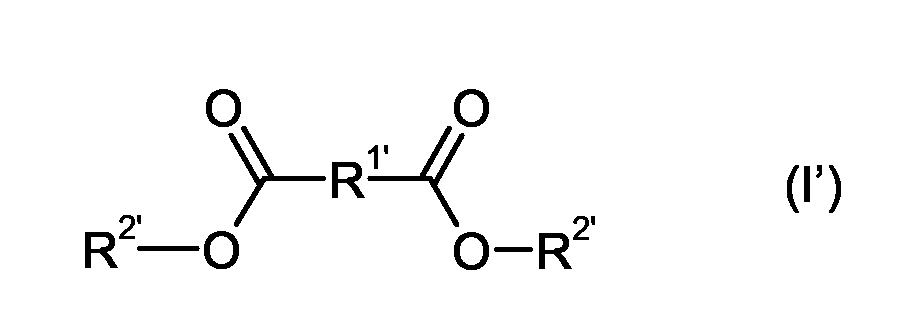
- the polyurethane composition further comprises at least one compound C 'of the formula (I')
- R 1 ' here represents an optionally substituted, phenylene group.
- R 2 ' represents a C 7 to C 13 alkyl group. These alkyl groups may be branched or unbranched, but are preferably branched. This alkyl group is preferably a C 9 or a C 10 -alkyl group, in particular an isononyl or iso-decyl group.
- the two radicals R 2 ' in formula are preferably identical.
- the compound C ' is a dialkyl phthalate, especially diisodecyl phthalate (DIDP).
- the polyurethane composition particularly preferably contains dioctyl adipate as compound C and diisodecyl phthalate as compound C '.
- the polyurethane composition optionally further comprises a polyurethane prepolymer D.
- the polyurethane prepolymer D has isocyanate end groups and is prepared from at least one polyisocyanate and at least one polyester polyol.
- the content of polyurethane prepolymer D, based on the weight of the polyurethane composition, is 0 to 4% by weight, in particular 1 to 4% by weight.
- the polyurethane composition optionally further comprises a polyurethane prepolymer E.
- the polyurethane prepolymer E has isocyanate end groups and is prepared from at least one polyisocyanate and at least one polycarbonate polyol.
- the content of polyurethane prepolymer E, based on the weight of the polyurethane composition, is 0 to 20% by weight, in particular 1 to 15% by weight.
- the polyurethane composition optionally further comprises a polyurethane prepolymer F.
- the polyurethane prepolymer F has isocyanate end groups and is prepared from at least one aliphatic polyisocyanate and at least one polyoxyalkylene polyol F1 .
- the content of polyurethane prepolymer F, based on the weight of the polyurethane composition, is 0 to 15% by weight, in particular 1 to 10% by weight.
- the polyurethane composition further comprises optionally an aliphatic polyisocyanate G.
- the aliphatic polyisocyanate G is an aliphatic NCO group-carrying isocyanurate and / or an aliphatic NCO group-carrying biuret.
- the polyisocyanate G is preferably an isophorone diisocyanate (IPDI) isocyanurate and / or a 1,6-hexamethylene diisocyanate (HDI) biuret.
- IPDI isophorone diisocyanate
- HDI 1,6-hexamethylene diisocyanate
- Particularly preferred in the polyurethane composition is a mixture of an IPDI isocyanurate and an HDI biuret.
- the content of polyisocyanate G, based on the weight of the polyurethane composition is 0 to 4% by weight, in particular 0.2 to 2.5% by weight.
- the polyol and the polyisocyanate are reacted by conventional methods, for example at temperatures of 50 ° C to 100 ° C, optionally with the concomitant use of suitable catalysts, wherein the polyisocyanate is metered in that its isocyanate groups are present in stoichiometric excess relative to the hydroxyl groups of the polyol.
- the excess of polyisocyanate is chosen so that in the resulting polyurethane prepolymer after the reaction of all hydroxyl groups of the polyol, a content of free isocyanate groups of 0.1 to 15% by weight, preferably 0.5 to 5% by weight based on the total polyurethane prepolymer remains.
- the polyurethane prepolymer may be prepared using solvents or plasticizers, with the solvents or plasticizers used containing no isocyanate-reactive groups.
- the polyisocyanate for the preparation of the polyurethane prepolymer A is an aromatic polyisocyanate.
- the polyisocyanate for the preparation of the optionally present polyurethane prepolymer D and the optionally present polyurethane prepolymer E may also be an aromatic polyisocyanate.
- the use of the aromatic polyisocyanate in the preparation of the polyurethane prepolymer A is very important to ensure a high reactivity.
- the aromatic polyisocyanate is, independently of each Polyisocyanates for the use of other existing polyurethane prepolymers, preferably selected from the group comprising 2,4- and 2,6-toluene diisocyanate (TDI) and any mixtures of these isomers, 4,4'-diphenylmethane diisocyanate (MDI) and their mixtures as well as all of them Isomers and oligomers.
- TDI 2,4- and 2,6-toluene diisocyanate
- MDI 4,4'-diphenylmethane diisocyanate
- the polyisocyanate for the preparation of the polyurethane prepolymer F is an aliphatic polyisocyanate.
- the polyisocyanate for the preparation of the optionally present polyurethane prepolymer D and the optionally present polyurethane prepolymer E may also be an aliphatic polyisocyanate.
- polyols are used for the preparation of the polyurethane prepolymers A, D, E and F .
- diols and triols are used for the preparation of the polyurethane prepolymers A, D, E and F .
- polyester polyols are used.
- Suitable polyester polyols are, for example, prepared from dihydric to trihydric alcohols such as, for example, 1,2-ethanediol, diethylene glycol, 1,2-propanediol, dipropylene glycol, 1,4-butanediol, 1,5-pentanediol, 1,6-hexanediol, neopentyl glycol, glycerol , 1,1,1-trimethylolpropane or mixtures of the abovementioned alcohols with organic dicarboxylic acids or their anhydrides or esters such as succinic, glutaric, adipic, suberic, sebacic, dodecanedicarboxylic, maleic, fumaric, phthalic, isophthalic, terephthalic and hexahydrophthalic or mixtures of the foregoing Acids, and polyester polyols from lactones such as 1,2-ethanedi
- Polyester polyols which have been shown to be particularly suitable are prepared from a diol, in particular from an alkylene diol, preferably hexanediol, and a dicarboxylic acid, especially adipic acid and polyester polyols prepared from lactones, in particular caprolactones, preferably ⁇ -caprolactone, as well as mixtures thereof.
- polycarbonate polyols are used for the polyurethane prepolymers E .
- Such polycarbonate polyols are typically prepared from the above-described alcohols and dialkyl carbonates, diaryl carbonates or phosgene used to construct the polyester polyols.
- Polycarbonate polyols have proven particularly suitable which can be prepared from dialkyl carbonates, in particular dimethyl carbonate, and alkylene diols, in particular 1,6-hexane diol.
- polyoxyalkylene polyols A1 and F1 are used for the preparation of the polyurethane prepolymers A and F .
- Polyoxyalkylenepolyols are also known to those skilled in the art as polyether polyols and are polymerization products of ethylene oxide, 1,2-propylene oxide, 1,2- or 2,3-butylene oxide, tetrahydrofuran or mixtures thereof and may be with the help of a starter molecule with two or more active hydrogen atoms such as water, ammonia or Compounds with several OH or NH groups, such as, for example, 1,2-ethanediol, 1,2- and 1,3-propanediol, neopentyl glycol, diethylene glycol, triethylene glycol, the isomeric dipropylene glycols and tripropylene glycols, the isomers Butanediols, pentanediols, hexanediols, heptanediols, octanediols, nonanediols, Decanediols, unde
- Both polyoxyalkylene polyols which can be used have a low level of unsaturation (measured according to ASTM D-2849-69 and expressed in milliequivalents of unsaturation per gram of polyol (mEq / g)), prepared for example by means of so-called double metal Cyanide complex catalysts (DMC catalysts) as well as polyoxyalkylene polyols with a higher level of unsaturation, for example with the help of anionic catalysts such as NaOH, KOH or alkali metal alkoxides.
- DMC catalysts double metal Cyanide complex catalysts
- Particularly suitable are polyoxyalkylenediols or polyoxyalkylenetriols.
- polyoxyalkylenediols or polyoxyalkylenetriols having a degree of unsaturation lower than 0.02 meq / g and having a molecular weight in the range from 1,000 to 30,000 g / mol, and also polyoxypropylenediols and -triols having a molecular weight of from 400 to 8,000 g / mol ,
- molecular weight or “molecular weight” is meant in this document always the molecular weight average M n .
- EO-endcapped ethylene oxide-endcapped Polyoxypropylene diols or triols.
- the latter are special polyoxypropylene polyoxyethylene polyols, for example to obtain pure polyoxypropylene polyols after completion of the polypropoxylation be alkoxylated with ethylene oxide and thereby primary hydroxyl groups exhibit.
- the polyoxyalkylene polyols A1 and F1 may be the same or different from each other. Preferably, the polyoxyalkylene polyols A1 and F1 are different from each other.
- the polyoxyalkylene polyol A1 and optionally the polyoxyalkylene polyol F1 is a polyoxyethylene polyol or a poly (oxyethylene / oxypropylene) polyol, especially a polyethylene glycol.
- A1 is a polyoxyalkylene triol, especially an EO / PO triol.
- F1 is a polyoxypropylene polyol, especially a polyoxypropylene diol.
- the polyurethane composition further comprises optionally fumed silica.
- the content of fumed silica, based on the Weight of the polyurethane composition is 0 to 4% by weight, in particular 0.5 to 3 wt .-%.
- fumed silicas for example under the name AEROSIL® from Degussa or WACKER HDK® from Wacker Chemie GmbH.
- the polyurethane composition may have other Ingredients include such as solvents; inorganic and organic fillers, such as ground or precipitated calcium carbonates, which optionally coated with stearates, kaolins, aluminas and PVC powder; Fibers, such as polyethylene; pigments; Rheology modifiers such as thickening agents, for example urea compounds, Polyamide waxes or bentonites; Adhesion promoter, in particular Silanes such as epoxy silanes, vinyl silanes, isocyanatosilanes and with aldehydes too Aldiminosilanes reacted aminosilanes; Desiccant such as p-tosyl isocyanate and other reactive isocyanates, orthoformate, Calcium oxide or molecular sieves; Stabilizers against heat, light and UV radiation; flame-retardant substances; Surface-active substances such as for example, wetting agents, leveling agents, deaerators or defoamers; Fungicides or fungal growth inhibiting
- the polyurethane composition cures with water, in particular as humidity, off. Therefore, the polyurethane composition comes preferably as a moisture-curing one-component composition for Commitment. But it is quite possible that the composition with a Hardener containing a compound which is reactive with isocyanate, in particular Polyamine or polyol, a two-component composition can represent. A formulation as a two-component composition would have the advantage that the curing would be faster.
- the polyurethane composition comes in particular as an adhesive or Sealant, in particular as a pane adhesive, used.
- the polyurethane composition becomes the surface applied to a first substrate, then the polyurethane composition contacted with a surface of a second substrate and then the curing of the polyurethane composition takes place.
- the first and / or second substrate is preferably made of a material, which is selected from the group comprising glass, glass ceramic, lacquer, Steel, aluminum, polycarbonate, ABS, GRP and polypropylene.
- the one substrate is a disk, in particular a Vehicle window.
- the other substrate is preferably a lacquer, in particular a painted sheet, preferably a painted flange.
- the polyurethane composition is typically on a vehicle window in the form of a Caterpillar applied and then the vehicle window with the on attached polyurethane composition on a flange of the Vehicle body pressed and hardened.
- the first and / or second substrate may be prior to the application of the Adhesive to be subjected to a pretreatment.
- a pretreatment may be of chemical, physical or physico-chemical Be kind.
- the roughening of the surface or that come Remove dirt by sanding, brushing or wiping as physical pretreatment in question.
- a chemical pretreatment for example, cleaning with solvent, etching, treating with Adhesion promoter solutions, primer compositions or cleaning agents.
- the physicochemical pretreatment methods are for example Plasma treatment, corona treatment or plasma gun treatment.
- the first and / or second substrate at least in the bonding area, before applying the A polyurethane composition with a primer solution which at least one alkoxysilane and / or at least one alkoxy titanate is preferred a mixture of an alkoxysilane and an alkoxy titanate, before Bonding pretreated.
- the preparation and storage of the polyurethane composition especially in the absence of moisture.
- the polyurethane composition is storage stable, i. she can be in a suitable Packaging or arrangement, such as in a barrel, a bag or a cartridge, typically before use, during several Months to a year and longer, without them Lose applicability.
- the novel polyurethane composition is characterized in particular by the combination of a fast strength structure and good applicability.
- a fast strength structure within the scope of the present invention both cold, warm and hot-applicable adhesives feasible.
- the adhesives are characterized by the combination of a fast strength build and good Applicability at both low and high temperatures.
- This effect is especially important in the temperature window between - 10 and + 35 ° C, especially between 0 and 35 ° C, especially between 5 ° C. and 35 ° C.
- This is achieved by using an adhesive in this Temperature range is characterized by a comparable low increase in viscosity characterized and also at low temperatures, a sufficiently high reactivity having.
- the adhesive does not have to - such as reactive hotmelts - before the application are heated first, or - such as two-component Polyurethane adhesives - with a second component before application be mixed consuming.
- the viscosity of the Polyurethane composition and their temperature dependence essential.
- the polyurethane composition at the application temperature especially at 20 ° C, a dynamic viscosity between 3,500 and 15,000 Pas, in particular between 3,500 and 10,000 Pas, are preferred between 3'500 and 6'000 Pas.
- the novel polyurethane compositions In this case have very good strength values, which typically -in a Test speed of 1 m / s of pendulum after 60 minutes in each climate from the relevant climatic area, especially in each of the climate selected from the climate group comprising 5 ° C / 80% RH, 23 ° C / 50% RH. and 35 ° C / 20% RH, above 0.6 MPa, especially above 1 MPa.
- the 0.6 MPa can be used as a critical limit for the load in a crash to be viewed as.
- compositions indicated all liquid components except the catalysts were initially charged, the molten polyester prepolymer optionally added with stirring and exclusion of moisture, and the other constituents according to Table 1 were added. After cooling, the homogeneously mixed compositions were filled into aluminum cartridges. Compositions.
- the Reference Adhesive Ref.1 contains no catalyst mixture B1 / B2 and no compound of the formula C.
- the reference adhesive Ref.2 is the commercial polyurethane adhesive SikaTack® Ultrafast (commercially available from Sikatician AG), which has a non-inventive composition and is one of the fastest 1-component polyurethane systems on the market.
- Table 2 and Figures 1 and 2 show the behavior of the inventive adhesives 1 and 2 in contrast to the reference adhesives Ref.1 and Ref.2.
- the Adhesive Ref.1 has an acceptable viscosity behavior for cold application, the strength buildup is generally too low.
- Adhesive 1 is a cold-applied adhesive and has excellent viscosity over the entire temperature range. Furthermore, it has a very fast strength build-up and increased crash resistance.
- Adhesive 2 is an example of adhesive 1 as an adhesive which is applied warm but has excellent strength and crash performance.
Landscapes
- Chemical & Material Sciences (AREA)
- Organic Chemistry (AREA)
- Health & Medical Sciences (AREA)
- Chemical Kinetics & Catalysis (AREA)
- Medicinal Chemistry (AREA)
- Polymers & Plastics (AREA)
- Adhesives Or Adhesive Processes (AREA)
- Polyurethanes Or Polyureas (AREA)
- Sealing Material Composition (AREA)
- Compositions Of Macromolecular Compounds (AREA)
Abstract
Description
Die Erfindung betrifft Polyurethanzusammensetzungen, welche auch für Applikationen bei tiefen Temperaturen geeignet sind und über eine hohe Frühfestigkeit verfügen. Insbesondere betrifft die Erfindung Klebstoffe für das Verkleben von Fahrzeugscheiben.The invention relates to polyurethane compositions, which also suitable for applications at low temperatures and a high Have early strength. In particular, the invention relates to adhesives for the Gluing vehicle windows.
Polyurethanklebstoffe werden seit langem im Automobil- und Fahrzeugbau verwendet. Unter anderen werden solche Klebstoffe auch für das Verkleben von Verglasungen eingesetzt und stellen einkomponentige feuchtigkeitshärtende Polyurethanklebstoffe dar. Die Verglasungen werden einerseits beim Fahrzeugbau an der Linie eingesetzt oder aber durch Garagen oder Scheibenersatzfirmen im Falle einer Reparatur einer defekten Verglasung. Speziell in weniger dicht besiedelten Gebieten ist ein Ersatz einer Scheibe auf der Strasse von Nöten, weshalb die Umgebungstemperatur ein wichtiger Faktor für den Einsatz eines Scheibenklebstoffes für eine erfolgreiche Scheibenreparatur darstellt. Diese einkomponentige feuchtigkeitshärtenden Polyurethanklebstoffe weisen sehr lange, typischerweise über Tage gehende, klimaabhängige Aushärtungszeiten auf.Polyurethane adhesives have long been used in the automotive and Vehicle construction used. Among others, such adhesives are also used for the Gluing used glazing and make one-component moisture-curing polyurethane adhesives. The glazing be on the one hand used in vehicle construction on the line or by garages or disc replacement companies in case of repair of a defective one Glazing. Especially in less densely populated areas is a replacement of one Disk on the road needed, which is why the ambient temperature important factor for the use of a pane adhesive for a successful Disc repair represents. This one-component moisture-curing Polyurethane adhesives have very long, typically day-long, climate-dependent curing times.
Mit dem Aufkommen von Airbags als Schutzeinrichtungen für die Insassen trat beim Verkleben von Fahrzeugscheiben ein neues Problem auf. Da sich ein Airbag bei einem Aufprall mit grosser Geschwindigkeit und Kraft entfaltet und sich hierbei für den Schutz der Insassen auf die Scheibe abstützt, ist die Verklebung zu einem sicherheitsrelevanten Teil des Fahrzeuges geworden und die Verklebung einer reparierten Scheibe muss bereits bei der Wiederinbetriebnahme des Fahrzeuges eine genügend grosse Festigkeit aufgebaut haben, um die Kräfte eines ausgelösten Airbags und den Impuls der Fahrzeuginsassen im Eventualfall eines Fahrzeug-Crashes unbeschadet zu überstehen und dadurch die Schutzfunktion des Airbags aufrechtzuerhalten.With the advent of airbags as protective devices for the Inmates encountered a new problem when gluing vehicle windows. As an airbag in a crash with great speed and force unfolds and is supported for the protection of the occupants on the disc, is the bonding to a safety-relevant part of the vehicle and the gluing of a repaired disc already has to be done at the Re-commissioning of the vehicle a sufficiently large strength have built up the forces of a deployed airbag and the impulse of the In the event of a vehicle crash, vehicle occupants without prejudice to survive and thereby maintain the protective function of the airbag.
Für die Realisierung von solch crashtauglichen Scheibenklebestoffen ist deshalb ein schneller Festigkeitsaufbau von äusserster Wichtigkeit. Ein schneller Festigkeitsaufbau kann chemisch oder physikalisch erfolgen. Ein chemisch erfolgter, schneller Festigkeitsaufbau kann mittels 2-KomponentenKlebstoffe erzielt werden, indem die zwei Komponenten schnell miteinander reagieren und das Fahrzeug bereits nach kurzer Zeit wieder fahrbereit ist. Allerdings ist die Applikation solcher zwei-komponentiger Systeme, wie beispielsweise 2 K-PUR, sehr aufwendig, kundenunfreundlich und zuweilen kritisch bezüglich der Mischfehler. Eine Umgehung dieser Schwierigkeiten bieten zwar die heisshärtenenden 1-Komponentenklebstoffe, bei denen durch den Temperatur-Einfluss ein Katalysatoren frei wird, oder bei denen durch den Temperatur-Einfluss aus zuvor inerten blockierten Verbindungen Substanzen freigesetzt werden, durch die Vernetzung von reaktiven Komponenten ermöglicht wird. Dies bedingt jedoch, dass der Klebstoff aufgeheizt werden muss. Damit ein solcher Klebstoff auch bei warmen Temperaturen lagerfähig ist, muss eine solche Hitzehärtung bei relativ hohen Temperaturen erfolgen. Diese Notwendigkeit führt jedoch dazu, dass von solchen Klebstoffen nicht auf kalte beziehungsweise hitzeempfindliche Substrate appliziert werden können und das Risiko eines Versagens der Verklebung dadurch massiv erhöht wird.For the realization of such crashworthy window adhesives is therefore a fast strength building of utmost importance. One Fast strength buildup can be done chemically or physically. One chemically done, fast strength build-up can by means of 2-component adhesives can be achieved by quickly connecting the two components react and the vehicle is ready to drive after a short time. However, the application of such two-component systems, such as For example, 2 K-PUR, very expensive, customer-friendly and sometimes critical regarding mixing errors. A circumvention of these difficulties Although offer the heat-curing 1-component adhesives in which the temperature influence a catalyst is released, or in which by the Temperature influence from previously inert blocked compounds substances be released by the crosslinking of reactive components is possible. However, this requires that the adhesive be heated got to. So that such an adhesive can be stored even at warm temperatures is, such heat curing must be done at relatively high temperatures. However, this need does not result in such adhesives cold or heat-sensitive substrates can be applied and the risk of a failure of the bond is thereby massively increased.
Das Prinzip des physikalischen Festigkeitsaufbaus ist zum Beispiel in Hotmelt-Klebstoffen realisiert. Diese Klebstoffe sind primär aus einer Schmelzkomponente aufgebaut, welche bei der Applikationstemperatur schmelzen, auf das Substrat aufgetragen werden und beim Abkühlen wieder erstarren. Der Schmelz-Abkühl-Vorgang ist ein reversibler Prozess. Um zu verhindern, dass eine Verklebung durch Schmelzen des Klebstoffes bei höherer Umgebungstemperatur verloren geht, wird in Hotmelt-Klebstoffen die Schmelztemperatur üblicherweise hoch gewählt. Diese hohe Schmelztemperatur führt jedoch auch hier zum Nachteil, dass ein Hotmelt auf kalten Substraten nicht angewendet werden kann, weil der Klebstoff schneller abkühlt, als dass sich die Haftung aufbauen kann. Abgesehen davon, dass Hotmelt-Klebstoff schlecht geeignet sind für das Verkleben von hitze-empfindlichen Substraten ist ein grosser Nachteil, dass diese Klebstoffe einen Aufheizvorgang mit geeignetem Equipment benötigen und, bedingt durch ihren plastischen Charakter unter Langzeitbelastungen, kriechen.The principle of physical strength construction is, for example, in Realized hotmelt adhesives. These adhesives are primarily from one Melting component, which at the application temperature Melt, applied to the substrate and on cooling again solidify. The melt-cool process is a reversible process. In order to Prevent a bond from melting the adhesive Higher ambient temperature is lost in hotmelt adhesives Melting temperature usually high. This high melting temperature However, here too leads to the disadvantage that a hotmelt on cold substrates can not be applied because the adhesive cools faster than that the liability can build up. Apart from that hotmelt adhesive are poorly suited for the bonding of heat-sensitive substrates is a major disadvantage that these adhesives with a heating need suitable equipment and, due to their plastic Character under long-term stress, crawl.
Reaktive Schmelzklebstoffe vereinen die physikalische und chemische
Härtung. Solche reaktive Schmelzklebstoffe sind bekannt und bestehen
typischerweise aus einer Schmelzkomponente die reaktive Gruppen,
beispielsweise Isocyanatgruppen enthalten. Für die Applikation müssen diese
Klebstoff aufgeschmolzen werden, was typischerweise bei Temperaturen über
60°C erfolgt. Nach dem Applizieren kühlen diese Klebstoffe ab, wodurch sich
die Klebstoffe verfestigen und anschliessend mit Luftfeuchtigkeit
nachvernetzen. Solche Klebstoffe sind beispielsweise aus EP 0 705 290
bekannt. Nachteilig bei dieser Art ist jedoch, dass der Klebstoff aufgeheizt
werden muss, weil diese Art Klebstoff unter der Verflüssigungstemperatur nicht
applizierbar sind. Weiterhin sind keine reaktiven Schmelzklebstoffe bekannt,
die genügend schnell Festigkeit im Temperaturbereich zwischen -10°C und
35°C aufbauen, um einen Crash zu überstehen.Reactive hot melt adhesives combine the physical and chemical
Curing. Such reactive hot melt adhesives are known and exist
typically from a melt component the reactive groups,
For example, contain isocyanate groups. For the application these must
Glue can be melted, which is typically over at temperatures
60 ° C takes place. After application, these adhesives cool, resulting in
solidify the adhesives and then with humidity
post-crosslink. Such adhesives are known, for example, from
Aufgabe der vorliegenden Erfindung war es, eine Polyurethanzusammensetzung zur Verfügung zu stellen, die es ermöglicht, Verklebungen zu gestalten, die sowohl bei tiefen als auch hohen Temperaturen gleichzeitig einen genügenden schnellen Festigkeitsaufbau aufweisen und andererseits auch gut applizierfähig sind.The object of the present invention was to provide a polyurethane composition To make available, which allows bonding to designed to work in both low and high temperatures simultaneously have a sufficient fast strength structure and on the other hand are also good applicizierbar.
Überraschenderweise wurde gefunden, dass dies mit der erfindungsgemässen
Polyurethanzusammensetzung gemäss Anspruch 1 möglich ist.Surprisingly, it was found that this with the novel
A polyurethane composition according to
Die erfindungsgemässe Polyurethanzusammensetzung eignen sich überaus gut als Klebstoff. Sie zeichnen sich insbesondere durch die Kombination eines schnellen Festigkeitsaufbaues und guter Applizierfähigkeit sowohl bei tiefen und bei hohen Temperaturen aus. Dieser Effekt ist besonderes wichtig im Temperaturfenster zwischen -10 und 35°C, insbesondere zwischen 5 und 35°C. Dies wird erreicht durch einen Klebstoff, der sich in diesem Temperaturbereich durch eine vergleichbar geringen Viskositätsanstieg auszeichnet und auch bei tiefen Temperaturen eine genügend hohe und bei hohen Temperaturen eine nicht zu schnelle Reaktivität aufweist. Die erfindungsgemässe Polyurethanzusammensetzung benötigt keiner Zumischung einer zweiten Komponente, um einen schnellen Festigkeitsaufbau zu erreichen.The polyurethane composition according to the invention are suitable very good as an adhesive. They are characterized in particular by the Combination of a fast strength build-up and good applicability both at low and high temperatures. This effect is especially important in the temperature window between -10 and 35 ° C, in particular between 5 and 35 ° C. This is achieved by an adhesive, in this temperature range by a comparably low Viscosity increase is characterized and even at low temperatures sufficiently high and at high temperatures not too fast reactivity having. The polyurethane composition according to the invention is required no addition of a second component to a fast Strength build up to achieve.
Vorteilhafte Ausführungsformen der Erfindung weisen den Vorteil auf, dass die Applikation der Polyurethanzusammensetzung ohne ein vorgängiges Aufheizen möglich ist und im Klimafenster von -10°C bis 35°C klimaunabhängige Wegfahrzeiten realisiert werden. Dies ist besonders in den Fällen günstig, wo die Zusammensetzung für eine Reparatur verwendet wird.Advantageous embodiments of the invention have the advantage that the application of the polyurethane composition without an antecedent Heating is possible and in the climate window from -10 ° C to 35 ° C klimaunabhängige Driving times are realized. This is especially true in the cases favorable, where the composition is used for a repair.
Weitere vorteilhafte Ausgestaltungen der Erfindung ergeben sich aus den Unteransprüchen.Further advantageous embodiments of the invention will become apparent the dependent claims.
Die vorliegende Erfindung betrifft Polyurethanzusammensetzungen, welche mindestens einen Polyurethanprepolymer A, mindestens einen Katalysator B1 und mindestens einen Katalysator B2, Russ, mindestens eine Verbindung C der Formel (I) sowie gegebenenfalls ein Polyurethanprepolymer D, gegebenenfalls ein Polyurethanprepolymer E, gegebenenfalls ein Polyurethanprepolymer F, gegebenenfalls ein aliphatisches Polyisocyanat G sowie gegebenenfalls eine pyrogene Kieselsäure umfassen.The present invention relates to polyurethane compositions which comprise at least one polyurethane prepolymer A , at least one catalyst B1 and at least one catalyst B2 , carbon black, at least one compound C of the formula (I) and optionally a polyurethane prepolymer D, optionally a polyurethane prepolymer E, optionally a polyurethane prepolymer F, if appropriate an aliphatic polyisocyanate G and optionally a fumed silica include.
Die Vorsilbe "Poly" in "Polyol" und "Polyisocyanat" bedeutet im gesamten vorliegenden Dokument, dass jeweils zwei oder mehr der jeweiligen funktionellen Gruppe in dem Molekül vorhanden ist.The prefix "poly" in "polyol" and "polyisocyanate" means in Entire document that contains two or more of each functional group is present in the molecule.
Die Polyurethanzusammensetzung umfasst weiterhin mindestens ein Polyurethanprepolymer A. Das Polyurethanprepolymer A weist Isocyanatendgruppen auf und ist hergestellt aus mindestens einem aromatischen Polyisocyanat und mindestens einem Polyoxyalkylenpolyol A1. The polyurethane composition further comprises at least one polyurethane prepolymer A. The polyurethane prepolymer A has isocyanate end groups and is prepared from at least one aromatic polyisocyanate and at least one polyoxyalkylene polyol A1.
Die Polyurethanzusammensetzung umfasst weiterhin mindestens
einen Katalysator B1 und einen Katalysator B2. Der Katalysator B1 weist
mindestens eine tertiäre Amingruppe auf. Insbesondere ist der Katalysator B1
1,4-Diazabicyclo[2.2.2]octan (DABCO) und ein Dimorpholinoether. Besonders
bevorzugt sind Dimorpholinoether, insbesondere Dimorpholinoether, wie sie
mit der Formel auf Seite 3 Zeilen 1 bis 18 in EP 0 812 866 A1 beschrieben
sind, sowie 2,2'-Dimorpholinodiethylether (DMDEE). Besonders bevorzugt ist
2,2'-Dimorpholinodiethylether.The polyurethane composition further comprises at least one catalyst B1 and a catalyst B2. The catalyst B1 has at least one tertiary amine group. In particular, the catalyst B1 is 1,4-diazabicyclo [2.2.2] octane (DABCO) and a dimorpholino ether. Particular preference is given to dimorpholino ethers, in particular dimorpholino ethers, as described by the formula on page 3,
Weiterhin umfasst die Polyurethanzusammensetzung mindestens einen Katalysator B2. Der Katalysator B2 ist ein Zinnkatalysator, das heisst, dass dieser Katalysator Zinn enthält. Insbesondere ist der Zinnkatalysator B2 ausgewählt aus der Gruppe der Zinnverbindungen umfassend Dibutylzinndiacetat, Dibutylzinndilaurat, Dioctylzinndicarboxylat, Dibutylzinndichlorid oder Mischungen davon.Furthermore, the polyurethane composition comprises at least one catalyst B2. The catalyst B2 is a tin catalyst, that is, this catalyst contains tin. In particular, the tin catalyst B2 is selected from the group of tin compounds comprising dibutyltin diacetate, dibutyltin dilaurate, dioctyltin dicarboxylate, dibutyltin dichloride or mixtures thereof.
Bevorzugt handelt es sich beim Zinnkatalysator B2 um Dibutylzinndiacetat oder Dibutylzinndilaurat (DBTL).The tin catalyst B2 is preferably dibutyltin diacetate or dibutyltin dilaurate (DBTL).
Typischerweise liegt das Gewichts-Verhältnis von B1/B2 zwischen 30/70 bis 99/1, insbesondere zwischen 50/50 bis 99/1, bevorzugt zwischen 55/45 bis 98/2, insbesondere zwischen 55/45 bis 90/10.The weight ratio of B1 / B2 is typically between 30/70 and 99/1, in particular between 50/50 and 99/1, preferably between 55/45 and 98/2, in particular between 55/45 and 90/10.
Für das Wesen der Erfindung ist diese Katalysatoren-Kombination B1/B2 wichtig, denn es konnte gezeigt werden, dass mit dieser Kombination die gewünschte Tieftemperaturreaktivität erreicht werden kann, ohne dass bei hoher Temperatur das System so schnell ist, dass es nicht mehr im üblichen Applikationsfenster von etwa 5 Minuten appliziert und die beiden Teile gefügt werden können.For the essence of the invention, this combination of catalysts B1 / B2 is important because it has been shown that the desired low-temperature reactivity can be achieved with this combination without the system being so fast at high temperature that it is no longer in the usual application window applied for about 5 minutes and the two parts can be joined.
Die Polyurethanzusammensetzung umfasst weiterhin 5 bis 40 Gew. -%, insbesondere 5 bis 30 Gew. -%, Russ, bezogen auf das Gewicht der Polyurethanzusammensetzung. Russ ist ein in der Polyurethanchemie bestens bekannter Bestandteil von Klebstoffen. Bevorzugt besitzt der Russ eine möglichst kleine Teilchengrösse.The polyurethane composition further comprises 5 to 40 % By weight, in particular 5 to 30% by weight, of carbon black, based on the weight of Polyurethane composition. Russ is one of the best in polyurethane chemistry known ingredient of adhesives. Preferably, the soot has a the smallest possible particle size.
Die Polyurethanzusammensetzung umfasst weiterhin mindestens eine
Verbindung C der Formel (I)

R1 stellt hierbei eine C3- bis C8-Alkylengruppe dar. Besonders bevorzugt stellt R1 eine Propylen, Butylen- oder eine Heptylen- oder eine Octylengruppe dar.R 1 here represents a C 3 - to C 8 -alkylene group. Particularly preferably, R 1 represents a propylene, butylene or a heptylene or an octylene group.
R2 stellt eine C7- bis C13-Alkylgruppe dar. Diese Alkylgruppen können verzweigt oder nicht verzweigt sein, bevorzugt sind sie jedoch nicht verzweigt. Bevorzugt ist diese Alkylgruppe eine C7-, C8- oder eine C9- Alkylgruppe, insbesondere eine C8-Alkylgruppe.R 2 represents a C 7 to C 13 alkyl group. These alkyl groups may be branched or unbranched, but preferably are not branched. This alkyl group is preferably a C 7 , C 8 or a C 9 -alkyl group, in particular a C 8 -alkyl group.
Die zwei Reste R2 in Formel sind bevorzugt identisch. Bevorzugt ist die Verbindung C ein Dialkyladipat, insbesondere Dioctyladipat (DOA).The two radicals R 2 in formula are preferably identical. The compound C is preferably a dialkyl adipate, in particular dioctyl adipate (DOA).
In einer bevorzugten Ausführungsform umfasst die
Polyurethanzusammensetzung weiterhin mindestens eine Verbindung C' der
Formel (I')
R1' stellt hierbei eine,gegebenenfalls substituierte,Phenylengruppe dar.R 1 ' here represents an optionally substituted, phenylene group.
R2' stellt eine C7- bis C13-Alkylgruppe dar. Diese Alkylgruppen können verzweigt oder nicht verzweigt sein, bevorzugt sind sie jedoch verzweigt. Bevorzugt ist diese Alkylgruppe eine C9- oder ein C10- Alkylgruppe, insbesondere eine iso-Nonyl- oder iso-Decylgruppe.R 2 ' represents a C 7 to C 13 alkyl group. These alkyl groups may be branched or unbranched, but are preferably branched. This alkyl group is preferably a C 9 or a C 10 -alkyl group, in particular an isononyl or iso-decyl group.
Die zwei Reste R2' in Formel sind bevorzugt identisch. Bevorzugt ist die Verbindung C' ein Dialkylphtalat, insbesondere Diisodecylphtalat (DIDP).The two radicals R 2 ' in formula are preferably identical. Preferably, the compound C 'is a dialkyl phthalate, especially diisodecyl phthalate (DIDP).
Besonders bevorzugt enthält die Polyurethanzusammensetzung Dioctyladipat als Verbindung C und Diisodecylphtalat als Verbindung C'. The polyurethane composition particularly preferably contains dioctyl adipate as compound C and diisodecyl phthalate as compound C '.
Die Polyurethanzusammensetzung umfasst weiterhin gegebenenfalls ein Polyurethanprepolymer D. Das Polyurethanprepolymer D weist Isocyanatendgruppen auf und wird aus mindestens einem Polyisocyanat und mindestens einem Polyesterpolyol hergestellt. Der Gehalt an Polyurethanprepolymer D, bezogen auf das Gewicht der Polyurethanzusammensetzung, beträgt 0 bis 4 Gew.- %, insbesondere 1 bis 4 Gew.-%.The polyurethane composition optionally further comprises a polyurethane prepolymer D. The polyurethane prepolymer D has isocyanate end groups and is prepared from at least one polyisocyanate and at least one polyester polyol. The content of polyurethane prepolymer D, based on the weight of the polyurethane composition, is 0 to 4% by weight, in particular 1 to 4% by weight.
Die Polyurethanzusammensetzung umfasst weiterhin gegebenenfalls ein Polyurethanprepolymer E. Das Polyurethanprepolymer E weist Isocyanatendgruppen auf und wird aus mindestens einem Polyisocyanat und mindestens einem Polycarbonatpolyol hergestellt. Der Gehalt an Polyurethanprepolymer E, bezogen auf das Gewicht der Polyurethanzusammensetzung, beträgt 0 bis 20 Gew.- %, insbesondere 1 bis 15 Gew.-%.The polyurethane composition optionally further comprises a polyurethane prepolymer E. The polyurethane prepolymer E has isocyanate end groups and is prepared from at least one polyisocyanate and at least one polycarbonate polyol. The content of polyurethane prepolymer E, based on the weight of the polyurethane composition, is 0 to 20% by weight, in particular 1 to 15% by weight.
Die Polyurethanzusammensetzung umfasst weiterhin gegebenenfalls ein Polyurethanprepolymer F. Das Polyurethanprepolymer F weist Isocyanatendgruppen auf und wird aus mindestens einem aliphatischen Polyisocyanat und mindestens einem Polyoxyalkylenpolyol F1 hergestellt. Der Gehalt an Polyurethanprepolymer F, bezogen auf das Gewicht der Polyurethanzusammensetzung, beträgt 0 bis 15 Gew.- %, insbesondere 1 bis 10 Gew.-%.The polyurethane composition optionally further comprises a polyurethane prepolymer F. The polyurethane prepolymer F has isocyanate end groups and is prepared from at least one aliphatic polyisocyanate and at least one polyoxyalkylene polyol F1 . The content of polyurethane prepolymer F, based on the weight of the polyurethane composition, is 0 to 15% by weight, in particular 1 to 10% by weight.
Die Polyurethanzusammensetzung umfasst weiterhin gegebenenfalls ein aliphatischen Polyisocyanates G. Das aliphatische Polyisocyanat G ist ein aliphatisches NCO-gruppentragendes Isocyanurat und/oder ein aliphatisches NCO-gruppentragendes Biuret. Bevorzugt handelt es sich beim Polyisocyanat G um ein Isophorondiisocyanat(IPDI)-Isocyanurat und/oder ein 1,6-Hexamethylendiisocyanat(HDI)-Biuret. Als besonders bevorzugt ist in der Polyurethanzusammensetzung eine Mischung eines IPDI-Isocyanurat und eines HDI-Biurets. Der Gehalt an Polyisocyanat G, bezogen auf das Gewicht der Polyurethanzusammensetzung, beträgt 0 bis 4 Gew.- %, insbesondere 0.2 bis 2.5 Gew.-%.The polyurethane composition further comprises optionally an aliphatic polyisocyanate G. The aliphatic polyisocyanate G is an aliphatic NCO group-carrying isocyanurate and / or an aliphatic NCO group-carrying biuret. The polyisocyanate G is preferably an isophorone diisocyanate (IPDI) isocyanurate and / or a 1,6-hexamethylene diisocyanate (HDI) biuret. Particularly preferred in the polyurethane composition is a mixture of an IPDI isocyanurate and an HDI biuret. The content of polyisocyanate G, based on the weight of the polyurethane composition, is 0 to 4% by weight, in particular 0.2 to 2.5% by weight.
Bei der Herstellung der Polyurethanprepolymere A, D, E und F werden das Polyol und das Polyisocyanat mit üblichen Verfahren, beispielsweise bei Temperaturen von 50 °C bis 100 °C, gegebenenfalls unter Mitverwendung geeigneter Katalysatoren, zur Reaktion gebracht, wobei das Polyisocyanat so dosiert ist, dass dessen Isocyanatgruppen im Verhältnis zu den Hydroxylgruppen des Polyols im stöchiometrischen Überschuss vorhanden sind. Der Überschuss an Polyisocyanat wird so gewählt, dass im resultierenden Polyurethanprepolymer nach der Umsetzung aller Hydroxylgruppen des Polyols ein Gehalt an freien Isocyanatgruppen von 0.1 bis 15 Gewichts-%, bevorzugt 0.5 bis 5 Gewichts-%, bezogen auf das gesamte Polyurethanprepolymer, verbleibt. Gegebenenfalls kann das Polyurethanprepolymer unter Mitverwendung von Lösemitteln oder Weichmachern hergestellt werden, wobei die verwendeten Lösemittel oder Weichmacher keine gegenüber Isocyanaten reaktive Gruppen enthalten.In the preparation of the polyurethane prepolymers A, D, E and F , the polyol and the polyisocyanate are reacted by conventional methods, for example at temperatures of 50 ° C to 100 ° C, optionally with the concomitant use of suitable catalysts, wherein the polyisocyanate is metered in that its isocyanate groups are present in stoichiometric excess relative to the hydroxyl groups of the polyol. The excess of polyisocyanate is chosen so that in the resulting polyurethane prepolymer after the reaction of all hydroxyl groups of the polyol, a content of free isocyanate groups of 0.1 to 15% by weight, preferably 0.5 to 5% by weight based on the total polyurethane prepolymer remains. Optionally, the polyurethane prepolymer may be prepared using solvents or plasticizers, with the solvents or plasticizers used containing no isocyanate-reactive groups.
Das Polyisocyanat für die Herstellung des Polyurethanprepolymers A ist ein aromatisches Polyisocyanat. Das Polyisocyanat für die Herstellung des gegebenenfalls vorhandenen Polyurethanprepolymer D und des gegebenenfalls vorhandenen Polyurethanprepolymers E kann ebenfalls ein aromatisches Polyisocyanat sein.The polyisocyanate for the preparation of the polyurethane prepolymer A is an aromatic polyisocyanate. The polyisocyanate for the preparation of the optionally present polyurethane prepolymer D and the optionally present polyurethane prepolymer E may also be an aromatic polyisocyanate.
Die Verwendung des aromatischen Polyisocyanates in der Herstellung des Polyurethanprepolymers A ist sehr wichtig, um eine hohe Reaktivität zu gewährleisten.The use of the aromatic polyisocyanate in the preparation of the polyurethane prepolymer A is very important to ensure a high reactivity.
Das aromatische Polyisocyanat ist, jeweils unabhängig von den Polyisocyanaten für die Verwendung von anderen vorhandenen Polyurethanprepolymeren, bevorzugt ausgewählt aus der Gruppe umfassend 2,4- und 2,6-Toluylendiisocyanat (TDI) und beliebige Gemische dieser Isomeren, 4,4'-Diphenylmethandiisocyanat (MDI) und deren Mischungen sowie all deren Isomeren und Oligomere.The aromatic polyisocyanate is, independently of each Polyisocyanates for the use of other existing polyurethane prepolymers, preferably selected from the group comprising 2,4- and 2,6-toluene diisocyanate (TDI) and any mixtures of these isomers, 4,4'-diphenylmethane diisocyanate (MDI) and their mixtures as well as all of them Isomers and oligomers.
Das Polyisocyanat für die Herstellung des Polyurethanprepolymers F ist ein aliphatisches Polyisocyanat. Das Polyisocyanat für die Herstellung des gegebenenfalls vorhandenen Polyurethanprepolymer D und des gegebenenfalls vorhandenen Polyurethanprepolymers E kann ebenfalls ein aliphatisches Polyisocyanat sein.The polyisocyanate for the preparation of the polyurethane prepolymer F is an aliphatic polyisocyanate. The polyisocyanate for the preparation of the optionally present polyurethane prepolymer D and the optionally present polyurethane prepolymer E may also be an aliphatic polyisocyanate.
Das aliphatische Polyisocyanat ist, jeweils unabhängig von den Polyisocyanaten für die Verwendung von anderen vorhandenen Polyurethanprepolymeren, bevorzugt ausgewählt aus der Gruppe umfassend 1,6-Hexamethylendiisocyanat (HDI), 2-Methylpentamethylen-1,5-diisocyanat, 2,2,4- und 2,4,4-Trimethyl-1,6-hexamethylendiisocyanat (TMDI), 1,12-Dodecamethylendiisocyanat, Cyclohexan-1,3- und -1,4-diisocyanat und beliebige Gemische dieser Isomeren, 1-Isocyanato-3,3,5-trimethyl-5-isocyanatomethyl-cyclohexan (=Isophorondiisocyanat oder IPDI), Perhydro-2,4'- und -4,4'-diphenylmethandiisocyanat (HMDI), 1,4-Diisocyanato-2,2,6-trimethylcyclohexan (TMCDI), sowie Oligomere und Polymere der vorgenannten Isocyanate, sowie beliebige Mischungen der vorgenannten Isocyanate.The aliphatic polyisocyanate is, independently of each Polyisocyanates for the use of other existing polyurethane prepolymers, preferably selected from the group comprising 1,6-hexamethylene diisocyanate (HDI), 2-methylpentamethylene-1,5-diisocyanate, 2,2,4- and 2,4,4-trimethyl-1,6-hexamethylene diisocyanate (TMDI), 1,12-dodecamethylene diisocyanate, Cyclohexane-1,3- and 1,4-diisocyanate and any mixtures these isomers, 1-isocyanato-3,3,5-trimethyl-5-isocyanatomethyl-cyclohexane (= Isophorone diisocyanate or IPDI), perhydro-2,4'- and -4,4'-diphenylmethane diisocyanate (HMDI), 1,4-diisocyanato-2,2,6-trimethylcyclohexane (TMCDI), as well as Oligomers and polymers of the aforementioned isocyanates, and any Mixtures of the aforementioned isocyanates.
Für die Herstellung der Polyurethanprepolymere A, D, E und F werden Polyole eingesetzt. Insbesondere werden Diole und Triole eingesetzt.For the preparation of the polyurethane prepolymers A, D, E and F , polyols are used. In particular, diols and triols are used.
Für die Polyurethanprepolymere D werden Polyesterpolyole verwendet. Geeignete Polyesterpolyole sind beispielsweise hergestellt aus zwei- bis dreiwertigen Alkoholen wie beispielsweise 1,2-Ethandiol, Diethylenglykol, 1,2-Propandiol, Dipropylenglykol, 1,4-Butandiol, 1,5-Pentandiol, 1,6-Hexandiol, Neopentylglykol, Glycerin, 1,1,1-Trimethylolpropan oder Mischungen der vorgenannten Alkohole mit organischen Dicarbonsäuren oder deren Anhydride oder Ester wie beispielsweise Bernsteinsäure, Glutarsäure, Adipinsäure, Korksäure, Sebacinsäure, Dodecandicarbonsäure, Maleinsäure, Fumarsäure, Phthalsäure, Isophthalsäure, Terephthalsäure und Hexahydrophthalsäure oder Mischungen der vorgenannten Säuren, sowie Polyesterpolyole aus Lactonen wie beispielsweise ε-Caprolacton.For the polyurethane prepolymers D polyester polyols are used. Suitable polyester polyols are, for example, prepared from dihydric to trihydric alcohols such as, for example, 1,2-ethanediol, diethylene glycol, 1,2-propanediol, dipropylene glycol, 1,4-butanediol, 1,5-pentanediol, 1,6-hexanediol, neopentyl glycol, glycerol , 1,1,1-trimethylolpropane or mixtures of the abovementioned alcohols with organic dicarboxylic acids or their anhydrides or esters such as succinic, glutaric, adipic, suberic, sebacic, dodecanedicarboxylic, maleic, fumaric, phthalic, isophthalic, terephthalic and hexahydrophthalic or mixtures of the foregoing Acids, and polyester polyols from lactones such as ε-caprolactone.
Besonders geeignet gezeigt haben sich Polyesterpolyol, welche hergestellt werden aus einem Diol, insbesondere aus einem Alkylendiol, bevorzugt Hexandiol, und einer Dicarbonsäure, insbesondere Adipinsäure sowie Polyesterpolyole hergestellt aus Lactonen, insbesondere Caprolactonen, bevorzugt ε-Caprolacton, sowie Mischungen davon.Polyester polyols which have been shown to be particularly suitable are prepared from a diol, in particular from an alkylene diol, preferably hexanediol, and a dicarboxylic acid, especially adipic acid and polyester polyols prepared from lactones, in particular caprolactones, preferably ε-caprolactone, as well as mixtures thereof.
Für die Polyurethanprepolymere E werden Polycarbonatpolyole verwendet. Solche Polycarbonatpolyole werden typischerweise aus den oben beschriebenen- zum Aufbau der Polyesterpolyole eingesetzten - Alkoholen und Dialkylcarbonaten, Diarylcarbonaten oder Phosgen hergestellt. Besonderes geeignet haben sich Polycarbonatpolyole gezeigt, welche aus Dialkylcarbonaten, insbesondere Dimethylcarbonat, und Alkylendiolen, insbesondere 1,6-Hexandiol, herstellbar sind.For the polyurethane prepolymers E , polycarbonate polyols are used. Such polycarbonate polyols are typically prepared from the above-described alcohols and dialkyl carbonates, diaryl carbonates or phosgene used to construct the polyester polyols. Polycarbonate polyols have proven particularly suitable which can be prepared from dialkyl carbonates, in particular dimethyl carbonate, and alkylene diols, in particular 1,6-hexane diol.
Für die Herstellung der Polyurethanprepolymere A und F werden Polyoxyalkylenpolyole A1 und F1 eingesetzt.For the preparation of the polyurethane prepolymers A and F , polyoxyalkylene polyols A1 and F1 are used.
Polyoxyalkylenpolyole werden vom Fachmann auch Polyetherpolyole genannt und sind Polymerisationsprodukte von Ethylenoxid, 1,2-Propylenoxid, 1,2- oder 2,3-Butylenoxid, Tetrahydrofuran oder Mischungen davon und werden eventuell mit Hilfe eines Startermoleküls mit zwei oder mehreren aktiven Wasserstoffatomen wie beispielsweise Wasser, Ammoniak oder Verbindungen mit mehreren OH- oder NH-Gruppen wie beispielsweise 1,2-Ethandiol, 1,2- und 1,3-Propandiol, Neopentylglykol, Diethylenglykol, Triethylenglykol, die isomeren Dipropylenglykole und Tripropylenglykole, die isomeren Butandiole, Pentandiole, Hexandiole, Heptandiole, Octandiole, Nonandiole, Decandiole, Undecandiole, 1,3- und 1,4-Cyclohexandimethanol, Bisphenol A, hydriertes Bisphenol A, 1,1,1-Trimethylolethan, 1,1,1-Trimethylolpropan, Glycerin, Anilin sowie Mischungen der vorgenannten Verbindungen polymerisiert. Eingesetzt werden können sowohl Polyoxyalkylenpolyole, die einen niedrigen Ungesättigtheitsgrad aufweisen (gemessen nach ASTM D-2849-69 und angegeben in Milliequivalent Ungesättigtheit pro Gramm Polyol (mEq/g)), hergestellt beispielsweise mit Hilfe von sogenannten Double Metal Cyanide Complex Katalysatoren (DMC-Katalysatoren), als auch Polyoxyalkylenpolyole mit einem höheren Ungesättigtheitsgrad, hergestellt beispielsweise mit Hilfe von anionischen Katalysatoren wie NaOH, KOH oder Alkalialkoholaten.Polyoxyalkylenepolyols are also known to those skilled in the art as polyether polyols and are polymerization products of ethylene oxide, 1,2-propylene oxide, 1,2- or 2,3-butylene oxide, tetrahydrofuran or mixtures thereof and may be with the help of a starter molecule with two or more active hydrogen atoms such as water, ammonia or Compounds with several OH or NH groups, such as, for example, 1,2-ethanediol, 1,2- and 1,3-propanediol, neopentyl glycol, diethylene glycol, triethylene glycol, the isomeric dipropylene glycols and tripropylene glycols, the isomers Butanediols, pentanediols, hexanediols, heptanediols, octanediols, nonanediols, Decanediols, undecanediols, 1,3- and 1,4-cyclohexanedimethanol, bisphenol A, hydrogenated bisphenol A, 1,1,1-trimethylolethane, 1,1,1-trimethylolpropane, Glycerol, aniline and mixtures of the aforementioned compounds polymerized. Both polyoxyalkylene polyols, which can be used have a low level of unsaturation (measured according to ASTM D-2849-69 and expressed in milliequivalents of unsaturation per gram of polyol (mEq / g)), prepared for example by means of so-called double metal Cyanide complex catalysts (DMC catalysts) as well as polyoxyalkylene polyols with a higher level of unsaturation, for example with the help of anionic catalysts such as NaOH, KOH or alkali metal alkoxides.
Besonders geeignet sind Polyoxyalkylendiole oder Polyoxyalkylentriole.Particularly suitable are polyoxyalkylenediols or polyoxyalkylenetriols.
Speziell geeignet sind Polyoxyalkylendiole oder Polyoxyalkylentriole mit einem Ungesättigtheitsgrad tiefer als 0.02 mEq/g und mit einem Molekulargewicht im Bereich von 1'000 bis 30'000 g/mol, sowie Polyoxypropylendiole und -triole mit einem Molekulargewicht von 400 bis 8'000 g/mol. Unter "Molekulargewicht" oder "Molgewicht" versteht man im vorliegenden Dokument stets das Molekulargewichtsmittel Mn. Especially suitable are polyoxyalkylenediols or polyoxyalkylenetriols having a degree of unsaturation lower than 0.02 meq / g and having a molecular weight in the range from 1,000 to 30,000 g / mol, and also polyoxypropylenediols and -triols having a molecular weight of from 400 to 8,000 g / mol , By "molecular weight" or "molecular weight" is meant in this document always the molecular weight average M n .
Ebenfalls besonders geeignet sind sogenannte "EO-endcapped" (ethylene oxide-endcapped) Polyoxypropylendiole oder -triole. Letztere sind spezielle Polyoxypropylenpolyoxyethylenpolyole, die beispielsweise dadurch erhalten werden, dass reine Polyoxypropylenpolyole nach Abschluss der Polypropoxylierung mit Ethylenoxid alkoxyliert werden und dadurch primäre Hydroxylgruppen aufweisen.Also particularly suitable are so-called "EO-endcapped" (ethylene oxide-endcapped) Polyoxypropylene diols or triols. The latter are special polyoxypropylene polyoxyethylene polyols, for example to obtain pure polyoxypropylene polyols after completion of the polypropoxylation be alkoxylated with ethylene oxide and thereby primary hydroxyl groups exhibit.
Die Polyoxyalkylenpolyole A1 und F1 können gleich oder verschieden voneinander sein. Bevorzugt sind die Polyoxyalkylenpolyole A1 und F1 verschieden voneinander.The polyoxyalkylene polyols A1 and F1 may be the same or different from each other. Preferably, the polyoxyalkylene polyols A1 and F1 are different from each other.
Bevorzugt ist das Polyoxyalkylenpolyol A1 und gegebenenfalls das Polyoxyalkylenpolyol F1 ein Polyoxyethylenpolyol oder ein Poly(oxyethylen/oxypropylen)polyol, insbesondere ein Polyethylenglycol. Bei den Poly(oxyethylen/oxypropylen)polyol ist das EO/PO-Verhältnis, das heisst das Verhältnis der Ethylenoxid(=EO)-Einheiten zu Propylen(=PO)-Einheiten, insbesondere von mehr als 10 mol/90 mol, bevorzugt zwischen 10 mol/90 mol und 35 mol/65 mol.Preferably, the polyoxyalkylene polyol A1 and optionally the polyoxyalkylene polyol F1 is a polyoxyethylene polyol or a poly (oxyethylene / oxypropylene) polyol, especially a polyethylene glycol. In the case of the poly (oxyethylene / oxypropylene) polyol, the EO / PO ratio, ie the ratio of the ethylene oxide (= EO) units to propylene (= PO) units, in particular more than 10 mol / 90 mol, is preferably between 10 mol / 90 mol and 35 mol / 65 mol.
In einer bevorzugten Ausführungsform ist A1 ein Polyoxyalkylentriol, insbesondere ein EO/PO-Triol.In a preferred embodiment, A1 is a polyoxyalkylene triol, especially an EO / PO triol.
In einer bevorzugten Ausführungsform ist F1 ein Polyoxypropylenpolyol, insbesondere ein Polyoxypropylendiol.In a preferred embodiment, F1 is a polyoxypropylene polyol, especially a polyoxypropylene diol.
Die Polyurethanzusammensetzung umfasst weiterhin gegebenenfalls pyrogene Kieselsäure. Der Gehalt an pyrogener Kieselsäure, bezogen auf das Gewicht der Polyurethanzusammensetzung, beträgt 0 bis 4 Gew.- %, insbesondere 0.5 bis 3 Gew.-%. Es gibt unterschiedliche geeignete kommerziell erhältliche pyrogene Kieselsäuren, beispielsweise unter dem Namen AEROSIL® von Degussa oder WACKER HDK® von Wacker Chemie GmbH.The polyurethane composition further comprises optionally fumed silica. The content of fumed silica, based on the Weight of the polyurethane composition is 0 to 4% by weight, in particular 0.5 to 3 wt .-%. There are several suitable ones commercially available fumed silicas, for example under the name AEROSIL® from Degussa or WACKER HDK® from Wacker Chemie GmbH.
Schliesslich kann die Polyurethanzusammensetzung noch andere Bestandteile umfassen wie Lösemittel; anorganische und organische Füllstoffe, wie zum Beispiel gemahlene oder gefällte Calciumcarbonate, welche gegebenenfalls mit Stearaten beschichtet sind, Kaoline, Aluminiumoxide und PVC-Pulver; Fasern, beispielsweise aus Polyethylen; Pigmente; Rheologie-Modifizierer wie beispielsweise Verdickungsmittel, zum Beispiel Harnstoffverbindungen, Polyamidwachse oder Bentonite; Haftvermittler, insbesondere Silane wie Epoxysilane, Vinylsilane, Isocyanatosilane und mit Aldehyden zu Aldiminosilanen umgesetzte Aminosilane; Trocknungsmittel wie beispielsweise p-Tosylisocyanat und andere reaktive Isocyanate, Orthoameisensäureester, Calciumoxid oder Molekularsiebe; Stabilisatoren gegen Wärme, Licht- und UV-Strahlung; flammhemmende Substanzen; oberflächenaktive Substanzen wie beispielsweise Netzmittel, Verlaufsmittel, Entlüftungsmittel oder Entschäumer; Fungizide oder das Pilzwachstum hemmende Substanzen; sowie weitere, in der Polyurethanindustrie üblicherweise eingesetzte Substanzen.Finally, the polyurethane composition may have other Ingredients include such as solvents; inorganic and organic fillers, such as ground or precipitated calcium carbonates, which optionally coated with stearates, kaolins, aluminas and PVC powder; Fibers, such as polyethylene; pigments; Rheology modifiers such as thickening agents, for example urea compounds, Polyamide waxes or bentonites; Adhesion promoter, in particular Silanes such as epoxy silanes, vinyl silanes, isocyanatosilanes and with aldehydes too Aldiminosilanes reacted aminosilanes; Desiccant such as p-tosyl isocyanate and other reactive isocyanates, orthoformate, Calcium oxide or molecular sieves; Stabilizers against heat, light and UV radiation; flame-retardant substances; Surface-active substances such as for example, wetting agents, leveling agents, deaerators or defoamers; Fungicides or fungal growth inhibiting substances; as well as others, in the polyurethane industry commonly used substances.
Die Polyurethanzusammensetzung härtet mit Wasser, insbesondere als Luftfeuchtigkeit, aus. Deshalb kommt die Polyurethanzusammensetzung bevorzugt als feuchtigkeitshärtende einkomponentige Zusammensetzung zum Einsatz. Es ist aber durchaus denkbar, dass die Zusammensetzung mit einem Härter, welcher eine Verbindung enthält, welche mit Isocyanat reaktiv ist, insbesondere Polyamin oder Polyol, eine zweikomponentige Zusammensetzung darstellen kann. Eine Formulierung als zweikomponentige Zusammensetzung hätte den Vorteil, dass die Aushärtung schneller erfolgen würde.The polyurethane composition cures with water, in particular as humidity, off. Therefore, the polyurethane composition comes preferably as a moisture-curing one-component composition for Commitment. But it is quite possible that the composition with a Hardener containing a compound which is reactive with isocyanate, in particular Polyamine or polyol, a two-component composition can represent. A formulation as a two-component composition would have the advantage that the curing would be faster.
Die Polyurethanzusammensetzung kommt insbesondere als Kleb- oder Dichtstoff, insbesondere als Scheibenklebstoff, zum Einsatz.The polyurethane composition comes in particular as an adhesive or Sealant, in particular as a pane adhesive, used.
Hierbei wird die Polyurethanzusammensetzung auf die Oberfläche eines ersten Substrates appliziert, anschliessend wird die Polyurethanzusammensetzung mit einer Oberfläche eines zweiten Substrates kontaktiert und dann erfolgt das Aushärten der Polyurethanzusammensetzung.At this time, the polyurethane composition becomes the surface applied to a first substrate, then the polyurethane composition contacted with a surface of a second substrate and then the curing of the polyurethane composition takes place.
Das erste und/oder zweite Substrat ist bevorzugt aus einem Material, welches ausgewählt aus der Gruppe umfassend Glas, Glaskeramik, Lack, Stahl, Aluminium, Polycarbonat, ABS, GFK und Polypropylen ist. Besonders bevorzugt ist das eine Substrat eine Scheibe, insbesondere eine Fahrzeugscheibe. Das andere Substrat ist bevorzugt ein Lack, insbesondere ein lackiertes Blech, bevorzugt ein lackierter Flansch. Die Polyurethanzusammensetzung wird typischerweise auf eine Fahrzeugscheibe in Form einer Raupe appliziert und anschliessend wird die Fahrzeugscheibe mit der auf angebrachten Polyurethanzusammensetzung auf einen Flansch der Fahrzeugkarosse gedrückt und ausgehärtet.The first and / or second substrate is preferably made of a material, which is selected from the group comprising glass, glass ceramic, lacquer, Steel, aluminum, polycarbonate, ABS, GRP and polypropylene. Especially Preferably, the one substrate is a disk, in particular a Vehicle window. The other substrate is preferably a lacquer, in particular a painted sheet, preferably a painted flange. The polyurethane composition is typically on a vehicle window in the form of a Caterpillar applied and then the vehicle window with the on attached polyurethane composition on a flange of the Vehicle body pressed and hardened.
Das erste und/oder zweite Substrat kann vor der Applikation des Klebstoffs einer Vorbehandlung unterworfen werden. Eine solche Vorbehandlung kann von chemischer, physikalischer oder physiko-chemischer Art sein. Insbesondere kommen das Aufrauen der Oberfläche oder das Entfernen von Verschmutzungen durch Schleifen, Bürsten oder Abwischen als physikalische Vorbehandlung in Frage. Als chemische Vorbehandlung gelten beispielsweise das Reinigen mit Lösungsmittel, Ätzen, das Behandeln mit Haftvermittlerlösungen, Primerzusammensetzungen oder Reinigungsmitteln. Die physiko-chemischen Vorbehandlungsmethoden sind beispielsweise Plasmabehandlung, Koronabehandlung oder Plasmagun-Behandlung.The first and / or second substrate may be prior to the application of the Adhesive to be subjected to a pretreatment. Such Pretreatment may be of chemical, physical or physico-chemical Be kind. In particular, the roughening of the surface or that come Remove dirt by sanding, brushing or wiping as physical pretreatment in question. To be considered a chemical pretreatment for example, cleaning with solvent, etching, treating with Adhesion promoter solutions, primer compositions or cleaning agents. The physicochemical pretreatment methods are for example Plasma treatment, corona treatment or plasma gun treatment.
Besonderes bevorzugt wird das erste und/oder zweite Substrat, zumindest im Verklebungsbereich, vor dem Applizieren der Polyurethanzusammensetzung mit einer Haftvermittlerlösung, welche mindestens ein Alkoxysilan und/oder mindestens ein Alkoxytitanat, bevorzugt eine Mischung eines Alkoxysilans und eines Alkoxytitanates, umfasst, vor der Verklebung vorbehandelt.Particularly preferred is the first and / or second substrate, at least in the bonding area, before applying the A polyurethane composition with a primer solution which at least one alkoxysilane and / or at least one alkoxy titanate is preferred a mixture of an alkoxysilane and an alkoxy titanate, before Bonding pretreated.
Die Herstellung und Lagerung der Polyurethanzusammensetzung, erfolgt insbesondere unter Ausschluss von Feuchtigkeit. Die Polyurethanzusammensetzung ist lagerstabil, d.h. sie kann in einer geeigneten Verpackung oder Anordnung, wie beispielsweise in einem Fass, einem Beutel oder einer Kartusche, vor ihrer Anwendung typischerweise während mehreren Monaten bis zu einem Jahr und länger aufbewahrt werden, ohne dass sie ihre Anwendbarkeit verlieren.The preparation and storage of the polyurethane composition, especially in the absence of moisture. The polyurethane composition is storage stable, i. she can be in a suitable Packaging or arrangement, such as in a barrel, a bag or a cartridge, typically before use, during several Months to a year and longer, without them Lose applicability.
Die erfindungsgemässe Polyurethanzusammensetzung zeichnen sich insbesondere durch die Kombination eines schnellen Festigkeitsaufbaues und guter Applizierfähigkeit aus. Im Rahmen der vorliegenden Erfindung sind sowohl kalt, warm als auch heiss applizierbare Klebstoffe realisierbar. In bevorzugten Ausführungsformen der Erfindung zeichnen sich die Klebstoffe durch die Kombination eines schnellen Festigkeitsaufbaues und guter Applizierfähigkeit sowohl bei tiefen und bei hohen Temperaturen aus.The novel polyurethane composition is characterized in particular by the combination of a fast strength structure and good applicability. Within the scope of the present invention both cold, warm and hot-applicable adhesives feasible. In preferred embodiments of the invention, the adhesives are characterized by the combination of a fast strength build and good Applicability at both low and high temperatures.
Dieser Effekt ist besonderes wichtig im Temperaturfenster zwischen - 10 und +35°C, insbesondere zwischen 0 und 35°C, besonders zwischen 5°C und 35°C. Dies wird erreicht durch einen Klebstoff, der in diesem Temperaturbereich sich durch einen vergleichbar geringen Viskositätsanstieg auszeichnet und auch bei tiefen Temperaturen eine genügend hohe Reaktivität aufweist.This effect is especially important in the temperature window between - 10 and + 35 ° C, especially between 0 and 35 ° C, especially between 5 ° C. and 35 ° C. This is achieved by using an adhesive in this Temperature range is characterized by a comparable low increase in viscosity characterized and also at low temperatures, a sufficiently high reactivity having.
Der Klebstoff muss nicht - wie beispielsweise reaktive Hotmelts - vor der Applikation zuerst aufgeheizt werden, oder - wie beispielsweise zweikomponentige Polyurethanklebstoffe - mit einer zweiten Komponente vor der Applikation aufwändig gemischt werden. Diese Vorteile sind besonders in den Fällen günstig, wo der Klebstoff für eine Reparatur verwendet wird. Es kann deshalb beispielsweise eine Fahrzeugscheibe auf der Strasse repariert werden, ohne dass der Reparateur einen Ofen im Service-Fahrzeug mitführen muss oder gar das Pannenfahrzeug in eine Garage bringen muss, wo die hierfür nötige Reparaturaustattung vorhanden ist. Dies bringt dem Kunden den grossen Vorteil, dass einerseits weniger Kosten für die Reparatur anfallen und andererseits, dass vor allem der Kunde durch die Reparatur weniger Zeit verliert, da die Scheibe vor Ort, das heisst, auf der Strasse, erfolgen kann. Dieser Vorteil ist vor allem in Ländern wichtig, die über eine kleine Dichte an Reparaturwerkstätten verfügen. Das Wegfallen vom Zumischen einer zweiten Komponente bringt vor allem logistische und verfahrenssicherheitstechnische Vorteile, denn es muss einerseits nicht überprüft werden, ob jeweils auch die zweite Komponente vorrätig ist und andererseits muss nicht peinlich darauf geachtet werden, dass das vorgeschriebene Mischungsverhältnis eingehalten wird. Es ist nämlich bekannt, dass bei Zweikomponenten-Polyurethanen ein Abweichen von wenigen Prozenten im Mischverhältnis bereits massive Änderungen der Produkteeigenschaften mit sich bringt.The adhesive does not have to - such as reactive hotmelts - before the application are heated first, or - such as two-component Polyurethane adhesives - with a second component before application be mixed consuming. These benefits are especially in the Conveniently, where the adhesive is used for a repair. It can Therefore, for example, repaired a vehicle window on the road without the repairer carrying an oven in the service vehicle must bring or even the breakdown vehicle in a garage, where the this necessary repair equipment is available. This brings the customer the great advantage that on the one hand less costs incurred for the repair and on the other hand, that especially the customer by repairing less time loses, because the disc on the ground, that is, on the street, can be done. This advantage is especially important in countries that have a low density Have repair shops. The elimination of adding a second Component brings especially logistical and procedural safety Advantages, because on the one hand, it does not have to be checked whether the second component is in stock and on the other hand does not have to be embarrassed be sure that the prescribed mixing ratio is maintained becomes. Namely, it is known that in two-component polyurethanes Deviation of a few percent in the mixing ratio already massive Changes in the product features brings with it.
Für die Applikationsfähigkeit ist besonders die Viskosität der Polyurethanzusammensetzung und deren Temperaturabhängigkeit wesentlich. Bevorzugt weist die Polyurethanzusammensetzung bei der Applikationstemperatur, insbesondere bei 20°C, eine dynamische Viskosität zwischen 3'500 und 15'000Pas, insbesondere zwischen 3'500 und 10'000Pas, bevorzugt zwischen 3'500 und 6'000 Pas auf.For the applicability especially the viscosity of the Polyurethane composition and their temperature dependence essential. Preferably, the polyurethane composition at the application temperature, especially at 20 ° C, a dynamic viscosity between 3,500 and 15,000 Pas, in particular between 3,500 and 10,000 Pas, are preferred between 3'500 and 6'000 Pas.
In einer besonders bevorzugten Ausführungsform weist die Polyurethanzusammensetzung ein Verhältnis der dynamischen Viskositäten der Polyurethanzusammensetzung bei 5°C und 35°C η5°/η35° = 1.5 - 4.5, insbesondere = 2.0 - 3.5, sowie eine Frühfestigkeit, gemessen bei einer Messgeschwindigkeit von 200 mm/min, bei 5°C und 80% rel. Luftfeuchtigkeit (r.h.) nach 1 Stunde von grösser als 10 N/cm2, insbesondere von grösser als 15 N/cm2, bevorzugt grösser als 20 N/cm2, mehr bevorzugt grösser als 40 N/cm2, auf.In a particularly preferred embodiment, the polyurethane composition has a ratio of the dynamic viscosities of the polyurethane composition at 5 ° C and 35 ° C η 5 ° / η 35 ° = 1.5 - 4.5, in particular = 2.0 - 3.5, and an early strength, measured at a measuring speed of 200 mm / min, at 5 ° C and 80% rel. Humidity (rh) after 1 hour of greater than 10 N / cm 2 , in particular greater than 15 N / cm 2 , preferably greater than 20 N / cm 2 , more preferably greater than 40 N / cm 2 , on.
Für die Frühfestigkeit ist vor allem auch die Hochgeschwindigkeitsfestigkeit von Bedeutung. Diese Frühfestigkeit, welche für das Verhalten in einem Crash relevant ist, kann beispielsweise mittels Schlagpendelversuche ermittelt werden. Die erfindungsgemässen Polyurethanzusammensetzungen weisen hierbei äusserst gute Festigkeitswerte auf, die typischerweise -bei einer Prüfgeschwindigkeit von 1 m/s des Pendels- nach 60 Minuten in jedem Klima aus dem relevanten Klimabereich, insbesondere in jedem der Klima ausgewählt aus der Klimagruppe umfassend 5°C / 80% r.h., 23°C / 50% r.h. und 35°C / 20% r.h., über 0.6 MPa, insbesondere über 1 MPa, liegen. Die 0.6 MPa können hierbei als kritische Grenze für die Belastung in einem Crash betrachtet werden. For the early strength is especially the high-speed strength significant. This early strength, which is responsible for the behavior in a crash is relevant, for example, by impact pendulum tests be determined. The novel polyurethane compositions In this case have very good strength values, which typically -in a Test speed of 1 m / s of pendulum after 60 minutes in each climate from the relevant climatic area, especially in each of the climate selected from the climate group comprising 5 ° C / 80% RH, 23 ° C / 50% RH. and 35 ° C / 20% RH, above 0.6 MPa, especially above 1 MPa. The 0.6 MPa can be used as a critical limit for the load in a crash to be viewed as.
Es wurden aus 4,4'-MDI und den in den in Tabelle 1 angegebenen Polyolen Isocyanat-terminierte Prepolymere unter Feuchtigkeitsausschluss gemäss dem Verfahren, wie es dem Fachmann bekannt ist, hergestellt.They were prepared from 4,4'-MDI and those shown in Table 1 Polyols Isocyanate-terminated prepolymers with exclusion of moisture according to the method as known to those skilled in the art.
Zur Herstellung der angegebenen Zusammensetzungen wurden alle
flüssigen Komponenten, ausser den Katalysatoren, vorgelegt, unter Rühren
und Feuchtigkeitsausschluss gegebenenfalls das geschmolzene Polyesterprepolymer
zugegeben und die weiteren Bestandteile gemäss Tabelle 1 zugegeben.
Nach dem Abkühlen wurden die homogen vermischten Zusammensetzungen
in Aluminiumkartuschen abgefüllt.
Der Referenzklebstoff Ref.1 enthält keine Katalysatormischung B1/B2 und keine Verbindung der Formel C. Der Referenzklebstoff Ref.2 ist der kommerzielle Polyurethanklebstoff SikaTack®-Ultrafast (kommerziell erhältlich bei Sika Schweiz AG), welche eine nicht-erfindungsgemässe Zusammensetzung aufweist und eines der schnellsten 1-komponentigen Polyurethansysteme auf dem Markt darstellt.The Reference Adhesive Ref.1 contains no catalyst mixture B1 / B2 and no compound of the formula C. The reference adhesive Ref.2 is the commercial polyurethane adhesive SikaTack® Ultrafast (commercially available from Sika Schweiz AG), which has a non-inventive composition and is one of the fastest 1-component polyurethane systems on the market.
- Viskosität: Die Viskosität der Polyurethanzusammensetzung wurde mittels Rheomat Physica MCR 300 der Firma Paar Physica, Platte/Platte mit einer Scherrate von 1sec-1 unter Feuchtigkeitsausschluss (Stickstoffüberlagerung) bei einer Temperatur von 5°C, 23°C und 35°C ermittelt.Viscosity: The viscosity of the polyurethane composition was determined using Rheomat Physica MCR 300 from Paar Physica, plate / plate with a shear rate of 1 sec -1 with exclusion of moisture (nitrogen blanketing) at a temperature of 5 ° C, 23 ° C and 35 ° C.
- Frühfestigkeit (FOG) 200 mm/min: Die Frühfestigkeit (FOG) wurde mittels eines Zwick Prüfgerätes durch Stirnzug mit einer Messgeschwindigkeit von 200 mm/min nach einer Aushärtungszeit von 1 Stunde bei 5°C/80 % relativer Luftfeuchtigkeit, 23°C/50 % relativer Luftfeuchtigkeit beziehungsweise 35°C/20 % relativer Luftfeuchtigkeit, gemessen. Die Glasprüfkörper (Rocholl Deutschland) wurden vor der Verklebung mit Sika® Aktivator (kommerziell erhältlich bei Sika Schweiz AG) vorbehandeltEarly strength (FOG) 200 mm / min: The early strength (FOG) was measured by means of a Zwick tester End pull with a measuring speed of 200 mm / min after one Curing time of 1 hour at 5 ° C / 80% relative humidity, 23 ° C / 50% relative humidity or 35 ° C / 20% relative humidity, measured. The glass test pieces (Rocholl Germany) were before bonding with Sika® activator (commercially available from Sika Schweiz AG) pretreated
- Frühfestigkeit (GS) 1 m/s: Die Frühfestigkeit (GS) wurde mittels Schlagpendel (Pendellänge 75 cm, Gewicht des Schlaghammers 24 kg) nach einer Aushärtungszeit von 1 Stunde bei 5°C/80 % relativer Luftfeuchtigkeit, 23°C/50 % relativer Luftfeuchtigkeit beziehungsweise 35°C/20 % relativer Luftfeuchtigkeit ermittelt. Die Auslenkung wurde derart gewählt, dass das Pendel mit 1 m/s auf einen der zwei Fügeteilen des verklebten Probekörpers auftrat. In Anlehnung an ISO 14343 wurden die am anderen Fügeteil auftretenden Kräfte mit einer Kraftaufnehmer gemessen, aufgezeichnet und aus der maximalen Kraft die angegebene Frühfestigkeit ermittelt.Early strength (GS) 1 m / s: The early strength (GS) was determined by means of impact pendulum (pendulum length 75 cm, weight of the percussion hammer 24 kg) after a curing time of 1 hour at 5 ° C / 80% relative humidity, 23 ° C / 50% relative humidity or 35 ° C / 20% relative Humidity determined. The deflection was chosen such that the pendulum with 1 m / s on one of the two adherends of the glued Test specimen occurred. Following ISO 14343, the am other joining part occurring forces with a force transducer measured, recorded and from the maximum force the specified early strength determined.
Tabelle 2 und Figuren 1 und 2 zeigen das Verhalten der erfindungsgemässen
Klebstoffe 1 und 2 im Gegensatz zu den Referenzklebstoffen Ref.1
und Ref.2. Der Klebstoff Ref.1 verfügt zwar über eine akzeptables Viskositätsverhalten
für eine Kaltapplikation, allerdings ist der Festigkeitsaufbau generell
zu gering. Im Gegensatz zu den beiden Referenzklebstoffen Ref.1 und Ref.2
weisen gemäss Tabelle und Figur 2 die erfindungsgemässen Klebstoffe 1 und
2 bei hoher Prüfgeschwindigkeit, welche die Situation eines Crashes simulieren,
über allen Temperatur/Klimabereichen durchwegs einen Wert über
0.6 MPa.Table 2 and Figures 1 and 2 show the behavior of the
Klebstoff 1 ist ein kaltapplizierbarer Klebstoff und weist über den
gesamten Temperaturbereich ein exzellente Viskosität auf. Weiterhin verfügt er
über einen sehr schnellen Festigkeitsaufbau und erhöhte Crashfestigkeit.
Klebstoff 2 stellt gegenüber Klebstoff 1 ein Beispiel eines Klebstoffs
dar, welcher warm appliziert wird, aber einen exzellenten Festigkeitsaufbau
und Crashverhalten aufweist.
Claims (25)
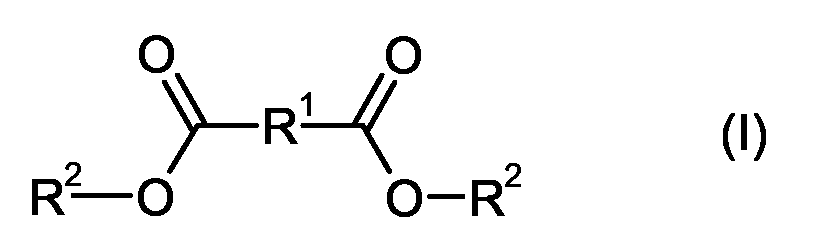
und R2 eine C7-C13 Alkylgruppe darstellt, die gegebenenfalls verzweigt ist;
and R 2 represents a C 7 -C 13 alkyl group which is optionally branched;
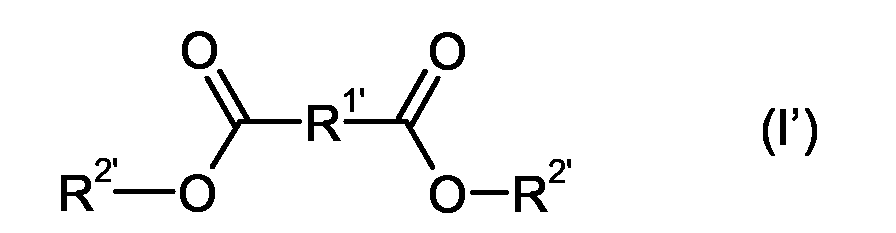
und R2' eine C7-C13 Alkylgruppe darstellt, die gegebenenfalls verzweigt ist.A polyurethane composition according to any one of the preceding claims, characterized in that the polyurethane composition additionally contains at least one compound C 'of the formula (I')
and R 2 'represents a C 7 -C 13 alkyl group which is optionally branched.
Priority Applications (8)
| Application Number | Priority Date | Filing Date | Title |
|---|---|---|---|
| EP04102004A EP1595902A1 (en) | 2004-05-10 | 2004-05-10 | Polyurethane composition having high early strength |
| BR112012033473A BR112012033473A2 (en) | 2004-05-10 | 2005-05-10 | high initial strength polyurethane composition |
| JP2007512206A JP5107030B2 (en) | 2004-05-10 | 2005-05-10 | Polyurethane composition having high initial strength |
| CA002564992A CA2564992A1 (en) | 2004-05-10 | 2005-05-10 | Polyurethane composition with high early strength |
| CN2005800148915A CN1950415B (en) | 2004-05-10 | 2005-05-10 | Polyurethane composition with high initial strength |
| EP05742669A EP1751205A1 (en) | 2004-05-10 | 2005-05-10 | Polyurethane composition with high early strength |
| PCT/EP2005/052096 WO2005108456A1 (en) | 2004-05-10 | 2005-05-10 | Polyurethane composition with high early strength |
| US11/579,997 US20080289761A1 (en) | 2004-05-10 | 2005-05-10 | Polyurethane Composition with High Early Strength |
Applications Claiming Priority (1)
| Application Number | Priority Date | Filing Date | Title |
|---|---|---|---|
| EP04102004A EP1595902A1 (en) | 2004-05-10 | 2004-05-10 | Polyurethane composition having high early strength |
Publications (1)
| Publication Number | Publication Date |
|---|---|
| EP1595902A1 true EP1595902A1 (en) | 2005-11-16 |
Family
ID=34929078
Family Applications (2)
| Application Number | Title | Priority Date | Filing Date |
|---|---|---|---|
| EP04102004A Withdrawn EP1595902A1 (en) | 2004-05-10 | 2004-05-10 | Polyurethane composition having high early strength |
| EP05742669A Withdrawn EP1751205A1 (en) | 2004-05-10 | 2005-05-10 | Polyurethane composition with high early strength |
Family Applications After (1)
| Application Number | Title | Priority Date | Filing Date |
|---|---|---|---|
| EP05742669A Withdrawn EP1751205A1 (en) | 2004-05-10 | 2005-05-10 | Polyurethane composition with high early strength |
Country Status (7)
| Country | Link |
|---|---|
| US (1) | US20080289761A1 (en) |
| EP (2) | EP1595902A1 (en) |
| JP (1) | JP5107030B2 (en) |
| CN (1) | CN1950415B (en) |
| BR (1) | BR112012033473A2 (en) |
| CA (1) | CA2564992A1 (en) |
| WO (1) | WO2005108456A1 (en) |
Cited By (4)
| Publication number | Priority date | Publication date | Assignee | Title |
|---|---|---|---|---|
| WO2007124868A1 (en) * | 2006-05-02 | 2007-11-08 | Bayer Materialscience Ag | Moisture-curing adhesives and sealants |
| CN100487015C (en) * | 2006-10-09 | 2009-05-13 | 北京科聚化工新材料有限公司 | Polyurethane prepolymer and its preparing method and use |
| EP2493951B1 (en) | 2009-10-27 | 2018-07-11 | Henkel AG & Co. KGaA | Pu adhesive having viscosity regulator |
| CN111117548A (en) * | 2018-10-30 | 2020-05-08 | 浙江华峰热塑性聚氨酯有限公司 | Thermoplastic polyurethane adhesive and preparation thereof |
Families Citing this family (25)
| Publication number | Priority date | Publication date | Assignee | Title |
|---|---|---|---|---|
| US7199165B2 (en) | 2003-06-26 | 2007-04-03 | L & L Products, Inc. | Expandable material |
| US7361292B2 (en) * | 2004-11-08 | 2008-04-22 | Dow Global Technologies Inc. | High modulus, nonconductive adhesive useful for installing vehicle windows |
| EP1829917A1 (en) | 2006-03-02 | 2007-09-05 | Sika Technology AG | Without primer connecting thermally cured silicone hard coat |
| JP5303899B2 (en) * | 2006-10-27 | 2013-10-02 | 旭硝子株式会社 | One-part moisture curable adhesive |
| GB0806434D0 (en) | 2008-04-09 | 2008-05-14 | Zephyros Inc | Improvements in or relating to structural adhesives |
| JP6178542B2 (en) | 2008-12-23 | 2017-08-09 | ダウ グローバル テクノロジーズ エルエルシー | Adhesives useful in vehicle window mounting that provide quick travel time |
| GB0916205D0 (en) | 2009-09-15 | 2009-10-28 | Zephyros Inc | Improvements in or relating to cavity filling |
| US9096039B2 (en) | 2010-03-04 | 2015-08-04 | Zephyros, Inc. | Structural composite laminates |
| CN110791246B (en) * | 2012-04-16 | 2022-04-22 | 沙特阿美技术公司 | Adhesive composition and method |
| WO2014179091A1 (en) | 2013-05-02 | 2014-11-06 | Dow Global Technologies Llc | Rapid drive away time adhesive for installing vehicle windows |
| CN105722933A (en) | 2013-07-26 | 2016-06-29 | 泽费罗斯股份有限公司 | Improvements in or relating to thermosetting adhesive films |
| CN106257984B (en) | 2014-05-08 | 2019-08-30 | 陶氏环球技术有限责任公司 | Accelerated curing of moisture-curable polyurethane adhesive compositions useful for bonding glass |
| GB201417985D0 (en) | 2014-10-10 | 2014-11-26 | Zephyros Inc | Improvements in or relating to structural adhesives |
| CN104893644A (en) * | 2015-06-09 | 2015-09-09 | 中国科学技术大学 | Solvent type polyurethane structure adhesive and preparation method thereof |
| US10400145B2 (en) * | 2015-06-18 | 2019-09-03 | Dow Global Technologies Llc | Latent two-part polyurethane adhesives cured with infrared radiation |
| EP3328913B1 (en) * | 2015-07-30 | 2021-12-01 | Sika Technology AG | Hydrophobic, highly elastic two-component polyurethane compound with mechanical properties and adhesive properties which are not dependent on the temperature |
| JP6759740B2 (en) * | 2016-06-14 | 2020-09-23 | Dic株式会社 | Moisture-curable polyurethane hot-melt adhesive and bookbinding adhesive |
| BR112019011449B1 (en) * | 2016-12-26 | 2022-11-01 | Akzo Nobel Coatings International B.V. | COATING COMPOSITION SYSTEM AND METHOD FOR FORMING A STAIN-RESISTANT AND SOFT TACTILE TEXTURE COATING ON A SUBSTRATE AND ARTICLE |
| WO2018132242A1 (en) | 2017-01-11 | 2018-07-19 | Dow Global Technologies Llc | Polyurethane glass bonding adhesive with reduced slippage |
| FR3079840B1 (en) * | 2018-04-04 | 2020-11-20 | Bostik Sa | COMPOSITION BASED ON POLYURETHANE |
| CN113348074A (en) * | 2018-11-30 | 2021-09-03 | 康宁股份有限公司 | Thin multilayer laminate |
| CN114008166A (en) | 2019-06-25 | 2022-02-01 | Ddp特种电子材料美国有限责任公司 | Accelerated cure polyurethane adhesive compositions |
| CN112898939B (en) * | 2019-12-03 | 2023-04-28 | Sika技术股份公司 | Primer-free fast curing polyurethane compositions with low total VOC content |
| WO2022122782A1 (en) | 2020-12-08 | 2022-06-16 | Zephyros, Inc. | Composition comprising silyl-modified prepolymer and highly structured carbon black |
| CN114292616B (en) * | 2021-12-30 | 2022-06-07 | 江苏卧尔康家居用品有限公司 | Polyurethane resin adhesive |
Citations (5)
| Publication number | Priority date | Publication date | Assignee | Title |
|---|---|---|---|---|
| US5421876A (en) * | 1990-12-21 | 1995-06-06 | Tremco, Inc. | Solvent-free, organoclay-filled asphaltic polyurethane dispersion and method of making and using it |
| WO2000046320A1 (en) * | 1999-02-05 | 2000-08-10 | The Dow Chemical Company | Polyurethane sealant compositions |
| WO2002092714A1 (en) * | 2001-05-15 | 2002-11-21 | Sika Corporation Usa | Polyurethane adhesive for windshield applications |
| US20030144412A1 (en) * | 2001-12-27 | 2003-07-31 | Akihiro Miyata | Polyurethane compositions |
| US6657035B1 (en) * | 2000-01-19 | 2003-12-02 | Sunstar Giken Kabushiki Kaisha | Moisture-curable one-pack-type urethane adhesive composition |
Family Cites Families (5)
| Publication number | Priority date | Publication date | Assignee | Title |
|---|---|---|---|---|
| CH669955A5 (en) * | 1986-08-04 | 1989-04-28 | Sika Ag | |
| CN1075103C (en) * | 1998-09-21 | 2001-11-21 | 深圳市奥博胶粘剂化工有限公司 | Polyurethane adhesives/sealant composition, precursor and preparation process thereof |
| JP2001192637A (en) * | 2000-01-13 | 2001-07-17 | Sunstar Eng Inc | Moisture-curing one-pack type urethane adhesive composition |
| JP4053415B2 (en) * | 2001-12-27 | 2008-02-27 | 横浜ゴム株式会社 | Polyurethane composition |
| CN1281702C (en) * | 2002-06-07 | 2006-10-25 | 丛树枫 | Preparing process and application of wet-solidifying single-component polyurethane adhesive |
-
2004
- 2004-05-10 EP EP04102004A patent/EP1595902A1/en not_active Withdrawn
-
2005
- 2005-05-10 WO PCT/EP2005/052096 patent/WO2005108456A1/en not_active Ceased
- 2005-05-10 CN CN2005800148915A patent/CN1950415B/en not_active Expired - Fee Related
- 2005-05-10 EP EP05742669A patent/EP1751205A1/en not_active Withdrawn
- 2005-05-10 BR BR112012033473A patent/BR112012033473A2/en unknown
- 2005-05-10 JP JP2007512206A patent/JP5107030B2/en not_active Expired - Fee Related
- 2005-05-10 US US11/579,997 patent/US20080289761A1/en not_active Abandoned
- 2005-05-10 CA CA002564992A patent/CA2564992A1/en not_active Abandoned
Patent Citations (5)
| Publication number | Priority date | Publication date | Assignee | Title |
|---|---|---|---|---|
| US5421876A (en) * | 1990-12-21 | 1995-06-06 | Tremco, Inc. | Solvent-free, organoclay-filled asphaltic polyurethane dispersion and method of making and using it |
| WO2000046320A1 (en) * | 1999-02-05 | 2000-08-10 | The Dow Chemical Company | Polyurethane sealant compositions |
| US6657035B1 (en) * | 2000-01-19 | 2003-12-02 | Sunstar Giken Kabushiki Kaisha | Moisture-curable one-pack-type urethane adhesive composition |
| WO2002092714A1 (en) * | 2001-05-15 | 2002-11-21 | Sika Corporation Usa | Polyurethane adhesive for windshield applications |
| US20030144412A1 (en) * | 2001-12-27 | 2003-07-31 | Akihiro Miyata | Polyurethane compositions |
Cited By (5)
| Publication number | Priority date | Publication date | Assignee | Title |
|---|---|---|---|---|
| WO2007124868A1 (en) * | 2006-05-02 | 2007-11-08 | Bayer Materialscience Ag | Moisture-curing adhesives and sealants |
| CN100487015C (en) * | 2006-10-09 | 2009-05-13 | 北京科聚化工新材料有限公司 | Polyurethane prepolymer and its preparing method and use |
| EP2493951B1 (en) | 2009-10-27 | 2018-07-11 | Henkel AG & Co. KGaA | Pu adhesive having viscosity regulator |
| CN111117548A (en) * | 2018-10-30 | 2020-05-08 | 浙江华峰热塑性聚氨酯有限公司 | Thermoplastic polyurethane adhesive and preparation thereof |
| CN111117548B (en) * | 2018-10-30 | 2022-04-05 | 浙江华峰热塑性聚氨酯有限公司 | Thermoplastic polyurethane adhesive and preparation thereof |
Also Published As
| Publication number | Publication date |
|---|---|
| EP1751205A1 (en) | 2007-02-14 |
| JP5107030B2 (en) | 2012-12-26 |
| WO2005108456A1 (en) | 2005-11-17 |
| CN1950415B (en) | 2010-09-29 |
| CN1950415A (en) | 2007-04-18 |
| BR112012033473A2 (en) | 2016-11-29 |
| US20080289761A1 (en) | 2008-11-27 |
| JP2007536422A (en) | 2007-12-13 |
| CA2564992A1 (en) | 2005-11-17 |
Similar Documents
| Publication | Publication Date | Title |
|---|---|---|
| EP1751205A1 (en) | Polyurethane composition with high early strength | |
| EP0777695B2 (en) | Polyurethane compositions having a low content of monomer diisocyanates | |
| US7226523B2 (en) | Polyurethane adhesive for windshield applications | |
| EP0244608B1 (en) | Reactive hot-melt adhesive | |
| EP2038360B1 (en) | Humidity reactive hot melt adhesive with increased open time | |
| DE69124435T2 (en) | Reactive, "hotmelt" elastic sealing composition | |
| EP1470173B1 (en) | Two-constituent polyurethane composition having high early strength | |
| DE69520928T2 (en) | Moisture-curing urethane adhesive composition | |
| DE60010050T2 (en) | POLYURETHANE SEALING COMPOSITION | |
| EP0310704A2 (en) | Reactive thixotropic hot-melt adhesive based on silane | |
| EP2670785B1 (en) | Bonding agent composition | |
| EP2031001A1 (en) | Utilisation of a hot melt adhesive composition as primer | |
| JP2828917B2 (en) | Moisture-curable urethane sealant composition | |
| EP1711572A1 (en) | Thixotropic reactive composition | |
| JPH08170068A (en) | Moisture-curing urethane sealant composition | |
| EP4015558A1 (en) | Method for bead adhesion | |
| EP4255954B1 (en) | Thermosetting polyurethane compositions | |
| EP3824008A1 (en) | Structural polyurethane adhesive having good adhesion after short-duration heating | |
| EP2011809A1 (en) | Polyurethane compound containing tertiary amines and anhydrosilanes |
Legal Events
| Date | Code | Title | Description |
|---|---|---|---|
| PUAI | Public reference made under article 153(3) epc to a published international application that has entered the european phase |
Free format text: ORIGINAL CODE: 0009012 |
|
| AK | Designated contracting states |
Kind code of ref document: A1 Designated state(s): AT BE BG CH CY CZ DE DK EE ES FI FR GB GR HU IE IT LI LU MC NL PL PT RO SE SI SK TR |
|
| AX | Request for extension of the european patent |
Extension state: AL HR LT LV MK |
|
| AKX | Designation fees paid | ||
| REG | Reference to a national code |
Ref country code: DE Ref legal event code: 8566 |
|
| STAA | Information on the status of an ep patent application or granted ep patent |
Free format text: STATUS: THE APPLICATION IS DEEMED TO BE WITHDRAWN |
|
| 18D | Application deemed to be withdrawn |
Effective date: 20060517 |