EP1596540A2 - Verfahren zum Aufbau eines Ad-Hoc-Netzwerkes und entsprechendes Computerprogrammprodukt - Google Patents
Verfahren zum Aufbau eines Ad-Hoc-Netzwerkes und entsprechendes Computerprogrammprodukt Download PDFInfo
- Publication number
- EP1596540A2 EP1596540A2 EP05007565A EP05007565A EP1596540A2 EP 1596540 A2 EP1596540 A2 EP 1596540A2 EP 05007565 A EP05007565 A EP 05007565A EP 05007565 A EP05007565 A EP 05007565A EP 1596540 A2 EP1596540 A2 EP 1596540A2
- Authority
- EP
- European Patent Office
- Prior art keywords
- cell
- subscriber
- network
- participants
- name
- Prior art date
- Legal status (The legal status is an assumption and is not a legal conclusion. Google has not performed a legal analysis and makes no representation as to the accuracy of the status listed.)
- Granted
Links
- 238000000034 method Methods 0.000 title claims abstract description 26
- 238000004590 computer program Methods 0.000 title claims abstract 3
- 238000010276 construction Methods 0.000 claims abstract description 15
- 230000001419 dependent effect Effects 0.000 claims description 20
- 230000000977 initiatory effect Effects 0.000 claims description 6
- 230000001960 triggered effect Effects 0.000 description 5
- 238000004891 communication Methods 0.000 description 2
- 230000002349 favourable effect Effects 0.000 description 2
- 230000009286 beneficial effect Effects 0.000 description 1
- 238000005516 engineering process Methods 0.000 description 1
- 238000004519 manufacturing process Methods 0.000 description 1
- 238000000060 site-specific infrared dichroism spectroscopy Methods 0.000 description 1
- 230000002123 temporal effect Effects 0.000 description 1
Images

Classifications
-
- H—ELECTRICITY
- H04—ELECTRIC COMMUNICATION TECHNIQUE
- H04W—WIRELESS COMMUNICATION NETWORKS
- H04W84/00—Network topologies
- H04W84/18—Self-organising networks, e.g. ad-hoc networks or sensor networks
-
- H—ELECTRICITY
- H04—ELECTRIC COMMUNICATION TECHNIQUE
- H04L—TRANSMISSION OF DIGITAL INFORMATION, e.g. TELEGRAPHIC COMMUNICATION
- H04L61/00—Network arrangements, protocols or services for addressing or naming
- H04L61/50—Address allocation
- H04L61/5038—Address allocation for local use, e.g. in LAN or USB networks, or in a controller area network [CAN]
-
- H—ELECTRICITY
- H04—ELECTRIC COMMUNICATION TECHNIQUE
- H04L—TRANSMISSION OF DIGITAL INFORMATION, e.g. TELEGRAPHIC COMMUNICATION
- H04L2101/00—Indexing scheme associated with group H04L61/00
- H04L2101/30—Types of network names
- H04L2101/375—Access point names [APN]
-
- H—ELECTRICITY
- H04—ELECTRIC COMMUNICATION TECHNIQUE
- H04L—TRANSMISSION OF DIGITAL INFORMATION, e.g. TELEGRAPHIC COMMUNICATION
- H04L61/00—Network arrangements, protocols or services for addressing or naming
- H04L61/30—Managing network names, e.g. use of aliases or nicknames
-
- H—ELECTRICITY
- H04—ELECTRIC COMMUNICATION TECHNIQUE
- H04W—WIRELESS COMMUNICATION NETWORKS
- H04W48/00—Access restriction; Network selection; Access point selection
- H04W48/16—Discovering, processing access restriction or access information
-
- H—ELECTRICITY
- H04—ELECTRIC COMMUNICATION TECHNIQUE
- H04W—WIRELESS COMMUNICATION NETWORKS
- H04W8/00—Network data management
- H04W8/26—Network addressing or numbering for mobility support
-
- H—ELECTRICITY
- H04—ELECTRIC COMMUNICATION TECHNIQUE
- H04W—WIRELESS COMMUNICATION NETWORKS
- H04W84/00—Network topologies
- H04W84/18—Self-organising networks, e.g. ad-hoc networks or sensor networks
- H04W84/20—Leader-follower arrangements
Definitions
- the invention relates to a method for setting up an ad hoc network between several participants with the steps: Providing a contactless interface for the participants and constructing a network cell with a cell name, in the a abutting the participants a special status receives.
- An ad hoc network is a lot of wireless mobile nodes, which is a temporary network without existing network infrastructure and have no central administration. In this case, the participating computers have all incurred infrastructure tasks take.
- Application areas for ad hoc networks can be found especially in meetings in which the meeting attendees notebook, pocket computer or use mobile database devices. This should be the possibility be created to exchange data with each other. Further Fields of application are rescue missions or a home network.
- the prior art discloses methods for setting up ad hoc networks known to be exemplary of the Microsoft "Wireless Zero Configuration "service is called problematic in these networks that building a network cell with several participants is very cumbersome and extensive Knowledge of computer hardware and network technologies requires, so that ad hoc networks in many Cases due to the complexity of building a network cell not be used.
- a network cell In the construction of a network cell is the participants Cell name given to a participant, the network would like to join this cell name. As it is on ad hoc networks are wireless networks theoretically the ability to join different networks even if they are in other rooms or other buildings but their reach extends to the affected area User extends. About the cell name is ensured that you only become a participant in the network where you want to participate.
- the object of the invention is to provide a method for constructing a Specify an ad hoc network that has a unique recognition and a solution to the conflict in case of simultaneous creation identically named ad hoc network cells are.
- This object is achieved by a method of the aforementioned Kind solved, which is characterized in that ensured is that in a specified by their cell name Network cell no more than one participant one Receives special status by the initiation of cell construction a subscriber-dependent identifier is specified, based determined is whether several participants triggered a cell structure have and countermeasures are taken if several Participants have triggered a cell structure.
- the advantage of the method according to the invention is that due to the subscriber-dependent identifier always unique It can be determined whether there are different names under a cell name Attendees try a network setup.
- An advantageous strategy for conflict resolution is to that the participant who tried first, the Building a network cell under the given cell name, the Special status receives. For this a timestamp can be provided by which the chronological order of the attempts to Structure of the network cell can be determined.
- the subscriber-dependent identifier consists of a first and a second part, wherein the first part of the planned cell name and the second part depends on the participant is.
- a subscriber-dependent identifier is a so-called MAC address, a processor ID or a UUID Cheap.
- a random string or a string entered by a user be used.
- FIG. 1 shows the arrangement of a plurality of devices, which interconnected to a wireless ad hoc network are.
- a notebook computer 1, a pocket computer 2 and a Desktop computers 3 each have an interface 5 for Establishing a wireless communication connection 4.
- the structure of a network cell is as shown of Figure 2.
- the construction of a network cell is by a first participant initiated in a step 30. this happens in that the first participant sends a command to his Network adapter sends a new ad hoc network cell founded. This is also called setting the SSID.
- the network cell is designed to have only one Participants with a special status are. Because of the temporal Delay between the initiation of the construction of a network cell and their availability may occur in the event that several Participants realize as the first participants and a command to build a network cell. This is then no problem if different cell names are chosen. However, if the same cell name is chosen, the Network cell unstable, because it is no longer clear who the participant with special status from which data is received should. The second participant with special status is also the connected to first cells, but would think that he was in it the only participant with special status is.
- step 40 is therefore checked whether it only one abutting participant or more Participants have triggered a cell structure. If it there is only one participant, so joining is more Participant in a step 60 unproblematic. Subsequently, in a step 70 applications be operated in the ad hoc network.
- Step 50 Countermeasures taken.
- one of the adjoining participants is determined to give this a special status. This can be, for example be done by the command to build a Network cell is provided with a time stamp and in the Step 50 of the participants with the older timestamp the Special status receives.
- An alternative to conflict resolution in the Step 50 is to provide the participant with a higher Number as the subscriber who has the special status receives.
- step 50 also the construction of the network cell will be aborted, so that A new impetus is needed to form an ad hoc network is.
- step 40 can be whether several participants triggered a cell structure to have. As explained above, it is to initiate the cell construction the specification of a cell name is required. this happens according to FIG. 3 in a step 31.
- a subscriber-dependent identifier to form, for example, by the automatic Add the MAC address of the network adapter of each Participant takes place. Instead of the full MAC address, which is a unique address worldwide and that is why very long, can only be part of the MAC address can be used.
- another device-specific Code can be used, for example one Processor ID or UUID, the latter being for "Universally Unique Identifier.
- UUID is currently available mainly in pocket computers. It but also other identifiers come into question, for example a random or pseudo-random string as well as a string entered by the respective participant.
- the method according to the invention is therefore an extension the command to the cell structure provided, because the cell structure used identifier is dependent on the participant, while the Cell name under which the network cell is operated for all participants of the network is uniform.
- step 40 After sending the cell build command in step 33 can be recognized in the subsequent step 40, whether straight several participants try to create a network under the same Build cell names.
- the part of the subscriber-dependent Identifier formed by the cell name indicates that that the same cell name is used in the construction should.
- the other part of the subscriber-dependent identifier, the is subscriber-specific, indicates that it is here is about different participants, the one cell construction nudge.
- a separate subscriber-dependent Parameter when initiating the construction of a network cell is an additional Parameter specified, namely a separate subscriber-dependent Parameter.
- the subscriber-dependent identifier is then identified by the cell name as the first parameter and the formed separate subscriber-dependent parameters.
- a temporary cell name is formed, by the cell name and a subscriber-specific parameter be hung together.
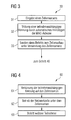
- FIG. 4 relates to the embodiment in which the Cell name and a subscriber-specific parameter are concatenated become.
- the subscriber-dependent identifier formed in this way may be very long, if the subscriber-specific parameters is very long. For attaching further participants in step 60 would be very time-consuming, to enter such a long identifier. In addition, this identifier must be communicated to the potential participants first. It So it is much more comfortable to attach more participants to the network cell under the cell name without the perform participant-specific parameters. In one Step 61, therefore, shortens the temporary cell name, so that the actual cell name remains. In step 62 the network cell is operated under the cell name so that the inclusion of further participants in step 63 below Use of the cell name can be done.
Landscapes
- Engineering & Computer Science (AREA)
- Computer Networks & Wireless Communication (AREA)
- Signal Processing (AREA)
- Mobile Radio Communication Systems (AREA)
- Small-Scale Networks (AREA)
Abstract
Description
- 1
- Notebook-Computer
- 2
- Pocket-Computer
- 3
- Desktop-Computer
- 4
- Kommunikationsverbindung
- 5
- kontaktlose Schnittstelle
Claims (11)
- Verfahren zum Aufbau eines Ad-hoc-Netzwerks zwischen mehreren Teilnehmern mit den Schritten:dadurch gekennzeichnet, dass sichergestellt ist, dass in einer durch ihren Zellennamen spezifizierten Netzwerkzelle nicht mehr als ein Teilnehmer einen Sonderstatus erhält, indemBereitstellen einer kontaktlosen Schnittstelle (5) für die Teilnehmer,Aufbau einer Netzwerkzelle mit einem Zellennamen, in der ein den Aufbau anstoßender Teilnehmer einen Sonderstatus erhält,beim Anstoß des Zellenaufbaus eine teilnehmerabhängige Kennung angegeben wird,anhand der teilnehmerabhängigen Kennung festgestellt wird, ob mehrere Teilnehmer einen Zellenaufbau angestoßen haben undGegenmaßnahmen ergriffen werden, wenn mehrere Teilnehmer einen Zellenaufbau angestoßen haben.
- Verfahren nach Anspruch 1,
dadurch gekennzeichnet, dass als Gegenmaßnahme nur einer der ermittelten Teilnehmer einen Sonderstatus erhält und anschließend die Zelle unter dem Zellennamen betrieben wird. - Verfahren nach Anspruch 2,
dadurch gekennzeichnet, dass zur Festlegung des Teilnehmers, der einen Sonderstatus erhält, der Zeitpunkt des Anstoßes des Aufbaus verwendet wird. - Verfahren nach Anspruch 1,
dadurch gekennzeichnet, dass zum Aufbau der Netzwerkzelle ein temporärer Zellenname gebildet wird, der aus dem Zellennamen und einem teilnehmerspezifischen Parameter besteht. - Verfahren nach Anspruch 4,
dadurch gekennzeichnet, dass zur Anmeldung weiterer Teilnehmer in der Netzwerkzelle der Zellenname verwendet wird. - Verfahren nach Anspruch 1,
dadurch gekennzeichnet, dass als Gegenmaßnahme der Zellenaufbau abgebrochen wird. - Verfahren nach Anspruch 1,
dadurch gekennzeichnet, dass die teilnehmerabhängige Kennung unter Verwendung eines gerätespezifischen Codes gebildet wird. - Verfahren nach Anspruch 7,
dadurch gekennzeichnet, dass der gerätespezifische Code eine MAC-Adresse, eine Prozessor-ID oder eine UUID verwendet wird. - Verfahren nach Anspruch 1,
dadurch gekennzeichnet, dass als teilnehmerabhängige Kennung eine zufällige Zeichenfolge verwendet wird. - Verfahren nach Anspruch 1,
dadurch gekennzeichnet, dass als teilnehmerabhängige Kennung eine durch einen Benutzer eingegebene Zeichenfolge verwendet wird. - Computerprogrammprodukt, das zur Durchführung des Verfahrens nach einem der Ansprüche 1 bis 10 eingerichtet ist.
Applications Claiming Priority (2)
| Application Number | Priority Date | Filing Date | Title |
|---|---|---|---|
| DE102004023298A DE102004023298A1 (de) | 2004-05-11 | 2004-05-11 | Verfahren zum Aufbau eines Ad-Hoc-Netzwerkes |
| DE102004023298 | 2004-05-11 |
Publications (3)
| Publication Number | Publication Date |
|---|---|
| EP1596540A2 true EP1596540A2 (de) | 2005-11-16 |
| EP1596540A3 EP1596540A3 (de) | 2010-07-14 |
| EP1596540B1 EP1596540B1 (de) | 2011-11-30 |
Family
ID=34934824
Family Applications (1)
| Application Number | Title | Priority Date | Filing Date |
|---|---|---|---|
| EP05007565A Expired - Lifetime EP1596540B1 (de) | 2004-05-11 | 2005-04-06 | Verfahren zum Aufbau eines Ad-Hoc-Netzwerkes und entsprechendes Computerprogrammprodukt |
Country Status (2)
| Country | Link |
|---|---|
| EP (1) | EP1596540B1 (de) |
| DE (1) | DE102004023298A1 (de) |
Citations (1)
| Publication number | Priority date | Publication date | Assignee | Title |
|---|---|---|---|---|
| EP1309128A2 (de) | 2001-10-30 | 2003-05-07 | Hewlett-Packard Company | Verfahren und System zum Anschliessen von Rechnernutzern an ein Ad-Hoc-Netz |
Family Cites Families (4)
| Publication number | Priority date | Publication date | Assignee | Title |
|---|---|---|---|---|
| JP3915481B2 (ja) * | 2001-11-14 | 2007-05-16 | セイコーエプソン株式会社 | 無線通信装置 |
| JP3937820B2 (ja) * | 2001-11-27 | 2007-06-27 | セイコーエプソン株式会社 | 無線ネットワークのアダプタ |
| US7016673B2 (en) * | 2002-10-01 | 2006-03-21 | Interdigital Technology Corporation | Wireless communication method and system with controlled WTRU peer-to-peer communications |
| JP4829635B2 (ja) * | 2006-02-17 | 2011-12-07 | キヤノン株式会社 | 通信装置、通信方法、ネットワークを構成する方法、通信システム |
-
2004
- 2004-05-11 DE DE102004023298A patent/DE102004023298A1/de not_active Withdrawn
-
2005
- 2005-04-06 EP EP05007565A patent/EP1596540B1/de not_active Expired - Lifetime
Patent Citations (1)
| Publication number | Priority date | Publication date | Assignee | Title |
|---|---|---|---|---|
| EP1309128A2 (de) | 2001-10-30 | 2003-05-07 | Hewlett-Packard Company | Verfahren und System zum Anschliessen von Rechnernutzern an ein Ad-Hoc-Netz |
Non-Patent Citations (1)
| Title |
|---|
| R. BRUNO, M. CONTI, E. GREGORI: "WLAN technologies for Mobile ad hoc Networks", PROCEEDINGS OF THE 34TH HAWAII INTERNATIONAL CONFERENCE ON SYSTEM SCIENCES, 2001 |
Also Published As
| Publication number | Publication date |
|---|---|
| EP1596540A3 (de) | 2010-07-14 |
| DE102004023298A1 (de) | 2005-12-08 |
| EP1596540B1 (de) | 2011-11-30 |
Similar Documents
| Publication | Publication Date | Title |
|---|---|---|
| DE60214927T2 (de) | Verfahren und Gerät zum Aufbauen einer Kommunikationsgruppe | |
| DE69821243T2 (de) | Rekonfigurierung eines zellularen telefonnetzes | |
| EP1897356B1 (de) | Verfahren und konferenzserver zum initialisieren von terminierten konferenzen | |
| DE102005010038B4 (de) | Verfahren zum Bereitstellen mehrerer Gruppen-Kommunikationsdienste, Gruppen-Kommunikationsdienst-System und Gruppen-Kommunikationsdienst-Server-Einheit | |
| DE69830242T2 (de) | Anordnung zur steuerung von netzelementen | |
| EP1596540B1 (de) | Verfahren zum Aufbau eines Ad-Hoc-Netzwerkes und entsprechendes Computerprogrammprodukt | |
| DE102004046858B4 (de) | Verfahren zur Bestimmung eines leitenden Teilnehmers in einem Netzwerk | |
| DE60300787T2 (de) | Bereitstellung von Diensten entfernten Terminal mit einem entfernten Endgerät | |
| EP1779613B1 (de) | Aufbau eines drahtungebundenen netzes unter ermittlung und nutzung lokaler topologie-information | |
| DE102007062734B3 (de) | Verfahren und Vorrichtung zum Betreiben einer Audio- und/oder Videokonferenz mit zumindest zwei Teilnehmern | |
| DE112019001163T5 (de) | Netzwerkadressierungsverfahren, leitstation und bodenstation | |
| DE102008039427A1 (de) | Parametrisierbare Auswahl eines Kommunikationssystems auf Basis von Namenauflösungsmechanismen | |
| EP4565000A1 (de) | Verfahren zur bildung eines punkt- zu punkt-netzwerks aus mehreren wlan-fähigen geräten | |
| DE102004023302B4 (de) | Verfahren zum Senden eines Bildschirminhalts einer ersten Datenverarbeitungsvorrichtung an eine zweite Datenverarbeitungsvorrichtung | |
| DE102013108309A1 (de) | Verfahren zum Konnektieren von Objekten in einer Softwareanwendung | |
| DE60300964T2 (de) | Generierung nutzerspezifischer Einstellungsdaten | |
| DE10046311B4 (de) | Verfahren für eine Zuweisung von Knotennummern zu Netzknoten eines Netzwerks | |
| DE102007009135B4 (de) | Verteilte Konferenz über Verbindung zwischen PBX und Konferenzbrücke | |
| EP1443714B1 (de) | Bluetooth-Administrator | |
| DE10138263A1 (de) | Hardware-Modul zu Ausbau von Endgeräten zu Ad-hoc-Netzwerk-fähigen Geräten | |
| EP1509004B1 (de) | Verfahren zum Betrieb zweier Teilnetze mit Buscharakter sowie Netzwerk | |
| EP1117036A2 (de) | Verfahren und Vorrichtung zum Zugriff auf ein Ad-hoc-Telekommunikationsnetz | |
| EP1505843B1 (de) | Kommunikationsverfahren zur Übertragung von Sprache und/oder Daten | |
| WO2009115259A1 (de) | Intergruppenkommunikation in einem kommunikationsnetzwerk | |
| EP3577925A1 (de) | Konfiguration zur ermöglichung einer kommunikation |
Legal Events
| Date | Code | Title | Description |
|---|---|---|---|
| PUAI | Public reference made under article 153(3) epc to a published international application that has entered the european phase |
Free format text: ORIGINAL CODE: 0009012 |
|
| AK | Designated contracting states |
Kind code of ref document: A2 Designated state(s): AT BE BG CH CY CZ DE DK EE ES FI FR GB GR HU IE IS IT LI LT LU MC NL PL PT RO SE SI SK TR |
|
| AX | Request for extension of the european patent |
Extension state: AL BA HR LV MK YU |
|
| PUAL | Search report despatched |
Free format text: ORIGINAL CODE: 0009013 |
|
| AK | Designated contracting states |
Kind code of ref document: A3 Designated state(s): AT BE BG CH CY CZ DE DK EE ES FI FR GB GR HU IE IS IT LI LT LU MC NL PL PT RO SE SI SK TR |
|
| AX | Request for extension of the european patent |
Extension state: AL BA HR LV MK YU |
|
| 17P | Request for examination filed |
Effective date: 20101109 |
|
| 17Q | First examination report despatched |
Effective date: 20101203 |
|
| AKX | Designation fees paid |
Designated state(s): DE FR GB |
|
| RAP1 | Party data changed (applicant data changed or rights of an application transferred) |
Owner name: FUJITSU TECHNOLOGY SOLUTIONS INTELLECTUAL PROPERTY |
|
| REG | Reference to a national code |
Ref country code: DE Ref legal event code: R079 Ref document number: 502005012186 Country of ref document: DE Free format text: PREVIOUS MAIN CLASS: H04L0012560000 Ipc: H04W0084180000 |
|
| RIC1 | Information provided on ipc code assigned before grant |
Ipc: H04W 8/26 20090101ALN20110427BHEP Ipc: H04W 84/20 20090101ALN20110427BHEP Ipc: H04L 12/56 20060101ALI20110427BHEP Ipc: H04W 84/18 20090101AFI20110427BHEP Ipc: H04W 48/16 20090101ALN20110427BHEP |
|
| GRAP | Despatch of communication of intention to grant a patent |
Free format text: ORIGINAL CODE: EPIDOSNIGR1 |
|
| GRAS | Grant fee paid |
Free format text: ORIGINAL CODE: EPIDOSNIGR3 |
|
| GRAA | (expected) grant |
Free format text: ORIGINAL CODE: 0009210 |
|
| AK | Designated contracting states |
Kind code of ref document: B1 Designated state(s): DE FR GB |
|
| REG | Reference to a national code |
Ref country code: GB Ref legal event code: FG4D Free format text: NOT ENGLISH |
|
| REG | Reference to a national code |
Ref country code: DE Ref legal event code: R096 Ref document number: 502005012186 Country of ref document: DE Effective date: 20120202 |
|
| PLBE | No opposition filed within time limit |
Free format text: ORIGINAL CODE: 0009261 |
|
| STAA | Information on the status of an ep patent application or granted ep patent |
Free format text: STATUS: NO OPPOSITION FILED WITHIN TIME LIMIT |
|
| 26N | No opposition filed |
Effective date: 20120831 |
|
| REG | Reference to a national code |
Ref country code: DE Ref legal event code: R097 Ref document number: 502005012186 Country of ref document: DE Effective date: 20120831 |
|
| REG | Reference to a national code |
Ref country code: FR Ref legal event code: PLFP Year of fee payment: 12 |
|
| PGFP | Annual fee paid to national office [announced via postgrant information from national office to epo] |
Ref country code: DE Payment date: 20160421 Year of fee payment: 12 Ref country code: GB Payment date: 20160422 Year of fee payment: 12 |
|
| PGFP | Annual fee paid to national office [announced via postgrant information from national office to epo] |
Ref country code: FR Payment date: 20160422 Year of fee payment: 12 |
|
| REG | Reference to a national code |
Ref country code: DE Ref legal event code: R119 Ref document number: 502005012186 Country of ref document: DE |
|
| GBPC | Gb: european patent ceased through non-payment of renewal fee |
Effective date: 20170406 |
|
| REG | Reference to a national code |
Ref country code: FR Ref legal event code: ST Effective date: 20171229 |
|
| PG25 | Lapsed in a contracting state [announced via postgrant information from national office to epo] |
Ref country code: FR Free format text: LAPSE BECAUSE OF NON-PAYMENT OF DUE FEES Effective date: 20170502 Ref country code: DE Free format text: LAPSE BECAUSE OF NON-PAYMENT OF DUE FEES Effective date: 20171103 |
|
| PG25 | Lapsed in a contracting state [announced via postgrant information from national office to epo] |
Ref country code: GB Free format text: LAPSE BECAUSE OF NON-PAYMENT OF DUE FEES Effective date: 20170406 |