EP1596607B1 - Verfahren und Anordnung zur Erzeugung von Kandidatenvektoren für Bildinterpolierungssyteme, die Bewegungsabschätzung und -kompensation verwenden - Google Patents
Verfahren und Anordnung zur Erzeugung von Kandidatenvektoren für Bildinterpolierungssyteme, die Bewegungsabschätzung und -kompensation verwenden Download PDFInfo
- Publication number
- EP1596607B1 EP1596607B1 EP05290918A EP05290918A EP1596607B1 EP 1596607 B1 EP1596607 B1 EP 1596607B1 EP 05290918 A EP05290918 A EP 05290918A EP 05290918 A EP05290918 A EP 05290918A EP 1596607 B1 EP1596607 B1 EP 1596607B1
- Authority
- EP
- European Patent Office
- Prior art keywords
- pixels
- image
- block
- motion vector
- confidence value
- Prior art date
- Legal status (The legal status is an assumption and is not a legal conclusion. Google has not performed a legal analysis and makes no representation as to the accuracy of the status listed.)
- Expired - Lifetime
Links
- 239000013598 vector Substances 0.000 title claims description 162
- 230000033001 locomotion Effects 0.000 title claims description 141
- 238000000034 method Methods 0.000 title claims description 34
- 238000012545 processing Methods 0.000 claims description 9
- 238000004590 computer program Methods 0.000 claims description 2
- 238000004364 calculation method Methods 0.000 description 8
- 230000006870 function Effects 0.000 description 7
- 238000013519 translation Methods 0.000 description 7
- 238000004422 calculation algorithm Methods 0.000 description 2
- 238000006243 chemical reaction Methods 0.000 description 2
- 238000012804 iterative process Methods 0.000 description 2
- 238000009877 rendering Methods 0.000 description 2
- 235000019013 Viburnum opulus Nutrition 0.000 description 1
- 244000071378 Viburnum opulus Species 0.000 description 1
- 230000002457 bidirectional effect Effects 0.000 description 1
- 230000005540 biological transmission Effects 0.000 description 1
- 238000007906 compression Methods 0.000 description 1
- 230000006835 compression Effects 0.000 description 1
- 238000013144 data compression Methods 0.000 description 1
- 238000006073 displacement reaction Methods 0.000 description 1
- 238000003780 insertion Methods 0.000 description 1
- 230000037431 insertion Effects 0.000 description 1
- 238000003672 processing method Methods 0.000 description 1
- 230000002123 temporal effect Effects 0.000 description 1
- 238000012546 transfer Methods 0.000 description 1
Images
Classifications
-
- H—ELECTRICITY
- H04—ELECTRIC COMMUNICATION TECHNIQUE
- H04N—PICTORIAL COMMUNICATION, e.g. TELEVISION
- H04N5/00—Details of television systems
- H04N5/14—Picture signal circuitry for video frequency region
- H04N5/144—Movement detection
- H04N5/145—Movement estimation
-
- H—ELECTRICITY
- H04—ELECTRIC COMMUNICATION TECHNIQUE
- H04N—PICTORIAL COMMUNICATION, e.g. TELEVISION
- H04N19/00—Methods or arrangements for coding, decoding, compressing or decompressing digital video signals
- H04N19/50—Methods or arrangements for coding, decoding, compressing or decompressing digital video signals using predictive coding
- H04N19/503—Methods or arrangements for coding, decoding, compressing or decompressing digital video signals using predictive coding involving temporal prediction
- H04N19/51—Motion estimation or motion compensation
- H04N19/577—Motion compensation with bidirectional frame interpolation, i.e. using B-pictures
Definitions
- the present invention relates to the field of sequential display of images, and more specifically, to image processing methods for image encoding or image insertion, within a sequence of images. video or movie type images.
- the frame rate (number of frames per second) is insufficient for a quality display.
- additional images are generated via an interpolation function and displayed between original images to increase the frame rate and improve the quality of the display.
- An interpolation function of this type conventionally calculates the value of the pixels of an interpolated image as a function, in particular, of the value of the pixels of the previous original image and / or the value of the pixels of the original image. next.
- Such an interpolation function is based on the correlation that exists between successive images of a video or a film. Indeed, in a sequence of video images, moving subjects generally appear in respective different areas of several consecutive images. Therefore, interpolated images are generated from previous and / or subsequent original image portions.
- An image is classically divided into blocks of pixels and it is assumed that each block is substantially identical to one image to another even if there has been a movement of this block between two images.
- an image is interpolated from original images by searching for each current block of the image being interpolated, that of the blocks of a previous original image and / or an image. next origin that is most likely.
- Estimation and / or motion compensation methods provide block search methods adapted to the generation of interpolated images.
- a correlation between the parts of the consecutive images where a moving object appears can be expressed via a motion vector.
- the latter represents the movement of a block of pixels from one image to another. It has a vertical component and a horizontal component, representing the displacement that must be applied to a block of a previous image to arrive at the position of a substantially identical block of pixels in a subsequent image.
- Such methods are conventionally used in video data compression systems, such as systems based on the MPEG standard. Such systems make it possible to reduce the quantity of image data to be transmitted or memorized by compressing this data in order to enable their rapid transfer over digital networks or even telephone lines or their recording on digital media. As a result, only some reference images are encoded and transmitted and, on the receiving side, the missing intermediate images are interpolated according to the motion vectors transmitted with the encoded images.
- the missing images are interpolated on the basis of the information received with the coded reference images, this interpolation comprising the determination of a value of the pixels of each block of these missing images.
- reference images are equivalent to the terms "original images”.
- Some interlaced image display systems also use estimation and / or motion compensation methods.
- Image rate conversion devices also implement such methods. Indeed, these devices make it possible to increase a bit rate of original images by generating additional images by interpolation of the original images. These devices are conventionally used to adapt image rates between a system for generating, encoding, transmitting and / or storing images on the one hand, and a system for displaying images on the other hand, which involve different image rates.
- the image to be interpolated is divided into blocks.
- candidate vectors are generated.
- a block is selected in the previous original image and a block in the next original image, each corresponding to a translation of the position of the current block relative to the candidate vector. Then we calculate the correlation between the selected block of the previous image and the selected block of the next image. The motion vector giving the greatest correlation is chosen.
- the current block is then interpolated from the block in the previous original image and the block in the next original image that are determined by the elected candidate vector.
- processed image refers to images divided into a plurality of blocks and for each of which a motion vector has been elected. Thus, by interpolation of processed images, interpolated images are generated.
- motion estimation is based on the assumption that a block of pixels of the image being processed can be modeled as a translation of a block of pixels of the previous original image and / or a block of pixels in the next image.
- a motion vector associated with each block of pixels of a processed image represents this translational movement. Then, by applying to each of the pixel blocks of the previous original image and / or to each of the pixel blocks of the next original image a respective translation corresponding to the associated motion vector, each current block is generated. of the image being processed.
- motion estimation methods are known in which, for a current block of an image being processed, candidate vectors are generated from motion vectors already associated with blocks of pixels. images already processed, or already associated with neighboring pixel blocks of the current pixel block of the image being processed. Such methods are therefore of iterative type.
- One of the problems of iterative processes is the phenomenon of convergence. Indeed, such an iterative type method may not converge when it associates a motion vector with a current block of pixels while this motion vector does not give a great correlation for this block of pixels. This can occur especially when, among the candidate motion vectors selected for a block of pixels, none gives a satisfactory correlation. In general, in this case, the candidate motion vector with the greatest relative correlation is elected for be associated with the pixel block. It is thus understood that motion vectors, not giving a great absolute correlation, can be associated with blocks of pixels and from there can then be selected as candidate motion vectors for other pixel block processes. This phenomenon "snowball" of an iterative type process can cause such a process to diverge critically.
- EP 0 874 523 A1 discloses a method of increasing the frame rate of a signal using motion estimation and compensation for video applications. For each image block is associated a motion vector that is determined from a candidate vector to which small perturbations have been applied.
- the candidate vector is itself chosen using fuzzy logic rules from motion vectors of neighboring blocks (spatially and temporally).
- the present invention aims to further improve the phenomenon of convergence of motion estimation methods.
- a third aspect of the invention provides a computer program product directly loadable into the internal memory of a digital computer, comprising portions of software code for performing the steps of the method according to the first aspect.
- a motion vector associated with a given block of pixels of an image processed or being processed represents the translation of each pixel of the block from a previous original image to the current image from the image being processed to the next original image. It should be noted that this motion representation is in fact only approximate. As a result, some of the pixels of the current block thus translated are not found in the previous original image and / or the next original image. Sometimes, a motion vector associated with a block proves to be very unreliable as to the representation of the real movement of all the pixels of the block. It seems wise not to rely directly on unreliable motion vector values, already associated with blocks of pixels, for the generation of candidate vectors for a block of pixels currently being processed.
- a confidence value is determined for this motion vector. So the generation of motion vectors candidates can be advantageously performed taking into account the confidence value of the motion vectors.
- the present invention further proposes to generate candidate motion vectors from motion vectors already associated with blocks of processed image pixels or images being processed by adding to them an update vector determined according to the confidence value that is relative to said motion vector.
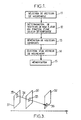
- Figure 1 illustrates the main steps performed for each block of pixels of an image being processed in a method according to an embodiment of the invention.
- Motion vectors associated with blocks of an image already processed or already associated with blocks of an image being processed, step 11, are selected.
- a vector of update, step 12 according to the confidence value of the respective motion vector.
- candidate motion vectors are generated from the selected motion vectors and their respective update vector, step 13.
- the motion vector is then selected from among the candidate motion vectors thus generated most suitable for the block. during processing, step 14.
- information is memorized associating the elected motion vector with the block of pixels being processed, step 15.
- a motion vector and a respective confidence value are thus determined and stored.
- motion vectors already associated with blocks of a previous processed image and / or neighboring blocks in the image during processing are selected, step 11.
- a confidence value corresponding to each of these selected motion vectors is determined.
- a relatively high confidence value i.e. a motion vector
- a motion vector is added to a motion vector to which it corresponds. representing in a relatively faithful manner the movement of all the pixels of the block with which it is associated, an update vector whose standard is relatively low.
- a relatively small confidence value is added to a motion vector to which it corresponds, that is to say a motion vector representing in a relatively unreliable manner the movement of all the pixels of the block with which it is associated. an update vector whose standard is relatively high.
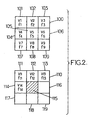
- FIG. 2 illustrates the principle of an exemplary implementation of such an iterative type method in which motion vectors are selected from motion vectors associated with respective blocks of pixels of the image being processed. and motion vectors associated with respective blocks of pixels of an already processed image, respectively called spatial motion vectors and temporal motion vectors.
- an already processed image 100 comprises 9 pixel blocks 101-109, each of which is associated with a respective motion vector V1-V9.
- An image being processed 110 comprises 9 blocks of pixels 111-119 among which blocks 111-114 have already been processed and block 115 is being processed.
- a motion vector and a confidence value are stored in a suitable memory.
- the motion vectors V1-V14 and the respective confidence values f1-f14 are stored.
- the confidence value results from a correlation calculation between on the one hand the pixel values of a first block of pixels pointed by the candidate motion vector in the image of previous origin from the positions of the pixels of the current block of pixels to be processed, and secondly the pixel values of a second block of pixels pointed by the candidate motion vector in the next original image from the pixel positions of the current pixel block to be processed.
- This correlation calculation provides an error value associated with the motion vector associated with the block of pixels.
- Figure 3 illustrates such a correlation calculation. Indeed, a correlation calculation is carried out for a candidate vector 34 relative to a current block 33 of a picture being processed. This calculation is performed as a function of the pixel values of a first pixel block 35 in FIG. original image 31 pointed by the candidate vector 34 from the positions of the current block 33 and the pixel values of a block of pixels 36 in the original image 32 pointed by the candidate vector 34 from the positions of pixels of the current block 33.
- the confidence value is derived from a calculated error, for each of the candidate motion vectors, on the basis of a correlation between the values of the pixels of the current block and the values of the pixels of a block of pixels pointed by the candidate vector in the previous and / or next image.
- This embodiment applies in particular to compression systems. Indeed, in this type of system, at the time of association of a motion vector with the current block, the value of the pixels of the current block is available, this step being carried out on the transmission side, before transmitting the images. . We can calculate a correlation based on the values of the pixels that make up the current block itself.
- the present invention is not limited to these confidence value examples.
- the update vector has a random direction, and therefore independent of the confidence value, while the standard of the update vector is a function of the confidence value associated with it.
- the lower the confidence value the higher the standard of the update vector and vice versa.
- a confidence value is determined for each of these candidate vectors.
- the confidence value corresponds to a correlation error as previously described.
- the motion vector elected from the generated candidate vectors is the one for which the confidence value is the highest or the correlation error is the lowest.
- An information is then stored indicating the association of the current block with the elected motion vector, as well as the confidence value determined for this candidate vector respectively for the current block.
- the confidence value is coded on 2 bits.
- the processed image is interpolated by determining the values of the pixels of the current block as a function of the values of the pixels pointed by the motion vector elected in the previous original image from the positions of the pixels of the current pixel block. interpolating and / or values of the pixels pointed by the elected motion vector in the next original image from the positions of the pixels of the current block of pixels to be interpolated.
- the invention allows a better rendering of the image with regard to the fast movements and a better homogeneity of performance in the sequence of the images. It can advantageously be implemented in systems as defined in the introduction by improving the rendering of the images.
Landscapes
- Engineering & Computer Science (AREA)
- Multimedia (AREA)
- Signal Processing (AREA)
- Image Analysis (AREA)
- Compression Or Coding Systems Of Tv Signals (AREA)
Claims (14)
- Verfahren zur Bewegungsschätzung für die Verarbeitung von Bildern, die dazu bestimmt sind, jeweils zwischen einem vorhergehenden Bild und einem nachfolgenden Bild in eine Folge bestimmter Bilder eingefügt zu werden, wobei jedes Bild in eine Vielzahl von Pixel-Blöcken unterteilt ist und jedem Pixel-Block eines verarbeiteten Bildes ein Bewegungsvektor zugeordnet ist, wobei das Verfahren für einen aktuellen Pixel-Block eines Bildes während der Verarbeitung die folgenden Schritte umfasst:- Auswählen von Bewegungsvektoren, die Bewegungsvektoren aufweisen, die jeweils bestimmten Pixel-Blöcken des Bildes während der Verarbeitung zugeordnet sind, und/oder Bewegungsvektoren, die jeweils bestimmten Pixel-Blöcken eines bereits verarbeiteten Bildes zugeordnet sind (11);- Bestimmen eines zugeordneten Aktualisierungsvektors für jeden der auf diese Weise ausgewählten Bewegungsvektoren (12);- Erzeugen von Bewegungsvektor-Kandidaten, wobei jeder anhand eines ausgewählten Bewegungsvektors und des zugeordneten Aktualisierungsvektors definiert wird (13);- Wahl eines Bewegungsvektors aus den Bewegungsvektor-Kandidaten (14);- Speichern einer Information, die dem aktuellen Pixel-Block den gewählten Bewegungsvektor zuordnet (15);gemäß dem ein Konfidenzwert für jeden einem Block zugeordneten Bewegungsvektor berechnet und gespeichert wird; und
gemäß dem der Aktualisierungsvektor in Abhängigkeit von dem jeweiligen Konfidenzwert bestimmt wird. - Verfahren nach Anspruch 1,
gemäß dem der Konfidenzwert ein Fehlerwert ist, der berechnet wird auf der Grundlage einer Korrelation zwischen den Pixelwerten eines ersten Pixel-Blocks (35), der von dem gegebenen Bewegungsvektor-Kandidaten (34) in dem vorhergehenden Bild (31) anhand der Positionen der Pixel des aktuellen zu verarbeitenden Pixel-Blocks (33) bezeichnet ist, und/oder den Pixelwerten eines zweiten Pixel-Blocks (36), der von dem gegebenen Bewegungsvektor-Kandidaten (34) in dem nachfolgenden Bild (32) anhand der Positionen der Pixel des aktuellen zu verarbeitenden Pixel-Blocks (34) bezeichnet ist. - Verfahren nach Anspruch 1,
gemäß dem der Konfidenzwert von einem Fehler hergeleitet wird, der berechnet wird auf der Grundlage einer Korrelation zwischen den Pixelwerten des aktuellen Pixel-Blocks und den Pixelwerten eines Pixel-Blocks, der von dem gegebenen Bewegungsvektor-Kandidaten in dem vorhergehenden und/oder nachfolgenden Bild bezeichnet ist. - Verfahren nach einem der vorhergehenden Ansprüche,
gemäß dem die Norm des Aktualisierungsvektors in Abhängigkeit von dem jeweiligen Konfidenzwert bestimmt wird, während seine Richtung zufällig bestimmt wird. - Verfahren nach einem der vorhergehenden Ansprüche,
gemäß dem je geringer der Konfidenzwert ist, desto höher ist die Norm des Aktualisierungsvektors und umgekehrt. - Verfahren nach einem der vorhergehenden Ansprüche,
gemäß dem ein Konfidenzwert für jeden Bewegungsvektor-Kandidaten bestimmt wird und der Bewegungsvektor-Kandidat gewählt wird, für den der jeweilige Konfidenzwert am höchsten ist. - Verfahren nach einem der vorhergehenden Ansprüche,
gemäß dem eine Interpolation des verarbeiteten Bildes erfolgt durch Bestimmen der Pixelwerte des aktuellen Blocks in Abhängigkeit von den Werten der Pixel, die durch den gewählten Bewegungsvektor in dem vorhergehenden Bild anhand der Positionen der Pixel des aktuellen zu interpolierenden Pixel-Blocks bezeichnet sind, und/oder den Werten der Pixel, die durch den gewählten Bewegungsvektor in dem nachfolgenden Bild anhand der Positionen der Pixel des aktuellen zu interpolierenden Pixel-Blocks bezeichnet sind. - Vorrichtung zur Bewegungsschätzung für die Verarbeitung von Bildern, die dazu bestimmt sind, jeweils zwischen einem vorhergehenden Bild und einem nachfolgenden Bild in eine Folge bestimmter Bilder eingefügt zu werden, wobei jedes Bild in eine Vielzahl von Pixel-Blöcken unterteilt ist und jedem Pixel-Block eines verarbeiteten Bildes ein Bewegungsvektor zugeordnet ist, wobei die Vorrichtung Mittel zur Verarbeitung eines aktuellen Pixel-Blocks eines Bildes während der Verarbeitung aufweist, die umfassen:- eine Auswahleinheit zum Auswählen von Bewegungsvektoren, die Bewegungsvektoren aufweisen, die den jeweiligen Pixel-Blöcken des Bildes während der Verarbeitung zugeordnet sind, und/oder Bewegungsvektoren, die jeweils bestimmten Pixel-Blöcken eines bereits verarbeiteten Bildes zugeordnet sind;- eine Bestimmungseinheit zum Bestimmen eines zugeordneten Aktualisierungsvektors für jeden der ausgewählten Bewegungsvektoren;- eine Erzeugungseinheit zum Erzeugen von Bewegungsvektor-Kandidaten, wobei jeder anhand eines ausgewählten Bewegungsvektors und des zugeordneten Aktualisierungsvektors definiert ist;- eine Wahleinheit zum Auswählen eines Bewegungsvektors aus den Bewegungsvektor-Kandidaten;- einen Speicher zum Speichern einer Information, die dem aktuellen Pixel-Block den gewählten Bewegungsvektor zuordnet;und ferner Mittel zum Berechnen und Speichern eines Konfidenzwerts für jeden Bewegungsvektor, der einem Block zugeordnet ist;
wobei die Bestimmungseinheit den Aktualisierungsvektor in Abhängigkeit von dem jeweiligen Konfidenzwert zu bestimmen vermag. - Vorrichtung nach Anspruch 8,
bei welcher der Konfidenzwert ein Fehler ist, der berechnet wird auf der Grundlage einer Korrelation zwischen den Pixelwerten eines ersten Pixel-Blocks (35), der von dem gegebenen Bewegungsvektor-Kandidaten (34) in dem vorhergehenden Bild (31) anhand der Positionen der Pixel des aktuellen zu verarbeitenden Pixel-Blocks (33) bezeichnet ist, und/oder den Pixelwerten eines zweiten Pixel-Blocks (36), der von dem gegebenen Bewegungsvektor-Kandidaten (34) in dem nachfolgenden Bild (32) anhand der Positionen der Pixel des aktuellen zu verarbeitenden Pixel-Blocks (34) bezeichnet ist - Vorrichtung nach Anspruch 8,
gemäß der der Konfidenzwert von einem Fehler hergeleitet wird, der berechnet wird auf der Grundlage einer Korrelation zwischen den Pixelwerten des aktuellen Pixel-Blocks und den Pixelwerten eines Pixel-Blocks, der von dem gegebenen Bewegungsvektor-Kandidaten in dem vorhergehenden und/oder nachfolgenden Bild bezeichnet ist. - Vorrichtung nach einem der Ansprüche 8 bis 10,
gemäß der die Norm des Aktualisierungsvektors in Abhängigkeit von dem jeweiligen Konfidenzwert bestimmt wird, während seine Richtung zufällig bestimmt wird. - Vorrichtung nach einem der Ansprüche 8 bis 11,
gemäß der je geringer der Konfidenzwert ist, desto höher ist die Norm des Aktualisierungsvektors und umgekehrt. - Vorrichtung nach einem der Ansprüche 8 bis 12, die auch Mittel zum Bestimmen eines Konfidenzwerts für jeden der Bewegungsvektor-Kandidaten aufweist, Vorrichtung, bei welcher der Bewegungsvektor-Kandidat gewählt wird, für den der jeweilige Konfidenzwert am höchsten ist.
- Computerprogramm-Produkt, das direkt in den internen Speicher eines Digitalrechners geladen werden kann, mit Programmcode-Abschnitten zum Ausführen der Schritte des Verfahrens nach einem der Ansprüche 1 bis 7, wenn dieses Programm im Rechner ausgeführt wird.
Applications Claiming Priority (2)
| Application Number | Priority Date | Filing Date | Title |
|---|---|---|---|
| FR0404571 | 2004-04-29 | ||
| FR0404571A FR2869753A1 (fr) | 2004-04-29 | 2004-04-29 | Procede et dispositif de generation de vecteurs candidats pour les systemes d'interpolation d'images par estimation et compensation de mouvement |
Publications (2)
| Publication Number | Publication Date |
|---|---|
| EP1596607A1 EP1596607A1 (de) | 2005-11-16 |
| EP1596607B1 true EP1596607B1 (de) | 2007-06-06 |
Family
ID=34942210
Family Applications (1)
| Application Number | Title | Priority Date | Filing Date |
|---|---|---|---|
| EP05290918A Expired - Lifetime EP1596607B1 (de) | 2004-04-29 | 2005-04-26 | Verfahren und Anordnung zur Erzeugung von Kandidatenvektoren für Bildinterpolierungssyteme, die Bewegungsabschätzung und -kompensation verwenden |
Country Status (4)
| Country | Link |
|---|---|
| US (1) | US20050249286A1 (de) |
| EP (1) | EP1596607B1 (de) |
| DE (1) | DE602005001292T2 (de) |
| FR (1) | FR2869753A1 (de) |
Families Citing this family (3)
| Publication number | Priority date | Publication date | Assignee | Title |
|---|---|---|---|---|
| US7596284B2 (en) * | 2003-07-16 | 2009-09-29 | Hewlett-Packard Development Company, L.P. | High resolution image reconstruction |
| EP2206342A2 (de) * | 2007-09-10 | 2010-07-14 | Nxp B.V. | Verfahren und vorrichtung zur bewegungsschätzung und bewegungskompensation in videobilddaten |
| US8139871B2 (en) * | 2007-12-17 | 2012-03-20 | Texas Instruments Incorporated | Circuit and method for adaptive, lossless compression of successive digital data |
Family Cites Families (7)
| Publication number | Priority date | Publication date | Assignee | Title |
|---|---|---|---|---|
| US5923786A (en) * | 1995-07-17 | 1999-07-13 | Sony Corporation | Method and device for encoding and decoding moving images |
| DE69727911D1 (de) * | 1997-04-24 | 2004-04-08 | St Microelectronics Srl | Verfahren zur Erhöhung der bewegungsgeschätzten und bewegungskompensierten Bildfrequenz für Videoanwendungen, und Vorrichtung zur Verwendung eines solchen Verfahrens |
| JP2001520781A (ja) * | 1998-02-06 | 2001-10-30 | コーニンクレッカ フィリップス エレクトロニクス エヌ ヴィ | 動き又はデプス推定 |
| US6442203B1 (en) * | 1999-11-05 | 2002-08-27 | Demografx | System and method for motion compensation and frame rate conversion |
| KR20050012766A (ko) * | 2002-05-30 | 2005-02-02 | 코닌클리케 필립스 일렉트로닉스 엔.브이. | 현재 모션 벡터 추정을 위한 유닛 및 모션 벡터 추정 방법 |
| JP4003128B2 (ja) * | 2002-12-24 | 2007-11-07 | ソニー株式会社 | 画像データ処理装置および方法、記録媒体、並びにプログラム |
| US20040258154A1 (en) * | 2003-06-19 | 2004-12-23 | Microsoft Corporation | System and method for multi-stage predictive motion estimation |
-
2004
- 2004-04-29 FR FR0404571A patent/FR2869753A1/fr not_active Withdrawn
-
2005
- 2005-04-26 EP EP05290918A patent/EP1596607B1/de not_active Expired - Lifetime
- 2005-04-26 DE DE602005001292T patent/DE602005001292T2/de not_active Expired - Lifetime
- 2005-04-28 US US11/117,063 patent/US20050249286A1/en not_active Abandoned
Also Published As
| Publication number | Publication date |
|---|---|
| US20050249286A1 (en) | 2005-11-10 |
| DE602005001292T2 (de) | 2008-02-07 |
| DE602005001292D1 (de) | 2007-07-19 |
| FR2869753A1 (fr) | 2005-11-04 |
| EP1596607A1 (de) | 2005-11-16 |
Similar Documents
| Publication | Publication Date | Title |
|---|---|---|
| WO2015197945A1 (fr) | Procédé de codage d'une image numérique, procédé de décodage, dispositifs, et programmes d'ordinateurs associés | |
| EP0331236A1 (de) | Verfahren und Vorrichtung zum Kodieren von digitalen Videosignalen und entsprechende Dekodiervorrichtung | |
| EP0321356A1 (de) | Verfahren zur Bewegungsabschätzung mit mehreren Prediktoren für Punkte eines elektronischen Bildes | |
| FR3080968A1 (fr) | Procede et dispositif de decodage d'une video multi-vue, et procede et dispositif de traitement d'images. | |
| FR2959636A1 (fr) | Procede d'acces a une partie spatio-temporelle d'une sequence video d'images | |
| EP1603341B1 (de) | Verfahren und Anordnung für Bildinterpolierungssysteme mit Bewegungsschätzung und -kompensation | |
| WO2010146314A1 (fr) | Codage de vecteurs mouvement par competition de predicteurs | |
| FR3027144A1 (fr) | Procede et dispositif de determination de mouvement entre des images video successives | |
| EP1591962B1 (de) | Verfahren und Anordnung zur Erzeugung von Kandidatenvektoren für Bildinterpolierungssysteme, die Bewegungsabschätzung und -kompensation verwenden | |
| EP2368367A1 (de) | Interaktives system und verfahren zum übertragen von aus einem videostrom ausgewählten schlüsselbildern über ein netzwerk mit niedriger bandbreite | |
| EP1596607A1 (de) | Verfahren und Anordnung zur Erzeugung von Kandidatenvektoren für Bildinterpolierungssysteme, die Bewegungsabschätzung und -kompensation verwenden | |
| EP2761871B1 (de) | Dekoder-seitige bewegungschätzung durch mustervergleich | |
| FR2866183A1 (fr) | Procedes d'emission et de reception d'une animation, et dispositifs associes | |
| EP1672585A1 (de) | Verfahren, Vorrichtung und System zur Verarbeitung von Bildern durch Bewegungsschätzung | |
| EP4222950A1 (de) | Verfahren zur codierung und decodierung eines mehrfachansichtsvideos | |
| FR2934453A1 (fr) | Procede et dispositif de masquage d'erreurs | |
| EP3991401A1 (de) | Verfahren und vorrichtung zur verarbeitung von daten von mehrfachansichtsvideo | |
| FR2945698A1 (fr) | Procede et dispositif de codage d'une sequence video | |
| WO2022269163A1 (fr) | Procédé de construction d'une image de profondeur d'une vidéo multi-vues, procédé de décodage d'un flux de données représentatif d'une vidéo multi-vues, procédé de codage, dispositifs, système, équipement terminal, signal et programmes d'ordinateur correspondants | |
| FR3058858A1 (fr) | Procede et dispositif de codage et de decodage d'une sequence multi-vues | |
| FR2893470A1 (fr) | Procede et dispositif de creation d'une sequence video representative d'une sequence video numerique et procedes et dispositifs de transmission et reception de donnees video associes | |
| WO2015193599A1 (fr) | Procédé de codage et de décodage d'images, dispositif de codage et de décodage d'images et programmes d'ordinateur correspondants | |
| FR2913784A1 (fr) | Gestion de donnees pour un traitement d'images | |
| FR2700037A1 (fr) | Dispositif d'estimation hiérarchique du mouvement de séquence d'images. | |
| FR3107383A1 (fr) | Procédé et dispositif de traitement de données de vidéo multi-vues |
Legal Events
| Date | Code | Title | Description |
|---|---|---|---|
| PUAI | Public reference made under article 153(3) epc to a published international application that has entered the european phase |
Free format text: ORIGINAL CODE: 0009012 |
|
| AK | Designated contracting states |
Kind code of ref document: A1 Designated state(s): AT BE BG CH CY CZ DE DK EE ES FI FR GB GR HU IE IS IT LI LT LU MC NL PL PT RO SE SI SK TR |
|
| AX | Request for extension of the european patent |
Extension state: AL BA HR LV MK YU |
|
| 17P | Request for examination filed |
Effective date: 20060511 |
|
| AKX | Designation fees paid |
Designated state(s): DE FR GB IT |
|
| GRAP | Despatch of communication of intention to grant a patent |
Free format text: ORIGINAL CODE: EPIDOSNIGR1 |
|
| GRAS | Grant fee paid |
Free format text: ORIGINAL CODE: EPIDOSNIGR3 |
|
| GRAA | (expected) grant |
Free format text: ORIGINAL CODE: 0009210 |
|
| AK | Designated contracting states |
Kind code of ref document: B1 Designated state(s): DE FR GB IT |
|
| REG | Reference to a national code |
Ref country code: GB Ref legal event code: FG4D Free format text: NOT ENGLISH |
|
| REF | Corresponds to: |
Ref document number: 602005001292 Country of ref document: DE Date of ref document: 20070719 Kind code of ref document: P |
|
| GBT | Gb: translation of ep patent filed (gb section 77(6)(a)/1977) |
Effective date: 20071212 |
|
| GBV | Gb: ep patent (uk) treated as always having been void in accordance with gb section 77(7)/1977 [no translation filed] |
Effective date: 20070606 |
|
| PLBE | No opposition filed within time limit |
Free format text: ORIGINAL CODE: 0009261 |
|
| STAA | Information on the status of an ep patent application or granted ep patent |
Free format text: STATUS: NO OPPOSITION FILED WITHIN TIME LIMIT |
|
| PG25 | Lapsed in a contracting state [announced via postgrant information from national office to epo] |
Ref country code: GB Free format text: LAPSE BECAUSE OF FAILURE TO SUBMIT A TRANSLATION OF THE DESCRIPTION OR TO PAY THE FEE WITHIN THE PRESCRIBED TIME-LIMIT Effective date: 20070606 |
|
| 26N | No opposition filed |
Effective date: 20080307 |
|
| PGFP | Annual fee paid to national office [announced via postgrant information from national office to epo] |
Ref country code: IT Payment date: 20080430 Year of fee payment: 4 |
|
| PGFP | Annual fee paid to national office [announced via postgrant information from national office to epo] |
Ref country code: FR Payment date: 20130603 Year of fee payment: 9 |
|
| PGFP | Annual fee paid to national office [announced via postgrant information from national office to epo] |
Ref country code: GB Payment date: 20140327 Year of fee payment: 10 |
|
| REG | Reference to a national code |
Ref country code: FR Ref legal event code: ST Effective date: 20141231 |
|
| PG25 | Lapsed in a contracting state [announced via postgrant information from national office to epo] |
Ref country code: FR Free format text: LAPSE BECAUSE OF NON-PAYMENT OF DUE FEES Effective date: 20140430 |
|
| GBPC | Gb: european patent ceased through non-payment of renewal fee |
Effective date: 20150426 |
|
| PG25 | Lapsed in a contracting state [announced via postgrant information from national office to epo] |
Ref country code: GB Free format text: LAPSE BECAUSE OF NON-PAYMENT OF DUE FEES Effective date: 20150426 |
|
| PGFP | Annual fee paid to national office [announced via postgrant information from national office to epo] |
Ref country code: DE Payment date: 20200319 Year of fee payment: 16 |
|
| REG | Reference to a national code |
Ref country code: DE Ref legal event code: R119 Ref document number: 602005001292 Country of ref document: DE |
|
| PG25 | Lapsed in a contracting state [announced via postgrant information from national office to epo] |
Ref country code: DE Free format text: LAPSE BECAUSE OF NON-PAYMENT OF DUE FEES Effective date: 20211103 |