EP1601145A2 - Appareil de communication sans fils et procédé de communication sans fils - Google Patents
Appareil de communication sans fils et procédé de communication sans fils Download PDFInfo
- Publication number
- EP1601145A2 EP1601145A2 EP05253277A EP05253277A EP1601145A2 EP 1601145 A2 EP1601145 A2 EP 1601145A2 EP 05253277 A EP05253277 A EP 05253277A EP 05253277 A EP05253277 A EP 05253277A EP 1601145 A2 EP1601145 A2 EP 1601145A2
- Authority
- EP
- European Patent Office
- Prior art keywords
- priority
- frame
- mac
- block ack
- frames
- Prior art date
- Legal status (The legal status is an assumption and is not a legal conclusion. Google has not performed a legal analysis and makes no representation as to the accuracy of the status listed.)
- Withdrawn
Links
Images











Classifications
-
- H—ELECTRICITY
- H04—ELECTRIC COMMUNICATION TECHNIQUE
- H04W—WIRELESS COMMUNICATION NETWORKS
- H04W72/00—Local resource management
- H04W72/50—Allocation or scheduling criteria for wireless resources
- H04W72/56—Allocation or scheduling criteria for wireless resources based on priority criteria
- H04W72/566—Allocation or scheduling criteria for wireless resources based on priority criteria of the information or information source or recipient
- H04W72/569—Allocation or scheduling criteria for wireless resources based on priority criteria of the information or information source or recipient of the traffic information
-
- H—ELECTRICITY
- H04—ELECTRIC COMMUNICATION TECHNIQUE
- H04L—TRANSMISSION OF DIGITAL INFORMATION, e.g. TELEGRAPHIC COMMUNICATION
- H04L45/00—Routing or path finding of packets in data switching networks
-
- H—ELECTRICITY
- H04—ELECTRIC COMMUNICATION TECHNIQUE
- H04W—WIRELESS COMMUNICATION NETWORKS
- H04W72/00—Local resource management
- H04W72/50—Allocation or scheduling criteria for wireless resources
- H04W72/56—Allocation or scheduling criteria for wireless resources based on priority criteria
- H04W72/566—Allocation or scheduling criteria for wireless resources based on priority criteria of the information or information source or recipient
Definitions
- the present invention relates to a wireless communication apparatus which performs media access control and, more particularly, to access control for improving Quality of Service (QoS).
- QoS Quality of Service
- MAC Media Access Control
- Media Access Control is control for causing a plurality of communication apparatuses which perform communication while sharing the same medium to decide how to use the medium in transmitting communication data. Owing to media access control, even if two or more communication apparatuses transmit communication data by using the same medium at the same time, there is less chance of the occurrence of a phenomenon (collision) in which a communication apparatus on the receiving side cannot decode communication data.
- Media access control is also a technique for controlling access from communication apparatuses to a medium so as to minimize the chance of the occurrence of a phenomenon in which, despite the presence of communication apparatuses having transmission requests, the medium is not used by any of the communication apparatuses.
- HCCA HCF Controlled Channel Access
- HCCA HCF Controlled Channel Access
- scheduling is performed in consideration of required quality in the polling sequence so as to guarantee parameters such as a designated bandwidth and delay time.
- Jpn. Pat. Appln. KOKAI Publication No. 2002-314546 discloses a method of assigning priorities to communications between wireless network stations, while referring to QoS in the IEEE 802.11e standard.
- An HC according to the IEEE 802.11e contains a scheduling processor which controls transmission of a polling frame to a QSTA and the transmission timings of downlink data. To satisfy the quality of service required by using TS (Traffic Stream) setup from a QSTA, the scheduling processor transmits a polling frame or data for each priority.
- TS Traffic Stream
- the present invention has been made in consideration of the above situation, and has as its object to avoid complication of processing and facilitate implementation, when the throughput is to be increased by aggregation of communication frames while the service quality (QoS) of communication is maintained.
- QoS service quality
- a wireless communication apparatus includes a main queue to store MAC frames; a plurality of subqueues related to the main queue and used to control retransmission of the MAC frame, each of the subqueues having different priority for transmission of the MAC frame, respectively; an extracting device configured to extract the MAC frame from the main queue on the basis of a destination and the priority, and distribute the extracted MAC frame to one of the plurality of subqueues for each priority; and an aggregating device configured to extract MAC frames from the plurality of subqueues to form a MAC super frame.
- a wireless communication apparatus communicates with another communication apparatus via wireless links, and has processing units corresponding to a physical layer, MAC layer, and link layer. These processing units are implemented as analog or digital electronic circuits or as firmware or the like executed by a CPU incorporated into an LSI, in accordance with implementation requirements.
- An antenna is connected to the processing unit of the physical layer.
- the processing unit of the MAC layer has an aggregation processor. This aggregation processor includes a carrier sense controller, retransmission controller, and scheduling controller. (First Embodiment) [1-1. Frame aggregation implementation (subqueue for each priority) in HCCA]
- CfQ Contention free Queue
- HC Hybrid Coordinator
- QSTA QoS Station
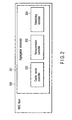
- FIG. 2 is a block diagram showing the apparatus configuration (MAC layer) of an HC.
- an aggregation processor 201 has a carrier sense controller 202, a retransmission controller 203, and a scheduling controller 204.
- a carrier sense controller 202 performs media access control on the basis of the carrier sense information of a physical layer and a virtual carrier sense information of a MAC layer.
- a retransmission controller 203 performs transmission/reception of partial acknowledgement frames, retransmission control based on partial acknowledgement frames, and the like.
- a scheduling controller 204 which controls transmission of a polling frame to a QSTA and the transmission timings of downlink data is present in the HC of the IEEE 802.11e. This scheduling controller 204 transmits a polling frame or data for each priority so as to satisfy the quality of service required by using TS (Traffic Stream) setup from a QSTA.
- the priority parameter specifies the priority desired for the MAC frame unit transfer.
- a plurality of retransmission control subqueues 102, 103 are prepared in one-to-one correspondence with priorities. This makes it possible to easily realize sliding window control for a plurality of priorities and frame aggregation for each priority, and to perform parallel processing in the communication apparatus.
- the scheduling controller 204 in the HC generates a request for downlink transmission to a certain priority (high priority in the example shown in FIG. 4) of a certain destination (STA1 in the example shown in FIG. 4)
- the aggregation processor 201 extracts, from a main queue 101, frames having the destination and priority corresponding to the request, and stores them in subqueues 102,103 prepared for the priority.
- the number of MPDUs (MAC Protocol Data Unit) which can be aggregated in one MAC super frame is predetermined by negotiation. In the example shown in FIG. 4, the upper limit is eight. Note that the method of negotiation is not limited to any specific method.
- the request from the internal scheduling processor of the HC can be generated by any of a method using "destination, priority” (MAC frames are extracted from the main queue until the maximum number of frames which can be aggregated in a MAC super frame is reached), a method using "destination, priority, the number of frames” (the scheduling processor designates the number of MAC frames to be extracted from the main queue), and a method using "destination, priority 1, the number of frames of priority 1, priority 2, the number of frames of priority 2" (the scheduling processor designates transmission of a plurality of priorities and the numbers of frames of these priorities).
- frames are stored in a subqueue for each priority in the same manner as in FIG. 4 regardless of the method.
- MAC frames are extracted preferentially from a subqueue having a high priority, and aggregated from the front of the MAC super frame.
- MAC frames are extracted preferentially from a subqueue having a high priority, and aggregated from the front of the MAC super frame.
- the total of these frames is equal to the maximum number (in the example shown in FIG. 5, eight) of frames which can be stored in one MAC super frame.
- the number of frames can be smaller than the maximum number of frames which can be aggregated.
- low-priority frames are stored in a low-priority subqueue 104, and aggregated in the rear of the MAC super frame. Frames are aggregated for each priority in order to protect high-priority MPDUs because the longer a physical frame, the lower the channel estimation accuracy in the latter half of the frame, and the more easily an error occurs.
- this embodiment is applicable not only to downlink traffic transmission from an HC but also to uplink traffic transmission from a QSTA.
- a MAC super frame receiving terminal describes the reception status of the aggregated MPDUs in a Partial Ack Bitmap, and returns a Partial Ack.
- the types and order of the priorities of the aggregated MPDUs have no influence on the formation of the Partial Ack Bitmap.
- bitmap information for each priority can be determined in the Partial Ack Bitmap from the number of MAC frames stored for retransmission in a subqueue for the priority. By cutting out the transmission status of each priority, sliding window control for each priority can be performed more efficiently.
- MPDUs to be aggregated in a MAC super frame are not necessarily sorted for each priority, it is difficult to immediately determine the transmission status of each priority even when a Partial Ack is received from the destination terminal.
- the MAC super frame transmitting side may have cache information which indicates the location of aggregation of each priority.
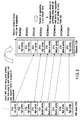
- An extended Partial Ack frame has a "Number of Priority" field and a Partial Ack Bitmap for each priority.
- the "Number of Priority" field indicates the number of priorities present in a Partial Ack.
- a "TID” field corresponds to the value of a TID (Traffic Identifier) of the IEEE 802.11e.
- a Partial Ack Bitmap is present for each TID.
- the numbers of the "TID" fields and "Partial Ack Bitmaps" in the Partial Ack frame can be changed in accordance with the number of priorities aggregated in the MAC super frame.
- FIG. 8 shows a case in which MPDUs having three priorities exist in a MAC super frame.
- the maximum number of MPDUs which can be aggregated in the MAC super frame is eight
- the field size of the Partial Ack Bitmap is one octet. However, this size may also be changed in accordance with the maximum number of aggregations.
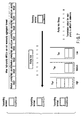
- a "TID Bitmap” field is newly added to the MAC super frame header.
- a “Num of TIDs” field indicates the number of priorities aggregated in the MAC super frame.
- the "TID Bitmap” field follows a "TID” field representing the traffic identifier (the length of this field is one octet, four bits are allocated to the TID, and four remaining bits are allocated to a reservation field).
- the "TID Bitmap" field is information indicating the position in the MAC super frame in which a frame having the corresponding priority is aggregated. This bitmap information is contained in the MAC super frame header. If a partial MPDU error except for a MAC super frame header CRC error occurs, therefore, the MAC super frame receiving terminal can determine the position where each priority exists and the reception status of the priority.
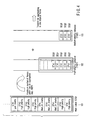
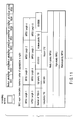
- FIG. 11 shows an example of the use of the "TID Bitmap".
- MPDUs having three priorities are aggregated in the order of "medium priority”, “high priority”, “medium priority”, “high priority”, “low priority”, “high priority”, “high priority”, and “low priority”.
- the maximum number of MPDUs which can be aggregated is eight in this example shown in FIG. 11, but the maximum number is of course not fixed to this number.
- the "TID Bitmap" of the high priority is "01010110”
- the “TID Bitmap” of the medium priority is "10100000”
- the "TID Bitmap” of the low priority is "00001001”. That is, the "TID Bitmap" of each priority is identification information which indicates the position in the MAC super frame in which an MPDU corresponding to that priority exists.
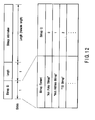
- a "Bitmap Information” field as shown in FIG. 12 is used as the format of the "TID Bitmap", the "Number of TIDs" field may also be omitted.
- the length of the "TID Bitmap” field in the MAC super frame header corresponds to the maximum number of MPDUs which can be aggregated. Since, however, both the transmitting and receiving sides recognize the maximum number of aggregations in advance through negotiation, the receiving side can also determine the length of the "TID Bitmap" field. In an example shown in FIG.
- MPDUs having three types of priorities are aggregated in a MAC super frame header in which the maximum number of aggregations is eight, the length of a "TID" field in the MAC super frame header is one octet as a fixed length, and the length of a "TID Bitmap” field is also one octet (the maximum number of aggregations is eight). Accordingly, the length of a "Bitmap Information” field (the value in units of octets described in a "Length” field) is six octets.
- An identifier for the "TID Bitmap" is described in a "Bitmap ID" field, and the number is 2 in the example shown in FIG. 12. However, the number is of course not limited to 2.
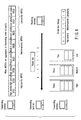
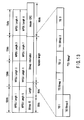
- FIG. 14 shows the flow of communication using a MAC super frame obtained by extending a "TID Bitmap” field, and a Partial Ack obtained by extending a Partial Ack Bitmap for each priority.
- identification information indicating the position where each priority is present is described in a "TID Bitmap" field of the MAC super frame header.
- the logic is so determined that "1 indicates the presence".
- implementation by negative logic is of course also possible.
- a MAC super frame receiving terminal performs header CRC calculation of the MAC super frame header, and, if the header is not an error, executes CRC calculation of each aggregated MPDU.
- a Partial Ack Bitmap for each priority can be easily formed by using the "TID Bitmap" in the MAC super frame header.
- a Partial Ack Bitmap for each priority is to be formed in the example shown in FIG. 14, it is determined from the "TID Bitmap" that four high-priority MPDUs exist.
- the two forward MPDUs are found to be errors by CRC calculations, so the bitmap configuration is "00110000".
- the length of a Partial Ack Bitmap is designated in units of octets. Consequently, in the example shown in FIG. 14, the four forward bits form information indicating the reception status.
- the four backward bits carry no special significance.
- MAC frames stored in a subqueue prepared for each priority are deleted from the queue.
- MAC frames correctly transmitted to the destination are deleted by referring to a Partial Ack Bitmap for each priority.
- MPDUs in a MAC super frame are divisionally aggregated for each priority, and frames having high priority are packed forward.
- the contents of the Partial Ack Bitmap are interpreted from the number of MAC frames stored in a subqueue for each priority, and MAC frames having each priority are deleted from a subqueue.
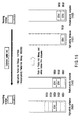
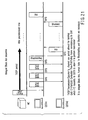
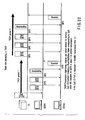
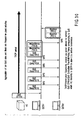
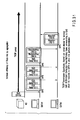
- FIGS. 16 to 19 show a case in which two types of MPDUs having high and medium priorities are aggregated in a MAC super frame.
- the number of priorities is not limited when the present invention is practiced.
- W_all defines the maximum number of MAC frames which can be continuously transmitted.
- a window W (high) and window W (medium) at each time indicates the maximum number of MPDUs which have a certain priority and can be aggregated at once.
- Windows slide backward in accordance with the status of a Partial Ack Bitmap. Also, FIGS.
- FIGS. 16 to 19 are based on the assumption that the maximum number of MPDUs which can be aggregated in a MAC super frame is eight regardless of the priority. Furthermore, FIGS. 16 and 17 illustrate sliding window control when the receiving side has one physical buffer, and FIGS. 18 and 19 illustrate sliding window control when a plurality of physical buffers are prepared on the receiving side in one-to-one correspondence with priorities. Preparing a plurality of physical buffers in one-to-one correspondence with priorities has the advantage that processes can be executed in parallel in a receiver. If a plurality of receiving buffers are present in one-to-one correspondence with priorities, a MAC super frame transmitting terminal determines a window W in accordance with the receiving buffer size of each priority of the destination terminal. The present invention is not limited to any specific negotiation method for determining the window size.
- Null means that no frame to be aggregated is present in the main queue.
- Zero means that the last transmitted frame is correctly received.
- NoAdd means that regardless of whether a corresponding frame is present in the main queue, no new frame can be packed in relation to the maximum number of frames which can be aggregated in one MAC super frame.
- a window size W (for high-priority) at each time shown in FIGS. 16 and 17 is determined on the basis of a (single) physical buffer of the destination terminal.
- a window size (for medium-priority) changes its length in accordance with the number of aggregated high-priority frames.
- the high-priority MPDUs undergo sliding window.
- the first frame (the first one of the three transmitted frames) of the medium-priority MPDUs is an error, it is confirmed that two medium-priority frames are stored in the buffer of the destination terminal.
- high-priority MPDUs which can be newly aggregated are five MPDUs from Seq6 to Seg10. Since no more high-priority MPDUs can be packed, "NoAdd" is indicated.
- the window size is not changed, and only retransmission frame Seq1 is a target MPDU to be aggregated.
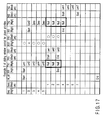
- the example shown in FIG. 17 is as follows.
- the operation up to TX1 is the same as in FIG. 16.
- the second high-priority MPDU is an error, and all the medium-priority MPDUs are successfully transmitted. If no high-priority MAC frame to be packed is present in the main queue after sliding window control is performed, the window size for the medium priority can be increased. Since three high-priority MPDUs are stored in the buffer of the receiving side, four frames including one high-priority frame for retransmission are presumably used in the (single) receiving buffer.
- the window size (for high-priority) is a fixed length. That is, four frames from Seq4 to Seq7 can be aggregated in a MAC super frame.
- Retransmission control as described above is performed to aggregate MPDUs within the range indicated by W_all. Also, when additional frames are to be aggregated, high-priority MPDUs are always preferentially aggregated.
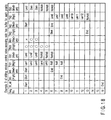
- FIGS. 18 and 19 in each of which the receiver side has a plurality of physical buffers in one-to-one correspondence with priorities will be explained below.
- a MAC super frame transmitting terminal is notified of the buffer size of the receiving side for each priority, and the transmitting side determines the window size W for each priority.
- the reception buffer size for high-priority is 8 MPDUs
- the buffer size for medium-priority is 6 MPDUs. But this number is implementation-dependent.
- TX1 for high-priority
- RX1 for high-priority
- RX1 for medium-priority
- a window W (for high-priority) and window W (for medium-priority) at each time are slid for each priority. If frames having only one type of priority are to be aggregated in a MAC super frame, these frames can be packed to "End" of the window W at each time. However, one medium-priority frame to be retransmitted exists. At TX2 (for high-priority), therefore, seven frames from Seq. Nos. 6 to 12 are targets to be aggregated in a MAC super frame.
- the total of the seven high-priority frames and the one medium-priority frame to be retransmitted reaches the maximum number of frames which can be aggregated in one MAC super frame, so no more frames are added.
- sliding window processing is performed after a Partial Ack is received.
- TX2 for high-priority
- TX2 for medium-priority
- six the maximum, medium-priority buffer amount designated on the receiving side
- the number of MPDUs to be continuously transmitted is so determined that the window size W falls within the range of W_all for each priority.
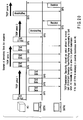
- FIG. 20 shows the sequence of standard immediate Block Ack procedure.
- Block Ack transmission in HCCA is adjusted within the range of a channel use period (TXOP: Transmission Opportunity) designated by a QoS access point (HC: Hybrid Coordinator).
- TXOP Transmission Opportunity
- HC Hybrid Coordinator
- FIG. 20 shows the way polling to a QSTA or downlink data transmission is performed during a CAP (Controlled Access Period).
- the HC shown in FIG. 20 transmits a QoS CF-Poll frame (a polling frame corresponding to QoS which the HC transmits to a QSTA to permit it to perform transmission) to QSTA 1.
- QoS CF-Poll frame a polling frame corresponding to QoS which the HC transmits to a QSTA to permit it to perform transmission
- QSTA 1 can freely transmit frames within the range of TXOP.
- QSTA 1 transmits QoS Data as a target of Block Ack to QSTA 2 in a burst manner and terminates the period.
- the HC transmits QoS Data as a target of Block Ack to QSTA 2 at SIFS intervals in a burst manner.
- TXOP period 3 QSTA 1 transmits a Block Ack Request to QSTA 2 and waits for Block Ack.
- TXOP period 4 the HC transmits a Block Ack Request to QSTA 2 and waits for Block Ack.
- Block Ack In the Block Ack of the IEEE 802.11e, to form a Block Ack Bitmap indicating the reception status, the receiver side must manage a maximum of 1,024 bits reception status of 64 MSDUs (MSDU: MAC Service Data Unit) for each destination and each TID (Traffic Identifier). According to the present specifications, no Block Ack Request need be transmitted immediately after QoS Data which is transmitted in a burst manner from a certain destination. Therefore, whenever a Block Ack Request is received, Block Ack is formed by checking the reception status of the corresponding destination (and TID). This generally increases the processing load on the receiver side. Consequently, it is sometimes impossible to reply Block Ack during the period of SIFS and realize transmission except for delayed Block Ack transmission as shown in FIG. 21.
- MSDU MSDU: MAC Service Data Unit
- Block Ack In delayed Block Ack, Block Ack is transmitted after a predetermined time has elapsed since a Block Ack Request is received, so the transmission efficiency obviously comes down. This is so because if Block Ack transmission executed in a transmission period of a certain terminal extends to the next TXOP period, QoS Data of Block Ack transmission from another terminal interrupts, and this complicates a mechanism for managing the reception statuses on the receiving side.
- a terminal which has obtained TXOP performs scheduling so that all of a series of sequences, i.e., QoS Data burst transmission, Block Ack Request transmission, and Block Ack reception, are included in the period.
- FIG. 22 shows a frame sequence. In the Block Ack sequence shown in FIG. 20, even when a certain TXOP period is given, a Block Ack Request is not necessarily transmitted within this TXOP period. However, in this embodiment shown in FIG. 22, scheduling is performed inside the terminal such that QoS Data burst transmission, Block Ack Request transmission, and Block Ack reception are certainly complete within the TXOP period.
- the number of QoS Data to be transmitted by burst transmission is reduced, and a Block Ack Request is transmitted with a margin so that Block Ack can be reliably received.
- the timing of Block Ack Request transmission is appropriately calculated from the duration, number of transmitting frames, and physical transmission rate of QoS Data.
- the method of calculating the timing of Block Ack Request transmission is not limited to any specific method. Note that in a certain TXOP period, QoS Data having a plurality of priorities (TIDs) can be transmitted in a burst manner. Even in this case, as shown in FIG.
- frame transmission scheduling is so performed as to be able to receive Block Ack of each TID within the period of TXOP by, e.g., limiting the number of QoS Data to be transmitted by burst transmission.
- Block Ack transmission can be performed for a plurality of destinations in the TXOP period.
- the transmitting terminal performs frame transmission scheduling in this case as well, so as to be able to receive Block Ack from each destination within the TXOP period. If only a time during which one QoS Data can be transmitted but no Block Ack Request can be transmitted remains, Block Ack data transmission to the destination (or TID) is desirably postponed to the next opportunity (TXOP).
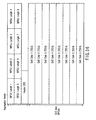
- FIGS. 26 and 27 show frame formats of the aggregated QoS Data and Block Ack Request. That is, FIG. 26 shows a format which includes, as a MAC payload, information indicating the divisions (lengths) of aggregated MPDUs on the basis of information such as "Type", “Sub Type”, and "Length" of the MAC header of the IEEE 802.11 (QoS control information of the IEEE 802.11e is sometimes included).
- This field is called an aggregation field.
- the 802.11 MAC header and an FCS (Frame Check Sequence) for the field indicating the length of the MPDU are added.
- Bitmap information for extending functions may also be added to the aggregation field.
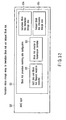
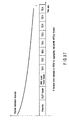
- FIG. 27 shows an example in which an identification header indicating the lengths of aggregated MPDUs is newly formed. This header is called an aggregation header. Header CRC for calculating a header error is added to this aggregation header. If the header has an error, all aggregated frames are discarded. The aggregation header is added before the aggregated MPDU payload such as the aggregated QoS Data and Block Ack Request. Note that in the format of the aggregation header shown in FIG.
- the maximum number of MPDUs which can be aggregated is eight. Therefore, it is also possible to aggregate a plurality of QoS Data as shown in FIG. 28, and aggregate only QoS Data as a target of Block Ack instead of a Block Ack Request.
- the maximum number of MPDUs which can be aggregated in one physical frame must be recognized beforehand by the transmitting and receiving terminals through some negotiation. However, a practical negotiation method is not a target of the present invention.
- QoS Data may also be aggregated in one physical frame and transmitted in a burst manner.
- the transmission efficiency can be increased by aggregating a Block Ack Request for a plurality of TIDs in the last QoS Data and transmitting the data. The effect further increases if the destination terminal also transmits Block Ack for each TID by aggregation.
- a plurality of QoS Data to be transmitted by burst transmission at SIFS intervals shown in FIG. 30 may also be transmitted by aggregating them in one physical frame as shown in FIG. 31.
- the receiver side which receives QoS Data by Block Ack will be explained below.
- FIG. 32 is a block diagram showing a Block Ack procedure receiving side configuration included in MAC layer of the wireless communication apparatus corresponding to the receiver side which receives QoS Data by Block Ack.
- the MAC layer of the receiver has a controller 322 for receiving QoS Data transmitted by burst transmission and a Block Ack Request, and a controller 323 for creating Block Ack.
- the receiver also has a storage area 324 for immediate Block Ack, and a storage area 325 for delayed Block Ack. This embodiment assumes that the area for immediate Block Ack is 324 relatively fast access storage, and the area for delayed Block Ack 325 is other types of storage.
- the reception statuses of data frames are stored in the immediate Block Ack information storage area 324.
- This area can store 1,024 reception statuses for each TID. 1,024 is a value obtained by multiplying the maximum number of MSDUs (MAC Service Data Unit) which can be continuously transmitted while using a Block Ack period ("64" in IEEE802.11e) by the maximum number of fragment frames per MSDU ("16" in IEEE802.11).
- MSDUs MAC Service Data Unit
- Block Ack period 64" in IEEE802.11e
- a Block Ack response is immediately returned. Since QoS Data from a plurality of destinations are not mixed, the load of the process of forming Block Ack for one destination can be reduced.
- the next TXOP period begins and QoS Data reception by Block Ack from QSTA 1 as another destination is started, if the immediate Block Ack information storage 324 area shown in FIG. 32 has no extra space, reception status information for the HC stored in this area is moved to the delayed Block Ack information storage area 325, and reception status information of the new destination (QSTA 1) is formed in the immediate Block Ack information storage area 324. After that, the receiver responds to the old destination by delayed Block Ack (the HC in FIG. 20).
- RTS-CTS is used to notify another terminal of a channel use period used by its own terminal.
- TXOP calculations are so performed that a series of sequences, i.e., QoS Data transmission, Block Ack Request transmission, and Block Ack reception, can be performed in the duration (channel use period) of the RTS frame.
- EDCA Enhanced Distributed Channel Access
- ACs Access Categories
- IFS Arbitration Interframe Space
- TID Traffic Identifier
- each MPDU is packed for each destination and each TID.
- EDCA is an access control method (prioritized CSMA/CA access) based on competition, and hence does not guarantee the quality of each traffic stream unlike in HCCA. That is, a MAC frame is extracted from the head of a main queue prepared for each AC, and a frame equal in destination and TID to the extracted frame is aggregated.
- the number of MAC frames is sometimes smaller than the maximum number of MPDUs which can be aggregated in one physical frame, so the channel use efficiency may not be maximally utilized.
- MAC frames are extracted from the head of a main queue for each AC. If the number of the extracted MAC frames is smaller than the maximum number of MAC frames which can be aggregated in one physical frame, a MAC frame of another TID (in EDCA, the number of types of TIDs stored in an AC is defined to be two) is aggregated.
- a subqueue which stores, for the purpose of retransmission, MAC frames extracted from the main queue for each AC is desirably prepared for each TID. When a subqueue is thus prepared for each TID, sliding window control can be performed more simply.
- a frame is aggregated by dividing it for each high-priority TID.
- channel estimation estimation of phase and amplitude distortions of a transmission channel for each subcarrier
- the general approach is to independently perform channel estimation at the start of a preamble signal for each packet.
- a wireless communication apparatus for transmitting aggregated frames performs sliding window control for each TID in accordance with a partial response from the receiving side.
- frames having a plurality of TIDs in the same AC are aggregated.
- no MAC frame having another TID exists in a certain AC
- the transmission timings of a plurality of ACs internally overlap each other due to an internal collision
- internal collisions occur between a plurality of ACs. Therefore, it is desirable for low-priority (and medium-priority) ACs to take random backoff by increasing contention windows after the aggregated frames are transmitted.
- this embodiment can increase the effect of frame aggregation in EDCA.
- FCS which contains an IEEE32-bit cyclic redundancy check, for each MPDU can be used (as shown in FIG. 8 and FIG. 26) as a substitute for CRC information.
Landscapes
- Engineering & Computer Science (AREA)
- Computer Networks & Wireless Communication (AREA)
- Signal Processing (AREA)
- Mobile Radio Communication Systems (AREA)
- Small-Scale Networks (AREA)
- Communication Control (AREA)
Applications Claiming Priority (2)
| Application Number | Priority Date | Filing Date | Title |
|---|---|---|---|
| JP2004160261 | 2004-05-28 | ||
| JP2004160261A JP4012172B2 (ja) | 2004-05-28 | 2004-05-28 | 無線通信装置及び無線通信方法 |
Publications (2)
| Publication Number | Publication Date |
|---|---|
| EP1601145A2 true EP1601145A2 (fr) | 2005-11-30 |
| EP1601145A3 EP1601145A3 (fr) | 2010-08-25 |
Family
ID=34941486
Family Applications (1)
| Application Number | Title | Priority Date | Filing Date |
|---|---|---|---|
| EP20050253277 Withdrawn EP1601145A3 (fr) | 2004-05-28 | 2005-05-27 | Appareil de communication sans fils et procédé de communication sans fils |
Country Status (4)
| Country | Link |
|---|---|
| US (2) | US7990995B2 (fr) |
| EP (1) | EP1601145A3 (fr) |
| JP (1) | JP4012172B2 (fr) |
| CN (2) | CN100461752C (fr) |
Cited By (7)
| Publication number | Priority date | Publication date | Assignee | Title |
|---|---|---|---|---|
| WO2009012847A1 (fr) * | 2007-07-25 | 2009-01-29 | Rohde & Schwarz Gmbh & Co. Kg | Dispositif et procédé permettant d'augmenter le débit de données dans des réseaux radio |
| WO2010133911A1 (fr) * | 2009-05-20 | 2010-11-25 | Telefonaktiebolaget Lm Ericsson (Publ) | Systèmes et procédé de communication d'informations de priorité destinées à être utilisées dans l'ordonnancement de la transmission de données |
| EP2860924A4 (fr) * | 2012-06-08 | 2016-01-06 | Nec Corp | Appareil de communication, système de communication, procédé de communication et programme |
| EP2559201A4 (fr) * | 2010-04-12 | 2017-07-26 | Qualcomm Incorporated | Accusés de réception retardés pour communication à faible surdébit dans réseau |
| CN109792777A (zh) * | 2016-09-22 | 2019-05-21 | 阿尔卡特朗讯 | 用于控制对基于竞争的接入网的接入的方法和系统 |
| CN114765897A (zh) * | 2021-01-13 | 2022-07-19 | 华为技术有限公司 | 一种通信方法及装置 |
| EP4351208A1 (fr) * | 2012-11-21 | 2024-04-10 | Ubiquiti Inc. | Procédé et système pour améliorer l'efficacité d'une liaison sans fil |
Families Citing this family (61)
| Publication number | Priority date | Publication date | Assignee | Title |
|---|---|---|---|---|
| JP4005974B2 (ja) * | 2004-01-09 | 2007-11-14 | 株式会社東芝 | 通信装置、通信方法、および通信システム |
| JP4047836B2 (ja) * | 2004-04-02 | 2008-02-13 | 株式会社東芝 | 通信装置、通信システム、通信方法、および通信制御プログラム |
| JP4086304B2 (ja) * | 2004-04-23 | 2008-05-14 | 株式会社東芝 | 通信装置、通信システム、および通信制御プログラム |
| JP4440037B2 (ja) * | 2004-08-11 | 2010-03-24 | 株式会社東芝 | 通信装置及び通信方法 |
| JP4130648B2 (ja) * | 2004-10-19 | 2008-08-06 | 株式会社東芝 | 通信装置および通信方法 |
| JP4331088B2 (ja) | 2004-11-01 | 2009-09-16 | 株式会社東芝 | 通信装置および通信方法 |
| JP2006191279A (ja) * | 2005-01-05 | 2006-07-20 | Matsushita Electric Ind Co Ltd | 無線通信装置 |
| JP2006262417A (ja) * | 2005-03-18 | 2006-09-28 | Fujitsu Ltd | 通信速度制御方法及びその装置 |
| KR20060112287A (ko) * | 2005-04-25 | 2006-10-31 | 삼성전자주식회사 | 유무선 통신시스템에서 비트화 데이터 청크 수신응답 방법및 장치 |
| US7532638B2 (en) * | 2005-06-01 | 2009-05-12 | Broadcom Corporation | Wireless terminal baseband processor high speed turbo decoding module supporting MAC header splitting |
| KR100736730B1 (ko) | 2005-12-08 | 2007-07-09 | 한국전자통신연구원 | 매체 접근 제어 프로토콜에서의 블록 응답 데이터 전송방법 |
| US20070165665A1 (en) * | 2006-01-13 | 2007-07-19 | Sudhanshu Gaur | System and method for access control in wireless networks |
| US8363675B2 (en) | 2006-03-24 | 2013-01-29 | Samsung Electronics Co., Ltd. | Method and system for transmission of uncompressed video over wireless communication channels |
| US8862680B2 (en) * | 2006-05-01 | 2014-10-14 | The Boeing Company | Methods and systems for data prioritization |
| WO2007131347A1 (fr) * | 2006-05-11 | 2007-11-22 | Nortel Networks Limited | Protocole de contrôle d'accès au support pour des systèmes de réseaux à sauts multiples et procédé correspondant |
| ES2380787T3 (es) * | 2006-05-16 | 2012-05-18 | Nokia Siemens Networks Gmbh & Co. Kg | Método para transmitir de manera segura mapas de bits ACK/NACK cortos en un proceso ARQ dentro de sistemas compatibles con EDGE |
| US20070274209A1 (en) * | 2006-05-26 | 2007-11-29 | Aarnio Steven J | Prioritizing data in a wireless transmission |
| JP2007318497A (ja) * | 2006-05-26 | 2007-12-06 | Oki Electric Ind Co Ltd | 無線アクセス制御装置及び方法、無線装置、および、ネットワーク |
| US8787344B2 (en) * | 2006-08-30 | 2014-07-22 | Qualcomm Incorporated | Method and apparatus for ACKCH with repetition in orthogonal systems |
| JP4284353B2 (ja) * | 2006-12-26 | 2009-06-24 | 株式会社東芝 | 無線通信装置 |
| JP4795303B2 (ja) | 2007-04-25 | 2011-10-19 | キヤノン株式会社 | 通信装置、通信装置の制御方法、並びに当該制御方法をコンピュータに実行させるためのコンピュータプログラム |
| ES2954875T3 (es) * | 2007-08-03 | 2023-11-27 | Wireless Future Tech Inc | Agregación de acuses de recibo y acuses de recibo negativos de estaciones móviles en redes inalámbricas |
| JP2009117891A (ja) * | 2007-11-01 | 2009-05-28 | Toshiba Corp | 無線通信装置 |
| JP2009164684A (ja) | 2007-12-28 | 2009-07-23 | Fujitsu Ltd | 通信装置、プログラム、および通信方法 |
| US8416803B1 (en) | 2008-02-14 | 2013-04-09 | Wilocity, Ltd. | Low latency interconnect bus protocol |
| US8542683B2 (en) * | 2008-06-30 | 2013-09-24 | Entropic Communications, Inc. | Dynamic bitloading |
| US8464138B2 (en) * | 2008-08-20 | 2013-06-11 | Qualcomm Incorporated | Effective utilization of header space for error correction in aggregate frames |
| US8706878B1 (en) | 2008-08-21 | 2014-04-22 | United Services Automobile Association | Preferential loading in data centers |
| US9477615B1 (en) | 2008-08-26 | 2016-10-25 | Qualcomm Incorporated | Bi-directional low latency bus mode |
| US9294219B2 (en) * | 2008-09-30 | 2016-03-22 | Qualcomm Incorporated | Techniques for supporting relay operation in wireless communication systems |
| US9203564B2 (en) * | 2008-10-20 | 2015-12-01 | Qualcomm Incorporated | Data transmission via a relay station in a wireless communication system |
| US7899056B2 (en) * | 2009-01-13 | 2011-03-01 | Fujitsu Limited | Device and method for reducing overhead in a wireless network |
| US8023513B2 (en) * | 2009-02-24 | 2011-09-20 | Fujitsu Limited | System and method for reducing overhead in a wireless network |
| US8238346B2 (en) * | 2009-07-09 | 2012-08-07 | The Boeing Company | Queuing architectures for orthogonal requirements in quality of service (QoS) |
| US8681815B1 (en) * | 2009-08-28 | 2014-03-25 | Marvell International Ltd. | Method and apparatus for multi-user frame aggregation |
| US8886755B1 (en) * | 2009-12-09 | 2014-11-11 | Marvell International Ltd. | Method and apparatus for facilitating simultaneous transmission from multiple stations |
| JP5506362B2 (ja) | 2009-12-15 | 2014-05-28 | キヤノン株式会社 | 送信装置、送信方法 |
| EP2561625B1 (fr) * | 2010-04-19 | 2021-12-15 | Samsung Electronics Co., Ltd. | Procédé et système pour opportunité de transmission multiutilisateur pour réseaux sans fil à entrée multiple sortie multiple multiutilisateur |
| US8306010B2 (en) | 2010-04-28 | 2012-11-06 | Intel Corporation | Systems and methods for uplink multi-user multiple input multiple output (MU MIMO) medium access and error recovery |
| WO2011153617A2 (fr) * | 2010-06-09 | 2011-12-15 | Pravala Inc. | Réduction de charge au niveau d'un serveur mandataire |
| US20120082142A1 (en) * | 2010-10-05 | 2012-04-05 | Electronics And Telecommunications Research Institute | Method of allocating radio resource and transmitting data |
| JP5329581B2 (ja) | 2011-02-04 | 2013-10-30 | 株式会社東芝 | 無線通信端末および無線通信方法 |
| US9237106B2 (en) * | 2011-03-11 | 2016-01-12 | Citrix Systems, Inc. | Systems and methods of QoS for single stream ICA |
| JP5408229B2 (ja) * | 2011-11-02 | 2014-02-05 | 日本電気株式会社 | 通信装置、通信システム、および通信方法 |
| US8948089B2 (en) * | 2012-01-11 | 2015-02-03 | Intel Corporation | Device, system and method of communicating aggregate data units |
| JP5814829B2 (ja) | 2012-03-01 | 2015-11-17 | 株式会社東芝 | 無線通信装置及び方法 |
| KR20140124506A (ko) * | 2013-04-17 | 2014-10-27 | 한국전자통신연구원 | 무선랜 시스템에서의 효율적인 어그리게이션 스케쥴링 장치 및 방법 |
| US20150036673A1 (en) * | 2013-07-30 | 2015-02-05 | Qualcomm Incorporated | Systems and methods for communicating multi-destination traffic in a wireless network |
| WO2015126200A1 (fr) * | 2014-02-21 | 2015-08-27 | Samsung Electronics Co., Ltd. | Système et procédé de traitement de données dans un système de communication sans fil |
| KR101708977B1 (ko) * | 2014-08-28 | 2017-02-21 | 영남대학교 산학협력단 | 무선랜의 패킷 처리장치 및 그 방법 |
| US11082888B2 (en) | 2015-10-20 | 2021-08-03 | Nxp Usa, Inc. | Single acknowledgment policy for aggregate MPDU |
| WO2017070393A1 (fr) | 2015-10-20 | 2017-04-27 | Marvell World Trade Ltd. | Unité de données d'accusé de réception pour de multiples unités de données de liaison montante |
| US10873878B2 (en) | 2016-02-19 | 2020-12-22 | Nxp Usa, Inc. | Acknowledgement of transmissions in a wireless local area network |
| US10277376B2 (en) * | 2016-02-19 | 2019-04-30 | Marvell World Trade Ltd. | Acknowledgement of transmissions in a wireless local area network |
| CN105828449A (zh) * | 2016-04-13 | 2016-08-03 | 珠海市魅族科技有限公司 | 无线局域网的通信方法及通信装置、接入点和站点 |
| CN107548104B (zh) * | 2016-06-24 | 2020-12-01 | 华为技术有限公司 | 数据传输方法、接入点及站点 |
| CN110677871B (zh) * | 2018-07-03 | 2022-07-12 | 华为技术有限公司 | 数据发送方法及发送设备、数据接收方法及接收设备 |
| US12335780B2 (en) * | 2019-11-12 | 2025-06-17 | Mediatek Singapore Pte. Ltd. | Apparatus and methods for EHT multi-band A-MSDU operation |
| CN113261221B (zh) * | 2019-12-12 | 2023-04-11 | 北京小米移动软件有限公司 | 块确认反馈控制方法、装置、通信设备及存储介质 |
| CN116584082A (zh) * | 2020-12-04 | 2023-08-11 | 华为技术有限公司 | 基于运行时间自适应动态内部优先级值策略的队列释放和优化的设备和方法 |
| JP2023114921A (ja) * | 2022-02-07 | 2023-08-18 | シャープ株式会社 | 通信装置および通信方法 |
Family Cites Families (32)
| Publication number | Priority date | Publication date | Assignee | Title |
|---|---|---|---|---|
| GB9304636D0 (en) | 1993-03-06 | 1993-04-21 | Ncr Int Inc | A method of accessing a communication system |
| US6570883B1 (en) | 1999-08-28 | 2003-05-27 | Hsiao-Tung Wong | Packet scheduling using dual weight single priority queue |
| US6771653B1 (en) * | 1999-09-23 | 2004-08-03 | International Business Machines Corporation | Priority queue management system for the transmission of data frames from a node in a network node |
| US7304945B1 (en) * | 2000-02-14 | 2007-12-04 | Ericsson Ab | Method and apparatus for dynamic bitmap generator scheduler |
| US6934752B1 (en) * | 2000-03-23 | 2005-08-23 | Sharewave, Inc. | Quality of service extensions for multimedia applications in wireless computer networks |
| EP1168753A1 (fr) | 2000-06-26 | 2002-01-02 | Alcatel | Procédé et moyens pour la transmission de données de différentes qualités de service dans des datagrammes IP |
| US7058074B2 (en) * | 2000-11-01 | 2006-06-06 | Texas Instruments Incorporated | Unified channel access for supporting quality of service (QoS) in a local area network |
| US20020159418A1 (en) | 2000-11-02 | 2002-10-31 | Sharp Laboratories Of America, Inc. | Quality of service using wireless lan |
| US20020089959A1 (en) * | 2001-01-11 | 2002-07-11 | Fischer Michael A. | System and method for providing a selectable retry strategy for frame-based communications |
| JP2003060645A (ja) * | 2001-08-13 | 2003-02-28 | Nippon Telegr & Teleph Corp <Ntt> | 無線パケット通信伝送方法・無線パケット通信システム |
| US20030135640A1 (en) * | 2002-01-14 | 2003-07-17 | Texas Instruments Incorporated | Method and system for group transmission and acknowledgment |
| JP4168633B2 (ja) * | 2002-01-17 | 2008-10-22 | 日本電気株式会社 | 無線基地局におけるパケットスケジューリング方法、パケット転送装置およびパケットスケジューリングプログラム |
| CN100508474C (zh) * | 2002-02-10 | 2009-07-01 | 华为技术有限公司 | 无线局域网中移动终端在接入点间切换的方法 |
| JP3925234B2 (ja) * | 2002-02-18 | 2007-06-06 | ソニー株式会社 | データ通信システム、データ通信管理装置、および方法、並びにコンピュータ・プログラム |
| US7630403B2 (en) * | 2002-03-08 | 2009-12-08 | Texas Instruments Incorporated | MAC aggregation frame with MSDU and fragment of MSDU |
| US20030185249A1 (en) * | 2002-03-28 | 2003-10-02 | Davies Elwyn B. | Flow control and quality of service provision for frame relay protocols |
| JP2003314546A (ja) | 2002-04-16 | 2003-11-06 | Koyo Seiko Co Ltd | 直動案内滑り軸受装置 |
| JP4176402B2 (ja) | 2002-04-17 | 2008-11-05 | シャープ株式会社 | 通信管理方法、通信管理プログラム、通信管理プログラムを記録した記録媒体、ならびに通信局 |
| JP2003324442A (ja) | 2002-04-26 | 2003-11-14 | Matsushita Electric Ind Co Ltd | 無線ネットワークで効率的なバッファ機構を用いることにより媒体アクセスを高速化する方法 |
| US20040002357A1 (en) * | 2002-06-25 | 2004-01-01 | Mathilde Benveniste | Directional antennas and wireless channel access |
| CN1288877C (zh) * | 2002-09-25 | 2006-12-06 | 华为技术有限公司 | 基于网络管理系统的带宽代理实现方法 |
| US7317687B2 (en) * | 2003-06-12 | 2008-01-08 | Koninklijke Philips Electronics N.V. | Transmitting data frames with less interframe space (ifs) time |
| US8483105B2 (en) * | 2003-10-15 | 2013-07-09 | Qualcomm Incorporated | High speed media access control |
| US7586948B2 (en) * | 2003-12-24 | 2009-09-08 | Agere Systems Inc. | Packet sub-frame structure for selective acknowledgment |
| JP4005974B2 (ja) | 2004-01-09 | 2007-11-14 | 株式会社東芝 | 通信装置、通信方法、および通信システム |
| JP4047836B2 (ja) | 2004-04-02 | 2008-02-13 | 株式会社東芝 | 通信装置、通信システム、通信方法、および通信制御プログラム |
| JP4086304B2 (ja) | 2004-04-23 | 2008-05-14 | 株式会社東芝 | 通信装置、通信システム、および通信制御プログラム |
| US7433314B2 (en) * | 2004-06-01 | 2008-10-07 | Samsung Electronics Co., Ltd. | Method and system for acknowledging the receipt of a transmitted data stream in a wireless personal area network |
| JP4440037B2 (ja) | 2004-08-11 | 2010-03-24 | 株式会社東芝 | 通信装置及び通信方法 |
| US7474676B2 (en) * | 2004-09-10 | 2009-01-06 | Mitsubishi Electric Research Laboratories, Inc. | Frame aggregation in wireless communications networks |
| JP4130648B2 (ja) | 2004-10-19 | 2008-08-06 | 株式会社東芝 | 通信装置および通信方法 |
| JP4331088B2 (ja) | 2004-11-01 | 2009-09-16 | 株式会社東芝 | 通信装置および通信方法 |
-
2004
- 2004-05-28 JP JP2004160261A patent/JP4012172B2/ja not_active Expired - Lifetime
-
2005
- 2005-05-26 US US11/137,588 patent/US7990995B2/en active Active
- 2005-05-27 EP EP20050253277 patent/EP1601145A3/fr not_active Withdrawn
- 2005-05-27 CN CNB2005100713781A patent/CN100461752C/zh not_active Expired - Lifetime
- 2005-05-27 CN CN200910003606XA patent/CN101459973B/zh not_active Expired - Lifetime
-
2008
- 2008-03-14 US US12/049,031 patent/US8284753B2/en active Active
Cited By (11)
| Publication number | Priority date | Publication date | Assignee | Title |
|---|---|---|---|---|
| WO2009012847A1 (fr) * | 2007-07-25 | 2009-01-29 | Rohde & Schwarz Gmbh & Co. Kg | Dispositif et procédé permettant d'augmenter le débit de données dans des réseaux radio |
| WO2010133911A1 (fr) * | 2009-05-20 | 2010-11-25 | Telefonaktiebolaget Lm Ericsson (Publ) | Systèmes et procédé de communication d'informations de priorité destinées à être utilisées dans l'ordonnancement de la transmission de données |
| US8848635B2 (en) | 2009-05-20 | 2014-09-30 | Telefonaktiebolaget L M Ericsson (Publ) | Systems and method for communicating priority information for use in scheduling the transmission of data |
| EP2559201A4 (fr) * | 2010-04-12 | 2017-07-26 | Qualcomm Incorporated | Accusés de réception retardés pour communication à faible surdébit dans réseau |
| EP2860924A4 (fr) * | 2012-06-08 | 2016-01-06 | Nec Corp | Appareil de communication, système de communication, procédé de communication et programme |
| US9503380B2 (en) | 2012-06-08 | 2016-11-22 | Nec Corporation | Communication apparatus, communication method, and computer readable medium |
| EP4351208A1 (fr) * | 2012-11-21 | 2024-04-10 | Ubiquiti Inc. | Procédé et système pour améliorer l'efficacité d'une liaison sans fil |
| CN109792777A (zh) * | 2016-09-22 | 2019-05-21 | 阿尔卡特朗讯 | 用于控制对基于竞争的接入网的接入的方法和系统 |
| CN114765897A (zh) * | 2021-01-13 | 2022-07-19 | 华为技术有限公司 | 一种通信方法及装置 |
| EP4266793A4 (fr) * | 2021-01-13 | 2024-05-22 | Huawei Technologies Co., Ltd. | Procédé et appareil de communication |
| US12592805B2 (en) | 2021-01-13 | 2026-03-31 | Huawei Technologies Co., Ltd. | Communication method and apparatus |
Also Published As
| Publication number | Publication date |
|---|---|
| CN101459973A (zh) | 2009-06-17 |
| JP4012172B2 (ja) | 2007-11-21 |
| US8284753B2 (en) | 2012-10-09 |
| EP1601145A3 (fr) | 2010-08-25 |
| CN101459973B (zh) | 2012-07-04 |
| CN1703024A (zh) | 2005-11-30 |
| US20050265302A1 (en) | 2005-12-01 |
| US7990995B2 (en) | 2011-08-02 |
| CN100461752C (zh) | 2009-02-11 |
| JP2005341441A (ja) | 2005-12-08 |
| US20080165713A1 (en) | 2008-07-10 |
Similar Documents
| Publication | Publication Date | Title |
|---|---|---|
| US7990995B2 (en) | Wireless communication apparatus and wireless communication method | |
| CN1735089B (zh) | 通信设备和通信方法 | |
| US7746861B2 (en) | Communication apparatus and method | |
| US8274992B2 (en) | Communication method for wireless lans | |
| CN1984145B (zh) | 通信设备 | |
| US7697561B2 (en) | Communication apparatus, communication method, and communication system | |
| JP4374001B2 (ja) | 通信装置、通信方法、および通信システム | |
| JP2006352896A (ja) | 無線通信装置 |
Legal Events
| Date | Code | Title | Description |
|---|---|---|---|
| PUAI | Public reference made under article 153(3) epc to a published international application that has entered the european phase |
Free format text: ORIGINAL CODE: 0009012 |
|
| 17P | Request for examination filed |
Effective date: 20050608 |
|
| AK | Designated contracting states |
Kind code of ref document: A2 Designated state(s): AT BE BG CH CY CZ DE DK EE ES FI FR GB GR HU IE IS IT LI LT LU MC NL PL PT RO SE SI SK TR |
|
| AX | Request for extension of the european patent |
Extension state: AL BA HR LV MK YU |
|
| PUAL | Search report despatched |
Free format text: ORIGINAL CODE: 0009013 |
|
| AK | Designated contracting states |
Kind code of ref document: A3 Designated state(s): AT BE BG CH CY CZ DE DK EE ES FI FR GB GR HU IE IS IT LI LT LU MC NL PL PT RO SE SI SK TR |
|
| AX | Request for extension of the european patent |
Extension state: AL BA HR LV MK YU |
|
| 17Q | First examination report despatched |
Effective date: 20101221 |
|
| AKX | Designation fees paid |
Designated state(s): DE FR GB |
|
| STAA | Information on the status of an ep patent application or granted ep patent |
Free format text: STATUS: THE APPLICATION IS DEEMED TO BE WITHDRAWN |
|
| 18D | Application deemed to be withdrawn |
Effective date: 20110503 |