EP1601209B1 - Methode zur Blockprädiktion unter Verwendung des Direkt-Modus - Google Patents
Methode zur Blockprädiktion unter Verwendung des Direkt-Modus Download PDFInfo
- Publication number
- EP1601209B1 EP1601209B1 EP05015780A EP05015780A EP1601209B1 EP 1601209 B1 EP1601209 B1 EP 1601209B1 EP 05015780 A EP05015780 A EP 05015780A EP 05015780 A EP05015780 A EP 05015780A EP 1601209 B1 EP1601209 B1 EP 1601209B1
- Authority
- EP
- European Patent Office
- Prior art keywords
- picture
- direct mode
- block
- reference picture
- backward
- Prior art date
- Legal status (The legal status is an assumption and is not a legal conclusion. Google has not performed a legal analysis and makes no representation as to the accuracy of the status listed.)
- Expired - Lifetime
Links
- 238000000034 method Methods 0.000 title claims description 31
- 239000013598 vector Substances 0.000 claims description 54
- 230000001419 dependent effect Effects 0.000 claims description 2
- 230000002123 temporal effect Effects 0.000 description 15
- 238000012935 Averaging Methods 0.000 description 5
- 101150088939 BRSK1 gene Proteins 0.000 description 2
- 238000005562 fading Methods 0.000 description 2
- 230000002457 bidirectional effect Effects 0.000 description 1
- 238000009877 rendering Methods 0.000 description 1
- 230000001360 synchronised effect Effects 0.000 description 1
Images

Classifications
-
- H—ELECTRICITY
- H04—ELECTRIC COMMUNICATION TECHNIQUE
- H04N—PICTORIAL COMMUNICATION, e.g. TELEVISION
- H04N19/00—Methods or arrangements for coding, decoding, compressing or decompressing digital video signals
- H04N19/10—Methods or arrangements for coding, decoding, compressing or decompressing digital video signals using adaptive coding
- H04N19/134—Methods or arrangements for coding, decoding, compressing or decompressing digital video signals using adaptive coding characterised by the element, parameter or criterion affecting or controlling the adaptive coding
- H04N19/136—Incoming video signal characteristics or properties
- H04N19/137—Motion inside a coding unit, e.g. average field, frame or block difference
-
- H—ELECTRICITY
- H04—ELECTRIC COMMUNICATION TECHNIQUE
- H04N—PICTORIAL COMMUNICATION, e.g. TELEVISION
- H04N19/00—Methods or arrangements for coding, decoding, compressing or decompressing digital video signals
-
- H—ELECTRICITY
- H04—ELECTRIC COMMUNICATION TECHNIQUE
- H04N—PICTORIAL COMMUNICATION, e.g. TELEVISION
- H04N19/00—Methods or arrangements for coding, decoding, compressing or decompressing digital video signals
- H04N19/10—Methods or arrangements for coding, decoding, compressing or decompressing digital video signals using adaptive coding
- H04N19/134—Methods or arrangements for coding, decoding, compressing or decompressing digital video signals using adaptive coding characterised by the element, parameter or criterion affecting or controlling the adaptive coding
- H04N19/136—Incoming video signal characteristics or properties
- H04N19/137—Motion inside a coding unit, e.g. average field, frame or block difference
- H04N19/139—Analysis of motion vectors, e.g. their magnitude, direction, variance or reliability
-
- H—ELECTRICITY
- H04—ELECTRIC COMMUNICATION TECHNIQUE
- H04N—PICTORIAL COMMUNICATION, e.g. TELEVISION
- H04N19/00—Methods or arrangements for coding, decoding, compressing or decompressing digital video signals
- H04N19/50—Methods or arrangements for coding, decoding, compressing or decompressing digital video signals using predictive coding
- H04N19/503—Methods or arrangements for coding, decoding, compressing or decompressing digital video signals using predictive coding involving temporal prediction
-
- H—ELECTRICITY
- H04—ELECTRIC COMMUNICATION TECHNIQUE
- H04N—PICTORIAL COMMUNICATION, e.g. TELEVISION
- H04N19/00—Methods or arrangements for coding, decoding, compressing or decompressing digital video signals
- H04N19/50—Methods or arrangements for coding, decoding, compressing or decompressing digital video signals using predictive coding
- H04N19/503—Methods or arrangements for coding, decoding, compressing or decompressing digital video signals using predictive coding involving temporal prediction
- H04N19/51—Motion estimation or motion compensation
-
- H—ELECTRICITY
- H04—ELECTRIC COMMUNICATION TECHNIQUE
- H04N—PICTORIAL COMMUNICATION, e.g. TELEVISION
- H04N19/00—Methods or arrangements for coding, decoding, compressing or decompressing digital video signals
- H04N19/50—Methods or arrangements for coding, decoding, compressing or decompressing digital video signals using predictive coding
- H04N19/503—Methods or arrangements for coding, decoding, compressing or decompressing digital video signals using predictive coding involving temporal prediction
- H04N19/51—Motion estimation or motion compensation
- H04N19/513—Processing of motion vectors
-
- H—ELECTRICITY
- H04—ELECTRIC COMMUNICATION TECHNIQUE
- H04N—PICTORIAL COMMUNICATION, e.g. TELEVISION
- H04N19/00—Methods or arrangements for coding, decoding, compressing or decompressing digital video signals
- H04N19/50—Methods or arrangements for coding, decoding, compressing or decompressing digital video signals using predictive coding
- H04N19/503—Methods or arrangements for coding, decoding, compressing or decompressing digital video signals using predictive coding involving temporal prediction
- H04N19/51—Motion estimation or motion compensation
- H04N19/513—Processing of motion vectors
- H04N19/517—Processing of motion vectors by encoding
- H04N19/52—Processing of motion vectors by encoding by predictive encoding
-
- H—ELECTRICITY
- H04—ELECTRIC COMMUNICATION TECHNIQUE
- H04N—PICTORIAL COMMUNICATION, e.g. TELEVISION
- H04N19/00—Methods or arrangements for coding, decoding, compressing or decompressing digital video signals
- H04N19/50—Methods or arrangements for coding, decoding, compressing or decompressing digital video signals using predictive coding
- H04N19/503—Methods or arrangements for coding, decoding, compressing or decompressing digital video signals using predictive coding involving temporal prediction
- H04N19/51—Motion estimation or motion compensation
- H04N19/573—Motion compensation with multiple frame prediction using two or more reference frames in a given prediction direction
-
- H—ELECTRICITY
- H04—ELECTRIC COMMUNICATION TECHNIQUE
- H04N—PICTORIAL COMMUNICATION, e.g. TELEVISION
- H04N19/00—Methods or arrangements for coding, decoding, compressing or decompressing digital video signals
- H04N19/50—Methods or arrangements for coding, decoding, compressing or decompressing digital video signals using predictive coding
- H04N19/503—Methods or arrangements for coding, decoding, compressing or decompressing digital video signals using predictive coding involving temporal prediction
- H04N19/51—Motion estimation or motion compensation
- H04N19/577—Motion compensation with bidirectional frame interpolation, i.e. using B-pictures
-
- H—ELECTRICITY
- H04—ELECTRIC COMMUNICATION TECHNIQUE
- H04N—PICTORIAL COMMUNICATION, e.g. TELEVISION
- H04N19/00—Methods or arrangements for coding, decoding, compressing or decompressing digital video signals
- H04N19/50—Methods or arrangements for coding, decoding, compressing or decompressing digital video signals using predictive coding
- H04N19/503—Methods or arrangements for coding, decoding, compressing or decompressing digital video signals using predictive coding involving temporal prediction
- H04N19/51—Motion estimation or motion compensation
- H04N19/58—Motion compensation with long-term prediction, i.e. the reference frame for a current frame not being the temporally closest one
-
- H—ELECTRICITY
- H04—ELECTRIC COMMUNICATION TECHNIQUE
- H04N—PICTORIAL COMMUNICATION, e.g. TELEVISION
- H04N19/00—Methods or arrangements for coding, decoding, compressing or decompressing digital video signals
- H04N19/60—Methods or arrangements for coding, decoding, compressing or decompressing digital video signals using transform coding
- H04N19/61—Methods or arrangements for coding, decoding, compressing or decompressing digital video signals using transform coding in combination with predictive coding
Definitions
- the present invention relates to a moving picture coding system, and particularly, to a block prediction method using improved direct mode for a B picture.
- one of advantages for using B picture is that a direct prediction mode which does not add overhead information is selected more than any other prediction modes (a forward prediction, a backward prediction, a bidirectional prediction and intra prediction, etc.). Therefore, the moving picture coding system is able to have higher coding efficiency when using the B picture than the coding efficiency when using only P picture.
- the block prediction method using the direct mode is to calculate forward motion vector and backward motion vector as scaled versions of a motion vector of a co-located block in a backward reference picture for direct mode, to obtain two distinct motion-compensated blocks using above motion vectors, and to obtain predicted block by averaging two motion-compensated blocks finally.
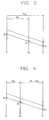
- Figure 1 is a view showing a picture pattern for describing the block prediction method using the direct mode according to the conventional art.
- the picture pattern comprises an I-picture (not shown) coded using prediction only from decoded samples within the same picture, P pictures P1, P4, and P7 coded by inter prediction using at most one motion vector from previously-decoded reference pictures, and B-pictures B2, B3, B5 and B6 coded by two inter prediction blocks from previously-decoded reference pictures.
- TR D represents a temporal distance between a forward reference picture for direct mode (P1) and a backward reference picture for direct mode (P7)
- TR B represents a temporal distance between the forward reference picture for direct mode (P1) and a current B picture (B5)
- MV represents a motion vector of a co-located block in the backward reference picture for direct mode (P7)
- MV f represents a forward motion vector of direct mode pointing to the forward reference picture for direct mode
- MV b represents a backward motion vector of direct mode pointing to the backward reference picture for direct mode.
- the forward reference picture for direct mode is a reference picture pointed by the motion vector of the co-located block in the backward reference picture for direct mode.
- the forward motion vector of direct mode (MV f ) is obtained from a motion vector (MV) of a co-located block B s in the backward reference picture for direct mode (P7) by applying following equation (1).
- M ⁇ V f TR B ⁇ MV TR D
- the backward motion vector of direct mode (MV b ) is obtained from a motion vector (MV) of the co-located block B s in the backward reference picture for direct mode (P7) by applying following equation (2).
- M ⁇ V b TR B - TR D ⁇ MV TR D
- blocks B f and B b are motion-compensated using the motion vectors MV f and MV b calculated from equations (1) and (2), and after that, the two blocks are averaged to get a prediction value B c ' of a current block B c in the B picture as following equation (3).
- B c ⁇ ⁇ B f + B h 2
- the forward motion vector of direct mode is obtained from the motion vector of the co-located block in the backward reference picture for direct mode, and therefore, the obtained value is just an approximated value, not a precise motion vector of the current block of the B picture.
- the block prediction method for direct mode of the conventional art even though the reference picture temporally close to the B picture has higher similarity with the B picture, the block prediction is made using the average of two distinct motion-compensated blocks without considering temporal distance between the reference pictures. Therefore, the accuracy of predicted block is lowered.
- the prediction value obtained by simply averaging two motion-compensated blocks has a lot of difference from the original value, and thereby the coding efficiency of the entire system is greatly lowered.
- EP 0 863 674 discloses a system for coding of digital video images such as bi-directionally predicted video object planes (B-VOPs), in particular, where the B-VOP and/or a reference image used to code the B-VOP is interlaced coded.
- B-VOPs bi-directionally predicted video object planes
- direct mode prediction is made by calculating four field motion vectors, then generating the prediction macroblock.
- the four field motion vectors and their reference fields are determined from an offset term of the current macroblock's cording vector, the two future anchor picture field motion vectors, the reference field used by the two field motion vectors of the co-sited future anchor macroblock, and the temporal spacing in field periods, between the current B-VOP fields and the anchor fields.
- the document uses averaging between forward and backward pictures.
- WO 01/33864 discloses a method of encoding a sequence of pictures, each picture being partitioned into non-overlapping blocks of pixels, the method comprising, for a block belonging to a picture to be encoded on the basis of a past reference frame and a future reference frame, hereafter referred to as a block to be encoded, at least the steps of deriving for a block in the future reference frame with the same location as the block to be encoded, an optimum motion vector on the basis of the past reference frame and a corresponding optimum prediction block in the past reference frame, deriving the sum of absolute difference between the block in said future reference frame with the same location as the block to be encoded and the optimum prediction block in the past reference frame, hereafter referred to as SADref, deriving for the block to be encoded, a forward motion vector on the basis of the optimum motion vector and a corresponding forward prediction block in the past reference frame, deriving the sum of absolute difference between the block to be encoded and the forward prediction block, hereafter referred
- JVT Joint Video Team
- ITU-T VCEG Working Draft Number 2 Revision 2 of ITU-T Recommendation H.26L and MPEG-4/Part 10
- Thomas Wiegand discloses five different prediction modes for bi-predictive pictures that were under discussion for a future standard in December 2001.
- prediction blocks for the direct and bi-directional prediction mode are calculated by using forward and backward motion vectors to obtain appropriate blocks from reference fames, and then these blocks are averaged by dividing the sum of the two prediction blocks by two.
- a technique generating smooth head motion and rendering lip motion that is synchronised with the voice of a person is disclosed by the article "A new frame interpolation scheme for talking head sequences" of Tsuhan Chen, Yao Wang, Hans Peter Graf and Cassandra Swain. This article was published in the proceedings of the international conference on image processing on Oct. 23-26 1995 in Washington. According to this article, a mesh (i.e., a control grid) is set up for the foreground area in a frame f 2. Next, for each node of the mesh in frame f 2, a corresponding node is determined in a frame f 1 so that the two images match well after warping one to the other based on the nodal correspondences in the two meshes.
- a mesh i.e., a control grid
- a forward motion vector and a backward motion vector of direct mode are calculated from a motion vector of a co-located block in a backward reference picture for direct mode, two motion-compensated blocks are obtained using above motion vectors, and finally, a predicted block is obtained by interpolating two motion-compensated blocks.
- the backward motion vector is calculated from the backward reference picture for direct mode
- a forward motion vector of direct mode is calculated from the reference picture closest to the current B picture among the forward reference pictures
- motion-compensated blocks are obtained from above motion vectors
- a predicted block is obtained by interpolating two motion-compensated blocks.
- Figure 2 shows a picture pattern for describing the block prediction method for direct mode according to the present invention.
- the picture pattern comprises an I-picture (not shown) coded using prediction only from decoded samples within the same picture, P pictures P1, P4, and P7 coded by inter prediction using at most one motion vector from previously-decoded reference pictures, and B-pictures B2, B3, B5 and B6 coded by two inter prediction blocks from previously-decoded reference pictures.
- TR D represents a temporal distance between a forward reference picture for direct mode (P1) and a backward reference picture for direct mode (P7)
- TR B represents a temporal distance between the forward reference picture for direct mode (P1) and a current B picture (B5)
- TR N represents a temporal distance between the reference picture (P4) closest to the current B picture and the current B picture (B5)
- MV represents a motion vector of a co-located block in the backward reference picture for direct mode (P7)
- MV f ' represents a forward motion vector of direct mode pointing to the reference picture (P4) closest to the current B picture
- MV B represents a backward motion vector of direct mode pointing to the backward reference picture for direct mode (P7).
- the motion vector (MV) of the co-located block B s in the backward reference picture for direct mode (P7) is obtained in the process of coding (or decoding) the backward reference picture for direct mode before the current B picture is coded (or decoded).
- the forward motion vector (MV f '), which points to the reference picture (P4) having the closest temporal distance among the forward reference pictures, is obtained from following equation (4).
- M ⁇ V f ⁇ ⁇ TR N ⁇ MV TR D
- motion-compensated blocks B f and B b are obtained using the motion vectors MV f ' and MV b calculated by the equations (2) and (4).
- the predicted value B c ' for the block B c is obtained from the above two motion-compensated blocks B f and B b .
- the B picture may be located closer to one between the reference picture in which the motion-compensated block B f exists and the backward reference picture for direct mode in which the motion-compensated block B b exists.
- the reference picture in which the motion-compensated block B f exists is the forward reference picture for direct mode (for example, P1 picture in Figure 1 ) or the reference picture closest to the B picture (for example, P4 picture in Figure 2 ).
- the brightness of continuous B pictures can be gradually darkened or gradually lightened, and therefore, the predicted value obtained by simply averaging the two motion-compensated blocks B f and B b as in the conventional art has a large difference from the actually original value. Therefore, the coding efficiency is lowered significantly.
- the block prediction method using direct mode performs the interpolative prediction considering the temporal distance between the current B picture and the reference picture in which the motion-compensated block B f exists (that is, the forward reference picture for direct mode or the reference picture closest to the B picture), and considering the temporal distance between the current B picture and the backward reference picture for direct mode, in order to improve the accuracy of the block predicted by the direct mode.
- the interpolative prediction as following equation (5) is performed.
- TR D is the temporal distance between the forward reference picture for direct mode (P1) and the backward reference picture for direct mode (P7)
- TR B is the temporal distance between the forward reference picture for direct mode (P1) and the current B picture (B5).
- the interpolative prediction method includes the same averaging calculation as the conventional art for a case that the B picture is located on a center between the forward reference picture for direct mode and the backward reference picture for direct mode.
- B c ⁇ ⁇ B f ⁇ TR B - TR D TR D + B b ⁇ TR B TR D
- the motion-compensated block B f exists in the reference picture (P4) closest to the current B picture, and the motion-compensated block B b exists in the backward reference picture for direct mode (P7). Therefore, the interpolative prediction as following equation (6) is performed.
- TR D is the temporal distance between the forward reference picture for direct mode (P1) and the backward reference picture for direct mode (P7)
- TR B is the temporal distance between the forward reference picture for direct mode (P1) and the current B picture
- TR N is the temporal distance between the reference picture (P4) closest to the current B picture and the current B picture.
- B C ⁇ ⁇ B f ⁇ TR D - TR B TR N + TR D - TR B + B b ⁇ TR N TR N + TR D - TR B
- the respective pictures can be represented using a picture order counter, that is, display order information.
- the equations (5) and (6) can be represented as following equation (7) using the picture order count values, which are the display order information of respective pictures.
- T c is a picture order count value, that is, the display order information allocated to the current B picture
- T f is a picture order count value, that is, the display order information allocated to the forward reference picture for direct mode or a picture order count value, that is, the display order information allocated to the reference picture closest to the B picture in case that the forward motion vector is calculated by the equation (4)
- T b is a picture order count value, that is, the display order information allocated to the backward reference picture for direct mode.
- B C ⁇ ⁇ B f ⁇ T b - T c T b - T f + B b ⁇ T c - T f T b - T f
- the forward motion vector of direct mode is obtained from the motion vector of the co-located block in the backward reference picture for direct mode, and a predicted block of the B picture, which is about to be coded, is obtained by applying interpolative prediction to the motion-compensated block values. Therefore, the coding efficiency is improved when comparing to that of the conventional art.
- the forward motion vector of direct mode is obtained from the reference picture closest to the B picture which is about to be coded (or decoded) presently and having higher similarity with the B picture
- the predicted block of the B picture is obtained by applying the interpolative prediction to the blocks which are motion-compensated from above forward motion vector and backward motion vector of direct mode. Therefore, the accuracy of the predicted block can be improved and the coding efficiency can be improved.
Landscapes
- Engineering & Computer Science (AREA)
- Multimedia (AREA)
- Signal Processing (AREA)
- Compression Or Coding Systems Of Tv Signals (AREA)
- Compression, Expansion, Code Conversion, And Decoders (AREA)
Claims (7)
- Verfahren zur Prädiktion eines aktuellen Blocks (Bc') eines bi-prädiktiven Bildes (B5) im Direktmodus, folgendes umfassend:Erhalten eines vorwärtsbewegungskompensierten Blocks (Bf) unter Verwendung eines Vorwärtsreferenzbilds (P1; P4) und eines Vorwärtsbewegungsvektors (MVf) und Erhalten eines rückwärtsbewegungskompensierten Blocks (Bb) unter Verwendung eines Rückwärtsreferenzbilds (P7) und eines Rückwärtsbewegungsvektors (MVb); undPrädiktion des aktuellen Blocks (Bc') des bi-prädiktiven Bildes (B5) von einer Summe des mit einem ersten Wert multiplizierten vorwärtsbewegungskompensierten Blocks (Bf) und des mit einem zweiten Wert multiplizierten rückwärtsbewegungskompensierten Blocks (Bb),wobei der erste und der zweite Wert auf einer Differenz zwischen einer Bildfolgezählerinformation (Tc) des bi-prädiktiven Bildes (B5) und einer Bildfolgezählerinformation (Tf) des Vorwärtsreferenzbildes (P1; P4) sowie einer Differenz zwischen einer Bildfolgezählerinformation (Tb) des Rückwärtsreferenzbildes (P7) und der Bildfolgezählerinformation (Tf) des Vorwärtsreferenzbildes (P1; P4) basieren, wobei die Bildfolgezählerinformation eine Anzeigenfolgeinformation entsprechender Bilder darstellt.
- Verfahren gemäß Anspruch 1, wobei der zweite Wert größer wird, wenn die Differenz zwischen dem Bildfolgezähler (Tc) des bi-prädiktiven Bildes (B5) und dem Bildfolgezähler (Tf) des Vorwärtsreferenzbildes (P1; P4) größer wird.
- Verfahren gemäß Anspruch 1 oder 2, wobei der erste Wert kleiner wird, wenn der zweite Wert größer wird.
- Verfahren gemäß einem der Ansprüche 2 bis 3, wobei der erste Wert von einer Differenz zwischen dem Bildfolgezähler (Tb) des Rückwärtsreferenzbildes (P7) und dem Bildfolgezähler (Tc) des bi-prädiktiven Bildes (B5) abhängig ist.
- Verfahren gemäß Anspruch 4, wobei der erste Wert größer wird, wenn die Differenz zwischen dem Bildfolgezähler (Tb) des Rückwärtsreferenzbildes (P7) und dem Bildfolgezähler (Tc) des bi-prädiktiven Bildes (B5) größer wird.
- Verfahren gemäß Anspruch 4 oder 5, wobei der zweite Wert kleiner wird, wenn der erste Wert größer wird.
- Verfahren gemäß einem der vorhergehenden Ansprüche, wobei die Prädiktion des aktuellen Blocks (Bc) des bi-prädiktiven Bildes (B5) durch die folgende Gleichung erfolgt:

wobei:Bc' ein Prädiktionswert des aktuellen Blocks ist,Bf der vorwärtsbewegungskompensierte Block ist,Bb der rückwärtsbewegungskompensierte Block ist,Tb der Bildfolgezähler für das Rückwärtsreferenzbild (P7) ist,Tc der Bildfolgezähler für das bi-prädiktive Bild (B5) ist, undTf der Bildfolgezähler für das Vorwärtsreferenzbild (P1; P4) ist.
Applications Claiming Priority (5)
| Application Number | Priority Date | Filing Date | Title |
|---|---|---|---|
| KR20020019262 | 2002-04-09 | ||
| KR2002019262 | 2002-04-09 | ||
| KR2002072862 | 2002-11-21 | ||
| KR10-2002-0072862A KR100508798B1 (ko) | 2002-04-09 | 2002-11-21 | 쌍방향 예측 블록 예측 방법 |
| EP03000442A EP1359769B1 (de) | 2002-04-09 | 2003-01-10 | Methode zur Blockprädiktion unter Verwendung des Direkt-Modus |
Related Parent Applications (2)
| Application Number | Title | Priority Date | Filing Date |
|---|---|---|---|
| EP03000442.8 Division | 2003-01-10 | ||
| EP03000442A Division EP1359769B1 (de) | 2002-04-09 | 2003-01-10 | Methode zur Blockprädiktion unter Verwendung des Direkt-Modus |
Publications (3)
| Publication Number | Publication Date |
|---|---|
| EP1601209A2 EP1601209A2 (de) | 2005-11-30 |
| EP1601209A3 EP1601209A3 (de) | 2005-12-14 |
| EP1601209B1 true EP1601209B1 (de) | 2012-04-11 |
Family
ID=36734111
Family Applications (11)
| Application Number | Title | Priority Date | Filing Date |
|---|---|---|---|
| EP07019718A Expired - Lifetime EP1876833B1 (de) | 2002-04-09 | 2003-01-10 | Verfahren zur Blockprädiktion eines biprädiktiven Bildes im Direktmodus |
| EP05015780A Expired - Lifetime EP1601209B1 (de) | 2002-04-09 | 2003-01-10 | Methode zur Blockprädiktion unter Verwendung des Direkt-Modus |
| EP07019716A Expired - Lifetime EP1876831B1 (de) | 2002-04-09 | 2003-01-10 | Verfahren zur Blockprädiktion eines biprädiktiven Bildes im Direktmodus |
| EP07019723A Expired - Lifetime EP1876838B1 (de) | 2002-04-09 | 2003-01-10 | Verfahren zur Blockprädiktion eines biprädiktiven Bildes im Direktmodus |
| EP06006733A Expired - Lifetime EP1679904B1 (de) | 2002-04-09 | 2003-01-10 | Methode zur Blockprädiktion unter Verwendung des Direkt-Modus |
| EP07019721A Expired - Lifetime EP1876836B1 (de) | 2002-04-09 | 2003-01-10 | Verfahren zur Blockprädiktion eines biprädiktiven Bildes im Direktmodus |
| EP07019722A Expired - Lifetime EP1876837B1 (de) | 2002-04-09 | 2003-01-10 | Verfahren zur Blockprädiktion eines biprädiktiven Bildes im Direktmodus |
| EP07019719A Expired - Lifetime EP1876834B1 (de) | 2002-04-09 | 2003-01-10 | Verfahren zur Blockprädiktion eines biprädiktiven Bildes im Direktmodus |
| EP07019717A Expired - Lifetime EP1876832B1 (de) | 2002-04-09 | 2003-01-10 | Verfahren zur Blockprädiktion eines biprädiktiven Bildes im Direktmodus |
| EP07019720A Expired - Lifetime EP1876835B1 (de) | 2002-04-09 | 2003-01-10 | Verfahren zur Blockprädiktion eines biprädiktiven Bildes im Direktmodus |
| EP03000442A Expired - Lifetime EP1359769B1 (de) | 2002-04-09 | 2003-01-10 | Methode zur Blockprädiktion unter Verwendung des Direkt-Modus |
Family Applications Before (1)
| Application Number | Title | Priority Date | Filing Date |
|---|---|---|---|
| EP07019718A Expired - Lifetime EP1876833B1 (de) | 2002-04-09 | 2003-01-10 | Verfahren zur Blockprädiktion eines biprädiktiven Bildes im Direktmodus |
Family Applications After (9)
| Application Number | Title | Priority Date | Filing Date |
|---|---|---|---|
| EP07019716A Expired - Lifetime EP1876831B1 (de) | 2002-04-09 | 2003-01-10 | Verfahren zur Blockprädiktion eines biprädiktiven Bildes im Direktmodus |
| EP07019723A Expired - Lifetime EP1876838B1 (de) | 2002-04-09 | 2003-01-10 | Verfahren zur Blockprädiktion eines biprädiktiven Bildes im Direktmodus |
| EP06006733A Expired - Lifetime EP1679904B1 (de) | 2002-04-09 | 2003-01-10 | Methode zur Blockprädiktion unter Verwendung des Direkt-Modus |
| EP07019721A Expired - Lifetime EP1876836B1 (de) | 2002-04-09 | 2003-01-10 | Verfahren zur Blockprädiktion eines biprädiktiven Bildes im Direktmodus |
| EP07019722A Expired - Lifetime EP1876837B1 (de) | 2002-04-09 | 2003-01-10 | Verfahren zur Blockprädiktion eines biprädiktiven Bildes im Direktmodus |
| EP07019719A Expired - Lifetime EP1876834B1 (de) | 2002-04-09 | 2003-01-10 | Verfahren zur Blockprädiktion eines biprädiktiven Bildes im Direktmodus |
| EP07019717A Expired - Lifetime EP1876832B1 (de) | 2002-04-09 | 2003-01-10 | Verfahren zur Blockprädiktion eines biprädiktiven Bildes im Direktmodus |
| EP07019720A Expired - Lifetime EP1876835B1 (de) | 2002-04-09 | 2003-01-10 | Verfahren zur Blockprädiktion eines biprädiktiven Bildes im Direktmodus |
| EP03000442A Expired - Lifetime EP1359769B1 (de) | 2002-04-09 | 2003-01-10 | Methode zur Blockprädiktion unter Verwendung des Direkt-Modus |
Country Status (10)
| Country | Link |
|---|---|
| US (8) | US8548053B2 (de) |
| EP (11) | EP1876833B1 (de) |
| JP (11) | JP4435480B2 (de) |
| KR (1) | KR100508798B1 (de) |
| CN (2) | CN1320824C (de) |
| DE (4) | DE10362305B4 (de) |
| GB (2) | GB2408889B (de) |
| NL (1) | NL1022353C2 (de) |
| RU (3) | RU2258320C2 (de) |
| TW (3) | TWI259412B (de) |
Families Citing this family (59)
| Publication number | Priority date | Publication date | Assignee | Title |
|---|---|---|---|---|
| US6499060B1 (en) * | 1999-03-12 | 2002-12-24 | Microsoft Corporation | Media coding for loss recovery with remotely predicted data units |
| EP1827029A1 (de) * | 2002-01-18 | 2007-08-29 | Kabushiki Kaisha Toshiba | Verfahren und Vorrichtung zur Videodekodierung |
| KR100508798B1 (ko) * | 2002-04-09 | 2005-08-19 | 엘지전자 주식회사 | 쌍방향 예측 블록 예측 방법 |
| US7088776B2 (en) | 2002-07-15 | 2006-08-08 | Apple Computer, Inc. | Method and apparatus for variable accuracy inter-picture timing specification for digital video encoding |
| US6728315B2 (en) | 2002-07-24 | 2004-04-27 | Apple Computer, Inc. | Method and apparatus for variable accuracy inter-picture timing specification for digital video encoding with reduced requirements for division operations |
| US8254461B2 (en) * | 2002-07-24 | 2012-08-28 | Apple Inc. | Method and apparatus for variable accuracy inter-picture timing specification for digital video encoding with reduced requirements for division operations |
| EP3288261B1 (de) * | 2002-08-08 | 2019-11-06 | Godo Kaisha IP Bridge 1 | Dekodierungsverfahren für bewegte bilder |
| JP2004179687A (ja) * | 2002-11-22 | 2004-06-24 | Toshiba Corp | 動画像符号化/復号化方法及び装置 |
| WO2005004492A2 (en) * | 2003-06-25 | 2005-01-13 | Thomson Licensing S.A. | Method and apparatus for weighted prediction estimation using a displaced frame differential |
| JP2007527139A (ja) * | 2003-07-08 | 2007-09-20 | コーニンクレッカ フィリップス エレクトロニクス エヌ ヴィ | 動き補償画像信号の補間 |
| US8085844B2 (en) * | 2003-09-07 | 2011-12-27 | Microsoft Corporation | Signaling reference frame distances |
| US7577198B2 (en) | 2003-09-07 | 2009-08-18 | Microsoft Corporation | Number of reference fields for an interlaced forward-predicted field |
| CN1225128C (zh) * | 2003-12-31 | 2005-10-26 | 中国科学院计算技术研究所 | 直接编码模式下确定参考图像块的方法 |
| CN1321534C (zh) * | 2003-12-31 | 2007-06-13 | 中国科学院计算技术研究所 | 固定参考帧数编码方式下获取图像参考块的方法 |
| KR100584603B1 (ko) * | 2004-08-03 | 2006-05-30 | 학교법인 대양학원 | 다시점 영상의 다이렉트 모드 움직임 예측 방법 및 장치 |
| KR100671871B1 (ko) * | 2004-08-31 | 2007-01-19 | 중앙대학교 산학협력단 | 압축영역에서의 움직임 벡터 해석방법 |
| KR20060070400A (ko) * | 2004-12-20 | 2006-06-23 | 엘지전자 주식회사 | 영상 신호의 인코딩 및 디코딩 방법 |
| US8634413B2 (en) | 2004-12-30 | 2014-01-21 | Microsoft Corporation | Use of frame caching to improve packet loss recovery |
| JP2006279573A (ja) * | 2005-03-29 | 2006-10-12 | Sanyo Electric Co Ltd | 符号化装置と方法、ならびに復号装置と方法 |
| KR100746006B1 (ko) | 2005-07-19 | 2007-08-06 | 삼성전자주식회사 | 계층적 구조에 적합하게 시간적 다이렉트 모드로인코딩하며, 디코딩하는 방법 및 장치 |
| EP1915870B1 (de) * | 2005-07-21 | 2017-03-08 | Thomson Licensing | Verfahren und vorrichtung zur gewichteten prädiktion für skalierbare videocodierung |
| US8644386B2 (en) | 2005-09-22 | 2014-02-04 | Samsung Electronics Co., Ltd. | Method of estimating disparity vector, and method and apparatus for encoding and decoding multi-view moving picture using the disparity vector estimation method |
| KR101227601B1 (ko) * | 2005-09-22 | 2013-01-29 | 삼성전자주식회사 | 시차 벡터 예측 방법, 그 방법을 이용하여 다시점 동영상을부호화 및 복호화하는 방법 및 장치 |
| JP5020829B2 (ja) * | 2005-12-27 | 2012-09-05 | シャープ株式会社 | 動画像復号装置および動画像符号化装置 |
| ZA200805337B (en) * | 2006-01-09 | 2009-11-25 | Thomson Licensing | Method and apparatus for providing reduced resolution update mode for multiview video coding |
| KR100818921B1 (ko) * | 2006-01-12 | 2008-04-03 | 삼성전자주식회사 | 모션 벡터 압축 방법, 상기 압축 방법을 이용하는 비디오인코더 및 비디오 디코더 |
| US7711337B2 (en) | 2006-01-14 | 2010-05-04 | Paratek Microwave, Inc. | Adaptive impedance matching module (AIMM) control architectures |
| EP1982532A2 (de) * | 2006-02-02 | 2008-10-22 | Thomson Licensing | Verfahren und vorrichtung zur bewegungsbewertung mithilfe der kombinierten referenz-bi-vorhersage |
| CN101611633B (zh) | 2006-07-06 | 2012-10-03 | 汤姆逊许可证公司 | 用于针对多视角视频编码和解码解耦合帧号和/或图像顺序计数(poc)的方法和装置 |
| JP2009543461A (ja) * | 2006-07-06 | 2009-12-03 | トムソン ライセンシング | マルチビュービデオ符号化及び復号化のためにフレームナンバー及び/又はピクチャオーダカウント(poc)を分離する方法及び装置 |
| US8472522B2 (en) | 2007-02-23 | 2013-06-25 | Nippon Telegraph And Telephone Corporation | Video encoding method and decoding method, apparatuses therefor, programs therefor, and storage media which store the programs |
| US8428133B2 (en) | 2007-06-15 | 2013-04-23 | Qualcomm Incorporated | Adaptive coding of video block prediction mode |
| WO2008153262A1 (en) | 2007-06-15 | 2008-12-18 | Sungkyunkwan University Foundation For Corporate Collaboration | Bi-prediction coding method and apparatus, bi-prediction decoding method and apparatus, and recording midium |
| KR100955396B1 (ko) * | 2007-06-15 | 2010-04-29 | 성균관대학교산학협력단 | 양-예측 부호화 방법 및 장치, 양-예측 복호화 방법 및장치 및 기록매체 |
| US8571104B2 (en) | 2007-06-15 | 2013-10-29 | Qualcomm, Incorporated | Adaptive coefficient scanning in video coding |
| WO2009073415A2 (en) | 2007-11-30 | 2009-06-11 | Dolby Laboratories Licensing Corporation | Temporal image prediction |
| WO2009128208A1 (ja) * | 2008-04-16 | 2009-10-22 | 株式会社日立製作所 | 動画像符号化装置、動画像復号化装置、動画像符号化方法、および動画像復号化方法 |
| TWI405469B (zh) * | 2009-02-20 | 2013-08-11 | Sony Corp | Image processing apparatus and method |
| JP5248632B2 (ja) * | 2010-01-14 | 2013-07-31 | インテル コーポレイション | 動き推定のための技術 |
| US9363520B2 (en) | 2010-05-04 | 2016-06-07 | Lg Electronics Inc. | Method and apparatus for processing a video signal |
| WO2011149291A2 (ko) | 2010-05-26 | 2011-12-01 | 엘지전자 주식회사 | 비디오 신호의 처리 방법 및 장치 |
| US9300961B2 (en) | 2010-11-24 | 2016-03-29 | Panasonic Intellectual Property Corporation Of America | Motion vector calculation method, picture coding method, picture decoding method, motion vector calculation apparatus, and picture coding and decoding apparatus |
| MX2013007314A (es) | 2010-12-23 | 2013-10-25 | Samsung Electronics Co Ltd | Metodo y aparato de codificacion de modo de intra-prediccion para unidad de prediccion de imagen, metodo y aparato de decodificacion de modo de intra-prediccion para unidad de prediccion de imagen. |
| US9083981B2 (en) | 2011-01-12 | 2015-07-14 | Panasonic Intellectual Property Corporation Of America | Moving picture coding method and moving picture decoding method using a determination whether or not a reference block has two reference motion vectors that refer forward in display order with respect to a current picture |
| KR101878008B1 (ko) | 2011-03-03 | 2018-07-13 | 선 페이턴트 트러스트 | 동화상 부호화 방법, 동화상 복호 방법, 동화상 부호화 장치, 동화상 복호 장치 및 동화상 부호화 복호 장치 |
| EP3627839B1 (de) * | 2011-03-21 | 2021-10-20 | LG Electronics Inc. | Verfahren zur auswahl von bewegungsvektor-prädiktoren |
| US8934552B2 (en) * | 2011-03-31 | 2015-01-13 | Qualcomm Incorporated | Combined reference picture list construction and mapping |
| JP5768510B2 (ja) * | 2011-06-06 | 2015-08-26 | 富士通株式会社 | 動画像符号化方法および動画像符号化装置 |
| MX2014000159A (es) | 2011-07-02 | 2014-02-19 | Samsung Electronics Co Ltd | Metodo y aparato para la codificacion de video, y metodo y aparato para la decodificacion de video acompañada por inter prediccion utilizando imagen co-localizada. |
| WO2014047885A1 (en) * | 2012-09-28 | 2014-04-03 | Intel Corporation | Enhanced reference region utilization for scalable video coding |
| CN111193930B (zh) * | 2013-12-16 | 2021-11-30 | 浙江大学 | 一种前向双假设编码图像块的编解码方法和装置 |
| KR101961384B1 (ko) * | 2014-07-07 | 2019-03-25 | 에이치에프아이 이노베이션 인크. | 인트라 블록 카피 검색 및 보상 범위의 방법 |
| US10306229B2 (en) | 2015-01-26 | 2019-05-28 | Qualcomm Incorporated | Enhanced multiple transforms for prediction residual |
| US10623774B2 (en) | 2016-03-22 | 2020-04-14 | Qualcomm Incorporated | Constrained block-level optimization and signaling for video coding tools |
| CN114363636B (zh) * | 2016-07-05 | 2024-06-04 | 株式会社Kt | 用于处理视频信号的方法和装置 |
| CN107920254B (zh) * | 2016-10-11 | 2019-08-30 | 北京金山云网络技术有限公司 | 一种针对b帧的运动估计方法、装置及视频编码器 |
| US11323748B2 (en) | 2018-12-19 | 2022-05-03 | Qualcomm Incorporated | Tree-based transform unit (TU) partition for video coding |
| EP3820138A1 (de) * | 2019-11-06 | 2021-05-12 | Koninklijke Philips N.V. | System zur durchführung einer bildbewegungskompensation |
| WO2025064566A1 (en) * | 2023-09-19 | 2025-03-27 | Google Llc | Interpolated picture frame prediction |
Family Cites Families (23)
| Publication number | Priority date | Publication date | Assignee | Title |
|---|---|---|---|---|
| JP2530217B2 (ja) | 1989-01-20 | 1996-09-04 | 日本ビクター株式会社 | フレ―ム間予測符号化装置及び復号装置 |
| JPH07109990B2 (ja) | 1989-04-27 | 1995-11-22 | 日本ビクター株式会社 | 適応型フレーム間予測符号化方法及び復号方法 |
| RU2003174C1 (ru) * | 1990-01-22 | 1993-11-15 | Санкт-Петербургский государственный электротехнический университет им.В.И.Уль нова (Ленина) | Способ распознавани изображений |
| JPH05236454A (ja) * | 1992-02-24 | 1993-09-10 | G C Technol Kk | 画像符号化における動ベクトル検出方法と装置 |
| WO1996029822A1 (en) | 1995-03-20 | 1996-09-26 | Matsushita Electric Industrial Co., Ltd. | Device and method for recording picture information |
| JPH09163376A (ja) | 1995-12-05 | 1997-06-20 | Nippon Telegr & Teleph Corp <Ntt> | 動画像のフレーム間符号化・復号方法および装置 |
| KR100191318B1 (ko) * | 1996-03-26 | 1999-06-15 | 윤종용 | 고속의 동벡터 복호회로 |
| US5911008A (en) * | 1996-04-30 | 1999-06-08 | Nippon Telegraph And Telephone Corporation | Scheme for detecting shot boundaries in compressed video data using inter-frame/inter-field prediction coding and intra-frame/intra-field coding |
| CN101026762B (zh) * | 1997-02-13 | 2015-08-19 | 三菱电机株式会社 | 运动图像预测装置和方法 |
| US5991447A (en) * | 1997-03-07 | 1999-11-23 | General Instrument Corporation | Prediction and coding of bi-directionally predicted video object planes for interlaced digital video |
| CN1297147C (zh) * | 1997-03-07 | 2007-01-24 | 通用仪器公司 | 对交错数字视频的双向预测的视频目标平面的预测和编码 |
| US6404813B1 (en) | 1997-03-27 | 2002-06-11 | At&T Corp. | Bidirectionally predicted pictures or video object planes for efficient and flexible video coding |
| DE69803639T2 (de) * | 1997-08-07 | 2002-08-08 | Matsushita Electric Industrial Co., Ltd. | Vorrichtung und Verfahren zur Detektion eines Bewegungsvektors |
| RU2137194C1 (ru) * | 1998-07-15 | 1999-09-10 | Дворкович Александр Викторович | Способ анализа векторов движения деталей в динамических изображениях |
| US6658056B1 (en) | 1999-03-30 | 2003-12-02 | Sony Corporation | Digital video decoding, buffering and frame-rate converting method and apparatus |
| EP1092321A1 (de) | 1999-04-30 | 2001-04-18 | Koninklijke Philips Electronics N.V. | Videokodierungsverfahren mit auswahl des kodiermodus zur b-bild kodierung |
| CN1182726C (zh) | 1999-10-29 | 2004-12-29 | 皇家菲利浦电子有限公司 | 视频编码方法 |
| RU2182727C2 (ru) * | 2000-07-20 | 2002-05-20 | Дворкович Александр Викторович | Способ поиска векторов движения деталей в динамических изображениях |
| WO2002043399A2 (en) | 2000-11-23 | 2002-05-30 | Koninklijke Philips Electronics N.V. | Videocoding method and corresponding encoder |
| US6816552B2 (en) | 2001-07-11 | 2004-11-09 | Dolby Laboratories Licensing Corporation | Interpolation of video compression frames |
| JP2004088722A (ja) | 2002-03-04 | 2004-03-18 | Matsushita Electric Ind Co Ltd | 動画像符号化方法および動画像復号化方法 |
| KR100508798B1 (ko) * | 2002-04-09 | 2005-08-19 | 엘지전자 주식회사 | 쌍방향 예측 블록 예측 방법 |
| PL375705A1 (en) | 2002-10-01 | 2005-12-12 | Thomson Licensing S.A. | Implicit weighting of reference pictures in a video encoder |
-
2002
- 2002-11-21 KR KR10-2002-0072862A patent/KR100508798B1/ko not_active Expired - Lifetime
- 2002-12-31 US US10/335,331 patent/US8548053B2/en not_active Ceased
- 2002-12-31 TW TW094100142A patent/TWI259412B/zh not_active IP Right Cessation
- 2002-12-31 TW TW091137994A patent/TWI258993B/zh not_active IP Right Cessation
- 2002-12-31 TW TW094135138A patent/TWI280806B/zh not_active IP Right Cessation
-
2003
- 2003-01-03 GB GB0501570A patent/GB2408889B/en not_active Expired - Lifetime
- 2003-01-03 GB GB0300111A patent/GB2387498B/en not_active Expired - Lifetime
- 2003-01-09 RU RU2003100072/09A patent/RU2258320C2/ru not_active IP Right Cessation
- 2003-01-10 EP EP07019718A patent/EP1876833B1/de not_active Expired - Lifetime
- 2003-01-10 DE DE10362305A patent/DE10362305B4/de not_active Expired - Lifetime
- 2003-01-10 DE DE10362310A patent/DE10362310B4/de not_active Expired - Lifetime
- 2003-01-10 NL NL1022353A patent/NL1022353C2/nl not_active IP Right Cessation
- 2003-01-10 EP EP05015780A patent/EP1601209B1/de not_active Expired - Lifetime
- 2003-01-10 EP EP07019716A patent/EP1876831B1/de not_active Expired - Lifetime
- 2003-01-10 DE DE10300692A patent/DE10300692B4/de not_active Expired - Lifetime
- 2003-01-10 EP EP07019723A patent/EP1876838B1/de not_active Expired - Lifetime
- 2003-01-10 EP EP06006733A patent/EP1679904B1/de not_active Expired - Lifetime
- 2003-01-10 EP EP07019721A patent/EP1876836B1/de not_active Expired - Lifetime
- 2003-01-10 EP EP07019722A patent/EP1876837B1/de not_active Expired - Lifetime
- 2003-01-10 JP JP2003004236A patent/JP4435480B2/ja not_active Expired - Lifetime
- 2003-01-10 EP EP07019719A patent/EP1876834B1/de not_active Expired - Lifetime
- 2003-01-10 EP EP07019717A patent/EP1876832B1/de not_active Expired - Lifetime
- 2003-01-10 EP EP07019720A patent/EP1876835B1/de not_active Expired - Lifetime
- 2003-01-10 DE DE10362309A patent/DE10362309B4/de not_active Expired - Lifetime
- 2003-01-10 EP EP03000442A patent/EP1359769B1/de not_active Expired - Lifetime
- 2003-01-13 CN CNB2004101045472A patent/CN1320824C/zh not_active Expired - Lifetime
- 2003-01-13 CN CNB03101657XA patent/CN1233175C/zh not_active Expired - Lifetime
-
2005
- 2005-01-26 US US11/042,060 patent/US8553773B2/en active Active
- 2005-01-26 US US11/042,051 patent/US8548054B2/en active Active
- 2005-01-26 US US11/042,083 patent/US8553774B2/en active Active
- 2005-03-29 RU RU2005108921/09A patent/RU2297109C2/ru active
- 2005-03-29 RU RU2005108920/09A patent/RU2333616C2/ru active
-
2006
- 2006-01-05 JP JP2006000627A patent/JP2006180526A/ja active Pending
- 2006-01-05 JP JP2006000632A patent/JP2006180527A/ja active Pending
-
2007
- 2007-03-26 US US11/727,417 patent/US8553775B2/en active Active
-
2008
- 2008-03-04 JP JP2008053845A patent/JP4763735B2/ja not_active Expired - Lifetime
- 2008-03-04 JP JP2008053953A patent/JP4763738B2/ja not_active Expired - Lifetime
- 2008-03-04 JP JP2008053958A patent/JP4763739B2/ja not_active Expired - Lifetime
- 2008-03-04 JP JP2008053753A patent/JP2008172828A/ja not_active Withdrawn
- 2008-03-04 JP JP2008053934A patent/JP4763737B2/ja not_active Expired - Lifetime
- 2008-03-04 JP JP2008053982A patent/JP2008172835A/ja not_active Withdrawn
- 2008-03-04 JP JP2008053897A patent/JP2008172831A/ja not_active Withdrawn
- 2008-03-04 JP JP2008053850A patent/JP4763736B2/ja not_active Expired - Lifetime
-
2013
- 2013-08-21 US US13/972,252 patent/US8902984B2/en not_active Expired - Lifetime
- 2013-08-21 US US13/972,238 patent/US8902983B2/en not_active Expired - Lifetime
-
2015
- 2015-03-26 US US14/669,487 patent/USRE47358E1/en active Active
Non-Patent Citations (1)
| Title |
|---|
| "WORKING DRAFT NUMBER 2, REVISION 2 (WD-2)", DOCUMENT JVT-B118R2, XX, XX, 29 January 2002 (2002-01-29), XP001086630 * |
Also Published As
Similar Documents
| Publication | Publication Date | Title |
|---|---|---|
| EP1876832B1 (de) | Verfahren zur Blockprädiktion eines biprädiktiven Bildes im Direktmodus | |
| US6954502B2 (en) | Method for encoding and decoding video information, a motion compensated video encoder and a corresponding decoder | |
| EP2046054B1 (de) | Verfahren zur Extraktion von Direktmodus-Bewegungsvektoren | |
| EP1057341B1 (de) | Bewegungsvektorenextrapolation zur transkodierung von videosequenzen | |
| CA2702769C (en) | Motion estimation and compensation of video object planes for interlaced digital video | |
| EP1835759B1 (de) | Vorrichtung und Verfahren zur Kodierung von bewegten Bildern | |
| Wang et al. | Evaluation of mesh-based motion estimation in H. 263-like coders | |
| JPH06141302A (ja) | 動き情報差分化器及び逆差分化器 | |
| US20260019626A1 (en) | Method and Apparatus for Inter Prediction using Template Matching in Video Coding Systems | |
| KR100619716B1 (ko) | 이미지 예측 방법 | |
| López | Frame Rate Up-Conversion with Frame Interpolation over non-regular block partitions of H. 264 | |
| JP2008016986A (ja) | 動画像符号化装置 |
Legal Events
| Date | Code | Title | Description |
|---|---|---|---|
| PUAI | Public reference made under article 153(3) epc to a published international application that has entered the european phase |
Free format text: ORIGINAL CODE: 0009012 |
|
| PUAL | Search report despatched |
Free format text: ORIGINAL CODE: 0009013 |
|
| 17P | Request for examination filed |
Effective date: 20050720 |
|
| AC | Divisional application: reference to earlier application |
Ref document number: 1359769 Country of ref document: EP Kind code of ref document: P |
|
| AK | Designated contracting states |
Kind code of ref document: A2 Designated state(s): FI FR IT SE |
|
| AK | Designated contracting states |
Kind code of ref document: A3 Designated state(s): FI FR IT SE |
|
| 17Q | First examination report despatched |
Effective date: 20060718 |
|
| AKX | Designation fees paid |
Designated state(s): FI FR IT SE |
|
| GRAP | Despatch of communication of intention to grant a patent |
Free format text: ORIGINAL CODE: EPIDOSNIGR1 |
|
| RIC1 | Information provided on ipc code assigned before grant |
Ipc: H04N 7/46 20060101ALI20111221BHEP Ipc: H04N 7/36 20060101ALI20111221BHEP Ipc: H04N 7/26 20060101AFI20111221BHEP Ipc: H04N 7/50 20060101ALI20111221BHEP |
|
| GRAS | Grant fee paid |
Free format text: ORIGINAL CODE: EPIDOSNIGR3 |
|
| GRAA | (expected) grant |
Free format text: ORIGINAL CODE: 0009210 |
|
| AC | Divisional application: reference to earlier application |
Ref document number: 1359769 Country of ref document: EP Kind code of ref document: P |
|
| AK | Designated contracting states |
Kind code of ref document: B1 Designated state(s): FI FR IT SE |
|
| REG | Reference to a national code |
Ref country code: SE Ref legal event code: TRGR |
|
| PLBE | No opposition filed within time limit |
Free format text: ORIGINAL CODE: 0009261 |
|
| STAA | Information on the status of an ep patent application or granted ep patent |
Free format text: STATUS: NO OPPOSITION FILED WITHIN TIME LIMIT |
|
| 26N | No opposition filed |
Effective date: 20130114 |
|
| REG | Reference to a national code |
Ref country code: FR Ref legal event code: PLFP Year of fee payment: 14 |
|
| REG | Reference to a national code |
Ref country code: FR Ref legal event code: PLFP Year of fee payment: 15 |
|
| REG | Reference to a national code |
Ref country code: FR Ref legal event code: PLFP Year of fee payment: 16 |
|
| PGFP | Annual fee paid to national office [announced via postgrant information from national office to epo] |
Ref country code: FI Payment date: 20211207 Year of fee payment: 20 Ref country code: SE Payment date: 20211207 Year of fee payment: 20 Ref country code: FR Payment date: 20211208 Year of fee payment: 20 |
|
| PGFP | Annual fee paid to national office [announced via postgrant information from national office to epo] |
Ref country code: IT Payment date: 20211209 Year of fee payment: 20 |
|
| REG | Reference to a national code |
Ref country code: SE Ref legal event code: EUG |