EP1607893A1 - Gestionnaire de services vehicule - Google Patents
Gestionnaire de services vehicule Download PDFInfo
- Publication number
- EP1607893A1 EP1607893A1 EP04257099A EP04257099A EP1607893A1 EP 1607893 A1 EP1607893 A1 EP 1607893A1 EP 04257099 A EP04257099 A EP 04257099A EP 04257099 A EP04257099 A EP 04257099A EP 1607893 A1 EP1607893 A1 EP 1607893A1
- Authority
- EP
- European Patent Office
- Prior art keywords
- service
- services
- vehicle
- registration
- management component
- Prior art date
- Legal status (The legal status is an assumption and is not a legal conclusion. Google has not performed a legal analysis and makes no representation as to the accuracy of the status listed.)
- Withdrawn
Links
- 238000007726 management method Methods 0.000 claims description 70
- 238000000034 method Methods 0.000 claims description 27
- 230000004913 activation Effects 0.000 claims description 24
- 238000004891 communication Methods 0.000 claims description 18
- 238000001514 detection method Methods 0.000 claims description 17
- 230000003213 activating effect Effects 0.000 claims description 8
- 230000003993 interaction Effects 0.000 claims description 8
- 230000009849 deactivation Effects 0.000 claims description 4
- 230000004044 response Effects 0.000 claims 4
- 230000009471 action Effects 0.000 claims 2
- 238000010586 diagram Methods 0.000 description 18
- 230000008569 process Effects 0.000 description 18
- 230000006870 function Effects 0.000 description 11
- 230000008901 benefit Effects 0.000 description 5
- 230000006399 behavior Effects 0.000 description 3
- 230000000694 effects Effects 0.000 description 2
- 230000004048 modification Effects 0.000 description 2
- 238000012986 modification Methods 0.000 description 2
- 238000012545 processing Methods 0.000 description 2
- 230000003466 anti-cipated effect Effects 0.000 description 1
- 238000013473 artificial intelligence Methods 0.000 description 1
- 238000010276 construction Methods 0.000 description 1
- 238000013461 design Methods 0.000 description 1
- 238000011161 development Methods 0.000 description 1
- 230000018109 developmental process Effects 0.000 description 1
- 238000005516 engineering process Methods 0.000 description 1
- 230000002708 enhancing effect Effects 0.000 description 1
- 230000003116 impacting effect Effects 0.000 description 1
- 230000007246 mechanism Effects 0.000 description 1
- 230000000007 visual effect Effects 0.000 description 1
Images



Classifications
-
- H—ELECTRICITY
- H04—ELECTRIC COMMUNICATION TECHNIQUE
- H04L—TRANSMISSION OF DIGITAL INFORMATION, e.g. TELEGRAPHIC COMMUNICATION
- H04L67/00—Network arrangements or protocols for supporting network services or applications
- H04L67/2866—Architectures; Arrangements
- H04L67/30—Profiles
- H04L67/306—User profiles
-
- G—PHYSICS
- G01—MEASURING; TESTING
- G01C—MEASURING DISTANCES, LEVELS OR BEARINGS; SURVEYING; NAVIGATION; GYROSCOPIC INSTRUMENTS; PHOTOGRAMMETRY OR VIDEOGRAMMETRY
- G01C21/00—Navigation; Navigational instruments not provided for in groups G01C1/00 - G01C19/00
- G01C21/26—Navigation; Navigational instruments not provided for in groups G01C1/00 - G01C19/00 specially adapted for navigation in a road network
-
- H—ELECTRICITY
- H04—ELECTRIC COMMUNICATION TECHNIQUE
- H04L—TRANSMISSION OF DIGITAL INFORMATION, e.g. TELEGRAPHIC COMMUNICATION
- H04L67/00—Network arrangements or protocols for supporting network services or applications
- H04L67/01—Protocols
- H04L67/12—Protocols specially adapted for proprietary or special-purpose networking environments, e.g. medical networks, sensor networks, networks in vehicles or remote metering networks
-
- H—ELECTRICITY
- H04—ELECTRIC COMMUNICATION TECHNIQUE
- H04L—TRANSMISSION OF DIGITAL INFORMATION, e.g. TELEGRAPHIC COMMUNICATION
- H04L67/00—Network arrangements or protocols for supporting network services or applications
- H04L67/01—Protocols
- H04L67/02—Protocols based on web technology, e.g. hypertext transfer protocol [HTTP]
Definitions
- the invention is a system and method for managing vehicle services (collectively a “device management system” or simply the “system”).
- occupants Drivers and occupants of vehicles (collectively “occupants”) benefit from an increasing number and variety of services that are accessed from their vehicles. Navigation applications, cell phones, high-speed Internet access, satellite radio, remote vehicle access services, vehicle tracking services, security services, and other types of services (collectively “vehicle services” or simply “services”) are accessed by many different devices in a wide variety of different vehicles and contexts. A single vehicle may provide occupants with multiple vehicle services that are accessed through different devices that are manufactured and sold by different businesses.
- the invention is a system and method for managing vehicle services (collectively “service management system” or simply the “system”).
- the system can manage the registration, activation, configuration, implementation, and modification of one or more services for one or more vehicles. Users can potentially access the system through a variety of interfaces, including interfaces within the vehicle as well as remote interfaces, such as a web site accessed from a home computer.
- the system can use a detection subsystem for detecting devices and potential services, a registration subsystem for registering various devices and potential services with the system, and an activation subsystem for activating the services made accessible by the various devices in the vehicle.
- the system can use one or more management components for exchanging information across various communication ports to the various devices in the vehicle.
- the contents of a particular message can activate a service, deactivate a service, register a device, deregister a device, and/or configure one or more services or devices.
- the system allows users to access services within a vehicle by providing users with a user interface capable of receiving different service determinations.
- Those service determinations can be stored in a memory component located in the vehicle. Services can be automatically invoked by the memory component using the stored service determinations.
- Figure 1 is a process flow diagram illustrating an example of a management component managing multiple services accessible from various devices in a vehicle.
- Figure 2 is block diagram illustrating an example of how a management component takes into consideration device, framework, and service information in managing vehicle service.
- Figure 3 is a use case diagram illustrating an example of a system that performs functionality at the device, framework, and service level.
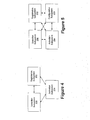
- Figure 4 is a block diagram illustrating an example of a subsystem-level view of the system that includes a detection subsystem, a registration subsystem, and an activation subsystem.
- Figure 5 is a block diagram illustrating an example of a subsystem-level view of the system that includes a configuration subsystem.
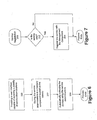
- Figure 6 is a process flow diagram illustrating an example of the system using user interactions with a user interface to automatically activate device-based services.
- Figure 7 is a flow chart diagram illustrating an example of a service registration process.
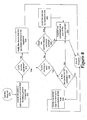
- Figure 8 is a flow chart diagram illustrating an example of a service request process.
- Figure 9 is a flow chart diagram illustrating an example of a service release process.
- the invention is a system and method for managing vehicle services (collectively “service management system” or simply the “system”).
- the service management system provides vehicle users (including owners, drivers, occupants, and managers) with the ability to fully manage the services made accessible to and in the vehicle.
- the system provides users with the ability to detect potential service-providing devices, activate/subscribe to particular services, configure particular services, and enable different services to share information with each other.
- Services for a vehicle or fleet of vehicles can be ordered, renewed, modified, managed, configured, and/or cancelled through a common interface. Services may be managed remotely from outside the vehicle as well as from within the vehicle. For example, the driver of a vehicle could access a secure web site from their home computer to subscribe for satellite radio services, cancel a subscription for global positioning information, renew a contract for broadband Internet access in the vehicle, and modify a relationship for remote vehicle security services. Each service that is registered with the system can possess a different status. Such functionality allows devices necessary for various services to be pre-installed in the vehicle.
- the service management system can also store user profiles that reflect user preferences and patterns of behavior with respect to how the services are performed and configured.
- Figure 1 is a process flow diagram illustrating an example of a service management system 100 using a management component 108 to manage multiple services 106 accessible from various devices 104 in a vehicle 110.
- Services 106 can be provided from a number of different vendors 102. Vendors 102 can also be referred to as providers. In some instances, vendors 102 may be vehicle manufacturers. However, in many instances, services are provided by vendors 102 who are not manufacturers. In some embodiments, vendors 102 of vehicle services for a particular vehicle 110 and the manufacturer of the particular vehicle 110 may have no contractual relationship or even cognizance of each other.
- the system 100 can support services from a potentially wide range of vendors 102. In the example of Figure 1, there are three different vendors 102.
- Vendor A (102) provides service A (106) through device A (104), vendor B (102) provides service B (106) through device B (104), and vendor C (102) provides service C (106) through device C (104).
- Vendor A (102) provides mobile or cell phone services 106.
- Vendor B (102) provides satellite radio services 106.
- Vendor C (102) provides navigation services 106
- a device 104 is any physical means or component by which one or more services 106 are delivered to vehicles 110.
- a single device 104 may be used to provide many different types of services 106.
- an onboard computer could be used to play music from a satellite radio, connect to the Internet using a broad band wireless connection, and access navigation information.
- each device 104 provides only one service 106.
- Device A (104) provides service A (106)
- device B (104) provides service B (106)
- device C (104) provides service C (106).
- Device A (104) is a cell phone.
- Device B (104) is control consol for a satellite radio receiver.
- Device C (104) is a screen for viewing navigation information.
- Each device 104 can communicate with a management component 108 using some type of wired and/or wireless connection. Devices 104 can both transmit and receive information with the management component 108.
- Some devices 104 require the ability to exchange information with sources outside the vehicle 110 to properly function.
- a satellite radio device 104 requires that a satellite exist to transmit the signal and a broad band network device 104 requires that the network be up and running.
- many devices do not require access to outside communication sources.
- a DVD player can function properly without any signal from the outside world.
- Devices 104 can be registered, unregistered, active and/or inactive.
- a registered device 104 is a device 104 that is known by the system 100 and the management component 108 to be usable to potentially perform one or more services 106.
- An unregistered device 104 is a device 104 that the management component 108 is not cognizant of.
- An active device 104 is a device 104 through which the vendor 102 allows users to currently access services 106. For example, a satellite radio receiver 104 with a current satellite radio subscription is an active device 104. When the subscription expires, the device 104 will be rendered inactive.
- An active device 104 can be either registered or unregistered.
- An inactive device 104 can be either a registered device 104 or an unregistered device 104.
- a registered device 104 can be either an active device 104 or an inactive device 104.
- An unregistered device 104 can be either an active device 104 or an inactive device 104.
- a device 104 can declare itself to be shared or unshared.
- a service 106 is any function which can be delivered to the vehicle 110 through the use of one or more devices 104 located on the vehicle 110.
- Potential services 106 include but are not limited to: navigation applications, cell phones, high-speed Internet access, satellite radio, remote vehicle access services, vehicle tracking services, security services, and other types of services (collectively “vehicle services” or simply “services”).
- service A (106) is cell phone communication
- service B (106) is satellite radio access
- service C (106) is a visual navigation application.
- services 106 can share information with each other.
- a navigation or global positioning service can provide information to a security application to aid in the recover of a stolen vehicle 110.
- a navigation application could utilize a broad band Internet connection to determine whether road construction or traffic merits choosing an alternative route, etc.
- Services 106 can be registered, unregistered, active and/or inactive.
- a registered service 106 is a service 106 that is known by the system 100 and the management component 108 to be usable to potentially perform one or more services 106.
- An unregistered service 106 is a service 106 that the management component 108 is not cognizant of.
- An active service 106 is a service 106 through which the vendor 102 allows users to currently access services 106. For example, a satellite radio receiver 104 with a current satellite radio subscription is an active service 106. When the subscription expires, the service 106 will be rendered inactive.
- An active service 106 can be either registered or unregistered.
- An inactive service 106 can be either a registered service 106 or an unregistered service 106.
- a registered service 106 can be either an active service 106 or an inactive service 106.
- An unregistered service 106 can be either an active service 106 or an inactive service 106.
- a service 106 can declare itself to be shared or unshared.
- a location service 106 One potentially important example of a service is a location service 106.
- One or more devices 104 in the vehicle 110 may benefit from accessing location information.
- An onboard global positioning system can export location information to the management component 108, or directly to other devices 104 in accordance with the configuration information provided by the management component 108.
- the behavior of the management component 108 can be altered with respect to which services 106 are invoked, and how those services 106 are invoked.
- a management component 108 is one or more computer devices within the vehicle 110 that are used to manage vehicle services 106 and the devices 104 used to provide those services 106.
- the management component is connected to the various devices 104 of the system 100 through one or more communication networks.
- the management component 108 is often an embedded computer with many different communication ports for communicating with the various devices 104 responsible for providing the services 106.
- the management component 108 can potentially be used to communicate with vendors 102 as well as with the devices 104 in the vehicle 110.
- the management component 108 can include: a detection application for detecting devices 104 and/or services 106; a registration application for registering devices 104 and/or services 106; a deregistration application (which can also be referred to as a remove registration application) for deregistering devices 104 and/or services 106; an activation application for activating devices 104 and/or services 106; a deactivation application for deactivating devices 104 and/or services; an information sharing application for conveying information from one device 104 and/or service 106 to another device 104 and/or service 106; a user profile that includes user selection and historical behavior information; conflict resolution data; and various configuration applications for configuring the devices 104 and/or services 106 incorporated into the system 100.
- the applications used by the management component 108 can also be referred to as heuristics. In some embodiments, the programming logic used to perform the various heuristics may not exist as distinct software applications.
- Heuristics/applications can potentially be invoked by both vendors 102 and users 114, depending on the circumstance.
- the initial configuration of the management component 108 can be performed by users 114, vendors 102, third-party service providers, or vehicle manufacturers.
- the management component 108 can manage all registered services 106 and devices 104.
- the management component 108 can automatically track the runtime status of the registered devices 104 and services 106, and update the lists of active and registered devices 104 and services 106.
- Devices 104 that need to utilize a service 106 provided by another device 104 can request an instance of the service 106 from the management component 108 using preconfigured user data.
- a detection heuristic/application can be used by the management component 108 to identify the availability of a device 104 to the system 100. As devices 104 are added to the vehicle 110, the detection heuristic/application can provide for identifying the device 104 and one or more of the services 106 that can potentially be provided by the device 104. The detection heuristic/application can also determine whether or not a particular device 104 has been removed from the vehicle 110, or is otherwise not available to the system 100.
- a registration heuristic/application can be used by the management component 108 for registering devices 104 and/or services 106.
- registration can automatically follow detection, regardless of whether a subscription exists for the particular device 104 or service 106.
- inactive devices 104 and services 106 can be registered.
- a deregistration heuristic/application (which can also be referred to as a remove registration heuristic/application) allows the system 100 to undo or reverse the impact of the registration heuristic/application.
- An activation heuristic/application allows the system 100 to activate a particular device 104 or service 106.
- Some embodiments of devices 104 and services 106 may require activity outside the vehicle 110 in order to achieve activation. For example, it may be necessary to transmit a payment to a vendor 102, sign and mail a contract, etc. in order to activate a device 104 or service 106.
- the management component 108 can include the technological capability of activating a device 104 or service 106 once the business requirements have been satisfied.
- a deactivation heuristic/application (which can also be referred to as a cancel activation heuristic/application) allows the system 100 to undo or reverse the impact of the activation heuristic/application.
- Each device 104 and service 106 can incorporate various inputs and generate various outputs.
- relevant output may be limited to a status of the device 104 or service 106.
- a status of the device 104 or service 106 For example, in the case of a satellite radio service, it may be relevant to other services that the service 106 merely exists, while in the case of a global positioning service 106, the location of the vehicle 110 may be useful to many different services 106.
- the ability of the system 100 to share information between different services 106 and different devices 104 will depend on the design of the different services 106 and devices 104.
- the system 100 can support the creation, modification, and automatic enforcement of individual user profiles as well as overall vehicle profiles. Profiles can be influenced both explicitly by affirmative selections made by users, as well as implicitly, by the history of activity for a particular user or vehicle. The use of profiles can be particularly desirable in the context of information sharing heuristics/applications.
- the system 100 can be configured so that profiles automatically influence the performance of one or more services 106.
- Conflict resolution data can be created, updated, and stored by the system 100 using the management component 108.
- Conflict resolution data assists the system 100 manage technological as well as operational conflicts between different services 106 and devices 104.
- system 100 it may be desirable to provide users with the ability to configure devices 104 and services 106 through the management component 108 of the system 100. Centralized management of the devices 104 and services 106 of the system 100 can assist the system 100 in various management objectives.
- a user interface 112 is the means by which a user 114 (not the vendor 112) interacts with the management component 108 described above.
- Different embodiments of the system 100 can provide for different user interfaces 112, some being more limiting than others.
- Some embodiments of the system 100 can include user interfaces that provide for more than one way to achieve a particular outcome.
- a user request to the system 100 could come in the form of a telephone call, an e-mail, an instant message, a web site interaction, or the physical manipulation of a control knob within the vehicle 110.
- a single user interface 112 will be used to manage all of the devices 104 and services 106 managed by the system 100.
- the user interface 112 does not need to know the details of how a particular device 104 or service 106 is implemented.
- the specific implementation of a service 106 can be reconfigured by the user 114 without impacting the user interface 112.
- a user 114 is typically a human being utilizing the benefits of the system 100.
- Drivers, vehicle occupants, passengers, and managers of vehicle fleets are all examples of potential users 114 of the system 100.
- Users 114 can also include various forms of intelligence technologies, such as expert systems, artificial intelligence components, robots, etc.
- a vehicle 110 is typically an automobile, such as a car or SUV. However, any transportation mechanism can be potentially supported by the processing of the system 100. Bicycles, skate boards, motorcycles, airplanes, boats, submarines, and space craft can potentially benefit from the processing performed by the system 100.
- Figure 2 is block diagram illustrating an example of how a management component takes into consideration device, framework, and service information in managing vehicle service.
- the system 100 integrates considerations relating the individual devices 104 and services 106, as well as an overall framework 105 or network of connected components, into the functionality of the system 100.
- Figure 3 is in many respects, a different view of Figure 2.
- Figure 3 is a use case diagram illustrating an example of a system that performs functionality at the device, framework, and service level.
- the various devices 104 responsible for providing the services 106 to the vehicle 110 can interact with the management component 108 and exchange information with the management component 108.
- devices 104 can engage in two-way communication with the management component 108. Examples of communication functions that can be initiated by devices 104 and sent to the management component 108 include UpdateConflictResolution(); ReleaseService(); and RequestService(). Communication functions initiated by the management component 108 can include RequestDenied(); RequestSuccess(); and Notification().
- devices 104 can invoke a ReleaseService() 120 function and a RequestService() 122 function.
- the management component 108 can respond with a rejection 124 or an acceptance 126.
- the management component can also provide a notification 128 to the device 104 that a service 106 relating to the device 104 has been modified.
- a framework 105 is the totality of the devices 104 and services 106 available to the system 100, including the one or more communication networks that allows the various devices 104 and services 106 to potentially communicate with each other, as well as with the management component 108.
- framework communications and functions include DiscoverServices() and ServicesFound().
- the framework is responsible for a discovery of new devices 130, for example in a similar way that a conventional desktop operating system is responsible for identifying the addition of new hardware.
- the ultimate purpose of the system 100 is to manage the delivery of services 106 to the vehicle 110.
- services functions include Update() (132), Unregister() (134), and Register() (136).
- the status of various services 106 and/or devices 104 can be stored on some type of memory component that is accessible by the management component 108.
- An example of such a memory component is a registered/discovered services repository or database 116.
- the management component 108 of the system 100 can use some type of memory component to store conflict resolution data.
- An example of such a memory component is a conflict resolution database 118.
- the conflict resolution repository or database 118 can store information relating to overlapping services 106. For example, there may be more than one cell phone service available to the vehicle 110, and depending on the location and time of day, one service 106 may be preferable to another service 106. In some instances, conflict resolution is inherently exclusive. Two services 106 may require the use of the same device 104, and the device 104 may only be able to support one service 106 at a time.
- One example of a conflict resolution function is UpdateConflictResolution(). Another example could be that two or more devices 104 provide a similar service 106. Depending on the time of day, location, or cost of using the device 104, one device may be preferable to another device.
- Figure 4 is a block diagram illustrating an example of a subsystem-level view of the system 100 that includes a detection subsystem 200, a registration subsystem 202, and an activation subsystem 204.
- Figure 5 is a block diagram illustrating an example of a subsystem-level view of the system 100 that also includes a configuration subsystem 206.
- a detection subsystem 200 is used to detect and identify devices 104 that are: (1) connected to one or more networks in the vehicle 110 such that the management component 108 has the possibility of communicating with the device 104; and (2) capable of providing services 106 to the vehicle 110.
- the detection subsystem 200 is not influenced or modified by interactions with the user 114. Instead, the detection subsystem 200 often works in an automated manner without human or user 114 intervention.
- a registration subsystem 202 provides for registering devices 104 and/or services 106. Registration information can be stored on a registered/discovered services database 116. Various registration functions are described in greater detail below.
- An activation subsystem 204 can allow users 114, vendors 102, vehicle manufacturers, and/or various third-party service providers to activate services 106 and/or devices 104 within the system 100.
- User interactions with the activation subsystem 204 can involve the sending of user requests through the user interface 112.
- User requests can take the form of a telephone call, an e-mail, an instant message, a web site interaction, or potentially any other type of communication.
- Instructions by users 112 can include decisions to subscribe to a particular service 106, a decision to renew a particular subscription, defining the status of a service 106 or device as shared or unshared, etc.
- Some embodiments of the system 100 include a configuration subsystem 206 for configuring the services 106 provided through use of the system 100. Any instructions by a user 114, vendor 102, vehicle manufacturer, or third-party service provider can potentially configure vehicle services 106 through the use of the configuration subsystem 206.
- Figure 6 is a process flow diagram illustrating an example of the system 100 using user interactions with a user interface 112 to automatically activate device-based services 106.
- a user 112 is provided access to a user interface 112 so that the system 100 can receive one or more service determinations in the form of user interactions.
- one or more service determinations made by the user 114 are stored in a memory component that is accessible to the management component 108.
- one or more services 106 are automatically invoked using the stored service determinations.
- the process at 304 can take into consideration a user profile and/or a vehicle profile in the automatic invocation of services 106.
- activating a service 106 can be accomplished in a wide variety of different ways.
- the user interface 112 used by users 114 is a web site that is accessed from outside the vehicle 110.
- Figure 7 is a flow chart diagram illustrating an example of a service registration process 310.
- the system 100 determines whether or not a particular service 106 or device 104 is new. If the device 104 or service 106 is not new, the process ends. If the device 104 or service 106 is new, the service 106 or device 104 can be registered with the management component 108 at 314.
- Figure 8 is a flow chart diagram illustrating an example of a service request process 320.
- a device 104 can request a reference to a service 106 from the management component 108.
- the system 100 determines whether or not the requested service 106 has been registered. If the requested service 106 has not been registered, the system 100 at 326 notifies the device 104 that the requested service 106 is not currently registered, and the process ends. In some embodiments, the system 100 may automatically prompt the user 114 to see if a registration process should be invoked.
- the system 100 determines at 328 whether or not the requested service 106 is currently in use. If the service 106 is in use, the system 100 then determines at 336 whether the use is exclusive, e.g. whether the service is locked with respect to the instant request. If the prior use is exclusive, a notification is sent at 338. In some embodiments, the system 100 can automatically notify the user 114 when the exclusive lock expires.
- the service 106 can be registered at 334.
- the system 100 determines at 330 whether or not the requested service requires exclusive locking. If exclusive locking is required, it is performed at 332 before the service is registered at 334. If exclusive locking is not required, the process proceeds directly to the registering of the service at 334 before the process ends.
- Figure 9 is a flow chart diagram illustrating an example of a service release process 350.
- a device 104 notifies the management component 108 that the device 104 is no longer needed.
- the system 100 determines whether or not the device 104 has the service 106 locked for exclusive use. If the service 106 is not locked for exclusive use, the management component 108 deregisters the device 104 at 358 and the process can end. If the service 106 is exclusively locked, the management component 108 at 356 must also unlock the service 106 in conjunction with the deregistration service at 358
Landscapes
- Engineering & Computer Science (AREA)
- Radar, Positioning & Navigation (AREA)
- Remote Sensing (AREA)
- Computer Networks & Wireless Communication (AREA)
- Signal Processing (AREA)
- Physics & Mathematics (AREA)
- Automation & Control Theory (AREA)
- General Physics & Mathematics (AREA)
- Health & Medical Sciences (AREA)
- Computing Systems (AREA)
- General Health & Medical Sciences (AREA)
- Medical Informatics (AREA)
- Traffic Control Systems (AREA)
Applications Claiming Priority (2)
| Application Number | Priority Date | Filing Date | Title |
|---|---|---|---|
| US10/869,341 US20050283284A1 (en) | 2004-06-16 | 2004-06-16 | Vehicle services manager |
| US869341 | 2004-06-16 |
Publications (1)
| Publication Number | Publication Date |
|---|---|
| EP1607893A1 true EP1607893A1 (fr) | 2005-12-21 |
Family
ID=34930806
Family Applications (1)
| Application Number | Title | Priority Date | Filing Date |
|---|---|---|---|
| EP04257099A Withdrawn EP1607893A1 (fr) | 2004-06-16 | 2004-11-16 | Gestionnaire de services vehicule |
Country Status (2)
| Country | Link |
|---|---|
| US (1) | US20050283284A1 (fr) |
| EP (1) | EP1607893A1 (fr) |
Cited By (1)
| Publication number | Priority date | Publication date | Assignee | Title |
|---|---|---|---|---|
| US20220204012A1 (en) * | 2020-12-24 | 2022-06-30 | Hyundai Motor Company | Method and system for providing a connected car service |
Families Citing this family (69)
| Publication number | Priority date | Publication date | Assignee | Title |
|---|---|---|---|---|
| US20060003762A1 (en) * | 2004-06-22 | 2006-01-05 | General Motors Corporation | Method and system for telematically deactivating satellite radio systems |
| US7734803B2 (en) * | 2005-05-06 | 2010-06-08 | Toyota Motor Engineering & Manufacturing North America, Inc. | System and method for subscription-based content distribution to vehicles via wireless communication |
| US10878646B2 (en) | 2005-12-08 | 2020-12-29 | Smartdrive Systems, Inc. | Vehicle event recorder systems |
| US20070150138A1 (en) | 2005-12-08 | 2007-06-28 | James Plante | Memory management in event recording systems |
| US8996240B2 (en) | 2006-03-16 | 2015-03-31 | Smartdrive Systems, Inc. | Vehicle event recorders with integrated web server |
| US9201842B2 (en) | 2006-03-16 | 2015-12-01 | Smartdrive Systems, Inc. | Vehicle event recorder systems and networks having integrated cellular wireless communications systems |
| US7613435B2 (en) * | 2006-06-23 | 2009-11-03 | Ford Motor Company | Method for providing satellite radio service in a vehicle |
| US8649933B2 (en) | 2006-11-07 | 2014-02-11 | Smartdrive Systems Inc. | Power management systems for automotive video event recorders |
| US8989959B2 (en) | 2006-11-07 | 2015-03-24 | Smartdrive Systems, Inc. | Vehicle operator performance history recording, scoring and reporting systems |
| US8868288B2 (en) | 2006-11-09 | 2014-10-21 | Smartdrive Systems, Inc. | Vehicle exception event management systems |
| US8139820B2 (en) | 2006-12-13 | 2012-03-20 | Smartdrive Systems Inc. | Discretization facilities for vehicle event data recorders |
| US8391775B2 (en) * | 2007-03-09 | 2013-03-05 | Airbiquity Inc. | Mobile digital radio playlist system |
| US8239092B2 (en) | 2007-05-08 | 2012-08-07 | Smartdrive Systems Inc. | Distributed vehicle event recorder systems having a portable memory data transfer system |
| WO2010053803A1 (fr) * | 2008-10-28 | 2010-05-14 | Airbiquity Inc. | Achat d’un morceau de musique lu au même moment sur la radio d’un véhicule |
| US8831823B2 (en) * | 2009-10-15 | 2014-09-09 | Airbiquity Inc. | Centralized management of motor vehicle software applications and services |
| US9002574B2 (en) | 2009-10-15 | 2015-04-07 | Airbiquity Inc. | Mobile integration platform (MIP) integrated handset application proxy (HAP) |
| US8942888B2 (en) | 2009-10-15 | 2015-01-27 | Airbiquity Inc. | Extensible scheme for operating vehicle head unit as extended interface for mobile device |
| US8838332B2 (en) * | 2009-10-15 | 2014-09-16 | Airbiquity Inc. | Centralized management of motor vehicle software applications and services |
| US9439051B2 (en) | 2011-09-01 | 2016-09-06 | Toyota Motor Engineering & Manufacturing North America, Inc. | System for providing Internet access to an automotive vehicle having a multimedia device |
| WO2014172327A1 (fr) | 2013-04-15 | 2014-10-23 | Flextronics Ap, Llc | Synchronisation entre un véhicule et l'agenda d'un dispositif utilisateur |
| US9378601B2 (en) | 2012-03-14 | 2016-06-28 | Autoconnect Holdings Llc | Providing home automation information via communication with a vehicle |
| US9384609B2 (en) | 2012-03-14 | 2016-07-05 | Autoconnect Holdings Llc | Vehicle to vehicle safety and traffic communications |
| US9412273B2 (en) | 2012-03-14 | 2016-08-09 | Autoconnect Holdings Llc | Radar sensing and emergency response vehicle detection |
| US9082239B2 (en) | 2012-03-14 | 2015-07-14 | Flextronics Ap, Llc | Intelligent vehicle for assisting vehicle occupants |
| US9349234B2 (en) | 2012-03-14 | 2016-05-24 | Autoconnect Holdings Llc | Vehicle to vehicle social and business communications |
| JP6154894B2 (ja) | 2012-06-08 | 2017-06-28 | エアビクティ インコーポレイテッド | 電子センサデータを評価して、自動車を遠隔的に識別し運転者の挙動を監視する方法 |
| US9728228B2 (en) | 2012-08-10 | 2017-08-08 | Smartdrive Systems, Inc. | Vehicle event playback apparatus and methods |
| CN104919833B (zh) | 2012-12-20 | 2019-11-08 | 爱尔比奎特公司 | 高效头单元通信集成 |
| EP2817170A4 (fr) * | 2013-04-15 | 2015-11-04 | Accès à des profils d'utilisateurs mémorisés sous la forme de modèles et portabilité de ces profils d'utilisateurs | |
| US12039243B2 (en) | 2013-04-15 | 2024-07-16 | Autoconnect Holdings Llc | Access and portability of user profiles stored as templates |
| EP2817591A4 (fr) | 2013-04-15 | 2015-10-07 | Flextronics Ap Llc | Modification de comportement par l'intermédiaire de trajets de carte modifiés sur la base d'informations de profil d'utilisateur |
| EP2987153A4 (fr) | 2013-04-15 | 2016-09-21 | Autoconnect Holdings Llc | Réseau central pour la régulation automatisée de la circulation routière |
| US9201713B1 (en) * | 2013-07-02 | 2015-12-01 | Amazon Technologies, Inc. | Registering and controlling policies of applications |
| US9501878B2 (en) | 2013-10-16 | 2016-11-22 | Smartdrive Systems, Inc. | Vehicle event playback apparatus and methods |
| US9610955B2 (en) | 2013-11-11 | 2017-04-04 | Smartdrive Systems, Inc. | Vehicle fuel consumption monitor and feedback systems |
| US8892310B1 (en) | 2014-02-21 | 2014-11-18 | Smartdrive Systems, Inc. | System and method to detect execution of driving maneuvers |
| US9663127B2 (en) | 2014-10-28 | 2017-05-30 | Smartdrive Systems, Inc. | Rail vehicle event detection and recording system |
| US11687947B2 (en) | 2014-10-31 | 2023-06-27 | Aeris Communications, Inc. | Automatic connected vehicle enrollment |
| US20160127373A1 (en) * | 2014-10-31 | 2016-05-05 | Aeris Communications, Inc. | Automatic connected vehicle demonstration process |
| US10586207B2 (en) * | 2014-10-31 | 2020-03-10 | Aeris Communications, Inc. | Automatic connected vehicle demonstration process |
| US10373403B2 (en) | 2014-10-31 | 2019-08-06 | Aeris Communications, Inc. | Automatic connected vehicle subsequent owner enrollment process |
| US11069257B2 (en) | 2014-11-13 | 2021-07-20 | Smartdrive Systems, Inc. | System and method for detecting a vehicle event and generating review criteria |
| US9679420B2 (en) | 2015-04-01 | 2017-06-13 | Smartdrive Systems, Inc. | Vehicle event recording system and method |
| US10692126B2 (en) | 2015-11-17 | 2020-06-23 | Nio Usa, Inc. | Network-based system for selling and servicing cars |
| US9789763B1 (en) * | 2016-04-26 | 2017-10-17 | Toyota Motor Engineering & Manufacturing North America, Inc. | Systems and methods for infotainment system startup |
| US20180012197A1 (en) | 2016-07-07 | 2018-01-11 | NextEv USA, Inc. | Battery exchange licensing program based on state of charge of battery pack |
| US9928734B2 (en) | 2016-08-02 | 2018-03-27 | Nio Usa, Inc. | Vehicle-to-pedestrian communication systems |
| US10031523B2 (en) | 2016-11-07 | 2018-07-24 | Nio Usa, Inc. | Method and system for behavioral sharing in autonomous vehicles |
| US10708547B2 (en) | 2016-11-11 | 2020-07-07 | Nio Usa, Inc. | Using vehicle sensor data to monitor environmental and geologic conditions |
| US10410064B2 (en) | 2016-11-11 | 2019-09-10 | Nio Usa, Inc. | System for tracking and identifying vehicles and pedestrians |
| US10694357B2 (en) | 2016-11-11 | 2020-06-23 | Nio Usa, Inc. | Using vehicle sensor data to monitor pedestrian health |
| US10699305B2 (en) | 2016-11-21 | 2020-06-30 | Nio Usa, Inc. | Smart refill assistant for electric vehicles |
| US10249104B2 (en) | 2016-12-06 | 2019-04-02 | Nio Usa, Inc. | Lease observation and event recording |
| US10074223B2 (en) | 2017-01-13 | 2018-09-11 | Nio Usa, Inc. | Secured vehicle for user use only |
| US10471829B2 (en) | 2017-01-16 | 2019-11-12 | Nio Usa, Inc. | Self-destruct zone and autonomous vehicle navigation |
| US10031521B1 (en) | 2017-01-16 | 2018-07-24 | Nio Usa, Inc. | Method and system for using weather information in operation of autonomous vehicles |
| US9984572B1 (en) | 2017-01-16 | 2018-05-29 | Nio Usa, Inc. | Method and system for sharing parking space availability among autonomous vehicles |
| US10464530B2 (en) | 2017-01-17 | 2019-11-05 | Nio Usa, Inc. | Voice biometric pre-purchase enrollment for autonomous vehicles |
| US10286915B2 (en) | 2017-01-17 | 2019-05-14 | Nio Usa, Inc. | Machine learning for personalized driving |
| US10897469B2 (en) | 2017-02-02 | 2021-01-19 | Nio Usa, Inc. | System and method for firewalls between vehicle networks |
| US10234302B2 (en) | 2017-06-27 | 2019-03-19 | Nio Usa, Inc. | Adaptive route and motion planning based on learned external and internal vehicle environment |
| US10710633B2 (en) | 2017-07-14 | 2020-07-14 | Nio Usa, Inc. | Control of complex parking maneuvers and autonomous fuel replenishment of driverless vehicles |
| US10369974B2 (en) | 2017-07-14 | 2019-08-06 | Nio Usa, Inc. | Control and coordination of driverless fuel replenishment for autonomous vehicles |
| US10837790B2 (en) | 2017-08-01 | 2020-11-17 | Nio Usa, Inc. | Productive and accident-free driving modes for a vehicle |
| US10635109B2 (en) | 2017-10-17 | 2020-04-28 | Nio Usa, Inc. | Vehicle path-planner monitor and controller |
| US10606274B2 (en) | 2017-10-30 | 2020-03-31 | Nio Usa, Inc. | Visual place recognition based self-localization for autonomous vehicles |
| US10935978B2 (en) | 2017-10-30 | 2021-03-02 | Nio Usa, Inc. | Vehicle self-localization using particle filters and visual odometry |
| US10717412B2 (en) | 2017-11-13 | 2020-07-21 | Nio Usa, Inc. | System and method for controlling a vehicle using secondary access methods |
| US10369966B1 (en) | 2018-05-23 | 2019-08-06 | Nio Usa, Inc. | Controlling access to a vehicle using wireless access devices |
Citations (4)
| Publication number | Priority date | Publication date | Assignee | Title |
|---|---|---|---|---|
| US5479479A (en) * | 1991-10-19 | 1995-12-26 | Cell Port Labs, Inc. | Method and apparatus for transmission of and receiving signals having digital information using an air link |
| US5732074A (en) * | 1996-01-16 | 1998-03-24 | Cellport Labs, Inc. | Mobile portable wireless communication system |
| US5794164A (en) * | 1995-11-29 | 1998-08-11 | Microsoft Corporation | Vehicle computer system |
| CA2302895A1 (fr) * | 2000-03-22 | 2001-09-22 | Kolio Markov | Publicite informatisee interactive et echange de donnees a bord de vehicules |
Family Cites Families (6)
| Publication number | Priority date | Publication date | Assignee | Title |
|---|---|---|---|---|
| US6259446B1 (en) * | 1992-12-23 | 2001-07-10 | Object Technology Licensing Corporation | Menu state system |
| US5974541A (en) * | 1997-07-22 | 1999-10-26 | National Instruments Corporation | GPIB system and method which provides asynchronous event notification |
| DE19748536C2 (de) * | 1997-11-03 | 2000-06-29 | Daimler Chrysler Ag | Datenverarbeitungsgestütztes elektronisches Steuerungssystem, insbesondere für ein Kraftfahrzeug |
| US6298378B1 (en) * | 1998-12-04 | 2001-10-02 | Sun Microsystems, Inc. | Event distribution system for computer network management architecture |
| US6330319B1 (en) * | 1998-12-23 | 2001-12-11 | Ericsson Inc. | System and method for adding services to computer telephone systems |
| CA2345857A1 (fr) * | 2001-05-01 | 2002-11-01 | Eric Meunier | Systeme et methode de processus automatise de location de vehicule |
-
2004
- 2004-06-16 US US10/869,341 patent/US20050283284A1/en not_active Abandoned
- 2004-11-16 EP EP04257099A patent/EP1607893A1/fr not_active Withdrawn
Patent Citations (4)
| Publication number | Priority date | Publication date | Assignee | Title |
|---|---|---|---|---|
| US5479479A (en) * | 1991-10-19 | 1995-12-26 | Cell Port Labs, Inc. | Method and apparatus for transmission of and receiving signals having digital information using an air link |
| US5794164A (en) * | 1995-11-29 | 1998-08-11 | Microsoft Corporation | Vehicle computer system |
| US5732074A (en) * | 1996-01-16 | 1998-03-24 | Cellport Labs, Inc. | Mobile portable wireless communication system |
| CA2302895A1 (fr) * | 2000-03-22 | 2001-09-22 | Kolio Markov | Publicite informatisee interactive et echange de donnees a bord de vehicules |
Cited By (2)
| Publication number | Priority date | Publication date | Assignee | Title |
|---|---|---|---|---|
| US20220204012A1 (en) * | 2020-12-24 | 2022-06-30 | Hyundai Motor Company | Method and system for providing a connected car service |
| US12195024B2 (en) * | 2020-12-24 | 2025-01-14 | Hyundai Motor Company | Method and system for providing a connected car service |
Also Published As
| Publication number | Publication date |
|---|---|
| US20050283284A1 (en) | 2005-12-22 |
Similar Documents
| Publication | Publication Date | Title |
|---|---|---|
| EP1607893A1 (fr) | Gestionnaire de services vehicule | |
| US20040187133A1 (en) | Service framework with local proxy for representing remote services | |
| US20230106867A1 (en) | Cloud-based management of user accounts, user profiles and user devices associated with a vehicle | |
| US7401233B2 (en) | Method, system, and apparatus for dynamic data-driven privacy policy protection and data sharing | |
| US7240015B1 (en) | Policy representations and mechanisms for the control of software | |
| US8744674B2 (en) | Method for configuring infotainment applications in a motor vehicle | |
| US20140032045A1 (en) | Vehicle Communication System, Access Data Device, and Telematics Communication System | |
| US8850041B2 (en) | Role based delegated administration model | |
| US9294466B2 (en) | System and/or method for authentication and/or authorization via a network | |
| WO2002023826A2 (fr) | Recherche/decouverte de service de soutien relatif a une structure de services et mise en connexion correspondante | |
| US20050010528A1 (en) | Method for controlling access to a resource of an application in a data-processing device | |
| US20190050820A1 (en) | Service management system, server apparatus, and vehicle | |
| US20100306393A1 (en) | External access and partner delegation | |
| KR20170010097A (ko) | 차량과 통신하기 위한 모바일 디바이스 애플리케이션 | |
| JP5418677B2 (ja) | 制御装置 | |
| WO2007039874A2 (fr) | Systeme et/ou procede d'autorisation bases sur des roles | |
| US11871317B2 (en) | Method for controlling a data interchange between a control device of a motor vehicle and an external device, control device for a motor vehicle and motor vehicle having such a control device | |
| US11787366B1 (en) | Systems for shared vehicle access | |
| US8477942B2 (en) | Method and apparatus for managing service lists | |
| JP4777222B2 (ja) | 状態管理装置及び状態管理方法 | |
| JP7683376B2 (ja) | プロファイル流用管理システムおよびプロファイルの流用管理方法 | |
| US20240359657A1 (en) | Systems and Methods for Shared Vehicle Access | |
| US11161409B1 (en) | Systems and methods to securely limit drivability of a vehicle by impaired users | |
| US20170256008A1 (en) | Storage equipment and appurtenances loan-out system | |
| Singh et al. | V-CARE: A blockchain based framework for secure vehicle health record system |
Legal Events
| Date | Code | Title | Description |
|---|---|---|---|
| PUAI | Public reference made under article 153(3) epc to a published international application that has entered the european phase |
Free format text: ORIGINAL CODE: 0009012 |
|
| AK | Designated contracting states |
Kind code of ref document: A1 Designated state(s): AT BE BG CH CY CZ DE DK EE ES FI FR GB GR HU IE IS IT LI LU MC NL PL PT RO SE SI SK TR |
|
| AX | Request for extension of the european patent |
Extension state: AL HR LT LV MK YU |
|
| 17P | Request for examination filed |
Effective date: 20060329 |
|
| AKX | Designation fees paid |
Designated state(s): DE |
|
| 17Q | First examination report despatched |
Effective date: 20060807 |
|
| STAA | Information on the status of an ep patent application or granted ep patent |
Free format text: STATUS: THE APPLICATION IS DEEMED TO BE WITHDRAWN |
|
| 18D | Application deemed to be withdrawn |
Effective date: 20100601 |