EP1608199B1 - Verfahren zur signalisierung von informationen über nachbarfunkzellen in einem funk-kommunikationssystem - Google Patents
Verfahren zur signalisierung von informationen über nachbarfunkzellen in einem funk-kommunikationssystem Download PDFInfo
- Publication number
- EP1608199B1 EP1608199B1 EP05015992.0A EP05015992A EP1608199B1 EP 1608199 B1 EP1608199 B1 EP 1608199B1 EP 05015992 A EP05015992 A EP 05015992A EP 1608199 B1 EP1608199 B1 EP 1608199B1
- Authority
- EP
- European Patent Office
- Prior art keywords
- communication system
- radio communication
- radio
- base station
- subscriber station
- Prior art date
- Legal status (The legal status is an assumption and is not a legal conclusion. Google has not performed a legal analysis and makes no representation as to the accuracy of the status listed.)
- Expired - Lifetime
Links
- 238000004891 communication Methods 0.000 title claims abstract description 57
- 238000000034 method Methods 0.000 title claims abstract description 52
- 230000011664 signaling Effects 0.000 title claims abstract description 35
- 230000005540 biological transmission Effects 0.000 claims abstract description 32
- 238000005259 measurement Methods 0.000 claims description 15
- 230000008520 organization Effects 0.000 claims description 10
- 238000011161 development Methods 0.000 description 7
- 230000018109 developmental process Effects 0.000 description 7
- 238000012790 confirmation Methods 0.000 description 2
- 238000013507 mapping Methods 0.000 description 2
- 230000008054 signal transmission Effects 0.000 description 2
- 230000003044 adaptive effect Effects 0.000 description 1
- 239000012141 concentrate Substances 0.000 description 1
- 230000001419 dependent effect Effects 0.000 description 1
- 238000013461 design Methods 0.000 description 1
- 238000010586 diagram Methods 0.000 description 1
- VJYFKVYYMZPMAB-UHFFFAOYSA-N ethoprophos Chemical compound CCCSP(=O)(OCC)SCCC VJYFKVYYMZPMAB-UHFFFAOYSA-N 0.000 description 1
- 230000000737 periodic effect Effects 0.000 description 1
- 238000011002 quantification Methods 0.000 description 1
- 230000005855 radiation Effects 0.000 description 1
Images

Classifications
-
- H—ELECTRICITY
- H04—ELECTRIC COMMUNICATION TECHNIQUE
- H04W—WIRELESS COMMUNICATION NETWORKS
- H04W36/00—Hand-off or reselection arrangements
- H04W36/0005—Control or signalling for completing the hand-off
- H04W36/0055—Transmission or use of information for re-establishing the radio link
- H04W36/0066—Transmission or use of information for re-establishing the radio link of control information between different types of networks in order to establish a new radio link in the target network
-
- H—ELECTRICITY
- H04—ELECTRIC COMMUNICATION TECHNIQUE
- H04W—WIRELESS COMMUNICATION NETWORKS
- H04W48/00—Access restriction; Network selection; Access point selection
- H04W48/08—Access restriction or access information delivery, e.g. discovery data delivery
- H04W48/10—Access restriction or access information delivery, e.g. discovery data delivery using broadcasted information
-
- H—ELECTRICITY
- H04—ELECTRIC COMMUNICATION TECHNIQUE
- H04W—WIRELESS COMMUNICATION NETWORKS
- H04W36/00—Hand-off or reselection arrangements
- H04W36/0005—Control or signalling for completing the hand-off
- H04W36/0055—Transmission or use of information for re-establishing the radio link
- H04W36/0061—Transmission or use of information for re-establishing the radio link of neighbour cell information
Definitions
- the invention relates to a method for signaling information about neighboring radio cells in a radio communication system, in particular in a mobile radio system.
- the method for handover between digital mobile radio systems of the second and third generation is usable with different transmission methods.
- information such as voice, picture information or other data is transmitted by means of electromagnetic waves over a radio interface between a transmitting and a receiving radio station, such as a base station or a mobile station in the case of a mobile radio system.
- the radiation of the electromagnetic waves takes place with carrier frequencies which are in the frequency band provided for the respective system.
- GSM mobile radio system G lobal S ystem for M obile Communication
- the carrier frequencies in the 900 MHz, 1800 MHz and 1900 MHz.
- future mobile radio systems with CDMA and TD / CDMA transmission methods via the radio interface such as the UMTS (Universal Mobile Telecommunication System) or other systems of the 3rd generation carrier frequencies are provided in the range of about 2000 MHz.
- the TDD mode is characterized in particular by the fact that a common frequency band is used both for the signal transmission in the uplink (UL uplink) and in the downlink direction (DL downlink), while the FDD mode uses a respective frequency band for the transmission directions.
- the second-generation and third-generation digital mobile radio systems are intended to enable problem-free connection switching, since full coverage or coverage is not provided, especially at the beginning of the expansion of the third-generation systems. For example, initially only metropolitan areas will be equipped with the system, while rural areas will continue to be served exclusively by systems based on the second generation mobile system. Accordingly, at least in this initial phase, there will be subscriber stations supporting both the second generation transmission method, for example GSM, and one or more third generation transmission methods, for example TDD and / or FDD mode.
- GSM Global System for Mobile Communications
- third generation transmission methods for example TDD and / or FDD mode.
- Such a so-called multimode subscriber station operates a communication connection via a second generation mobile radio system or so-called idle mode, it must be signaled via parallel existing mobile radio systems in order to monitor the transmission characteristics and, if appropriate, a connection forwarding to base stations of the mobile radio system of the third To enable generation.
- Such a connection handover may be initiated, for example, due to a desired design of an additional high-speed service, a better service, or a better quality of service.
- the information to be signaled via the parallel mobile radio system includes, for example, a list of neighboring radio cells which support the corresponding transmission method.
- neighboring cellists are signaled on an organization channel BCCH (Broadcast Control Channel) in system information elements.
- BCCH Broadcast Control Channel
- These lists contain, inter alia, information about the respective frequencies of neighboring radio cells, which for the purpose of a possible connection forwarding from the subscriber stations to be observed in the radio cell.
- the subscriber station periodically carries out field strength measurements of the broadcasted organizational channels BCCH of the neighboring base stations in each transmission frame. These measured and unquantized analog measured values are each converted into a quantized value and assigned to a specific value range within a table.
- RXLEV Global System for Mobile Communications
- SACCH Slow Associated Control Channel
- BSC base station controller
- RXLEV Low Associated Control Channel
- BSC base station controller
- the subscriber station generates a list of the preferred radio cells for a connection forwarding, whose ranking is determined by the quantized measured values of the individual radio cells.
- the decision as to which radio cell the connection is forwarded to is made in the base station controller, since only it is aware of a clear channel in the preferred radio cell. If the preferred radio cell is outside the range of the base station controller, it initiates a call handoff via a mobile switching center to another base station controller.
- a comparable signaling of neighboring cellists of parallel mobile radio systems, for example of the third generation would be possible, for example, by an extension of the system information elements in the organization channel BCCH.
- This would, however, due to a variety of possibly existing parallel systems of the third generation with different transmission methods, such as the FDD and TDD mode of UMTS and the American MC-CDMA method, to a high additional signaling load on the channel BCCH and one of them following outdated availability of information.
- the signaling would have to be structured such that subscriber stations that do not support third generation transmission methods do not misinterpret the additional information.
- the invention has for its object to provide a method and a radio communication system, which allow a simplified signaling of information about neighboring radio cells. This object is achieved by the method and the radio communication system according to the features of the independent claims. Further developments of the invention can be found in the dependent claims.
- the inventive method has the advantage that the signaling of all existing parallel radio communication systems or their radio cells are not signaled via an organization channel with the disadvantages described for its signaling load and the large time delay.
- the signaling comprises only information about the one or more supported by the subscriber station parallel systems, whereby the signaling load is advantageously reduced.
- the signaling exchange can be easily integrated into the existing signaling procedures, for example mobility management, and does not require any hardware changes to the already existing systems or their components.
- connection-specific signaling for example, only one list of neighboring radio cells of the second radio communication system is transmitted, since the neighboring radio cells of the first radio communication system are already signaled in the organizational channel BCCH in the GSM mobile radio system mentioned by way of example.
- the signaling of the neighboring radio cells of the second radio communication system depends, for example, on a current traffic load in the first radio communication system or on a current location of the subscriber station.
- an operator who operates both the first and the second radio communication system is able to initiate call forwarding in a targeted manner to specific radio cells.
- certain services with special requirements can be concentrated in certain radio cells or, on the contrary, distributed to many radio cells in order to prevent a local overload of a radio cell.
- the operator is thus able to offer only certain radio cells to a subscriber station and hide others, for example, which can speed up the handover procedure, for example, if a call can be kept for a long time within the controlled range of a single base station controller.
- the existence of the second radio communication system is signaled by the base station on an organization channel. This can be done, for example, by setting a flag in the log of the organization channel.
- the subscriber station recognizes from the flags set that radio cells of a second radio communication system are available and in turn signals the support of the second transmission method according to the method of claim 1.
- the signaling of the support of the second transmission method by the subscriber station takes place according to a further embodiment of the invention in a random access channel, which the subscriber station accesses during a connection setup attempt according to a random access method.
- This access channel may be in the exemplary GSM mobile radio system of the RACH (Random Access Channel).
- the signaling of the information about neighboring cells of the second radio communication system by the base station of the first radio communication system is carried out according to a further embodiment of the invention in a confirmation channel, which may be in the exemplary GSM mobile radio system of the AGCH (Access Grant Channel).
- the current signaling of the neighboring radio cells together with mobility management signals.
- the mobility management comprises in the GSM mobile radio system exemplified, among other things, for example, the so-called IMSI attach and the periodic update of the location of the subscriber station.
- the inventive method can be integrated into an existing system without any necessary changes to the infrastructure.
- the information about neighboring radio cells are used according to a further development of the invention for a connection forwarding and / or a structure of an additional service.
- an existing voice connection may still be made via a second generation radio communication system while at the same time establishing an Internet connection over a radio cell of a third generation system.
- the subscriber station carries out measurements relating to transmission properties to respective base stations of the parallel radio communication systems and signals the base station of the first radio communication system.
- a subscriber station of the GSM mobile radio system determines a respective field strength of organization channels of the neighboring base stations and, after a quantification, signals them to the base station to which it has currently established a connection.
- further measurements such as Interference levels or powers of specific code sequences are provided for decision making regarding a call forwarding.
- Such measurements can not be evaluated by a GSM base station or a base station controller since they have no specific knowledge of such measurement sequences.
- the signaling messages of the GSM system are not intended for these measurement sequences. According to a further development of the invention, therefore, the measurements relating to the base stations of the second radio communication system are mapped to a format used in the first radio communication system.
- the more complex measuring sequences of a UMTS system can be mapped to simple measured values of a GSM system and thus can be evaluated in the base station controller.
- the subscriber station has, for example, a function which maps the measurement sequences of the UMTS system into the described quantized GSM value range of RXLEV. This mapping need not be rigid, but adaptive to specific situations.
- the measured values are weighted with respect to the base stations of the second radio communication system.
- a weighting of the measured values advantageously enables the base stations of the second radio communication system to be placed in a preferred or disadvantaged position in the list of base stations provided for call forwarding. This can also be done base station individual.
- the weighting parameters or weighting factors can be signaled to the subscriber station, for example during the connection setup, by the base station of the first radio communication system, wherein the weighting factors are selected, for example, as a function of a current traffic load in the individual radio cells.
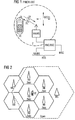
- the FIG. 1 shows a part of a mobile radio system as an example of the structure of a radio communication system.
- a mobile radio system each consists of a plurality of mobile switching centers MSC (Mobile Switching Center), which belong to a switching subsystem and are interconnected or provide access to a fixed network PSTN, and each one or more connected to these mobile switching centers MSC Base Station Systems BSS (Base Station Subsystem).
- a base station system BSS in turn has at least one base station controller BSC (GSM mobile radio system) or a device RNC (Radio Network Controller) for allocating radio resources (UMTS mobile radio system) as well as at least one associated base station BS (GSM) or NB (Node B) (UMTS).
- GSM Global System
- RNC Radio Network Controller
- a base station BS / NB can establish connections to subscriber stations UE (user equipment) via a radio interface and entertained.
- At least one radio cell Z is formed by each base station BS / NB.
- the size of the radio cell Z is usually determined by the range of an organization channel (BCCH - Broadcast Control Channel), which is transmitted by the base stations BS / NB with a higher and constant transmission power compared to traffic channels.
- BCCH - Broadcast Control Channel an organization channel
- several radio cells Z can also be supplied per base station BS / NB.
- FIG. 1 shows a subscriber station UE, which is located in the radio cell Z of a base station NB / BS and at a speed V moves.
- the subscriber station UE has established a communication link to the base station BS / NB, on which a signal transmission of a selected service takes place in uplink UL and downlink DL. Due to the movement of the subscriber station UE, upon reaching a radio cell boundary, a connection forwarding, a so-called handover or handoff, to a base station BS / NB of an adjacent radio cell Z is necessary in order to ensure an uninterrupted communication connection.
- the control of a connection forwarding takes place in the base station controller BSC or the device for allocating radio resources RNC.
- FIG. 2 exemplified is a structure of radio cells Z of two parallel operated radio communication systems.
- a radio cell Zgsm in this case a macro cell with a large coverage radius, a base station BS of a GSM mobile radio system covers a plurality of micro or picocells Ztdd of a UMTS mobile radio system with a TDD mode.
- Other exemplary constellations of different systems are also conceivable and disclosed within the scope of the invention.
- the illustrated subscriber station UE supports both transmission methods GSM and TDD and is located, for example, both in the coverage area of the base station BS of the GSM mobile radio system but also the base stations NB of the UMTS mobile radio system, is currently supplied by the base station BS of the GSM mobile radio system with radio resources or is in the so-called idle mode and observed only the emitted from the base station BS Organizational channel BCCH.
- the subscriber station UE In order to optionally initiate a connection setup for operating a high-speed data service or a general connection forwarding in a radio cell Ztdd UMTS Mobilfunksytems, the subscriber station UE must be informed about the candidate radio cells Ztdd of the parallel UMTS mobile radio system from the base station BS of the GSM mobile radio system ,
- the signaling of the possible base stations NB of the UMTS mobile radio system is carried out as in FIG. 3 shown for example in a connection.
- the user station UE periodically observes the organization channel BCCH of the base station BS of the GSM mobile radio system.
- BCCH the base station BS signals a list of neighboring base stations BS eligible as candidates for a call forwarding also of the GSM mobile radio system.
- the subscriber station UE signals to the base station BS in addition to the known signaling messages and support of the TDD transmission method.
- the base station BS evaluates this signaling and in turn signals in a confirmation channel AGCH next to the known signaling messages a list of base stations NB and radio cells Ztdd of the parallel UMTS mobile radio system.
- the subscriber station UE is thus able to observe both the radio cells Zgsm of the GSM mobile radio system mentioned in the list, as well as the radio cells Ztdd of the UMTS mobile radio system and to select the best possible for a connection forwarding.
- the subscriber station UE performs according to the FIG. 4 an illustration of the measurements or the determined measurement sequences with respect to the base stations NB of the UMTS mobile radio system to a format of the GSM mobile radio system.
- the candidates of the UMTS base stations NB in the signaled list of the subscriber station UE can be treated like normal GSM base stations BS.
- connection forwarding between two base station controllers BSC in fact, a connection is made to a device for allocating radio resources RNC of the UMTS mobile radio system.
- RNC radio resources
Landscapes
- Engineering & Computer Science (AREA)
- Computer Networks & Wireless Communication (AREA)
- Signal Processing (AREA)
- Computer Security & Cryptography (AREA)
- Mobile Radio Communication Systems (AREA)
Description
- Die Erfindung betrifft ein Verfahren zur Signalsierung von Informationen über Nachbarfunkzellen in einem Funk-Kommunikationssystem, insbesondere in einem Mobilfunksystem. Insbesondere ist das Verfahren für eine Verbindungsweiterschaltung (Handover) zwischen digitalen Mobilfunksystemen der zweiten und dritten Generation mit unterschiedlichen Übertragungsverfahren nutzbar.
- In Funk-Kommunikationssystemen werden Informationen wie beispielsweise Sprache, Bildinformationen oder andere Daten, mit Hilfe von elektromagnetischen Wellen über eine Funkschnittstelle zwischen einer sendenden und einer empfangenden Funkstation, wie beispielsweise einer Basisstation bzw. einer Mobilstation für den Fall eines Mobilfunksystems, übertragen. Das Abstrahlen der elektromagnetischen Wellen erfolgt dabei mit Trägerfrequenzen, die in dem für das jeweilige System vorgesehenen Frequenzband liegen. Beim bekannten GSM-Mobilfunksystem (Global System for Mobile Communication) liegen die Trägerfrequenzen im Bereich von 900 MHz, 1800 MHz und 1900 MHz. Für zukünftige Mobilfunksysteme mit CDMA- und TD/CDMA-Übertragungsverfahren über die Funkschnittstelle, wie beispielsweise das UMTS (Universal Mobile Telecommunication System) oder andere Systeme der 3. Generation sind Trägerfrequenzen im Bereich von ca. 2000 MHz vorgesehen. Für das erwähnte UMTS-Mobilfunksystem wird zwischen einem sogenannten FDD-Modus (Frequency Division Duplex) mit einem sogenannten W-CDMA-Übertragungsverfahren (Wideband-CDMA) und einem TDD-Modus (Time Division Duplex) mit einem TD/CDMA-Übertragungsverfahren unterschieden. Der TDD-Modus zeichnet sich insbesondere dadurch aus, daß ein gemeinsames Frequenzband sowohl für die Signalübertragung in Aufwärtsrichtung (UL - Uplink) als auch in Abwärtsrichtung (DL - Downlink) genutzt wird, während der FDD-Modus für die Übertragungsrichtungen ein jeweiliges Frequenzband nutzt.
- Zwischen der digitalen Mobilfunksystemen der zweiten und dritten Generation soll eine problemlose Verbindungsweiterschaltung ermöglicht werden, da vor allem zu Beginn des Ausbaus der Systeme der dritten Generation eine vollständige Versorgung bzw. Abdeckung nicht vorgesehen ist. Beispielsweise sollen anfangs nur Ballungsgebiete mit dem System ausgestattet werden, wohingegen ländliche Gebiete weiterhin ausschließlich mit auf dem Mobilfunksystem der zweiten Generation basierenden Systemen versorgt werden. Es wird demnach zumindest in dieser Anfangsphase Teilnehmerstationen geben, die sowohl das Übertragungsverfahren der zweiten Generation, beispielsweise GSM, als auch ein oder mehrere Übertragungsverfahren der dritten Generation, beispielsweise TDD und/oder FDD-Modus, unterstützen. Betreibt eine derartige sogenannte Multimode-Teilnehmerstation eine Kommunikationsverbindung über ein Mobilfunksystem der zweiten Generation bzw. ist im sogenannten Idle-Mode, so müssen ihr Informationen über parallel existierende Mobilfunksysteme signalisiert werden, um eine Beobachtung der Übertragungseigenschaften und gegebenenfalls eine Verbindungsweiterschaltung zu Basisstationen des Mobilfunksystems der dritten Generation zu ermöglichen. Eine derartige Verbindungsweiterschaltung kann beispielsweise aufgrund eines gewünschten Aufbaus eines zusätzlichen hochratigen Dienstes, einer besseren Versorgung oder einer besseren Dienstequalität initiiert werden. Die zu signalisierenden Informationen über das parallele Mobilfunksystem beinhalten beispielsweise eine Liste von Nachbarfunkzellen, die das entsprechende Übertragungsverfahren unterstützen.
- In dem GSM-Mobilfunksystem werden auf einem Organisationskanal BCCH (Broadcast Control Channel) in Systeminformationselementen sogenannte Nachbarzellisten signalisiert. Diese Listen enthalten unter anderem Informationen über die jeweiligen Frequenzen von benachbarten Funkzellen, die zwecks einer eventuellen Verbindungsweiterschaltung von den Teilnehmerstationen in der Funkzelle beobachtet werden sollen. Hierbei führt die Teilnehmerstation periodisch in jedem Übertragungsrahmen Feldstärkemessungen der ausgesendeten Organisationskanäle BCCH der benachbarten Basisstationen durch. Diese gemessenen und unquantisierten analogen Meßwerte werden jeweils in einen quantisierten Wert überführt und innerhalb einer Tabelle einem bestimmten Wertebereich zugeordnet. Diese quantisierten Werte werden in dem GSM-Mobilfunksystem mit RXLEV bezeichnet und über einen weiteren Organisationskanal SACCH (Slow Associated Control Channel) zu der Basisstation bzw. der Basisstations-Steuerung (BSC - Base Station Controller) signalisiert. Weiterhin wird von der Teilnehmerstation eine Liste der bevorzugten Funkzellen für eine Verbindungsweiterschaltung generiert, deren Rangordnung durch die quantisierten Meßwerte der einzelnen Funkzellen bestimmt ist. Die Entscheidung, in welche Funkzelle die Verbindung weitergeschaltet wird, wird in der Basisstations-Steuerung getroffen, da nur diese in Kenntnis eines freien Kanals in der bevorzugten Funkzelle ist. Liegt die bevorzugte Funkzelle außerhalb des Bereichs der Basisstations-Steuerung, so wird von dieser eine Verbindungsweiterschaltung über eine Mobilvermittlungsstelle zu einer weiteren Basisstations-Steuerungn initiiert.
- Eine vergleichbare Signalisierung von Nachbarzellisten von parallelen Mobilfunksystemen beispielsweise der dritten Generation wäre beispielsweise durch eine Erweiterung der Systeminformationselemente in dem Organisationskanal BCCH möglich. Dieses würde jedoch aufgrund einer Vielzahl von gegebenenfalls parallel existierenden Systemen der dritten Generation mit unterschiedlichen Übertragungsverfahren, wie beispielsweise dem FDD- und TDD-Modus des UMTS sowie des amerikanischen MC-CDMA-Verfahrens, zu einer hohen zusätzlichen Signalisierungslast auf dem Organisationskanal BCCH und einer daraus folgenden nicht mehr zeitgerechten Verfügbarkeit der Informationen führen. Weiterhin müßte die Signalisierung derart strukturiert sein, daß Teilnehmerstationen, die keine Übertragungsverfahren der dritten Generation unterstützen, die zusätzlichen Informationen nicht fehlinterpretieren.
- Das Dokument
EP 0 888 026 A (NOKIA MOBILE PHONES LTD) 30. Dezember 1998 (1998-12-30) offenbart ein Verfahren zur Signalisierung von Informationen über Nachbarfunkzellen in einem FunkKommunikationssystem, bei dem von einer Teilnehmerstation bei einer bestehenden Verbindung zu einer Basisstation eines ersten Funk-Kommunikationssystems, das ein erstes Übertragungsverfahren unterstützt, eine zusätzliche Unterstützung zumindest eines zweiten Übertragungsverfahrens signalisiert wird. - Der Erfindung liegt die Aufgabe zugrunde, ein Verfahren und ein Funk-Kommunikationssystem anzugeben, die eine vereinfachte Signalisierung von Informationen über Nachbarfunkzellen ermöglichen. Diese Aufgabe wird durch das Verfahren sowie das Funk-Kommunikationssystem gemäß den Merkmalen der unabhängigen Patentansprüche gelöst. Weiterbildungen der Erfindung sind den Unteransprüchen zu entnehmen.
- Das erfindungsgemäße Verfahren bietet den Vorteil, daß die Signalisierung von allen existierenden parallelen Funk-Kommunikationssystemen bzw. deren Funkzellen nicht über einen Organisationskanal mit den beschriebenen Nachteilen für dessen Signalisierungslast und der großen Zeitverzögerung signalisiert werden. Die Signalisierung umfaßt jeweils nur Informationen über das oder die von der Teilnehmerstation unterstützten parallelen Systeme, wodurch die Signalisierungslast vorteilhaft reduziert wird. Der Signalisierungsaustausch kann problemlos in die existierende Signalisierungsprozeduren beispielsweise der Mobilitätsverwaltung (Mobility Management) integriert werden, und erfordert keine hardwareseitige Veränderungen an den bereits existierenden Systemen bzw. deren Komponenten. Dabei bei der verbindungsindividuellen Signalisierung beispielsweise nur eine Liste der Nachbarfunkzellen des zweiten Funk-Kommunikationssystems übertragen werden, da die Nachbarfunkzellen des ersten Funk-Kommunikationssystems bei dem beispielhaft genannten GSM-Mobilfunksystem bereits in dem Organisationskanal BCCH signalisiert werden.
- Gemäß einer ersten Weiterbildung der Erfindung erfolgt die Signalisierung der Nachbarfunkzellen des zweiten Funk-Kommunikationssystems abhängig beispielsweise von einer aktuellen Verkehrsbelastung in dem ersten Funk-Kommunikationssystem bzw. abhängig von einem aktuellen Aufenthaltsort der Teilnehmerstation. Durch diese Ausgestaltung ist beispielsweise ein Betreiber, der sowohl das erste als auch das zweite Funk-Kommunikationssystem betreibt, in der Lage, Verbindungsweiterschaltungen gezielt zu bestimmten Funkzellen zu initiieren.
- So können beispielsweise bestimmte Dienste mit speziellen Anforderungen in bestimmten Funkzellen konzentriert oder im Gegenteil auf viele Funkzellen verteilt werden, um eine lokale Überlastung einer Funkzelle zu verhindern. Der Betreiber ist demnach in der Lage, einer Teilnehmerstation nur bestimmte Funkzellen anzubieten und andere zu verbergen, wodurch beispielsweise die Verbindungsweiterschaltungsprozedur beschleunigt werden kann, wenn beispielsweise eine Verbindung über eine längere Zeit innerhalb des kontrollierten Bereichs einer einzigen Basisstations-Steuerung gehalten werden kann.
- Gemäß einer weiteren Weiterbildung der Erfindung wird von der Basisstation auf einem Organisationskanal die Existenz des zweiten Funk-Kommunikationssystems signalisiert. Dieses kann beispielsweise durch Setzen eines Flags in dem Protokoll des Organisationskanals erfolgen. Die Teilnehmerstation erkennt anhand der gesetzten Flags, daß Funkzellen eines zweiten Funk-Kommunikationssystems zur Verfügung stehen und signalisiert ihrerseits die Unterstützung des zweiten Überträgungsverfahrens entsprechend dem Verfahren des Anspruchs 1.
- Die Signalisierung der Unterstützung des zweiten Übertragungsverfahrens durch die Teilnehmerstation erfolgt gemäß einer weiteren Ausgestaltung der Erfindung in einem wahlfreien Zugriffskanal, auf den die Teilnehmerstation bei einem Verbindungsaufbauversuch nach einem zufallsgesteuerten Zugriffsverfahren zugreift. Dieser Zugriffskanal kann in dem beispielhaft genannten GSM-Mobilfunksystem der RACH (Random Access Channel) sein. Die Signalisierung der Informationen über Nachbarzellen des zweiten Funk-Kommunikationssystems durch die Basisstation des ersten Funk-Kommunikationssystems erfolgt gemäß einer weiteren Ausgestaltung der Erfindung in einem Bestätigungskanal, welcher in dem beispielhaften GSM-Mobilfunksystem der AGCH (Access Grant Channel) sein kann.
- Befindet sich die Teilnehmerstation bereits in einem eingebuchten Zustand, so kann gemäß einer weiteren Weiterbildung der Erfindung die aktuelle Signalisierung der Nachbarfunkzellen gemeinsam mit Signalisierungen der Mobilitätsverwaltung erfolgen. Die Mobilitätsverwaltung umfaßt in dem beispielhaft genannten GSM-Mobilfunksystem unter anderem beispielsweise das sogenannte IMSI-Attach sowie die periodische Aktualisierung des Aufenthaltsortes der Teilnehmerstation. Vorteilhaft kann durch eine marginale Erweiterung der Signalisierung das erfindungsgemäße Verfahren in ein bestehendes System ohne notwendige Veränderungen der Infrastruktur integriert werden.
- Die Informationen über Nachbarfunkzellen werden gemäß einer weiteren Weiterbildung der Erfindung für eine Verbindungsweiterschaltung und/oder einen Aufbau eines zusätzlichen Dienstes genutzt. So kann beispielsweise eine bestehende Sprachverbindung weiterhin über ein Funk-Kommunikationssystem der zweiten Generation erfolgen, während gleichzeitig eine Internetverbindung über eine Funkzelle eines Systems der dritten Generation aufgebaut wird. Wiederum kann vorteilhaft eine Konzentration bzw. Diversifikation einzelner Diensteklassen auf unterschiedliche Funkzellen bzw. Systeme erfolgen, um vorteilhaft eine möglichst optimale Verkehrsbelastung in den parallelen Systemen zu erzielen.
- Gemäß einer weiteren Weiterbildung der Erfindung werden von der Teilnehmerstation Messungen bezüglich von Übertragungseigenschaften zu jeweils Basisstationen der parallelen Funk-Kommunikationssysteme durchgeführt und der Basisstation des ersten Funk-Kommunikationssystems signalisiert. Hierdurch wird vorteilhaft eine Verbindungsweiterschaltung auch über Systemgrenzen in einfacher Weise ermöglicht, wenn die Messungen systemübergreifend auswertbar sind.
- Wie einleitend beschrieben, ermittelt beispielsweise eine Teilnehmerstation des GSM-Mobilfunksystems eine jeweilige Feldstärke von Organisationskanälen der benachbarten Basisstationen und signalisiert diese nach einer Quantifizierung zu der Basisstation, zu der sie aktuell eine Verbindung aufgebaut hat. Für das zukünftige UMTS-Mobilfunksystem sind zusätzlich weitergehende Messungen wie beispielsweise von Störpegeln oder Leistungen spezieller Codesequenzen zur Entscheidungsfindung bezüglich einer Verbindungsweiterschaltung vorgesehen. Derartige Messungen können von einer GSM-Basisstation bzw. einer Basisstations-Steuerung nicht ausgewertet werden, da sie keine spezifischen Kenntnisse derartiger Meßsequenzen besitzen. Zudem sind die Signalisierungsnachrichten des GSM-Systems nicht für diese Meßsequenzen vorgesehen. Gemäß einer weiteren Weiterbildung der Erfindung werden daher die Messungen bezüglich der Basisstationen des zweiten Funk-Kommunikationssystems auf ein in dem ersten Funk-Kommunikationssystem verwendetes Format abgebildet. Dieses bedeutet, daß beispielsweise die komplexeren Meßsequenzen eines UMTS-Systems auf einfache Meßwerte eines GSM-Systems abgebildet werden und somit in der Basisstations-Steuerung ausgewertet werden können. Die Teilnehmerstation weist hierfür beispielsweise eine Funktion auf, die die Meßsequenzen des UMTS-Systems in den beschriebenen quantisierten GSM-Wertebereich von RXLEV abbildet. Diese Abbildung muß nicht starr erfolgen, sondern kann adaptiv spezifischen Situationen angepaßt werden.
- Gemäß einer auf der vorherigen Ausgestaltung basierenden weiteren Weiterbildung der Erfindung werden die Meßwerte bezüglich der Basisstationen des zweiten Funk-Kommunikationssystems gewichtet. Eine derartige Wichtung der Meßwerte, beispielsweise durch zusätzliche Parameter, ermöglicht vorteilhaft, daß die Basisstationen des zweiten Funk-Kommunikationssystems in eine bevorzugte oder benachteiligte Position in der Liste der für eine Verbindungsweiterschaltung vorgesehenen Basisstationen gebracht werden können. Dieses kann auch basisstationsindividuell erfolgen. Die Wichtungsparameter bzw. Wichtungsfaktoren können der Teilnehmerstation beispielsweise bei dem Verbindungsaufbau von der Basisstation des ersten Funk-Kommunikationssystems signalisiert werden, wobei die Wichtungsfaktoren beispielsweise abhängig von einer aktuellen Verkehrsbelastung in den einzelnen Funkzellen gewählt werden.
- Das erfindungsgemäße Verfahren und die damit zusammenwirkenden Komponenten des Funk-Kommunikationssystems werden nun anhand von zeichnerischen Darstellungen näher erläutert. Dabei zeigen
- FIG 1
- ein Blockschaltbild eines Funk-Kommunikationssystems, insbesondere eines Mobilfunksystems,
- FIG 2
- eine Darstellung von Funkzellen unterschiedlicher Funk-Kommunikationssysteme,
- FIG 3
- ein Ablaufdiagramm einer Signalisierung von Informationen über Nachbarfunkzellen bei einem Verbindungsaufbau, und
- FIG 4
- ein Ablaufdiagramm von Messungen von Übertragungseigenschaften und einer Abbildung auf ein bestimmtes Format zur Signalisierung zu einer Basisstation.
- Die
FIG 1 zeigt einen Teil eines Mobilfunksystems als Beispiel für die Struktur eines Funk-Kommunikationssystems. Ein Mobilfunksystem besteht jeweils aus einer Vielzahl von Mobilvermittlungsstellen MSC (Mobile Switching Center), die zu einem Vermittlungsnetz (Switching Subsystem) gehören und untereinander vernetzt sind bzw. den Zugang zu einem Festnetz PSTN herstellen, und aus jeweils einem oder mehreren mit diesen Mobilvermittlungsstellen MSC verbundenen Basisstationssystemen BSS (Base Station Subsystem). Ein Basisstationssystem BSS weist wiederum zumindest eine Basisstations-Steuerung BSC (GSM-Mobilfunksystem) bzw. eine Einrichtung RNC (Radio Network Controller) zum Zuweisen von funktechnischen Ressourcen (UMTS-Mobilfunksystem) sowie zumindest eine jeweils damit verbundene Basisstation BS (GSM) bzw. NB (Node B) (UMTS) auf. - Eine Basisstation BS/NB kann über eine Funkschnittstelle Verbindungen zu Teilnehmerstationen UE (User Equipment) aufbauen und unterhalten. Durch jede Basisstation BS/NB wird zumindest eine Funkzelle Z gebildet. Die Größe der Funkzelle Z wird in der Regel durch die Reichweite eines Organisationskanals (BCCH - Broadcast Control Channel), der von den Basisstationen BS/NB mit einer im Vergleich zu Verkehrskanälen jeweils höheren und konstanten Sendeleistung gesendet wird, bestimmt. Bei einer Sektorisierung oder bei hierarchischen Zellstrukturen können pro Basisstation BS/NB auch mehrere Funkzellen Z versorgt werden.
- Das Beispiel der
FIG 1 zeigt eine Teilnehmerstation UE, die sich in der Funkzelle Z einer Basisstation NB/BS befindet und sich mit einer Geschwindigkeit V bewegt. Die Teilnehmerstation UE hat eine Kommunikationsverbindung zu der Basisstation BS/NB aufgebaut, auf der in Aufwärts- UL und Abwärtsrichtung DL eine Signalübertragung eines gewählten Dienstes erfolgt. Aufgrund der Bewegung der Teilnehmerstation UE ist bei einem Erreichen einer Funkzellgrenze eine Verbindungsweiterschaltung, ein sogenanntes Handover oder Handoff, zu einer Basisstation BS/NB einer benachbarten Funkzelle Z notwendig, um eine unterbrechungsfreie Kommunikationsverbindung zu gewährleisten. Die Steuerung einer Verbindungsweiterschaltung erfolgt in der Basisstations-Steuerung BSC bzw. der Einrichtung zur Zuweisung funktechnischer Ressourcen RNC. - In der
FIG 2 ist beispielhaft eine Struktur von Funkzellen Z zweier parallel betriebener Funk-Kommunikationssysteme dargestellt. Eine Funkzelle Zgsm, in diesem Fall eine Makrozelle mit einem großen Versorgungsradius, einer Basisstation BS eines GSM-Mobilfunksystem überdeckt eine Vielzahl von Mikro- oder Pikozellen Ztdd eines UMTS-Mobilfunksystem mit einem TDD-Modus. Andere beispielhafte Konstellationen verschiedener Systeme sind ebenfalls denkbar und im Rahmen der Erfindung offenbart. - Die dargestellte Teilnehmerstation UE unterstützt beide Übertragungsverfahren GSM und TDD und befindet sich beispielhaft sowohl in dem Versorgungsbereich der Basisstation BS des GSM-Mobilfunksystems als auch der Basisstationen NB des UMTS-Mobilfunksystems, wird aktuell jedoch von der Basisstation BS des GSM-Mobilfunksystems mit funktechnischen Ressourcen versorgt bzw. befindet sich in dem sogenannten Idle-Mode und beobachtet nur den von der Basisstation BS ausgesendeten Organisationskanal BCCH. Um gegebenenfalls einen Verbindungsaufbau zum Betreiben eines hochratige Datendienstes oder eine generelle Verbindungsweiterschaltung in eine Funkzelle Ztdd des UMTS-Mobilfunksytems zu initiieren, muß die Teilnehmerstation UE über die in Frage kommenden Funkzellen Ztdd des parallelen UMTS-Mobilfunksystems von der Basisstation BS des GSM-Mobilfunksystems informiert werden.
- Die Signalisierung der möglichen Basisstationen NB des UMTS-Mobilfunksystems erfolgt wie in der
FIG 3 dargestellt beispielsweise bei einem Verbindungsaufbau. Die Teilnehmerstation UE beobachtet wie beschrieben periodisch den Organisationskanal BCCH der Basisstation BS des GSM-Mobilfunksystems. In diesem Kanal BCCH signalisiert die Basisstation BS eine Liste mit als Kandidaten für eine Verbindungsweiterschaltung in Frage kommenden benachbarten Basisstationen BS ebenfalls des GSM-Mobilfunksystems. Bei einem Verbindungsaufbauversuch signalisiert die Teilnehmerstation UE zu der Basisstation BS neben den bekannten Signalisierungsnachrichten auch eine Unterstützung des TDD-Übertragungsverfahrens. Die Basisstation BS wertet diese Signalisierung aus und signalisiert ihrerseits in einem Bestätigungskanal AGCH neben den bekannten Signalisierungsnachrichten eine Liste von Basisstationen NB bzw. Funkzellen Ztdd des parallelen UMTS-Mobilfunksystems. Die Teilnehmerstation UE ist somit in der Lage, sowohl die in der Liste genannten Funkzellen Zgsm des GSM-Mobilfunksystems, als auch die Funkzellen Ztdd des UMTS-Mobilfunksystems zu beobachten und bestmögliche für eine Verbindungsweiterschaltung auszuwählen. - Da wie beschrieben die Messungen bezüglich von Übertragungseigenschaften zu den jeweiligen Basisstationen BS, NB zwischen den Mobilfunksystemen der zweiten und dritten Generation verschieden sind, führt die Teilnehmerstation UE gemäß der
FIG 4 eine Abbildung der Messungen bzw. der ermittelten Meßsequenzen bezüglich der Basisstationen NB des UMTS-Mobilfunksystems auf ein Format des GSM-Mobilfunksystems durch. Hierdurch ist eine Auswertung auch der Messungen der UMTS-Basisstationen NB durch die Basisstations-Steuerung BSC des GSM-Mobilfunksystems möglich. In der Basisstations-Steuerung BSC können die Kandidaten der UMTS-Basisstationen NB in der signalisierten Liste der Teilnehmerstation UE wie normale GSM-Basisstationen BS behandelt werden. Entsprechend einer Verbindungsweiterschaltung zwischen zwei Basisstations-Steuerungen BSC wird in diesem Fall tatsächlich eine Verbindung zu einer Einrichtung zur Zuweisung funktechnischer Ressourcen RNC des UMTS-Mobilfunksystems hergestellt. Dieses bleibt jedoch in dem gesamten betroffenen Basisstationssystem BSS des GSM-Mobilfunksystems verborgen, da keine Veränderungen gegenüber dem normalen Verfahren erfolgen.
Claims (13)
- Verfahren zur Signalisierung von Informationen über Nachbarfunkzellen in einem Funk-Kommunikationssystem, bei dem
von einer Teilnehmerstation (UE) bei einem Verbindungsaufbau zu einer Basisstation (BS) eines ersten Funk-Kommunikationssystems, das ein erstes Übertragungsverfahren (GSM) unterstützt, eine zusätzliche Unterstützung zumindest eines zweiten Übertragungsverfahrens (TDD, FDD) signalisiert wird, und von der Basisstation (BS) abhängig von der signalisierten Unterstützung durch die Teilnehmerstation (UE) Informationen über Nachbarfunkzellen (Ztdd) zumindest eines zweiten Kommunikationssystems, das das zumindest eine zweite Übertragungsverfahren (TDD, FDD) unterstützt, in einem verbindungsindividuellen Signalisierungskanal zu der Teilnehmerstation (UE) signalisiert werden. - Verfahren nach Anspruch 1, bei dem
die Signalisierung der Nachbarfunkzellen (Ztdd) des zweiten Funk-Kommunikationssystems abhängig von einer Verkehrsbelastung in dem ersten Funk-Kommunikationssystem und/oder abhängig von einem aktuellen Aufenthaltsort der Teilnehmerstation (UE) duchgeführt wird. - Verfahren nach einem vorhergehenden Anspruch, bei dem
der Teilnehmerstation (UE) auf einem von der Basisstation (BS) ausgesendeten Organisationskanal (BCCH) die Existenz eines zweiten Funk-Kommunikationssystems signalisiert wird. - Verfahren nach einem vorhergehenden Anspruch, bei dem
von der Teilnehmerstation (UE) die Unterstützung des zweiten Übertragungsverfahrens (TDD, FDD) in einem wahlfreien Zugriffskanal (RACH) bei einem Verbindungsaufbau zu der Basisstation (BS) des ersten Funk-Kommunikationssystems signalisiert wird. - Verfahren nach einem vorhergehenden Anspruch, bei dem
von der Basisstation (BS) als verbindungsindividueller Signalisierungskanal ein Bestätigungskanal (AGCH) zur Signalisierung der Informationen über Nachbarfunkzellen (Ztdd) des zumindest einen zweiten Funk-Kommunikationssystems verwendet wird. - Verfahren nach einem vorhergehenden Anspruch, bei dem
die Informationen über Nachbarfunkzellen (Ztdd) für eine Verbindungsweiterschaltung zu dem zweiten Funk-Kommunikationsystem und/oder für einen Aufbau eines zusätzlichen Dienstes in dem zumindest einen zweiten Funk-Kommunikationssystem genutzt werden. - Verfahren nach einem vorhergehenden Anspruch, bei dem
die Informationen über Nachbarfunkzellen (Ztdd) gemeinsam mit einer der Mobilitätsverwaltung des ersten Funk-Kommunikationssystems zugeordneten Signalisierung zu der Teilnehmerstation (UE) signalisiert werden. - Verfahren nach einem vorhergehenden Anspruch, bei dem
von der Teilnehmerstation (UE) Messungen hinsichtlich jeweiliger Übertragungseigenschaften von/zu Basisstationen (BS, NB) sowohl des ersten Funk-Kommunikationssystems als auch des zumindest einen zweiten Funk-Kommunikationssystems durchgeführt werden, und die gemessenen Werte gemeinsam zu der Basisstation (BS) des ersten Funk-Kommunikationssystems signalisiert werden. - Verfahren nach dem vorhergehenden Anspruch, bei dem
die gemessenen Werte bezüglich der Basisstationen (NB) des zumindest einen zweiten Funk-Kommunikationssystems auf ein in dem ersten Funk-Kommunikationssystem verwendetes Format abgebildet werden. - Verfahren nach dem vorhergehenden Anspruch, bei dem
die gemessenen Werte bezüglich der Basisstationen (NB) des zumindest einen zweiten Funk-Kommunikationssystems gewichtet werden. - Verfahren nach dem vorhergehenden Anspruch, bei dem
zumindest ein Wichtungsfaktor von der Basisstation (BS) des ersten Funk-Kommunikationssystems zu der Teilnehmerstation (UE) signalisiert wird. - Verfahren nach einem vorhergehenden Anspruch, bei dem
das erste Funk-Kommunikationssystem ein TDMA-basiertes Übertragungsverfahren (GSM) und/oder das zweite Funk-Kommunikationssystem ein CDMA-basiertes Übertragungsverfahren (TDD, FDD) unterstützt. - Funk-Kommunikationssystem, bestehend aus zumindest einer Basisstation (BS) und einer Teilnehmerstation (UE), mit Mitteln zum Durchführen des Verfahrens gemäß Anspruch 1.
Applications Claiming Priority (3)
| Application Number | Priority Date | Filing Date | Title |
|---|---|---|---|
| DE19957031 | 1999-11-26 | ||
| DE19957031A DE19957031A1 (de) | 1999-11-26 | 1999-11-26 | Verfahren zur Signalisierung von Informationen über Nachbarfunkzellen in einem Funk-Kommunikationssystem |
| EP00984907A EP1232666B1 (de) | 1999-11-26 | 2000-11-24 | Verfahren zur signalisierung von informationen über nachbarfunkzellen in einem funk-kommunikationssystem |
Related Parent Applications (1)
| Application Number | Title | Priority Date | Filing Date |
|---|---|---|---|
| EP00984907A Division EP1232666B1 (de) | 1999-11-26 | 2000-11-24 | Verfahren zur signalisierung von informationen über nachbarfunkzellen in einem funk-kommunikationssystem |
Publications (3)
| Publication Number | Publication Date |
|---|---|
| EP1608199A2 EP1608199A2 (de) | 2005-12-21 |
| EP1608199A3 EP1608199A3 (de) | 2009-12-23 |
| EP1608199B1 true EP1608199B1 (de) | 2016-04-27 |
Family
ID=7930478
Family Applications (2)
| Application Number | Title | Priority Date | Filing Date |
|---|---|---|---|
| EP00984907A Expired - Lifetime EP1232666B1 (de) | 1999-11-26 | 2000-11-24 | Verfahren zur signalisierung von informationen über nachbarfunkzellen in einem funk-kommunikationssystem |
| EP05015992.0A Expired - Lifetime EP1608199B1 (de) | 1999-11-26 | 2000-11-24 | Verfahren zur signalisierung von informationen über nachbarfunkzellen in einem funk-kommunikationssystem |
Family Applications Before (1)
| Application Number | Title | Priority Date | Filing Date |
|---|---|---|---|
| EP00984907A Expired - Lifetime EP1232666B1 (de) | 1999-11-26 | 2000-11-24 | Verfahren zur signalisierung von informationen über nachbarfunkzellen in einem funk-kommunikationssystem |
Country Status (6)
| Country | Link |
|---|---|
| EP (2) | EP1232666B1 (de) |
| AT (1) | ATE317205T1 (de) |
| AU (1) | AU2150601A (de) |
| DE (2) | DE19957031A1 (de) |
| ES (1) | ES2256077T3 (de) |
| WO (1) | WO2001039533A1 (de) |
Families Citing this family (6)
| Publication number | Priority date | Publication date | Assignee | Title |
|---|---|---|---|---|
| FR2823054A1 (fr) * | 2001-03-28 | 2002-10-04 | Evolium Sas | Procede d'identification de cellule dans un systeme cellulaire de radiocommunications mobiles |
| RU2237381C2 (ru) * | 2001-03-30 | 2004-09-27 | Нокиа Корпорейшн | Способ поддержки передачи обслуживания между сетями радиодоступа |
| DE10142954B4 (de) * | 2001-09-01 | 2011-12-29 | Harry-H. Evers | Verfahren zur Ortung mit einem mobilen Endgerät |
| US6940844B2 (en) | 2003-10-17 | 2005-09-06 | Interdigital Technology Corporation | Method and apparatus for reporting WLAN capabilities of a dual mode GPRS/WLAN or UMTS/WLAN WTRU |
| US7860036B2 (en) * | 2007-09-10 | 2010-12-28 | Qualcomm Incorporated | Methods and apparatus for including mode information in a frame for system acquisition |
| WO2009139542A2 (en) * | 2008-05-13 | 2009-11-19 | Electronics And Telecommunications Research Institute | Method of acquiring broadcast information |
Family Cites Families (3)
| Publication number | Priority date | Publication date | Assignee | Title |
|---|---|---|---|---|
| FI105639B (fi) * | 1997-06-25 | 2000-09-15 | Nokia Mobile Phones Ltd | Parannettu menetelmä solun vaihtamiseksi |
| US6154655A (en) * | 1998-03-05 | 2000-11-28 | Lucent Technologies Inc. | Flexible channel allocation for a cellular system based on a hybrid measurement-based dynamic channel assignment and a reuse-distance criterion algorithm |
| EP1061759A1 (de) * | 1999-05-31 | 2000-12-20 | Siemens Aktiengesellschaft | Verfahren zur Übertragung von Informationen über Funkzellen in einem Funk-Kommunikationssystem |
-
1999
- 1999-11-26 DE DE19957031A patent/DE19957031A1/de not_active Withdrawn
-
2000
- 2000-11-24 AU AU21506/01A patent/AU2150601A/en not_active Abandoned
- 2000-11-24 WO PCT/DE2000/004176 patent/WO2001039533A1/de not_active Ceased
- 2000-11-24 DE DE50012171T patent/DE50012171D1/de not_active Expired - Lifetime
- 2000-11-24 EP EP00984907A patent/EP1232666B1/de not_active Expired - Lifetime
- 2000-11-24 ES ES00984907T patent/ES2256077T3/es not_active Expired - Lifetime
- 2000-11-24 AT AT00984907T patent/ATE317205T1/de active
- 2000-11-24 EP EP05015992.0A patent/EP1608199B1/de not_active Expired - Lifetime
Also Published As
| Publication number | Publication date |
|---|---|
| EP1232666A1 (de) | 2002-08-21 |
| WO2001039533A1 (de) | 2001-05-31 |
| EP1608199A3 (de) | 2009-12-23 |
| ATE317205T1 (de) | 2006-02-15 |
| ES2256077T3 (es) | 2006-07-16 |
| AU2150601A (en) | 2001-06-04 |
| DE19957031A1 (de) | 2001-05-31 |
| EP1232666B1 (de) | 2006-02-01 |
| DE50012171D1 (de) | 2006-04-13 |
| EP1608199A2 (de) | 2005-12-21 |
Similar Documents
| Publication | Publication Date | Title |
|---|---|---|
| DE60202440T2 (de) | Verfahren und system für inter-operator handover zwischen wcdma und gsm netzen | |
| DE69838134T2 (de) | Angepasste hierarchische zellenstrukturen in einem kommunikationssystem | |
| DE60132351T2 (de) | Teilnehmergerät-abbau mittels eines rufverfahrens in einem zellularen kommunikationssystem | |
| DE69318359T2 (de) | Verfahren zur ortsbestimmung einer mobilen station in einer mobilfunkübertragungsanordnung | |
| DE60221146T2 (de) | Verfahren zur bestimmung eines überwachten zellensatzes, der einem aktiven zellensatz zugeordnet ist | |
| DE69833328T2 (de) | Vorrichtung und verfahren zur übertragung von bakensignalen in einem kommunikationssystem | |
| DE69228238T2 (de) | Verfahren zu verbesserter auswahl eines gsm interferenzbandes und zur umlegung mit reduzierter ausgangsleistung | |
| DE69926297T2 (de) | Verfahren zum Weiterreichen zwischen zwei Relays einer Zelle eines digitalen zellularen Funkkommunikationssystems mittels eines gemeinsamen Übergangskanals. | |
| DE102004027811B4 (de) | Kommunikationsanordnung, Teilnehmergerät, Steuervorrichtung, Verfahren zum Steuern eines Kommunikationssystems, Verfahren zum Steuern eines Teilnehmergeräts und Verfahren zum Steuern einer Steuervorrichtung | |
| EP1258163B1 (de) | Verfahren zur intersystem-verbindungsweiterschaltung | |
| EP1474946B1 (de) | Verfahren und entsprechende vorrichtungen zur verwaltung von funkressourcen in einem funk-kommunikationssystem | |
| DE69626294T2 (de) | Verfahren zur verbindungsübergabe und netzwerkwechsel in einer funkübertragungsumgebung | |
| WO2001067784A2 (de) | Verfahren zur intersystem-verbindungsweiterschaltung | |
| DE60204194T2 (de) | Verfahren zur Handhabung von Weiterreichen im Freizustand zwischen verschiedene Dienste unterstützenden Basisstationen | |
| DE602005000166T2 (de) | Wahl von Basisstations-Antennen für ein "synchronized set" und ein "active set" | |
| EP1232666B1 (de) | Verfahren zur signalisierung von informationen über nachbarfunkzellen in einem funk-kommunikationssystem | |
| WO2007048673A1 (de) | Intrafrequenz- und interfrequenzmessungen in einem funkkommunikationssystem | |
| WO2003069940A1 (de) | Verfahren zur funkzellenauswahl | |
| DE60121802T2 (de) | Verfahren und system zur weiterreichung eines gemeinsam genutzten kanals in einem zellularen cdma-mobilfunksystem | |
| WO2000074418A2 (de) | Verfahren und vorrichtung zur übertragung von informationen über benachbarte basisstationen in einem funk-kommunikationssystem | |
| WO2004032549A2 (de) | Vorbereitung einer intersystem-verbindungsweiterschaltung | |
| EP1058412A1 (de) | Verfahren zur asymmetrischen Datenübertragung in einem Funk-Kommunikationssystem | |
| EP1377095B1 (de) | Verfahren und Funkkommunikationssystem für Inter System Handover | |
| DE10304645B4 (de) | Verfahren zur Vorbereitung eines Handovers und entsprechende Netzeinrichtung und Teilnehmerstation | |
| DE602004005336T2 (de) | Verfahren und Vorrichtung zum Verwenden einer historischen Netzwerkinformation zum Mildern übermäßiger Netzwerkaktualisierungen beim Auswählen eines Kommunikationskanals |
Legal Events
| Date | Code | Title | Description |
|---|---|---|---|
| PUAI | Public reference made under article 153(3) epc to a published international application that has entered the european phase |
Free format text: ORIGINAL CODE: 0009012 |
|
| AC | Divisional application: reference to earlier application |
Ref document number: 1232666 Country of ref document: EP Kind code of ref document: P |
|
| AK | Designated contracting states |
Kind code of ref document: A2 Designated state(s): AT BE CH CY DE DK ES FI FR GB GR IE IT LI LU MC NL PT SE TR |
|
| AX | Request for extension of the european patent |
Extension state: AL LT LV MK RO SI |
|
| PUAL | Search report despatched |
Free format text: ORIGINAL CODE: 0009013 |
|
| AK | Designated contracting states |
Kind code of ref document: A3 Designated state(s): AT BE CH CY DE DK ES FI FR GB GR IE IT LI LU MC NL PT SE TR |
|
| AX | Request for extension of the european patent |
Extension state: AL LT LV MK RO SI |
|
| 17P | Request for examination filed |
Effective date: 20100514 |
|
| 17Q | First examination report despatched |
Effective date: 20100607 |
|
| AKX | Designation fees paid |
Designated state(s): AT BE CH CY DE DK ES FI FR GB GR IE IT LI LU MC NL PT SE TR |
|
| RAP1 | Party data changed (applicant data changed or rights of an application transferred) |
Owner name: SIEMENS AKTIENGESELLSCHAFT |
|
| RAP1 | Party data changed (applicant data changed or rights of an application transferred) |
Owner name: SIEMENS AKTIENGESELLSCHAFT |
|
| REG | Reference to a national code |
Ref country code: DE Ref legal event code: R079 Ref document number: 50016445 Country of ref document: DE Free format text: PREVIOUS MAIN CLASS: H04Q0007380000 Ipc: H04W0048100000 |
|
| RIC1 | Information provided on ipc code assigned before grant |
Ipc: H04W 36/00 20090101ALI20151005BHEP Ipc: H04W 48/10 20090101AFI20151005BHEP |
|
| GRAP | Despatch of communication of intention to grant a patent |
Free format text: ORIGINAL CODE: EPIDOSNIGR1 |
|
| INTG | Intention to grant announced |
Effective date: 20151123 |
|
| GRAS | Grant fee paid |
Free format text: ORIGINAL CODE: EPIDOSNIGR3 |
|
| GRAA | (expected) grant |
Free format text: ORIGINAL CODE: 0009210 |
|
| AC | Divisional application: reference to earlier application |
Ref document number: 1232666 Country of ref document: EP Kind code of ref document: P |
|
| AK | Designated contracting states |
Kind code of ref document: B1 Designated state(s): AT BE CH CY DE DK ES FI FR GB GR IE IT LI LU MC NL PT SE TR |
|
| REG | Reference to a national code |
Ref country code: GB Ref legal event code: FG4D Free format text: NOT ENGLISH |
|
| REG | Reference to a national code |
Ref country code: CH Ref legal event code: EP |
|
| REG | Reference to a national code |
Ref country code: AT Ref legal event code: REF Ref document number: 795962 Country of ref document: AT Kind code of ref document: T Effective date: 20160515 |
|
| REG | Reference to a national code |
Ref country code: IE Ref legal event code: FG4D Free format text: LANGUAGE OF EP DOCUMENT: GERMAN |
|
| REG | Reference to a national code |
Ref country code: DE Ref legal event code: R096 Ref document number: 50016445 Country of ref document: DE |
|
| REG | Reference to a national code |
Ref country code: NL Ref legal event code: MP Effective date: 20160427 |
|
| PG25 | Lapsed in a contracting state [announced via postgrant information from national office to epo] |
Ref country code: NL Free format text: LAPSE BECAUSE OF FAILURE TO SUBMIT A TRANSLATION OF THE DESCRIPTION OR TO PAY THE FEE WITHIN THE PRESCRIBED TIME-LIMIT Effective date: 20160427 |
|
| PG25 | Lapsed in a contracting state [announced via postgrant information from national office to epo] |
Ref country code: FI Free format text: LAPSE BECAUSE OF FAILURE TO SUBMIT A TRANSLATION OF THE DESCRIPTION OR TO PAY THE FEE WITHIN THE PRESCRIBED TIME-LIMIT Effective date: 20160427 |
|
| REG | Reference to a national code |
Ref country code: FR Ref legal event code: PLFP Year of fee payment: 17 |
|
| PG25 | Lapsed in a contracting state [announced via postgrant information from national office to epo] |
Ref country code: PT Free format text: LAPSE BECAUSE OF FAILURE TO SUBMIT A TRANSLATION OF THE DESCRIPTION OR TO PAY THE FEE WITHIN THE PRESCRIBED TIME-LIMIT Effective date: 20160829 Ref country code: SE Free format text: LAPSE BECAUSE OF FAILURE TO SUBMIT A TRANSLATION OF THE DESCRIPTION OR TO PAY THE FEE WITHIN THE PRESCRIBED TIME-LIMIT Effective date: 20160427 Ref country code: ES Free format text: LAPSE BECAUSE OF FAILURE TO SUBMIT A TRANSLATION OF THE DESCRIPTION OR TO PAY THE FEE WITHIN THE PRESCRIBED TIME-LIMIT Effective date: 20160427 Ref country code: GR Free format text: LAPSE BECAUSE OF FAILURE TO SUBMIT A TRANSLATION OF THE DESCRIPTION OR TO PAY THE FEE WITHIN THE PRESCRIBED TIME-LIMIT Effective date: 20160728 |
|
| PG25 | Lapsed in a contracting state [announced via postgrant information from national office to epo] |
Ref country code: IT Free format text: LAPSE BECAUSE OF FAILURE TO SUBMIT A TRANSLATION OF THE DESCRIPTION OR TO PAY THE FEE WITHIN THE PRESCRIBED TIME-LIMIT Effective date: 20160427 |
|
| REG | Reference to a national code |
Ref country code: DE Ref legal event code: R097 Ref document number: 50016445 Country of ref document: DE |
|
| PG25 | Lapsed in a contracting state [announced via postgrant information from national office to epo] |
Ref country code: DK Free format text: LAPSE BECAUSE OF FAILURE TO SUBMIT A TRANSLATION OF THE DESCRIPTION OR TO PAY THE FEE WITHIN THE PRESCRIBED TIME-LIMIT Effective date: 20160427 |
|
| PG25 | Lapsed in a contracting state [announced via postgrant information from national office to epo] |
Ref country code: BE Free format text: LAPSE BECAUSE OF NON-PAYMENT OF DUE FEES Effective date: 20161130 |
|
| PLBE | No opposition filed within time limit |
Free format text: ORIGINAL CODE: 0009261 |
|
| STAA | Information on the status of an ep patent application or granted ep patent |
Free format text: STATUS: NO OPPOSITION FILED WITHIN TIME LIMIT |
|
| 26N | No opposition filed |
Effective date: 20170130 |
|
| REG | Reference to a national code |
Ref country code: DE Ref legal event code: R081 Ref document number: 50016445 Country of ref document: DE Owner name: LLL HOLDINGS 12, LLC, WILMINGTON, US Free format text: FORMER OWNER: SIEMENS AKTIENGESELLSCHAFT, 80333 MUENCHEN, DE Ref country code: DE Ref legal event code: R081 Ref document number: 50016445 Country of ref document: DE Owner name: III HOLDINGS 12, LLC, WILMINGTON, US Free format text: FORMER OWNER: SIEMENS AKTIENGESELLSCHAFT, 80333 MUENCHEN, DE |
|
| REG | Reference to a national code |
Ref country code: CH Ref legal event code: PL |
|
| REG | Reference to a national code |
Ref country code: DE Ref legal event code: R082 Ref document number: 50016445 Country of ref document: DE Representative=s name: GRUENECKER PATENT- UND RECHTSANWAELTE PARTG MB, DE |
|
| PG25 | Lapsed in a contracting state [announced via postgrant information from national office to epo] |
Ref country code: CH Free format text: LAPSE BECAUSE OF NON-PAYMENT OF DUE FEES Effective date: 20161130 Ref country code: LI Free format text: LAPSE BECAUSE OF NON-PAYMENT OF DUE FEES Effective date: 20161130 |
|
| REG | Reference to a national code |
Ref country code: IE Ref legal event code: MM4A |
|
| PG25 | Lapsed in a contracting state [announced via postgrant information from national office to epo] |
Ref country code: LU Free format text: LAPSE BECAUSE OF NON-PAYMENT OF DUE FEES Effective date: 20161130 |
|
| REG | Reference to a national code |
Ref country code: FR Ref legal event code: PLFP Year of fee payment: 18 |
|
| REG | Reference to a national code |
Ref country code: FR Ref legal event code: TP Owner name: III HOLDINGS 12, LLC, US Effective date: 20171016 |
|
| PG25 | Lapsed in a contracting state [announced via postgrant information from national office to epo] |
Ref country code: IE Free format text: LAPSE BECAUSE OF NON-PAYMENT OF DUE FEES Effective date: 20161124 |
|
| REG | Reference to a national code |
Ref country code: GB Ref legal event code: 732E Free format text: REGISTERED BETWEEN 20171116 AND 20171122 |
|
| REG | Reference to a national code |
Ref country code: AT Ref legal event code: MM01 Ref document number: 795962 Country of ref document: AT Kind code of ref document: T Effective date: 20161124 |
|
| PG25 | Lapsed in a contracting state [announced via postgrant information from national office to epo] |
Ref country code: AT Free format text: LAPSE BECAUSE OF NON-PAYMENT OF DUE FEES Effective date: 20161124 |
|
| REG | Reference to a national code |
Ref country code: BE Ref legal event code: MM Effective date: 20161130 |
|
| PG25 | Lapsed in a contracting state [announced via postgrant information from national office to epo] |
Ref country code: CY Free format text: LAPSE BECAUSE OF FAILURE TO SUBMIT A TRANSLATION OF THE DESCRIPTION OR TO PAY THE FEE WITHIN THE PRESCRIBED TIME-LIMIT Effective date: 20160427 |
|
| PG25 | Lapsed in a contracting state [announced via postgrant information from national office to epo] |
Ref country code: TR Free format text: LAPSE BECAUSE OF FAILURE TO SUBMIT A TRANSLATION OF THE DESCRIPTION OR TO PAY THE FEE WITHIN THE PRESCRIBED TIME-LIMIT Effective date: 20160427 Ref country code: MC Free format text: LAPSE BECAUSE OF FAILURE TO SUBMIT A TRANSLATION OF THE DESCRIPTION OR TO PAY THE FEE WITHIN THE PRESCRIBED TIME-LIMIT Effective date: 20160427 |
|
| REG | Reference to a national code |
Ref country code: FR Ref legal event code: PLFP Year of fee payment: 19 |
|
| PGFP | Annual fee paid to national office [announced via postgrant information from national office to epo] |
Ref country code: DE Payment date: 20191017 Year of fee payment: 20 |
|
| PGFP | Annual fee paid to national office [announced via postgrant information from national office to epo] |
Ref country code: FR Payment date: 20191029 Year of fee payment: 20 |
|
| PGFP | Annual fee paid to national office [announced via postgrant information from national office to epo] |
Ref country code: GB Payment date: 20191029 Year of fee payment: 20 |
|
| REG | Reference to a national code |
Ref country code: DE Ref legal event code: R071 Ref document number: 50016445 Country of ref document: DE |
|
| REG | Reference to a national code |
Ref country code: GB Ref legal event code: PE20 Expiry date: 20201123 |
|
| PG25 | Lapsed in a contracting state [announced via postgrant information from national office to epo] |
Ref country code: GB Free format text: LAPSE BECAUSE OF EXPIRATION OF PROTECTION Effective date: 20201123 |