EP1609043B1 - Apparat zur zugriffsautorisierung auf ein elektronisches gerät - Google Patents
Apparat zur zugriffsautorisierung auf ein elektronisches gerät Download PDFInfo
- Publication number
- EP1609043B1 EP1609043B1 EP04724732A EP04724732A EP1609043B1 EP 1609043 B1 EP1609043 B1 EP 1609043B1 EP 04724732 A EP04724732 A EP 04724732A EP 04724732 A EP04724732 A EP 04724732A EP 1609043 B1 EP1609043 B1 EP 1609043B1
- Authority
- EP
- European Patent Office
- Prior art keywords
- authorisation
- electronic device
- access
- signal
- time period
- Prior art date
- Legal status (The legal status is an assumption and is not a legal conclusion. Google has not performed a legal analysis and makes no representation as to the accuracy of the status listed.)
- Expired - Lifetime
Links
Images


Classifications
-
- G—PHYSICS
- G06—COMPUTING OR CALCULATING; COUNTING
- G06F—ELECTRIC DIGITAL DATA PROCESSING
- G06F21/00—Security arrangements for protecting computers, components thereof, programs or data against unauthorised activity
- G06F21/70—Protecting specific internal or peripheral components, in which the protection of a component leads to protection of the entire computer
- G06F21/88—Detecting or preventing theft or loss
-
- G—PHYSICS
- G06—COMPUTING OR CALCULATING; COUNTING
- G06F—ELECTRIC DIGITAL DATA PROCESSING
- G06F21/00—Security arrangements for protecting computers, components thereof, programs or data against unauthorised activity
- G06F21/30—Authentication, i.e. establishing the identity or authorisation of security principals
- G06F21/31—User authentication
- G06F21/34—User authentication involving the use of external additional devices, e.g. dongles or smart cards
- G06F21/35—User authentication involving the use of external additional devices, e.g. dongles or smart cards communicating wirelessly
-
- G—PHYSICS
- G06—COMPUTING OR CALCULATING; COUNTING
- G06F—ELECTRIC DIGITAL DATA PROCESSING
- G06F21/00—Security arrangements for protecting computers, components thereof, programs or data against unauthorised activity
- G06F21/60—Protecting data
- G06F21/62—Protecting access to data via a platform, e.g. using keys or access control rules
- G06F21/629—Protecting access to data via a platform, e.g. using keys or access control rules to features or functions of an application
-
- H—ELECTRICITY
- H04—ELECTRIC COMMUNICATION TECHNIQUE
- H04M—TELEPHONIC COMMUNICATION
- H04M1/00—Substation equipment, e.g. for use by subscribers
- H04M1/66—Substation equipment, e.g. for use by subscribers with means for preventing unauthorised or fraudulent calling
- H04M1/667—Preventing unauthorised calls from a telephone set
- H04M1/67—Preventing unauthorised calls from a telephone set by electronic means
- H04M1/673—Preventing unauthorised calls from a telephone set by electronic means the user being required to key in a code
-
- G—PHYSICS
- G06—COMPUTING OR CALCULATING; COUNTING
- G06F—ELECTRIC DIGITAL DATA PROCESSING
- G06F2221/00—Indexing scheme relating to security arrangements for protecting computers, components thereof, programs or data against unauthorised activity
- G06F2221/21—Indexing scheme relating to G06F21/00 and subgroups addressing additional information or applications relating to security arrangements for protecting computers, components thereof, programs or data against unauthorised activity
- G06F2221/2139—Recurrent verification
-
- H—ELECTRICITY
- H04—ELECTRIC COMMUNICATION TECHNIQUE
- H04M—TELEPHONIC COMMUNICATION
- H04M1/00—Substation equipment, e.g. for use by subscribers
- H04M1/72—Mobile telephones; Cordless telephones, i.e. devices for establishing wireless links to base stations without route selection
- H04M1/724—User interfaces specially adapted for cordless or mobile telephones
- H04M1/72403—User interfaces specially adapted for cordless or mobile telephones with means for local support of applications that increase the functionality
- H04M1/72409—User interfaces specially adapted for cordless or mobile telephones with means for local support of applications that increase the functionality by interfacing with external accessories
- H04M1/72412—User interfaces specially adapted for cordless or mobile telephones with means for local support of applications that increase the functionality by interfacing with external accessories using two-way short-range wireless interfaces
Definitions
- the present invention relates to an apparatus for authorising access to an electronic device.
- Third generation mobile communication devices provide the facility for users to store a large amount of confidential personal information on the device such as bank account details, personal contact details and calendar, diary entries and other data. Devices are also capable of sending e-mails and transmitting documents and it is probable that confidential e-mails and documents may be stored on the device. Therefore, the contents of the user's device may be confidential and a user will wish to prevent third parties from accessing them.
- third generation systems will regularly contain a large amount of confidential personal information.
- the potential loss of the data stored on the device is likely to be more distressing to the user than the inconvenience of replacing the device.
- thieves may target mobile devices for the information stored within them rather than for the physical device itself. Users will require confidential information stored on the device to be secure and non-accessible if the device is lost or stolen.
- PINs personal identification numbers
- the device On entering the correct PIN the device will attach itself to the network and the user may access the features of the device. If the PIN is entered incorrectly access to the device is denied and, in certain cases, entering an incorrect PIN a predefined number of times will cause the device to deactivate.
- the device may enter sleep mode or the keypad may be activated and deactivated by a combination of key presses, however, typically there is no requirement for further PIN entries and authentication is only required on power up.
- Some mobile devices provide the facility for the user to set further PIN security mechanisms to provide access to selected functions of the mobile device.
- further PINs are rarely activated due to the inconvenience of executing the manual authorisation procedure each time the user wishes to use the restricted function.
- the frequency of access is likely to be considerably greater than that of current systems since the user will use the device to access non-call related features, for example e-mails, stored documents or diaries. Therefore, further PIN requirements will be more inconvenient for the user. In this case, users are even more unlikely to activate further PIN security mechanisms. This will leave users more prone to unauthenticated access to sensitive data.
- third generation devices will potentially contain a large amount of user sensitive data and there is a need for increased security on the devices to prevent unauthorised access.
- increasing the number of manually entered PINs or passwords is inconvenient to the user.
- US 6515575 provides a system comprising a portable data-communication terminal and a device for authenticating a user both including a transceiver for making radiocommunication to each other.
- the corresponding method includes transmitting and receiving user-authentication data between the portable data-communication terminal and the user-authenticating device and allowing the portable data-communication terminal to carry out a predetermined operation only when the portable data-communication terminal is authenticated to be located within a first distance from the user-authenticating device.
- US 6070240 provides a method of controlling a computer system.
- a transponder places a first authorized user code in the operating space and a transceiver scans the operating space for the presence of a transponder transmitting an authorized user code and senses the presence of the first authorized user code in the operating space.
- a comparator compares the first authorized user code to a database for verification to unlock the computer for use by the first authorized user in response to sensing the authorized user code in the operating space.
- the present invention overcomes these problems by providing the subject-matter of the Claims.
- Embodiments of the present invention overcome these problems by providing authorisation to access the electronic device via a series of radio signals between the electronic device and a radio module which is paired to the device.
- the module is carried separately from the device and, when authorisation is required, the device automatically attempts to detect the presence of the radio module.
- the device transmits a search signal to the module.
- the radio module receives the search signal from the device and transmits an authorisation signal in response.
- the electronic device On receiving the authorisation signal the electronic device provides the user with access to the restricted application. If the electronic device does not receive an authorisation signal from the module, access to the electronic device is initially refused and the user may be required to provide further authorisation, for example using a PIN, in order to access the restricted application.
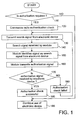
- Figures 1 and 2 show the authentication procedure between the electronic device 200 and the radio module 220.
- the device 200 determines whether authorisation is required. If the application is not required, the user may continue use of the device. However, if authorisation is required then the device 200 will commence an authorisation check with a paired radio module 220 at box 120.
- the device 200 executes the authorisation check by transmitting a search signal 210 to a paired module 220 at box 130.
- the module 220 receives the search signal 210 at box 140 and identifies whether the signal was transmitted by the electronic device 200 at box 150.
- the electronic device 200 will transmit signals on a specific frequency, however, further embodiments of the invention may include other means of identifying that the signal is a search signal 210. If the signal is identified as a search signal 210 at box 150, the module 220 transmits an authorisation signal 230 in response at box 150. If at box 170 the electronic device 200 receives the authorisation signal 230 from the module 220, the authorisation is successful at box 180, and the user continues use of the device at box 185.
- the authorisation check has failed at box 190.
- a predetermined time period is set within which the device 200 expects to receive an authorisation signal 230. This time period is typically fractions of a second and will not be perceived by the user. If the authorisation signal 230 is not received within this period then the authorisation check has failed. If the authorisation check has failed at box 190, certain embodiments of the invention may re-execute an authorisation check by transmitting a further search signal 210 at box 130.
- the device may execute a manual authentication check in order that the user may be provided with a further opportunity to access the device.
- Figure 3 shows the procedure for execution of a manual authentication procedure.
- the device 200 determines whether manual authorisation is required. If manual authorisation is required then the device requests manual authorisation at box 310. Typically the device will require a PIN number or password which is entered via the keypad, however further embodiments may include audio passwords or other authorisation codes. If the entry is correct at box 320 then the manual authorisation is successful at box 330. However, if an incorrect PIN is provided at 320 then access to the manual authorisation has failed at box 340.
- Embodiments of the invention may then re-execute the manual authorisation check at box 310 for a predetermined number of times. In certain embodiments, if the user makes a predefined number of incorrect entries, the device will automatically shut down.
- the radio authentication procedure may be used to restrict access to applications, files or functions of the device. Restricted applications may include areas of memory, files or software run applications on the electronic device. Furthermore, the makingor receiving of calls may be restricted. Preferred embodiments can be con figured by a user and the user can designate that any application of the device requires authentication before access to that application is permitted. In other embodiments, the device will automatically designate that access to applications is restricted. For example, the user may select that a restriction be included at power up of the device and therefore each time the device is powered up the user will not be allowed to proceed to use the device until authorisation is provided.
- Apparatus for executing a radio authorisation procedure may be incorporated into any electronic device. Furthermore, the times at which the authorisation procedure is executed and the events which trigger the execution of the procedure will vary in the many possible embodiments of the invention. A few preferred embodiments are now described, however this list is not exhaustive.
- a radio authorisation check is made on power up of an electronic device and subsequently at each time a new application is selected. If the radio authorisation check is successful then access to that application is permitted. If radio authorisation is not successful then the device will require manual authorisation in order that the user may be permitted access to the application.
- authorisation may be required for all application or only selected applications. The selected applications may be determined by the user, or automatically by the device.
- the device executes a radio authorisation check when the unit is powered up. If the radio authorisation is successful, the user is permitted use of the device. If the radio authorisation check fails after power up, the user is required to enter a manual authorisation in order to proceed with use of the device.
- the device may perform further radio authorisation checks either at regular time intervals and/or on selection of a secure application.
- the time periods at which the authorisation checks are executed and applications which are secure may be determined by the user or configured during production.
- the procedure following a radio authorisation check is shown in the flow diagram of figure 4 .
- the device executes a radio authorisation check. If the check is successful at box 410 use of the device is permitted at box 420. The authorisation history is then deleted from the memory of the device and the authorisation status of the device is reset at box 430.
- the device determines, at box 440, whether correct manual authorisation has been provided since the last reset of the authorisation status. If manual authorisation has been provided since the last reset then use of the device is permitted at box 450. However, if manual authorisation has not been provided then manual authorisation is requested at box 460. If the manual authorisation is correctly entered at box 470, access is provided at box 480. If manual authorisation is not correctly entered at 470 then access is denied at box 490.
- a radio authorisation check is executed on power up. If the check is successful then access is permitted to the unit, however if the check is unsuccessful then the user must provide correct manual authorisation in order to gain access to the device. Once access is obtained, the user is provided with use of the device. However, the unit includes a timer to determine the time period for which the device is idle. When the device is idle for a time period exceeding a predefined time period the authorisation status of the device is reset and the next time a key is depressed a radio authorisation check is made.
- Embodiments of the present invention allow a user to restrict access to certain applications within a mobile communications device.
- Authentication is provided by an exchange of signals between the device and a radio module which is paired to the device.
- the authorisation is provided automatically and the user is not required to enter any passwords unless the device is out of range of the module. In fact, if the radio authorisation check is successful, the user will be unaware that an authorisation check has been made.
- the invention provides a user with secure applications within his electronic device and, as long as the device is in the vicinity of the module, the user will not have the inconvenience of manually providing authorisation to access the secure application.
- radio hands free sets in particular devices incorporating e.g. Bluetooth technology, enables a separate device to be carried which is distinctfrom the device.
- the hands free device is unlikely to be lost or stolen with the device and therefore, any unauthorised user will not remain in the range of the radio device.
- the user may be provided with a small radio device which is dedicated to use with the invention or the module may be incorporated any radio device which the user carries on his person. Such a device could be kept in a user's wallet or purse or on a key-ring.
- Embodiments of the invention also provide users with different levels of security for applications. For example, a user may designate that certain applications can only be accessed in the presence of a first module. More sensitive applications might only be accessible in the presence of a second module. The user may also have the option of not allowing access at all if the required module is not present and therefore any radio authorisation checks are unsuccessful.
- the illustrated electronic device 200 generally consists of a main function unit 500 and authorisation unit 520.
- the main function unit 500 includes restricted applications 510 to which the user wish to access.
- the authorisation unit 520 has a access requesting unit 530 for requesting access to the electronic device, a determination unit 535 for determining that authorisation is required in order that access be provided, a transmission unit 540 for transmitting a search signal upon determination that authorisation is required, a reception unit 545 for receiving an authorisation signal, and an accessing unit 550 for providing access to the electronic device in dependence on the received authorisation signal.
- the search signal and authorisation signal are radio signals.
- the electronic device may include, in the authorisation unit 520, a first timer 555 for determining a first time period between transmission of the search signal and receipt of the authorisation signal. In this case, access to the electronic device will be provided in dependence on the first time period being less than a first predefined time period.
- the electronic device may be additionally provided with a re-transmission unit 560 in the authorisation unit 520 to re-transmit the search signal if the authorisation signal is not received within the first predefined time period.
- the electronic device may be further provided with, in the authorisation unit 520, a manual authorisation requesting unit 565 for requesting manual authorisation to the user if the authorisation signal is not received within the first predefined time period, and an input unit 570 for inputting the manual authorisation such as a personal identification number.
- the determination unit 535 may perform its function on power up of the electronic device and/or periodically after power up of the electronic device. Alternatively, the determination unit 535 may perform its function when access to selected applications on the electronic device is requested.
- the electronic device may include, in the authorisation unit 520, a second timer 575 for measuring a second time period for which the electronic device has been idle.
- the determination unit 535 may perform its function in dependence on the second time period exceeding a second predefined time period.
- the second predefined time period may be determined by a user.
- the radio module 220 includes a reception unit 600 for receiving a search signal from the electronic device, and a transmission unit 610 for transmitting an authorisation signal for the electronic device in response to the received search signal.
- the search signal and authorisation signal are typically radio signals.
- the present invention is not restricted to use with mobile phones.
- the invention can be applied to any electronic device, for example a laptop computer, or personal organiser.
- the invention can be usefully incorporated into any fixed position electronic device for example a personal computer.
Landscapes
- Engineering & Computer Science (AREA)
- Computer Security & Cryptography (AREA)
- Theoretical Computer Science (AREA)
- Computer Hardware Design (AREA)
- Software Systems (AREA)
- Physics & Mathematics (AREA)
- General Engineering & Computer Science (AREA)
- General Physics & Mathematics (AREA)
- Signal Processing (AREA)
- Health & Medical Sciences (AREA)
- Bioethics (AREA)
- General Health & Medical Sciences (AREA)
- Computer Networks & Wireless Communication (AREA)
- Telephone Function (AREA)
- Mobile Radio Communication Systems (AREA)
- Storage Device Security (AREA)
Claims (23)
- Apparat zum Gewähren des Zugriffs auf ein elektronisches Gerät (200) mit:einer Einrichtung (530) zur Anforderung des Zugriffs auf das elektronische Gerät;einer Einrichtung (535) zur Feststellung, daß eine Autorisierung erforderlich ist, damit Zugriff gewährt wird;einer Einrichtung (540) zum Übertragen eines Suchsignals nach der Feststellung, daß eine Autorisierung erforderlich ist;einer Einrichtung (545) zum Empfang eines Autorisierungssignals; undeiner Einrichtung (550), um in Abhängigkeit von dem empfangenen Autorisierungssignal Zugriff zu dem elektronischen Gerät zu gewähren,gekennzeichnet durch: eine Einrichtung (555) zur Festlegung einer ersten Zeitspanne zwischen Übertragung des Suchsignals und Empfang des Autorisierungssignals, wobei Zugriff zu dem elektronischen Gerät in Abhängigkeit davon gewährt wird, daß die erste Zeitspanne kürzer ist als eine erste vordefinierte Zeitspanne, undeine Einrichtung (565) zur Anforderung einer manuellen Autorisierung, wenn das Autorisierungssignal nicht innerhalb der ersten vordefinierten Zeitspanne empfangen wird.
- Apparat nach Anspruch 1, der eine Einrichtung (560) zur nochmaligen Übertragung des Suchsignals aufweist, wenn das Autorisierungssignal nicht innerhalb der ersten vordefinierten Zeitspanne empfangen wird.
- Apparat nach Anspruch 1 oder 2, der eine Einrichtung (570) zur Eingabe einer manuellen Autorisierung aufweist.
- Apparat nach Anspruch 3, wobei die manuelle Autorisierung eine persönliche Identifikationsnummer (Pin) ist.
- Apparat nach einem der Ansprüche 1 bis 4, wobei die Einrichtung (535) zur Feststellung, daß eine Autorisierung erforderlich ist, diese Funktion beim Einschalten des elektronischen Geräts ausführt.
- Apparat nach einem der Ansprüche 1 bis 5, wobei die Einrichtung (535) zur Feststellung, daß eine Autorisierung erforderlich ist, diese Funktion ausführt, wenn Zugriff zu ausgewählten Anwendungen auf dem elektronischen Gerät angefordert wird.
- Apparat nach Anspruch 5, wobei die Einrichtung (535) zur Feststellung, daß eine Autorisierung erforderlich ist, diese Funktion regelmäßig nach dem Einschalten des elektronischen Geräts ausführt.
- Apparat nach einem der Ansprüche 1 bis 7, die eine Einrichtung (575) zur Messung einer zweiten Zeitspanne aufweist, während der sich das elektronische Gerät im Ruhezustand befunden hat.
- Apparat nach Anspruch 8, wobei die Einrichtung (535) zur Feststellung, daß eine Autorisierung erforderlich ist, diese Funktion in Abhängigkeit davon ausführt, daß die zweite Zeitspanne eine zweite vordefinierte Zeitspanne überschreitet.
- Apparat nach Anspruch 9, wobei die zweite vordefinierte Zeitspanne durch einen Benutzer festgelegt wird.
- Apparat nach einem der Ansprüche 1 bis 10, wobei das Suchsignal und das Autorisierungssignal Funksignale sind.
- Verfahren zur Gewährung des Zugriffs auf ein elektronisches Gerät (200), mit den folgenden Schritten:Anforderung des Zugriffs auf das elektronische Gerät (200);Feststellen, daß eine Autorisierung erforderlich ist, damit Zugriff gewährt wird;Übertragung eines Suchsignals auf die Feststellung hin, daß eine Autorisierung erforderlich ist;Empfang eines Autorisierungssignals; undGewähren des Zugriffs auf das elektronische Gerät (200) in Abhängigkeit von dem empfangenen Autorisierungssignal;gekennzeichnet durch Vergleich einer ersten Zeitspanne zwischen der Übertragung des Suchsignals und dem Empfang des Autorisierungssignals mit einer ersten vordefinierten Zeitspanne und Gewähren des Zugriffs auf das elektronische Gerät (200) in Abhängigkeit davon, daß die Zeitspanne kürzer ist als die erste vordefinierte Zeitspanne, undAnfordern einer manuellen Autorisierung, wenn das Autorisierungssignal nicht innerhalb der ersten vordefinierten Zeitspanne empfangen wird.
- Verfahren nach Anspruch 12, das den Schritt zur nochmaligen Übertragung des Suchsignals einschließt, wenn das Autorisierungssignal nicht innerhalb der ersten vordefinierten Zeitspanne empfangen wird.
- Verfahren nach Anspruch 12 oder 13, wobei die manuelle Autorisierung eine persönliche Identifikationsnummer ist.
- Verfahren nach einem der Ansprüche 12 bis 14, wobei der Schritt zur Feststellung, daß eine Autorisierung erforderlich ist, beim Einschalten des elektronischen Geräts ausgeführt wird.
- Verfahren nach einem der Ansprüche 12 bis 15, wobei der Schritt zur Feststellung, daß eine Autorisierung erforderlich ist, ausgeführt wird, wenn Zugriff zu ausgewählten Anwendungen auf dem elektronischen Gerät (200) angefordert wird.
- Verfahren nach Anspruch 16, wobei der Schritt zur Feststellung, daß eine Autorisierung erforderlich ist, regelmäßig nach dem Einschalten des elektronischen Geräts (200) ausgeführt wird.
- Verfahren nach einem der Ansprüche 12 bis 17, das den Schritt zur Messung einer zweiten Zeitspanne einschließt, während der sich das elektronische Gerät (200) im Ruhezustand befunden hat.
- Verfahren nach Anspruch 18, wobei der Schritt zur Feststellung, daß eine Autorisierung erforderlich ist, in Abhängigkeit davon ausgeführt wird, daß die zweite Zeitspanne eine zweite vordefinierte Zeitspanne überschreitet.
- Verfahren nach Anspruch 19, wobei die zweite vordefinierte Zeitspanne durch den Benutzer festgelegt wird.
- Verfahren nach einem der Ansprüche 12 bis 20, wobei die Suchsignale und Autorisierungssignale Funksignale sind.
- System zur Autorisierung des Zugriffs auf ein elektronisches Gerät (200) mit dem Apparat nach Anspruch 2, wobei das System ein elektronisches Gerät (200) und ein elektronisches Modul (220) aufweist;
wobei das elektronische Modul (220) aufweist:eine Einrichtung (600) zum Empfang eines Suchsignals von dem elektronischen Gerät (200), undeine Einrichtung (610) zur Übertragung eines Autorisierungssignals für das elektronische Gerät (200) als Reaktion auf das empfangene Suchsignal. - Verfahren zur Autorisierung des Zugriffs auf ein elektronisches Gerät (200), welches das Verfahren nach Anspruch 12 einschließt,
wobei das Suchsignal ein Suchsignal von dem elektronischen Gerät (200) ist;
wobei das Verfahren zur Autorisierung des Zugriffs ferner die folgenden Schritte aufweist:Empfang des Suchsignals in einem elektronischen Modul (220);Übertragung eines Autorisierungssignals von dem elektronischen Modul (220) als Reaktion auf das empfangene Suchsignal; undwobei der Schritt zum Empfang eines Autorisierungssignals ein Schritt zum Empfang des Autorisierungssignals in dem elektronischen Gerät (200) ist.
Applications Claiming Priority (3)
| Application Number | Priority Date | Filing Date | Title |
|---|---|---|---|
| GB0307628 | 2003-04-02 | ||
| GB0307628A GB2400196A (en) | 2003-04-02 | 2003-04-02 | Restricting access to a mobile phone, laptop etc. using an authorization procedure involving a separate transceiver |
| PCT/JP2004/004582 WO2004090781A1 (en) | 2003-04-02 | 2004-03-31 | Apparatus for authorising access to an electronic device |
Publications (2)
| Publication Number | Publication Date |
|---|---|
| EP1609043A1 EP1609043A1 (de) | 2005-12-28 |
| EP1609043B1 true EP1609043B1 (de) | 2010-08-04 |
Family
ID=9956059
Family Applications (1)
| Application Number | Title | Priority Date | Filing Date |
|---|---|---|---|
| EP04724732A Expired - Lifetime EP1609043B1 (de) | 2003-04-02 | 2004-03-31 | Apparat zur zugriffsautorisierung auf ein elektronisches gerät |
Country Status (7)
| Country | Link |
|---|---|
| US (1) | US20060186199A1 (de) |
| EP (1) | EP1609043B1 (de) |
| JP (1) | JP2006526208A (de) |
| CN (1) | CN1764884A (de) |
| DE (1) | DE602004028450D1 (de) |
| GB (1) | GB2400196A (de) |
| WO (1) | WO2004090781A1 (de) |
Families Citing this family (27)
| Publication number | Priority date | Publication date | Assignee | Title |
|---|---|---|---|---|
| GB2418759A (en) * | 2004-09-29 | 2006-04-05 | Siemens Ag | System access |
| DE102004047739A1 (de) * | 2004-09-30 | 2006-02-16 | Siemens Ag | Identifikationssystem zum Nachweis einer Berechtigung für eine personennahe Benutzung einer portablen Einheit |
| JP4724405B2 (ja) | 2004-10-28 | 2011-07-13 | キヤノン株式会社 | 無線通信装置及び電子機器、並びにそれらの制御方法及びコンピュータプログラム |
| CN100363858C (zh) * | 2005-04-19 | 2008-01-23 | 仁宝电脑工业股份有限公司 | 无线辨识的安全启动装置及其方法 |
| FI20065390A7 (fi) | 2006-06-08 | 2007-12-09 | Innohome Oy | Automaattinen elektroniikka- ja sähkölaitteiden monitasoisen käyttöoikeuden ohjausjärjestelmä |
| US20100022239A1 (en) * | 2006-09-28 | 2010-01-28 | Panasonic Corporation | Portable telephone and access control method |
| CN101595491A (zh) * | 2006-12-26 | 2009-12-02 | 维萨美国股份有限公司 | 移动自动售货机购买 |
| EP2028601B1 (de) | 2007-08-07 | 2014-10-01 | Alcatel Lucent | Realisierung von Richtlinien für eine sichere Mobilgeräteumgebung auf der Basis geplanter Einmalaktualisierungscodes |
| US8044792B2 (en) * | 2008-01-30 | 2011-10-25 | Hewlett-Packard Development Company, L.P. | System and method for controlling remote sensors |
| US8943551B2 (en) | 2008-08-14 | 2015-01-27 | Microsoft Corporation | Cloud-based device information storage |
| US8099761B2 (en) | 2008-08-14 | 2012-01-17 | Microsoft Corporation | Protocol for device to station association |
| US8769612B2 (en) * | 2008-08-14 | 2014-07-01 | Microsoft Corporation | Portable device association |
| US8789136B2 (en) * | 2008-09-02 | 2014-07-22 | Avaya Inc. | Securing a device based on atypical user behavior |
| CN102025504A (zh) * | 2010-11-23 | 2011-04-20 | 深圳市文鼎创数据科技有限公司 | 一种安全认证方法及装置 |
| US9189606B2 (en) * | 2011-03-21 | 2015-11-17 | Microsoft Technology Licensing, Llc | Information privacy system and method |
| US9565708B2 (en) | 2011-05-20 | 2017-02-07 | Microsoft Technology Licensing, Llc | Auto-connect in a peer-to-peer network |
| US8806023B2 (en) | 2011-05-20 | 2014-08-12 | Microsoft Corporation | Auto-connect in a peer-to-peer network |
| US8775533B2 (en) | 2011-05-20 | 2014-07-08 | Microsoft Corporation | Auto connect in peer-to-peer network |
| US9032106B2 (en) | 2013-05-29 | 2015-05-12 | Microsoft Technology Licensing, Llc | Synchronizing device association data among computing devices |
| KR20160032157A (ko) * | 2013-07-12 | 2016-03-23 | 트롤멘즈 가드 에이비 | 모바일 장치 보안 |
| EP2879359A1 (de) * | 2013-11-29 | 2015-06-03 | Sony Corporation | Verfahren und Anordnung für Sicherheitsmaßnahmen in einer mobilen Vorrichtung |
| EP3162023B1 (de) | 2014-06-24 | 2019-10-09 | Google LLC | Verfahren, systeme und medien zur authentifizierung einer verbindung zwischen einer benutzervorrichtung und einer streamenden medieninhaltsvorrichtung |
| CN108985047A (zh) * | 2018-06-28 | 2018-12-11 | 努比亚技术有限公司 | 一种解锁方法、终端、穿戴设备及计算机可读存储介质 |
| CN110929251A (zh) * | 2019-10-28 | 2020-03-27 | 维沃移动通信有限公司 | 一种内容控制方法及终端设备 |
| US12236840B2 (en) | 2020-10-20 | 2025-02-25 | Samsung Electronics Co., Ltd. | Display apparatus, electronic apparatus and methods thereof |
| KR102843211B1 (ko) * | 2020-10-20 | 2025-08-05 | 삼성전자주식회사 | 디스플레이 장치, 전자 장치 및 그 동작 방법 |
| CN118432714B (zh) * | 2023-11-20 | 2025-07-11 | 北京交通大学 | 一种可见光安全无线信能同传网络资源分配方法及系统 |
Family Cites Families (25)
| Publication number | Priority date | Publication date | Assignee | Title |
|---|---|---|---|---|
| FR2600189B1 (fr) * | 1986-06-16 | 1991-02-01 | Bull Cp8 | Procede pour faire authentifier par un milieu exterieur un objet portatif tel qu'une carte a memoire accouplee a ce milieu |
| US6137480A (en) * | 1996-12-27 | 2000-10-24 | Sony Corporation | Computer system using a portable card for managing security and power-saving features |
| US6157966A (en) * | 1997-06-30 | 2000-12-05 | Schlumberger Malco, Inc. | System and method for an ISO7816 complaint smart card to become master over a terminal |
| US6070240A (en) * | 1997-08-27 | 2000-05-30 | Ensure Technologies Incorporated | Computer access control |
| FR2779018B1 (fr) * | 1998-05-22 | 2000-08-18 | Activcard | Terminal et systeme pour la mise en oeuvre de transactions electroniques securisees |
| JP2000003336A (ja) * | 1998-06-16 | 2000-01-07 | Nec Corp | 携帯型データ通信端末装置におけるユーザ認証方法及びユーザ認証システム |
| EP1089157B1 (de) * | 1999-09-28 | 2006-11-08 | Swatch Ag | Verfahren zur Zugangsberechtigung zu Rechneranwendungen |
| US7131139B1 (en) * | 1999-09-28 | 2006-10-31 | Swatch Ag | Method for authorizing access to computer applications |
| JP2002091921A (ja) * | 2000-09-20 | 2002-03-29 | Nippon Telegraph & Telephone East Corp | 認証方法及び認証装置 |
| US20020097418A1 (en) * | 2001-01-19 | 2002-07-25 | Chang William Ho | Raster image processor and processing method for universal data output |
| US20020141586A1 (en) * | 2001-03-29 | 2002-10-03 | Aladdin Knowledge Systems Ltd. | Authentication employing the bluetooth communication protocol |
| US6774796B2 (en) * | 2001-08-01 | 2004-08-10 | Motorola, Inc. | Master authenticator |
| US20030048174A1 (en) * | 2001-09-11 | 2003-03-13 | Alcatel, Societe Anonyme | Electronic device capable of wirelessly transmitting a password that can be used to unlock/lock a password protected electronic device |
| JP4209131B2 (ja) * | 2002-04-23 | 2009-01-14 | 株式会社エヌ・ティ・ティ・ドコモ | 携帯端末、及びアクセス制御方法 |
| US8745409B2 (en) * | 2002-12-18 | 2014-06-03 | Sandisk Il Ltd. | System and method for securing portable data |
| US20040199787A1 (en) * | 2003-04-02 | 2004-10-07 | Sun Microsystems, Inc., A Delaware Corporation | Card device resource access control |
| TWI283524B (en) * | 2004-04-09 | 2007-07-01 | Lite On Technology Corp | Method to control and manage an authentication mechanism using an active identification device |
| CA2564186C (en) * | 2004-04-30 | 2019-08-20 | Research In Motion Limited | System and method of operation control on an electronic device |
| US20060005035A1 (en) * | 2004-06-22 | 2006-01-05 | Coughlin Michael E | Keystroke input device for use with an RFID tag and user verification system |
| US20060036855A1 (en) * | 2004-08-10 | 2006-02-16 | Nokia Corporation | Short-range authentication |
| TWI259404B (en) * | 2005-03-07 | 2006-08-01 | Compal Electronics Inc | Radio frequency identification security system and method |
| TW200641695A (en) * | 2005-05-18 | 2006-12-01 | Elitegroup Computer Systems Co Ltd | Method and related apparatus for enhancing information security of a computer system |
| US7809376B2 (en) * | 2005-11-29 | 2010-10-05 | Roberto S. Catalan | Enhanced analogue of interactive voice response structures and functions for mobile phones and similar handheld communications devices |
| US7837102B2 (en) * | 2006-06-15 | 2010-11-23 | Mstar Semiconductor, Inc. | Method and apparatus for computer login security using RFID technology |
| US8424079B2 (en) * | 2008-01-25 | 2013-04-16 | Research In Motion Limited | Method, system and mobile device employing enhanced user authentication |
-
2003
- 2003-04-02 GB GB0307628A patent/GB2400196A/en not_active Withdrawn
-
2004
- 2004-03-31 JP JP2006507701A patent/JP2006526208A/ja active Pending
- 2004-03-31 US US10/551,473 patent/US20060186199A1/en not_active Abandoned
- 2004-03-31 DE DE602004028450T patent/DE602004028450D1/de not_active Expired - Lifetime
- 2004-03-31 CN CNA2004800082684A patent/CN1764884A/zh active Pending
- 2004-03-31 WO PCT/JP2004/004582 patent/WO2004090781A1/en not_active Ceased
- 2004-03-31 EP EP04724732A patent/EP1609043B1/de not_active Expired - Lifetime
Also Published As
| Publication number | Publication date |
|---|---|
| DE602004028450D1 (de) | 2010-09-16 |
| US20060186199A1 (en) | 2006-08-24 |
| WO2004090781A1 (en) | 2004-10-21 |
| JP2006526208A (ja) | 2006-11-16 |
| CN1764884A (zh) | 2006-04-26 |
| GB2400196A (en) | 2004-10-06 |
| GB0307628D0 (en) | 2003-05-07 |
| WO2004090781A8 (en) | 2005-01-20 |
| EP1609043A1 (de) | 2005-12-28 |
Similar Documents
| Publication | Publication Date | Title |
|---|---|---|
| US20060186199A1 (en) | Apparatus for authorising access to an electronic device | |
| US9443071B2 (en) | Proximity based device security | |
| US10467832B2 (en) | Configurable digital badge holder | |
| EP1980049B1 (de) | Drahtlose authentifizierung | |
| EP1145096B1 (de) | Mobiltelefon auto-pc-logon | |
| US7882541B2 (en) | Authentication system in information processing terminal using mobile information processing device | |
| EP1901577B1 (de) | Vorrichtung und Verfahren zur Bluetooth-Steuerung in einem tragbaren Endgerät | |
| US20040046638A1 (en) | Terminal lock system comprising key device carried by user and terminal-associated device incorporated in terminal device | |
| US7657287B2 (en) | Mobile station in a mobile communication system and method for accessing a service and/or a data record in the mobile station's standby mode | |
| US8572393B2 (en) | Mobile communication terminal having password notify function and method for notifying password in mobile communication terminal | |
| US20030199267A1 (en) | Security system for information processing apparatus | |
| EP1673958B1 (de) | Verfahren und system zur betriebsmittelsteuerung über ein mobiles endgerät, diesbezügliches netzwerk und computerprogrammprodukt dafür | |
| JP2007523283A (ja) | 許可方法 | |
| US20120060224A1 (en) | Wireless Device Content Information Theft Protection System | |
| US9946859B2 (en) | Systems and methods for enabling a lock screen of an electronic device | |
| CN100343881C (zh) | 访问控制系统 | |
| US9542547B2 (en) | Identification to access portable computing device | |
| EP2028601B1 (de) | Realisierung von Richtlinien für eine sichere Mobilgeräteumgebung auf der Basis geplanter Einmalaktualisierungscodes | |
| JP2006287503A (ja) | セキュリティ強化システム、セキュリティ強化方法、及びそのプログラム | |
| KR100862742B1 (ko) | 이동 단말기를 이용한 컴퓨터 보안 방법 및 장치 | |
| JP2004356685A (ja) | 携帯通信端末及び携帯通信端末制御システム | |
| JP5398752B2 (ja) | リモートロックシステム | |
| US20060211407A1 (en) | Method for improving security of mobile communication device | |
| KR20060114209A (ko) | 이동통신단말기의 카메라 사용 제한 시스템 및 방법 |
Legal Events
| Date | Code | Title | Description |
|---|---|---|---|
| PUAI | Public reference made under article 153(3) epc to a published international application that has entered the european phase |
Free format text: ORIGINAL CODE: 0009012 |
|
| 17P | Request for examination filed |
Effective date: 20051021 |
|
| AK | Designated contracting states |
Kind code of ref document: A1 Designated state(s): AT BE BG CH CY CZ DE DK EE ES FI FR GB GR HU IE IT LI LU MC NL PL PT RO SE SI SK TR |
|
| AX | Request for extension of the european patent |
Extension state: AL LT LV MK |
|
| DAX | Request for extension of the european patent (deleted) | ||
| RBV | Designated contracting states (corrected) |
Designated state(s): DE FR IT |
|
| RIN1 | Information on inventor provided before grant (corrected) |
Inventor name: PARKER, JOHN,C/O NEC CORPORATION |
|
| 17Q | First examination report despatched |
Effective date: 20071220 |
|
| GRAP | Despatch of communication of intention to grant a patent |
Free format text: ORIGINAL CODE: EPIDOSNIGR1 |
|
| GRAS | Grant fee paid |
Free format text: ORIGINAL CODE: EPIDOSNIGR3 |
|
| GRAA | (expected) grant |
Free format text: ORIGINAL CODE: 0009210 |
|
| AK | Designated contracting states |
Kind code of ref document: B1 Designated state(s): DE FR IT |
|
| REF | Corresponds to: |
Ref document number: 602004028450 Country of ref document: DE Date of ref document: 20100916 Kind code of ref document: P |
|
| PLBE | No opposition filed within time limit |
Free format text: ORIGINAL CODE: 0009261 |
|
| STAA | Information on the status of an ep patent application or granted ep patent |
Free format text: STATUS: NO OPPOSITION FILED WITHIN TIME LIMIT |
|
| 26N | No opposition filed |
Effective date: 20110506 |
|
| REG | Reference to a national code |
Ref country code: DE Ref legal event code: R097 Ref document number: 602004028450 Country of ref document: DE Effective date: 20110506 |
|
| REG | Reference to a national code |
Ref country code: FR Ref legal event code: TP Owner name: LENOVO INNOVATIONS LIMITED (HONG KONG), HK Effective date: 20141119 |
|
| REG | Reference to a national code |
Ref country code: FR Ref legal event code: PLFP Year of fee payment: 13 |
|
| PGFP | Annual fee paid to national office [announced via postgrant information from national office to epo] |
Ref country code: FR Payment date: 20160208 Year of fee payment: 13 |
|
| PGFP | Annual fee paid to national office [announced via postgrant information from national office to epo] |
Ref country code: IT Payment date: 20160324 Year of fee payment: 13 |
|
| REG | Reference to a national code |
Ref country code: FR Ref legal event code: ST Effective date: 20171130 |
|
| PG25 | Lapsed in a contracting state [announced via postgrant information from national office to epo] |
Ref country code: FR Free format text: LAPSE BECAUSE OF NON-PAYMENT OF DUE FEES Effective date: 20170331 |
|
| PG25 | Lapsed in a contracting state [announced via postgrant information from national office to epo] |
Ref country code: IT Free format text: LAPSE BECAUSE OF NON-PAYMENT OF DUE FEES Effective date: 20170331 |
|
| REG | Reference to a national code |
Ref country code: DE Ref legal event code: R082 Ref document number: 602004028450 Country of ref document: DE Representative=s name: VOSSIUS & PARTNER PATENTANWAELTE RECHTSANWAELT, DE Ref country code: DE Ref legal event code: R081 Ref document number: 602004028450 Country of ref document: DE Owner name: LENOVO INNOVATIONS LIMITED, HK Free format text: FORMER OWNER: NEC CORP., TOKIO/TOKYO, JP |
|
| PGFP | Annual fee paid to national office [announced via postgrant information from national office to epo] |
Ref country code: DE Payment date: 20190401 Year of fee payment: 16 |
|
| REG | Reference to a national code |
Ref country code: DE Ref legal event code: R119 Ref document number: 602004028450 Country of ref document: DE |
|
| PG25 | Lapsed in a contracting state [announced via postgrant information from national office to epo] |
Ref country code: DE Free format text: LAPSE BECAUSE OF NON-PAYMENT OF DUE FEES Effective date: 20201001 |