EP1609053B1 - System und verfahren zum übertragen von medien-dateien - Google Patents
System und verfahren zum übertragen von medien-dateien Download PDFInfo
- Publication number
- EP1609053B1 EP1609053B1 EP04758487.5A EP04758487A EP1609053B1 EP 1609053 B1 EP1609053 B1 EP 1609053B1 EP 04758487 A EP04758487 A EP 04758487A EP 1609053 B1 EP1609053 B1 EP 1609053B1
- Authority
- EP
- European Patent Office
- Prior art keywords
- segments
- master controller
- segment
- media object
- file partition
- Prior art date
- Legal status (The legal status is an assumption and is not a legal conclusion. Google has not performed a legal analysis and makes no representation as to the accuracy of the status listed.)
- Expired - Lifetime
Links
Images



Classifications
-
- H—ELECTRICITY
- H04—ELECTRIC COMMUNICATION TECHNIQUE
- H04N—PICTORIAL COMMUNICATION, e.g. TELEVISION
- H04N7/00—Television systems
- H04N7/12—Systems in which the television signal is transmitted via one channel or a plurality of parallel channels, the bandwidth of each channel being less than the bandwidth of the television signal
-
- H—ELECTRICITY
- H04—ELECTRIC COMMUNICATION TECHNIQUE
- H04L—TRANSMISSION OF DIGITAL INFORMATION, e.g. TELEGRAPHIC COMMUNICATION
- H04L12/00—Data switching networks
- H04L12/02—Details
- H04L12/16—Arrangements for providing special services to substations
- H04L12/18—Arrangements for providing special services to substations for broadcast or conference, e.g. multicast
-
- G—PHYSICS
- G06—COMPUTING OR CALCULATING; COUNTING
- G06F—ELECTRIC DIGITAL DATA PROCESSING
- G06F15/00—Digital computers in general; Data processing equipment in general
- G06F15/16—Combinations of two or more digital computers each having at least an arithmetic unit, a program unit and a register, e.g. for a simultaneous processing of several programs
-
- G—PHYSICS
- G06—COMPUTING OR CALCULATING; COUNTING
- G06F—ELECTRIC DIGITAL DATA PROCESSING
- G06F7/00—Methods or arrangements for processing data by operating upon the order or content of the data handled
-
- H—ELECTRICITY
- H04—ELECTRIC COMMUNICATION TECHNIQUE
- H04L—TRANSMISSION OF DIGITAL INFORMATION, e.g. TELEGRAPHIC COMMUNICATION
- H04L65/00—Network arrangements, protocols or services for supporting real-time applications in data packet communication
- H04L65/1066—Session management
- H04L65/1101—Session protocols
-
- H—ELECTRICITY
- H04—ELECTRIC COMMUNICATION TECHNIQUE
- H04L—TRANSMISSION OF DIGITAL INFORMATION, e.g. TELEGRAPHIC COMMUNICATION
- H04L65/00—Network arrangements, protocols or services for supporting real-time applications in data packet communication
- H04L65/60—Network streaming of media packets
- H04L65/61—Network streaming of media packets for supporting one-way streaming services, e.g. Internet radio
- H04L65/612—Network streaming of media packets for supporting one-way streaming services, e.g. Internet radio for unicast
-
- H—ELECTRICITY
- H04—ELECTRIC COMMUNICATION TECHNIQUE
- H04L—TRANSMISSION OF DIGITAL INFORMATION, e.g. TELEGRAPHIC COMMUNICATION
- H04L65/00—Network arrangements, protocols or services for supporting real-time applications in data packet communication
- H04L65/60—Network streaming of media packets
- H04L65/61—Network streaming of media packets for supporting one-way streaming services, e.g. Internet radio
- H04L65/613—Network streaming of media packets for supporting one-way streaming services, e.g. Internet radio for the control of the source by the destination
-
- H—ELECTRICITY
- H04—ELECTRIC COMMUNICATION TECHNIQUE
- H04L—TRANSMISSION OF DIGITAL INFORMATION, e.g. TELEGRAPHIC COMMUNICATION
- H04L65/00—Network arrangements, protocols or services for supporting real-time applications in data packet communication
- H04L65/60—Network streaming of media packets
- H04L65/65—Network streaming protocols, e.g. real-time transport protocol [RTP] or real-time control protocol [RTCP]
-
- H—ELECTRICITY
- H04—ELECTRIC COMMUNICATION TECHNIQUE
- H04L—TRANSMISSION OF DIGITAL INFORMATION, e.g. TELEGRAPHIC COMMUNICATION
- H04L65/00—Network arrangements, protocols or services for supporting real-time applications in data packet communication
- H04L65/60—Network streaming of media packets
- H04L65/70—Media network packetisation
-
- H—ELECTRICITY
- H04—ELECTRIC COMMUNICATION TECHNIQUE
- H04L—TRANSMISSION OF DIGITAL INFORMATION, e.g. TELEGRAPHIC COMMUNICATION
- H04L65/00—Network arrangements, protocols or services for supporting real-time applications in data packet communication
- H04L65/60—Network streaming of media packets
- H04L65/75—Media network packet handling
- H04L65/752—Media network packet handling adapting media to network capabilities
-
- H—ELECTRICITY
- H04—ELECTRIC COMMUNICATION TECHNIQUE
- H04L—TRANSMISSION OF DIGITAL INFORMATION, e.g. TELEGRAPHIC COMMUNICATION
- H04L65/00—Network arrangements, protocols or services for supporting real-time applications in data packet communication
- H04L65/60—Network streaming of media packets
- H04L65/75—Media network packet handling
- H04L65/762—Media network packet handling at the source
-
- H—ELECTRICITY
- H04—ELECTRIC COMMUNICATION TECHNIQUE
- H04L—TRANSMISSION OF DIGITAL INFORMATION, e.g. TELEGRAPHIC COMMUNICATION
- H04L67/00—Network arrangements or protocols for supporting network services or applications
- H04L67/01—Protocols
- H04L67/06—Protocols specially adapted for file transfer, e.g. file transfer protocol [FTP]
-
- H—ELECTRICITY
- H04—ELECTRIC COMMUNICATION TECHNIQUE
- H04L—TRANSMISSION OF DIGITAL INFORMATION, e.g. TELEGRAPHIC COMMUNICATION
- H04L69/00—Network arrangements, protocols or services independent of the application payload and not provided for in the other groups of this subclass
- H04L69/14—Multichannel or multilink protocols
-
- H—ELECTRICITY
- H04—ELECTRIC COMMUNICATION TECHNIQUE
- H04L—TRANSMISSION OF DIGITAL INFORMATION, e.g. TELEGRAPHIC COMMUNICATION
- H04L69/00—Network arrangements, protocols or services independent of the application payload and not provided for in the other groups of this subclass
- H04L69/16—Implementation or adaptation of Internet protocol [IP], of transmission control protocol [TCP] or of user datagram protocol [UDP]
-
- H—ELECTRICITY
- H04—ELECTRIC COMMUNICATION TECHNIQUE
- H04L—TRANSMISSION OF DIGITAL INFORMATION, e.g. TELEGRAPHIC COMMUNICATION
- H04L69/00—Network arrangements, protocols or services independent of the application payload and not provided for in the other groups of this subclass
- H04L69/16—Implementation or adaptation of Internet protocol [IP], of transmission control protocol [TCP] or of user datagram protocol [UDP]
- H04L69/164—Adaptation or special uses of UDP protocol
-
- H—ELECTRICITY
- H04—ELECTRIC COMMUNICATION TECHNIQUE
- H04L—TRANSMISSION OF DIGITAL INFORMATION, e.g. TELEGRAPHIC COMMUNICATION
- H04L69/00—Network arrangements, protocols or services independent of the application payload and not provided for in the other groups of this subclass
- H04L69/16—Implementation or adaptation of Internet protocol [IP], of transmission control protocol [TCP] or of user datagram protocol [UDP]
- H04L69/166—IP fragmentation; TCP segmentation
-
- H—ELECTRICITY
- H04—ELECTRIC COMMUNICATION TECHNIQUE
- H04L—TRANSMISSION OF DIGITAL INFORMATION, e.g. TELEGRAPHIC COMMUNICATION
- H04L69/00—Network arrangements, protocols or services independent of the application payload and not provided for in the other groups of this subclass
- H04L69/26—Special purpose or proprietary protocols or architectures
-
- H—ELECTRICITY
- H04—ELECTRIC COMMUNICATION TECHNIQUE
- H04N—PICTORIAL COMMUNICATION, e.g. TELEVISION
- H04N21/00—Selective content distribution, e.g. interactive television or video on demand [VOD]
- H04N21/40—Client devices specifically adapted for the reception of or interaction with content, e.g. set-top-box [STB]; Operations thereof
- H04N21/43—Processing of content or additional data, e.g. demultiplexing additional data from a digital video stream; Elementary client operations, e.g. monitoring of home network or synchronising decoder's clock; Client middleware
- H04N21/442—Monitoring of processes or resources, e.g. detecting the failure of a recording device, monitoring the downstream bandwidth, the number of times a movie has been viewed, the storage space available from the internal hard disk
- H04N21/44209—Monitoring of downstream path of the transmission network originating from a server, e.g. bandwidth variations of a wireless network
-
- H—ELECTRICITY
- H04—ELECTRIC COMMUNICATION TECHNIQUE
- H04N—PICTORIAL COMMUNICATION, e.g. TELEVISION
- H04N21/00—Selective content distribution, e.g. interactive television or video on demand [VOD]
- H04N21/60—Network structure or processes for video distribution between server and client or between remote clients; Control signalling between clients, server and network components; Transmission of management data between server and client, e.g. sending from server to client commands for recording incoming content stream; Communication details between server and client
- H04N21/63—Control signaling related to video distribution between client, server and network components; Network processes for video distribution between server and clients or between remote clients, e.g. transmitting basic layer and enhancement layers over different transmission paths, setting up a peer-to-peer communication via Internet between remote STB's; Communication protocols; Addressing
- H04N21/637—Control signals issued by the client directed to the server or network components
- H04N21/6375—Control signals issued by the client directed to the server or network components for requesting retransmission, e.g. of data packets lost or corrupted during transmission from server
-
- H—ELECTRICITY
- H04—ELECTRIC COMMUNICATION TECHNIQUE
- H04N—PICTORIAL COMMUNICATION, e.g. TELEVISION
- H04N21/00—Selective content distribution, e.g. interactive television or video on demand [VOD]
- H04N21/60—Network structure or processes for video distribution between server and client or between remote clients; Control signalling between clients, server and network components; Transmission of management data between server and client, e.g. sending from server to client commands for recording incoming content stream; Communication details between server and client
- H04N21/63—Control signaling related to video distribution between client, server and network components; Network processes for video distribution between server and clients or between remote clients, e.g. transmitting basic layer and enhancement layers over different transmission paths, setting up a peer-to-peer communication via Internet between remote STB's; Communication protocols; Addressing
- H04N21/637—Control signals issued by the client directed to the server or network components
- H04N21/6377—Control signals issued by the client directed to the server or network components directed to server
-
- H—ELECTRICITY
- H04—ELECTRIC COMMUNICATION TECHNIQUE
- H04N—PICTORIAL COMMUNICATION, e.g. TELEVISION
- H04N21/00—Selective content distribution, e.g. interactive television or video on demand [VOD]
- H04N21/60—Network structure or processes for video distribution between server and client or between remote clients; Control signalling between clients, server and network components; Transmission of management data between server and client, e.g. sending from server to client commands for recording incoming content stream; Communication details between server and client
- H04N21/63—Control signaling related to video distribution between client, server and network components; Network processes for video distribution between server and clients or between remote clients, e.g. transmitting basic layer and enhancement layers over different transmission paths, setting up a peer-to-peer communication via Internet between remote STB's; Communication protocols; Addressing
- H04N21/643—Communication protocols
- H04N21/64322—IP
-
- H—ELECTRICITY
- H04—ELECTRIC COMMUNICATION TECHNIQUE
- H04N—PICTORIAL COMMUNICATION, e.g. TELEVISION
- H04N21/00—Selective content distribution, e.g. interactive television or video on demand [VOD]
- H04N21/60—Network structure or processes for video distribution between server and client or between remote clients; Control signalling between clients, server and network components; Transmission of management data between server and client, e.g. sending from server to client commands for recording incoming content stream; Communication details between server and client
- H04N21/65—Transmission of management data between client and server
- H04N21/658—Transmission by the client directed to the server
-
- H—ELECTRICITY
- H04—ELECTRIC COMMUNICATION TECHNIQUE
- H04N—PICTORIAL COMMUNICATION, e.g. TELEVISION
- H04N21/00—Selective content distribution, e.g. interactive television or video on demand [VOD]
- H04N21/60—Network structure or processes for video distribution between server and client or between remote clients; Control signalling between clients, server and network components; Transmission of management data between server and client, e.g. sending from server to client commands for recording incoming content stream; Communication details between server and client
- H04N21/65—Transmission of management data between client and server
- H04N21/658—Transmission by the client directed to the server
- H04N21/6582—Data stored in the client, e.g. viewing habits, hardware capabilities, credit card number
-
- H—ELECTRICITY
- H04—ELECTRIC COMMUNICATION TECHNIQUE
- H04N—PICTORIAL COMMUNICATION, e.g. TELEVISION
- H04N21/00—Selective content distribution, e.g. interactive television or video on demand [VOD]
- H04N21/80—Generation or processing of content or additional data by content creator independently of the distribution process; Content per se
- H04N21/83—Generation or processing of protective or descriptive data associated with content; Content structuring
- H04N21/845—Structuring of content, e.g. decomposing content into time segments
- H04N21/8456—Structuring of content, e.g. decomposing content into time segments by decomposing the content in the time domain, e.g. in time segments
Definitions
- the present invention relates to the transmission of digital audio and video files, specifically media objects communicated through a network.
- VOD video on demand
- EPG electronic programming guide
- the broadcast system would transmit the movie to the home user, the transmission either occurring through a cable means (such as a MPEG-2 digital cable transmission), a satellite broadcast (as DBS, DIRECTVTM, DISH NETWORKTM, etc.), a terrestrial broadcast (UHF, VHF, or broadcast channels for receiving standard definition/high definition programming, etc.), or twisted pair connection (such as DSL, etc.).
- a cable means such as a MPEG-2 digital cable transmission
- a satellite broadcast as DBS, DIRECTVTM, DISH NETWORKTM, etc.
- a terrestrial broadcast UHF, VHF, or broadcast channels for receiving standard definition/high definition programming, etc.
- twisted pair connection such as DSL, etc.
- the complexity of transmitting a digital video (audio) file requires that the transmission architecture be capable of handling digital video files of a large size.
- the requirements for a media object to be displayed at a "near to motion picture quality" (ex. High Definition Television), as a display format, requires that the transmission architecture requires the network support a throughput of nearly 20 Mbits/sec.
- the transmission architecture also has to have a low transmission error rate, as to not corrupt the requirements of the video/audio transmission.
- DBS satellite systems have to have error rates in the range from 10 ⁇ -9 to 10 ⁇ -11 bits to offer an acceptable quality of service (QOS).
- a media object is broken up into discrete segments.
- Such segments known as data packets, separate the media object into individual divisions that are reconstituted at a receiving end of the transmission architecture.
- One used technique for packetizing data files complies with the MPEG-2 data-encoding standard to create a data stream (see MPEG-2 Specification ISO-13818-1) for encoding and transporting discrete data packets.
- Such techniques for transmitting media objects are however not an efficient use of bandwidth.
- Other known techniques for transporting media objects such as file transport protocol (FTP) are limited to physical constraints where only 300 Kilobytes per second can be transmitted, regardless of the available link speeds of the underlying connection.
- FTP file transport protocol
- some media object transportation techniques are capable of utilizing the available bandwidth of a connection.
- Such techniques though use redundant packets in the transmission of a media object that may require an encoding overhead of twice the size of the original media object. Hence, such media object transmissions inefficiently use half the available bandwidth for error correction.
- a system and method for assigning transmitting a media object through a network based on the physical capabilities of such a network The media object is parsed into multiple partitions that are segmented are transmitted to a client, based on the availability of access points and resources at the client side and the network connections between such access points and a server transmitting such a media object.
- the present invention is a system and method for transmitting and receiving audio, video, or a combination of both types of media as a media file or "media object".
- media object includes audio, video, textual, multimedia data files, and streaming media files.
- Multimedia objects comprise any combination of text, image, video, and audio data.
- Streaming media comprises audio, video, multimedia, textual, and interactive data files that are delivered to a user via the Internet, satellite or other communications network environment and begin to play on the user's computer/ device before delivery of the entire file is completed.
- Media objects may be transmitted over any communications network including via the Internet, satellite (DSS, DVB-S), cable, DSL, T1 lines, wireless network, or other delivery systems capable of delivering media objects.
- Examples of the content of media objects include songs, political speeches, news broadcasts, movie trailers, movies, television show broadcasts, radio broadcasts, financial conference calls, live concerts, web-cam footage, and other special events.
- Media objects are encoded in various formats including REALAUDIO ® , REALVIDEO ® , REALMEDIA ® , APPLE QUICKTIME ® , MICROSOFT WINDOWS ® MEDIA FORMAT, QUICKTIME ® , MPEG-2 VIDEO COMPRESSION, MPEG-4 VIDEO AND/OR AUDIO COMPRESSION, JOINT VIDEO TEAM COMPRESSION FORMAT (MPEG-4 part 10 AVC, H.264), MPEG-2 LAYER III AUDIO, MP3 ® .
- media objects are designated with extensions (suffixes) indicating compatibility with specific formats.
- extensions e.g., audio and video files
- media objects ending in one of the extensions, .ram, .rm, .rpm
- REALMEDIA ® format e.g., SCOPE, SCOPE, SCOPE, SCOPE, SCOPE, SCOPE, SCOPE, SCOPE, SCOPE, SCOPE, SCOPE, .rpm.
- Some examples of file extensions and their compatible formats are listed in the Table 1. A more exhaustive list of media types, extensions and compatible formats may be found at http://www.bowers.cc/extensions2.htm.
- the preferred embodiment of the invention operates with media objects that contain video data for presenting a video presentation of "near to motion picture quality".
- Such media objects may be encoded in a variety of formats such as MPEG-2 (Motion Picture Standards Group Standard ISO/IEC 13818-1:2000) and ITU-T H.264/ MPEG AVC (ISO/IEC 14496-10), or may be uncompressed.
- MPEG-2 Motion Picture Standards Group Standard ISO/IEC 13818-1:2000
- ITU-T H.264/ MPEG AVC ISO/IEC 14496-10
- the described embodiments of the present invention are also to be used in the professional areas for applications such as the post-production of movies or television shows and for other applications requiring the transmission of large media objects.
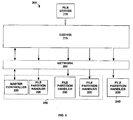
- System 100 displays an embodiment of a transmission system for transporting a large media object to clients 140.
- File server 110 is a storage device such as a matrix of hard drives having a capacity of Terabytes and/or Gigabytes capable of storing multiple media objects.
- File server 110 is coupled through a local area network to servers 115 that house control components such as master controller 120 and to file partition handlers 130.
- Server 115 preferably comprises a host computer or a series of computers that are capable of transmitting a media object transmitted through network 170. It is to be noted that any disclosed master controller and file partition handler may be implemented as hardware, software, or as a combination of hardware and software, in accordance with the principles of the present invention.
- Master controller 120 manages the transport of a partitioned media object through network 170 to clients 140. Master controller 120 also coordinates the operation of file server 110 and file partitions handlers 130 for segmenting of a media object into multiple partitions. File segmentation is based on the availability of resources on the client side requesting the media object effecting both the segmentation of the media file and error recovery of such transmitted segments.
- the control communications between master controller 120 and client 140 are preferably handled through TCP/IP compliant network connection.
- File partition handler 130 is responsible for retrieving and transporting the appropriate segment of a media object in accordance with the instructions issued from master controller 120.
- File partition hander 130 preferably transports its associated file segment to client 140 using a UDP based protocol over a network connection as described in Postel, J., "User Datagram Protocol," Request For Comments 768, USC/Information Sciences Institute, August 1980 .
- a group of file partition handlers 130 ideally transmit their respective segments or packets in a simultaneous or parallel fashion, so the transmitted data is received at a client 140 in a contemporaneous manner.
- Network 170 may be any type of network known in the art.
- a network is capable of accommodating multiple connections between resources at a server side of a server and at the client side of a client, such connections being UDP based, TCP/IP based, or a mixture of both.
- the bandwidth accommodated by network 150 is preferably a large bandwidth connection such as a T1 connection (1.5 Megabits per second, Mbps), T3 connection (45 Mbps), DS3 connection (45 Mbps), OC3 connection (155 Mbps), OC12 (248000 Mbps), and the like.
- Client 140 preferably comprises a host computer or a series of computers that are capable of receiving a media object transmitted through network 170.
- each client 140 has a series of access points or nodes that is associated with an IP address and a port address. Such access points are shown as master controller 150 and file partition handlers 160, at the client side.
- a segment of a partitioned media object is transmitted by file partition handler 130 to the IP address and port of an access point of client 140 via UDP, as described above.
- Access points may also be identified by a corresponding Network Interface Card address (NIC address) or Media Access Control address (MAC) address associated with an access point associated with client 140, this case being a file partition handler 160, although a client 140 may not have such a component.
- NIC address Network Interface Card address
- MAC Media Access Control address
- the segments of the media object received by the access points of client 140 are then reconstituted into the media object, when completely received. Missing segments of the media object are replaced using the techniques described later in this specification. It should be noted for the operation of the invention that master controller 120 and file partition handler 130 may occupy the same server 115, or may occupy several servers 115.
- master controller 150 and file partition handlers 160 may occupy the same client 140, or may occupy several clients 140, depending on the requirements of the desired transmission system.
- the principles of the present invention may be applied to other distributed networking environments where multiple servers 115 or clients 140 are used to transmit and/or receive the same media object.
- Fig. 2 presents an embodiment of the present invention for transferring a segmented media object to a single client 240.
- system 200 has client 240 requesting a media object over network 250 to server 215, where the media object is stored in file server 210.
- client 240 possesses master controller 220 for issuing the request for the media object and for configuring the file partition handlers 230 available for receiving a segmented media object.
- Master controller 220 through the use of a TCP/IP based transmission indicates to server 215 which corresponding UDP ports of file partition handlers 230 are to receive a corresponding file segment and a requested media object is to be segmented.
- Master controller 220 concatenates the received segments when all of the segments are successfully retrieved from file partition handlers 230 over their respective UDP connections through network 250.
- Fig. 3 presents an embodiment of the present invention for transferring a segmented media object to multiple clients 350 using an IP multicasting architecture as described in Thaler, D., "Interoperability Rules for Multicast Routing Protocols," Request For Comments 2715, Microsoft, October, 1999 .
- each client 340 has a corresponding master controller 350 for issuing a request for a media object stored in file server 310.
- Each master controller 350 though has to account the delays required to synchronize all clients 340 requesting a media object.
- the request for media object is established by each master controller 350 to server 315 which then multicasts the segmented media object to the corresponding file partition handlers 360 of client 340, or a single master controller 360 specifies the IP addresses to where the segments of media object should be transmitted via an IP multicast through multicast network 370.
- the transmission of the file segments to file partition handlers 360 and the reconstitution of such received file segments into a media object at clients 340 is similar as described in the specification for Figs. 1 and 2 .
- master controllers 350 operate in conjunction with master controller 320 of server 315 to receive a partitioned media object.
- Master controller 320 informs master controllers 350 which multicast addresses will be used to transmit a segment of a partitioned media object.
- the respective master controller 350 will command their respective file partition handlers to receive such segments through multicast network 370.
- Fig. 4 is a flowchart of a method 400 for transmitting a media object, in accordance with an embodiment of the present invention.
- the steps presented for the flow chart are presenting in view of Fig. 1 .
- client 140 connects via network 170 with master controller 120, associated with server 115.
- the connection is established through a TCP/IP socket, where client 140 identifies the media object to be transferred.
- client 140 also specifies the communication rate for the transmission of the media object.
- master controller 120 determines the number of file partitions handlers 130 necessary to meet the required communication rate set forth by client 140. This step may also include that multiple servers be involved in the transmission of a segmented media object.
- Step 420 has master controller 120 instructing each partition handler 130 as to which segment of the media object and what UDP port will be used to transmit to client 140.
- Step 425 involves master controller 120 instructing client 140 of the UDP ports required to download the segments of the media object that will be eventually transmitted. Also, control information is transmitted by master controller 120 to client 140 indicating the how many packets will be coming in from a UDP port for a particular segment of the divided media object.
- Step 430 has each file partition handler 130 putting a header block on its packets that are to be transmitted on its assigned UDP port. Preferably, the header block are sequentially generated in numerical order. The packets are then transmitted to client 140.
- Client 140 determines what client based file partitions handlers 160 are to be used in step 435, and what servers to activate to receive the transmitted files.
- the client based file partition handlers 160 as access points, receive packets representing the transmitted segments of a media object, on a corresponding UDP port. The sequence identifiers in the header block of the received packets determine how to reconstruct the received segment of the media object.
- step 445 has client 140 notifying master controller 120 through the TCP/IP connection which packets are missing and are required to be retransmitted by a corresponding file partition handler 130.
- client 140 has a client side master controller 150 for communicating with the master controller 120 at the server side.
- client 140 instructs master controller 120 that a particular segment of the media object has been completely received. If the complete download of the media object is not complete, the client 140 further instructs master controller 120 to transmit and additional segment of the media object using new parameters (as done in steps 420 to 445).
- Step 460 has master controller 120 informing client 140 that all segments of the partitioned media object have been transmitted. Client 140 then reconstructs the media object using the received segments of the media object.
- Fig. 5 shows an exemplary embodiment of a file segment of partitioned media object.
- the file segment comprises major segments 510 and minor segments 520.
- Major segments 510 are used by client 140 and server 115 as the major segment boundaries, where a major segment 510 is a large "block" used to send a file segment.
- Minor segment 520 is the smaller "blocks" which are used to construct a major segment 510.
- a major segment 510 has to be completely received by client 140 before a second major segment 510 is transmitted. If a major segment 510 is not completely received, client 140 tells master controller 120 what minor segment 520 of said major segment 510 to retransmit, where each minor segment 520 corresponds to a particular file partition handler 130 of server 115.
- master controller 120 designates a major segment 510 to a group of file partition handlers 130. Each file partition handler 130 is then assigned a part of major segment 510 as a minor segment 520 that are transmitted as UDP packets. Upon the successful transmission of the minor segments 520 used to construct major segment 510, each file partition handler 130 informs master controller 120 that the transmission of the major segment has completed. Master controller then will issue a second major segment 520 to be divided up and transmitted by file partition handlers 130 to client 140, as previously described.
- master controller 120 may be configured to build a pipeline of major segments 510, eliminating the need for idle time while master controller 120 processes a message from client 140 indicating a change in network conditions.
- the size of major segments 510 may also be modified in response to network conditions.
- a major segment 510 may be composed of ten minor segments 520.
- the size of a major segment 510 would be increased to twelve minor segments 520.
- the size of major segment 520 would be reduced to eight minor segments 520.
- the adjustment in the amount of minor segments may be modified in accordance with the principles of the present invention.
- master controller 120 is capable of adding additional file partition handlers 130 to transmit data packets.
- master controller 120 assigns the task of re-sending packets to a preexisting file partition handler 130.
- a second scheme for packet loss protection involves master controller 120 keeping a linked list of lost packets.
- master controller 120 and file partition handlers 130 of server 115 transmit all of the major segments 510 and minor segments 520 of a partitioned media object, this transmission being known as a "first pass".
- the contents of the linked list are used by master controller 120 to indicate the packets lost during the "first pass" transmission.
- Server master controller 120 then coordinates a "second pass” transmission with file partition handlers 130 and client 140 to rebroadcast the packets of major segments 510 and minor segments 520 that were not successfully received during the "first pass” transmission. This procedure is repeated until a threshold of successfully received packets by client 140 is reached.
- Additional packet loss techniques include either server side master controller 120 or client side master controller 150 monitoring the respective resources on their respective side. For example, if a particular file partition handler 130 on the client side keeps on timing out or if client 140 stops responding, master controller 120 may cancel the job assigned to the file partition handler 130 and reassign the job (of transmitting data) to a second file partition handler 130, or reassign a major segment 510 to a group of file partition handlers 130. Master controller 120 notifies a user about this time-out failure.
- master controller 150 by keeping track of statistics on the client side may discover that a UDP address continuously loses packets. Master controller 150 then informs server side master controller 120 that there is a problem with the UDP address, indicating a faulty file partition handler either at the server or client side of the system. Master controllers 120 and 150 then coordinate the transmission of packets to a new UDP address, which may involve the use of new file partition handlers. These embodiments also contemplate that either master controller 120 or 150 may be used to implement the described timing out or UDP failure packet loss schemes, described above.
- Packet loss techniques for multicast transmissions require that the master controller of a server be prepared to utilize different methods to stem the loss of transmitted packets.
- server master controller 320 maintains a linked list of packets that are lost during the transmission of major segments 510 and minor segments 520 of a segmented media object, similar to the linked list used for unicast transmissions.
- the modification to this linked list occupies a two-dimensional array where lost packets (minor segments) that were lost in respect to all clients 340.
- a "first pass" transmission of a partitioned media object is completed when all of the major segments 510 of the media object are transmitted.
- the linked list is updated by master controller 320, upon the completion of each transmitted major segment 510.
- Master controller 320 then uses the contents of the linked list to rebroadcast the data packets not successfully received by clients 340 during the "first pass".
- This "second pass” transmission has major segments 510 and minor segments 520 being transmitted with the "lost packet” information. This process is repeated until all clients 340 receive all the segments of a partitioned media object.
- the multicast transmission model also allows master controller 320 to utilize the timing out and the UDP packet loss schemes described in regards to the unicast transmission model described above.
- the present invention provides for additional embodiments utilize control-processing schemes to benefit the transmission techniques used to transmit a partitioned media object.
- the invention provides the operation where a transmission technique used to transmit a media object may be changed, in accordance with the requests made for such a file.
- a media object is currently being transmitted as a UDP transmission using the unicast technique described above.
- a second request for the same file comes in to a server during the course of this transmission.
- a client side file partition handler 330 of client 340 finishes receiving a segment of the partitioned media object.
- File partition handler 330 then awaits further instructions as to how to proceed to receive a new segment of the partitioned media object.
- Client master controller 350 (of the client that received the segment) informs server master controller 320 that the client 340 has successfully received the transmitted segment.
- this communication takes place at the boundary of a major segment 510, although the system may also have the communication take place for minor segments 520.
- Master controller 320 informs client master controller 350 that the next segment of the media object will come from a new address, specifically a multicast address. Client master controller 350 then instructs a file partition handler 330 to receive the next segment of the media object from the designated multicast address. In the interim, master controller 320 designates that a file partition handler 330 start transmitting this next segment of the media object in the form of multicast packets from the designated multicast address. All other newly added clients 340 requesting the media object will be instructed to receive segments of the media object from this multicast address, as well.
- Master controller 320 will transmit all of the segments of a partitioned media object to clients 340 until all of the segments have been received.
- the packet loss techniques described above, may be used to buttress the transmission of data.
- master controller 320 informs all of the new clients 340 to join the multicast in progress at the next major segment 510 boundary. This is done by having master controller 320 transmit the multicast address of corresponding file partition handlers 330 transmitting segments of the requested media object. All synchronization and control communications are preferably communicated between master controllers 320 and 350 through TCP/IP sockets. Additionally, the rebroadcast of multicast segments are preferably performed through TCP/IP interfaces, as well. It should be noted that other control communications might be used, in accordance with the principles of the present invention.
- the described system of the invention provides that a client side or server side master controller be capable of reconfiguring the use of resources, especially file partition handlers.
- a client may request that a server transmit a partitioned media object at a desired communication rate.
- the master controller of the server would then determine how the file partition handlers of the server should be utilized in response to such as request.
- a client may request that a media object be transmitted using priority mechanisms or rules such as "use 20% of the available bandwidth from 08:00 to 17:00, otherwise use 90% of the available bandwidth".
- the master controller of the server would modify the use of file partition handlers, as well in response to such a request.
- a server on its own initiative may specify a limit to bandwidth used to transmit a partitioned media object.
- the server and client will seek to utilize all available transfer resources to achieve the highest possible transfer rate.
- the invention is configured to be self-teaching about system performance so that better decisions about resource allocation can be made for the future transmission of partitioned media objects.
- Statistics are gathered on Central Processing Unit (CPU) utilizations, NIC throughput, transmission error rates, and end-to-end transfer speeds. The statistics are gathered during a file transfer via the Operation System and other third party monitoring tools.
- the master controller either at the client or server side, derives network throughput by measuring how long it takes for the client to process a segment.
- the master controllers of the client and server may adjust their assumptions about how a media object should be partitioned, how many file partition handlers should be used, and how network latency and error rates for a specific client or server should be taken into account.
- Table 2 discloses an exemplary embodiment of a transfer request command that a client issues to a server to initiate a transfer of a requested media object.
- TABLE 2 Element Bytes Usage Message Type 1 Identifier to indicate this is a file transfer request Filename 100 The name of the file that this segment is associated with Comm Rate 1 Indicator of what communications speed the transfer should be conducted at Multicast 1 Indicator as to whether it is acceptable to use multicast to fulfill the request Session ID 4 Set if Message Type is for a Restart Job
- Table 3 discloses the format of an exemplary data control command used by a file partition handler of a server to inform a client about the number of packets that should be expected for transmission for a specified segment of a partitioned media object. Also this command is used for identifying where in the final file copy a received segment (major or minor) should be placed.
- TABLE 3 Element Bytes Usage Marker 7 The literal "CONTROL" Segment ID 4 Identifier of the segment Filename 100 The name of the file that this segment is associated with Offset 8 The offset in the final file at which this segment should be placed Number 4 Number of packets that will be received in this segment CRC 4 CRC check of previous 121 bytes to validate packet integrity
- Table 4 discloses the format of an exemplary data packet used to transmit data from the server to a client. Specifically, this data packet format is used to form major and minor segments of a partitioned media object.
- Table 5 discloses the format of an exemplary retransmit command that is used by a client to request the retransmission of an identified packet that was not successfully received. Such a command is transmitted to the server responible for transmitting the lost packet.
- TABLE 5 Element Bytes Usage Message Type 1 Identifier to indicate this is a packet retransmit request Segment ID 4 ID of segment for which packets are missing Length 4 Number of packet identifiers supplied in Packets element Packets Variable The identity of each packet lost is filled in here
- Table 6 discloses the format of an exemplary configuration command that is transmitted from a server to a client indicating the start of a file transfer. This command specifically indicates to the client what IP address or port to use to receive data from the server.
- TABLE 6 Element Bytes Usage Message Type 1 Identifier to indicate this is the configuration message Session ID 4 Identifier for job, used for restart Protocol 1 Indicates whether to use UDP or Multicast based Protocol Streams 1 Number of streams to connect to Stream Address Variable Array of IP Address/Port number to connect to for receiving file segments
- Table 7 discloses the format of an exemplary partition command that is used by a master controller of a server and is communicated to the file partition handlers used to transmit a major/minor segment. Such a command indicates how a media object is to be partitioned among file partition handlers.
- TABLE 7 Element Bytes Usage Message Type 1 Identifier to indicate this is the partition message Protocol 1 Indicates whether to use UDP or Multicast File Name 255 Path name of file to open for transmitting Offset 8 Offset in file for reading data from Bytes 4 Number of bytes to transmit in segment
- Table 8 discloses the format of a segment complete command that is communicated by a client side master controller to a server when a file partition handler indicates that it has completed processing a segment.
- the server's file partition handler processing the completed segment will be notified of the next segment of a partitioned media object to process.
- the file partition handler will then issue a data control command to the client, in accordance with the command shown in Table 3.
- TABLE 8 Element Bytes Usage Message Type 1 Identifier to indicate this is the segment complete message Segement ID 4 Identifier of the segment for which processing is complete
Landscapes
- Engineering & Computer Science (AREA)
- Multimedia (AREA)
- Signal Processing (AREA)
- Computer Networks & Wireless Communication (AREA)
- Computer Security & Cryptography (AREA)
- Theoretical Computer Science (AREA)
- General Engineering & Computer Science (AREA)
- Databases & Information Systems (AREA)
- Computing Systems (AREA)
- Computer Hardware Design (AREA)
- Physics & Mathematics (AREA)
- General Physics & Mathematics (AREA)
- Software Systems (AREA)
- General Business, Economics & Management (AREA)
- Business, Economics & Management (AREA)
- Data Exchanges In Wide-Area Networks (AREA)
- Information Retrieval, Db Structures And Fs Structures Therefor (AREA)
- Information Transfer Between Computers (AREA)
- Computer And Data Communications (AREA)
Claims (1)
- Ein Verfahren zum Segmentieren eines Medienobjekts für die Übertragung über ein Netzwerk (170), das die folgenden Schritte umfasst:Partitionieren eines Medienobjekts in mindestens zwei Segmente;Zuordnen von mindestens einem der mindestens zwei Segmente zu einem File Partition Handler (130, 160); und Übertragen von mindestens einem der Segmente unter Verwendung eines zugewiesenen User-Datagramm-Protokolls (UDP), wobei mindestens eines der Segmente zu den Datagrammprotokollports an demselben Client-Gerät parallel gesendet wird.Benachrichtigen der Leitsteuerung, dass ein File Partition Handler mindestens eines der Segmente übertragen hat;wobei die Leitsteuerung mit mindestens zwei File Partition Handler arbeitet, wo mindestens eines der Segmente des partitionierten Medienobjekts, das ein Hauptsegment darstellt, in zwei kleinere Segmente unterteilt wird, wobei jedes kleinere Segment einem File Partition Handler durch die Leitsteuerung zugeordnet wird;wobei die kleineren Segmente durch mindestens zwei File Partition Handler erfolgreich übertragen werden bevor ein zweites Hauptsegment in kleinere Segmente unterteilt und von den File Partition Handler übertragen wird;wobei die Leitsteuerung verlorene Segmente, die nicht erfolgreich übertragen wurden, in einer verlinkten Liste nachverfolgt;wobei die Leitsteuerung den für das verlorene Segment verantwortlichen File Partition Handler dazu veranlasst, das verlorene Segment zurückzuübertragen;wobei die Leitsteuerung das verlorene Segment des partitionierten Medienobjekts zu einem zweiten File Partition Handler zurücküberträgt als Reaktion, wenn es dem File Partition Handler nicht gelingt, das Segment zu liefern.wobei die Leitsteuerung mit einer zweiten Leitsteuerung kommuniziert unter Verwendung eines Übertragungskontrollprotokolls und eines Internetprotokolls basierend auf einem Übertragungsschema, und die File Partition Handlers mit einem Server kommunizieren, der UDP Ports benutzt; undZuordnen eines zusätzlichen Segments von mindestens zwei Segmenten des partitionierten Medienobjekts zu dem File Partition Handler zur Übertragung.
Applications Claiming Priority (3)
| Application Number | Priority Date | Filing Date | Title |
|---|---|---|---|
| US45858803P | 2003-03-28 | 2003-03-28 | |
| US458588P | 2003-03-28 | ||
| PCT/US2004/009478 WO2004088501A1 (en) | 2003-03-28 | 2004-03-29 | System and method for transmitting media based files |
Publications (3)
| Publication Number | Publication Date |
|---|---|
| EP1609053A1 EP1609053A1 (de) | 2005-12-28 |
| EP1609053A4 EP1609053A4 (de) | 2011-06-08 |
| EP1609053B1 true EP1609053B1 (de) | 2016-02-03 |
Family
ID=33131809
Family Applications (1)
| Application Number | Title | Priority Date | Filing Date |
|---|---|---|---|
| EP04758487.5A Expired - Lifetime EP1609053B1 (de) | 2003-03-28 | 2004-03-29 | System und verfahren zum übertragen von medien-dateien |
Country Status (9)
| Country | Link |
|---|---|
| US (1) | US7831603B2 (de) |
| EP (1) | EP1609053B1 (de) |
| JP (1) | JP2006521643A (de) |
| KR (1) | KR101006703B1 (de) |
| CN (1) | CN1764897B (de) |
| BR (1) | BRPI0408622A (de) |
| ES (1) | ES2564802T3 (de) |
| MX (1) | MXPA05010227A (de) |
| WO (1) | WO2004088501A1 (de) |
Families Citing this family (40)
| Publication number | Priority date | Publication date | Assignee | Title |
|---|---|---|---|---|
| US20050034151A1 (en) * | 2003-08-08 | 2005-02-10 | Maven Networks, Inc. | System and method of integrating video content with interactive elements |
| US7831890B2 (en) | 2004-10-12 | 2010-11-09 | Aware, Inc. | Resource sharing in a telecommunications environment |
| US20060100845A1 (en) * | 2004-11-08 | 2006-05-11 | Mazzagatti Jane C | Multiple stream real time data simulation adapted for a KStore data structure |
| CN101073237B (zh) | 2004-11-30 | 2012-02-01 | 艾利森电话股份有限公司 | 用于传送多媒体文件的方法 |
| US7937379B2 (en) | 2005-03-09 | 2011-05-03 | Vudu, Inc. | Fragmentation of a file for instant access |
| US7698451B2 (en) | 2005-03-09 | 2010-04-13 | Vudu, Inc. | Method and apparatus for instant playback of a movie title |
| US9176955B2 (en) * | 2005-03-09 | 2015-11-03 | Vvond, Inc. | Method and apparatus for sharing media files among network nodes |
| US7191215B2 (en) | 2005-03-09 | 2007-03-13 | Marquee, Inc. | Method and system for providing instantaneous media-on-demand services by transmitting contents in pieces from client machines |
| US20090019468A1 (en) * | 2005-03-09 | 2009-01-15 | Vvond, Llc | Access control of media services over an open network |
| US20080022343A1 (en) | 2006-07-24 | 2008-01-24 | Vvond, Inc. | Multiple audio streams |
| US8904463B2 (en) | 2005-03-09 | 2014-12-02 | Vudu, Inc. | Live video broadcasting on distributed networks |
| US8219635B2 (en) | 2005-03-09 | 2012-07-10 | Vudu, Inc. | Continuous data feeding in a distributed environment |
| US8099511B1 (en) | 2005-06-11 | 2012-01-17 | Vudu, Inc. | Instantaneous media-on-demand |
| US8134928B1 (en) | 2005-12-15 | 2012-03-13 | Nvidia Corporation | Technique for identifying a failed network interface card within a team of network interface cards |
| US8335956B2 (en) | 2006-04-12 | 2012-12-18 | Tq Delta, Llc | Packet retransmission and memory sharing |
| RU2310902C1 (ru) * | 2006-05-19 | 2007-11-20 | Станислав Викторович Шидловский | Ячейка однородной среды |
| US20070288604A1 (en) * | 2006-06-08 | 2007-12-13 | Jeffrey Mark Achtermann | Method for determining optimal number of connections in multi-connection download configuration |
| US8296812B1 (en) | 2006-09-01 | 2012-10-23 | Vudu, Inc. | Streaming video using erasure encoding |
| CA2577030A1 (en) * | 2007-01-31 | 2008-07-31 | Unlimi-Tech Software Inc. | Improved data transfer method, system and protocol |
| US8300647B2 (en) * | 2007-05-18 | 2012-10-30 | Nvidia Corporation | Intelligent load balancing and failover of network traffic |
| US8432788B2 (en) * | 2007-05-18 | 2013-04-30 | Nvidia Corporation | Intelligent failback in a load-balanced networking environment |
| CN101202882B (zh) * | 2007-07-19 | 2010-09-15 | 深圳市同洲电子股份有限公司 | 一种媒体资源传输方法、系统及机顶盒 |
| US8140953B1 (en) * | 2007-10-26 | 2012-03-20 | Adobe Systems Incorporated | Flexible media catalog for multi-format project export |
| US20110276657A1 (en) * | 2007-12-20 | 2011-11-10 | Chalk Media Service Corp. | Method and system for the delivery of large content assets to a mobile device over a mobile network |
| JP2009182458A (ja) * | 2008-01-29 | 2009-08-13 | Sony Corp | 通信装置、通信システム、通信方法及びプログラム |
| US20090276791A1 (en) * | 2008-05-01 | 2009-11-05 | Microsoft Corporation | Techniques for facilitating server callbacks |
| KR101777349B1 (ko) * | 2010-10-26 | 2017-09-12 | 삼성전자주식회사 | 비디오 스트림 송수신 방법 및 장치 |
| KR101739272B1 (ko) | 2011-01-18 | 2017-05-24 | 삼성전자주식회사 | 멀티미디어 스트리밍 시스템에서 컨텐트의 저장 및 재생을 위한 장치 및 방법 |
| KR20130046540A (ko) * | 2011-10-28 | 2013-05-08 | 삼성에스디에스 주식회사 | 데이터 전송 장치 및 방법 |
| CN103139241A (zh) * | 2011-11-24 | 2013-06-05 | 腾讯科技(深圳)有限公司 | 网络资源文件的离线下载系统和方法 |
| US9628542B2 (en) * | 2012-08-24 | 2017-04-18 | Akamai Technologies, Inc. | Hybrid HTTP and UDP content delivery |
| EP2773078B1 (de) * | 2013-03-01 | 2017-06-07 | Alcatel-Lucent España | Verfahren, system und vorrichtung zur multimediainhaltlieferung mittels adaptivem streaming |
| KR101507032B1 (ko) * | 2014-08-26 | 2015-04-01 | 계명대학교 산학협력단 | 스트리밍 미디어의 실시간 동기화 재생 시스템 및 방법 |
| US9467255B2 (en) | 2014-12-23 | 2016-10-11 | Ibiquity Digital Corporation | Systems and methods for digital radio broadcast with cross platform reception |
| KR102454569B1 (ko) | 2016-04-22 | 2022-10-13 | 아이비큐티 디지털 코포레이션 | 공중파 무선 방송 신호 메타데이터 |
| JP7068932B2 (ja) * | 2018-06-01 | 2022-05-17 | 三菱電機株式会社 | 通信システム |
| US10880354B2 (en) * | 2018-11-28 | 2020-12-29 | Netflix, Inc. | Techniques for encoding a media title while constraining quality variations |
| US11770441B2 (en) | 2019-06-07 | 2023-09-26 | Qualcomm Incorporated | File delivery failure feedback and application feedback |
| US12363187B2 (en) * | 2023-05-31 | 2025-07-15 | Microsoft Technology Licensing, Llc | UDP file serialization in one-way transfer systems |
| US12131206B1 (en) | 2023-05-31 | 2024-10-29 | Microsoft Technology Licensing, Llc | Bidirectional application programming interface enabling operational action functionality in one-way transfer systems |
Family Cites Families (20)
| Publication number | Priority date | Publication date | Assignee | Title |
|---|---|---|---|---|
| JP3268875B2 (ja) * | 1993-02-26 | 2002-03-25 | 株式会社野村総合研究所 | 同報ファイル転送方法およびシステム |
| US6014706A (en) * | 1997-01-30 | 2000-01-11 | Microsoft Corporation | Methods and apparatus for implementing control functions in a streamed video display system |
| US6292805B1 (en) * | 1997-10-15 | 2001-09-18 | At&T Corp. | System and method for processing object-based audiovisual information |
| US6453355B1 (en) * | 1998-01-15 | 2002-09-17 | Apple Computer, Inc. | Method and apparatus for media data transmission |
| JPH11242640A (ja) * | 1998-02-25 | 1999-09-07 | Kdd Corp | ファイル転送方法 |
| US6460087B1 (en) * | 1998-02-25 | 2002-10-01 | Kdd Corporation | Method of transferring file |
| US6314466B1 (en) * | 1998-10-06 | 2001-11-06 | Realnetworks, Inc. | System and method for providing random access to a multimedia object over a network |
| US7010801B1 (en) * | 1999-06-11 | 2006-03-07 | Scientific-Atlanta, Inc. | Video on demand system with parameter-controlled bandwidth deallocation |
| US6801507B1 (en) * | 1999-07-27 | 2004-10-05 | Samsung Electronics Co., Ltd. | Device discovery and configuration in a home network |
| CA2398265A1 (en) * | 2000-01-24 | 2001-07-26 | The University Of Manitoba | Method and system for segmented file transfer |
| WO2001056244A1 (en) * | 2000-01-26 | 2001-08-02 | Sony Corporation | Data transmission system |
| US20030018581A1 (en) * | 2000-02-16 | 2003-01-23 | Bratton Timothy R. | Delivering media data to portable computing devices |
| US20020164024A1 (en) * | 2000-08-25 | 2002-11-07 | Hiroshi Arakawa | Data transmission method and data relay method |
| US7143433B1 (en) * | 2000-12-27 | 2006-11-28 | Infovalve Computing Inc. | Video distribution system using dynamic segmenting of video data files |
| US20020161911A1 (en) * | 2001-04-19 | 2002-10-31 | Thomas Pinckney | Systems and methods for efficient memory allocation for streaming of multimedia files |
| US20030088876A1 (en) * | 2001-11-08 | 2003-05-08 | Liberate Technologies | Video on demand gateway |
| US20030200548A1 (en) * | 2001-12-27 | 2003-10-23 | Paul Baran | Method and apparatus for viewer control of digital TV program start time |
| US20030188317A1 (en) * | 2002-03-28 | 2003-10-02 | Liew William J. | Advertisement system and methods for video-on-demand services |
| US8650601B2 (en) * | 2002-11-26 | 2014-02-11 | Concurrent Computer Corporation | Video on demand management system |
| US20040158867A1 (en) * | 2003-02-10 | 2004-08-12 | General Instrument Corporation | Methods, systems, and apparatus for determining transport stream channels for video-on-demand applications |
-
2004
- 2004-03-29 US US10/551,085 patent/US7831603B2/en not_active Expired - Fee Related
- 2004-03-29 JP JP2006509402A patent/JP2006521643A/ja active Pending
- 2004-03-29 BR BRPI0408622-8A patent/BRPI0408622A/pt not_active Application Discontinuation
- 2004-03-29 WO PCT/US2004/009478 patent/WO2004088501A1/en not_active Ceased
- 2004-03-29 EP EP04758487.5A patent/EP1609053B1/de not_active Expired - Lifetime
- 2004-03-29 CN CN2004800079234A patent/CN1764897B/zh not_active Expired - Fee Related
- 2004-03-29 MX MXPA05010227A patent/MXPA05010227A/es active IP Right Grant
- 2004-03-29 KR KR1020057017322A patent/KR101006703B1/ko not_active Expired - Fee Related
- 2004-03-29 ES ES04758487.5T patent/ES2564802T3/es not_active Expired - Lifetime
Also Published As
| Publication number | Publication date |
|---|---|
| WO2004088501A1 (en) | 2004-10-14 |
| US7831603B2 (en) | 2010-11-09 |
| KR20050114659A (ko) | 2005-12-06 |
| EP1609053A1 (de) | 2005-12-28 |
| US20060242153A1 (en) | 2006-10-26 |
| ES2564802T3 (es) | 2016-03-29 |
| CN1764897B (zh) | 2010-11-10 |
| KR101006703B1 (ko) | 2011-01-10 |
| EP1609053A4 (de) | 2011-06-08 |
| JP2006521643A (ja) | 2006-09-21 |
| CN1764897A (zh) | 2006-04-26 |
| MXPA05010227A (es) | 2006-03-28 |
| BRPI0408622A (pt) | 2006-03-07 |
Similar Documents
| Publication | Publication Date | Title |
|---|---|---|
| US7831603B2 (en) | System and method for transmitting media based files | |
| KR100926007B1 (ko) | 스트리밍 및 제어 처리를 위한 별도의 구성을 이용한미디어 데이터 프로세싱 | |
| US7548995B2 (en) | Strategies for disseminating media information using redundant network streams | |
| US5633810A (en) | Method and apparatus for distributing network bandwidth on a media server | |
| US7467221B2 (en) | Video server for video distribution system | |
| CN109347815B (zh) | 用于在混合网络中传送多媒体数据的装置和方法 | |
| EP1678909B1 (de) | Verfahren, system und artikel zur dynamischen echtzeit-stream-aggregation in einem netzwerk | |
| US6498897B1 (en) | Media server system and method having improved asset types for playback of digital media | |
| US8239495B2 (en) | Media player with integrated parallel source download technology | |
| US20090052450A1 (en) | Apparatus, system, and method for video delivery using dual multicast streams with one being delayed | |
| US20040047424A1 (en) | System and method for transmitting digital video files with error recovery | |
| US20050018615A1 (en) | Media transmitting method, media receiving method, media transmitter and media receiver | |
| CN106911699B (zh) | 一种基于rtp协议实现i帧重传的方法 | |
| US6977934B1 (en) | Data transport | |
| US20170188114A1 (en) | Network address translator (nat) traversal for out of home streaming | |
| CN105191324A (zh) | 通信设备、通信数据生成方法、以及通信数据处理方法 | |
| CN101352012A (zh) | 使用不同元件对流进行媒体数据处理以及控制方法 | |
| US20030210711A1 (en) | Data transfer method and apparatus | |
| WO2002056549A1 (en) | Communication device and communication method | |
| CA2385344A1 (en) | Data transfer method and apparatus | |
| CN1689332A (zh) | 用于经ip网络发送可伸缩编码视频的系统和方法 | |
| Antonellis | Digital Cinema Distribution | |
| Teixeira et al. | A Free Software Streaming Video Application based on MMTP |
Legal Events
| Date | Code | Title | Description |
|---|---|---|---|
| PUAI | Public reference made under article 153(3) epc to a published international application that has entered the european phase |
Free format text: ORIGINAL CODE: 0009012 |
|
| 17P | Request for examination filed |
Effective date: 20050930 |
|
| AK | Designated contracting states |
Kind code of ref document: A1 Designated state(s): AT BE BG CH CY CZ DE DK EE ES FI FR GB GR HU IE IT LI LU MC NL PL PT RO SE SI SK TR |
|
| AX | Request for extension of the european patent |
Extension state: AL LT LV MK |
|
| DAX | Request for extension of the european patent (deleted) | ||
| RBV | Designated contracting states (corrected) |
Designated state(s): DE ES FR GB IT |
|
| RAP1 | Party data changed (applicant data changed or rights of an application transferred) |
Owner name: THOMSON LICENSING |
|
| A4 | Supplementary search report drawn up and despatched |
Effective date: 20110511 |
|
| RIC1 | Information provided on ipc code assigned before grant |
Ipc: H04L 29/06 20060101ALI20110505BHEP Ipc: G06F 7/00 20060101AFI20041019BHEP Ipc: G06F 15/16 20060101ALI20110505BHEP Ipc: H04L 29/08 20060101ALI20110505BHEP |
|
| 17Q | First examination report despatched |
Effective date: 20130416 |
|
| RIC1 | Information provided on ipc code assigned before grant |
Ipc: H04N 21/6377 20110101ALI20150715BHEP Ipc: H04L 12/18 20060101ALI20150715BHEP Ipc: H04N 21/442 20110101ALI20150715BHEP Ipc: H04N 21/643 20110101ALI20150715BHEP Ipc: H04N 21/658 20110101ALI20150715BHEP Ipc: G06F 7/00 20060101AFI20150715BHEP Ipc: G06F 15/16 20060101ALI20150715BHEP Ipc: H04N 21/845 20110101ALI20150715BHEP Ipc: H04L 29/08 20060101ALI20150715BHEP Ipc: H04L 29/06 20060101ALI20150715BHEP Ipc: H04N 21/6375 20110101ALI20150715BHEP |
|
| GRAP | Despatch of communication of intention to grant a patent |
Free format text: ORIGINAL CODE: EPIDOSNIGR1 |
|
| INTG | Intention to grant announced |
Effective date: 20150821 |
|
| GRAS | Grant fee paid |
Free format text: ORIGINAL CODE: EPIDOSNIGR3 |
|
| GRAA | (expected) grant |
Free format text: ORIGINAL CODE: 0009210 |
|
| AK | Designated contracting states |
Kind code of ref document: B1 Designated state(s): DE ES FR GB IT |
|
| REG | Reference to a national code |
Ref country code: GB Ref legal event code: FG4D |
|
| REG | Reference to a national code |
Ref country code: DE Ref legal event code: R084 Ref document number: 602004048604 Country of ref document: DE |
|
| REG | Reference to a national code |
Ref country code: GB Ref legal event code: 746 Effective date: 20160222 |
|
| REG | Reference to a national code |
Ref country code: DE Ref legal event code: R096 Ref document number: 602004048604 Country of ref document: DE |
|
| REG | Reference to a national code |
Ref country code: FR Ref legal event code: PLFP Year of fee payment: 13 |
|
| REG | Reference to a national code |
Ref country code: ES Ref legal event code: FG2A Ref document number: 2564802 Country of ref document: ES Kind code of ref document: T3 Effective date: 20160329 |
|
| PGFP | Annual fee paid to national office [announced via postgrant information from national office to epo] |
Ref country code: ES Payment date: 20160211 Year of fee payment: 13 |
|
| PGFP | Annual fee paid to national office [announced via postgrant information from national office to epo] |
Ref country code: GB Payment date: 20160324 Year of fee payment: 13 |
|
| PGFP | Annual fee paid to national office [announced via postgrant information from national office to epo] |
Ref country code: IT Payment date: 20160324 Year of fee payment: 13 |
|
| REG | Reference to a national code |
Ref country code: DE Ref legal event code: R097 Ref document number: 602004048604 Country of ref document: DE |
|
| PLBE | No opposition filed within time limit |
Free format text: ORIGINAL CODE: 0009261 |
|
| STAA | Information on the status of an ep patent application or granted ep patent |
Free format text: STATUS: NO OPPOSITION FILED WITHIN TIME LIMIT |
|
| 26N | No opposition filed |
Effective date: 20161104 |
|
| REG | Reference to a national code |
Ref country code: FR Ref legal event code: PLFP Year of fee payment: 14 |
|
| REG | Reference to a national code |
Ref country code: DE Ref legal event code: R082 Ref document number: 602004048604 Country of ref document: DE Representative=s name: HOFSTETTER, SCHURACK & PARTNER PATENT- UND REC, DE |
|
| GBPC | Gb: european patent ceased through non-payment of renewal fee |
Effective date: 20170329 |
|
| PG25 | Lapsed in a contracting state [announced via postgrant information from national office to epo] |
Ref country code: GB Free format text: LAPSE BECAUSE OF NON-PAYMENT OF DUE FEES Effective date: 20170329 Ref country code: IT Free format text: LAPSE BECAUSE OF NON-PAYMENT OF DUE FEES Effective date: 20170329 |
|
| REG | Reference to a national code |
Ref country code: FR Ref legal event code: PLFP Year of fee payment: 15 |
|
| PGFP | Annual fee paid to national office [announced via postgrant information from national office to epo] |
Ref country code: DE Payment date: 20180323 Year of fee payment: 15 |
|
| PGFP | Annual fee paid to national office [announced via postgrant information from national office to epo] |
Ref country code: FR Payment date: 20180329 Year of fee payment: 15 |
|
| REG | Reference to a national code |
Ref country code: ES Ref legal event code: FD2A Effective date: 20180629 |
|
| PG25 | Lapsed in a contracting state [announced via postgrant information from national office to epo] |
Ref country code: ES Free format text: LAPSE BECAUSE OF NON-PAYMENT OF DUE FEES Effective date: 20170330 |
|
| REG | Reference to a national code |
Ref country code: DE Ref legal event code: R119 Ref document number: 602004048604 Country of ref document: DE |
|
| PG25 | Lapsed in a contracting state [announced via postgrant information from national office to epo] |
Ref country code: DE Free format text: LAPSE BECAUSE OF NON-PAYMENT OF DUE FEES Effective date: 20191001 |
|
| PG25 | Lapsed in a contracting state [announced via postgrant information from national office to epo] |
Ref country code: FR Free format text: LAPSE BECAUSE OF NON-PAYMENT OF DUE FEES Effective date: 20190331 |