EP1610559A2 - Signalisation dans la bande pour le contrôle de resources pour le cryptage et le transcodage dans un système de vidéo sur demande - Google Patents
Signalisation dans la bande pour le contrôle de resources pour le cryptage et le transcodage dans un système de vidéo sur demande Download PDFInfo
- Publication number
- EP1610559A2 EP1610559A2 EP05253369A EP05253369A EP1610559A2 EP 1610559 A2 EP1610559 A2 EP 1610559A2 EP 05253369 A EP05253369 A EP 05253369A EP 05253369 A EP05253369 A EP 05253369A EP 1610559 A2 EP1610559 A2 EP 1610559A2
- Authority
- EP
- European Patent Office
- Prior art keywords
- video content
- band signaling
- encryption
- content signal
- devices
- Prior art date
- Legal status (The legal status is an assumption and is not a legal conclusion. Google has not performed a legal analysis and makes no representation as to the accuracy of the status listed.)
- Granted
Links
- 230000011664 signaling Effects 0.000 title claims abstract description 38
- 238000000034 method Methods 0.000 claims abstract description 37
- 238000004891 communication Methods 0.000 claims abstract description 22
- 238000012545 processing Methods 0.000 claims description 19
- 238000006243 chemical reaction Methods 0.000 claims description 12
- 230000006835 compression Effects 0.000 claims description 7
- 238000007906 compression Methods 0.000 claims description 7
- RTZKZFJDLAIYFH-UHFFFAOYSA-N Diethyl ether Chemical compound CCOCC RTZKZFJDLAIYFH-UHFFFAOYSA-N 0.000 description 2
- 238000013461 design Methods 0.000 description 2
- 238000011161 development Methods 0.000 description 2
- 230000007774 longterm Effects 0.000 description 2
- 238000012986 modification Methods 0.000 description 2
- 230000004048 modification Effects 0.000 description 2
- 101100149252 Caenorhabditis elegans sem-5 gene Proteins 0.000 description 1
- 101100150580 Saccharomyces cerevisiae (strain ATCC 204508 / S288c) STB4 gene Proteins 0.000 description 1
- 238000010586 diagram Methods 0.000 description 1
- 230000010354 integration Effects 0.000 description 1
- 238000007726 management method Methods 0.000 description 1
- 238000013507 mapping Methods 0.000 description 1
- 238000012360 testing method Methods 0.000 description 1
Images


Classifications
-
- H—ELECTRICITY
- H04—ELECTRIC COMMUNICATION TECHNIQUE
- H04N—PICTORIAL COMMUNICATION, e.g. TELEVISION
- H04N21/00—Selective content distribution, e.g. interactive television or video on demand [VOD]
- H04N21/40—Client devices specifically adapted for the reception of or interaction with content, e.g. set-top-box [STB]; Operations thereof
- H04N21/43—Processing of content or additional data, e.g. demultiplexing additional data from a digital video stream; Elementary client operations, e.g. monitoring of home network or synchronising decoder's clock; Client middleware
- H04N21/435—Processing of additional data, e.g. decrypting of additional data, reconstructing software from modules extracted from the transport stream
-
- H—ELECTRICITY
- H04—ELECTRIC COMMUNICATION TECHNIQUE
- H04L—TRANSMISSION OF DIGITAL INFORMATION, e.g. TELEGRAPHIC COMMUNICATION
- H04L65/00—Network arrangements, protocols or services for supporting real-time applications in data packet communication
- H04L65/60—Network streaming of media packets
- H04L65/75—Media network packet handling
- H04L65/765—Media network packet handling intermediate
-
- H—ELECTRICITY
- H04—ELECTRIC COMMUNICATION TECHNIQUE
- H04N—PICTORIAL COMMUNICATION, e.g. TELEVISION
- H04N21/00—Selective content distribution, e.g. interactive television or video on demand [VOD]
- H04N21/20—Servers specifically adapted for the distribution of content, e.g. VOD servers; Operations thereof
- H04N21/23—Processing of content or additional data; Elementary server operations; Server middleware
- H04N21/234—Processing of video elementary streams, e.g. splicing of video streams or manipulating encoded video stream scene graphs
- H04N21/2343—Processing of video elementary streams, e.g. splicing of video streams or manipulating encoded video stream scene graphs involving reformatting operations of video signals for distribution or compliance with end-user requests or end-user device requirements
- H04N21/234309—Processing of video elementary streams, e.g. splicing of video streams or manipulating encoded video stream scene graphs involving reformatting operations of video signals for distribution or compliance with end-user requests or end-user device requirements by transcoding between formats or standards, e.g. from MPEG-2 to MPEG-4 or from Quicktime to Realvideo
-
- H—ELECTRICITY
- H04—ELECTRIC COMMUNICATION TECHNIQUE
- H04N—PICTORIAL COMMUNICATION, e.g. TELEVISION
- H04N21/00—Selective content distribution, e.g. interactive television or video on demand [VOD]
- H04N21/20—Servers specifically adapted for the distribution of content, e.g. VOD servers; Operations thereof
- H04N21/23—Processing of content or additional data; Elementary server operations; Server middleware
- H04N21/234—Processing of video elementary streams, e.g. splicing of video streams or manipulating encoded video stream scene graphs
- H04N21/2347—Processing of video elementary streams, e.g. splicing of video streams or manipulating encoded video stream scene graphs involving video stream encryption
-
- H—ELECTRICITY
- H04—ELECTRIC COMMUNICATION TECHNIQUE
- H04N—PICTORIAL COMMUNICATION, e.g. TELEVISION
- H04N21/00—Selective content distribution, e.g. interactive television or video on demand [VOD]
- H04N21/20—Servers specifically adapted for the distribution of content, e.g. VOD servers; Operations thereof
- H04N21/23—Processing of content or additional data; Elementary server operations; Server middleware
- H04N21/235—Processing of additional data, e.g. scrambling of additional data or processing content descriptors
-
- H—ELECTRICITY
- H04—ELECTRIC COMMUNICATION TECHNIQUE
- H04N—PICTORIAL COMMUNICATION, e.g. TELEVISION
- H04N21/00—Selective content distribution, e.g. interactive television or video on demand [VOD]
- H04N21/20—Servers specifically adapted for the distribution of content, e.g. VOD servers; Operations thereof
- H04N21/23—Processing of content or additional data; Elementary server operations; Server middleware
- H04N21/236—Assembling of a multiplex stream, e.g. transport stream, by combining a video stream with other content or additional data, e.g. inserting a URL [Uniform Resource Locator] into a video stream, multiplexing software data into a video stream; Remultiplexing of multiplex streams; Insertion of stuffing bits into the multiplex stream, e.g. to obtain a constant bit-rate; Assembling of a packetised elementary stream
- H04N21/2362—Generation or processing of Service Information [SI]
-
- H—ELECTRICITY
- H04—ELECTRIC COMMUNICATION TECHNIQUE
- H04N—PICTORIAL COMMUNICATION, e.g. TELEVISION
- H04N21/00—Selective content distribution, e.g. interactive television or video on demand [VOD]
- H04N21/20—Servers specifically adapted for the distribution of content, e.g. VOD servers; Operations thereof
- H04N21/25—Management operations performed by the server for facilitating the content distribution or administrating data related to end-users or client devices, e.g. end-user or client device authentication, learning user preferences for recommending movies
- H04N21/262—Content or additional data distribution scheduling, e.g. sending additional data at off-peak times, updating software modules, calculating the carousel transmission frequency, delaying a video stream transmission, generating play-lists
-
- H—ELECTRICITY
- H04—ELECTRIC COMMUNICATION TECHNIQUE
- H04N—PICTORIAL COMMUNICATION, e.g. TELEVISION
- H04N21/00—Selective content distribution, e.g. interactive television or video on demand [VOD]
- H04N21/60—Network structure or processes for video distribution between server and client or between remote clients; Control signalling between clients, server and network components; Transmission of management data between server and client, e.g. sending from server to client commands for recording incoming content stream; Communication details between server and client
- H04N21/63—Control signaling related to video distribution between client, server and network components; Network processes for video distribution between server and clients or between remote clients, e.g. transmitting basic layer and enhancement layers over different transmission paths, setting up a peer-to-peer communication via Internet between remote STB's; Communication protocols; Addressing
- H04N21/633—Control signals issued by server directed to the network components or client
- H04N21/6338—Control signals issued by server directed to the network components or client directed to network
-
- H—ELECTRICITY
- H04—ELECTRIC COMMUNICATION TECHNIQUE
- H04N—PICTORIAL COMMUNICATION, e.g. TELEVISION
- H04N21/00—Selective content distribution, e.g. interactive television or video on demand [VOD]
- H04N21/60—Network structure or processes for video distribution between server and client or between remote clients; Control signalling between clients, server and network components; Transmission of management data between server and client, e.g. sending from server to client commands for recording incoming content stream; Communication details between server and client
- H04N21/63—Control signaling related to video distribution between client, server and network components; Network processes for video distribution between server and clients or between remote clients, e.g. transmitting basic layer and enhancement layers over different transmission paths, setting up a peer-to-peer communication via Internet between remote STB's; Communication protocols; Addressing
- H04N21/647—Control signaling between network components and server or clients; Network processes for video distribution between server and clients, e.g. controlling the quality of the video stream, by dropping packets, protecting content from unauthorised alteration within the network, monitoring of network load, bridging between two different networks, e.g. between IP and wireless
- H04N21/64784—Data processing by the network
-
- H—ELECTRICITY
- H04—ELECTRIC COMMUNICATION TECHNIQUE
- H04N—PICTORIAL COMMUNICATION, e.g. TELEVISION
- H04N21/00—Selective content distribution, e.g. interactive television or video on demand [VOD]
- H04N21/80—Generation or processing of content or additional data by content creator independently of the distribution process; Content per se
- H04N21/83—Generation or processing of protective or descriptive data associated with content; Content structuring
- H04N21/835—Generation of protective data, e.g. certificates
-
- H—ELECTRICITY
- H04—ELECTRIC COMMUNICATION TECHNIQUE
- H04N—PICTORIAL COMMUNICATION, e.g. TELEVISION
- H04N7/00—Television systems
- H04N7/16—Analogue secrecy systems; Analogue subscription systems
- H04N7/173—Analogue secrecy systems; Analogue subscription systems with two-way working, e.g. subscriber sending a programme selection signal
- H04N7/17309—Transmission or handling of upstream communications
- H04N7/17318—Direct or substantially direct transmission and handling of requests
Definitions
- the present invention relates generally to methods and apparatuses for communicating, and more particularly to a method and apparatus for communicating through a series of devices in a communications link.
- Next generation Video On-Demand (VOD) systems will include the ability to optionally perform real-time encryption of content from a central or edge location, and the ability to optionally transcode the content. Transcoding is used to provide additional compression in order to reduce bandwidth.
- These systems consist of a network of devices, such as video servers (Seachange, N-Cube, etc.) that store and play out content, Central Encryptors (Motorola CE), Transcoders (Motorola TMX), and edge QAM devices (Motorola SEM or Harmonic NSG).
- the present invention is therefore directed to the problem of developing an automated method for directing content through a series of devices in a communications system, such as a video-on-demand system to a set-top box.
- the present invention solves these and other problems by providing a method for in-band signaling to automate control of the VOD system, which in-band signaling indicates to recipient devices of the signal certain operations to be performed by the recipient device on the signal itself.
- an exemplary embodiment of the method for in-band signaling embeds a message in the signal, which message is processed by each recipient of the signal, and which embedded message indicates the types of operations to be performed on the signal, as well as potentially a next address of a next recipient of the signal.
- an exemplary embodiment of a method for controlling flow of a video content signal through a communications system includes creating a unique message for each individual video content signal and attaching the unique message to said each individual video content signal prior to transmitting the video content signal through the communications system to a designed end user system.
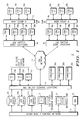
- FIG 1 depicts an exemplary embodiment of a system operating in accordance with certain aspects of the present invention.
- FIG 2 depict a block diagram of an portion of the system of FIG 1 according to another aspect of the present invention.
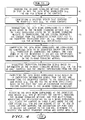
- FIGs 3-4 depict an exemplary embodiment of a method for controlling a video content signal path through a communications system according to still another aspect of the present invention.
- any reference herein to "one embodiment” or “an embodiment” means that a particular feature, structure, or characteristic described in connection with the embodiment is included in at least one embodiment of the invention.
- the appearances of the phrase “in one embodiment” in various places in the specification are not necessarily all referring to the same embodiment.
- the present invention provides a method to automate control of a communications system, such as a VOD system, such that content can be directed through a chain of devices in the communications system to the proper end user (e.g., a set top box), and to ensure that the proper processing (e.g., encryption/transcoding) is applied to the content along the way.
- a communications system such as a VOD system
- the proper end user e.g., a set top box
- One exemplary embodiment of a method for providing this automation employs in-band signaling to indicate to the recipient devices what operations are to be performed on the content.
- a unique in-band signaling message is created for each individual piece of content before the content is played out, and this unique in-band signaling message accompanies the individual content through the chain of devices that make up the VOD system.
- This message provides instructions for each device indicating if features like encryption and transcoding (or compression) are required for the associated content.
- This embodiment also allows each device in the chain to determine the next device where the content should be sent ( i . e ., the next destination).
- the unique in-band signaling message can be inserted into the PMT PID stream, and may contain the following information:
- the advantage of this exemplary embodiment is that the in-band signaling message accompanies the content through the chain of devices in the system (VOD network). This allows each device in the chain to use the information in this message to determine the processing that is required, and the next device in the chain where it should send the content. No communication with external devices is required.
- a system controller would be required to uniquely provision each CE and or Transcoding device each time a VOD event was requested. This would also require an interface (XML or other) between the controller and the CE/Transcoder device. These interfaces require significant development, integration, and testing, and the extra communication with external devices requires time, which can make VOD session setup time longer.
- the in-band signaling interface eliminates the need for an external controller, complex interfaces between devices, and any real-time communication between devices while configuring the VOD network to support a requested VOD session.
- the in-band signaling message accompanies the content through the network to allow the devices in the network to determine how they should process the content and where they should send it when they are done with it.
- the VOD system is responsible for initially creating the message and inserting the in-band signaling message into the content.
- the message is created based on STB ID, requested content, and available system resources (encryption/transcoding).
- the other devices in the network CE's, transcoders, and edge QAM devices are users of the information in the message.
- the present invention describes an in-band signaling method that can be used to control encryption and transcoding resources in VOD/On-Demand systems.
- Next generation VOD/on-demand systems will include the capability to optionally perform real-time encryption of content from either a central or edge location, and the capability to optionally transcode content as needed.
- Transcoding devices are used to provide additional compression of content in order to reduce bandwidth as needed.
- VOD/on-demand systems consist of a complex network of interconnected devices from different vendors.
- the VOD network devices include video servers that store and play out content, central encryptors (CE), transcoders, and edge QAM devices (such as Motorola SEM, and Harmonic NSG).
- FIG. 1 An exemplary embodiment 10 of a system to which the present invention is applicable is shown in FIG 1.
- Several Video on-Demand Servers 14a-c are coupled to a 10/100 BaseT control network 1, to which is also coupled a VOD System Resource Manager 13, a Motorola SDM 12 and an SDI 11.
- the VOD servers 14a-c are coupled to a Gigabit Ether Network 17 via GBE Switch 2 located in a central location, as well as to central encryptors 15a-c and transcoders 16a-c, which are in turn coupled to the GBE Network 17 via the same GBE switch 2.
- first GBE switch 3a located at a first edge location
- first group of SEMs1-4 (18a-d) is coupled to QAM 4a, which in turn is coupled to the set-top boxes 19a-c.
- the QAM 4a creates Node Group A.
- second GBE switch 3b located at a second edge location
- This second group of SEMS5-8 18e-h is coupled to QAM 4b, which in turn is coupled to the set-top boxes 19d-f.
- the QAM 4b creates Node Group B. While specific numbers of devices are shown, these are merely exemplary, and any number of devices (e.g., central encrpytors, SEMS, transcoders, QAMs, STBs, etc.) could be employed without departing from the scope of the present invention.
- devices e.g., central encrpytors, SEMS, transcoders, QAMs, STBs, etc.
- the system 10 includes several CE's 15a-c and several transcoder devices 16a-c in the central location.
- the CE's 15a-c are available to perform encryption of content that requires access control, and the transcoders 16a-c are available to perform content compression. In some systems, all content may pass through an available transcoder to minimize bandwidth. Other systems may only use transcoders as needed when usage becomes high and compression is needed to allow additional content to be "squeezed" into existing SEM QAM output transport streams that are reaching capacity.
- the system Based on the access control requirements of the requested content, and the current loading of the system, the system must determine if the content must be routed through a CE and or a transcoding device. It is typically the VOD system resource manager that would be responsible for making these decisions each time a new VOD session is requested. Note that the VOD system resource manager must also select an edge QAM device in an edge location to receive the content after all necessary encryption and transcoding is performed (in the central location). The selection of an edge QAM device is based on the location of the STB that initially requested the VOD session. This decision-making can be made by tracking the usage of the available resources in the CE and transcoding devices, along with knowledge of the topology of the VOD network. Network topology may be provided by the Motorola SDM product 12.
- content processing central real-time encryption and or transcoding
- content specific content specific
- human operators cannot be involved in decision making each time a subscriber orders a VOD event.
- a method is needed to automate the command and control of the VOD system. This automation is needed to direct the content through the VOD network to the STB that initially requested the content, and to ensure that the proper processing is applied to the content along the way.
- VOD system resource manager or other system controller
- VOD system resource manager or other system controller
- the disadvantage of the interface method is that it requires additional real-time communication between devices during each VOD session setup, which could be time consuming and error prone.
- each CE and transcoding device requires an open interface, such that it can be controlled by 3rd party VOD system resource managers. Since this interface does not exist today, and it has not been standardized, development efforts would be required on the part of both Motorola, (CE and transcoding devices) and the VOD system resource managers to design and support the new interface. In the long term, this interface method may be desirable, but it may not be feasible in the short term because the VOD system vendors have expressed an unwillingness to develop a control interface in the near future.
- the in-band signaling method of the present invention eliminates the need to develop control interfaces, yet still addresses the need to automate the control of the VOD system and ensure that the content associated with each VOD session receives the required processing as it travels through the VOD network.
- the VOD system resource manager (SRM) is able to determine the following information:
- the VOD SRM can make the following determinations:
- VOD SRM determines the processing required for the requested content, and the path that the content should take through the VOD network.
- This path includes a certain CE (if encryption is required), a certain transcoding device (if transcoding is needed), and a certain edge QAM device.
- the VOD SRM could communicate individually over well-defined interfaces with the specific network devices that have been identified to be in the path of the requested content. This communication would involve the provisioning of the individual devices based on the assumptions and information described above. Alternatively, in-band signaling could be used to achieve the same goal.
- a unique message is created for each individual piece of content before it is played out, and this message accompanies the content through the chain of devices that make up the VOD system.
- This message provides instructions for each device indicating if features like encryption, transcoding, and QAM_up-conversion are required for the associated content.
- the message would be inserted into the PMT PID stream, and would contain the following information:
- This method also allows each device in the chain to determine the next device where the content should be sent (next destination). The next device is determined by the order of processing listed in the in-band signaling message. If transcoding, encryption, and QAM_up-conversion are required, the VOD SRM would create the in-band message as shown below in Table 1 indicating that transcoding should be performed first, followed by encryption, and then finally QAM_up-conversion. The VOD SRM knows that transcoding is required first so it sends the content to the identified transcoder. The transcoder sees that the next device after transcoding is encryption so the transcoder sends to the content to the identified CE. The CE sees that the next device after encryption is QAM_up-conversion so the CE sends the content to the identified QAM edge device.
- the advantage of this method is that the in-band signaling message accompanies the content through the chain of devices in the system (VOD network). This allows each device in the chain to use the information in this message to determine what processing it should do, and the next device in the chain where it should send the content (based on the processing order listed in the message). No communication with external devices is required.
- the in-band signaling method eliminates the need for an external controller, complex interfaces between devices, and any real-time communication between devices while configuring the VOD network to support a requested VOD session.
- the in-band signaling message accompanies the content through the network to allow the devices in the network to determine how they should process the content and where they should send it when they are done with it.
- the VOD system is responsible for initially creating the message and inserting it into the content. The message is created based on STB ID, the requirements of the requested content, and available system resources (encryption, transcoding, and QAM_up-conversion).
- the other devices in the network (CE's, Transcoders, and edge QAM devices) are users of the information in the message.
- FIG 2 An exemplary embodiment 30 of a method for controlling a data download, such as a video on-demand session is described below with reference to FIGs 3-4 assuming the configuration of FIG 1.
- the end result of the path 20 that the download will follow in this example is shown in FIG 2, which includes VOD server 14a, transcoder 16c, central encryptor 15b, SEM5 18e and STB4 19d.
- the process 30 is initiated when an end user system, such as a set-top box (e.g., STB #4, FIG 1), requests a data download, such as a VOD event.
- an end user system such as a set-top box (e.g., STB #4, FIG 1)
- a data download such as a VOD event.
- the end user system indicates in the request an identification address (e.g., STB ID (unit address)), a location (e.g., STB location) and a desired data to be downloaded (e.g., a desired video content).
- an identification address e.g., STB ID (unit address)
- a location e.g., STB location
- a desired data to be downloaded e.g., a desired video content
- edge devices e.g., a subset of edge QAM devices
- the requesting end user system e.g., STB
- SEM's 5, 6, 7 and 8 have physical connectivity to STB #4.
- a specific encryption devices is selected (e.g., CE #2) to support the data download session based on the loading of the available encryption devices (loading information not shown).
- one specific edge device e.g., an edge QAM device is selected to support the data download session.
- the least loaded edge QAM device within the identified subset maybe selected. In this example, we shall assume the VOD system selects SEM #5.
- transcoding it is determined if transcoding is needed based on the bandwidth resources that are available. In this example, we shall assume transcoding is needed.
- a specific transcoder is selected (e.g., the VOD system selects transcoder #3) to support the data download session based on the loading of the available transcoder devices (loading information not shown).
- the in-band signaling message is created as shown below in Table 1. Knowing that the required processing includes transcoding, encryption and QAM_up-conversion, the in-band signaling message is created listing transcoding first, encryption second, and QAM_up-conversion last. This order determines the order that the processing must be performed in the network.
- the in-band signaling message is inserted into the data being downloaded (e.g., into the PMT PID stream of the content).
- the specific server that contains the requested data e.g., the video content
- the specific server that contains the requested data e.g., the video content
- the data being downloaded is transmitted from the identified server to the identified transcoder (e.g., transcoder #3) via the network (e.g., UDP/IP/GbE - Gigabyte Ethernet).
- the network e.g., UDP/IP/GbE - Gigabyte Ethernet
- the data being downloaded is compressed (as transcoding was required in this example) (e.g., transcoder #3 compresses the content), and then sends the compressed data to the identified encryption device (e.g., CE #2) via the network (e.g., UDP/IP/GbE).
- the identified encryption device e.g., CE #2
- the network e.g., UDP/IP/GbE
- the encryption device requests encryption information (e.g., ECM's) based on the end user system address (e.g., STB ID (unit address), and the DRM/CCI information) contained in the in-band signaling message from the SDI.
- ECM electronic circuitry
- the encryption device encrypts the data being downloaded and then transmits the encrypted data to the identified edge device (e.g., edge QAM device, such as SEM #5) via the network (e.g., UDP/IP/GbE).
- edge device e.g., edge QAM device, such as SEM #5
- the network e.g., UDP/IP/GbE
- the identified edge device receives the data being downloaded, removes the in-band signaling message, and then multiplexes, modulates, and up-converts the data being downloaded (e.g., places the content on the cable plant) where the end user system (e.g., STB #4) can acquire the data.
- the end user system e.g., STB #4
- the SEM is using UDP port mapping
- the Destination UDP port used to deliver the content to the SEM will determine the specific SEM output transport stream and output MPEG SN.
Landscapes
- Engineering & Computer Science (AREA)
- Multimedia (AREA)
- Signal Processing (AREA)
- Computer Networks & Wireless Communication (AREA)
- Computer Security & Cryptography (AREA)
- Databases & Information Systems (AREA)
- Data Exchanges In Wide-Area Networks (AREA)
- Two-Way Televisions, Distribution Of Moving Picture Or The Like (AREA)
Applications Claiming Priority (2)
| Application Number | Priority Date | Filing Date | Title |
|---|---|---|---|
| US10/872,688 US7765566B2 (en) | 2004-06-21 | 2004-06-21 | In-band signaling to control encryption and transcoding resources in VOD/On-Demand system |
| US872688 | 2004-06-21 |
Publications (3)
| Publication Number | Publication Date |
|---|---|
| EP1610559A2 true EP1610559A2 (fr) | 2005-12-28 |
| EP1610559A3 EP1610559A3 (fr) | 2011-11-16 |
| EP1610559B1 EP1610559B1 (fr) | 2019-05-22 |
Family
ID=34941535
Family Applications (1)
| Application Number | Title | Priority Date | Filing Date |
|---|---|---|---|
| EP05253369.2A Expired - Lifetime EP1610559B1 (fr) | 2004-06-21 | 2005-06-01 | Signalisation dans la bande pour le contrôle de resources pour le cryptage et le transcodage dans un système de vidéo sur demande |
Country Status (4)
| Country | Link |
|---|---|
| US (1) | US7765566B2 (fr) |
| EP (1) | EP1610559B1 (fr) |
| CA (1) | CA2508683C (fr) |
| MX (1) | MXPA05006757A (fr) |
Families Citing this family (31)
| Publication number | Priority date | Publication date | Assignee | Title |
|---|---|---|---|---|
| US8312267B2 (en) | 2004-07-20 | 2012-11-13 | Time Warner Cable Inc. | Technique for securely communicating programming content |
| US8266429B2 (en) | 2004-07-20 | 2012-09-11 | Time Warner Cable, Inc. | Technique for securely communicating and storing programming material in a trusted domain |
| US8885823B2 (en) * | 2006-09-25 | 2014-11-11 | General Instrument Corporation | Method and apparatus for delivering encrypted on-demand content without use of an application defined protocol |
| US8520850B2 (en) | 2006-10-20 | 2013-08-27 | Time Warner Cable Enterprises Llc | Downloadable security and protection methods and apparatus |
| US8732854B2 (en) | 2006-11-01 | 2014-05-20 | Time Warner Cable Enterprises Llc | Methods and apparatus for premises content distribution |
| US8621540B2 (en) * | 2007-01-24 | 2013-12-31 | Time Warner Cable Enterprises Llc | Apparatus and methods for provisioning in a download-enabled system |
| US8457086B2 (en) * | 2008-12-02 | 2013-06-04 | Cisco Technology, Inc. | Dynamic EQAM discovery in M-CMTS architecture |
| US9866609B2 (en) | 2009-06-08 | 2018-01-09 | Time Warner Cable Enterprises Llc | Methods and apparatus for premises content distribution |
| US9602864B2 (en) | 2009-06-08 | 2017-03-21 | Time Warner Cable Enterprises Llc | Media bridge apparatus and methods |
| UY32806A (es) * | 2009-08-04 | 2010-09-30 | Telefonica Sa | Sistema y procedimiento para control de acceso a contenidos |
| US9906838B2 (en) | 2010-07-12 | 2018-02-27 | Time Warner Cable Enterprises Llc | Apparatus and methods for content delivery and message exchange across multiple content delivery networks |
| US20120050619A1 (en) * | 2010-08-30 | 2012-03-01 | Sony Corporation | Reception apparatus, reception method, transmission apparatus, transmission method, program, and broadcasting system |
| US20120159146A1 (en) * | 2010-12-20 | 2012-06-21 | General Instrument Corporation | System and Method for Transcoding Content |
| US9565472B2 (en) | 2012-12-10 | 2017-02-07 | Time Warner Cable Enterprises Llc | Apparatus and methods for content transfer protection |
| US20140282786A1 (en) | 2013-03-12 | 2014-09-18 | Time Warner Cable Enterprises Llc | Methods and apparatus for providing and uploading content to personalized network storage |
| US10368255B2 (en) | 2017-07-25 | 2019-07-30 | Time Warner Cable Enterprises Llc | Methods and apparatus for client-based dynamic control of connections to co-existing radio access networks |
| US9066153B2 (en) | 2013-03-15 | 2015-06-23 | Time Warner Cable Enterprises Llc | Apparatus and methods for multicast delivery of content in a content delivery network |
| JP6394591B2 (ja) * | 2013-04-05 | 2018-09-26 | ソニー株式会社 | 制御装置、制御方法、コンピュータプログラム及び映像伝送システム |
| US20140337901A1 (en) * | 2013-05-07 | 2014-11-13 | Ericsson Television Inc. | Network personal video recorder system, method and associated subscriber device |
| US20140337909A1 (en) * | 2013-05-07 | 2014-11-13 | Ericsson Television Inc. | Network personal video recorder system, method and associated subscriber device |
| US9313568B2 (en) | 2013-07-23 | 2016-04-12 | Chicago Custom Acoustics, Inc. | Custom earphone with dome in the canal |
| US9621940B2 (en) | 2014-05-29 | 2017-04-11 | Time Warner Cable Enterprises Llc | Apparatus and methods for recording, accessing, and delivering packetized content |
| US11540148B2 (en) | 2014-06-11 | 2022-12-27 | Time Warner Cable Enterprises Llc | Methods and apparatus for access point location |
| US9935833B2 (en) | 2014-11-05 | 2018-04-03 | Time Warner Cable Enterprises Llc | Methods and apparatus for determining an optimized wireless interface installation configuration |
| US9986578B2 (en) | 2015-12-04 | 2018-05-29 | Time Warner Cable Enterprises Llc | Apparatus and methods for selective data network access |
| US9918345B2 (en) | 2016-01-20 | 2018-03-13 | Time Warner Cable Enterprises Llc | Apparatus and method for wireless network services in moving vehicles |
| US10492034B2 (en) | 2016-03-07 | 2019-11-26 | Time Warner Cable Enterprises Llc | Apparatus and methods for dynamic open-access networks |
| US10164858B2 (en) | 2016-06-15 | 2018-12-25 | Time Warner Cable Enterprises Llc | Apparatus and methods for monitoring and diagnosing a wireless network |
| US10645547B2 (en) | 2017-06-02 | 2020-05-05 | Charter Communications Operating, Llc | Apparatus and methods for providing wireless service in a venue |
| US10638361B2 (en) | 2017-06-06 | 2020-04-28 | Charter Communications Operating, Llc | Methods and apparatus for dynamic control of connections to co-existing radio access networks |
| US11310568B2 (en) * | 2020-05-05 | 2022-04-19 | Panasonic Avionics Corporation | Systems and methods for securely providing preview samples of media content distributed to in-flight entertainment systems |
Family Cites Families (6)
| Publication number | Priority date | Publication date | Assignee | Title |
|---|---|---|---|---|
| US6421733B1 (en) * | 1997-03-25 | 2002-07-16 | Intel Corporation | System for dynamically transcoding data transmitted between computers |
| US7010801B1 (en) * | 1999-06-11 | 2006-03-07 | Scientific-Atlanta, Inc. | Video on demand system with parameter-controlled bandwidth deallocation |
| US6678740B1 (en) * | 2000-01-14 | 2004-01-13 | Terayon Communication Systems, Inc. | Process carried out by a gateway in a home network to receive video-on-demand and other requested programs and services |
| US7266611B2 (en) * | 2002-03-12 | 2007-09-04 | Dilithium Networks Pty Limited | Method and system for improved transcoding of information through a telecommunication network |
| GB2387287B (en) * | 2002-04-05 | 2006-03-15 | Snell & Wilcox Limited | Video compression transcoding |
| EP1463332B1 (fr) * | 2003-03-25 | 2015-06-24 | Broadcom Corporation | Système de traitement de médias adapté pour différents formats de médias via un transcodage par serveur |
-
2004
- 2004-06-21 US US10/872,688 patent/US7765566B2/en not_active Expired - Fee Related
-
2005
- 2005-05-27 CA CA2508683A patent/CA2508683C/fr not_active Expired - Fee Related
- 2005-06-01 EP EP05253369.2A patent/EP1610559B1/fr not_active Expired - Lifetime
- 2005-06-20 MX MXPA05006757A patent/MXPA05006757A/es active IP Right Grant
Non-Patent Citations (1)
| Title |
|---|
| None |
Also Published As
| Publication number | Publication date |
|---|---|
| US20060002551A1 (en) | 2006-01-05 |
| US7765566B2 (en) | 2010-07-27 |
| EP1610559A3 (fr) | 2011-11-16 |
| CA2508683C (fr) | 2013-12-17 |
| EP1610559B1 (fr) | 2019-05-22 |
| CA2508683A1 (fr) | 2005-12-21 |
| MXPA05006757A (es) | 2006-01-26 |
Similar Documents
| Publication | Publication Date | Title |
|---|---|---|
| CA2508683C (fr) | Signalisation intrabande permettant de controler les ressources de chiffrement et de transcodage d'un systeme de video a la demande | |
| US9544628B2 (en) | Method and apparatus for network based adaptive streaming | |
| US9781482B2 (en) | Techniques for upgrading software in a video content network | |
| US11457257B2 (en) | Systems and methods for generating concatenated transport streams from adaptive media streams | |
| US7296074B2 (en) | Media on demand session re-use | |
| US9232268B2 (en) | Unified video delivery system for supporting IP video streaming service | |
| US7903648B2 (en) | Method and apparatus for injecting information assets into a content stream | |
| EP1895777B1 (fr) | Procédé de fourniture d un service IPTV | |
| KR101115147B1 (ko) | 콘텐트 멀티캐스팅 방법 | |
| US7395346B2 (en) | Information frame modifier | |
| US20070143457A1 (en) | Method of using tokens and policy descriptors for dynamic on demand session management | |
| US20130312046A1 (en) | Smart stream delivery server, system and methods for assembling a mix of services to be delivered to a subscriber's premises | |
| US20090168649A1 (en) | Methods and System for Efficient Data Transfer Over Hybrid Fiber Coax Infrastructure | |
| MXPA04004626A (es) | Entrega de contenido canalzada. | |
| CN106233735A (zh) | 多播流传输 | |
| JP2007259503A (ja) | ビデオ信号および音声信号をコード変換する方法およびシステム | |
| JP2005512361A (ja) | ストリームコンテンツ配信のサービス品質制御 | |
| CN101938483A (zh) | 一种直播内容分发方法和系统 | |
| JP2009500908A (ja) | 複数の異種配信ネットワーク内の対話型情報コンテンツの配信 | |
| US9888272B2 (en) | Method, terminal and CDN server in IPTV system for realizing playing while downloading | |
| CN108683683A (zh) | 用于传递多媒体数据的传输特性信息的方法和设备 | |
| CN1625883B (zh) | 传送权利管理消息的方法和装置 | |
| CN104219569B (zh) | 用于处理从多个分发平台可接收的视频内容的视频接收装置及其方法 | |
| US8412840B2 (en) | Live media serving system and method | |
| WO2005071960A1 (fr) | Systeme de transmission en continu |
Legal Events
| Date | Code | Title | Description |
|---|---|---|---|
| PUAI | Public reference made under article 153(3) epc to a published international application that has entered the european phase |
Free format text: ORIGINAL CODE: 0009012 |
|
| AK | Designated contracting states |
Kind code of ref document: A2 Designated state(s): AT BE BG CH CY CZ DE DK EE ES FI FR GB GR HU IE IS IT LI LT LU MC NL PL PT RO SE SI SK TR |
|
| AX | Request for extension of the european patent |
Extension state: AL BA HR LV MK YU |
|
| PUAL | Search report despatched |
Free format text: ORIGINAL CODE: 0009013 |
|
| AK | Designated contracting states |
Kind code of ref document: A3 Designated state(s): AT BE BG CH CY CZ DE DK EE ES FI FR GB GR HU IE IS IT LI LT LU MC NL PL PT RO SE SI SK TR |
|
| AX | Request for extension of the european patent |
Extension state: AL BA HR LV MK YU |
|
| RIC1 | Information provided on ipc code assigned before grant |
Ipc: H04N 7/24 20110101AFI20111010BHEP Ipc: H04N 7/173 20110101ALI20111010BHEP |
|
| 17P | Request for examination filed |
Effective date: 20120515 |
|
| AKX | Designation fees paid |
Designated state(s): AT BE BG CH CY CZ DE DK EE ES FI FR GB GR HU IE IS IT LI LT LU MC NL PL PT RO SE SI SK TR |
|
| 17Q | First examination report despatched |
Effective date: 20120719 |
|
| RAP1 | Party data changed (applicant data changed or rights of an application transferred) |
Owner name: MOTOROLA MOBILITY LLC |
|
| RAP1 | Party data changed (applicant data changed or rights of an application transferred) |
Owner name: GOOGLE TECHNOLOGY HOLDINGS LLC |
|
| STAA | Information on the status of an ep patent application or granted ep patent |
Free format text: STATUS: EXAMINATION IS IN PROGRESS |
|
| GRAP | Despatch of communication of intention to grant a patent |
Free format text: ORIGINAL CODE: EPIDOSNIGR1 |
|
| STAA | Information on the status of an ep patent application or granted ep patent |
Free format text: STATUS: GRANT OF PATENT IS INTENDED |
|
| INTG | Intention to grant announced |
Effective date: 20181211 |
|
| RIN1 | Information on inventor provided before grant (corrected) |
Inventor name: BROWN, CHRISTOPHER W. Inventor name: MACK, ROBERT EDWARD Inventor name: JOST, ARTHUR P. |
|
| GRAS | Grant fee paid |
Free format text: ORIGINAL CODE: EPIDOSNIGR3 |
|
| GRAA | (expected) grant |
Free format text: ORIGINAL CODE: 0009210 |
|
| STAA | Information on the status of an ep patent application or granted ep patent |
Free format text: STATUS: THE PATENT HAS BEEN GRANTED |
|
| AK | Designated contracting states |
Kind code of ref document: B1 Designated state(s): AT BE BG CH CY CZ DE DK EE ES FI FR GB GR HU IE IS IT LI LT LU MC NL PL PT RO SE SI SK TR |
|
| REG | Reference to a national code |
Ref country code: GB Ref legal event code: FG4D |
|
| REG | Reference to a national code |
Ref country code: CH Ref legal event code: EP |
|
| REG | Reference to a national code |
Ref country code: IE Ref legal event code: FG4D |
|
| REG | Reference to a national code |
Ref country code: DE Ref legal event code: R096 Ref document number: 602005055819 Country of ref document: DE |
|
| REG | Reference to a national code |
Ref country code: AT Ref legal event code: REF Ref document number: 1137512 Country of ref document: AT Kind code of ref document: T Effective date: 20190615 |
|
| REG | Reference to a national code |
Ref country code: NL Ref legal event code: FP |
|
| PGFP | Annual fee paid to national office [announced via postgrant information from national office to epo] |
Ref country code: NL Payment date: 20190626 Year of fee payment: 15 |
|
| PGFP | Annual fee paid to national office [announced via postgrant information from national office to epo] |
Ref country code: FR Payment date: 20190625 Year of fee payment: 15 |
|
| REG | Reference to a national code |
Ref country code: LT Ref legal event code: MG4D |
|
| PG25 | Lapsed in a contracting state [announced via postgrant information from national office to epo] |
Ref country code: FI Free format text: LAPSE BECAUSE OF FAILURE TO SUBMIT A TRANSLATION OF THE DESCRIPTION OR TO PAY THE FEE WITHIN THE PRESCRIBED TIME-LIMIT Effective date: 20190522 Ref country code: PT Free format text: LAPSE BECAUSE OF FAILURE TO SUBMIT A TRANSLATION OF THE DESCRIPTION OR TO PAY THE FEE WITHIN THE PRESCRIBED TIME-LIMIT Effective date: 20190922 Ref country code: SE Free format text: LAPSE BECAUSE OF FAILURE TO SUBMIT A TRANSLATION OF THE DESCRIPTION OR TO PAY THE FEE WITHIN THE PRESCRIBED TIME-LIMIT Effective date: 20190522 Ref country code: ES Free format text: LAPSE BECAUSE OF FAILURE TO SUBMIT A TRANSLATION OF THE DESCRIPTION OR TO PAY THE FEE WITHIN THE PRESCRIBED TIME-LIMIT Effective date: 20190522 Ref country code: LT Free format text: LAPSE BECAUSE OF FAILURE TO SUBMIT A TRANSLATION OF THE DESCRIPTION OR TO PAY THE FEE WITHIN THE PRESCRIBED TIME-LIMIT Effective date: 20190522 |
|
| PG25 | Lapsed in a contracting state [announced via postgrant information from national office to epo] |
Ref country code: BG Free format text: LAPSE BECAUSE OF FAILURE TO SUBMIT A TRANSLATION OF THE DESCRIPTION OR TO PAY THE FEE WITHIN THE PRESCRIBED TIME-LIMIT Effective date: 20190822 Ref country code: GR Free format text: LAPSE BECAUSE OF FAILURE TO SUBMIT A TRANSLATION OF THE DESCRIPTION OR TO PAY THE FEE WITHIN THE PRESCRIBED TIME-LIMIT Effective date: 20190823 |
|
| REG | Reference to a national code |
Ref country code: AT Ref legal event code: MK05 Ref document number: 1137512 Country of ref document: AT Kind code of ref document: T Effective date: 20190522 |
|
| PG25 | Lapsed in a contracting state [announced via postgrant information from national office to epo] |
Ref country code: CZ Free format text: LAPSE BECAUSE OF FAILURE TO SUBMIT A TRANSLATION OF THE DESCRIPTION OR TO PAY THE FEE WITHIN THE PRESCRIBED TIME-LIMIT Effective date: 20190522 Ref country code: RO Free format text: LAPSE BECAUSE OF FAILURE TO SUBMIT A TRANSLATION OF THE DESCRIPTION OR TO PAY THE FEE WITHIN THE PRESCRIBED TIME-LIMIT Effective date: 20190522 Ref country code: AT Free format text: LAPSE BECAUSE OF FAILURE TO SUBMIT A TRANSLATION OF THE DESCRIPTION OR TO PAY THE FEE WITHIN THE PRESCRIBED TIME-LIMIT Effective date: 20190522 Ref country code: EE Free format text: LAPSE BECAUSE OF FAILURE TO SUBMIT A TRANSLATION OF THE DESCRIPTION OR TO PAY THE FEE WITHIN THE PRESCRIBED TIME-LIMIT Effective date: 20190522 Ref country code: DK Free format text: LAPSE BECAUSE OF FAILURE TO SUBMIT A TRANSLATION OF THE DESCRIPTION OR TO PAY THE FEE WITHIN THE PRESCRIBED TIME-LIMIT Effective date: 20190522 Ref country code: SK Free format text: LAPSE BECAUSE OF FAILURE TO SUBMIT A TRANSLATION OF THE DESCRIPTION OR TO PAY THE FEE WITHIN THE PRESCRIBED TIME-LIMIT Effective date: 20190522 |
|
| REG | Reference to a national code |
Ref country code: CH Ref legal event code: PL |
|
| REG | Reference to a national code |
Ref country code: DE Ref legal event code: R097 Ref document number: 602005055819 Country of ref document: DE |
|
| PG25 | Lapsed in a contracting state [announced via postgrant information from national office to epo] |
Ref country code: MC Free format text: LAPSE BECAUSE OF FAILURE TO SUBMIT A TRANSLATION OF THE DESCRIPTION OR TO PAY THE FEE WITHIN THE PRESCRIBED TIME-LIMIT Effective date: 20190522 Ref country code: IT Free format text: LAPSE BECAUSE OF FAILURE TO SUBMIT A TRANSLATION OF THE DESCRIPTION OR TO PAY THE FEE WITHIN THE PRESCRIBED TIME-LIMIT Effective date: 20190522 |
|
| PLBE | No opposition filed within time limit |
Free format text: ORIGINAL CODE: 0009261 |
|
| REG | Reference to a national code |
Ref country code: BE Ref legal event code: MM Effective date: 20190630 |
|
| STAA | Information on the status of an ep patent application or granted ep patent |
Free format text: STATUS: NO OPPOSITION FILED WITHIN TIME LIMIT |
|
| PG25 | Lapsed in a contracting state [announced via postgrant information from national office to epo] |
Ref country code: TR Free format text: LAPSE BECAUSE OF FAILURE TO SUBMIT A TRANSLATION OF THE DESCRIPTION OR TO PAY THE FEE WITHIN THE PRESCRIBED TIME-LIMIT Effective date: 20190522 |
|
| 26N | No opposition filed |
Effective date: 20200225 |
|
| PG25 | Lapsed in a contracting state [announced via postgrant information from national office to epo] |
Ref country code: PL Free format text: LAPSE BECAUSE OF FAILURE TO SUBMIT A TRANSLATION OF THE DESCRIPTION OR TO PAY THE FEE WITHIN THE PRESCRIBED TIME-LIMIT Effective date: 20190522 Ref country code: IE Free format text: LAPSE BECAUSE OF NON-PAYMENT OF DUE FEES Effective date: 20190601 |
|
| PG25 | Lapsed in a contracting state [announced via postgrant information from national office to epo] |
Ref country code: LU Free format text: LAPSE BECAUSE OF NON-PAYMENT OF DUE FEES Effective date: 20190601 Ref country code: SI Free format text: LAPSE BECAUSE OF FAILURE TO SUBMIT A TRANSLATION OF THE DESCRIPTION OR TO PAY THE FEE WITHIN THE PRESCRIBED TIME-LIMIT Effective date: 20190522 Ref country code: LI Free format text: LAPSE BECAUSE OF NON-PAYMENT OF DUE FEES Effective date: 20190630 Ref country code: CH Free format text: LAPSE BECAUSE OF NON-PAYMENT OF DUE FEES Effective date: 20190630 Ref country code: BE Free format text: LAPSE BECAUSE OF NON-PAYMENT OF DUE FEES Effective date: 20190630 |
|
| REG | Reference to a national code |
Ref country code: DE Ref legal event code: R082 Ref document number: 602005055819 Country of ref document: DE Representative=s name: VENNER SHIPLEY GERMANY LLP, DE Ref country code: DE Ref legal event code: R082 Ref document number: 602005055819 Country of ref document: DE Representative=s name: VENNER SHIPLEY LLP, DE |
|
| REG | Reference to a national code |
Ref country code: NL Ref legal event code: MM Effective date: 20200701 |
|
| PG25 | Lapsed in a contracting state [announced via postgrant information from national office to epo] |
Ref country code: FR Free format text: LAPSE BECAUSE OF NON-PAYMENT OF DUE FEES Effective date: 20200630 Ref country code: NL Free format text: LAPSE BECAUSE OF NON-PAYMENT OF DUE FEES Effective date: 20200701 |
|
| PG25 | Lapsed in a contracting state [announced via postgrant information from national office to epo] |
Ref country code: CY Free format text: LAPSE BECAUSE OF FAILURE TO SUBMIT A TRANSLATION OF THE DESCRIPTION OR TO PAY THE FEE WITHIN THE PRESCRIBED TIME-LIMIT Effective date: 20190522 |
|
| PG25 | Lapsed in a contracting state [announced via postgrant information from national office to epo] |
Ref country code: IS Free format text: LAPSE BECAUSE OF FAILURE TO SUBMIT A TRANSLATION OF THE DESCRIPTION OR TO PAY THE FEE WITHIN THE PRESCRIBED TIME-LIMIT Effective date: 20190922 |
|
| PG25 | Lapsed in a contracting state [announced via postgrant information from national office to epo] |
Ref country code: HU Free format text: LAPSE BECAUSE OF FAILURE TO SUBMIT A TRANSLATION OF THE DESCRIPTION OR TO PAY THE FEE WITHIN THE PRESCRIBED TIME-LIMIT; INVALID AB INITIO Effective date: 20050601 |
|
| P01 | Opt-out of the competence of the unified patent court (upc) registered |
Effective date: 20230515 |
|
| PGFP | Annual fee paid to national office [announced via postgrant information from national office to epo] |
Ref country code: DE Payment date: 20230626 Year of fee payment: 19 |
|
| PGFP | Annual fee paid to national office [announced via postgrant information from national office to epo] |
Ref country code: GB Payment date: 20230627 Year of fee payment: 19 |
|
| REG | Reference to a national code |
Ref country code: DE Ref legal event code: R119 Ref document number: 602005055819 Country of ref document: DE |
|
| GBPC | Gb: european patent ceased through non-payment of renewal fee |
Effective date: 20240601 |
|
| PG25 | Lapsed in a contracting state [announced via postgrant information from national office to epo] |
Ref country code: DE Free format text: LAPSE BECAUSE OF NON-PAYMENT OF DUE FEES Effective date: 20250101 |
|
| PG25 | Lapsed in a contracting state [announced via postgrant information from national office to epo] |
Ref country code: GB Free format text: LAPSE BECAUSE OF NON-PAYMENT OF DUE FEES Effective date: 20240601 |