EP1614251B1 - System und verfahren zum authentifizieren von dokumenten - Google Patents
System und verfahren zum authentifizieren von dokumenten Download PDFInfo
- Publication number
- EP1614251B1 EP1614251B1 EP04726559A EP04726559A EP1614251B1 EP 1614251 B1 EP1614251 B1 EP 1614251B1 EP 04726559 A EP04726559 A EP 04726559A EP 04726559 A EP04726559 A EP 04726559A EP 1614251 B1 EP1614251 B1 EP 1614251B1
- Authority
- EP
- European Patent Office
- Prior art keywords
- data processing
- hash value
- document
- processing apparatus
- original
- Prior art date
- Legal status (The legal status is an assumption and is not a legal conclusion. Google has not performed a legal analysis and makes no representation as to the accuracy of the status listed.)
- Expired - Lifetime
Links
- 238000000034 method Methods 0.000 title claims description 50
- 238000012545 processing Methods 0.000 claims abstract description 119
- 238000004891 communication Methods 0.000 claims abstract description 59
- 230000000052 comparative effect Effects 0.000 claims description 67
- 230000008569 process Effects 0.000 claims description 27
- 238000004590 computer program Methods 0.000 claims description 4
- 230000037406 food intake Effects 0.000 claims 2
- 238000003672 processing method Methods 0.000 claims 2
- 230000005540 biological transmission Effects 0.000 description 9
- 238000010586 diagram Methods 0.000 description 7
- 230000004075 alteration Effects 0.000 description 4
- 238000013475 authorization Methods 0.000 description 4
- 230000008901 benefit Effects 0.000 description 4
- 230000006870 function Effects 0.000 description 3
- 230000000246 remedial effect Effects 0.000 description 3
- 238000012546 transfer Methods 0.000 description 3
- 230000000694 effects Effects 0.000 description 2
- 230000007246 mechanism Effects 0.000 description 2
- 230000008859 change Effects 0.000 description 1
- 230000002860 competitive effect Effects 0.000 description 1
- 238000013479 data entry Methods 0.000 description 1
- 238000000605 extraction Methods 0.000 description 1
- 230000006872 improvement Effects 0.000 description 1
- 238000007689 inspection Methods 0.000 description 1
- 238000012423 maintenance Methods 0.000 description 1
- 239000011159 matrix material Substances 0.000 description 1
- 230000005012 migration Effects 0.000 description 1
- 238000013508 migration Methods 0.000 description 1
- 230000004048 modification Effects 0.000 description 1
- 238000012986 modification Methods 0.000 description 1
- 238000004806 packaging method and process Methods 0.000 description 1
- 238000002360 preparation method Methods 0.000 description 1
- 230000001105 regulatory effect Effects 0.000 description 1
- 230000004044 response Effects 0.000 description 1
- 238000012795 verification Methods 0.000 description 1
Images




Classifications
-
- H—ELECTRICITY
- H04—ELECTRIC COMMUNICATION TECHNIQUE
- H04L—TRANSMISSION OF DIGITAL INFORMATION, e.g. TELEGRAPHIC COMMUNICATION
- H04L9/00—Cryptographic mechanisms or cryptographic arrangements for secret or secure communications; Network security protocols
- H04L9/32—Cryptographic mechanisms or cryptographic arrangements for secret or secure communications; Network security protocols including means for verifying the identity or authority of a user of the system or for message authentication, e.g. authorization, entity authentication, data integrity or data verification, non-repudiation, key authentication or verification of credentials
- H04L9/3236—Cryptographic mechanisms or cryptographic arrangements for secret or secure communications; Network security protocols including means for verifying the identity or authority of a user of the system or for message authentication, e.g. authorization, entity authentication, data integrity or data verification, non-repudiation, key authentication or verification of credentials using cryptographic hash functions
-
- H—ELECTRICITY
- H04—ELECTRIC COMMUNICATION TECHNIQUE
- H04L—TRANSMISSION OF DIGITAL INFORMATION, e.g. TELEGRAPHIC COMMUNICATION
- H04L2209/00—Additional information or applications relating to cryptographic mechanisms or cryptographic arrangements for secret or secure communication H04L9/00
- H04L2209/56—Financial cryptography, e.g. electronic payment or e-cash
-
- H—ELECTRICITY
- H04—ELECTRIC COMMUNICATION TECHNIQUE
- H04L—TRANSMISSION OF DIGITAL INFORMATION, e.g. TELEGRAPHIC COMMUNICATION
- H04L2209/00—Additional information or applications relating to cryptographic mechanisms or cryptographic arrangements for secret or secure communication H04L9/00
- H04L2209/60—Digital content management, e.g. content distribution
Definitions
- the present invention relates to data processing systems, apparatus and methods for distributing and authenticating documents from a plurality of parties to a recipient data processing apparatus.
- a number of users it is necessary for a number of users to submit documents to a recipient data processing apparatus.
- users may be required to submit the documents to the recipient data processing apparatus, where the recipient apparatus is only able to operate on the received data after a predetermined event, such as the expiration of a time limit.
- a predetermined event such as the expiration of a time limit.
- authentication and security of each submitted and received document should be maintained from the point of submission of the document until, and potentially after, the time limit has expired.
- concerned parties require assurance that a document communicated via the internet has not been tampered with, either to alter the document in some way or to determine the content of the document.
- contract tendering another example being a closed bidding process in which sealed bids are communicated to a vendor.
- the vendor is able to open the sealed bids and select the most appropriate bid, after all bids have been received.
- tenders for a contract are submitted in a sealed form, which are deposited in a closed tender box until a date has passed. After the appropriate date, the tenders are opened and revealed to an administrator of the contract. The most appropriate bid may then be selected, with assurance that the bids are competitive, in the sense that there has been no collusion between the bidding parties.
- both the bidding parties and the contract administrator require assurance that the bids or tenders cannot be opened and/or modified by a competitor, otherwise a competitor may gain an unfair advantage.
- the tendering parties want assurance that bids or offers submitted have not been opened by anyone without authorisation, especially before a due date and time.
- a method of determining the authenticity of digital documents is described in US-A-2002/0026583 .
- a digital document and an encrypted digest of the document created by the sender using a hash algorithm are received.
- the received document is then hashed to generate an encrypted digest, which is then compared with the encrypted digest received from the sender along with the digital document to determine the authenticity of the digital document
- a data processing system for distributing and authenticating documents from a plurality of parties to a recipient data processing apparatus.
- the system comprises a plurality of document distribution devices each operable to generate an original hash value from the content of an electronic file containing a document to be distributed.
- a data communications network is operable to provide a facility for communicating each of the original hash values to the recipient data processing apparatus before a predetermined event.
- the recipient data processing apparatus is operable to receive the original hash value from each of the plurality of document distribution devices via the data communication network, and to generate an original super hash value from the plurality of the original hash values received.
- the recipient data processing apparatus is operable to communicate the original super hash to the plurality of document distribution devices.
- the plurality of document distribution devices is operable to communicate each of the respective electronic files to the recipient data processing apparatus.
- the recipient data processing apparatus is operable to generate a comparative hash value from the content of the electronic file containing the document received from each of the document distribution devices, and to generate a comparative super hash value from each of the comparative hash values.
- the recipient data processing apparatus is operable to communicate the comparative super hash value to each of the document distribution devices, and to determine whether or not the documents received by the recipient data processing apparatus have changed.
- the recipient data processing apparatus determines whether a document has changed from a comparison of at least one of the original hash values and the comparative hash values and the comparative super hash value and the original super hash value.
- the predetermined event may be, for example, a particular time or date at which the documents are to be received, or may be when a predetermined number of documents have been received.
- the data communications network may include the internet, an intranet, a Local Area Network (LAN) or a Wide Area Network (WAN).
- the data communications network may include a postal system, the documents being distributed in electronic form on a data carrier.
- Documents can be of several types, for instance they could be generic documents created by proprietary systems applications such as Microsoft Office (RTM), Adobe Acrobat (RTM), or the documents could be user generated data files. Documents could also be "system forms", either standard as provided by a system provider or a customised variant created by a sender, in dependence upon the specific needs of users. Of course data sent from a sender to a recipient could comprise of multiple document types.
- Embodiments of the present invention can provide a system, for distributing documents via a data communications network, with improved authentication and assurance that documents being distributed have not been tampered with during communication or by an unauthorised recipient.
- the improvement is provided at least in part by only submitting a hash value of the document to be distributed to the recipient data processing apparatus.
- the hash value provides a quasi-unique identification of the content of the document.
- the document itself is not submitted, but the eventual recipient of the document can be assured that no changes to the document have been made by comparing the original hash value with a re-generated (comparative) hash value.
- the content of the document can be with-held until after a date when the documents should be submitted.
- the hash value is provided as assurance that the document when it is submitted has not been changed from the form when the original hash value has been generated.
- a comparative hash value which has changed with respect to an original hash value can provide an indication of a particular document which has changed, which can therefore be used to identify a document distribution device from which the changed document originated. Furthermore, the super hash value can also provide the recipient data processing apparatus with an indication as to whether or not any of the documents, which have been submitted, have been changed. Therefore an indication of an overall integrity of a particular set of documents, which might be submitted for example in a document tendering process, is provided from a comparison of either the original hash values with the comparative hash values or from a comparison of the original superhash value and the comparative super hash value, or both.
- the recipient data processing apparatus communicates the original super hash value to the plurality of document distribution devices, and communicates the comparative super hash value to each of the document distribution devices.
- Forming the original super hash value, before the documents are submitted, and forming a comparative super hash value from the comparative hash values generated from the submitted documents provides all parties, which are distributing documents, with at least some assurance that none of the other distributing parties have changed their documents, or that the documents have been altered on the recipient side.
- Distribution systems embodying the present invention therefore have an advantage that the documents are not available on a network until all submissions by other parties have been made, or until no other such submissions can be made.
- the information content of the document to be submitted therefore cannot be used to prejudice those other parties in the submission of their own documents.
- Embodiments of the invention find application not only with tender management and closed bidding but with other forms of document distribution such as electronic transaction processing and data/document exchange that requires data to be stored on a server for a time period during which period the data must remain secure.
- a secure document transmission system 1 for distributing and authenticating documents from a number of parties to a recipient data processing apparatus includes a plurality of document distribution devices 30, 40, 50, a data communications network 10 and a recipient data processing apparatus 20.
- the document distribution devices may be remote client terminals which are arranged to communicate with the recipient data processing apparatus 20 via the data communications network 10.
- the recipient data processing apparatus 20 may form a server to the client terminals 30, 40, 50.
- the communications network includes the internet, but the network may also include an Intranet, a Local Area Network (LAN) or a Wide Area Network (WAN).
- the data communications network may include a postal service.
- documents may be distributed on a data carrier such as a diskette, CD ROM or Zipdisk, which may be posted in a sealed envelope to the recipient for loading manually onto the server.
- Data transmission between the document distribution devices 30, 40, 50 and the recipient data processing apparatus 20 could take place using a basic communications protocol such as HTTP (Hypertext Transfer Protocol) or FTP (File Transfer Protocol), or alternatively by a more secure communications protocol such as HTTPS (HTTP, Secure).
- HTTPS is HTTP with an underlying SSL layer (Secure Sockets Layer) which sits on top of the connection protocol TCP/IP to provide additional security.
- a number of remote users submit data to a centralised apparatus or server.
- the recipient apparatus performs a given function on the received data once a predetermined event has occurred or been is satisfied.
- This predetermined event could be a time limit which expires on a certain date, the receipt of data from all potential remote users, or some other predetermined condition which must be satisfied, including a recipient deciding to close a tendering or bidding process prematurely.
- the document distribution device 50 includes a communication interface 52 for sending and receiving data using the data communications network 10.
- a central data processor unit 54 controls the communications interface 52, to send and receive data.
- the central data processor unit 54 is a CPU of a computer, which is arranged to execute software application programs.
- the central data processor unit supports the operation of an application program 56, which is arranged under user control to create a document for communication.
- the document could be generated using for example a conventional proprietary word processing application program such as Word Perfect, Microsoft Word etc.
- the central data processing apparatus supports a hashing processor 58.
- the application program 56 under user control produces a document as a file in electronic form.
- the document is to be submitted to the recipient data processing apparatus 20 as part of, for example, a tendering process.
- the hashing processor 58 is applied to generate an original hash value. It is the original hash value, which is communicated to the recipient data processing apparatus, via the data communications network 10.
- the central data processor unit 54 is arranged to communicate the electronic file representing the document to the recipient data processing apparatus 20 via the data communications network 10.
- the predetermined event may be the expiration of a particular time limit on, for example a particular date.
- the recipient data processing apparatus is arranged to generate a super hash value, from a combination of the hash values received from all the document distribution devices 30, 40, 50 taking part in the tendering process.
- the super hash value referred to as an original super hash value, is received by the document distribution devices 30, 40, 50 from the recipient data processing apparatus.
- the tender documents are submitted by each of the document distribution devices for inspection.
- submission can be effected in various ways.
- the electronic files are communicated via the communications interface 52 to the recipient data processing apparatus.
- the recipient data processing apparatus After submission of the tender documents, the recipient data processing apparatus re-generates each of the hash values from the received electronic files representing the submitted documents using the same hashing process as that performed by the document distribution devices 30, 40, 50. A super hash value is again formed from the re-generated hash values.
- the central data processor unit 54 therefore receives the re-generated (comparative super) hash value via the communications interface 52. By comparing the original super hash value with the re-generated super hash value a user of the data processing apparatus 50 is provided with at least some assurance that all the originally generated documents for a tender have not changed and that therefore the tender process is fair.
- a software program could be provided, which when loaded onto a personal computer, enables the computer to act as a document distribution apparatus as described.
- the recipient data processing apparatus 20 is shown in more detail in Figure 3.
- the recipient data processing device includes a communication interface 22 for communicating data via the data communications network 10.
- a data processing apparatus 24 includes a control unit 26 and a hashing processor 28.
- the data processor 22 is arranged under the control of the control unit 26 to receive the original hash values generated by the document distribution devices 30, 40, 50 from the electronic files representing the documents to be submitted.
- the control unit 26 uses the hashing processor 28 to generate an original super hash value from the original hash values generated by each of the document distribution devices 20, 30, 40.
- the original super hash value is then communicated by the communications interface 22 to each of the document distribution devices 30, 40, 50.
- the original super hash value is stored in a data store 32 in association with the original hash values and data identifying the document distribution device, which generated a corresponding one of the original hash values.
- the data processor 22 is arranged under the control of the control unit 26 to receive the electronic files representing submitted documents via the communications interface 22 from the data communications network 10.
- the electronic files are stored under control of the control unit 26 in the data store 32 in association with the original hash values, the original super hash value and the data identifying the corresponding document distribution device which produce the original hash value.
- control unit 26 After the documents have been submitted the control unit 26 re-generates each of the hash values for each of the received electronic files representing the tender documents using the hashing processor 28.
- the re-generated hash values are referred to as comparative hash values.
- the control unit 26 then forms a comparative super hash value using the hashing processor 28 by applying the same hashing process used to form the original super hash value.
- the comparative super hash value is then communicated using the communications interface 22 via the data communications network 10 to the document distribution devices 30, 40, 50.
- the recipient data processing apparatus provides a facility for reducing a possibility for a tendering process to be corrupted, because the actual tender documents are not required to be submitted until after the tender has closed.
- submitting the hash values representing the documents provides a quasi-unique identification of the tender documents, which can therefore be used as evidence that the documents have not been changed between completion and actual submission.
- each of the document distribution devices 30, 40, 50 is arranged, under control of a user, to generate a document for transmission to the recipient data processing apparatus 20.
- a document could be distributed.
- the document could be prepared offline (i.e. when the client terminal is not in communication with the central server), or online (when the client terminal is in communication with the central server).
- the document distribution device could be adapted to the effect that the central data processor unit 54 could be arranged to execute a client-side browser for accessing an on-line session supported by the data processor 24 of the server-side recipient data processing apparatus
- data stored on the server or in transit over the internet may be encrypted, using, for example, a PKI (Public Key Infrastructure) system to reduce a possibility of details of the document being viewed or tampered with by a third party.
- the document distribution device may include an encryption/decryption processor 60
- the recipient data processing apparatus may include an encryption/decryption processor 34.
- a public and private key are generated by the same algorithm.
- a private key is given to each user (both of the document distribution devices 30, 40, 50, and of the recipient data processing apparatus), and the public key is openly available to other users.
- the private key is never shared with any one or sent across the network 10.
- the private key is used to decrypt data that has been encrypted using the corresponding public key, the private key being essential for the decryption of the data.
- the PKI system can be used for authentication of a document sent over the network 10 by using the private key to encrypt a digital certificate to be attached to the document, which can then be decrypted by the public key, which would be available to the recipient. Only the sender (or someone else with access to the private key) could create the encrypted digital certificate, and so strong evidence of origin is provided.
- Hash generation is the application of a mathematical algorithm to any data set to generate a unique or quasi-unique numerical code or mathematical "fingerprint" of the original data. As a result, no two different data sets should ever have the same hash, and so a hash uniquely identifies the data set it originated from. Any changes to the original data would result in a new hash that would necessarily be different to the original hash. In one implementation, where a document to be sent actually comprises a package containing several document types, it is the entire package that is hashed.
- Hash values may be generated using techniques described in the US Department of Commerce publication "FIPS PUB 180-1" - “Secure Hash Standard", published on 17 April 1995. This document describes a secure hashing standard (Secure Hash Algorithm SHA-1).
- the SHA-1 can therefore be used to generate the original and the comparative hash values.
- the original super hash values and the comparative super hash values can also be generated using the techniques of SHA-1 by applying the SHA-1 on a set of hash values to generate a "hash of hashes" which is one example technique for generating super hash values.
- Digital Signatures may be generated to 'prove' the identity of the sender of a message using techniques described in publication "FIPS PUB 186" - “Digital Signature Standard” (DSS).
- DSS prescribes the algorithm used for digital signature generation and verification.
- DSS also specifies the criteria for the public and private keys required by the algorithm.
- a sender inputs a message (which could be a document, a hash, or a super hash) into the SHA-1 to generate a hash of the message. This is then input into the DSS algorithm using a private key to generate a digital signature of the sender. The message and the digital signature are then sent to the recipient. On receipt the recipient inputs the message into the SHA-1 and generates a comparative hash of the message. This comparative hash of the message is then input into the DSS using the sender's public key to verify the sender's digital signature.
- DSS digital signature
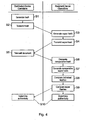
- Figure 4 provides a flow diagram representing the operation of the system described above.
- the left hand side of Figure 4 illustrates operations carried out by the distribution device 30, 40, 50, and the right hand side illustrates operations carried out by the recipient device 20.
- the method starts at step S 1 with the generation of a hash from the document desired to be eventually transmitted from the distribution device 30, 40, 50 to the recipient device 20.
- step S2 the hash is transmitted to the recipient device 20 over the communications network 10.
- various security protocols may be utilised to improve the security of the transmitted data during transfer.
- the hash will then be received by the recipient device 20.
- Step S3 only commences once a predetermined event has occurred. As described above, this event could be the expiration of a time limit, the receipt of all potential documents, or some other criteria. When the predetermined event occurs, no further hashes can be received as part of the current process. The recipient device 20 then generates, from the combination of all received hashes, a "hash of hashes" (or “super hash”) that fingerprints the entire set of received hashes.
- step S4 the super hash is transmitted to the distribution device 30, 40, 50.
- the receipt of the super hash by the distribution device 30, 40, 50 enables the operator of the distribution device to keep track of security, and may also act as a trigger for the actual document itself to be sent over the network 10, to the recipient device 20 (step S5).
- transmission steps S4 and S5 can be protected during transmission by security protocols.
- step S6 on receipt of the document itself, the recipient device 20 generates a comparative hash from the document. Comparative hashes will also be generated by the recipient device 20 for all other documents received in the current process from other distribution devices 30, 40, 50.
- step S7 when documents from all distribution devices 30, 40, 50 have been received and hashed by the recipient device 20, the recipient device 20 will generate a comparative super hash from all the comparative hashes.
- each comparative hash is compared to its corresponding original hash sent from the distribution device 30, 40, 50 to the recipient device 20 in step S2. If any changes were made to the document on the distribution device 30, 40, 50 between the original hash being generated and the document itself being hashed at the recipient device 20 then there will be a mismatch between the original and comparative hashes. An alteration could have taken place either on the distribution device 30, 40, 50 between steps S2 and S5, or on the recipient device 20 between steps S5 and S6.
- step S9 the comparative super hash is compared to the original super hash generated from the received hashes in step S3. If any changes have been made to any document, and/or if one or more document is missing as compared to the received hashes, then there will be a mismatch between the original and comparative super hashes.
- step S10 the system 1 identifies whether steps S8 and S9 have resulted in matches or mismatches of the hashes or super-hashes.
- This step may include both the distribution device 30, 40, 50 and the recipient device 20, with the effect that all parties have confidence and some degree of assurance in the document transmission process.
- only the recipient device 20 may perform the process step S10 confirming that the correct hash and super-hash values have been provided.
- the step S10 determines the authenticity of the transmitted documents. Where there is a mismatch, it is possible to identify the nature and the origin of the problem, and to take remedial action accordingly. This information can be made available either to the user of the recipient device 20 only, or to all or a subset of distribution device 30, 40, 50 users.
- FIG. 5 schematically illustrates, using a timeline, a tendering system implementing an embodiment of the present invention.
- the tender is opened, and the tendering system is open to receive bids. Bids can be made until the tender closes at time T2.
- a tendering server (recipient device 20) cannot determine the winning bid until all bids (in the form of documents) have been received at the tendering server, or until a certain time limit has been reached.
- the finalised bid would be sent to the tendering server 20 via a network 10. This process would lead to the vulnerabilities outlined above.
- a hash is generated from the document containing the bid and sent to the tendering server 20 between times T1 and T2. The document itself is not sent at this point.
- the hash can be signed with the bidder's private key and time stamped.
- the hash will be received by the tendering server 20 and stored. Hashes may also be received from any other participating bidders until time T2.
- the tendering server 20 At time T2, the tendering server 20 generates the super hash as described above with reference to Figure 2. The super hash can then be sent to each participating bidder, optionally signed with the private key of the tendering server 20 and time stamped. All bidders will have received the super hash by time T3. At time T3 each bidder will submit (either manually, or preferably automatically) the original document to the tendering server 20. The document could optionally be encrypted using the public key of the tendering server 20 and time stamped. Where encryption is used, the tendering server 20 will need to use its own private key to decrypt the received document.
- the tendering server will have received all original documents. These will be opened and stored to the tendering server 20, and hashes will be generated from each of these bid documents and compared to the corresponding original hashes received by the tendering server 20 between time T1 and T2. Further, a comparative super hash of all the comparative hashes will be generated. If the original finalised bids had been received from all bidders, then each comparative hash would match its corresponding original hash and the comparative super hash would be identical to the original super hash. If any one or more of the documents was not received, or if any one or more of the documents had been altered at the bidders terminal 30, 40, 50 between submitting the hash and submitting the document, then the two super hashes would not match. The result of this match or mismatch will be available to the user of the tendering server 20 and potentially to the bidders.
- remedial action can be taken.
- This remedial action could take a number of forms. For instance, where a final bid was not received (between T3 and T4), this could be the result of a transmission failure, either at the client end, the server end, or over the communications network 10. In such a case it may be appropriate to simply notify the user concerned and arrange for the document to be sent again, the validity of the re-sent document being easily ascertainable by virtue of the hash/super hash procedure described above. Alternatively, where the hash/super hash procedure identifies that a particular document has been altered, the user concerned can be identified and their document either disregarded, or the whole tendering process cancelled.
- tendering organisation may require interested parties to make payments such as tender document purchase fees and security/earnest money deposits (the latter against bids). These payments may be made either online (by integrating electronic payment mechanisms with these steps) or offline as per the choice of the tendering organisation.
- the recipient data processing apparatus may be required to implement other functions in order to support the tendering process. These include the provision of an on-line schedule of rates for tender submissions (S80), providing online maintenance of general rules (S82) as well as online vendor registration (S84).
- the purchase of the tender documents which provide more details of the tender, or the deposit of security funds at the time of bid submission may be effected by electronic-payment.
- electronic-payments would be effected as part of steps S56 and S60 respectively in Figure 6, although it will be appreciated that the payments could be effected in other ways. Indeed some organisations do not charge for providing tender documents.
- e-payments require a specific regulatory or legislative framework within a country or region in order to allow payment to be made electronically. Therefore, it will be appreciated that the electronic tender submission process illustrated in Figure 6 can be used without electronic payment whilst still benefiting from a substantially tamper-proof security. Nevertheless a combination of e-payment and e-tender submission can provide a complete tender submission system which can utilise the convenience and efficiency of the Internet.
- the offline software will generate the hash for that bid document.
- This hash value is then printed on the outside of the envelope so that it can be entered into the NT system by the buyer without the envelope being opened (which obviously is not allowed until the due date of opening of bids). Since the hash value may be approximately 50 characters long, there is a risk of data-entry error when buyers enter the hash. Therefore, buyers may be supplied with barcode scanners to easily scan and enter the hash that is printed on the outside of the envelope.
- the tamper-proof security system described covers several modes of tender submission. The choice is therefore ultimately with bidders regarding how they intend to use the system.
- a document distribution device 30 which comprises a barcode generator 110 and a means 120 for writing to a movable storage media, such as a disk 130.
- Documents are prepared on the document distribution device and written to the disk 130, and a hash is generated by the barcode generator 110 and printed in the form of a barcode 112 onto an envelope 140.
- the disk is placed into the envelope 140.
- the envelope 140 is then sealed, and sent to the recipient.
- the recipient using the recipient device 20, is able to scan the barcode on the envelope using the barcode reader 160.
- the envelope 140 itself will not be opened until a predetermined event has occurred, as described above.
- the disk 130 may be placed into a disk reader 150.
- the disk reader 150 is operable under control of the recipient device 20 to read the document.
- a hash can be generated from the document and compared to the barcode to ensure the validity of the document.
Landscapes
- Engineering & Computer Science (AREA)
- Computer Security & Cryptography (AREA)
- Computer Networks & Wireless Communication (AREA)
- Signal Processing (AREA)
- Information Transfer Between Computers (AREA)
- Storage Device Security (AREA)
- Financial Or Insurance-Related Operations Such As Payment And Settlement (AREA)
- Hardware Redundancy (AREA)
- Data Exchanges In Wide-Area Networks (AREA)
Claims (30)
- Datenverarbeitungssystem zum Verteilen und Authentifizieren von Dokumenten von einer Mehrzahl von Teilnehmern an eine Empfängerdatenverarbeitungseinrichtung (20), wobei das System aufweist,
eine Mehrzahl von Dokumentverteilungseinrichtungen (30, 40, 50) die jede so betreibbar ist, daß sie einen ursprünglichen Hash-Wert aus dem Inhalt einer elektronischen Datei, welche ein zu verteilendes Dokument enthält, erzeugt,
ein Datenübertragungsnetzwerk (10), das so betreibbar ist, daß es eine Einrichtung zum Übertragen jedes der ursprünglichen Hash-Werte an die Empfängerdatenverarbeitungseinrichtung (20) vor einem vorbestimmten Ereignis aufweist, wobei eine Empfängerdatenverarbeitungseinrichtung (20) so betreibbar ist,
daß sie die ursprünglichen Hash-Werte von jeder aus der Mehrzahl von Dokumentenverteilungseinrichtungen (30, 40, 50) über das Datenübertragungsnetzwerk (10) empfängt,
daß sie einen ursprünglichen Superhash-Wert aus der Mehrzahl der empfangenen ursprünglichen Hash-Werte erzeugt,
daß sie den ursprünglichen Superhash-Wert an die Mehrzahl von Dokumentverteilungseinrichtungen (30, 40, 50) überträgt,
wobei nach dem vorbestimmten Ereignis die Mehrzahl von Dokumentverteilungseinrichtungen (30, 40, 50) so betreibbar ist,
daß sie jede der entsprechenden elektronischen Dateien an die Empfängerdatenverarbeitsungseinrichtungen (20) überträgt, wobei die Empfängerdatenverarbeitungseinrichtung (20) so betreibbar ist,
daß sie einen Vergleichshash-Wert aus dem Inhalt der elektronischen Datei erzeugt, die das von jeder Dokumentverteilungseinrichtungen (30, 40, 50) empfangene Dokument enthält,
daß sie einen Vergleichssuperhash-Wert aus jedem der Vergleichshash-Werte erzeugt, daß sie den Vergleichssuperhash-Wert an jede der Dokumentverteilungseinrichtungen (30, 40, 50) überträgt und
daß sie bestimmt, ob die durch die Empfängerdatenverarbeitungseinrichtung (20) emfangenen Dokumente sich geändert haben oder nicht, durch einen Vergleich mit mindestens einem der ursprünglichen Hash-Werte und den Vergleichshash-Werten und dem Vergleichssuperhash-Wert und dem ursprünglichen Superhash-Wert. - Datenverarbeitungssystem nach Anspruch 1, dadurch gekennzeichnet, daß die Empfängerdatenverarbeitungseinrichtung (20) so betreibbar ist, daß sie ein Dokument identifiziert, das geändert wurde durch Vergleichen jedes ursprünglichen Hash-Wertes mit dem ist wie der ursprüngliche Hash-Wert, erfassen, daß das entsprechende Dokument geändert wurde.
- Datenverarbeitungssystem nach Anspruch 1 oder 2, dadurch gekennzeichnet, daß der ursprüngliche Hash-Wert, der durch eine Dokumentverteilungseinrichtung erzeugt wurde, verschlüsselt ist, wobei der Dokumentverteilungseinrichtung ein zugeordneter privater Schlüssel verwendet wird.
- Datenverarbeitungssystem nach Anspruch 2 oder 3, dadurch gekennzeichnet, daß der an die Dokumentverteilungseinrichtungen (30, 40, 50) zu übertragende Superhash-Wert verschlüsselt ist, wobei ein privater Schlüssel verwendet wird, der der Empfängerdatenverarbeitungseinrichtung (20) zu geordnet ist.
- Datenverarbeitungssystem nach einem der vorhergehenden Ansprüche, dadurch gekennzeichnet, daß die elektronische Datei, welche das zu verteilende Dokument enthält, verschlüsselt wird, wobei ein öffentlicher Schlüssel verwendet wird, der der Empfängerdatenverarbeitungseinrichtung (20) zugeordnet ist, bevor sie an die Empfängerdatenverarbeitungseinrichtung (20) übertragen wird.
- Datenverarbeitungssystem nach einem der vorhergehenden Ansprüche, dadurch gekennzeichnet, daß das vorbestimmte Ereignis den Ablauf einer Zeitbegrenzung an einem bestimmten Datum umfasst.
- Datenverarbeitungssystem nach einem der vorhergehenden Ansprüche, dadurch gekennzeichnet, daß die elektronische Datei durch ein Anwendungsprogramm erzeugt wird.
- Datenverarbeitungssystem nach Anspruch 7. dadurch gekennzeichnet, daß die elektronische Datei als ein Teil einer E-Mail übertragen wird.
- Datenverarbeitungssystem nach Anspruch 7, dadurch gekennzeichnet, daß die elektronische Datei auf einem Datenträger (130) mit einem Postdienst an die Empfängerdatenverarbeitungseinrichtung (20) übertragen wird.
- Datenverarbeitungssystem nach Anspruch 9, dadurch gekennzeichnet, daß der ursprüngliche Hash-Wert als ein Barcode (112) dargestellt ist, wobei der Barcode (112) in Verbindung mit dem Datenträger (130) angeordnet ist und die Empfängerdatenverarbeitungseinrichtung (20) eine Eingabeeinrichtung zum Reproduzieren der elektronischen Datei von dem Datenträger (130) aufweist und einen Barcode-Leser zum Reproduzieren des ursprünglichen Hash-Wertes von dem Barcode (112), der dem Datenträger (130) zugeordnet ist, wobei die elektronische Datei das in Verbindung mit dem Hash-Wert in einem Datenspeicher gespeicherte Dokument darstellt.
- Datenverarbeitungssystem nach Anspruch 7, dadurch gekennzeichnet, daß das Dokument von einem Online Browser erzeugt wird, wobei das Datenübertragungsnetzwerk (10) das Intranet oder das Internet einschließt.
- Dokumentverteilungseinrichtung zum Verteilen von Dokumenten an einer Empfängerdatenverarbeitungseinrichtung (20) über ein Datenübertragungsnetzwerk (10), wobei die Dokumentverteilungseinrichtung aufweist,
eine Datenverarbeitungseinrichtung (54, 56), die so betreibbar ist, daß sie Anwendungssoftware zum Erzeugen eines elektronischen Dokuments verarbeitet und
das sie einen ürsprünglichen Hash-Wert aus dem elektronischen Dokument erzeugt und
eine Übertragungsschnittstelle (52) die so betreibbar ist, daß sie eine Einrichtung zum Übertragen des ursprünlichen Hash-Wertes an eine Empfängerdatenverarbeitungseinrichtung (20) vor einem vorbestimmten Ereignis über ein Datenübertragungsnetzwerk (10) bereitstellt und nach dem vorbestimmten Ereignis zum Übertragen elektronischen Dokuments an die Empfängerdatenverarbeitungseinrichtung (20) über das Datenüvertragungsnetzwerk (10),
wobei die Datenverarbeitungseinrichtung (54, 56) in Verbindung mit der Übertragungsschnittstelle (52) so betreibbar ist, daß sie einen ursprünglichen Superhash-Wert, der von der Empfängerdatenverarbeitungseinrichtung (20) aus einer Kombination des ursprünglichen Hash-Wertes, der von der Datenverarbeitungseinrichtung (54, 56) übertragen wurde und einem Hash-Wert, der von mindestens einer Dokumentverteilungsvorrichtung erzeugt wurde, von der Empfängerdatenverarbeitungseinrichtung (20) empfängt und so, daß sie einen Vergleichssuperhash-Wert empfängt, der von der Empfängerdatenverarbeitungseinrichtung (20) aus dem von der Dokumentverteilungseinrichtung empfangenen Dokument und mindestens einem anderen elektronischen Dokument, daß von der mindestens einen anderen Dokumentverteilungseinrichtung empfangen wurde, erzeugt wurde. - Dokumentverteilungseinrichtung nach Anspruch 12, dadurch gekennzeichnet, daß die Datenverarbeitungseinrichtung (54, 56) so betreibar ist,
daß sie den ursprünglichen Hash-Wert verschlüsselt, wobei ein der Dokumentverteilungseinrichtung zugeordneter privater Schlüssel verwendet wird. - Dokumentverteilungseinrichtung nach Anspruch 13, dadurch gekennzeichnet, daß die Datenverarbeitungseinrichtung (54, 56) so betreibbar ist,
daß sie den von der Empfängerdatenverabeitungseinrichtung (20) empfangenen Superhash-Wert entschlüsselt, wobei ein der Empfängerdatenverarbeitungseinrichtung (20) zugeordneter privater Schlüssel verwendet wird. - Dokumentverteilungseinrichtung nach einem der Ansprüche 12 bis 14, dadurch gekenntzeichnet, daß die Datenverarbeitungseinrichtung (54, 56) so betreibbar ist,
daß sie die elektronische Datei, welche das von der Anwendungssoftware erzeugte Dokument enthält, verschlüsselt, wobei der der Dokumentverteilungsvorrichtung zugeordnete private Schlüssel verwendet wird, bevor sie an die Empfängerdatenverarbeitungseinrichtung (20) übertragen wird. - Dokumentverteilungseinrichtung nach Anspruch 15, dadurch gekennzeichnet, daß die Übertragungsschnittstelle (52) eine Aufnahmeeinrichtung (120) aufweist, die so betreibbar ist, daß sie die elektronische Datei auf einem Datenträger (130) aufnimmt und einen Barcode-Erzeuger(110) der so betreibbar ist, daß er den ursprünglichen Hash-Wert als einen Barcode (112) darstellt und eine Anordnung zum Zuordnen des Barcodes zu dem Datenträger.
- Dokumentverteilungseinrichtung nach einem der Ansprüche 12 bis 16, dadurch gekennzeichnet, daß die Anwendungssoftware einen Online Webbrowser, wobei das Dokument von dem Online Browser erzeugt wird, bereitstellt, wobei das Datenkommunikationsnetzwerk (10) das Intranet oder das Internet einschließt.
- Empfängerdatenverarbeitungseinrichtung (20) zum Bereitstellen einer Einrichtung zum Authentifizieren von Dokumenten, die von den Dokumentverteilungseinrichtungen (30, 40, 50) über ein Datenübertragungsnetzwerk (10) empfangen wurden, wobei Empfängerdatenverarbeitungseinrichtung (20) aufweist,
eine Übertragungsschnittstelle (22), die so betreibbar ist, daß sie die ursprünglichen Hash-Werte von der Dokumentverteilungseinrichtung (30, 40, 50) über das Datenübertragungsnetzwerk (10) vor einem vorbestimmten Ereignis empfängt und
eine Datenverarbeitungseinrichtung (24), welche einen Hashing-Prozessor (28) aufweist, der so betreibbar ist, daß er einen ursprünglichen Superhash-Wert aus der Mehrzahl der empfangenen ursprünglichen Hash-Werte erzeugt, daß er den ursprüngliche Superhash-Wert an jede der Dokumentverteilungeinrichtungen (30, 40, 50) überträgt, wobei die Datenverarbeitungseinrichtung (24) in Verbindung mit der Übertragungsschnittstelle (22) so betreibbar ist,
daß sie nach dem vorbestimmten Ereignis die entsprechenden elektronischen Dateien von den Dokumentverteilungseinrichtungen (30, 40, 50) empfängt,
daß sie einen Vergleichshash-Wert aus dem Inhalt der elektronischen Datei, die das von jeder der Verteilungseinrichtung (30, 40, 50) empfangene Dokument enthält, erzeugt,
daß sie aus jedem der Vergleichshash-Werte einen Vergleichssuperhash-Wert erzeugt, wobei der Hashing-Prozessor (28) verwendet wird,
daß sie den Vergleichssuperhash-Wert an die Dokumentverteilungseinrichtung (30, 40, 50) überträgt und
das sie bestimmt, ob die durch die Empfängerdatenverarbeitungseinrichtung (20) empfangenen Dokumente geändert wurden oder nicht, durch einen Vergleich mindestens eines der ursprünglichen Hash-Werte und der Vergleichshash-Werte und des Vergleichssuperhash-Wertes und des ursprünglichen Superhash-Wertes. - Empfängerdatenverarbeitungseinrichtung nach Anspruch 18, dadurch gekennzeichnet, daß die Datenverarbeitungseinrichtung (24) so betreibbar ist, daß sie ein Dokument identifiziert, das geändert wurde, durch Vergleichen jedes ursprünglichen Hash-Wertes mit dem entsprechenden Vergleichshash-Wert und wenn der Vergleichshash-Wert nicht der Gleiche ist wie der ursprüngliche Hash-Wert, erfassen, daß das entsprechende Dokument geändert wurde.
- Empfängerdatenverarbeitungseinrichtung nach Anspruch 18 oder 19, dadurch gekenntzeichnet, daß die von der Dokumentverteilungeinrichtung (30, 40, 50) empfangenen ursprünglichen Hash-Werte verschlüsselt wurden, wobei ein jeder Dokumentverteilungseinrichtung zugeordneter privater Schlüssel verwendet wurde, wobei die Empfängerdatenverarbeitungseinrichtung (20) einen Verschlüsselungsprozessor (34) aufweist, der so betreibbar ist, daß er die ursprünglichen Hash-Werte entschlüsselt, wobei ein der Dokumentverteilungseinrichtung zugeordneter öffentlicher Schlüssel verwendet wird.
- Empfängerdatenverarbeitungseinrichtung nach Anspruch (20), dadurch gekennzeichnet, daß der Verschlüsselungsprozessor (34) so betreibbar ist, daß er den an die Dokumentverteilungseinrichtungen (30, 40, 50) zu übertragenden ursprünglichen Superhash-Wert und den Vergleichsuperhash-Wert verschlüsselt.
- Empfängerdatenverarbeitungseinrichtung nach einem der Ansprüche 18 bis 21, dadurch gekennzeichnet, daß der Verschlüsselungsprozessor (34) so betreibbar ist, daß er die elektronische Datei, welche das verteilte Dokument darstellt, entschlüsselt, wobei ein den Dokumentverteilungseinrichtungen (30, 40, 50) zugeordneter öffentlicher Schlüssel verwendet wird.
- Empfängerdatenverarbeitungseinrichtung nach einem der Ansprüche 18 bis 22 mit einer Eingabeeinrichtung (150) zum Reproduzieren der elektronischen Datei aus dem Datenträger (130) und einem Barcode-Leser (160) zum Reproduzieren des ursprünglichen Hash-Wertes aus dem dem Datenträger (130) zugeordneten Barcode (112), wobei die elektronische Datei das in Verbindung mit dem Hash-Wert in einem Datenspeicher gespeicherte Dokument darstellt.
- Empfängerdatenverarbeitungseinrichtung nach einem der Ansprüche 18 bis 23, dadurch gekennzeichnet, daß die Übertragungsschnittstelle (22) eine Online-Browser-Einrichtung zum Erzeugen des Dokuments aufweist, wobei das Datenübertragungsnetzwerk (10) das Intranet oder das Internet einschließt.
- Datenverarbeitungsverfahren zum Verteilen von Dokumenten von einer Mehrzahl von Teilnehmern an eine Empfängerdatenverarbeitungseinrichtung, wobei das Verfahren aufweist,
Erzeugen eines ursprünglichen Superhash-Wertes für jeden aus der Mehrzahl von Teilnehmern aus dem Inhalt einer elektronischen Datei, welche ein zu verteilendes Dokument darstellt,
Übertragen des ursprünglichen Hash-Wertes über ein Datenübertragungsnetzwerk an eine Empfängerdatenverarbeitungseinrichtung vor einem vorbestimmten Ereignis,
Erzeugen eines ursprünglichen Superhash-Wertes aus der Mehrzahl der empfangenen ursprünglichen Hash-Werte an der Empfängerdatenverarbeitungseinrichtung und
Übertragen des ursprünglichen Superhash-Wertes an die Mehrzahl von Dokumentverteilungseinrichtungen und
nach dem vorbestimmten Ereignis,
Übertragen jeder der entsprechenden elektronischen Dateien von der Mehrzahl von Dokumentverteilungseinrichtungen an die Empfängerdatenverarbeitungseinrichtung,
Erzeugen eines Vergleichshash-Werts aus dem Inhalt der elektronischen Datei, welche das von jeder der Verteilungseinrichtungen empfangene Dokument enthält, an der Empfängerdatenverarbeitungseinrichtung,
Erzeugen eines Vergleichssuperhash-Wertes aus jedem der Vergleichshash-Werte und
Bestimmen, ob sich die von der Empfängerdatenverarbeitungseinrichtung empfangenen Dokumente geändert haben oder nicht, durch einem Vergleich mindestens eines der ursprünglichen Hash-Werte und der Vergleichshash-Werte und des Vergleichssuperhash-Wertes und des ursprünglichen Superhash-Wertes. - Datenverarbeitsungsverfahren nach Anspruch 25, mit Identifizieren eines Dokuments, das sich geändert hat, durch Vergleichen jedes ursprünglichen Hash-Wertes mit dem entsprechenden Vergleichshash-Wert und wenn der Vergleichshash-Wert nicht der Gleiche ist wie der ursprüngliche Hash-Wert, Erfassen, daß das entsprechende Dokument sich geändert hat.
- Verfahren zum Verteilen von Dokumenten an eine Empfängerdatenverarbeitungseinrichtung über ein Datenübertragungsnetzwerk, wobei das Verfahren aufweist,
Erzeugen eines elektronischen Dokuments und
Erzeugen eines ursprünglichen Hash-Wertes aus dem elektronischen Dokument und
Übertragen des ursprünglichen Hash-Wertes an eine Empfängerdatenverarbeitungseinrichtung vor einem vorbestimmten Ereignis über ein Datenübertragungsnetzwerk und nach dem vorbestimmten Ereignis, Übertragen des elektronischen Dokuments an die Empfängerdatenverarbeitungseinrichtung über das Datenübertragungsnetzwerk,
Empfangen eines ursprünglichen Superhash-Wertes von der Empfängerdatenverarbeitungseinrichtung, der von der Empfängerdatenverarbeitungseinrichtung aus einer Kombination des von der der Datenverarbeitungseinrichtung übertragenen ursprünglichen Hash-Wertes und eines Hash-Wertes, der von mindestens einer anderen Dokumentverteilungseinrichtung erzeugt wurde, und
Empfangen eines Vergleichssuperhash-Wertes, der von der Empfängerdatenverarbeitungseinrichtung aus dem von der Dokumentverteilungseinrichtung empfangenen Dokument und mindestens einem anderen elektronischen Dokument, das von der mindestens einen anderen Dokumentverteilungseinrichtung empfangen wurde, erzeugt wurde. - Verfahren zum Authentifizieren von Dokumenten, die von dem Dokumentverteilungseinrichtungen über ein Datenübertragungsnetzwerk empfangen wurden, wobei das Verfahren aufweist,
Empfangen eines urspünglichen Hash-Wertes von den Dokumentverteilungseinrichtungen über das Datenübertragungsnetzwerk vor einem vorbestimmten Ereignis,
Erzeugen eines ursprünglichen Superhash-Wertes aus der Mehrzahl der empfangenen ursprünglichen Hash-Werte und
Übertragen des ursprünglichen Superhash-Wertes an jede der Dokumentverteilungseinrichtungen,
nach dem vorbestimmten Ereignis, Empfangen entsprechender elektronischer Dateien von Dokumentverteilungseinrichtungen und
Erzeugen eines Vergleichshash-Wertes aus dem Inhalt der elektronischen Datei, welche das von jeder der Verteilungseinrichtungen empfangene Dokument enthält,
Übertragen des Vergleichssuperhash-Wertes an die Dokumentverteilungseinrichtungen und
Bestimmen, ob sich die von der Empfängerdatenverarbeitungseinrichtung empfangenen Dokumente geändert haben oder nicht, durch aus einen Vergleich von mindestens einem der ursprünglichen Hash-Werte und des Vergleichshash-Wertes und des Vergleichsuperhash-Wertes und des ursprünglichen Superhash-Wertes. - Computerprogramm, welches von einem Computer ausführbare Befehle aufweist, welche, wenn sie in einen Computer geladen und ausgeführt werden, bewirken, daß der Computer das Verfahren gemäß einem der Ansprüche 25 bis 28 ausführt.
- Computerprogramm, das computerausführbare Befehle bereitstellt, die, wenn sie in eine Datenverarbeitungseinrichtung geladen und ausgeführt werden, bewirken, daß die Einrichtung so arbeitet wie eine Dokumentverteilungseinrichtung nach einem der Ansprüche 12 bis 17 oder eine Empfängerdatenverarbeitungseinrichtung nach einem der Ansprüche 18 bis 24.
Applications Claiming Priority (2)
| Application Number | Priority Date | Filing Date | Title |
|---|---|---|---|
| GB0308422A GB2400463B (en) | 2003-04-11 | 2003-04-11 | Data processing apparatus and method for distributing and authenticating electronic documents |
| PCT/GB2004/001549 WO2004091135A1 (en) | 2003-04-11 | 2004-04-08 | System and method for authenticating documents |
Publications (2)
| Publication Number | Publication Date |
|---|---|
| EP1614251A1 EP1614251A1 (de) | 2006-01-11 |
| EP1614251B1 true EP1614251B1 (de) | 2007-06-27 |
Family
ID=9956641
Family Applications (1)
| Application Number | Title | Priority Date | Filing Date |
|---|---|---|---|
| EP04726559A Expired - Lifetime EP1614251B1 (de) | 2003-04-11 | 2004-04-08 | System und verfahren zum authentifizieren von dokumenten |
Country Status (6)
| Country | Link |
|---|---|
| US (2) | US8090950B2 (de) |
| EP (1) | EP1614251B1 (de) |
| AT (1) | ATE366009T1 (de) |
| DE (1) | DE602004007254T2 (de) |
| GB (1) | GB2400463B (de) |
| WO (1) | WO2004091135A1 (de) |
Families Citing this family (32)
| Publication number | Priority date | Publication date | Assignee | Title |
|---|---|---|---|---|
| US8984636B2 (en) | 2005-07-29 | 2015-03-17 | Bit9, Inc. | Content extractor and analysis system |
| US7895651B2 (en) | 2005-07-29 | 2011-02-22 | Bit 9, Inc. | Content tracking in a network security system |
| US8272058B2 (en) | 2005-07-29 | 2012-09-18 | Bit 9, Inc. | Centralized timed analysis in a network security system |
| EP1964015A1 (de) * | 2005-12-22 | 2008-09-03 | Digiprove Limited | Bestimmen des existenz- und besitzbeweises von digitalem inhalt |
| US20090031139A1 (en) * | 2007-07-27 | 2009-01-29 | Mohammed Alawi Geoffrey | System and Method for Electronic Certification and Authentification |
| CN102187366B (zh) * | 2008-10-14 | 2015-01-28 | 皇家飞利浦电子股份有限公司 | 内容项标识符 |
| US20120248182A1 (en) * | 2011-04-04 | 2012-10-04 | Palo Alto Research Center Incorporated | Method for associating a printable optical code with an email message |
| US8799675B2 (en) | 2012-01-05 | 2014-08-05 | House Of Development Llc | System and method for electronic certification and authentication of data |
| US8880899B1 (en) * | 2012-04-26 | 2014-11-04 | Google Inc. | Systems and methods for facilitating flip-resistant media fingerprinting |
| US20140058875A1 (en) * | 2012-08-21 | 2014-02-27 | Biddocs Online, Inc. | Methods for facilitating an electronic signature and devices thereof |
| US20220391368A1 (en) * | 2014-05-05 | 2022-12-08 | Aveva Software, Llc | Cryptography system for using associated values stored in different locations to encode and decode data |
| KR101772554B1 (ko) | 2016-02-02 | 2017-08-30 | 주식회사 코인플러그 | 파일에 대한 노터리 서비스를 제공하고 상기 노터리 서비스를 사용하여 기록된 파일에 대한 검증을 수행하는 방법 및 서버 |
| US10419225B2 (en) | 2017-01-30 | 2019-09-17 | Factom, Inc. | Validating documents via blockchain |
| US10411897B2 (en) | 2017-02-17 | 2019-09-10 | Factom, Inc. | Secret sharing via blockchains |
| US20180260888A1 (en) * | 2017-03-08 | 2018-09-13 | Factom | Validating Mortgage Documents |
| US10817873B2 (en) | 2017-03-22 | 2020-10-27 | Factom, Inc. | Auditing of electronic documents |
| US10270599B2 (en) | 2017-04-27 | 2019-04-23 | Factom, Inc. | Data reproducibility using blockchains |
| US10873457B1 (en) | 2017-09-13 | 2020-12-22 | Inveniam.io, LLC | Data structure having internal self-references suitable for immutably representing and verifying data generated over time |
| US11170366B2 (en) | 2018-05-18 | 2021-11-09 | Inveniam Capital Partners, Inc. | Private blockchain services |
| US11134120B2 (en) | 2018-05-18 | 2021-09-28 | Inveniam Capital Partners, Inc. | Load balancing in blockchain environments |
| US10783164B2 (en) | 2018-05-18 | 2020-09-22 | Factom, Inc. | Import and export in blockchain environments |
| US11989208B2 (en) | 2018-08-06 | 2024-05-21 | Inveniam Capital Partners, Inc. | Transactional sharding of blockchain transactions |
| US11328290B2 (en) | 2018-08-06 | 2022-05-10 | Inveniam Capital Partners, Inc. | Stable cryptocurrency coinage |
| US11348098B2 (en) | 2018-08-06 | 2022-05-31 | Inveniam Capital Partners, Inc. | Decisional architectures in blockchain environments |
| US11843675B2 (en) * | 2018-10-10 | 2023-12-12 | Nec Corporation | Method and system for synchronizing user identities |
| US11343075B2 (en) | 2020-01-17 | 2022-05-24 | Inveniam Capital Partners, Inc. | RAM hashing in blockchain environments |
| US11538070B2 (en) * | 2020-04-13 | 2022-12-27 | Linkplicity Gmbh | Blockchain-based system and method for peer-to-peer online advertising auction |
| US12008526B2 (en) | 2021-03-26 | 2024-06-11 | Inveniam Capital Partners, Inc. | Computer system and method for programmatic collateralization services |
| US12597066B2 (en) | 2021-03-26 | 2026-04-07 | Inveniam Capital Partners, Inc. | Federated data room server and method for use in blockchain environments |
| US12137179B2 (en) | 2021-06-19 | 2024-11-05 | Inveniam Capital Partners, Inc. | Systems and methods for processing blockchain transactions |
| US12007972B2 (en) | 2021-06-19 | 2024-06-11 | Inveniam Capital Partners, Inc. | Systems and methods for processing blockchain transactions |
| CN116187956B (zh) * | 2023-04-25 | 2023-07-18 | 上海百通项目管理咨询有限公司 | 一种招标文件生成方法及系统 |
Family Cites Families (26)
| Publication number | Priority date | Publication date | Assignee | Title |
|---|---|---|---|---|
| US5136647A (en) * | 1990-08-02 | 1992-08-04 | Bell Communications Research, Inc. | Method for secure time-stamping of digital documents |
| CA2203779C (en) * | 1994-10-28 | 2001-11-20 | Stuart A. Haber | Digital document authentication system for providing a certificate which authenticates and uniquely identifies a document |
| US5748738A (en) * | 1995-01-17 | 1998-05-05 | Document Authentication Systems, Inc. | System and method for electronic transmission, storage and retrieval of authenticated documents |
| US5619571A (en) * | 1995-06-01 | 1997-04-08 | Sandstrom; Brent B. | Method for securely storing electronic records |
| US6188766B1 (en) * | 1997-03-05 | 2001-02-13 | Cryptography Research, Inc. | Apparatus and method for confirming, timestamping, and archiving printer and telecopier transmissions |
| US6584565B1 (en) * | 1997-07-15 | 2003-06-24 | Hewlett-Packard Development Company, L.P. | Method and apparatus for long term verification of digital signatures |
| US6487301B1 (en) * | 1998-04-30 | 2002-11-26 | Mediasec Technologies Llc | Digital authentication with digital and analog documents |
| US6226618B1 (en) * | 1998-08-13 | 2001-05-01 | International Business Machines Corporation | Electronic content delivery system |
| WO2000011619A1 (en) * | 1998-08-21 | 2000-03-02 | Peha John M | Methods for generating a verifiable audit record and performing an audit |
| US6463535B1 (en) * | 1998-10-05 | 2002-10-08 | Intel Corporation | System and method for verifying the integrity and authorization of software before execution in a local platform |
| US6510513B1 (en) * | 1999-01-13 | 2003-01-21 | Microsoft Corporation | Security services and policy enforcement for electronic data |
| EP1056010A1 (de) * | 1999-05-28 | 2000-11-29 | Hewlett-Packard Company | Datenintegritätsüberwachung in einer vertrauten Rechnereinheit |
| US6785815B1 (en) * | 1999-06-08 | 2004-08-31 | Intertrust Technologies Corp. | Methods and systems for encoding and protecting data using digital signature and watermarking techniques |
| US6959384B1 (en) * | 1999-12-14 | 2005-10-25 | Intertrust Technologies Corporation | Systems and methods for authenticating and protecting the integrity of data streams and other data |
| US6948069B1 (en) * | 1999-07-02 | 2005-09-20 | Time Certain, Llc | Method and system for determining and maintaining trust in digital image files with certifiable time |
| CA2317139C (en) * | 1999-09-01 | 2006-08-08 | Nippon Telegraph And Telephone Corporation | Folder type time stamping system and distributed time stamping system |
| US7143144B2 (en) * | 1999-11-30 | 2006-11-28 | Ricoh Company, Ltd. | System, method and computer readable medium for certifying release of electronic information on an internet |
| US7519824B1 (en) * | 1999-12-10 | 2009-04-14 | International Business Machines Corporation | Time stamping method employing multiple receipts linked by a nonce |
| GB2366470B (en) * | 2000-08-25 | 2005-07-20 | Hewlett Packard Co | Improvements relating to document transmission techniques iv |
| US7043637B2 (en) * | 2001-03-21 | 2006-05-09 | Microsoft Corporation | On-disk file format for a serverless distributed file system |
| US7181017B1 (en) * | 2001-03-23 | 2007-02-20 | David Felsher | System and method for secure three-party communications |
| EP1396142B8 (de) * | 2001-06-12 | 2005-06-08 | International Business Machines Corporation | Verfahren zum authentifizieren mehrerer mit einem textdokument verbundener dateien |
| DE10136608B4 (de) * | 2001-07-16 | 2005-12-08 | Francotyp-Postalia Ag & Co. Kg | Verfahren und System zur Echtzeitaufzeichnung mit Sicherheitsmodul |
| JP2003244139A (ja) * | 2002-02-20 | 2003-08-29 | Amano Corp | 電子文書に対するタイムスタンプ押印システム、及び、そのプログラム媒体 |
| JP4078454B2 (ja) * | 2002-03-22 | 2008-04-23 | 株式会社日立製作所 | ディジタル署名管理方法とディジタル署名処理装置およびプログラムと記録媒体 |
| US7636848B2 (en) * | 2003-11-27 | 2009-12-22 | Telecom Italia S.P.A. | Method, system, network and computer program product for securing administrative transactions over a network |
-
2003
- 2003-04-11 GB GB0308422A patent/GB2400463B/en not_active Expired - Fee Related
-
2004
- 2004-04-08 DE DE602004007254T patent/DE602004007254T2/de not_active Expired - Lifetime
- 2004-04-08 US US10/553,067 patent/US8090950B2/en not_active Expired - Fee Related
- 2004-04-08 EP EP04726559A patent/EP1614251B1/de not_active Expired - Lifetime
- 2004-04-08 AT AT04726559T patent/ATE366009T1/de not_active IP Right Cessation
- 2004-04-08 WO PCT/GB2004/001549 patent/WO2004091135A1/en not_active Ceased
-
2011
- 2011-12-22 US US13/335,493 patent/US8782422B2/en not_active Expired - Fee Related
Non-Patent Citations (1)
| Title |
|---|
| None * |
Also Published As
| Publication number | Publication date |
|---|---|
| US20080028439A1 (en) | 2008-01-31 |
| GB2400463A (en) | 2004-10-13 |
| GB2400463B (en) | 2005-05-25 |
| US20120096276A1 (en) | 2012-04-19 |
| GB0308422D0 (en) | 2003-05-21 |
| WO2004091135A1 (en) | 2004-10-21 |
| US8090950B2 (en) | 2012-01-03 |
| ATE366009T1 (de) | 2007-07-15 |
| DE602004007254T2 (de) | 2008-02-28 |
| DE602004007254D1 (de) | 2007-08-09 |
| US8782422B2 (en) | 2014-07-15 |
| EP1614251A1 (de) | 2006-01-11 |
Similar Documents
| Publication | Publication Date | Title |
|---|---|---|
| US8782422B2 (en) | System and method for authenticating documents | |
| US12299681B2 (en) | Systems and methods to validate transactions for inclusion in electronic blockchains | |
| US6363365B1 (en) | Mechanism for secure tendering in an open electronic network | |
| EP3763098B1 (de) | Verfahren und systeme zur steuerung des zugriffs auf eine blockchain und der integrität von ressourcen davon | |
| US9672514B2 (en) | Systems and methods for conducting transactions and communications using a trusted third party | |
| JP4686092B2 (ja) | 認証済みの電子オリジナル・ドキュメントの電子的伝送、格納、および取り出しのためのシステムおよび方法 | |
| US7167985B2 (en) | System and method for providing trusted browser verification | |
| AU2001287164B2 (en) | Method and system for using electronic communications for an electronic contact | |
| EP3928276A1 (de) | Vertrauenswürdige tokenisierte transaktionen in einem blockchain-system | |
| US20020091782A1 (en) | Method for certifying and unifying delivery of electronic packages | |
| Horne et al. | Escrow services and incentives in peer-to-peer networks | |
| US20020046335A1 (en) | System and method for providing commitment security among users in a computer network | |
| WO2020157708A2 (en) | Point-to-point distributed decentralized system | |
| US20080262970A1 (en) | System and method of electronic information delivery | |
| US20090144382A1 (en) | Method for certifying and unifying delivery of electronic packages | |
| AU2001277943A1 (en) | Digital receipt for a transaction | |
| WO2002011091A1 (en) | Digital receipt for a transaction | |
| JP2001216198A (ja) | 利用許可証発行装置および方法 | |
| US20020116610A1 (en) | Customizable digital certificates | |
| Kalvenes et al. | Design of robust business-to-business electronic marketplaces with guaranteed privacy | |
| JP4028304B2 (ja) | 電子契約システム | |
| US20080167983A1 (en) | Systems and Methods for Preventing Attacks on Online Auction Sales | |
| CN114881650B (zh) | 基于tee的隐私保护分布式账本审计方法及系统 | |
| US20240412281A1 (en) | Bidding system and method based on blockchain technology | |
| JP2001147984A (ja) | 電子投票方式、及び方法 |
Legal Events
| Date | Code | Title | Description |
|---|---|---|---|
| PUAI | Public reference made under article 153(3) epc to a published international application that has entered the european phase |
Free format text: ORIGINAL CODE: 0009012 |
|
| 17P | Request for examination filed |
Effective date: 20051020 |
|
| AK | Designated contracting states |
Kind code of ref document: A1 Designated state(s): AT BE BG CH CY CZ DE DK EE ES FI FR GB GR HU IE IT LI LU MC NL PL PT RO SE SI SK TR |
|
| AX | Request for extension of the european patent |
Extension state: AL HR LT LV MK |
|
| DAX | Request for extension of the european patent (deleted) | ||
| GRAP | Despatch of communication of intention to grant a patent |
Free format text: ORIGINAL CODE: EPIDOSNIGR1 |
|
| GRAJ | Information related to disapproval of communication of intention to grant by the applicant or resumption of examination proceedings by the epo deleted |
Free format text: ORIGINAL CODE: EPIDOSDIGR1 |
|
| GRAP | Despatch of communication of intention to grant a patent |
Free format text: ORIGINAL CODE: EPIDOSNIGR1 |
|
| RIN1 | Information on inventor provided before grant (corrected) |
Inventor name: SHEVADE, RAVINDRA WAMAN |
|
| GRAS | Grant fee paid |
Free format text: ORIGINAL CODE: EPIDOSNIGR3 |
|
| RBV | Designated contracting states (corrected) |
Designated state(s): AT BE BG CH CY CZ DE DK EE ES FI FR GR HU IE IT LI LU MC NL PL PT RO SE SI SK TR |
|
| GRAA | (expected) grant |
Free format text: ORIGINAL CODE: 0009210 |
|
| AK | Designated contracting states |
Kind code of ref document: B1 Designated state(s): AT BE BG CH CY CZ DE DK EE ES FI FR GR HU IE IT LI LU MC NL PL PT RO SE SI SK TR |
|
| REG | Reference to a national code |
Ref country code: CH Ref legal event code: EP |
|
| REG | Reference to a national code |
Ref country code: IE Ref legal event code: FG4D |
|
| REF | Corresponds to: |
Ref document number: 602004007254 Country of ref document: DE Date of ref document: 20070809 Kind code of ref document: P |
|
| PG25 | Lapsed in a contracting state [announced via postgrant information from national office to epo] |
Ref country code: SE Free format text: LAPSE BECAUSE OF FAILURE TO SUBMIT A TRANSLATION OF THE DESCRIPTION OR TO PAY THE FEE WITHIN THE PRESCRIBED TIME-LIMIT Effective date: 20070927 |
|
| ET | Fr: translation filed | ||
| PG25 | Lapsed in a contracting state [announced via postgrant information from national office to epo] |
Ref country code: PL Free format text: LAPSE BECAUSE OF FAILURE TO SUBMIT A TRANSLATION OF THE DESCRIPTION OR TO PAY THE FEE WITHIN THE PRESCRIBED TIME-LIMIT Effective date: 20070627 Ref country code: AT Free format text: LAPSE BECAUSE OF FAILURE TO SUBMIT A TRANSLATION OF THE DESCRIPTION OR TO PAY THE FEE WITHIN THE PRESCRIBED TIME-LIMIT Effective date: 20070627 |
|
| NLV1 | Nl: lapsed or annulled due to failure to fulfill the requirements of art. 29p and 29m of the patents act | ||
| REG | Reference to a national code |
Ref country code: CH Ref legal event code: PL |
|
| PG25 | Lapsed in a contracting state [announced via postgrant information from national office to epo] |
Ref country code: SI Free format text: LAPSE BECAUSE OF FAILURE TO SUBMIT A TRANSLATION OF THE DESCRIPTION OR TO PAY THE FEE WITHIN THE PRESCRIBED TIME-LIMIT Effective date: 20070627 Ref country code: CZ Free format text: LAPSE BECAUSE OF FAILURE TO SUBMIT A TRANSLATION OF THE DESCRIPTION OR TO PAY THE FEE WITHIN THE PRESCRIBED TIME-LIMIT Effective date: 20070627 Ref country code: ES Free format text: LAPSE BECAUSE OF FAILURE TO SUBMIT A TRANSLATION OF THE DESCRIPTION OR TO PAY THE FEE WITHIN THE PRESCRIBED TIME-LIMIT Effective date: 20071008 Ref country code: NL Free format text: LAPSE BECAUSE OF FAILURE TO SUBMIT A TRANSLATION OF THE DESCRIPTION OR TO PAY THE FEE WITHIN THE PRESCRIBED TIME-LIMIT Effective date: 20070627 Ref country code: BG Free format text: LAPSE BECAUSE OF FAILURE TO SUBMIT A TRANSLATION OF THE DESCRIPTION OR TO PAY THE FEE WITHIN THE PRESCRIBED TIME-LIMIT Effective date: 20070927 Ref country code: PT Free format text: LAPSE BECAUSE OF FAILURE TO SUBMIT A TRANSLATION OF THE DESCRIPTION OR TO PAY THE FEE WITHIN THE PRESCRIBED TIME-LIMIT Effective date: 20071127 |
|
| PG25 | Lapsed in a contracting state [announced via postgrant information from national office to epo] |
Ref country code: LI Free format text: LAPSE BECAUSE OF FAILURE TO SUBMIT A TRANSLATION OF THE DESCRIPTION OR TO PAY THE FEE WITHIN THE PRESCRIBED TIME-LIMIT Effective date: 20070627 Ref country code: CH Free format text: LAPSE BECAUSE OF FAILURE TO SUBMIT A TRANSLATION OF THE DESCRIPTION OR TO PAY THE FEE WITHIN THE PRESCRIBED TIME-LIMIT Effective date: 20070627 Ref country code: SK Free format text: LAPSE BECAUSE OF FAILURE TO SUBMIT A TRANSLATION OF THE DESCRIPTION OR TO PAY THE FEE WITHIN THE PRESCRIBED TIME-LIMIT Effective date: 20070627 |
|
| PG25 | Lapsed in a contracting state [announced via postgrant information from national office to epo] |
Ref country code: DK Free format text: LAPSE BECAUSE OF FAILURE TO SUBMIT A TRANSLATION OF THE DESCRIPTION OR TO PAY THE FEE WITHIN THE PRESCRIBED TIME-LIMIT Effective date: 20070627 Ref country code: GR Free format text: LAPSE BECAUSE OF FAILURE TO SUBMIT A TRANSLATION OF THE DESCRIPTION OR TO PAY THE FEE WITHIN THE PRESCRIBED TIME-LIMIT Effective date: 20070928 Ref country code: IT Free format text: LAPSE BECAUSE OF FAILURE TO SUBMIT A TRANSLATION OF THE DESCRIPTION OR TO PAY THE FEE WITHIN THE PRESCRIBED TIME-LIMIT Effective date: 20070627 |
|
| PLBE | No opposition filed within time limit |
Free format text: ORIGINAL CODE: 0009261 |
|
| STAA | Information on the status of an ep patent application or granted ep patent |
Free format text: STATUS: NO OPPOSITION FILED WITHIN TIME LIMIT |
|
| PG25 | Lapsed in a contracting state [announced via postgrant information from national office to epo] |
Ref country code: RO Free format text: LAPSE BECAUSE OF FAILURE TO SUBMIT A TRANSLATION OF THE DESCRIPTION OR TO PAY THE FEE WITHIN THE PRESCRIBED TIME-LIMIT Effective date: 20070627 |
|
| 26N | No opposition filed |
Effective date: 20080328 |
|
| PG25 | Lapsed in a contracting state [announced via postgrant information from national office to epo] |
Ref country code: MC Free format text: LAPSE BECAUSE OF NON-PAYMENT OF DUE FEES Effective date: 20080430 |
|
| PG25 | Lapsed in a contracting state [announced via postgrant information from national office to epo] |
Ref country code: EE Free format text: LAPSE BECAUSE OF FAILURE TO SUBMIT A TRANSLATION OF THE DESCRIPTION OR TO PAY THE FEE WITHIN THE PRESCRIBED TIME-LIMIT Effective date: 20070627 |
|
| PG25 | Lapsed in a contracting state [announced via postgrant information from national office to epo] |
Ref country code: FI Free format text: LAPSE BECAUSE OF FAILURE TO SUBMIT A TRANSLATION OF THE DESCRIPTION OR TO PAY THE FEE WITHIN THE PRESCRIBED TIME-LIMIT Effective date: 20070627 |
|
| PG25 | Lapsed in a contracting state [announced via postgrant information from national office to epo] |
Ref country code: IE Free format text: LAPSE BECAUSE OF NON-PAYMENT OF DUE FEES Effective date: 20080408 |
|
| PG25 | Lapsed in a contracting state [announced via postgrant information from national office to epo] |
Ref country code: CY Free format text: LAPSE BECAUSE OF FAILURE TO SUBMIT A TRANSLATION OF THE DESCRIPTION OR TO PAY THE FEE WITHIN THE PRESCRIBED TIME-LIMIT Effective date: 20070627 |
|
| PG25 | Lapsed in a contracting state [announced via postgrant information from national office to epo] |
Ref country code: HU Free format text: LAPSE BECAUSE OF FAILURE TO SUBMIT A TRANSLATION OF THE DESCRIPTION OR TO PAY THE FEE WITHIN THE PRESCRIBED TIME-LIMIT Effective date: 20071228 |
|
| PG25 | Lapsed in a contracting state [announced via postgrant information from national office to epo] |
Ref country code: TR Free format text: LAPSE BECAUSE OF FAILURE TO SUBMIT A TRANSLATION OF THE DESCRIPTION OR TO PAY THE FEE WITHIN THE PRESCRIBED TIME-LIMIT Effective date: 20070627 |
|
| REG | Reference to a national code |
Ref country code: FR Ref legal event code: PLFP Year of fee payment: 13 |
|
| PGFP | Annual fee paid to national office [announced via postgrant information from national office to epo] |
Ref country code: LU Payment date: 20160610 Year of fee payment: 13 |
|
| PGFP | Annual fee paid to national office [announced via postgrant information from national office to epo] |
Ref country code: FR Payment date: 20160613 Year of fee payment: 13 Ref country code: BE Payment date: 20160613 Year of fee payment: 13 |
|
| REG | Reference to a national code |
Ref country code: FR Ref legal event code: ST Effective date: 20171229 |
|
| PG25 | Lapsed in a contracting state [announced via postgrant information from national office to epo] |
Ref country code: FR Free format text: LAPSE BECAUSE OF NON-PAYMENT OF DUE FEES Effective date: 20170502 |
|
| PG25 | Lapsed in a contracting state [announced via postgrant information from national office to epo] |
Ref country code: LU Free format text: LAPSE BECAUSE OF NON-PAYMENT OF DUE FEES Effective date: 20170408 |
|
| REG | Reference to a national code |
Ref country code: BE Ref legal event code: MM Effective date: 20170430 |
|
| PG25 | Lapsed in a contracting state [announced via postgrant information from national office to epo] |
Ref country code: BE Free format text: LAPSE BECAUSE OF NON-PAYMENT OF DUE FEES Effective date: 20170430 |
|
| PGFP | Annual fee paid to national office [announced via postgrant information from national office to epo] |
Ref country code: DE Payment date: 20180327 Year of fee payment: 15 |
|
| REG | Reference to a national code |
Ref country code: DE Ref legal event code: R119 Ref document number: 602004007254 Country of ref document: DE |
|
| PG25 | Lapsed in a contracting state [announced via postgrant information from national office to epo] |
Ref country code: DE Free format text: LAPSE BECAUSE OF NON-PAYMENT OF DUE FEES Effective date: 20191101 |