EP1615519B1 - Footwear with a lace fastening - Google Patents
Footwear with a lace fastening Download PDFInfo
- Publication number
- EP1615519B1 EP1615519B1 EP04713040A EP04713040A EP1615519B1 EP 1615519 B1 EP1615519 B1 EP 1615519B1 EP 04713040 A EP04713040 A EP 04713040A EP 04713040 A EP04713040 A EP 04713040A EP 1615519 B1 EP1615519 B1 EP 1615519B1
- Authority
- EP
- European Patent Office
- Prior art keywords
- lacing
- laces
- lace
- eyes
- fastening
- Prior art date
- Legal status (The legal status is an assumption and is not a legal conclusion. Google has not performed a legal analysis and makes no representation as to the accuracy of the status listed.)
- Expired - Lifetime
Links
- 230000000694 effects Effects 0.000 description 1
- 230000007613 environmental effect Effects 0.000 description 1
- 210000000887 face Anatomy 0.000 description 1
- 239000011347 resin Substances 0.000 description 1
- 229920005989 resin Polymers 0.000 description 1
Images


Classifications
-
- A—HUMAN NECESSITIES
- A43—FOOTWEAR
- A43C—FASTENINGS OR ATTACHMENTS OF FOOTWEAR; LACES IN GENERAL
- A43C1/00—Shoe lacing fastenings
-
- A—HUMAN NECESSITIES
- A43—FOOTWEAR
- A43C—FASTENINGS OR ATTACHMENTS OF FOOTWEAR; LACES IN GENERAL
- A43C7/00—Holding-devices for laces
-
- Y—GENERAL TAGGING OF NEW TECHNOLOGICAL DEVELOPMENTS; GENERAL TAGGING OF CROSS-SECTIONAL TECHNOLOGIES SPANNING OVER SEVERAL SECTIONS OF THE IPC; TECHNICAL SUBJECTS COVERED BY FORMER USPC CROSS-REFERENCE ART COLLECTIONS [XRACs] AND DIGESTS
- Y10—TECHNICAL SUBJECTS COVERED BY FORMER USPC
- Y10T—TECHNICAL SUBJECTS COVERED BY FORMER US CLASSIFICATION
- Y10T24/00—Buckles, buttons, clasps, etc.
- Y10T24/37—Drawstring, laced-fastener, or separate essential cooperating device therefor
- Y10T24/3703—Includes separate device for holding drawn portion of lacing
Definitions
- the subject of the present invention is footwear with a lace fastening of the type described in the preamble to the main claim. Footwear including these characteristics is known from US 2003/0051374 A1 .
- a field of particular interest for the application of the invention is that of sports boots such as snow-boarding, trekking, and skating boots and the like, which have uppers that are quite stiff and elongated and the fastenings of which have to satisfy the conflicting requirements of quick and effective tightening and equally quick and effective loosening.
- the technical teachings provided by the invention are applicable to footwear of different types with preferred use in boots which require a fairly long fastening and a fairly stiff upper.
- each of the edges of the footwear must carry a respective plurality of lacing eyes arranged fairly close together. Arranging the lacing eyes close together, however, leads to an increase in the angle formed by the lace as it extends into and out of the eyes, which in turn causes greater friction between the lace and the lacing eyes.
- Lacing-eye devices and members of particular shapes and designs have been investigated to minimize the effects of the friction between the lacing eyes and the lace.
- lacing eyes provided with pulleys, with resin inserts having a low coefficient of friction, or with curved profiles have been produced but, in parallel with possible advantages in terms of the ability of the lace to slide, all these involve other disadvantages.
- US 2003/0034365A1 and US 6467195 describe sports footwear with lace fastenings in which the two ends of the lace converge in a grip for preventing soreness of the user's hand during the tightening of the fastening.
- US2003/0051374 A1 describes a double-lace fastening in which all of the ends of the laces extend through a single edge of the fastening and converge in a strap which in turn can be fixed releasably to the footwear upper beyond the opposite edge.
- This fastening is suitable exclusively for shoes with a limited number of lacing eyes since it does not permit a high lacing tension to be exerted on the ends of the faces. It also causes non-homogeneous lacing tensions on the two laces since they follow different paths and are of different lengths. In practice, various shapes of users' feet cause a different length of lace to be engaged in the lacing eyes according to the position occupied along the opening to be closed so that, once the fastening is closed, the free ends of the laces are not necessarily of equal length.
- the problem underlying the present invention is that of providing footwear the fastening of which is designed structurally and functionally to prevent all of the problems discussed with reference to the prior art mentioned.
- a boot formed in accordance with the present invention is generally indicated 1.
- the boot 1 is of the type used for the sport of snow-boarding but the invention is applicable equally effectively to the production of footwear of other types.
- the boot 1 comprises an upper 2 with a sole 3 and an opposed entrance 4 for the fitting-on of the boot.
- An opening 5 is formed in the upper 2 and-has juxtaposed edges indicated 5a, 5b.
- a tongue 6 extends from the lower end 8 of the opening 5 as far as the entrance 4 and is optionally provided with padding 7.
- a lacing eye 9 with two channels 10a,b is provided in the opening 5 in the region of its lower end 8.
- Respective pluralities of lacing eyes 11a,b, 12a,b, 13a,b, 14a,b, 15a,b, 16a,b, 17a,b are fitted in corresponding and facing positions on the respective edges 5a, 5b (by convention, the lacing eyes on the edge 5a are marked with the letter “a” and the lacing eyes fitted on the edge 5b with the letter "b").
- the lacing eyes 17a,b will be referred to below as the end lacing eyes of the fastening.
- a first lace and a second lace, indicated 20 and 21, respectively, are engaged in the lacing eyes 9 and in the further lacing eyes 11a,b to 17a,b in the manner indicated below.
- the ends of the laces, 20, 21, meaning the portions of the laces which extend beyond the end lacing eyes 17a,b, are also engaged in respective locking devices 22a,b, for example, of the constricting type.
- the two laces 20, 21 extend through alternate lacing eyes of the two series of lacing eyes in a manner such that, between two lacing eyes of the same edge through which the first lace extends, there is at least one lacing eye of the same edge through which the second lace extends. Both of the laces 20, 21 also extend through respective channels 10a, 10b of the lacing eye 9 and through the two end lacing eyes 17a,b of the fastening. In the embodiment of Figures 1 to 3 , the first lace 20 is therefore engaged in the lacing eyes 9, 11a-b, 13a-b, 15a-b and 17a-b, crossing between the lacing eyes 11-13, 13-15, and 15-17 (a-b).
- the second lace 21 is in turn engaged in the lacing eyes 9, 12a-b, 14a-b, 16a-b and 17a-b, crossing between the lacing eyes 12-13 and 14-16 (a-b). At the exit from the fastening, a corresponding end of each of the two laces is led through a respective end lacing eye.
- both of the corresponding ends of the same lace are led through the same end lacing eye 17a,b so that both ends of the first lace are led through the end lacing eye 17a and both the ends of the second lace are led through the opposite end lacing eye 17b.
- each lace engage alternate lacing eyes, for a given "closeness" of the lacing eyes, a smaller angle is formed where the lace extends into and out of the respective lacing eye, resulting in less friction between the laces 20, 21 and the lacing eyes.
- the fastening can be closed to the desired tension in a pulsed manner, that is, by firstly exerting a greater tension on one pair of ends of the laces, for example, those converging on the right-hand edge of the upper and then a corresponding greater tension on the other pair of ends converging on the left-hand edge, alternating the pulls applied and overcoming the friction to the best possible extent.
- the free ends of the laces 20, 21 are joined together at the ends to form a closed loop in which the joined ends of the laces form respective grips 23 for facilitating the pulling and tightening of the fastening.
- This arrangement enables the fastening to be closed even when wearing gloves and in any case by exerting a more effective pull without painfully stressing the fingers, as shown in Figure 2 .
- the boot may be equipped with two or more laces, arranged with different alternating arrangements in the lacing eyes. Moreover, the constricting locking devices may be fixed to the upper or may be free relative thereto.
Landscapes
- Footwear And Its Accessory, Manufacturing Method And Apparatuses (AREA)
Abstract
Description
- The subject of the present invention is footwear with a lace fastening of the type described in the preamble to the main claim. Footwear including these characteristics is known from
US 2003/0051374 A1 . - A field of particular interest for the application of the invention is that of sports boots such as snow-boarding, trekking, and skating boots and the like, which have uppers that are quite stiff and elongated and the fastenings of which have to satisfy the conflicting requirements of quick and effective tightening and equally quick and effective loosening. However, the technical teachings provided by the invention are applicable to footwear of different types with preferred use in boots which require a fairly long fastening and a fairly stiff upper.
- Amongst the known advantages of lace fastenings is that of creating a homogeneous closure for the foot along the entire extent of the edges of the access opening of the footwear. However, to achieve this, each of the edges of the footwear must carry a respective plurality of lacing eyes arranged fairly close together. Arranging the lacing eyes close together, however, leads to an increase in the angle formed by the lace as it extends into and out of the eyes, which in turn causes greater friction between the lace and the lacing eyes. For this reason, it is not generally possible to fasten (or, on the other hand, to loosen) the fastening simply by exerting a pull on the ends of the lace, but it is necessary to pull on intermediate portions of the lace in order to distribute the pulling load along the entire fastening. Lacing-eye devices and members of particular shapes and designs have been investigated to minimize the effects of the friction between the lacing eyes and the lace. For example, lacing eyes provided with pulleys, with resin inserts having a low coefficient of friction, or with curved profiles have been produced but, in parallel with possible advantages in terms of the ability of the lace to slide, all these involve other disadvantages. In particular, these special devices are bulky and/or delicate and therefore respond poorly either to the need for strength for heavy uses and/or for use in difficult environmental conditions, or to the more typically decorative requirements of the footwear. Moreover, their efficacy in reducing the above-mentioned friction is only partial, to the extent that it is not normally possible, even with relatively short fastenings, to tighten the footwear simply by pulling on the ends of the laces.
-
US 2003/0034365A1 andUS 6467195 describe sports footwear with lace fastenings in which the two ends of the lace converge in a grip for preventing soreness of the user's hand during the tightening of the fastening. -
US2003/0051374 A1 describes a double-lace fastening in which all of the ends of the laces extend through a single edge of the fastening and converge in a strap which in turn can be fixed releasably to the footwear upper beyond the opposite edge. This fastening is suitable exclusively for shoes with a limited number of lacing eyes since it does not permit a high lacing tension to be exerted on the ends of the faces. It also causes non-homogeneous lacing tensions on the two laces since they follow different paths and are of different lengths. In practice, various shapes of users' feet cause a different length of lace to be engaged in the lacing eyes according to the position occupied along the opening to be closed so that, once the fastening is closed, the free ends of the laces are not necessarily of equal length. - The problem underlying the present invention is that of providing footwear the fastening of which is designed structurally and functionally to prevent all of the problems discussed with reference to the prior art mentioned.
- This problem is solved by the invention by footwear formed in accordance with the appended claims.
- The characteristics and the advantages of the invention will become clearer from the detailed description of a preferred embodiment thereof which is described by way of non-limiting example with reference to the appended drawings, in which:
-
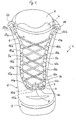
Figure 1 is a front elevational view of a boot according to the invention with the fastening open, -
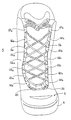
Figure 2 is a front elevational view of the boot ofFigure 1 during the closure of the fastening, -
Figure 3 is a front elevational view of the boot ofFigure 1 with the fastening closed, and -
Figure 4 is a schematic view of a variant of the boot according to the invention with a different threading of the ends of the laces. - In the drawings, a boot formed in accordance with the present invention is generally indicated 1. The
boot 1 is of the type used for the sport of snow-boarding but the invention is applicable equally effectively to the production of footwear of other types. - The
boot 1 comprises an upper 2 with a sole 3 and an opposed entrance 4 for the fitting-on of the boot. Anopening 5 is formed in the upper 2 and-has juxtaposed edges indicated 5a, 5b. Atongue 6 extends from thelower end 8 of theopening 5 as far as the entrance 4 and is optionally provided withpadding 7. A lacingeye 9 with two channels 10a,b is provided in the opening 5 in the region of itslower end 8. - Respective pluralities of lacing eyes 11a,b, 12a,b, 13a,b, 14a,b, 15a,b, 16a,b, 17a,b are fitted in corresponding and facing positions on the
respective edges edge 5a are marked with the letter "a" and the lacing eyes fitted on theedge 5b with the letter "b"). The lacing eyes 17a,b will be referred to below as the end lacing eyes of the fastening. - A first lace and a second lace, indicated 20 and 21, respectively, are engaged in the
lacing eyes 9 and in the further lacing eyes 11a,b to 17a,b in the manner indicated below. The ends of the laces, 20, 21, meaning the portions of the laces which extend beyond the end lacing eyes 17a,b, are also engaged inrespective locking devices 22a,b, for example, of the constricting type. - The two
laces laces eye 9 and through the two end lacing eyes 17a,b of the fastening. In the embodiment ofFigures 1 to 3 , thefirst lace 20 is therefore engaged in thelacing eyes 9, 11a-b, 13a-b, 15a-b and 17a-b, crossing between the lacing eyes 11-13, 13-15, and 15-17 (a-b). Thesecond lace 21 is in turn engaged in thelacing eyes - In the embodiment of
Figure 4 , both of the corresponding ends of the same lace are led through the same end lacing eye 17a,b so that both ends of the first lace are led through the end lacing eye 17a and both the ends of the second lace are led through the oppositeend lacing eye 17b. In this second embodiment, it is necessary to provide a furtherreturn lacing eye 18 between the lacing eyes 16 and 17. - Since the portions of each lace engage alternate lacing eyes, for a given "closeness" of the lacing eyes, a smaller angle is formed where the lace extends into and out of the respective lacing eye, resulting in less friction between the
laces - The sliding of the laces through the lacing eyes is thus considerably facilitated without, however, prejudicing the uniformity of the fastening tension. This characteristic, together with the fact that the lace tensioning function is distributed over two separate laces and is consequently halved in comparison with conventional fastenings, makes it possible to close the entire fastening simply by exerting a pull on the ends of the laces, without distributing the tightening load manually over intermediate portions of the fastening (that is, without "pulling" the intermediate loops of the laces manually). Since corresponding ends of the two laces converge on opposite edges of the
opening 5, the laces can be tensioned independently of the shape of the foot, or of the extent of theopening 5. Moreover, the fastening can be closed to the desired tension in a pulsed manner, that is, by firstly exerting a greater tension on one pair of ends of the laces, for example, those converging on the right-hand edge of the upper and then a corresponding greater tension on the other pair of ends converging on the left-hand edge, alternating the pulls applied and overcoming the friction to the best possible extent. - According to another characteristic of the invention, the free ends of the
laces respective grips 23 for facilitating the pulling and tightening of the fastening. This arrangement enables the fastening to be closed even when wearing gloves and in any case by exerting a more effective pull without painfully stressing the fingers, as shown inFigure 2 . - Moreover, with the boot thus designed, there is no longer any need to close the fastening progressively so that the use of open (generally hook-shaped) lacing eyes is superfluous. Since closed lacing eyes can be used (in the embodiment shown lacing eyes of the type with a tape loop sewn to the upper are shown) the laces remain engaged therein even when the fastening is loosened which makes it possible to wear the boot and walk in it with the laces fully loosened, without the free ends hampering movement.
- Although, on the one hand, to fasten the footwear, it suffices to exert a tension on the ends of the laces by means of the
grips 23 and to lock the constricting locking devices, on the other hand, the operation to loosen the footwear is just as quick and easy and- requires purely loosening of the constricting locking devices in order for the lace to slide through the lacing eyes with little friction, reducing the fastening load. - Finally, to prevent undesired loosening of the fastened boot and to prevent the hindrance due to the free ends of the laces, when the fastening is tightened, the two ends can be knotted together as shown in
Figure 3 . - The boot may be equipped with two or more laces, arranged with different alternating arrangements in the lacing eyes. Moreover, the constricting locking devices may be fixed to the upper or may be free relative thereto.
Claims (7)
- Footwear with a lace fastening comprising an opening (5) with a first edge (5a) and a second edge (5b) which are juxtaposed and each of which carries a respective plurality of lacing eyes, and at least two laces (20, 21) extending through respective pairs of the lacing eyes (11a,b-17a,b), characterized in that the ends of both of the laces converge on both of the edges of the opening, with at least one end of each lace (20, 21) extending through a respective end lacing eye (17a, b) of the fastening provided on each of the opposite edges.
- Footwear according to Claim 1 in which the corresponding ends of each lace (20, 21) converge in respective and separate grips (23).
- Footwear according to Claim 1 or Claim 2 in which the laces are led through alternating lacing eyes of the respective pluralities of lacing eyes in a manner such that, between two lacing eyes (11a-13a; 13a-15a; 15a-17a) of the same edge through which a first of the laces extends, there is at least one lacing eye (12a, 14a, 16a) of the same edge through which a second of the laces extends.
- Footwear according to one of more of the preceding claims in which the lacing eyes are of the closed-eye type.
- Footwear according to one or more of the preceding claims in which means (22a, 22b) are provided for locking the laces and are active independently on each pair of the respective ends of laces converging in the same grip.
- Footwear according to Claim 5 in which the locking means are of the constricting type.
- Footwear according to Claim 5 or Claim 6 in which the locking means are provided in the region of the respective end lacing eyes.
Applications Claiming Priority (2)
| Application Number | Priority Date | Filing Date | Title |
|---|---|---|---|
| IT000083A ITPD20030083A1 (en) | 2003-04-24 | 2003-04-24 | FOOTWEAR WITH LACE STRINGS. |
| PCT/EP2004/001684 WO2004093589A1 (en) | 2003-04-24 | 2004-02-20 | Footwear with a lace fastening |
Publications (2)
| Publication Number | Publication Date |
|---|---|
| EP1615519A1 EP1615519A1 (en) | 2006-01-18 |
| EP1615519B1 true EP1615519B1 (en) | 2008-11-19 |
Family
ID=33307125
Family Applications (1)
| Application Number | Title | Priority Date | Filing Date |
|---|---|---|---|
| EP04713040A Expired - Lifetime EP1615519B1 (en) | 2003-04-24 | 2004-02-20 | Footwear with a lace fastening |
Country Status (6)
| Country | Link |
|---|---|
| US (1) | US7908769B2 (en) |
| EP (1) | EP1615519B1 (en) |
| AT (1) | ATE414436T1 (en) |
| DE (1) | DE602004017850D1 (en) |
| IT (1) | ITPD20030083A1 (en) |
| WO (1) | WO2004093589A1 (en) |
Families Citing this family (72)
| Publication number | Priority date | Publication date | Assignee | Title |
|---|---|---|---|---|
| US20060156517A1 (en) | 1997-08-22 | 2006-07-20 | Hammerslag Gary R | Reel based closure system |
| US20080060167A1 (en) | 1997-08-22 | 2008-03-13 | Hammerslag Gary R | Reel based closure system |
| US7591050B2 (en) | 1997-08-22 | 2009-09-22 | Boa Technology, Inc. | Footwear lacing system |
| US7281341B2 (en) * | 2003-12-10 | 2007-10-16 | The Burton Corporation | Lace system for footwear |
| CN102132983B (en) | 2004-10-29 | 2013-08-14 | 博技术有限公司 | Reel based closure system |
| FR2881626B1 (en) * | 2005-02-04 | 2007-04-13 | Salomon Sa | SHOE FOR THE PRACTICE OF A SPORT |
| KR100733024B1 (en) * | 2005-09-01 | 2007-07-02 | 조윤수 | How to form a shoelace unit that binds at once |
| FR2891118B1 (en) * | 2005-09-28 | 2007-12-21 | Salomon Sa | SHOE THAT IMPROVES THE TIGHTENING OF THE ROD |
| DE102005056077B4 (en) | 2005-11-24 | 2017-05-11 | Deeluxe Sportartikel Handels Gmbh | Boots |
| JP2010503478A (en) | 2006-09-12 | 2010-02-04 | ボア テクノロジー,インク. | Closure systems for stiffeners, protectors, and similar items |
| US8146271B2 (en) | 2006-12-04 | 2012-04-03 | Nike, Inc. | Article of footwear with dual lacing system |
| US20080216351A1 (en) * | 2007-02-08 | 2008-09-11 | Zuitsports, Inc. | Shoe with lacing system |
| JP5709526B2 (en) | 2008-01-18 | 2015-04-30 | ボア テクノロジー,インコーポレイテッド | Occlusion system |
| EP2378911B1 (en) | 2008-11-21 | 2014-05-21 | Boa Technology, Inc. | Reel based lacing system |
| US8474157B2 (en) * | 2009-08-07 | 2013-07-02 | Pierre-Andre Senizergues | Footwear lacing system |
| DE112011100318B4 (en) * | 2010-01-21 | 2023-04-20 | Boa Technology, Inc. | Guides for lacing systems |
| US10070695B2 (en) | 2010-04-30 | 2018-09-11 | Boa Technology Inc. | Tightening mechanisms and applications including the same |
| DE112011106194B4 (en) | 2010-04-30 | 2025-12-11 | Boa Technology, Inc. | Roller-based lacing system |
| US9375053B2 (en) | 2012-03-15 | 2016-06-28 | Boa Technology, Inc. | Tightening mechanisms and applications including the same |
| US9402437B2 (en) | 2010-06-21 | 2016-08-02 | Under Armour, Inc. | Foot support article |
| US9707119B2 (en) | 2010-06-21 | 2017-07-18 | Under Armour, Inc. | Foot support article |
| US20110308108A1 (en) * | 2010-06-21 | 2011-12-22 | Under Armour, Inc. | Foot support article |
| CA2804759C (en) | 2010-07-01 | 2019-06-18 | Boa Technology, Inc. | Braces using lacing systems |
| WO2012003399A2 (en) | 2010-07-01 | 2012-01-05 | Boa Technology, Inc. | Lace guide |
| US11026473B2 (en) | 2011-05-19 | 2021-06-08 | Under Armour, Inc. | Foot support article |
| US8844168B2 (en) | 2011-10-06 | 2014-09-30 | Nike, Inc. | Footwear lacing system |
| US9101181B2 (en) | 2011-10-13 | 2015-08-11 | Boa Technology Inc. | Reel-based lacing system |
| US9179729B2 (en) | 2012-03-13 | 2015-11-10 | Boa Technology, Inc. | Tightening systems |
| WO2014036371A1 (en) | 2012-08-31 | 2014-03-06 | Nike International Ltd. | Motorized tensioning system |
| WO2014071319A1 (en) | 2012-11-02 | 2014-05-08 | Boa Technology Inc. | Coupling members for closure devices and systems |
| WO2014074645A2 (en) | 2012-11-06 | 2014-05-15 | Boa Technology Inc. | Devices and methods for adjusting the fit of footwear |
| US9439477B2 (en) | 2013-01-28 | 2016-09-13 | Boa Technology Inc. | Lace fixation assembly and system |
| US20140215675A1 (en) * | 2013-02-04 | 2014-08-07 | Combat Brands, LLC | Quick Lace Hand Protection System |
| US10702409B2 (en) | 2013-02-05 | 2020-07-07 | Boa Technology Inc. | Closure devices for medical devices and methods |
| US10251451B2 (en) | 2013-03-05 | 2019-04-09 | Boa Technology Inc. | Closure devices including incremental release mechanisms and methods therefor |
| US9610185B2 (en) | 2013-03-05 | 2017-04-04 | Boa Technology Inc. | Systems, methods, and devices for automatic closure of medical devices |
| US20140259761A1 (en) * | 2013-03-15 | 2014-09-18 | Chinook Asia Llc | Footwear Lacing System |
| KR20150135791A (en) | 2013-04-01 | 2015-12-03 | 보아 테크놀러지, 인크. | Methods and devices for retrofitting footwear to include a reel based closure system |
| US10076160B2 (en) | 2013-06-05 | 2018-09-18 | Boa Technology Inc. | Integrated closure device components and methods |
| EP4427621B1 (en) | 2013-06-05 | 2026-01-21 | Boa Technology Inc. | Integrated closure device components and methods |
| WO2015003079A1 (en) | 2013-07-02 | 2015-01-08 | Boa Technology Inc. | Tension limiting mechanisms for closure devices and methods therefor |
| EP3653073B1 (en) | 2013-07-10 | 2023-01-11 | Boa Technology Inc. | Closure devices including incremental release mechanisms |
| US9700101B2 (en) | 2013-09-05 | 2017-07-11 | Boa Technology Inc. | Guides and components for closure systems and methods therefor |
| KR102350912B1 (en) | 2013-09-13 | 2022-01-13 | 보아 테크놀러지, 인크. | Reel based closure device and method therefore |
| JP6526691B2 (en) | 2013-11-18 | 2019-06-05 | ボア テクノロジー,インコーポレイテッド | Method and apparatus for automatically closing a prosthetic device and a orthopedic support |
| USD835976S1 (en) | 2014-01-16 | 2018-12-18 | Boa Technology Inc. | Coupling member |
| US9380834B2 (en) | 2014-04-22 | 2016-07-05 | Nike, Inc. | Article of footwear with dynamic support |
| USD751281S1 (en) | 2014-08-12 | 2016-03-15 | Boa Technology, Inc. | Footwear tightening reels |
| USD767269S1 (en) | 2014-08-26 | 2016-09-27 | Boa Technology Inc. | Footwear tightening reel |
| US20160058127A1 (en) | 2014-08-28 | 2016-03-03 | Boa Technology Inc. | Devices and methods for enhancing the fit of boots and other footwear |
| USD758061S1 (en) | 2014-09-08 | 2016-06-07 | Boa Technology, Inc. | Lace tightening device |
| US10182935B2 (en) | 2014-10-01 | 2019-01-22 | Ossur Hf | Support for articles and methods for using the same |
| US10575591B2 (en) | 2014-10-07 | 2020-03-03 | Boa Technology Inc. | Devices, methods, and systems for remote control of a motorized closure system |
| US20240324732A1 (en) * | 2014-12-04 | 2024-10-03 | Nite Ize, Inc. | Systems and methods for extruded zippers, zipper garages, connection techniques, and uses therefore |
| USD776421S1 (en) | 2015-01-16 | 2017-01-17 | Boa Technology, Inc. | In-footwear lace tightening reel |
| USD835898S1 (en) | 2015-01-16 | 2018-12-18 | Boa Technology Inc. | Footwear lace tightening reel stabilizer |
| US9526300B2 (en) | 2015-03-16 | 2016-12-27 | Anna Krengel | Dually adjustable, anchored, parallel lacing technology |
| US10004297B2 (en) | 2015-10-15 | 2018-06-26 | Boa Technology Inc. | Lacing configurations for footwear |
| US9814281B2 (en) * | 2016-02-12 | 2017-11-14 | Bell Sports, Inc. | Combination shoelace and hook and loop fasteners shoe tightening system with replaceable shoelaces |
| JP7073335B2 (en) | 2016-08-02 | 2022-05-23 | ボア テクノロジー,インコーポレイテッド | Tension member guide for string tightening system |
| US10588381B2 (en) | 2016-11-21 | 2020-03-17 | Under Armour, Inc. | Footwear with internal harness |
| EP3551004B1 (en) | 2016-12-09 | 2024-10-09 | Boa Technology Inc. | Reel based closure system |
| US10543630B2 (en) | 2017-02-27 | 2020-01-28 | Boa Technology Inc. | Reel based closure system employing a friction based tension mechanism |
| US11357279B2 (en) | 2017-05-09 | 2022-06-14 | Boa Technology Inc. | Closure components for a helmet layer and methods for installing same |
| US10772384B2 (en) | 2017-07-18 | 2020-09-15 | Boa Technology Inc. | System and methods for minimizing dynamic lace movement |
| US12396520B2 (en) | 2017-07-18 | 2025-08-26 | Boa Technology Inc. | Configurations for footwear employing reel based closure systems |
| EP4678055A3 (en) | 2019-02-01 | 2026-04-15 | Boa Technology, Inc. | Reel based closure devices for tightening a ski boot |
| KR102775091B1 (en) | 2019-05-01 | 2025-03-04 | 보아 테크놀러지, 인크. | Reel based closure system |
| KR102571594B1 (en) * | 2021-06-08 | 2023-08-29 | 조용호 | The method of forming shoe strap bonds separated by up and down |
| USD1041813S1 (en) | 2021-08-06 | 2024-09-17 | Canada Goose Inc. | Boot |
| USD1040486S1 (en) | 2021-08-06 | 2024-09-03 | Canada Goose Inc. | Boot |
| US11849812B2 (en) * | 2021-09-16 | 2023-12-26 | Canada Goose Inc. | Footwear with alternate lacing systems |
Family Cites Families (16)
| Publication number | Priority date | Publication date | Assignee | Title |
|---|---|---|---|---|
| US1504157A (en) * | 1923-07-10 | 1924-08-05 | William A Sowers | Lacing device |
| US3837098A (en) * | 1972-12-21 | 1974-09-24 | R Rathmell | Crossed double layer shoe upper |
| US3934346A (en) * | 1974-12-12 | 1976-01-27 | Kyozo Sasaki | Sporting shoes |
| US4755044A (en) * | 1986-01-06 | 1988-07-05 | Massachusetts Institute Of Technology | Remote ophthalmoscope and fundus photography unit |
| IT1279259B1 (en) * | 1995-01-27 | 1997-12-09 | Nordica Spa | CLAMPING DEVICE, ESPECIALLY FOR SPORTS SHOES |
| US5755044A (en) * | 1996-01-04 | 1998-05-26 | Veylupek; Robert J. | Shoe lacing system |
| FR2770379B1 (en) | 1997-11-05 | 1999-11-26 | Rossignol Sa | HIGH SHOE FOR THE PRACTICE OF SPORT COMPRISING AN IMPROVED LACING DEVICE |
| WO2000035308A2 (en) * | 1998-12-17 | 2000-06-22 | Young Kyun Oh | Shoes whose shoelace is tightened by one pulling |
| JP2000235319A (en) * | 1999-02-16 | 2000-08-29 | Sharp Corp | Developer fixing device and fixing method |
| US6240657B1 (en) * | 1999-06-18 | 2001-06-05 | In-Stride, Inc. | Footwear with replaceable eyelet extenders |
| US6502329B1 (en) * | 1999-11-04 | 2003-01-07 | Howard Silagy | Footwear article using a criss-crossing lacing pattern |
| FR2802783B1 (en) * | 1999-12-28 | 2002-05-31 | Salomon Sa | POWER TIGHTENING DEVICE FOR A SHOE |
| US20030041478A1 (en) * | 2001-09-06 | 2003-03-06 | Kun-Chung Liu | Shoe with shoe lace device that facilitates tightening and loosening of the shoe |
| US6941683B2 (en) * | 2001-09-14 | 2005-09-13 | Anna B Freed | Lacing system |
| US20030051374A1 (en) * | 2001-09-14 | 2003-03-20 | Freed Anna B. | Lacing system |
| US6775928B2 (en) * | 2002-06-07 | 2004-08-17 | K-2 Corporation | Lacing system for skates |
-
2003
- 2003-04-24 IT IT000083A patent/ITPD20030083A1/en unknown
-
2004
- 2004-02-20 DE DE602004017850T patent/DE602004017850D1/en not_active Expired - Lifetime
- 2004-02-20 AT AT04713040T patent/ATE414436T1/en not_active IP Right Cessation
- 2004-02-20 EP EP04713040A patent/EP1615519B1/en not_active Expired - Lifetime
- 2004-02-20 US US10/552,565 patent/US7908769B2/en not_active Expired - Fee Related
- 2004-02-20 WO PCT/EP2004/001684 patent/WO2004093589A1/en not_active Ceased
Also Published As
| Publication number | Publication date |
|---|---|
| EP1615519A1 (en) | 2006-01-18 |
| ITPD20030083A1 (en) | 2004-10-25 |
| ATE414436T1 (en) | 2008-12-15 |
| US20060185193A1 (en) | 2006-08-24 |
| US7908769B2 (en) | 2011-03-22 |
| WO2004093589A1 (en) | 2004-11-04 |
| DE602004017850D1 (en) | 2009-01-02 |
Similar Documents
| Publication | Publication Date | Title |
|---|---|---|
| US7908769B2 (en) | Footwear with a lace fastening | |
| EP1541049B1 (en) | Lace system for footwear | |
| US8793904B2 (en) | Article of footwear with dual lacing system | |
| US5471769A (en) | Shoe lacing system with hook and eye portions | |
| US20180116343A1 (en) | Closure and fastening system for shoes | |
| US5349764A (en) | Shoe securement apparatus | |
| US6802439B2 (en) | Lace-up tightening device for an article of footwear, and an article of footwear equipped with such device | |
| CN101631480B (en) | Boots, especially ski or snowboard boots | |
| US5907912A (en) | Tandem closure system for shoes | |
| US6370743B2 (en) | Shoelace tightening device | |
| US7437837B2 (en) | Cord and strap combination shoe closure | |
| CA2157601C (en) | Fastening device particularly for sports shoes | |
| CN104507346A (en) | shoes, especially sneakers | |
| US20030051374A1 (en) | Lacing system | |
| WO2001064066A2 (en) | Footwear including a locking component | |
| US20090100707A1 (en) | Apparatus for fastening a shoe | |
| EP1520490A1 (en) | A footwear having a lace fastening | |
| US7062867B2 (en) | Apparatus, system, and method for securing a foot in footwear | |
| US20040163285A1 (en) | Pouch for concealing and containing shoelaces | |
| US12507764B2 (en) | Footwear configurations | |
| US7735242B2 (en) | Boot | |
| US6327750B1 (en) | Final tensioning device for laced closure | |
| US4916833A (en) | Enhanced speed lacing device with an integrated adjustable width, adjustable tension system | |
| US20240225199A1 (en) | Locking Boot Fastening Device and Method | |
| US20080086910A1 (en) | Footwear with removable closure |
Legal Events
| Date | Code | Title | Description |
|---|---|---|---|
| PUAI | Public reference made under article 153(3) epc to a published international application that has entered the european phase |
Free format text: ORIGINAL CODE: 0009012 |
|
| 17P | Request for examination filed |
Effective date: 20050919 |
|
| AK | Designated contracting states |
Kind code of ref document: A1 Designated state(s): AT BE BG CH CY CZ DE DK EE ES FI FR GB GR HU IE IT LI LU MC NL PT RO SE SI SK TR |
|
| AX | Request for extension of the european patent |
Extension state: AL LT LV MK |
|
| DAX | Request for extension of the european patent (deleted) | ||
| RBV | Designated contracting states (corrected) |
Designated state(s): AT CH DE FR IT LI |
|
| GRAP | Despatch of communication of intention to grant a patent |
Free format text: ORIGINAL CODE: EPIDOSNIGR1 |
|
| GRAS | Grant fee paid |
Free format text: ORIGINAL CODE: EPIDOSNIGR3 |
|
| GRAA | (expected) grant |
Free format text: ORIGINAL CODE: 0009210 |
|
| AK | Designated contracting states |
Kind code of ref document: B1 Designated state(s): AT CH DE FR IT LI |
|
| REG | Reference to a national code |
Ref country code: CH Ref legal event code: EP |
|
| REG | Reference to a national code |
Ref country code: CH Ref legal event code: NV Representative=s name: KEMIA SA |
|
| REF | Corresponds to: |
Ref document number: 602004017850 Country of ref document: DE Date of ref document: 20090102 Kind code of ref document: P |
|
| PG25 | Lapsed in a contracting state [announced via postgrant information from national office to epo] |
Ref country code: AT Free format text: LAPSE BECAUSE OF FAILURE TO SUBMIT A TRANSLATION OF THE DESCRIPTION OR TO PAY THE FEE WITHIN THE PRESCRIBED TIME-LIMIT Effective date: 20081119 |
|
| PLBE | No opposition filed within time limit |
Free format text: ORIGINAL CODE: 0009261 |
|
| STAA | Information on the status of an ep patent application or granted ep patent |
Free format text: STATUS: NO OPPOSITION FILED WITHIN TIME LIMIT |
|
| 26N | No opposition filed |
Effective date: 20090820 |
|
| REG | Reference to a national code |
Ref country code: FR Ref legal event code: PLFP Year of fee payment: 12 |
|
| PGFP | Annual fee paid to national office [announced via postgrant information from national office to epo] |
Ref country code: CH Payment date: 20150223 Year of fee payment: 12 Ref country code: DE Payment date: 20150216 Year of fee payment: 12 Ref country code: IT Payment date: 20150224 Year of fee payment: 12 |
|
| PGFP | Annual fee paid to national office [announced via postgrant information from national office to epo] |
Ref country code: FR Payment date: 20150217 Year of fee payment: 12 |
|
| REG | Reference to a national code |
Ref country code: DE Ref legal event code: R119 Ref document number: 602004017850 Country of ref document: DE |
|
| REG | Reference to a national code |
Ref country code: CH Ref legal event code: PL |
|
| PG25 | Lapsed in a contracting state [announced via postgrant information from national office to epo] |
Ref country code: LI Free format text: LAPSE BECAUSE OF NON-PAYMENT OF DUE FEES Effective date: 20160229 Ref country code: CH Free format text: LAPSE BECAUSE OF NON-PAYMENT OF DUE FEES Effective date: 20160229 |
|
| REG | Reference to a national code |
Ref country code: FR Ref legal event code: ST Effective date: 20161028 |
|
| PG25 | Lapsed in a contracting state [announced via postgrant information from national office to epo] |
Ref country code: IT Free format text: LAPSE BECAUSE OF NON-PAYMENT OF DUE FEES Effective date: 20160220 |
|
| PG25 | Lapsed in a contracting state [announced via postgrant information from national office to epo] |
Ref country code: FR Free format text: LAPSE BECAUSE OF NON-PAYMENT OF DUE FEES Effective date: 20160229 Ref country code: DE Free format text: LAPSE BECAUSE OF NON-PAYMENT OF DUE FEES Effective date: 20160901 |