EP1619636B1 - Server-Authentifizierung in einem Kartenpinrücksetzverfahren über unsicheren Kanal und computerimplementierte Prozesse - Google Patents
Server-Authentifizierung in einem Kartenpinrücksetzverfahren über unsicheren Kanal und computerimplementierte Prozesse Download PDFInfo
- Publication number
- EP1619636B1 EP1619636B1 EP05253954.1A EP05253954A EP1619636B1 EP 1619636 B1 EP1619636 B1 EP 1619636B1 EP 05253954 A EP05253954 A EP 05253954A EP 1619636 B1 EP1619636 B1 EP 1619636B1
- Authority
- EP
- European Patent Office
- Prior art keywords
- public key
- card
- server
- access card
- challenge
- Prior art date
- Legal status (The legal status is an assumption and is not a legal conclusion. Google has not performed a legal analysis and makes no representation as to the accuracy of the status listed.)
- Expired - Lifetime
Links
Images


Classifications
-
- G—PHYSICS
- G07—CHECKING-DEVICES
- G07F—COIN-FREED OR LIKE APPARATUS
- G07F7/00—Mechanisms actuated by objects other than coins to free or to actuate vending, hiring, coin or paper currency dispensing or refunding apparatus
- G07F7/08—Mechanisms actuated by objects other than coins to free or to actuate vending, hiring, coin or paper currency dispensing or refunding apparatus by coded identity card or credit card or other personal identification means
- G07F7/10—Mechanisms actuated by objects other than coins to free or to actuate vending, hiring, coin or paper currency dispensing or refunding apparatus by coded identity card or credit card or other personal identification means together with a coded signal, e.g. in the form of personal identification information, like personal identification number [PIN] or biometric data
- G07F7/1008—Active credit-cards provided with means to personalise their use, e.g. with PIN-introduction/comparison system
-
- G—PHYSICS
- G06—COMPUTING OR CALCULATING; COUNTING
- G06Q—INFORMATION AND COMMUNICATION TECHNOLOGY [ICT] SPECIALLY ADAPTED FOR ADMINISTRATIVE, COMMERCIAL, FINANCIAL, MANAGERIAL OR SUPERVISORY PURPOSES; SYSTEMS OR METHODS SPECIALLY ADAPTED FOR ADMINISTRATIVE, COMMERCIAL, FINANCIAL, MANAGERIAL OR SUPERVISORY PURPOSES, NOT OTHERWISE PROVIDED FOR
- G06Q20/00—Payment architectures, schemes or protocols
- G06Q20/30—Payment architectures, schemes or protocols characterised by the use of specific devices or networks
- G06Q20/34—Payment architectures, schemes or protocols characterised by the use of specific devices or networks using cards, e.g. integrated circuit [IC] cards or magnetic cards
- G06Q20/341—Active cards, i.e. cards including their own processing means, e.g. including an IC or chip
-
- G—PHYSICS
- G06—COMPUTING OR CALCULATING; COUNTING
- G06Q—INFORMATION AND COMMUNICATION TECHNOLOGY [ICT] SPECIALLY ADAPTED FOR ADMINISTRATIVE, COMMERCIAL, FINANCIAL, MANAGERIAL OR SUPERVISORY PURPOSES; SYSTEMS OR METHODS SPECIALLY ADAPTED FOR ADMINISTRATIVE, COMMERCIAL, FINANCIAL, MANAGERIAL OR SUPERVISORY PURPOSES, NOT OTHERWISE PROVIDED FOR
- G06Q20/00—Payment architectures, schemes or protocols
- G06Q20/30—Payment architectures, schemes or protocols characterised by the use of specific devices or networks
- G06Q20/34—Payment architectures, schemes or protocols characterised by the use of specific devices or networks using cards, e.g. integrated circuit [IC] cards or magnetic cards
- G06Q20/355—Personalisation of cards for use
- G06Q20/3552—Downloading or loading of personalisation data
-
- G—PHYSICS
- G06—COMPUTING OR CALCULATING; COUNTING
- G06Q—INFORMATION AND COMMUNICATION TECHNOLOGY [ICT] SPECIALLY ADAPTED FOR ADMINISTRATIVE, COMMERCIAL, FINANCIAL, MANAGERIAL OR SUPERVISORY PURPOSES; SYSTEMS OR METHODS SPECIALLY ADAPTED FOR ADMINISTRATIVE, COMMERCIAL, FINANCIAL, MANAGERIAL OR SUPERVISORY PURPOSES, NOT OTHERWISE PROVIDED FOR
- G06Q20/00—Payment architectures, schemes or protocols
- G06Q20/38—Payment protocols; Details thereof
- G06Q20/388—Payment protocols; Details thereof using mutual authentication without cards, e.g. challenge-response
-
- G—PHYSICS
- G06—COMPUTING OR CALCULATING; COUNTING
- G06Q—INFORMATION AND COMMUNICATION TECHNOLOGY [ICT] SPECIALLY ADAPTED FOR ADMINISTRATIVE, COMMERCIAL, FINANCIAL, MANAGERIAL OR SUPERVISORY PURPOSES; SYSTEMS OR METHODS SPECIALLY ADAPTED FOR ADMINISTRATIVE, COMMERCIAL, FINANCIAL, MANAGERIAL OR SUPERVISORY PURPOSES, NOT OTHERWISE PROVIDED FOR
- G06Q20/00—Payment architectures, schemes or protocols
- G06Q20/38—Payment protocols; Details thereof
- G06Q20/40—Authorisation, e.g. identification of payer or payee, verification of customer or shop credentials; Review and approval of payers, e.g. check credit lines or negative lists
- G06Q20/409—Device specific authentication in transaction processing
- G06Q20/4097—Device specific authentication in transaction processing using mutual authentication between devices and transaction partners
- G06Q20/40975—Device specific authentication in transaction processing using mutual authentication between devices and transaction partners using encryption therefor
Definitions
- PKI Public Key Infrastructure
- PKI represents a set of standards for creating, storing, and managing asymmetric keys that can be used for authentication.
- PKI provides strong authentication
- security consumer adoption of PKI has been limited due to the significant expense and complexity of PKI deployment. Therefore, security consumers have been traditionally required to choose between weak single factor authentication, e.g., username/password only, or stronger authentication, e.g., PKI, involving complex and expensive deployments. Consequently, a need exists for an authentication mechanism that is stronger than single factor and does not require the complex and expensive deployment of PKI.
- HSM Hardware Security Module
- PKI Public Key Infrastructure
- entry level systems that only have non-secured channels cannot take advantage of the added security provided by 2-Factor authentication (i.e., Factor 1: something you have; Factor 2: something you know).
- 2-Factor authentication i.e., Factor 1: something you have; Factor 2: something you know.
- One minimum functionality needed for an entry level card is to allow users to reset their pin, in case they forget the pin.
- resetting the pin is a privileged operation that requires a master key, so as to avoid non-trusted servers from resetting the pin, and thus sacrificing the security provided by the 2-Factor authentication.
- EP-A 1365307 discloses a data updating method and a data updating system which can update data of an IC card through a network without mistaking the IC card targeted for updating.
- issuer client authentication personal authentication, issuer server authentication or device authentication is performed
- a server transmits update data encrypted by a public key used for the device authentication to a client.
- the client outputs the encrypted update data to an IC card.
- the update data is decrypted by a secret key used for the device authentication. Based on the decrypted update data, rewriting is carried out in the IC card.
- AU-A4 2004100268 and US-B1 6385723 disclose loading of a public key on a card.
- FIG. 1 illustrates a client-server environment 100 where a plurality of servers 120a, 120b, 120n may be capable of communicating with the client 114.
- the client 114 is shown connected to a reader 112 which in turn, is connected to a card 110.
- the card 110 will contain card applets 216, a pin 221, and a place for storing a server authentication (SA) public key.
- SA server authentication
- SA server authentication
- SA server authentication
- HSM hardware security module
- PKI public key infrastructure
- the environment does not enable use of a master key and thus privileges for performing certain operations are blocked or not enabled.
- procedures are provided to enable a secure reset of a pin 221 of the card 110 without using a master key.
- it is important to accommodate users of the card 110 who may forget their pin 221 or are blocked from using their pin 221 (e.g., by attempting too many incorrect pin inputs), and request access to unblock or reset the pin so that they can get access to the card 110 and be authenticated as an allowed user to operate procedures of the card 110, or access services or content locked by the card 110.
- the card 110 may be a card that functions in accordance with example Java CardTM operations.
- Java CardTM technology enables smart cards and other devices with very limited memory to run small applications, called applets, that employ Java technology. It provides smart card manufacturers with a secure and interoperable execution platform that can store and update multiple applications on a single device. Broadly speaking, the technology enables developers to build, test, and deploy applications and services rapidly and securely. This accelerated process reduces development costs, increases product differentiation, and enhances value to customers. In a manner complementary to the Standard, Enterprise, and Mobile editions of the Java 2 Platform, Java Card technology makes it easy to integrate security tokens into a complete Java software solution.
- the methods defined herein which enable resetting of a pin through a non-secure channel, in a secure way that authenticates the server, can be used in any system that needs this functionality.
- the methods of the present invention are by no means limited to the interaction with a set Java CardTM standard or standards.
- the Java CardTM technology is also commercially referred to, in some implementations, as the JavaTM Card Enterprise Software (JCES).
- server 120b is the trusted server that can communicate with card 110.
- Server 120b became the trusted server because server 120b installed its SA public key 2 onto the card 110.
- Card 110 shows the SA public key 2 at location 202b.
- a SET SA key process 102 will be charged with installing the SA public key 2 onto the card 110, and the SET SA key process 102 will be part of the card applets 216.
- the SET SA key process 102 will be described in greater detail below.
- the pin reset authentication process 104 is charged with ensuring and authenticating that the server 102b is a trusted server.
- Server 120b will be a trusted server if server 120b has an SA private key 2, which matches the SA public key 2 installed on the card 110.
- the pin reset authentication process will allow the user accessing the card 110 through the client 114, to reset the pin. More details regarding the pin reset authentication process 104 will be described below with reference to Figure 2 .
- the pin reset authentication process 104 will include a challenge-response authentication where the card applet 216 generates a challenge that is sent to the server 120b to be encrypted and returned. To support server authentication, the card applet 216 must go through each of the processes of setting the SA key 102 as well as the pin reset authentication 104.
- the server authentication protocol requires that the card applet 216 have access to the SA public key 202b with which to decrypt the server's response, and this key may either be loaded during card issuance via a secure channel, or it may be done by the card enrollment browser applet during card enrollment.
- the card 110 will accept at most, one update outside of a secure channel to the SA public key 102b. However, if a secure channel is provided, any number of updates of the SA public key 102b will be allowed since in that case, both parties are authenticated using the card's master key. However, the following discussion will focus on setting the SA key process 102 and the pin reset authentication process 104 in the case where the master key is not available, and a secure reset of the pin is requested.
- the non-secure channel route will commonly be the route taken by an entry level deployment, which does not require the expensive aspects setting up and managing secure connections.
- the enrollment applet will detect that a non-secure key update has already occurred, and unless the existing SA public key 202b is the same as the one it is trying to store, it will refuse to activate the card. If the enrollment applet is able to set the SA public key 202b on the card, then no feature that attempts to modify the public key 202b over a non-secure channel would be allowed by the card applet 216. Consequently, this process ensures that a valid SA public key 202b, corresponding to a secured SA private key 2 of the server 120b is provided.
- the SA public key 2 of server 120b can be stored on the card 110 at either manufacturing time, or during an enrollment process controlled by an enrollment applet. The process will therefore ensure that when a pin reset operation is requested using the pin reset authentication process 104, the card 110 is able to verify that the authorization originates from a trusted server (one with possession of the designated SA private key).
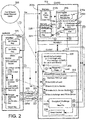
- Figure 2 illustrates a detailed diagram of a server 120 interfacing with a client 114 and a card 110, in accordance with one embodiment of the present invention. It should be understood that the process operations described in Figure 2 are examples, and some process operations can be performed in orders other than the order illustrated in Figure 2 , but subject to any order required by the independent claims.
- the SA public key 202b As described above, it is first required to set the SA public key 202b to the card 110 in memory 212b of the card 110.
- the setting of the SA public key 202b to the card 110 will be controlled by the card applet 216, and specifically, the SET SA key process 216b.
- the process of setting the SA public key 202b on the card 110 will be described in greater detail with reference to Figures 3 and 4 .
- the process for pin reset authentication will be described in detail with the flow diagram and the authorize server method 216b of the card applet 216.
- the process begins when a user desiring to reset the pin on his or her card 110 will make an out-of-band reset request to an agent that is responsible for managing user access parameters for card 110 that may have been issued to one or more users.
- the out-of-band reset request may be made by having the user make a telephone call to an authorized agent that has access to the user records.
- the user records may include a database that includes a number of users, card unique identifiers (CUID) for the users, certificates, and other identifier information that links the user to the specific card 110.
- CUID card unique identifiers
- the authorized agent will set a flag in the user's record.
- the flag will be set in the user's record to allow the system to proceed with the pin reset operation.
- an attempt to access the reset PIN page 209 requires that the user authenticate using a pre-card deployment authentication procedure of 208.
- this procedure is a lightweight directory access protocol (LDAP) username and password.
- LDAP lightweight directory access protocol
- the user After the information has been provided in user authentication 208, and the information passes and is accepted by the LDAP procedure (a single sign-on (SSO) token is generated during the LDAP process), the user is now redirected back to the reset pin page 209 (which is the page the user initially wanted to access), and which contains the reset pin browser applet that is loaded at the client 114 browser. This process is illustrated by process #2 arrow.
- the reset pin browser applet 210 is loaded to enable actual processing of the pin reset operations.
- the reset pin browser applet will ask the user for a new pin, and in one non-claimed example, the user must enter it twice and press submit. At this point, this is the only actions needed from the user.
- a sanity check is performed on the new pin, and in process #3, the CUID is retrieved from the card from the memory 112a.
- each card will have a card unique identifier (CUID), which defines the card and enables mapping of specific cards to specific users.
- the pin reset browser applet 210 will send the obtained CUID to a servlet 214 of the server 120 in process #4.
- the single sign-on (SSO) token will be sent to the servlet 214.
- the SSO token identifies the user that completed the LDAP process.
- Servlet 214 verifies that the user identified by the SSO token has the card with the provided CUID assigned, i.e., that the user entry for that user contains the CUID being presented with the SSO token. The servlet 214 will also determine if the user is enabled for the reset operation. As mentioned earlier, the flag was set by the administrator that received the out-of-band request to reset the pin. The flag is set in the user record and is set with a timeout, so as to enable the pin reset operation to proceed for a period of time. The period of time may vary, however, it should be set so that sufficient amount of time is allowed to proceed with the process, but not too long, to reduce the likelihood that unauthorized users/servers might attempt pin resets. As will be noted below, when the encryption happens at the servlet 214, the flag is unset.
- the servlet returns control to the reset pin browser applet 210, which is brokering communication, and the reset pin browser applet 210 invokes the authorization server method in process #6.
- the authorization server method 216b of the card applet 216 will include two parts. The first part will include challenge generation in process #7. Thus, the authorization server method 216b will be charged with generating the challenge.
- the challenge is a 128-byte challenge, which includes 10 bytes of PKCS #1, mode 1 padding, plus a real random number of 117 bytes.
- the challenge can take on any number of forms so long as it's generated in the first process #7 by the card applet 216.
- the generated challenge is temporarily stored in the memory 212a as a challenge 220.
- the generated challenge is retrieved by the reset pin browser applet 210 from the card 110, and sent to the server 120.
- the challenge 220 and new pin 221 are sent together to be encrypted by the SA private key 202a of the server 120.
- the challenge is padded with the new pin and 01FFFF (standard padding), and sent as 220a/221.
- the SA private key 202a is preferably stored in a secure location on the server and accessed when an encryption operation is required so that a challenge and pin 220a can be encrypted.
- the encrypted challenge 220a' and pin 221 is sent to the reset pin browser applet 210 and forwarded in process #10.
- the encrypted challenge & new pin 220b together will be sent in process #11 to the second part of the authorization server method 216b.
- a decryption operation will have to be performed.
- the challenge 220 is sent from the reset pin browser applet 210 to the servlet 214 for encryption.
- the new pin and the encrypted challenge 220b are sent to the card applet in process #10.
- the pin 221 is not sent in a round trip to the servlet 214 before being sent to the card applet.
- the decryption of the encrypted challenge will be performed using the SA public key 202b. If the server being authenticated is not in possession of the corresponding private key (the other half of the keypair), then the decryption challenge will not match the original challenge 220 generated by the card. Thus, it is not known until after the decryption is performed whether the SA private key 202a was the correct key. Thus, it is the decrypted challenge which is compared to the original challenge 220 stored in the card (which is obtained in process #12 from memory 212a), and thus the server had the correct SA private key 202a. This will confirm that the have identified the trusted server, which is being authenticated by the card.
- the pin 221 will be reset using the new pin that was obtained from the user.
- the new pin and the encrypted challenge are provided together in process #11 to ensure that the challenge and the new pin are being generated from the same source to further ensure security.
- the authorization server method will proceed to process #14 where resetting of the pin is denied 226.
- the pin 221 will be reset in process #13. Should the card be removed from the reader during an authentication server operation (e.g. between sending the challenge and receiving the response), all state will be cleared on the card reset to ensure that no replay attacks can succeed.
- set SA key command is defined by an RSA key of 1024-bit length.
- Item 216a-1 illustrates the data field description for setting the RSA modulus.
- Item 216a-2 defines the setting of the RSA private exponent (not used), and the setting of the RSA public exponent which is used when setting the SA public key.
- Initialized RSA key is shown by item 216a-3.
- the table in Figure 3 illustrates data fields of the commands used to set the key on the card 114.
- the card applets communicate via small messages called Application Protocol Data units (APDUs), and because the key is large, the command in one embodiment, is broken into 4 parts.
- the browser applet 210 will invoke the command segments in sequence, where the command is represented by the hex data in the table of Figure 3 .
- Row 402 illustrates a process by which the SA public key is loaded through a secure channel (which uses a master key). During the secure channel operation, it is determined that the SA public key instance in the card is null, and therefore, the public key has not previously been stored to the card. In this situation, an enrollment code 90 00 410 is shown indicating that the enrollment browser has succeeded in setting the SA public key. In row 404, a non-secure channel is used, and there is currently a null in the SA public key instance in the card. Therefore, this is the first time the SA public key is being loaded onto a card over a non-secure channel.
- the enrollment card will illustrate a success by the codes 90 00 410.
- the enrollment process will therefore continue to allow the user to register the card.
- a secure channel is used to provide and load a new SA public key.
- an SA public key is currently stored on the card, and therefore, the result is non-null.
- a secure channel is used to store the SA public key onto the card, the process will continue and illustrate a success in the enrollment process.
- secure channel settings of the SA public key will be allowed any number of times and whether or not the card previously has had an SA public key stored thereon.
- a non-secure channel is used when the value of the SA public key instance in the card was non-null.
- a code 69 91 412 will be triggered. This code will indicate that an exception occurred.
- the enrollment and reset browser applets will be able to determine that code 69 91 is a case where the user is trying to re-write the SA public key with the same existing public key currently on the card, and the exception will be treated as a success to allow the user to complete the enrollment process.
- a re-write of the SA public key will be denied, as code 69 91 indicates an exception to the card.
- the browser reset applet will notice that an SA Public key was already stored on the card, when if fact, no SA Public Key should have been on the card. Thus, in this case, it may be desired to maintain the exception, and prevent the enrollment process from proceeding.
- a code 69 92 414 indicative of an exception will be generated.
- the enrollment process will also notice that the exception occurred and identify code 69 92 as a non-matching SA public key, and therefore fail the process. In such case, the enrollment process will not continue because the user is attempting to load an SA public key onto the card with a non-matching SA public key through a non-secure channel.
- Embodiments of the present invention may be practiced with various computer system configurations including hand-held devices, microprocessor systems, microprocessor-based or programmable consumer electronics, minicomputers, mainframe computers and the like.
- the invention can also be practiced in distributed computing environments where tasks are performed by remote processing devices that are linked through a wire-based or wireless network.
- the present invention may employ various computer-implemented operations involving data stored in computer systems. These operations are those requiring physical manipulation of physical quantities. Usually, though not necessarily, these quantities take the form of electrical or magnetic signals capable of being stored, transferred, combined, compared, and otherwise manipulated. Further, the manipulations performed are often referred to in terms, such as producing, identifying, determining, or comparing.
- the invention also relates to a device or an apparatus for performing these operations.
- the apparatus may be specially constructed for the required purposes, or it may be a general-purpose computer selectively activated or configured by a computer program stored in the computer.
- various general-purpose machines may be used with computer programs written in accordance with the teachings herein, or it may be more convenient to construct a more specialized apparatus to perform the required operations.
- Embodiments of the present invention can be processed on a single computer, or using multiple computers or computer components which are interconnected.
- a computer shall include a standalone computer system having its own processor, its own memory, and its own storage, or a distributed computing system, which provides computer resources to a networked terminal.
- users of a computer system may actually be accessing component parts that are shared among a number of users. The users can therefore access a virtual computer over a network, which will appear to the user as a single computer customized and dedicated for a single user.
- the invention can also be embodied as computer readable code on a computer readable medium.
- the computer readable medium is any data storage device that can store data which can be thereafter be read by a computer system. Examples of the computer readable medium include hard drives, network attached storage (NAS), read-only memory, random-access memory, CD-ROMs, CD-Rs, CD-RWs, magnetic tapes, and other optical and non-optical data storage devices.
- the computer readable medium can also be distributed over a network of coupled computer systems so that the computer readable code is stored and executed in a distributed fashion.
Landscapes
- Business, Economics & Management (AREA)
- Engineering & Computer Science (AREA)
- Accounting & Taxation (AREA)
- Physics & Mathematics (AREA)
- General Physics & Mathematics (AREA)
- Strategic Management (AREA)
- General Business, Economics & Management (AREA)
- Theoretical Computer Science (AREA)
- Computer Networks & Wireless Communication (AREA)
- Microelectronics & Electronic Packaging (AREA)
- Finance (AREA)
- Computer Security & Cryptography (AREA)
- Storage Device Security (AREA)
Claims (11)
- Verfahren, umfassend:(a) Installieren eines öffentlichen Schlüssels zur Serverauthentifizierung, SA, (202b) auf einer Zugangskarte (110) durch Folgendes:(a1) Erzeugen eines Schlüsselpaares zur Serverauthentifizierung, SA, das den öffentlichen SA-Schlüssel (202b) und einen privaten SA-Schlüssel (202a) umfasst, wobei das SA-Schlüsselpaar ein asymmetrisches Paar von Public Key Infrastructure-Serverschlüsseln ist;(a2) Versuch eines Schreibens des öffentlichen SA-Schlüssels auf die Zugangskarte über einen unsicheren Kanal;(a3) Bestimmen, ob die Zugangskarte derzeit einen bestehenden öffentlichen SA-Schlüssel enthält; und
Behandeln des versuchten Schreibens des öffentlichen SA-Schlüssels durch eines der Folgenden:(i) Abschließen des versuchten Schreibens des öffentlichen SA-Schlüssels auf die Zugangskarte über den unsicheren Kanal, wenn festgestellt wird, dass die Zugangskarte keinen bestehenden öffentlichen Schlüssel enthielt;(ii) Ablehnen des versuchten Schreibens des öffentlichen SA-Schlüssels auf die Zugangskarte über den unsicheren Kanal, wenn festgestellt wird, dass der bestehende öffentliche SA-Schlüssel zum öffentlichen SA-Schlüssel passt, der zu schreiben versucht wird; und(iii) Ablehnen des versuchten Schreibens des öffentlichen SA-Schlüssels auf die Zugangskarte über den unsicheren Kanal, wenn festgestellt wird, dass der bestehende öffentliche SA-Schlüssel nicht zum öffentlichen SA-Schlüssel passt, der zu schreiben versucht wird;wobei das Setzen des öffentlichen SA-Schlüssels zur Zugangskarte durch ein Applet (216) der Zugangskarte gesteuert wird, und die Schritte (a2) und (a3) als Teil eines Registrierungsprozesses durchgeführt werden, um die Zugangskarte für eine Person einzurichten;
wobei nach Abschluss des Schreibversuchs von (i) keine weitere Aktualisierung des öffentlichen SA-Schlüssels über einen unsicheren Kanal durch das Applet der Zugangskarte zugelassen wird; und
wobei das Ablehnen von (ii) eine Ausnahme auslöst, die einen Code (412) definiert, der das Schreiben des öffentlichen SA-Schlüssels verhindert und die Fortsetzung des Registrierungsprozesses zulässt, und
wobei das Ablehnen von (iii) eine Ausnahme auslöst, die einen Code (414) definiert, der die Fortsetzung des Registrierungsprozesses verhindert. - Verfahren nach Anspruch 1, wobei, wenn ein Versuch, den öffentlichen SA-Schlüssel zu schreiben, über einen sicheren Kanal durchgeführt wird, wobei der sichere Kanal eine wechselseitig authentifizierte sichere Verbindung mit einem Vermittler im Besitz eines Master-Schlüssels für die Zugangskarte bereitstellt, der Versuch zulässig ist, ob der bestehende öffentliche SA-Schlüssel auf der Zugangskarte vorhanden ist oder nicht.
- Verfahren nach einem der vorhergehenden Ansprüche, wobei das Verfahren ferner umfasst:
(b) Versuch eines Zurücksetzens einer PIN auf der Zugangskarte von einem Server (120) aus, wobei das versuchte Zurücksetzen Folgendes beinhaltet:Initiieren einer Challenge (220) zum Server durch die Zugangskarte;Verschlüsseln der Challenge am Server unter Verwendung des privaten SA-Schlüssels;Entschlüsseln der verschlüsselten Challenge durch die Zugangskarte unter Verwendung des öffentlichen SA-Schlüssels; undZulassen des Zurücksetzens der PIN auf der Zugangskarte, wenn die entschlüsselte Challenge mit der zum Server initiierten Challenge übereinstimmt. - Verfahren nach Anspruch 3, ferner umfassend:Empfangen einer Out-of-Band-Rücksetzanforderung, die eine Absicht anzeigt, das Zurücksetzen der in Gebrauch befindlichen PIN (b) zu versuchen; undSetzen eines temporären Flags, um eine Genehmigung der Out-of-Band-Rücksetzanforderung anzuzeigen; undZurücksetzen des Flags, wenn die Challenge verschlüsselt wird, der Rücksetzversuch abgebrochen wird oder ein dem temporären Flag zugeordneter Zeitgeber abgelaufen ist.
- Verfahren nach Anspruch 3, wobei das Zulassen der Rücksetzung der PIN auf der Zugangskarte, wenn die entschlüsselte Challenge mit der zum Server initiierten Challenge übereinstimmt, den Server authentifiziert.
- Verfahren nach Anspruch 4 oder Anspruch 5, wobei der zu authentifizierende Server sicherstellt, dass der Server ein vertrauenswürdiger Server ist, der den privaten SA-Schlüssel enthält, der zum öffentlichen SA-Schlüssel passt.
- Verfahren nach einem der Ansprüche 3 bis 6, wobei ein Serverauthentifizierungsverfahren (216b) Folgendes ermöglicht: (i) Erzeugen der Challenge und (ii) Entschlüsseln der Challenge und Setzen/Nicht-Setzen der PIN.
- Computerprogramm, umfassend Programmanweisungen, die bei Ausführung die Durchführung des Verfahrens nach einem der Ansprüche 1 bis 7 bewirken.
- Computerlesbares Medium, auf dem das Computerprogramm nach Anspruch 8 gespeichert ist.
- System, umfassend:
Mittel zum Installieren eines öffentlichen Schlüssels zur Serverauthentifizierung, SA, (202b) auf einer Zugangskarte (110), die ein Applet (216) umfasst, das dafür ausgelegt ist, das Setzen des öffentlichen SA-Schlüssels darauf zu steuern, wobei die Mittel Folgendes umfassen:Mittel zum Erzeugen eines Schlüsselpaares zur Serverauthentifizierung, SA, das den öffentlichen SA-Schlüssel und einen privaten SA-Schlüssel umfasst, wobei das SA-Schlüsselpaar ein asymmetrisches Paar von Public Key Infrastructure-Serverschlüsseln ist;Mittel für den Versuch eines Schreibens des öffentlichen SA-Schlüssels auf die Karte über einen unsicheren Kanal, als Teil eines Registrierungsprozesses, um die Zugangskarte für eine Person einzurichten;Mittel zum Bestimmen, als Teil des Registrierungsprozesses, ob die Karte derzeit einen bestehenden öffentlichen SA-Schlüssel enthält; undMittel zum Behandeln, als Teil des Registrierungsprozesses, des versuchten Schreibens des öffentlichen SA-Schlüssels nach einem der Folgenden:(i) Abschließen des versuchten Schreibens des öffentlichen SA-Schlüssels auf die Karte über den unsicheren Kanal, wenn festgestellt wird, dass die Karte keinen bestehenden öffentlichen Schlüssel enthielt;(ii) Ablehnen des versuchten Schreibens des öffentlichen SA-Schlüssels auf die Karte über den unsicheren Kanal, wenn festgestellt wird, dass der bestehende öffentliche SA-Schlüssel zum öffentlichen SA-Schlüssel passt, der zu schreiben versucht wird; und(iii) Ablehnen des versuchten Schreibens des öffentlichen SA-Schlüssels auf die Karte über den unsicheren Kanal, wenn festgestellt wird, dass der bestehende öffentliche SA-Schlüssel nicht zum öffentlichen SA-Schlüssel passt, der zu schreiben versucht wird;wobei nach Abschluss des Schreibversuchs von (i) keine weitere Aktualisierung des öffentlichen SA-Schlüssels über einen unsicheren Kanal durch das Applet der Zugangskarte zugelassen wird; undwobei das Ablehnen von (ii) eine Ausnahme auslöst, die einen Code (412) definiert, der das Schreiben des öffentlichen SA-Schlüssels verhindert und die Fortsetzung des Registrierungsprozesses zulässt, und wobei das Ablehnen von (iii) eine Ausnahme auslöst, die einen Code (414) definiert, der die Fortsetzung des Registrierungsprozesses verhindert. - System nach Anspruch 10, ferner umfassend:
Mittel zum Authentifizieren eines Servers zum Zurücksetzen der PIN der Zugangskarte, wobei die Mittel zum Authentifizieren Folgendes umfassen:Mittel zum Aushandeln einer Out-of-Band-Rücksetzanforderung, um das Initiieren eines PIN-Rücksetzprozesses zu ermöglichen;Mittel zum Empfangen von Zugangsdaten eines Benutzers, um den Benutzer als mit vorläufigem Zugriff zum Zurücksetzen der PIN ausgestattet zu identifizieren;Mittel zum Erhalten einer eindeutigen Karten-ID, CUID, von der Zugangskarte und zum Ermöglichen der Überprüfung der CUID anhand von Daten, die in einer Benutzer-/Kartenidentifikationsdatenbank vorhanden sind, wobei sich auf der Zugangskarte der zuvor gespeicherte öffentliche Schlüssel zur Serverauthentifizierung, SA, befindet, und auf dem Server ein privater SA-Schlüssel aufbewahrt ist;Mittel zum Senden einer Challenge an den Server;Mittel zum Empfangen der Challenge in einem verschlüsselten Zustand;Mittel zum Entschlüsseln der empfangenen Challenge unter Verwendung des öffentlichen SA-Schlüssels; undMittel zum Ermöglichen des Zurücksetzens der PIN der Zugangskarte, wenn eine entschlüsselte Challenge mit der an den Server gesendeten Challenge übereinstimmt.
Applications Claiming Priority (1)
| Application Number | Priority Date | Filing Date | Title |
|---|---|---|---|
| US10/877,842 US7617390B2 (en) | 2004-06-25 | 2004-06-25 | Server authentication in non-secure channel card pin reset methods and computer implemented processes |
Publications (2)
| Publication Number | Publication Date |
|---|---|
| EP1619636A1 EP1619636A1 (de) | 2006-01-25 |
| EP1619636B1 true EP1619636B1 (de) | 2020-01-01 |
Family
ID=35005658
Family Applications (1)
| Application Number | Title | Priority Date | Filing Date |
|---|---|---|---|
| EP05253954.1A Expired - Lifetime EP1619636B1 (de) | 2004-06-25 | 2005-06-24 | Server-Authentifizierung in einem Kartenpinrücksetzverfahren über unsicheren Kanal und computerimplementierte Prozesse |
Country Status (2)
| Country | Link |
|---|---|
| US (1) | US7617390B2 (de) |
| EP (1) | EP1619636B1 (de) |
Families Citing this family (44)
| Publication number | Priority date | Publication date | Assignee | Title |
|---|---|---|---|---|
| WO2006004694A2 (en) * | 2004-06-25 | 2006-01-12 | Sun Microsystems, Inc. | Method for using java servlets as a stack based state machine |
| US7805611B1 (en) * | 2004-12-03 | 2010-09-28 | Oracle America, Inc. | Method for secure communication from chip card and system for performing the same |
| US7734585B2 (en) * | 2004-12-03 | 2010-06-08 | Oracle International Corporation | Updateable fan-out replication with reconfigurable master association |
| US7734934B2 (en) * | 2005-12-20 | 2010-06-08 | Intel Corporation | Seamless data migration |
| US7992203B2 (en) * | 2006-05-24 | 2011-08-02 | Red Hat, Inc. | Methods and systems for secure shared smartcard access |
| US7822209B2 (en) | 2006-06-06 | 2010-10-26 | Red Hat, Inc. | Methods and systems for key recovery for a token |
| US8495380B2 (en) | 2006-06-06 | 2013-07-23 | Red Hat, Inc. | Methods and systems for server-side key generation |
| US8364952B2 (en) | 2006-06-06 | 2013-01-29 | Red Hat, Inc. | Methods and system for a key recovery plan |
| US8180741B2 (en) | 2006-06-06 | 2012-05-15 | Red Hat, Inc. | Methods and systems for providing data objects on a token |
| US8098829B2 (en) | 2006-06-06 | 2012-01-17 | Red Hat, Inc. | Methods and systems for secure key delivery |
| US8332637B2 (en) | 2006-06-06 | 2012-12-11 | Red Hat, Inc. | Methods and systems for nonce generation in a token |
| US8099765B2 (en) | 2006-06-07 | 2012-01-17 | Red Hat, Inc. | Methods and systems for remote password reset using an authentication credential managed by a third party |
| US8589695B2 (en) | 2006-06-07 | 2013-11-19 | Red Hat, Inc. | Methods and systems for entropy collection for server-side key generation |
| US9769158B2 (en) | 2006-06-07 | 2017-09-19 | Red Hat, Inc. | Guided enrollment and login for token users |
| US8412927B2 (en) * | 2006-06-07 | 2013-04-02 | Red Hat, Inc. | Profile framework for token processing system |
| US8707024B2 (en) | 2006-06-07 | 2014-04-22 | Red Hat, Inc. | Methods and systems for managing identity management security domains |
| US8787566B2 (en) | 2006-08-23 | 2014-07-22 | Red Hat, Inc. | Strong encryption |
| US8806219B2 (en) | 2006-08-23 | 2014-08-12 | Red Hat, Inc. | Time-based function back-off |
| US9038154B2 (en) | 2006-08-31 | 2015-05-19 | Red Hat, Inc. | Token Registration |
| US8977844B2 (en) | 2006-08-31 | 2015-03-10 | Red Hat, Inc. | Smartcard formation with authentication keys |
| US8074265B2 (en) | 2006-08-31 | 2011-12-06 | Red Hat, Inc. | Methods and systems for verifying a location factor associated with a token |
| US8356342B2 (en) | 2006-08-31 | 2013-01-15 | Red Hat, Inc. | Method and system for issuing a kill sequence for a token |
| US8693690B2 (en) | 2006-12-04 | 2014-04-08 | Red Hat, Inc. | Organizing an extensible table for storing cryptographic objects |
| US8813243B2 (en) | 2007-02-02 | 2014-08-19 | Red Hat, Inc. | Reducing a size of a security-related data object stored on a token |
| US8639940B2 (en) | 2007-02-28 | 2014-01-28 | Red Hat, Inc. | Methods and systems for assigning roles on a token |
| US8832453B2 (en) * | 2007-02-28 | 2014-09-09 | Red Hat, Inc. | Token recycling |
| US9081948B2 (en) | 2007-03-13 | 2015-07-14 | Red Hat, Inc. | Configurable smartcard |
| US7891563B2 (en) | 2007-05-17 | 2011-02-22 | Shift4 Corporation | Secure payment card transactions |
| US7841523B2 (en) * | 2007-05-17 | 2010-11-30 | Shift4 Corporation | Secure payment card transactions |
| US20090300714A1 (en) | 2008-05-27 | 2009-12-03 | Open Invention Network Llc | Privacy engine and method of use in a user-centric identity management system |
| US8219826B2 (en) * | 2008-09-04 | 2012-07-10 | Total System Services, Inc. | Secure pin character retrieval and setting |
| KR101224717B1 (ko) * | 2008-12-26 | 2013-01-21 | 에스케이플래닛 주식회사 | 소프트웨어 라이센스 보호 방법과 그를 위한 시스템, 서버,단말기 및 컴퓨터로 읽을 수 있는 기록매체 |
| US20110178903A1 (en) * | 2010-01-15 | 2011-07-21 | Bank Of America Corporation | Personal identification number changing system and method |
| US8707413B2 (en) * | 2010-01-15 | 2014-04-22 | Bank Of America Corporation | Authenticating a chip card interface device |
| US9038188B2 (en) * | 2010-01-15 | 2015-05-19 | Bank Of America Corporation | Protecting data stored in a chip card interface device in the event of compromise |
| US8589951B2 (en) * | 2011-01-07 | 2013-11-19 | International Business Machines Corporation | Conserving memory by using objects that are selectably mutable during runtime |
| US8346672B1 (en) * | 2012-04-10 | 2013-01-01 | Accells Technologies (2009), Ltd. | System and method for secure transaction process via mobile device |
| US9203617B2 (en) * | 2011-08-17 | 2015-12-01 | Vixs Systems, Inc. | Secure provisioning of integrated circuits at various states of deployment, methods thereof |
| US9794266B2 (en) * | 2014-09-05 | 2017-10-17 | Qualcomm Incorporated | Using multiple credentials for access and traffic differentiation |
| US11153083B2 (en) * | 2017-06-16 | 2021-10-19 | Motorola Mobility Llc | Rogue unit detection information |
| US10873455B2 (en) * | 2018-03-15 | 2020-12-22 | Cisco Technology, Inc. | Techniques for encryption key rollover synchronization in a network |
| FR3090152A1 (fr) * | 2018-12-17 | 2020-06-19 | Orange | Réinitialisation d’un secret applicatif au moyen du terminal |
| US11176542B2 (en) | 2019-10-10 | 2021-11-16 | Bank Of America Corporation | Dual PIN payment instrument |
| CN114239006B (zh) * | 2021-11-22 | 2026-04-14 | 浪潮金融信息技术有限公司 | 一种基于标准接口的社保卡pin重置方法、系统及介质 |
Citations (1)
| Publication number | Priority date | Publication date | Assignee | Title |
|---|---|---|---|---|
| US6385723B1 (en) * | 1997-05-15 | 2002-05-07 | Mondex International Limited | Key transformation unit for an IC card |
Family Cites Families (9)
| Publication number | Priority date | Publication date | Assignee | Title |
|---|---|---|---|---|
| GB2321741B (en) * | 1997-02-03 | 2000-10-04 | Certicom Corp | Data card verification system |
| US6141752A (en) * | 1998-05-05 | 2000-10-31 | Liberate Technologies | Mechanism for facilitating secure storage and retrieval of information on a smart card by an internet service provider using various network computer client devices |
| AU3793501A (en) | 1999-11-22 | 2001-06-04 | Ascom Hasler Mailing Systems, Inc. | Generation and management of customer pin's |
| US20020184485A1 (en) * | 1999-12-20 | 2002-12-05 | Dray James F. | Method for electronic communication providing self-encrypting and self-verification capabilities |
| EP1124206A1 (de) * | 2000-02-08 | 2001-08-16 | Infineon Technologies AG | Verfahren und Anordnung zur gegenseitigen Authentifizierung zweier Datenverarbeitungseinheiten |
| EP1168259A3 (de) | 2000-06-28 | 2003-12-17 | Hitachi, Ltd. | Datenverwaltungssystem und Verfahren für eine Chip-Karte |
| JP3754004B2 (ja) | 2002-05-20 | 2006-03-08 | システムニーズ株式会社 | データ更新方法 |
| US20040103325A1 (en) * | 2002-11-27 | 2004-05-27 | Priebatsch Mark Herbert | Authenticated remote PIN unblock |
| AU2004100268B9 (en) | 2004-04-09 | 2004-07-15 | Lockstep Consulting Pty Ltd | Means and method of using cryptographic devices to combat online institution identity theft |
-
2004
- 2004-06-25 US US10/877,842 patent/US7617390B2/en active Active
-
2005
- 2005-06-24 EP EP05253954.1A patent/EP1619636B1/de not_active Expired - Lifetime
Patent Citations (1)
| Publication number | Priority date | Publication date | Assignee | Title |
|---|---|---|---|---|
| US6385723B1 (en) * | 1997-05-15 | 2002-05-07 | Mondex International Limited | Key transformation unit for an IC card |
Also Published As
| Publication number | Publication date |
|---|---|
| US20050289652A1 (en) | 2005-12-29 |
| EP1619636A1 (de) | 2006-01-25 |
| US7617390B2 (en) | 2009-11-10 |
Similar Documents
| Publication | Publication Date | Title |
|---|---|---|
| US7617390B2 (en) | Server authentication in non-secure channel card pin reset methods and computer implemented processes | |
| US5544246A (en) | Smartcard adapted for a plurality of service providers and for remote installation of same | |
| US7096505B2 (en) | System and method to support varying maximum cryptographic strength for common data security architecture (CDSA) applications | |
| US9160732B2 (en) | System and methods for online authentication | |
| US7775427B2 (en) | System and method for binding a smartcard and a smartcard reader | |
| US8850558B2 (en) | Controlling access to a process using a separate hardware device | |
| EP1159660B1 (de) | Rechenvorrichtung und -verfahren mit gesicherter authentikationseinrichtung | |
| US7536722B1 (en) | Authentication system for two-factor authentication in enrollment and pin unblock | |
| US8955077B1 (en) | Server-token lockstep systems and methods | |
| US7296160B2 (en) | Secure user authentication over a communication network | |
| US8588415B2 (en) | Method for securing a telecommunications terminal which is connected to a terminal user identification module | |
| US20120233456A1 (en) | Method for securely interacting with a security element | |
| US9323911B1 (en) | Verifying requests to remove applications from a device | |
| US8447984B1 (en) | Authentication system and method for operating the same | |
| EP4485237A1 (de) | Verfahren zur sicheren überprüfung eines passworts für eine client-anwendung auf einer client-vorrichtung | |
| CN120449146A (zh) | 一种授权认证方法及装置 |
Legal Events
| Date | Code | Title | Description |
|---|---|---|---|
| PUAI | Public reference made under article 153(3) epc to a published international application that has entered the european phase |
Free format text: ORIGINAL CODE: 0009012 |
|
| AK | Designated contracting states |
Kind code of ref document: A1 Designated state(s): AT BE BG CH CY CZ DE DK EE ES FI FR GB GR HU IE IS IT LI LT LU MC NL PL PT RO SE SI SK TR |
|
| AX | Request for extension of the european patent |
Extension state: AL BA HR LV MK YU |
|
| RTI1 | Title (correction) |
Free format text: SERVER AUTHENTICATION IN NON-SECURE CHANNEL CARD PIN RESET METHODS AND COMPUTER IMPLEMENTED PROCESSES |
|
| 17P | Request for examination filed |
Effective date: 20060707 |
|
| AKX | Designation fees paid |
Designated state(s): DE FR GB |
|
| 17Q | First examination report despatched |
Effective date: 20100121 |
|
| RAP1 | Party data changed (applicant data changed or rights of an application transferred) |
Owner name: ORACLE AMERICA, INC. |
|
| REG | Reference to a national code |
Ref country code: DE Ref legal event code: R079 Ref document number: 602005056519 Country of ref document: DE Free format text: PREVIOUS MAIN CLASS: G07F0007100000 Ipc: G06Q0020340000 |
|
| GRAP | Despatch of communication of intention to grant a patent |
Free format text: ORIGINAL CODE: EPIDOSNIGR1 |
|
| STAA | Information on the status of an ep patent application or granted ep patent |
Free format text: STATUS: GRANT OF PATENT IS INTENDED |
|
| RIC1 | Information provided on ipc code assigned before grant |
Ipc: G06Q 20/38 20120101ALI20190220BHEP Ipc: G07F 7/10 20060101ALI20190220BHEP Ipc: G06Q 20/34 20120101AFI20190220BHEP Ipc: G06Q 20/40 20120101ALI20190220BHEP |
|
| INTG | Intention to grant announced |
Effective date: 20190318 |
|
| GRAJ | Information related to disapproval of communication of intention to grant by the applicant or resumption of examination proceedings by the epo deleted |
Free format text: ORIGINAL CODE: EPIDOSDIGR1 |
|
| STAA | Information on the status of an ep patent application or granted ep patent |
Free format text: STATUS: EXAMINATION IS IN PROGRESS |
|
| GRAS | Grant fee paid |
Free format text: ORIGINAL CODE: EPIDOSNIGR3 |
|
| STAA | Information on the status of an ep patent application or granted ep patent |
Free format text: STATUS: GRANT OF PATENT IS INTENDED |
|
| GRAP | Despatch of communication of intention to grant a patent |
Free format text: ORIGINAL CODE: EPIDOSNIGR1 |
|
| INTC | Intention to grant announced (deleted) | ||
| INTG | Intention to grant announced |
Effective date: 20190729 |
|
| GRAA | (expected) grant |
Free format text: ORIGINAL CODE: 0009210 |
|
| STAA | Information on the status of an ep patent application or granted ep patent |
Free format text: STATUS: THE PATENT HAS BEEN GRANTED |
|
| AK | Designated contracting states |
Kind code of ref document: B1 Designated state(s): DE FR GB |
|
| REG | Reference to a national code |
Ref country code: GB Ref legal event code: FG4D |
|
| REG | Reference to a national code |
Ref country code: DE Ref legal event code: R096 Ref document number: 602005056519 Country of ref document: DE |
|
| REG | Reference to a national code |
Ref country code: DE Ref legal event code: R097 Ref document number: 602005056519 Country of ref document: DE |
|
| PLBE | No opposition filed within time limit |
Free format text: ORIGINAL CODE: 0009261 |
|
| STAA | Information on the status of an ep patent application or granted ep patent |
Free format text: STATUS: NO OPPOSITION FILED WITHIN TIME LIMIT |
|
| 26N | No opposition filed |
Effective date: 20201002 |
|
| P01 | Opt-out of the competence of the unified patent court (upc) registered |
Effective date: 20230522 |
|
| PGFP | Annual fee paid to national office [announced via postgrant information from national office to epo] |
Ref country code: GB Payment date: 20240502 Year of fee payment: 20 |
|
| PGFP | Annual fee paid to national office [announced via postgrant information from national office to epo] |
Ref country code: DE Payment date: 20240502 Year of fee payment: 20 |
|
| PGFP | Annual fee paid to national office [announced via postgrant information from national office to epo] |
Ref country code: FR Payment date: 20240509 Year of fee payment: 20 |
|
| REG | Reference to a national code |
Ref country code: DE Ref legal event code: R071 Ref document number: 602005056519 Country of ref document: DE |
|
| PG25 | Lapsed in a contracting state [announced via postgrant information from national office to epo] |
Ref country code: GB Free format text: LAPSE BECAUSE OF EXPIRATION OF PROTECTION Effective date: 20250623 |
|
| REG | Reference to a national code |
Ref country code: GB Ref legal event code: PE20 Expiry date: 20250623 |